

























Article Contents:
- What is a wooden carved rosette
- What wooden rosettes are available at STAVROS
- Why a rosette is needed on furniture, trim, and walls
- How to choose a wooden rosette by shape
- Round rosette
- Square rosette
- Oval rosette
- Rectangular rosette
- What to choose: a rosette or an overlay
- Rosette and carved overlay
- Rosette and architrave
- Socket and pilaster
- Socket and ceiling molding
- Socket and connector socket
- Need to decorate the door casing
- Need to design a furniture facade
- Need to make a wall in a classic style
- Need to select a part for painting
- Need to update old furniture
- Need to assemble a set of sockets and overlays
- Choosing only by photo
- Purchase without understanding the installation location
- Mixing different styles
- Overloading small furniture
- Wrong combination with handles
- Ignoring depth
- Buying without checking the product card
- How to choose a wooden rosette?
- What to decorate a door casing with?
- How to decorate a furniture facade with rosettes?
- Where to glue decorative wooden rosettes?
- How to combine rosettes and carved overlays?
- Can wooden rosettes be used on a wall?
- Are wooden sockets suitable for a modern interior?
- What is better for a facade: a rosette or an overlay?
- Do I need to buy sockets as a set?
- Can wooden rosettes be painted?
- How to avoid mistakes with size?
- Where to buy wooden rosettes?

It is worth buying wooden rosettes when you need to add a neat carved accent to the interior without major alterations to furniture, door frames, or walls. This is a small but noticeable element: it can cover an empty center of a facade, emphasize a corner of a casing, become a decorative point in a wall panel, or connect carved overlays, pilasters, and other wooden decor. A rosette does not require a complex architectural structure, but with the right choice, it changes the perception of the entire surface.
The main value of a wooden rosette lies in the precision of the accent. Unlike long moldings or large overlays, it works as a decorative "point": a center, a connection, a finish, a medallion, a compositional node. Therefore, it is often chosen for furniture, door casings, wall frames, ceiling fragments, decorative panels, and classic interiors where the surface seems empty or incomplete.
In the STAVROS catalog you can buy wooden rosettes R-series and select a product by shape, size, collection, type of execution, and product type. The section features square, round, oval, and rectangular models, as well as carved and geometric options. This allows you to choose not a random decorative detail, but a rosette for a specific scenario: a furniture facade, a casing, a wall, a ceiling, or a composition with pilasters.



What is a wooden carved rosette
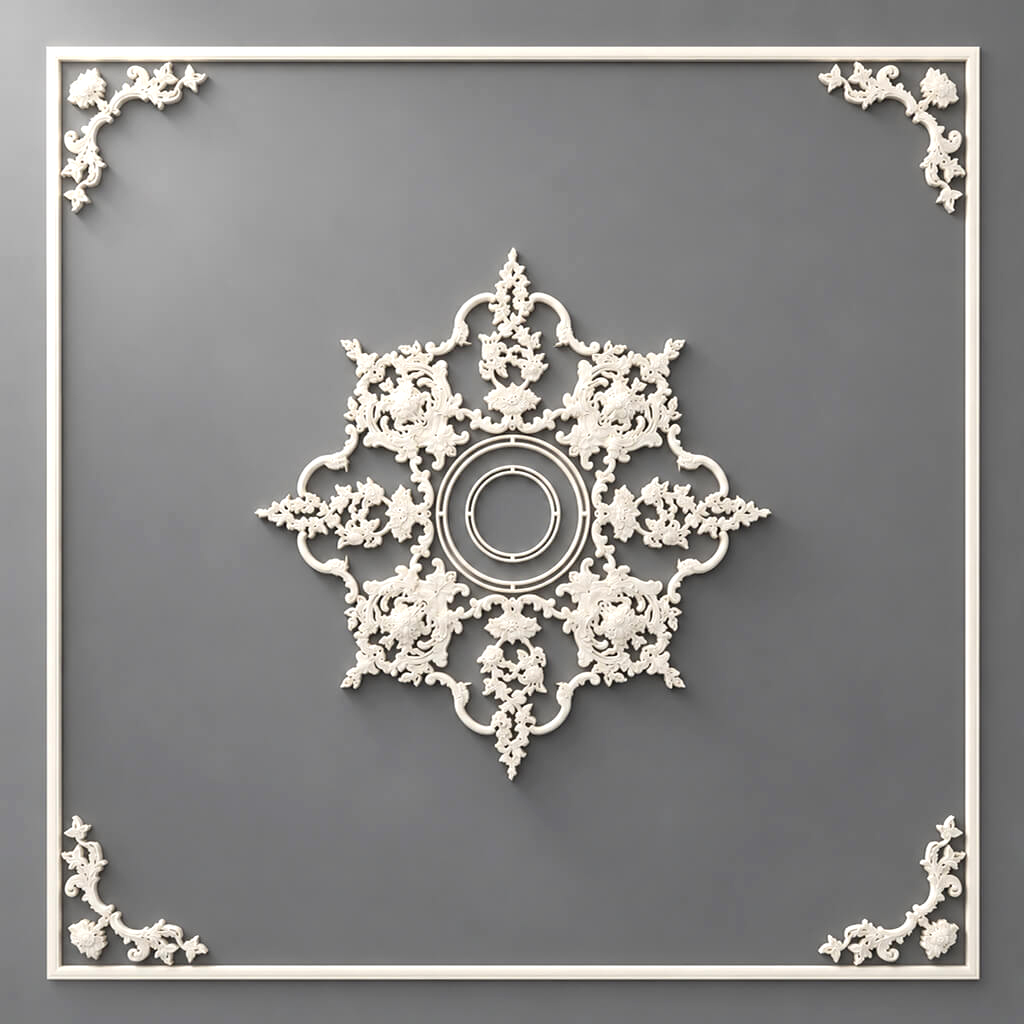
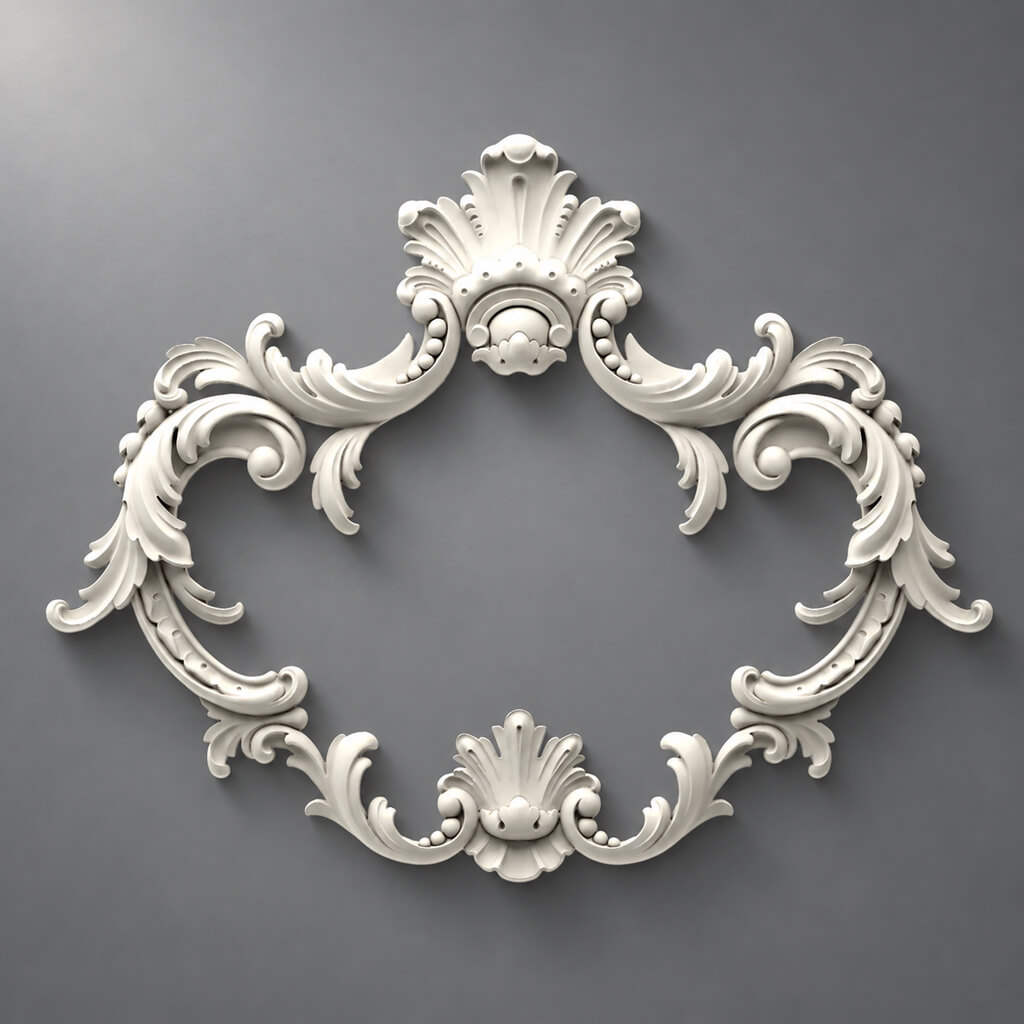
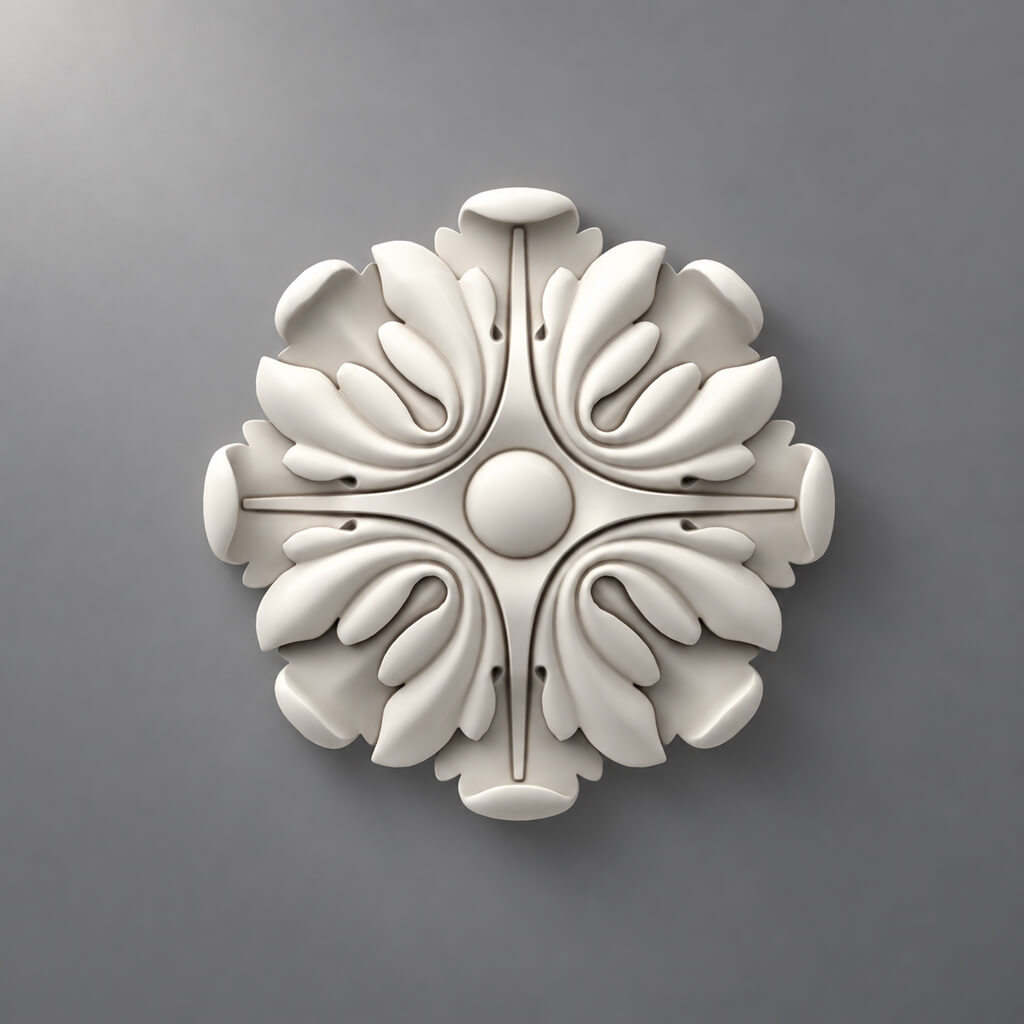
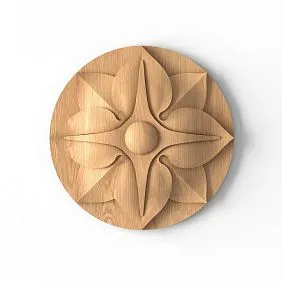
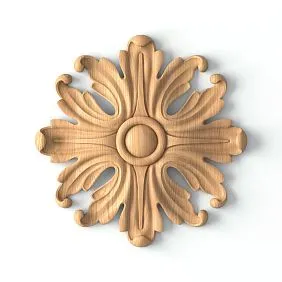
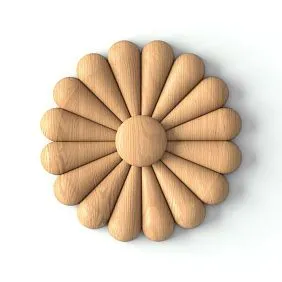
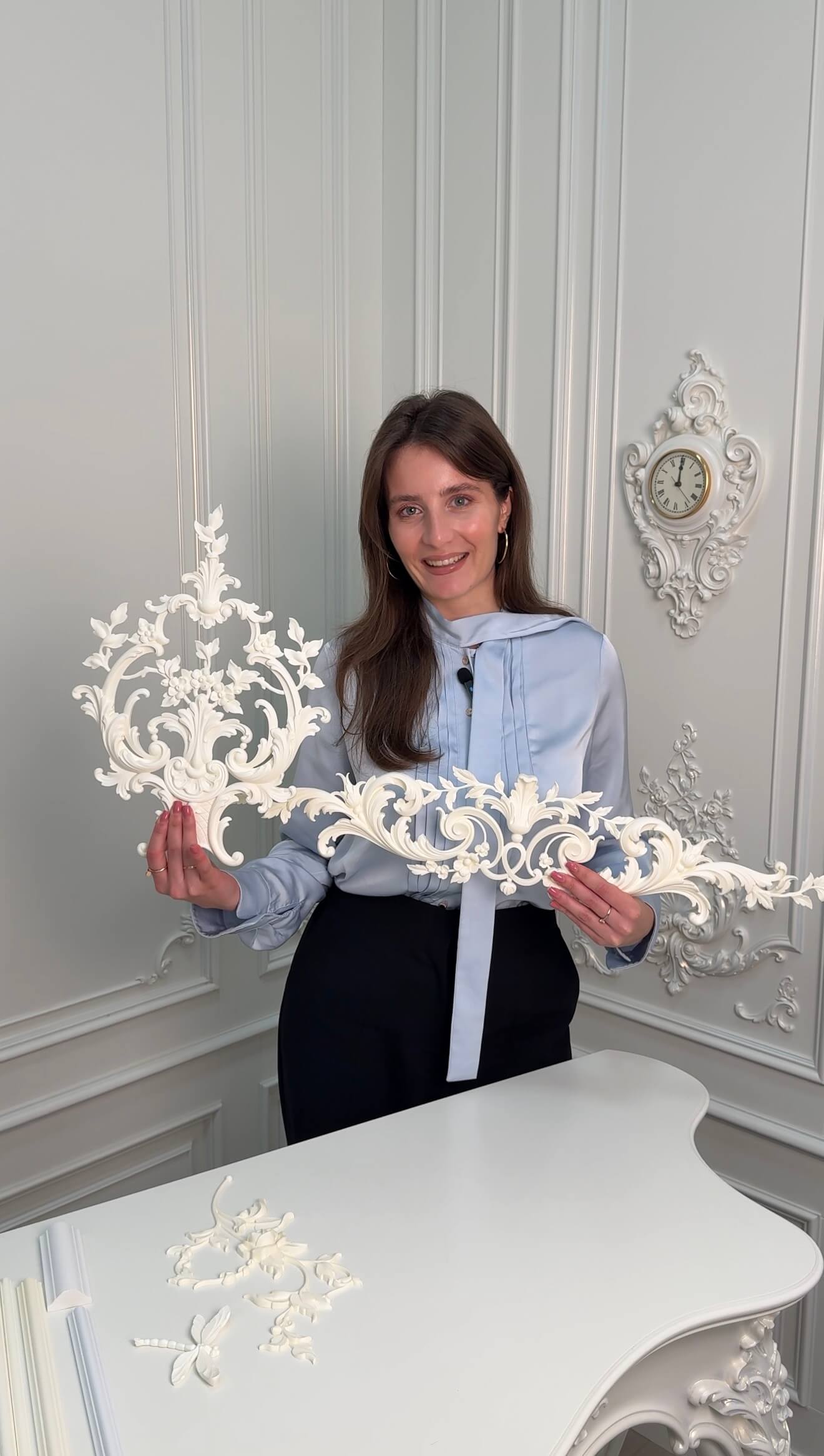
A wooden rosette is a decorative wooden detail, most often symmetrical in shape. It can be round, square, oval, rectangular, carved, or geometric. In classic decor, the rosette works as the center of the composition: it draws the eye, completes a node, emphasizes an intersection point, or decorates an empty plane.
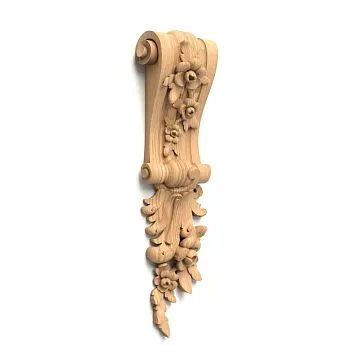
While an overlay can be elongated, corner, vertical, or horizontal, a rosette is more often perceived as an independent medallion. It does not always have to be large. Sometimes a small rosette on a door casing or furniture facade looks more convincing than a large detail because it does not overload the surface, but only adds a finished relief.
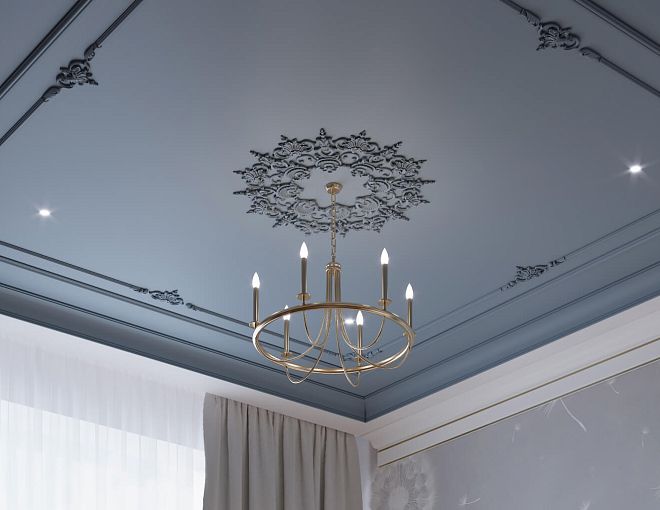
On furniture, a rosette can highlight the center of the facade, decorate a panel, adorn a drawer, cabinet door, backrest, nightstand, or dresser. On a casing, it helps emphasize corners, intersections, or the top of the opening. On a wall, a rosette can become a point inside a decorative frame, part of a panel, or a connecting element next to pilasters. On the ceiling, it is used more carefully: there you need to consider the room's scale and adjacent decor.
It is important not to confuse wooden rosettes with polyurethane molding. This article specifically discusses wooden carved elements from the carved decor section. They are purchased for furniture, casings, wall compositions, and wooden interiors, not as a replacement for ceiling molding in a broad sense.
What wooden rosettes are presented in STAVROS
In the STAVROS wooden rosettes section, R-series products are shown, and selection can be made by shape, size, collection, product type, and availability. The page features carved and geometric options, as well as rosettes and connecting rosettes. This set of filters is important because the buyer chooses not just a pattern, but the place and role of the detail in the composition.
| Parameter | What to consider when choosing |
|---|---|
| Product group | Wooden carved rosettes |
| Main section | buy wooden rosettes |
| Type of product | Rosette, connecting rosette, decor set |
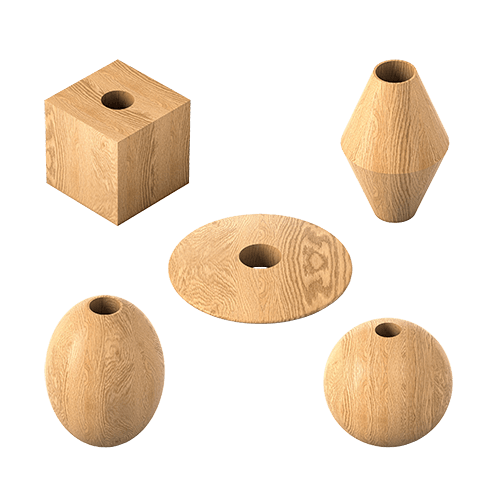
| Product shapes | Square, round, oval, rectangular |
| Product type | Carved, geometric |
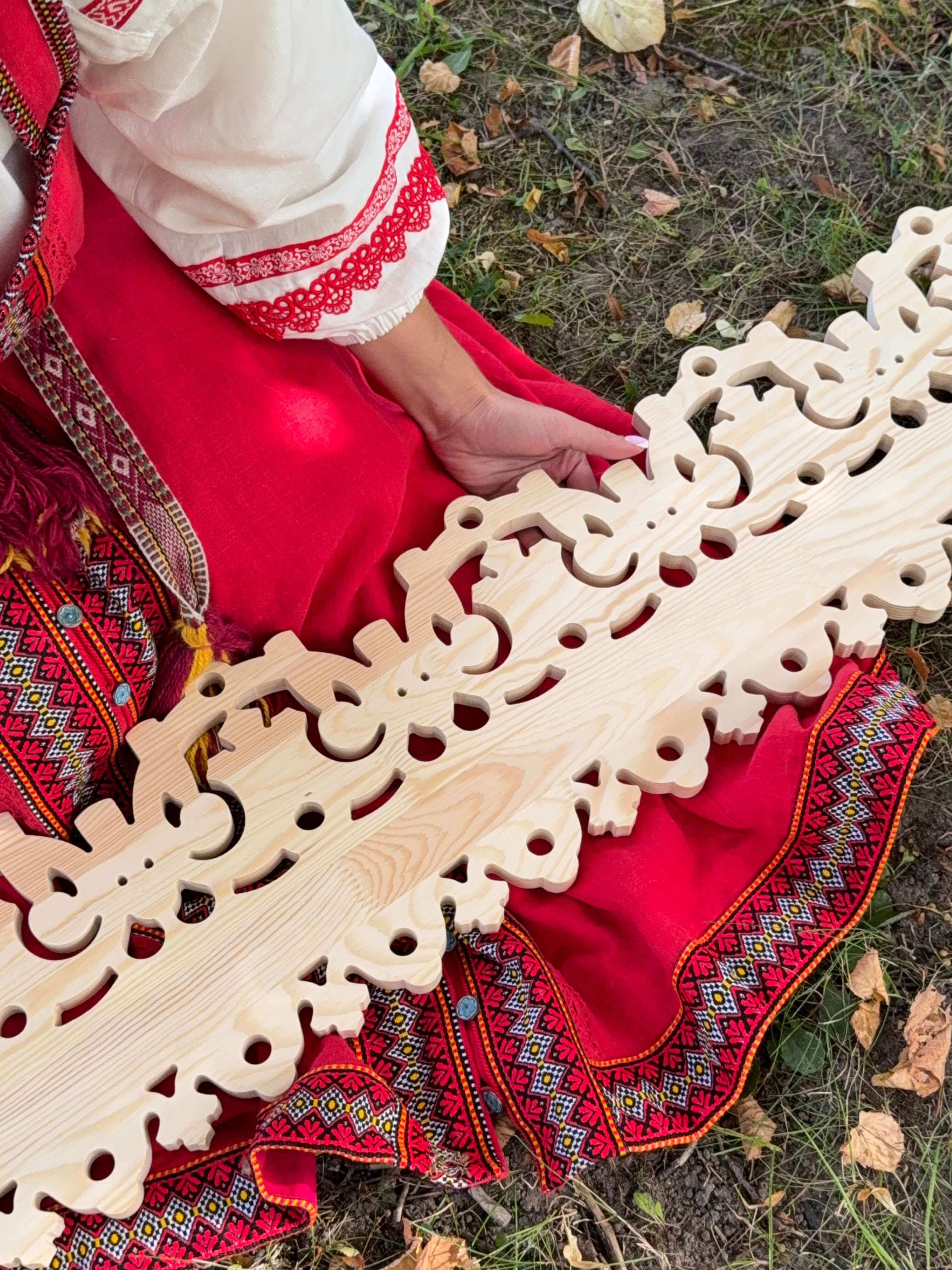
| Collections | Empire, Art Deco, Grape, Gothic, Classic, Modern, Russian style, Contemporary |
| Sizes in filters | A — height, B — width, C — depth |
| Model examples | Wooden rosettes R-084, R-085, R-057, R-056, R-055, R-058, R-012, R-065, R-040, R-061 and other R-series models |
| Application | Door trims, furniture facades, ceiling decor, wall decoration |
| What to check before ordering | Size, shape, depth, material according to the product card, style, installation location, compatibility with adjacent decor |
This table helps to quickly understand that a wooden rosette is not a universal "button" for any surface. A round model works differently than a square one. A geometric one looks calmer than a carved one with a floral motif. A connecting rosette solves one task, a central decorative one solves another. Therefore, before purchasing, you need to determine the installation location in advance.
Our factory also produces:



Why a rosette is needed on furniture, trim, and wall
A wooden rosette solves several practical problems at once. It helps cover an empty spot, add symmetry, mark the center, connect details, soften a simple plane, and make the composition feel more expensive. At the same time, it is usually smaller and more affordable than a large carved overlay, making it convenient for spot use.
On furniture, a rosette often helps to decorate the facade without a complete overhaul. For example, a smooth cabinet facade can be made more expressive by adding a rosette in the center of the panel or in a decorative frame. On a chest of drawers, several small rosettes can support the rhythm of the drawers. On a wardrobe, rosettes help to highlight the central doors or frame intersection points.
On trim, a rosette can cover or emphasize the junction of decorative lines. If a doorway is designed in a classic style, a rosette helps make the top or corner part more finished. This is especially relevant if the trim is not just flat but carved or connected to other wooden finishes.
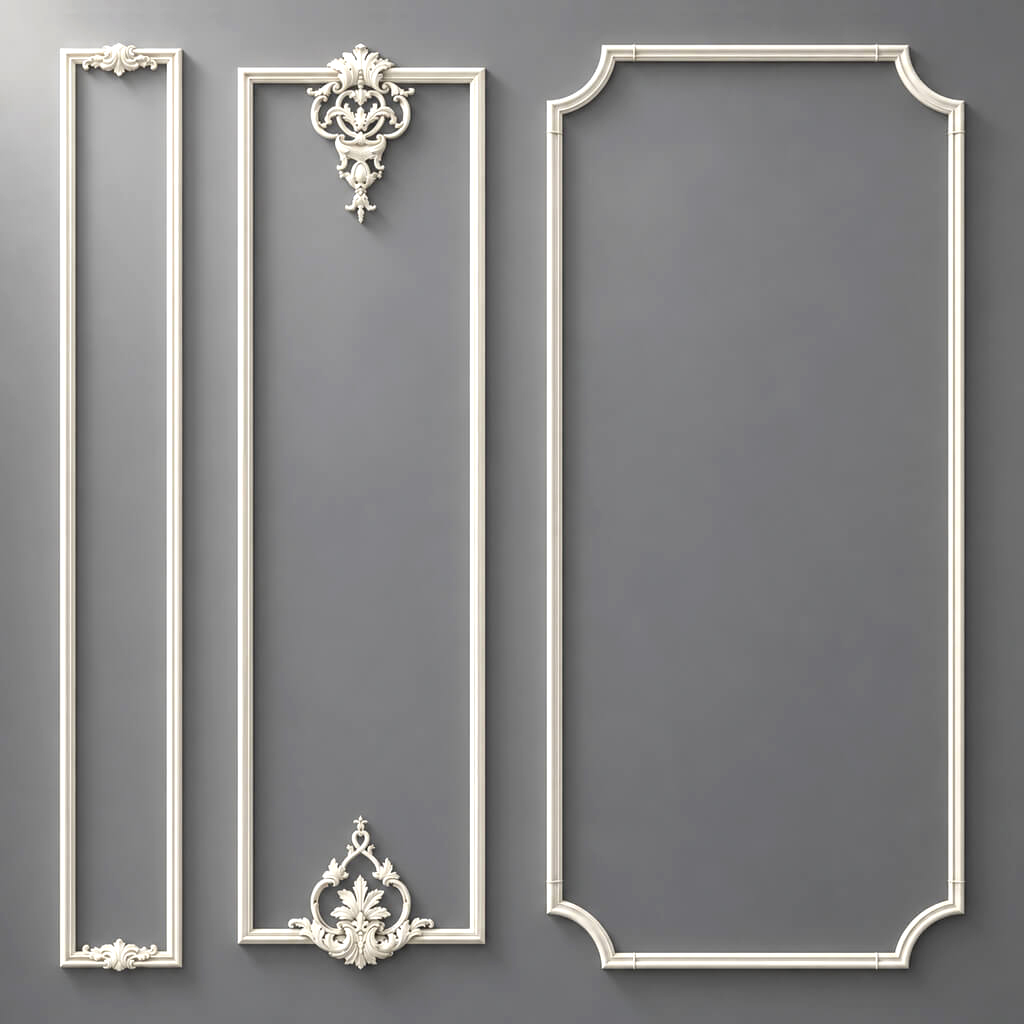
On the wall, a rosette works as the center of a decorative frame, a point inside a panel, or an element of symmetry next to pilasters. It helps not to leave a large plane empty. If the wall composition is assembled from moldings, pilasters, and vertical elements, the rosette can become a neat node that connects the lines together.
Get Consultation
How to choose a wooden rosette by shape
The shape of the rosette determines its behavior in the interior. You should not choose a shape based only on a photo. You need to look at the surface where it will be placed and the task: center, corner, connection, vertical, furniture facade, trim, or wall frame.
Round rosette
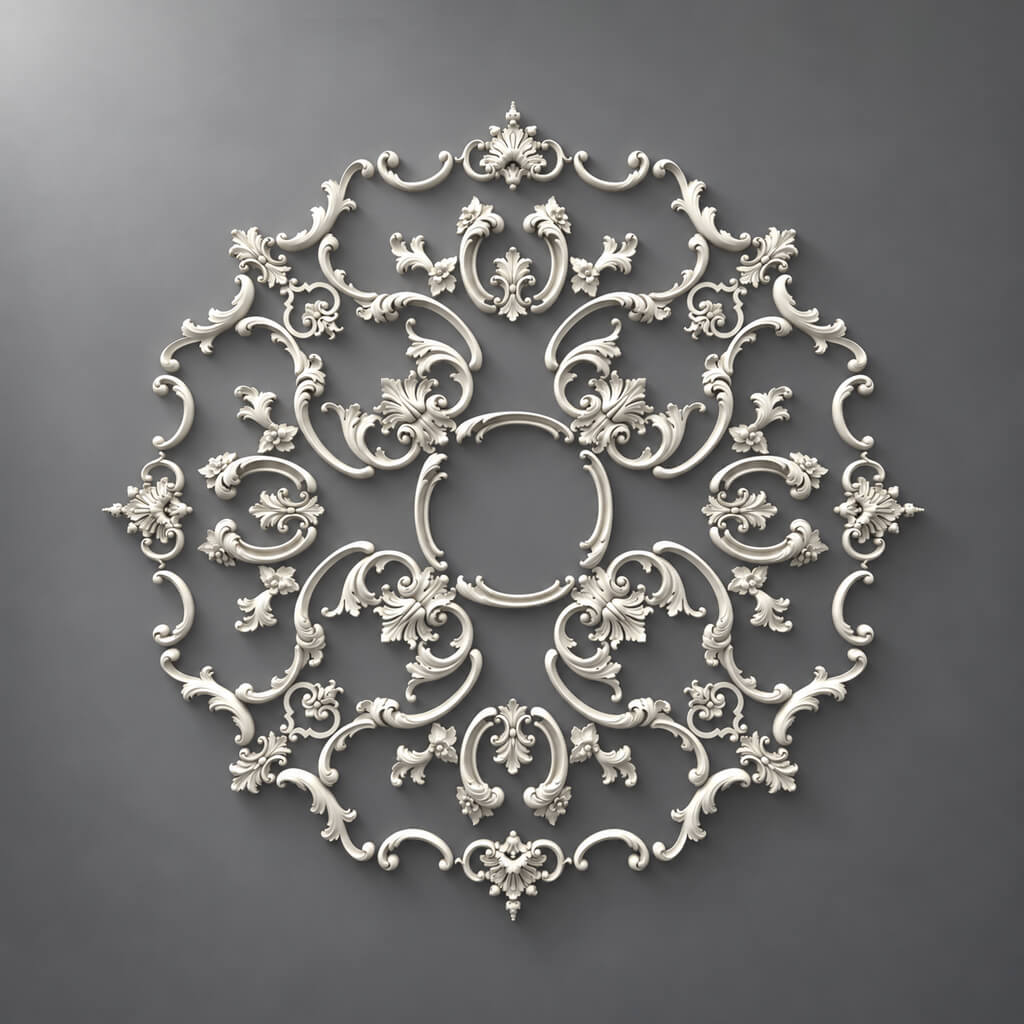
A round rosette is perceived as soft and classic. It works well as a central medallion on a facade, wall panel, ceiling fragment, or inside a decorative frame. The round shape is especially appropriate where it is necessary to soften the strict lines of rectangular furniture or a wall composition.
On a small facade, a round rosette can become the main accent. On a large wall, it is better to use it either larger or as part of a repeating set. A small round detail on a large plane can easily get lost.
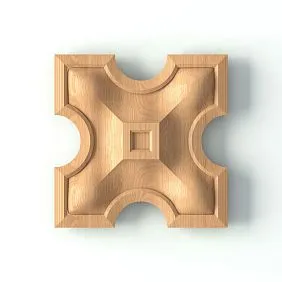
Square rosette
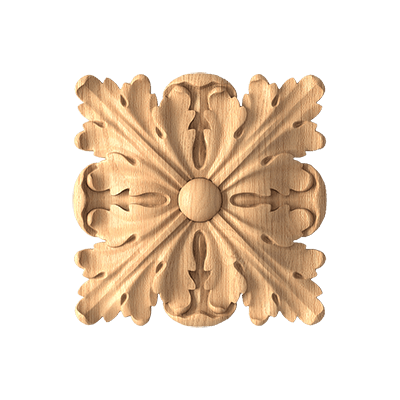
A square rosette is better connected with the geometry of furniture, architraves, and wall frames. It looks good in corner nodes, at line intersections, on strict facades, in neoclassicism, and modern interiors with a clear structure.
The square shape is convenient to use where straight lines already exist: panels, frames, pilasters, trim. It does not conflict with the rectangular architecture of the surface and helps make the decor more cohesive.
Oval rosette
The oval adds softness and elongation. It is well suited for vertical facades, tall door leaves, narrow panels, and compositions where a round shape seems too short and a rectangular one too strict.
The oval rosette works especially well in classic and soft interiors. It can replace a large overlay where a center is needed but heavy carved decor is not.
Rectangular rosette
The rectangular shape helps support strict geometry. It can be used in door trim, furniture facades, wall frame compositions, and decorative panels. It works well as a link between lines, especially if there are pilasters or elongated overlays nearby.
It is important not to confuse a rectangular rosette with a regular overlay. If the piece is elongated and functions as a line, it may no longer be a rosette in terms of application. Therefore, you need to consider not only the name but also the role of the item in the composition.
Carved or geometric: which rosette to choose
| Rosette type | Where it looks appropriate | What it gives to the interior | What to pay attention to |
|---|---|---|---|
| Carved | Classic facades, architraves, wall panels, furniture with decor | Adds relief, softness, ornamentation | Do not overload a small surface |
| Geometric | Modern classic, strict facades, panels, minimalist architraves | Maintains order, symmetry, and clear lines | Do not choose too small a detail for a large plane |
| Round | Center of the facade, medallion, wall frame | Softens the composition | Check diameter and clearance around |
| Square | Corners, intersections, straight frames, architraves | Connects lines | Ensure precise fit and symmetry |
| Oval | Vertical facades, doors, narrow panels | Stretches the composition | Do not place too close to edges |
| Connecting | Knots, intersection points, compositions with pilasters | Helps connect elements | Check compatibility with lines and adjacent decor |
A carved rosette is good where the interior allows ornamentation. It can support classic furniture, carved architraves, decorative wall panels, or painted furniture fronts. A geometric rosette is calmer and better suited for modern solutions where a wooden relief without obvious historical stylization is needed.
How to decorate a door architrave
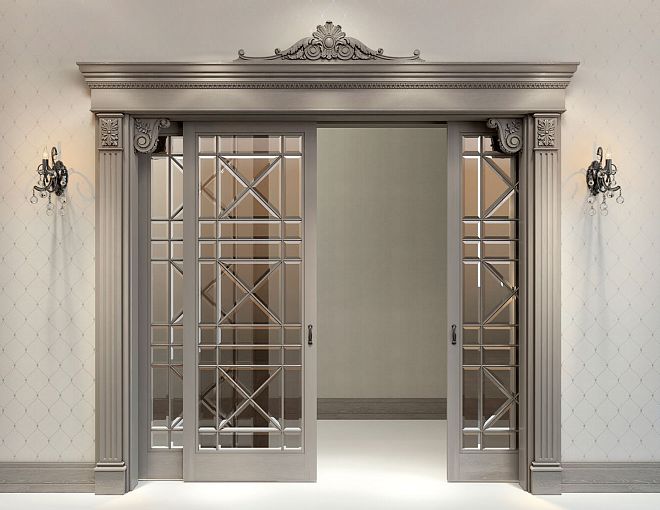
A door architrave often looks like a simple frame around the opening. This is normal for a minimalist interior, but in classic, neoclassical, or wooden interiors, such an opening can seem plain. A rosette helps add a finishing point: at the top, in the corner, at the intersection of decorative lines, or in the center above the door.
If the task is to understand how to decorate a door architrave, first you need to assess the architrave itself. If it is narrow and simple, a large rosette may look heavy. If the architrave is wide, carved, or associated with a portal, you can choose a more expressive element. If there are pilasters or overlays nearby, the rosette should support their style.
For such a task, it is convenient to select carved decor for architraves, and use rosettes as additional accents. It is important to remember: a rosette does not replace the architrave. It decorates or completes it, but does not cover the joint between the frame and the wall by itself.
Three schemes work well. The first is a rosette in the upper central part of the opening. The second is paired rosettes in the upper corners. The third is rosettes as part of a more complex portal with pilasters. The choice depends on the width of the opening, ceiling height, and interior style.
How to decorate a furniture facade with rosettes
A furniture facade is one of the most obvious places for a wooden rosette. The flat door of a cabinet, dresser, or nightstand often looks too empty. A rosette allows you to add a center without a large carved overlay. This is especially useful if the facade is small and cannot handle heavy decor.
If there is one facade, the rosette is usually placed in the center. If there are two facades, the decor is repeated symmetrically. If there are several drawers, small rosettes can be used in the same rhythm. The main thing is not to overdo it. If the facade already has active handles, panels, moldings, or overlays, the rosette should be calmer.
Convenient for furniture to choose carved rosettes for furniture by shape and scale. A round model works well as a medallion. A square one is suitable for strict facades. An oval one is for elongated doors. A geometric one is for modern classics. A carved one with a plant motif is for a classic wardrobe, sideboard, console, or chest of drawers.
When designing a facade, you need to consider the future finish. If the furniture is being painted, it is better to choose the rosette before painting so that it looks like part of the facade. If the rosette is installed on finished furniture, you need to pay special attention to the material, color, thickness, and relief.
Rosettes on the wall: how to assemble a classic composition
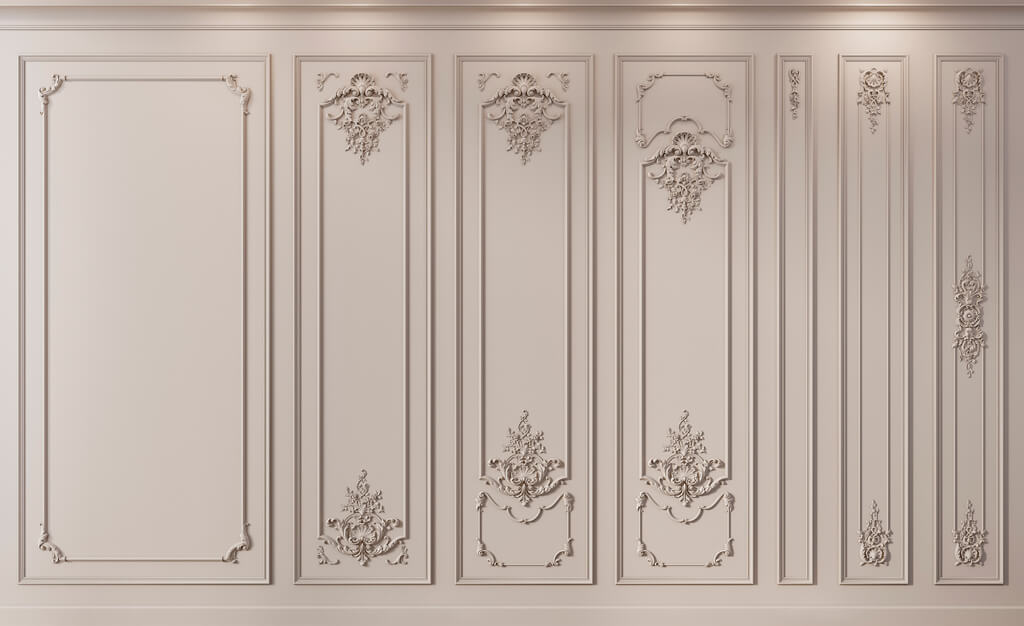
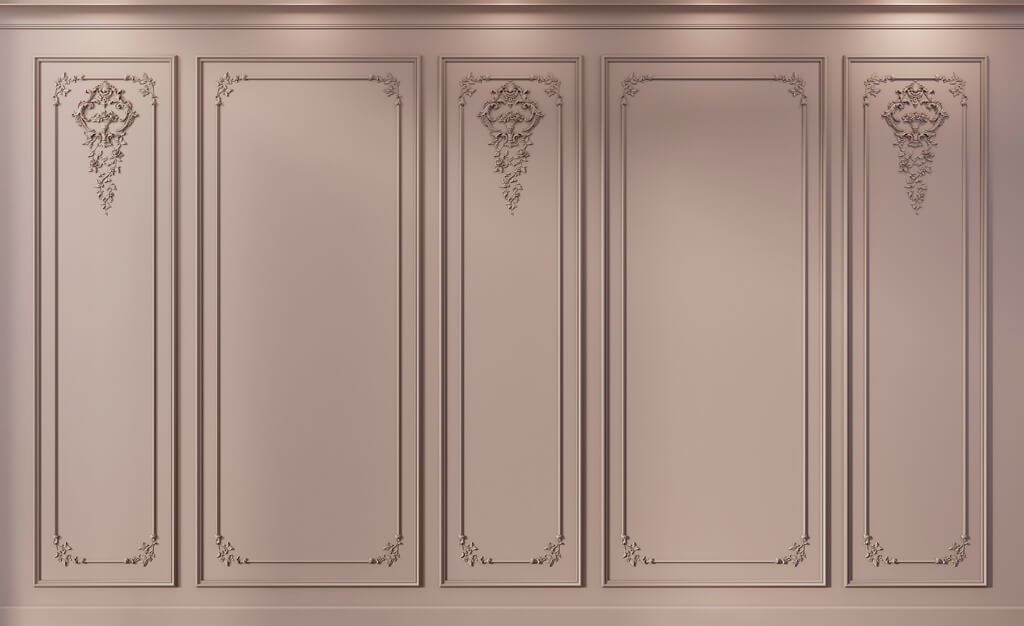
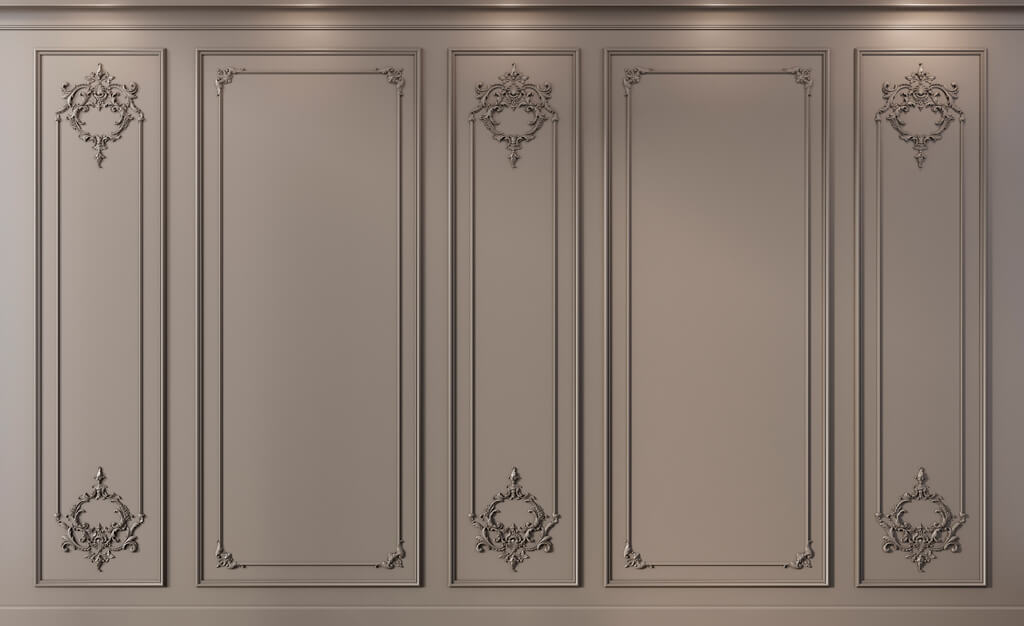
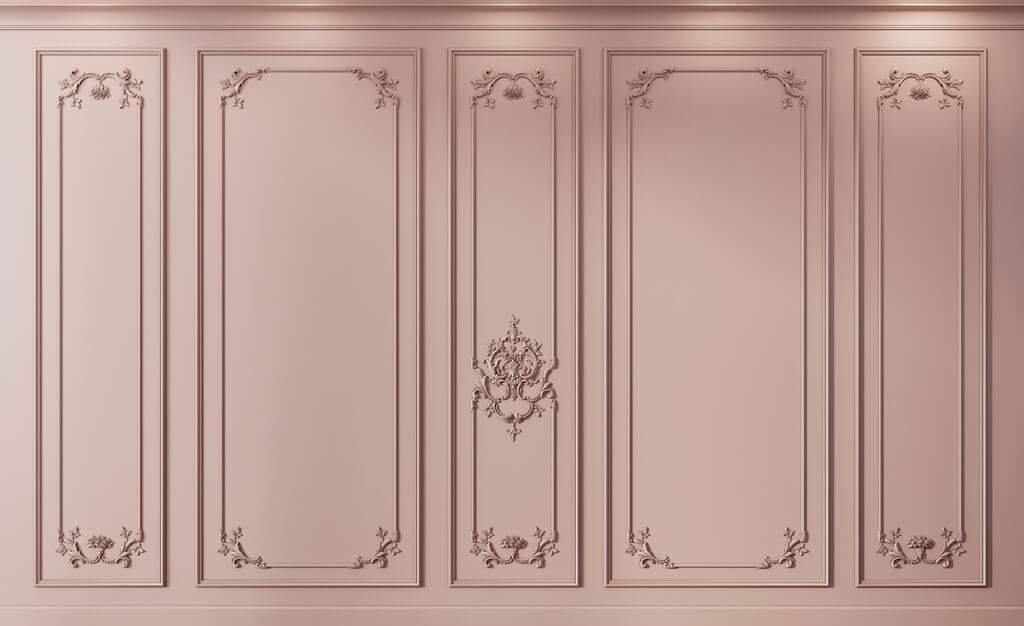
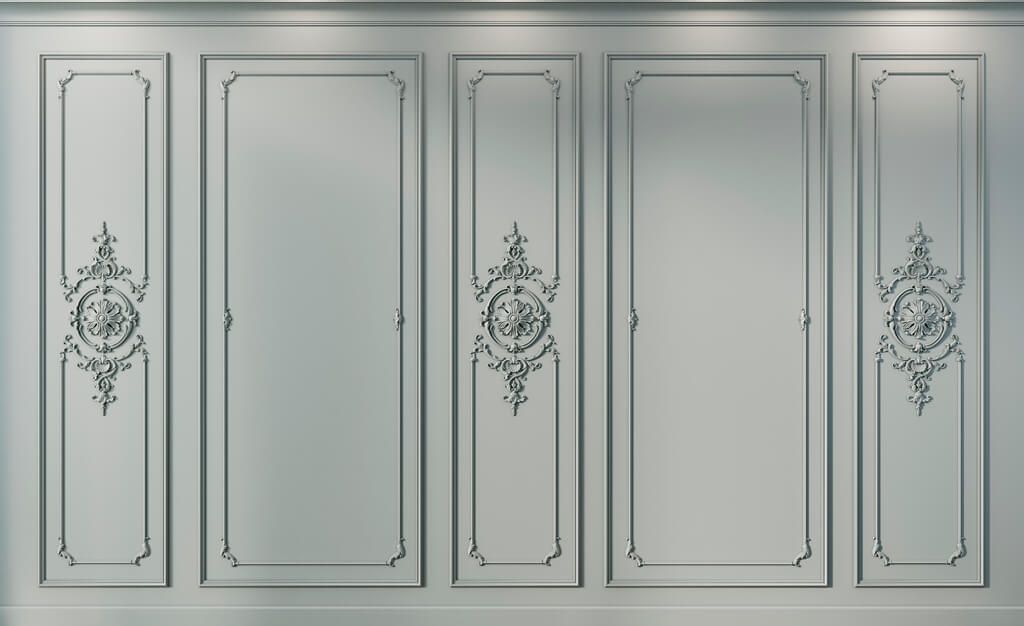
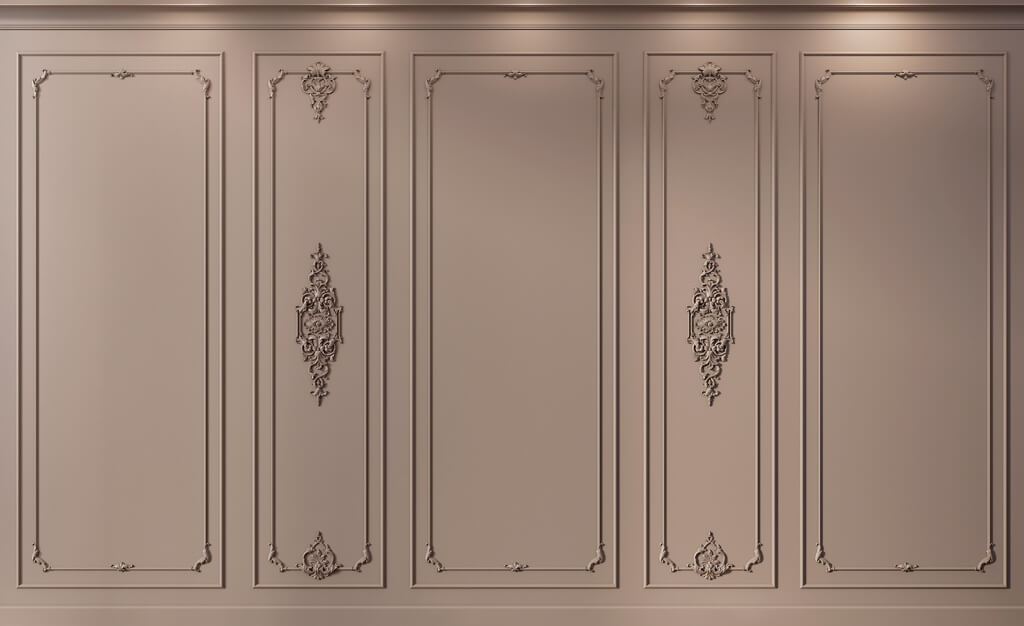
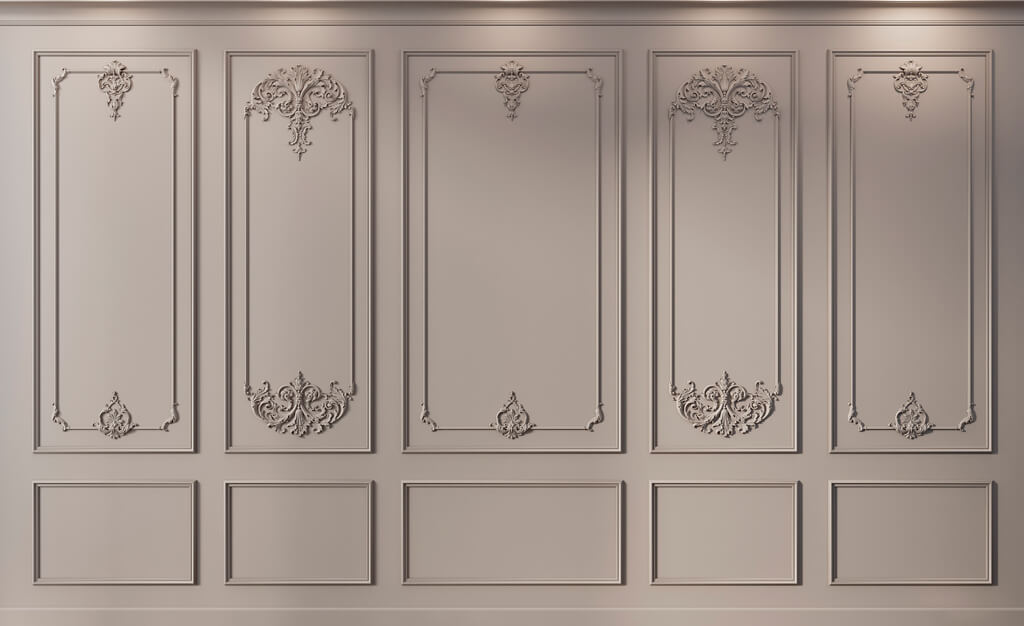
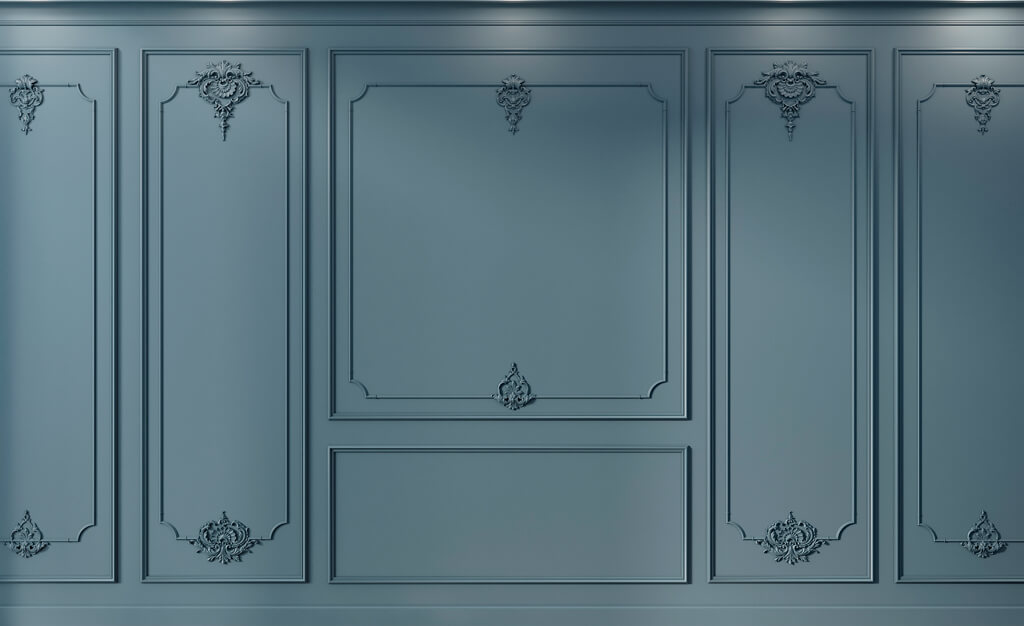
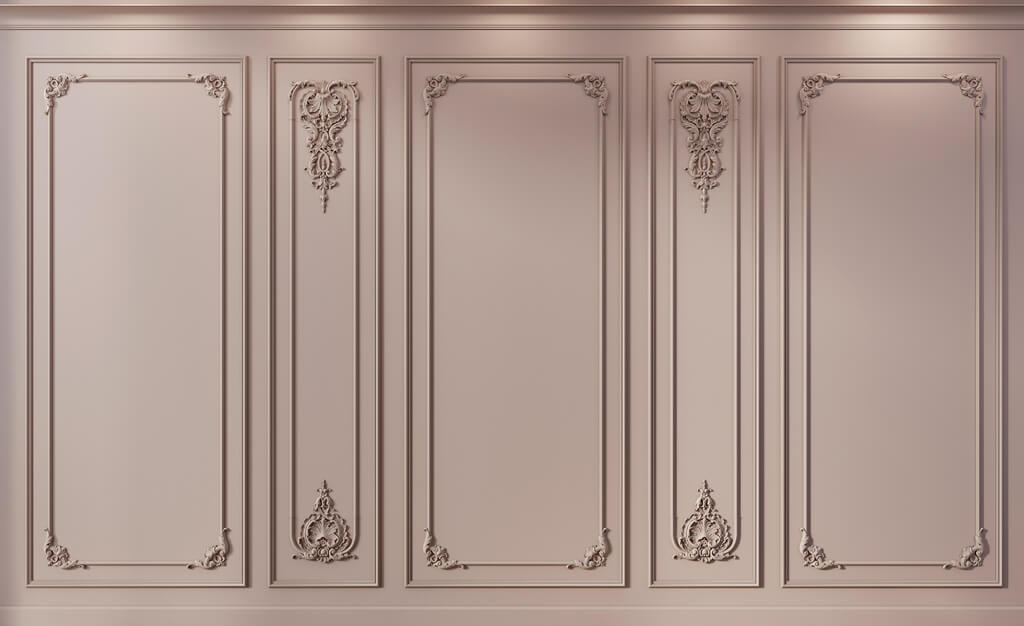
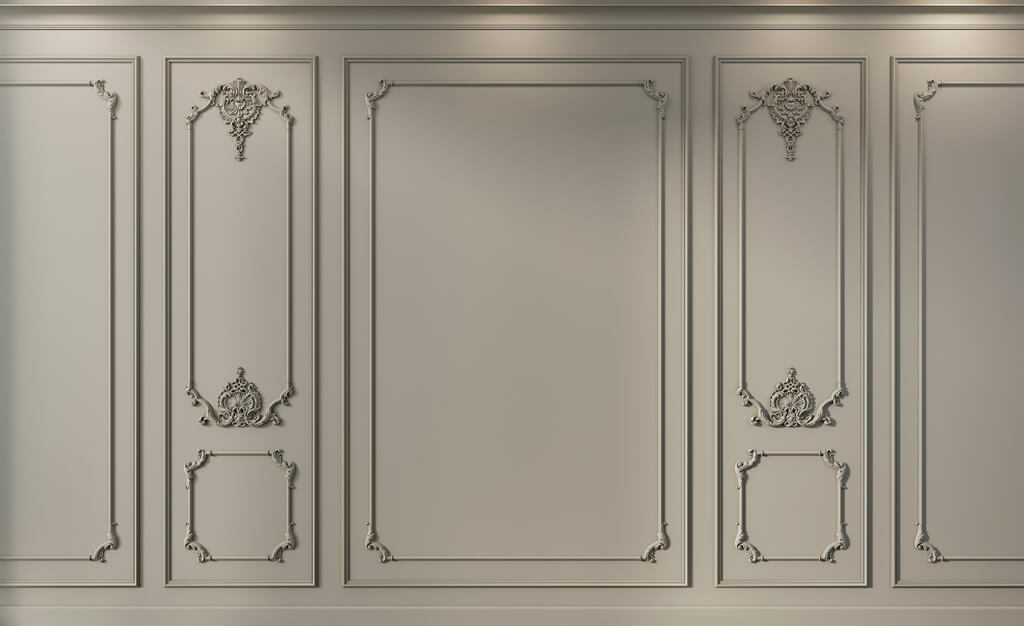
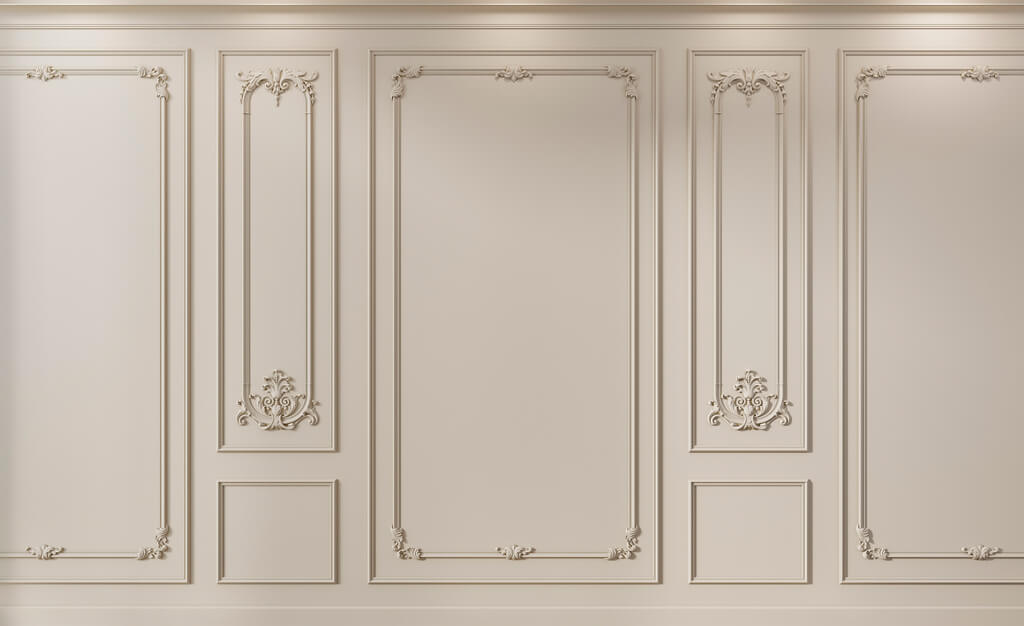
On the wall, a wooden rosette works as a decorative point. It can be the center of a frame, the completion of a panel, part of a symmetrical scheme, a node between vertical and horizontal lines. In a classic interior, a rosette helps make the wall not an empty plane, but a well-thought-out composition.
If you need to choose what to buy for wall decor in a classic style, one rosette may only be enough for a small accent. For a large wall, it is better to consider a set: rosettes, overlays, architraves, pilasters, or column elements. Then the rosette does not hang by itself but works within a system.
For such a task, you can buy decorative wooden rosettes and determine their role in advance: center of a frame, corner accent, connecting point, or repeating element. If the wall is high, small rosettes may get lost. If the wall is narrow, a too large medallion will be overwhelming. Scale is more important than the beauty of the pattern itself.
Rosettes pair well with vertical elements. If the composition uses pilasters, a rosette can cover the connection point, emphasize the center between verticals, or add a decorative node. For a large project, it is worth selecting pilasters and columns for the wall composition in advance, and choosing rosettes based on the overall architectural scheme.
How to combine rosettes and carved overlays
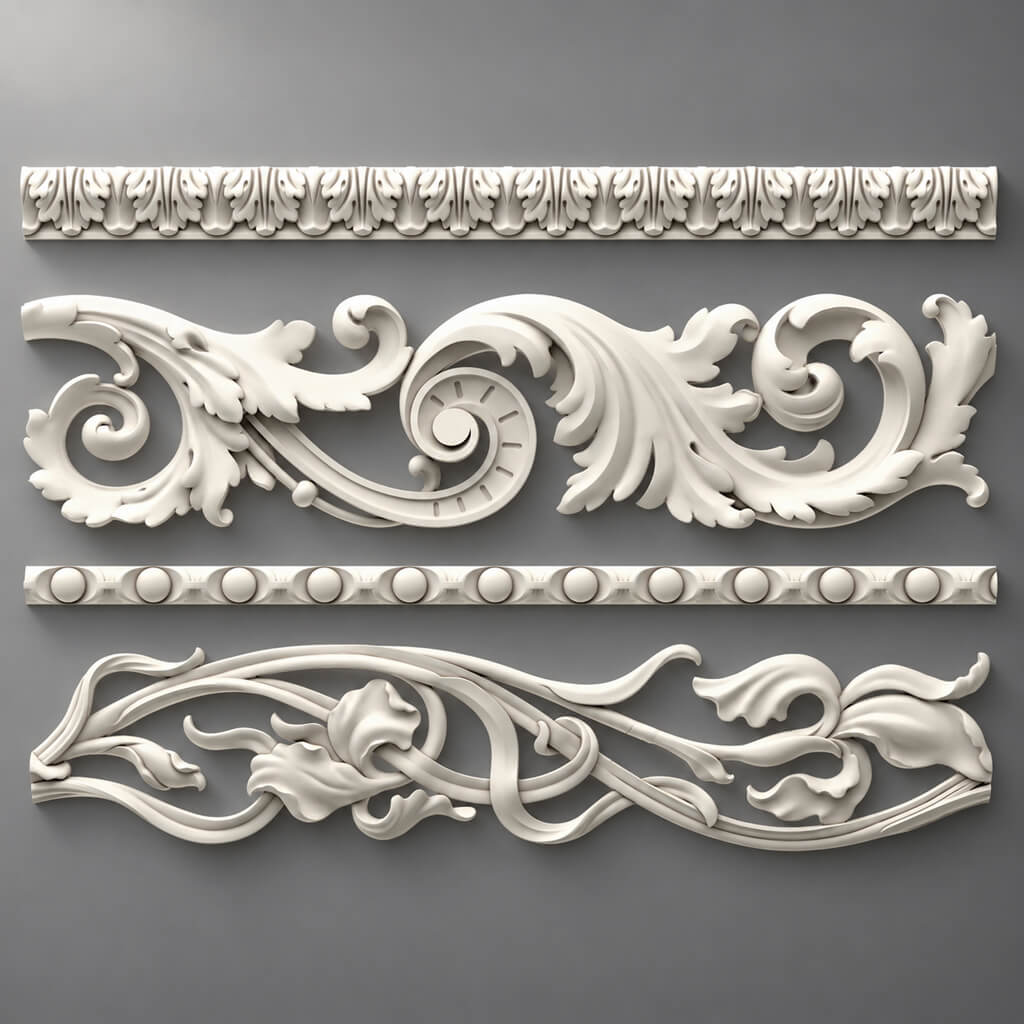
Rosettes and overlays are often placed together but serve different functions. An overlay can be central, vertical, horizontal, corner, elongated, or large. A rosette usually works as a point, node, or medallion. If they are confused, the composition may become heavy or illogical.
When decorating a furniture facade, you can use a rosette as the center and overlays as framing. Or vice versa: a large overlay acts as the main element, while rosettes support the corners. For a wall composition, a rosette can be in the center of a frame, with overlays along verticals or horizontals.
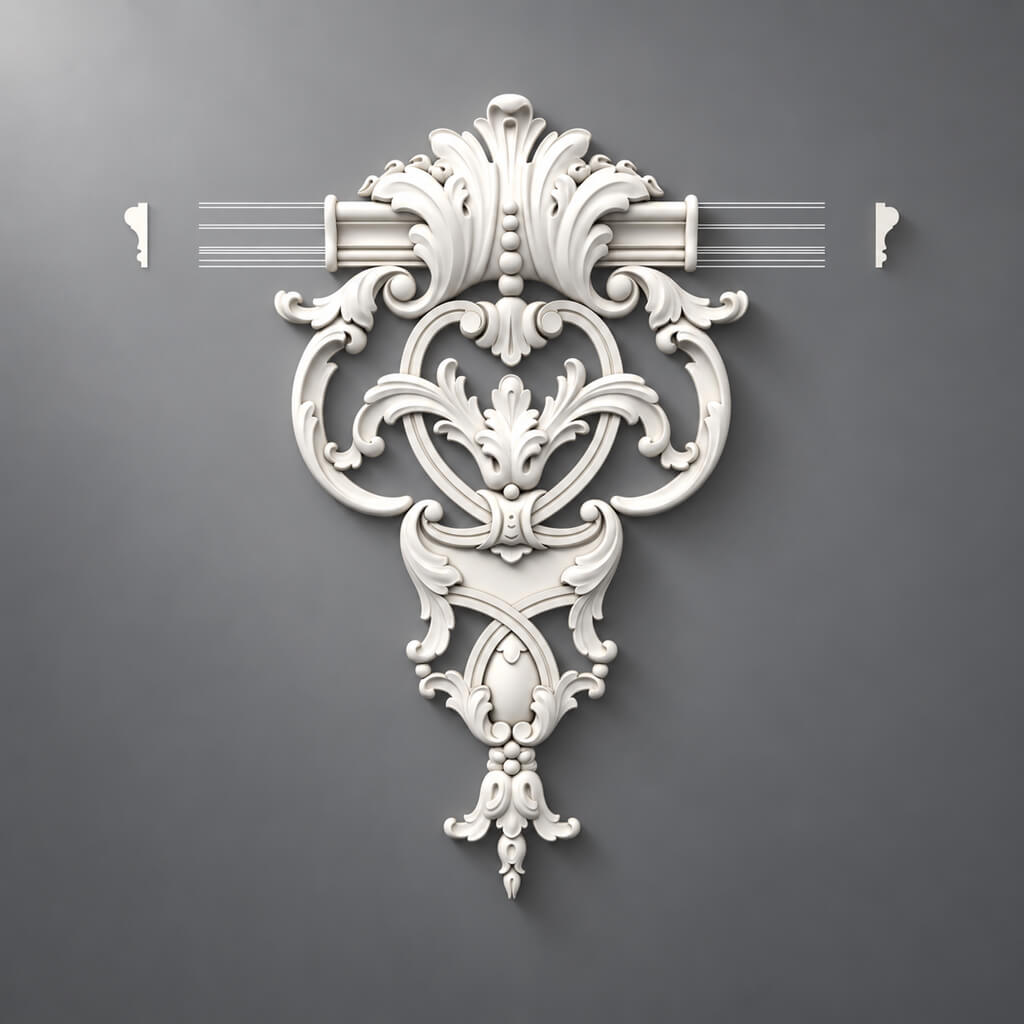
If a more expressive facade is needed, you can Buy carved overlays for furniture and combine them with rosettes. Such a set works especially well in classic sideboards, cabinets, door panels, decorative panels, and portals. But it is important not to mix too many ornaments. If the overlay already has an active floral pattern, the rosette should be closer in motif or calmer.
What to choose: a rosette or an overlay
| Task | Better to choose a socket | Better to choose an overlay |
|---|---|---|
| Need a small center of the facade | Yes | Only if the facade is large |
| Need to design a long vertical | Not always | Yes |
| Need to emphasize the corner | Sometimes, if the shape fits | Yes, if a corner detail is needed |
| Need to cover a large empty area | Only a large rosette or several elements | Yes |
| Need to make an intersection point | Yes | Not always |
| Need to create a complex carved design | Only as part of a set | Yes |
A rosette is good when you need a point. An overlay is good when you need an area, a line, or a large decorative fragment. In a good project, they don't compete but complement each other.
Where to glue decorative wooden rosettes
The question "where to glue decorative wooden rosettes" is better rephrased: where the rosette is actually needed. Gluing it just for decoration is risky. If the element is not related to the shape of the furniture, door casing, or wall, it will look random.
On a furniture facade, the rosette is usually placed in the center of a free area or in a symmetrical pair. On a casing, at the top, corners, or intersections of decorative lines. On a wall, inside a frame, between pilasters, in the center of a panel, or in a repeat. On a ceiling, only considering the scale and overall decorative solution.
Before installation, a dry fit is necessary. Even if the rosette seems small, it may appear larger on the surface. You need to check the distance to edges, handles, moldings, panels, hinges, joints, and other details. If the rosette is to be painted, it is better to determine its location before the final finish.
An important point: the method of attachment depends on the base, size, weight, material, finish, and operating conditions. In the article, it is impossible to universally assign one glue or fastener for all cases. Before installation, it is better to check the product card, prepare the surface, and if necessary, clarify recommendations with a manager or craftsman.
Material, relief and finish
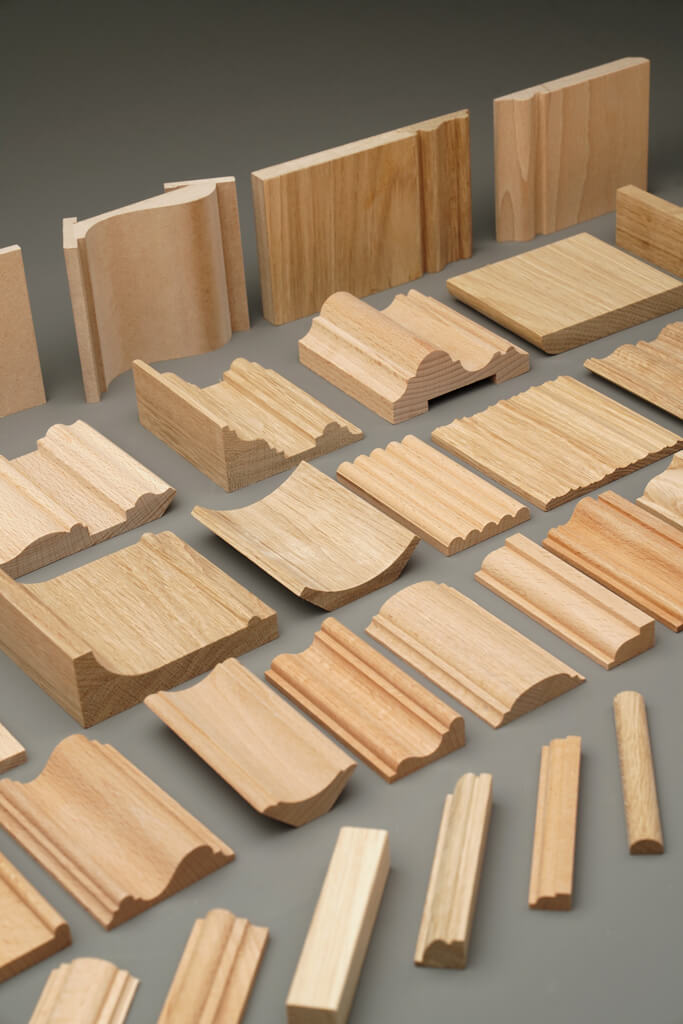
Wooden rosettes are valued for their natural character and relief. Wood feels warmer on furniture and trim than plastic imitation. It pairs better with wooden facades, carved overlays, pilasters, trim, and interior details in a classic style. However, the specific material, finish, and parameters should be checked in the selected model's card.
The relief affects how the rosette will look after finishing. Deep carving creates noticeable shadows and reads better in a classic interior. A calmer geometry suits modern solutions. If the rosette is painted the same color as the facade, fine carving can become softer, while large relief retains expressiveness.
Under varnish or tinting, the wood texture matters. Under enamel, the purity of form and quality of preparation are more important. If the rosette is installed on an already finished surface, you need to check in advance how it will match in color and texture. Sometimes it's better to paint the rosette together with the facade or trim so it looks built-in rather than glued on later.
What to buy together with wooden rosettes
Rosettes rarely live completely separately. If a buyer is furnishing furniture, overlays are often needed nearby. If decorating an opening, trim is needed. If assembling a wall composition, pilasters and columns may be required. A comprehensive approach helps avoid style and scale mismatches.
| What to buy | Why it's needed | Which scenario it suits | Commercial transition |
|---|---|---|---|
| Wooden rosettes | Central accent, connecting point, medallion | Furniture, trim, walls, ceiling fragments | buy wooden rosettes |
| Carved rosettes for furniture | Emphasize the facade, panel, drawer, door | Chest of drawers, cabinet, nightstand, sideboard | to choose carved rosettes for furniture |
| Decorative wooden rosettes | Assemble a wall or door composition | Walls, trims, panels, ceilings | buy decorative wooden rosettes |
| Carved overlays | Add a larger relief next to the rosette | Furniture fronts, doors, panels | Buy carved overlays for furniture |
| Carved decor for architraves | Frame a doorway and connect rosettes with the frame | Doors, portals, architraves | to select carved decor for architraves |
| Pilasters and columns | Create a vertical architectural structure | Walls, portals, cabinets, classic compositions | selecting pilasters and columns for the wall composition in advance |
This set does not mean you need to buy everything at once. For a small cabinet, one socket may be enough. For a wardrobe, it's better to consider sockets and overlays. For an opening — sockets and architraves. For a wall — sockets, pilasters, and other elements. The main thing is to understand the role of each part.
How not to confuse a wooden rosette with similar products
Rosette and carved overlay
A rosette often works as a point or center. An overlay can be larger, longer, angular, or vertical. If you need to decorate a small central area, a rosette is a good fit. If you need to cover a large empty surface, it's better to look at an overlay.
Rosette and architrave
The casing frames the perimeter of a doorway and covers the joint between the frame and the wall. A rosette can decorate the casing but does not replace it. If you need an opening, first select the casings, then the decorative details.
Rosette and pilaster
A pilaster is a vertical architectural element. It divides a wall or furniture composition by height. A rosette is a point decorative element. In one composition, a pilaster can set the structure, while a rosette can emphasize the center or connection.
Rosette and ceiling molding
A wooden rosette from the carved decor section is not equal to a polyurethane ceiling molding. It can be used in ceiling decor, but it must be selected based on material, weight, base, and style. If a wooden accent is specifically needed, a carved wooden rosette is chosen. If a large classical ceiling composition of a different type is required, that is a separate task.
Rosette and connecting rosette
A connecting rosette is needed at element junctions. It can cover intersections, help align lines, and function as a node. A regular decorative rosette is more often used as an independent accent. When choosing, you need to look at the product type in the card.
Practical selection for different situations
Need to decorate a door casing
First, assess the width of the casing and the height of the opening. If the casing is narrow, choose a small rosette. If the opening is tall and wide, consider a more expressive element. The rosette should relate to the shape of the casing and not look like a random dot.
Need to design a furniture facade
Measure the free central area. Check the placement of handles, panels, drawers, and frames. For a small cabinet, it is better to choose a small rosette. For a large wardrobe, you can use several elements or a combination of rosettes with overlays.
Need to make a wall in a classical style
Do not start by buying one rosette. First, determine the wall scheme: frames, verticals, central axis, pilasters, free fields. The rosette can become a center or connection, but it must be part of the overall architecture.
Need to select a part for painting
Choose the rosette before painting. This way, you can try it on, install it, and finish it together with the facade or casing. If the rosette is painted separately, there is a risk of differences in shade, gloss, or relief perception.
You need to update old furniture
A rosette is well suited for spot updates. It can be placed on a facade, drawer, or panel. But if the furniture is damaged, the base must first be prepared. Decor should not mask serious defects without repair.
Need to assemble a set of rosettes and overlays
First, choose the main element. If the main element is a socket, the overlays should support it, not argue. If the main element becomes a large overlay, it's better to use sockets as additional points. Do not mix too different ornaments.
Mistakes when choosing wooden rosettes
Choosing only by photo
In a photo, a rosette may appear larger or smaller than in reality. Before ordering, you need to look at dimensions A, B, and C, and also imagine the element on a specific surface. A small rosette on a large wall will get lost, a large one on a small cabinet will look heavy.
Buying without understanding the installation location
A rosette should have a role: center, corner, connection, medallion, repeat. If you just glue it in an empty spot, it may look random. First, determine the composition, then choose the product.
Mixing different styles
A classic carved rosette, a geometric overlay, an intricate casing, and a modern pilaster may not match. It's better to choose one stylistic line: classic, modern, Russian style, contemporary geometry, or another clear scheme.
Overloading small furniture
A small cabinet or facade cannot handle much decor. If you add a rosette, overlays, corners, and active handles, the piece becomes heavy. For small furniture, one precise detail is better than many small decorations.
Incorrect combination with handles
On the facade, the handle is often already an accent. The rosette should not compete with it in placement and size. If the handle is large, the decorative element should be made calmer or positioned so they do not conflict.
Ignoring depth
The depth of the rosette affects the relief and installation. A protruding detail can interfere near a handle, doorway, or narrow passage area. Before ordering, you need to check size C and the installation location.
Buying without checking the product card
The category helps choose the direction, but the final parameters are always in the card. Before ordering, you need to check the size, material, price, availability, shape, and purpose of the specific model.
Who wooden rosettes are suitable for
Wooden rosettes are suitable for those who want to update furniture without a complete overhaul. They are good for dressers, cabinets, wardrobes, sideboards, door facades, and decorative panels. This is a convenient product for a small but noticeable change.
They are suitable for those who are decorating door trims and want to add a classic wooden accent. Rosettes work especially well in openings where there is already a carved trim, molding, or a more complex door frame.
Rosettes are useful for designers and workshops that assemble wall compositions. In such projects, they help connect frames, pilasters, overlays, and vertical elements. They are also suitable for restoration and decorative tasks when you need to add wooden relief.
Wooden rosettes may not be suitable for those looking for completely smooth minimalism without decorative details. They can be superfluous on a very small surface if there are already many handles, frames, and carvings. They also do not replace large structural elements: trim, pilaster, molding, or overlay.
How to buy wooden rosettes on STAVROS
Start with the section where you can buy wooden rosettes. First, select a scenario: furniture, architrave, wall, ceiling fragment, connection node, or decorative center. Then use filters by shape, size, collection, and product type.
After that, open the cards of the models you like and check dimensions A, B, and C. Compare them with the surface. For furniture, measure the facade and consider the handles. For architrave, the width and installation location. For the wall, the frame size, placement height, and adjacent decor.
If you need not just one rosette but a classic composition, immediately check the related categories: Buy carved overlays for furniture, to select carved decor for architraves и selecting pilasters and columns for the wall composition in advance. This makes it easier to assemble not a set of random decorations, but a cohesive wooden decor.
FAQ
How to choose a wooden rosette?
First, determine the installation location: furniture facade, architrave, wall, ceiling fragment, or connection node. Then choose the shape, size A/B/C, product type, and style. Do not choose only by photo — the rosette must suit the specific surface.
What to decorate a door casing with?
The door casing can be complemented with a wooden rosette at the top, corners, or intersections of decorative lines. If the opening is complex, it is better to combine the rosette with carved casings and other elements.
How to arrange rosettes on a furniture facade?
On a single facade, the rosette is usually placed in the center. On paired doors, symmetry is used. On chests of drawers, small elements can be repeated on several drawers. The main thing is to consider the handles, frames, and size of the facade.
Where to glue decorative wooden rosettes?
Rosettes are placed where a decorative point is needed: the center of the facade, the corner of the casing, the center of a wall frame, the junction of lines, a decorative medallion. Before installation, be sure to do a test fit on the surface.
How to combine rosettes and carved overlays?
The rosette works as a point, the overlay as a larger decorative fragment. They can be combined: place the rosette in the center, and use overlays as framing or vertical details. The main thing is not to mix different styles without a common idea.
Can wooden rosettes be used on a wall?
Yes, wooden rosettes can be used in wall compositions. They work well as the center of a frame, a connecting node, or a repeating accent. For large walls, it is better to combine them with pilasters, overlays, or other elements.
Are wooden rosettes suitable for a modern interior?
Yes, if you choose a geometric or more subdued shape. For a strict interior, it's better to avoid overly active carvings and large classical motifs.
What is better for a facade: a rosette or an overlay?
If you need a small central accent, a rosette is better. If you need to cover a large empty area or create an elongated decorative element, an overlay is better. Often these items are used together.
Do I need to buy rosettes as a set?
Not always. For a small cabinet, one rosette is enough. For paired facades, doors, trims, or wall frames, it's better to buy them as a set to maintain symmetry and a unified style.
Can wooden rosettes be painted?
The possibility and preparation for painting should be checked for the specific model and material. Often rosettes are selected before finishing to paint them together with the facade, wall, or trim for a unified look.
How to avoid mistakes with the size?
Measure the surface, leave margins from edges, handles, frames, and adjacent decor. Then compare these dimensions with A, B, and C in the product card. Do not rely only on visual impression from photos.
Where to buy wooden rosettes?
Wooden carved rosettes can be purchased in the STAVROS catalog. In the section, you can conveniently choose the shape, size, collection, product type, and suitable R-series model.
Result: a wooden rosette is a small detail that brings the composition together
A wooden rosette may seem like a small element, but in furniture, trim, or a wall composition, it can play a decisive role. It covers the empty center, emphasizes symmetry, connects lines, adds relief, and helps make the decor complete. The main thing is to choose it not separately from the surface, but for a specific task.
For a furniture facade, size, shape, and combination with handles are important. For trim, the width of the opening and installation location matter. For a wall, the overall composition, pilasters, frames, and adjacent decorative elements are key. If you need a small accent, choose a rosette. If you need a large relief, add overlays. If you need to assemble an architectural vertical, look at pilasters.
STAVROS allows you to select wooden rosettes and related carved decor in one logic: for furniture, trims, walls, and classic interior solutions. It is best to start the selection in the section where you can buy wooden rosettes, and then supplement the composition with overlays, trim, and pilasters if the project requires more expressive design.