
























Article Contents:
- DD-001 or DD-007: confirmed specifications
- What is a wooden pilaster and what problem does it solve
- Why height matters more than product photo
- When to buy the wide pilaster DD-001
- When to buy the tall pilaster DD-007
- Wide or narrow pilaster: how to evaluate 140 and 65 mm
- DD-001 and DD-007 for a chest of drawers, nightstand, and wardrobe
- Pilaster for a library and display case
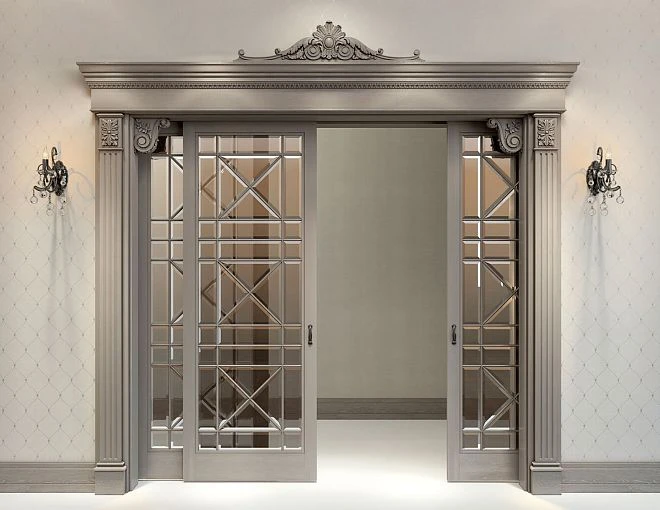
- DD-001 and DD-007 for door portal
- Pilaster for fireplace, mirror and wall panel
- One pilaster, symmetrical pair or repeating rhythm
- How to do a full-size fitting of DD-001 and DD-007
- How to measure the installation location without errors
- Can DD-001 or DD-007 be shortened
- Beech under enamel or oak under tinting
- Sanding "Standard" or "Prestige"
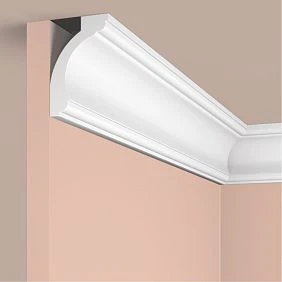
- How to coordinate the pilaster with the baseboard, skirting board and upper cornice
- How not to confuse a pilaster with a column and a load-bearing support
- Base preparation and installation
- Finishing Before or After Installation
- How to accept pilasters before finishing and installation
- Pilasters in the living room
- Pilasters in the hallway and corridor
- Pilasters in the study, library, and home office
- Pilasters in the bedroom and dressing room
- Pilasters in the kitchen and dining room
- Pilasters in commercial interiors
- How to combine DD-001 and DD-007 in one interior
- How to store DD-001 and DD-007 before installation
- How to estimate project cost without inflated prices
- What to buy together with a wooden pilaster
- Common mistakes when buying DD-001 and DD-007
- Who is DD-001 suitable for
- Who is DD-007 suitable for
- How to buy a wooden pilaster on STAVROS
- Comparison of application scenarios
- What to buy together with the pilaster
- Checklist before ordering
- FAQ: choosing DD-001 and DD-007
- 1. Which pilaster is better for a furniture facade?
- 2. Which model is suitable for a door portal?
- 3. Can DD-001 be installed on the sides of a fireplace?
- 4. Is DD-007 suitable for a cabinet 2400 mm high?
- 5. Why does DD-001 look more massive?
- 6. Can one DD-007 be placed next to a door?
- 7. How many pilasters are needed for the mirror?
- 8. Can the DD-007 be shortened?
- 9. Should I choose beech or oak for white enamel?
- 10. Can beech be tinted?
- 11. What does the "Prestige" sanding mean?
- 12. Is it necessary to order a pair in one batch?
- 13. Can a pilaster be glued to a painted wall?
- 14. Is the pilaster load-bearing?
- 15. How to check if the DD-001 is too wide?
- 16. How to know if DD-007 will get lost on a wide wall?
- 17. Which model is better for a library?
- 18. When to place an order relative to renovation?
- 19. What to buy together with a pilaster?
- 20. Where to see other pilasters?
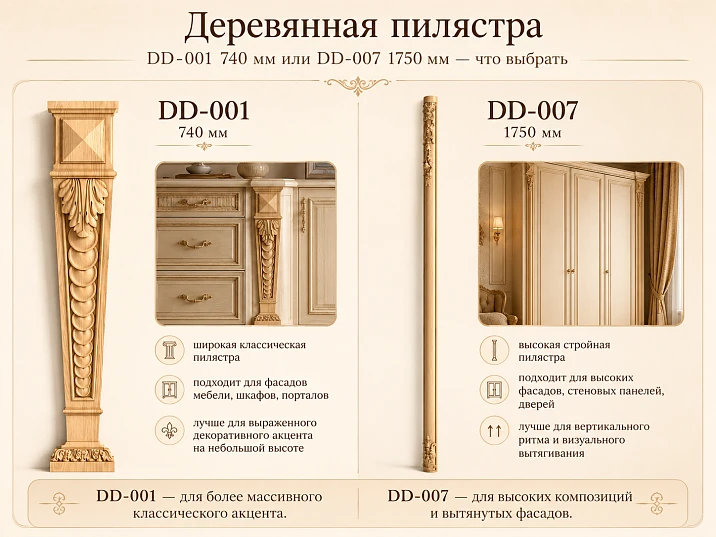
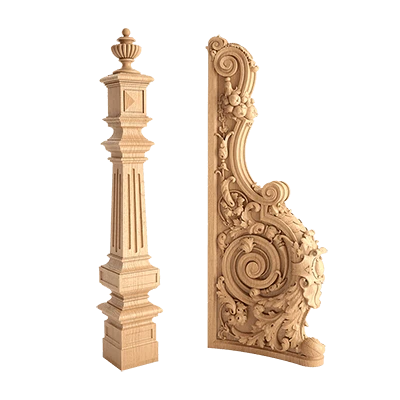
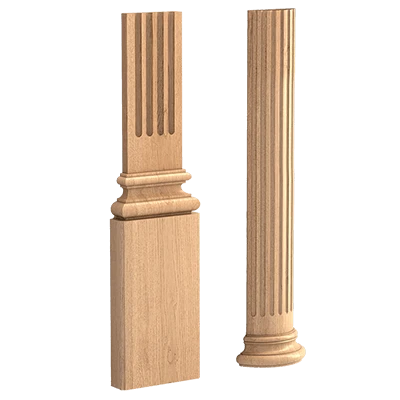
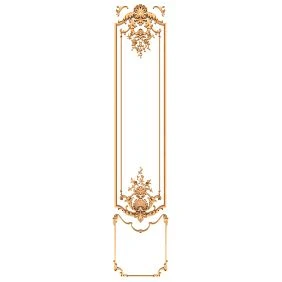
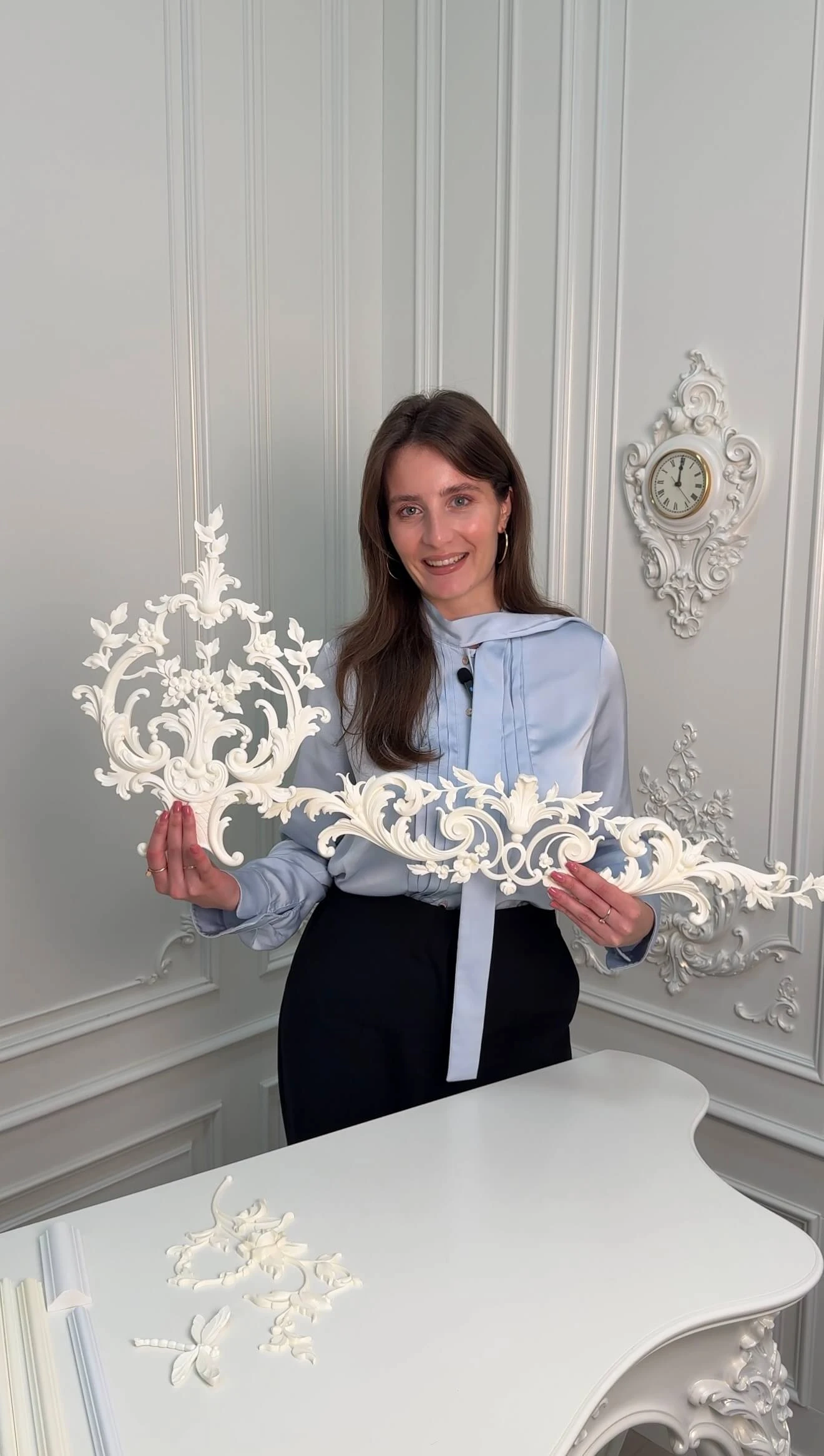
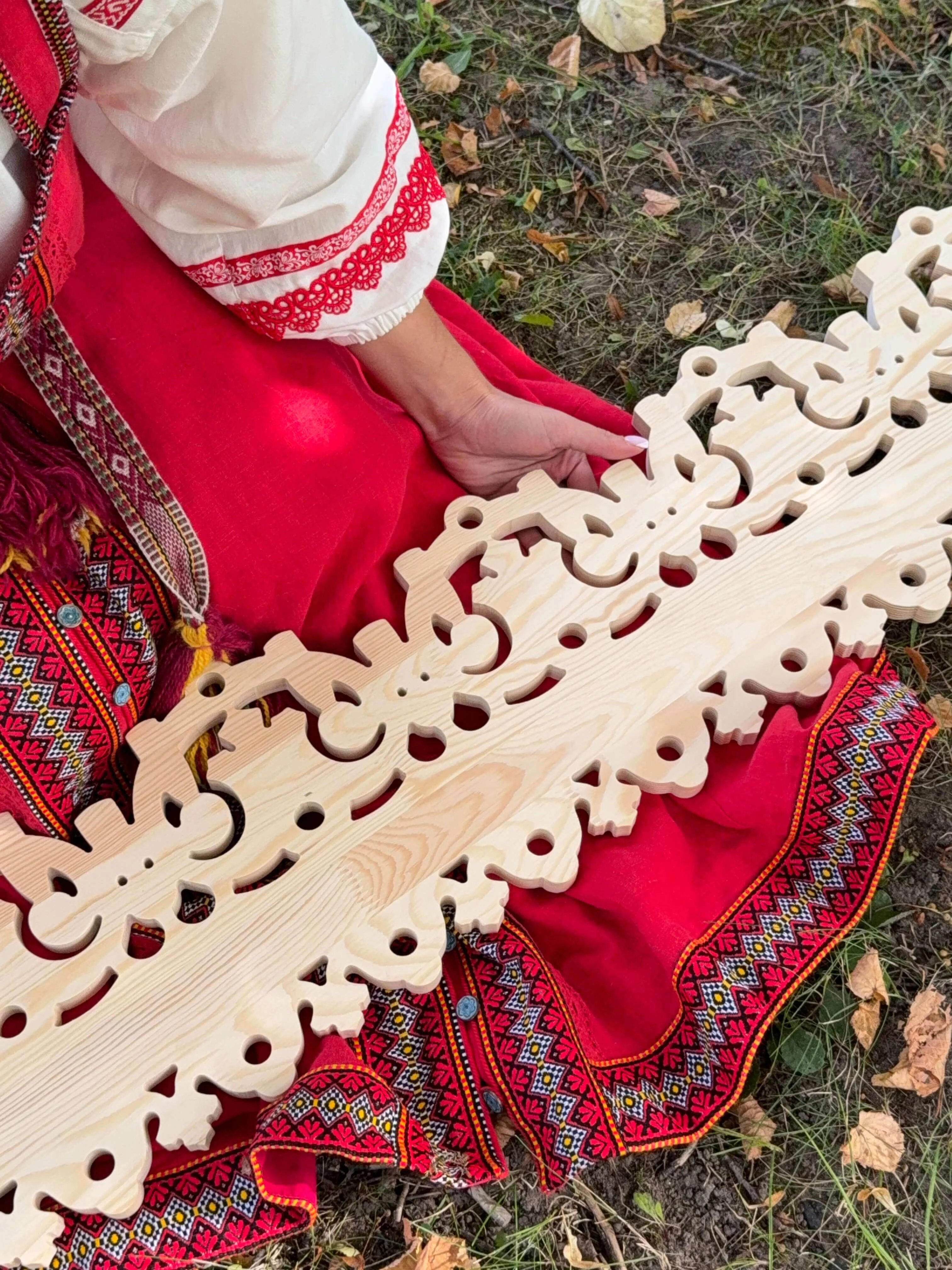
When you need to buy a wooden pilaster for furniture, a door portal, a fireplace area, or a wall panel, the choice cannot be reduced to comparing the pattern in a photo. Models DD-001 and DD-007 differ primarily in proportions. DD-001 has a height of 740 mm and a width of 140 mm, so it is perceived as a short, wide, and visually dense accent. DD-007 reaches 1750 mm with a width of 65 mm and works as an elongated architectural vertical.
The height difference between them is 1010 mm, and DD-001 is 75 mm wider than DD-007. These numbers change not only the appearance but also the application scenario. A short wide pilaster fits more easily on a furniture facade, near a fireplace, on a low panel, or a sideboard. A tall narrow model is more logical next to a door, library, built-in wardrobe, tall cabinet, or a portal from the baseboard to the upper cornice.
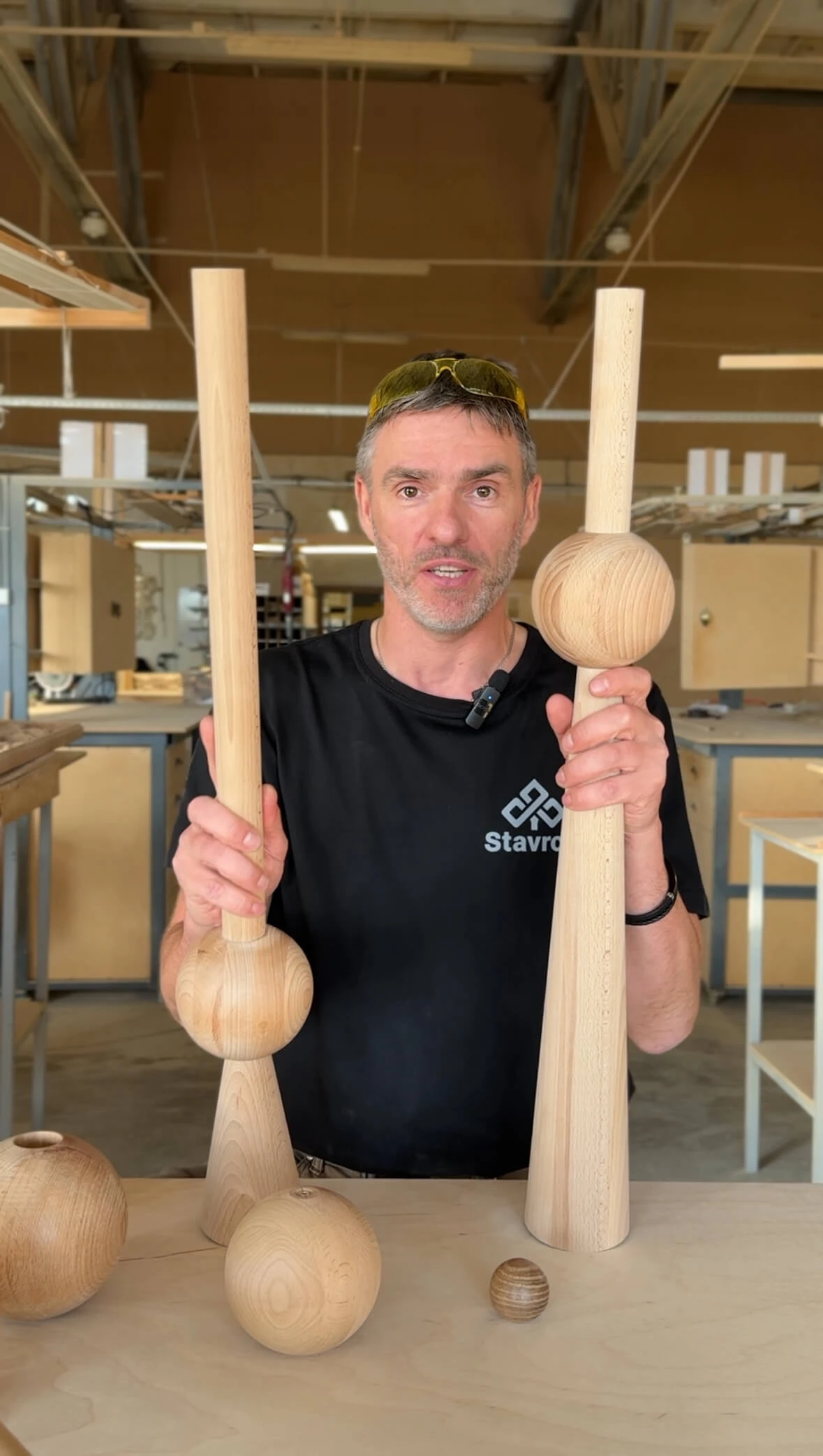
Both models are made of beech or oak, offered with "Standard" or "Prestige" sanding, and are made to order. Beech is prepared for enamel, oak for tinting. Therefore, the choice between DD-001 and DD-007 starts with dimensions, but must continue with checking the material, future finish, base, installation method, and adjacent elements.
Below are real purchasing scenarios: when a wide pilaster of 740 mm looks convincing, when a narrow pilaster 1750 mm high is needed, how to make a full-size template, how many items to buy, how to coordinate the pilaster with the baseboard and cornice, what to check before ordering, and why a carved element cannot be considered a load-bearing support.
Buy DD-001 740 mm Buy DD-007 1750 mm View pilasters and columns
DD-001 or DD-007: confirmed specifications
| Criterion | DD-001 | DD-007 | What this means |
|---|---|---|---|
| Size | 740 × 140 × 69 × 123 × 54 mm | 1750 × 65 × 50 mm | DD-001 is shorter and wider, DD-007 is taller and narrower. |
| Height difference | Base height 740 mm | 1010 mm higher | DD-007 is designed for a long vertical line. |
| Width difference | Width 140 mm | Width 65 mm | DD-001 requires more free space horizontally. |
| Material | Beech or oak | Beech or oak | The material is chosen together with the finishing system. |
| Sanding | "Standard" or "Prestige" | "Standard" or "Prestige" | For a pair, it is better to maintain one level of processing. |
| Beech preparation | For enamel | For enamel | Beech is suitable for opaque painting. |
| Preparing oak | For tinting | For tinting | Oak is chosen to preserve the texture. |
| Manufacturing | Made to order, average lead time 5–10 business days | Made to order, average lead time 5–10 business days | The actual lead time is checked before placing the order. |
The table shows the main thing: models cannot be chosen based on the principle of "which one is prettier." DD-001 and DD-007 solve different compositional tasks. The first has stronger horizontal density and local decorative weight, the second has height, elongation, and the ability to connect the lower and upper parts of a portal, cabinet, or wall panel.
What is a wooden pilaster and what problem does it solve
A pilaster is a vertical architectural element that is installed on the surface of furniture, a wall, a panel, or a portal. In an interior, it helps to assemble the composition vertically, emphasize the boundary of a section, frame the side part of a cabinet, visually support a cornice, or organize the framing of an opening. Unlike a full column, a pilaster does not surround the space on all sides and is usually perceived as an applied decorative element.
What matters to the buyer is not the terminology itself, but the practical result. A correctly selected pilaster covers an empty vertical strip, creates a clear boundary between facades, connects the bottom of the furniture with the upper cornice, and helps coordinate the door portal with other wooden details. A mistake in size works in the opposite way: a short part gets lost on a tall plane, a too tall one hits the base or cornice, an excessively wide one conflicts with the handle, trim, or adjacent facade.
DD-001 and DD-007 cannot be considered universal parts for any surface. Before ordering, check not only the overall dimensions, but also the actual installation location, the nature of the carved pattern, the direction of the composition, the condition of the base, the location of the baseboard, switches, sockets, hinges, and furniture fittings. For complex layouts, it is useful to study in advance how to choose a wooden pilaster by size and compare general recommendations with the drawing of a specific model.
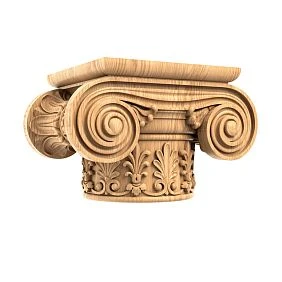
Our factory also produces:

Why height is more important than product photo
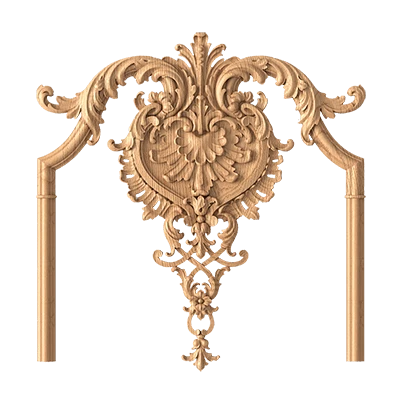
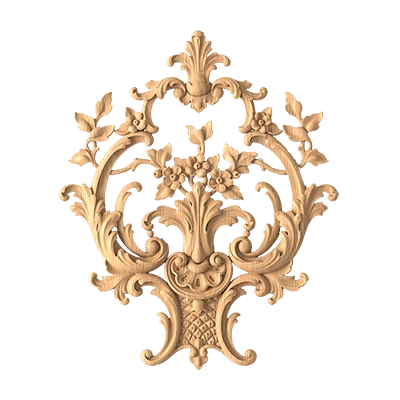
The photo in the card shows the shape but almost does not convey scale. On screen, DD-001 and DD-007 may look comparable, although one model has a height of 740 mm and the other 1750 mm. The difference of 1010 mm means they will occupy completely different proportions of a furniture facade or wall. On a door about a meter high, DD-001 can become the main decoration, while DD-007 physically will not fit. On a tall portal, the situation changes: DD-007 gathers the vertical, and DD-001 looks like a local insert.
Height should be evaluated not in isolation but relative to the entire structure. For a cabinet, the distance from the base to the top cornice, door height, mezzanine location, and facade division are important. For a doorway, the door leaf height, casing width, position of the top element, and free space between the opening and ceiling are important. For a wall, the baseboard level, upper panel boundary, and actual viewing distance are important.
The most reliable way to avoid mistakes is to make a full-size template. Even a simple rectangle of 740 × 140 mm and a strip of 1750 × 65 mm provide more information than dozens of photos. When the template is attached to the facade or wall, you can immediately see where the element ends, whether there is enough air above and below, whether it overlaps the handle, and whether it looks too narrow or heavy.
Get Consultation
When to buy a wide pilaster DD-001
DD-001 is especially convincing on furniture where the free height is limited, but there is room for a noticeable carved accent in width. The dimensions of 740 × 140 mm allow it to be used on the central part of a sideboard, display case, cabinet, low cabinet section, or decorative side panel. The width of 140 mm creates a dense spot, so the element does not get lost next to a panel, molding, or massive handle.
On the facade, it is important to leave a free field around the pilaster. If pressed to the edge, the ornament will look cut off, and the composition will appear random. If a handle is nearby, first check the hand grip trajectory and door opening. The pilaster should not interfere with using the furniture or block access to the fitting attachment. For paired facades, it is useful to decide whether DD-001 will be mirrored or used only as a central accent.
A pilaster near a buffet or display case DD-001 can support the lower part of the cornice, frame a side post, or highlight a central section. Here, its short height is perceived as an advantage: the decor does not stretch across the entire furniture and does not break the facades into excessively long strips. At a height of 740 mm, the pilaster is easier to coordinate with drawers, doors, glass inserts, and the base.
In the fireplace area, a wide pilaster works as a local architectural accent on the sides of the firebox or decorative part. However, it cannot be considered heat-resistant protection or a structural element. It is necessary to consider the distance to the heat source, the base material, and the requirements of the specific fireplace. If it is a decorative portal without heating, the choice is simpler, but a full-size layout is still needed.
Before ordering, you can go to the product page and buy a wooden pilaster DD-001, after checking the size, wood species, sanding, and current production time.
When to buy a tall pilaster DD-007
DD-007 is designed for situations where an almost full vertical is needed. The height of 1750 mm allows it to be placed along the side of a tall door or opening, connecting the lower and upper parts of the portal. With a width of 65 mm, the element takes up less horizontal space, making it suitable for a relatively narrow wall section between the opening and the wall.
For a portal, it is especially important to check the top and bottom points. The pilaster should not accidentally rest against the baseboard, break off long before the upper cornice, or intersect with the casing. Its position is determined together with other framing elements. It is useful to study in advance how to design a door portal with wooden elements, and then apply the dimensions of DD-007 to the specific opening.
Built-in furniture often has a height from the floor almost to the ceiling. A short pilaster on such a plane can look like a separate overlay, unrelated to the cabinet's architecture. DD-007, 1750 mm long, creates an extended line and emphasizes the vertical of the side post, central section, or edge of the bookcase.
The width of 65 mm is convenient when there is little space between facades or the side post is narrow. However, a narrow pilaster does not mean it can be placed in any gap. You need to consider the depth of the relief, door movement, hinge placement, handles, and adjacent shelves. On a hinged cabinet, it's better to open all doors in advance and check that the protruding decor does not catch on the adjacent door.
In the card, you can buy a tall pilaster DD-007 and clarify the current order parameters, material, and finish.
Wide or narrow pilaster: how to evaluate 140 and 65 mm
Width affects visual mass and the amount of free space around the decor. DD-001, 140 mm wide, requires a noticeable field. On a narrow door, it can take up too much of the facade, conflict with the handle, or visually press against the adjacent molding. On a wide panel, the same width looks appropriate and helps create a local accent.
DD-007, 65 mm wide, is easier to place on a wall section, cabinet side post, or between boiserie frames. It creates a thin vertical line and competes less with adjacent details. But on a very wide empty wall, one narrow pilaster can get lost. In that case, consider a symmetrical pair, repetition of several elements, or support with top and bottom decor.
The practical check is simple: measure not the entire wall or facade, but the usable field after subtracting the baseboard, casing, gaps, handles, outlets, and technical zones. Then overlay the width of 140 or 65 mm and evaluate the remaining fields on the left and right. Ideally, the composition looks intentional, not placed in the last free spot.
DD-001 and DD-007 for a chest of drawers, nightstand, and cabinet
A chest of drawers and nightstand usually have limited height, so DD-001 is closer to their scale. However, even 740 mm can be too much for low furniture. Before ordering, you need to check not the overall height of the body, but the free plane where the decor can actually be placed. Drawers, handles, base, and countertop reduce the available field.
DD-007 for a chest of drawers will almost always be excessively long. An exception is possible only as part of a tall wall or furniture composition, where a pilaster runs next to the chest of drawers but is not attached to its front. This is a design solution that should be verified through a drawing and overall visualization.
For a wardrobe, the choice depends on the section height. DD-001 is appropriate on a low door, side decorative insert, or central accent. DD-007 suits tall fronts and built-in furniture where an extended vertical line is required. On a floor-to-ceiling wardrobe, it can connect the base, main section, and top cornice.
In a dressing room, frequent door opening must be considered. The protruding carved element should not interfere with adjacent doors, touch the handle, or fall into the active grip zone. This is especially important for the wide DD-001. The narrow DD-007 is easier to place on a post, but due to its length, requires precise vertical marking.
Pilaster for a library and display case
A library is often built as an architectural composition of vertical posts and a top cornice. DD-007 naturally supports this language. It can emphasize a side post or divide sections. DD-001 is useful as local decor in the lower or central part, especially if the library includes closed fronts, cabinets, or wide panels.
For a display case with glass, the decor should not cover the usable area or obstruct the view. Therefore, first check the width of the wooden frame around the glass. If the frame is narrow, DD-001 may be too wide. DD-007 fits more easily in width, but its height must match the vertical section.
For an oak library, choosing an oak pilaster for tinting is logical if the visible texture needs to be preserved. For painted furniture, beech under enamel is often considered. It is important that adjacent elements have the same material and finishing system.
DD-001 and DD-007 for a door portal
A door portal is perceived as a unified system: side verticals, top part, architraves, moldings, baseboard, and sometimes bases or capitals. A pilaster cannot be chosen separately from this system. DD-007 is more often suitable for a full portal because its height of 1750 mm is closer to the size of a tall door. DD-001 can be used as a lower or middle accent, but does not always replace a long side vertical.
The width of the opening also affects the result. For a double door, the portal is more massive, and the narrow DD-007 may require an additional molding or paired elements. For a standard door, a width of 65 mm looks lighter. DD-001 with a width of 140 mm enhances the architectural weight but requires sufficient wall space on the sides.
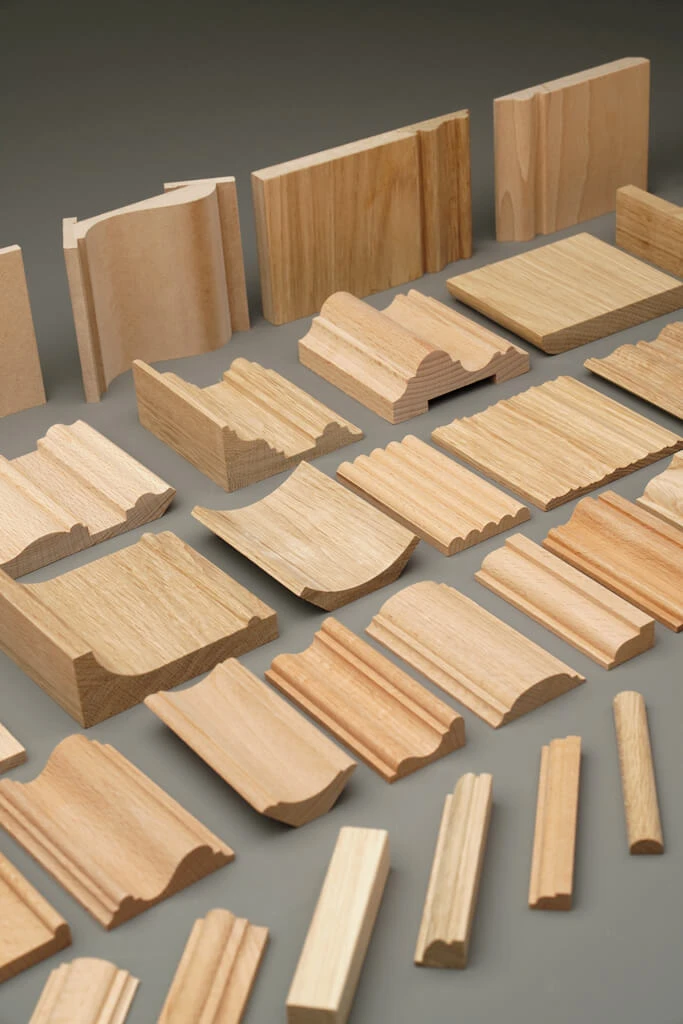
Before making a final choice, it is useful to select moldings for wooden pilasters. A straight profile helps connect the pilaster with the upper framing and makes transitions more logical. However, you cannot automatically consider any molding compatible: dimensions, relief, and joining method are checked according to a specific scheme.
Pilaster for fireplace, mirror, and wall panel
For the DD-001 fireplace, the scale is often more suitable: it is wider, shorter, and creates a dense local accent. It can be considered on the sides of the decorative portal or on adjacent panels. DD-007 is appropriate when the fireplace is built into a tall wall composition and the verticals rise to the cornice or ceiling area.
If there is a working heat source, the decorative solution must be coordinated with the technical requirements of the equipment and base. A wooden pilaster does not replace protective materials and should not be installed in an area where permissible distances are violated. The article discusses decorative choice, not fire safety calculations.
On the sides of a tall mirror, DD-007 creates a slender vertical frame. It is especially appropriate in a hallway, dressing room, or bedroom where the mirror extends from the floor upward. DD-001 is suitable for a more compact mirror or as the lower part of a complex frame. In both cases, symmetry and equal distance from the mirror edge are important.
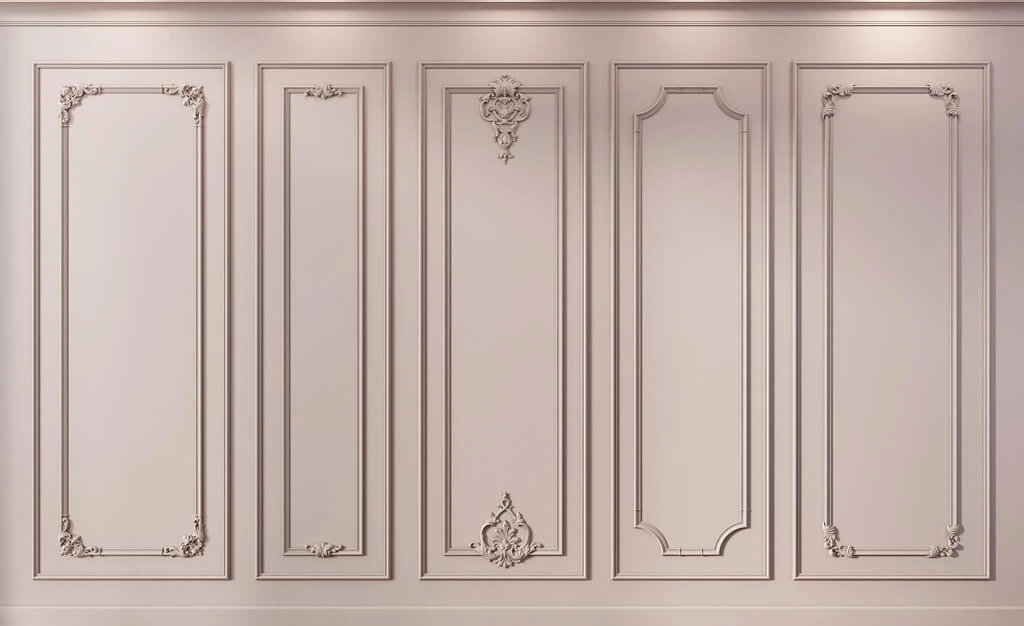
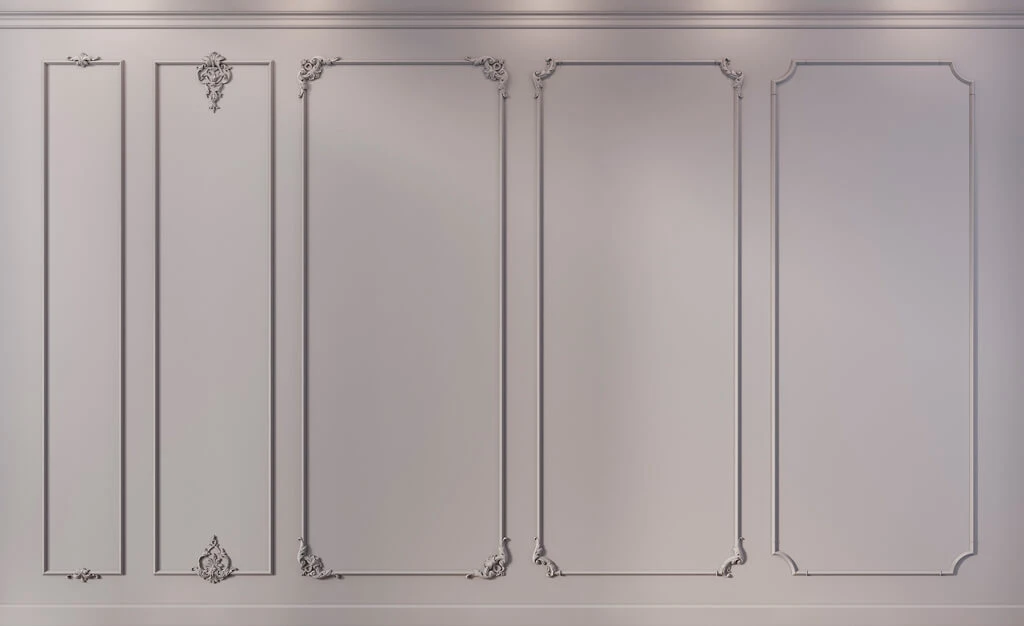
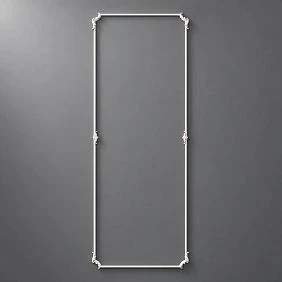
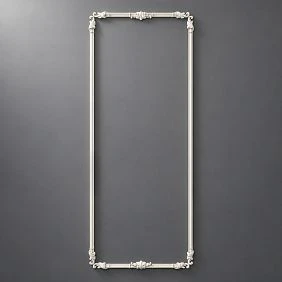
In boiserie, a pilaster helps divide fields and set a vertical rhythm. DD-007 is suitable for tall panels, DD-001 for local areas or the lower tier. When repeating elements, it is important to coordinate them with the width of molding frames. The pilaster should not appear accidentally wider than all other verticals or, conversely, disappear among them.
One pilaster, a symmetrical pair, or a repeating rhythm
One pilaster is appropriate when you need to emphasize the central section of furniture, the edge of a cabinet, or one decorative panel. DD-001, with its width of 140 mm, works well as an independent local accent. DD-007 alone can mark the boundary of a tall wall composition or built-in wardrobe.
A single placement requires a clear reason. If a pilaster ends up in the middle of a random empty strip, the composition looks unfinished. It is better to tie its position to the facade axis, section edge, opening line, cornice, or another architectural element.
A pair is the main scenario for a portal, mirror, fireplace, and central furniture section. Two identical pilasters create a frame and make the composition stable. For a pair, it is especially important to order products in the same wood species, with the same sanding, and preferably from the same batch, so that the processing and future finish match.
Several pilasters are used in libraries, long wall panels, and large cabinets. Here, a uniform step is important. DD-007 creates a slender repeating rhythm, DD-001 creates a denser sequence. The more elements there are, the more noticeable even a small error in distance or height becomes.
How to make a full-size mockup of DD-001 and DD-007
A full-size mockup is the main stage before purchase and installation. It does not require complex equipment. First, build a rectangle according to the main dimensions: 740 × 140 mm for DD-001 and 1750 × 65 mm for DD-007. If a DWG is available, it can be used to more accurately account for the shape and protruding parts.
The template is cut from paper, cardboard, or assembled from several sheets. Mark the central axis, top, and bottom on it. Then temporarily secure it with masking tape at the installation site. For a pair, make two identical templates. For a repeating row, it is useful to prepare as many strips as the planned number of products.
The mockup is evaluated under several conditions. First, look at it frontally from a normal distance. Then step back further, check the side angle, daylight, and evening lighting. Open doors, drawers, and adjacent panels. Check whether the template covers a switch, socket, hinge, handle, or ventilation grille.
A photograph of the entire wall or furniture helps to see proportions more objectively. On site, a person quickly gets used to the size, but the photo shows whether DD-001 is too short on a tall surface and whether DD-007 overwhelms low furniture. Only after such a check does it make sense to confirm the model and quantity.
How to measure the installation site without errors
Measurements start with the usable height, not the total height of the wall or furniture. Subtract the baseboard, plinth, upper cornice, trim, and all areas that cannot be covered. For DD-001, a clear field of at least 740 mm in height is required; for DD-007, 1750 mm. Additional fields above and below are determined by the project.
In terms of width, not only 140 or 65 mm are taken into account, but also the air around the part. If the pilaster is adjacent to the casing or handle, the pattern looks cramped. On the facade, the hand grip working area, hinge position, and the possibility of opening adjacent doors are checked.
For a pair, the left and right sides are measured separately. Walls and furniture are rarely perfectly symmetrical. If the dimensions differ, the composition is built on the smaller usable field or the position of the central axis is adjusted. It is convenient to apply the results on one drawing.
The viewing distance is also part of the measurement. In a narrow corridor, a tall DD-007 is read in parts, while in a spacious living room, it is read as a whole. DD-001 may look expressive from a close distance but get lost on a large wall. Therefore, the fitting is viewed from at least two or three points.
Can DD-001 or DD-007 be shortened
A carved pilaster cannot be arbitrarily trimmed. Even if it seems that a few centimeters need to be removed based on the overall dimension, the cut may hit the ornament, disrupt the finish, proportions, or the joining point with the adjacent part. This is especially critical for DD-007: the long pattern is perceived as a whole, and accidental shortening may make the top or bottom incomplete.
Before any modification, it is necessary to check the DWG and agree on the permissible processing area. Sometimes the composition allows changing the adjacent baseboard, plinth, molding, or element position instead of interfering with the pilaster itself. This approach is usually safer for the pattern.
If the standard height is not suitable, it is better to compare carved pilasters of the DD series and look for a model with different proportions. Several products are presented in the category, so replacing the article may be more reasonable than trimming.
Beech for enamel or oak for tinting
Beech is suitable when the pilaster is planned to be painted with opaque enamel. This scenario is logical for white, colored, or dark furniture, painted wall panels and portals, where the decorative element should match the background. Preparation for enamel simplifies creating a uniform surface, but the shade and coating technology must still be coordinated with the entire set.
If a pilaster is installed on ready-made furniture, achieving an exact color match is more difficult. A test sample and information about the existing coating are needed. Even the same color name does not guarantee a visual match due to differences in primer, gloss, layer thickness, and lighting.
Oak is chosen when it is important to preserve the wood texture. Tinting emphasizes the grain pattern and connects the pilaster with oak facades, a library, a door, or panels. On the long DD-007, the texture is especially noticeable vertically, while on the wide DD-001, it adds depth to a local carved accent.
It is better to confirm the oak tone on a sample. Adjacent parts are ordered in the same wood species and finished using a single system. If an oak pilaster must match existing furniture, compare not only the color but also the degree of gloss, pore saturation, and overall surface character.
A beech pilaster for enamel and an oak part for tinting can coexist in one interior, but this should be a deliberate combination, not a random substitution. In one symmetrical pair, materials should not be mixed: differences in texture and finish will be noticeable.
Sanding "Standard" or "Prestige"
The choice of sanding level is related to the requirements for the final surface and the amount of further preparation. The more complex the relief and the more noticeable the side lighting, the more attention must be paid to surface quality. For light enamel, small irregularities may be more visible than for dark tinting, but the final result depends on the entire finishing technology.
When ordering a pair or several identical pilasters, it is important to choose one processing level for the entire set. Mixing options increases the risk of differences after painting. It is better to compare the "Standard" and "Prestige" sanding in detail before placing an order, especially if the finishing is done by an external workshop.
Information about processing levels can be checked in the section quality of STAVROS wooden decor. Sanding does not eliminate the need for trial assembly and inspection before finishing: parts are first examined, applied to the base, joints are checked, and only then do they proceed to primer, enamel, tinting, or oil.
How to coordinate a pilaster with a baseboard, skirting board, and upper cornice
A vertical element looks complete only when its bottom and top points are connected to the overall architecture. If DD-001 or DD-007 starts directly from the floor, you need to understand how it runs relative to the baseboard. The pilaster may stop above it, enter a separate base, or sit on a furniture plinth. Randomly overlapping the baseboard creates the impression of an installation error.
At the top, check the cornice, molding, casing, or panel border. DD-007 is often used precisely to connect the lower and upper levels, so it is especially important that its termination does not end in empty space. DD-001 can work as a separate insert, but even then, it is better to align the top edge with a horizontal line of furniture, a shelf, or a frame.
If the top and bottom elements have not yet been selected, first form the overall scheme. The pilaster should not dictate a random cornice height, nor should the cornice force the carved pattern to be trimmed. All dimensions are consolidated on a single drawing, and only then is the order approved.
How not to confuse a pilaster with a column and a load-bearing support
DD-001 and DD-007 are decorative carved products. They are not intended for calculating the load-bearing capacity of a building, furniture, or portal. A pilaster may visually resemble a post or architectural support, but its function in this context is surface decoration and composition building.
The decorative product card cannot be used as confirmation that the element can support a shelf, beam, countertop, or the weight of the upper part of a portal. If the project involves a load, it is borne by a separate frame or structural base calculated by a specialist. The pilaster is installed on top or nearby as a decorative part.
Also, do not confuse a wooden pilaster with a polyurethane, plaster, or facade element. The material affects preparation, installation, finishing, and operating conditions. This article specifically discusses products made of beech or oak for interior and furniture applications.
Base preparation and installation
The method of attachment depends on the base material, product dimensions, relief geometry, and operating conditions. A wall, MDF, solid wood, painted panel, and laminated facade require different preparation. Therefore, one universal adhesive or only one installation method cannot be recommended for all cases.
Before installation, the base is checked for levelness, strength, and cleanliness. Dust, grease, weak paint, and peeling coating reduce reliability. On furniture, additionally check the thickness of the facade, the location of hinges and internal fittings. On the wall, check for hidden utilities, switches, and sockets.
First, the pilaster is applied without glue or fasteners. For a pair, set the central axis of the entire composition, then the vertical of each element. Temporary fixation must be safe for the relief and surface. Strong pressure directly on the carved protrusions may damage the parts.
For the long DD-007, vertical alignment is especially important: a slight deviation becomes noticeable across the entire height of 1750 mm. DD-001 is shorter but wider, so the error manifests as uneven side margins. Before final fixation, it is useful to view the composition from a distance once more.
General recommendations for fitting and installing carved decor help prepare, but final installation must account for the specific base and project.
Finishing before or after installation
Painting before installation provides convenient access to the relief and edges but increases the risk of damaging the finished coating during installation. Finishing after installation allows the pilaster to be unified with the furniture or wall, but it is more difficult to paint the joints and protect adjacent surfaces. The decision is made on-site and according to the project's technology.
For beech under enamel, uniform preparation of the entire composition is important. Pilasters, moldings, and adjacent overlays are best primed and painted using one system. For oak under tinting, a test color is done first. The color on a small sample is evaluated after complete drying and under the lighting conditions where the product will be located.
Deep carved relief cannot be flooded with a thick layer of coating. Excess material softens the pattern and collects in the recesses. The work is performed in thin, controlled layers, taking into account the recommendations of the finishing material manufacturer.
Joint and fastening points are thought out before applying the finish. If rework is needed after painting, it may differ in shade or gloss. Therefore, the sequence 'fitting — preparation — test color — installation — finish' is adjusted for the specific object, but the control fitting is never skipped.
How to accept pilasters before finishing and installation
After receiving the product, inspect it before painting and fixation. Check the article number, quantity, material, selected sanding, and compliance with dimensions. For a pair, lay the parts side by side and compare the direction of the pattern, overall geometry, and visual consistency.
Then perform a dry fitting on site. This stage confirms that the measurements have not changed after installing furniture, baseboards, trims, or electrical work. If the room is still under renovation, the storage location must protect the wood from impacts, contamination, and sudden changes in conditions.
Finishing begins only after acceptance. Applied enamel, tinting, or oil complicates returning to check the original surface. For a large order, it is useful to keep a list of products and note where each pilaster will be installed.
When inspecting, you cannot make a conclusion based on just one piece from a pair. Compare both pilasters side by side, because that is exactly how they will be perceived on a portal or facade. It is better to resolve all questions about configuration and finishing before starting further work.
Pilasters in the living room
In the living room, DD-001 is suitable for a fireplace area, sideboard, classic-style TV panel, or local wall insert. DD-007 is appropriate on the sides of a tall portal, library, or mirror. When choosing, consider the distance from the sofa and main viewpoints: the large pattern should be fully readable, not just from close up.
If the room is spacious and the ceiling is high, DD-001 may look too short on a free wall. Then it is better to tie it to furniture or a lower panel. DD-007, on the other hand, opens up on a tall plane but requires a calm environment. If there are already several vertical slats, columns, or tall cabinets nearby, an additional pilaster may create overload.
Lighting affects the depth of the carved pattern. Side light emphasizes the relief and makes the wide DD-001 visually even denser. Uniform frontal light softens the pattern of DD-007. Therefore, it is useful to evaluate the template during the day and in the evening, and choose the finish considering the actual light.
Pilasters in the hallway and corridor
In the hallway, there is often little width, so the narrow DD-007 may be more convenient. But the corridor wall does not always provide a height of 1750 mm after accounting for baseboards, switches, and furniture. DD-001 is suitable for a cabinet, mirror panel, or low wardrobe section. Be sure to check the opening trajectory of the entrance and furniture doors.
In a narrow corridor, the pilaster is close to the viewer, so the relief is perceived more strongly. The wide DD-001 may seem bulkier than in the photo, and the tall DD-007 may visually narrow the passage if installed too close to a corner. A full-size template helps to see these effects before purchase.
Practicality is especially important near the dressing area. The decor should not catch on clothes, bags, or wardrobe doors. If the surface is frequently touched, the mounting method and protection of the finish require additional attention.
Pilasters in the study, library, and home office
A tall library is one of the strongest scenarios for DD-007. The vertical emphasizes the structure of sections and connects the lower cabinet with the upper cornice. DD-001 can be used on closed lower facades or in the central part. Oak tinting helps preserve the character of the wood and support shelves or panels.
In a study, it's important not to turn furniture into a set of unrelated decorative spots. If DD-007 already sets the main verticals of the library, DD-001 should be used sparingly. For example, on the central cabinet or panel behind the desk. Repeating one ornament at different scales must be intentional.
For built-in furniture, it's better to consider pilasters at the cabinet design stage. Then you can pre-set the required width of the stiles, the position of the cornice, and attachment points. When updating an existing library, you have to work with existing dimensions, so a template and hardware check become mandatory.
Pilasters in the bedroom and dressing room
In the bedroom, pilasters are more often used on wardrobes, headboards, mirror areas, or accent walls. For a tall built-in wardrobe, DD-007 is suitable; for a chest of drawers and a local panel, DD-001 is suitable. The choice depends not only on the furniture but also on the overall calmness of the interior: carved decor should support the composition, not create unnecessary visual noise.
In a dressing room, daily use is important. The pilaster should not interfere with handles, hinges, pull-out baskets, or door opening. DD-007 fits more easily in width, but its long body requires a level base. DD-001 can become an accent on the central section if there is enough free space around.
If pilasters are finished in the color of the facade, they are perceived as part of the furniture. Contrasting tinting makes them an independent decor. Before choosing, it's advisable to see both options at least on a sample or visualization.
Pilasters in the kitchen and dining room
In the kitchen, DD-001 is suitable for a decorative portal around the hood, the side of a sideboard, a column with appliances, or a central panel. DD-007 can be used on a tall cabinet or in a large composition from the base to the upper cornice. However, proximity to work areas requires considering dirt, maintenance, and access to facades.
The pilaster should not block ventilation gaps, interfere with opening appliances, or fall into an area of constant contact with water and steam without suitable finishing. These issues are resolved at the kitchen design stage, not after purchasing decor.
For the dining area, pilasters can frame a sideboard, niche, or wall panel. There are fewer operational restrictions here, but scale is still important. On a low sideboard DD-001, it reads naturally, while DD-00
Pilasters in commercial interiors
In a salon, hotel, restaurant, or showroom, pilasters help create a recognizable architecture. DD-007 works better in tall portals and long walls, DD-001 on counters, panels, and furniture. In commercial spaces, usage intensity and base requirements are additionally considered, so the installation project is especially important.
The buyer needs to distinguish between decorative effect and operational function. A pilaster can highlight an entrance, niche, or checkout counter, but should not obstruct the flow of people, cleaning, or door operation. A protruding relief in a narrow passage requires caution.
If there are many elements, it is recommended to order the entire batch at once and maintain an installation log. This helps ensure consistent material, sanding, and finish, and avoids a situation where some verticals differ in shade.
How to combine DD-001 and DD-007 in one interior
Both models can be used in one project, but not as a random pair on a single symmetrical composition. DD-001 can frame furniture or a fireplace area, while DD-007 can frame a tall door portal in an adjacent part of the room. The connection is created through the same material, finish, color, and overall character of the moldings.
In adjacent rooms, the difference in proportions helps adapt the decor to the scale: a short wide pilaster suits lower furniture, a tall narrow one suits doors and a library. At the same time, repeating the same wood species and shade maintains the integrity of the interior.
On one wall, the combination requires a project. If DD-001 and DD-007 stand side by side without a clear hierarchy, the verticals may conflict with each other. The best scheme is when one model relates to furniture and the other to the architecture of the wall or portal.
How to store DD-001 and DD-007 before installation
The tall DD-007 requires careful handling. It should not be left in the aisle, leaned against protruding relief, or stacked under heavy materials. The storage location should be chosen to avoid impacts and accidental pressure. The packaging should only be removed when inspection is possible and the product can be safely protected again.
The DD-001 is more compact, but its wide carved protrusions also need protection. For a pair, it is important not to mix up the products if they are intended for different sides or sections of the composition. Labels on the temporary packaging help preserve the installation plan.
Specific storage and acclimatization conditions should be agreed upon with the manufacturer and finisher, especially if the products arrive at the site before wet work is completed. The main goal is to preserve the geometry and surface until installation.
How to estimate the project cost without inflated prices
The price of a composition depends not only on one pilaster. The calculation includes the number of products, material, sanding, accompanying decor, finishing materials, base preparation, and installation. A portal usually requires a pair, a long wall requires several repeating elements, and furniture may require a single product.
Before purchasing, open the DD-001 and DD-007 cards, select the parameters, and check the current price. Then add related items to see the full set, not just the price of one part without installation and finishing. Current prices cannot be transferred from an old order or a similar model.
A rational approach is to first confirm the layout and quantity, then calculate the budget. Buying a pilaster that is too short or too wide ends up costing more if the model has to be changed after a fitting. A full-size template reduces this risk before placing the order.
What to buy together with a wooden pilaster
For a simple furniture insert, one pilaster and finishing materials may be sufficient. For a door portal, a pair of products, top framing, moldings, and a well-thought-out connection to the baseboard are usually required. Suitable groups can be viewed in the section to buy carved wooden decor.
Materials are selected for the specific base and finish. In the catalog, you can buy materials for installing a wooden pilaster, but the final composition of the kit must account for the wall, MDF, solid wood, or painted panel.
For a large wall composition, you additionally need an accurate layout and coordination of repeating elements. It is useful to combine pilasters, moldings, and other details in one order to avoid differences in materials or delivery times.
Main mistakes when buying DD-001 and DD-007
The first mistake is choosing only by photo. On screen, DD-001 and DD-007 seem comparable, but the height differs by more than a meter. Solution: use exact dimensions and a 1:1 template.
The second mistake is comparing only height and forgetting width. DD-001 is 75 mm wider than DD-007. On a narrow wall section, this can completely change the choice. You need to measure the usable area after accounting for the trim, handles, and adjacent details.
The third mistake is placing DD-001 on a too-high empty surface. A short pilaster can get lost or look cut off. You need to check whether DD-007, a pair of elements, or an additional molding is required.
The fourth mistake is placing DD-007 on low furniture. The height of 1750 mm is not suitable for a regular cabinet or dresser. In such cases, choose DD-001 or another model.
The fifth mistake is cutting the thread without a drawing. Random cutting disrupts the ornament and proportions. Permissible changes are checked against the DWG and agreed upon before ordering.
The sixth mistake is buying one pilaster for a symmetrical portal. If the composition implies a pair, one piece will not solve the problem. The quantity is determined in advance and ordered simultaneously.
The seventh mistake is mixing beech and oak in one pair. Differences in texture are especially noticeable after finishing. For symmetry, keep one wood species and one sanding level.
The eighth mistake is not considering the baseboard and cornice. The pilaster may hit the lower or upper element. You need to measure the clear height between the actual boundaries.
The ninth mistake is installing before approving the color. After fixing, it is more difficult to do a test paint and replace the material. The finish is approved in advance.
The tenth mistake is considering the pilaster load-bearing. The decorative element does not replace a calculated frame. The structural and decorative functions are separated.
Who DD-001 is suitable for
DD-001 is suitable for owners of furniture and interiors that need a wide carved accent on a limited height. It is appropriate on a facade, sideboard, display case, fireplace area, low panel, and local portal. The model is especially useful when the width of 140 mm fits without conflict with handles and adjacent parts.
DD-001 is not suitable if you need to run a vertical almost from the floor to the top cornice, design a high doorway, or fill a long side shelf of a library. In such tasks, it may look too short. Also, the model is not suitable for a narrow wall section where there are no free 140 mm plus side margins.
For a buyer who hesitates between a local accent and a full architectural vertical, it is useful to start with two templates. Comparison on site quickly shows which proportion matches the furniture and room.
Who DD-007 is suitable for
DD-007 is chosen for tall doors, built-in wardrobes, libraries, wall panels, and portals. Its narrow width of 65 mm allows it to be placed on a relatively small wall section. It is suitable when a long vertical rhythm is needed and a short pilaster would be visually lost.
DD-007 will be excessive on a low chest of drawers, bedside table, small door, or panel shorter than the product. It can also overwhelm a narrow room if there are already many long vertical details nearby. The height of 1750 mm requires precise fitting and careful installation.
If the usable height is slightly less than 1750 mm, do not immediately plan to trim it. First, check another model or adjust neighboring elements. Preserving the intact carved pattern is more important than trying to fit DD-007 at any cost.
How to buy a wooden pilaster on STAVROS
Start by selecting a scenario. For furniture, fireplace, and low panel, open the DD-001 card. For a tall cabinet, library, door, or portal, open the DD-007 card. Then check not only the overall appearance but also the exact dimensions, material, sanding, preparation for finishing, and current production time.
The next step is a full-size template. It shows whether the product fits, whether there is enough free space, and whether one element or a pair is needed. After fitting, determine the wood type: beech for enamel or oak for tinting. It is better to order all elements of one composition at the same time.
For a complex portal, cabinet, or wall system, you can order a layout of pilasters for furniture or a portal. Before placing an order, it is also useful to check the terms of production and delivery of wooden pilastersto align the order with the finishing and installation schedule.
If the choice is not limited to two models, open the category of wooden pilasters and columns. This allows you to compare proportions and assemble a composition without random scale mismatches.
Comparison of application scenarios
| Scenario | What to Check | DD-001 | DD-007 |
|---|---|---|---|
| Narrow pier | The clear width between the opening, corner, and switch | May not fit due to a width of 140 mm | More often suitable due to a width of 65 mm |
| Wide furniture front | Position of the handle, panel, and axis | Provides a dense, noticeable accent | May require a pair or molding |
| Tall cabinet | Distance from base to cornice | Suitable for a local section | Better collects the full vertical |
| Low panel | Total height of the decorative field | Main Scenario | Often excessive in height |
| Door portal | Height of the opening, casing, cornice, and baseboard | Local accent | Full side vertical |
What to buy with the pilaster
| What to add | Why | Scenario | Check |
|---|---|---|---|
| Paired pilaster | Symmetry | Portal, mirror, fireplace | Same species, polishing and batch |
| Carved Decor | Support top and side zones | Furniture and portals | Scale and ornament |
| Installation and Finishing | Prepare the base and finish | Any installation | Base material |
| Moldings | Connect vertical with cornice | Door, boiserie, cabinet | Profile and joining |
| Design layout | Check composition | Complex portal or multiple pilasters | Exact object dimensions |
Pre-order checklist
| Check | DD-001 | DD-007 | Result |
|---|---|---|---|
| Usable height | 740 mm plus margins | 1750 mm plus margins | No conflict with baseboard and cornice |
| Usable width | 140 mm plus air | 65 mm plus air | No conflict with handle and casing |
| Quantity | One, pair, or repeat | One, pair, or rhythm | Order matches layout |
| Material | Beech or oak | Beech or oak | Matches finish |
| Template 1:1 | Checked | Checked | Scale confirmed |
Before ordering, go through the entire list sequentially. Even if one parameter seems obvious, it may change after installing baseboards, cornices, furniture, or electrical. The control template helps translate the choice from a visual impression into a verified solution.
FAQ: choosing DD-001 and DD-007
1. Which pilaster is better for a furniture facade?
For a regular furniture facade, DD-001 with a height of 740 mm is more often suitable because it is easier to place on a limited plane. DD-007 is chosen for very tall furniture, a side cabinet or a library. The decision is made based on the usable height and width of the facade, not the overall height of the body.
2. Which model is suitable for a door portal?
DD-007 is more often logical as a full side vertical with a height of 1750 mm. DD-001 can be used as a local accent or part of a more complex portal. You need to check the height of the opening, the casing, the baseboard, the upper cornice, and the width of the wall.
3. Can DD-001 be installed on the sides of a fireplace?
Yes, as a decorative element in a suitable composition. But the distance to the heat source and the base must comply with the technical requirements of the fireplace. The pilaster does not replace protective materials and does not confirm the admissibility of installation near a heating part.
4. Will DD-007 be suitable for a cabinet with a height of 2400 mm?
It may be suitable, but you need to check the clear field between the base, cornice, and facade divisions. The height of the cabinet itself does not guarantee the correct fit of the pilaster. Handles, hinges, and the opening of adjacent doors are also taken into account.
5. Why does DD-001 look more massive?
It is wider: 140 mm versus 65 mm for DD-007. With a smaller height, the wide shape creates a denser local accent. On a narrow facade, this effect is enhanced, so the template is especially important.
6. Can one DD-007 be placed next to a door?
Yes, if the composition is asymmetrical and the position relates to the room's architecture. For a classic portal, a symmetrical pair is more often used. A single pilaster must have a clear reference to the wall, furniture, or opening boundary.
7. How many pilasters are needed for a mirror?
Usually two on the sides, but the number depends on the project. For a tall mirror, DD-007 is more suitable; for a compact one, DD-001. First, templates are made, and the wall width, distance to the mirror edge, and light fixtures are checked.
8. Can DD-007 be shortened?
Without checking the DWG and approval — no. Trimming may damage the carved pattern, top finish, and proportions. It is better to choose a different model or adjust neighboring composition elements.
9. Should I choose beech or oak for white enamel?
In the confirmed configuration, beech is prepared for enamel. Oak is more logical for tinting and preserving texture. Before finishing, a test coat is made, and the color is coordinated with the furniture or wall.
10. Can beech be tinted?
The article uses confirmed preparation options: beech for enamel, oak for tinting. Other technologies should be separately coordinated with the manufacturer or finisher, without assuming them automatically.
11. What does "Prestige" polishing mean?
This is one of the available processing levels. For detailed differences, it's better to check the STAVROS quality section and consider the requirements for the final coating. For paired items, choose the same option.
12. Is it necessary to order a pair in one batch?
Yes, this reduces the risk of differences in wood species, processing, and shade after finishing. For a symmetrical composition, uniformity is especially noticeable, so the material and polishing are coordinated simultaneously.
13. Can a pilaster be glued to a painted wall?
The method depends on the strength of the coating, wall material, product dimensions, and the chosen fastening system. The base needs to be checked and prepared; there is no universal solution for all paints and walls.
14. Is the pilaster load-bearing?
No. DD-001 and DD-007 are considered decorative carved elements. The load must be borne by a separate calculated frame or base.
15. How to check if DD-001 is too wide?
Make a template 740 × 140 mm and apply it to the installation site. Check the free margins, handles, casing, hinges, and adjacent facades. Look at the template from the main distance.
16. How to know if DD-007 won't get lost on a wide wall?
Evaluate the template from the main viewing distance. If one narrow vertical looks weak, consider a pair, repeating rhythm, or support with moldings. Do not increase the quantity without an overall scheme.
17. Which model is better for a library?
For a tall built-in library, usually DD-007. DD-001 is suitable for lower facades, a central panel, or local accents. The material choice is tied to the finish of the entire furniture.
18. When to place an order relative to renovation?
After approving dimensions, layout, and finish, but before final installation. Since products are made to order, the actual lead time must be considered in the project calendar.
19. What to buy together with a pilaster?
Depending on the task: a second pilaster, moldings, top decor, materials for installation and finishing. For a portal and a large wall, a project layout is useful.
20. Where to see other pilasters?
В pilasters and columns categories and in a separate collection of the DD series. Compare models by actual dimensions, not just by photo.
Result: DD-001 or DD-007
The choice between DD-001 and DD-007 is a choice of scale. DD-001 measuring 740 × 140 × 69 × 123 × 54 mm is suitable for furniture, fireplace area, low panel, and wide local accent. DD-007 measuring 1750 × 65 × 50 mm is suitable for a tall cabinet, library, door portal, narrow wall space, and extended wall vertical.
Do not choose a pilaster only by its pattern. Check the usable height and width, baseboard, cornice, handles, hinges, sockets, and viewing distance. Make a 1:1 template, determine the number of items, choose beech for enamel or oak for tinting, and coordinate sanding for the entire set.
On STAVROS you can go to the product cards wide carved pilaster DD-001 with a height of 740 mm и narrow wooden pilaster with a height of 1750 mm, and then assemble the order together with suitable decor and installation materials. This route is more reliable than random selection: the buyer understands in advance the proportions, purpose, and place of each detail.
When a project layout is needed, not a self-selection
Self-fitting is sufficient when using one pilaster on a simple furniture panel and there are no complex joints around. A project layout becomes useful if you need to design a door portal, library, wall with multiple verticals, fireplace area, or built-in cabinet with a top cornice. In such cases, an error in one detail affects the entire composition.
For the project check, prepare the dimensions of the room, furniture, and openings, mark the baseboard, cornice, sockets, switches, handles, and hinges. Then compare DD-001 and DD-007 not separately, but together with adjacent moldings and carved decor. This helps to understand in advance whether a pair is needed, which step to choose, and where the vertical should start and end.
At STAVROS you can order a layout of pilasters for furniture or a portal. This approach is especially useful when the standard size almost fits, but there is a question about joining with the baseboard, cornice, or door frame. The project allows avoiding arbitrary trimming and random combination of elements.
The final decision is approved only after a full-size check on site, because the exact proportion is always more important than the impression from a photo in the catalog.