



























Article Contents:
- Buy wooden pilaster
- Pilaster: what it is, where it comes from and why it is needed now
- Which wooden pilaster to buy: breaking down by parameters
- What is a pilaster for?
- Size: height and width
- Relief style
- Completeness: shaft, base, capital
- Where wooden pilasters are used
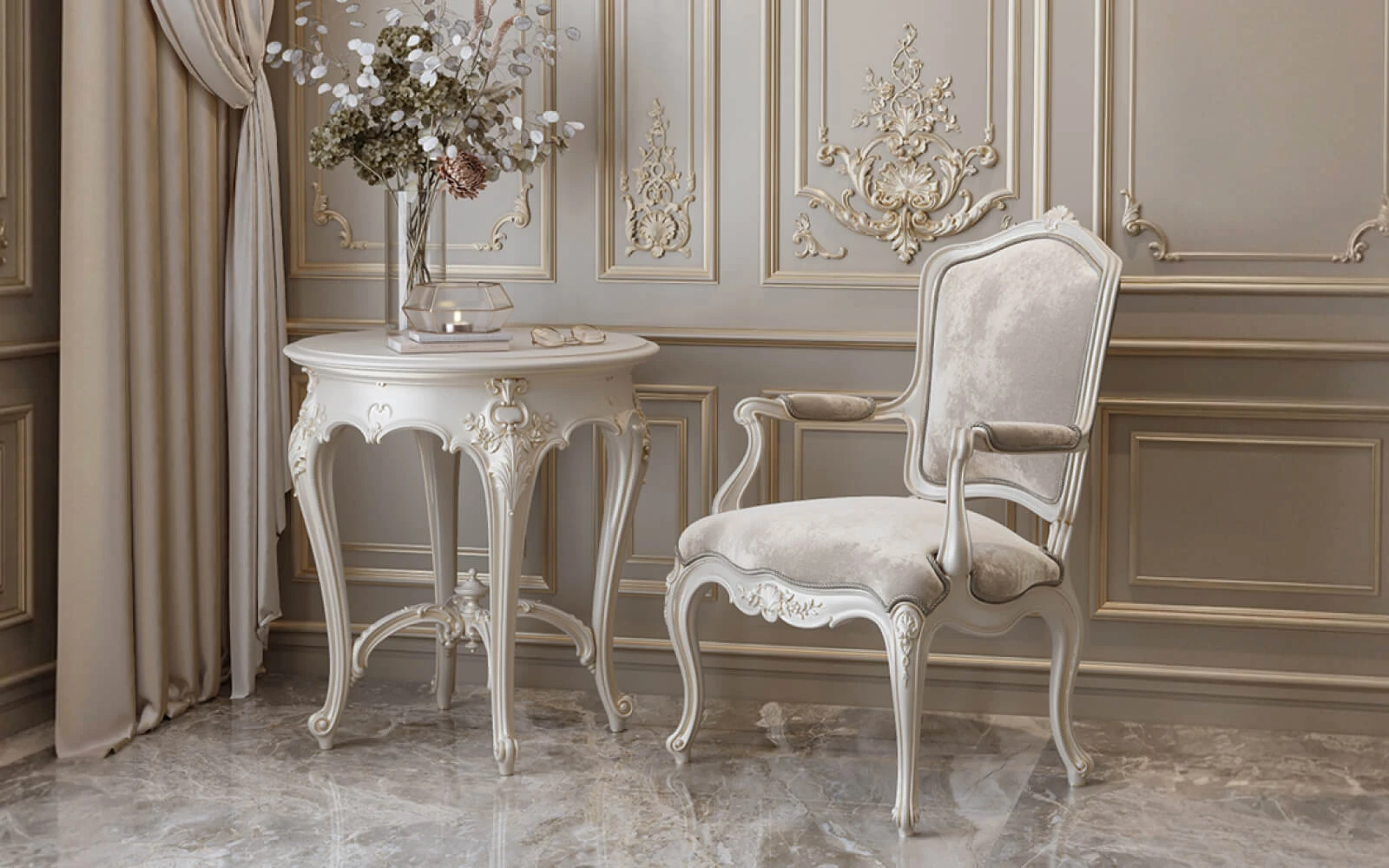
- For classic interiors
- For door portals
- For furniture
- For columns and half-columns
- Pilaster, column and capital: anatomy of the order system
- Wooden pilaster for furniture: detailed breakdown
- Why pilasters are trending again for furniture
- Use case scenarios
- Pilaster for painting and staining
- Carved wooden pilaster: a special discussion
- What affects the price of a wooden pilaster
- Wooden pilaster and the classical decor system
- How to choose a pilaster before buying: a step-by-step checklist
- Mistakes when buying a wooden pilaster
- Where to buy a wooden pilaster
- FAQ: Answers to Key Questions
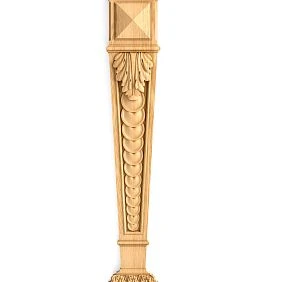

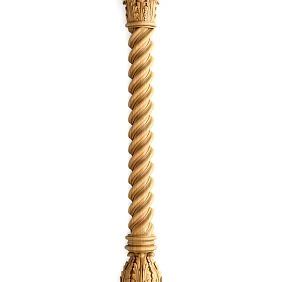
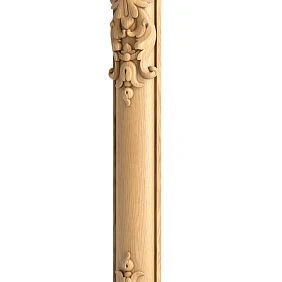
Buy a wooden pilaster
There are elements that are invisible at first glance — and that is precisely why their absence destroys the space. A pilaster is one of them. It doesn't shout about itself. It stands as a vertical on the wall, by the door, on the sides of the fireplace, on the cabinet facade — and creates that very architectural rhythm without which the interior turns into a set of random surfaces.
Buying a wooden pilaster means choosing depth and materiality of decor. Not stickers, not films, not plastic stamped overlays. Real wood, a real profile, a real classic element that will work for the space for years.
This article is for those who want to buy a wooden pilaster thoughtfully. Without haste, but also without unnecessary words. With an understanding of what exactly you are buying, where you are placing it, how you are choosing it, and why the price is exactly that.
Pilaster: what it is, where it comes from, and why it is needed now
The history of the pilaster begins in antiquity. Greek and Roman architects used it as a flat analogue of a column — a rectangular projection on the wall with the same decorative program: base, shaft, capital. Technically, the pilaster does not bear a load — it decorates the vertical, creates an architectural rhythm, and accents zones.
The Renaissance reimagined the pilaster as an interior tool — and since then it has not disappeared from architecture. The Baroque made it lush and ornamented. Classicism made it strict and proportionate. Empire style made it solemn and monumental. The neoclassicism of our time made it light, refined, and appropriate in modern interiors without a touch of museum-like quality.
A wooden pilaster today is not an archaism. It is a conscious choice of those who understand: architectural decor made of natural wood creates an atmosphere that no other material can fully reproduce.
Our factory also produces:
Which wooden pilaster to buy: breaking down by parameters
Before heading to the catalog, it's worth answering a few questions. They build the logic of choice — from purpose to size, from style to material.
Get Consultation
What is a pilaster for?
This is the first and most important question. wooden pilaster used in a variety of tasks:
-
Wall decoration — creating an architectural rhythm on a long wall in a hall, living room, study, or library;
-
Door portal — framing an interior door opening with pilasters on the sides;
-
Fireplace area — pilasters on the sides of the fireplace portal as visual load-bearing posts of the entablature with a shelf;
-
Furniture decor — pilasters on the facades of cabinets, sideboards, kitchen sets in a classic style;
-
Staircase — pilasters in the staircase area as vertical accents continuing the theme of railings and balusters;
-
Column group — pilasters as flat "doubles" of adjacent columns to complete the order system.
The purpose determines the size, profile, the need for a capital and base, as well as the installation method.
Size: height and width
A pilaster is a vertical element, and its proportions follow strict logic. The height of the pilaster should correlate with the height of the space in which it works.
For an interior with a ceiling of 2.7–3.0 m: pilaster height — from 2.0 to 2.6 m (without base and capital). Full height with base and capital — almost to the ceiling cornice.
For an interior with a ceiling of 3.5–4.5 m (high rooms, halls): pilaster shaft height — 2.8–3.5 m. Here the pilaster becomes a monumental element.
For furniture application: height — from 60 to 180 cm, depending on the height of the furniture. Width — 40–120 mm.
The width of the pilaster is a separate parameter. For a wall pilaster in a classic interior, the width-to-height ratio is approximately 1:8–1:12. That is, a pilaster 2.4 m high should have a width of 200–300 mm. This is a classic order proportion.
For furniture application, the proportions are more flexible.
Relief style
Buying a wooden pilaster is always a choice of style. The style is determined by the relief of the trunk and the nature of the ornament.
| Style | Relief character | Where it is appropriate |
|---|---|---|
| Doric | Smooth trunk, minimal decor | Strict classicism, Empire style |
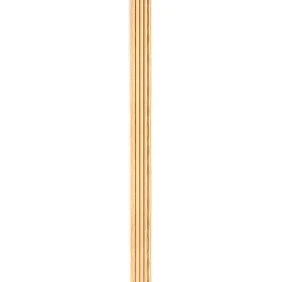
| Ionic | Flutes (vertical grooves), simple volute | Classic, neoclassic |
| Corinthian | Flutes + acanthus ornament on the capital | Baroque, Classicism |
| Renaissance | Flat trunk with geometric ornament | Renaissance interiors |
| Baroque | Rich carved relief, panels, ornamentation | Baroque, high classicism |
| Neoclassical | Light fluting or smooth shaft | Modern neoclassicism |
For most modern classical and neoclassical interiors — Ionic or neoclassical profile. Doric — for very strict spaces. Corinthian and Baroque — for interiors with a high level of decorative saturation.
Completeness: shaft, base, capital
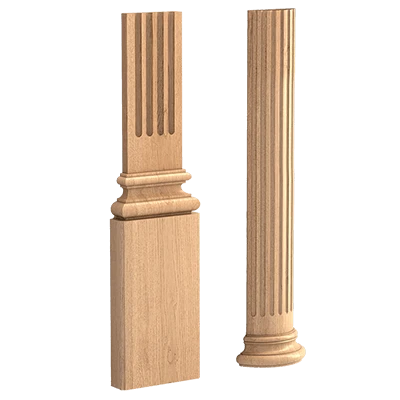
A pilaster as an architectural element consists of three parts:
-
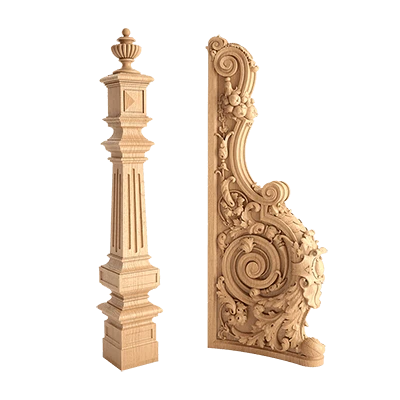
Base — the lower termination. Expanding profile with horizontal moldings. Can be a separate product or form a single whole with the shaft.
-
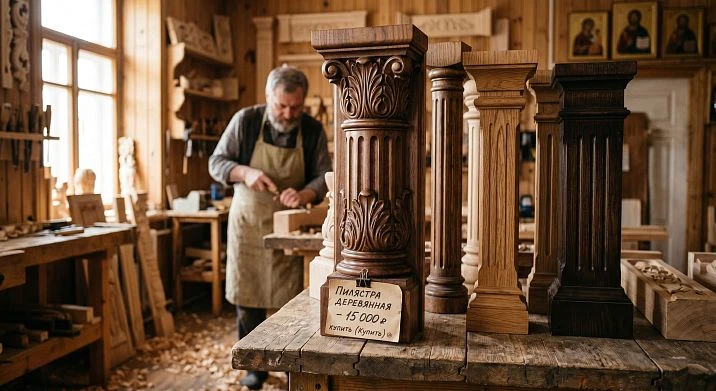
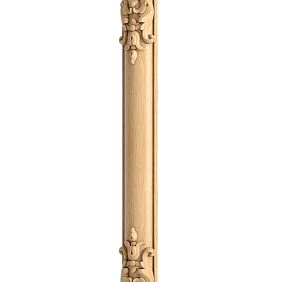
Shaft — the main body of the pilaster. Can be smooth, with fluting, with carved ornament, or with a panel.
-
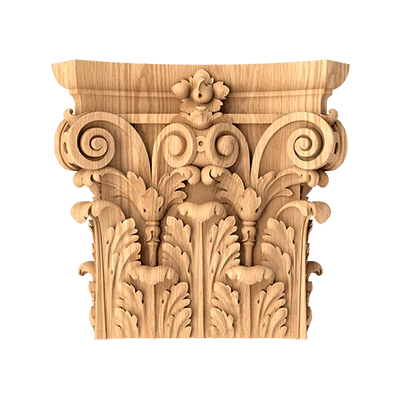
Capital — the upper decorative completion. It widens upward and carries ornamental weight.
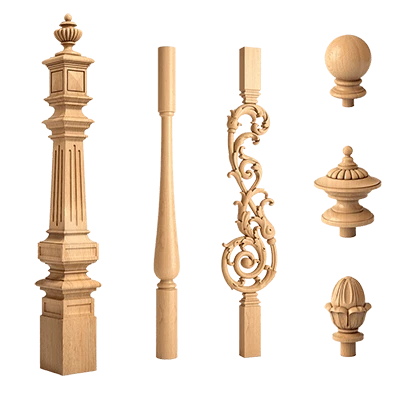
Buy a wooden capital for a pilaster — often a separate task, especially if a complex Corinthian or Baroque ornament is needed. The capital is the most labor-intensive and expensive part of the order system.
To buy a capital for a wooden pilaster means to have a complete set of architectural decoration: from base to top.
Where wooden pilasters are used
For a classic interior
A classic interior is not just "furniture with cabinets." It is an architectural program: walls, not bare, but divided by pilasters and moldings. The ceiling, not flat, but with a cornice and rosette. Doors, not just door blocks, but portals with architraves and pilasters.
A wooden pilaster for a classic interior is installed:
In the living room. Pilasters on the walls create a modular grid — they divide the wall into "compartments," each housing paintings, mirrors, or decorative panels. The spacing of pilasters is tied to the width of window and door openings — one pilaster per axis or symmetrically on the sides.
In the study. Library areas with built-in shelves are often framed with pilasters — this creates a bookcase section as an independent architectural object. Pilasters on the sides and in the gaps between sections set the rhythm of the entire wall.
In the hall. The hall or foyer is the first space a person sees upon entering. Pilasters here create grandeur and scale. Tall pilasters up to the ceiling, with capitals and bases, are a strong architectural gesture.
In the stair area. Wooden pilasters along the staircase — vertical accents that "hold" the height of the space and create a dialogue with the handrails and balusters.
For door portals
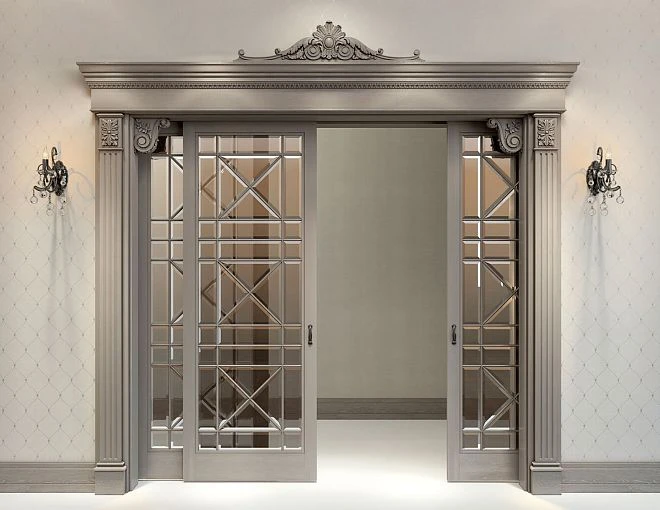
A door portal is one of the main decorative objects in a classic interior. The door itself is a rectangular opening. The portal turns it into an architectural frame.
A wooden pilaster for the portal works on the sides of the door — as posts supporting the entablature with a shelf or profiled cornice. This is a complete miniature order system.
For a door portal, it is important:
-
Consistency of the pilaster with the profile the wooden skirting board — the pilaster and the casing must belong to the same style;
-
Proportionality: the portal pilaster is oriented to the width of the doorway, its width is 120–200 mm for a standard door of 900 mm;
-
Height: the pilaster for an interior portal runs from the floor to the top of the door casing or to the entablature above it;
-
Area design Door Decor — carved decor on the door leaf can be coordinated with the pilaster ornament.
Buying a wooden pilaster for a portal separately from the casing is risky. Different suppliers, different profiles, different stylistic "accents" — and the result doesn't come together. Rule: the entire portal set from one catalog.
For furniture
Wooden pilasters for furniture are a separate and very lively segment. This is not an architectural scale, but the same order logic, reduced to furniture scale.
Classic wardrobe. Pilasters on the side and central facade posts are what turns an ordinary wardrobe into "furniture with architecture." The width of a furniture pilaster is 50–100 mm, height — the height of the wardrobe.
Classic-style kitchen. Pilasters on the corner and end posts of the kitchen set are a classic technique. They visually complete the kitchen, create side "walls" for open shelves, and provide support for the cornice strip on top.
Sideboard and credenza. Tall furniture with a display case is a natural area for using pilasters. Pilasters on the side posts of the sideboard with capitals and bases make it look like an independent architectural object.
Chest of drawers and display case. Small pilasters — 40–60 mm — on the ends and intermediate posts give the furniture classic monumentality.
Restoration of old furniture. This is a separate and important scenario. An antique wardrobe or sideboard has lost its pilaster — it needs to be recreated. Buying a wooden pilaster for restoration means choosing a profile close to the lost one, from the same or similar solid wood.
decor for furniture from wood in the STAVROS catalog includes decorative overlays that organically combine with pilasters to create a cohesive furniture ensemble.
For columns and half-columns
A pilaster and a column are relatives, but not identical twins. A column stands alone, while a pilaster is attached to the wall. They are often used together: the column extends into the space, and the pilaster follows it on the wall, continuing the order axis.
Wooden pilasters and columns in halls, grand staircases, and banquet rooms are already almost an architectural solution that requires careful design.
Buy a wooden capital for a pilaster or column — in the STAVROS catalog. Buy a pilaster capital — a confirmed commercial request: this is exactly how those who assemble an order system from pilasters with capitals search.
Pilaster, column, and capital: anatomy of the order system
It's time to put the concepts in their place. Confusion between a pilaster, a column, and other elements of the order system is a typical story, especially for those encountering classical decor for the first time.
| Element | Role | Where it is used | Key features |
|---|---|---|---|
| Pilaster | Flat vertical decorative element | Walls, portals, furniture | Attached to the surface, does not bear load |
| Half-column | Volumetric element protruding from the wall by half the diameter | Walls, portals, capital structures | More voluminous than a pilaster |
| Column | Fully three-dimensional architectural element | Halls, staircases, individual interior zones | Stands freely or against a wall |
| Capital | Decorative top finish | Pilasters and columns | Can be Doric, Ionic, Corinthian |
| Base | Bottom finish | Pilasters and columns | Completes the lower part, serves as a transition to the floor |
| Molding | Horizontal connecting profile | Walls, portals, furniture, facades | Connects vertical elements into a system |
Why is this important? Because a pilaster without a capital is an unfinished element. A pilaster without a base "hangs" above the floor. A pilaster without a connecting molding is an isolated object without architectural meaning.
A true architectural pilaster is always a system: base + shaft + capital + entablature above it (cornice or molding). It works precisely in this systemic interpretation.
Wooden pilaster for furniture: detailed analysis
This segment deserves special attention — because furniture decor with pilasters is currently experiencing a true renaissance.
Why pilasters are trending again for furniture
A few years ago, interior design was moving towards brutal minimalism: bare walls, furniture without decor, no extra details. The pendulum has swung. Now designers are bringing warmth, materiality, and classical ornamentation back into interiors. Natural wood, handcrafted work, historical motifs — all of this is in demand again.
Wooden pilaster for furniture in this context is not an anachronism, but a relevant decorative tool.
Application scenarios
Kitchen with classic facades. Corner pilasters complete the kitchen set against the wall. They hide the gap between the outer facade and the wall, creating a neat and architecturally finished side ending. Width — 60–100 mm. Height — matching the height of the lower and upper rows of the set.
Tall cabinet in classic style. Pilasters on the side and intermediate posts of a cabinet 240–260 cm high. Necessity: visually "lighten" the tall volume, create vertical articulation, add architectural monumentality.
Classic bed. Pilasters on the bed headboard — as posts of a "portal bed". This is one of the strongest interior gestures in a classic bedroom.
Library in a study. Built-in shelves with pilasters on the sides and in the gaps — creates the feel of antique library furniture integrated into the architecture.
Restoration. This is a separate story. In antique furniture from the 19th to early 20th century, pilasters are a standard element. During restoration, a lost pilaster requires precise reproduction. Buying a wooden pilaster for restoration means selecting the closest possible profile from a similar wood species.
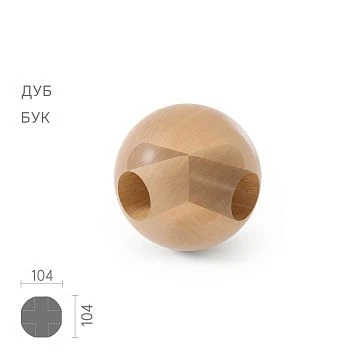
For complete furniture decor — to buy, which will allow you to transform your furniture using carved wooden elements. You can use the C-003-3 decor set to decorate furniture, walls, doors, or any other surface. The C-003-3 decor set is made of oak or beech, known for their strength, durability, and beauty. You can buy the C-003-3 decor set at the Stavros decor store, which specializes in producing and selling decorative elements and hardware for furniture and interiors. At the Stavros decor store, you will find a wide selection of decor sets of various shapes, sizes, and styles. You can choose in the STAVROS catalog: overlays, rosettes, relief inserts, which together with pilasters create a full decorative program for the furniture facade.
Pilaster for painting and tinting
A wooden pilaster for painting is the most flexible option for those who want to exactly match the interior color. Natural solid wood accepts any coating perfectly.
Enamel painting. Classic white, milky, cream, gray — most often oil or alkyd enamel. Provides a smooth, durable surface. Especially relevant for furniture.
Wood tinting. Stain, mordant, or water-based tinting emphasize the wood texture, giving the desired shade — from light "beige" to dark "wenge".
Patination and gilding. For Baroque and classical elements — applying acrylic gold paint to protruding parts of the relief while simultaneously tinting the recesses. The effect of aged gold is achieved without professional equipment.
Lacquering. Clear varnish preserves the natural color of the wood and protects against moisture. For interior pilasters in dry rooms — semi-matte or matte varnish.
Oil and wax. For Scandinavian and natural aesthetics — deep-penetrating oil with wax. The surface remains alive, breathable, with emphasized texture.
For any coating option — first sanding (120–180 grit), then primer, then the finish coat.
Carved wooden pilaster: a special topic
A carved pilaster is the highest level of decor. Not a profile made on a milling machine, but a product where the master's hand is visible.
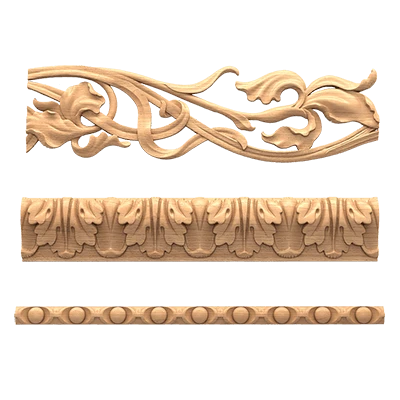
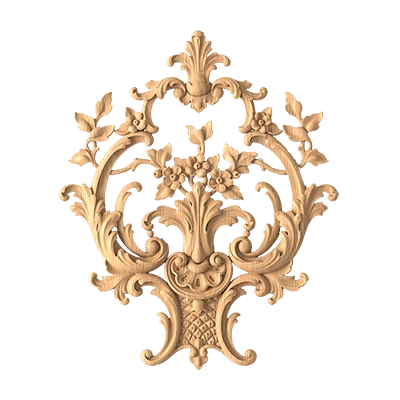
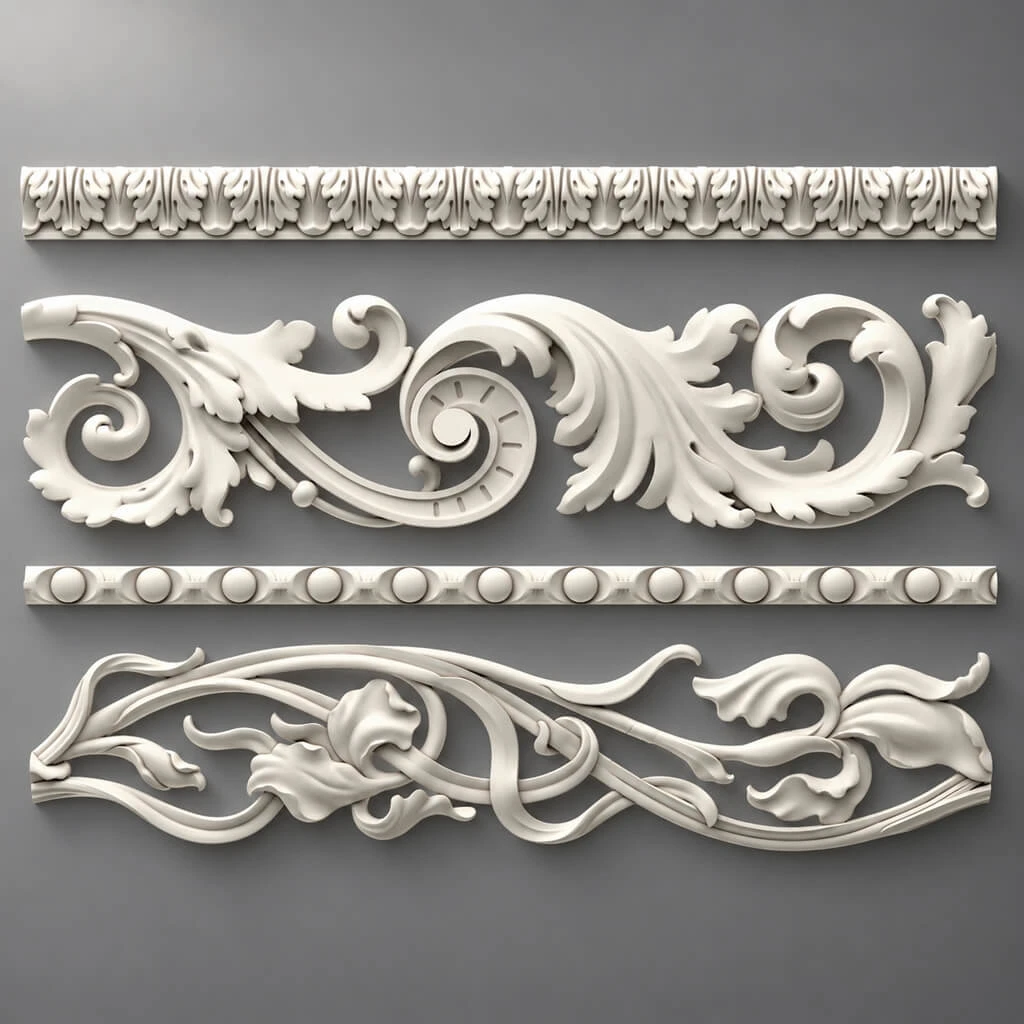
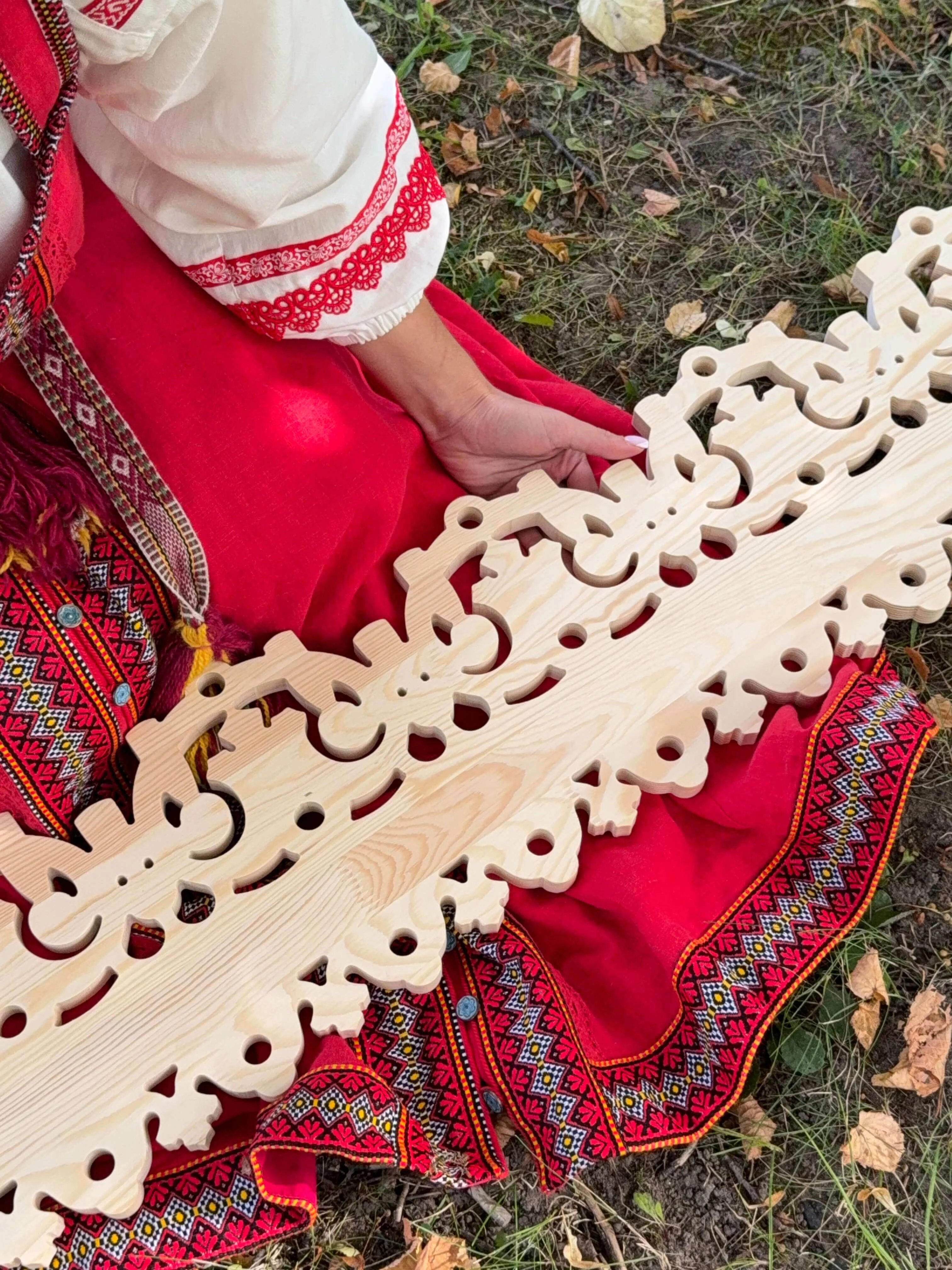
Carved wooden decoration in the STAVROS catalog — this is manual and semi-manual carving: acanthus leaves, cartouches, vignettes, ornamental ribbons. A carved wooden pilaster may include:
-
Flutes (vertical grooves) along the entire height of the shaft;
-
Acanthus scrollwork in the lower and upper thirds;
-
Central cartouche or medallion;
-
Ornamental frieze at the base and under the capital.
A carved wooden pilaster is a custom piece. It is not cheap. But it does not compete with mass-produced plastic alternatives: it is a different level of object.
For high-budget projects with high demands for authenticity, a carved wooden pilaster is a must-have element. It is what creates the feeling of a 'home with history.'
What affects the price of a wooden pilaster
A straightforward talk about money — without beating around the bush.
Wood species. Pine and spruce — lower price range. Beech, alder, ash — mid-range. Oak — above average. Walnut, mahogany — premium. For a carved pilaster, hardwoods are preferred: they hold fine relief without chipping.
Size. Height × width × thickness — a direct correlation. A pilaster 240 × 12 × 4 cm in oak — one price. A pilaster 80 × 8 × 3 cm in beech — another.
Profile complexity. A smooth shaft — cheaper. Fluting — more expensive. Full carved ornament — many times more expensive.
Completeness. Pilaster without capital and base — one price. Full set "shaft + wooden capital + base" — another. The capital often costs comparable to the shaft: it is labor-intensive.
Coating. Pilaster without coating — base price. With primer — slightly more expensive. With finish painting or tinting — even more expensive.
Purpose. Furniture pilaster (80–120 cm) is cheaper than interior pilaster (200–240 cm). Not proportional to length — due to differences in standardization and production volume.
Individual size. Non-standard height or width — surcharge for manual adjustment.
Quantity. Serial order — better price. Single purchase — standard.
Wooden pilaster and classical decor system
A pilaster does not exist in isolation. It is an element of a system. Let's break down what it works with in pairs and what needs to be considered before purchase.
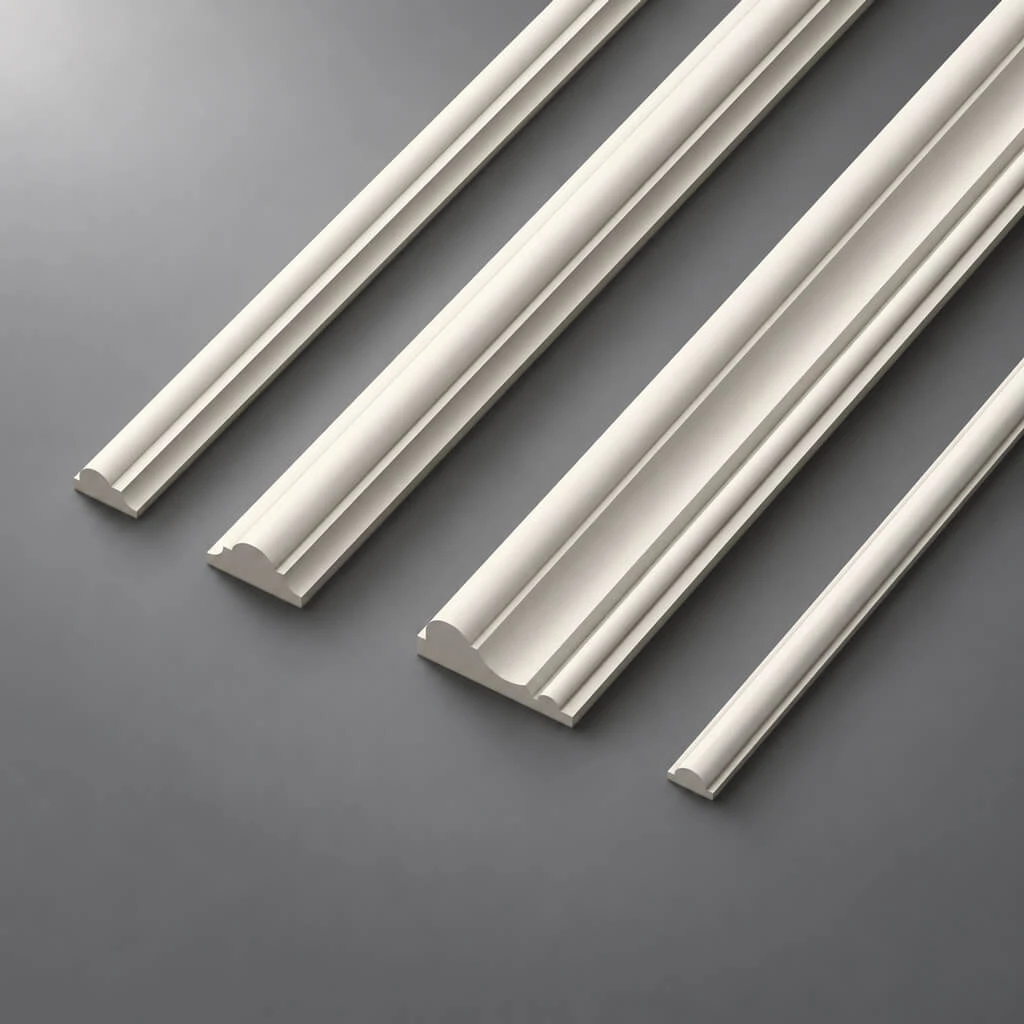
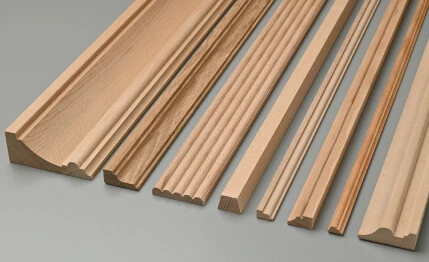
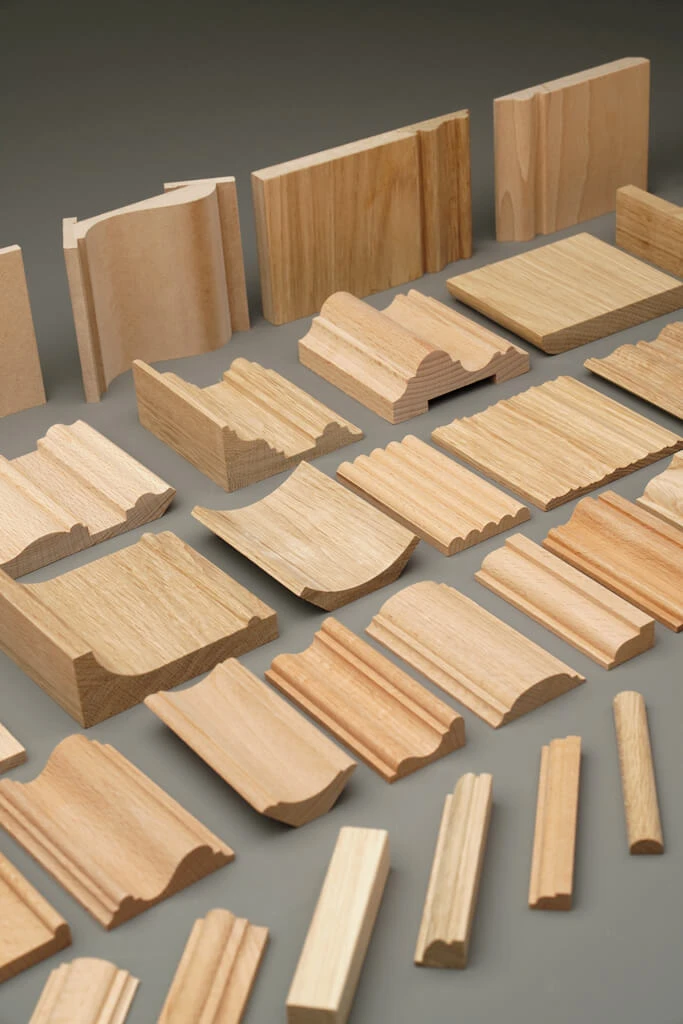
With moldings. Wooden molding — horizontal profile rods — connect pilasters into a single architectural program. Molding runs at the level of the pilaster base (connects the bases), at the top of the shaft (forms the architrave), and under the ceiling (cornice). Without molding, pilasters "stand" as separate objects, without logical connection.
With architraves. wooden casing frames a door or window opening. The pilaster next to the opening must be coordinated with the casing in style, relief, and proportions.
With a baseboard. Wooden baseboard runs along the perimeter of the walls. The base of the pilaster is installed on top of the baseboard or at the same level — this must be considered when calculating the height of the shaft.
With a capital. wooden capital — the top finish. For the Corinthian order — lush, with acanthus. For the Ionic — with volutes. For the Doric — strict, almost without ornament. Buy a pilaster capital — a related commercial query that often means a complete purchase.
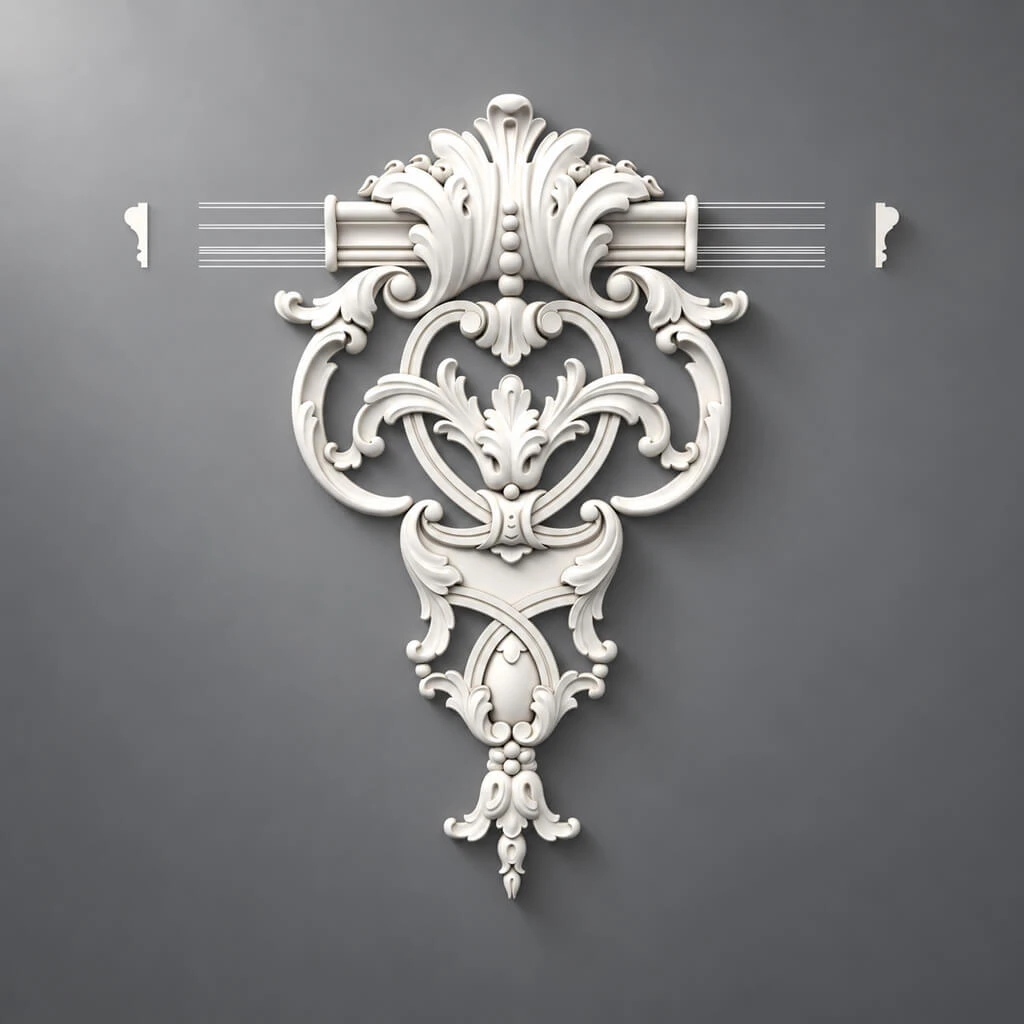
With carved decor. Carved wooden decoration — medallions, cartouches, ornamental overlays — complement the pilaster in decorative zones.
How to choose a pilaster before buying: a step-by-step checklist
Use this list every time you prepare an order. It covers all critical parameters.
-
Determine the installation location. Wall, portal, furniture, staircase, column group.
-
Measure the area. Height from floor to cornice or to the top of furniture. Width of the wall section or furniture compartment.
-
Choose a style. Doric, Ionic, Corinthian, Neoclassical, Baroque. This will determine the profile of the shaft and the shape of the capital.
-
Determine the wood species. For painting — any, beech or alder. For wood-tone staining — beech, ash, oak. For carving — oak, beech.
-
Check the need for a capital. For a full order system — required. For a furniture decorative pilaster — sometimes a shaft with a simple finish is enough.
-
Consider the base. A separate base or a base integrated into the shaft?
-
Coordinate with moldings, baseboards, and casings. Style, relief, proportions — must match.
-
Choose the finish. For painting, for staining, for varnish, for oil.
-
Calculate the number of elements. How many pilasters, how many capitals, how many bases.
-
Check symmetry. Pilasters are installed in pairs or in a rhythmic row. Asymmetry without logic — an architectural conflict.
Mistakes when buying a wooden pilaster
An expensive experience — learning from others' mistakes is much cheaper.
They buy without measuring. "I need a tall pilaster" is not a technical specification. Exact height, width, and configuration are needed. A difference of 100 mm in width means it's a different product.
They don't account for height with base and capital. Shaft 220 cm + base 15 cm + capital 20 cm = 255 cm. Ceiling 250 cm — already a conflict. Calculate the entire set.
They don't select the capital and base simultaneously. Bought the shaft — now they're looking for a capital. It turns out the capital from another catalog doesn't match in width. Buy the set at once.
They mix styles. Corinthian capital + Doric shaft = decorative absurdity. The style must be unified from base to entablature.
They don't coordinate with the door and baseboard. Pilaster wider than the casing — proportion conflict. Pilaster "goes" behind the baseboard at the bottom — looks bad. All this needs to be thought through before purchase.
They take a pilaster that is too narrow for a tall space. A pilaster 80 mm wide with a ceiling height of 4.0 m looks like a thin splinter. Proportions are key.
They don't think about the finish. Bought a pilaster without finish — and then don't know what to paint it with. Or they paint it with an unsuitable compound — and the result is disappointing.
They only evaluate the price of the part, not the system. Cheap pilaster + mismatched capital + unsuitable molding — the final cost of rework is higher than the correct set from the start.
Where to buy a wooden pilaster
Wooden pilaster In the STAVROS catalog, these are products made from natural solid wood for interior decor, furniture, and portals. For a complete order system — wooden capitals in the same catalog.
For designing door portals — Wooden casings и MoldingsFor a complete interior ensemble — Wooden baseboard, decor for furniture, Carved wooden decoration.
Decorative program for door framing carved wood — a separate solution in the catalog. Pilasters, architraves, panels, overlays — all work together in a unified style.
FAQ: Answers to Key Questions
Which wooden pilaster to buy?
The choice depends on the installation location, space height, interior style, and purpose. For a wall — an order pilaster with a capital and base. For furniture — shorter and narrower. For a portal — matched with the architrave in style and proportions.
How does a pilaster differ from a column?
A column is a voluminous, most often round or multifaceted element that stands alone or is attached to a wall. A pilaster is a flat vertical element that is attached to the surface of a wall, furniture, or portal. The same order logic, but different shape and volume.
Is a capital needed for a wooden pilaster?
For a full classical composition — yes. The capital completes the pilaster at the top and creates a sense of completeness. Buying a wooden capital for a pilaster is part of a complete order. For furniture applications, a simplified finish is sometimes sufficient.
Can a wooden pilaster be used for furniture?
Yes. This is one of the most common scenarios. Cabinets, kitchens, sideboards, chests of drawers, beds, display cases — everywhere a vertical decorative post in a classic style is needed.
What affects the price of a wooden pilaster?
Wood species, size, profile complexity, presence of carving, completeness (shaft + capital + base), coating, purpose, and number of items in the order.
How to coordinate a pilaster with the rest of the decor?
Define a single style (classic, neoclassical, baroque). Select moldings, architraves, and baseboards from the same catalog. Check proportional size matching. Buying everything in one order guarantees consistency.
Can a wooden pilaster be painted?
Yes. Any coating: enamel, tinting, patina, varnish, oil, wax. Preliminary preparation — sanding, primer. A wooden pilaster for painting is a standard request when working on classic interiors with an individual color scheme.