










































































Article Contents:
- Buy wooden baguette by the meter
- What is a wooden baguette and how is it different from a ready-made frame
- Which wooden baguette to buy by the meter: the logic of choice
- First question: what is the profile for?
- Second question: what relief?
- Third question: painted or unpainted?
- Fourth question: type of wood?
- Buy unpainted wooden baguette by the meter: why and when
- How to properly paint an unpainted wooden baguette
- Buy wooden picture frame molding by the meter
- Profile width
- Rebate depth
- Face plane slope
- Relief
- Wooden molding for frames, mirrors, and decorative inserts
- Frame molding
- Buy wooden mirror frame molding
- Decorative inserts and framing
- Wooden molding for cornices and curtains
- Buy wooden cornice molding
- Wooden curtain molding
- How to calculate the length of wooden baguette
- Calculation for a frame
- Calculation for a cornice
- Calculation for a series of frames
- Calculation for decorative wall framing
- Universal rule
- What affects the price of wooden baguette
- Wooden baguette in the wooden molding system
- Wooden baguette and interior decor: style solutions
- Classic and neoclassic
- Country and rustic
- Scandinavian minimalism
- Art Deco
- Mistakes when buying wooden baguette: list with analysis
- Where to buy wooden baguette
- FAQ: Answers to Key Questions
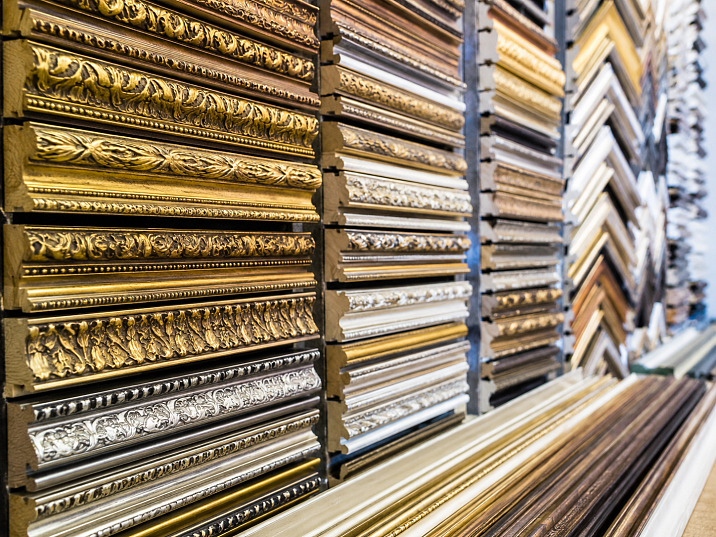


Buy wooden baguette by the meter
Baguette is a word with a double life. In one context, it's a French crispy loaf. In another, it's a wooden profile that turns canvas into a painting, a mirror into an interior object, and an ordinary wall into a decorative composition. We are, of course, talking about the second one.
Buying wooden baguette by the meter is a task faced by very different people. An artist looks for a profile for custom frames. A designer selects wooden molding for a curtain area. A hobbyist carpenter wants to make a mirror frame by hand. A gallery owner purchases profile for serial frame production. To each their own, but everyone has the same question: which Wooden Picture Frame to choose, how many meters to take, and how not to make a mistake with the profile.
This article aims to provide answers. Without lyrical digressions, without advertising fog, but also without a dry technical reference. Lively, precise, with practical examples.




What is a wooden baguette and how is it different from a ready-made frame
It's important to dot the i's here, because confusion between "baguette by the meter" and "ready-made frame" is the source of most unsuccessful purchases.
A ready-made frame is a finished product. Four sides, joined at a 45° angle, with a back, mounting loops, and clear internal dimensions. It already fits a specific format: 30×40, 50×70, 60×80. Buy it — hang it.
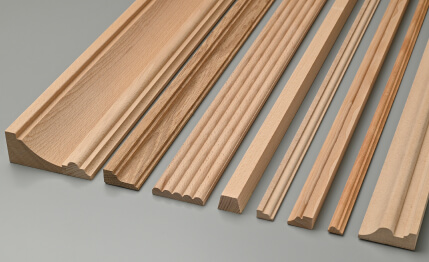
Wooden baguette by the meter is a profile. A long strip with a specific cross-section: width, height, relief, slope of the front plane. This profile is a blank. From it, you cut, saw at a 45° angle, assemble a frame of the desired size, mount a cornice, make a decorative border. Meter baguette is freedom of format.
That is why Buy wooden molding by the meter it is more correct when a non-standard size, serial production, a special profile for a specific interior is needed, or when the task goes beyond the standard 30×40.
Now — to the main thing.
Our factory also produces:
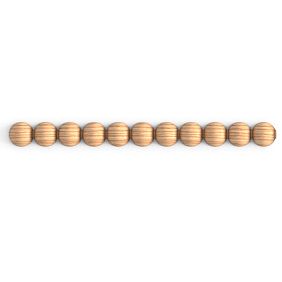


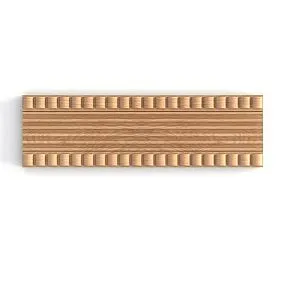


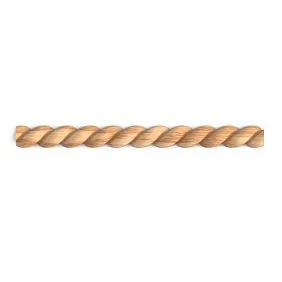
Which wooden baguette to buy by the meter: the logic of choice
Buying a wooden baguette by the meter consciously means consistently answering several questions. They are short, but each one halves the choice.
Get Consultation
First question: what is the profile for?
For a painting — one profile. For a mirror — another. For a cornice — a third. For a decorative framing of a wall composition — a fourth. This is not a convention: each application has its own requirements for width, groove depth, relief, and coating.
-
Frame for a painting: a groove (rebate) of a certain depth and width is needed, into which the canvas, cardboard, or glass with a mat is placed. The width of the rebate is from 4 to 12 mm, the depth is from 5 to 20 mm depending on the thickness of the insert.
-
Frame for a mirror: the rebate is slightly deeper — the mirror is heavier, plus the profile needs rigidity against bending. A wide profile with a flat back surface.
-
Cornice: a profile with a horizontal shelf and decorative relief underneath. Here, a rebate is not needed — rigidity and a mounting plane are required.
-
Decorative framing: the profile can be flat or relief, with a beveled edge or straight side. Often, a rebate is not needed at all.
Question two: what type of relief?
Flat baguette — laconic, modern, works well in minimalist and Scandinavian interiors. Profiled (with a cornice curve) — classic, neoclassical, art deco. Carved relief with ornament — baroque and classical tradition, maximum decorative richness.
Question three: painted or unpainted?
Buying unpainted wooden baguette by the meter is a standard choice for those planning DIY finishing. But more on that in a separate section below.
Question four: type of wood?
Softwoods (pine, spruce) — more economical, lightweight, take paint well. Hardwoods (beech, alder, birch) — denser, hold fine relief, more expensive. Hardwoods (oak, ash) — maximum strength and expressive texture, but also maximum price.
For most tasks with picture frames and cornices — hardwoods are optimal. For decorative moldings that will be varnished to look like natural wood — beech or alder give the best result.
Buying unpainted wooden baguette by the meter: why and when
Buying unpainted wooden baguette is not about saving on coating. It is a fundamentally different logic of using the profile.
It is correct to buy unpainted wooden baguette when:
You are painting for a specific interior. The designer selected an exact wall shade — RAL 7035, NCS S 0505-Y20R, or any other custom tone. Buying a ready-made white frame and repainting it is risky: the paint goes over an existing coating, and the result is unpredictable. An unpainted profile accepts any coating from the first layer.
You are tinting to match furniture. If the interior has oak parquet, oak kitchen fronts, a wooden table in "light walnut" color — picture frames must be the same tone. With an unpainted baguette, this is achieved through precise tinting. With an already painted one — it is not.
You are aging the decor. The "craquelure" technique, patina imitation, "distressed gold" — all of this is done on a clean wooden surface. A profile without coating is the ideal base.
You are using transparent coatings. Oil, wax, clear varnish — these coatings only work on a natural surface. They highlight the wood texture, giving a warm natural shade. Such a coating is not applied to an already painted profile.
You are working in series. A workshop that assembles custom frames takes unpainted wooden baguette by the meter and paints the entire batch with a single compound — for color and quality control.
Wooden baguette for painting is a semi-finished product in the right sense of the word. It gives maximum freedom for the final result. And this is exactly what most professional users need.
How to properly paint an unpainted wooden baguette
Five steps that work without exception:
-
Light sanding with fine sandpaper (120–180 grit) — remove fuzz, level the surface.
-
Degreasing — white spirit or wood degreaser.
-
Priming — acrylic primer, 1 coat, drying time 30–60 minutes.
-
Sanding after primer (240 grit) — remove raised grain.
-
Finish paint or toning — 1–2 coats with intermediate drying.
For water-soluble acrylic paints — mandatory primer, because acrylic raises the wood grain when applied without it. For alkyd paints — primer is recommended but less critical.
Wooden picture frame molding for sale by the meter
A picture frame is not just a "little frame." It is an optical tool. The right profile enhances the colors of the painting, creates a visual pause between the painting and the wall, and sets the "distance" of perception. The wrong one competes with the painting, suppresses or destroys the color scheme.
Wooden picture frame molding for sale by the meter — a request from artists, gallerists, collectors, and everyone who wants frames of the right size, the right profile, the right color. Not "this standard 50×70," but exactly what is needed for a specific work.
Buy wooden picture frame molding for paintings with the right profile correctly considering several parameters:
Profile width
Narrow profile (15–25 mm) — minimalist frames, work well for graphics, photographs, watercolors. Do not overload the work.
Medium profile (30–60 mm) — universal width. Suitable for oil painting, pastel, mixed media. Creates a full "framing" pause around the work.
Wide profile (70 mm and more) — for large formats, classical painting, portraits. A wide frame adds monumentality and solemnity.
Rabbet depth
A rabbet is a groove on the back-inner edge of the profile, into which the picture (canvas, cardboard, glass with a mat) is inserted. The standard rabbet depth is 5–12 mm. For paintings on stretchers — a depth of at least 10–15 mm is needed so that the stretcher does not protrude beyond the back plane of the frame.
If the rabbet is too shallow — the stretcher sticks out from the back, the frame does not fit flush against the wall. If too deep — the picture sinks in and gets lost in the frame.
Front plane slope
A profile with a slope — the front plane goes from the outer edge down to the inner edge. This slope directs the gaze to the picture, creating an "entry" into the image. A profile with a flat front plane is more neutral, decoratively calm.
Relief
Smooth profile — for modern painting, graphics, photos. Profiled with a cornice curve — for classics. Ornamental — for paintings of the Baroque tradition, old engravings, religious works.
Buying wooden picture frame molding by the meter in the STAVROS catalog is an opportunity to choose a profile exactly for the task: by width, relief, wood species, and the presence of a rabbet. Wooden trim the catalog presents several types of profiles — from laconic to classically ornamented.
Wooden molding for frames, mirrors, and decorative inserts
These are three close, but not identical scenarios. Let's break down each one.
Frame molding
A decorative frame is a broader concept than a picture frame. A frame can border not only paintings, but also textiles (tapestry, embroidery), collages, panels made of natural materials, architectural drawings, and large-format family photos.
Buying wooden frame molding by the meter means having the freedom to assemble a frame for any format. This is especially relevant for non-standard works: square format 100×100, an elongated horizontal triptych 120×40 each part — for such tasks, a ready-made frame cannot be found; you need a profile by the meter.
wooden frames in the STAVROS catalog — for those who want a finished product. Molding by the meter — for those who want to make the frame themselves or order it from a carpenter.
Buy wooden molding for a mirror
A mirror in a wooden frame is a classic of interior decor that never goes out of style. When buying wooden molding for a mirror, it is important to consider two differences from a picture frame:
Weight. A mirror is heavier than canvas or paper. For a mirror weighing 5 kg or more, a profile with a wider base and bending rigidity is needed. A narrow, lightweight profile may deform under load.
Humidity. Mirrors are often hung in bathrooms or hallways with unstable humidity. For such conditions, the wood must be coated with a moisture-resistant varnish or oil, otherwise the profile will "breathe" and deform over time.
mirror frame in finished form — in the STAVROS catalog. If you need a profile for self-assembly of a frame for a non-standard size mirror — Wooden Picture Frame by the meter solves this problem.
Decorative inserts and framing
Wooden baguette is also used for purely decorative frames — without glass, without mirror, without canvas. For example:
-
Framing decorative plaster or textured panel on the wall — a profile around the perimeter creates a "picture" frame around the decorative spot;
-
Framing a decorative panel made of stone, wood, fabric or ceramic tiles;
-
Creating "false" rectangles on the wall using baguette — a decorative technique popular in classic interiors.
In the latter case, the profile is attached directly to the wall without any inserts, creating the illusion of a frame. This is one of the simplest and most effective decorative techniques in classic and neoclassical interiors.
For such tasks, they often use Wooden molding — a flatter profile without a deep rebate. Or a thin profiled wooden molding.
Wooden baguette for cornice and curtains
Going beyond the "frame" semantics — but completely logical. Baguette as a profile is not limited to frames: it is used where a beautiful flat or relief wooden profile with a mounting plane is needed.
Buy wooden cornice baguette
A wooden cornice in the interior is not only a functional curtain holder. It is an architectural element that completes the wall at the top, creates a horizontal line under the ceiling, and sets the tone for the entire finish.
A wooden baguette for a cornice is a profile with a shelf for attaching the cornice mechanism or directly placing rings with curtains, with a decorative relief on the front side. Buying a wooden baguette for a cornice by the meter means making a cornice of the required length, for a specific window opening, with the desired relief, in the desired color.
In the STAVROS catalog wooden cornice — this is a separate category of products, but for non-standard lengths and profiles, the task is solved through a linear profile-baguette.
Wooden baguette for curtains
A curtain baguette is a profile that is mounted above the window and carries curtains directly (with rings) or through curtain tape. In classic interiors, a wooden profile for curtains is preferable to a metal one: it is visually warmer, fits better into a wooden interior, and accepts any paint.
Buying a wooden baguette for curtains by the meter is a relevant task when designing windows of non-standard width, with panoramic glazing, or when creating multi-level curtain systems.
Important parameters for a curtain baguette:
-
Length — the width of the window opening plus 15–30 cm on each side;
-
Profile width — from 40 mm for light curtains to 80–100 mm for heavy drapes;
-
Mounting type — wall or ceiling;
-
Curtain hanging method — rings, hooks, tape;
-
Finish — matching the color of frames, baseboards, or walls.
How to calculate the length of a wooden baguette
This is the main practical question. Buying a wooden baguette in linear meters correctly means calculating accurately, not forgetting anything, and taking a reserve.
Calculation for a frame
Rectangular frame: dimensions A × B (e.g., 60 × 80 cm).
Perimeter = 2 × (A + B) = 2 × (60 + 80) = 280 cm = 2.8 m.
But this is not the final figure. When cutting at a 45° angle, each corner "eats" a strip of material. For a profile of width W, each corner adds W to the consumption. Four corners = 4W additional consumption.
For example, a profile 50 mm wide: 4 × 50 mm = 200 mm = 0.2 m.
Angle-adjusted consumption: 2.8 + 0.2 = 3.0 m.
Plus a margin for cutting errors — 10–15%: 3.0 × 1.15 = 3.45 m. Round up to 3.5 m.
Calculation for the cornice
The cornice is a straight element. Length = window opening width + double end margin (20–30 cm on each side) + 5–10% for end trimming and installation tolerances.
For a window 2.4 m wide: 2.4 + 0.3 + 0.3 + 10% = 2.4 + 0.6 = 3.0 × 1.1 = 3.3 m.
Calculation for a series of frames
If 10 frames of the same size are needed: calculate the length per frame (with margin) × 10. Additional margin for the series — not 15%, but 8–10%: cutting errors are smaller in serial work.
Calculation for decorative wall framing
For decorative rectangles made of baguette on the wall — the same rules: perimeter + angle margin + 10%. If there are several rectangles, calculate each separately and sum them up.
Universal rule
It's better to take 15% more than needed than to be short by one meter. Delivering a repeat small order will cost more than an extra meter of profile. Scraps of wooden baguette will always find use in the workshop or at home.
What affects the price of a wooden baguette
A transparent breakdown without tricks.
Wood species. Pine is the most affordable option. Beech, alder — mid-range price. Oak, ash, walnut — premium.
Profile width and height. The larger the cross-section, the more material, the higher the price per linear meter.
Depth and complexity of the relief. A smooth profile is cheaper. A profile with ornamentation is more expensive: the matrix and processing are more complex.
Presence of coating. Unpainted wooden baguette bought by the meter is cheaper than painted or tinted from the factory.
Order length. A short order (3–5 m) has a higher price per meter. A long order (50+ m) gets wholesale terms.
Presence of a rabbet. A profile with a rabbet requires an additional operation. This is reflected in the price.
Delivery. Wooden profile is a long-length product. Slats are 2.4–3 m long, rarely 6 m. Delivery of long-length items is more expensive than a standard box.
Purpose. The profile for a picture frame and the profile for a facade cornice have different levels of processing and quality requirements.
Wooden baguette in the system of wooden long-length profiles
Wooden baguette is not a loner. It is part of a large family wooden trim: long-length profiles for finishing, decoration, and design.
This family includes:
-
Baguette — profile for frames, cornices, trims;
-
Wooden molding — flat decorative profile for walls;
-
wooden cornice — profile for ceiling and curtain applications;
-
Skirting board — floor profile;
-
Casing — framing of door and window openings;
-
Layout — a thin profile for hiding joints.
When the interior is built from a single material — wood — all these elements work in an ensemble. Wooden frames on the walls, wooden cornices above the windows, wooden moldings along the walls, wooden architraves on the doors — it's a unified system. Carved wooden decoration complements it with decorative accents.
Wooden baguette and interior decor: style solutions
Wooden profile for frames and cornices exists in a stylistic context. Ignoring this means getting decor that doesn't work for the space.
Classicism and neoclassicism
Wide profile with ornamental relief, tinted to dark walnut or gilding of individual elements. Frames for oil paintings in golden baguettes. Cornices with acanthus or meander relief. Wall moldings create "false rectangles" — panels where paintings or decorative inserts live.
decor for furniture made of wood in the same ornamental key complements the overall ensemble.
Countryside and rustic
Rough, "lively" profile with minimal processing. Possibly with visible texture and natural knots. Natural clear varnish or oil. Frames for watercolors with a simple rectangular profile. Wooden cornices without ornament — a simple shelf with a rounded edge.
Scandinavian minimalism
Thin flat profile, white or gray-white. Frames — almost invisible, emphasis on the work itself. Narrow baguette 10–15 mm. No relief, only clean lines.
Art Deco
Profile with geometric ornament — zigzags, diamonds, strict horizontal stripes. Contrasting two-color painting: black profile with gold edge, white with chrome. Medium width — 40–60 mm.
Mistakes when buying wooden baguette: a list with analysis
These mistakes are repeated regularly. It's better to learn about them here than to experience them in your own workshop or on site.
They buy without calculating the footage. "I'll take three meters, that should be enough" — for a frame 80×100 with a 50 mm profile, it won't be enough. Calculate precisely.
They don't add allowance for corners. The example above already shows: with a profile width of 50 mm, an additional 200 mm is needed for four corners. At 70 mm — 280 mm. This is significant.
They don't consider the profile width when choosing. "I need a wide baguette" — but which one exactly? 40, 60, or 80 mm? These are fundamentally different products with different prices, different cut angles, and different visual effects.
They choose only by photo. A photo on a monitor does not give an understanding of the real size, real relief, and real wood color. It's better to order a sample if the task is serious.
They don't check if the profile is suitable for painting. Some profiles come with wax or oily impregnation that prevents paint adhesion. This needs to be clarified.
They don't consider the thickness of the insert. A canvas on a stretcher 18 mm will not fit into a rebate depth of 8 mm. A mirror 4 mm + mat 3 mm = 7 mm — a rebate of at least 8–10 mm is needed.
They confuse linear baguette and finished frame. Linear baguette is a blank. Frame assembly is a separate operation requiring tools (miter saw with a rotating table, clamps, or frame brackets). If there are no tools, take a finished wooden frame.
They compare the price per piece, not per meter. Seller A sells a 2.4 m strip for 480 rubles — that's 200 rubles per meter. Seller B sells a 3 m strip for 510 rubles — that's 170 rubles per meter. Compare the price per linear meter.
Where to buy wooden baguette
solid wood millwork in the STAVROS catalog — this is a wide range of profiles for frames, cornices, moldings, and decorative trims. Buy unpainted wooden baguette by the meter here.
For those who want a ready-made solution: Solid wood frames, Mirror Frames, Wooden cornices и Moldings — all this is in the catalog.
For those who work with wooden decor systematically — Carved wooden decoration и decorative inlays for furniture complement the baguette into a unified decorative interior program.
Delivery throughout Russia and the CIS. Showroom in Moscow and St. Petersburg — for those who want to evaluate the profile in person before ordering. Consultation on choosing the length and profile — upon request.
FAQ: Answers to Key Questions
Where to buy wooden baguette by the meter?
In the Stavros catalog — Wooden trim made of solid wood in different profiles. Before purchasing — determine the purpose, profile, length, and coating.
How is wooden baguette different from a ready-made frame?
A ready-made frame is a finished product for a standard size. Wooden baguette by the meter is a profile for self-assembly of a frame of the desired size, for a cornice, framing, or decorative frame. Freedom of format is the main advantage.
When to buy unpainted wooden baguette?
When you need custom painting for a specific color, tinting to match furniture or flooring, application of transparent coatings (oil, wax, varnish), or working with aging and patina effects.
How to calculate the length of wooden baguette?
Perimeter of the item + allowance for corner cuts (4 × profile width) + 10–15% allowance for trimming. For serial orders — 8–10% allowance.
Can wooden baguette be used for cornices and curtains?
Yes. This is one of the common uses of the profile. Length — width of the window opening plus 30–60 cm from the ends.
How to paint wooden baguette?
Degrease → prime → sand after priming → apply final paint or tinting. For exterior use — exterior paint with UV protection. For interior — acrylic, alkyd, or oil.
What is better: wood or polyurethane for baguette?
Wood — for natural texture, under transparent coatings, for heavy mirrors and loaded cornices. Polyurethane — for lightness, moisture resistance and facade use. For picture frames and wooden interiors, wood is unrivaled.