

























Article Contents:
- Buy wooden architraves
- What is a wooden architrave and why is it needed
- Which wooden architraves to buy: first choice
- Wooden architraves for windows
- Architraves for a wooden house: facade scenario
- Wooden lace on windows
- Carved Wooden Casings
- Through carving vs volumetric
- Stylistics of carved architraves
- Wooden door trim
- Wooden door casing with pattern
- Door casing and baseboard: system
- Casing and molding on the wall
- Ready-made trims or custom sizing
- What affects the price of wooden trims
- How to choose trims before buying: complete checklist
- Mistakes when buying wooden trims
- Wooden trim and facade: unified system
- Wooden trim in interior: coordination system
- Where to buy wooden trims
- FAQ: Answers to Popular Questions
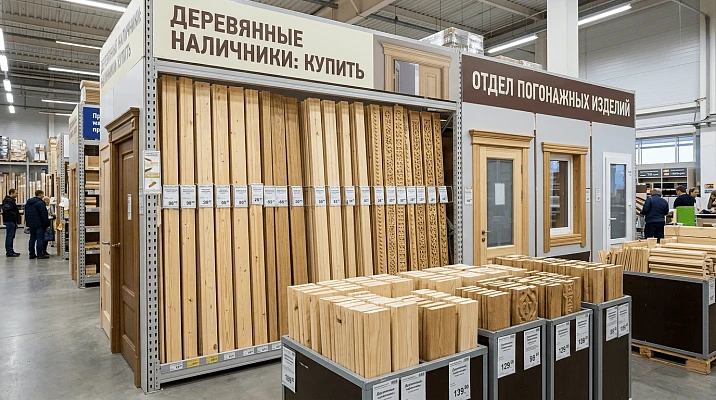
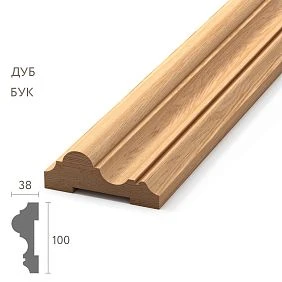
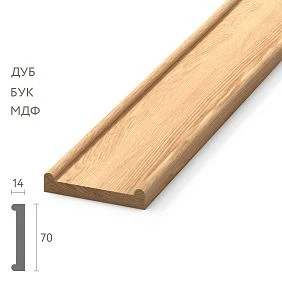
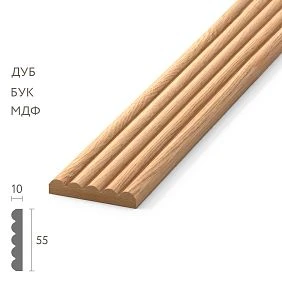
Buy wooden window casings
There are details that don't catch the eye — but without them, the house looks unfinished. A wooden casing is one such detail. It doesn't bear load, doesn't hold the roof, doesn't support the walls. But it is what turns a window opening into the face of the house, a doorway into a portal, and the facade of a wooden house into a work of art you can't help but admire.
Buying wooden casings today means choosing between dozens of options: ready-made profile strips and carved ornamental panels, smooth and patterned, wide and narrow, for windows and doors, for a wooden house and a city apartment. It's a vast field of choice, and it's easy to get lost in it.
This article is written precisely to prevent such confusion. The price of wooden casings is not the only question to ask. Here is a complete system, from understanding the nature of the element to a clear checklist before ordering.
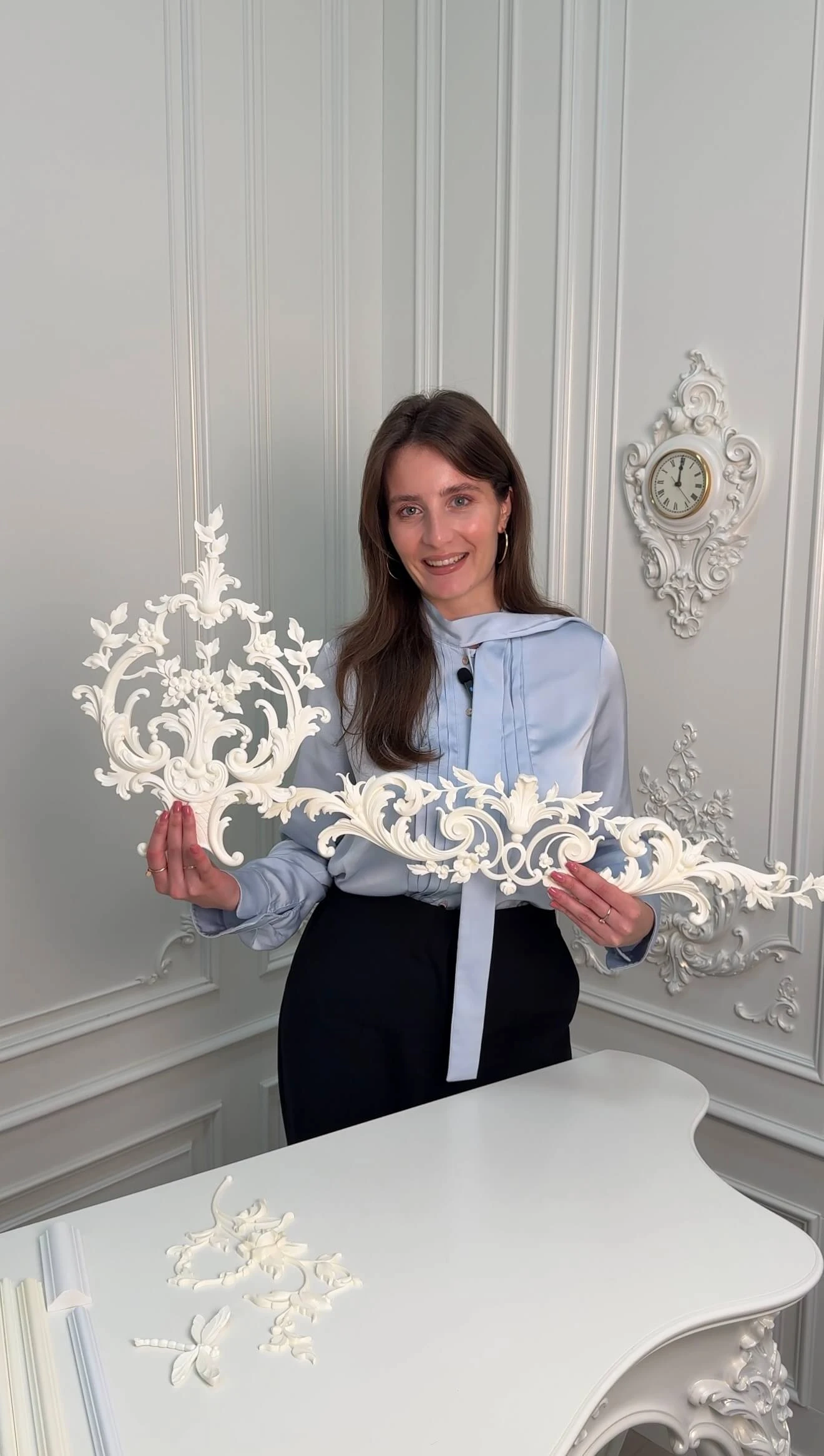
What is a wooden casing and why is it needed
First, a brief history. Wooden casing — is a decorative strip framing a window or door opening. Structurally, it covers the gap between the slope and the frame, protecting the joint from drafts and moisture. But the structural function is only half the truth.
The main role of the casing is decorative. It sets the visual character of the window or door opening: strict or ornate, classic or carved, wide with ornament or thin geometric. In a wooden house, casings are the face of the facade. They reveal the owner, the era, and the tradition. In a city apartment, they connect the doorway with the flooring, baseboard, and overall finishing style.
The tradition of wooden casings is rooted in Russian wooden architecture. What lies behind each motif and ornament is detailed in the material about wooden patterns on housesSolar signs, plant vines, birds, towels, roof boards — all of this is not just beauty, it is a language. And a wooden window casing is one of the words of this language.
Our factory also produces:
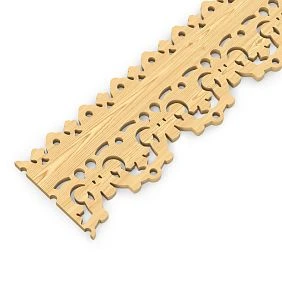
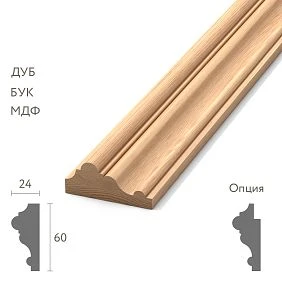
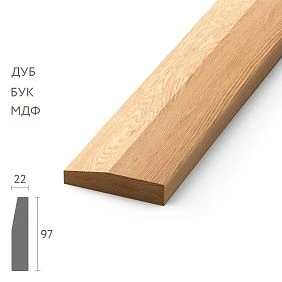
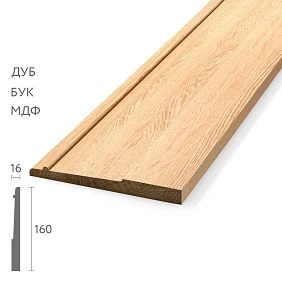
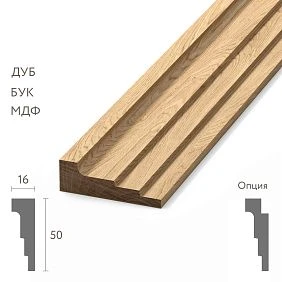
Which wooden window casings to buy: the first choice
The question 'which' is the first one. It determines everything else.
Installation location. A window or a door — different structural tasks. A window casing in a wooden house often experiences direct atmospheric influences: rain, snow, ultraviolet light. This requires selecting the right coating or wood treatment. An interior door casing in an apartment serves only a decorative function, without climatic loads.
Style. A wooden house in Russian style — carved casings with ornamentation. A city apartment with a classic interior — a profiled casing, coordinated with wooden skirting board и molding. A modern interior with wooden accents — a thin casing without decoration.
Material. The price of wooden casings depends primarily on the wood species. Beech, pine, oak — each material has different properties and price. Beech is dense, uniform, and holds relief well. Pine is resinous and withstands outdoor conditions well with proper coating. Oak offers maximum strength and durability.
Ready-made or custom-sized. Ready-made wooden casings are convenient and quick for standard openings. Custom manufacturing is necessary for non-standard windows, arched openings, and special ornaments.
Get Consultation
Wooden window casings
A window is the eye of a house. And how they are 'framed' from the outside and inside says a lot. Buying wooden window casings — this is a request behind which lie very different tasks: someone is building a new wooden house and wants a proper facade finish, someone is replacing worn-out casings on an old house, someone is decorating a city apartment with wooden slopes.
The price of wooden window trims depends on several parameters: profile width, length, presence of carving, and type of coating.
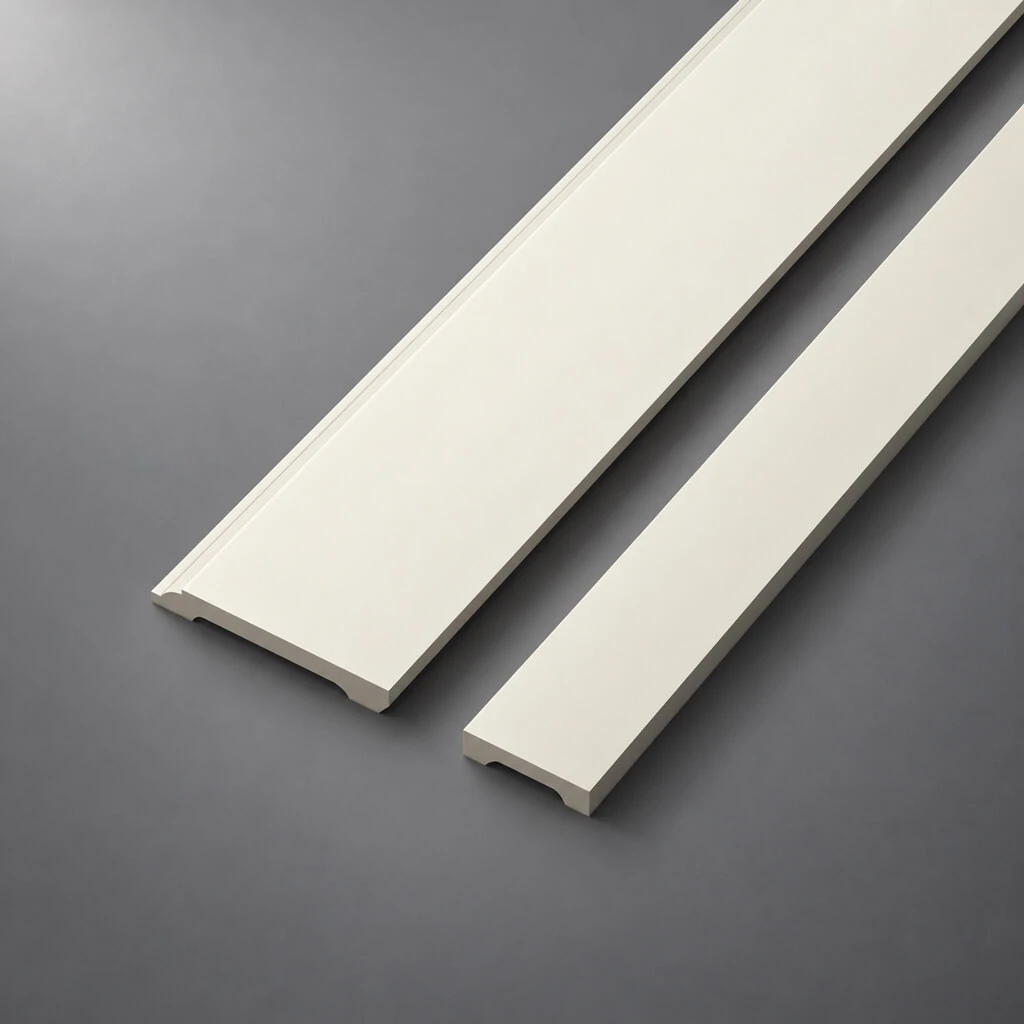
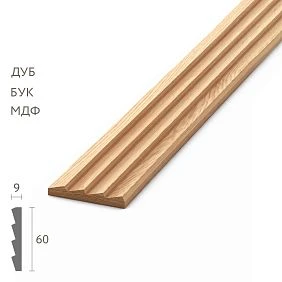
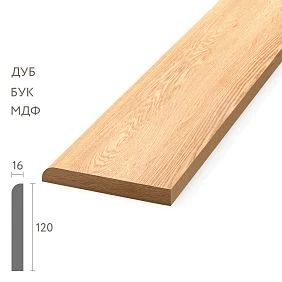
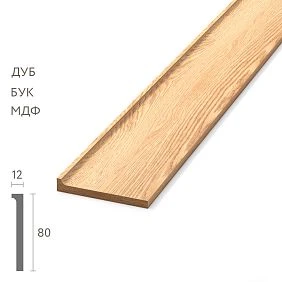
Trim width. For small windows (up to 80 cm wide) — trim width 60–90 mm. For standard windows 90–120 cm — profile 80–120 mm. For large panoramic or double windows — trim from 120 mm and wider. Proportion matters: a narrow trim on a large window looks like a forgotten detail.
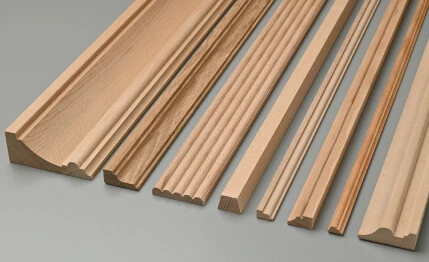
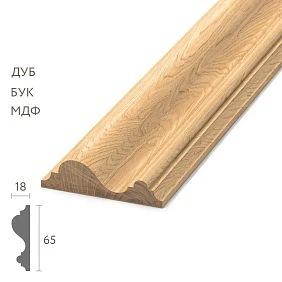
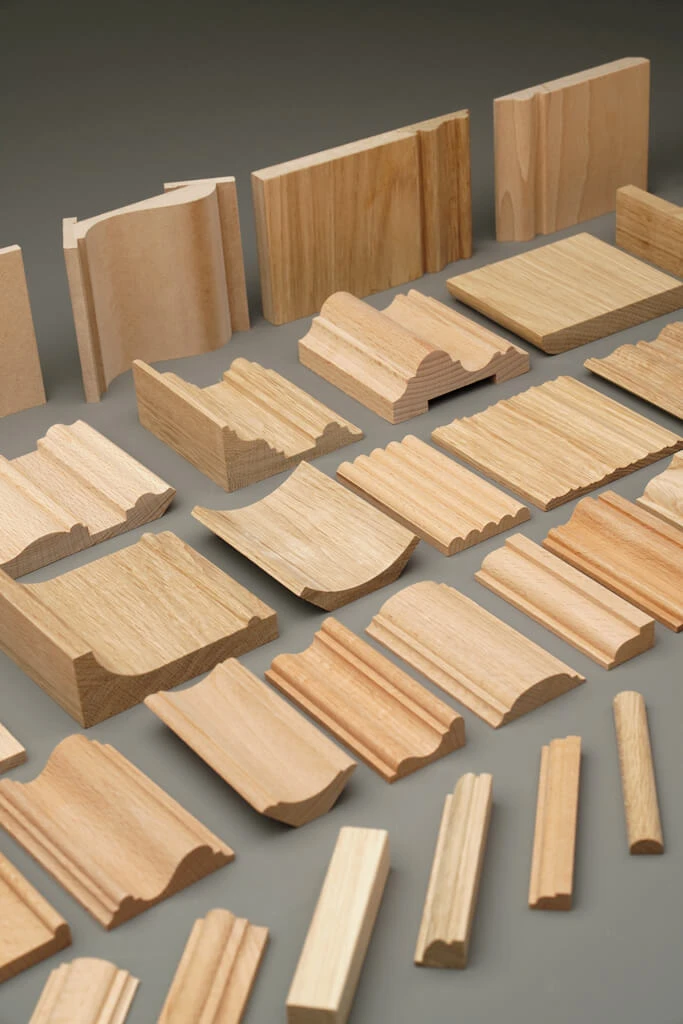
Profile. A simple rectangular profile — minimalism that works in modern interiors and on facades without ornament. A shaped profile with a fillet, heel, or wave — a classic solution that fits organically into a wooden house of any era.
Corner elements. When assembling a window, three or four horizontal and vertical elements are needed, as well as corner joints. A 45° joint is a professional option. A joint with a corner block is easier to install.
Buying ready-made wooden window trims means getting a set of standard length (usually 2000–2200 mm), from which the necessary elements are cut. It is important to take with a margin: when cutting, 5–10 cm is lost per joint.
Trims for a wooden house: facade scenario
A wooden house is a separate world of trims. Here, every facade element is in dialogue with its neighbors: cornice, fascia, ridge, shutters, porch, trims. When all elements belong to the same ornamental tradition, the facade looks like a work of art.
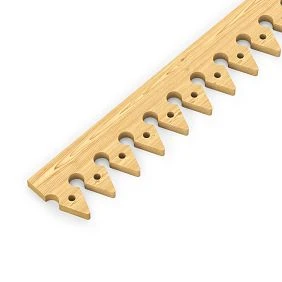
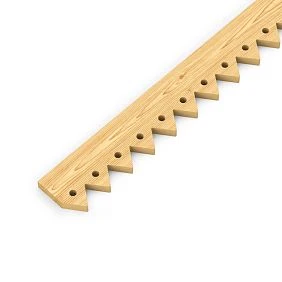
Wooden patterns on mouldings Wooden houses traditionally include several types of ornaments: geometric (rhombuses, squares, triangles, teeth), plant (vines, leaves, flowers), zoomorphic (birds, horses), and solar (circles, rosettes, eight-pointed stars). Each region of Russia had its own ornamental tradition — and this is still visible on preserved wooden houses.
For a new wooden house with a facade in a traditional spirit, window trims are ordered together with fascias, cornices, and wind boards — as a single set of house carving. In the STAVROS catalog, such sets are presented in the section “House Carving”.
Window trims in a wooden house require proper coating. Bare wood on an open facade means deformation after one season. The trim must be treated with an antiseptic impregnation + a finish coating: oil for facade work, alkyd varnish, or paint. Without this, the durability of any wooden trim is a matter of luck.
Wooden lace on windows
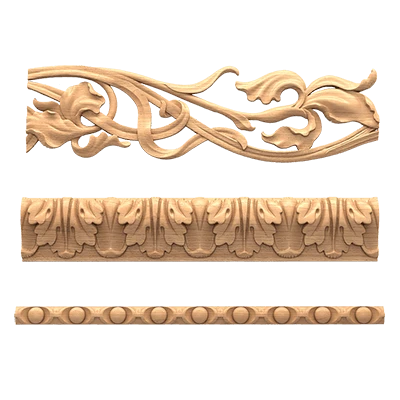
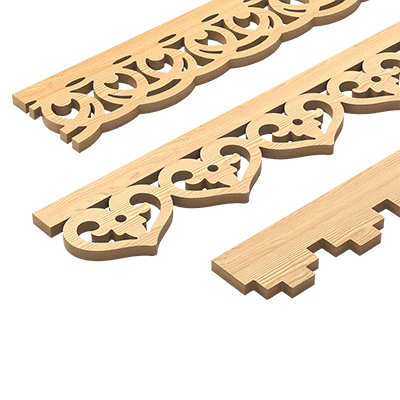
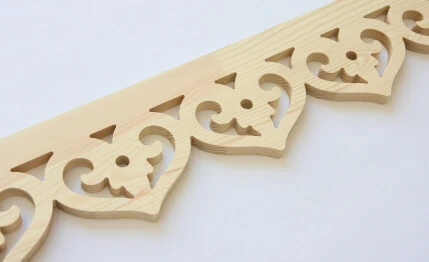
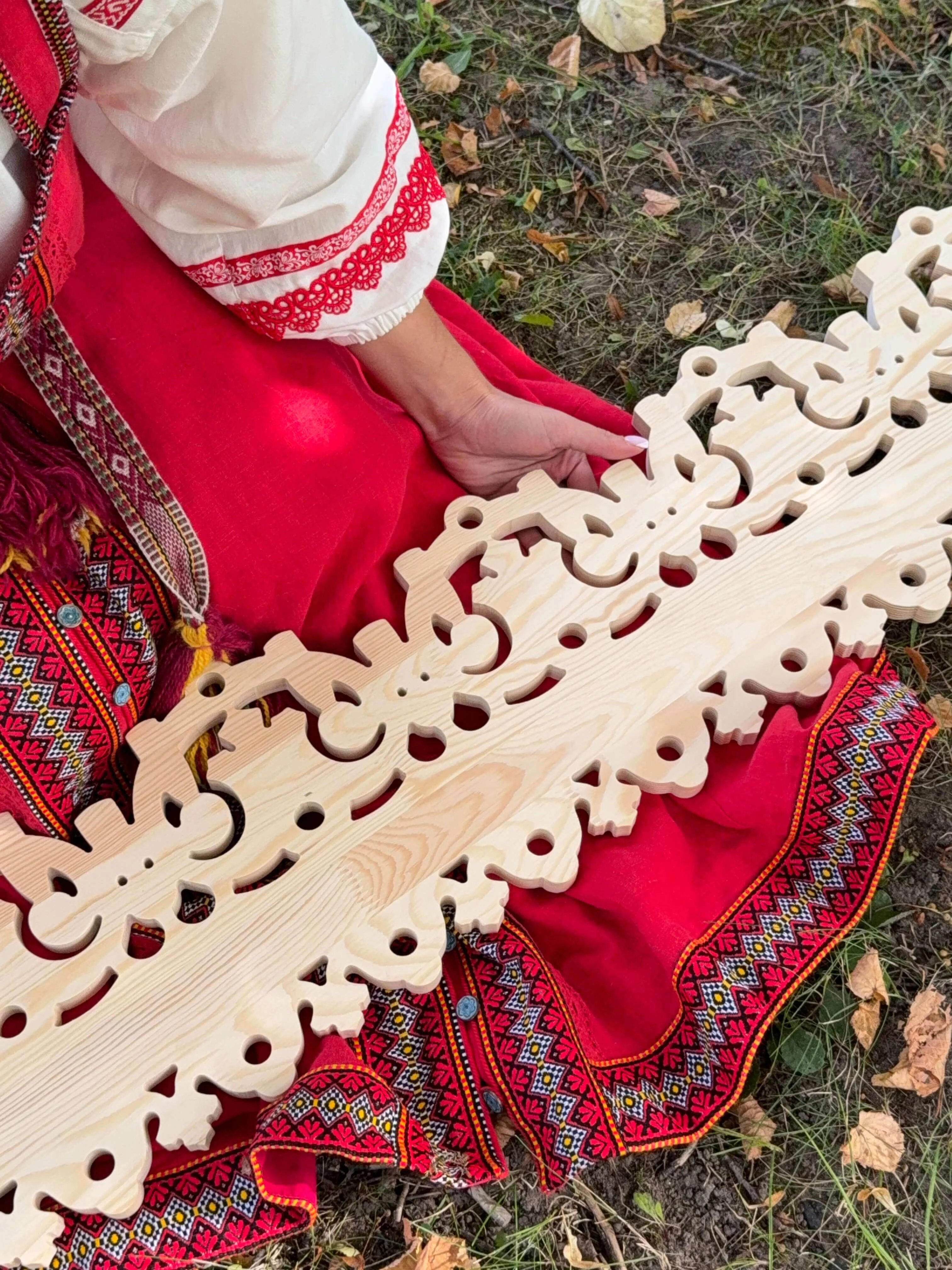
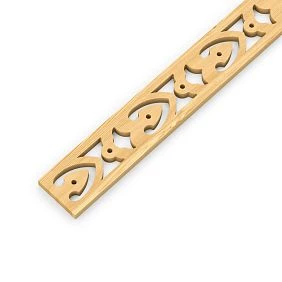
wooden lace — this is what carved wooden architraves with openwork ornamentation are called, creating the effect of fine cutwork. This is the pinnacle of house carving craftsmanship: each element is sawn through, the pattern "breathes", light penetrates through the ornament — and the facade comes alive.
Wooden lace on windows is created either on a band saw (simpler ornaments) or on a CNC router (complex multi-level patterns). STAVROS uses 3D milling and CNC processing — this allows reproducing historical ornaments with machine precision while preserving the character of handwork through final finishing.
Patterns of wooden architraves on windows are not only about aesthetics. The openwork ornament above the window creates shade: on summer days it scatters direct sunlight. This is a function that was well understood by folk craftsmen long before the advent of modern blinds.
Carved wooden window trims
Carved wooden architraves for windows buy ready-made price — a query asked by those building a new house, those restoring an old one, and those who simply want to add character to the facade without major renovations.
Carving on the architrave is not just decoration. It is a system of signs, an ornamental program with its own logic. About the full picture house carving — in a separate article, here — about practical choice.
How do carved architraves differ from simple ones? A simple architrave covers the gap and frames the opening. A carved one does the same, but at the same time becomes a full-fledged decorative element of the facade. A well-made carved architrave is visible from the street, works as an architectural accent, and increases the decorative value of the entire house.
Through carving vs. volumetric
Through (openwork) carving. The pattern is sawn through. It creates a "lace" effect. This is a traditional type of wooden architrave in Russian architecture. The minimum thickness of ornament elements is 8–12 mm, otherwise the details break during installation. Wooden lace In through-cut execution — the most airy and elegant option.
Volumetric (relief) carving. The ornament is executed in depth, without piercing the workpiece through. Relief — 5–20 mm. Provides a rich play of shadows in side light. Stronger than through carving, better withstands mechanical stress. Often used on the lower part of the casing ("apron") and on the side posts.
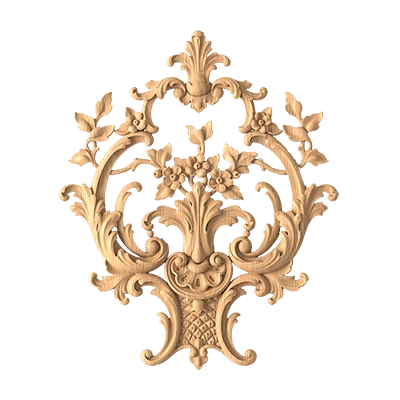
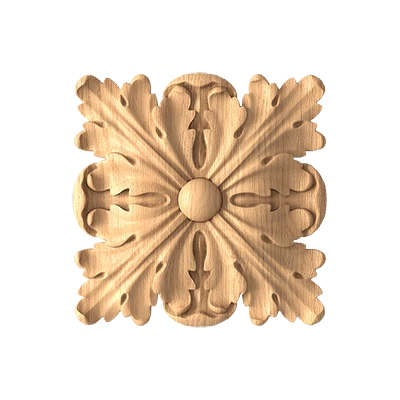
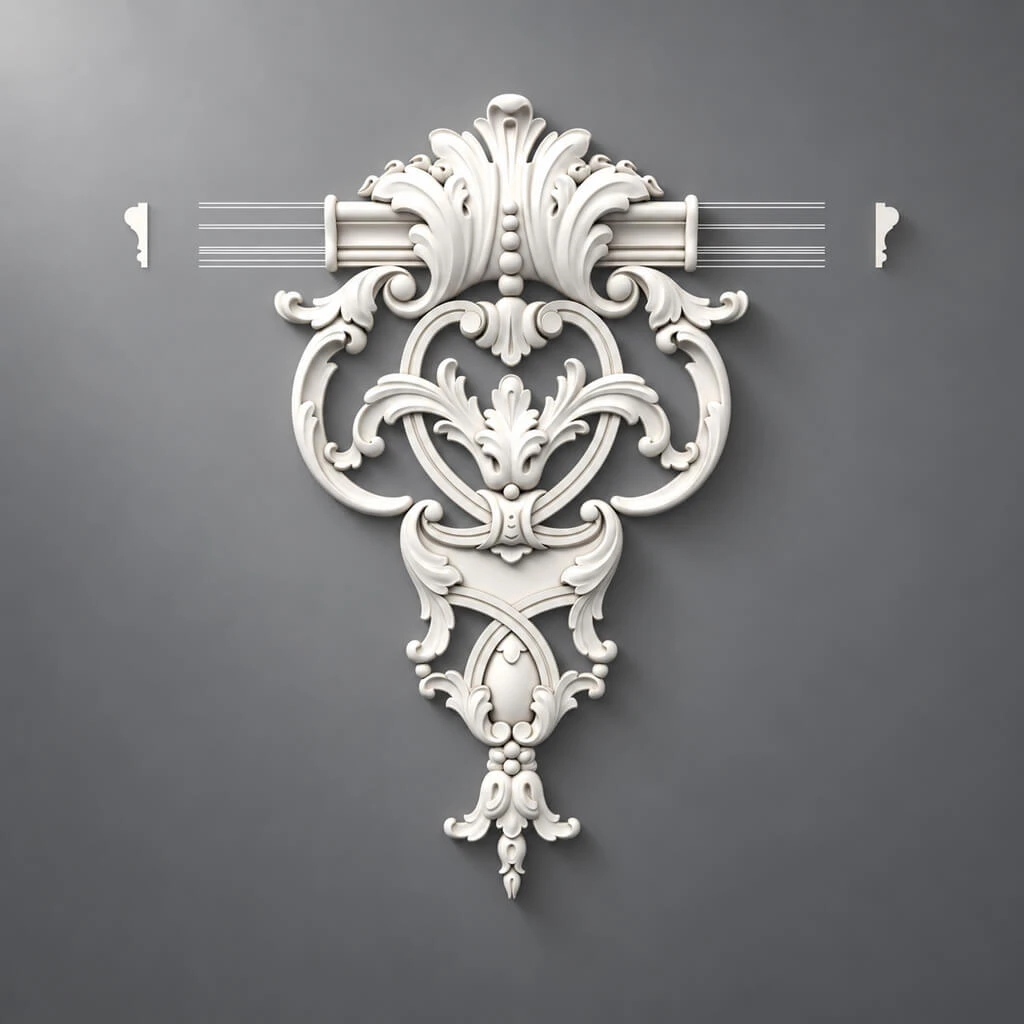
Overlay elements. Individually milled decorative details are attached to a flat casing. This allows creating complex ornamental programs from standard blanks. In the STAVROS catalog, in the section "Wood Carved Decor" a wide range of overlay decorative elements for facades is presented.
Stylistics of carved casings
wooden patterns on casings have several stable stylistic directions.
Russian folk style. Geometric and floral ornaments characteristic of Russian wooden architecture of the 19th — early 20th centuries. Suns, birds, vines. Wide profile with a soffit. Usually painted in a contrasting color relative to the wall of the house.
Classic. Restrained profile with panels, geometric borders, symmetrical ornament. Works both on wooden houses with a claim to estate style and on brick houses with wooden accents.
Carved lace. Openwork ornaments with a high degree of detail. Thin lines, cut-out elements, "snow" pattern. Maximum decorative option.
Laconic modern. Simple plank with a figured profile or a small ornamental element. Works in modern houses made of timber and logs, where lush carving is not needed, but a wooden detail is required.
Wooden door casings
Buy wooden door casings price — this is a query with a different context. A door casing, unlike a window casing, lives in the interior. There are no atmospheric loads, no direct rain and snow, no UV radiation. But there are other requirements: coordination with the interior style, with the door leaf, with wooden skirting board and with moldings on the walls.
Wooden door casings buy price — the range depends on the same factors as for window casings: width, wood species, profile, presence of carving.
Wooden door casing with pattern
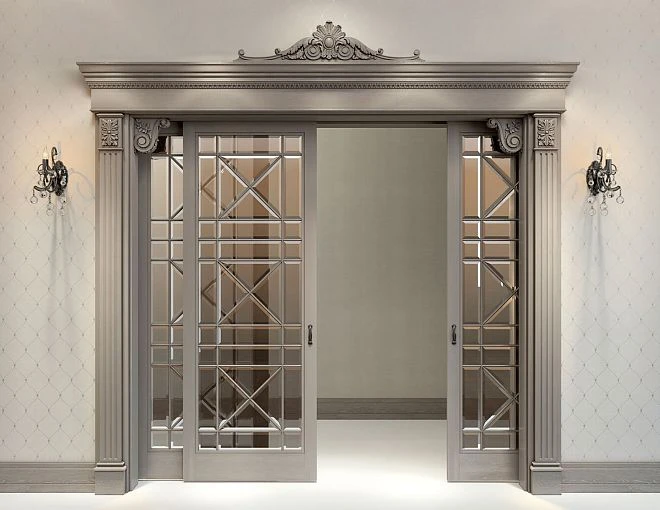
Wooden door casing with a pattern — this is a solution for interiors where the door is an architectural accent. A classic study, a manor house hall, a bedroom in a neoclassical style, a children's room with wooden elements — everywhere where the door should "speak" expressively.
A casing with a pattern requires a more careful approach to selection than a smooth profile. The ornament of the casing must belong to the same decorative family as Door Decoration in general: carved decor of the door leaf, cornice above the door, capitals, moldings. If the door has carved wooden decor, the casing should support its ornamental language, not create a competing statement.
Door casing and baseboard: system
One of the most underrated principles of interior design is the consistency of the trim and baseboard. They should "talk" to each other. How exactly?
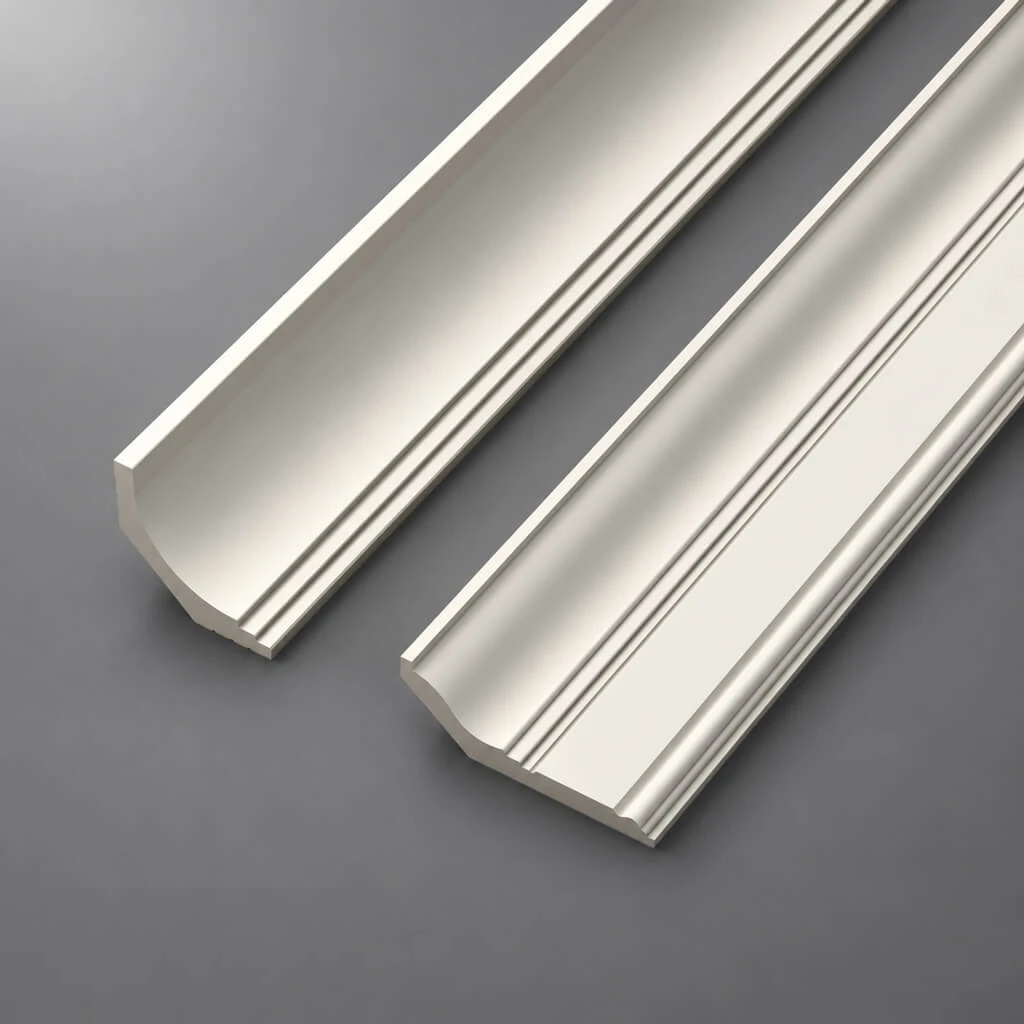
The profile of the trim and the profile skirting boards should belong to the same style family: one type of rounding, one character of fillets, one degree of decorative richness. A trim with a wavy profile and a baseboard with a rectangular profile is decorative dissonance. A trim with a meander and a baseboard with the same meander is unity.
Color scheme: trim and baseboard in the same tone is classic. Trim in the tone of the door leaf, baseboard slightly lighter is a modern technique. All three elements (door, trim, baseboard) in the same color and same wood species is maximum consistency, which is valued in architecturally detailed interiors.
Trim and wall molding
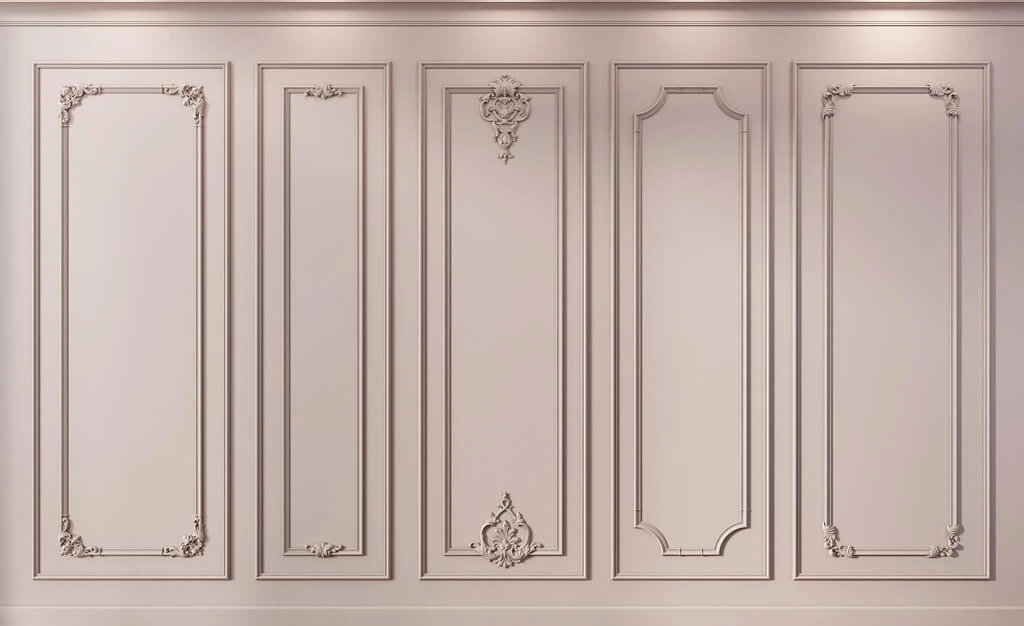
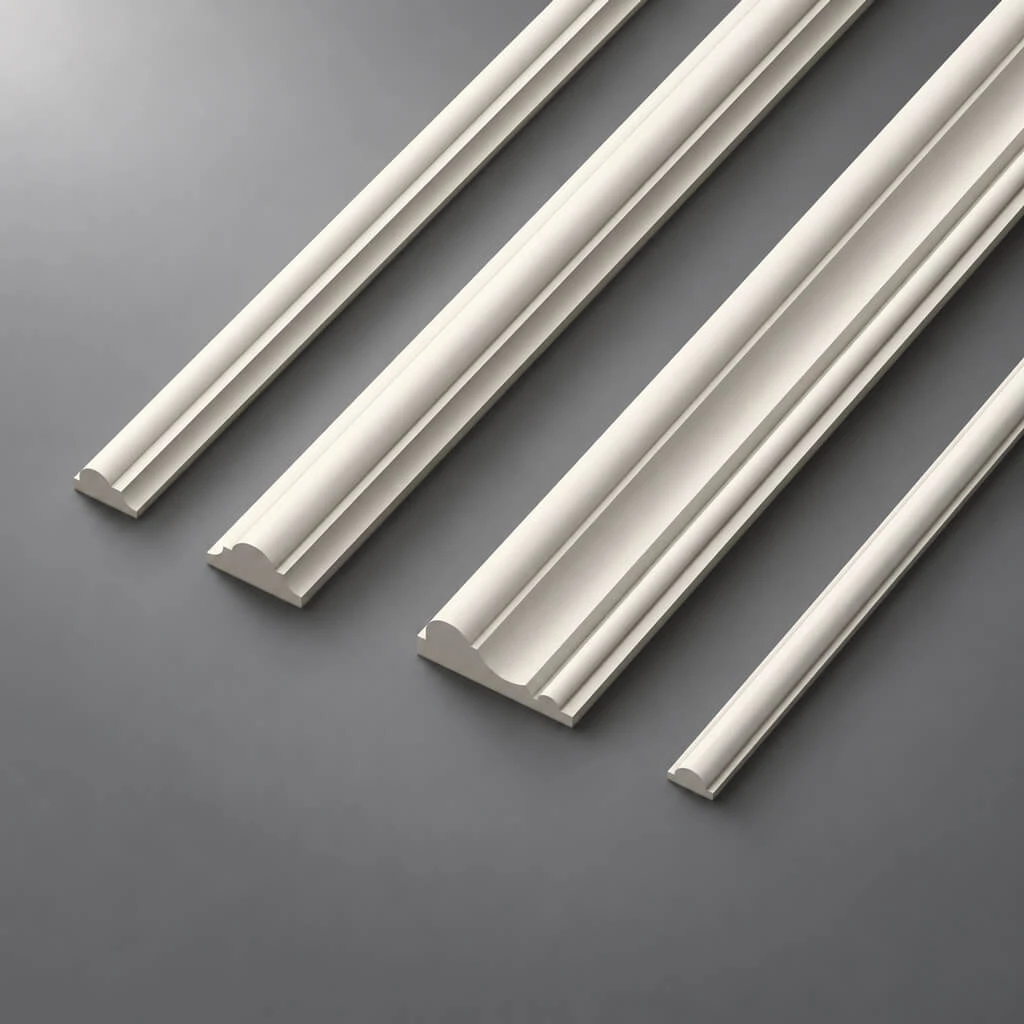
In interiors with decorative wooden moldings on the walls, the trim should be consistent with the width of the molding. If the molding is 40 mm, the trim should not be wider than 60–70 mm, otherwise the hierarchy of decor is disrupted. If the wall moldings are wide (80–120 mm), the trim can be more expressive.
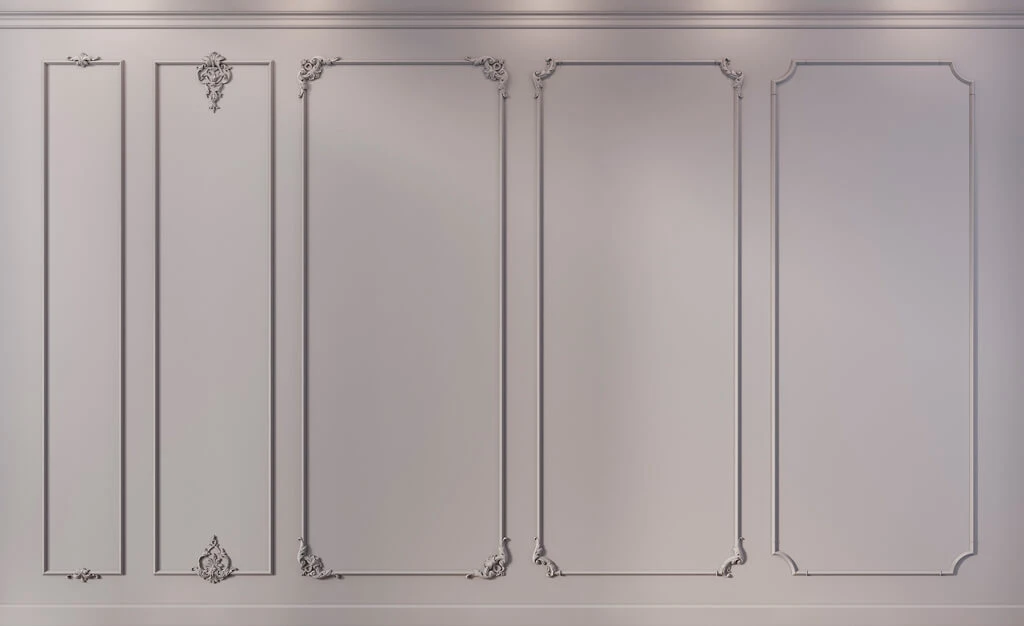
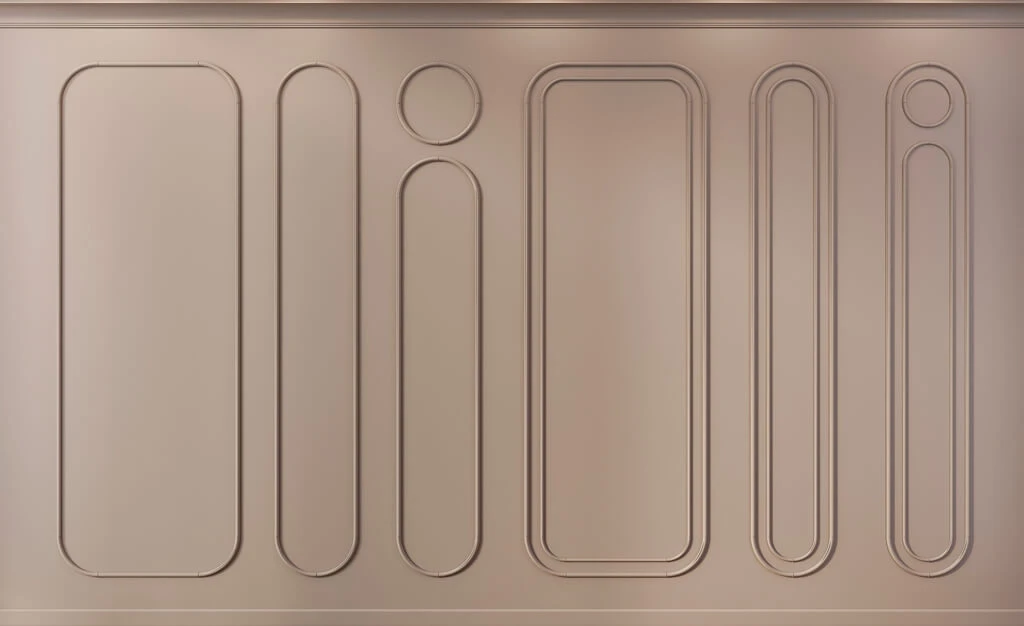
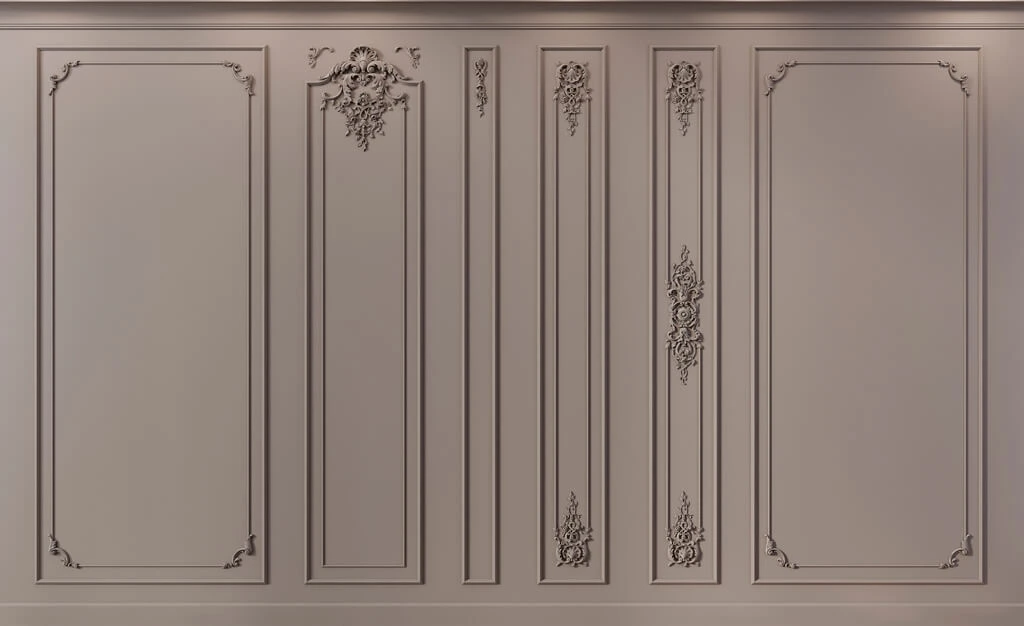
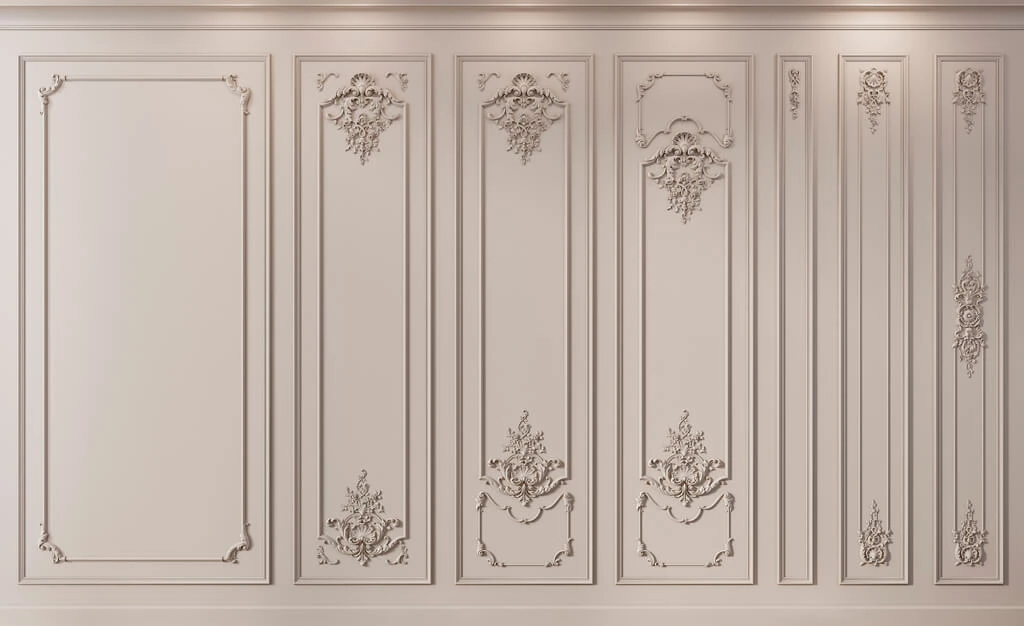
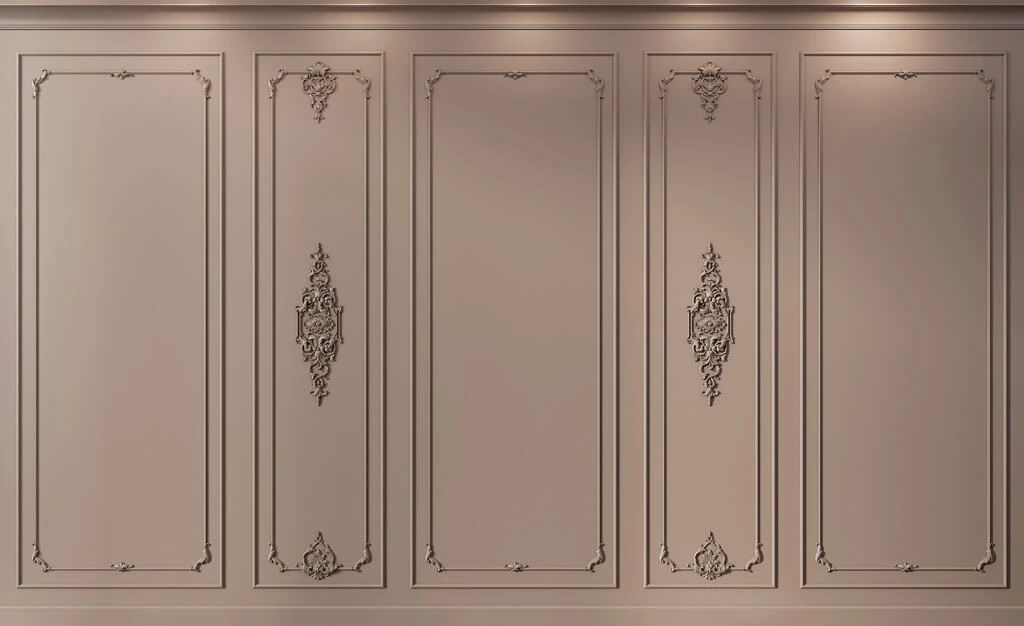
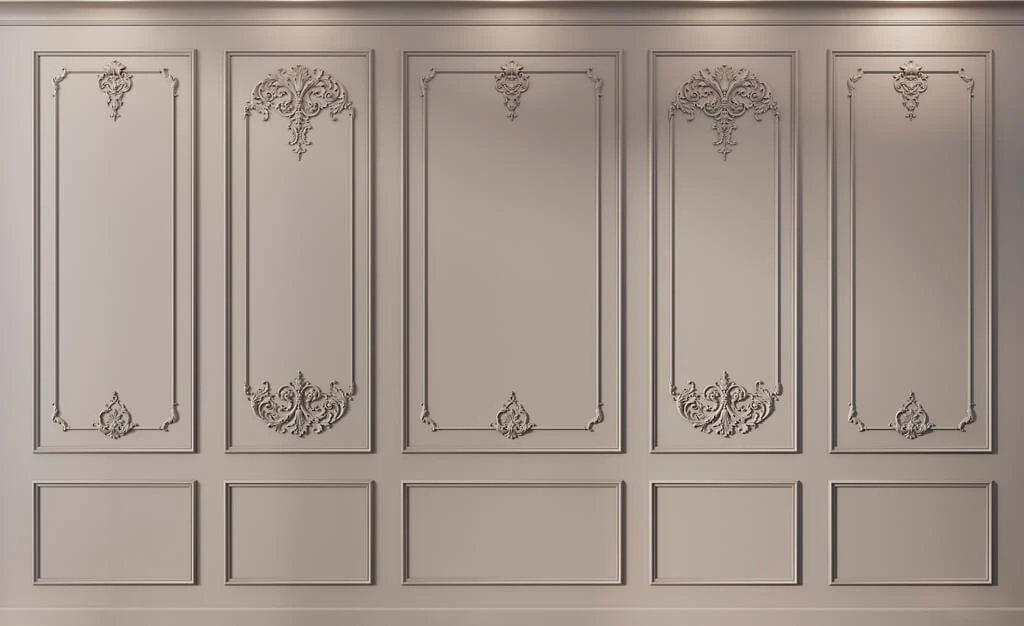
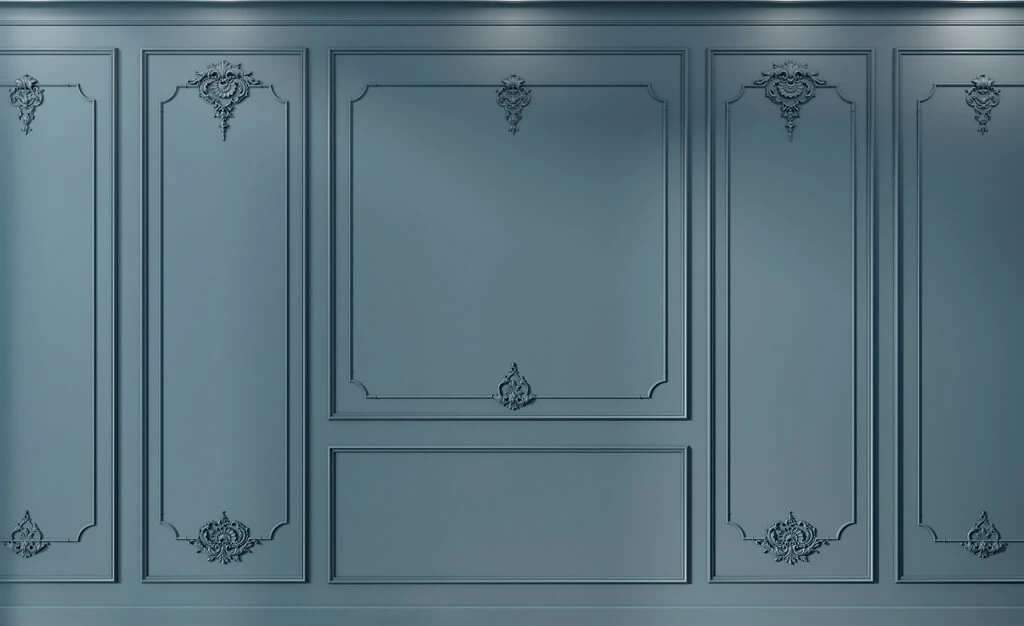
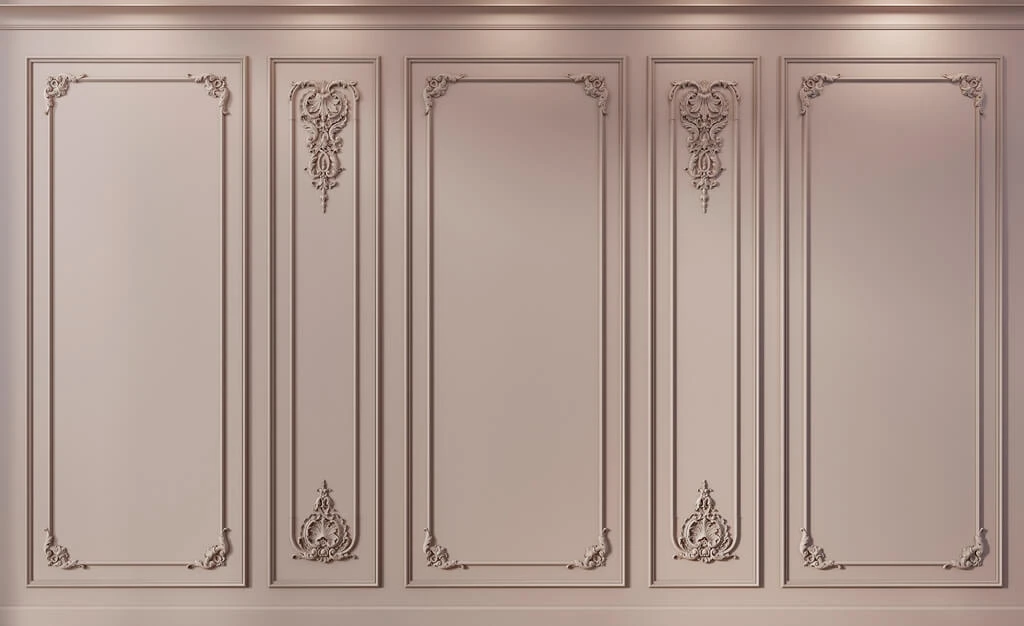
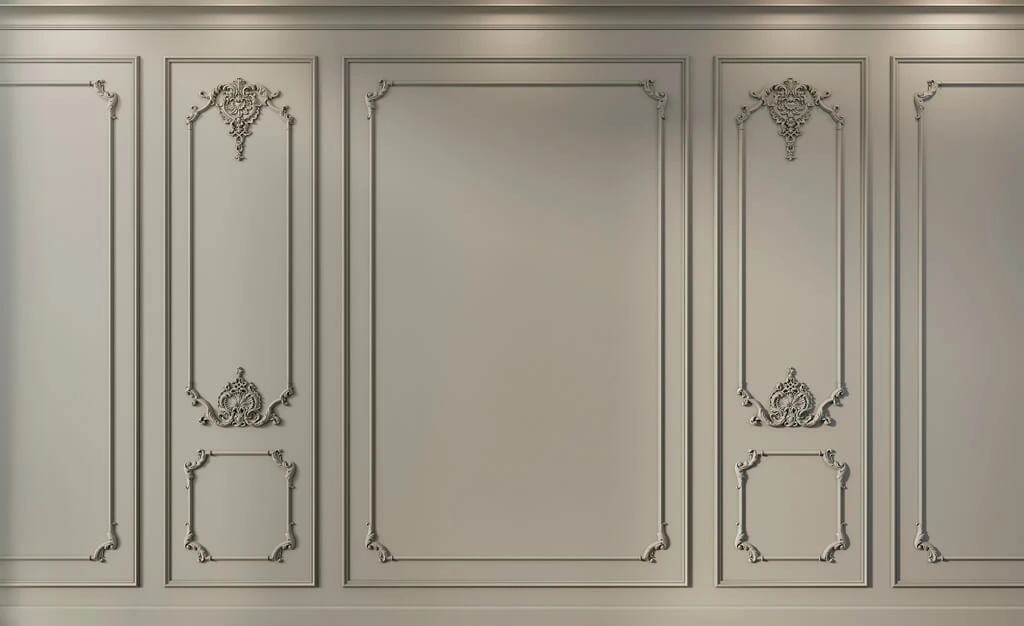
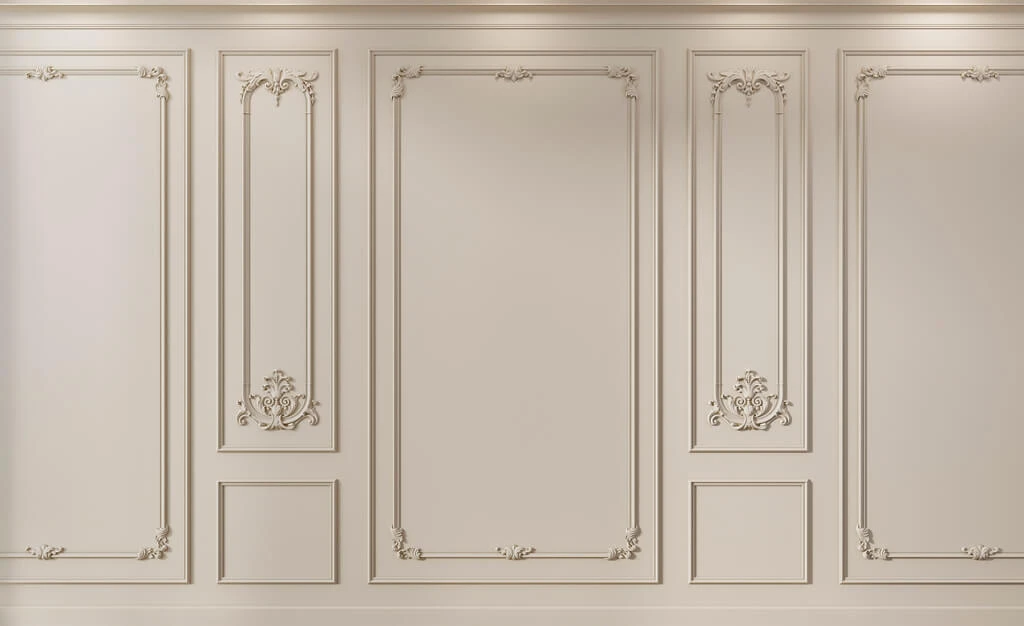
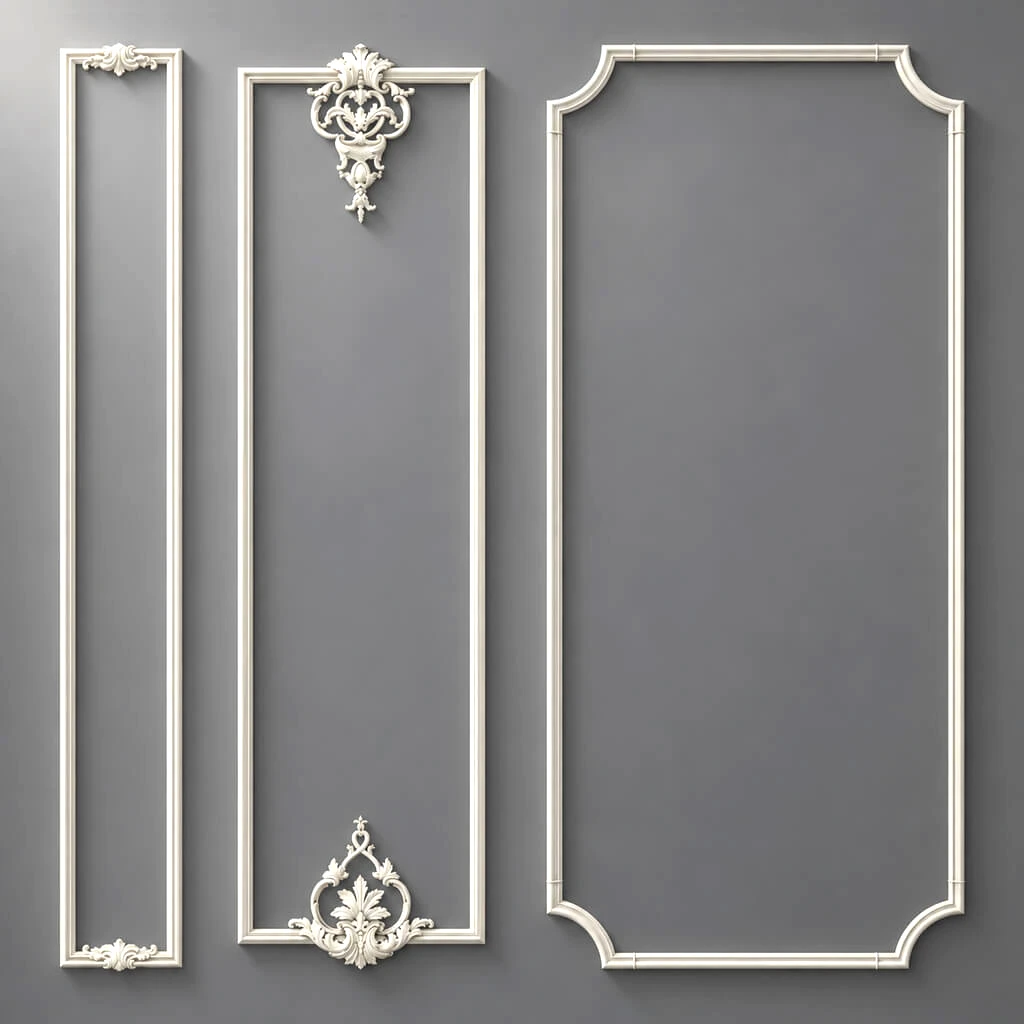
In neoclassical interiors with frame panels made of moldings, the trim often becomes part of this system: the vertical frames of the door casing visually continue the frame paneling of the wall. This creates a sense of an integrated architectural environment.
Ready-made trims or custom sizing
This question arises for most clients. Let's break it down honestly.
| Option | When to choose | Comment |
|---|---|---|
| Ready-made platbands | Standard openings, need fast delivery | Standard sizes, quick to work |
| Carved ready-made platbands | Need decor, have standard size | Ornament + speed |
| Custom-sized platbands | Non-standard openings, custom ornament | Precise manufacturing, need measurement |
| Door platbands | Interior scenario | They are fitted to the baseboard and door leaf |
| Window casings for the home | Facade scenario | Covering and weather protection are important |
STAVROS produces casings both in standard profiles and in custom-made format. For serial projects — wooden villages, hotels, apartments — it is possible to manufacture large batches in a single profile and ornament.
What affects the price of wooden casings
Buy ready-made carved wooden casings price — the range is wide. What determines it?
Material and wood species. A pine casing is cheaper than a beech one with the same profile. Oak is the most expensive. The choice of species depends not only on the budget but also on operating conditions: for the facade, pine with impregnation works well; for the interior, beech is preferable.
Length and width. A casing 2200×80 mm has one price. A casing 2200×120 mm from the same species already has more material and more milling in the profile execution.
Thread complexity. Simple profile — minimal processing. Through openwork carving — several CNC operations, final cleaning, quality control of each ornament element.
Ornament depth. 5 mm relief — one processing level. 20–25 mm relief — multiple passes, tool change, high labor intensity.
Coating. Trim without coating — base price. With primer, antiseptic, finish varnish or paint — more expensive by the cost of finishing.
Finished size or for opening. Cutting standard lengths — fast and inexpensive. Manufacturing for non-standard opening — calculation and production for specific dimensions.
Quantity. One trim — retail price. Set for 10 windows — wholesale calculation.
Delivery. Trims are long-length goods. Transportation requires special packaging and consideration of fragility of thin carved elements.
How to choose trims before purchase: complete checklist
Ten steps to a confident order.
-
Determine the installation location. Window outside, window inside, interior door, entrance door, arched opening — each location has its own task.
-
Measure the opening. Height and width of the opening — in mm. For a window, measure along the window frame. For a door, along the door frame. Not "approximately", but precisely.
-
Determine the width of the trim. Proportion: the width of the trim is 7–12% of the opening width. For a 100 cm window — trim 70–120 mm.
-
Choose a profile. Smooth rectangle, shaped with a fillet, with ornament — decide based on the style of the house or interior.
-
Choose the type of carving. Smooth, with volumetric relief, with openwork (through) carving. For the facade of a wooden house — House Carving. For the interior — profile or overlay decorative elements.
-
Determine the coating. For the facade — antiseptic + finishing paint or oil for exterior work. For the interior — clear varnish or tinting.
-
Coordinate with the door and baseboard. The trim profile should echo the profile skirting boards и molding.
-
Plan the corner joints. Joint at 45°, with a corner block, with a decorative corner element — choose the technology in advance, it affects the length of the ordered planks.
-
Check the completeness. For one window you need: 1 top horizontal plank, 2 side vertical planks. Plus corner blocks if the joint is not at 45°.
-
Order with a margin. Each joint takes 5–8 cm when trimming. For 10 windows with double-sided trims — calculate the total length and add 15% margin.
Mistakes when buying wooden architraves
They occur in everyone — from an experienced foreman to a homeowner doing renovations for the first time.
They take without measuring. "Standard size will fit" doesn't work when windows are non-standard. Especially in wooden houses where shrinkage changes the geometry of openings.
They don't account for slopes. The trim attaches to the slope or the frame. The width of the slope affects the choice of the mounting side of the trim. If the slope is wider than the trim, the joint is not covered.
They mix ornaments. Openwork carving in Russian style on windows + classic profile without decor on doors + applied stucco elements in Baroque tradition = three different statements on one facade. This is not "diversity," it's chaos.
They don't coordinate with the cornice. The facade trim and cornice should belong to the same style family. If the cornice is straight and the trim has lush floral ornament, the dissonance is visible from fifty meters away.
They choose too narrow a profile. A 40 mm trim on a window 150 cm wide looks like a thread on a large frame. Proportion is the key selection criterion.
They don't think about coating. A wooden trim on a facade without protective coating will darken after one season and start cracking after two. Wood protection is a mandatory step, not an option.
They only count the price per piece. Buying ready-made wooden carved window trims, the price per unit is not the same as the cost of a full set for a house. Calculate the footage, multiply by the number of openings, account for extras.
They don't check handedness. For some profiles with asymmetrical cross-sections, "left" and "right" versions are important for corner sections. Check with the manufacturer.
Wooden trim and facade: a unified system
The trim on a wooden house window does not live separately. It is part of the facade decor system, which also includes:
-
Prichelins are horizontal boards covering the ends of rafters under the ridge.
-
Eaves overhangs with profiled edge.
-
Wind boards on the side facades.
-
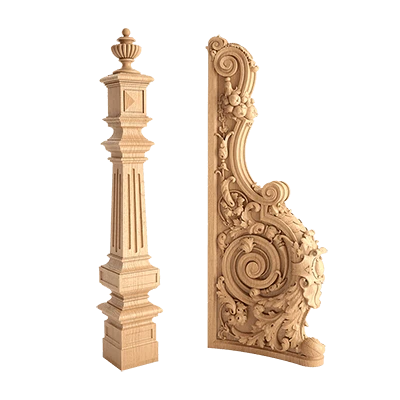
Porch decor — balusters, posts, handrails.
-
Gable decor — applied ornaments on the end gable.
When all these elements belong to the same ornamental language, the house looks as if created by one master. In the STAVROS catalog, the section “House Carving” allows you to form a set of facade decor in a unified style: platbands, cornices, gable elements, applied patterns.
For those who want to understand the full logic of facade ornament and its historical basis, the material about wooden patterns on houses provides comprehensive cultural and visual context.
Wooden platband in the interior: coordination system
In an apartment, the architrave works in a different coordinate system. Here, its partners are the door, baseboard, moldings, parquet, and furniture.
Color coordination: an architrave in the tone of the door leaf is a classic scheme. A contrasting architrave (white architrave + dark door) is a modern technique that only works with a confident stylistic solution. An architrave matching the wall color is an "invisible" option, minimalism.
Profile coordination: if the interior uses Wooden moldings frame panels on the walls, the architrave profile should visually continue this theme. For example, a molding with a fillet + an architrave with the same fillet = unity.
Coordination with the baseboard: one material, one species, one tone, one level of decorativeness — this is not "boring," it is an architectural system that creates the feeling of a designed space.
For doors with carved decoration an architrave with ornament works as a continuation of the decorative program of the door leaf. This is the highest level of interior design — when the door portal is a complete work: a leaf with carving, architraves with coordinated ornament, a cornice above the door, a baseboard in the same tonality.
Where to buy wooden architraves
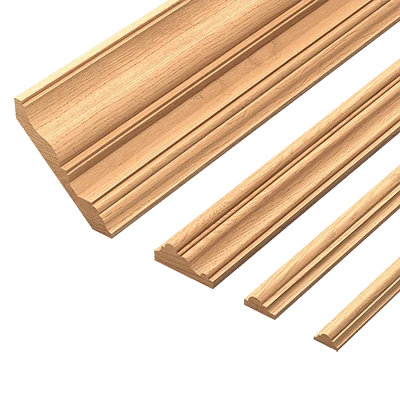
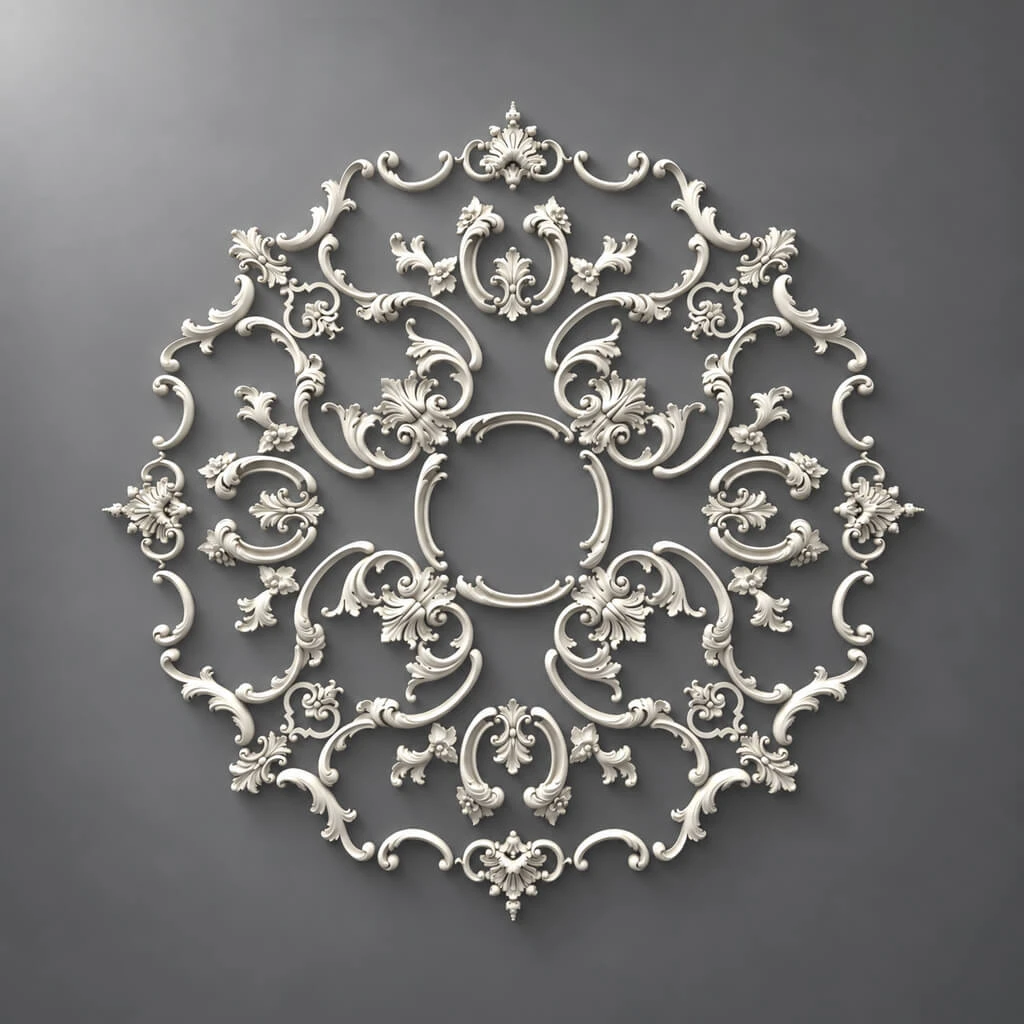
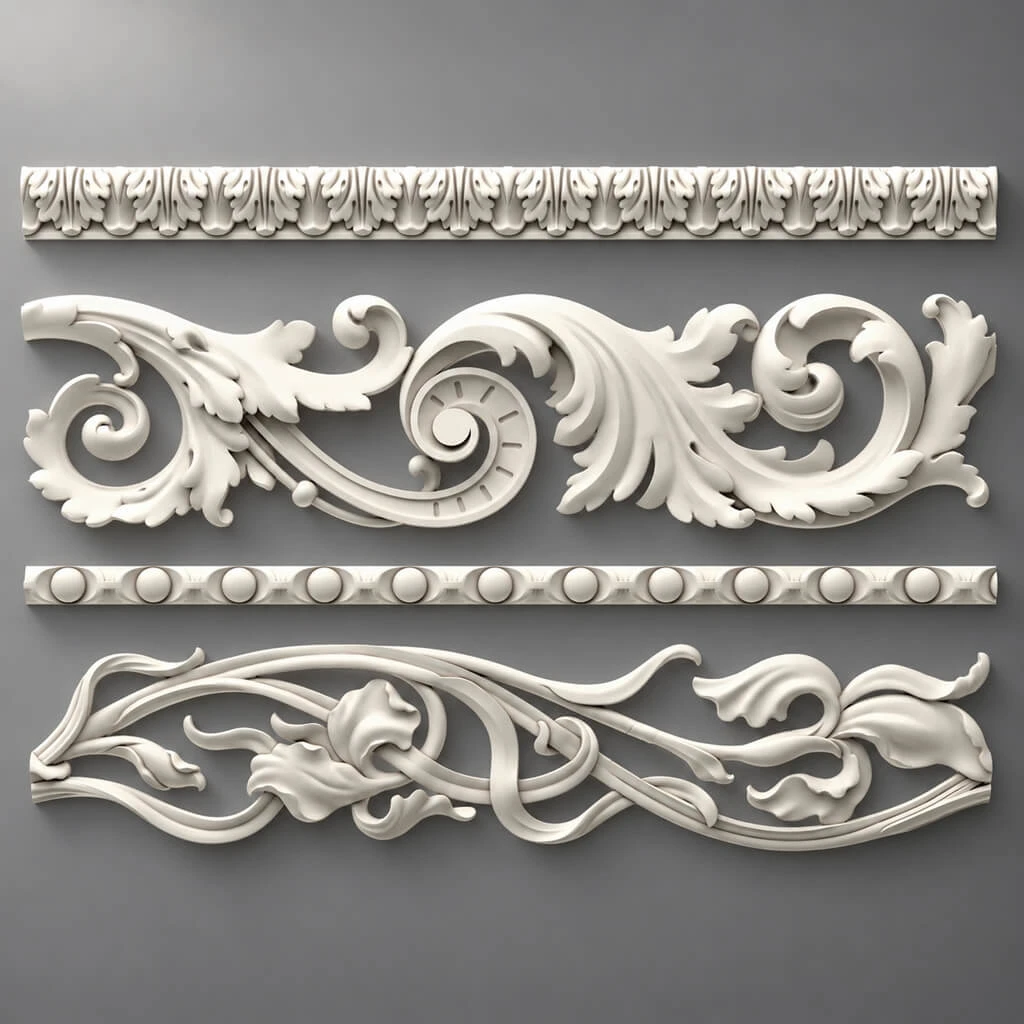
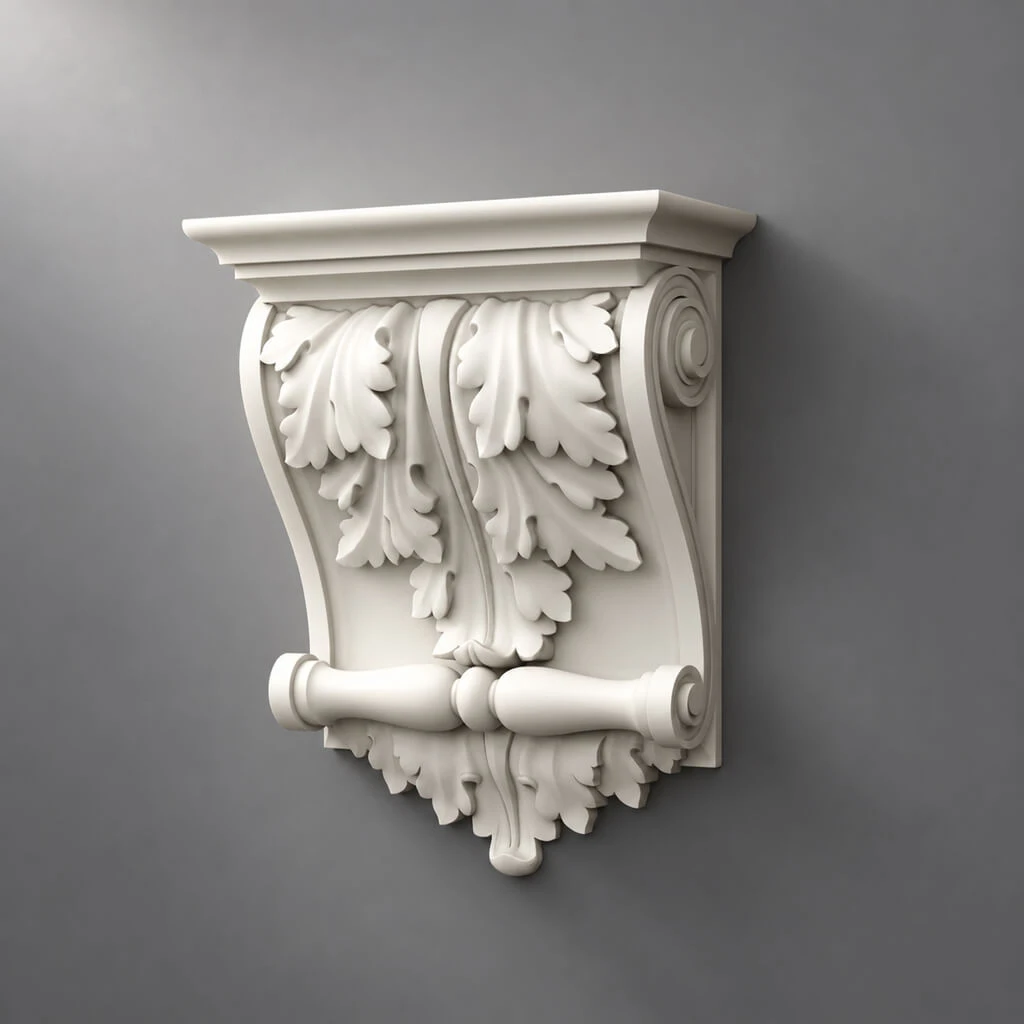
STAVROS is a Russian manufacturer of wooden products with a full range of facade and interior decor. The catalog includes Wooden casings create a frame around the opening, visually highlighting it from the wall plane. A classic casing has a profiled section that corresponds to the profiles of baseboards and moldings. in smooth and carved versions, House Carving for facades of wooden houses, Wooden Skirting Boards, Moldings, Carved Decor and overlay elements to create a unified decorative system.
Where to buy wooden carved window trims with quality and exact size guarantee? At STAVROS — with DWG file for installation, with the possibility of ordering custom sizes and manufacturing in Russia. Delivery across the country and CIS. Showrooms in Moscow and St. Petersburg for live material and relief assessment.
For a wooden house with a unified facade decor, it is worth ordering a set at once: Casings + cornices from the section “House Carving” + overlays Carved decorative elements. A single ornamental program, one manufacturer, one material.
FAQ: Answers to popular questions
Where to buy wooden carved window trims?
In the STAVROS catalog in the «House Carving» and «Window Trims» sections. Wide selection of ready-made ornaments, possibility of custom size manufacturing. Contact us to confirm shipping to your destination.
Which wooden window trims to buy for a wooden house?
Carved or profiled depending on the style of the house. It is important to consider the window size, ornamentation in coordination with cornices and gable boards, and proper coating to protect the wood from moisture and UV.
How do carved architraves differ from smooth profiled ones?
A smooth profile covers the gap and creates a clear frame. A carved architrave acts as a decorative element of the facade or interior — it carries ornamentation, creates an accent, and enhances the style.
What affects the price of wooden architraves?
Wood species, profile width and length, ornament complexity, relief depth, coating, number of elements, standard or custom size.
Can wooden architraves be used for interior doors?
Yes. For doors, coordination with baseboards, moldings, and the door leaf is important — in terms of profile, tone, and ornament. The coating for interior architraves is varnish or tinting (no weather protection is needed here).
How to calculate the number of architraves for a window?
For one standard window: 1 horizontal plank (window width + 2 architrave widths + 10% allowance) + 2 vertical planks (opening height + allowance for trimming). Remember to double the calculation if architraves are installed on both sides (outside and inside).
Do casings need to be treated before installation?
For the facade — mandatory: antiseptic + finish coating. For the interior — varnish or oil as desired. Without coating, wood on the facade turns gray and cracks within one to two seasons.