Article Contents:
- Why a wall with a mirror should be decorated
- What to choose: moldings, stucco or a ready-made kit
- Options for decorating a wall with a mirror
- Frame made of moldings around a mirror
- Vertical composition on the sides of the mirror
- Decorative panel with a mirror
- Where to use wall decor with a mirror
- In the entryway
- In the bedroom
- In the living room
- In hall and corridor
- How to choose a decor style for a wall with a mirror
- Neoclassicism
- Neoclassic Light
- Jatoba
- Versailles Light
- How to calculate decor around a mirror
- Lighting the mirror area: how light enhances decor
- Decor and mirror color: how to achieve harmony
- Mistakes when decorating a wall with a mirror
- Console and mirror: how to create a complete zone
- Where to buy polyurethane wall decor with a mirror
- FAQ: frequently asked questions about wall decor with a mirror
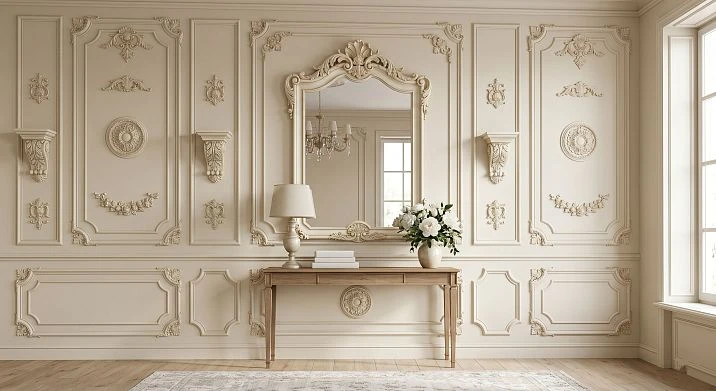
A mirror is one of the most powerful elements in an interior. It multiplies light, expands space, and captures the eye. But when a mirror simply hangs on the wall — without framing, without context, without architectural support — it loses half its power. It becomes a household object rather than part of the interior. That is whyDecor of a wall with a mirrorpolyurethane is not a decorative whim, but a meaningful architectural technique, proven over centuries.
Moldings around the mirror, frames made of profiled slats, stucco decor with corner accents, ready-made sets of wall compositions — all these are tools that turn a lonely hanging mirror into the center of a well-thought-out wall. In the hallway, in the bedroom, in the living room above the console, in the foyer — everywhere there is a mirror, there is also a task: to ensure there is no emptiness around it. Let's break it all down in order.
Why a wall with a mirror should be decorated
Designers know one pattern: a mirror attracts the eye more than any other wall element. It reflects, it is deep, it is alive. And that is why everything next to it automatically falls into the field of view. An empty wall around a mirror is not a neutral background. It is an incompleteness that the brain registers instantly.
Decorating a wall with a mirror using polyurethane decor solves several tasks at once. First, it integrates the mirror into the architectural logic of the wall: moldings create a frame that makes the mirror part of the surface, not an object hanging on it. Second, it adds vertical and horizontal divisions that structure the entire wall — not just the mirror area. Third, the decor of the wall around the mirror works as an independent composition: even if you remove the mirror, the wall remains expressive.
Wall decor with a mirror is especially effective in three spaces. In the hallway — where the mirror is functional and simultaneously the first visual impression of the apartment. In the bedroom — where the mirror near the wardrobe or above the vanity needs an architectural frame that makes it part of a stylistically cohesive interior. In the living room — where the mirror above the console or between sconces plays a representative role and requires appropriate decoration.
Polyurethane wall decor — the optimal material for this task: lightweight, precise in relief, paintable in any shade, compatible with all types of walls, and requiring no special construction skills for installation.




What to choose: moldings, stucco, or a ready-made kit
Three different tools — three different levels of complexity and expressiveness. Which one to choose depends on the task, the space, and the desired result.
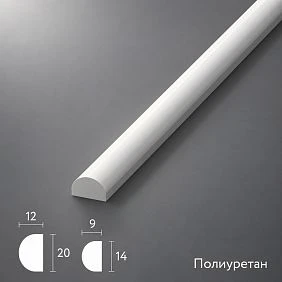
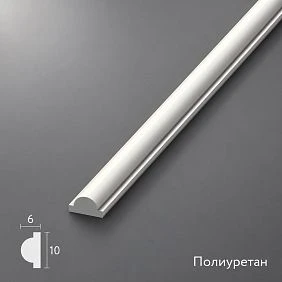
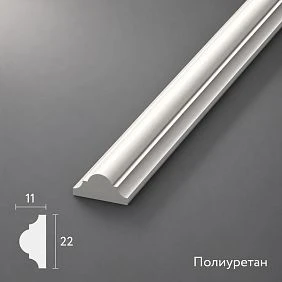
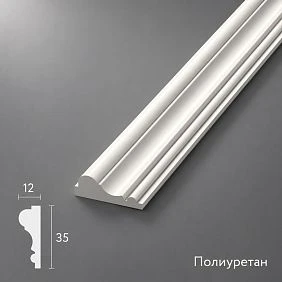
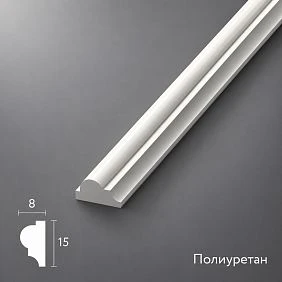
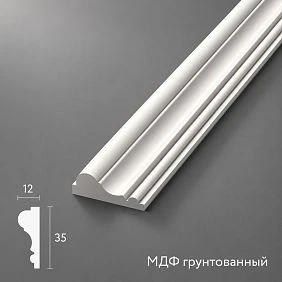
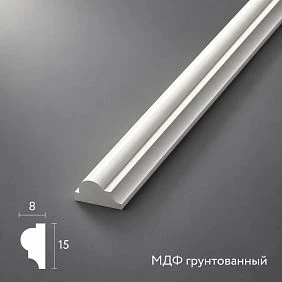
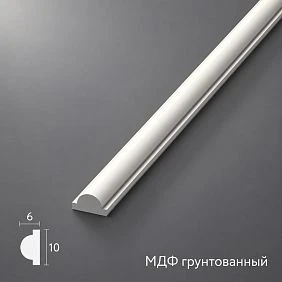
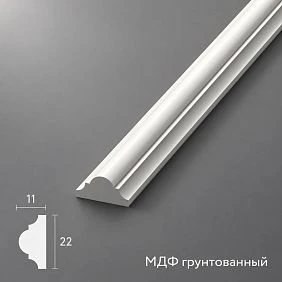
Moldings around the mirror — a basic and universal tool. A profiled polyurethane strip creates a frame around the mirror: rectangular, vertical, double, or inscribed in a larger panel system.polyurethane wall moldings are produced in different cross-sections — from 12 mm for minimalist interiors to 60 mm and more for formal classic solutions. The correctly chosen profile width determines the style of the entire composition.
The molding is installed around the perimeter of the mirror with an indent of 10–30 cm from its edge — this creates visual "air" and does not press the frame against the glass plane. The connection at the corners is at 45 degrees, with precise fitting. It is the quality of the corner joints that determines whether the frame will look like an architectural element or a homemade construction.
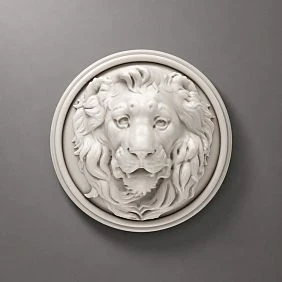
Stucco molding around the mirror is the next level.molded decoration made of polyurethane adds ornamental accents to the system: corner overlays at frame intersections, a central element above the mirror, and symmetrical side inserts. It is the stucco that transforms the decor from a "molding frame" into an "architectural composition." The floral accent above the mirror is a direct reference to how mirrors were decorated in classic interiors of the 17th–19th centuries.
A ready-made kit is a systematic solution for those who want results without lengthy design work.Ready-made molded decor kits already include all necessary elements in the correct proportions: moldings, corner accents, ornamental overlays. A kit for a wall with a mirror is a single stylistically consistent solution that is installed according to a scheme without the need to develop a layout from scratch. For most tasks — in the hallway, bedroom, living room — this is the most practical path to a quality result.
Our factory also produces:


Options for decorating a wall with a mirror
Get Consultation
Frame of moldings around the mirror
A classic and most versatile scheme. A frame of moldings around the mirror works in all styles and all spaces — from a modern minimalist apartment to a grand classic hall. Only the molding profile and the presence or absence of ornamental accents differ.
A rectangular frame is the simplest and most readable scheme. Four molding segments joined at 45 degrees form a contour that turns the mirror from a standalone object into part of the wall. A vertical frame with a 2:3 or 1:2 ratio (width to height) works well in hallways and bedrooms where the mirror is vertically elongated.
A double frame consists of two concentric rectangles of molding with an equal gap between them. The outer frame sets the scale, the inner one accents the mirror. The space between the frames can be painted in a contrasting shade to add depth.
A frame as part of a panel system is the most complex and most beautiful option. The mirror is built into a large wall panel that includes molding framing, side vertical accents, and a horizontal frieze. This solution is for spacious areas — halls, living rooms, grand zones.
Decorative wall frames made ofpolyurethane wall moldings can be painted in any shade. In a monochrome version (frame matching the wall color), the mirror looks integrated into the architecture. In a contrasting version, it stands out as an independent accent.
Vertical composition on the sides of the mirror
The goal is not always to create a frame. Sometimes it's better to decorate the wall around the mirror without enclosing it in a contour, but by building vertical architecture on the sides. This is especially relevant for narrow walls in hallways, for piers between doors, and for the console area in a corridor.
Vertical wall decor on the sides of the mirror consists of two symmetrical vertical elements: either thin moldings from floor to ceiling, or vertical sets with ornamental accents. The mirror ends up at the center of this system, as if it has always been there—like a window in an architectural niche.
The decor set for the console area takes into account that there is furniture at the bottom of the wall: a console, a cabinet, or a shelf. The vertical elements start from the level of the tabletop or slightly higher, creating a complete "mirror + console + decor" zone. This is one of the most memorable interior scenes, which is easy to reproduce with the right elements.
Decorative panel with mirror
Here, the mirror becomes the center of a large wall composition. A decorative panel with a mirror is a wide-format molding frame, inside which the mirror occupies the central field, with ornamental accents, corner elements, and additional frames around the perimeter.
This solution is for expressive spaces: halls of country houses, formal living rooms, classic-style bedrooms. The ready-made wall composition made of polyurethane in this version is the most large-scale of the three formats and requires preliminary calculation considering ceiling height, wall width, and furniture placement.
decorative wall panels in combination with a mirror create that very "formal wall" that stays in memory for a long time. It's not just beautiful—it's the language through which the space speaks about its owners.
Where to use wall decor with a mirror
In the hallway
The hallway is the most logical place for this theme. A mirror in the hallway is a necessity, but it is here that it most often hangs without any architectural support. The result: a functional but faceless space.
Wall decor in the hallway with a polyurethane mirror turns this functional corner into an interior scene. A mirror at the entrance with a molding frame, side vertical accents, a small decorative overlay above the mirror — and the hallway becomes not just a corridor, but the first act of a home performance.
It is better to design the decor of the mirror area in the hallway in a light version: profile no wider than 20–25 mm, delicate ornament, vertical composition. An overloaded hallway with heavy stucco produces a depressing rather than a festive effect. It is for such cases that the collection was created"Neoclassic Light": soft relief, restrained ornament, light architectural structure — everything that the hallway of any modern home needs.
If there is a console in the hallway, then the wall decor behind the console with a mirror above it is a classic scheme: vertical moldings on the sides, a mirror in the center above the console, a decorative overlay on top. The area turns out compact but complete.
Don't forget about the piers between doors: a vertical molding or a set of stucco decor on the pier next to the mirror creates rhythm and adds depth to the hallway.
In the bedroom
In the bedroom, the mirror appears in two contexts: above the dressing table and near the wardrobe area. Both require a different approach to design.
Wall decor with a mirror in the bedroom above the dressing table is a delicate task. The dressing table is a private area, and the decor here should be quiet and supportive, not dominant. A frame of moldings in the bedroom made of thin profile 12–16 mm, possibly a small corner overlay — and that is enough for the mirror to look like an architectural element, not a randomly hung object.
Wall decor for the bedroom near the wardrobe area is a different story. Here the mirror is often large and vertical, and it occupies a significant part of the wall. The frame in such a situation can be wider and more expressive: a double contour with an indent, moldings 20–30 mm, side vertical accents. This creates a "niche" for the mirror and turns the wardrobe area into a well-thought-out, stylistically complete space.
For a bedroom in a calm modern style, the ideal solution would be"Japandi" decor set: square corner accents, thin molding, geometry without ornament. A mirror in such a frame becomes an organic part of a minimalist interior — not a decorative object, but an architectural opening.
In the living room
A mirror in the living room is always a representative object. Above a console by the window, between sconces on an accent wall, in the fireplace area — in any of these places, the mirror serves not only a practical but also an architectural function.
Decorating a wall with a mirror in the living room requires larger-scale thinking. The mirror here is the center of the wall scene, and a full architectural system must be built around it. Two symmetrical sconces on either side of the mirror, vertical molding accents beneath them, a horizontal frieze above the mirror — this is a scheme that worked in the best European interiors two hundred years ago and continues to work today.
A mirror in neoclassical style with moldings is one of the most sought-after themes in modern apartment design.Set of stucco decor "Neoclassic"provides exactly what is needed for such a task: expressive ornamental overlays with floral relief, moldings with a clear profile, corner elements that put the finishing touch on the system. A decorative composition on the wall around a mirror in this style is a formal living room without excess.
In the hall and corridor
The hallway is a space where the mirror and decor work especially powerfully. A large hallway with a full-length mirror on the end wall and symmetrical molding panels on the sides is an architectural technique proven over time. The mirror multiplies the space, the moldings give it structure.
Decorating a wall with a mirror in the hallway is built on the principle of 'one axis — two symmetrical wings.' The axis is the mirror itself. The wings are vertical molding panels or sets of stucco decor on either side. The wider the hallway, the larger the panels can be.
In a long corridor, moldings around the mirror solve the problem of monotony: the framed mirror becomes the visual center of the corridor, drawing the eye. Vertical moldings on the sides complete the picture — and the long corridor ceases to be a 'tunnel' and becomes a gallery.
How to choose the style of decor for a wall with a mirror
Neoclassicism
Neoclassicism is a style that works perfectly with mirrors of any format. Ornamental accents above the mirror, frames with expressive profiles, symmetrical side verticals — all of this is organic to the neoclassical language and easily implemented throughSet of stucco decor "Neoclassic".
Wall decor with a mirror in neoclassicism is a full-fledged architectural scene. The mirror here does not hang — it stands framed, like a painting in a museum-grade frame. Neoclassical wall decor is appropriate in living rooms, halls, and studies with classic-profile furniture. Moldings in neoclassicism are wide, with a clear relief profile, allowing for a double frame.
Neoclassic Light
"Neoclassic Light" wall decor — this is the best solution for hallways, modern apartments, and any space where classic style is needed without ceremonial heaviness. Light wall decor with a mirror from this collection creates the right architectural frame without overload.
"Neoclassic Light" is the most versatile choice for framing a mirror. The profiles here are more delicate, the ornament softer, and the scale is designed for standard apartment spaces. At the same time, the stylistic affiliation is obvious: it is classic, but light. Modern moldings around the mirror from this collection pair well with any neutral furniture.
For a hallway with a medium-sized mirror (60×90 or 60×120 cm) — this is the optimal starting point: the "Neoclassic Light" set will provide a cohesive, neat, and stylistically competent composition.
Japandi
Minimalist wall decor with a mirror in the Japandi style is a quiet and very precise solution."Japandi" decor set offers geometric corner elements and thin molding without ornament: a clear frame, square accents at the corners, painted in the wall color. In such a system, the mirror becomes part of the wall — an "opening" into it, rather than an object glued to the surface.
Japandi-style mirror decor works everywhere where the silence of form is important: in the bedroom, in a modern living room, in a hallway without classic furniture. This is a choice for people who value space more than decoration.
Versailles Light
For those who want maximum expressiveness from a wall with a mirror —"Versailles Light" stucco decor set. Classic stucco around the mirror with ornamental overlays in the Versailles style — floral relief, pronounced molding contour, corner accents with curls — this is an architectural statement of the highest register.
Versailles Light decor for a wall with a mirror is appropriate in grand halls, representative living rooms, and bedrooms in a fully classic interior. This is a style that requires consistency throughout the space: furniture, textiles, and lighting must speak the same language.
How to calculate decor around a mirror
Calculation is where any successful installation begins. A few simple steps that will save you from disappointment.
Measure the mirror. The width and height of the frame — not the mirror surface, but the outer contour of the frame. Write down the exact numbers.
Measure the wall. The width of the available area (between corners, doors, or furniture) and the height from the baseboard to the cornice or ceiling. This will determine the maximum scale of the composition.
Determine the offset from the mirror. The minimum offset from the outer contour of the mirror frame to the molding is 10 cm. A comfortable offset is 15–25 cm. With an offset of less than 10 cm, the frame of moldings visually merges with the mirror frame and loses its independence as an architectural element.
Consider the height of the console or cabinet. If there is a console under the mirror, the lower molding of the frame should be either at the level of the tabletop or 5–10 cm above it. A molding that goes behind the console gets lost and looks unfinished.
Mark sconces, sockets, and switches. This is a critically important step. The molding frame should not intersect with a socket or the base of a sconce. If sconces are located on the sides of the mirror, they should be inside the composition or strictly outside its boundaries.
For a narrow wall (less than 80 cm), choose a vertical set or a simple single frame made of thin molding without additional elements. A rich system with multiple frames and large overlays on a narrow wall will create a feeling of overload.
For a wide wall (more than 150 cm), a decorative panel is justified, including the mirror as a central element with side vertical accents. The wall decor scheme with a mirror in this case is built symmetrically from the center.
Lighting the mirror area: how light enhances decor
Mirror and light are an inseparable pair. But lighting affects not only the functionality of the mirror, but also how the decor around it looks. This aspect is rarely considered when planning — and it's a mistake.
Sconces on either side of the mirror create even side lighting — the best option for a functional mirror in a hallway or bedroom. At the same time, light from the sconces softly falls on the relief of moldings and ornamental overlays, creating side shadows that make the decor voluminous and expressive.
Built-in lighting around the perimeter of the mirror or frame is a modern technique that requires consideration during design. If an LED strip is planned behind the molding, the frame should be mounted with a small gap from the wall — this will create a floating frame effect with soft contour light.
Top directional light (a spot above the mirror) creates vertical shadows on the molding and accentuates horizontal profiles. With rich ornamentation, this is very beautiful; with a thin minimalist profile, it is less expressive.
For maximum effect frompolyurethane molding decorationaround the mirror, it is recommended to combine top general light with side sconces. Ornamental overlays in double lighting create a rich, lively chiaroscuro that makes the wall voluminous at any time of day.
Color of decor and mirror: how to achieve harmony
The wall decor around the mirror is a system involving three color players: the wall color, the molding color, and the mirror frame color.
Monochrome scheme (wall, moldings, and mirror frame in the same shade) is maximally elegant. The mirror dissolves into the wall, preserving the architectural frame as a relief contour. This is a classic French technique "tout en même couleur" — "everything in one color".
Light moldings on a tinted wall are a popular modern option. The moldings are white or milky, the wall is gray-green, beige, or deep blue. A mirror in a dark or metal frame adds a third accent. This is a lively, playful scheme that works in modern classic and neoclassical styles.
Moldings in the same tone as the mirror frame are a subtle design technique. If the mirror frame is brass, the moldings are coated with acrylic paint to match brass or gold. If the frame is black, the moldings are black. This creates the feeling that the decor and mirror are a single object.
A contrasting inner zone is when the space between the outer molding frame and the mirror is painted in a shade darker than the main background. It adds depth and creates a niche effect.
Mistakes when decorating a wall with a mirror
An honest conversation about what goes wrong. Each of these mistakes occurs regularly — and each is fixable if you know about it in advance.
Moldings installed too close to the mirror. A distance of less than 8–10 cm from the outer contour of the mirror frame to the molding visually compresses the space between them and makes the decor look messy. The molding is perceived not as a frame, but as an edging.
The frame ends up narrower than the mirror. If the width of the molding frame is less than the width of the mirror itself, it loses its function. The frame should be either equal to the mirror in width or wider than it.
Sconces and outlets not taken into account. A molding that butts up against an outlet or is cut by a switch is an irreparable solution. The layout must be checked against the actual wall, taking all points into account.
Mixing the styles of the decor and the mirror frame. A mirror in a strict black frame with sharp corners and classic moldings with ornamentation is a conflict that cannot be resolved by any painting. The style of the framing and the style of the mirror frame must be compatible.
Too active stucco in a small hallway. Large ornamental overlays and wide moldings in a 3 sq. m hallway create a feeling of crampedness. For small spaces — a thin profile, delicate ornament, lightweight system.
Purchasing individual elements without a layout scheme. Taking several profiles "by eye" and arranging them around the mirror is a path to rework. Without preliminary marking on paper or in a 3D editor, the installation risks being asymmetrical or disproportionate.
The decor is not connected to the furniture under the mirror. A console, cabinet, or vanity table — all of these define the lower boundary of the decor. Molding that extends behind the console is not visible. Molding that ends 40 cm above the countertop creates an uncomfortable gap. The connection between the furniture and the wall decor must be planned in advance.
More details on the technical aspects of installation — in the article about installing polyurethane molding, where clean corners, hidden joints, and proper painting are discussed. For complex stucco systems, it is recommended to study installation of polyurethane molding.
Console and mirror: how to assemble a complete zone
A separate topic deserving detailed analysis is the console with mirror zone. This is one of the most common scenarios in hallways, living rooms, and foyers, and at the same time one of the most challenging in terms of proportional design.
The console and mirror together form a vertical axis: bottom — console, middle — mirror, top — wall above the mirror. The decor should maintain this axis and work on all three levels.
Lower level (from the baseboard to the console countertop) — molding decor is rarely placed here. But if the console has open legs, a small molding frieze at the bottom of the wall will create a horizontal accent that connects the furniture with the architecture.
Middle level (from the countertop to the top edge of the mirror) — the mirror with a frame. The frame, side vertical accents, ornamental corner elements. This is where the main decorative work is concentrated.
Upper level (from the top edge of the mirror to the ceiling) — an accent finishing element. An ornamental overlay above the mirror, a horizontal molding frieze, a central stucco detail. This level completes the entire vertical and prevents the gaze from "getting lost" above the mirror.
Decor for Molding— corner overlays and accent elements are especially important in the console area: they fix the system's nodal points and create a sense of intentionality and completeness.
Where to buy polyurethane wall decor with mirror
At STAVROS you can buy wall decor with mirrorfrom polyurethane in any style and for any space.Moldings around the mirror— profiles of different widths, from minimalist to classic.Stucco around the mirror— ornamental overlays for corner accents, central elements, and side accents. Ready-made sets of four collections — for every style and every room:«Neoclassic», "Neoclassic Light", "Japandi", "Versailles Light".
STAVROS provides DWG drawings and 3D models of all items — a professional tool for those working on interior projects. Calculation of the number of elements for a specific wall — upon request. Contact us to confirm shipping to your destination. One wall with a mirror can change the perception of an entire apartment. And STAVROS knows how to do it right.
FAQ: frequently asked questions about wall decor with mirror
Can moldings be used to frame a mirror if there is already a frame?
Yes. Moldings create not a duplicate, but an external frame — an architectural contour around the mirror and its frame together. The optimal distance from the outer edge of the frame to the molding is 15–20 cm.
Is polyurethane decor suitable for framing a mirror in a bathroom?
Polyurethane is moisture-resistant. With good ventilation and painting with moisture-resistant paint, it is acceptable. However, the main use of these elements is in the hallway, bedroom, living room, or foyer.
How to ensure the frame turns out symmetrical?
Marking with a laser level is a mandatory step. Before installation, all axes and attachment points are marked on the wall with a pencil. Only after checking with the level — glue and installation.
Is it necessary to remove the mirror when installing moldings?
In most cases, yes. The work area must be free for precise marking, applying glue, and pressing the molding. Installing moldings close to a hanging mirror is extremely inconvenient.
Can a mirror be framed with moldings if the wall is covered with wallpaper?
Yes, if the wallpaper is firmly attached. On non-woven wallpaper for painting — ideal. On thin vinyl wallpaper — check the glue adhesion before installation.
Which set is better for the hallway: "Neoclassic Light" or "Japandi"?
It depends on the interior style. If the hallway has classic furniture and warm tones — "Neoclassic Light". If the interior is modern, with a neutral palette and wooden accents — "Japandi".
How to properly paint moldings after installation?
With matte acrylic paint in two thin coats. The first coat — after the glue has completely dried (24 hours). The second — after the first has dried (2–3 hours). Glossy paints are not recommended.