

























Article Contents:
- Buy furniture decor
- Which furniture decor to buy: entry point for the right choice
- Types of furniture decor
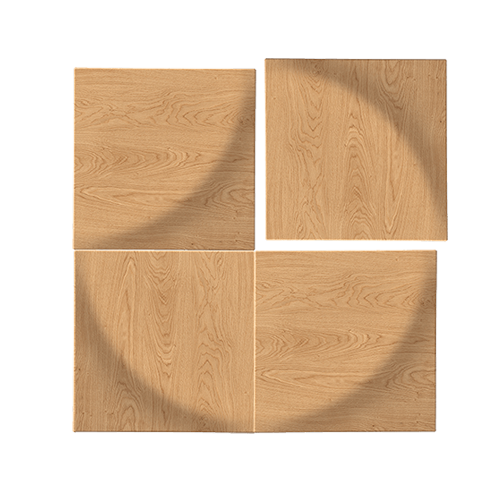
- Wooden Panels
- Carved decor for furniture
- Furniture moldings
- Overlay Decor
- Polyurethane furniture decor
- Wooden or polyurethane decor: what to choose
- Which furniture is decor suitable for
- For a Wardrobe
- For a Dresser
- For Kitchen
- For classic furniture
- For restoration
- What affects the price of furniture decor
- How to choose decor before buying: a checklist
- Mistakes when buying furniture decor
- Decor as a system: handles, legs, overlays in a unified image
- Where to buy furniture decor with quality guarantee
- FAQ: Answers to Popular Questions




Buy furniture decor
Imagine two identical cabinets: one is smooth, without a single detail, just a rectangular body with handles. The second one has applied rosettes in the center of the facade, molding around the perimeter, and corner overlays at the bottom. It's the same cabinet. But the second one is a masterpiece. That's how furniture decor works: it doesn't change the structure, it changes the meaning of the piece.
Buying furniture decor means making a decision not about purchasing a spare part, but about the character of the furniture. About whether the cabinet will be just a storage unit or become an architectural accent of the room. About whether the kitchen will be just a functional space or an interior where you want to spend time. It's a decision that requires understanding — what types exist, how to choose, which mistakes cost the most.
This article is written for those who plan to purchase wooden decor for furniture, applied decor, carved elements, or polyurethane decor. It covers all types, all materials, all application scenarios, and all pitfalls of selection. Read it — and the furniture you create or update will get exactly the character that was intended.
Which furniture decor to buy: the entry point to the right choice
The furniture decor market is huge. Wooden overlays, carved rosettes, furniture moldings, corner elements, polyurethane decor, facade kits — there are hundreds of options. How not to drown in this variety and come out with a purchase that works?
It all starts with four key questions.
First question: for which furniture? Wardrobe, chest of drawers, kitchen set, cabinet, sideboard, classic console, door panel, wall panel? Each type has its own proportions, its own standards for decor placement, and its own requirements for element scale.
Second question: what style? Classic, Baroque, Neoclassical, Provence, Country, Modern Classic, Loft with wooden accents? Decor is primarily the language of style. A rosette with an acanthus leaf on Scandinavian furniture looks like a mistake. A geometric molding on a Baroque sideboard is another mistake. Style defines everything.
Third question: material — wood or polyurethane? This is not just a budget question. Each material has its own tasks, its own logic of application, its own strengths and weaknesses. More on this in a separate section below.
Fourth question: how to attach? PVA glue and liquid nails are the standard method for overlay decor made of wood and polyurethane. But there are nuances: porous surfaces require priming, MDF and solid wood are attached differently, heavy elements require additional mechanical fastening.
Only after answering these four questions does it make sense to open the catalog. Where to buy furniture decor correctly — from a manufacturer that provides exact dimensions of each product, photos from multiple angles, and real examples of application on furniture.
Our factory also produces:




Types of furniture decor
Get Consultation
Wooden overlays
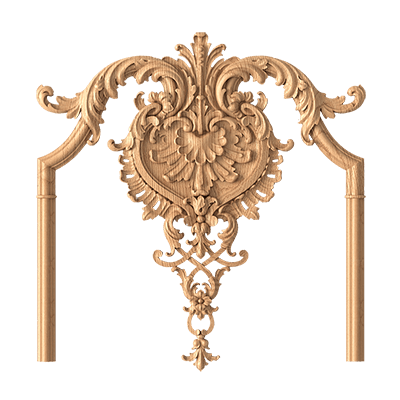
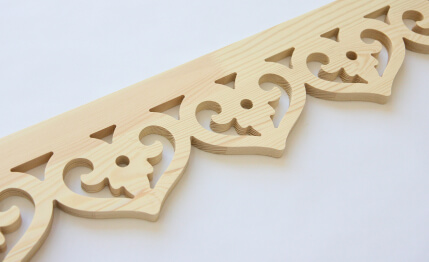
to buy, which will allow you to transform your furniture using carved wooden elements. You can use the C-003-3 decor set to decorate furniture, walls, doors, or any other surface. The C-003-3 decor set is made of oak or beech, known for their strength, durability, and beauty. You can buy the C-003-3 decor set at the Stavros decor store, which specializes in producing and selling decorative elements and hardware for furniture and interiors. At the Stavros decor store, you will find a wide selection of decor sets of various shapes, sizes, and styles. You can choose — these are overlay elements made of beech or oak solid wood, which are attached to the facade and form a decorative composition. The STAVROS catalog features over 400 models of wooden overlays: from simple symmetrical leaves and rosettes to complex ornamental panels and author's collections.
A wooden overlay is a living element with natural wood texture. The fiber pattern of each product is unique: two elements from the same model will differ slightly — and this is an advantage, not a defect. Wood provides depth, tactility, and warmth that no synthetic material can replicate.
Wooden furniture decor is suitable for any finish: enamel, varnish, stain, patina, antique tinting, aged wood effect, gilding, hand painting. This opens up endless customization possibilities: the same overlay in white enamel looks like Provence, in dark walnut — like classic, in patina with gold — like Baroque.
applied decoration for furniture is presented in the STAVROS catalog in several formats:
-
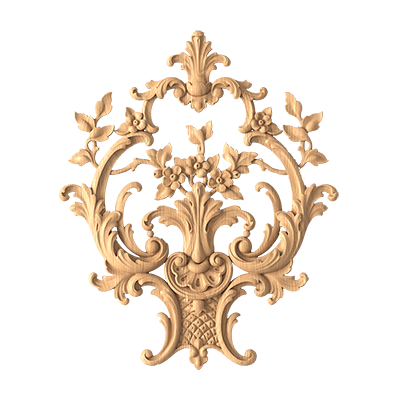
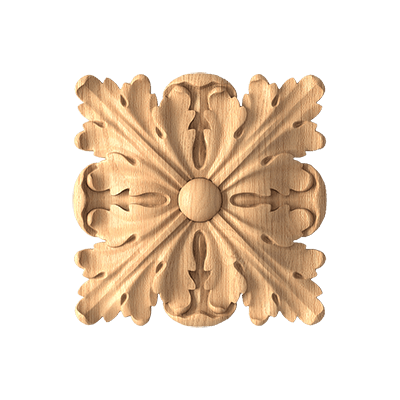
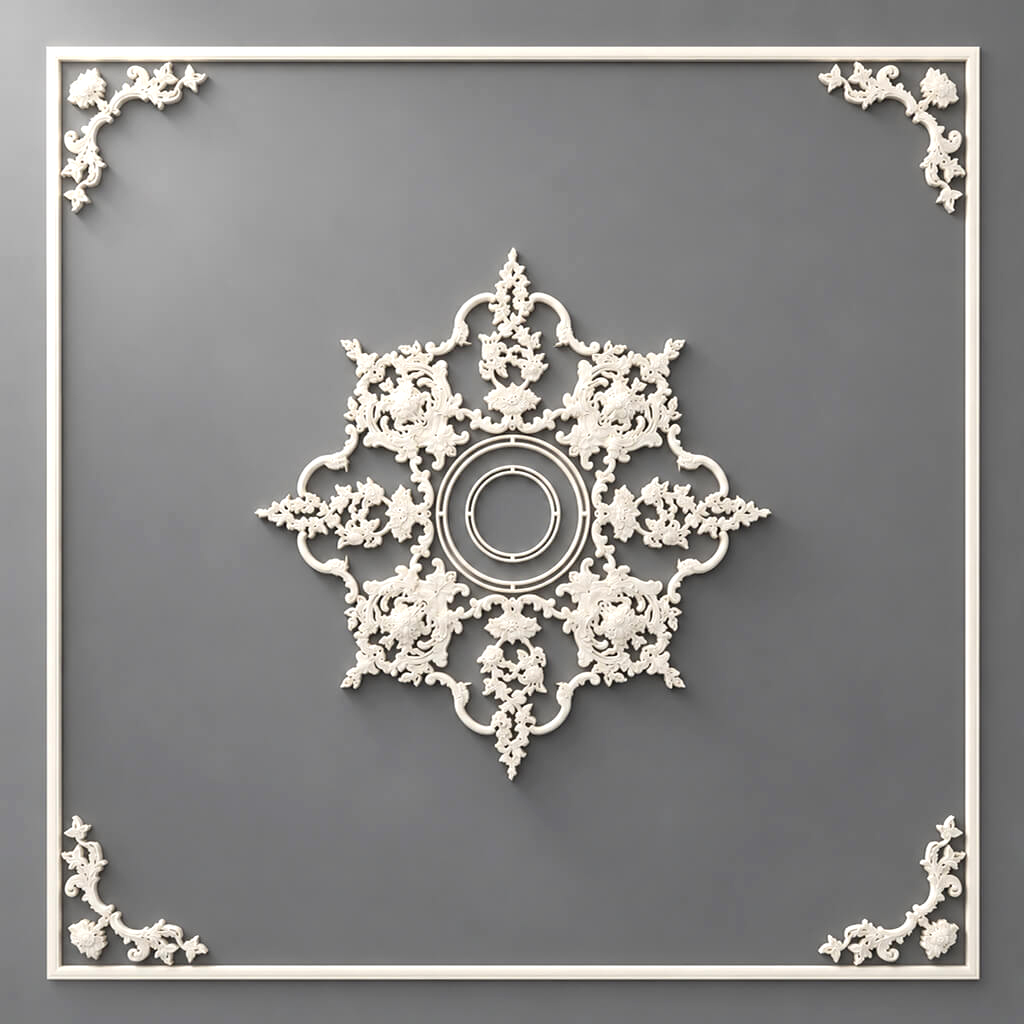
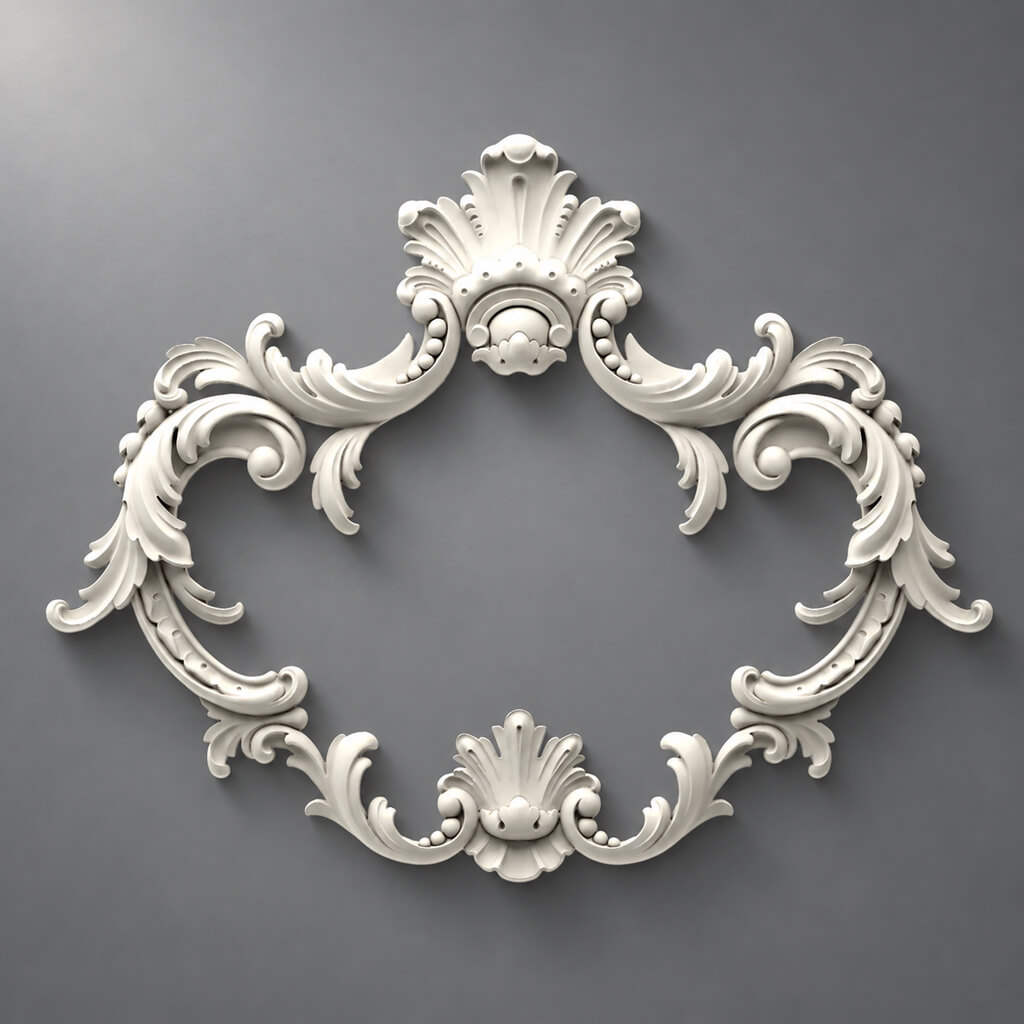
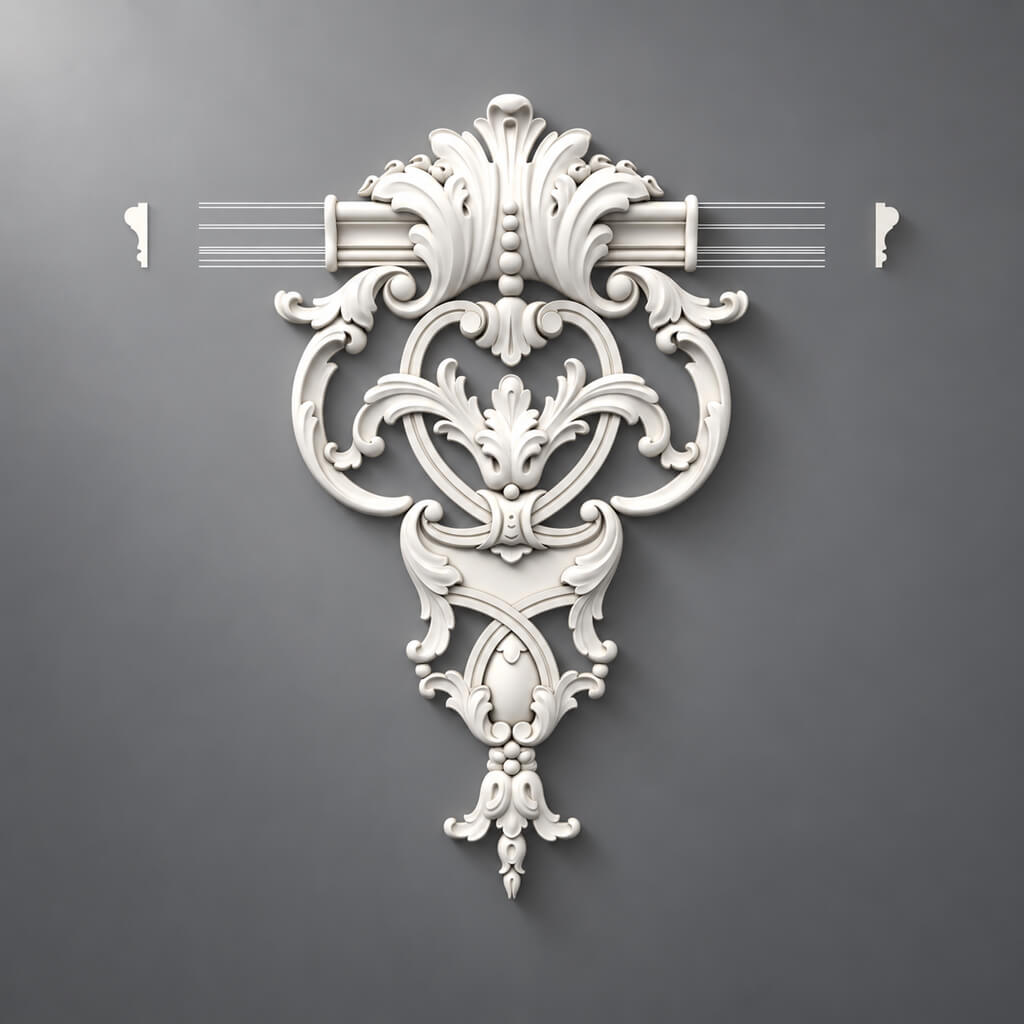
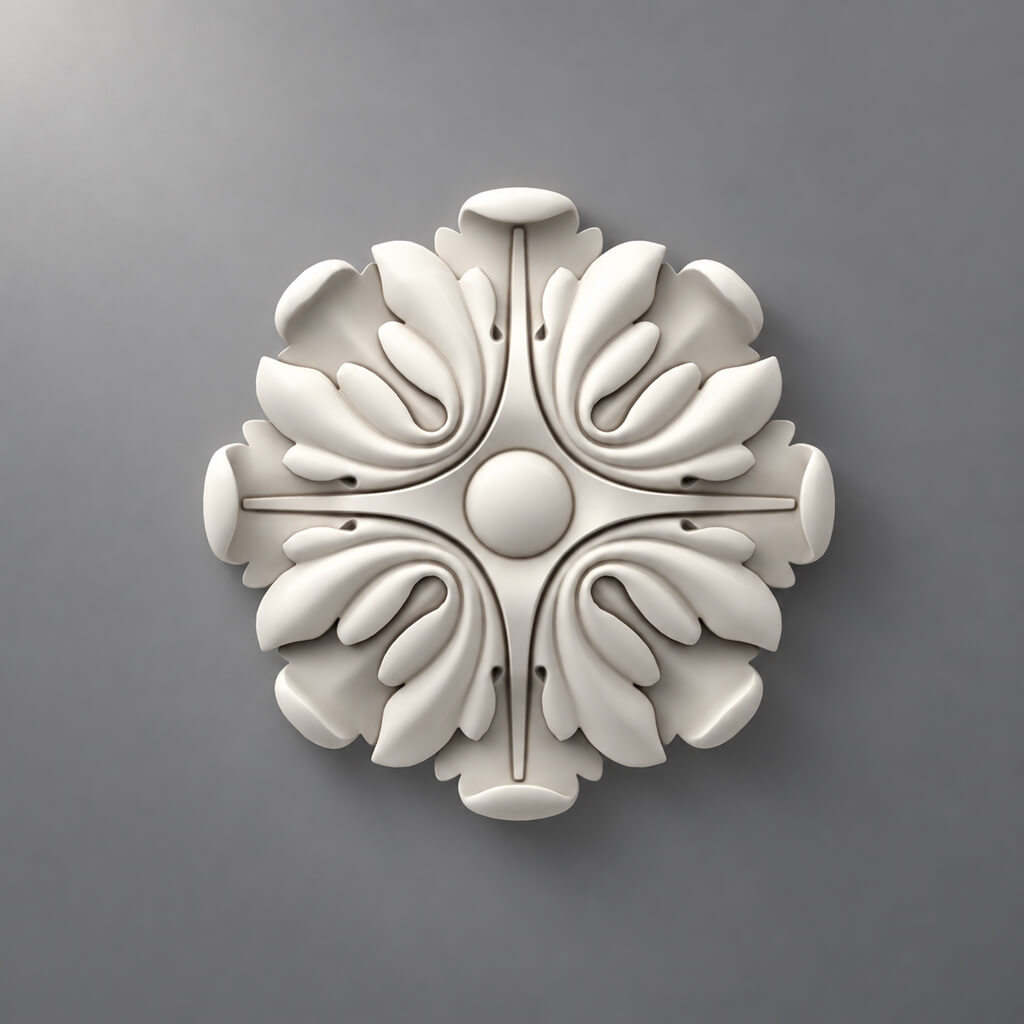
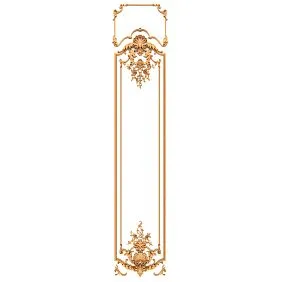
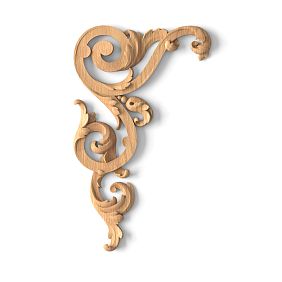
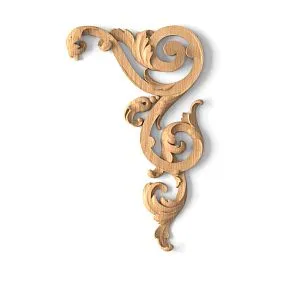
Central overlays are large symmetrical elements designed to be placed in the center of a facade. They become the dominant feature of the facade composition.
-
Corner elements are used to decorate the corners of a facade, door leaf, or wall panel. They provide a finished look and a frame structure.
-
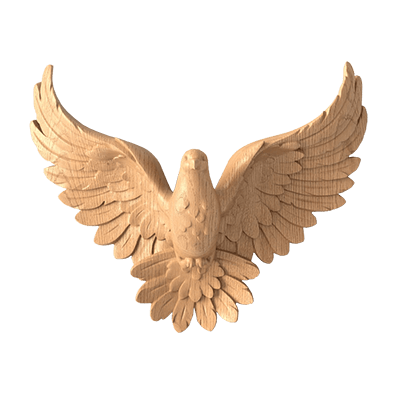
Small accents are small overlays in the form of leaves, branches, flowers, and birds. They work as additions to main elements or as standalone accents.
-
Ornamental panels are multi-element compositions that occupy a significant part of the facade. They create maximum decorative richness.
-
Constructor overlays (modular) are compatible with moldings through connecting elements, allowing the assembly of branched decorative schemes.
Prices for STAVROS wooden overlays start from 920 rubles for model N-506 and vary up to 15,030 rubles for model N-422, depending on the complexity of the pattern, size, and type of wood. Decorative sets (series C-015 — C-021) are ready-made, pre-assembled kits for decorating an entire facade, presented in the range from 7,270 to 31,540 rubles.
Carved decor for furniture
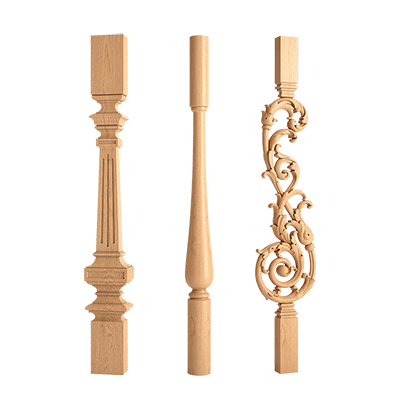
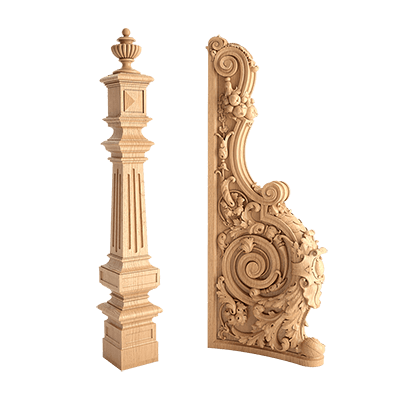
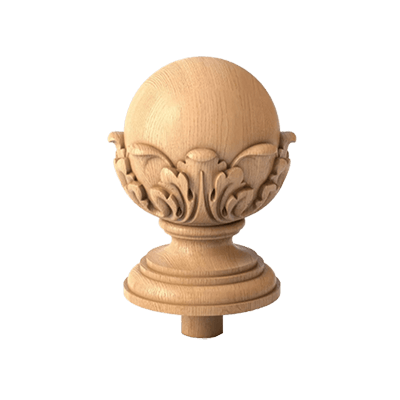
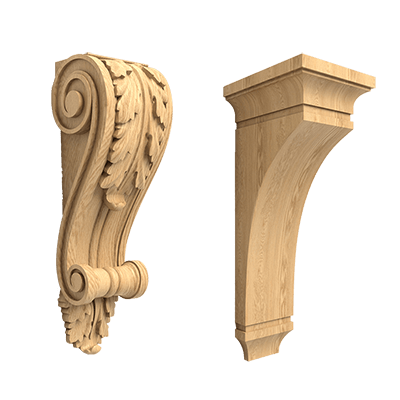
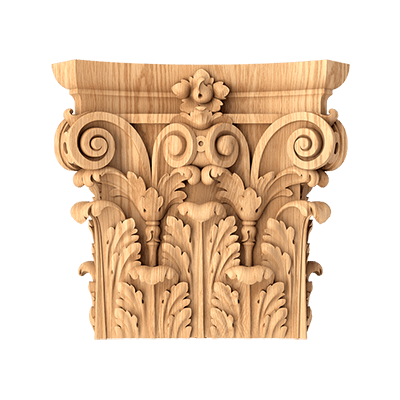
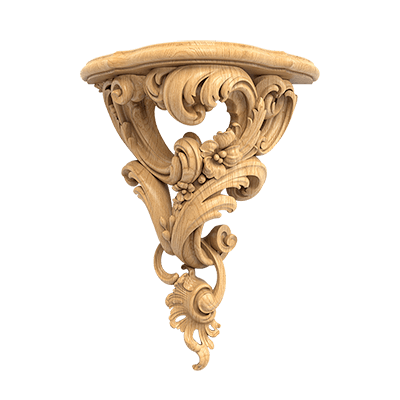
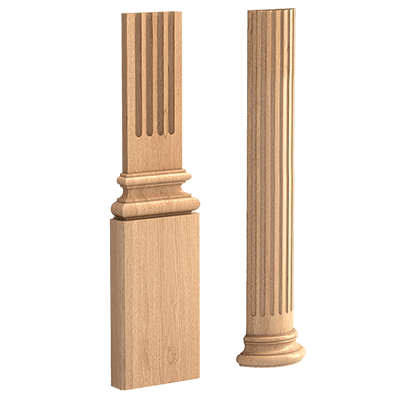
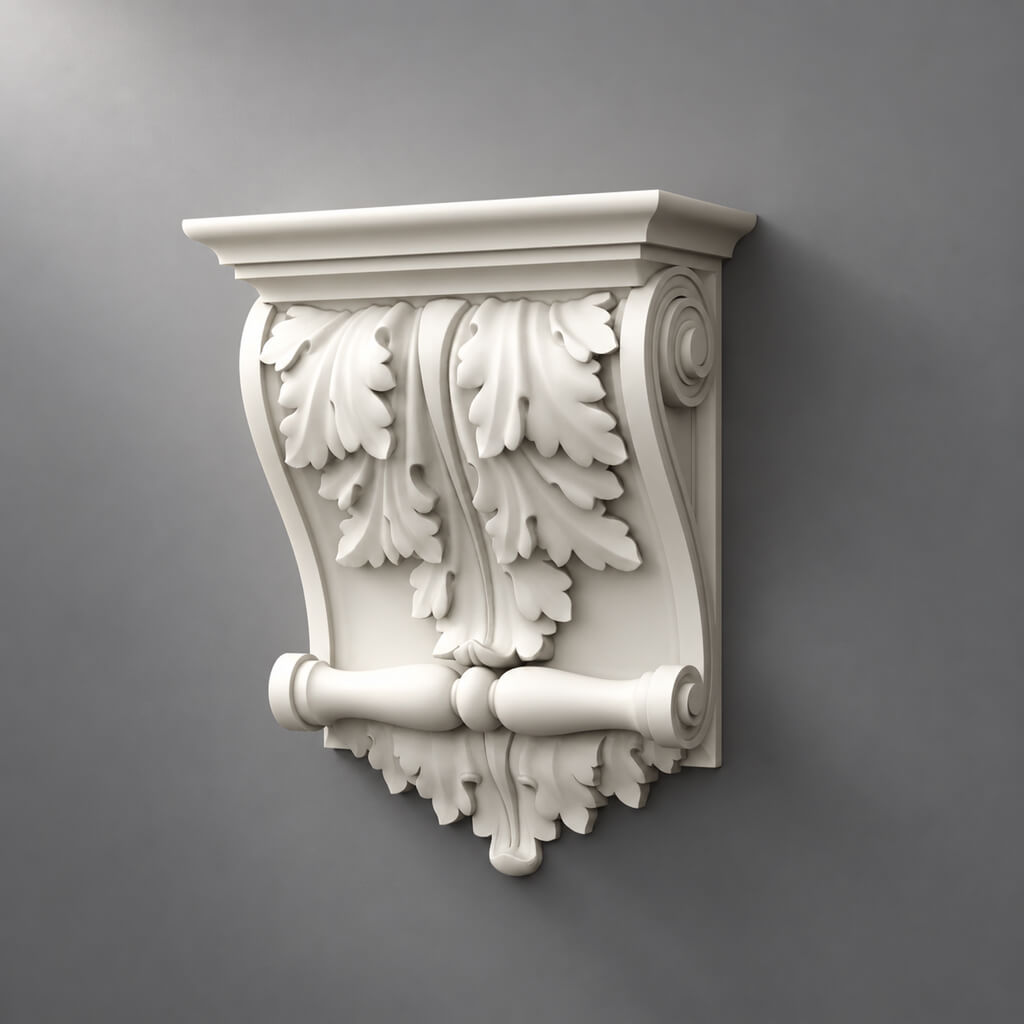
Carved furniture decor — is a broader category that includes not only overlays but also architectural elements: capitals, brackets, rosettes, wooden baguettes, architraves, pilasters, finials for posts, as well as balusters and supports for stairs.
Carved elements are created using CNC wood milling: the program controls a cutter that removes material along a specified three-dimensional path. This allows reproducing ornaments of any complexity — from delicate acanthus leaves to lush rocaille curls, from strict geometric fluting to expressive Baroque garlands.
Decorative wooden patterns in the STAVROS catalog cover several stylistic directions. Classic — restrained, with clear geometry of the pattern and minimal relief. Baroque — lush, with powerful three-dimensional relief, curls, flowers, and fruit clusters. Neoclassical — elegant, with laconic ornaments and precise proportions. The author's collection "Summer Garden" is a modern interpretation of Baroque carving: lively, sensual forms with graceful lines that are equally appropriate in traditional and modern classic interiors.
It is important to distinguish the area of application. Overlays are primarily furniture decor: cabinet fronts, dresser drawers, kitchen unit doors, display cases. Capitals, brackets, pilasters are architectural decor: fireplace areas, columns, wall panels, portals, boiserie zones. Wooden baguettes are frames for mirrors, paintings, and decorative panels.
When choosing carved wooden decor, the key parameter is the depth of the relief. Flat relief (up to 10 mm) looks better on small facades and does not visually overload. Deep relief (20–40 mm or more) creates expressive shadows and is necessary for large decorative tasks — fireplace zones, tall cabinets, formal interiors.
Furniture moldings
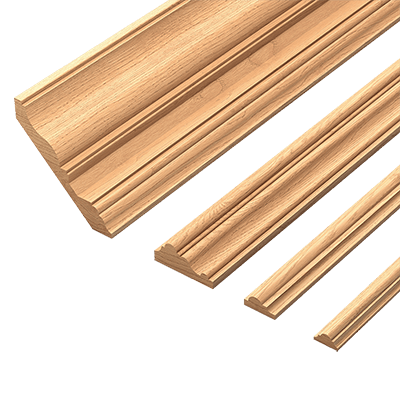
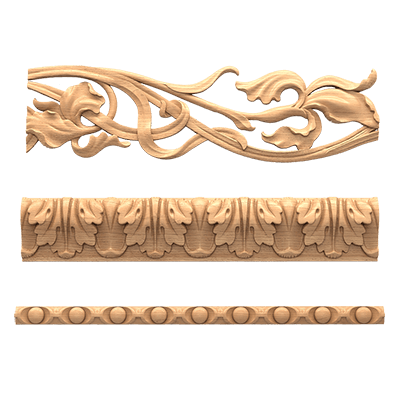
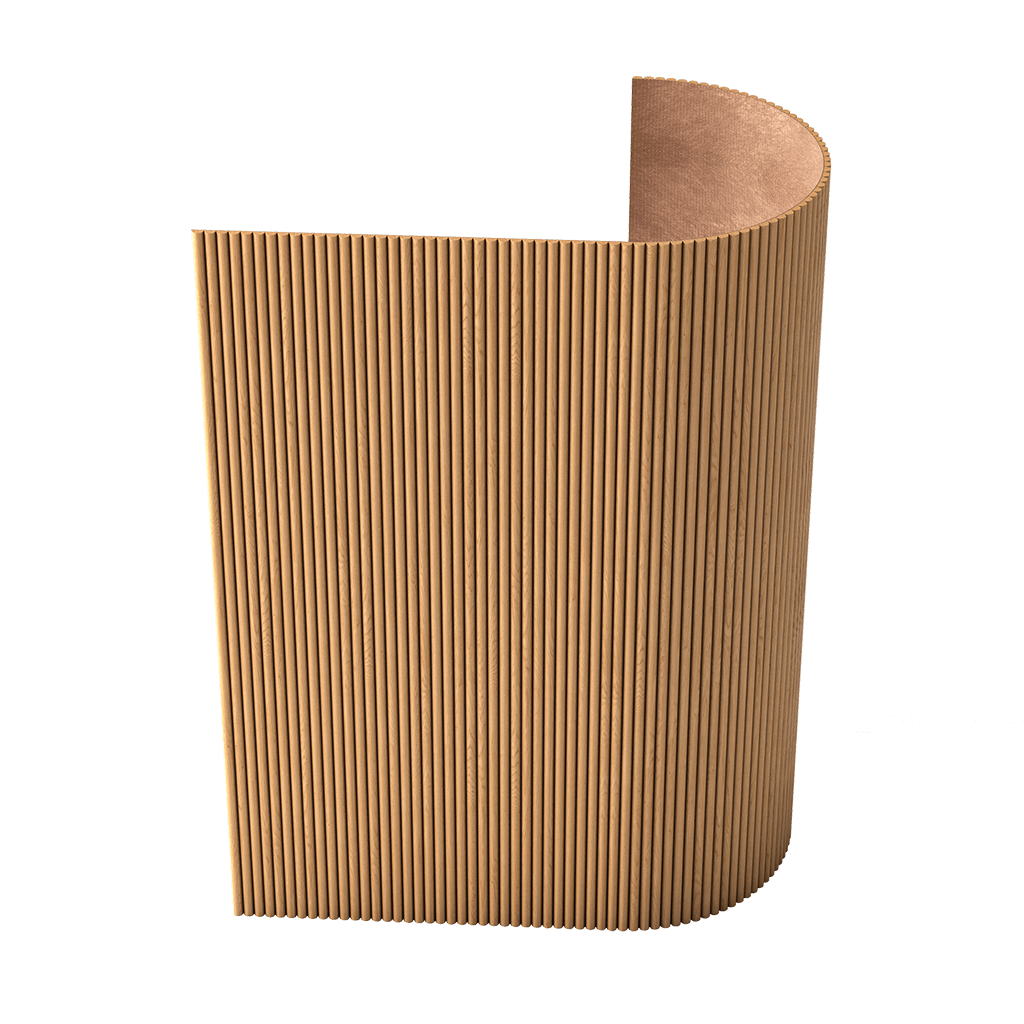
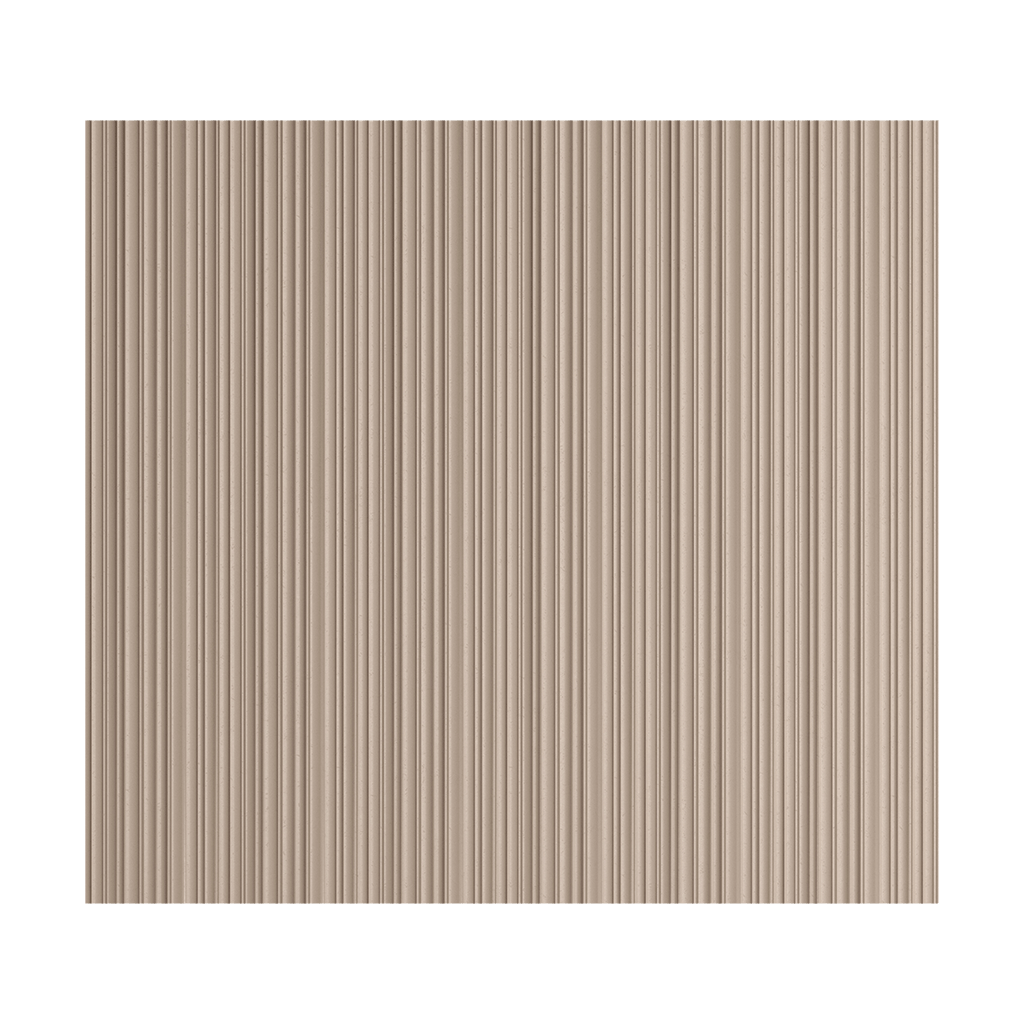
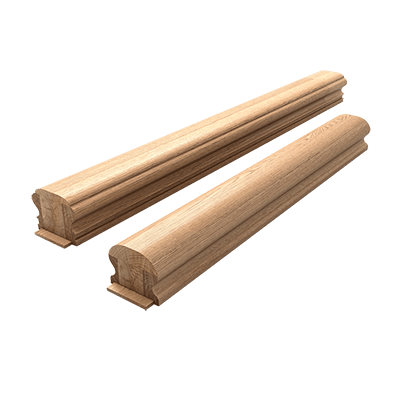
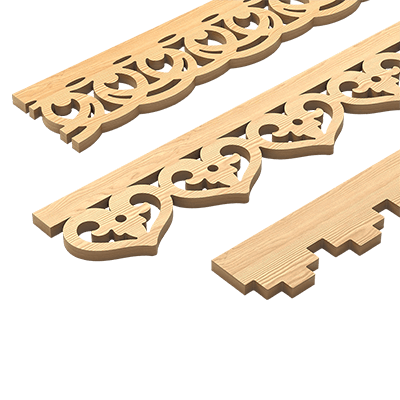
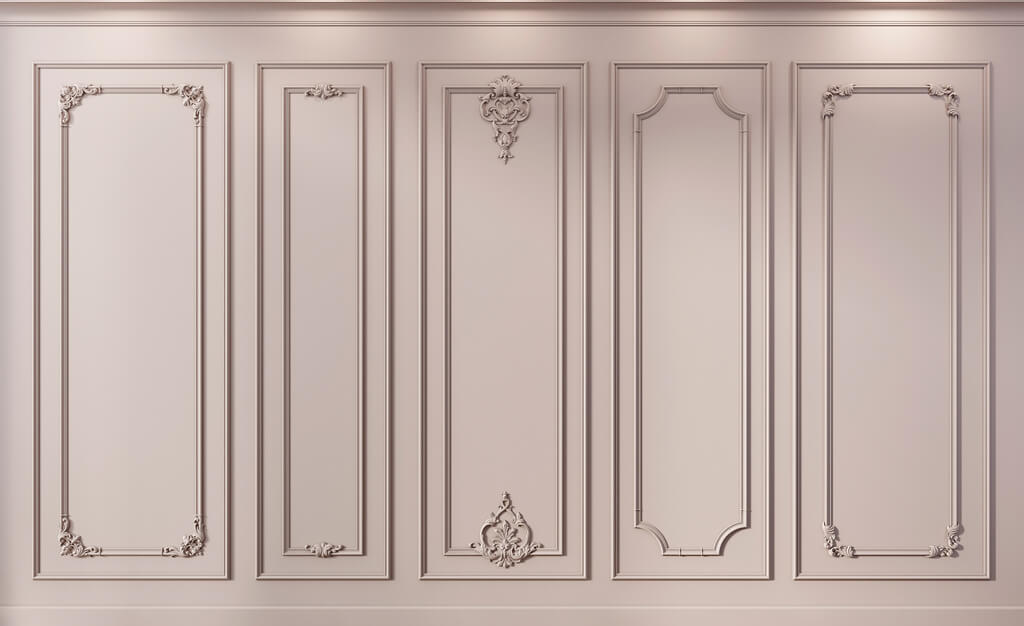
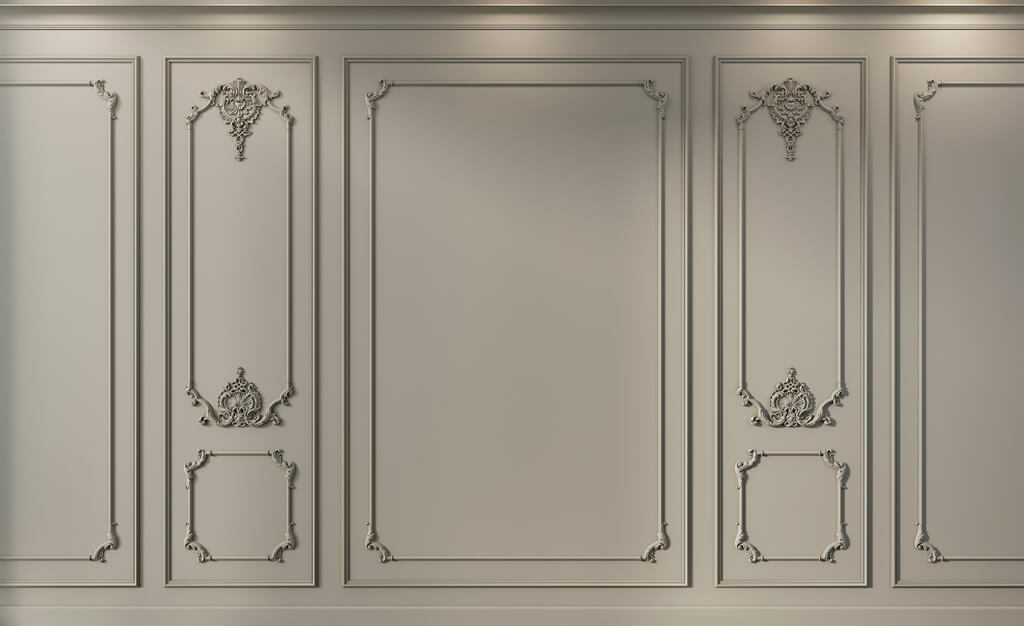
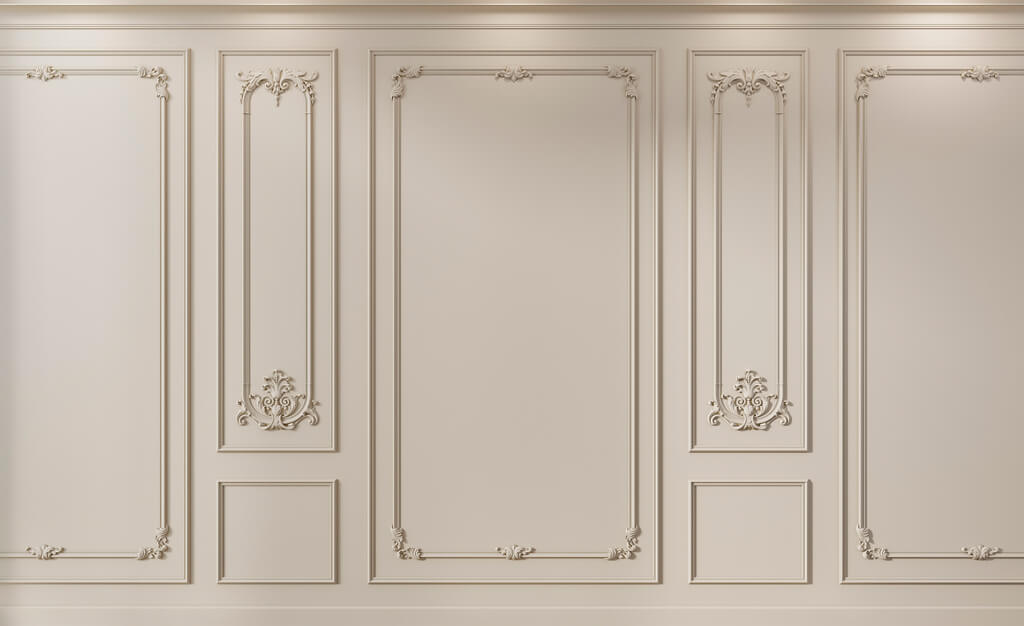
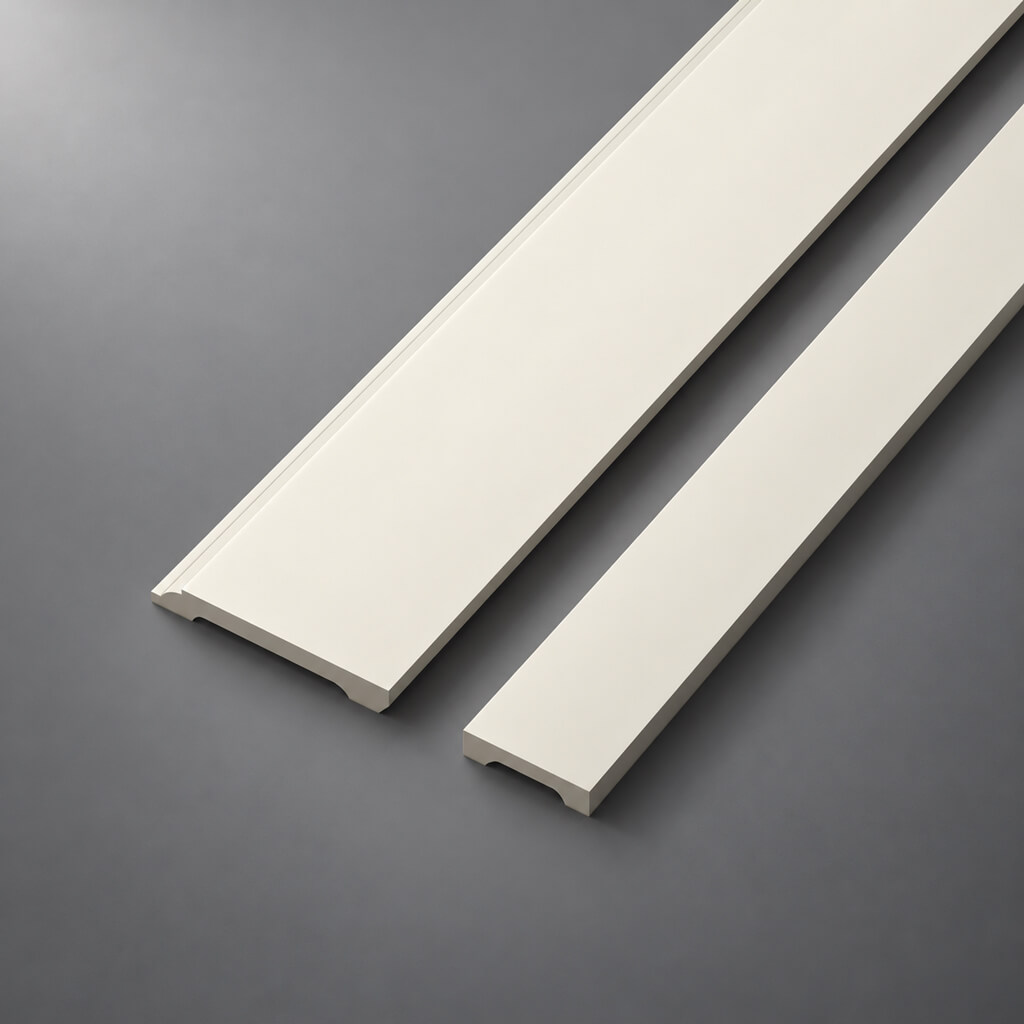
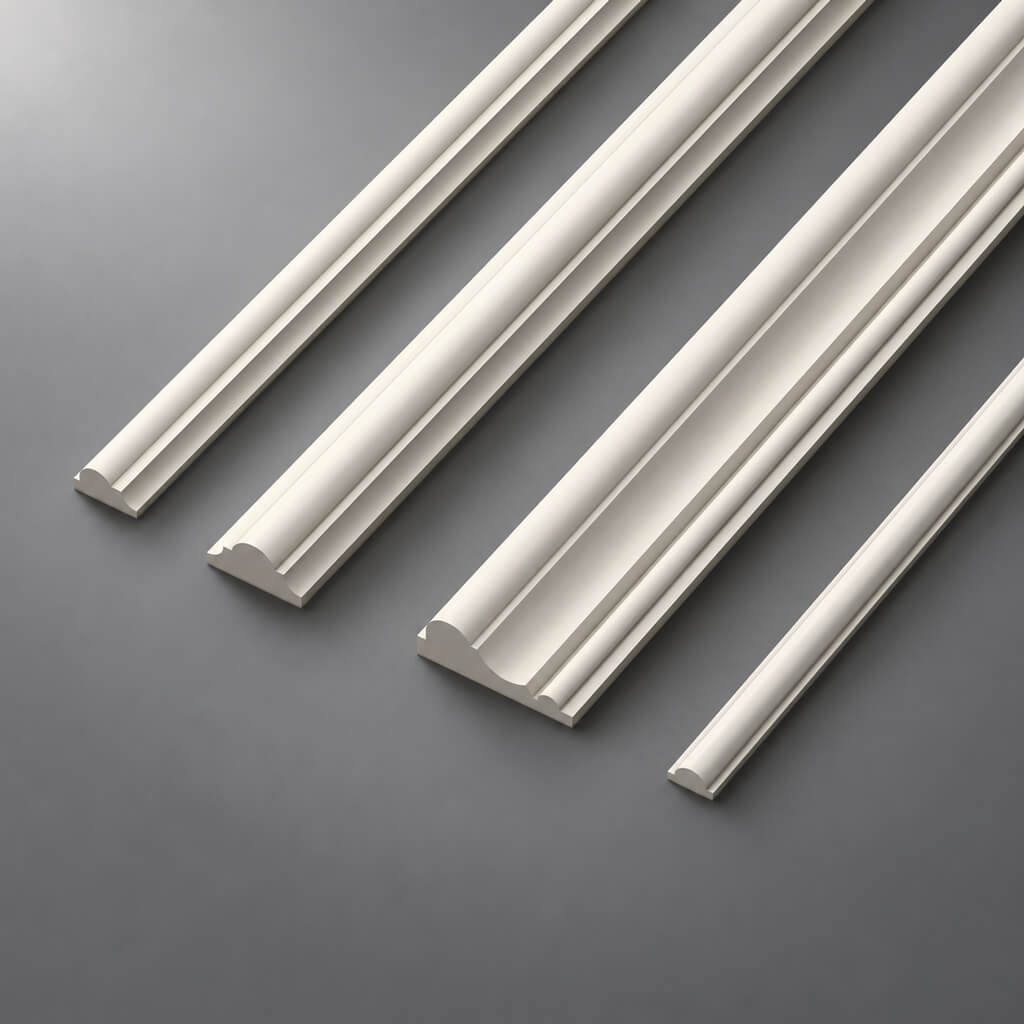
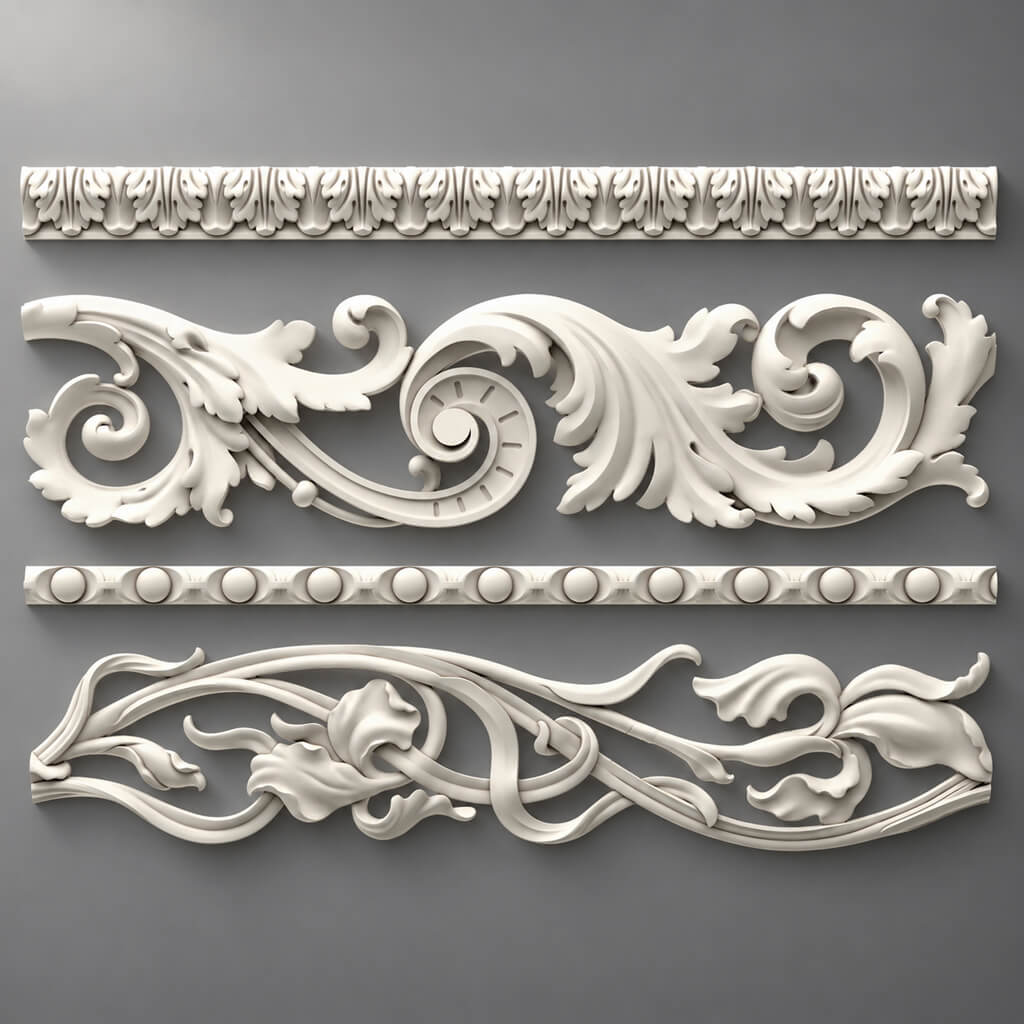
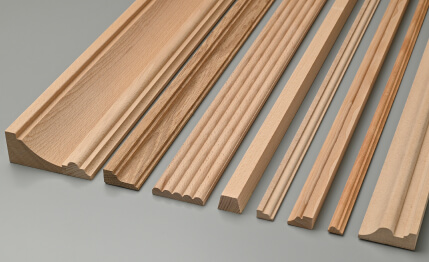
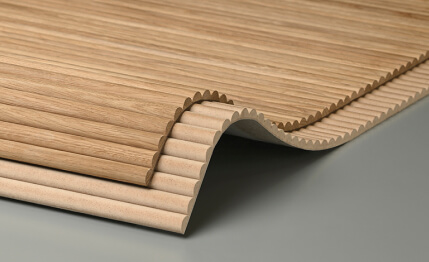
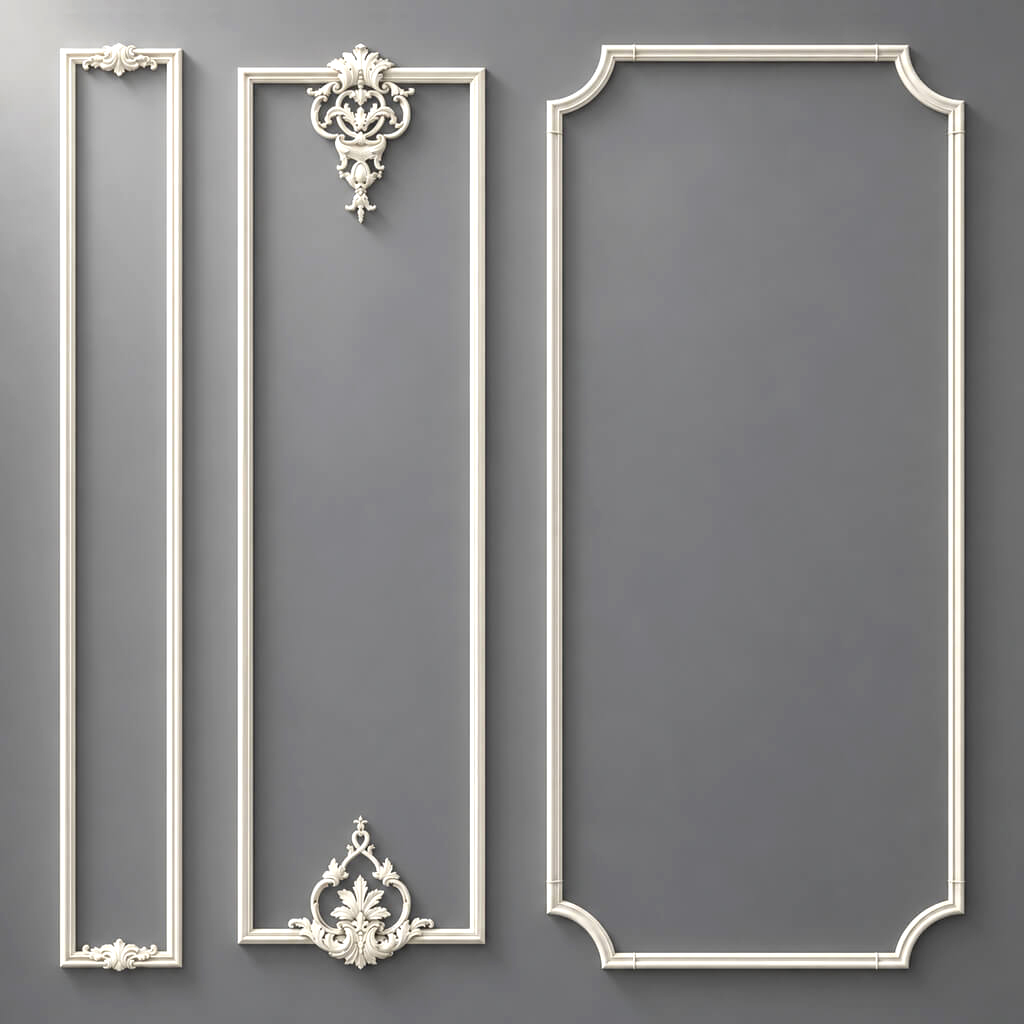
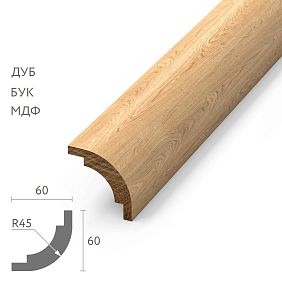
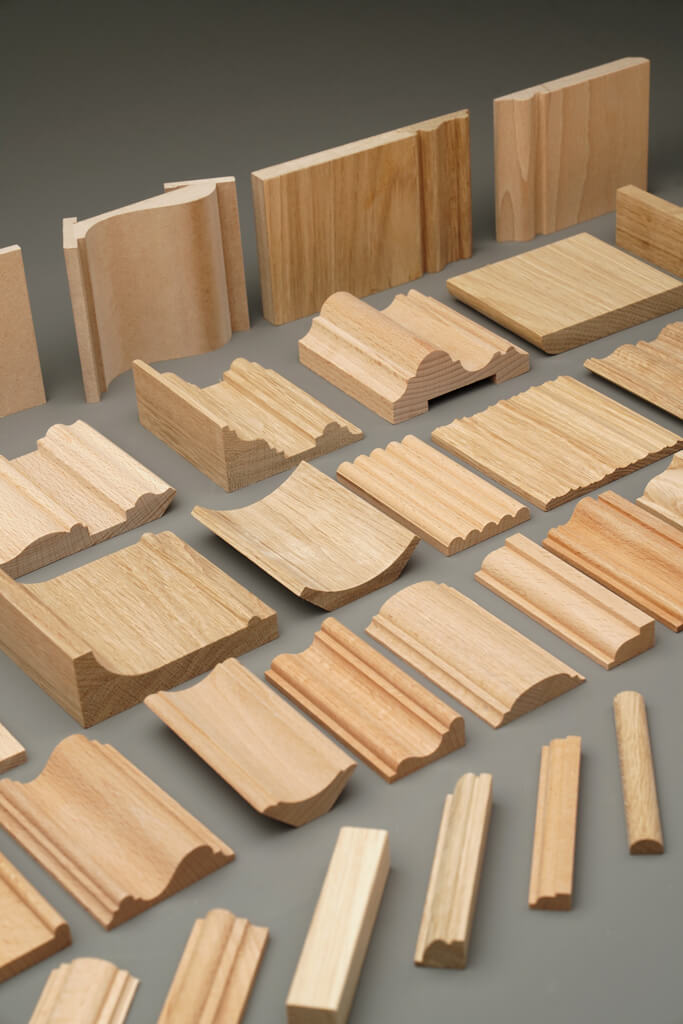
furniture moldings — these are profiled wooden slats that create frame structures on the facade. Molding is what turns a flat rectangular facade into a classic "furniture panel": a frame plus a central part.
Furniture molding made from solid wood, cut to the size of the facade, glued to the surface, and creates characteristic horizontal and vertical lines that divide the area into zones. This is the basis of a classic composition: even without overlays, only with molding, the facade already looks significantly richer and more thoughtful.
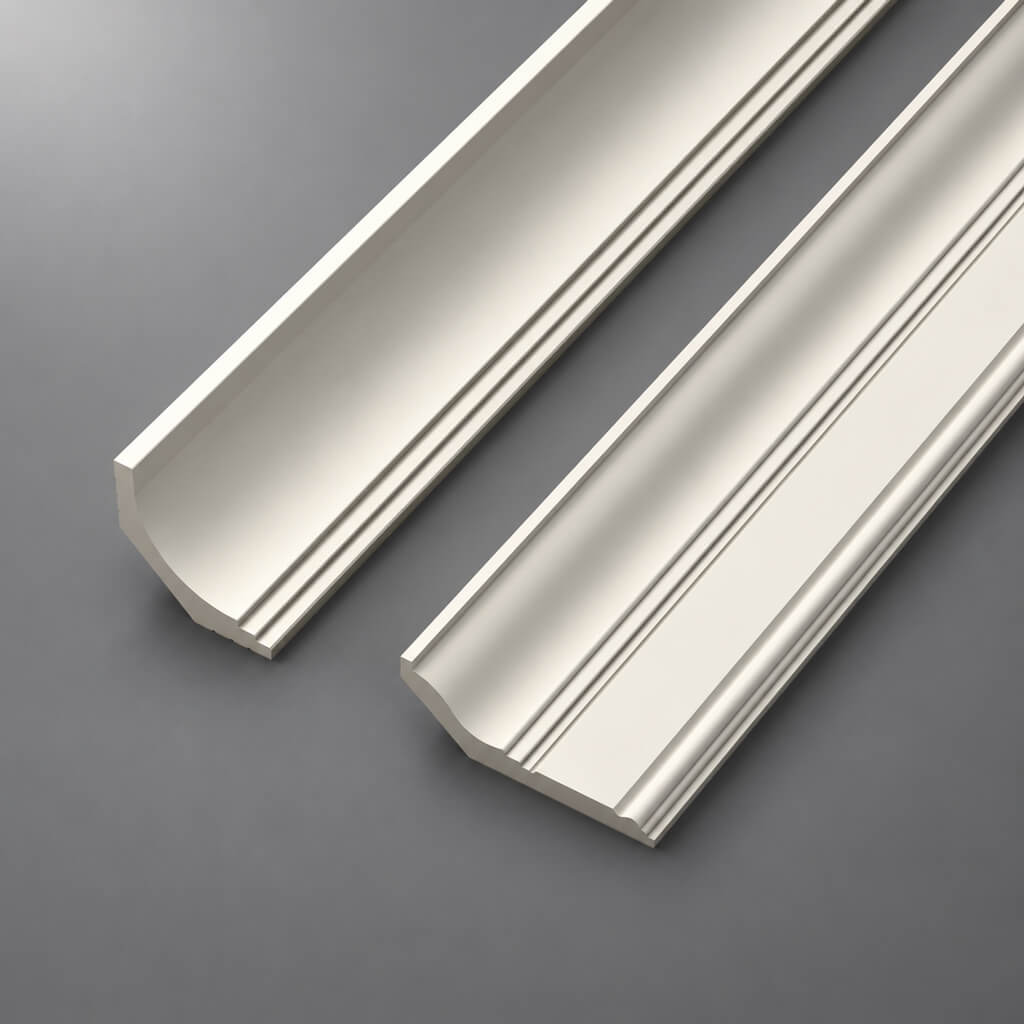
Furniture moldings come in several profiles: semicircular, rectangular with a chamfer, with a fillet, with an ogee, complex multi-level. The profile determines the style: simple rectangular — for modern classics, complex with a fillet — for Baroque and Neoclassicism.
An important detail: the overlay-constructors in the STAVROS catalog have special grooves that match the cross-section of the molding. This means that the overlay can be mounted directly on top of the molding without a gap — the two elements fit together perfectly, as intended structurally. This is a professional solution that simplifies installation and delivers a flawless result.
Applied decor
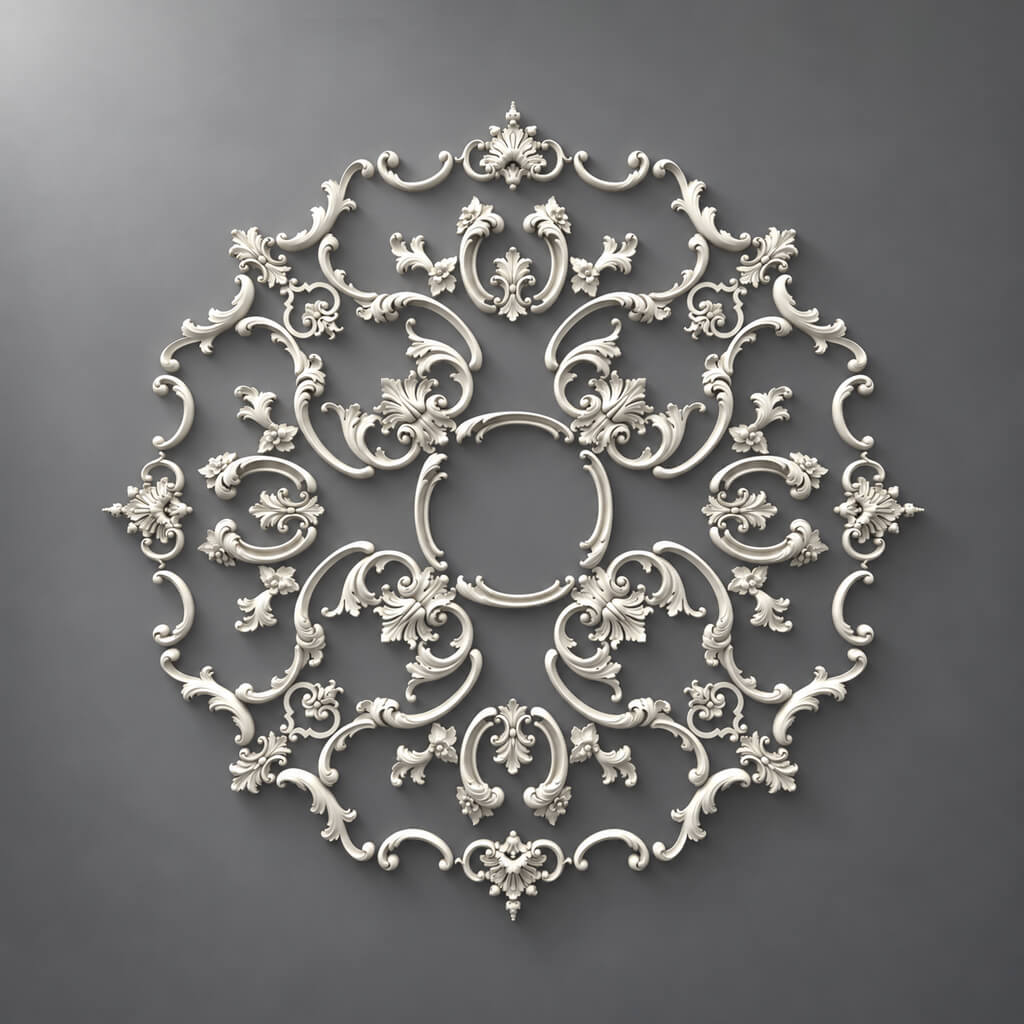
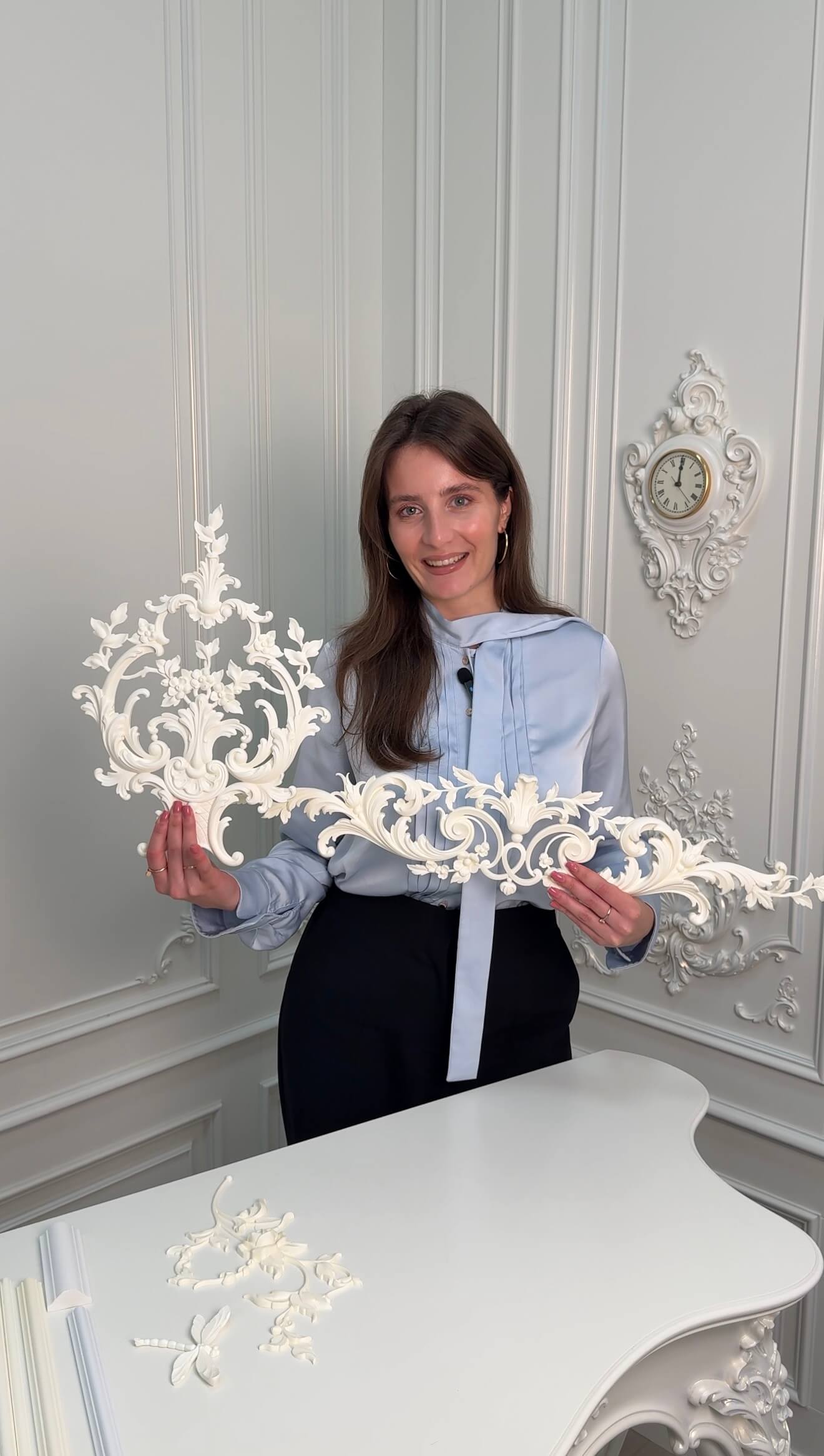
Decorative elements for furniture in the form of applied decor are the most flexible category. This includes all types of decorative overlays that are mounted on the surface without routing: rosettes, leaves, cartouches, corner elements, central decors, as well as kits formed by the manufacturer as ready-made facade solutions.
Applied polyurethane decor for furniture in this context occupies a related niche: it is also mounted on the surface, does not require routing, accepts paint well, and can create a convincing visual impression with significantly less weight than wood. This topic is covered in a separate section below.
Polyurethane furniture decor
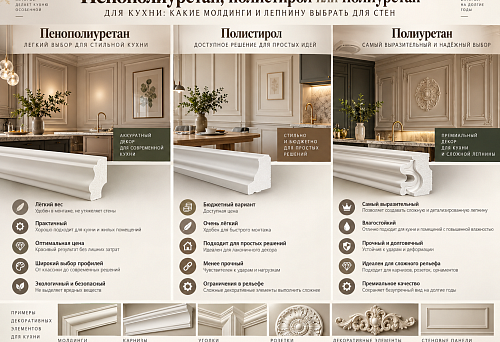
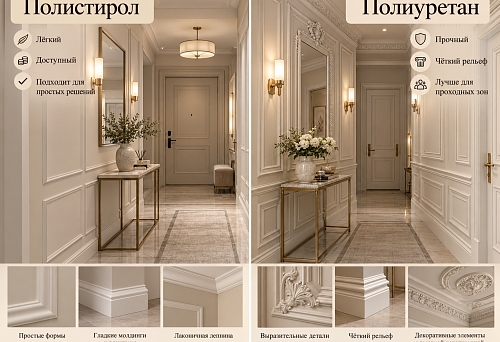
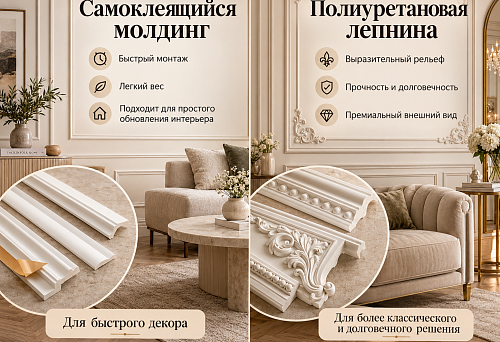
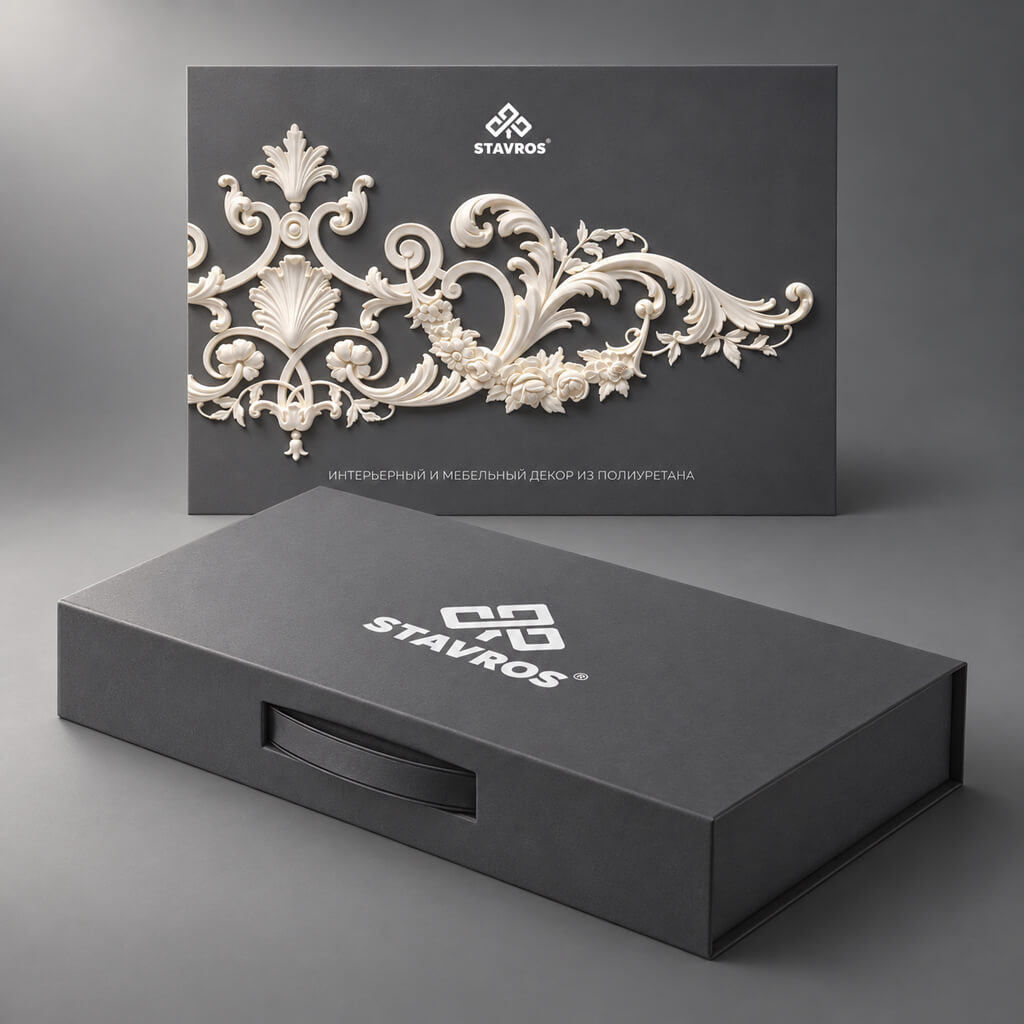
decoration for polyurethane furniture — this is a separate material world with its own laws, advantages, and limitations. Polyurethane used in the production of furniture and interior decor is a cast polymer that reproduces shapes with high precision and has a dense, uniform structure.
Buying polyurethane furniture decor makes sense in several specific scenarios. The first is when a lightweight element is required. A polyurethane overlay weighs 5–10 times less than its wooden counterpart. For hanging elements, for door panels that already bear a load, for furniture made of thin MDF — this is a critically important factor.
The second scenario is when the decor will be completely painted with enamel. Buying polyurethane decor for furniture and painting it to match the facade color means achieving a monochrome surface where the relief is read through light and shadow, not through the texture of the material. This is a classic technique in the design of white furniture with applied decor.
The third scenario is when moisture resistance is needed. Polyurethane is not afraid of moisture: it does not swell or crack from getting wet. That is why it is Polyurethane Decor used for bathrooms, and sometimes for decorating kitchen facades in high-humidity areas.
decorative polyurethane elements for moldings are corner decors and connecting elements that are installed at the intersections of moldings. They allow completing the frame composition at corners without cutting at a 45° angle — technically simpler and visually flawless.
Polyurethane furniture decor should be purchased with a clear understanding of its limitations. Polyurethane does not have a natural texture: under clear varnish it looks like painted plastic, not wood. That is why it is only used under opaque paint. Additionally, polyurethane is less durable under mechanical loads: a sharp object impact leaves a dent that wood would withstand much better.
Wooden or polyurethane decor: which to choose
This is one of the most practical questions. The answer is not universal — it always depends on the specific task.
| Parameter | Wooden decor | Polyurethane decor |
|---|---|---|
| Natural texture | Yes, visible fiber texture | No |
| Weight | Heavier | Significantly lighter |
| Under clear lacquer | Ideally | Not suitable |
| For opaque enamel | Good | Good |
| Moisture resistance | Requires coating | Stable |
| Durability | High with proper care | Moderate |
| Range of shapes | Wide | Wide |
| Price | From 920 rubles | More affordable for simple shapes |
| For restoration | Preferable | Limited |
| For classic solid wood furniture | Preferable | No |
Simple selection logic: if the furniture is solid wood or veneered MDF with a transparent finish — only wood. If the furniture will be fully painted in one color, the decor will be on hanging elements or in humid areas — polyurethane is possible. If the budget is limited and only a decorative effect under paint is needed without claims to durability — polyurethane.
For restoring old furniture with a natural wood finish — exclusively wood. Only a wooden overlay, properly selected and tinted, will blend with the surface so that the restoration spot is not noticeable.
Which furniture the decor is suitable for
For a cabinet
A wardrobe is the largest "canvas" for furniture decor in an apartment. A tall facade, several doors, horizontal dividers — all this creates a structure that decor enhances and organizes.
For cabinets in a classic style, the standard scheme is: moldings form a frame structure on each door, with a central overlay in the center and corner elements in the corners. The result is a classic paneled door with hand-added value, which costs an order of magnitude less than furniture with milled facades.
For neoclassical cabinets, carved rosettes in the upper part of the facade and molding around the perimeter without a central overlay work well. Concise, strict, elegant.
Important: when decorating a cabinet with multiple doors, all doors must be decorated according to a single scheme. Symmetry is a mandatory condition. Violation of symmetry on a cabinet is immediately visible and creates a feeling of incompleteness.
For a chest of drawers
A chest of drawers is an ideal object for furniture decor for several reasons. Each drawer is a separate rectangle that requires its own decor. The rhythm of repeating drawers with the same decor creates a musical feeling of order and beauty.
For a chest of drawers in classic or Provence style — small central overlays on each drawer. Identical. Symmetrical. In combination with furniture handles wood of the same tone and with matching legs with a turned profile — this is a cohesive image that looks like an author's work.
For the lower part of the chest of drawers, for the "skirt" under the main body — a horizontal molding or decorative strip. This adds a bottom frame that visually anchors the piece to the floor surface.
The decor of a chest of drawers can be built on the principle of "center — corner": on each drawer — a central overlay and four corner elements. This is a dense, rich decorative scheme — for those who want maximum visual effect.
For Kitchen
Buying decor for kitchen furniture means turning a functional set into an interior with atmosphere. Kitchen facades made of painted MDF are an ideal base for applied decor: the surface is smooth, the paint accepts glue well, and the decor is installed without problems.
For a classic-style kitchen, the optimal scheme is "molding + central overlay" on each facade. On upper cabinets — smaller decor, on lower ones — symmetrical. The decorative scheme of the kitchen should be uniform from the first to the last facade.
Corner overlays on kitchen facades are not a mandatory element, but they work excellently on lower cabinets with large facades. They add "weight" and expressiveness.
For kitchen display cabinets — decor around the glass insert element. Molding framing the glass turns a simple display cabinet into furniture with character.
It is important to coordinate the decor with furniture handles: if the handles have a transparent coating of light beech — the decor should also be in light tones. If the handles are black — the decor in black will create a graphic, expressive image. It is this consistency of details that moves the kitchen from the "made" category to the "thought-out" category.
For classic furniture
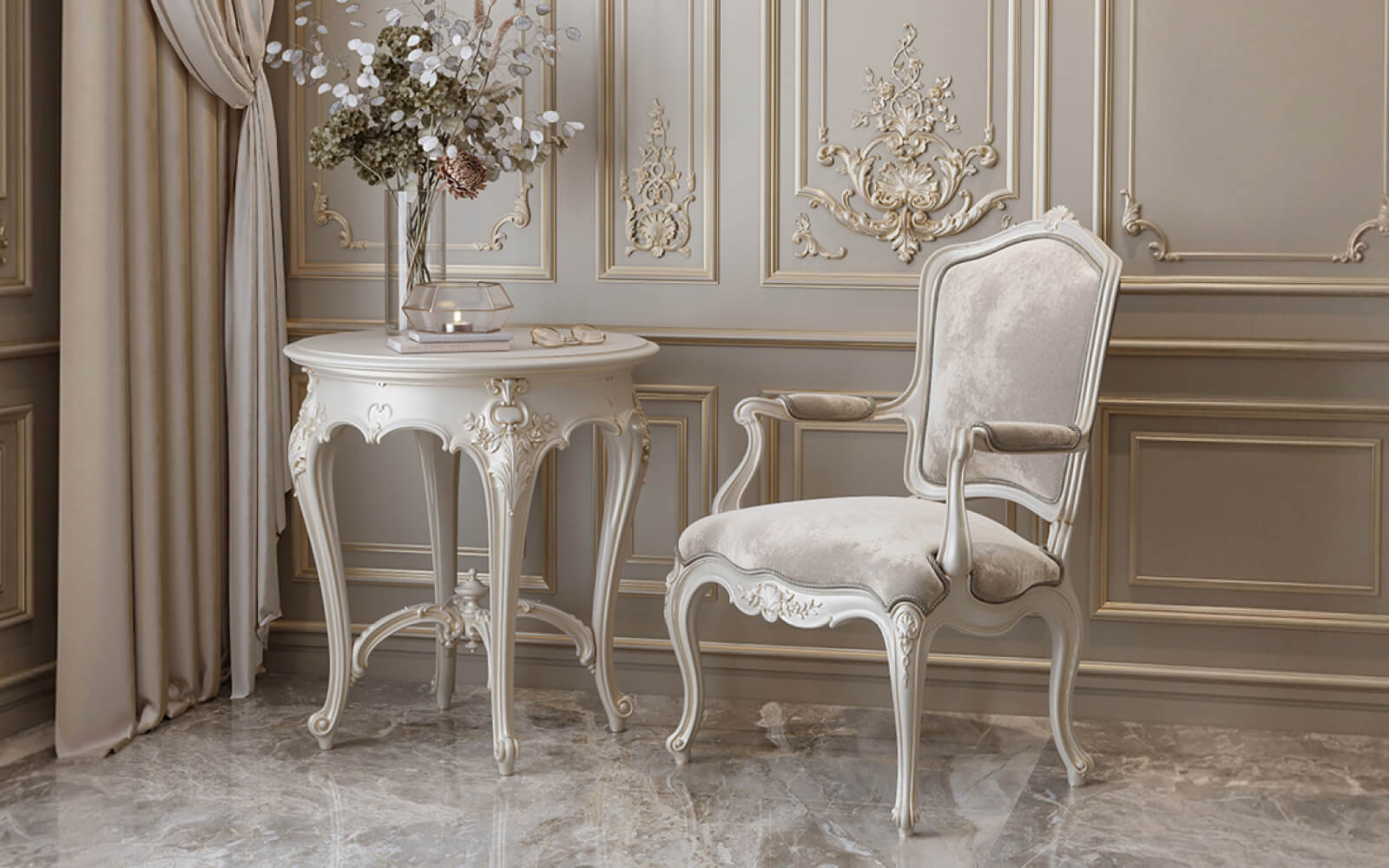
Classic furniture — sideboards, secretaries, display cabinets, formal wardrobes with mirrors — is a space where decor is a constructive part of the image, not an added detail. Without decor, classic furniture does not exist.
Here, the full range is used wooden decor for furniture: moldings, carved overlays, rosettes, capitals, brackets. Elements are combined into multi-level schemes: lower belt, middle belt, cornice zone — each zone has its own decorative rhythm.
From the STAVROS "Summer Garden" collection — exquisite baroque overlays with plant motifs — expressive central panels for tall facades are obtained. By combining large symmetrical elements with small accents (leaves, branches, birds), you can assemble a unique decorative scheme that does not repeat any serial sample.
For restoration
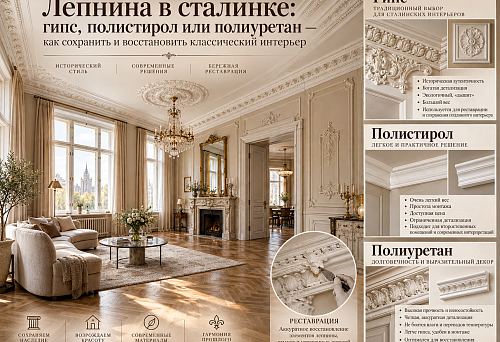
Restoration of old furniture is one of the most rewarding scenarios for applied wooden decor. Has the old cabinet lost its overlays? Are they knocked out, broken off, lost during a move? Wooden applied decor made of beech or oak allows you to restore the lost element, selecting it as close as possible in shape and size to the historical sample.
A key condition for restoration: the material of the new decor must match the furniture material. For solid oak furniture — an oak overlay. Tinting is selected manually, checking for a match using a test sample. Only unfinished wooden decor provides complete freedom for such selection.
The restoration approach requires precise work with dimensions. Before ordering decor, you need to accurately measure the place where the element should be installed: by length, width, and depth of the relief. It is good if fragments of the old decor are preserved — they serve as a sample for selection.
What affects the price of furniture decor
The price range for furniture decor is from 920 rubles to 31,540 rubles per set. This is not a random spread: behind each price level are specific objective factors.
Material. Beech is cheaper than oak with comparable parameters. Polyurethane is cheaper than wood for simple shapes. The difference reaches 30–50%.
Element size. Large overlay N-422 measuring 420×165 mm made of solid wood costs 15,030 rubles. Small overlay N-506 measuring 90×47 mm costs 920 rubles. The difference is multiple.
Pattern complexity. Simple symmetrical leaves — a basic profile. A multi-level cartouche with several layers of relief — multi-stage processing, significantly more time for milling.
Relief depth. The deeper the relief, the more material is removed during processing and the longer the machine cycle. Elements with a relief of 30–40 mm are significantly more expensive than flat overlays with a relief of 8–12 mm.
Presence of coating. Unpainted decor — base price. With a finish coating (enamel, varnish, patina) — more expensive. That is why most professional customers take decor without coating and paint it themselves for a specific project.
Installation type. Standard overlays are mounted with glue. Modular overlay-constructors compatible with moldings are more expensive — due to additional groove milling.
Set or individually. Sets of decor C-015 — C-021 are manufacturer-assembled kits of several coordinated elements. They cost more than the sum of individual elements but save time on selecting compatible parts.
Combination of elements. When decor is chosen together with moldings, legs, and handles — visual consistency is ensured, and this reduces the risk of costly mistakes.
How to choose decor before purchase: a checklist
Go through this list before placing an order — it will save you from all typical mistakes.
Determine the type of furniture. Cabinet, chest of drawers, kitchen, display case, nightstand, door — each has its own proportions and logic of the decorative scheme.
Measure the facade. Exact dimensions: width, height, area of the decorated zone. Write them down — and keep them in front of you when choosing.
Choose a style. Classic, Baroque, Neoclassical, Provence, Country, Modern Classic. The style determines the type of element — the nature of the pattern, depth of relief, size.
Select the material. For transparent coating — only wood. For opaque enamel — both wood and polyurethane. For restoration — only wood for tinting.
Check the size of the overlay. The central overlay should not occupy more than 50–60% of the facade area. An element that is too large overwhelms, one that is too small gets lost.
Consider symmetry. The central overlay — strictly in the center of the facade. Corner elements — in all four corners symmetrically. Molding — with equal indents from the edge.
Coordinate with handles and legs. Material, color, tone — everything should be either uniform or in deliberate contrast.
Decide on the coating. Painting yourself — take without coating. Need quick installation — take with ready coating.
Check the attachment method. PVA glue or liquid nails — for most overlays. Heavy elements — additional mechanical fasteners.
Order with a reserve. Especially important during restoration: if an element is discontinued, finding an exact match in a year will be extremely difficult.
Mistakes when buying furniture decor
Furniture decor seems like a simple purchase — chose something beautiful, bought it, glued it. But this is where the most costly mistakes are made.
They buy decor without measuring the facade. The overlay turns out to be 20% wider or narrower than expected. On a cabinet, this is very noticeable.
They don't consider the thickness and relief of the element. An overlay with a 30 mm relief on a cabinet door can interfere with opening the adjacent door — if the gap between them is small.
They mix different styles. A baroque rosette and a modern minimalist molding — this is not "modern classic", it's stylistic chaos. All elements should belong to one stylistic direction.
They don't coordinate decor with handles and legs. Dark brown overlays and white handles — without logic of contrast, this is a mistake. Details should create a system, not a set of random objects.
They don't check symmetry. The overlay is glued "by eye", without markings. As a result, it sits slightly to the left of center — and it's immediately and always visible.
They choose an element that is too large. On a 400×600 mm facade, a 360×500 mm overlay looks like decor that didn't fit. A scale balance is needed.
They don't think about the finish. The wooden decor is bought, glued, but not painted — and it sits in the raw wood color on a white facade. Decor without a final finish is an unfinished job.
They buy one element without calculating the entire scheme. The central overlay is bought, but there are no corner elements. The facade looks incomplete: a lone element in the center without framing reads worse than its absence.
Decor as a system: handles, legs, overlays in a unified image
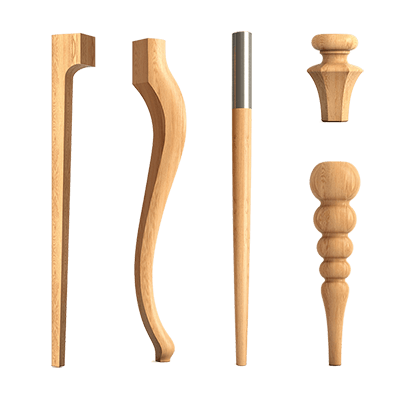
Furniture decor never works alone. It is part of a system that includes to buy, which will allow you to transform your furniture using carved wooden elements. You can use the C-003-3 decor set to decorate furniture, walls, doors, or any other surface. The C-003-3 decor set is made of oak or beech, known for their strength, durability, and beauty. You can buy the C-003-3 decor set at the Stavros decor store, which specializes in producing and selling decorative elements and hardware for furniture and interiors. At the Stavros decor store, you will find a wide selection of decor sets of various shapes, sizes, and styles. You can choose, Furniture Handles, Furniture legs и Carved Decor — and only together do they create an image that can be called interior.
Example of an ideal system for a classic dresser: turned oak legs with clear oil + oak pull handles in the same finish + N-171 central overlays on each drawer in an oak tone + molding around the body perimeter. All from the same wood species, all in the same tone, all in a unified stylistic language. This is not just a set of parts — it's an interior concept realized at the hardware level.
This is precisely the principle of working with decor professionally: not looking for each element separately, but forming a system of interconnected details, thought out in advance.
Where to buy furniture decor with quality guarantee
STAVROS is a Russian manufacturer of wooden decor for furniture and interiors. The catalog includes over 400 models of overlay wooden decors, a collection carved furniture decor with rosettes, capitals, baguettes, and brackets, Furniture moldings, and also Polyurethane Decor for lightweight overlay solutions.
Prices for decor for furniture start from 920 rubles for individual overlays and from 7,270 rubles for ready-made kits. All products are manufactured on our own equipment from solid beech and oak, with precise geometric parameters and careful packaging.
For a cohesive furniture look, STAVROS recommends forming a kit right away: applied decoration for furniture, Furniture Handles, Furniture legs, Furniture molding — everything from one manufacturer, from one wood species, in a coordinated style. This is how furniture is born that people say: "This is something special."
Delivery — throughout Russia and CIS countries. Pickup — from warehouses in Moscow and St. Petersburg. Order — from one piece.
FAQ: Answers to popular questions
Where to buy furniture decor?
The STAVROS catalog features over 400 models of wooden overlays, a collection of carved decor, moldings, Polyurethane Decor and ready-made kits. Order from one piece, Contact us to confirm shipping to your destination.
Which decor to choose for furniture restoration?
For restoration — exclusively wooden overlays without coating. They allow you to precisely match the tone to the existing furniture coating through tinting. The shape and size are selected based on the location of the missing element — if fragments of the original decor are preserved, they serve as a sample.
What is better: wooden decor or polyurethane decor?
Wooden — for solid wood furniture, under transparent coating, for restoration, for long-term use. Polyurethane — under opaque painting, in humid areas, for decorative hanging elements with minimal weight.
Which elements are considered furniture decor?
Overlays, rosettes, corner elements, moldings, carved capitals and brackets, wooden baguette, ornamental panels, decorative inserts, as well as handles and legs as part of a unified furniture look.
How to choose decor for furniture facades?
Measure the facade, determine the style, choose the size of the central overlay (no more than 50–60% of the facade area), consider corner elements and a molding frame, coordinate the tone and shape with handles and legs. Symmetry is mandatory.
Can I buy furniture decor individually?
Yes. STAVROS sells to buy, which will allow you to transform your furniture using carved wooden elements. You can use the C-003-3 decor set to decorate furniture, walls, doors, or any other surface. The C-003-3 decor set is made of oak or beech, known for their strength, durability, and beauty. You can buy the C-003-3 decor set at the Stavros decor store, which specializes in producing and selling decorative elements and hardware for furniture and interiors. At the Stavros decor store, you will find a wide selection of decor sets of various shapes, sizes, and styles. You can choose from one piece. This is convenient both for a trial order and for replacing one lost element in a restoration project.
How to properly install a wooden overlay?
Degrease and prime the facade surface. Apply PVA glue or liquid nails to the back of the overlay. Press and secure for 20–30 minutes. For heavy elements — additional mechanical fastening (countersunk screw, hidden under decor or subsequent painting).
Is a spare needed when ordering decor?
For restoration projects — definitely yes. When working with new furniture, it is recommended to add 10–15% to the calculated quantity — in case of trimming, chipping during installation, or the need for replacement after a few years.