Article Contents:
- When a column needs wooden decor
- A bare column looks like a structural element
- The capital completes the top of the column
- The base makes the lower node visually stable
- A pilaster helps decorate a column on the wall
- Wooden capital
- Pilaster or half-column
- Base for a pilaster
- Connecting socket or additional carved element
- By column or pilaster width
- By Carving Style
- By wood species: oak or beech
- By future finish: enamel, stain, varnish, patina
- Column in a hall
- Column in the living room
- Column in a study
- Column in a restaurant or commercial space
- Need to decorate an existing column
- Need to design a column in a home with a classic interior
- Need to design a door portal
- Need to make a wall-attached column
- Need to design a restaurant, hall, or salon
- Buying only the capital without understanding the entire column
- Not considering the width of the pilaster
- Confusing the top and bottom elements
- Choosing trim separately from the interior
- Not checking the material and finish
- Using random plastic analogs next to a wooden interior
- Not thinking about the door portal as a whole
- How to decorate a column in an interior?
- What to use to decorate a column in a house?
- Which wooden capital should I buy for a column?
- Is a base needed for a pilaster?
- How does a pilaster differ from a column?
- Can a capital be used above a door?
- What to buy together with a wooden capital?
- How to choose a capital, pilaster, and base in the same style?
- Is a wooden capital suitable for a modern interior?
- Can a capital be used for a pilaster instead of a column?
- What is more important: the capital or the base?
- Where to buy a wooden capital and column elements?
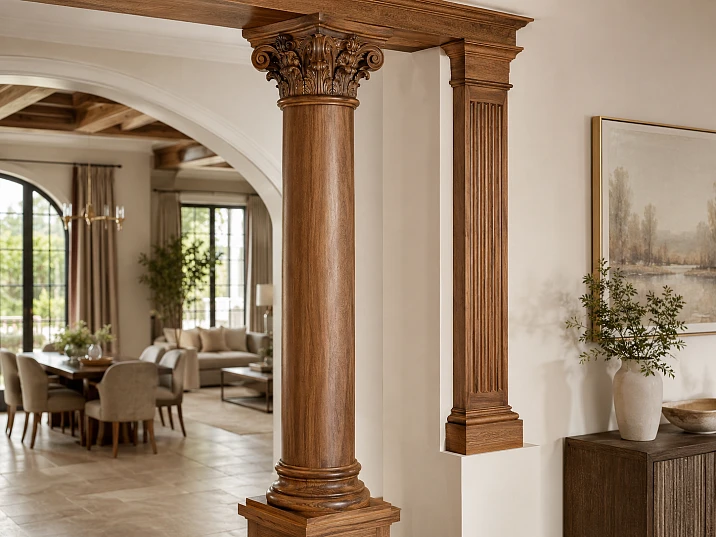
When a homeowner, designer, or craftsman searches for "buy wooden capital," the task is usually broader than just purchasing one top decorative element. A column in an interior rarely looks complete on its own. It needs a top, a vertical, a bottom support, proper proportion, and a connection to the rest of the decor. Therefore, designing a column in a house is best considered as a set: a wooden capital, a pilaster or column, a base, and additional carved elements if needed to tie in with a door portal, wall composition, or furniture.
A bare column is often perceived as a structural part of the room. It can be load-bearing, decorative, attached to a wall, built into a portal, or located in a hall, living room, study, restaurant, or country house. But without architectural completion, such a vertical looks unfinished. The top seems cut off, the bottom appears random, and the column itself does not support the interior style.
A wooden capital helps finish the top of a column, a pilaster sets an expressive vertical on the wall, and a base completes the lower node. Together, these elements turn an ordinary structural or decorative vertical into part of the interior. If you need not just to decorate a column but to assemble a coherent wooden design, you can start with the section buy wooden capital, then select Wooden pilasters and columns and if necessary, add a bottom element — buy a pilaster base.
This article is not about the history of capitals or abstract column decoration. It is about practical choices: what to buy for decorating a column in a home, how to assemble a set of wooden elements, how a capital differs from a base, when a pilaster is needed, how not to confuse a column with a half-column, and what mistakes most often ruin a classic interior.
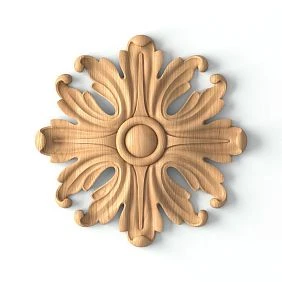
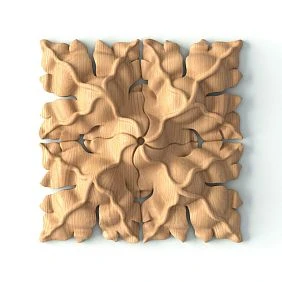
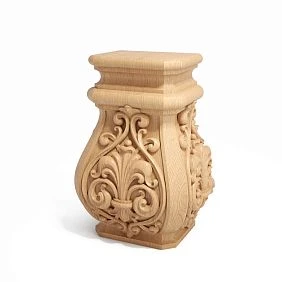
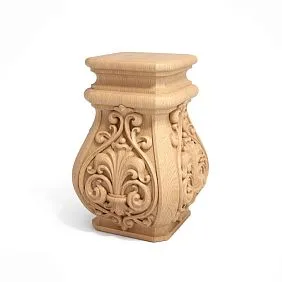
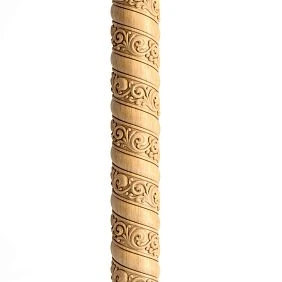
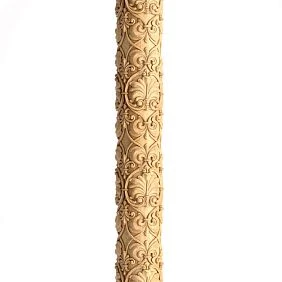
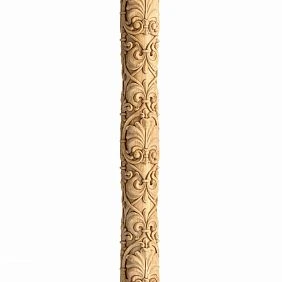
When a column needs wooden decor
A column immediately attracts attention. Even if it is located to the side, built into a wall, or stands in an opening, the eye reads it as a vertical architectural element. Therefore, a column cannot be left without decoration if the interior aspires to be classic, neoclassical, study-like, formal, or country-style.
Wooden decor is needed for a column in several cases. First, when the column already exists structurally but looks too simple. Second, when you need to make a decorative half-column or pilaster on the wall. Third, when a door portal, entrance to the living room, hall, study, or dining room is being designed. Fourth, when the designer wants to connect vertical elements with furniture, wooden panels, cornices, architraves, or carved decor.
Without a capital and base, a column often looks like a separate post. It can be smooth, neat, painted, but still not perceived as a finished architectural detail. Wooden elements help set the top, bottom, and style. They make the column not a random protrusion, but part of the overall composition.




A bare column looks like a structural element
If a column is not finished, it resembles a structural support. This is normal for minimalist and industrial spaces, but it works poorly in a classic home, in a hall, near a staircase, in a study, restaurant, or formal area. There, the column should look not like a remnant of the building layout, but like a deliberate architectural detail.
Wooden decor helps change the perception. The capital completes the top, the base secures the bottom, the pilaster adds rhythm to the wall. The column becomes not a problem to hide, but an element to emphasize.
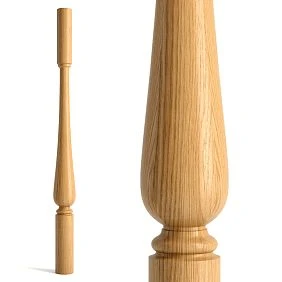
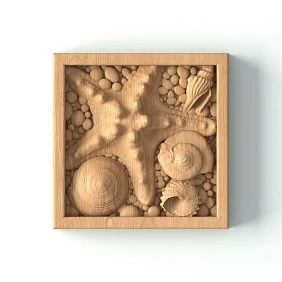
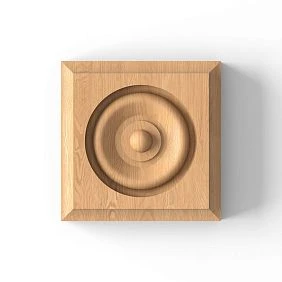
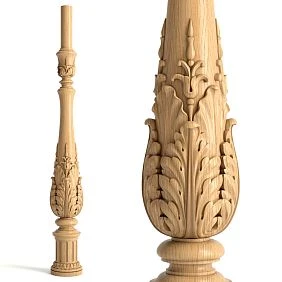
Our factory also produces:
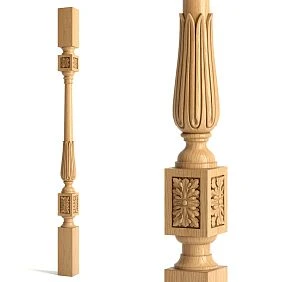
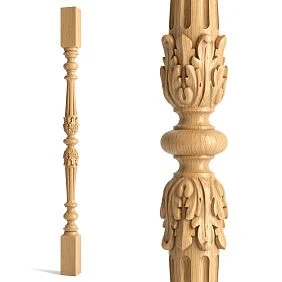
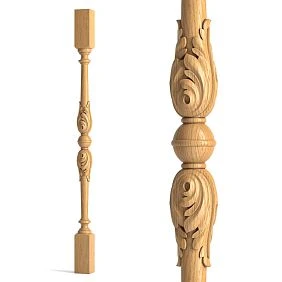
The capital completes the top of the column
The capital is the upper decorative element of a column or pilaster. It covers the transition between the vertical and the upper part of the composition: the ceiling, cornice, portal, beam, frieze, or decorative belt. It is the capital that makes the column architecturally complete.
If the top of the column is left unfinished, the vertical looks cut off. This is especially noticeable in tall rooms, in door portals, and in interiors with wooden decor. The capital helps gently connect the column to the upper level of the room.
For a specific carved solution, you can look at the KL-017 capital for a column and portal. Such a product option is useful when the buyer needs not a general section, but a specific element to select for a project.
Get Consultation
The base makes the lower node visually stable
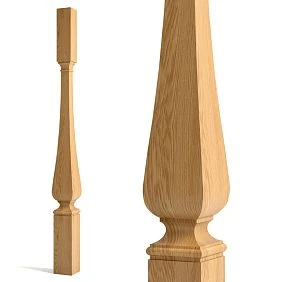
The base is the lower element of a column or pilaster. It does not replace the capital and is not its analogue. Its task is different: to finish the bottom, provide support, make the transition to the floor or lower level of the composition neat and convincing.
Without a base, a pilaster or column may look as if it is simply placed against the wall. The lower edge becomes weak. In a classic interior, this is especially noticeable because vertical elements must have a clear architectural logic: bottom, body, top.
If you need to cover the lower joint of a pilaster, you can consider buy a pilaster base. Before ordering, you need to check the dimensions, material, compatibility with the pilaster, and future finishing.
A pilaster helps to frame a column on the wall
A pilaster is a wall-mounted vertical element. It is similar to a column in its architectural role, but usually does not stand alone in space; instead, it adjoins the wall. A pilaster works well where a classic vertical line is needed without a full round column.
If the house has a wide opening, portal, hall, staircase area, or a large wall, a pilaster helps organize the plane. It sets a rhythm, visually stretches the space upward, and connects the wall with furniture, cornices, door framing, and other carved details.
For an expressive vertical, you can look Wooden Pilaster PLM-017. Such an element is especially appropriate if you need not just a smooth strip, but a decorative wooden vertical with architectural character.
What to buy for column decoration
It is better to assemble column decoration as a system. If you buy only a capital but do not consider the pilaster or base, the top may look separate. If you install a pilaster without a base, the lower part will remain unfinished. If you choose elements from different styles, the column will lose its integrity.
The minimum set depends on the task. For an existing column, a capital and base may be needed. For a wall-mounted composition, a pilaster, capital, and base are more often needed. For a door portal, you can additionally use moldings, cornices, carved elements, or decorative inserts if they are provided for in the project.
| Task | What to buy | Why this is needed |
|---|---|---|
| Decorate the top of the column | wooden capital | Completes the top and connects the column to the portal or cornice |
| Select a specific carved element | the KL-017 capital for a column and portal | Helps transition from an idea to a specific product card |
| Assemble a vertical element on the wall | Wooden pilasters and columns | Create an architectural vertical in the interior |
| Close the bottom node of the pilaster | Base BS-005 | Finishes the bottom and makes the composition visually stable |
| Create an expressive vertical | Wooden Pilaster PLM-017 | Suitable for a decorative wall column and portal |
Wooden capital
A wooden capital is needed when the top of a column, pilaster, or portal needs to look finished. It can be the main decorative accent of a vertical line. The style is often read from the capital: strict classicism, more expressive carving, soft neoclassicism, or a formal composition.
When choosing, you need to look not only at the beauty of the carving. Width, height, fit, combination with the pilaster, base, and adjacent elements are important. If the capital is too small, it will get lost. If too massive, the top of the column will become heavy and disproportionate.
Pilaster or half-column
A pilaster is needed when a column is placed on a wall or when a vertical architectural line is needed without a full round column. It works well in door portals, near arches, in halls, studies, living rooms, restaurants, and country houses.
A semi-column has a more voluminous silhouette and can look closer to a real column. A pilaster is usually flatter, calmer, and more convenient for wall compositions. The choice depends on the depth of the space, the interior style, and how prominent the vertical should be.
Base for pilaster
The base finishes the bottom. This is especially important if the pilaster goes from the floor or from a lower decorative belt. Without a base, the vertical looks weaker. In a classic interior, the lower element works as a visual support: it shows that the column or pilaster is not randomly glued to the wall but is built into the room's architecture.
The base should match the pilaster and the capital. If the top is richly carved and the bottom is too simple, the composition may lose balance. If the base is too massive, it will weigh down the bottom. Therefore, it is better to select the set together.
Connecting rosette or additional carved element
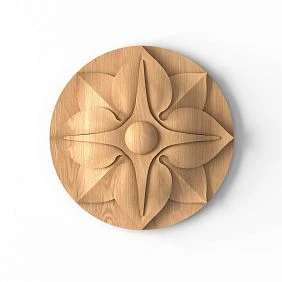
Sometimes a column is part of a more complex wall composition: a portal, panel, niche, door frame, or furniture group. Then one capital and base may not be enough. An additional rosette, carved element, molding, or cornice helps connect the column with the rest of the decor.
But such details should be added carefully. The decor should support the composition, not overload it. If the column already has an expressive capital and carved pilaster, additional elements are best used sparingly.
How to choose a wooden capital
A wooden capital cannot be chosen separately from the column. It must match the width of the vertical, the carving style, the wood species, the future finish, and the installation location. An error in one parameter can ruin the entire set.
If a buyer wants to purchase a wooden capital for decorating a column in a house, they first need to understand where it will be placed: on a freestanding column, on a pilaster, above a door, in a portal, in a hall, study, living room, or restaurant. Each scenario has different requirements for scale and expressiveness.
| Selection parameter | What to Check | Why it's important |
|---|---|---|
| Width | Matching the column or pilaster | The capital should not be accidentally narrow or excessively large |
| Carving style | Depth, pattern, and expressiveness | The carving defines the character of the entire column |
| Wood Species | Oak, beech, or another option in the product card | The material affects the appearance, finish, and compatibility |
| Finishing | Enamel, stain, varnish, patina, or another finish | The capital must match the interior and adjacent details |
| Compatibility | The connection with the pilaster, base, portal | The set should look cohesive |
By the width of the column or pilaster
The width of the capital should match the width of the vertical element. If the capital is too narrow, it does not complete the column. If it is too wide, the top looks heavy and overhanging. The error is especially noticeable in door portals and wall compositions, where symmetry is immediately apparent.
Before ordering, you need to measure the width of the pilaster or column, understand the depth of the projection, and evaluate adjacent elements. If the column is part of a portal, you need to consider not only the vertical itself but also the top lintel, moldings, cornice, and the overall size of the opening.
By carving style
The carving sets the mood. A more restrained capital is suitable for neoclassicism, a study, a restrained hallway, or a modern interior with classical details. Expressive carving is appropriate in a formal area, restaurant, country house, library, or living room with wooden panels.
If the room already has carved decor, the capital should complement it, not compete with it. If the walls are smooth and there are minimal details, overly active carving can look heavy. In that case, it's better to choose a more restrained option.
By wood species: oak or beech
Oak and beech are perceived differently in interiors. Oak is usually associated with more pronounced texture and solidity, while beech is associated with a calmer surface and suitability for finishing. However, the exact material of a specific capital, pilaster, or base should be checked in the product card.
You cannot choose a wood species just out of habit. If the column will be painted with enamel, that's one scenario. If staining or varnish with texture reveal is planned, that's another. If there is already wooden furniture nearby, you need to consider the match of shade and material character.
Based on future finishing: enamel, stain, varnish, patina
The finish can completely change the perception of the capital. Enamel makes the element more architectural and can tie it to walls, doors, or a portal. Stain emphasizes the wood and is suitable for interiors where texture matters. Varnish protects and reveals the material. Patina adds depth to the carving and highlights the classic character.
Before ordering, you need to understand whether the capital will be finished together with the pilaster and base. It's better not to paint elements separately if they should look like one set. Exact finishing and material options should be checked in product cards or clarified with a STAVROS manager.
How to design a column in an interior
The question 'how to design a column in an interior' is almost always about proportions. A column must have a top, bottom, and shaft. If one element is missing, the composition becomes weak. Therefore, design starts not with choosing the most beautiful detail, but with understanding the entire vertical.
For a classic scenario, the logic is simple: a base at the bottom, a pilaster or column vertically, a capital at the top. If the column is built into a door portal, the upper part of the portal, moldings, or cornices are added to this. If the column stands alone, special attention must be paid to its connection with the floor and ceiling.
Column in the hall
The hall often sets the first impression of the house. If there is a column there, it should look confident. A wooden capital helps make the top more expressive, the base frames the bottom, and the pilaster can support adjacent walls or a portal.
Symmetrical solutions work well in the hall. If there are two columns, it is better to choose matching elements. If there is one column, it can be linked to a door portal, staircase, mirror, console, or paneling.
Column in the living room
In the living room, a column can be part of zoning. It separates the relaxation area from the dining area, supports a portal, highlights the fireplace group, or becomes part of a wall composition. It's important not to overload the decor here, because furniture, textiles, lighting, and paintings may already be nearby.
If the interior is classic, the capital and base help make the column part of the overall architecture. If the interior is neoclassical, it's better to choose elements with moderate expressiveness so they don't clash with upholstered furniture and finishes.
Column in a study
The study loves wooden details. The capital, pilaster, and base can support bookshelves, panels, a desk, doors, and massive furniture. Here, wooden decor looks especially natural because it is associated with a sense of solidity and composure.
In the study, it is better to avoid random mixing of styles. If the furniture is strict, the capital should be expressive but not excessive. If the study is formal, a more carved set is acceptable.
Column in a restaurant or commercial space
In restaurants, salons, hotels, and showrooms, columns often become part of the atmosphere. A wooden capital helps make the space more expensive and expressive, and a pilaster can be repeated on several wall sections, creating a unified rhythm.
For a commercial interior, it is especially important to select a set in advance. If different columns are decorated with different elements, the space quickly loses its integrity. It is better to choose one style and repeat it in the necessary areas.
How to design a door portal with wooden elements
A door portal is one of the most successful scenarios for capitals, pilasters, and bases. Here, vertical elements look natural: they frame the opening, define the entrance, and make the transition between rooms more ceremonial.
If a buyer is looking for how to design a door portal, they should not only look at the capital. The portal is built as a system: vertical parts, top lintel, decorative elements, base, capital, sometimes moldings and cornice. A single capital above the door can be beautiful, but without an overall structure, it does not always solve the problem.
For a point top element, you can look at the KL-017 capital for a column and portal. If a full vertical is needed, it is worth additionally selecting a pilaster and base.
What to buy together with a wooden capital
A wooden capital is rarely worth buying alone if the task is to design a column or portal. The top element must be connected to the vertical and the bottom. Therefore, together with the capital, a pilaster, base, additional carved decor, moldings, or cornices are often selected.
The most straightforward combination is a capital plus a pilaster. The capital covers the top, the pilaster forms the body of the vertical. If the pilaster goes to the floor, a base is needed. If the column is part of a portal, additional elements for the top part may be required.
| What to add to the purchase | Why this is needed | For which scenario |
|---|---|---|
| Pilaster | Creates a vertical under the capital | Portal, wall, attached column |
| Base | Completes the bottom of the pilaster | Column from floor, door portal, hall |
| Capital and base in the same wood species | Help avoid material inconsistency | Classic set for finishing |
| Carved rosette or decorative element | Connects the column with the rest of the decor | Entrance area, portal, wall composition |
| Wood molding or cornice | Helps embed a column into a portal | Doorway, niche, wall group |
If the task is what to buy for decorating a column, the answer is almost always a set. A capital without a pilaster and base may look like a separate overlay. A pilaster without a capital looks like an unfinished vertical. A base without a top element does not create architectural logic. Therefore, it is better to assemble the set at once.
How not to confuse a capital, base, pilaster, and portal
In carved decor, there are many elements similar in style. A buyer sees a wooden part with relief and may not immediately understand where it goes: on top, bottom, on the wall, on the door, or on the facade. Therefore, before purchasing, it is important to distinguish their roles.
| Product | Do not confuse with | Difference |
|---|---|---|
| Capital | Base | The capital is placed on top, the base on the bottom |
| Pilaster | Column | A pilaster adjoins the wall, a column can stand separately |
| Half-column | Pilaster | A half-column has a more voluminous, rounded silhouette |
| Decorative overlay | Capital | The overlay decorates the plane, the capital completes the vertical |
| Door portal | Separate capital | A portal is a system of elements, a capital is a single part |
The most dangerous mistake is to buy a beautiful part without understanding its place. A capital cannot be used as a base, and a base cannot be used as a top element. A pilaster does not replace a column in all cases, and a decorative overlay does not finish the top of a vertical element the way a capital does.
Practical selection for different situations
Need to decorate an existing column
First, you need to determine whether the column is round, square, attached to a wall, or built into an opening. Then understand what it lacks: a top finish, a bottom base, a decorative vertical, or a connection to a portal. If the top is empty, a capital is needed. If the bottom looks weak, a base is needed. If the column adjoins the wall and looks flat, you can consider a pilaster.
Need to design a column in a house with a classic interior
For a classic interior, it is better to assemble a set: capital, pilaster or column, base, and additional elements as needed. It is important that the carving, scale, and material match each other. Elements of different character can spoil the impression even with good finishing.
Need to design a door portal
For a portal, a vertical system is usually needed. One capital is not enough. You need to consider pilasters on the sides, bases at the bottom, the top part of the portal, and a decorative connection. If the portal is tall, too small decor will get lost. If the opening is small, overly massive elements will feel oppressive.
Need to make a wall column
A wall column is often assembled with a pilaster. It is important to choose the depth of the projection so that the element is noticeable but does not interfere with passage and furniture. The capital and base make the pilaster architecturally complete.
Need to design a restaurant, hall, or salon
In a commercial interior, decor should be repeatable and consistent in style. It is better to choose one set of elements and repeat it on several columns or portals. This makes the space look cohesive rather than decorated with random details.
Mistakes when choosing a wooden capital and column set
Buying only a capital without understanding the entire column
The capital alone does not fully design the column. It covers the top. If the pilaster, base, and adjacent elements are not considered, the top detail may look disconnected from the interior.
Not considering the width of the pilaster
The capital must match the vertical. If the dimensions don't align, the joint will look random. Before ordering, measure the pilaster, column, or installation location.
Confusing the top and bottom elements
The capital goes on top, the base on the bottom. They have different roles. Using them incorrectly disrupts architectural logic and makes the design look unprofessional.
Choosing carving separately from the interior
The carved element should support the room's style. In calm neoclassicism, an overly ornate capital may feel heavy. In a formal area, a too simple detail may get lost.
Not checking the material and finish
If the capital, pilaster, and base are to be finished together, their material and surface must be compatible. Exact details should be checked in product cards.
Using random plastic analogs next to a wooden interior
If the house already has solid wood, wooden doors, panels, and furniture, random plastic elements may stand out. Wooden decor looks more natural surrounded by wood.
Don't think about the entire door portal
If the task is a portal, you need to assemble a system. The top element, verticals, bases, and decorative lines must work together. One capital cannot replace the entire portal.
Who is wooden column trim suitable for
A wooden capital, pilaster, and base are suitable for homeowners, designers, carpentry workshops, restaurants, studies, halls, entrance areas, and interiors where a classic wooden vertical is needed. Such a set is especially appropriate in spaces with solid wood, carved decor, wooden doors, panels, stairs, portals, and substantial furniture.
This solution is suitable for those who want not just 'what to decorate a column with,' but how to style a column in an interior so it looks like part of the architecture. Wooden elements help assemble the top, bottom, and vertical into a single composition.
The set is also useful for craftsmen and designers working with non-standard openings, portals, halls, and decorative walls. Instead of randomly selecting individual parts, you can immediately build the trim around the capital, pilaster, and base.
It's better for someone to choose a different option
Such trim is not suitable for those looking for lightweight polyurethane molding, plastic overlays, a ready-made load-bearing column, or a minimalist profile without carving. A wooden capital is not a universal wall sticker, but part of architectural decor.
If the interior is completely modern, without classical details, a wooden carved capital may look out of place. In that case, it is better to choose more minimalist elements or a completely different way of decorating the column.
If the column is load-bearing and requires a structural solution, decorative elements do not replace the construction. They enhance the appearance but do not solve engineering tasks. Before purchasing, you need to understand whether it's about decor or the structural part.
How to buy a wooden capital and column kit at STAVROS
It's best to start a purchase with a task. You need to understand what exactly is being designed: a separate column, a pilaster on the wall, a door portal, a hall, a staircase area, an office, or a commercial space. After that, it's easier to determine whether only the top element or a full set is needed.
If you need the top of a column, you can go to the section buy wooden capital. If you need a specific carved element, it's worth looking at the KL-017 capital for a column and portal. If the task is to assemble a vertical, you need to open the section Wooden pilasters and columns.
For the bottom finish of a pilaster, you can use buy a pilaster base. If you need an expressive vertical, you can consider Wooden Pilaster PLM-017.
Before ordering, you need to check the dimensions, material, compatibility of elements, future finishing, and installation location. If the set is being selected for an already finished interior, it's better to prepare a photo of the area, the dimensions of the column or opening, and understand what color the finish will be. This will help avoid mismatches in scale and style.
FAQ: frequently asked questions about decorating a column with wooden elements
How to decorate a column in an interior?
It is better to design a column as a system: a base at the bottom, a pilaster or column shaft vertically, a capital at the top. If the column is part of a portal, additionally consider the upper part, moldings, or other decorative elements.
What to decorate a column in the house with?
A column in the house can be decorated with a wooden capital, pilaster, base, and additional carved decor. This set works especially well in classic, neoclassical, and country interiors.
Which wooden capital should I buy for a column?
The capital should be selected based on the width of the column or pilaster, carving style, material, and future finish. For a specific option, you can look at the KL-017 capital for a column and portal.
Is a base needed for a pilaster?
Yes, if the pilaster goes from the floor or should look like a full architectural vertical. The base completes the bottom and makes the composition visually stable.
How is a pilaster different from a column?
A pilaster adjoins the wall and works as a wall-mounted decorative element. A column can be an independent vertical in the space. For wall compositions, pilasters are more often chosen.
Can a capital be used above a door?
Yes, a capital can be used in a door portal if it matches with pilasters, bases, and the top part of the frame. But a single capital does not replace the entire portal.
What to buy together with a wooden capital?
Most often, together with a capital, people buy a pilaster, a base, additional carved elements, moldings, or a cornice. It all depends on whether you are decorating a column, a pilaster, or a door portal.
How to choose a capital, pilaster, and base in the same style?
You need to look at the width, material, carving character, proportions, and future finish. It is better to select elements as a set rather than buying each separately without comparison.
Will a wooden capital suit a modern interior?
It will suit if the modern interior allows for classic or neoclassical accents. If the space is completely minimalist, a carved capital may look too decorative.
Can a capital be used for a pilaster rather than a column?
Yes, a capital is often used for pilasters. The main thing is to check the dimensions and compatibility so that the top element matches the width and depth of the pilaster.
What is more important: the capital or the base?
They have different roles. The capital completes the top, the base finishes the bottom. For a full column or pilaster, both elements are needed if the composition is to look architecturally complete.
Where can I buy a wooden capital and column elements?
On STAVROS you can choose buy wooden capitalselect Wooden pilasters and columns, as well as view the base and specific carved elements for the kit.
Conclusion
Decorating a column in a house starts not with one beautiful element, but with understanding the entire vertical. The capital completes the top, the pilaster or column forms the body, the base covers the bottom node, and additional carved elements help connect the composition with the portal, wall, or interior.
If you need to understand how to decorate a column in a house, you should look not at random overlays, but at a wooden kit. It is especially appropriate in halls, living rooms, studies, country houses, restaurants, salons, and classic interiors where the column should look not like a structural support, but like part of the architecture.
At STAVROS you can buy wooden capitalselect Wooden pilasters and columnsadd buy a pilaster base and assemble a set for a specific column, pilaster, or door portal. Before ordering, it is worth checking the dimensions, material, carving style, and future finish, so that the wooden elements work together and make the interior cohesive.