
























Article Contents:
- KPU-012 is precisely carved polyurethane trim, not a regular smooth molding
- What is confirmed about KPU-012
- What does "carefully bending" mean in a proper project
- An arch can be gentle or steep — the appearance of the opening does not give an exact answer
- The most reliable tool before purchase is a template of the real arc
- The main criterion: how much you need to force the profile to change shape
- When KPU-012 should be considered first
- When a special flexible molding becomes a safer route
- KPU-012 and special flexible molding solve different priorities
- Length 2000 mm: we check separately whether one plank is enough
- The joint of carved molding is a separate task
- On the arch, the number of planks matters less than the cutting map
- Can we leave KPU-012 on straight sections and use flexible molding on the arc?
- What to check during a trial fitting
- Fit
- Ornament
- Shape retention
- Joints
- Transition to straight
- An arch with a very short steep transition
- Route A — only KPU-012
- Route B — KPU-012 on straight sections, flexible molding on the arch
- Route C — the entire contour with a special flexible profile
- Does the profile lie along the line?
- Does it have to be held firmly?
- Does the pattern look natural?
- Does the transition to the straight line look smooth?
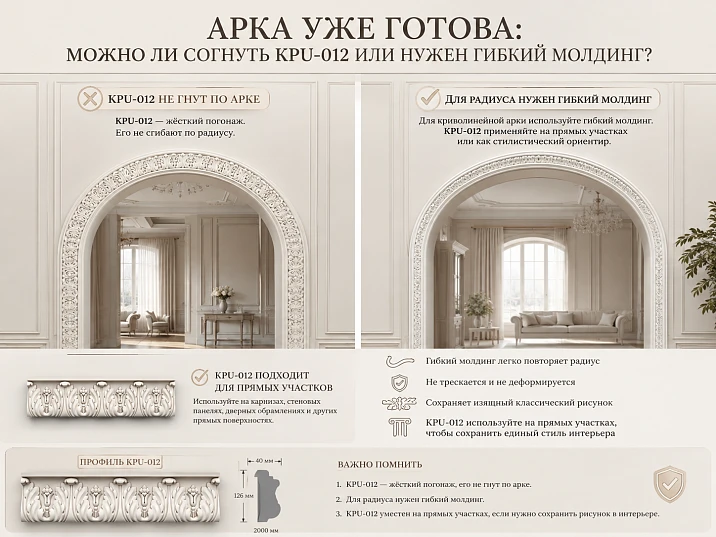
The arched opening is already made, the radius is set, the surface is prepared, and the decorative pattern has been chosen — the carved polyurethane molding KPU-012. And it is precisely at this moment that a perfectly practical question arises: can you buy this two-meter strip and neatly follow the arch's curve with it, or is a special flexible molding needed for the curved section?
KPU-012 has an important advantage: the STAVROS product page directly states that the product is flexible and, if necessary, can be carefully bent for doors and furniture of non-standard shapes. The size of one strip is 70 × 14 × 2000 mm, and the material is polyurethane. At the time of preparing this article, the price of one two-meter strip is 20,590 ₽.
But from the phrase “can be carefully bent” one cannot draw a second, broader conclusion: “KPU-012 is suitable for any arch and any radius.” The minimum allowable radius for this SKU is not specified on the public product page. Therefore, the right choice is based not on guesswork, but on the geometry of the specific opening and on how much the profile will have to be bent.
If the curve is gentle and the buyer specifically needs the carved ornament KPU-012, this product makes sense to consider first. If the radius is small, the curvature is pronounced, or installation requires noticeable forced tension, then before ordering the entire batch a test is needed, coordination with STAVROS, or a switch to a profile that is initially intended for radiused surfaces.
If, after checking the geometry, this particular ornament is chosen, you can buy carved polyurethane molding KPU-012. But before adding the strips to the cart, let's break down where the confirmed flexibility of KPU-012 ends and the risk begins of damaging the profile or getting an untidy pattern on the curve.
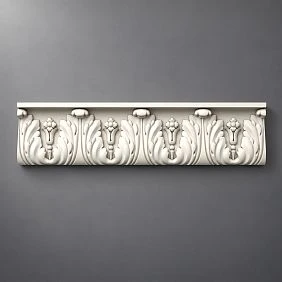
KPU-012 is specifically carved polyurethane molding, not an ordinary smooth molding
In this topic, the name of the product matters.
KPU-012 is not just a “decorative element” and not a universal flexible strip. It is carved polyurethane molding with a pronounced ornament, 70 mm wide, 14 mm thick, and 2000 mm long.
For a flat surface, these dimensions are read simply.
For an arch, they immediately raise three questions:
-
Can a two-meter plank follow a specific curve?
-
Will the ornament be distorted when bent?
-
Will one plank be enough for the required length of the section?
Therefore, before ordering, you need to check the pattern, radius, and arc length simultaneously.
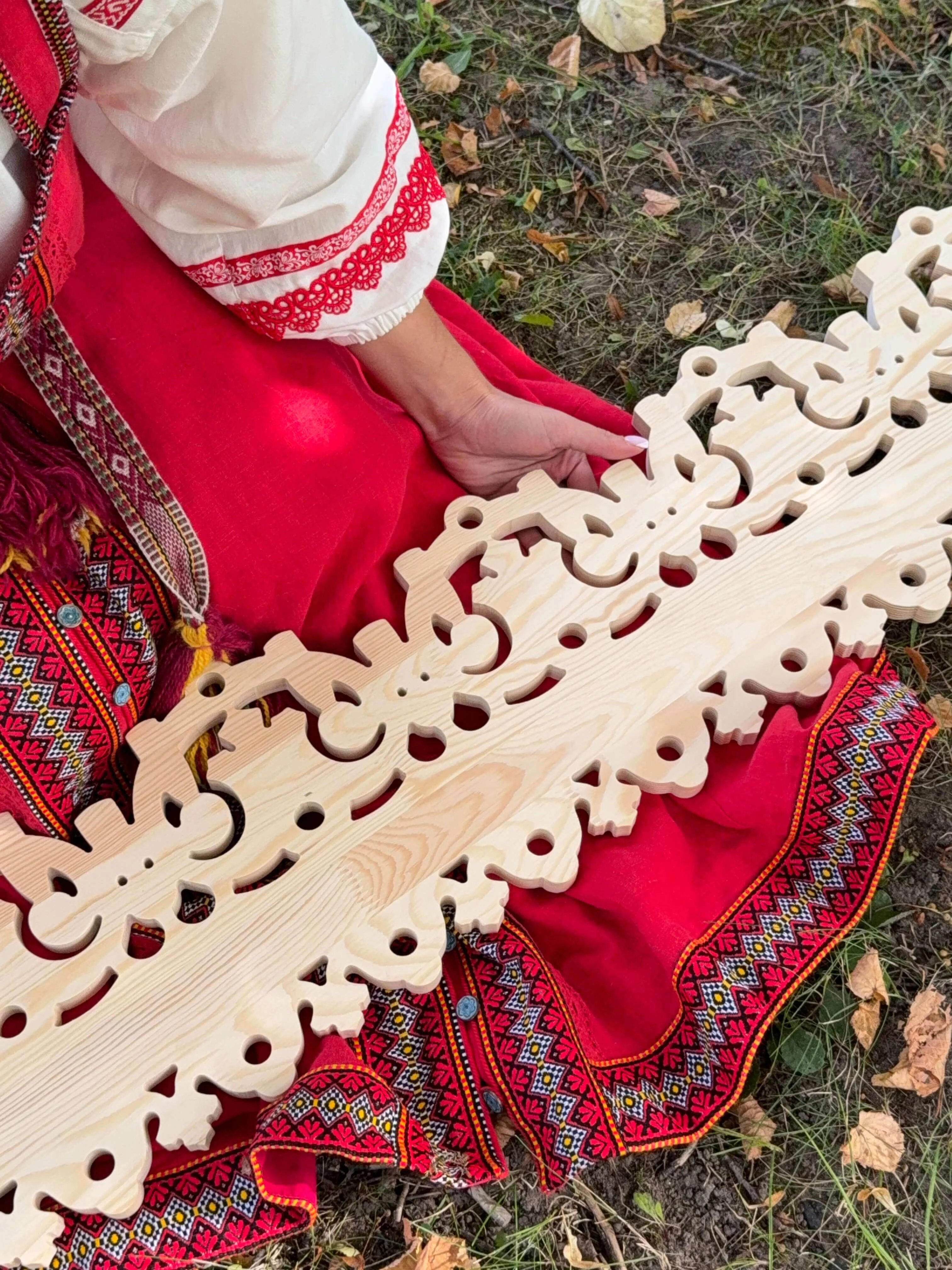
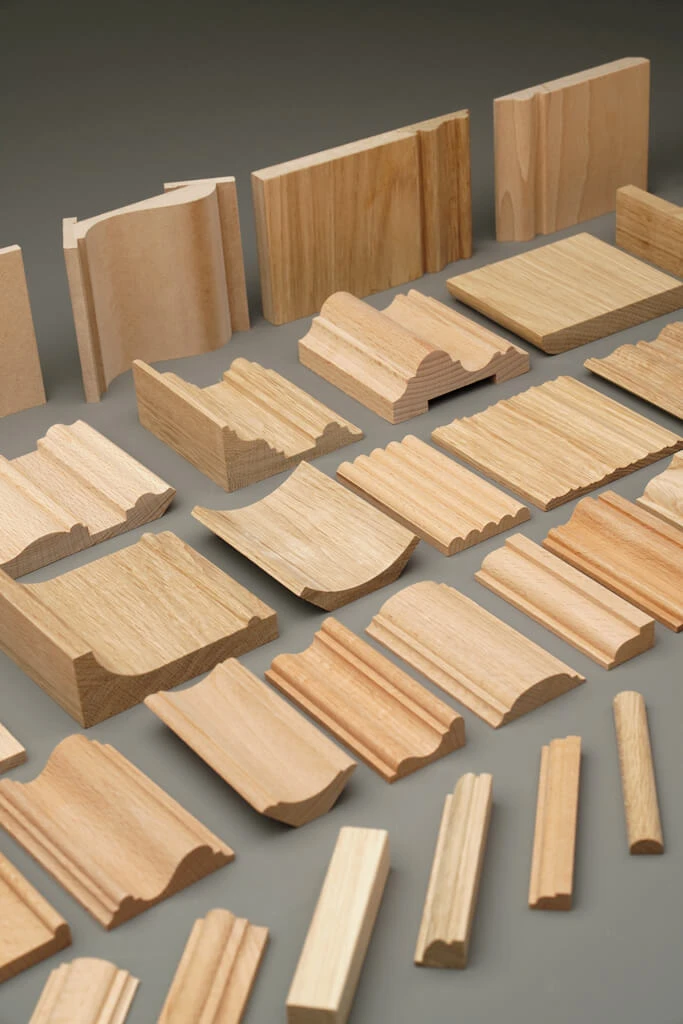
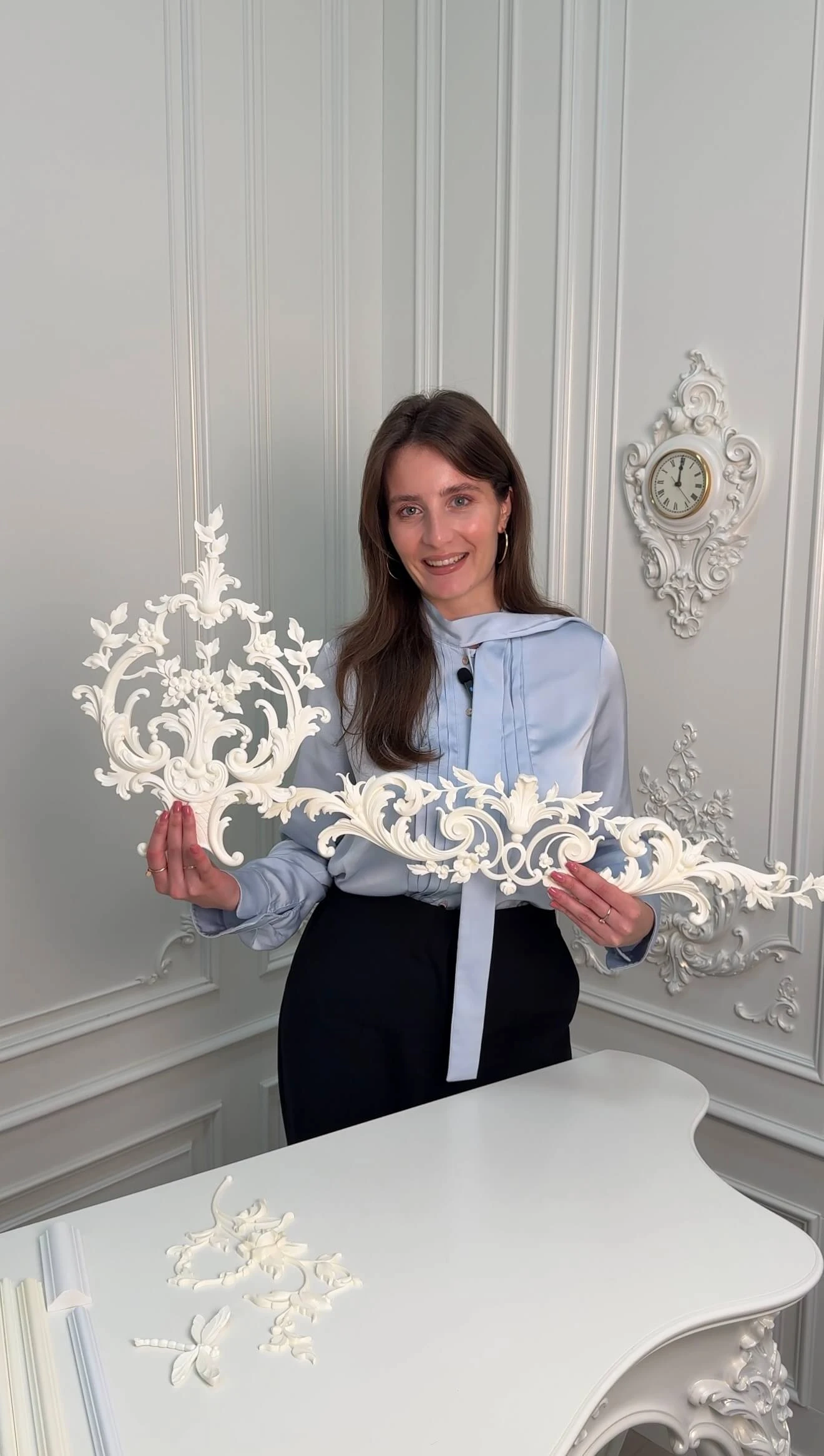
This is confirmed by KPU-012
| Parameter | Value | What this means for an arch |
|---|---|---|
| Article number | KPU-012 | We choose a specific product, not a class of moldings in general |
| Type | Carved polyurethane molding | The ornament must be preserved on the arc |
| Size | 70 × 14 × 2000 mm | Width, thickness, and length affect fitting |
| Material | Polyurethane | The card allows a neat bend |
| Length of one plank | 2000 мм | Need to compare with the length of the curved section |
| Price at time of check | 20 590 ₽ | Before payment, the price should be checked again |
| Allowable bend | Yes, neat | Confirmed by the product itself |
| Minimum radius | Not publicly specified | You cannot invent a universal boundary |
The last line is key.
The buyer knows that KPU-012 is not absolutely rigid. But it is unknown where the limit of safe bending lies for this particular product.
Why the word "polyurethane" by itself guarantees nothing
Polyurethane products vary in shape, width, thickness, density, relief, and purpose.
A smooth narrow profile and a wide carved molding are not obliged to behave the same way on the same curve.
Therefore, the rule "if it's polyurethane, it will bend" is too crude.
For KPU-012, there is a more reliable basis: its own card allows careful bending. But even this permission cannot be extended to an arbitrary radius.
Our factory also produces:
What "careful bending" means in a normal project
This does not mean:
-
press the profile to the desired shape at any cost;
-
heat it with a construction hairdryer without a confirmed technology;
-
fix it with self-tapping screws only to forcibly hold an excessive bend;
-
cut the back side;
-
cut the ornament into short segments;
-
consider cracks or deformation a normal part of installation.
The meaning is different: the profile has a certain flexibility that can be used within limits where the product takes shape without dangerous effort and without noticeable distortion of the pattern.
If to align with the arch the installer literally has to fight the strip, that is already a signal to stop.
Get Consultation
An arch can be shallow or steep — the appearance of the opening does not give an exact answer
Two openings can be called arches but require completely different bends.
For example:
-
wide segmental arch with a slight rise;
-
almost semicircular arch;
-
narrow tall arch;
-
elliptical top;
-
custom arch based on an individual template.
At first glance, the first and second may seem similar, but the load on the profile will differ.
Therefore, before purchasing, you need not only a photo of the opening, but also measurements.
What measurements to take from a finished arch
For a preliminary assessment, you will need:
-
width of the opening;
-
height to the start of the arc;
-
rise of the arc above the heel line;
-
length of the curved section;
-
width of the surface on which the KPU-012 will lie;
-
transition point of the arc into straight vertical sections;
-
number of identical arches.
If the arch is built according to a drawing, it is better to take the radius or geometry directly from the project.
If there is no drawing, a full-size template will help.
The most reliable tool before purchase is a template of the real arch.
You need not to "approximately know the radius," but to get the actual line along which the molding will be installed.
Suitable options:
-
cardboard;
-
thick paper;
-
thin sheet base;
-
printout or transferred construction template;
-
exact drawing at 1:1 scale.
The main task is to have the actual curve.
It is much easier to explain the task to a manager or a craftsman using it than with the phrase “an ordinary arch, not very steep.”
If the arch is circular, the radius can be calculated
For a circular segment, you can use the chord width and the arc rise.
Let:
-
c — chord, that is, the distance between the two points where the arc starts;
-
h — the height of the arc above the chord.
Then the radius of the circle:
R = c² / (8h) + h / 2
This formula helps describe the arch itself.
But it does not automatically determine the suitability of KPU-012, because the minimum radius of the product is not published.
That is, the calculation answers the question:
"What is my radius?"
But not the question:
"Can KPU-012 be bent to exactly this radius?"
The second answer needs to be obtained through confirmation or a trial fit.
A semicircular arch is considered even simpler.
If the arc is a smooth half-circle, the radius equals half the width of the opening along the diameter line.
For example, an opening of 1200 mm:
R = 600 mm.
But even such a precise figure does not give the right to claim that KPU-012 is suitable or not.
It is needed to provide the manufacturer or installer with specific initial data.
An elliptical arch cannot be reduced to a single radius
The curvature of an ellipse changes along its length.
In the central part, the arc is one shape; closer to the transition into the sides, it is another.
Therefore, for an elliptical shape, a full-size template is especially useful.
The phrase "radius of about a meter" may be insufficient here.
The main criterion: how much the profile needs to be forced to change shape
There is very simple practical logic.
If KPU-012 repeats the template without noticeable effort and the ornament remains stable, the product has good chances of fitting the project.
If the profile noticeably resists, wants to straighten out, requires strong fixation, or the relief begins to deform, it is too early to proceed with installation.
You need to test the solution on a sample or choose a different type of profile.
What exactly can suffer from excessive bending
Carved molding has not only a geometric line but also a decorative pattern.
With too much deformation, problems may occur:
-
disruption of the ornament's rhythm;
-
visual "compression" of elements on the inner side of the arc;
-
stretching of the outer side;
-
local stresses;
-
uneven fit;
-
difficulties with joints;
-
increased load on the installation crew.
It cannot be promised that all these effects will necessarily occur. But it is precisely these that need to be ruled out during a trial fitting.
Why the ornament is more important for KPU-012 than for a smooth profile
A smooth molding may slightly alter the visual geometry, and this is not always noticeable.
With carved trim, the eye reads the repetition of the ornament.
If one part of the pattern begins to compress while another stretches, the defect becomes visible.
Therefore, the buyer chooses KPU-012 not only for the 70 × 14 mm profile, but also for the specific pattern.
Preserving this pattern is part of the suitability criterion.
When KPU-012 should be considered first
There are scenarios where rejecting it in favor of a regular flexible profile would be too hasty.
For example:
-
the arch is gentle;
-
the carved pattern of KPU-012 is specifically needed;
-
adjacent straight sections are finished with the same molding;
-
it is required to maintain a unified ornament across the entire door or furniture composition;
-
there is an opportunity to do a real fitting;
-
the project allows for careful installation without excessive forcing of the profile.
In such a situation order carved millwork KPU-012 logical after checking curvature, not instead of it.
When a special flexible molding becomes a safer route
Special flexible moldings are initially intended for:
-
arches;
-
radius walls;
-
columns;
-
rounded niches;
-
other curved surfaces.
Therefore, with a pronounced radius, they should be considered not as a "cheap backup option," but as a profile of a different purpose.
If the main task is to reliably follow a given curve, and the exact carved pattern of KPU-012 is not critical, a special flexible molding may be more appropriate.
If, however, the KPU-012 ornament is specifically needed, first check the feasibility of its application, rather than automatically replacing it with a smooth profile.
KPU-012 and special flexible molding address different priorities
| Criterion | KPU-012 | Special flexible molding |
| Main value | Specific carved ornament | Work on curved surfaces |
| KPU-012 dimensions | 70 × 14 × 2000 mm | Depends on the selected profile |
| Bending | The card allows for neat | Flexibility is inherent in its purpose |
| Minimum radius | Not published | Need to check with the specific model |
| Decorativeness | Pronounced carved pattern | depends on the model |
| Solution for slight curvature | Worth checking | May be excessive |
| Solution for strong curvature | Only after confirmation | Usually considered first |
| Main risk | Bend a specific ornamental profile | Lose the desired pattern when replacing |
This table shows why the question cannot be reduced to "what is better."
One product is chosen primarily for its ornament.
Another is chosen primarily for its ability to work on a radius.
Do not look for a flexible molding only after KPU-012 has already been purchased and has not bent.
The right time for comparison is before ordering.
If the arch is ready, the geometry is already known.
This means you can:
-
take measurements;
-
get a template;
-
check KPU-012;
-
only then process the entire batch.
This is cheaper and more reliable than buying several strips of 2000 mm hoping that "the polyurethane will somehow bend."
One photo of the arch is not enough for confirmation
The photo is useful.
But it distorts perspective.
It is difficult to determine from it:
-
exact width;
-
actual rise;
-
ellipse shape;
-
radius;
-
Mounting plane.
It is better to send the photo with dimensions and a template to the manager or master.
How to make a proper request before purchasing
Instead of:
"Does KPU-012 bend to an arch?"
it is better to write:
"I want to use KPU-012 70 × 14 × 2000 mm along an arc. Chord width — ___ mm, rise — ___ mm, shape — circular/elliptical, I attach a template or drawing. Please confirm whether such a bend is acceptable without damaging the ornament."
This is already a technical question to which you can get a useful answer.
Length 2000 mm: we separately check whether one plank is enough
Even if KPU-012 is suitable in terms of curvature, the question of length remains.
You need to measure the length of the arc itself, not the width of the opening.
These are different values.
An arc is always longer than the chord between its endpoints.
For a semicircle, the arc length is calculated simply.
If the arch is half a circle with radius R:
L = πR.
For example, with a radius of 600 mm:
L ≈ 1885 mm.
Theoretically, one KPU-012 plank, 2000 mm long, covers such a clean semicircle in length.
But in a real project, you also need to consider:
-
transition points;
-
trimming;
-
drawing;
-
method of joining with vertical elements;
-
allowable bend.
Therefore, length arithmetic is not confirmation of installation.
For a segmental arch, it is better to take the length from the drawing
If the project is done in CAD, the curve length is determined precisely.
This is better than trying to calculate it from a photo.
If there is no drawing, the length can be measured with a flexible tape measure along the line of future installation.
You cannot stretch a two-meter strip to save one joint
If the arc requires more than 2000 mm, this does not mean that the profile needs to be stretched more or its trajectory changed.
KPU-012 has a fixed length.
If multiple elements are needed, the joint must be designed in advance.
The joint of carved molding is a separate task.
For a smooth profile, the joint is easier to hide.
For carved ornament, the rhythm of the pattern must be preserved.
Therefore, with two planks, it is important to determine in advance:
-
where the connection point is located;
-
whether the motif matches;
-
whether the ornament is interrupted in a noticeable area;
-
whether symmetry relative to the center of the arch is needed.
The most noticeable place is the upper central point of the arc. A joint there is only acceptable if the pattern allows making it neatly.
Sometimes it is better to distribute the joints symmetrically.
If one plank does not cover the entire arc, sometimes it is more reasonable not to leave a short piece on one side, but to distribute the composition symmetrically.
But this decision depends on the KPU-012 pattern and the actual layout.
A universal scheme of "cutting in half" cannot be assigned.
The straight side and the arc may require different parts.
If KPU-012 goes not only along the upper arc but also descends down along the side posts, the total length increases sharply.
Then the project needs to be divided into zones:
-
left vertical;
-
arc;
-
Right vertical
For each one, the length is calculated separately.
The simplest list for one arch
| Zone | Length | KPU-012 | Check |
| Left side panel | By measurement | By layout | Straight |
| Arch arc | By curve | By layout | Radius is required |
| Right side panel | By measurement | By layout | Straight |
| TOTAL | Sum | By actual cutting | Check pattern |
This calculation is much more useful than the phrase "usually two planks are needed for a door."
Each opening has its own quantity.
For an arch, the number of planks matters less than the cutting map
Before completing the cart, draw where each piece comes from.
For example:
Plank 1 — main part of the arch.
Plank 2 — continuation of the arch and side.
Plank 3 — second side.
But this is only an example of cutting layout.
The actual layout depends on the dimensions and the pattern.
For several identical arches, first make one test layout.
If the project has four identical openings, there is no need to multiply the approximate consumption by four.
First calculate one arch.
Check:
-
lengths;
-
joints;
-
bend;
-
waste.
After that, the cutting layout can be replicated.
A serial order is especially sensitive to radius errors.
One incorrectly selected plank is a nuisance.
Ten slats for identical arches is already an expensive mistake.
At the current price of KPU-012, a preliminary test becomes especially justified.
What to buy if KPU-012 fits
If the check confirms the bend, the cart may include:
-
the required quantity of KPU-012;
-
mounting materials;
-
if necessary, accompanying straight or frame decor;
-
finishing materials.
The exact composition depends on the project.
The KPU-012 itself remains the main product.
What to buy if KPU-012 does not fit the radius
Then there is no need to try to "force" the product.
The logic is different:
-
keep KPU-012 on straight sections, if allowed by the design;
-
choose a flexible profile for the arch;
-
check the transition between the two types of decor;
-
or replace the entire line with a flexible system if the junction of materials and patterns looks bad.
The main thing is not to leave the decision until the moment of installation.
Can I keep KPU-012 on straight sections and use a flexible molding on the arch?
Technically, such a project is possible only after a visual inspection.
The problem is not that polyurethane cannot be combined with polyurethane. The problem is in the profile and pattern.
KPU-012 has a pronounced carved ornament.
A special flexible molding can have:
-
a different width;
-
a different thickness;
-
a different relief;
-
a smooth surface;
-
a different rhythm.
If the transition is at the most visible point of the arc's start, the difference will be noticeable.
Therefore, a combined scheme requires a real junction node, not just two products that match in color.
When a combined scheme is still reasonable
It can work if:
-
the straight sidewalls are finished with KPU-012;
-
the arch is separated by a decorative transition element;
-
the flexible molding is matched by width and scale;
-
the pattern change looks like a deliberate decision;
-
the joint is not attempted to be masked with a random cut.
In other words, the transition should look designed.
If it looks like a forced replacement halfway through, it's better to reconsider the entire contour.
Why a special flexible molding cannot be chosen only by the word "flexible"
A flexible profile also has dimensions and limitations.
Need to check:
-
width;
-
removal;
-
length;
-
allowable radius of a specific model;
-
nature of the bend;
-
mounting surface;
-
compatibility with straight sections.
That is, "flexible" is a purpose, not a cancellation of design.
For a general understanding of the differences, the STAVROS material is useful on how to choose a flexible molding for an arch.
When it is definitely too early to buy the entire batch of KPU-012
There are several red flags:
-
radius unknown;
-
arch is elliptical, but only approximate width is available;
-
the master says "we'll press it with glue";
-
the profile needs to be held firmly by hands on the template;
-
the ornament visually compresses;
-
the strip deviates from the curve at several points;
-
the project requires heating or cutting the product without STAVROS confirmation;
-
need to finish many identical openings at once, but no test has been done.
In these cases, purchasing a batch is premature.
What counts as a "soft arc"
Without a published minimum radius, you cannot specify a number.
Therefore, a soft arc is not "a radius greater than two meters" or another invented boundary.
In this article, a soft arc refers to a curvature that a real KPU-012 can replicate with careful fitting without noticeable force, damage, or deformation of the ornament.
This is a functional definition.
It is more honest than an unconfirmed number.
What counts as too sharp a bend
Similarly, a universal radius cannot be assigned.
Practical signs:
-
the profile tends to straighten out more than can be calmly held;
-
excessive tension appears on the surface;
-
the relief changes noticeably;
-
the strip does not fit the template along its entire length;
-
force mechanical fixation is needed to hold it;
-
the edges begin to come off;
-
the installer suggests "breaking it slightly" or making frequent cuts.
At this point, the experiment should be stopped.
Do not heat KPU-012 just because it is advised on the internet
Different polymer products have different compositions and technologies.
Heating can change the geometry, surface, or relief.
If the manufacturer has not provided specific heating instructions for KPU-012, the article should not recommend a heat gun, hot water, or other methods of "softening".
The standard flexibility of the product needs to be checked.
Notches on the back side are also not a universal solution.
Sometimes craftsmen make notches on rigid profiles to increase pliability.
For the specific KPU-012, this method is not confirmed.
For carved molding, it can:
-
weaken the part;
-
change the pattern;
-
create local fractures;
-
complicate installation;
-
make the result unpredictable.
Therefore, without technological confirmation, we do not use this method.
What to do with the sample
If there is an opportunity to obtain a segment or test one plank, the check should be as close as possible to the real object.
Required:
-
full-size template;
-
correct bending direction;
-
actual length of the section;
-
absence of glue at the first stage.
The profile is applied to the curve and the material's behavior itself is assessed.
What to check during a trial fitting
Fit
KPU-012 must repeat the line without random gaps.
Ornament
The pattern must not turn into visually compressed and stretched areas.
Shape retention
It is necessary to understand how strongly the profile tends to straighten out.
Joints
If there are several slats, evaluate how the pattern connects on the arc.
Transition to straight line
At the point where the arch transitions into the vertical, no random kink should appear.
The transition from the arc to the vertical is often more complex than the arc itself.
On a long smooth curve, the profile may behave calmly.
But at the fifth arch, the direction changes.
It is there that the following may appear:
-
local kink;
-
loose fit;
-
visual pattern glitch;
-
difficult joint with a straight strip.
Therefore, not only the central part of the arch is tested, but also the transition.
Is a single continuous strip needed for the entire contour
Not necessarily.
For a large opening, several two-meter elements may physically be required.
The question is different: where to make the joints.
For a carved profile, a good joint is one that:
-
continues the ornament;
-
does not break the symmetry;
-
does not fall on the most complex curve section;
-
is accessible for careful preparation.
The center of the arch is not always the best place for a joint
Architecturally, the top point is important.
Any inaccuracy there is noticeable.
If the KPU-012 pattern has a clear repeat and allows two planks to be perfectly joined at the center, the solution is possible.
If the ornament is interrupted, it is better to find another node.
You cannot first cut KPU-012 and then look for the joint location
The order is reversed:
-
lay out the ornament;
-
choose the connection point;
-
determine the lengths;
-
make the markings;
-
only then cut.
This reduces the risk of losing an expensive strip.
How to calculate the quantity of KPU-012 for an arched opening
You need the total length of all areas where KPU-012 is specifically used.
Let us denote:
-
L₁ — left vertical;
-
L₂ — arc;
-
L₃ — right vertical.
Then the total length:
Ltotal = L₁ + L₂ + L₃.
But the number of planks cannot simply be obtained by rounding up after dividing by 2000 mm.
You need to account for cutting and ornamental joints.
Why the mathematical minimum and the real order differ
Suppose a total of 3950 mm is required.
Mathematically:
3950 / 2000 = 1,975.
That is, a minimum of two planks.
But if the pattern cannot be neatly aligned with this layout, a different scheme may be needed.
Therefore, two is the arithmetic minimum, not automatically the correct list.
First the cutting map, then the cart
On the sheet, each plank of 2000 mm length is drawn.
Below it are the segments that are obtained from it.
This shows:
-
remnants;
-
joints;
-
pattern direction;
-
Symmetry.
This is especially important with several identical doors.
If there are several arches, remnants can only be used after checking the pattern
A KPU-012 offcut does not become a universal blank just because its length is sufficient.
It is necessary that:
-
the ornament starts in the correct phase;
-
the end aligns properly;
-
the direction matches;
-
there are no damages after the first cut.
Material savings must follow the pattern.
KPU-012 on a door with an arched top
This is one of the most natural scenarios from the logic of the card itself: the product allows a neat bend for doors of non-standard shapes.
But the door must be considered as a whole.
If the ornament runs along two verticals and the top arch, the buyer must decide:
-
whether the pattern will be continuous;
-
where the seams will go;
-
what the indentation from the edge will be;
-
whether the profile conflicts with the trim;
-
whether there is room left for the handle and other details.
KPU-012 on an arched furniture facade
A curved furniture piece can have an even smaller scale than a door opening.
Therefore, the word "furniture" in the card cannot be taken as automatic confirmation of any small arch.
On the contrary: the smaller the radius, the more important a real fitting is.
KPU-012 on a large wall arch
Here the curvature is often softer.
If the profile smoothly follows the arc, the carved pattern can become a key advantage over a regular flexible molding.
But the large distance increases the importance of joints and the number of slats.
KPU-012 on a radius wall
If the surface bends in plan, not just an arched opening in the frontal plane, you need to especially carefully check the direction of the required bend.
Not all profile flexibility is the same in different directions.
The public card does not provide a separate map of permissible spatial bending.
Therefore, a radius wall requires a sample or confirmation even more strongly.
Bend direction is one of the most underestimated issues
Conditionally, there are two scenarios:
-
the plank follows the arc in the plane of its front surface;
-
the plank wraps around a convex wall along a different axis.
For a profile product, these are not the same thing.
If the card mentions flexibility but does not publish separate directional limitations, you cannot automatically transfer a successful fitting of one shape to another.
What to tell the installer before installation
A short technical specification might look like this:
KPU-012, 70 × 14 × 2000 mm. Use along the arch line only after a dry fit against a template. Do not heat, cut, or force into a radius without approval. Determine joints by the pattern before cutting.
This is better than verbal:
“It’s supposedly flexible, give it a try.”
Which materials to buy together
The mounting system depends on the base.
The wall can be:
-
plastered;
-
painted;
-
made of MDF;
-
wooden;
-
other.
Therefore, mounting materials should be chosen after checking the base.
For the project, you can open the section buy materials for mounting polyurethane moldings, but the specific composition must match the actual base and technology.
Glue should not become a means of force retention
This is fundamental.
The mounting compound fixes a profile that matches the geometry.
It should not compensate for an unsuitable radius.
If KPU-012 wants to straighten out with great force, the issue cannot be solved only with stronger adhesive.
Mechanical fixation also does not eliminate the need to check the radius.
Temporary fixtures can be part of professional installation.
But they should not mask shape incompatibility.
If the profile does not take the arc at all without force fixation, the admissibility of the bend is addressed first.
The base must be prepared along the entire curve.
On a straight wall, a small unevenness is noticeable locally.
On an arc, an error can change the profile line.
Before installation, check:
-
smoothness;
-
absence of bumps;
-
absence of dips;
-
surface strength;
-
cleanliness;
-
compatibility with the installation compound.
The base curve and the template curve must match
Do not try KPU-012 on a perfect plywood template if the real arch is made unevenly.
The profile will follow the real base.
Therefore, after the theoretical test, you need to check the opening itself.
When a special flexible profile is needed without long experiments
The scenario becomes more obvious if:
-
the radius is small;
-
the arc is complex;
-
the surface changes curvature;
-
you need to go around a column;
-
the project is not tied to the KPU-012 ornament;
-
the main requirement is precisely plasticity.
Then Moldings made of polyurethane you need to look with priority on models for curved surfaces.
When it is worth fighting specifically for KPU-012
If the ornament is part of the design.
For example:
-
Straight sections are already finished with KPU-012;
-
The pattern repeats on the furniture;
-
The arched element should continue the same motif;
-
Replacing it with a smooth molding will ruin the composition.
Then it makes sense to spend time checking the actual radius.
The decision cannot be made based on the price of a single strip
KPU-012 costs 20,590 ₽.
A special flexible molding may be cheaper or more expensive depending on the model.
But comparing only the price per piece is pointless.
Need to consider:
-
length;
-
quantity;
-
waste;
-
joints;
-
installation;
-
need to preserve the ornament;
-
risk of erroneous purchase.
The cost of a mistake is higher than the difference between the two profiles
If KPU-012 is purchased for a small radius and does not fit, the loss is not only the cost of the material.
This also includes:
-
work stoppage;
-
new order;
-
rework of cutting;
-
possible surface repair;
-
design change.
Therefore, a preliminary fitting is not unnecessary caution, but part of commercial calculation.
How to calculate the budget for several arches
First, for one control arch, the actual number of planks is determined.
Suppose, after cutting, N planks of KPU-012 are obtained.
For A identical arches, the preliminary quantity:
Q = N × A.
But before mass ordering, it is worth checking whether leftovers can be used between several openings.
This may reduce the actual consumption.
Do not multiply the cost before approving the cutting plan
If one arch "roughly requires three planks," and there are ten arches, don't rush to count 30.
Possibly:
-
two arches share one remainder;
-
the joint requires additional length;
-
a real test shows a different route.
First, a control map.
Then, a series.
Where to see all carved polyurethane moldings
If KPU-012 doesn't fit the curvature or the pattern itself turned out too large, you can buy carved polyurethane moldings of a different size and check the geometry again.
This is better than trying to make one SKU solve the problem at any cost.
A shared catalog is only needed after the task is fixed.
If the arched project is not yet defined, Buy molding it is more reasonable after knowing:
&An arch with a very short steep transition.
If the arc starts sharply almost immediately after the vertical, the local section may be harder than the entire central part.
Even with a large average radius, the transition point may require more deformation.
Here, the template should include not only the center of the arch but also both haunches.
When KPU-012 suits the buyer particularly well.
KPU-012 should be considered first if:
-
its carved ornament is exactly what is needed;
-
the arc is smooth;
-
the profile can be checked on a template;
-
straight sections of the same pattern are used nearby;
-
continuity of the decorative motif is important to the project;
-
there is no need to forcibly hold the profile on a curve;
-
the length and joints are calculated in advance.
For such projects, KPU-012 is not an "ordinary profile that happens to bend slightly," but a product with useful, confirmed flexibility.
When it is better not to buy KPU-012 blindly
Caution is needed if:
-
the radius is not measured;
-
the curve is complex or variable;
-
very strong deformation is required;
-
there are many openings;
-
the cost of an error is high;
-
the ornament must match perfectly;
-
the installer has not done a trial layout;
-
heating or cuts without instructions are expected;
-
there is no way to verify the actual behavior of the product.
In these cases, ordering the entire batch before testing is a poor time-saving strategy.
When a special flexible molding is more logical right away
If the client says:
“I don't specifically care about this exact ornament. The main thing is to neatly go around the arc,”
the priority changes.
A special flexible profile becomes a more straightforward choice.
Its purpose is inherently linked to curved surfaces.
Then it's worth Buy polyurethane wall moldings already with a filter by task and specific geometry, rather than trying to keep KPU-012 at all costs.
What to buy for one arch: three possible routes
Route A — only KPU-012
Suitable if:
-
KPU-012 passes the arc;
-
the drawing is saved;
-
joints are resolved;
-
verticals and top are decorated with one ornament.
Basket:
-
KPU-012 — according to the cutting map;
-
mounting materials;
-
finishing according to the project.
Route B — KPU-012 on straight sections, flexible molding on the arc
Suitable if:
-
KPU-012 does not pass the radius;
-
the design allows for profile change;
-
the transition is made intentionally.
Basket:
-
KPU-012 on straight zones;
-
flexible molding on the arc;
-
transition elements — if actually needed;
-
Installation materials.
Route C — the entire contour with a special flexible profile
Suitable if:
-
the KPU-012 ornament is not mandatory;
-
the geometry is complex;
-
a single continuous profile along the entire curve is more important.
This is often cleaner than making a compromise joint between two very different patterns.
Why route B cannot be considered a universal compromise
On paper it looks perfect:
"straight — KPU-012, curved — flexible."
But the real interior sees not the logic of the purchase, but the visual transition.
If KPU-012 is wide and ornate, and the flexible profile is narrow and smooth, the joint may look accidental.
Therefore, route B should first be drawn frontally.
Make a sketch at the actual width of the profile
It is not necessary to build a complex 3D model.
It is enough:
-
arch lines;
-
strips 70 mm wide for KPU-012;
-
of the selected flexible profile;
-
transition points.
This immediately shows whether the scales match.
Don't forget about the 14 mm thickness
The 70 mm width determines the front view.
The 14 mm thickness affects the volume and the joint with adjacent parts.
If the flexible molding is noticeably thinner or thicker, the transition may be visible even after painting in one color.
Painting in one color helps, but does not fix the geometry
You can make KPU-012 and the adjacent molding the same shade.
This will unify the composition.
But the paint won't hide:
-
different thickness;
-
mismatched profile;
-
unsuccessful joint;
-
width jump;
-
incorrect axis.
First geometry, then color.
If you need one pattern across the entire arch, don't agree to a replacement too quickly.
Sometimes the designer chooses KPU-012 precisely because the pattern repeats in other elements of the room.
Then a regular flexible molding will solve the engineering problem, but ruin the decorative one.
In such a project, it makes sense to spend more time testing KPU-012.
If it doesn't fit, look for a flexible profile with a pattern that matches as closely as possible, or reconsider the entire contour, rather than just inserting the first available one.
If the ornament is secondary, don't overpay for fighting KPU-012.
The opposite situation.
If the client simply wants a beautiful line around the arch and the specific pattern isn't critical, expensive carved molding shouldn't become an end in itself.
Then a special flexible profile can provide a simpler and more predictable result.
What to check in the store before paying for KPU-012
Before buy KPU-012 70 × 14 × 2000 mm, check again:
-
article number;
-
size;
-
price;
-
quantity;
-
arc length;
-
radius or template;
-
joining method;
-
bending direction;
-
base;
-
installation technology.
If half of these points are unknown, the basket is not ready yet.
What to send to the STAVROS manager
A good package of initial data:
-
photo of the arch from the front;
-
photo from the side;
-
width of the opening;
-
height;
-
arc lift;
-
radius, if known;
-
template or drawing;
-
installation location of KPU-012;
-
number of identical openings;
-
information about the base.
This makes the consultation specific.
What to send to the designer
The designer needs:
-
photo of KPU-012;
-
its actual width is 70 mm;
-
ornament pattern;
-
transition point to the flexible profile, if intended;
-
color;
-
visualization of the entire arch.
He doesn't necessarily have to deal with the glue, but he should see whether the replacement will ruin the pattern.
What to send to the installer
The installer needs:
-
template;
-
cutting map;
-
number of slats;
-
joint locations;
-
Base type;
-
confirmed installation method;
-
prohibition on unconfirmed ways to "add flexibility".
Thus, the craftsman receives not abstract decor, but a clear operation.
Mistakes when choosing KPU-012 for an arch
Mistake 1. Considering any polyurethane to be flexible.
The material itself does not provide a universal radius.
Mistake 2. Ignoring the specific product card.
KPU-012 has confirmed pliability — this is a plus that needs to be used correctly.
Mistake 3. Turning "can be carefully bent" into "can be bent any way you like."
There is no such promise.
Mistake 4. Making up a minimum radius.
If it is not published, the number cannot be assigned on your own.
Error 5. Ordering ten slats without testing on the first arch.
A serial error is too expensive.
Error 6. Counting the width of the opening as the length of the arc.
The arc is longer than the chord.
Error 7. Dividing the total length by 2000 and considering the order complete.
The ornament and joints can change the consumption.
Error 8. Making a joint where it is convenient to cut, not where the pattern continues.
This is especially noticeable on a carved profile.
Error 9. Heating KPU-012 without instructions.
Heating is not confirmed as a standard technology for this product.
Error 10. Cutting the back side without approval.
This may damage the part.
Error 11. Using strong glue as a way to "force" an unsuitable radius.
The mounting compound should not fix a selection error.
Error 12. Not checking the transition of the arc into the vertical.
That is where local complexity often arises.
Error 13. Checking only the middle of the arch.
The template should include the entire curved section.
Error 14. Treating a radius wall as the same bend as a frontal arch.
The direction of deformation may differ.
Error 15. Choosing flexible molding only by the word "flex".
Real dimensions and specifications of a specific model are needed.
Error 16. Mixing two profiles without a transition sketch.
Even the same color won't fix poor geometry.
Error 17. Buy first, measure later.
For KPU-012, the order should be reversed.
Error 18. Considering the current price as constant.
It is rechecked before payment.
Error 19. Buying "with a reserve" without a cutting plan.
The reserve may turn out to be both insufficient and excessive.
Error 20. Trying to save KPU-012 at any cost.
If the radius doesn't fit, it's better to change the profile than to ruin the decor.
Quick selection algorithm in ten steps
Step 1. Make sure that the KPU-012 ornament is exactly what you need.
Step 2. Take measurements of the arch.
Step 3. Determine the radius or make a template.
Step 4. Measure the arc length.
Step 5. Check the direction of the bend.
Step 6. Do a dry fit of KPU-012.
Step 7. Evaluate the ornament and the fit.
Step 8. Design the joints.
Step 9. Create a cutting map.
Step 10. Only after this, place your order.
If the profile does not fit at step 6, proceed to selecting a special flexible molding.
How to understand the fitting result without complex instruments
After applying it to the template, ask four questions.
Does the profile lie along the line?
If not, there is already a problem.
Does it need to be held firmly?
If yes, additional verification is needed.
Does the pattern look natural?
If not, even a technically retained profile won't give a good interior.
Does the transition to the straight line look smooth?
If not, the node needs to be replaced.
This is enough to filter out an obviously unsuitable option.
What to do if the result is borderline
The most dangerous situation is not "fits" or "doesn't fit," but "it seems like it can be pushed through."
This is exactly where you shouldn't make a decision by eye.
Required:
-
STAVROS confirmation;
-
longer fitting;
-
fixation test on the mock-up;
-
or a flexible profile.
A borderline case should not turn into an experiment on a finished arch.
If the arch is already painted and finished
The requirements for precision are higher.
Incorrect fitting, extra holes, or aggressive preparation can damage the finished coating.
Therefore, the installation scenario is agreed upon in advance.
If there is doubt about the radius, it is resolved before applying the adhesive.
If the arch is still in rough finish
This is the best time for a trial fit.
Allowed:
-
adjust the base;
-
check profile;
-
align joints;
-
prepare mounting strip;
-
change scheme to finish.
If KPU-012 is selected in advance, it is useful to apply it to the actual opening at this stage.
If the project is only being drawn
Then there is no reason to guess at all.
The designer can immediately include:
-
arch geometry;
-
length of KPU-012;
-
radius;
-
docking map;
-
alternative flexible profile.
This is cheaper than any rework after construction.
Door decor made of polyurethane: why KPU-012 should be evaluated on the scale of the entire door leaf
An arch is only the upper part of the door.
If carved molding runs along the full contour, a width of 70 mm should be proportional to the entire door.
On a narrow door leaf, it may look too massive.
On a large one, it looks organic.
Therefore, it is worth buying molded decor not based on a single photo fragment, but on the scale of the entire composition.
Wall moldings made of polyurethane and KPU-012 cannot be compared only by width
Two products about 70 mm wide can look completely different.
For KPU-012, the value lies in the carved ornament.
For the special flexible profile, it lies in geometric flexibility.
Therefore, the same width does not mean the same visual result.
If a carved contour is needed, we first protect the pattern
With each solution, we ask the question:
what happens to the ornament?
If it:
-
maintains its rhythm;
-
does not break;
-
does not shrink;
-
does not require unnatural joints;
KPU-012 performs its decorative function.
If not, the technical ability to somehow hold the bar no longer makes sense.
If the main thing is the clean line of the arch, we protect the geometry
For a minimalist interior, specific carving may not be needed at all.
Then the priority is different:
-
straight line;
-
stable radius;
-
clean joint;
-
uniform thickness.
A special flexible molding here wins not by "quality," but by fitting the task.
Checklist before ordering KPU-012 for an arch
Before paying, it's useful to go through not another general list of polyurethane advantages, but a short project check. It shows whether the solution is truly ready for purchase.
| Question | If the answer is "yes" | If the answer is "no" |
| Do you need exactly the KPU-012 pattern? | Continue checking this SKU | You can immediately compare special flexible profiles |
| Is the exact shape of the arc known? | Moving on to fitting | First, we remove the template or drawing |
| Is the length of the curved section known? | We can build the cutting map | We measure the arc itself |
| Is KPU-012 applied to the actual curve or confirmed against it? | We assess the ornament and effort | We do not order a series blindly |
| Does the profile take shape without excessive effort? | We check the joints | Need advice or flexible molding |
| Does the ornament look even after bending? | Continuing | Changing the decision |
| Is the transition from the arc to the vertical checked? | Can fix the node | Testing the arch heels separately |
| Are the joint locations determined by the pattern? | Building the layout | Not cutting the strips |
| Are the base and mounting system agreed upon? | You can assemble the basket | First, we decide on the installation |
| Is the quantity calculated based on the actual cutting layout? | Placing an order | We do not use approximate "by eye" estimates |
This table is useful because it separates three different questions.
The first is aesthetic: whether the KPU-012 ornament is needed at all.
The second is geometric: whether a specific profile can smoothly follow a specific arc.
The third is commercial: how many two-meter strips are actually needed after the layout and where the joints will be.
If these levels are mixed, the buyer easily comes to the wrong conclusion. For example, the ornament is liked — so the profile will definitely fit. Or the arc length is less than two meters — so one strip will be enough. Or polyurethane allows bending — so the radius does not need to be measured.
None of these conclusions automatically follow from the product card.
KPU-012 has a strong confirmed property — neat flexibility. But you cannot turn it into an engineering characteristic without a numerical limit. Therefore, before paying, you need either a successful real fitting or confirmation of application on your geometry.
If this stage is passed, the purchase becomes simple: the article number is known, the length is 2000 mm, the pattern is clear, the joints and quantity are determined. If not, it is better to spend time checking now than to select a different profile on an already finished object.
FAQ: KPU-012 on an arch
What is the size of KPU-012?
70 × 14 × 2000 mm.
What material is it made of?
made of polyurethane.
Can KPU-012 be bent?
The STAVROS product card directly allows neat bending for doors and custom-shaped furniture.
Does this mean it is suitable for any arch?
No. The minimum allowable radius is not publicly specified.
How do I know if KPU-012 fits my arch?
Take the geometry, make a full-size template, and check the actual strip, or agree on the radius with STAVROS.
Can I rely only on a photo?
No. You need dimensions or a template.
What is most important to know about the arch?
The shape, radius or rise, arc length, and direction of the bend.
Can the radius of a circular arch be calculated?
Yes. For a circular segment, it can be calculated from the chord and rise, but this does not automatically give the allowable radius for KPU-012.
If the arch is semicircular with a width of 1200 mm, what is its radius?
600 mm.
Does this mean that KPU-012 will fit exactly?
No. This is only the geometry of the arch.
Can KPU-012 be heated with a hairdryer?
The article does not recommend unconfirmed heating. This method should only be used if there is an official technology.
Can notches be made on the reverse side?
Without confirmation for a specific article, it is not worth it.
Can a too steep bend be held with a stronger adhesive?
Adhesive should not compensate for an incompatible radius.
What to do if the profile strongly wants to straighten out?
Stop the installation and check another profile or agree on a solution.
How to determine the length of KPU-012 for an arc?
Measure the length of the curve itself, not the width of the opening.
Will one strip be enough for a semicircle with a radius of 600 mm?
Based on the pure arc length, it comes out to about 1885 mm, but you also need to check the bend, trimming, and joints.
Can two strips be joined on an arch?
Yes, if the joint is designed according to the pattern and installation technology.
Is it better to make the joint in the center?
Not always. First, look at the KPU-012 pattern.
Can KPU-012 be used on vertical side panels?
Yes, if it matches the project. Straight sections are natural for it.
Can KPU-012 be combined with flexible molding?
Such a scheme can be considered, but the transition must be matched in width, thickness, and pattern.
When is special flexible molding better?
When the curvature is strong, complex, or the specific KPU-012 ornament is not critical.
When is it better to keep KPU-012?
When its pattern is an important part of the design and a real fitting confirms suitable flexibility.
How to calculate the number of planks?
According to the cutting map, considering the 2000 mm length, joints, and ornamental pattern.
Do I need to take a margin?
Not a universal percentage, but a margin that follows from the specific cutting layout.
What to buy together with KPU-012?
Installation and finishing materials per project; additional moldings — only if they are really needed.
Can I buy KPU-012 for one arch?
Yes. The quantity is determined by the specific length and cutting pattern.
What to do if there are many arches?
First check one control arch, then replicate the approved scheme.
What is the current price of KPU-012?
At the time of checking — 20,590 ₽ per 2000 mm strip. Before ordering, the price needs to be re-checked.
What is the main thing not to do?
Do not turn confirmed neat flexibility into a promise of arbitrary radius.
KPU-012 can be bent — but the arch must prove that this bend suits it.
KPU-012 has exactly the property that makes this article meaningful: the STAVROS card allows a neat bend of carved polyurethane molding for non-standard doors and furniture.
This makes KPU-012 a real candidate for gentle and other suitable curved sections.
But the card does not publish the minimum radius.
Therefore, the professional answer is not:
"Yes, bend any arch."
And it is not:
"No, only flex is needed."
The correct answer is this:
if you specifically need the KPU-012 ornament, first check your actual curve against a template. If the strip neatly takes the shape, preserves the pattern, and does not require forced holding, KPU-012 can be considered for that section. If the bend is too strong or the result is borderline, choose a special flexible molding or coordinate the solution with STAVROS.
The size of KPU-012 is 70 × 14 × 2000 mm. These figures need to be transferred from the card to the actual project: calculate the arc length, design the joints, check the transitions, and only then determine the quantity.
If the solution is confirmed, You can buy ready-made stucco matching the Baroque style. Calculate the quantity: linear meters of cornices and moldings, number of rosettes, pilasters, consoles, corner elements. Add a ten to fifteen percent allowance for trimming. and KPU-012 is better based on the finished list, not "with a margin just in case."
In this situation, STAVROS gives the buyer an important starting point: for KPU-012, flexibility is stated by the product itself. The task of the designer and installer is not to overestimate it, but to use it where the specific geometry really allows preserving the carved pattern and getting a neat arched line.