Article Contents:
- Why L-065 is worth buying as part of a staircase system
- What has been confirmed about the L-065 post
- What is included in the purchase, and what needs to be sourced separately
- L-065 has one SKU, but there is a working direction
- The human rule of choice: first the handrail, then the post rotation
- Why the words "left" and "right" are not enough
- What the L-065 rotation card looks like
- How to read the dimensions 1444 × 200 × 1008 × 1145 mm
- The handrail attachment point determines the entire assembly
- L-065 and PR-001: why related products should be checked, not taken automatically
- A hollow structure is not a weak empty shell
- How concealed mounting works via an M12 stud
- Why a removable finial is needed
- How to choose fasteners and avoid buying the wrong kit
- Different substrates require different solutions
- Reinforced concrete
- Wooden first step
- Landing
- Already tiled surface
- Pre-finishing
- Finishing after control assembly
- Combined approach
- A new staircase is designed before finishing
- An expressive first column is needed
- The railing is painted with enamel
- Concealed mounting is required
- The project is assembled from ready-made elements
- The staircase is visible from the hall
- The railing is assembled by the contractor after the house is finished
- Order a column without the selected handrail
- Choose the turn on site "in place"
- Write to the installer "handrail on the right"
- Determine the working edge from a photo
- Consider fasteners included
- Buy a universal anchor in advance
- Glue the finial
- Paint the threaded joint before fitting
- Do not link sanding of the entire set
- Order only based on the post price
- What is the entry post L-065 for?
- Why is the rotation important for L-065?
- Is there a left and right L-065?
- What size is the post?
- What wood is L-065 made of?
- Can I order an oak L-065?
- What finish does the product include?
- What is the difference between "Standard" and "Prestige"?
- Is the mounting hardware included in the kit?
- Why can't I just buy any M12 stud?
- What is under the finial?
- How do I determine the working side for the handrail?
- Is it enough to write "handrail on the right"?
- Can I choose the handrail after the post is installed?
- Will the PR-001 handrail fit?
- Can I install the post on a wooden step?
- Can I install L-065 on concrete?
- Do I need to paint the post before installation?
- Where can I see other posts?
- What to buy together with L-065?
- Why is it profitable to order a complete set at once?
- Where to check the price of L-065?
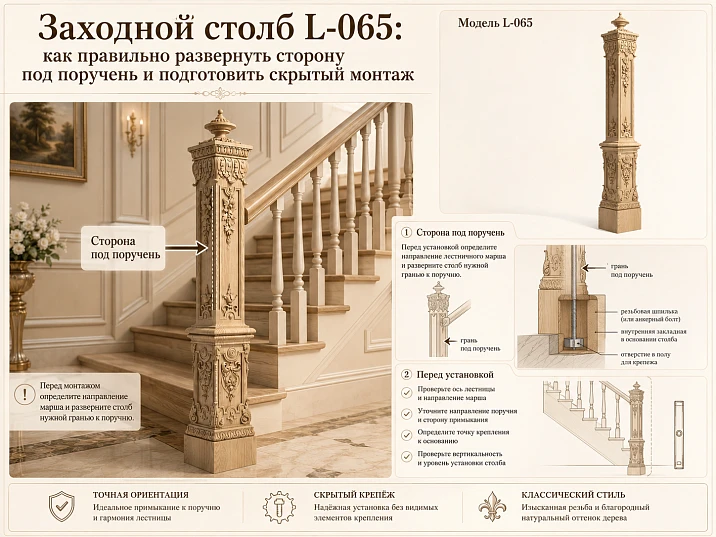
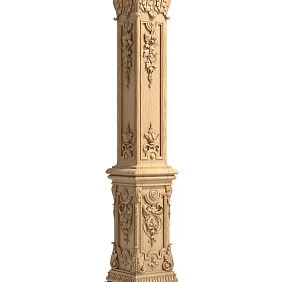
It helps to assemble an expressive and structurally clear beginning of the railing: one face is prepared for the handrail to meet, embedded inserts are provided inside, and the fastening is hidden under a removable top. Before ordering, you need to determine the rotation of the post on the plan, choose the quality of sanding, and separately prepare the mounting hardware.
Buy starting post L-065
The starting post is the first large detail that a person sees at the staircase. It receives the handrail, forms the beginning of the railing, and sets the scale of the entire structure. Therefore, buying the L-065 post is not just choosing a beautiful carved product from a photo. The buyer acquires the central element of the stair assembly, which must match the direction of the flight, the height of the handrail, the base, the balusters, and the future finishing.
L-065 has an important feature: one side differs in the composition of the ornament and is intended for attaching the handrail. The article itself is not divided into left and right variants. The direction is set by rotating the same product. If you do not mark the working face on the plan before installation, the post can be installed with the correct article but the wrong side. After anchoring, such an error turns into dismantling, re-marking, and the risk of damaging already finished elements.
It is beneficial for the buyer to resolve the issue not on site, but before ordering. You need to open the drawing in advance, place L-065 on the plan, show the direction of ascent, determine the point where the handrail arrives, check the base, and compile a separate list of fasteners. Then the order turns into a ready specification, not a set of parts whose compatibility has to be figured out during installation.
Why L-065 is worth buying as part of a staircase system
The main reason to choose L-065 is the ability to get a ready-made carved starting post with a pre-designed connection logic and hidden fastening. Making such an element yourself would require separate design of the body, carved decor, internal inserts, a removable top, and a place for the handrail. The buyer essentially receives the base of a complex assembly and can focus on correctly selecting the handrail, balusters, fasteners, and finishing.
The post does not replace the engineering calculation of the staircase, but it significantly simplifies the configuration. Its size, design, and working edge position are known in advance. This allows you to create a plan, prepare the installation site, check the cut, and coordinate installation before product delivery. For a private customer, this reduces the risk of rework. For a furniture or staircase workshop, it simplifies the transfer of the project between the designer, production, painter, and installer.
L-065 is especially useful where the start of the flight should look not like a random support, but like a complete architectural point. The large carved body connects the bottom step, handrail, and a row of balusters. This makes the railing perceived as a single system, rather than three independently purchased groups of parts.
To compare the model with other solutions, it is useful for the buyer to open the catalog, which presents buy wooden posts. The category helps to assess the difference between starting and support models, calm and carved options, and then return to L-065 with an understanding of its scale and purpose.




What is confirmed for the L-065 post
| Parameter | Confirmed value | What this means for the buyer |
|---|---|---|
| Article number | L-065 | In the order, you must specify exactly this article number without adding the letters L or R |
| Parameter A | 1444 мм | The purpose of the dimension arrow is checked against the current drawing |
| Parameter B | 200 мм | Large transverse dimension requires checking the step, platform, and clearance |
| Parameter E | 1008 мм | Cannot independently designate as mounting height without reading the DWG |
| Parameter F | 1145 мм | The value is transferred to the section only after checking the designation |
| Material | Beech | The current product table confirms the letter version |
| Preparation | For enamel | The column is selected for subsequent cladding finish |
| Sanding | "Standard" or "Prestige" | You can choose the preparation level based on workshop capabilities and finish requirements |
| Construction | Hollow, with internal embedded inserts | Fasteners work along the intended axis, not through a random decorative wall |
| Recommended installation | Metric stud M12 | The stud length and anchor type are determined by the base and connection |
| Top access | Removable top | Allows covering the nut while maintaining serviceability |
| Primary application | First, starting post | Forms the beginning of the stair railing |
| Production | Custom Order | Project parameters must be agreed upon before ordering |
| Mounting hardware | Not included in the set | Anchor, stud, washer, and nut are included in a separate list |
This table is important specifically from a commercial point of view. It separates what the buyer receives with the product and what needs to be selected additionally. This makes it easier to assess not only the price of the post, but also the cost of the entire assembly: the handrail, mounting hardware, balusters, finishing, and labor.
Before paying, it is worth looking at drawing L-065 and checking how exactly A, B, E, and F are marked. The dimension line by itself does not indicate which mark refers to the overall dimension, working level, or junction zone. The buyer needs not a set of numbers, but an understanding of how the product will fit into a specific staircase.
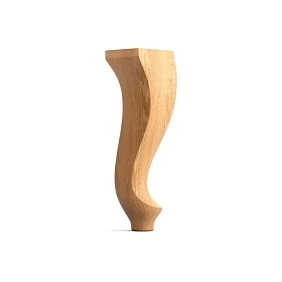
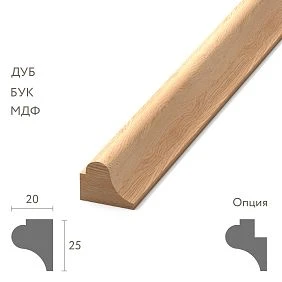
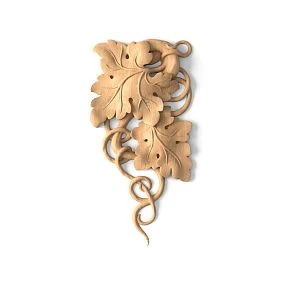
Our factory also produces:
What is included in the purchase and what needs to be sourced separately
| The buyer receives with L-065 | Not included automatically | Why this needs to be decided in advance |
| One carved post | Handrail | The profile and end of the handrail must align with the arrival point |
| Hollow wooden structure | Anchor for the base | The anchor type depends on concrete, wood, embedded, or combined base |
| Internal embedded parts | M12 stud | Length is determined by actual assembly |
| Removable top | Washer and nut | Their parameters are coordinated with the mounting assembly |
| Modified edge for the handrail | Markup on the plan | A turn cannot be reliably defined by the phrase "handrail on the right" |
| Beech finish | Ready-made paint | The post is supplied with preparation for enamel, and the finish is chosen by the project |
| Selected sanding | Installation on site | Installation requires checking the base, verticality, and connection to the handrail |
This configuration is beneficial for a buyer who wants to control the look and installation of the staircase themselves. You can choose the enamel color to match the interior, agree on the handrail profile, and select fasteners for the actual base, rather than accepting a universal set that may not fit.
At the same time, this freedom requires discipline. You cannot assume that after ordering L-065, it will only need to be placed on the step. A proper purchase includes the post itself, a suitable handrail, balusters, mounting hardware, finishing materials, and a clear installation plan. That is why, for a complex project, it is wise to immediately select components for a wooden staircaseand not return to the catalog after each detected missing item.
Get Consultation
L-065 has one article number, but there is a working direction
Buyers often expect to see the letters L and R in the name of a directional product. L-065 does not have such a division. It is one product article that can be physically rotated around a vertical axis. However, not all four faces can be considered identical: one side has a modified ornament composition and is intended for the handrail approach.
That is why you cannot order a "left L-065" or a "right L-065." Such names create a false expectation of two mirror product items. The correct wording is different: L-065 is installed at the beginning of a specific flight, and the working face is turned toward the handrail approach point indicated on the plan.
For comparison, it is useful to study the material about when the direction is part of the post SKU. For models L-003L and L-003R, the direction is fixed in the designation itself. For L-065, the direction arises from the design rotation of a single product. This difference affects ordering, warehouse labeling, and installation.
Purchasing L-065 is justified when the designer wants an expressive carved post without needing to select a separate mirror article. But along with this, they must pass an unambiguous diagram to the installer. If the diagram is absent, the universality of rotation turns from an advantage into a source of error.
Human rule of choice: first the handrail, then the post rotation
Rotation cannot be determined only by how the post looks more beautiful in the visualization. The working side is connected to the handrail, so first you need to understand the direction of the flight and the geometry of the railing. After that, the point where the handrail approaches is marked on the plan, and the modified face of L-065 is turned toward it.
This rule is useful to the buyer for three reasons. First, the handrail will not end up on the side where the carving does not provide for a connection. Second, the installer will not look for a mounting point on a finished painted product. Third, the designer will be able to assess in advance which faces are visible from the hall, from the bottom step, and from the side of the room.
Before ordering a post, you should choose a wooden handrail for L-065. The category presents different profiles and related elements. Choosing a category does not mean that any handrail is automatically compatible with L-065: you need to check dimensions, end shape, flight angle, and connection method. However, it is more advantageous for the buyer to resolve these issues simultaneously, because changing the handrail profile can affect the arrival point and post preparation.
Why the words "left" and "right" are not enough
The phrase "the handrail comes from the right" seems clear only until different project participants look at the staircase from different sides. For a person at the bottom step, the right side is one thing. For an installer standing at the top, it is another. On an architectural plan, the direction may be perceived along the ascent, while in the workshop the product lies horizontally.
Reliable marking should do without words that depend on the point of view. The plan shows:
-
an arrow indicating the direction of ascent;
-
the flight number;
-
the post number;
-
the outline of the base;
-
working face L-065;
-
handrail arrival point;
-
position of the removable finial;
-
main viewing side.
This scheme can be passed to the manager, production, and installer without verbal explanations. The buyer gets an additional benefit: they don't have to be present at every project handover and repeat what they meant.
It is especially important to mark the direction before installing the anchor. The anchor and stud set the axis of the node. After drilling the base, the possibilities for movement are sharply reduced. If the position of the working face is only determined after anchoring, a beautiful column may require dismantling or an unfortunate compromise with the handrail.
What the L-065 rotation card looks like
| Field | What to record | Why this matters to the buyer |
| Joint number | For example, ST-01 | Helps link packaging, plan, and installation |
| Article number | L-065 | Eliminates confusion with similar products |
| Location | Floor, first step, landing | Defines the base and reference |
| Direction of ascent | With an arrow | Removes ambiguity of the words 'left' and 'right' |
| Working edge | With an arrow toward the handrail | Shows product spread |
| Handrail height at arrival | By section | Allows checking the joint before finishing |
| Handrail profile | Article and cross-section | Connects two purchases into one node |
| Base | Concrete, wood, embedded part, and other | Needed for anchor calculation |
| Top access | Save | Reminds not to irreversibly seal the top |
| Fastening | Separate statement | Excludes the expectation that it is included in the delivery |
| DWG version | Date or number | Protects against installation using an outdated file |
This card is not unnecessary bureaucracy. It saves time on site and helps order L-065 with clear context. If a customer asks for consultation, the manager sees not an abstract "need a post for the stairs" but a specific location, direction, and set.
For complex geometry, you can prepare an installation map for L-065. This service is especially useful for stairs with a turn, multiple flights, non-standard start, or decorative finish that cannot be corrected after painting.
How to read dimensions 1444 × 200 × 1008 × 1145 mm
The card specifies parameters A, B, E, and F. A dangerous mistake is to automatically call A the total height, B the width, E the handrail height, and F the installation mark without opening the drawing. The letter designations only make sense together with the dimension arrows on the current DWG.
The verification procedure is simple:
-
open the drawing;
-
find the front and side views;
-
see from which points the arrows A, B, E, and F originate;
-
determine the outer contour of the column;
-
find the levels of the decorative parts;
-
understand which marks are needed for the handrail and the base;
-
transfer them to the staircase section;
-
save the file version along with the order.
It is important for the buyer not just to know that parameter B equals 200 mm. It is necessary to check whether the base fits on the first step or landing, whether it conflicts with the baseboard, wall, and edge of the flight. A large size creates an expressive overhang but requires real space.
To work with source files, you can download drawings of STAVROS staircase elementsThe drawing is needed not only by the installer. The designer uses it for visualization, the painter — to understand available surfaces, and the client — to check that the selected column really fits the scale.
The arrival point of the handrail determines the entire assembly
The handrail should not just touch the post. The connection must look natural, maintain a comfortable grip height, and not damage the carved ornament. For this, the slope of the flight, the height of the railing, the profile of the handrail, the shape of the end, and the position of the working edge are checked.
If the handrail comes too high, it may cross the decorative part or fall into an inconvenient zone. If too low, the railing line breaks. If the handrail end is wider than the prepared area, the connection looks random. If the flight angle is not accounted for, a tight fit may not be achieved.
It is beneficial for the buyer to resolve the connection of the post and handrail with one design action. Instead of buying L-065 "for the future," it is better to immediately determine the specific profile. For example, you can check the profile and dimensions of the PR-001 handrailThe related product card helps compare cross-sections and lengths, but final compatibility is still confirmed at the joint.
This approach provides commercial benefit: the buyer assembles not individual parts, but a complete set of "post — handrail — balusters". There is less risk that after delivery you will have to change the profile, refine the thread, or move mounting points.
L-065 and PR-001: why the related product should be checked, not taken automatically
The presence of PR-001 among related products shows a logical direction for configuration, but does not replace verification. The handrail has its own cross-section and length options. A specific staircase has its own angle of ascent, railing height, and end connection method.
Before placing a joint order, the following are agreed upon:
-
joint height;
-
profile width;
-
end shape;
-
march angle;
-
length of the straight section;
-
position of the under-rail strip;
-
material and finishing system;
-
sequence of test assembly.
The buyer should perceive PR-001 not as a mandatory addition by default, but as one of the options that is convenient to check next to L-065. If the profile fits, ordering two parts in one system simplifies finishing and color coordination. If it does not fit, the railing category allows selecting another option before purchase, rather than after an unsuccessful fitting.
The detailed selection logic is revealed in the material about how to match the railing with posts and balusters. Such interlinking is useful for the buyer: the L-065 card answers the question "what to buy," and the expert article helps understand how to assemble the fence without inconsistency.
The hollow construction is not a weak empty shell
The word "hollow" is sometimes mistakenly perceived as a sign of a decorative part without a serious mounting unit. Inside L-065, embedded plates with through holes are provided. The load must be transferred through a calculated system, not through a random point of the decorative wall.
This gives the buyer two advantages. The first is the ability to hide the fastening inside the voluminous carved body. The second is access to the top fixation through a removable cap. As a result, only wood and carving remain visible, and the nut and washer do not spoil the appearance.
But the hollow structure requires precision. You cannot drill into any convenient face, add fasteners on site, or treat the decorative shell as an independent load-bearing zone. The stud axis, internal inserts, and base must work together. Additional holes are coordinated according to the drawing.
Therefore, purchasing a ready-made L-065 is more cost-effective than attempting to assemble a similar housing around a random beam on your own. The finished product already includes the logic for hidden access and reinforcement. The buyer only needs to correctly calculate the base and avoid damaging the structure during installation.
How hidden mounting via M12 stud works
The installation scheme at the project level looks like this:
-
the exact axis of the column is determined;
-
the base is checked;
-
the anchor is calculated and installed;
-
the M12 stud is mounted;
-
L-065 is placed onto the prepared axis;
-
a washer and nut are installed on top;
-
the verticality, rotation, and handrail alignment are checked;
-
The top node is closed with a removable finial.
This is not a universal step-by-step instruction for any object. The length of the pin, the anchoring depth, the washer dimensions, and the fixing method depend on the base, the actual assembly, and the calculation. Different solutions are used for reinforced concrete, a wooden step, and a reinforced embedded part.
It is important for the buyer to understand in advance that the hardware is not included in the kit. Then the cost and installation time do not become a surprise. A separate fastener list is included in the order, and the installer is given a drawing of the base.
The commercial meaning of the hidden node is obvious: the buyer gets a neat appearance without external plates and visible fastener heads. But beauty is achieved not by the absence of engineering, but by the fact that the engineering part is hidden inside and accessible for maintenance.
Why a removable finial is needed
The finial completes the silhouette of the post and simultaneously covers the top nut. Its removability is not a minor technical detail, but a practical advantage for the entire service life of the staircase.
Through the top access, you can:
-
check the condition of the nut;
-
perform maintenance of the joint;
-
tighten the connection if necessary;
-
inspect the threaded part;
-
gain access without damaging the carved housing;
-
keep a clean appearance after the work.
It is not beneficial for the buyer to glue the finial with an irreversible compound just to quickly finish the installation. If access is needed later, the finish or the part itself will have to be damaged. The method of securing the finial should hold it in service but allow for maintenance.
During finishing, it is also important not to flood the joint with a thick layer of enamel and not turn the disassemblable unit into a monolith. A test assembly before painting shows how the finial is removed and installed, whether it touches the adjacent thread, and whether access to the tool remains.
How to choose fasteners and not buy an unsuitable set
The card recommends a metric M12 stud, but it does not provide a universal set for any base. This is fundamentally correct: the same anchor cannot work equally well in reinforced concrete, a wooden step, a hollow structure, or a pre-prepared embedded part.
| Position | Quantity | Who determines | What to check |
| Anchor | As per project | Engineer or installer | Base material, embedment depth, edge distances |
| Stud M12 | By node | Installer | Working length, thread reserve, nut position |
| Washer | By node | Installer | Bearing diameter and compatibility with embedded part |
| Nut | By node | Installer | Thread type and access under the cap |
| Locking compound | By base | Installer | Compatibility with materials and application conditions |
| Thread protection during finishing | According to technology | Painter and installer | Possibility of subsequent assembly |
| Base template | 1 | Designer | Axis, contour, direction of the working face |
It is useful for the buyer to order fasteners after the base and actual dimensions of the assembly are known. Buying a pre-assembled "universal kit" in advance can lead either to insufficient stud length, or to an excessive protrusion, or to an unsuitable anchor.
At the same time, you should not postpone the issue until the day of installation. The right moment is after the drawing is approved and before the column is finished. Then you can do a trial assembly, protect the thread, and make sure that the cap covers the assembly.
Different bases require different solutions
Reinforced concrete
A concrete base can provide rigid fixation, but requires checking the distance to the edge, reinforcement, cladding, and anchor depth. You cannot drill just along a nice axis on the plan without ensuring there are no constraints inside.
Wooden first step
The step itself is not always a sufficient load-bearing base. You need to understand its thickness, structure, presence of a riser, and reinforcement. Sometimes the load must be transferred to a pre-prepared embedded element.
Landing
On the landing, it is important to consider the finished floor, baseboard, edge of the opening, and direction of movement. The base can be concrete, wooden, or combined.
Already cladded surface
Drilling after laying stone, tile, or finished flooring increases the cost of mistakes. The layout and anchor scheme must be approved before work begins. Otherwise, damage to the finish will cost more than the fastener itself.
L-065 suits a buyer when they are ready to connect a beautiful product with a properly prepared base. If the base is unknown and access to it is closed, an inspection and project are needed first, not a random purchase of an anchor.
Why it is more advantageous to order L-065 before starting the finishing work on the staircase
An early-stage order gives time to check dimensions, rotation, and mounting while steps and walls can still be prepared without damaging the finish. The designer can plan reinforcement, the installer can set the axis, and the painter can choose the painting sequence.
If the column is purchased after all work is completed, the choice is limited to the existing geometry. It may turn out that the base is not reinforced, the handrail fits another face, and the large size B conflicts with the edge of the step. Then a beautiful product has to be adapted to an incorrectly prepared location.
The commercial reason to buy L-065 in advance is not urgency, but reducing the overall project cost. The column itself becomes the starting point for the handrail, balusters, embedded parts, and finishing. The earlier this point is known, the fewer random reworks.
"Standard" or "Prestige": which option to buy
Both preparation levels belong to the same article, but suit different work scenarios.
| Criterion | "Standard" | «Prestige» |
| Basic preparation | Machine | More detailed manual finishing |
| Who chooses | Workshop with its own preparation cycle | Customer who wants to reduce manual finishing of complex carving |
| Work before enamel | Additional processing may be required | Preparation volume is usually lower |
| Surface inspection | Performed by a painter according to their technology | Especially useful for close viewing |
| Economics | Rational when you have your own craftsman | Rational when finishing labor intensity matters more than the base price difference |
The buyer should not choose "Prestige" just as a more beautiful word or "Standard" only to reduce the initial cost. It is necessary to consider who will prepare the carving for enamel. If the workshop still performs a full cycle of sanding and priming of all parts, "Standard" may be a working choice. If a neat surface is required and there is no desire to pay for lengthy manual finishing on site, "Prestige" reduces the volume of subsequent operations.
On the quality page, you can select L-065 sanding for enamel and understand the differences in preparation levels. It is important to agree on the same approach for balusters and other carved elements, otherwise one part of the railing will require noticeably more painting work.
Why the buyer needs exactly beech for enamel
The current product table confirms the L-065 execution in beech and preparation for enamel. The article cannot promise an oak version until it is confirmed by the product card. Beech is logical for opaque finishing: after priming and painting, the carved silhouette comes to the forefront, not the contrast of the wood texture.
For the buyer, this means freedom of color. The post can be included in a white railing, matched to walls, doors, or furniture, or use complex colored enamel. However, the result depends on the painter's technique, a test sample, and uniform preparation of the entire set.
Buying L-065 separately and preparing balusters and handrails in a different system is risky. Even the same color code can look different on surfaces with different sanding, primer, and layer thickness. It is more advantageous to create a unified technical specification for the entire set.
Finishing before or after installation
There is no universal answer. The decision depends on access to the fastening, the workshop's capabilities, and the risk of surface damage.
Pre-finishing
It is convenient to paint the post in the workshop, where dust, temperature, and lighting are controlled. The carved relief can be treated from all sides. But mounting surfaces, the stud thread, and the top access area must remain functional. After installation, local damage may occur that will need to be repaired.
Finishing after trial assembly
First, the base, stud, verticality, rotation, and handrail are checked. Then the product is removed or protected, and the finish is applied. This option reduces the risk of discovering incompatibility after painting but complicates logistics.
Combined approach
The main preparation and painting are done in advance, and after installation, minor traces of work are eliminated. For a complex carved product, this is often a rational scenario.
It is important for the buyer to include the sequence in the order and contract with the craftsmen. Otherwise, the installer may think the column will arrive finished, and the painter may think it will be installed after painting. Inconsistency leads to downtime.
How to mark L-065 on site
On the packaging and the rear diagram, the following should be indicated:
-
article L-065;
-
node number;
-
the flight number;
-
direction of ascent;
-
working edge arrow;
-
mark "top";
-
sanding quality;
-
finish status;
-
need to preserve access through the top finial.
Marking is especially important if the project has several stair elements or the column is stored separately from the plan. It should not be applied to the face carving with a permanent marker. It is better to use a packing sheet, tag, and diagram.
For the buyer, marking means control over the order after delivery. Even if installation is done by another team, the product does not lose its project reference.
What to buy together with L-065
The column reveals its value only as part of the railing. Therefore, when ordering, you need to evaluate not the individual card, but the entire set.
| What to add | Why is this needed | Commercial transition |
| Wooden handrail | Forms a continuous grip line and connects with the working edge | choose a wooden handrail for L-065 |
| Handrail PR-001 | One of the accompanying options to check by profile and size | check the profile and dimensions of the PR-001 handrail |
| Balusters | Fill the row between posts and maintain the fence style | select components for a wooden staircase |
| Handrail support strip | Helps assemble the selected railing and baluster system | Checked in the railing category |
| Caps and additional posts | Finish turns, landings, and end points | buy wooden posts |
| Anchor, M12 pin, washer, and nut | Form a hidden mounting assembly | Selected separately based on the base |
| Materials for enamel coating | Ensure uniform color and wood protection | Coordinate with the painter |
| Mounting map | Connects the turn, base, and handrail entry | prepare an installation map for L-065 |
It is beneficial for the buyer to compile this list before payment. This way, they see the real budget for the stair railing and can order compatible wooden elements as one system. Reordering after a few months increases the risk of differences in preparation, timelines, and finishing organization.
How to assemble a post, balusters, and handrail into one purchase
First, the railing architecture is determined: where the flight begins, how many posts there will be, how the balusters run, and where the handrail ends. Then L-065 is selected as the starting element and tied to the first point. After that, the handrail profile and baluster model are chosen.
The sequence is beneficial because each subsequent purchase is checked against the already selected node. The handrail does not exist separately from the working face of the post. Balusters are not chosen only by design—their height and installation method must support the handrail line. The finish is set for all wooden parts at once.
A practical scheme is revealed in the article about how to assemble posts, balusters, and handrail into one system. After reading, the buyer can go to the catalog not to browse individual beautiful products, but with a clear list.
<div style="border:1px solid #d8d2c8;padding:22px;margin:24px 0;background:#faf8f4;"> <strong>Assemble the complete railing set before ordering.</strong><br><br> Compare starting posts, select a handrail and balusters, then coordinate the material, sanding, and finish. The catalog helps you move from a single L-065 to a complete system for the entire flight.<br><br> <a href="https://www.stavros.ru/products/izdeliya-iz-massiva/komplektuyushchie-i-elementy-dlya-lestnits/stolb...; style="display:inline-block;padding:12px 20px;background:#2f2923;color:#ffffff;text-decoration:none;font-weight:700;">Go to the wooden posts catalog</a> </div>
When L-065 is especially beneficial for the buyer
A new staircase is designed before finishing
This is the most convenient scenario. The base can be reinforced, the handrail can be tied to the section, and the working edge can be applied to the plan. The buyer uses all the advantages of the finished product without forced rework.
A striking first post is needed
L-065 has a large scale and carved character. It suits projects where the start of the flight should be a noticeable architectural element, not a minimalist post.
The railing is painted with enamel
The confirmed beech version under enamel allows the post, balusters, and interior to be linked with a single color.
Concealed mounting is required
Internal brackets, M12 stud, and a removable finial allow the main hardware to be hidden from the visible area.
The project is assembled from ready-made elements.
The buyer does not need to develop a complex carved post from scratch. They choose a ready-made base and equip it with a handrail, balusters, and installation.
When it is better to look at other posts in the catalog
L-065 should not be purchased just because it is the most expressive in the photo. Another model will be more reasonable if:
-
the staircase needs a calm, modern post without elaborate carving;
-
there is not enough space on the first step for the 200 mm dimension;
-
the handrail cannot be attached to the working edge;
-
the project requires a different material or a transparent finish not confirmed by the product card;
-
The base cannot be prepared for a hidden node;
-
The large scale conflicts with thin balusters and a narrow flight;
-
An article with an explicitly specified left or right direction is needed;
The staircase is visible from the hall
The rotation of the ornament is of particular importance. The working edge must meet the handrail, but the other visible sides are also assessed from the main viewpoints.
The railing is assembled by the contractor after the house is finished
The buyer especially needs an installation map. Verbal instructions and photos will not replace a plan, because the cost of a mistake includes damage to the finished floor and enamel.
Mistakes that make the purchase more expensive
Ordering a post without a selected handrail
The handrail determines the connection point. Its late selection may require a compromise fit.
Select the spread on the object "in place"
By this point, the anchor may already be installed and the column painted. Correction options are limited.
Write to the installer "handrail on the right"
Without the direction of ascent, the phrase is ambiguous.
Determine the working face from the photo
The angle and rotation of the image do not provide a design reference. A drawing is needed.
Consider the fasteners included
The absence of the anchor and stud will be discovered on installation day, leading to downtime.
Buy a universal anchor in advance
It may not match the base.
Seal the finial
The buyer loses service access and risks damaging the product during future maintenance.
Paint the threaded assembly before fitting
Enamel can interfere with assembly, and correction will damage the finish.
Do not sand the entire set together
Different preparation will increase the volume of painting work and may produce an uneven surface.
Order only based on the price of the post
The real cost of the solution includes the handrail, balusters, fasteners, finishing, and installation.
Why the finished L-065 is better than a random carved blank
A random blank may have a suitable appearance but not account for the handrail approach, internal inserts, and hidden top access. Then the craftsman has to independently design the mounting inside the decorative housing. The cost of such modification is difficult to predict, and responsibility is distributed among several contractors.
L-065 already has confirmed structural logic. The buyer knows that one face is connected to the handrail, embedded inserts are provided inside, an M12 stud is recommended, and the top nut is covered by a finial. This does not cancel the project, but gives the designer a clear starting part.
The finished product is also more advantageous in terms of the external result. The thread, proportions, and finial are initially assembled into a single image. There is no need to look for a separate cap, connect random overlays, or try to replicate the ornament on a homemade body.
How to place an order for L-065 without unnecessary correspondence
Before contacting, prepare:
-
article L-065;
-
quantity;
-
dimension line 1444 × 200 × 1008 × 1145 mm;
-
selected sanding;
-
specification "beech, under enamel";
-
the flight number;
-
plan with direction of ascent;
-
working edge arrow;
-
selected handrail;
-
height of the arrival point;
-
Base type;
-
fastener status;
-
finishing requirements;
-
the need for an installation map.
Example wording:
A starting post L-065 is required, beech, prepared for enamel, sanded "Prestige", quantity — 1 pc. The post is installed at the beginning of flight No. 1. The direction of ascent and the face where the handrail arrives are indicated on the attached plan. The base is reinforced concrete with a finished cladding. The handrail is selected from the category of wooden handrails; the profile and junction point are attached. Please confirm the current DWG and the scope of supply. The anchor, M12 stud, washer, and nut are supplied separately.
Such a request shows the seller and designer that the buyer understands the structure. Issues are resolved before manufacturing, not after delivery. If some data is not yet known, this is not a reason to fill fields with random values. It is better to directly indicate which parameters need to be confirmed and attach a staircase drawing.
For a commercial order, it is especially useful to separate three documents: the specification of wooden elements, the installation list, and the finishing map. The first will include the post, handrail, and balusters. The second will include the anchor, stud, washer, nut, and process materials. The third will include sanding, primer, enamel, test color sample, and the sequence of work. This separation helps to understand the real price of the finished railing and not expect that one product card automatically includes everything needed.
How to buy L-065 on STAVROS and move from a product to a complete set
The buyer can start with the product card and Buy starting post L-065. In the card, you need to check the current price, parameters, sanding quality, drawing, and manufacturing conditions.
The next step is not to close the site after selecting one item, but to go to the category. The catalog allows you to compare the scale of L-065 with other models and make sure that the carved starting post really matches the staircase. If the choice is confirmed, add the handrail, balusters, and other elements to it.
Practical purchase route:
-
open card L-065;
-
check current DWG;
-
select "Standard" or "Prestige";
-
mark the working edge on the plan;
-
go to the post catalog and compare alternatives;
-
open the railing category;
-
check PR-001 or another profile;
-
select balusters and additional posts;
-
create a separate fastener list;
-
pass the plan and specification to the manager.
<div style="border:1px solid #d8d2c8;padding:22px;margin:24px 0;background:#faf8f4;"> <strong>Don't limit yourself to one product — check the entire range of posts.</strong><br><br> The catalog helps compare L-065 with more subdued or compact models, choose support posts for the platform, and assemble a complete fencing set.<br><br> <a href="https://www.stavros.ru/products/izdeliya-iz-massiva/komplektuyushchie-i-elementy-dlya-lestnits/stolb..."; style="display:inline-block;padding:12px 20px;background:#2f2923;color:#ffffff;text-decoration:none;font-weight:700;">Choose wooden posts in the catalog</a> </div>
The advantage of this route is that the buyer makes a decision based on the system, not a single photo. They understand why they are purchasing exactly L-065, how the post will connect to the handrail, and what additional costs will be required. The catalog also helps to reject L-065 if its scale or design is not suitable. This is also a useful commercial result: the buyer moves to another model within the same product group rather than leaving to search for a random analog without verified dimensions.
Why transitioning to the catalog is more important than repeatedly urging to buy one SKU
The L-065 card is needed to study a specific model, but the category answers a broader question: which post truly suits this staircase. It is useful for the buyer to see other sizes, shapes, and levels of decorativeness nearby. The comparison confirms the choice or promptly shows that a different option is needed.
The catalog also helps to form a set by function. The starting post is placed at the beginning of the flight, but the staircase may need posts on the landing, at the end of the handrail, or at the turning point. These positions do not have to literally repeat L-065, but they should match it in scale, material, and finish.
Therefore, the article should not just send a person to one card several times. The first block provides a direct purchase button for L-065, and the configuration section encourages moving to the catalog, comparing models, and compiling a list. Such a route is commercially stronger: it increases the likelihood of purchasing not just one part but a complete set, while reducing the risk of an erroneous order.
Acceptance of the post after delivery
Before starting the finishing work, check:
-
article number correspondence;
-
absence of transport damage;
-
thread condition;
-
quality of the selected sanding;
-
removability of the finial;
-
access to the top mounting;
-
presence of a confirmed working edge;
-
dimension correspondence to the drawing;
-
delivery completeness;
-
absence of waiting for fasteners that were not included;
-
matching quantity;
-
project marking.
If a post is ordered together with balusters and a handrail, it is useful to lay out the entire set in one room and compare the surface preparation. This way, differences are detected before priming. It is also worth checking that the documents and drawings correspond to the current version of the product, and that the packaging marking matches the plan of the specific flight.
Acceptance does not mean making independent changes to the design. If the buyer does not understand where the intended mounting axis is located or how the working edge differs, this should be clarified before drilling and painting. Attempting to "figure it out on site" after applying enamel increases the cost of any mistake.
Storage until installation
A wooden carved post should not be left in a damp room, near an open window, a heating device, or on a cold surface. The product is stored under stable conditions, protected from impacts, and the packaging should not be used as a work surface.
A large post should not be supported with its full weight on protruding carved elements. The finial and the set of documents are stored together with the product. The marking of the working edge must remain legible but must not damage the surface.
It is beneficial for the buyer to appoint a responsible person for storage in advance. Otherwise, the designer approves one spread, the warehouse removes the tag, and the installer receives the product without a diagram. Such an organizational error is not related to product quality but can completely devalue the correct model choice.
Test assembly before enameling
Before final finishing, it is useful to assemble the key parts of the assembly without irreversible fixation. The post is installed along the axis, the working edge is checked, the handrail is fitted, access through the finial is assessed, and it is ensured that the fasteners do not conflict with internal elements.
A trial assembly answers several customer questions at once. Is the stud length sufficient? Can a washer and nut be installed? Is the assembly covered by the finial? Does the handrail arrival point align? Does the thread interfere with the tool? Does the rotation look correct from the main viewing points?
This stage saves money because fixing before enameling is usually easier than after it. At the same time, trial assembly should not turn into unauthorized drilling of new holes. All changes affecting embedded parts and the decorative body are coordinated according to the drawing.
FAQ: buyer questions about L-065
What is the purpose of the starting post L-065?
It is installed at the beginning of a stair flight, receives the handrail, and forms the main decorative point of the railing. The purchase is justified when a large carved element is needed that connects the first step, the handrail, and a row of balusters.
Why is the rotation of L-065 important?
One face has a modified composition for the handrail arrival. If the post is rotated incorrectly, the connection and ornament will not be in the design position. After fixing on the stud, correction will require dismantling.
Is there a left and right L-065?
One article number L-065 is confirmed. The direction is set by its rotation on the plan, not by the letters L or R. The formulations L-065L and L-065R should not be used.
What is the size of the post?
The card specifies parameters A = 1444 mm, B = 200 mm, E = 1008 mm, and F = 1145 mm. Each dimension arrow value must be checked against the DWG, not assigned by the order of the numbers.
What wood is L-065 made from?
The current product table confirms beech. This version is designed for subsequent covering finish with enamel.
Can I order an oak L-065?
The provided diagram does not confirm the oak version. Current options should be checked in the product card or clarified with a manager. The article cannot promise a material that is not in the confirmed data.
What finish does the product include?
Preparation for enamel is confirmed. Finished painting is not automatically included. The color, primer, enamel, and application technology are agreed upon separately by the buyer.
What is the difference between "Standard" and "Prestige"?
"Standard" involves machine preparation and may require additional finishing. "Prestige" includes more detailed manual sanding of complex relief and is useful when the volume of subsequent work needs to be reduced.
Is the mounting hardware included in the kit?
No. The anchor, M12 stud, washer, and nut are supplied separately according to the project. This allows the mounting to be matched to the actual base rather than using a universal set.
Why can't I just buy any M12 stud?
The thread diameter does not determine the required length. It depends on the base, anchor, internal structure, and position of the top nut. An unsuitable stud may be too short or interfere with closing the finial.
What is under the finial?
The removable finial covers the top assembly with the washer and nut and maintains access for maintenance. It cannot be turned into an irreversibly glued decorative cap without approval.
How to determine the working side for the handrail?
According to the current drawing and staircase plan. The plan indicates the direction of ascent, the working edge, and the handrail arrival point. A product photo does not replace such marking.
Is it enough to write "handrail on the right"?
No. The wording depends on the point of observation. An arrow on the plan, the flight number, and the designation of the working edge are needed.
Can the handrail be chosen after the post is installed?
This increases the risk of incompatibility. The profile and arrival point should be agreed upon before ordering and anchoring, because the handrail affects the rotation and connection height.
Will the PR-001 handrail fit?
It is listed as an accompanying option, but the specific cross-section, end face, length, and connection angle need to be checked against the project. Automatic compatibility without a cut cannot be promised.
Can a post be installed on a wooden step?
Only possible after checking the step structure and reinforcement. A universal anchor scheme cannot be provided without base data.
Can L-065 be installed on concrete?
The anchor type and embedment depth are determined by a specialist considering the concrete, edge, cladding, and loads. The mere fact of a concrete base does not provide a ready-made scheme.
Does the post need to be painted before installation?
The sequence depends on the technology. It is practical to perform a trial assembly before final enamel or to thoroughly protect installation areas and provide for local touch-ups after installation.
Where can I see other posts?
For comparing sizes and designs, it is worth going to the catalog, where you can buy wooden posts. This helps confirm the choice of L-065 or find a more suitable model.
What to buy together with L-065?
Typically, a handrail, balusters, additional posts, a handrail support bar, mounting hardware, and finishing materials are required. The exact composition depends on the project and the number of flights.
Why is it beneficial to order a complete set at once?
This makes it easier to coordinate the shape, preparation for enamel, timelines, and installation. Ordering individual elements separately increases the risk of mismatches, repeat deliveries, and delays in finishing work.
Where can I check the price of L-065?
The current price and ordering conditions should be checked in the product card. The article should not fix a price that may change.
What to check right before payment
The final check is needed not to repeat the entire article, but to confirm that the customer is ordering exactly the component that was designed. In the product card, the article number L-065, the size line, the beech finish, the selected sanding, and the preparation for enamel are verified. The attached plan should show the direction of ascent and the working edge for the handrail. A separate list indicates that the anchor, M12 stud, washer, and nut are purchased additionally.
You also need to check the selected handrail profile, the installation location of the post, and the type of base. If at least one of these points remains undefined, it is safer to first get confirmation from the drawing and then place the order. This approach does not slow down the purchase but protects it: the post is manufactured for a specific project, so accurate initial information is more important than hasty ordering.
After this check, the customer can confidently proceed to the L-065 product card and then to the catalog of posts and components. They understand what function the product serves, why this particular model is needed, and which items should be ordered together with it.
Conclusion
L-065 should be purchased not just as a large carved post, but as a ready-made foundation for the start of a staircase railing. Its value to the customer consists of an expressive design, a provided edge for the handrail, internal embedded parts, hidden fastening via an M12 stud, and a removable top cap that preserves access to the upper assembly.
An informed order begins with a plan. You need to specify the direction of ascent, turn the working edge toward the handrail, check the dimensions against the current DWG, select the sanding, and prepare the fasteners separately. Then you should move from one card to the catalog, compare posts, select a handrail and balusters, so that the entire staircase assembles as a single system.
At STAVROS, the customer can first Buy starting post L-065, and then open the catalog and supplement it with compatible elements. This approach helps to purchase not random decor, but a clear set for a specific flight of stairs — with a matched handrail, correct turn, and prepared installation.
-