Article Contents:
- Buy wooden stair handrail
- What is a handrail and how is it different from a railing
- Which wooden stair handrail to buy
- Why you need a handrail: the physics of comfort
- How to choose: five questions before ordering
- Types of wooden handrails by profile
- Round wooden handrail
- Semicircular profile: classic in its pure form
- Shaped profile: decorativeness in line
- Rectangular and D-shaped profile
- Solid wood handrail
- Handrail and the entire railing system: how to coordinate
- How to coordinate the handrail with balusters
- How to coordinate the handrail with posts
- Handrail for balustrade
- Wooden handrail for stairs in a private house
- Handrail for painting: when it is the best choice
- Installation of a wooden handrail: key principles
- Installation sequence
- End cut angle
- Wall-mounted handrail fastening
- Carved wooden handrail: when decor is appropriate
- What affects the price of a wooden handrail for stairs
- Mistakes when buying a wooden handrail
- Where to buy a wooden handrail for stairs
- FAQ: popular questions about wooden handrails for stairs
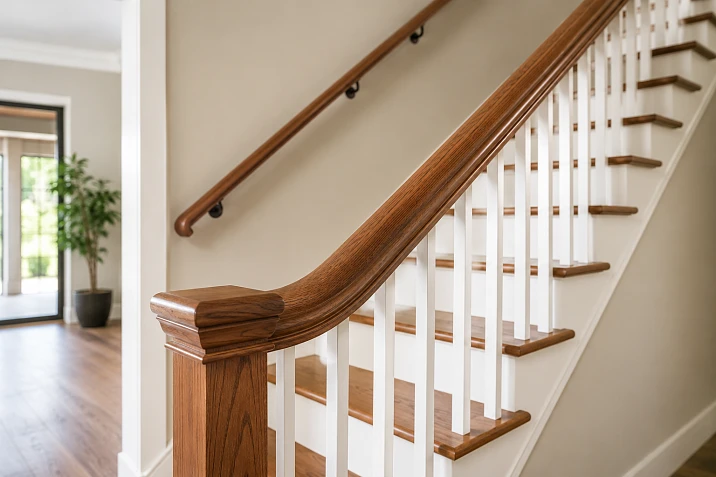
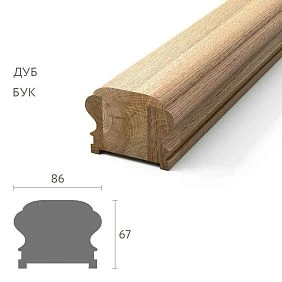
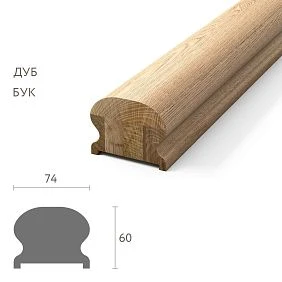
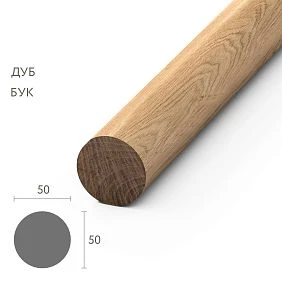
Buy a wooden handrail for stairs
There are details that don't catch your eye, but they determine how you feel in your home. A wooden handrail for stairs is one of them. Your hand touches it at least twice a day: in the morning when going down and in the evening when going up. Multiplied by years of use, that's thousands of touches. And if the handrail is right, you don't notice it. It's just comfortable. Just beautiful. Just in place.
Buying a wooden handrail for stairs is a task that, with the right approach, takes an hour. With the wrong approach, it turns into rework, extra payments, and disappointment. This article is written for those who want to figure it out once and do it right.




What is a handrail and how is it different from balustrades
First of all — terminological accuracy. Many people use the words "handrail" and "railing" as synonyms. This is not the case, and this confusion costs money when ordering.
| Element | Function and place in the system |
|---|---|
| Handrail | The upper horizontal bar of the railing — the one the hand holds onto |
| balusters | Ordinary vertical elements filling the railing |
| Posts for staircase | Support posts at key points: start, end, turns |
| Railing | The entire railing system: handrail + balusters + posts + fasteners |
| Staircase balustrade | Decorative railing with architectural character |
A handrail is just one element, although the most "telling" in terms of convenience. It is responsible for grip, for the safety of ascent and descent, for the visual line of the railing. But without balusters underneath and posts on the sides — it's just a strip.
It is important to understand: buying a wooden handrail for a staircase as a standalone item makes sense only in one case — when the balusters and posts are already in place, and you are only replacing a worn-out or outdated handrail. In other situations, the handrail is ordered together with the entire railing system.
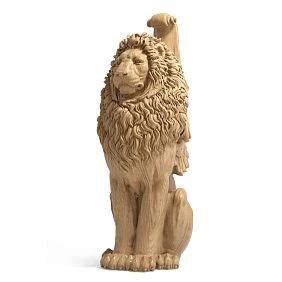
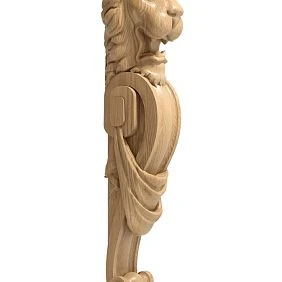
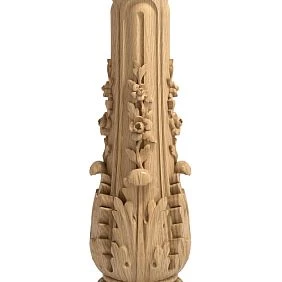
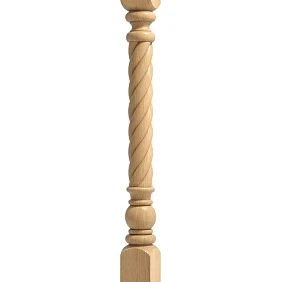
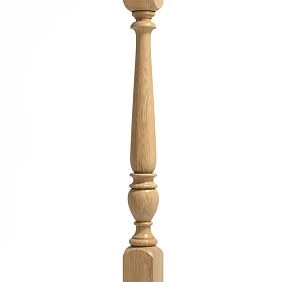
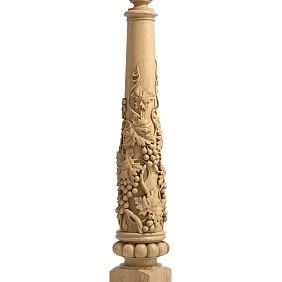
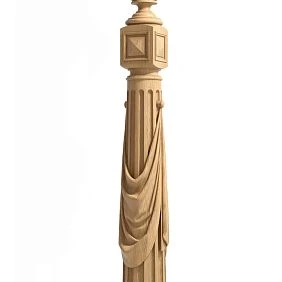
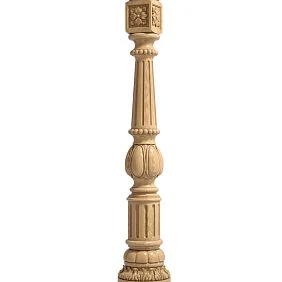
Our factory also produces:
Which wooden handrail for stairs to buy
Buying a wooden handrail for stairs means making several interconnected decisions: choosing the profile, determining the material, agreeing on dimensions, planning the connections with posts, and considering the angle of the flight. All of this is a single chain. A break in any link creates a problem.
Get Consultation
What is a handrail for: the physics of comfort
A wooden handrail for stairs performs three functions simultaneously.
Safety. Support when ascending and descending. In case of sudden loss of balance, the handrail is what the hand grabs. Its shape should ensure a confident, reflexive grip — without needing to look down.
Orientation in the dark. At night, half-asleep — a person instinctively searches for the handrail with their hand. The correct profile shape allows them to find it without disrupting the path of movement.
Aesthetics. The handrail sets the top line of the railing — the one visible from the lower floor, from the hallway, from the living room. This is the visual boundary of the stair railing. An unattractive or disproportionate handrail ruins the impression of the entire staircase.
How to choose: five questions before ordering
What is the length of the flight? The handrail is ordered with a 10–15% margin: the inclined length of the flight is always greater than the horizontal projection.
Are there turns? A turn in the stairs is either a curved wooden element (steam bending) or a composite corner joint. Each turn requires a separate item in the order.
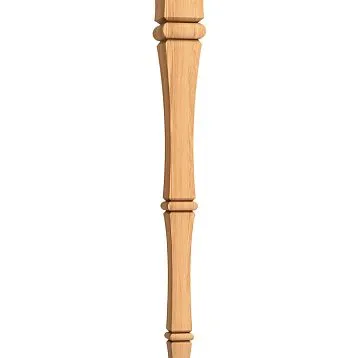
Which balusters and posts have already been selected? The handrail must match them in style, wood species, and scale. A thin, elegant handrail over monumental carved posts of 120×120 mm is a mismatch that ruins the look.
What is the staircase style? Classic — shaped or semi-circular profile. Minimalism — flat or D-shaped. Scandinavian style — rectangular with chamfers. Russian style — a wood-like handrail with warm tinting.
What coating is planned? If tinting is planned — "Prestige" sanding is needed. For painting with enamel — "Standard" with subsequent priming is sufficient.
Types of wooden handrails by profile
The handrail profile is its cross-section, the shape of the transverse cut. It is the profile that determines the comfort of grip and the visual character of the railing. A mistake in choosing the profile is one of the most common when purchasing.
Round wooden handrail
The round handrail is the most versatile and the most ergonomic profile. The cross-section is a regular circle with a diameter of 38–50 mm. The hand wraps around it from all sides, with the thumb and four fingers forming a full ring around it. This is a reflexively correct grip — exactly the one that provides maximum confidence when leaning.
Buying a round wooden handrail for stairs is the optimal solution in the following cases:
-
a staircase in a private home, used daily by people of different ages
-
a staircase to the attic with a steep climb (35–50°)
-
staircase for children and the elderly
-
outdoor stairs for porch and terrace
-
stairs with wall-mounted handrail (wall handrail without balusters)
Buying a round wooden handrail for stairs means choosing safety without compromise. No other profile provides such a reliable grip during emergency braking.
Technical parameters of the round handrail:
-
Diameter: 38 mm (standard), 40 mm, 45 mm, 50 mm
-
Length of one section: from 2 to 6 m
-
Wood species: oak, beech, ash, pine, larch
-
Mounting: into the end of the post, into a groove, via metal connecting elements
Important nuance: diameter 38–45 mm is a comfortable range for most adults. A handrail with a diameter of 50 mm or more already requires effort for a full grip, especially for women's hands and children.
Semicircular profile: a classic in its pure form
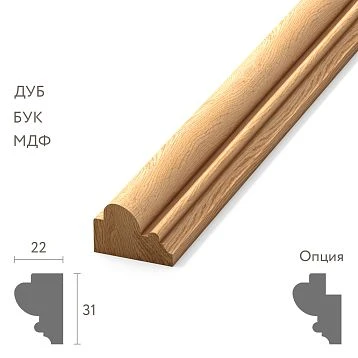
Semicircular handrail — width 50–70 mm, height 30–45 mm, flat bottom base. This is the most common profile for classic staircases in country houses.
The flat bottom base allows for a rigid connection of the handrail to the top end of the balusters or to the sub-baluster rail. The semicircular top part is comfortable for gripping, visually soft and organic.
This profile is the standard for of the wooden balustrade in the classic design. It harmoniously combines with turned balusters, square posts, and shaped finials. The width of 60–70 mm maintains the visual scale with a standard flight width of 800–1000 mm.
Shaped profile: decorativeness in the line
A shaped handrail is a profile with a complex cross-section: wavy transitions, pronounced edges, decorative grooves. It carries not only a functional but also an ornamental meaning: at first glance, it reads as an element of a classic interior.
Used in grand staircases with rich railings: carved balusters with acanthus decor, monumental posts, carved finials.
Important: the shaped profile is more difficult to join. Corner transitions require precise cutting or special curved connecting elements. This must be taken into account during installation.
Rectangular and D-shaped profile
Rectangular handrail (50×30 mm, 60×35 mm) with soft rounded edges — for modern stairs, Scandinavian style, minimalism, and neoclassicism. Visually strict, clear, without unnecessary decorations. The grip is not as enveloping as a round one, but sufficiently confident with a normal step.
D-shaped profile — flat inner side, semicircular outer side. Used primarily for wall-mounted handrails, where the hand touches only the top and side surfaces.
Solid wood handrail
A solid wood handrail is a single piece, turned or profiled from one block. Unlike a glued handrail, where several boards are glued together, a monolithic handrail does not delaminate over time or deform along glue lines.
An oak solid wood handrail is the most durable choice for residential stairs. Oak is dense, hard, and resistant to wear. Its fibrous texture is beautiful under clear oils and tints. An oak handrail does not 'wear out' — it darkens and gains character over the years.
A beech solid wood handrail is uniform, fine-grained, ideal for painting with enamel. A white or colored beech handrail is an aristocratic choice for classic interiors.
An ash handrail is coarse-textured, light, with an expressive fiber pattern. For modern interiors, Scandinavian style, minimalism.
Handrail and the entire railing system: how to coordinate
A wooden handrail for railings is an element that must work as an ensemble. A beautiful handrail over unsuitable balusters is like the right font in a bad layout: it still doesn't work.
How to match a handrail with balusters
Balusters for staircase — ordinary vertical railing elements. Their top end rests against the handrail from below or fits into a groove. The width of the baluster's top tenon is 25–35 mm. Therefore, the width of the handrail's flat base must overlap this tenon on both sides — otherwise the connection will be unreliable.
Style matching:
-
Turned classic balusters → semicircular or shaped handrail
-
Flat balusters in Russian style → rectangular or semicircular handrail without excessive decoration
-
carved balusters with voluminous ornament → shaped or wide semicircular handrail
-
Simple rectangular balusters → D-shaped or rectangular handrail
How to match a handrail with posts
Posts for staircase — support elements into which the handrail fits with its end. It is the post that determines how strong and clean the joint will be.
The width of the handrail should be comparable to the width of the post's top section. Standard post 80×80 mm — handrail 50–70 mm wide. Post 100×100 mm — handrail 60–80 mm. Post 120×120 mm with a monumental profile — handrail 70–90 mm.
If the handrail is noticeably narrower than the post, the upper tier of the railing looks fragile and disproportionate. If it is wider, structural difficulties arise during joining and the visual logic is disrupted.
The mounting joint of the handrail in the post is one of the most critical. Three options:
-
Metal stud — a threaded stud is screwed into the end of the handrail, which enters a blind hole in the post
-
Bolted connection — through the side of the post with the hole covered by a wooden plug
-
Groove connection — the handrail fits into a milled groove in the post with glue
The first method is the most common for factory-made elements. The second is for heavy handrails and monumental posts. The third is for cases where invisibility of the fasteners is important.
Handrail for balustrade
A handrail for a balustrade is a handrail that participates in a decorative architectural system. wooden balustrade — a railing with a pronounced architectural character, in which each element works as part of an ensemble.
In a balustrade, the handrail carries an enhanced decorative load: it is at eye level, its profile is viewed from close range. Therefore, for a balustrade, a handrail with a shaped or enriched profile is chosen — not a minimalist rectangle.
The width of the handrail for a balustrade is from 60 mm. For monumental balustrades with wide spans — 80–100 mm. Such a handrail "holds" the visual weight of the railing and does not get lost against the background of massive posts and rich balusters.
Wooden handrail for a staircase in a private house
A handrail for a staircase in a private house is the most common scenario. This is where most orders are concentrated: country cottages, summer houses, two-story homes.
In a private house, the staircase is a central object. It is visible from the hallway, often from the living room or kitchen-dining room. A wooden handrail on such a staircase is perceived as an architectural detail, not as a utilitarian element.
Three typical configurations:
Straight single-flight staircase. One flight, 8–12 steps, rise 25–35°. Handrail — one section 3–5 m long (along the slope). With one starting and one finishing post. The simplest case for calculation and installation.
U-shaped staircase with a landing. Two flights, intermediate landing, 15–20 steps. Handrail — two inclined sections and one horizontal section on the landing. Three or four turning nodes. Requires precise calculation of each joint.
Staircase to the attic. Steep rise 40–50°, often narrow. Handrail — on one or both sides (if the staircase is against a wall, one handrail is attached to the wall on brackets). For steep flights, a round profile is especially important: it provides a reliable grip with a significant tilt of the body.
Handrail for painting: when it is the best choice
A wooden handrail for painting is a separate category that is underestimated. But in vain. Here's why.
A handrail made of beech wood, painted with white or cream enamel, is a clean, elegant form devoid of the wood's textural randomness. After "Standard" sanding and priming, the surface becomes perfectly smooth. Applying two to three coats of enamel gives the handrail the appearance of a top-tier factory product.
For a classic style in white tones, a handrail for painting is the standard solution. White handrail + white balusters + gold metal details is a style that always works.
Important: for painting, choose a beech handrail, not oak. Oak has a large porous texture that "shows through" even after several coats of enamel. Beech is uniform and fine-grained, providing an ideal surface for opaque coating.
If tinting or clear oil is planned, oak and ash are preferable: their texture is beautiful when exposed.
Installation of a wooden handrail: key principles
Handrail installation is the final operation that determines the overall quality of the entire railing. A poorly installed handrail made of good wood is worse than a well-installed one made of average wood.
Installation sequence
-
Installation of posts at key points: bottom, top, turning points
-
Fastening posts to steps or floor (anchor bolt, threaded rod through a through hole, special base plate)
-
Installation of a handrail base or bottom rail
-
Installation of balusters with a spacing of 120–150 mm
-
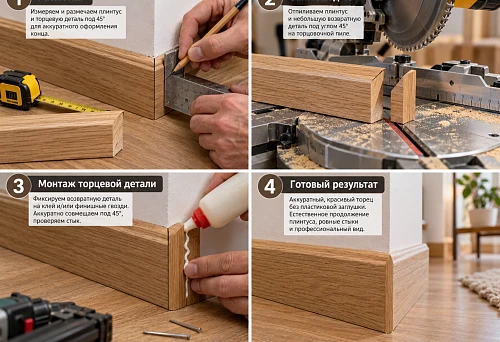
Handrail fitting: check length, end cut angle, horizontality
-
Handrail attachment to posts: stud, bolt, glue
-
Handrail attachment to balusters: through a sub-baluster or into a groove
-
Final sanding of joints and fastening points
-
Applying coating: oil, tinting, or enamel
End cut angle
The ends of the handrail that go into the posts are cut strictly vertically (perpendicular to the post axis), not at the angle of the flight. This is why the handrail 'arrives' at the post at an angle from below — and this is structurally normal.
For joining a horizontal section on a landing with an inclined section of a flight — an S-shaped transition element is made from bent wood or from two corner overlays. This is one of the most labor-intensive installation nodes.
Wall-Mounted Handrail Attachment
If the handrail is installed along a wall (without balusters and posts) — metal wall brackets are used. Bracket spacing — 600–800 mm. The first and last bracket — no further than 200 mm from the handrail end.
For a round handrail — standard semi-circular holders with a diameter matching the handrail cross-section. For a rectangular one — U-shaped or L-shaped brackets.
The material of the bracket should match the style of other staircase fittings: chrome to chrome, bronze to bronze, matte gold to matte gold.
Carved wooden handrail: when decor is appropriate
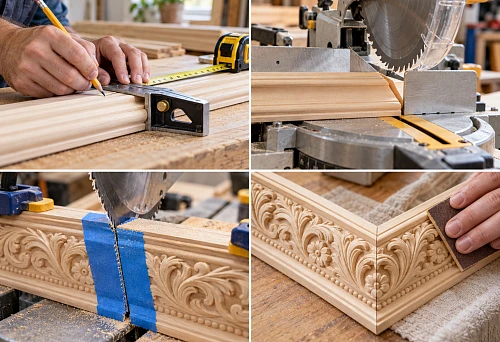
A carved wooden handrail is a rare but very striking solution. Carved wooden decoration on the handrail is three-dimensional carving on the outer side plane: leaves, climbing vines, geometric patterns.
A carved handrail is an element of grand staircases where the decorative program is maximally rich. It is used in combination with carved balusters and monumental carved posts. One carved handrail surrounded by smooth balusters is a decorative conflict that works against the image.
From a practical standpoint: carved relief on the top plane of the handrail is uncomfortable for gripping. Therefore, carving on handrails is traditionally done on the side faces or the bottom plane, leaving the top surface smooth.
What affects the price of a wooden handrail for a staircase
Buying a wooden handrail for a staircase at a reasonable price means understanding what that price consists of. Range: from 800–1000 rubles per linear meter for pine to 8,000–15,000 rubles per meter for figured oak with carving. A 10-fold difference is real, and here's why.
Wood species. Oak, ash are more expensive than beech, beech is more expensive than pine. The difference in price per cubic meter is up to 50–60%. For a 4 m long handrail, this is noticeable.
Handrail length. Sold by linear meter. For a straight flight 3.8 m long — handrail with a margin of 4.2–4.5 m. Cost is proportional to length.
Profile and cross-section. Simple round with a diameter of 38 mm — cheaper. Wide shaped profile 80×45 mm — more complex to manufacture, more expensive. Unique custom profile — calculated individually.
Shape complexity. Straight handrail — standard item. Curved element for a turn — either supplied ready-made from the catalog or bent on a steam press to order. Curved elements are 3–5 times more expensive than straight ones.
Presence of carving. Carved handrail — a separate item with a price that depends on the carving area and ornament complexity.
Preparation for painting. "Standard" sanding — basic. "Prestige" — fine sanding with pore sealing — additional operation.
Number of joints. Each joint assembly — labor and material. Joints on the landing, curved transitions, end caps — all cost money.
Stair turns. Each turn — a separate item: curved adapter, corner element, or joint cover. A U-shaped staircase with two turns requires at least two additional turning elements.
Compatibility with posts. A non-standard post requires individual fitting of the handrail end. This is paid separately.
Delivery. Handrails are long-length goods. Their delivery to Moscow, St. Petersburg, and other regions of Russia by transport companies is calculated by volumetric weight. Consider this in your budget.
Installation. Professional installation of a handrail with balusters and posts — from 10,000 to 40,000 rubles depending on the staircase configuration and region.
Mistakes when buying a wooden handrail
These mistakes happen all the time. Each one leads either to rework or extra costs.
Buying a handrail without considering balusters and posts. A handrail alone is just a strip. Only in combination with balusters и posts it becomes a system.
Not checking the grip comfort. They pick a wide decorative profile, but when climbing daily with bags in both hands, it's hard to grab reflexively. The profile should be tested by hand, not just by eye.
Not measuring the flight length along the slope. They measure horizontally and end up with a handrail that is 400–600 mm too short. A joint in the middle of the flight is a structural and visual defect.
Not accounting for trimming allowance. The ends are cut strictly vertically — this takes 50–80 mm on each side. Plus inevitable trimming waste. Without allowance, the handrail ends up too short.
Forgetting about turns. "We bought a handrail, but on the landing we don't know what to do" — a classic situation. Turn and transition elements are ordered in advance.
Mixing different profiles. The straight section has one profile, the turn element another. This is visible in any lighting. All handrail sections should have the same profile.
Not planning the finish in advance. "Let's paint it later" — and they discover that oak handrail with large pores doesn't take enamel evenly. Choosing the finish is done before ordering, not after installation.
They only compare the price per linear meter. "Here's oak for 1200 rubles, and there for 900." But they don't account for the cost of turning elements, curved adapters, end caps, and installation. The total system cost is the only correct basis for comparison.
Where to buy a wooden handrail for stairs
Buying a wooden handrail for stairs correctly means from a manufacturer with a full range staircase components: handrails, balusters, posts, turning elements, decorative details — all from one source.
STAVROS has been producing wooden stair elements since 2002. The company was founded by artist-restorers with experience on state-significant projects: the Hermitage, Konstantinovsky and Alexandrovsky Palaces. This is not just production — it's an understanding of decorative wood at a level inaccessible to mass manufacturers.
In the STAVROS catalog:
-
straight and curved handrails in several profiles
-
balusters turned, carved, flat — over 50 models
-
posts square, turned, carved — over 30 models
-
turning and transition elements
-
Carved wooden decoration for finials and connection nodes
Buy a wooden handrail for stairs in Moscow, St. Petersburg, or any other city in Russia — through an online catalog with delivery by transport companies. Packaging — corrugated cardboard and bubble wrap, ends — with plugs. Long-length products are delivered without damage.
The STAVROS wooden handrail should be selected together with stair balusters, posts and other stair elements. This makes it easier to assemble the railing in a unified style, avoid installation errors, and get a result that will delight you every day.
FAQ: popular questions about wooden handrails for stairs
Which wooden handrail for stairs should I buy?
The choice depends on the stair configuration, the style of balusters, the type of posts, and the comfort of the grip. For most stairs in private homes — a semi-circular or round profile made of oak or beech. For grand staircases — a shaped profile. For steep flights and outdoor structures — a round profile.
How is a handrail different from a railing?
A handrail is the upper horizontal element of the railing. Balustrade — the entire system assembled: handrail + balusters + posts + fasteners + decor.
When to choose a round wooden handrail?
The round profile is the most comfortable for gripping. It is chosen for steep flights, for the elderly and children, for outdoor stairs and wall-mounted handrails without balusters. Standard diameter — 38–45 mm.
What affects the price of a wooden handrail?
Wood species, length, profile, cross-section, shape complexity, curved turning elements, presence of carving, coating, number of joints, delivery and installation.
Do I need to buy the handrail together with balusters and posts?
Yes — it is strongly recommended. A single manufacturer, a single series, a single material guarantees compatibility in dimensions, style, and installation logic. Incompatible elements from different sources create problems during installation and ruin the visual appearance of the railing.
How to calculate the length of a handrail?
The handrail length is calculated along the inclined flight: √(horizontal length² + flight height²). For a flight 3,800 mm long and 2,800 mm high: √(14,440,000 + 7,840,000) ≈ 4,721 mm. Add 10% reserve — order a total of 5,200 mm.
Which type of wood is best for a handrail?
Oak — for tinting and oil coating, maximum durability. Beech — for painting with enamel, ideal surface. Ash — for modern interiors with open texture. Pine and larch — for outdoor stairs and budget solutions.