























Article Contents:
- Buy components for wooden stairs
- What is included in the components for a wooden staircase
- Balusters
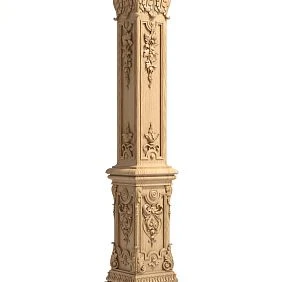
- Stair posts
- Handrails
- Railings and balustrade as a system
- Flat and carved elements
- Balusters, posts and handrails: how to assemble the right set
- How to choose components for the stair style
- Classic staircase
- Baroque and Empire
- Russian style and wooden houses
- How to calculate the number of components for a wooden staircase
- What affects the price of components for wooden stairs
- Mistakes when buying components for wooden stairs
- Where to buy components for wooden staircases
- FAQ: answers to popular questions about components for wooden stairs
Buy components for wooden stairs
A staircase is not just a way from one floor to another. In a house where the staircase is wooden and thought out to the details, it becomes an architectural event. That very place where the gaze returns again and again. But this feeling is not created by chance — it is born from a system: balusters and posts, handrails, railings, carved decor — each element in its place, each in its role, all together — one living structure.
Buying components for wooden stairs means making not one decision, but a whole series: which material, which profile, which style, how to calculate the quantity, how to connect different elements into a single whole. This article is a complete analysis of the topic: from theory to practical calculations and an honest answer to the question "where to buy".
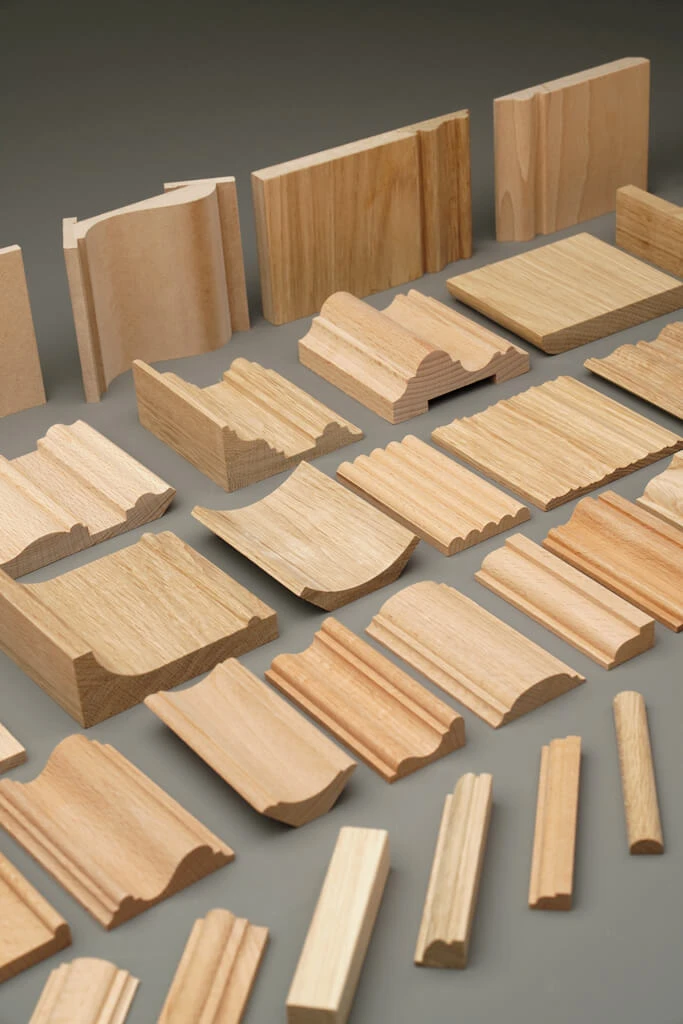
What is included in the components for a wooden staircase
Before looking for where to buy components for wooden stairs, you need to clearly understand what exactly you are buying. Many start with some balusters — and find that the order needs to be placed again: they forgot about the posts, didn't calculate the handrails, missed the fasteners. A stair railing is a system, and it is assembled as a system.
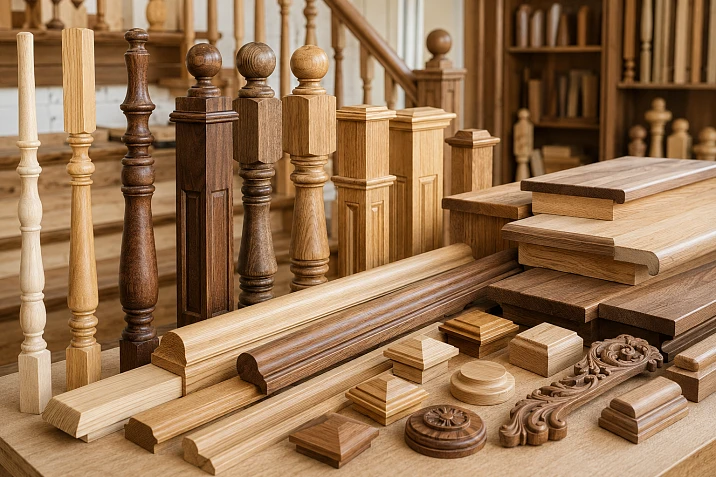
A standard set of wooden components for a staircase includes:
-
Balusters — regular vertical railing posts that form its rhythmic structure
-
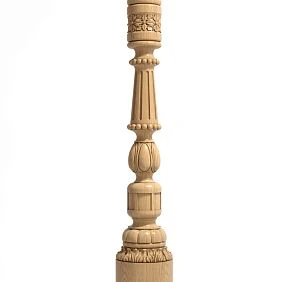
Pillars are load-bearing support elements at key points: the beginning of a flight, the end of a flight, turns, and landings.
-
Handrails are the horizontal top element that rests on balusters and pillars; it is what the hand holds.
-
Railing is the complete guard system: balusters + pillars + handrail.
-
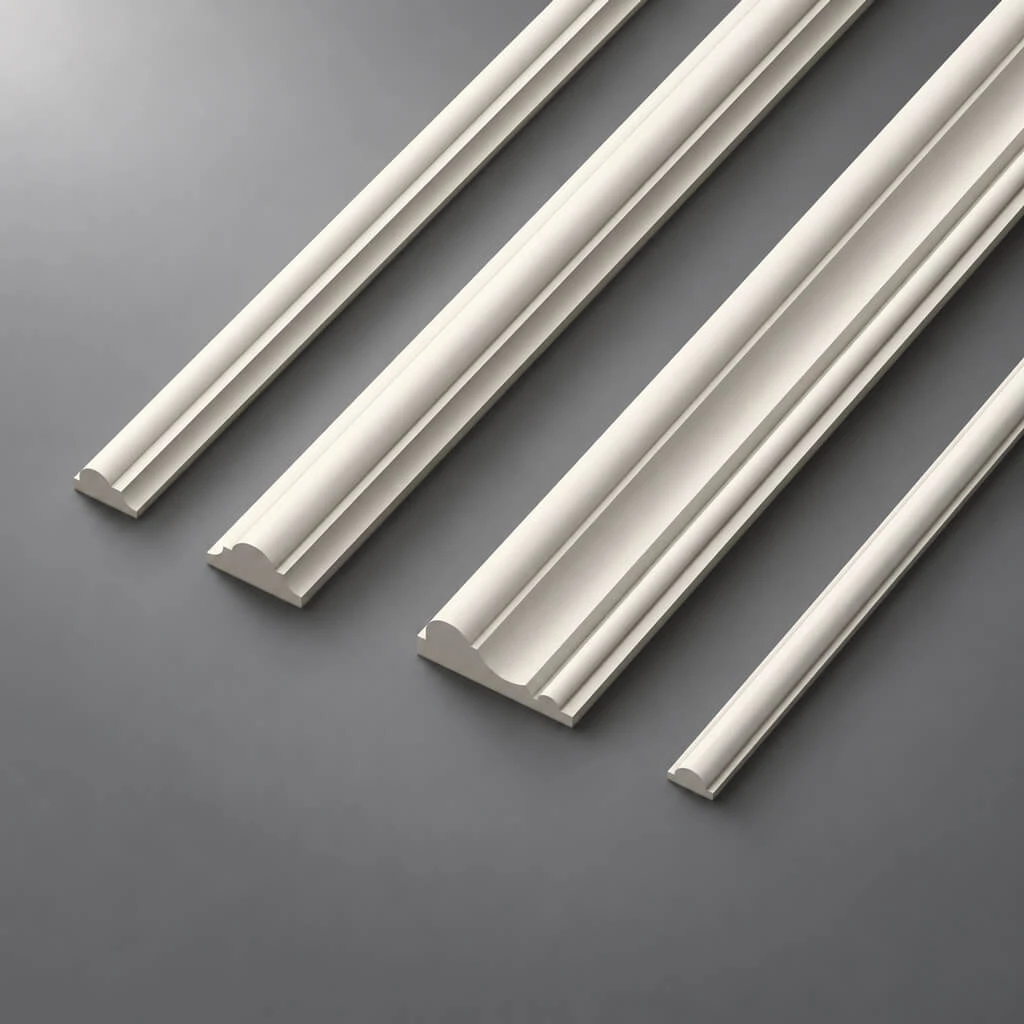
Bottom rail and handrail rail are profile strips for attaching balusters to steps and to the handrail from below.
-
Decorative elements are flat overlays, carved decor, pillar finials, and transition elements.
-
Fasteners are pins, screws, anchor bolts, and mounting plates.
It is the completeness of the set that determines whether you will end up with a finished object or a set of expensive parts that cannot be assembled into a whole.
Our factory also produces:
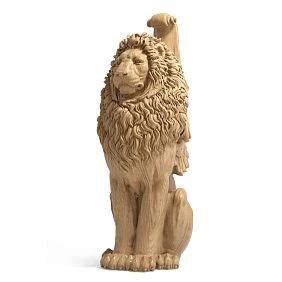
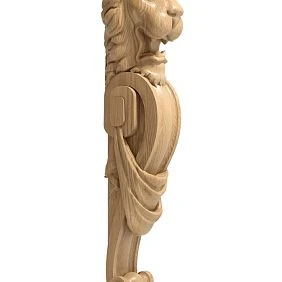
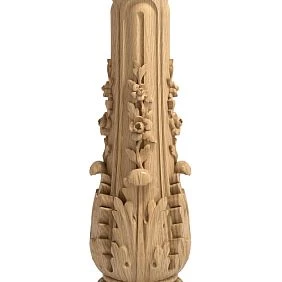
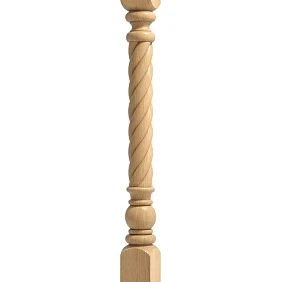
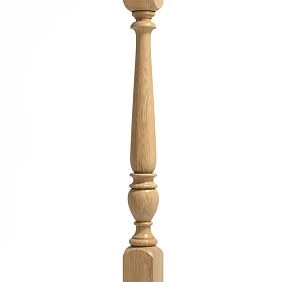
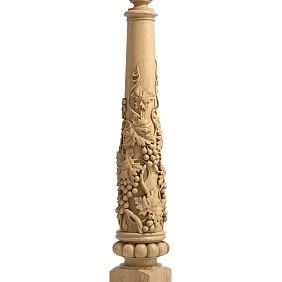
Balusters
Balusters for staircase — the most numerous element in the railing. They create the visual rhythm: a uniform row of vertical posts that together form the barrier plane.
The standard height of a baluster is 900–1000 mm (from the floor or step to the top of the handrail, including fasteners). The cross-section ranges from 45×45 mm to 80×80 mm depending on the shape: turned balusters of round cross-section can be ∅45–70 mm, square ones — 45×45–60×60 mm.
By manufacturing method Wooden balusters are divided into several categories:
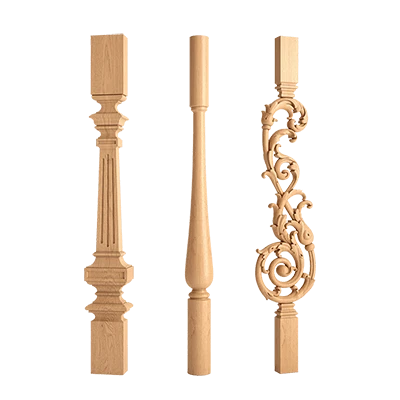
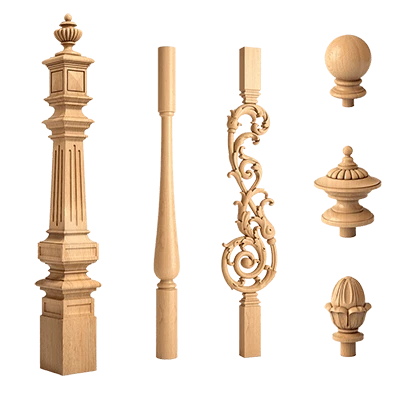
Turned balusters are the most common type. They are processed on a lathe, have a symmetrical round profile with various recesses, thickenings, and belts. They are perfect for classic and country interiors, versatile in style. The range of shapes varies from the simplest straight post with minimal decor to a complex multi-tiered silhouette with an expressive central body.
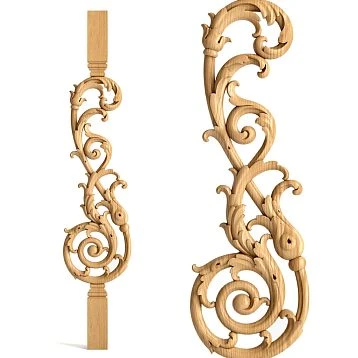
carved balusters — are made using 3D CNC milling or hand carving. Flutes, acanthus leaves, braided ornaments, baroque curls — carved balusters turn a staircase into a work of decorative art. They are used in Classic interior, baroque, empire, neoclassicism. A pair of such balusters next to a post — and the silhouette of the railing immediately gains expressiveness.
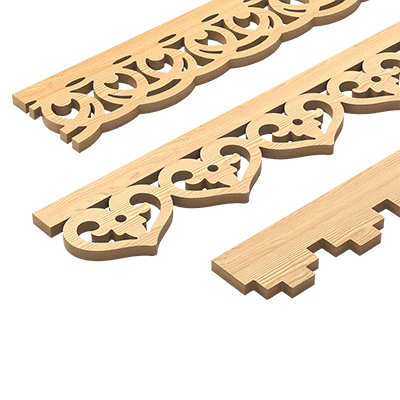
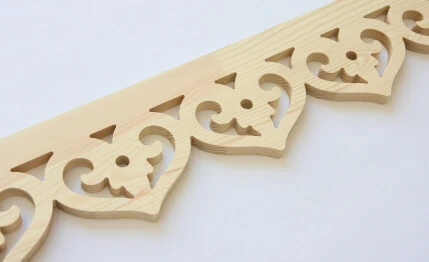
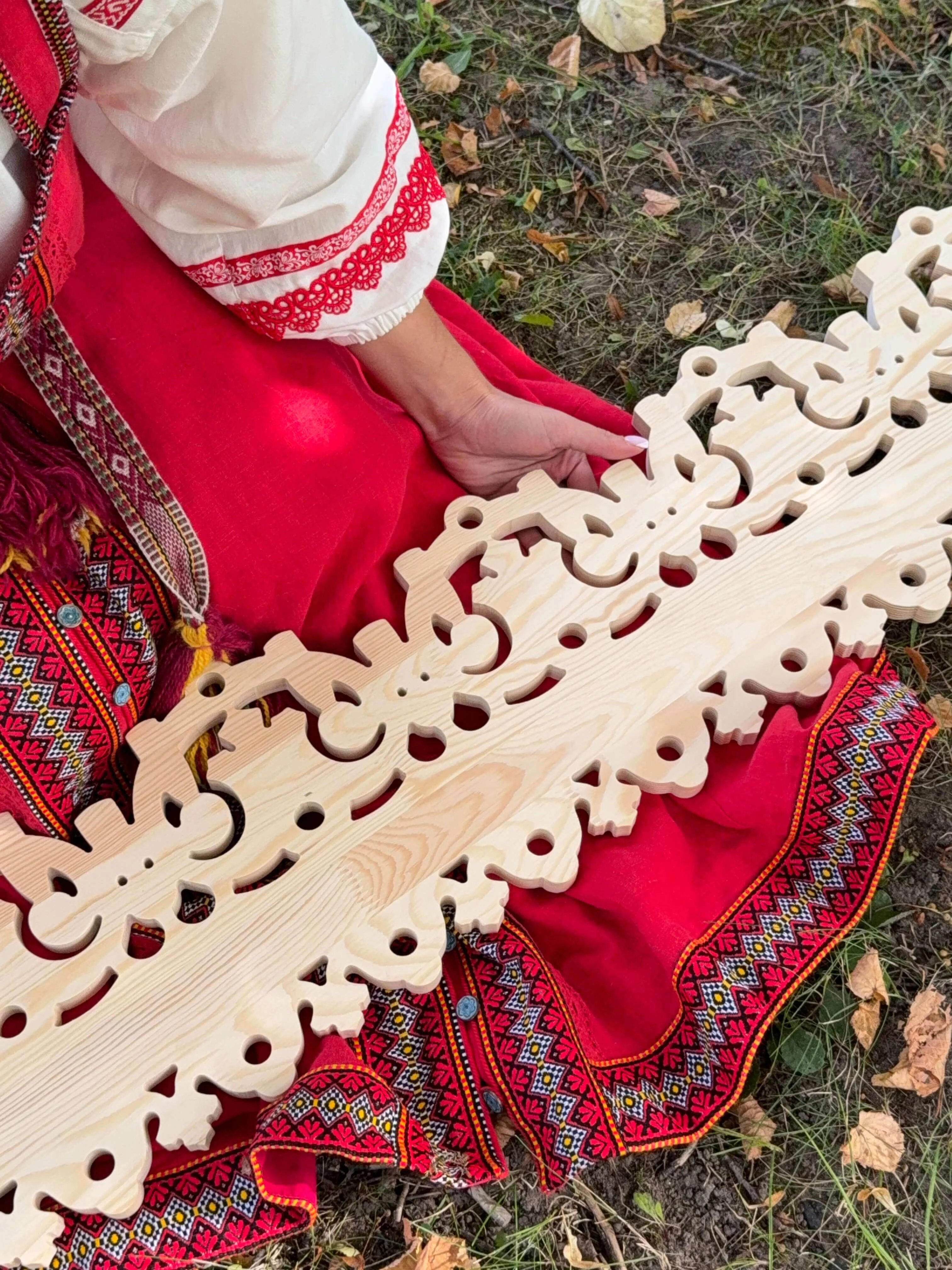
Flat balusters — are milled from a flat board, have a silhouette (contour) shape. They are used in interiors in Russian style, country style, as well as accent elements in classic railings. A flat baluster allows creating ornamental patterns in the plane of the railing — something that cannot be done with turned elements.
By material: oak, beech, pine, ash. Oak and beech — for durable interior staircases and open terraces. Pine — for country and budget solutions. Ash — for those who appreciate the expressive texture of light color.
Get Consultation
Staircase posts
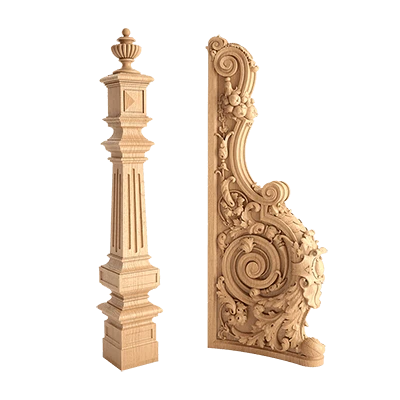
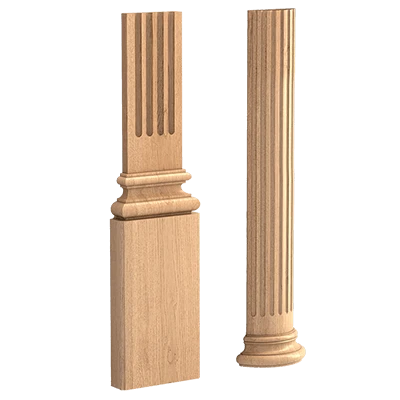
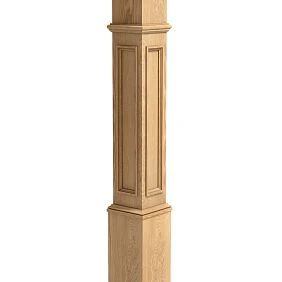
Posts for staircase — the load-bearing base of the railing. If balusters create rhythm, then posts create structural logic. Remove the posts — and the railing will lose rigidity, safety, and a visual reference point.
By function, posts are divided into types:
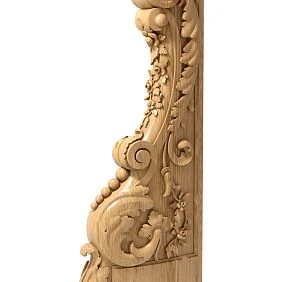
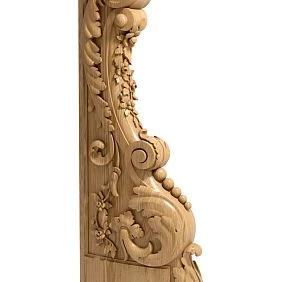
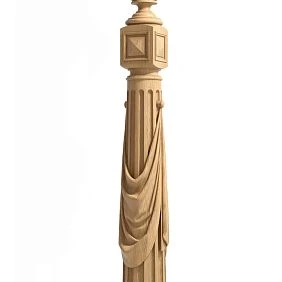
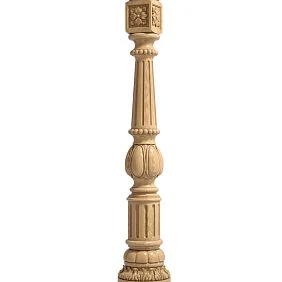
Starting (entry) post — installed at the bottom step of the staircase. This is the first object a person interacts with when ascending: the hand rests on it, the eye falls on it. It is the starting post that sets the tone for the entire railing. In the STAVROS catalog — more than 30 models of starting posts, from compact turned options (from 12,360 rubles) to monumental carved columns with acanthus patterns (from 79,820 rubles).
Intermediate post — installed in the middle of a long flight (when the length exceeds 3–4 m) to provide additional structural rigidity.
Turn post — located at points where the staircase changes direction: on landings, at 90° or 180° turns. Carries a dual load — structural and decorative.
Support post — installed at the top step or on the second-floor landing. Completes the flight and bears the load from the handrail.
Post height — from 900 to 1500 mm and above, depending on the railing height and staircase design. Cross-section — 100×100, 120×120, 150×150 mm. Material — solid oak, beech, ash. Surface — "Standard" sanding or "Prestige" hand sanding.
Handrails
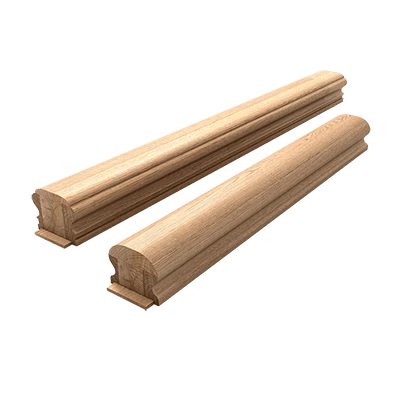
Handrail — it's what the hand touches every day. Sounds prosaic, but that's exactly what makes it the most "human" element of the staircase. An uncomfortable handrail ruins the impression of any beautiful balustrade. A comfortable one becomes invisible, and that is the best compliment.
Standard handrail profile — semi-circular with a flat base, width 50–70 mm, height 30–45 mm. Special profiles — with chamfers, decorative grooves, an extended bottom groove for balusters. Length — from 1500 mm to 3000 mm (standard runs), non-standard lengths — made to order.
Wooden railings and balusters should be made from the same wood species so that the color and texture match after the final finish. Buying a beech handrail for oak balusters means setting up a stylistic conflict in advance, which will become apparent after varnishing.
Railings and balustrade as a system
Railings are not a single part, but an ensemble. In professional language, "railings" means the entire assembled guard: handrails, wooden balusters, plus posts, plus a bottom rail, plus fasteners. That's why wooden balustrade it is considered as a single object, not a set of parts.
Staircase balustrade — a term that encompasses all fencing from the first step to the second-floor landing. In classical architecture, a balustrade is a row of balusters with a handrail. In a modern interpretation, its forms can vary, but the principle remains unchanged: a system of elements that ensure safety and carry a decorative load.
Flat and carved elements
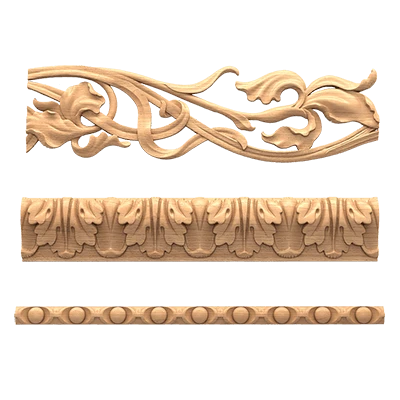
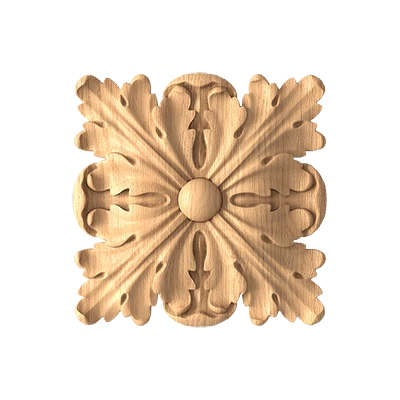
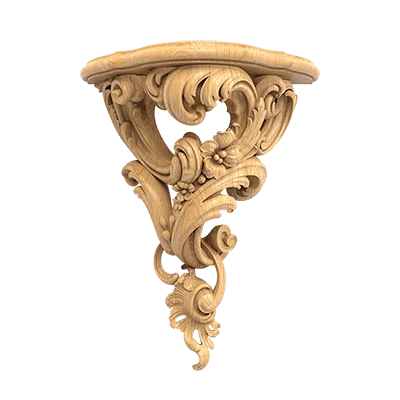
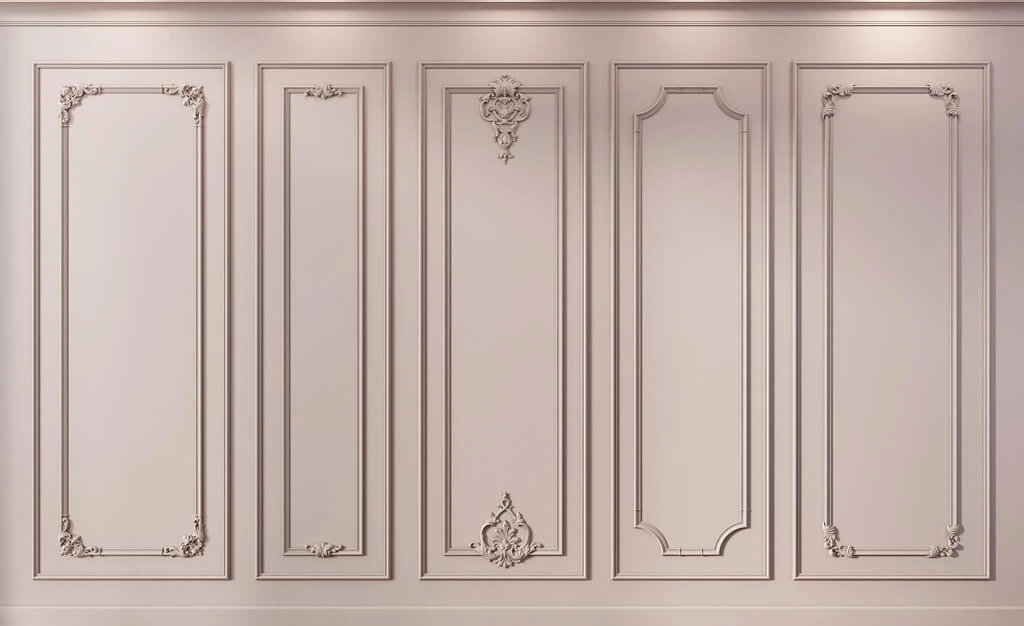
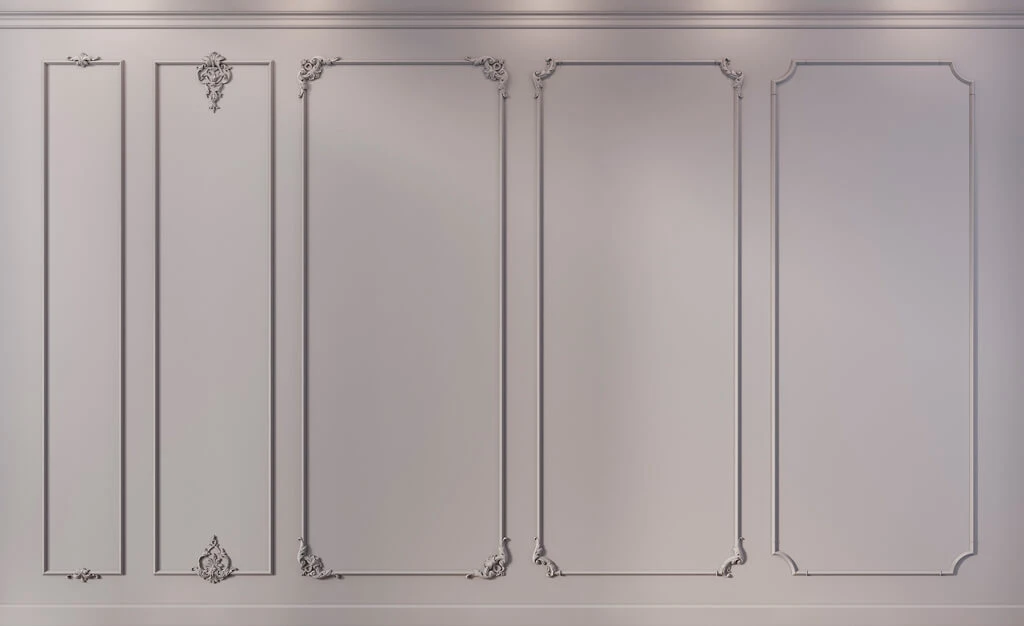
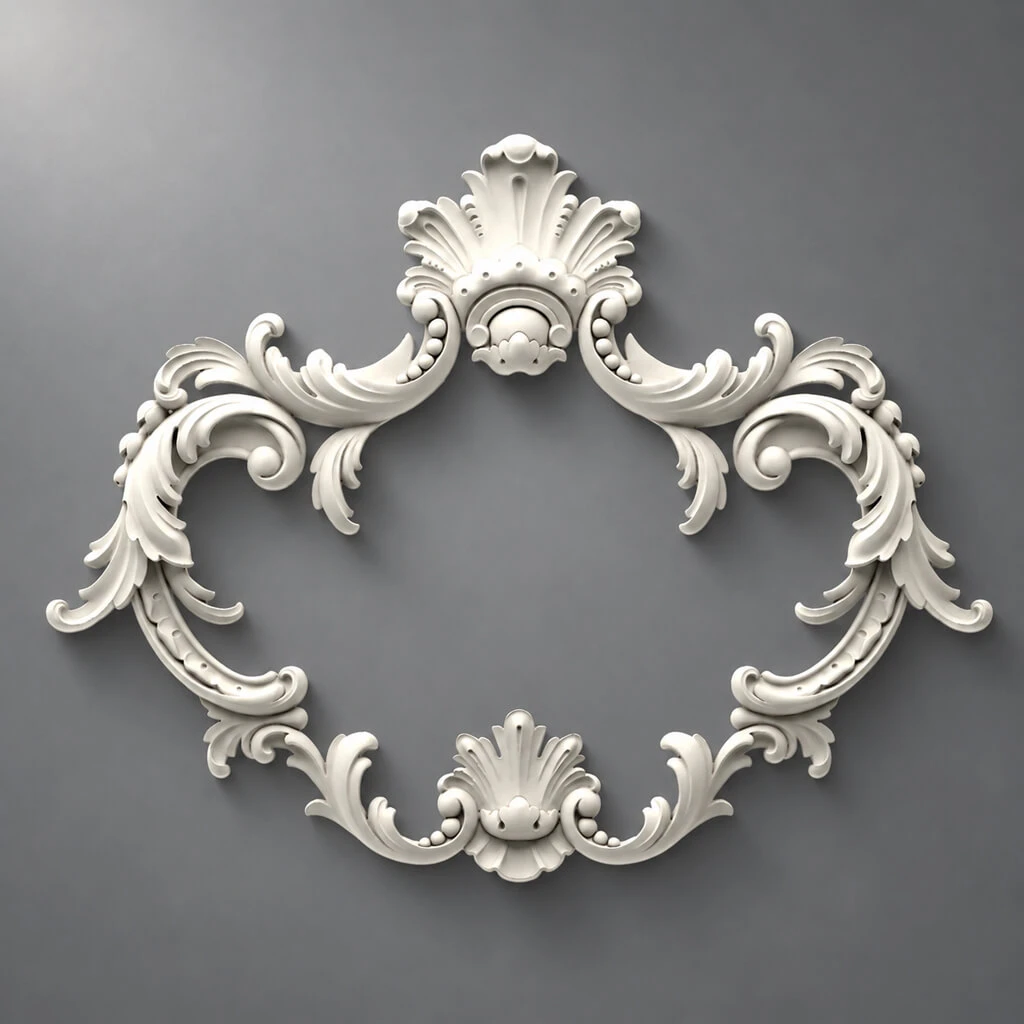
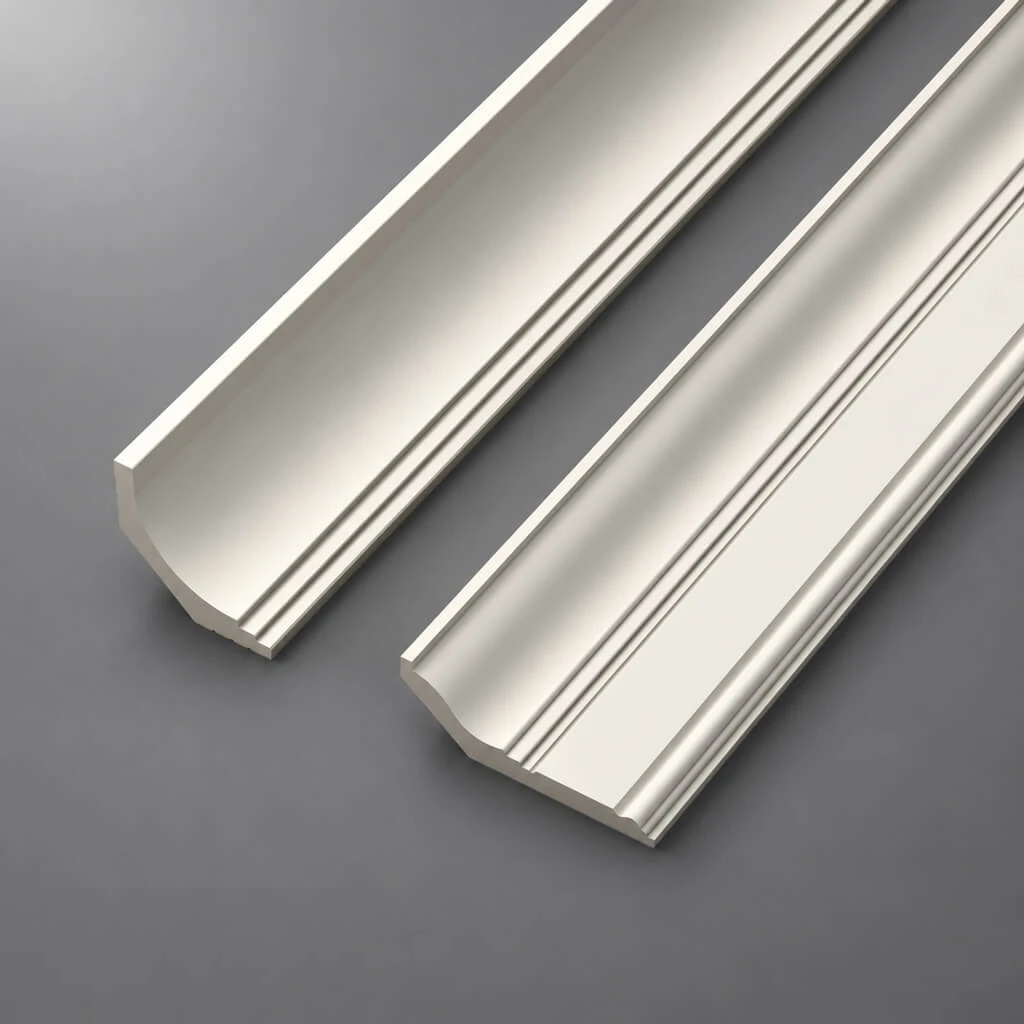
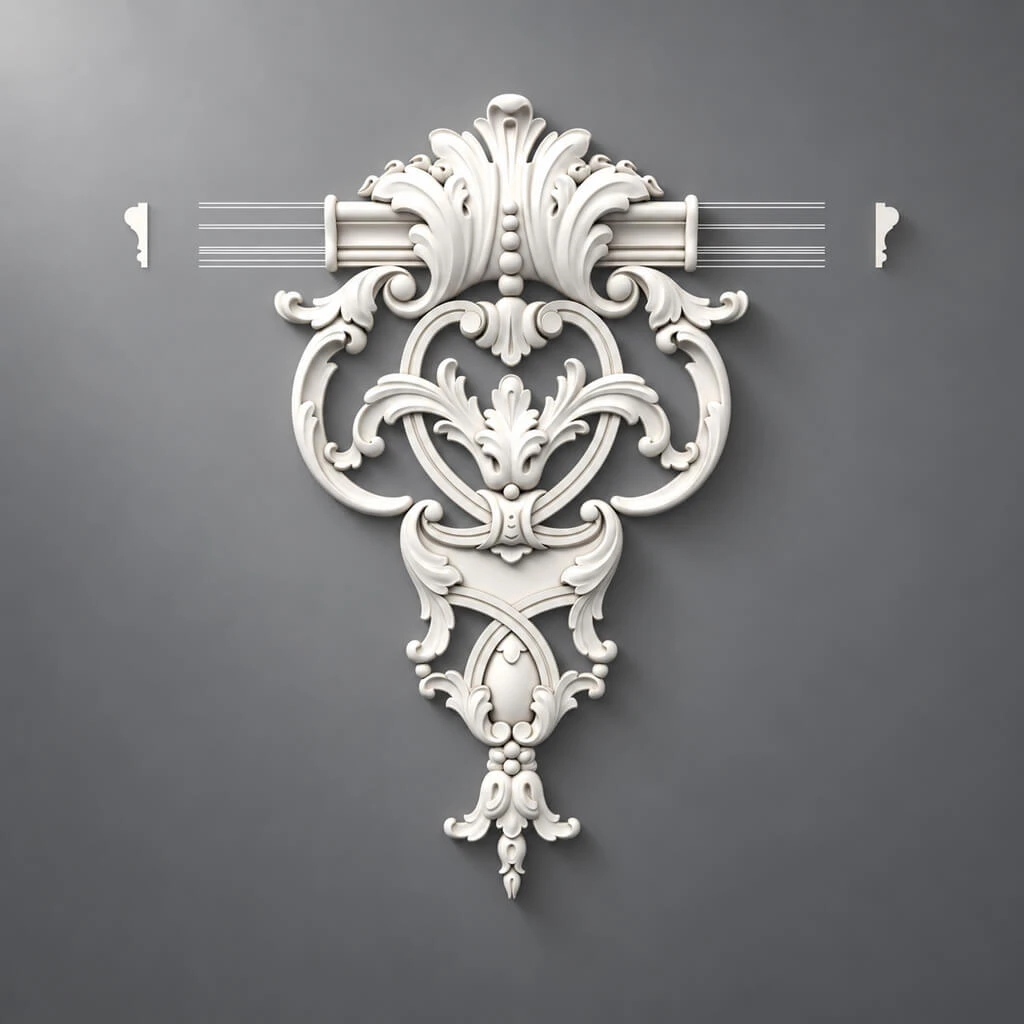
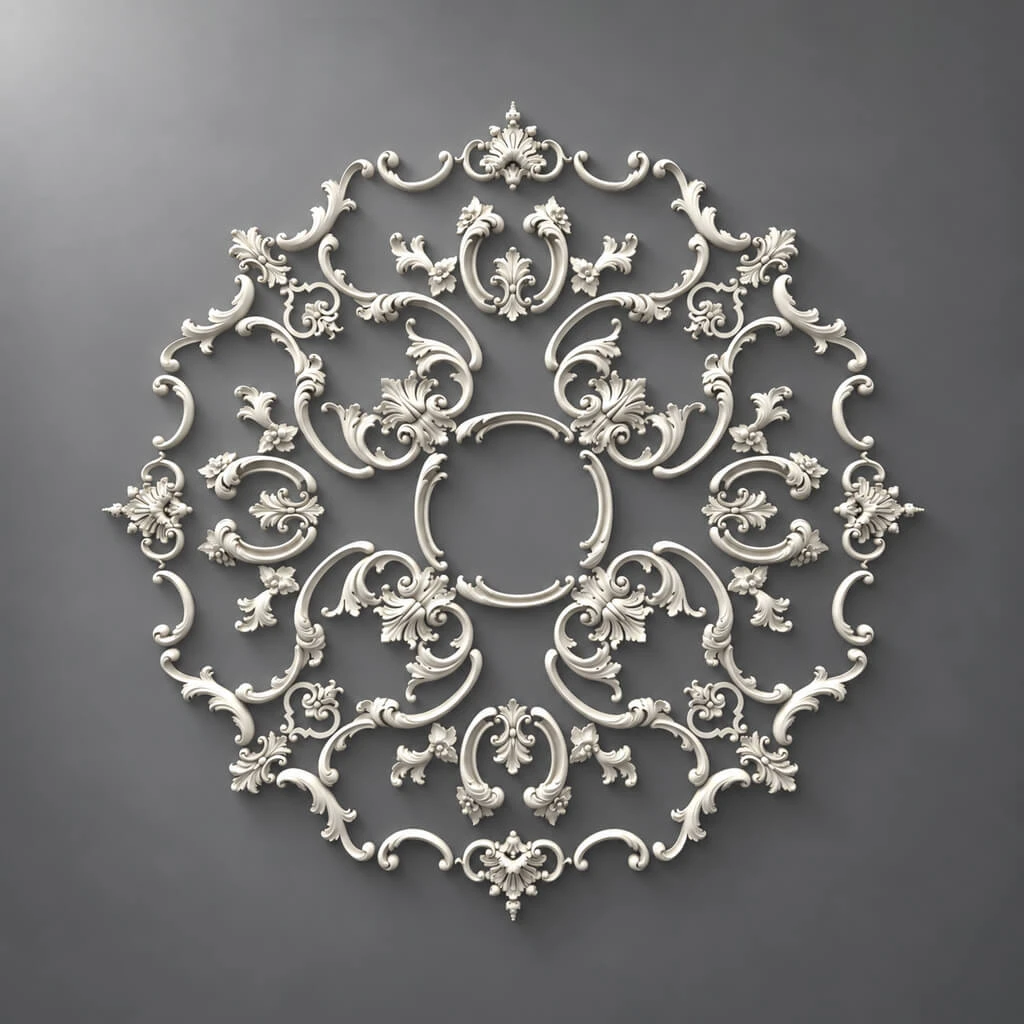
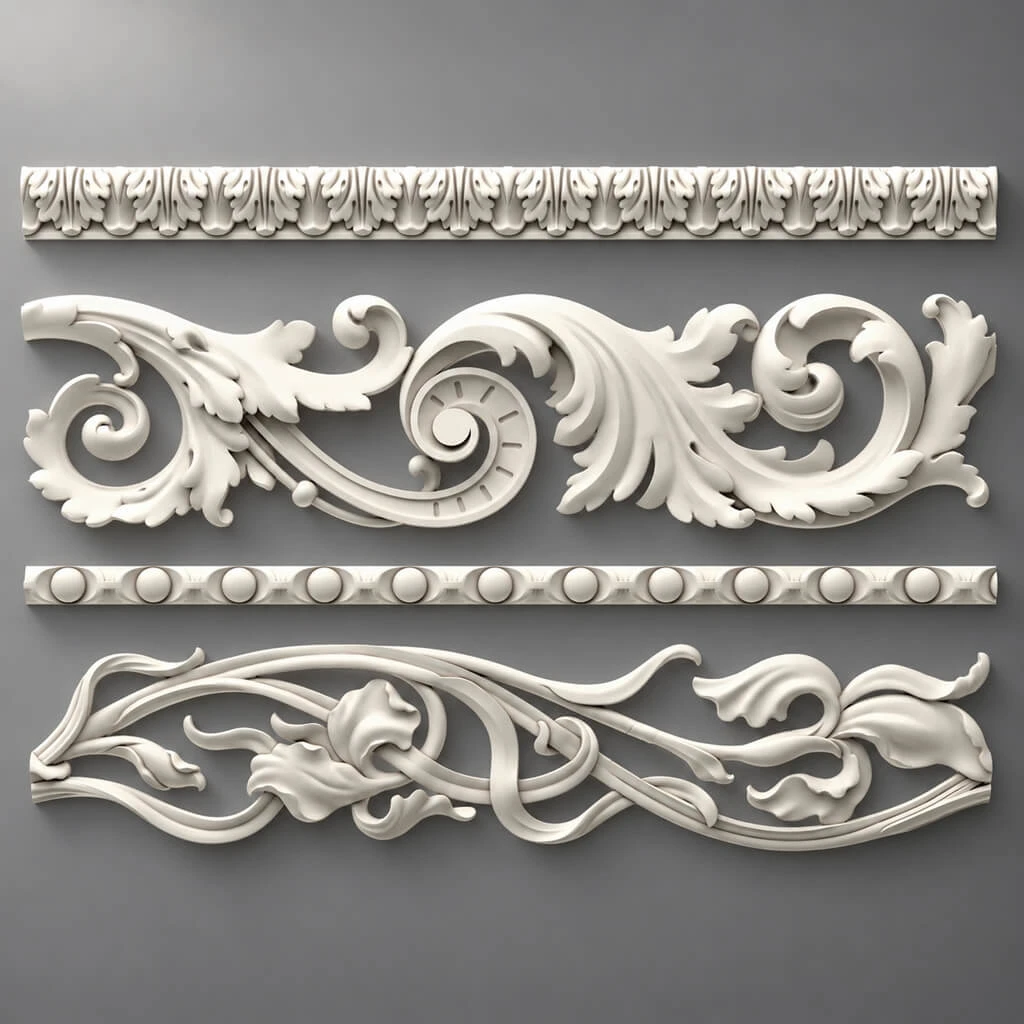
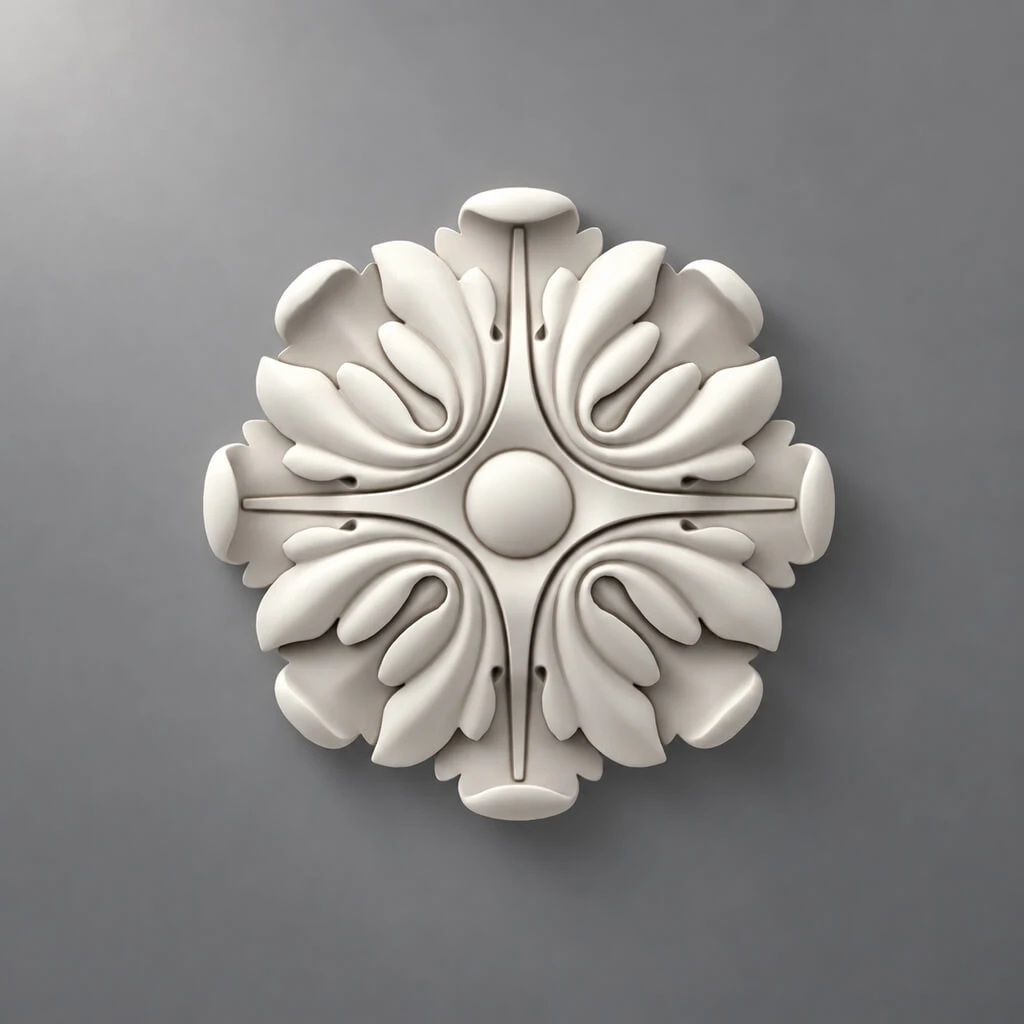
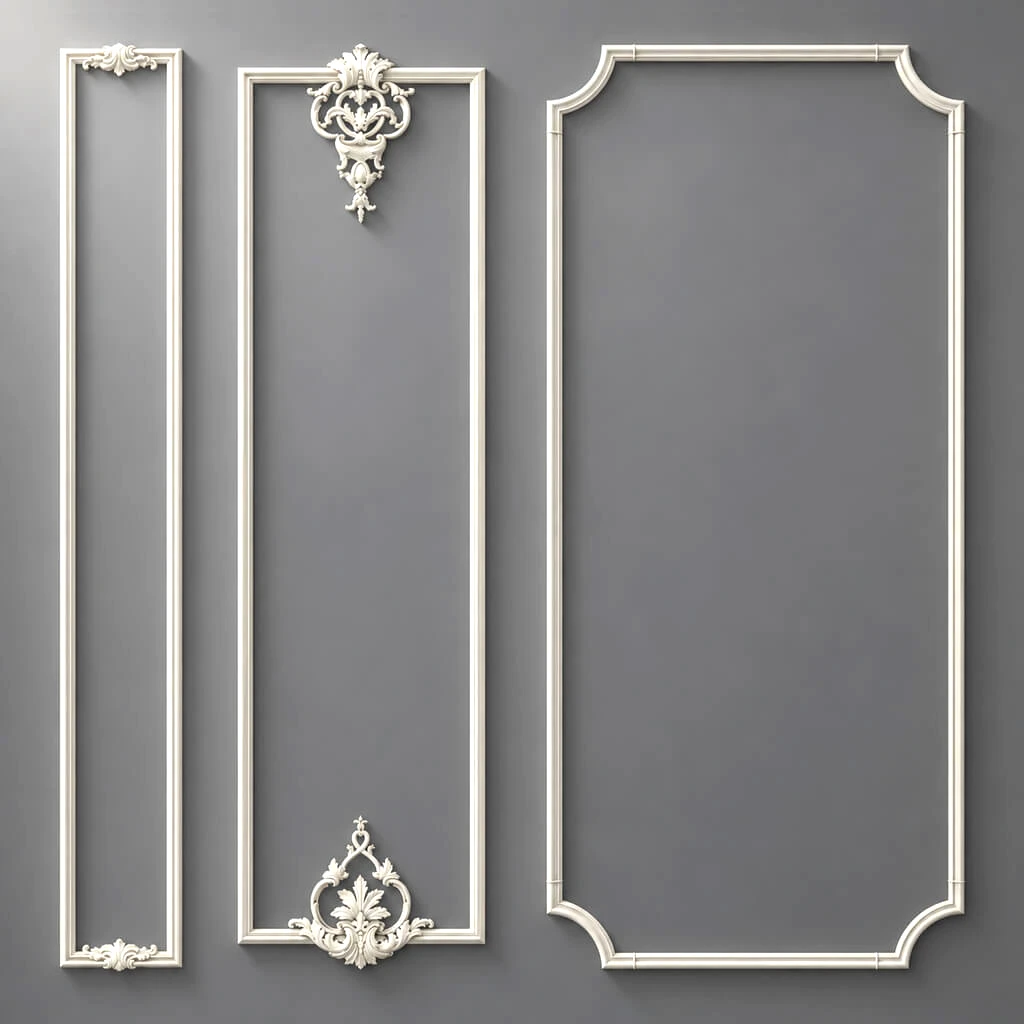
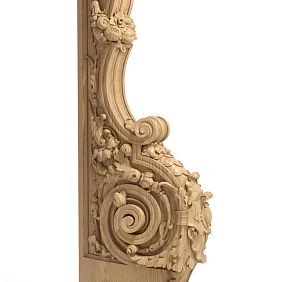
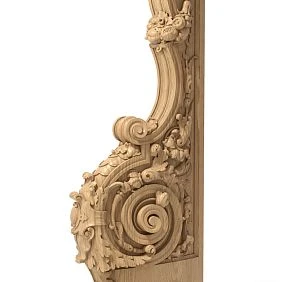
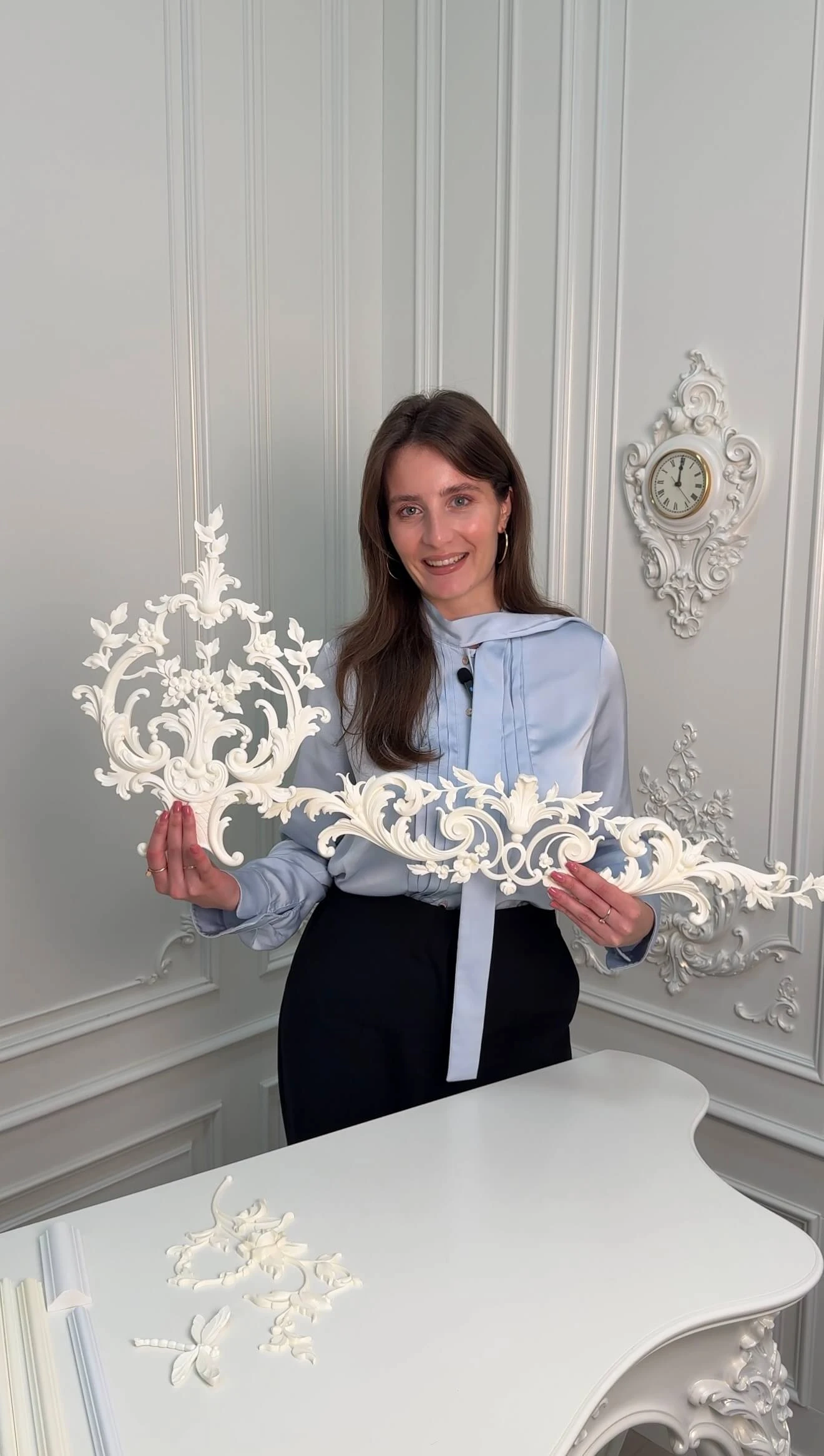
Decorative elements that expand the expressiveness of the fencing deserve special attention. Carved wooden decoration — overlays, rosettes, corner elements — are used at nodal points of the fencing: at the base of posts, at handrail joints, on landings. They add the finishing touch, turning a solid staircase into a memorable interior object.
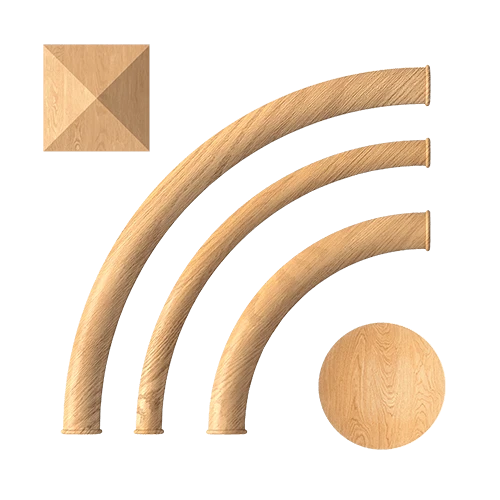
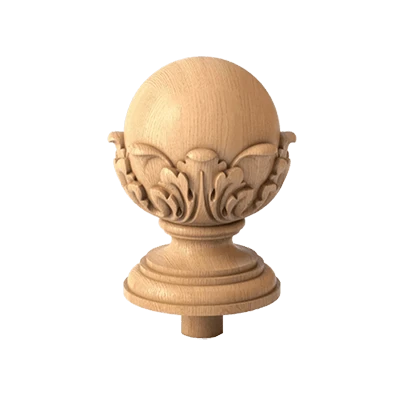
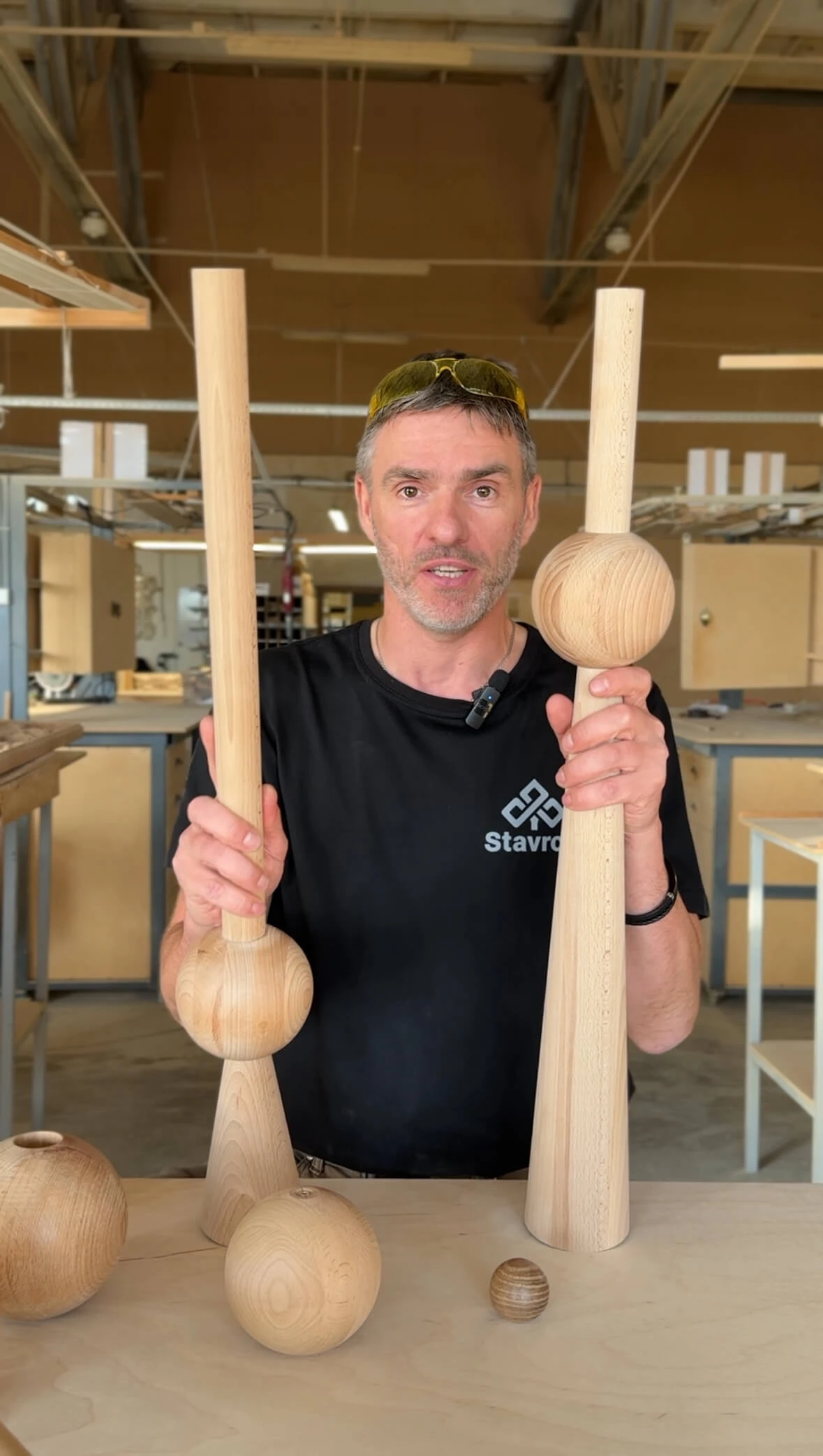
Finials for posts — spherical, pyramidal, figured — cover the top end of the post and serve as a decorative accent. They are chosen in the style of the main fencing: a strict ball for modern classics, a figured carved finial for Baroque.
Balusters, posts, and handrails: how to assemble the right set
Buying balusters is half the battle. The other half is correctly combining them with the remaining elements so that everything fits into place without modifications or unpleasant surprises.
Three rules for the right set.
Rule one: unified style. All elements — balusters, posts, handrail — must belong to the same stylistic group. Classic turned balusters with expressive bodies require posts with similar plasticity. Minimalist rectangular balusters require minimalist straight posts.
Rule two: unified material. Handrails and wooden balusters from different species will yield different colors after varnishing. This is especially critical with transparent varnishing under tinting: beech will be lighter, oak darker, pine yellower. Order the entire set from one species.
Rule three: coordinated dimensions. The height of the baluster, the diameter of the lower support, the width of the handrail, the groove of the under-baluster — all these parameters must be coordinated. The posts and balusters for wooden stairs from the STAVROS collection are designed with compatibility in mind — this eliminates errors during installation.
How to choose components to match the style of the staircase
Choosing a style is not just an aesthetic decision. It is a decision about how the staircase will interact with the rest of the interior. A mistake in style is the most costly mistake that cannot be corrected by replacing a single part.
| Staircase style | Balusters | Posts | Handrail |
|---|---|---|---|
| Classic | Turned, with expressive body | Monumental, with profiled capital | Semicircular profile 60–70 mm |
| Neoclassical | Calm turned profile | Strict, without excessive decor | Restrained profile 50–60 mm |
| Baroque / Empire | Carved, with acanthus and fluting | Columns with rich carving, from 20,540 RUB | Wide decorative handrail |
| Russian style | Flat, with silhouette ornament | Posts with applied decor | Profile 45×45 mm with chamfers |
| Country house / rustic | Turned, medium complexity | Compact oak pillars | Natural profile without patina |
| Modern Classic | Laconic, minimal decor | Square cross-section | Wide flat handrail |
Classic staircase
Classic — the most popular request among private homes. Here they choose balusters with a distinct central body — a widened middle and narrowed top and bottom parts. This shape is visually stable and reads clearly in a row. Pillars — with a multi-step transition from a rectangular base to a profiled part. Handrail — semicircular, made of the same wood.
Baroque and Empire
For a baroque-style staircase, components for wooden stairs are selected from carved products. carved balusters with acanthus leaves, twisted columns, starting pillars with a figured top and a patterned lower belt — this is a railing that itself is a work of art. Of the 40 STAVROS pillar models, models with rich decor are suitable for this style — from 20,540 rubles.
Russian style and wooden houses
In wooden houses and when stylized in the Russian style, they are most organic Flat balusters with silhouette ornament. Milled from wide boards, they resemble the fretwork of traditional wooden architraves. In a row, such balusters form a decorative panel — lively, warm, with character.
How to calculate the number of components for a wooden staircase
Calculation is the most practical part of the purchase. Without it, it is impossible to place an order without errors. Here is a step-by-step algorithm.
Step 1. Measure the length of the staircase along the horizontal projection.
This is the horizontal distance from the first step to the last step. Not along the slope! For example, a staircase with 14 steps of 270 mm width gives a flight length of 14 × 270 = 3780 mm ≈ 3.8 m.
Step 2. Determine the height of the railing.
According to Russian standards, the staircase railing must be at least 900 mm from the step surface. The optimal height for comfortable use is 950–1000 mm.
Step 3. Choose the baluster spacing.
The standard spacing is 120–150 mm. This is the distance between the axes of adjacent balusters. Important: according to safety standards, the gap between balusters must not exceed 100 mm — this is critical in homes with children.
Step 4. Calculate the number of balusters.
The formula is simple: railing length (mm) ÷ spacing (mm) = number of pieces.
Example: 3800 mm ÷ 130 mm = 29.2 → 30 balusters.
Traditionally, 2 balusters are installed per step — with a step width of 270 mm and spacing of 135 mm, this fits perfectly within the safe gap.
Step 5. Add posts.
-
Start of the flight — 1 starting post
-
End of the flight — 1 support post
-
If there is a landing — 1 turning post for each turning point
-
If the flight is longer than 3.5 m — an intermediate post is recommended
Example for one straight flight: 1 starting + 1 support = 2 posts minimum. With a landing between flights: 2 + 2 = 4 posts.
Step 6. Calculate the length of handrails.
Handrail length = length of railing along the slope (not horizontal). To calculate the sloped length, use the Pythagorean theorem: √(horizontal length² + vertical height²).
Example: √(3800² + 2800²) = √(14,440,000 + 7,840,000) = √22,280,000 ≈ 4720 mm ≈ 4.7 m.
Add 10% allowance for trimming and transition elements: 4.7 × 1.1 ≈ 5.2 m.
Step 7. Account for landings and horizontal sections.
On a landing, the railing runs horizontally. Here, the handrail does not require sloped trimming — but it does require a transition element or smooth bend. This is a separate order item.
Step 8. Add allowance for defects and trimming.
Standard allowance is 10–15% of the calculated number of balusters and handrail length. Don't skimp on this: an extra baluster in reserve is insurance against replacing the entire order due to installation error.
Step 9. Check compatibility of all elements.
Ensure that the bottom groove of the handrail matches the top tenon of the baluster. For standard balusters 45×45 mm — handrail with a 45 mm groove. For carved balusters with a rounded top — handrail with an extended groove or flat bottom base.
Step 10. Agree on color and coating.
All wooden elements of the staircase railing must be treated uniformly: one stain, one enamel, one oil. Color inconsistency is the most noticeable mistake when looking at the finished staircase.
What affects the price of components for wooden staircases
Furniture moldings and staircase components have one thing in common: price is directly proportional to labor intensity. The more complex, the more expensive. But understanding exactly what you are paying for is a professional approach to purchasing.
Wood species. Oak and ash are hard, dense, durable — more expensive than pine. Beech is an intermediate option: denser than pine, cheaper than oak, ideal for enamel. Pine is affordable but less durable under high load conditions.
Size of balusters and posts. Height, cross-section, material volume are direct cost parameters. A baluster 1200 mm high costs more than a baluster 900 mm. A post 120×120 mm costs more than 100×100 mm.
Profile complexity. A turned baluster with two recesses is cheaper than a baluster with five tiers of complex profile. Time on the machine equals cost.
Presence of carving. carved balusters and carved posts are separate price categories. CNC carving is precise, reproducible, but requires programming and processing time. Hand carving is a master's custom work.
Number of elements in the order. Volume reduces the unit cost. If you need 60 balusters, the price per piece will be lower than when ordering 10 pieces.
Processing category. "Standard" — machine sanding, ready for finishing. "Prestige" — hand sanding, smoother surface, higher price. For final work with expensive varnish or oil, choose "Prestige".
Custom sizes. Non-standard height, specific cross-section, custom shape — all this is possible with a sufficient batch. Designing custom elements is a separate service.
Delivery. Large orders are transported by transport companies CDEK and DPD. Packaging — corrugated cardboard, bubble wrap, for fragile parts — rigid substrates. Delivery cost depends on weight, volume, and region.
Installation and fitting. Professional installation of stair railing is a separate cost that must be considered in the final project budget.
Mistakes when buying components for wooden stairs
Already about to place an order? Read this section first. It will help you avoid mistakes that are made most often — and that cost more than they seem.
They buy balusters without posts and handrails. The most typical story: a person sees beautiful balusters, orders them — and only then realizes that the posts need to be different, the handrail does not fit the groove width, and they didn't even think to include fasteners in the order. A systematic approach from the start saves money and nerves.
They don't calculate the installation step. "I'll divide it evenly by eye" — that's not a method. Without an accurate step calculation, you risk getting a gap of 120 mm in one place and 90 mm in another. Non-compliance with safety standards is a problem, not just an aesthetic one.
They don't account for turns and landings. The landing between flights is a separate section of the railing with a horizontal handrail and corner posts. Forgetting about it in calculations means getting an incomplete set during installation.
They mix different styles and series of elements. Turned balusters from one collection + carved posts from another + handrail from a third manufacturer — this is not eclecticism, it's inconsistency. In a railing, all parts must be from the same style and size group.
They don't check the railing height. The minimum height is 900 mm according to standards. Comfortable height is 950–1000 mm. A height over 1100 mm creates a "prison" feeling — but this is a rare mistake. More often, the height is below the standard due to incorrect measurement from the step line.
They don't coordinate the wood color with the steps and floor. Balusters tinted in walnut, steps in wenge, floor in light parquet: these are three different woods that clash. Consistency in the color of wooden elements is a key rule for a unified interior.
They don't calculate the total cost of the entire set. 30 balusters × 5000 rubles + 4 posts × 25,000 rubles + 5 m of handrail × 1500 rubles/m = 250,000 rubles excluding delivery and installation. Plan the full budget in advance — not based on the price of a single baluster.
They buy without a reserve for cutting. Each baluster during installation on a sloping flight is cut at an angle from the bottom. A mistake in cutting — and the baluster becomes defective. Without a 10–15% reserve, you risk installation downtime.
Where to buy components for wooden staircases
Where to buy components for wooden stairs — this question is best resolved through the manufacturer, not a reseller. It is from the manufacturer that you get:
-
current assortment with full technical specifications
-
Possibility to order custom sizes
-
one wood species for the entire set
-
professional calculation consultation
-
guarantee of compatibility of all elements
Buy components for wooden stairs in St. Petersburg, buy components for wooden stairs in Novosibirsk, Krasnodar, Chelyabinsk, and Voronezh — all this is done through the STAVROS online catalog with delivery by transport companies throughout Russia.
STAVROS is a manufacturer since 2002, founded by two artist-restorers. The company has worked with the Hermitage, the Konstantinovsky Palace, the Alexander Palace — and behind this experience lies an understanding of wooden decor not at the sales level, but at the craft level. Over 50 models wooden balusters, over 30 models staircase posts, a full range of accompanying decor — everything in one catalog, everything from one source.
For solid wood staircase components in a unified style, it is important to order the entire set at once: balusters and posts, handrails, Carved wooden decoration for key points. This is how a staircase worth photographing is born.
FAQ: answers to popular questions about wooden staircase components
Where to buy wooden staircase components?
In the STAVROS catalog — with delivery across all of Russia: St. Petersburg, Novosibirsk, Krasnodar, Chelyabinsk, Voronezh, Simferopol and other regions. Before ordering, determine the length of the flight, the height of the railing, the style of the staircase, and the number of elements.
What is included in the components for a wooden staircase?
The complete set includes Balusters for staircase, posts, handrails, sub-balustrade, decorative finials, and fasteners. The specific composition depends on the staircase configuration.
How to calculate the number of balusters?
Divide the length of the fence by the selected step (120–150 mm). With a step width of 270 mm, 2 balusters are standardly installed per step. Add 10–15% margin.
What is the difference between balusters, posts, and handrails?
Balusters are regular vertical fence elements. Posts are load-bearing supports at key points of the structure. Handrail is the top horizontal element that provides a comfortable grip and connects the entire fence into a single system.
Which material should I choose for staircase components?
Oak and ash are for durable interior stairs and open terraces. Beech is for painting with enamel in classic interiors. Pine is for country projects with a limited budget. All elements of one set are from the same wood species.
What affects the price of components for wooden stairs?
Wood species, size, profile complexity, presence of carving, processing category, order quantity, non-standard sizes, delivery and installation. STAVROS balusters from 1,990 RUB, posts from 12,360 RUB.