










































































Article Contents:
- Buy Baroque furniture
- Which Baroque furniture to buy
- How Baroque differs from "just classics"
- Who is Baroque furniture suitable for
- Baroque style furniture: main features
- Baroque upholstered furniture
- Baroque style sofas
- Baroque style armchairs
- Benches, poufs, benches
- Fabric and color of baroque upholstered furniture
- Baroque furniture for the living room
- Mirrors in carved frames
- Console against the wall
- Wall decor: moldings, stucco, overlays
- Baroque furniture for the bedroom
- What is included in a baroque bedroom
- Color in a baroque bedroom
- Baroque and rococo furniture: what to choose
- What affects the price of baroque furniture
- How to avoid mistakes when buying Baroque furniture
- Baroque wooden furniture: why natural material is essential
- Baroque furniture for the study: status without compromise
- Where to buy Baroque furniture: online store and delivery across Russia
- FAQ: answers to popular questions about Baroque furniture



Buy Baroque furniture
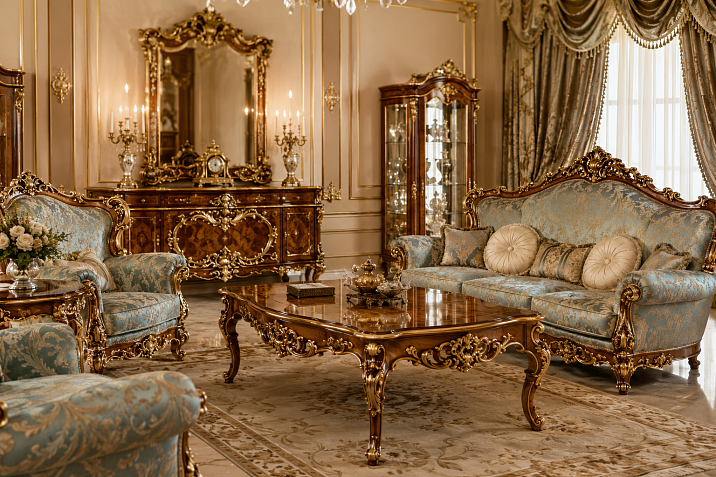
Baroque doesn't ask for permission. It enters a space — and the space changes. A sofa with curved armrests and velvet upholstery, gilded console legs, a full-length mirror in a carved frame — this is not decor. This is a statement. And if you have decided to buy Baroque furniture, you have chosen a style that cannot be inconspicuous — and that is its absolute power.




Which Baroque furniture to buy
Buying Baroque furniture means not just choosing a beautiful item, but making a decision about the image of the entire space. Baroque requires systematic thinking: here every item works for the ensemble. A single Baroque sofa in the middle of a minimalist white apartment is dissonance, not an accent. But a well-thought-out Baroque living room with coordinated details is an interior that stops the gaze and doesn't let go.
It is worth buying Baroque furniture when you are ready to go all the way: choose Furniture legs with a characteristic baroque profile, to select Furniture Handles with cast rosettes, to add Carved furniture decor, to think through Moldings on the walls and Mirror Frames. Baroque is not one item. It is an environment.
Buying baroque furniture today is possible in a wide range of price segments — from affordable options with imitation gilding and fabric upholstery to solid wood pieces with hand carving and multi-layer lacquering. The price difference here reflects the difference in honesty: true baroque is created from natural materials by craftsmen who understand the style from the inside.
Our factory also produces:




How baroque differs from 'just classic'
A question many ask themselves: what Furniture in Baroque style differs from classic furniture at all? Classic is a system. It includes many styles, including restrained neoclassicism, strict Empire style, intimate Rococo. Baroque is a specific, recognizable aesthetic language: opulence of forms, plasticity of lines, abundance of decor, dramatic space. Classic can be cold — baroque never is. It is always emotional, always rich, always theatrical.
Born in Italy at the turn of the 16th–17th centuries as a style of absolutism and triumph, baroque quickly spread throughout Europe. The Palace of Versailles in France and the Winter Palace in Russia are the most famous examples of baroque thinking in architecture. Furniture followed the same principles: massiveness, carving, gilding, rich upholstery, symmetry as an expression of power.
Get Consultation
Who is Baroque furniture suitable for
It is worth buying Baroque style furniture for those who:
-
live or plan to live in spacious rooms with high ceilings — from 2.8 meters and above;
-
want to create an interior with a pronounced character and historical atmosphere;
-
appreciate craftsmanship, natural materials, and intricate decor;
-
are ready for the interior to be demanding — both in terms of space and details;
-
understand that in this case, furniture is not a background, but the main character.
It is also relevant to buy Baroque style furniture for commercial properties: restaurants with a representative atmosphere, premium segment hotels, meeting rooms, offices where it is important to make an impression from the first seconds.
Baroque style furniture: main features
How to recognize Baroque among many similar styles? This is not always obvious at first glance — especially now, when anything with at least one curl is called "Baroque". The true style has clear features, and each of them carries meaning.
Expressive carving. Acanthus leaves, cartouches, rocailles, garlands, mascaron — Baroque adorns every surface that can be adorned. Carved Decor in the Baroque style — it is not an added ornament, but an organic part of the object's structure.
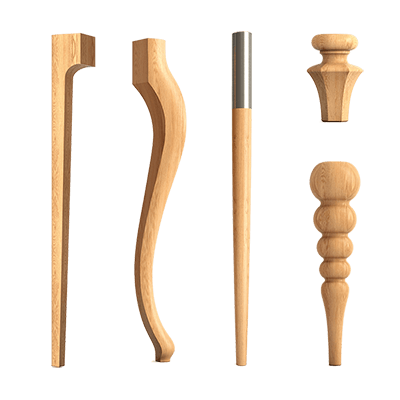
Smooth and curved forms. Baroque has no sharp straight angles. Legs curve in a "cabriole" — with a characteristic S-shaped or reverse S-shaped profile. The backs of sofas and armchairs smoothly flow into the armrests. Cabinet cornices have a complex multi-tiered profile.
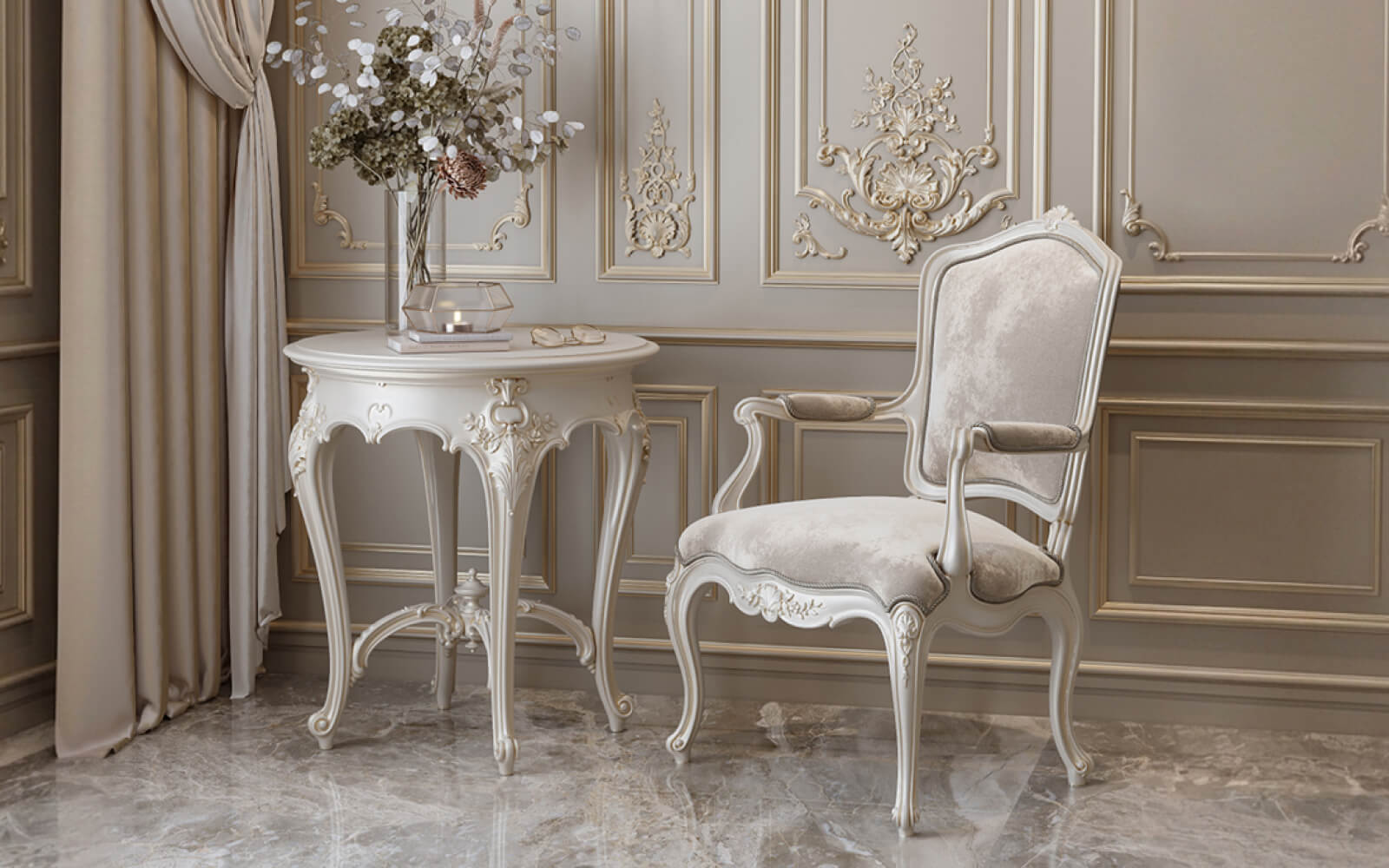
Gilding and patination. Gold is the main color of Baroque. It can be applied entirely — like a gilded set — or used as an accent on carved elements: legs, cornices, overlays.
Rich fabrics. Velvet, silk, jacquard, tapestry — upholstery fabrics for Baroque furniture are chosen for visual weight and tactile luxury. Button tufting — a button pattern creating relief on the upholstery — is one of the main decorative techniques in this style.
Symmetry. Baroque is a style of order, despite the apparent chaos of decoration. All objects are arranged symmetrically relative to the central axis. Sofa — in the center, armchairs — on the sides, console — against the opposite wall. Breaking symmetry here is perceived as a mistake, not a design solution.
Large mirrors and frames. A mirror in a Baroque interior is not a functional object. It is an architectural element. mirror frame made of carved solid wood — one of the key accents of a Baroque living room.
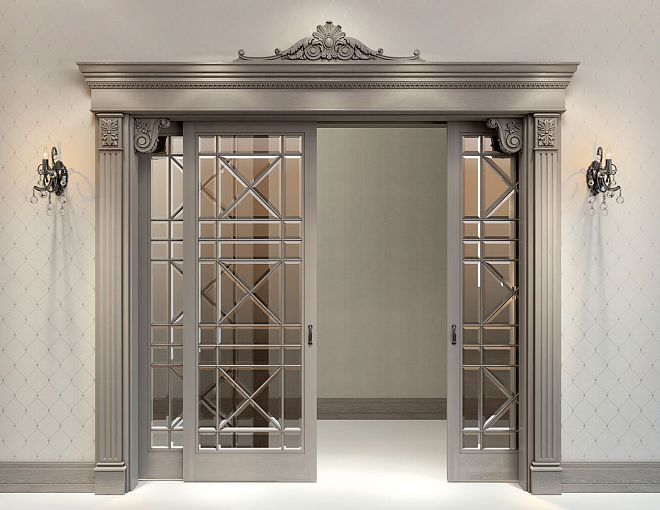
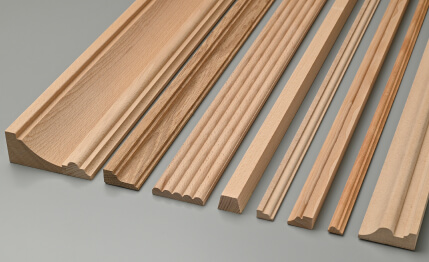
Decorative overlays and moldings. The walls of a Baroque interior are never bare. furniture moldings, Decorative Inserts и Polyurethane moldings create an architectural background, without which the furniture hangs in the air and loses its context.
Baroque upholstered furniture
Buying baroque upholstered furniture means choosing the main semantic center of a baroque interior. It is sofas, armchairs, banquettes, and poufs that carry the main emotional load: they set the scale, color, texture, and temperature of the space.
Buying baroque upholstered furniture is a responsible decision that cannot be made based only on a photo on a screen. Too many details determine the difference between a successful purchase and a mistake: the fabric, which in reality turns out to be a different shade; the size, which seemed compact in the photo but takes up all the space in the room; the legs, which look golden but are actually painted plastic. Baroque is a style intolerant of compromises.
Baroque style sofas
Buying baroque upholstered furniture means, first of all, choosing a sofa. In a baroque interior, the sofa is a throne. A high back with a curved top rail, wide armrests with wooden overlays, a deep seat — all this creates the image of an object that not only receives the body but also welcomes a person into its space.
Typical formats of a baroque sofa are the Chester (with button tufting across the entire upholstery), the Cabriole (with curved legs and rounded shapes), and the tête-à-tête (a two-seat S-shaped sofa, ideal for boudoir interiors). Each carries its own historical weight — and each in its own way expresses the essence of the baroque spirit.
The frame of a high-quality baroque sofa is always wooden, made of solid beech or oak. Carved Furniture legs — with a cabriole curve or twisted — are mandatory: it is they that give the piece that very baroque silhouette that cannot be created with straight supports.
Baroque style armchairs
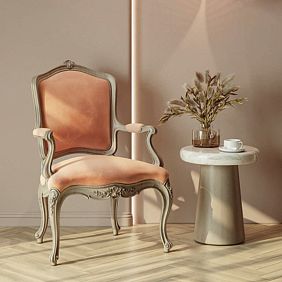
An armchair in a baroque interior is not a pair to the sofa. It is an independent hero. The Bergère armchair with high soft armrests and closed side panels, the armchair on carved legs with a straight high back, the wingback armchair with wrapped ears — all these formats have baroque roots and work perfectly in a modern interpretation of the style.
To create a Baroque living room, a pair of armchairs is usually placed symmetrically on either side of the sofa. Unity of style is fundamental here: fabric, color, pattern, legs — everything must rhyme. Buying Baroque upholstered furniture as a set is always better than collecting pieces individually from different sources.
Benches, poufs, settees
A bench at the foot of the bed or by the entrance, a pouf in the center of the living room as an alternative to a coffee table, an ottoman bench in front of the sofa — these items in a Baroque interior serve three functions at once: practical, decorative, and compositional. Without them, a living room or bedroom looks unfinished — like a symphony without a final chord.
Poufs and benches are upholstered with the same fabrics as the main upholstered group. The legs are carved, on the same furniture legs solid wood. Decorative fringe around the perimeter of the pouf is a classic Baroque technique that adds a sense of luxurious weight to the piece.
Fabric and color of Baroque upholstered furniture
Baroque furniture requires fabrics that are visually weighty. Thin polyester is not for this style. Here, the following work:
-
Velvet — a Baroque classic. Rich, with a deep sheen, it creates a feeling of heavy luxury. Best colors: burgundy, emerald, deep blue, purple, black with gold.
-
Jacquard — a fabric with a woven pattern. Floral and ornamental motifs of jacquard directly echo the carved decor of the furniture.
-
Tapestry — a dense, heavy fabric with a pictorial pattern. Hunting scenes, antique motifs, floral ornaments — tapestry turns the upholstery into a miniature work of art.
-
Genuine leather — for a more restrained, "masculine" interpretation of Baroque: studies, smoking rooms, meeting rooms. Dark leather combined with carved dark wood legs is a classic of study Baroque.
Baroque furniture for the living room
The living room is the main stage of the Baroque theater. Buying Baroque furniture for the living room means creating a space that is itself a statement.
At the center is a sofa. It sets the scale and direction of the entire composition. On the sides are armchairs flanking the sofa and creating a symmetrical soft seating group. In front of the sofa is a coffee table with carved legs: typically with a marble or glass top in a classic frame. Opposite the sofa is a display cabinet or secretary with glazed fronts, decorative inlays and a figured cornice.
Mirrors in carved frames
A mirror is an essential element of a Baroque living room. Huge, floor-to-ceiling or wall-to-wall, in a frame of carved solid wood with gilded details — it doubles the space and creates the feeling of a palace hall. In Baroque, the mirror was always hung opposite a window — to reflect light and multiply it in the room. This principle still works today.
Console table against the wall
A console table is another recognizable element of a Baroque living room. Narrow, on carved legs, with a profiled top — it occupies space against a wall or in a pier between windows, creating a decorative accent. Candelabras, clocks, vases, and collectibles are placed on the console. A console with a mirror above it is one of the most powerful Baroque techniques, turning a boring wall into a full-fledged architectural object.
Wall decor: moldings, stucco, overlays
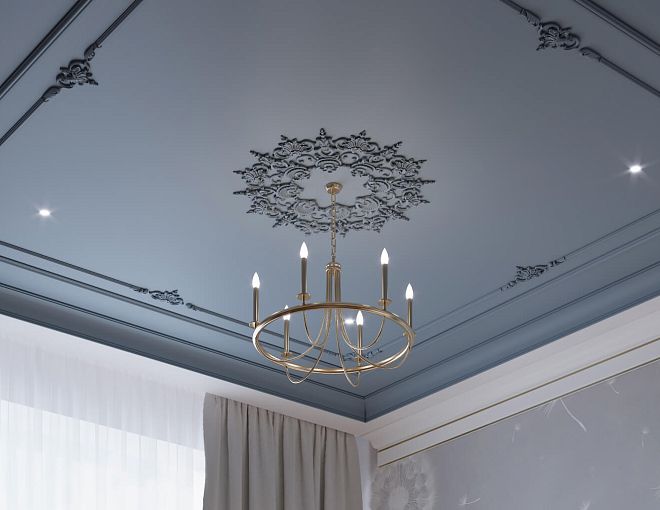
A Baroque living room is unthinkable without detailed walls. Moldings create a horizontal and vertical rhythm, Polyurethane moldings enriches ceiling cornices and corner areas, Decorative Inserts at key points — intersections, panel centers — become the final decorative accent. It is the walls — and how they are decorated — that distinguish a Baroque interior from an interior "in the Baroque taste."
Baroque bedroom furniture
A Baroque-style bedroom is a special world. Intimate, private, yet solemn. Buying Baroque bedroom furniture means turning a night's rest into a ceremony.
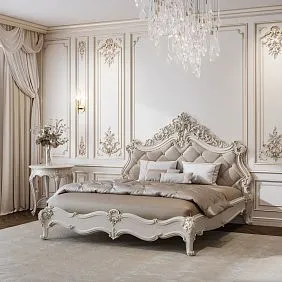
The center of the bedroom is the bed. In Baroque, the bed is never just a place to sleep. It is an architectural object: a high decorative headboard with carving, gilding, or soft upholstery in the carriage technique, massive side rails, legs with a characteristic Baroque profile. The Versailles bed, the Louis bed — the names themselves speak of belonging to the aesthetics of royal palaces.
What is included in a Baroque bedroom
-
Bed — with a high headboard, carved or soft, on carved solid wood legs
-
Nightstands — paired, in the style of the bed, with profiled fronts and carved handles
-
Chest of drawers — with applied decorative elements, curved front and bronze handles
-
Wardrobe — with a baroque profile cornice, mirrored or glazed inserts
-
Dressing table — with mirror, carved frame, drawers on curved legs
-
Mirror in carved frame — wall-mounted or floor-standing, as a decorative accent
-
Bench at the foot of the bed — with upholstery matching the bedding
Color in a baroque bedroom
Dark wood — wenge, dark walnut, black oak — with gold patina on carved elements creates an interior that is both solemn and intimate. A light interpretation of baroque — ivory with gold, cream tones with silver patina — gives a softer, more delicate atmosphere, suitable for a woman's bedroom or a room with large windows.
Baroque and Rococo furniture: what to choose
Often a buyer looking to purchase Baroque-style furniture comes across Rococo furniture offers — and doesn't immediately understand the difference. Let's figure it out.
| Style | Features | Scale | When to choose |
|---|---|---|---|
| Baroque | Lush decor, symmetry, massiveness, gold, carving | Large items for spacious halls | Spacious living rooms, halls, studies, formal rooms |
| Rococo | Lighter and more playful, asymmetry, pastel tones | More compact and elegant than Baroque | Bedrooms, boudoirs, studies, intimate interiors |
| Neoclassical | Simplified Baroque forms, restrained decor | Standard | Apartments, country houses, modern projects |
| Classic | Universal system, moderate decor | Flexible | Any interiors from small to spacious |
Buying furniture in the Baroque and Rococo styles means consciously choosing a stylistic direction. Baroque is about power and grandeur. Rococo is about elegance and play. It is possible to buy furniture in the Rococo and Baroque styles in one space, but only with a thoughtful design approach: one style dominates, the other adds a nuance.
What influences the price of Baroque furniture
The price of buying Baroque furniture is a question worth studying in detail. Baroque cannot be cheap by definition — there is too much manual labor in each piece. But understanding what makes up the price is necessary to avoid paying the price of an original for an imitation.
1. Body material
Solid wood — oak, beech, walnut — is the top price level. MDF with film coating is the bottom. The price difference reflects the difference in lifespan: solid wood lasts 50 years and can be restored, film coating wears out in 5–7 years and cannot be repaired.
2. Type of finish
Hand gilding, multi-layer lacquering, patination with hand-drawn relief — all this is the work of highly skilled specialists. Imitation gilding by spraying is cheaper, but visually differs upon close inspection.
3. Presence and complexity of carved decor
Carved furniture decor Hand-carved work is one of the main pricing factors. An acanthus leaf made by hand by a master costs many times more than a cast polyurethane copy — and is many times more expressive.
4. Complexity of legs and facades
Cabriole legs with carving along the entire length, with gilded overlays at the bottom — all of this is complex turning and carving work. Furniture legs Solid wood with a shaped profile costs significantly more than straight MDF supports.
5. Fabric and upholstery
Natural velvet or silk jacquard is several times more expensive than synthetic counterparts — and at the same time creates a completely different feel. In Baroque, saving on fabric is especially risky: it is the upholstery material that primarily conveys (or fails to convey) the feeling of true luxury.
6. Item size
A sofa for four seats is more expensive than a two-seater not only because of more fabric and wood. The frame is more complex, there are more legs, and more decor as well. A large item always carries a proportionally higher cost.
7. Completeness
Purchasing a full set — a sofa, two armchairs, a pouf — is often more profitable than buying the same items individually. Keep this in mind when planning your budget.
8. Hardware: handles and overlays
Furniture Handles Cast bronze and carved wooden handles are not an element to skimp on. In Baroque, the handle is the master's final signature. A cheap stamped handle on an expensive facade is like a plastic button on a silk tuxedo.
9. Custom sizes
Furniture made for a specific niche, non-standard ceiling heights, or custom design is always more expensive than a standard product. But it is precisely this that creates the feeling of an object born for that space.
10. Delivery and assembly
Large Baroque furniture—cabinets, beds, display cases—requires professional transportation and on-site assembly. This is not a category where you can rely on self-pickup in a passenger car.
How to avoid mistakes when buying Baroque furniture
Buying Baroque furniture cheaply is a legitimate request, but one that requires caution. Here is a list of mistakes that are most often made—and which are easy to avoid if you know them in advance.
They choose furniture without a room plan. Baroque is a large-scale style. A spacious sofa that looks harmonious in a large living room will take up all the space in an 18 sq. m room. Measure the room, make a plan—and only then look at the catalog.
They overload a small space with large items. Baroque in a small space is not scary if you choose the right scale. One accent piece—a sofa, armchair, chest of drawers with a mirror—and the rest of the interior supports it without duplicating it.
They mix Baroque with loft and minimalism without logic. Styles can be combined—but only with a conscious design decision. A random mix of mismatched furniture without a unifying element is not eclecticism; it is chaos.
They buy upholstered furniture without checking the fabric. The color on the screen is deceptive. The texture can only be guessed in reality. If possible, request fabric samples before placing an order.
They forget about ceiling height. Baroque requires vertical space. A tall cabinet with a cornice, a bed with a carved canopy headboard, a full-length mirror — all of this works with ceilings from 2.8 m. In a standard panel building with a 2.5 m ceiling, you either need to adjust the scale or choose a more restrained interpretation of the style.
They only compare the price of one item. A sofa for 50,000 rubles plus armchairs for 30,000 plus wall decor plus lighting — the final budget may come as a surprise. Plan the total cost of the entire concept, not just the cost of one piece.
They ignore details — handles, legs, frames, moldings. This is the most destructive mistake. Furniture Handles, Furniture legs, Mirror Frames и Moldings — these are the links that turn a set of items into an interior. Without them, baroque falls apart into individual expensive pieces.
Baroque wooden furniture: why natural material is essential
Why are plastic and MDF impossible in authentic baroque? Because baroque is a style where material carries meaning. Wood is a living material, with texture, breath, and memory. Wood carving is working with the resistance of the material, which is impossible when working with synthetics. Patina on a wooden surface is a story recorded in layers of varnish.
Carved baroque wooden furniture — these are items that become more beautiful over the years, not worse. Oak darkens and gains nobility, beech takes on patina, walnut shimmers in the half-light with its warm pattern. That is why a genuine baroque piece is an investment, not an expense.
Classic Furniture STAVROS is made from selected species — oak, beech, walnut — using hand carving and varnishing. Each piece goes through a full production cycle: from material selection to final finishing control.
Baroque furniture for the study: status without compromise
A Baroque-style office is not just a workspace. It is a place where decisions are made in surroundings that match their scale. A massive writing desk with carved legs, a high-back leather armchair, a display cabinet with glazed fronts, a console with picture frame — all of this creates an environment where the owner feels in their element.
Dark classics — wenge, dark walnut — work best here. Bronze hardware, dark leather, massive Decorative Inserts on the facades — this is a masculine, confident interior that speaks of the owner's character without unnecessary words.
Where to buy Baroque furniture: online store and delivery across Russia
Where to buy Baroque-style furniture with quality assurance and without the risk of disappointment? Buying Baroque furniture in an online store is possible, but requires a careful approach.
You can buy upholstered furniture in the Baroque style in an online store with delivery across Russia through the STAVROS catalog. It features Classic Baroque furniture — sofas, armchairs, poufs, beds, consoles, chests of drawers, mirrors — with full specifications, photos from multiple angles, and the option to order with custom parameters.
Buy Baroque furniture in Moscow or buy Baroque furniture in St. Petersburg — delivery is available to both cities, as well as throughout Russia: Krasnoyarsk, Novosibirsk, Yekaterinburg, Kazan, and other regions. STAVROS's own production ensures a transparent price without intermediary markups.
baroque furniture STAVROS should be selected as an interior composition: upholstered furniture, case elements, Carved Decor, Legs, Handles, Frames, Moldings и Polyurethane moldings must work in a single style — only then a true Baroque interior is born, not its weak imitation.
FAQ: answers to popular questions about Baroque furniture
Where to buy Baroque-style furniture?
Furniture in Baroque style can be selected in the STAVROS classic furniture catalog — with delivery throughout Russia. Before purchasing, it is important to determine the room, its dimensions, ceiling height, color, set composition, and decorative elements.
How is Baroque furniture different from classic furniture?
Classic Furniture — is a broad concept that includes different styles. Baroque is a specific style with lavish decor, curved forms, gilding, carving, and rich upholstery. Classic can be restrained; Baroque — never.
Which Baroque upholstered furniture should I buy?
For the living room — sofas and armchairs with tufted upholstery, velvet covering, and carved solid wood legs. Add a pouf or bench, a coffee table, and mirror in a carved frame.
What affects the price of Baroque furniture?
Body material, type of finish, complexity of carving, fabric and upholstery, Furniture Handles и Decorative Inserts, size, set composition, custom parameters, delivery and assembly.
Is Baroque furniture suitable for a modern apartment?
Yes — with the right approach. One accent piece (sofa, chest of drawers, mirror) combined with a neutral wall background, moldings и moldings creates a convincing Baroque accent even in a standard apartment.
Baroque and Rococo furniture — what's the difference and what to choose?
Baroque is more massive, solemn, symmetrical — for spacious rooms. Rococo is more elegant, lighter, allows asymmetry — for bedrooms and intimate interiors. You can buy Baroque and Rococo furniture in one space — provided that one style is dominant.