Article Contents:
- Buy wooden railings
- What are wooden railings and why buy them as a system
- Which wooden railings to buy: selection guidelines
- Material: what is best for railings
- Wooden railings for stairs
- Railings for an internal staircase to the second floor
- Railings for a wooden staircase in a private house
- Railing height and safety requirements
- Railings for terrace, porch and balcony
- Wooden railings for terrace
- Wooden railings for porch
- Wooden railings for balcony and veranda
- What is included in the wooden railing kit
- Handrail: profile, width, material
- Balusters: rhythm of the railing
- Wooden railings: types and styles
- Classic wooden railings
- Carved wooden railings
- Railings for Russian style
- Wooden railings for painting
- Railings for neoclassical style
- What affects the price of wooden railings
- How to calculate wooden railings before purchasing
- Mistakes when buying wooden railings
- Where to buy wooden railings
- FAQ: popular questions about wooden railings
Buy wooden railings
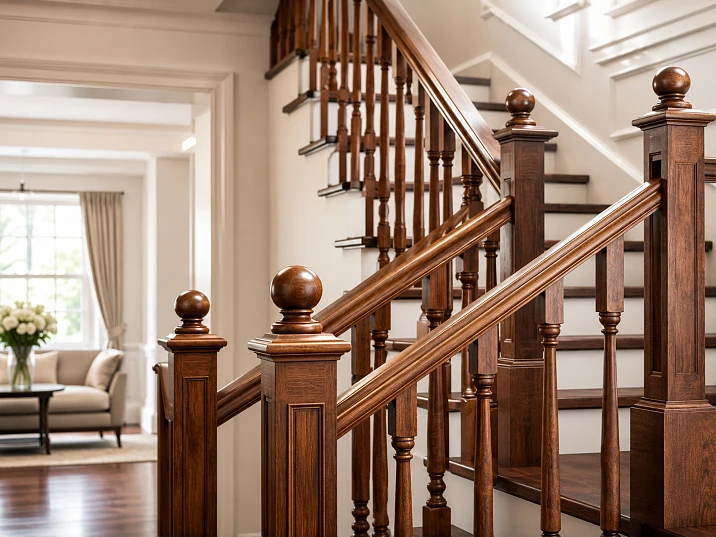
Railings are the boundary between space and emptiness. Literally: where the step ends and the air begins, railings stand guard. But in a well-designed home, they are never just a "fence." They are part of the architecture, part of the character, part of the history of the place. Buying wooden railings means making a decision about how your home will look and feel for many years.
Wooden railings for stairs, terraces, porches, second floors, and verandas — each of these applications has its own logic, its own requirements for material, height, profile, and protective coating. This article provides a complete and honest analysis: from system selection to quantity and price calculation.




What are wooden railings and why buy them as a system
First of all — terminology. In everyday speech, "railings" and "handrail" are often confused and used as synonyms. This leads to errors when ordering.
A handrail is the upper horizontal element of the railing: the wooden plank with a profiled cross-section that the palm slides along when ascending or descending. One handrail — one piece.
Railings are a broader concept. This is the entire railing system assembled: the handrail plus Balusters for staircase plus Posts for staircase plus fastening and decorative elements. Railings are the railing as an object.
That is why buying wooden railings means not buying one piece, but forming a set. The one who buys only a handrail gets a strip. The one who buys railings as a system gets a railing.
Why is this important from a practical standpoint? Because mismatched elements from different sources almost always create problems during installation: groove mismatches, different wood species, different color after tinting, stylistic conflict. A systematic approach is the only one that works without surprises.
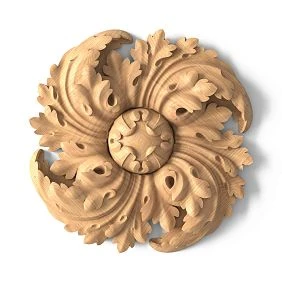
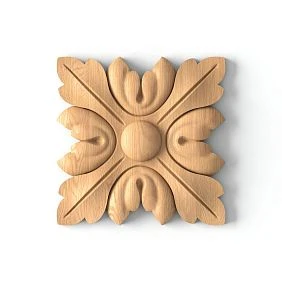
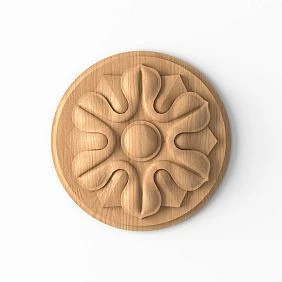
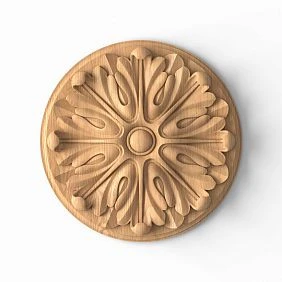
Our factory also produces:
Which wooden railings to buy: selection guidelines
Buying wooden railings is a query that covers different scenarios. One buyer is building a country house and wants a monumental staircase with carved posts. Another is looking for a simple railing for an open terrace with a wooden deck. A third is replacing old railings in a city apartment with a two-level layout.
Before moving on to specific elements, answer three key questions:
Where will the railings be installed? Indoors (staircase, second floor, mezzanine) or outdoors (terrace, porch, balcony, veranda)? Outdoor use requires special wood protection against moisture.
What is the interior or exterior style? Classic, neoclassical, country style, baroque, minimalism, Russian style? The style determines the shape of the balusters, the profile of the handrail, and the type of decor.
What is the budget? The price of wooden railings consists of the cost of the handrail, balusters, posts, fasteners, delivery, and installation. A mistake is to budget based on the price of just one handrail.
By answering these three questions, you significantly narrow down your choices—and make an informed decision.
Get Consultation
Material: what is best for railings
Solid wood railings are the most durable and noble choice for indoor staircases. Three main options:
Oak — hardness 3.7–4.0 kN/mm², density 750–880 kg/m³. Resistant to abrasion, does not deform under stable humidity, takes staining well. The most popular material for wooden railings in country houses.
Beech — slightly softer than oak, fine-grained and uniform. Ideal for enamel: the surface after sanding is flawless. For white or colored railings in a classic style, it is the best choice.
Ash is light-colored, with a characteristic large texture. It pairs well with modern interiors and Scandinavian style. Hardness is higher than oak.
For open outdoor structures (terrace, porch) — wood requires moisture-resistant impregnation and annual coating renewal. Larch is the most moisture-resistant among domestic species. Pine with quality treatment is also used for outdoor railings.
Wooden stair railings
This is the largest cluster of the topic — and the most critical from a design perspective. Buying wooden stair railings means creating a railing that will last for decades, be used daily, and must remain beautiful and safe.
Railings for an internal staircase to the second floor
Wooden railings for the second floor are one of the most popular scenarios in private homes. The staircase to the second floor is the central object of the first floor. It is visible from the hallway, living room, and kitchen-dining area. Its railing sets the tone for the entire interior.
Typical construction: a single-flight or double-flight staircase with wooden steps, railing on a stringer or on a carriage. balusters are installed directly on the steps or on a sub-balustrade. Posts — at the bottom and top steps, as well as at turns. Handrail — along the entire length of the flight.
A feature of an internal staircase is that the railings are constantly visible, from close range, under different lighting. Therefore, the quality of surface treatment, precision of shapes, and tinting color are fundamentally important. Cheap machine-sanded balusters with uneven surfaces ruin the impression of an expensive staircase. Conversely: neat turned balusters with hand sanding "Prestige" elevate even a modest staircase to a higher level.
Railings for a wooden staircase in a private house
Wooden railings for a private home are the most diverse request in terms of scenarios. A private home may have a straight single-flight staircase of 8–10 steps, a U-shaped two-flight staircase with an intermediate landing, or a steep staircase to the attic.
Each configuration has its own selection logic. Straight flight: 2 posts, one length of handrail, evenly spaced balusters. U-shaped staircase: 4–5 posts, two handrail sections, turning elements on the landing. Staircase to the attic with a slope of 35–45°: shortened balusters (their lower ends are cut at an angle), an inclined handrail with a smooth transition to a horizontal section.
A wooden staircase railing in a private home is not only about safety but also the aesthetics of the entire space. wooden balustrade with turned balusters and a monumental starting post turns an ordinary staircase into an architectural accent.
Railing height and safety requirements
According to current standards (GOST R 58208-2018, SP 118.13330), the railing of staircases in residential buildings must be at least 900 mm high. For staircases with a slope greater than 45° and in homes with children, 1000 mm is recommended. The gap between balusters must be no more than 100 mm.
These parameters are not just a norm—they stem from the physics of the human body. A railing height of 900 mm corresponds to the waist level of an average-height adult. This is the point where the body instinctively seeks support when losing balance.
An important nuance: the height of 900 mm is measured from the surface of the step. When installed on an inclined flight, balusters are cut from below at the angle of the slope. Their actual length is greater than 900 mm so that after cutting, the required railing height is maintained.
Railings for terraces, porches, and balconies
Outdoor wooden railings are a different story. Here, requirements for structural resistance to atmospheric influences are added to aesthetics, and decisions are made differently.
Wooden railings for terrace
Buying wooden railings for a terrace means creating a fence that will work in open sky conditions: rain, snow, temperature changes from -30°C in winter to +35°C in summer. Wood in such conditions lives by its own laws: expands when wet, contracts when dry, darkens without care.
What are the requirements for wooden railings for an open terrace?
-
Wood species: larch, oak, or wood with rot-proof impregnation
-
Coating: exterior oil, antiseptic, UV-resistant varnish, or water-based impregnation
-
Fasteners: stainless steel or galvanized hardware — regular steel fasteners rust and leave rusty streaks on wood
-
Structure: posts are anchored to the terrace base without direct contact of the wood end with a wet surface
-
Maintenance: annual renewal of protective coating
carved balusters on an open terrace — beautiful, but require more thorough care: moisture accumulates in the relief of the ornament. For outdoor structures, turned balusters with a smooth surface are easier to maintain.
Wooden railings for an open terrace are an important element of the house's facade image. They are visible from outside, from the street, from the garden. Their style should match the architecture of the house: for a timber house in Russian style — Flat balusters with ornament, for a European country house — strict turned elements.
Wooden porch railings
Buying wooden porch railings is one of the most popular queries in the outdoor fencing segment. The porch is the entrance group of the house: the first thing a guest sees, the last thing the owner sees when leaving the house. The porch railing is its face.
The porch structure is usually compact: 3–7 steps, a small platform in front of the entrance door. The railing is on both sides of the flight or on one side (when adjacent to a wall). The railing height is standard 900–1000 mm. The number of balusters is from 6 to 20 pieces depending on the width and length of the flight.
The peculiarity of the porch is its visual significance with a minimal area. Here, details decide everything. A beautiful starting post with a finial at the bottom step, a neat row of turned balusters, a profiled oak handrail — and the porch turns from a budget structure into a house's asset.
For wooden porch railings, it is important to correctly calculate the baluster cut angle: if the porch flight is short (3–5 steps), the rise angle can be quite steep — from 30° to 40°. With such steepness, the balusters are cut significantly, and their "working" height decreases. This must be considered when choosing: take balusters with a height margin.
Wooden railings for balcony and veranda
Balcony, terrace, and veranda have similar structural requirements — outdoor conditions, attachment to the floor or posts — but different application logic.
Balcony — limited area, visual connection with the facade. Wooden balcony railings create a warm and natural contrast with facade materials: brick, plaster, stone. For urban balconies — simplified turned balusters, for country houses — richer decor.
Veranda — semi-enclosed space. The railings here are partially protected from direct rain by a canopy or roof. Coating requirements are less strict than for an open terrace, but outdoor antiseptics are still mandatory.
Open terrace — maximum requirements for material durability and coating quality.
What is included in the wooden railing kit
A wooden railing kit is a concept that combines several elements, each performing its own function. Buying them separately from different suppliers is a common mistake.
| Element | Function | Where it is used |
|---|---|---|
| Handrail (handrails for wooden railings) | Top line of the railing, comfortable grip | All types of railings |
| balusters | Regular vertical railing elements | All types of railings |
| Posts for staircase | Support elements at key points | Start, end of the flight, turns |
| Bottom rail | Bottom rail for attaching balusters to the step | Stair flights |
| Post finials | Decorative top post cap | All types of railings |
| Carved Decor | Overlays, rosettes, corner elements | Classic and carved railings |
| Fastening | Anchors, studs, screws, mounting plates | All types of railings |
Buying handrails with balusters as a single kit is the optimal strategy. This guarantees compatibility of elements in terms of dimensions, one material, one style, and one supplier responsible for the result.
Buying handrails with posts from one manufacturer is an additional argument: STAVROS posts and balusters are designed within unified collections. The starting post, baluster, and handrail from one series form a system, not a set of spare parts.
Handrail: profile, width, material
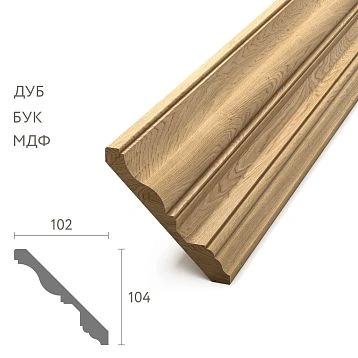
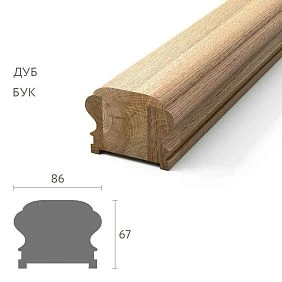
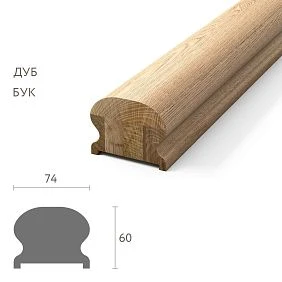
The handrail is the most tactile element of the railing. Its shape determines how comfortable it is to hold onto the railing. The standard profile is semicircular with a flat bottom base: width 50–70 mm, height 30–45 mm. This handrail is comfortable for most hands.
Special profiles:
-
Extended semicircle (70–80 mm) — for wide stairs and grand railings
-
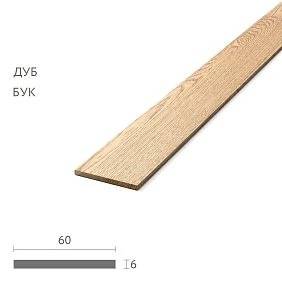
Flat with chamfers — for minimalist interiors
-
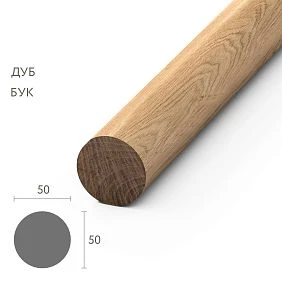
Oval — soft profile, comfortable for children and the elderly
-
Shaped with grooves — for decorative classic railings
The width of the handrail should be comparable to the width of the top end of the post. If the post is 120×120 mm — a handrail 50 mm wide looks flimsy. Optimal ratio: the handrail equals the width of the post or is slightly narrower.
Balusters: the rhythm of the railing
Balusters for staircase set the visual rhythm of the railing. In a row, they form a decorative "palisade" that simultaneously fills the railing space and creates an ornamental effect.
Typical installation spacing is 120–150 mm between centers. With a spacing of 130 mm, a standard flight 3.8 m long requires about 30 balusters. That's a lot — so the shape of the baluster is important: an unsuccessful profile, multiplied by 30 pieces, will be very noticeable.
Three main types:
-
Turned — classic, symmetrical turned profile
-
Carved — CNC milling, baroque or ornamental decor
-
Flat — silhouette from board, for Russian style and country
Wooden railings: types and styles
Solid wood railings exist in a huge stylistic range. Let's go through the main ones.
Classic wooden railings
Classic is the most stable demand. Turned balusters with a pronounced middle body, posts with a multi-step profile, a semicircular handrail made of oak or beech — this is a time-tested combination that fits organically in any home with a traditional layout.
Staircase balustrade in classic style — a term that covers exactly this type: a row of balusters with a handrail, framed by support posts. A classic balustrade is not archaic, it is an eternal format that works in living spaces of any scale.
Carved wooden railings
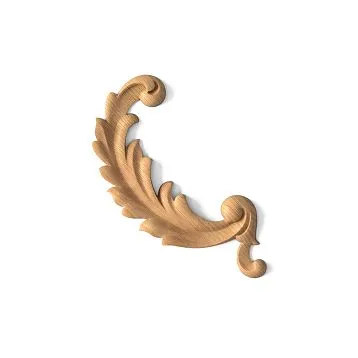
Carved wooden railings are the highest level of decorativeness in wooden stair railings. Here the balusters carry three-dimensional ornament: acanthus leaves, flutes, braids, grape clusters. The posts turn into columns with relief belts. Carved wood decor on transition pads and finials ties the entire railing into a single whole.
Who is it for? For country houses with rich interiors, for restaurants and hotels, for private residences in Baroque or Empire style. Carved railings are a statement. They speak of taste and that the owner takes their home seriously.
Railings for Russian style
Flat balusters with silhouette ornamentation — a national tradition of wooden architecture. Saw-cut carving, geometric patterns, floral motifs on the board's plane — this is the image of a wooden house in the fullest sense. Such railings are appropriate on the porch of a timber house, on the veranda of a log estate, on an open terrace in a classic country style.
Wooden railings for painting
Wooden railings for painting are a separate category. For this option, beech is chosen: its uniform fine-grained structure perfectly accepts primer and enamel. The surface after "Standard" sanding requires priming before painting. With "Prestige" sanding, the final coat can be applied without additional operations.
White railings in Provence or neoclassical style — one of the enduring interior trends of recent years. White enamel on beech balusters and posts, a dark wooden handrail made of oak — a contrasting, elegant combination.
Railings for neoclassicism
Neoclassicism is the most popular style in modern country houses and city apartments with two-level spaces. Here, railings with restrained but refined decor are chosen: turned balusters without excessive relief, posts with a neat profile, a handrail made of light or tinted oak.
An important detail of neoclassicism is symmetry and rhythm. Even spacing of balusters, identical gaps, clearly aligned posts — any deviation from the rhythm destroys the style. Therefore, precision in calculation and installation is especially critical here.
What affects the price of wooden railings
Buy wooden railings price — one of the most popular clarifying queries. The price range for wooden railings is huge: from a few thousand rubles for a simple pine handrail to hundreds of thousands for a complete set of a formal carved oak railing. Why such a spread? Here is the pricing structure.
Wood species. Oak and ash are more expensive than beech, beech is more expensive than pine. The difference in cost per cubic meter is up to 40–60%. For a large order volume, this is a significant amount.
Length of the railing. Wooden stair railings buy price directly depends on the linear footage: the handrail is charged per meter, balusters per piece, posts per unit.
Height of the railings. A high railing (1000–1100 mm) requires taller balusters and increases handrail consumption. Every additional centimeter is material volume.
Handrail profile. A simple semicircular profile is cheaper. A shaped milled profile with grooves is more expensive. A custom designer profile is calculated separately.
Number of balusters. The main cost component for small staircases. For a long flight (5–6 m), balusters can account for 50–60% of the total set cost.
Number and type of posts. Starting posts with decor are more expensive than intermediate ones. Carved posts from the catalog are more expensive than square ones.
Presence of carved decor. carved balusters and carved posts are separate items with a higher price compared to turned counterparts.
Complexity of turns. Each handrail turn is either a ready-made bent element, a composite assembly of standard parts, or a bend on a steam stand. The more turns, the higher the final cost.
Wood coating. Tinting, enamel or oil for outdoor railings is an additional operation. If you order with a turnkey coating, it is included in the price. If you take white wood, you only evaluate the products.
Delivery. Railings for stairs in Nizhny Novgorod, Voronezh, Krasnoyarsk, Rostov and Lipetsk are delivered by transport companies CDEK or DPD. The cost depends on the weight and volume of the batch.
Installation. Professional installation of stair railings is a separate service. Depending on the complexity and region, from 15,000 to 60,000 rubles or more.
Plan your budget for a complete set: handrail + balusters + posts + fasteners + delivery + installation. Only then will the figure be realistic.
How to calculate wooden railings before purchasing
Correct calculation is half of a successful purchase. Here is a step-by-step algorithm that works for any design.
Step 1. Measure the length of the railing.
For a stair flight, the horizontal projection from the first to the last step. For a terrace or porch, the total length of the enclosed perimeter.
Step 2. Determine the height of the railing.
Standard is 900 mm from the surface of the step or floor. For homes with children, 1000 mm. For open terraces with a height above ground level of more than 600 mm, the norm recommends 1000–1100 mm.
Step 3. Calculate the number of posts.
Fence start — 1 post. Fence end — 1 post. Each corner or turn — 1 turning post. For a straight flight of 4 m — at least 2 posts. For a U-shaped staircase — 4–5.
Step 4. Determine the spacing of balusters.
120–150 mm between centers. With a spacing of 130 mm, there are about 7–8 balusters per 1 m of railing.
Step 5. Calculate the number of balusters.
Number = railing length (mm) ÷ spacing (mm). For 4,000 mm ÷ 130 mm = 31 balusters. Add 10% reserve: 31 + 3 = 34 balusters.
Step 6. Calculate the length of the handrail.
For an inclined stair flight — using the Pythagorean theorem:
handrail length = √(horizontal length² + flight height²).
Example: √(4000² + 2800²) = √(16,000,000 + 7,840,000) = √23,840,000 ≈ 4882 mm.
With a 10% margin — 5370 mm ≈ 5.4 m.
Step 7. Account for landings and horizontal sections.
If there is an intermediate landing, it will require a horizontal handrail section, a turning post, and possibly additional balusters around the perimeter.
Step 8. Add a margin for trimming.
10–15% for balusters, 10% for the handrail. Balusters on an inclined flight are trimmed from below at an angle — an error in trimming renders the baluster defective.
Step 9. Coordinate the style of all elements.
One collection, one wood species, one processing category — only then you get a cohesive railing.
Step 10. Calculate the total cost.
Add up: balusters × price + posts × price + handrail × length × price/m + fasteners + delivery. This is the real cost of wooden railings.
Mistakes when buying wooden railings
Experience from hundreds of orders allows us to identify eight common mistakes. Avoid them, and your project will proceed without unnecessary costs.
They only buy the handrail, forgetting about balusters and posts. A handrail without support is just a strip. A railing is a system. buy staircase components should be ordered in one order from one manufacturer.
They don't calculate the handrail length along the slope. They measure horizontally, but the handrail goes at an angle — and it ends up 15–20% too short. The sloped length is always longer than the horizontal one.
They compare the price of one handrail, not the entire set. Cheap handrail + expensive balusters + expensive posts = expensive result. Look at the total cost of the system.
They don't check the railing height. They bought balusters of 800 mm, but the standard is 900 mm. After installation, the railing turns out to be lower than allowed.
They mix different series. Balusters from one manufacturer, posts from another, handrail from a third. Grooves don't match, styles conflict. It's solved simply: a single manufacturer.
They don't consider outdoor operating conditions. Wooden railings for a terrace and porch require exterior coating. Interior oil or interior varnish on an open terrace — one season, and you'll have to redo it.
They don't plan the coating in advance. For tinting, you need 'Prestige' sanding. For enamel, 'Standard' with primer is enough. This choice must be made before ordering, not after receiving the products.
They buy without a reserve. One extra baluster that was missing during installation means a repeat order and waiting. A 10–15% reserve is mandatory insurance.
Where to buy wooden railings
Where to buy wooden railings — this is not a question of address, it's a question of principle. The best solution is a manufacturer with a full range that ensures compatibility of elements, uniform material, and the ability to order non-standard sizes.
STAVROS manufactures wooden railings, balusters for staircases и posts since 2002. The company was founded by two artist-restorers with experience working on state-significant sites: the Hermitage, the Konstantinovsky Palace, the Alexander Palace. This entails an understanding of wooden decor at a level inaccessible to mass production.
In the STAVROS catalog:
-
over 50 models of balusters — turned, carved, flat, made of oak, beech, and ash
-
over 30 models of posts — square, turned, carved, monumental columns
-
handrails of all standard profiles
-
decorative overlays, rosettes, finials
Wooden railings for stairs can be purchased in St. Petersburg, Krasnoyarsk, Voronezh, Nizhny Novgorod, Rostov, and Lipetsk — Contact us to confirm shipping to your destination. by transport companies. Packaging is reliable: corrugated cardboard, bubble wrap, end caps for long items.
STAVROS wooden railings should be selected as a system: handrails, balusters, posts и decorative elements must match in material, style, height, and purpose. This approach helps create a cohesive railing for stairs, terraces, porches, or private homes — without alterations or compromises.
FAQ: popular questions about wooden railings
Where to buy wooden railings?
Wooden railings can be selected from the STAVROS catalog — with Contact us to confirm shipping to your destination. Before purchasing, determine the installation location (stairs, terrace, porch), railing length, height, material, style, and number of elements.
How are wooden railings different from a handrail?
A handrail is the top horizontal element of the railing that the hand holds. Railings are the entire guard system: handrail, balusters, posts, fasteners, and decorative details assembled.
Which wooden railings should I buy for stairs?
For stairs, it's better to choose railings as a set: handrail, balusters, posts, and decor from the same collection and wood species. Consider the railing height (900–1000 mm), baluster spacing (120–150 mm), and interior style.
Can wooden railings be used on an open terrace or porch?
Yes, but conditions must be considered: the wood must be treated with outdoor antiseptics and a moisture-proof coating, fasteners must be made of stainless steel, and the ends of the posts must not come into contact with a wet surface. Coating renewal — annually.
What affects the price of wooden railings?
Wood species, fence length, railing height, handrail profile, number of balusters and posts, presence of carved decor, complexity of turns, coating, delivery and installation.
Is it necessary to add a margin when ordering railings?
Absolutely — 10–15% for balusters and 10% for the handrail. Balusters on an inclined flight are cut at an angle; an error during cutting leads to loss of the element. The margin eliminates the need for a repeat order in the middle of installation.