



























Article Contents:
- What a furniture maker means by the word "blank"
- Who this logic suits
- Which blanks are more profitable for a small workshop to buy ready-made
- Turned parts
- Shaped elements
- Carved details
- What is more profitable to make yourself
- Modular blanks for legs and uprights
- What the set looks like in practice
- Limitations of this approach
- Blank or finished leg: where the line is drawn
- Ready-made leg
- Assembled blank
- How to compare two options
- A simple rule for choosing
- Carved blanks: when a craftsman buys an ornament instead of turning it
- What can be bought ready-made
- How the need usually arises
- What to do about finishing
- When carved blanks are not needed
- Wooden profile as a furniture blank
- What to consider when working with a profile
- How to choose the readiness level of a blank
- Questions to ask before ordering
- How the readiness level changes the calculation
- Beech or oak: which blank to choose
- Oak
- Oak
- Combining with Metal
- Summary
- Limitations
- Size first, then a beautiful pattern
- Scale
- Common mistakes
- Why one sample is better than twenty blanks
- What the sample checks
- The price of a sample and the price of a mistake
- When a sample is not needed
- How to calculate blanks for a small batch
- Example one: four dressers
- Example two: modular leg
- Practical margin
- Repeat order
- When not to buy ready-made parts
- Blanks for chairs
- Where to buy wooden furniture blanks
- Steps to take before ordering
- What to clarify with the manager
- Workshop questions

An order for four dressers came in on Monday, and by Friday the workshop must show the client a sample. The cases can be glued up in two days. But each dresser has four legs with a turned pattern that the workshop's machine doesn't have, and it requires a template, setup, and another day for sanding. It is at this stage that it becomes clear that the word "blank" means to a carpenter not a board or a beam, but a formed wooden part that can be built into the product. Buying it ready-made is sometimes more profitable than making it yourself.
The short answer to the main question. It makes sense to buy ready-made those parts that require lathe or milling setup, repeatable geometry, and quality sanding, that is, turned, shaped, and carved elements. Simple straight bars and panels are usually made by the workshop itself. For an average order, this boundary lies where the cost of setting up the machine exceeds the difference between the price of the part and the cost of the material. How to determine it, what to check before ordering, and how to avoid getting the size wrong is covered below.




What a furniture maker looks for under the word "blank"
The word is ambiguous, and the query "furniture blanks" gathers completely different expectations. For some it is a board after planing, for others a furniture panel, for others a part after cutting at a production facility. To understand what this article is about, it is useful to build a chain of readiness levels: raw material, furniture panel, rough blank, formed wooden part, finished component.
Raw material and panels remain outside the scope of this discussion. Lumber is bought from a sawmill, panels from a panel manufacturer, and that is a separate topic with its own criteria: moisture, grade, gluing. We are interested in the last two links of the chain. A formed wooden part already has its final geometry: turned, shaped, or carved. A finished component differs in that the part is also surface-treated, and sometimes fitted with a mounting hole, and can be installed into the product immediately.
This difference matters for the economics of a workshop. A rough blank saves material but leaves work to do: the craftsman shapes, sands, and finishes it himself. A finished component saves time. Between them lies a whole scale that is worth keeping in mind with any order, and we will return to it in a separate section.
Pay attention to manufacturers' terminology. The STAVROS catalog has a "Konstruktor" section. It has nothing to do with children's building sets or handicrafts: according to the manufacturer's description, these are production parts made of solid beech and oak with "Prestige" class sanding. They are used for furniture, posts, rods, and partitions. From a workshop's point of view, these are ready-made forms that can be worked with immediately, not raw material. For comparison, broad queries like "furniture blanks and semi-finished wood products" describe exactly this professional sphere, so we use this angle.
This does not include furniture panels, plywood, melamine-faced chipboard, boards, timber, countertops, and lumber, as well as blanks for handicrafts, decoupage, and toys. If you need those, that is a different supplier and a different selection logic. Here we are talking about how a small joinery workshop saves time and gets a predictable result by buying complex parts ready-made.
Who this logic suits
It suits small workshops that make custom furniture in small series, bespoke furniture makers, and restorers. Industrial production with its own turning shop reasons differently: there the machine is loaded, and buying a part makes sense only under peak load. For a workshop without turning equipment, the question is simpler: it cannot be made, so it must be bought.
Our factory also produces:




Which blanks a small workshop is better off buying ready-made
Profitability is better calculated not by the price per piece, but by the total time and risks. A part that a craftsman turns himself costs the wood, the operator's time, tool wear, and the probability of defects. A ready-made part costs the catalog price plus the time for fitting and adjustment. The first sum is often hidden, the second is visible immediately, and that is why buying seems more expensive than it actually is.
There is a simple test. If making a part requires special tooling, a template, and machine setup, and you need ten or twenty pieces, buying is more profitable. If the part is simple, the shape is straight, and you make it with a single cut, it is better to make it yourself.
Get Consultation
Turned parts
Turning seems like a simple task until repeatability is needed. One turned element is made in half an hour. Twenty identical ones require a template, diameter control at every transition, identical sanding, and patience. A two-millimeter deviation on one of the repeats is noticeable to the eye, because identical parts stand next to it.
A turned part is expensive not because of the material, but because of the setup. That is why buying ready-made turned blanks is most profitable in three cases:
-
a series of identical parts is needed, and the workshop's lathe is busy with other orders;
-
the profile is complex, with several transitions, and adjusting it by hand is impractical;
-
the part must be coordinated in geometry with other catalog elements in order to assemble a system from them.
In the STAVROS catalog, such products are represented by the position "Product type: turned". This group also includes queries like "turned wood products" and "turned furniture parts", that is, ready-made turned elements that can be purchased without starting your own production.
Shaped elements
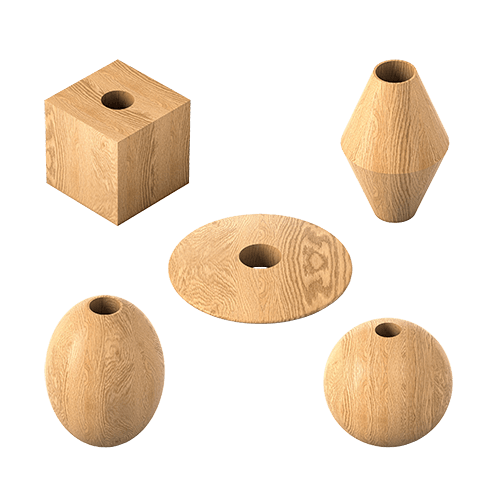
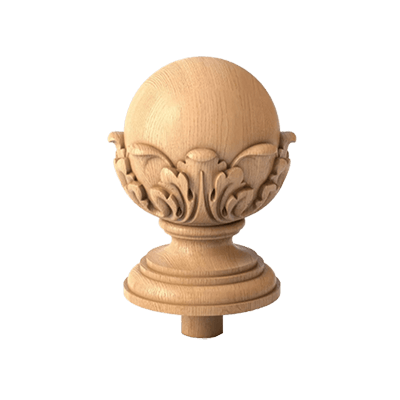
These include cubes, spheres, bushings, washers, discs, cones, and faceted shapes. Their form is simple to describe but precise to execute: a sphere must be a sphere, a cube a cube, and the mounting hole must run strictly along the axis. If the hole is off by a millimeter, the part looks skewed on the post, and this cannot be corrected.
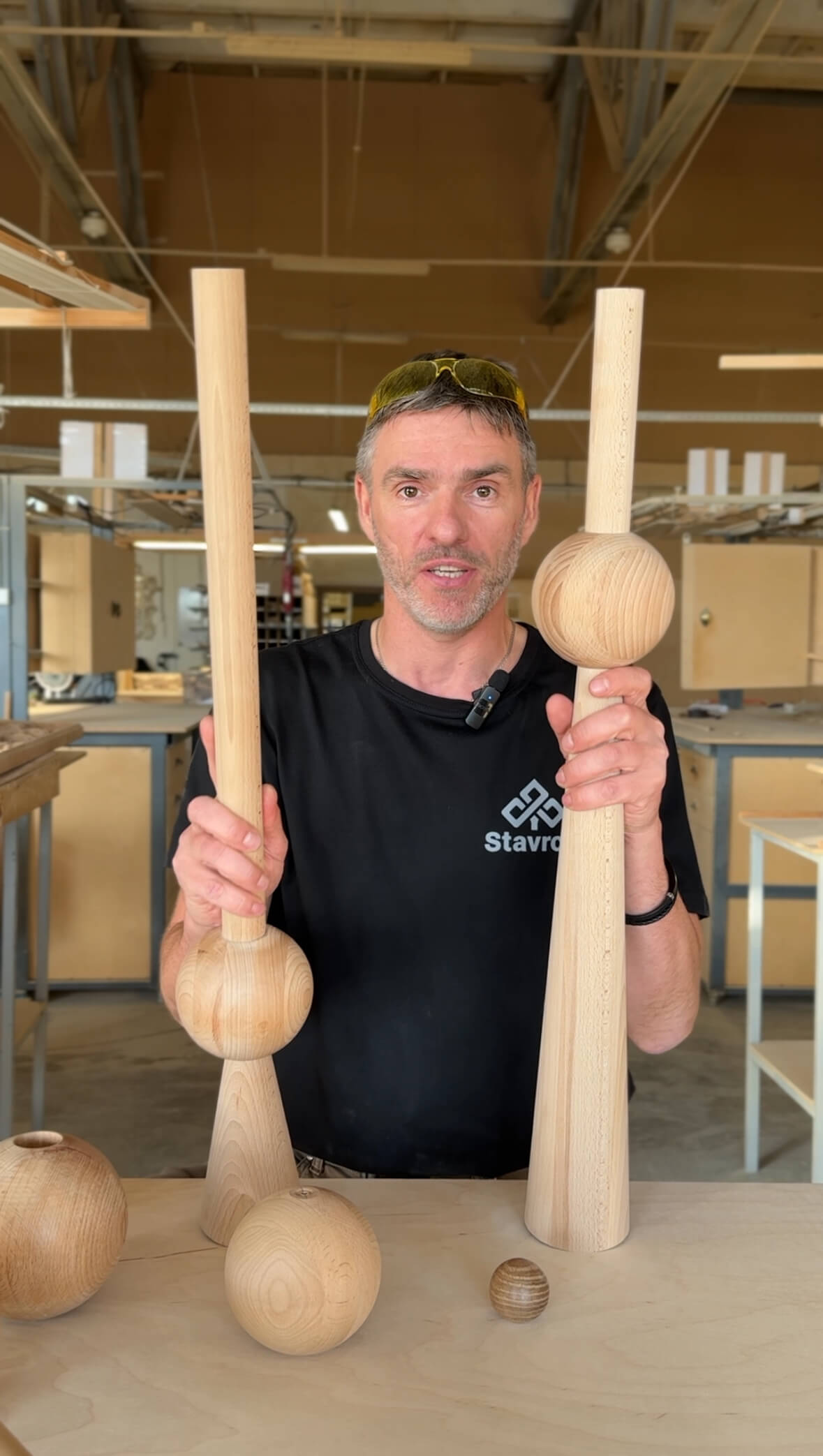
According to the manufacturer's description, the parts in the components section have a hole along the central axis for a standard diameter and are unified by a single production logic, meaning that when the diameter matches, they can be combined on one axis. This is fundamental for a workshop: instead of manufacturing a custom part for each project, you assemble a solution from catalog elements. What needs to be checked before ordering is covered in the sections on dimensions and samples.
You can view the entire range in the section wooden constructor elements. It features geometric shapes and wooden moulding, and the filters allow you to select products by shape, application (sofa, chest of drawers, wardrobe, cabinet, armchair, bed), collection ("Classic" and "Modern"), and sizes A, B, and C.
Carved parts
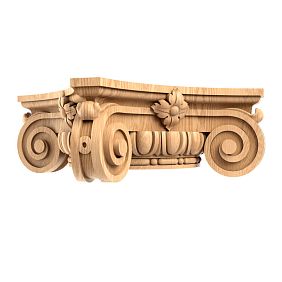
Carving is expensive not because of the material, but because of the craftsman's time or the CNC machine program. For a small workshop, it is almost always more cost-effective to buy a complex ornament: your own cutter, design development, and program debugging only pay off with large production runs. More on this below, in the section on carved blanks.
What is more cost-effective to make yourself
Not everything is worth buying. Straight bars, simple overlays without a profile, body parts, and internal elements that are not visible are more cost-effective to make in the workshop because they do not require complex setup. The same applies to non-standard dimensions: if the size is specified by the project and does not match the catalog, a ready-made part will require rework, which eats into the savings.
The selection rule is formulated as follows. Buy ready-made what is expensive to make and easy to verify against the catalog. Make yourself what is simple to execute or strongly tied to a specific project.
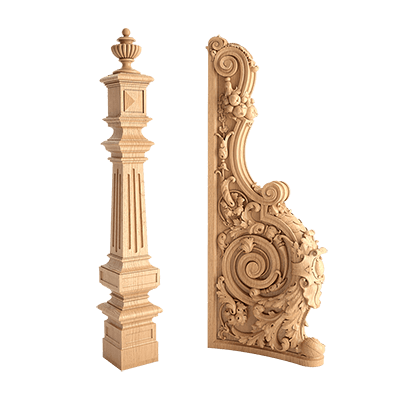
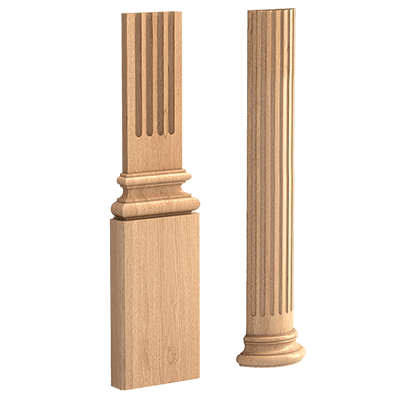
Modular blanks for legs and posts
One of the most practical scenarios for ready-made shaped parts: a leg or post assembled from several elements. The principle is simple. An axle runs through all the parts, elements are threaded onto it one after another, spacers are placed between them, and a base goes at the bottom. The result is a ready-made support whose proportions you define yourself.
The scheme is as follows: an axle, several wooden elements, spacers, a base, and a ready-made post or leg. Each element serves its own purpose.
-
The spherical element provides soft volume and works as an accent.
-
The cube sets strict geometry for minimalist and concise solutions.
-
Faceted modules are suitable for custom solutions, especially in stained oak, where each facet reveals the texture in its own way.
-
Washers and bushings act as thin spacers and add almost no height.
-
Conical elements stretch the structure upward and work as adapters or bases.
What the set looks like in practice
Let's take three items from the catalog. A wooden cube KN-011 starts at 1,980 rubles. A conical module KN-012 from 1,990 rubles. Elongated module KN-008 from 2,520 rubles (prices at the time of checking, "from"). If three parts have a matching mounting diameter, a leg can be assembled from them: a cube as the support block, an elongated module as the body, a cone as the finishing transition.
The price of such an assembly for one leg comes out to about 6,490 rubles. This is a rough estimate: it assumes that the diameters match and that this particular sequence suits you. Both conditions need to be checked against the product cards, because the section page states directly: before ordering, you must verify the axis dimensions against the mounting hole using the drawing. The figure of 6,490 rubles is only meant to give an order of magnitude; the actual amount depends on the selected options, sizes, and wood species.
Limitations of this approach
Modular assembly requires an axis. A leg assembled from several parts is held by a rod or tube, not by glue on the end faces. Questions of strength and how the axis is attached to the body are decided by the product designer, not by the parts catalog. Decorative elements do not replace the load-bearing structure, so the load must be borne by the rod or post, while the wooden modules remain cladding and an accent.
Another limitation relates to visibility. A part that is covered by upholstery, an overlay strip, or an adjacent element serves no purpose. The manufacturer warns about this: check that the element will be visible after assembly. Draw a sketch in advance with heights and the order of elements.
For selection, see the section wooden constructor elements: here you will find shapes of various forms with dimensions and product codes.
Blank or finished leg: where the line is drawn
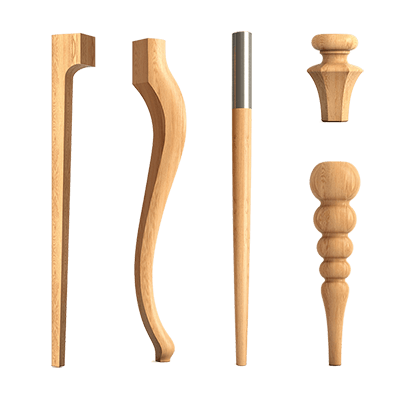
A craftsman has two ways to get a support for a chest of drawers or an armchair. Buy a finished leg or assemble it from modules. The choice depends on how many decisions you want to keep in your own hands.
Ready-made leg
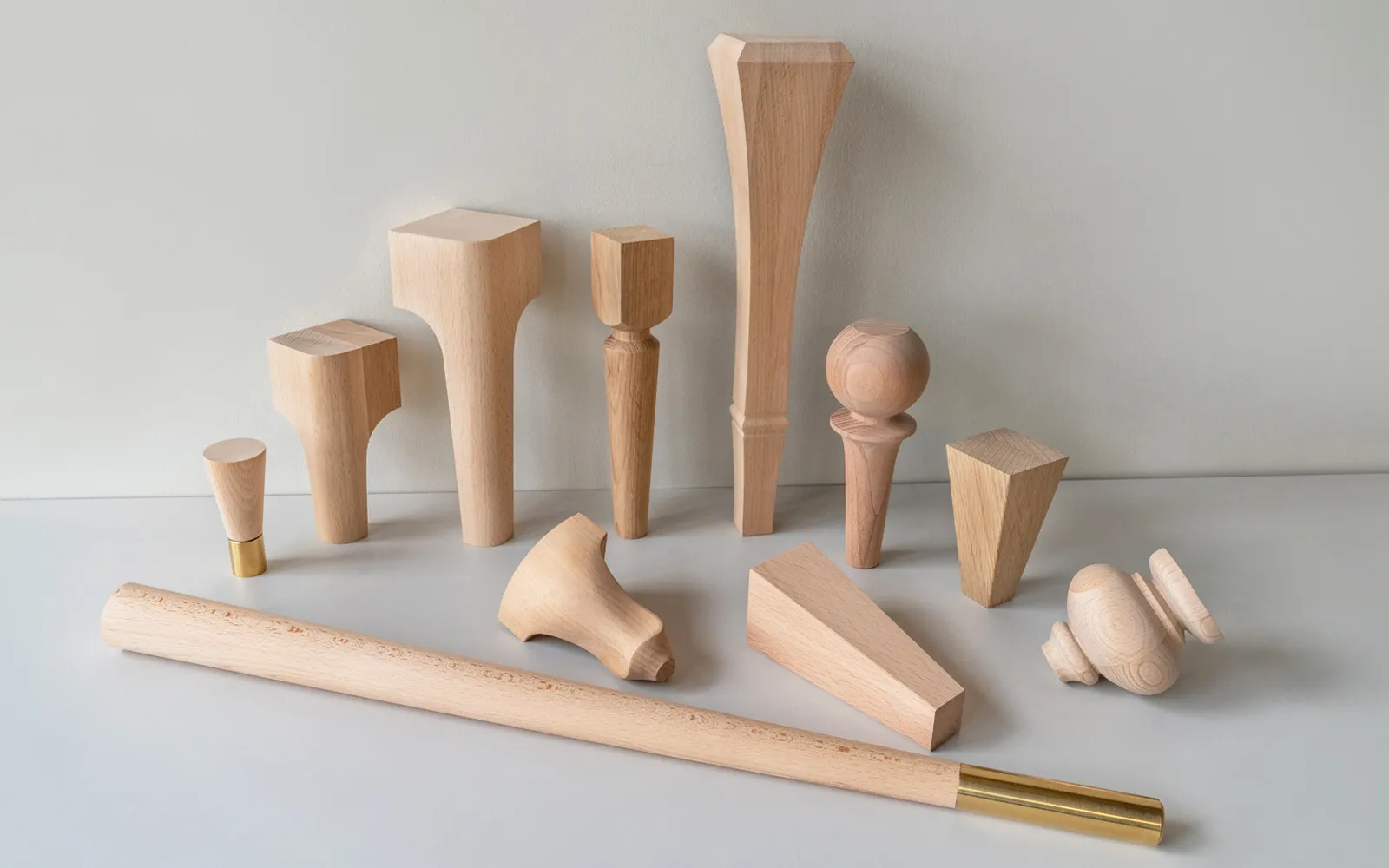
It is suitable when a finished geometry and minimal finishing are needed. The craftsman sees the shape as a whole, knows the height, the mounting point, and the design. All that remains is to attach the leg, apply the finish, and make sure that the set of four is identical. In the STAVROS catalog, the section wooden furniture legs contains, according to the manufacturer's description, more than 130 models of legs and supports, with options available both unfinished and with a coating. For serial manufacturers, the company also offers development of models to technical specifications, 3D models and drawings, and production of prototypes. The terms of such services should be clarified with managers.
A ready-made leg is advantageous when the style of the product has already been determined and a suitable shape is available in the catalog. In that case, selecting modules yourself only wastes time.
Modular blank
It is suitable when the craftsman wants to determine the height, sequence of elements, proportion, decorative rhythm, and finish himself. The modular blank turns into a construction kit, where the ready-made parts remain standard while the solution is original. The catalog also includes ready-made sets, for example the “Furniture Leg Set” KON-008 from 8,920 rubles, KON-009 from 9,120, KON-010 from 11,470, KON-011 from 15,060 rubles (lead time 5–10 days). They occupy an intermediate position: the set has already been selected by the manufacturer, but it is not a single solid leg.
How to compare the two options
| Criterion | Ready-made leg | Modular assembly |
|---|---|---|
| Freedom in height and proportions | Limited by model | High |
| Preparation time | Smaller | More: selection, sketch, assembly |
| Risk of fit error | Below | Higher: diameters need to be verified |
| Repeatability in a series | High | Depends on assembly accuracy |
| Uniqueness of the result | depends on the model | Higher |
| When it's more cost-effective | Style is defined, series | Custom piece, non-standard height |
A simple rule for choosing
If the piece has a classic silhouette and you know exactly which leg you need, go with a ready-made one. If the height is non-standard or you need your own rhythm of elements, assemble from modules. If in doubt, buy one sample of each option and compare them on a real piece. It's cheaper to lose a week than to make a mistake in a batch of twenty.
When is neither suitable? If the leg must bear a heavy load, but the design doesn't provide for an axis, a decorative assembly won't work. Then you need a solid support or a structural calculation by an engineer.
Carved blanks: when a craftsman buys an ornament instead of turning it
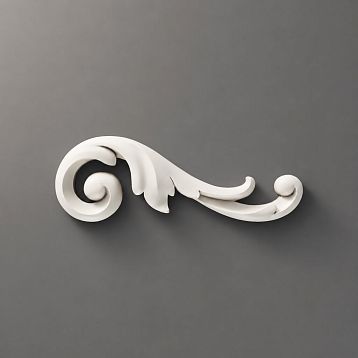
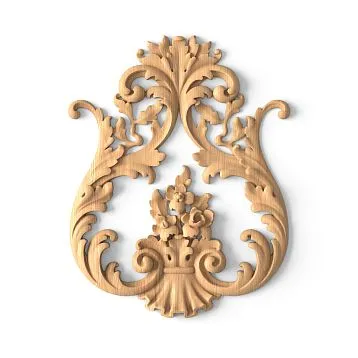
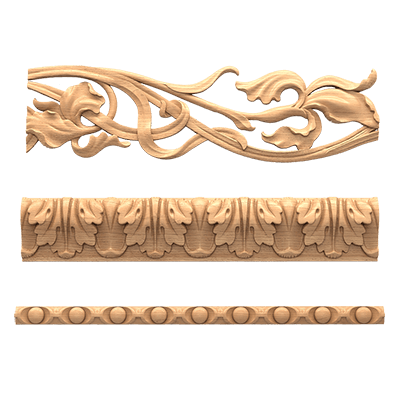
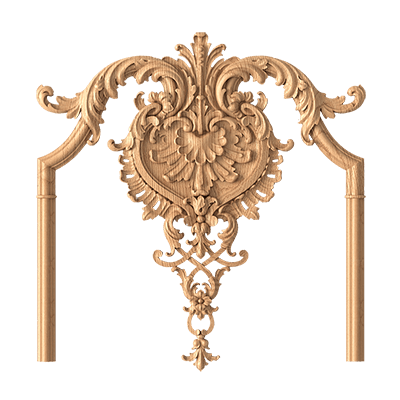
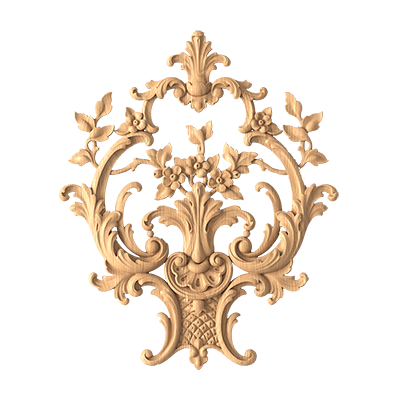
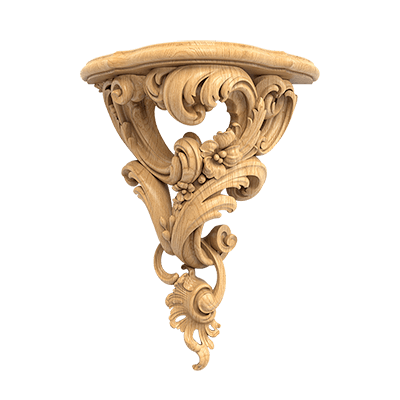
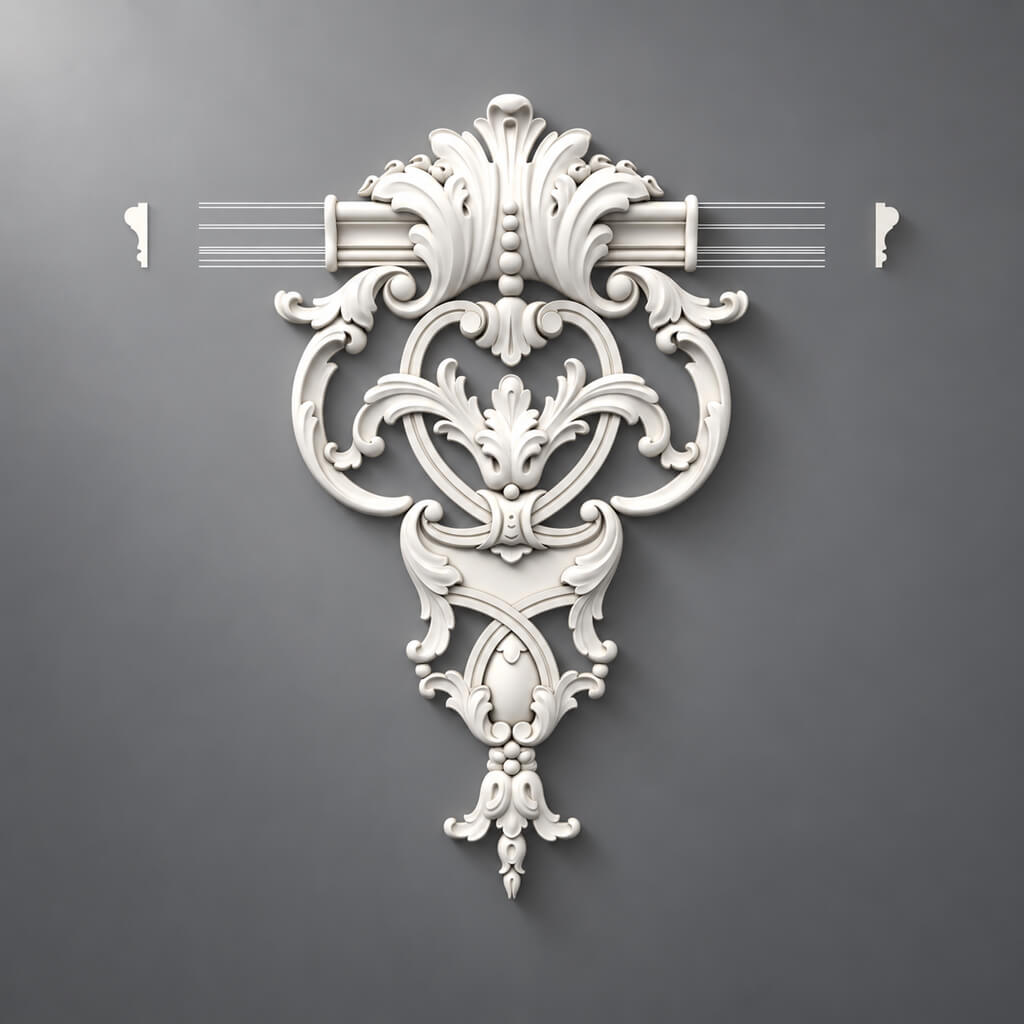
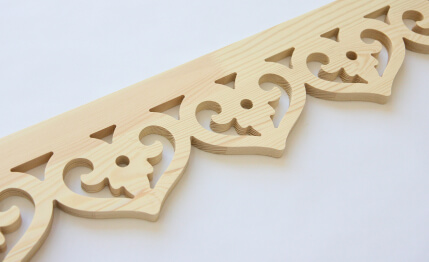
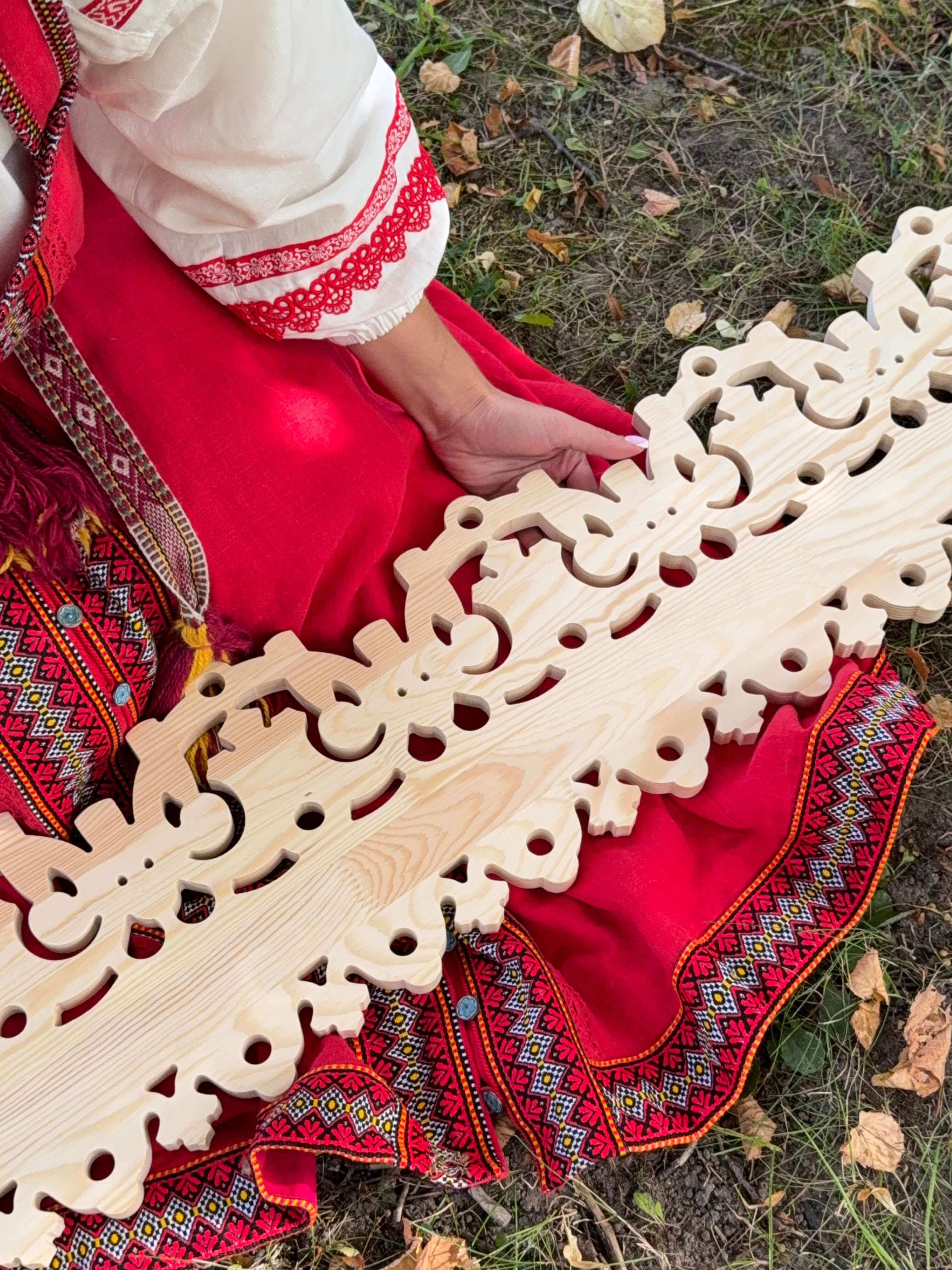
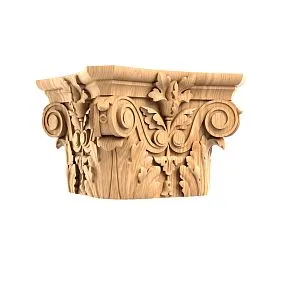
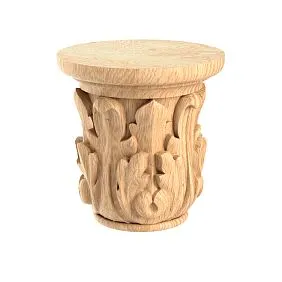
A scenario that is becoming more and more common. The craftsman makes the carcass and the facade himself; he's capable of that. But he buys the complex ornament on the facade as a ready-made wooden part. The logic is simple: the carcass determines the quality of the furniture, and the ornament determines its expressiveness, and making expressiveness by hand is expensive.
What can be bought ready-made
Under this word, the catalog understands several types of elements.
-
Central overlays for facades, tops, and backs.
-
Horizontal overlays for upper and lower bands.
-
Vertical ones for side panels, posts, and pilasters.
-
Corner pieces for joints and frame corners.
-
Paired pieces, which are needed for symmetrical compositions.
-
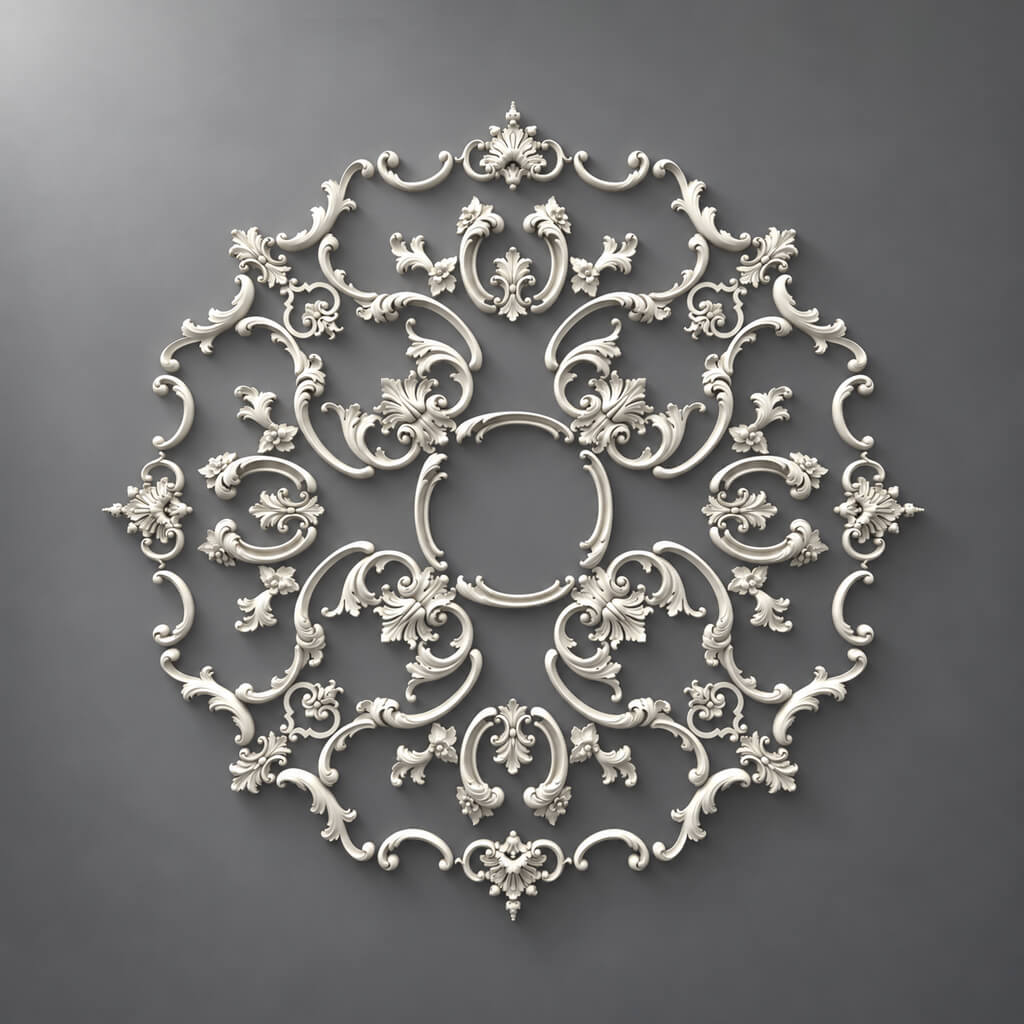
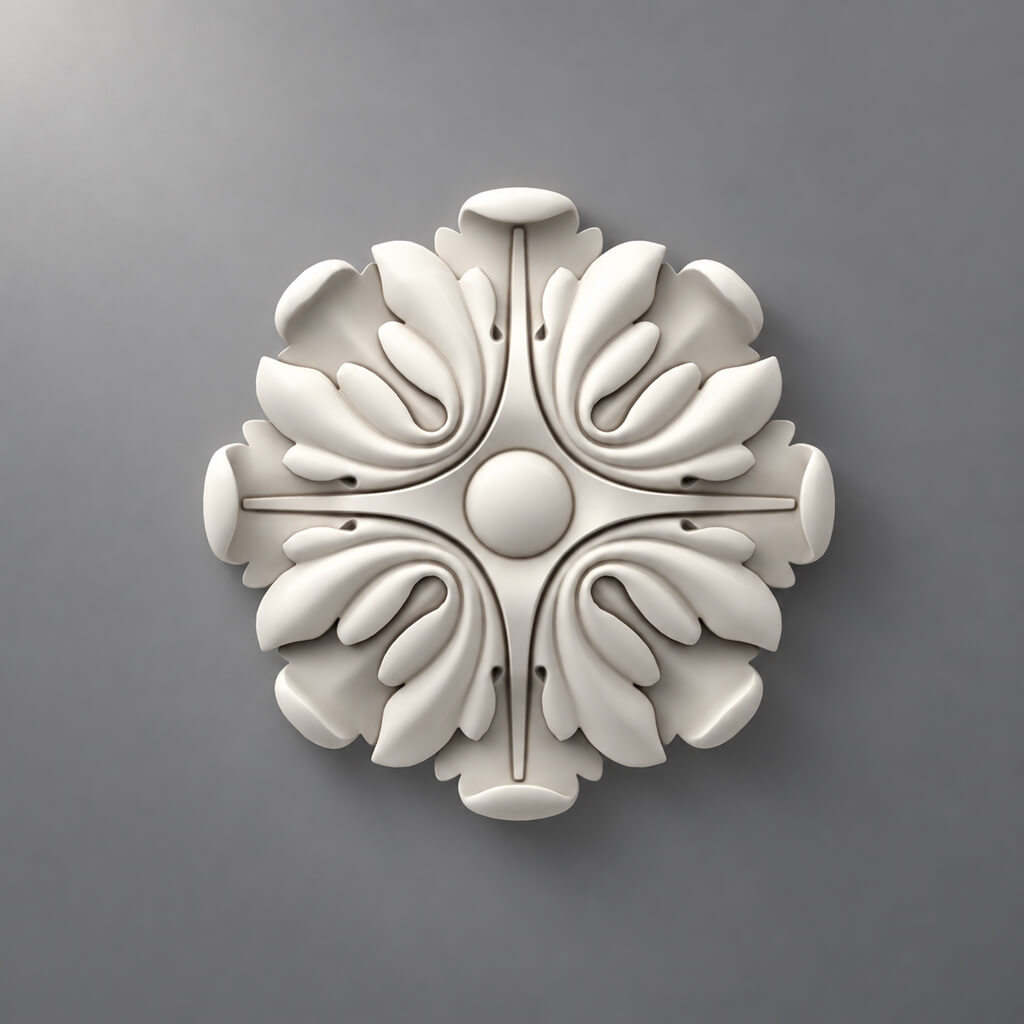
Rosettes for panel centers and joints.
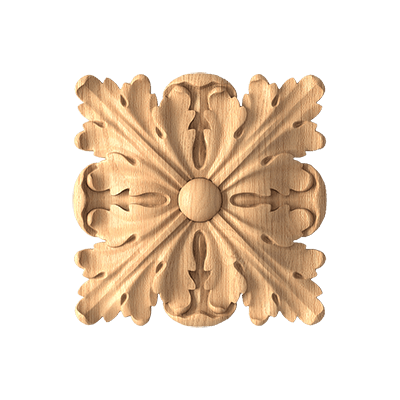
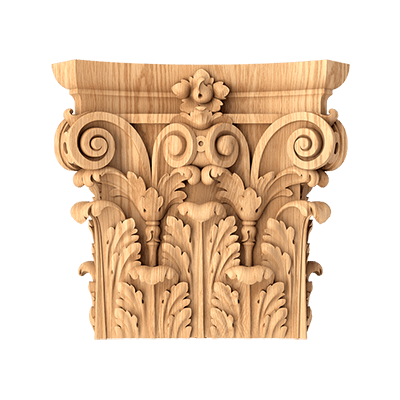
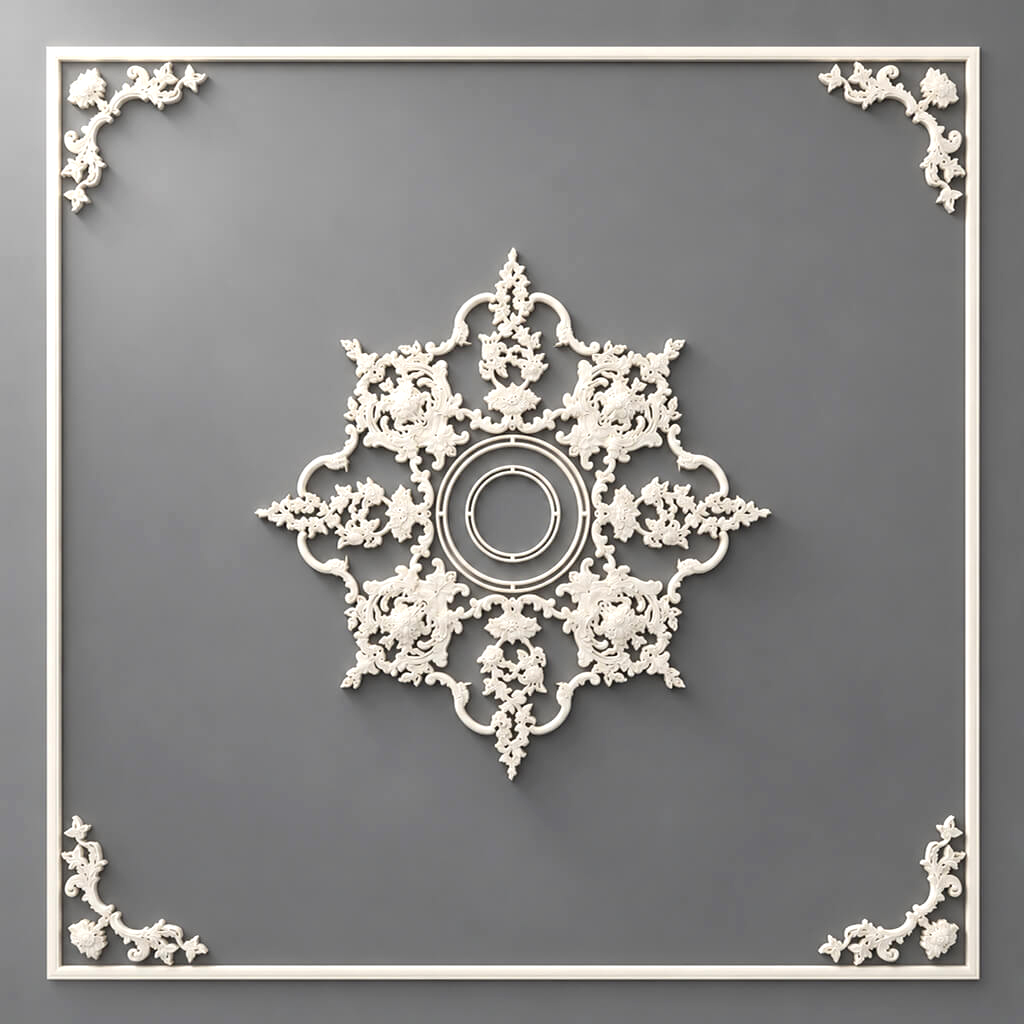
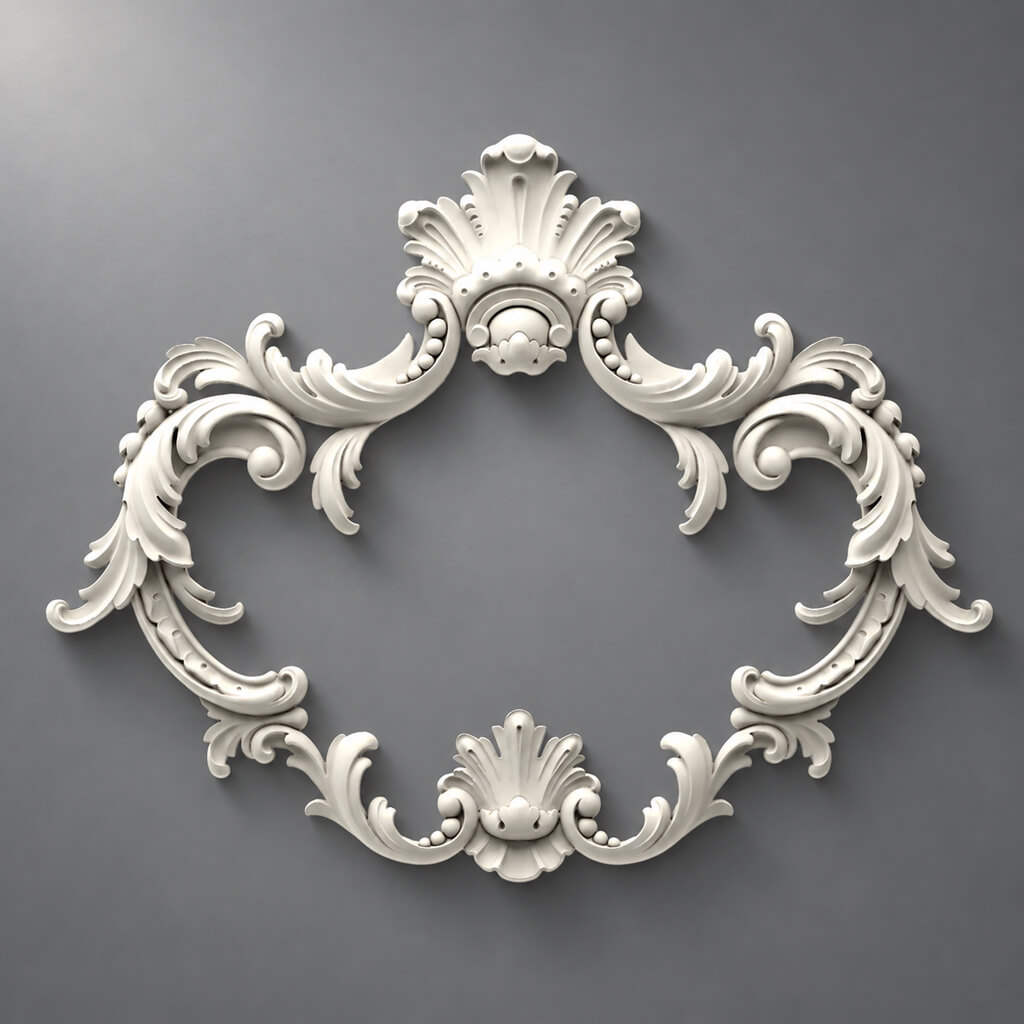
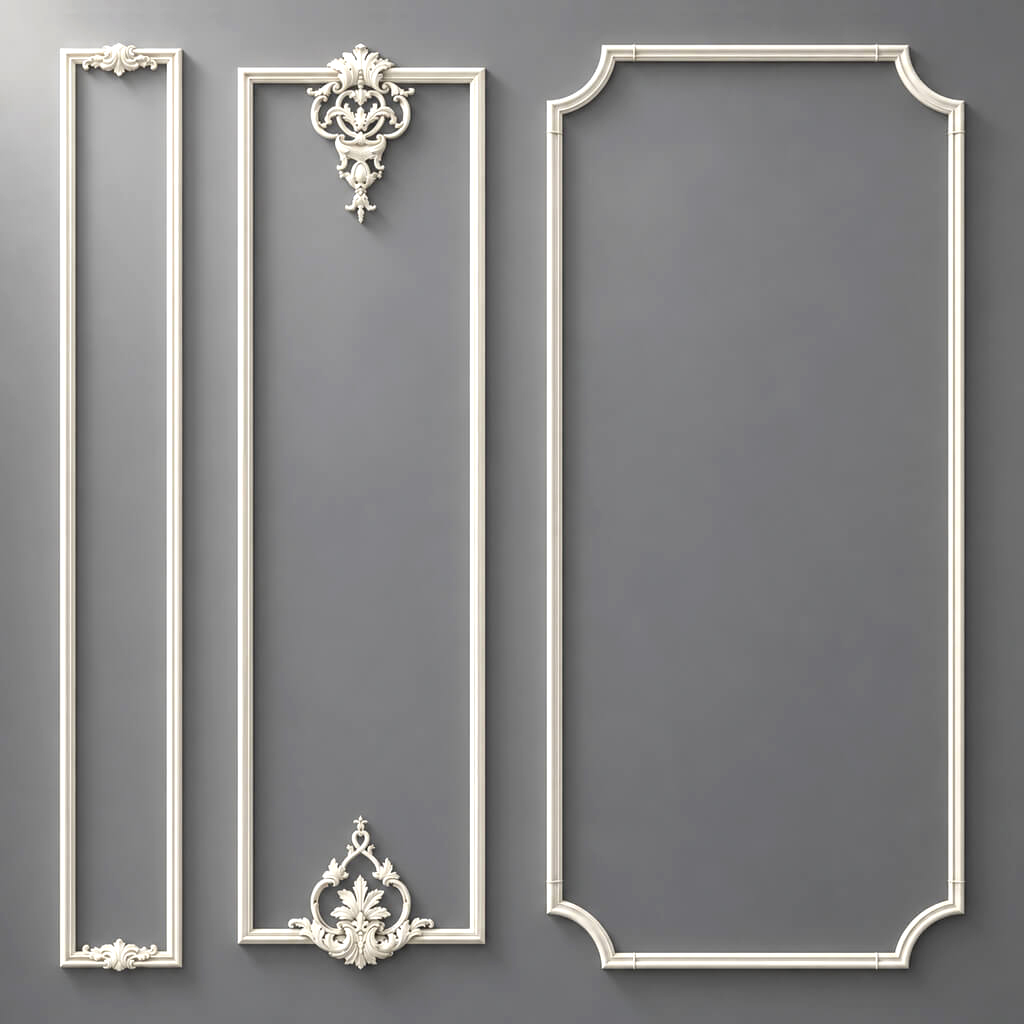
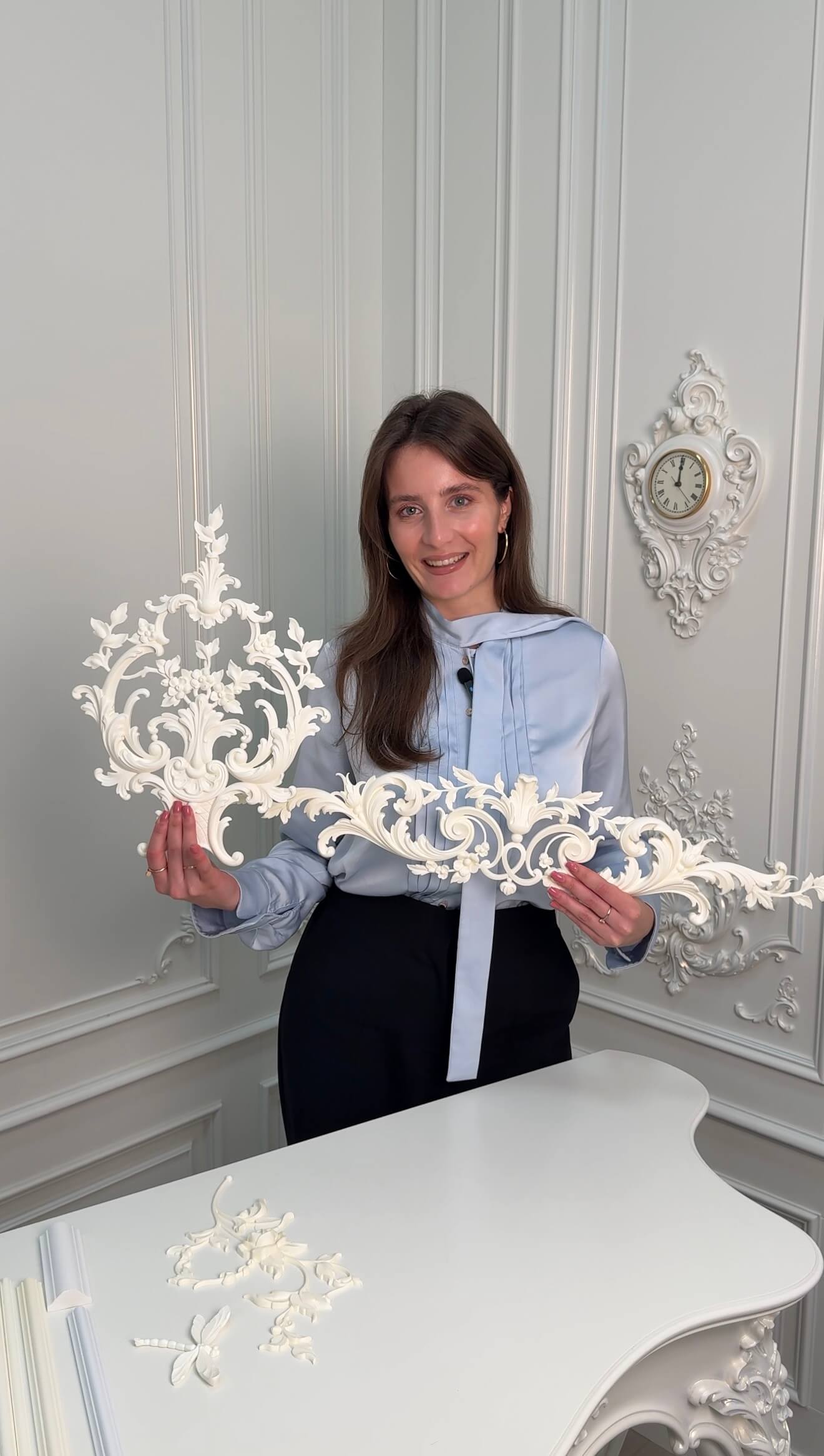
Sections Carved decorative inserts for furniture и are round or oval elements with relief floral ornamentation (acanthus leaves, flowers, vines) or geometric patterns (circles, spirals, solar symbols). Diameter varies from miniature 60 mm to monumental 500 mm. Rosettes are used as central accents on walls (above a fireplace, above a console, above a bed headboard), as corner elements of molding frames (at the junctions of vertical and horizontal moldings), and as furniture decor (center of cabinet fronts, center of chair backs). represent exactly these items. Section wooden elements for furniture combines decorative details that were not included in the main groups.
As usual, there is a need
A craftsman is making a sideboard in a classical style. The doors, side panels, and shelves come out clean, but the upper band needs a carved overlay. If you do it yourself, you will have to either cut it by hand or program a CNC machine. The first takes several days, the second requires equipment. A ready-made overlay solves the issue with a single order.
Here, not only the size matters, but also the fit with the furniture. The overlay must match the height of the band, and the corner pieces must match the horizontal ones in pattern. Therefore, it is better to choose elements from the same collection and the same series so that the ornament continues rather than clashing with itself.
What to do with modification
A finished carved piece does not have to arrive in its final form. The craftsman can tint it, apply a patina, or paint it with enamel. The relief allows you to play with the finish: a dark tone in the recesses and light raised areas create depth. But the coating must be applied before installation on the facade, while there is still access to every curve.
A word of caution about light: a relief only a few millimeters deep almost disappears under diffused lighting. If the furniture stands by a window, the pattern will read better. For a dark corner, choose a deeper carving or a more contrasting finish.
When carved blanks are not needed
It is not worth buying ornament for furniture in a modern style with smooth surfaces: it will fall out of the overall design. It is also unnecessary where the facade is covered by other elements. And you should not buy carving if the project budget will not allow you to support it with the quality of the remaining details: expensive ornament on a weak carcass makes the weakness more noticeable.
Wooden profile as a furniture blank
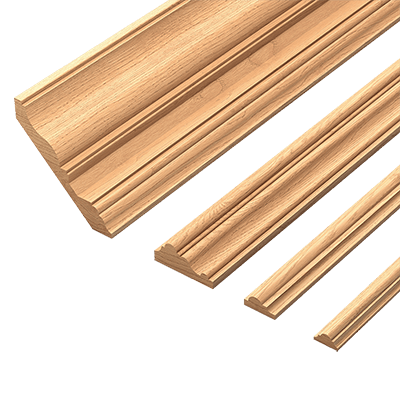
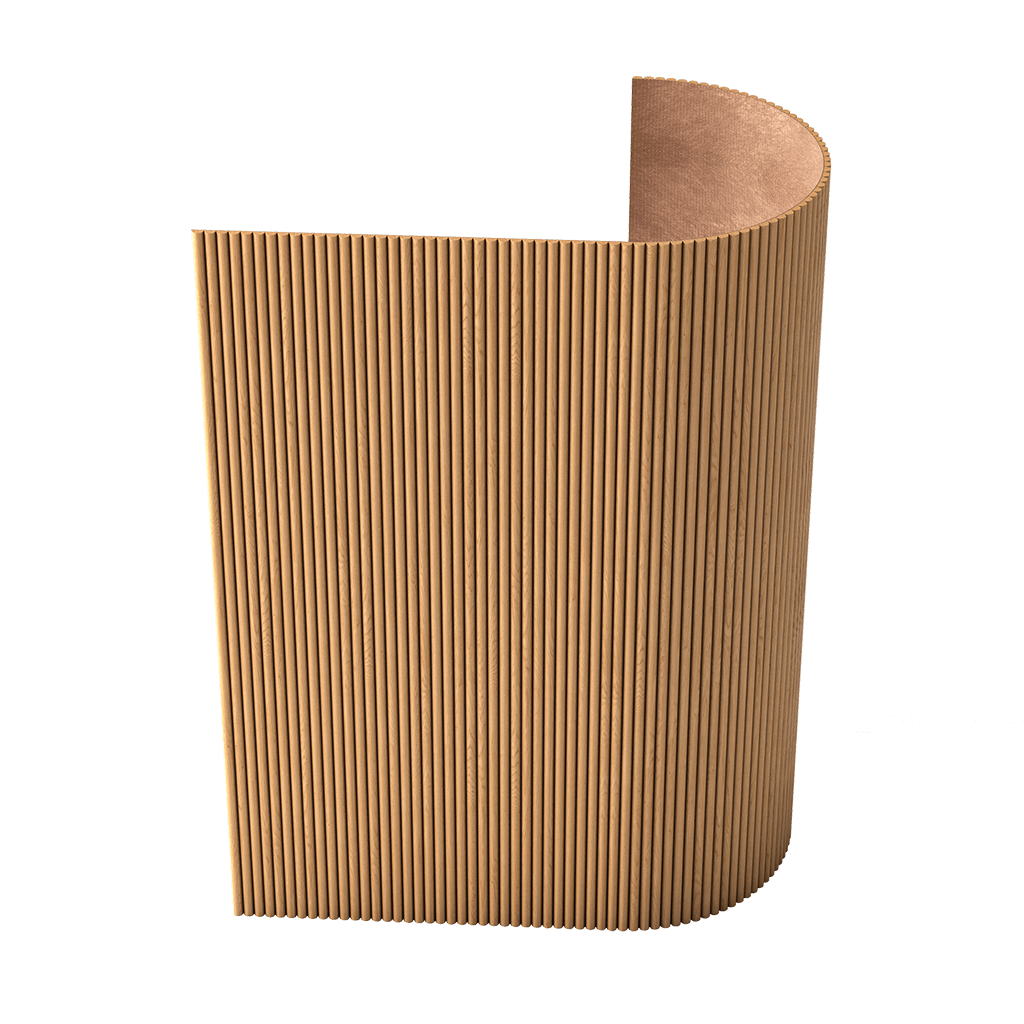
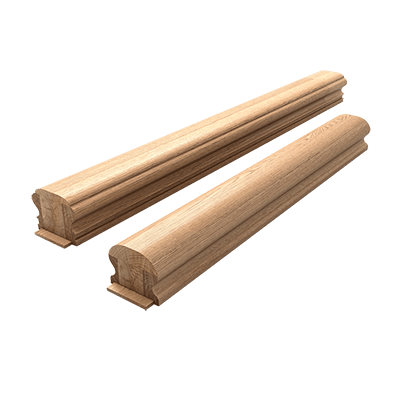
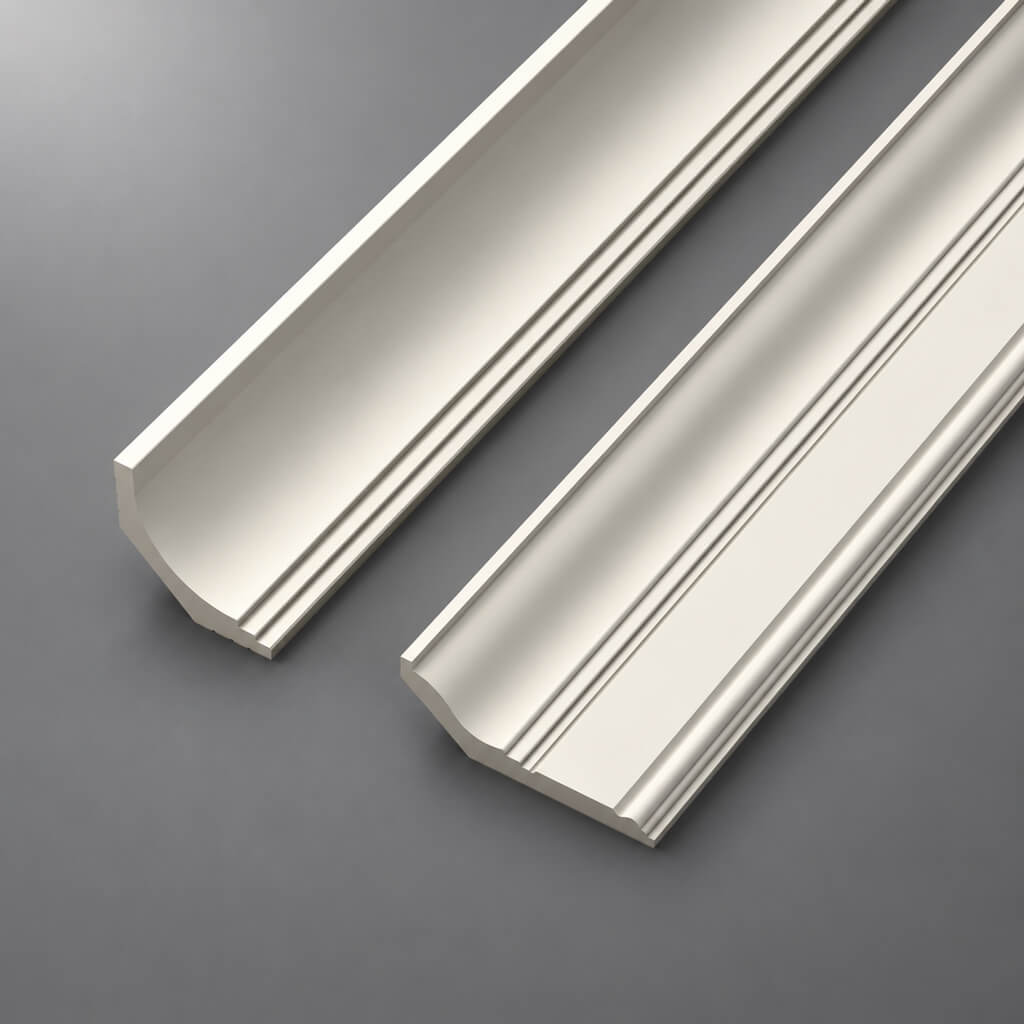
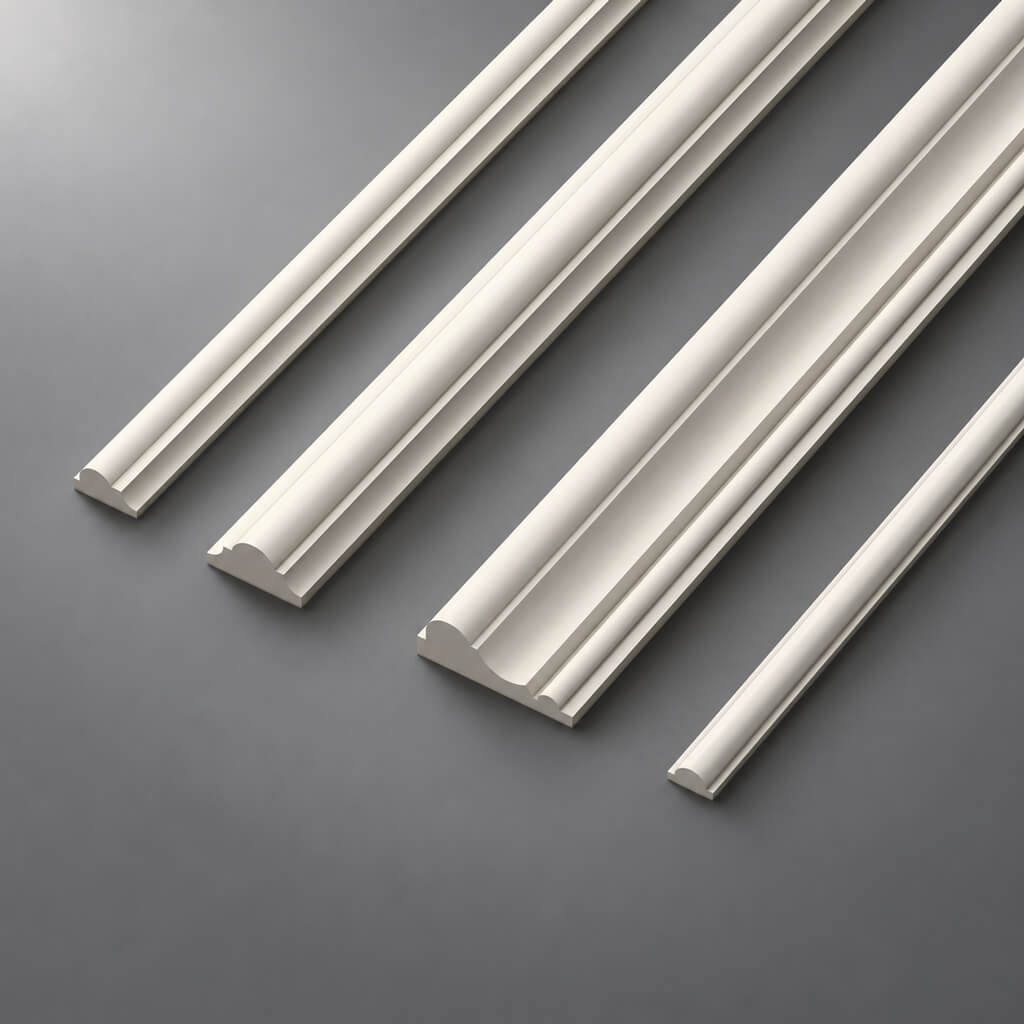
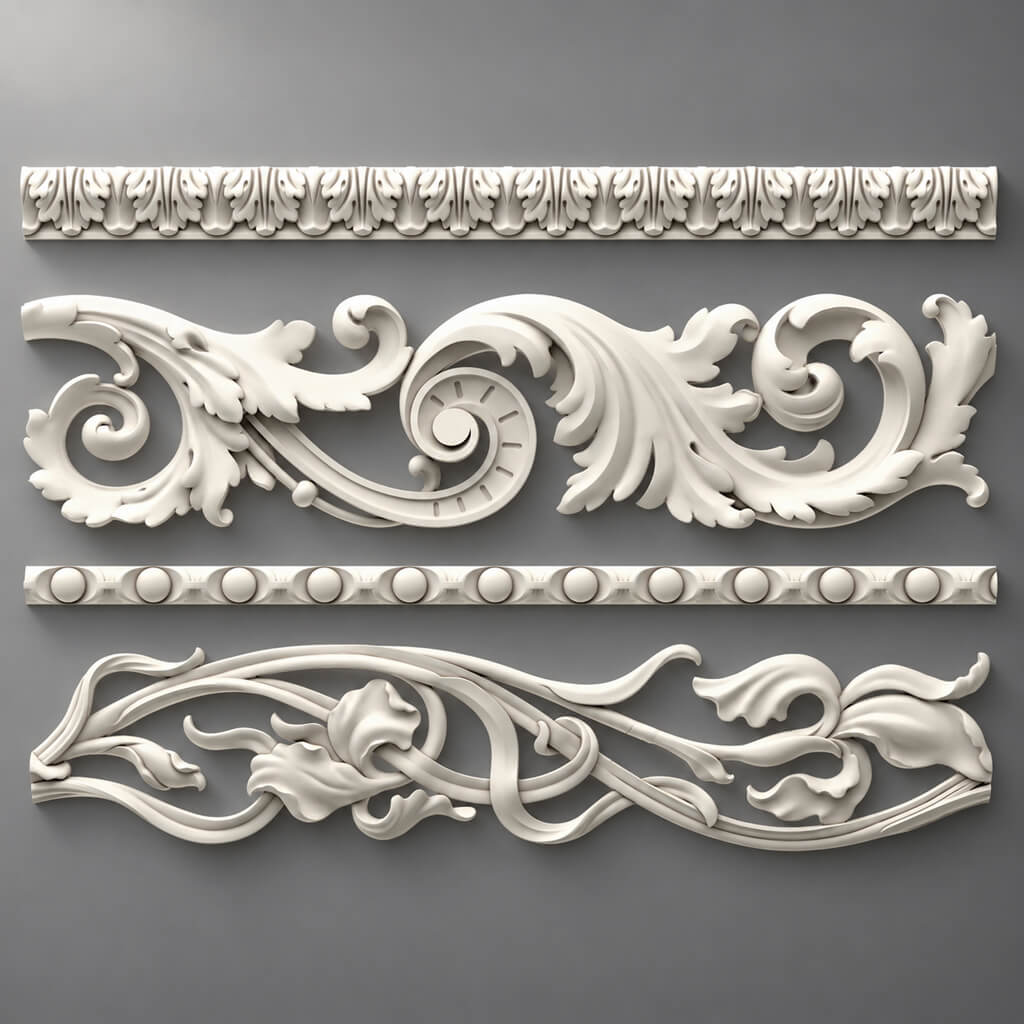
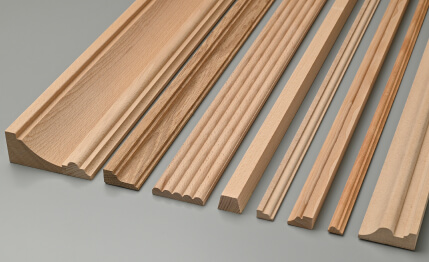
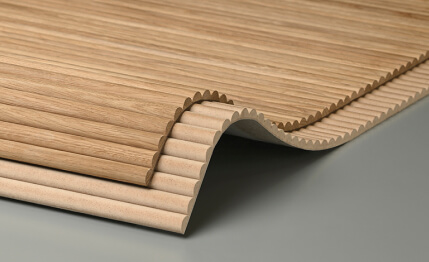
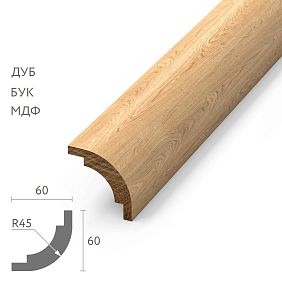
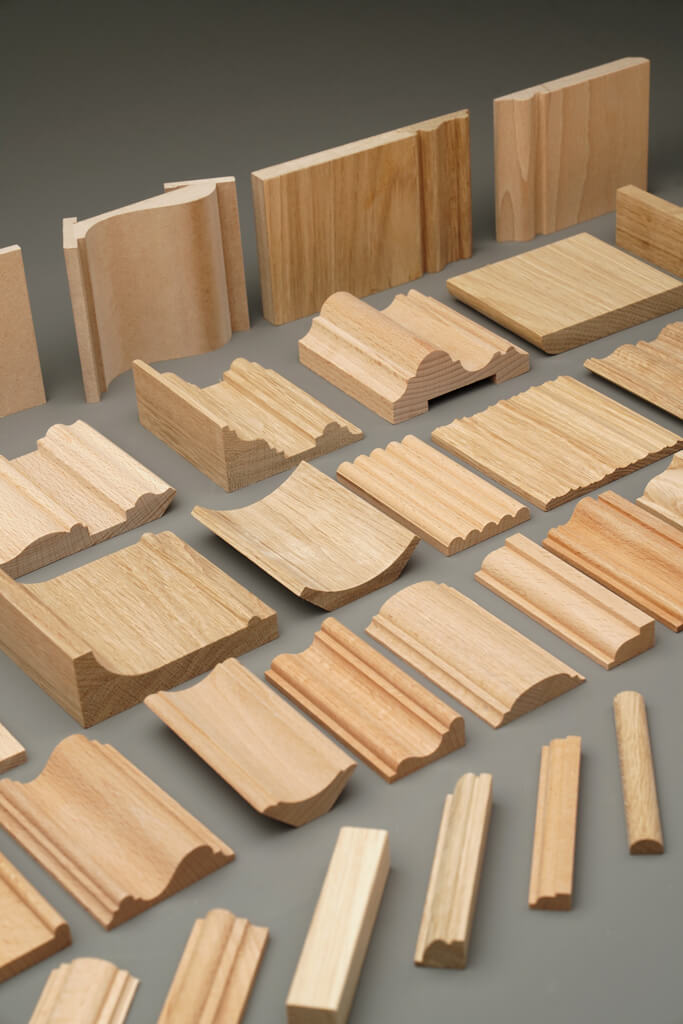
A profile counts as a blank when the craftsman uses it as a starting material. He buys the molding and then cuts it to size, miters the corners, assembles the frame, paints it, and installs it on the facade. Here the profile is not a finished part but a semi-finished product: it already has a complex cross-sectional shape that the craftsman himself could only obtain by milling on a profile machine.
It is important not to expand this section into the topic of moldings, so we will limit ourselves to practical scenarios.
-
Frame on the facade: the profile is cut into four parts with 45-degree angles and assembled with glue.
-
Panel framing: the profile is installed along the perimeter inside the frame.
-
Base and cornice of cabinet furniture: the profile runs horizontally and completes the carcass.
-
Applied decor on the side panels: the profile follows the lines of the cabinet.
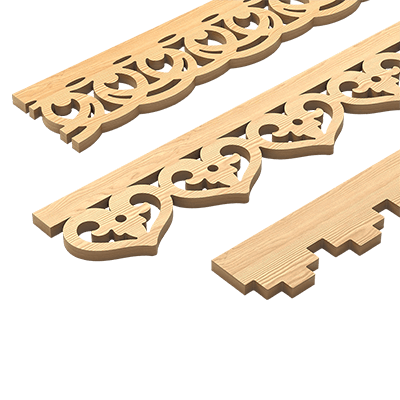
The STAVROS catalog includes a section Pogonazh iz massiva, which features moldings, cornices, and skirting boards. A wooden molding also appears in the designer section (for example, MLD-060 from 2,210 rubles).
What to consider when working with profile
Profile is bought by linear meters, but calculated by perimeter plus a reserve. For a frame on a 500 × 700 mm facade, the perimeter is 2,400 mm. Mathematically, 2.4 meters is enough. In practice, when cutting at 45 degrees, part of the length is lost to the cut, and matching the pattern at the corners requires a reserve. Therefore, take extra for fitting and for possible defects on one of the corners.
The angles should be cut on a test piece. Cutting the working profile without a test is not allowed: an incorrectly set angle creates a gap at the joint that cannot be hidden with putty on a transparent finish.
Profile does not replace complex blanks. If you need a three-dimensional part rather than a linear one, linear stock will not work, and you will have to look at turned or carved items.
How to choose the degree of readiness of the blank
The same-looking part can arrive at different stages. It is important for the craftsman to know which one before ordering, not after receiving the package. Let's introduce a simple scale of five levels.
-
Rough. The shape is coarse, the allowance is large, the surface is untreated.
-
Formed. The geometry is set, but the surface needs work.
-
Sanded. The geometry is final, the surface has been sanded.
-
Ready for finishing. Sanding has been brought to the level at which a coating can be applied.
-
Fully finished component. The part is ready for installation and may have a coating.
Keywords from this area: "rough furniture blank" and "planed furniture blank" refer to the first steps of the scale. They are broader than the range of finished parts, so they do not match the task in question.
Questions to ask before ordering
Ask about six things. What has the manufacturer already done? What will remain to be done in the workshop? Is drilling needed? Will trimming be required? Is the surface ready for enamel? Is additional sanding needed?
Example. According to the manufacturer's description, the kit parts have "Prestige"-grade sanding, a mounting hole for a standard diameter, and are ready for the final coating to be applied. This means it is the fourth or fifth step: no drilling is needed, and no further sanding is required. The craftsman spends time only on finishing and assembly. This should be noted in the estimate: the savings come not only from the absence of a turning operation, but also from the absence of surface preparation.
How the degree of readiness changes the estimate
The lower the step, the lower the price of the part and the higher the workshop's labor costs. If you have a free machine and an experienced sander, a rough blank is more cost-effective. If the machine is busy or the work is limited by deadlines, higher-step parts are more cost-effective. Calculate not the price per piece, but the price per part ready for coating.
A simple way to estimate. Add up the cost of the part, the craftsman's working time multiplied by their hourly rate, and the cost of possible defects. Compare the totals for two stages of readiness. Sometimes an expensive finished part turns out to be cheaper than a cheap rough one.
Beech or oak: which blank to choose
The choice of species is not about abstract hardness, but about what will happen to the part in your workshop next. First decide on the finish, then the species.
Beech
Beech is dense, uniform, with a closed structure and a calm grain pattern. It is suitable if:
-
the part will be painted;
-
a uniform surface is needed;
-
enamel is planned;
-
the texture should not dominate.
A beech part under white, black, or pastel enamel is perceived as a solid object: the form reads without distracting grain patterns. This feature is also confirmed by the manufacturer: according to the description in the configurator section, beech is convenient to choose for enamel and painting in a dense color, as well as for lacquer while preserving a light tone.
Oak
Oak is chosen when:
-
the texture remains visible;
-
oil, lacquer, or tinting is used;
-
the part must match other oak furniture.
On large cube faces, conical surfaces, and spherical balls, the oak grain pattern is especially expressive. Faceted parts intended for tinting benefit: on each face, the cut of the fibers looks different.
Combination with metal
Oak pairs well with metal rods and tubes. The contrast of warm wood and cold metal is one of the most sought-after techniques in modern furniture. In the catalog, next to the construction kit parts, for example, a stainless steel tube 34 × 2 mm (FUR-045, 6,700 rubles) is presented: it belongs to related items and shows that the section is focused on assembly structures with a metal rod.
Summary
| Task | Species | Reason |
|---|---|---|
| White or colored enamel | Beech | Even background, shape without texture interference |
| Oil, tinting | Oak | The pattern remains part of the design |
| Combination with oak furniture | Oak | Matching pattern and tone |
| Uniformity of the series | Beech | A calm structure smooths out differences |
| Wood plus metal | Mostly oak | Texture contrast |
Limitations
The species should not vary within a single product. If the legs are beech and the front is oak, and everything is oiled, the grain won't match. Mixing is only possible under an opaque finish. Another rule concerns the sample: the tone after tinting can differ between batches, and the decision must be made on the actual part, not from a catalog photo.
Size first, beautiful grain second
A beautiful blank is useless if its mounting dimension doesn't match the product's construction. This is the main rule of the section, and it is violated most often because people choose parts with their eyes.
Before purchasing, lock in the chain: A × B × C, hole, fit, mounting pad, orientation, quantity. Catalog cards list dimensions A, B, and C, and the filters allow you to select products by each of them.
-
Overall dimensions: the three dimensions of the part with which it will fit into the product.
-
Diameter: for parts on an axle, this is the main parameter.
-
Mounting hole: must match the axle diameter. Too narrow won't allow it to be put on, too wide won't provide fixation.
-
Axis: the actual diameter of the rod, bar, or tube, measured with a caliper, not "about 30".
-
Height: taking into account that the leg is made up of several elements.
-
Mounting point: how the part rests or is attached.
-
Orientation: for asymmetrical parts, it matters which side faces out.
Scale
The manufacturer provides guidelines on proportions. Aim for the accent element on the post to be 10–20% of the total height, and the spacer 3–6%. On a thin rod 20–25 mm in diameter, a large sphere looks excessive, while on a substantial post, a small ring gets lost. Let's apply the numbers to an example: a post 700 mm high. An accent of 10–20% gives 70–140 mm, and a spacer of 3–6% gives 21–42 mm. These boundaries define the range in which to look for parts in the catalog.
This arithmetic saves time: you don't scroll through dozens of items, but rule out everything that is clearly out of scale. After that, all that's left is to choose the shape and the material.
Typical mistakes
First: measuring the axis from the drawing, not the actual part. A tube that is 34 mm according to the documents may differ by tenths of a millimeter, and the coating or weld seam adds thickness.
Second: choosing from a photo. There is no scale in the picture, and a 60 mm part looks the same as a 120 mm part.
Third: not checking visibility. A part hidden by an adjacent element or cladding loses its purpose.
Fourth: calculating the leg height as the sum of catalog heights without taking into account the support plate or embedded elements. The final height should be verified during a dry assembly.
Why one sample is better than twenty blanks
For a small workshop, the most expensive scenario looks like this: you ordered twenty parts, received them, attached them to the product, and saw that the scale was wrong. Returns of custom items are usually limited, so the mistake turns into lost money and time.
A more reliable order is this. One SKU, one unit, fitting, trial processing, finishing, approval, required quantity. It is convenient to keep the parts list with SAMPLE and APPROVED statuses: until the sample is approved, the batch is not ordered.
What the sample checks
-
Geometry: whether the shape matches expectations.
-
Dimensions: whether the mounting hole aligns with the axis, and whether rework is needed.
-
Scale on furniture: how the part looks on the actual product, not on a sketch.
-
Surface: sanding quality, and whether it is prepared for enamel.
-
Processing: how the part takes sanding, tinting, and coating.
-
Color after coating: the tone of beech and oak under oil or lacquer may differ from what is expected.
-
Compatibility: how the part fits with the other elements.
-
Rework time: how many minutes one part actually takes.
Sample price vs. cost of a mistake
Let's take a conditional example based on catalog prices. Cube KN-011 costs from 1,980 rubles. A sample would come to that amount. A batch of 16 pieces without approval costs about 31,680 rubles. If after fitting it turns out the size doesn't work, the sample would cost 1,980 rubles of lost money, while the batch would have cost 31,680. The difference is obvious.
There is an objection: a trial order adds time. That's true. But the manufacturer's list of capabilities states sales from a single piece with no minimum volume, so a sample can be taken without any quantity commitment. The lead time for designer items in stock is not separately specified, whereas sets take 5–10 days, so it's better to confirm the lead time when ordering a sample.
When a sample is not needed
A repeat order of the same part that has already gone through your workshop does not require a sample: you know the dimensions and how it behaves during finishing. A sample is also not needed when ordering one or two parts, if each goes into its own project: here the order itself is the sample.
How to calculate blanks for a small batch
Calculating on the principle of "roughly this much" works poorly when the price of one part runs into the thousands. It's better to draw up a parts list, that is, a BOM, where each line is tied to a specific SKU.
| Field | What to specify |
|---|---|
| SKU | Actual SKU from the catalog |
| Type | Leg, module, overlay |
| Material | Beech or oak |
| Size | Actual A, B, C, mounting diameter |
| Per item | Number of parts per item |
| Items | Number of items in the series |
| Total | Purchase total |
| Status | SAMPLE or APPROVED |
Example one: four dressers
Four dressers with four legs each give 16 parts. The reserve is only added after a specific SKU is approved, because before approval any extra unit may turn out to be unnecessary. If the leg is one-piece, there is a single line: 16 units.
Example two: modular leg
For a modular leg, the calculation is different. The number of legs is multiplied by the number of repeating modules in one leg. Suppose a leg has three modules: a cube, an elongated module, and a cone. For 16 legs, you need 16 cubes, 16 elongated modules, and 16 cones, that is, 48 parts in three rows of the bill of materials.
Conditional calculation based on "from" prices: 16 × 1,980 (KN-011) = 31,680; 16 × 2,520 (KN-008) = 40,320; 16 × 1,990 (KN-012) = 31,840. Total 103,840 rubles for 16 legs, that is, 6,490 rubles per leg. Compare this with a furniture leg set, where prices start at 8,920 rubles (KON-008). The difference is due to the fact that a ready-made set and an assembly of three separate modules contain different parts, and they should be compared by composition, not by price.
Practical reserve
The math says: 16 legs, 16 parts. Practice says: during finishing and coating, some parts get damaged. The reserve is determined by the workshop's experience. If the finish is delicate and risky, for example patina on relief, it is reasonable to take one or two additional parts. If the coating is simple, no reserve is needed. The main rule: the reserve is recorded in the bill of materials as a separate line, not dissolved into the total number.
Repeat order
Keep the bill of materials. When the client comes back six months later for additional chests of drawers, precise reference to the article, wood species, and dimensions will allow you to order the part without a repeat fitting. Separately record which coating was used: the shade under oil on a new batch may differ slightly, and knowing the previous formula helps to match it.
When not to buy ready-made parts
A section that increases trust in any supplier. It shows where a ready-made part only gets in the way.
Do not buy if the part is a non-standard size and fitting it to the catalog will require reworking the carcass. Do not buy if the part is simple and can be made faster than the order is processed. Do not buy if the project is at the beginning and the style is not defined: first the sketch, then the purchase. Do not buy a series without a sample. And do not replace a load-bearing structure with ready-made parts: decorative elements do not work as structural ones.
There is also a case when it is better to choose an alternative. If you need a unique shape that is not in the catalog, it is worth considering custom manufacturing. On the legs page, the manufacturer lists such services: development of exclusive models, 3D models, prototypes. Terms, minimum batches, and lead times should be discussed directly.
Blanks for chairs
Queries like "wooden blanks for chairs" show demand for chair parts. The STAVROS catalog does not have a separate "blanks for chairs" section, so ready-made chair parts should be selected from the existing groups: legs and supports, construction elements, decorative overlays. Check the product cards to see whether any of them are suitable in size and purpose, and confirm with the manager, especially for load-bearing parts.
Where to buy wooden furniture blanks
The purchasing logic follows the project. First, determine which parts are needed, then check the dimensions, then order a sample, then the batch.
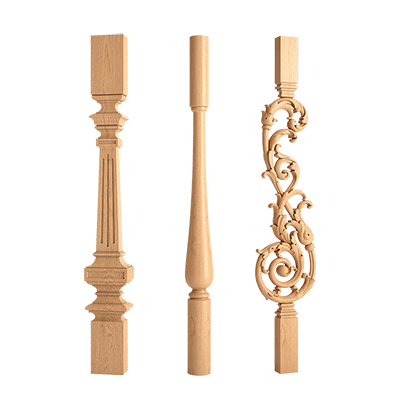
If the task involves shaped parts for posts, rods and modular legs, open the section wooden furniture blanks: it contains geometric shapes and moldings, as well as sets of legs, balusters and partitions. General decorative solid wood parts are collected in the section wooden elements for furniture to buy. For supports, see wooden furniture legs.
For ornament, choose Carved decorative inserts for furniture и are round or oval elements with relief floral ornamentation (acanthus leaves, flowers, vines) or geometric patterns (circles, spirals, solar symbols). Diameter varies from miniature 60 mm to monumental 500 mm. Rosettes are used as central accents on walls (above a fireplace, above a console, above a bed headboard), as corner elements of molding frames (at the junctions of vertical and horizontal moldings), and as furniture decor (center of cabinet fronts, center of chair backs).. For frames and bands on facades, use wooden profile and moulding.
Steps to take before ordering
-
Draw up a sketch of the product indicating where ready-made parts are needed.
-
Measure the actual dimensions of the axes and mounting seats.
-
Select items in the catalog by dimensions A, B, and C and by application.
-
Determine the wood species for the future finish.
-
Order one sample of each key item.
-
Conduct a fitting, trial finish, and approve the SKU.
-
Add the approved items to the list and calculate the series.
-
Before ordering, check the current price and availability in the product card.
What to clarify with the manager
Ask about lead times for items "In stock" and "5–10 days", whether you can order from one piece, the mounting diameter of a specific part, and how the part is supplied: with or without a finish. This will take five minutes and save a week.
Workshop questions
What types of wooden furniture blanks are there?
By degree of readiness: rough, formed, sanded, finish-ready, and fully finished components. By shape: turned, shaped, carved, profiled. For a workshop that buys parts, the later stages of the scale are of interest.
How does a furniture blank differ from a finished part?
A blank requires further processing: shaping, sanding, and sometimes drilling. A finished part has its final geometry and a prepared surface; after it, only finishing and assembly remain. The boundary is determined by what the manufacturer has already done.
Which wooden blanks are more cost-effective to buy than to make yourself?
Turned and carved parts that require tooling and machine setup, as well as shaped elements with a precise mounting hole. Simple bars and internal case parts are usually more cost-effective to make yourself.
Where are turned wooden blanks used?
In legs and supports, posts, balusters, decorative rods, partitions, elements of beds and armchairs. The turned shape gives a rounded volume and repeats well in a series.
Can a furniture leg be assembled from ready-made wooden modules?
Yes, if the modules have a matching mounting diameter and the axle passes through them. Connect them on the rod in the required sequence. Before ordering, check the diameter and make sure the load-bearing load falls on the axle, not on the decorative elements.
What to choose for furniture — beech or oak?
Beech is better under enamel and dense color, oak under oil, lacquer, and tinting with visible texture. The decision is made based on the finish, not on the general reputation of the species.
Should I buy one sample before ordering a batch?
It is advisable. A sample verifies the dimensions, scale on the product, processing, and color after coating. This is especially important for new SKUs and expensive series. For a repeat order of an already verified part, a sample is not needed.
How to choose the size of a wooden blank?
Measure the axle or mounting seat, compare with parameters A, B, C and the mounting diameter in the product card, and assess the scale relative to the product. Manufacturer guidelines: an accent element on a post is 10–20% of the height, a divider is 3–6%.
Can finished wooden parts be painted with enamel?
Yes, especially beech. According to the manufacturer's description, parts from the configurator section are ready for applying the finishing coat, but it is better to paint a sample in advance: this way you will see how the enamel lays on the relief and end faces.
How to place an order for a small series?
Prepare a parts list with SKUs, species, dimensions, and quantity, order a sample, approve it, and only then order the series. Before placing the order, check the current price in the product card.
Where to buy wooden furniture blanks?
In the STAVROS catalog: section wooden constructor elements for shaped and turned parts, the section of legs, overlays, rosettes and mouldings for other tasks.
The assortment, "from" prices and descriptions were verified against the STAVROS catalog at the time of preparation. The KN-011, KN-008, KN-012 cards, as well as the sections of overlays, rosettes, mouldings and decorative elements, did not open during verification, so there is no size data for them: see the cards for mounting diameters and dimensions. Prices for KN-011, KN-008 and KN-012 are taken from the constructor section list. Series calculations are approximate. The volume was not counted manually, so please check with a word counter: if it turns out to be less than 6700, let me know and I will expand the sections.