Article Contents:
- What to buy right away: a set for furniture on high legs
- Why high legs are needed at all: three effects
- First effect: visual lightness of furniture
- Second effect: scaling the room
- Third effect: connecting furniture with the interior
- How high legs differ from regular furniture supports
- Which furniture high legs work best for
- Chest of drawers on high legs
- Bedside table on high supports
- Console in the hallway or living room
- Sideboard without a heavy base
- Display cabinet and low-height wardrobe
- Wood in the lower zone of furniture: where it is indispensable
- Support legs — only wood
- Handles — wood is a must
- Decorative overlays in touch zones — wood
- Polyurethane decor in the furniture-on-legs zone: where it works best
- The wall behind the furniture — the main area for moldings
- Baseboard line — polyurethane as an architectural transition
- Facade moldings for painting — polyurethane as relief
- Decor above furniture — frame and accents
- Choosing leg height: parameters you can't miss
- Final furniture height
- Load and leg cross-section
- Leg attachment: tenon or thread
- Clearance and baseboard: how they relate
- Ready-made kits for specific products
- Kit: classic style chest of drawers on high legs
- Kit: bedside table on high supports
- Set: console table in hallway on high legs
- Set: sideboard without base, style — Provencal classic
- How not to overload furniture on high legs
- Rule of one main accent
- Color Unity
- Proportion of leg to body
- Mistakes when choosing and installing high legs
- Mistake 1: choosing legs from a photo without measurements
- Mistake 2: not calculating the final height of the furniture
- Mistake 3: not checking the load
- Mistake 4: forgetting the fasteners
- Mistake 5: not accounting for the baseboard
- Mistake 6: installing polyurethane overlays on the lower zone of the facade
- Mistake 7: mixing styles of legs and handles
- Mistake 8: not applying a finish coating to the legs
- Complete order checklist for furniture on high legs
- STAVROS: systematic decor from leg to cornice
- Frequently Asked Questions
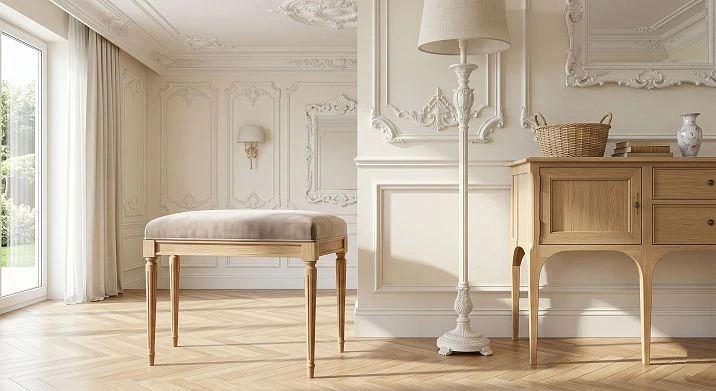
There is one secret that professional interior designers know well and that is rarely explained in magazines: the visual lightness of a room begins not with the color of the walls or the lighting — it begins with how much space is visible under the furniture.
A chest of drawers standing on a solid plinth keeps the gaze at the floor. It seems 'nailed' to it — heavy, static. The same chest of drawers on high wooden legs — floats. A light gap forms between the floor and the body, the space 'breathes', and the entire lower zone of the room becomes light and airy.
This is not an exaggeration or a poetic image. This is a working principle of spatial optics, equally successfully applied in both classic and modern interiors. And it is here — in the lower part of the room — that wood and polyurethane decor work together especially well: High furniture legs made of solid wood bear the load and create character, and Moldings made of polyurethane и baseboard molding connect furniture with the space.
How this works in practice is covered in this article.
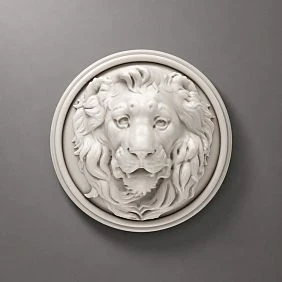
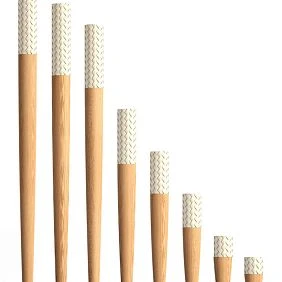
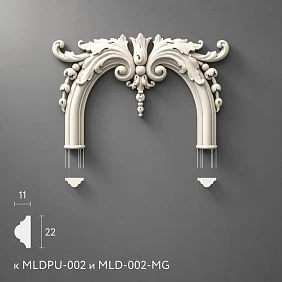
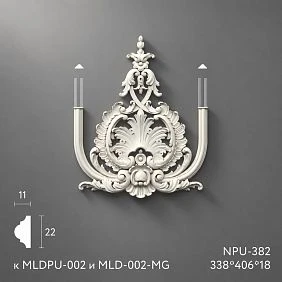
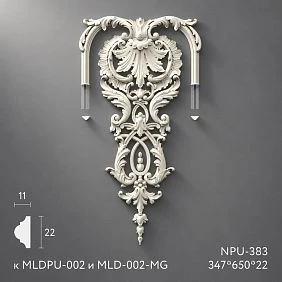

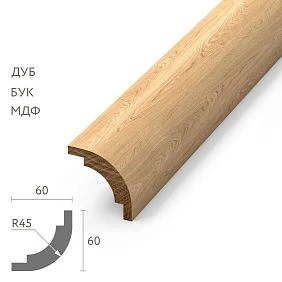
What to buy right away: a kit for furniture on high legs
Before diving into details, here's a list of everything you'll need. This is not an excessive list: each element has its role.
Wooden elements:
-
tall wooden legs for furniture — 4 pieces (less often 6 for wide dressers);
-
wooden furniture handles — according to the number of doors and drawers;
-
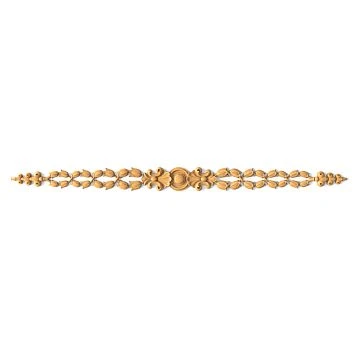
Decor for furniture and wooden overlays — accent elements of facades;
-
Decorative brackets — for consoles and wall-mounted shelves.
Polyurethane elements:
-
Moldings made of polyurethane — on the wall behind furniture and around the perimeter of the area;
-
Polyurethane appliqués — decorative accents on facades;
-
Decor for Molding — corner frame inserts;
-
Polyurethane moldings — cornice part of the upper belt;
-
Wall Decor — accents above the chest of drawers or console;
-
Polyurethane trim — baseboard.
Installation and finishing materials:
-
Fasteners for legs (tenon or threaded connection);
-
Polyurethane mounting adhesive — adhesive selection;
-
acrylic sealant;
-
Primer for painting;
-
Paint or varnish / wood oil;
-
Profile allowance of 10–15%.
Main idea: high legs change not only the furniture itself — they change the entire lower zone of the room. The floor opens up, the shadow under the body is visible, the baseboard becomes part of the overall picture. All this must be taken into account when placing an order.




Why high legs are needed: three effects
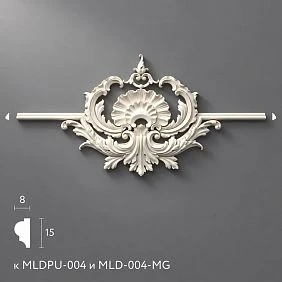
Our factory also produces:
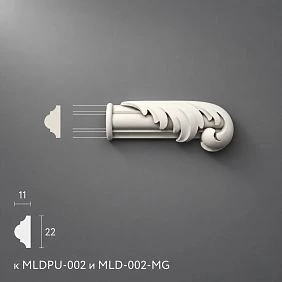
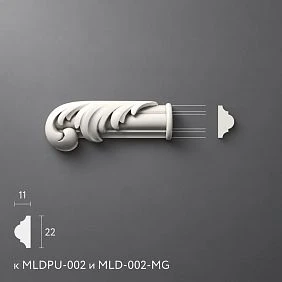
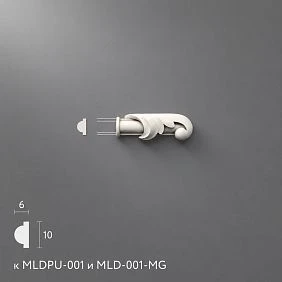
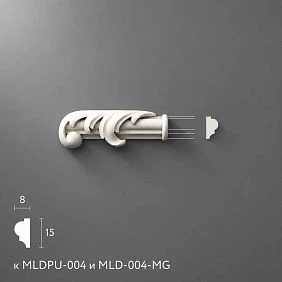
First effect: visual lightness of furniture
A solid base is the "groundedness" of furniture. The body appears as a monolithic block lying on the floor. High Furniture legs create a gap — space between the floor and the lower edge of the body. The gaze passes through this gap, the furniture stops "pressing" on the floor and seems light, almost floating.
It is this effect that makes French desks and English chests of drawers from the 18th–19th centuries so elegant: their legs are not a technical detail, but an architectural element.
Get Consultation
Second effect: scaling the room
When the floor is visible under the furniture, the room space seems larger. This works especially well in small rooms: hallway, bedroom of 12–15 m², urban living room. A cabinet on high supports in a small hallway frees up the lower third of the wall — and the hallway ceases to be "cramped."
The third effect: the connection of furniture with the interior
Furniture on high legs is furniture that is visible from all sides: front, side, bottom. It becomes a three-dimensional object, not a flat facade against the wall. This makes it possible to build an interior scene around it: moldings on the wall behind the chest of drawers, baseboard along the area, mirror in a frame from wall decor above it.
How high legs differ from regular furniture supports
A question that needs to be clarified right away: what does “high” mean? In furniture manufacturing, the distinction is as follows:
-
Pads and low supports — up to 50 mm. These are technical elements: they level the body, protect the floor, and provide a slight gap.
-
Medium legs — 60–100 mm. They create a visible but small gap. Typical for traditional cabinets and chests.
-
High legs — from 100 to 200 mm and more. This is already an architectural detail: it sets the proportions of the entire furniture and determines the character of the product.
wooden furniture legs in the STAVROS assortment — turned products made of solid beech with a height from 50 to 200 mm. Classic profiles: cabriole — curved, with a pronounced “knee” and “foot”; cone — strict straight taper; stem — with a waist in the middle part; square — for restrained neoclassicism. Each profile exists in several height options, allowing you to accurately select a leg for a specific product.
The fundamental difference between a high leg and a regular one is its visibility. A regular support is almost invisible. A high leg is part of the furniture design. It must match the handles, overlays, finish, and style of the facades.
For which furniture do high legs work best
Chest of drawers on high legs
The chest of drawers is the main candidate for replacing the base with legs. The standard height of a chest of drawers without legs is 80–90 cm. On legs 120–150 mm high, it rises to 90–100 cm. This is a comfortable height for use: you don't need to bend down to the lower drawers.
Chest of drawers on high legs works well in the bedroom (at the foot of the bed or along the wall), in the living room (as a buffet or sideboard), and in the hallway (as a functional accent piece).
What to pair with a chest of drawers on legs: Wooden handles the same finish as the legs; Moldings made of polyurethane on the fronts and on the wall behind the chest of drawers; Wall Decor or a framed mirror above it.
Nightstand in the bedroom on high supports
A bedside table is a detail that is constantly in sight. The standard height of a bed with a mattress is 55–65 cm. The table should be approximately the same height: so you can reach it with your hand without getting up.
on furniture supports With a height of 100–120 mm, the small body of the table (body height 35–45 cm) gives a final height of 45–60 cm — right in the comfortable reach zone.
A table on high legs in the bedroom is a light, "unobtrusive" accent. It does not block the lower part of the wall and creates a sense of spaciousness.
Console in the hallway or living room
A console on high legs is a classic piece that came from French salons of the 18th century. Narrow, long, on curved or straight supports — it stands against the wall and creates a "stage": a place for a vase, mirror, or decorative items.
Decorative brackets for a console — an additional decorative accent under the tabletop. They visually "carry" the horizontal plane and add depth to the structure.
On the wall behind the console, the following work well Moldings made of polyurethane in the form of a vertical frame or a symmetrical pair of frames — they create a "niche" in which the console becomes part of the architectural scene.
Sideboard without a heavy base
A sideboard is a large piece. On a solid base, it looks monumental, sometimes — excessive. On on high wooden legs the lower cabinet part lifts up, and the sideboard no longer looks like a "cabinet pressed to the floor."
An important nuance: for a sideboard 180–200 cm high, the legs must be selected according to the load. Cabriole or wine glass profile legs are for elegant pieces. Square or tapered legs with a larger cross-section are for heavy solid wood sideboards.
Showcase and low-height cabinet
A small display cabinet (120–150 cm) on high legs (100–150 mm) is an almost "airy" piece of furniture. It does not block the window from below, does not obscure the lower part of the wall, and looks good paired with a similar piece.
For the display case you will need glazing bead from molding — to secure the glass in the doors. This is a small but mandatory item in the configuration.
Wood in the lower zone of furniture: where it is irreplaceable
Load-bearing legs — only wood
The legs bear the weight of the body, shelves, and contents. For furniture weighing 20–60 kg, this is a real constant load. Wooden legs made of beech or oak withstand this load without deformation or fatigue failure.
Polyurethane legs do not exist as a functional element — polyurethane is not designed for constant load-bearing. This is important to understand when configuring.
Handles — wood is mandatory
Furniture Handles touched by hand hundreds of times a day. This is load, surface abrasion, accidental impacts. A wooden handle withstands this load; a polyurethane one does not. In addition, a wooden handle is tactilely pleasant — it is slightly warm, not slippery, and pleasantly dense to the touch.
Handles should match the legs. If the legs are in a white coating, the handles are also white. If the legs are in natural beech, the handles are with clear varnish. This creates a unified wooden "system" of furniture.
Decorative overlays in touch zones — wood
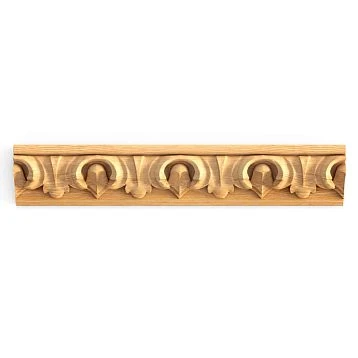
Wooden decor and overlays — carved medallions, cartouches, corner elements — are mounted on facades in areas where there is no constant touch. The center of the door, the lower frieze of the chest, symmetrical accents on the sides — these are the correct positions for wooden overlays.
In the lower zone of the facade — where a person often bends down or touches furniture with objects — wooden decor is preferable to polyurethane.
Polyurethane decor in the area of furniture on legs: where it works best
The wall behind the furniture is the main zone for moldings
Furniture on high legs opens up the wall. It is no longer "leaning" against the wall with its body — it stands in front of it. And the wall behind such furniture becomes a visible part of the interior scene.
Moldings made of polyurethane On the wall behind a chest of drawers, cabinet, or console, a background is created — an architectural "niche" in which the furniture becomes the main character. This could be one vertical frame matching the width of the furniture and extending above it, or two symmetrical frames on either side of a mirror.
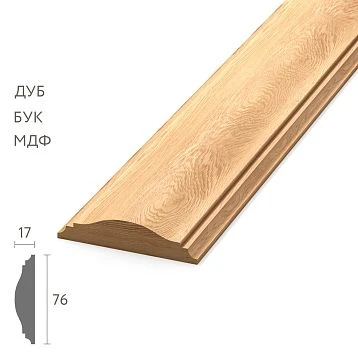
The width of the molding for wall frames is 30–60 mm, depending on the scale of the furniture and ceiling height.
Baseboard line — polyurethane as an architectural transition
Baseboard from polyurethane molding — a horizontal line near the floor — works as a "frame" for the entire lower zone. Furniture on high legs stands above this line, and it creates a proper transition from the floor to the wall and to the furniture.
An important nuance: the legs of the furniture should be lower than the baseboard line or match its height — not "sink" into the baseboard. The standard baseboard height is 60–120 mm. The leg height is from 100 mm. This needs to be calculated in advance.
Facade moldings for painting — polyurethane as relief
polyurethane decor for furniture facades — molding frames, overlays, top cornice — is used where the furniture will be fully painted. The light relief of the moldings after painting looks like stucco: no different from plaster or wood relief, but weighs less and installs faster.
Polyurethane appliqués On side panels and upper facades — accents without load. The side panel of a chest of drawers or cabinet is an ideal area: no load, the decor is visible from the side.
Decor above furniture — frame and accents
The area above a chest of drawers or console is a place for a mirror, painting, or decorative panel. Polyurethane wall decor can form a frame around the mirror or create an architectural accent above the furniture.
Frame of of polyurethane moldings с decor for moldings in corners — a clean, finished look without complex installation. It is precisely these frames that are popular in classic and neoclassical interiors.
Choosing leg height: parameters you can't miss
Final furniture height
First of all — calculate the final height: body height + leg height. This is critical for functional furniture.
-
Chest of drawers — optimal final height 90–100 cm. With a body of 75 cm and legs of 150–200 mm — final height 90–95 cm.
-
Nightstand — final height 50–65 cm (depending on bed height).
-
Console — traditional height 75–85 cm.
-
Sideboard — lower part with legs 85–95 cm; upper display cabinet — up to the ceiling.
Load and leg cross-section
The heavier the body, the larger the leg cross-section should be. Guideline:
| Body weight with contents | Minimum leg cross-section |
|---|---|
| up to 20 kg | 30 × 30 mm or diameter 35 mm |
| 20–40 kg | 35 × 35 mm or diameter 40 mm |
| 40–60 kg | 40 × 40 mm or diameter 50 mm |
| Over 60 kg | Individual calculation |
Thin, elegant cabriole legs under a heavy body — risk of breakage from accidental side impact. The right choice: a proportional leg that both supports the load and looks organic.
Leg attachment: tenon or thread
Wooden furniture legs STAVROS legs come in two attachment options. Tenon: a wooden tenon in the bottom support plate of the body, with or without glue. Threaded: a metal pin in the leg and a threaded insert in the body — a detachable connection that allows the leg to be removed for transport or replacement.
For stationary furniture — both options are acceptable. For furniture that will be moved or disassembled — threaded attachment is preferable. When ordering legs, specify the attachment type and include the fasteners in the order.
Clearance and baseboard: how they relate
The most common mistake when installing high legs is not accounting for the baseboard.
If the baseboard is 80 mm high along the wall and the furniture stands against that wall, the furniture legs must be tall enough so the baseboard does not 'creep' under the body. Otherwise, an unsightly conflict arises: either the furniture overhangs the baseboard, or the legs press against it.
Rule: the leg height should be at least the baseboard height + 10–15 mm clearance. For an 80 mm baseboard — legs from 90–100 mm.
Ready-made sets for specific items
Set: a classic-style chest of drawers on high legs
Task: chest of drawers with 4–5 drawers, to be painted white, style — classic.
Wooden elements:
-
Cabriole wooden legs — 4 pieces, height 130–150 mm, white finish;
-
Furniture Handles — equal to the number of drawers, white finish;
-
Wooden decoration — 1–2 accent overlays on the front.
Polyurethane elements:
-
Moldings made of polyurethane — frame profiles on the drawer fronts + wall frame behind the chest of drawers;
-
Decor for Molding — 4 pieces for the frame;
-
Polyurethane appliqués — accent above the top drawer;
-
Polyurethane trim — baseboard along the chest of drawers area.
Mounting materials:
-
Fasteners for legs, PU glue, sealant, primer, white paint, 10% spare.
Set: bedside table on high legs
Task: a table with one drawer and an open niche, style — neoclassical, color — beige / cashmere.
Wooden elements:
-
Furniture legs with a conical profile — 4 pieces, height 100–120 mm;
-
Wooden Handle — 1 piece per drawer.
Polyurethane elements:
-
Moldings made of polyurethane — thin frame on the drawer front;
-
polyurethane overlay — small medallion.
Mounting materials:
-
PU glue, sealant, primer, paint in furniture color.
Principle for the bedside table: minimal decor, maximum proportions. The main accent is the legs and handle. Everything else is calm.
Set: console in the hallway on high legs
Task: narrow console 30–35 × 90 cm, under the mirror, at the entrance.
Wooden elements:
-
Tall stemware glass — 4 pieces, height 160–200 mm;
-
Decorative brackets — under the countertop, 2 pieces;
-
Wooden decoration — 1 overlay on the front plane.
Polyurethane elements:
-
Moldings made of polyurethane — vertical frame on the wall under the mirror and on its sides;
-
Decor for Molding — 4 corner inserts for the frame;
-
Wall Decor — accent in the upper field of the frame.
Mounting materials:
-
Fasteners for legs and brackets, PU glue, sealant, primer, paint.
Set: sideboard without base, style — Provencal classic
Task: sideboard with lower cabinet and upper display case, height 190 cm, white finish.
Wooden elements:
-
Cabriole wooden legs — 4–6 pieces, height 100–120 mm;
-
Wooden handles — for all doors and drawers;
-
glazing bead from molding — for fixing glass in the upper doors.
Polyurethane elements:
-
Polyurethane moldings — upper cornice of the sideboard;
-
Moldings made of polyurethane — frame profiles for the lower cabinet and upper display case fronts;
-
Decor for Molding — corner inserts.
Mounting materials:
-
Fasteners, PU glue, sealant, primer, paint, 15% spare.
How not to overload furniture on high legs
Rule of one main accent
High legs are already a strong decorative accent. If you add rich facade moldings, large overlays, and saturated wall decor to them — the furniture 'screams' from all sides.
Principle: one main accent, the rest neutral.
-
Expressive legs (cabriole with carving) → calm facades, wall behind furniture — thin frame.
-
Rich facades (moldings + overlays) → tapered, strict legs.
-
Rich wall behind furniture → modest furniture.
Trying to "enhance" everything at once — legs, facades, wall — gives an overloaded, heavy result, opposite to the task of "making it lighter."
Color Unity
Legs, handles, and exposed wooden parts must have a uniform finish. If legs are white, handles are white. If clear lacquer, all wooden parts are clear. Mixing white legs with brown handles is a mistake that stands out.
Polyurethane decor when painted takes the same color as the furniture. After painting in a single tone, everything reads as a monolith. This is correct.
Leg-to-body proportion
The leg must be proportional to the body. A leg that is too thin under a large, wide body — instability and wrong scale. A leg that is too massive under a small cabinet — overload from below.
Guideline: leg cross-section should be 5–8% of body width. For a body width of 80 cm, leg cross-section is 40–65 mm.
Mistakes when choosing and installing high legs
Mistake 1: choosing legs by photo without measurements
A beautiful leg in a photo may turn out to be too thin for a specific cabinet or too short to create the desired clearance. You need to look at the numbers: height, cross-section, profile.
Mistake 2: not calculating the final furniture height
A bedside table that ends up higher than the mattress is a functional mistake. Before ordering: cabinet + leg = final height. Compare with the required functional height.
Mistake 3: not checking the load
Cabriole legs with a 25 mm cross-section under a buffet weighing 70 kg — risk of breakage. Check the maximum load per leg in the specifications.
Mistake 4: forgetting the fasteners
Threaded insert nuts for legs with threaded connections need to be ordered together with the legs. Without them, the leg cannot be installed.
Mistake 5: not accounting for the baseboard
Legs 80 mm high with a 80 mm baseboard — the body hangs directly over the baseboard. Looks messy. Legs must be at least 10–15 mm higher than the baseboard.
Error 6: placing polyurethane overlays on the lower zone of the facade
The lower part of the facade is an area often hit by feet, vacuum cleaners, and other objects. Polyurethane overlays here are easily damaged. Lower zone — only wood or a clean painted surface without overlays.
Error 7: mixing styles of legs and handles
Rococo-style legs + geometric handles in the Art Deco spirit = stylistic disconnect. Legs and handles must belong to the same style family.
Error 8: not applying a finish coating to the legs
Uncoated beech legs absorb moisture, dirt, handprints, and quickly lose their appearance. Mandatory finish: varnish (2–3 coats) or oil-wax. Varnish — more durable and long-lasting. Oil — closer to natural texture.
Full order checklist for furniture on high legs
Wooden items:
-
High wooden legs — profile, height, cross-section, coating;
-
Furniture Handles — model, center distance, coating;
-
Wooden decor and overlays — positions, model;
-
Decorative brackets — for consoles;
-
Pogonazh iz massiva — bead for display cases and sideboards.
Polyurethane items:
-
Moldings made of polyurethane — front frames and wall frames;
-
Decor for Molding — 4 pieces for the frame;
-
Polyurethane appliqués — accents on side panels and fronts;
-
Polyurethane moldings — top cornice;
-
Wall Decor — accents and frames on the wall;
-
Polyurethane trim — baseboard.
Mounting materials:
-
Mounting hardware for leg type (tenon or thread);
-
Assembly adhesive PU — the right choice;
-
acrylic sealant;
-
Primer — for polyurethane decor;
-
Paint — to match the furniture;
-
Varnish or oil — for wooden legs and handles;
-
Profile allowance of 10–15%.
STAVROS: system decor from leg to cornice
Furniture on high legs is a project where wooden and polyurethane elements must work as a single system. Legs, handles, moldings, overlays, baseboards — all are parts of one scene. If they come from different catalogs of different manufacturers, stylistic and proportional mismatches are inevitable.
STAVROS is a manufacturer that produces both wooden and polyurethane decor at its own production facility in Saint Petersburg. Since 2002. With a history that began with the restoration of the Konstantinovsky Palace, Alexander Palace, the Hermitage — sites where proportions and stylistic unity are not a preference, but a requirement.
In the STAVROS catalog for the furniture on high legs project:
-
Wooden furniture legs — turned profiles from solid beech;
-
wooden furniture handles — 32 models, 4 finishes;
-
Decorative brackets from solid wood — for consoles, fireplace mantels, and wall shelves;
-
Wooden decor and overlays — carved elements for facades and side panels;
-
Pogonazh iz massiva — glazing bead, architraves, layouts for display windows;
-
Moldings made of polyurethane — facade frames, wall panels, ceiling cornices;
-
Polyurethane appliqués — decorative accents on side panels and facades for painting;
-
Decor for Molding — corner inserts for frame systems;
-
Polyurethane wall decor — accent elements above furniture and around the perimeter of the zone;
-
Polyurethane moldings — cornices, ceiling rosettes, linear decor;
-
Polyurethane trim — baseboard, fillets, transition profiles.
All items are in one catalog, in a unified proportional system. Order from one piece. Delivery across all of Russia. Production in Saint Petersburg. Showrooms in Saint Petersburg and Moscow.
STAVROS is not just a supplier of parts. It is a manufacturer that understands how a leg relates to a handle, how a molding on a facade reads next to a molding on a wall, how a baseboard connects the floor and furniture into a single architectural picture. It is this systematic approach that distinguishes an interior where "everything came together" from a set of randomly matched items.
Frequently asked questions
Which high legs to choose for a dresser?
Consider the weight of the body, the desired final height, and the furniture style. For classic — cabriole or goblet profile, height 120–150 mm. For neoclassical — tapered or square profile. Leg cross-section — at least 40 mm for a body weighing from 30 kg. All this is available in the assortment.STAVROS furniture legs.Can high wooden legs be combined with polyurethane molding?
Yes, and this is the best solution for classic and neoclassical interiors. Woodenfurniture legsbear the load and create a tactile, warm lower belt of furniture. polyurethane decor works as an architectural relief on facades, walls, and baseboard areas — without load, lightweight, perfectly smooth for painting.What to buy together with high furniture legs?
Fasteners matching the connection type, Wooden handles matching the legs in color, Decorative Inserts, Moldings made of polyurethane on facades and walls, Skirtingglue, primer, paint, and wood varnish.Which furniture is not suitable for high legs?
For very heavy and tall cabinets without preliminary stability calculation. Cabinets over 180 cm high on legs over 150 mm require either wall fixation or a wide base. Also, high legs are impractical for furniture placed close to a door or in high-traffic areas where accidental side impact is possible.How not to overload furniture on high legs with decor?
Define one main accent: either expressive legs, rich facades, or abundant wall decor. Make the remaining elements neutral. A uniform finish for legs, handles, and wooden parts is mandatory. Decor for Molding и Polyurethane appliqués add sparingly, not on all surfaces at once.Is a finish coating necessary for wooden legs?
Absolutely. Beech without coating darkens quickly, absorbs dirt and moisture. Varnish — 2–3 coats — provides a durable protective film. Oil-wax gives a softer, natural look. For legs in active use, varnish is recommended: it is more resistant to abrasion and mechanical stress. -