Article Contents:
- The purchase is complete, but the material chain is not yet
- Why a single sales receipt or delivery note is not enough
- What constitutes a unit of control
- Why the route must be written down, not just spoken
- When an item is better temporarily paused
- Why meters remain useful
- Why items are critical for returns
- What else is useful to add to the transfer sheet
- Why the transfer sheet is created before loading
- How to link a photo to a specific line item
- What not to photograph
- What the workshop signature means
- Why you can't label only the outer packaging
- Why the labeling method is agreed upon by the finisher
- Why the same white enamel doesn't make groups identical
- Why this matters after the project is handed over
- What the finish code should record
- Why this matters for evaluating workshop work
- What the workshop confirms upon acceptance
- How to separate the disputed item
- Why matching the total quantity guarantees nothing
- Why are close white and gray shades especially dangerous?
- Why you should not send an entire painted batch of one SKU to the floor
- Why the SKU matters more than the visual name
- When whole products are more practical
- When ready-made parts are more useful
- Why you shouldn't paint all groups at once "to save space"
- Why this matters when comparing quality
- Why you can't label a pack by color alone
- Why a direct route requires especially good labeling
- How to check feasibility
- Why this matters when comparing quality
- Why you can't label a pack by color alone
- Why a direct route requires especially good labeling
- How to check feasibility
- Why a partial return cannot be considered closing the line
- Why quantity is not sufficient evidence
- Why batch numbers matter when damage occurs
- What is useful to check before the final settlement
- What is considered a closed cycle
- We check the completeness of exactly the group that we are issuing
- We check compliance with the reference not on one random plank
- We check whether the zone was lost after repackaging
- We check the reserve separately from the main volume
- We check whether the quantity changed after technological operations
- Checking the condition of packaging before internal logistics
- Checking that installers have received up-to-date information
- Checking the first assembled group as confirmation of the entire chain
- When the "approved for installation" status needs to be removed
- There should be no "somewhere with the painters" status left
- Test color samples and technical samples are also taken into account
- Closing the gap between the accounting and physical picture
- After closing, we keep only useful history

620 wooden trim elements were purchased for the hotel. Some skirting boards and mouldings are to receive white enamel, the oak lobby elements are to be tinted, several cornices are to receive a different coating, and the operational reserve must be left untouched until a separate decision. The manufacturer supplied the items according to the specification, the customer accepted them at the warehouse, after which several dozen packs were sent to a third-party painting workshop.
A week later the material returns. The number of packs almost matches, but the factory packaging has been removed in places, the white mouldings look visually similar to one another, several groups no longer have a clear link to the original item codes, and some of the finished parts are already wanted on the floors. At this point it becomes clear that the problem with exterior finishing is not only the colour and quality of the coating. The main risk is losing the identity of goods already purchased during a third-party technological operation.
Therefore, procurement construction materials wholesale for a project where the finishing is carried out by a separate contractor must include a standalone process for handover to finishing and return. It is necessary to answer seven questions with evidence: what was handed over, how much was handed over, in what condition, for which finishing, to whom it was handed over, what was received back, and where each item should go after return.
MANUFACTURER → ACCEPTANCE → SITE WAREHOUSE → HANDOVER LIST → PAINTING WORKSHOP → FINISHING → RETURN → RETURN CONTROL → DISTRIBUTION BY ZONES → INSTALLATION → OPERATIONAL RESERVE
Central formula of the process:
SKU → MATERIAL → LENGTH → QUANTITY → FINISH CODE → CONTRACTOR → RETURN → ZONE.
If at least one link is lost, the finished white plank turns from a manageable inventory item into an object that has to be identified “by eye.”
The purchase is complete, but the material chain is not yet
With a standard delivery, the path can be relatively short: manufacturer → site warehouse → installation zone. If finishing is performed by a third-party workshop, the chain becomes longer:
MANUFACTURER → SITE WAREHOUSE → LOADING → TRANSPORT → PAINTING WORKSHOP → PREPARATION → PAINTING/TINTING → DRYING → REPACKAGING → TRANSPORT → SITE → RETURN ACCEPTANCE → INSTALLATION
At each stage, a separate risk arises:
- lose one or more planks;
- mix up two similar SKUs;
- confuse beech and oak under an opaque finish;
- confusing two finishes of the same SKU;
- replace a damaged item without recording it;
- take material from reserve;
- change the length or quantity after cutting;
- return finished products to the wrong project zone;
- lose the original labeling when removing the packaging;
- count packs instead of specific stock units.
Therefore, an external finishing contractor becomes a temporary participant in material accounting. They may not maintain the full object specification, but they must receive and return the goods in such a way that the purchaser can unambiguously reconstruct the original order structure.




Why a single sales receipt or delivery note is not enough
A delivery note confirms commercial movement. Technological handover requires additional data: finish code, zone, exact number of whole items, reserve affiliation, and condition before work begins. These parameters may be absent from a standard shipping document.
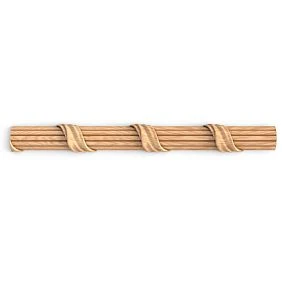
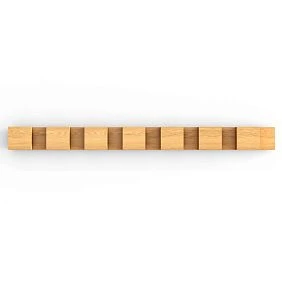
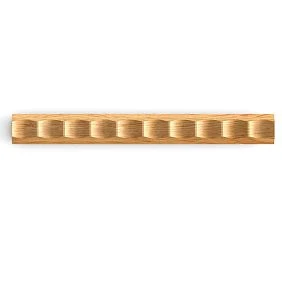
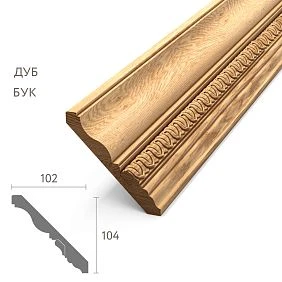
Our factory also produces:

What constitutes a unit of control
For linear material, two units are convenient at once: linear meters — for reconciling the total project volume; whole items — for physical transfer, return, and control. The main unit of movement between the warehouse and the workshop remains a specific plank or a clear packaging group.
Get Consultation
First, we determine the route for each position
Not the entire order should automatically go to external finishing. Before the first loading, it is useful to assign each position one of the routes.
| Route | Meaning | Example |
|---|---|---|
| TO THE SITE | Does not require external finishing | Finished product or item from another process chain |
| FOR FINISHING | Transferred to an external workshop | Molding for white enamel |
| ON HOLD | Do not transfer yet | Shade not approved or disputed item |
| operational reserve | Reserved for future repair | Several whole planks of the approved SKU |
This simple branch point prevents the typical situation where the entire SKU is sent to the workshop "for convenience," even though part of the quantity should remain untouched.
For example, an order contains 100 PLT-A strips. Of these, 86 are needed for the current installation, 6 are an installation reserve, and 8 are an operational stock. Either 92 or 86 can go to the workshop — depending on the chosen strategy — but this must be decided in advance. You cannot simply hand over all 100 and then try to restore the structure.
Why the route must be recorded, not just spoken
The verbal instruction "don't touch these eight" stops working when the employee, vehicle, or loading day changes. The route sheet preserves the decision regardless of the participants.
When an item is better temporarily put on hold
If the color, gloss level, finish sample, or zone assignment has not yet been approved, it is safer not to send the product into finishing. Painting adds cost and makes it harder to return to the original state.
You cannot give the workshop a line that says "molding — 300 meters"
For production handoff, the line must be specific enough: SKU + material + commercial length + quantity in pieces + finish code + project zone.
For example:
MLD-A / beech / 2400 mm / 38 pcs. / F01 / NUMBERED STOCK
Linear meters can be added as a control value: 38 × 2.4 = 91.2 mBut physically the workshop receives 38 specific planks, not an abstract 91.2 m.
| Weak entry | Working entry |
|---|---|
| White molding — 90 m | MLD-A / beech / 2400 / 38 pcs. / F01 / rooms |
| Oak skirting — 140 m | PLT-B / oak / 2400 / 58 pcs. / F02 / lobby |
| Cornice for painting | KZ-C / oak / 2000 / 22 pcs. / F03 / restaurant |
Why meters remain useful
Meters help reconcile the project budget and the total volume. If the number of planks has changed, the meterage shows the scale of the discrepancy. But meters do not replace pieces.
Why pieces are critical for returns
96 m can be assembled from 40 planks of 2400 mm, 48 planks of 2000 mm, or a mixed batch. If "96 m" is returned, it is impossible to determine whether the original product structure was preserved.
Materials in bulk: transfer sheet before vehicle departure
Before materials in bulk leave the site warehouse, an initial transfer sheet is created.
| Transfer code | Article | Material | Length | Quantity | Finish code | Zone | Transferred |
|---|---|---|---|---|---|---|---|
| FIN-01 | PLT-A | Beech | 2400 | 86 | F01 | Numbers | 86 |
| FIN-01 | MLD-A | Beech | 2400 | 54 | F01 | Numbers | 54 |
| FIN-01 | MLD-B | Oak | 2400 | 38 | F02 | Lobby | 38 |
| FIN-01 | KZ-A | Oak | 2000 | 22 | F03 | Restaurant | 22 |
The list becomes the starting point for the future balance. On return, each line must be closed with quantity and status.
What else is useful to add to the statement
- original order number;
- transfer date;
- number of packages;
- vehicle number;
- sender;
- receiving person at the workshop;
- note on initial damage;
- link to the approved finish sample.
Why the report is created before loading
If it starts being filled out after the vehicle has left, some decisions can no longer be verified physically. The report should manage loading, not describe it after the fact.
What to photograph before handover
Photo documentation is needed to prove the initial condition, not to create an archive of a thousand identical shots.
It is useful to record the marking of each technological group, typical packaging, the number of packages, a control view of the item, existing chips or dents, special reserve marking, mixed lengths, and the general appearance of the cargo before closing the truck.
CONDITION BEFORE THE WORKSHOP ↔ CONDITION AFTER THE WORKSHOP
How to link a photo to a specific line
The frame must show the group marking or package number. A file without context is almost useless a month later.
What should not be photographed
There is no point in taking a separate general shot of each identical strip if it does not add evidentiary information. Fewer photos are better, but with an identifier and a clear purpose.
The handover must have a specific sender and receiver
The phrase “the driver took it to the painters” is too vague for a large batch. On the site side, there must be a person who confirms what has been loaded, how many packages and items, which list is in effect, which groups are on hold, and what damage existed before departure.
The workshop must have a specific receiver who confirms the actual receipt, the number of places, the number of items by line, the condition, and the separation by finish codes.
What the workshop signature means
It does not confirm the quality of the future painting. It confirms that the workshop accepted a certain physical volume in a certain condition and according to a certain list.
Wooden skirting board: after painting, it is easier to lose the original identity
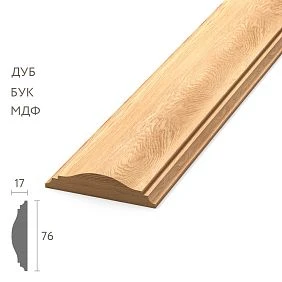
Before finishing, two wooden skirting boards may differ noticeably in wood and surface. After the same opaque enamel, the visual differences are reduced.
If the factory packaging is removed, a dangerous scenario arises: "it seems this is that tall skirting board". But on site, several profiles of similar height or several materials of the same profile may be used at the same time.
Therefore, identification must survive unpacking, preparation, priming, painting, drying, repacking, and return.
Why you shouldn't label only the outer packaging
If the packaging is removed on the first day, the code disappears along with it. You need to decide in advance at what level the identifier is preserved during the technological operation itself.
How to label material if the factory packaging will be removed
It is not necessary to stick a paper label on the front surface of each item. And it is not always safe for the coating.
Identification can be preserved at the level of a pack, transport cassette, rack cell, technological cart, tray, or a group of items that is not physically mixed with the neighboring one.
Example: OTD-03 / PLT-A / F01 / 24 PCS.
Why the finishing specialist approves the labeling method
Pencil, marker, tape, adhesive label, or tag can affect the surface and subsequent coating in different ways. There is no universal safe method for all materials and finishes. The buyer determines what information must be preserved, and the workshop determines how to physically preserve it without damaging the finish.
Building material wholesale: separating technological batches before painting
If construction material wholesale of the same SKU receives two different finishes, these are already two separate technological groups.
Must not be placed next to:
MLD-A / F01
and:
MLD-A / F02
with the argument “the profile is the same.”
| Technological group | Article | Material | Finish code | Quantity | Zone |
|---|---|---|---|---|---|
| KR-01 | MLD-A | Beech | F01 | 48 | Numbers |
| KR-02 | MLD-A | Beech | F02 | 32 | Lobby |
| KR-03 | MLD-A | Oak | F03 | 20 | Restaurant |
The physical structure of the workshop must mirror this table. If groups get mixed before preparation begins, further control becomes dependent on employees' memory.
Why the same white enamel does not make the groups identical
Even if the finished color is close, groups may differ in material, zone, sanding, length, or quantity. For purchasing, they remain different items.
Do not mix oak and beech under opaque enamel
After an opaque coating, beech and oak may appear visually closer than before painting. But this does not make them the same material.
Reasons to keep the species in the identifier:
- project specification;
- cost;
- order history;
- possible subsequent repair;
- differences in preparation;
- the need to reproduce the same material for reorders.
Therefore, the group must remain MLD-A / OAK / F01, and not turn into a faceless “white molding.”
Why this matters after project handover
If local replacement is needed a few years later, the maintenance service must know not only the shade but also the original material. Otherwise, reordering is based on guesswork.
How to transmit the approved finish reference to the workshop
The workshop must receive not a request to “make it roughly like in the photo,” but an approved control point.
This could be:
- physical sample;
- approved color sample;
- finish code linked to a physical sample;
- documented coating system, if approved by the project.
Example:
F01 — approved finish reference standard
F02 — approved finish reference
A photograph may supplement the reference standard, but does not replace physical comparison where color, gloss, and texture are critical.
What the finish code should capture
Not just the color name. The code can link the purpose, the approved sample, the degree of sheen, the coating system design, the application area, and the version of the solution. The specific application technology is determined by the finishing contractor.
Why a color code alone is not enough
Even the same color code does not guarantee the same perception on different substrates and with different coating systems.
The result is influenced by:
- wood species;
- surface preparation;
- soil;
- number of layers;
- gloss level;
- lighting;
- profile relief.
Therefore, the stronger combination is: color code + finish code + approved physical sample.
It allows comparing the result after return not with memory, but with a reference standard.
We preserve "Standard" and "Prestige" in technological identity
STAVROS uses the sanding quality options "Standard" and "Prestige". "Standard" is associated with machine sanding, while "Prestige" is associated with more detailed manual surface finishing. If a specific order contains both options, the workshop must see this separation before preparation begins.
You cannot lump together anonymously:
MLD-A / STANDARD
and:
MLD-A / PRESTIGE
into one pile and then estimate preparation costs "on average."
| Parameter | Why store separately |
|---|---|
| Article number | Different geometry |
| Material | Different procurement configuration |
| Sanding | Different amount of subsequent preparation |
| Finish code | Different final result |
| Zone | Different installation location |
Why this matters for evaluating workshop work
If one group requires more manual finishing while another arrives better prepared, mixing makes fair accounting of labor intensity and quality impossible.
The workshop must accept the material before finishing begins
The second checkpoint occurs on the contractor's side.
The warehouse says: transferred 86 PLT-A.
The workshop must confirm: received 86 PLT-A.
If 84 were accepted, this would be discovered before painting, not a week after the marking was removed.
ISSUED → ACCEPTED BY WORKSHOP → IN PROGRESS → FINISHING COMPLETED → RETURNED → ACCEPTED BY SITE → APPROVED FOR INSTALLATION
What the workshop confirms upon acceptance
- number of packages;
- number of items;
- article number;
- the material;
- length;
- finish code;
- visible initial damage.
What to do with damage detected before painting
If the workshop sees a chip, warping, or another questionable condition before work begins, the item must not quietly enter the general flow.
It is assigned the status ON HOLD BEFORE FINISHING. Then the responsible person decides: allow for work, replace, exclude, approve local repair, or return to the supplier.
If damage is hidden under a coating without being recorded, it becomes harder to determine the source of the defect after return.
How to separate a disputed item
It must be physically separated from the work group and linked to a record in the ledger. A chat note alone is not enough.
Building materials wholesale: quantity cannot be changed “on the fly” without a record
When working with building materials wholesale an external workshop must not independently balance the quantity at the expense of neighboring packs.
Scenario: one PLT-A plank is damaged → we'll take another one from the neighboring bundle.
On a large site, such an action changes the warehouse balance, installation reserve, operational reserve, zone assignment, process batch balance, and the history of the specific SKU.
Any replacement must appear in the ledger.
| Disposed | Reason | Replacement | Replacement source | Reserve change |
|---|---|---|---|---|
| PLT-A / 1 pc. | Damage | PLT-A / 1 pc. | installation reserve | −1 |
The operational reserve cannot be consumed automatically
The operational reserve exists not for the convenience of the current painting workshop, but for the future maintenance of the facility.
If one plank is damaged during external finishing, the automatic decision to "take it from the reserve" shifts the problem into the future.
| Reserve type | What it is for |
|---|---|
| Main volume | Current installation |
| installation reserve | Errors and losses of the current installation |
| operational reserve | Repair after handover |
If the operational reserve is nevertheless used, the decision is recorded separately, and the project understands that it must be restored.
How to calculate return from the workshop
Returns cannot be accepted based on the number of packs alone.
Verification follows the chain: SKU → material → length → finish code → quantity.
| Article | Material | Finish code | Transferred | Returned | Difference | Status |
|---|---|---|---|---|---|---|
| PLT-A | Beech | F01 | 86 | 86 | 0 | Check quality |
| MLD-A | Beech | F01 | 54 | 53 | −1 | Put on hold |
| MLD-B | Oak | F02 | 38 | 38 | 0 | Check quality |
| KZ-A | Oak | F03 | 22 | 22 | 0 | Check quality |
The −1 line is resolved before the material goes to the floors. After distribution, finding the missing plank is much harder.
Why a matching total quantity guarantees nothing
The workshop may return the same number of items but mix up two SKUs or two finishes. Therefore, verification by the total sum is insufficient.
Wholesale building materials: returns after finishing are a new checkpoint
When wholesale building materials returned after a third-party technological operation, they undergo a separate acceptance check.
The material had already been accepted after the manufacturer. But after the workshop, the surface, packaging, appearance, often the marking, sometimes the length if cutting was performed, and the risks of mechanical damage have changed.
On return, they check completeness, SKUs, materials, finish codes, compliance with the physical reference sample, obvious damage, the quality of repackaging, and the preservation of the project marking.
Why returned material cannot be sent straight to the installers
The truck has arrived from the painting subcontractor, the foreman is waiting for the skirting board on the second floor, the installers are free — the temptation to unload straight into the rooms is very strong.
But if after that a shortage, a mixed-up shade, a different article number, damage, or an incorrect finish is discovered, the source of the error will have to be traced across the entire site.
RETURNED → CHECKED → RELEASED FOR INSTALLATION → DISTRIBUTED BY ZONES
Inspection zone after external finishing
A small physical zone on site is needed for material that has already returned but has not yet been released for installation.
| Zone | Content |
|---|---|
| RETURN — NOT CHECKED | Just arrived batches |
| ON HOLD | Shortage, disputed color, damage |
| ACCEPTED | Verified and ready for further distribution |
| Reserve | Separately identified stock |
Even temporary labeling is better than mixing returned items with old stock.
What to do if two similar shades are mixed up
You cannot sort from memory: "this one seems a bit darker, so F02".
You need the finish code, a physical master sample, the original list, the workshop labeling, and, if necessary, confirmation from the finisher.
If identification is lost, the group is set to "on hold" until confirmation.
Why similar white and gray shades are especially dangerous
Under different lighting conditions, close tones may look the same or, conversely, differ noticeably. In an installation area with different light, the error will show up later.
How to return finished material to its designated project area
After verification, the original object breakdown must be restored.
For example:
F01 → floors 2–5
F02 → lobby
F03 → restaurant
And within each finish:
item code → zone → main volume → installation reserve → operational reserve.
| Finish code | Article | Zone | Main volume | Installation reserve | Operational reserve |
|---|---|---|---|---|---|
| F01 | PLT-A | Numbers 201–250 | 78 | 4 | 4 |
| F02 | MLD-B | Lobby | 34 | 2 | 2 |
This way the workshop does not disrupt the design logic, but only adds a technological stage.
Why you cannot send the entire painted batch of one item code to the floor
A single SKU may include the main installation, installation reserve, operational reserve, the next phase, or another room. If everything is given to one crew, the differences will physically disappear.
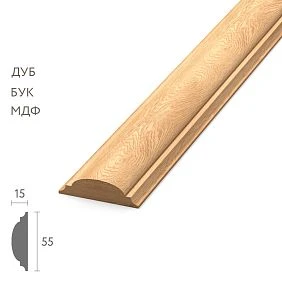
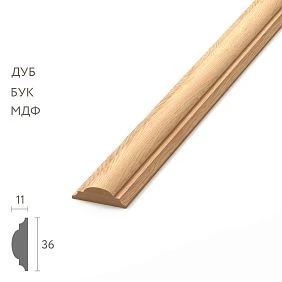
Wooden moulding is especially easy to mix up after painting
Three similar wooden mouldings before finishing differ in relief, material, and shade. After white enamel, the installer may receive “three white packs” and rely only on memory.
Therefore, labeling is useful on each return group:
MLD-A / F01 / NUMBERS
MLD-B / F01 / CORRIDOR
MLD-C / F02 / LOBBY
The labeling must be visible before unpacking on the floor.
Why the SKU matters more than the visual name
Phrases like "narrow white," "wide white," "the one with the groove" are not a reliable system on a site with dozens of items.
Wooden cornice: whole products and cut parts must not be mixed
If the workshop receives wooden cornice whole strips, it must be decided in advance whether it has the right to perform cutting.
If cutting is done without approval, the product structure, cutting map, usable offcuts, joint locations and stock change.
Therefore, the rule is fixed before handover:
cutting is performed by the workshop
Or:
the workshop finishes only whole products, cutting is performed on site.
What is better to hand over: whole products or ready-made cut pieces
There is no universal answer.
| Approach | Advantages | Risks |
|---|---|---|
| Whole products | Cutting flexibility, easier to account for changes to the site | Fresh cut edges appear after installation |
| Ready-made cut pieces | Can be assigned to a zone right away, fewer cuts after finishing | Any change in dimensions makes the part unsuitable |
| Mixed approach | Critical parts are prepared in advance, the rest are cut on site | Requires more precise labeling |
The decision depends on the stability of finished dimensions, the type of coating, the visibility of edges, and the organization of installation.
When whole products are more practical
When an object can still receive minor dimensional adjustments, when the finish can be easily restored locally after a cut, or when it is more convenient to maintain the cutting map on site.
When finished parts are more useful
When the geometry is fully approved, each part has a zone code, and the finishing technology requires the edges to be processed before installation.
Who is responsible for the edges after cutting
This is one of the questions that is often discovered too late.
If the product is fully painted as a whole and then cut on site, fresh edges appear. This means it is necessary to determine in advance:
- who performs the cutting;
- who processes the edges;
- what material is used for local touch-up;
- whether return to the workshop is needed;
- what visual result is acceptable;
- when the final retouching is performed.
The purchaser is not obliged to specify the coating technology, but is obliged to ensure that the chain of operations is closed.
How to organize multiple colors without mixing them up
Suppose one project contains F01 — 280 items, F02 — 90 items, F03 — 42 items.
It is better to launch them as three independent technological groups.
INITIAL ORDER → F01 / 280 → F02 / 90 → F03 / 42 → SEPARATE RETURNABLE BALANCE FOR EACH GROUP
This makes it possible to stop F02 if there is a color problem without blocking F01 and F03.
Why you shouldn't paint all groups at once “to save space”
If physical boundaries disappear, the risk of mixing up bundles during drying, repacking, and loading increases.
How to work with multiple painting contractors
If one contractor makes F01 and another makes F02 and F03, the contractor or a separate list number is added to the transfer code.
For example:
OTD-A-01 / F01
OTD-B-01 / F02
OTD-B-02 / F03
| Code | Contractor | Finish | Quantity | Status |
|---|---|---|---|---|
| OTD-A-01 | Workshop A | F01 | 280 | In progress |
| OTD-B-01 | Workshop B | F02 | 90 | Returned |
| OTD-B-02 | Workshop B | F03 | 42 | Under review |
The history of different contractors does not get mixed into a single line "in the paint shop."
Why this matters when comparing quality
If a discrepancy later appears for one finish, you can quickly determine which chain and which contractor belong to a specific batch.
How to account for intermediate drying and packaging
A finished coating may require process time before safe packaging and transportation. The specific timelines and conditions are determined by the coating system and the workshop.
For the procurement process, a different question matters: when is the batch actually ready for transportation.
The status "painted" does not always equal the status "ready to be placed in transport packaging."
It is useful to distinguish:
- finish applied;
- technological curing completed;
- can be packed;
- packaged;
- ready for shipment.
This way, logistics does not push the workshop to cover a still-sensitive surface just for the vehicle.
Repacking must restore identification
After finishing, the factory packaging may no longer be suitable or convenient. The new packaging must restore at least the original information:
- article number;
- the material;
- length;
- quantity;
- finish code;
- zone;
- transfer number;
- reservation status, if applicable.
Without this, the object receives beautiful but impersonal items.
Why you shouldn't label a batch by color alone
The label "white" does not distinguish two SKUs with the same finish and does not show where they should go.
How to control damage after external finishing
On a return, it is important to distinguish a finish defect from transport damage.
Check:
- coating chips;
- dents;
- scuff marks;
- damaged edges;
- traces of contact with spacers;
- prints or sticking of packaging;
- contamination of the finished surface.
If the problem repeats in the same places on several planks, it is worth separately checking the method of repackaging and transportation.
What to do with leftovers after finishing the exterior
After completing the main program, various categories of material remain.
| Category | Meaning | How to account |
|---|---|---|
| Unfinished leftover | Source material that was not sent or not used | By item code, material, and length |
| Finished balance | Products with completed finishing | Plus finishing code |
| installation reserve | Stock for current installation | Separate from total balance |
| operational reserve | Stock after handover | Maximum identification |
A single line “linear stock — 14 pcs.” is not enough.
How to hand over a ready operational reserve
After three years, a white plank without a label is almost useless. The operational reserve must retain:
- article number;
- the material;
- commercial length;
- finish code;
- original order number;
- finishing date;
- area of application;
- if possible — a link to the master sample or finish card.
This way the reserve remains part of the maintenance system, rather than a mysterious white plank in the warehouse.
What an end-to-end external finishing register looks like
| Code | Article | Material | Length | Transferred | Finish | Contractor | Returned | Zone | Status |
|---|---|---|---|---|---|---|---|---|---|
| FIN-01 | PLT-A | Beech | 2400 | 86 | F01 | А | 86 | Numbers | ACCEPTED |
| FIN-01 | MLD-A | Beech | 2400 | 54 | F01 | А | 53 | Numbers | ON HOLD |
| OTD-02 | MLD-B | Oak | 2400 | 38 | F02 | Б | 38 | Lobby | ACCEPTED |
| OTD-03 | KZ-A | Oak | 2000 | 22 | F03 | Б | 22 | Restaurant | Under review |
This register does not replace the warehouse system. It specifically controls the temporary removal of material from the normal chain for an external technological operation.
If the finished batch goes directly to the site
Sometimes material from the workshop does not return to the central warehouse, but goes directly to a construction site or a specific floor.
Then the route changes:
warehouse → workshop → floor 3
But return control is still needed. The receiving point simply becomes not the warehouse, but the designated responsible person at the site.
The register records where it was actually delivered, who received it, what was checked, what status was assigned, and what balance was or was not returned to the warehouse.
Why the direct route requires especially good labeling
On the floor, there is usually no time or space to reconstruct the structure of a large delivery. A mistake missed in the workshop quickly turns into an installation mistake.
What to do if the finished dimensions changed while the material was in the workshop
While the products were being painted, the opening, furniture, wall length, or cutting map could have been adjusted on site.
Before returning, it is useful to check whether the previous specification is still valid.
If the lengths have changed:
- there is no need to automatically cut the finished material according to the old map;
- the cutting layout is updated;
- it is checked which whole planks can still be preserved;
- the fate of the already finished parts is assessed;
- if necessary, a separate project change is opened.
This is precisely why transferring finished cut pieces requires a more stable object geometry than transferring whole products.
What to do if the workshop asks for more material "just in case"
An additional technological reserve may be reasonable, but it should not appear outside of accounting.
If the finisher believes a reserve is needed, they record:
- how many additional products;
- under which SKU;
- for which finish;
- why the reserve is needed;
- from which fund it is allocated;
- what happens to the unused remainder.
This way, a “just in case” reserve does not turn into an unnoticed disappearance of stock.
When an external workshop is not needed at all
A separate external cycle may be unnecessary if the item is already supplied in the required final state, the coating is more rationally applied on site, the volume is too small for separate logistics, the project does not require a complex coating, or the risk of additional transportation outweighs the benefit.
An external workshop is chosen based on technological and organizational expediency, not for the sake of the additional stage itself.
How to check expediency
They compare not only the cost of painting, but also loading, transport, repackaging, returns, risk of damage, loss of labeling, and additional inspection.
How to work with a partial return from the workshop
A large order rarely returns in one vehicle in one day. The workshop may finish the skirting for the room inventory first, then the moldings, and leave the cornices for additional drying. A partial return is convenient for the schedule, but only if each shipment closes specific lines
How to work with multiple painting contractors
If one contractor makes F01 and another makes F02 and F03, the contractor or a separate list number is added to the transfer code.
For example:
OTD-A-01 / F01
OTD-B-01 / F02
OTD-B-02 / F03
| Code | Contractor | Finish | Quantity | Status |
|---|---|---|---|---|
| OTD-A-01 | Workshop A | F01 | 280 | In progress |
| OTD-B-01 | Workshop B | F02 | 90 | Returned |
| OTD-B-02 | Workshop B | F03 | 42 | Under review |
The history of different contractors does not get mixed into a single line "in the paint shop."
Why this matters when comparing quality
If a discrepancy later appears for one finish, you can quickly determine which chain and which contractor belong to a specific batch.
How to account for intermediate drying and packaging
A finished coating may require process time before safe packaging and transportation. The specific timelines and conditions are determined by the coating system and the workshop.
For the procurement process, a different question matters: when is the batch actually ready for transportation.
The status "painted" does not always equal the status "ready to be placed in transport packaging."
It is useful to distinguish:
- finish applied;
- technological curing completed;
- can be packed;
- packaged;
- ready for shipment.
This way, logistics does not push the workshop to cover a still-sensitive surface just for the vehicle.
Repacking must restore identification
After finishing, the factory packaging may no longer be suitable or convenient. The new packaging must restore at least the original information:
- article number;
- the material;
- length;
- quantity;
- finish code;
- zone;
- transfer number;
- reservation status, if applicable.
Without this, the object receives beautiful but impersonal items.
Why you shouldn't label a batch by color alone
The label "white" does not distinguish two SKUs with the same finish and does not show where they should go.
How to control damage after external finishing
On a return, it is important to distinguish a finish defect from transport damage.
Check:
- coating chips;
- dents;
- scuff marks;
- damaged edges;
- traces of contact with spacers;
- prints or sticking of packaging;
- contamination of the finished surface.
If the problem repeats in the same places on several planks, it is worth separately checking the method of repackaging and transportation.
What to do with leftovers after finishing the exterior
After completing the main program, various categories of material remain.
| Category | Meaning | How to account |
|---|---|---|
| Unfinished leftover | Source material that was not sent or not used | By item code, material, and length |
| Finished balance | Products with completed finishing | Plus finishing code |
| installation reserve | Stock for current installation | Separate from total balance |
| operational reserve | Stock after handover | Maximum identification |
A single line “linear stock — 14 pcs.” is not enough.
How to hand over a ready operational reserve
After three years, a white plank without a label is almost useless. The operational reserve must retain:
- article number;
- the material;
- commercial length;
- finish code;
- original order number;
- finishing date;
- area of application;
- if possible — a link to the master sample or finish card.
This way the reserve remains part of the maintenance system, rather than a mysterious white plank in the warehouse.
What an end-to-end external finishing register looks like
| Code | Article | Material | Length | Transferred | Finish | Contractor | Returned | Zone | Status |
|---|---|---|---|---|---|---|---|---|---|
| FIN-01 | PLT-A | Beech | 2400 | 86 | F01 | А | 86 | Numbers | ACCEPTED |
| FIN-01 | MLD-A | Beech | 2400 | 54 | F01 | А | 53 | Numbers | ON HOLD |
| OTD-02 | MLD-B | Oak | 2400 | 38 | F02 | Б | 38 | Lobby | ACCEPTED |
| OTD-03 | KZ-A | Oak | 2000 | 22 | F03 | Б | 22 | Restaurant | Under review |
This register does not replace the warehouse system. It specifically controls the temporary removal of material from the normal chain for an external technological operation.
If the finished batch goes directly to the site
Sometimes material from the workshop does not return to the central warehouse, but goes directly to a construction site or a specific floor.
Then the route changes:
warehouse → workshop → floor 3
But return control is still needed. The receiving point simply becomes not the warehouse, but the designated responsible person at the site.
The register records where it was actually delivered, who received it, what was checked, what status was assigned, and what balance was or was not returned to the warehouse.
Why the direct route requires especially good labeling
On the floor, there is usually no time or space to reconstruct the structure of a large delivery. A mistake missed in the workshop quickly turns into an installation mistake.
What to do if the finished dimensions changed while the material was in the workshop
While the products were being painted, the opening, furniture, wall length, or cutting map could have been adjusted on site.
Before returning, it is useful to check whether the previous specification is still valid.
If the lengths have changed:
- there is no need to automatically cut the finished material according to the old map;
- the cutting layout is updated;
- it is checked which whole planks can still be preserved;
- the fate of the already finished parts is assessed;
- if necessary, a separate project change is opened.
This is precisely why transferring finished cut pieces requires a more stable object geometry than transferring whole products.
What to do if the workshop asks for more material "just in case"
An additional technological reserve may be reasonable, but it should not appear outside of accounting.
If the finisher believes a reserve is needed, they record:
- how many additional products;
- under which SKU;
- for which finish;
- why the reserve is needed;
- from which fund it is allocated;
- what happens to the unused remainder.
This way, a “just in case” reserve does not turn into an unnoticed disappearance of stock.
When an external workshop is not needed at all
A separate external cycle may be unnecessary if the item is already supplied in the required final state, the coating is more rationally applied on site, the volume is too small for separate logistics, the project does not require a complex coating, or the risk of additional transportation outweighs the benefit.
An external workshop is chosen based on technological and organizational expediency, not for the sake of the additional stage itself.
How to check expediency
They compare not only the cost of painting, but also loading, transport, repackaging, returns, risk of damage, loss of labeling, and additional inspection.
How to work with a partial return from the workshop
A large order rarely returns in one vehicle in one day. The workshop may finish the skirting for the room inventory first, then the moldings, and leave the cornices for additional drying. A partial return is convenient for the schedule, but only if each shipment closes specific lines of the original list.
Weak entry:
returned part of the order — 12 packs
Working note:
RETURN-01 / DEPT-01 / PLT-A / F01 / 42 of 86 pcs.
| Line | Transferred | Return 1 | Return 2 | Remaining at the workshop |
|---|---|---|---|---|
| PLT-A / F01 | 86 | 42 | 44 | 0 |
| MLD-A / F01 | 54 | 0 | 30 | 24 |
| MLD-B / F02 | 38 | 18 | 20 | 0 |
This way, at any moment it is clear what the finisher physically has left. If the workshop says "we have about half left," the project does not depend on a rough estimate.
Why a partial return cannot be considered closing the line
Until the quantity matches or the remainder receives a separate decision, the line remains open. Even if installation has already begun on the first returned part.
How to process re-finishing if the first attempt was not accepted
Sometimes the items came back in full quantity, but the finishing was not accepted: the gloss differs, there are local defects, or the result does not match the approved sample. In this case, you cannot send the material back to the workshop as a new anonymous batch.
A new cycle is created, linked to the original:
FIN-01 → RETURN-01 → NOT ACCEPTED → REWORK-01
The rework list must show:
- which specific items are being returned;
- which comment is being addressed;
- whether the previous finish code is retained or a new version is issued;
- who made the decision;
- how many items remain at the site;
- what the new return deadline is.
RETURN → INSPECTION → NOT ACCEPTED → REWORK LIST → WORKSHOP → RETURN AGAIN → NEW CHECK
This way, the same material does not disappear from the registry between multiple trips.
What to do if the marking is completely lost
The most unpleasant scenario is when finished products come back without reliable identification. Several white profiles look similar, some have the same length, and the workshop cannot determine which technological group they belonged to.
In such a situation, you cannot immediately distribute the products based on the assumption that "it's most likely MLD-A."
A sequence is needed:
- physically isolate the unknown group;
- compare the profile with technical drawings and reference samples;
- verify the length and material, if it can still be determined;
- verify the finish against the master sample;
- reconcile the quantity with open return lines;
- restore the code only after evidence-based identification.
If unambiguous identification is impossible, the group remains on hold. An error here is more costly than a temporary delay: after installation, restoring the history is almost always more difficult.
Why quantity is not sufficient evidence
If the registry is short 12 MLD-A and we have 12 unknown white moldings in front of us, a matching number does not yet prove the item code. A geometric and documentary cross-check is required.
How to work with multiple trips to the workshop
If the warehouse cannot ship the entire volume at once, the same finish code may go out in three trips. In that case, each trip is assigned its own transfer number, but they are all linked to a common process group.
| Trip | Group | Article | Finish | Quantity | Date |
|---|---|---|---|---|---|
| P1 | F01 | PLT-A | F01 | 30 | … |
| T2 | F01 | PLT-A | F01 | 30 | … |
| T3 | F01 | PLT-A | F01 | 26 | … |
The final row should yield the same 86 items as the original plan. This allows you to avoid conflating the question of "how many strips in total belong to F01" with the question of "which trip they went out on."
Why trip numbers matter when damage occurs
If a defect is found only in material from the second trip, you can check the packaging, transport, and conditions of that specific date without calling the entire batch into question.
Handover between workshop shifts must also preserve identity
Even within a single workshop, material may pass through several employees: receiver, preparer, painter, drying area employee, packer. If the group code is clear only to the first person, it is easily lost by the end of the process.
Therefore, the identifier must be visible at all internal stages:
RECEIVING → PREPARATION → PRIMER/BASE → FINISH → DRYING → INSPECTION → PACKAGING
The same process group code passes through all stages.
It is not necessary to use a complex digital system. Even a simple paper route sheet or a protected tag is better than passing information verbally between shifts.
How to link finish quality to a specific group rather than the entire delivery
If F01 is accepted and F02 has a gloss issue, you cannot write "batch coating not accepted." Localization is needed.
| Group | Quantity | Inspection | Result | Action |
|---|---|---|---|---|
| F01 / PLT-A | 86 | Reference F01 | ACCEPTED | TO THE SITE |
| F02 / MLD-B | 38 | Reference F02 | Gloss not accepted | Refinement |
| F03 / KZ-A | 22 | Reference F03 | ACCEPTED | Restaurant |
Thus, one problematic finish does not block completed independent groups.
How to account for workshop labor payments without losing material control
Payment for finishing work and material balance are different tasks, but it is useful to link them through the same group structure.
For example, the workshop report contains:
F01 / PLT-A / 86 pcs. — completed
The procurement register shows:
transferred 86 → returned 86 → accepted 86
If the workshop invoices for 86 items, but 84 were returned to the site, the commercial closeout should not substitute a decision on the two missing items.
What is useful to check before the final settlement
- whether the scope of completed work matches the transfer sheet;
- whether replacements are closed;
- whether unused items have been returned;
- whether disputed damages have been resolved;
- whether the result has been accepted for the finish code.
How to evaluate losses and manufacturing defects separately from installation
If a product has become unusable in the workshop, it is important not to write it off under the general category of "installation waste." Otherwise, the project loses track of at which stage the loss occurred.
It is useful to distinguish:
- loss before external finishing;
- damage during transportation;
- defect or damage at the finishing stage;
- loss after return;
- installation overconsumption.
This way, the subsequent evaluation of the contractor is based on the actual history rather than on the overall material shortage at the end of the project.
How to proceed with urgent issuance of part of a return
Sometimes installation cannot wait for a full reconciliation of the entire large machine. For example, one group is needed today, the rest later. In such a case, priority inspection of a specific process group is allowed.
Procedure:
- find the required group by marking;
- check the quantity;
- verify the finish against the reference;
- check for visible damage;
- record the partial acceptance status;
- issue only the inspected group;
- leave the rest in the return control zone.
This way, urgency does not turn into abandoning the system.
How to work if the workshop changes its packaging scheme
The workshop may return items in a different number of packs than it received. This in itself is not an error: after painting, the packaging may change. But then the original number of packs ceases to be the main control indicator.
Verification is carried out by:
- SKU;
- material;
- length;
- finish code;
- number of whole items.
The new packaging receives its own labeling and quantity inside. For example: F01 / PLT-A / pack 1 of 5 / 18 pcs.
When it makes sense to use a digital code or scanning
For a large recurring item, you can add a QR code, barcode, or another digital label at the packaging group level. But the article does not require such technology as mandatory.
A digital code is useful if it speeds up:
- searching for a line in the registry;
- confirmation of acceptance;
- linking photos;
- returns by zones;
- tracking of multiple trips.
If the team does not maintain the system consistently, a simple readable group code on paper is more reliable than a complex digital solution that no one updates.
How to perform a final reconciliation after all painting work is completed
When the last batches have returned, it is useful to close not only each trip but also the overall balance for the project.
| Article | Originally purchased | For finishing | Without external finishing | Returned as finished | Losses/replacements | Reserve |
|---|---|---|---|---|---|---|
| PLT-A | 100 | 86 | 14 | 86 | 0 | 8 |
| MLD-A | 64 | 54 | 10 | 54 | 1 replacement | 4 |
The formula must reconcile with the actual warehouse and installation. If the total cannot be explained, the project has not yet closed the external technological cycle.
What counts as a closed cycle
All transferred items are either returned or have a documented fate: damaged, replaced, written off, left with the contractor by agreement, or transferred to another category.
Control before releasing the finished batch to installation
After all trips, returns, and reconciliations, one final practical task remains: to make sure that a specific finished group can actually be handed over to the installers. This is a separate moment, because the material balance may reconcile while the technological state does not yet. For example, all 38 moldings came back, but some have disputed packaging, one shade is unconfirmed, and two strips are still undergoing local rework.
Permission for installation must be based not on the fact of return, but on a completed inspection of the group.
We verify the completeness of exactly the group that we are issuing
If today 24 PLT-A planks are needed for rooms 201–210, it is not necessary to wait for all restaurant cornices to be fully closed. But you need to make sure that this particular group:
- is identified;
- is accepted by quantity;
- has the correct finish code;
- does not contain items with the status “on hold”;
- is separated from reserve;
- is linked to the required zone.
This way the project can proceed with finished parts without mixing them with unfinished ones.
We check compliance with the reference standard not on a single random plank
If the batch is large, one perfect plank does not prove the uniformity of the entire group. On return, it is useful to compare several items from different packaging places with the approved reference standard. The specific scope of such a check is determined by the project and risk, not by a universal percentage.
Particular attention should be paid to groups where:
- there was a re-finish;
- the packaging was changed;
- there were several runs;
- two similar shades were produced simultaneously;
- part of the material was replaced.
We check whether the zone was lost after repackaging
The workshop may perform the painting perfectly and return the correct quantity, but mix up the project zones. For example, F01 is used both in rooms and in the corridor, but for different SKUs. If only F01 remains on the packaging, the object receives insufficient labeling.
Before release for installation, the link is restored:
SKU → finish code → zone → quantity.
Only after this does the warehouse operator understand which pack to give to a specific crew.
We check the reserve separately from the main volume
After the external finishing, the finished reserve looks exactly the same as the main material. If it is not separated immediately, the installers may use it up in the first days.
Therefore, the finished reserve:
- has a separate marking;
- is stored separately;
- is not included in regular issuance;
- has its own quantity line;
- is issued only by separate decision.
This is especially important if the reserve has already been painted in the exact project finish: replacing it later may be more difficult than preserving it now.
We check whether the quantity has changed after technological operations
On its way through the workshop, the material may undergo sanding, local repair, repainting, replacement of a damaged plank, and repackaging. Each such step is a potential point of quantity change.
Before release, it is useful to reconcile the formula once more:
transferred + official additions − officially excluded items = should be returned.
If the actual return does not match this formula, the group is not considered fully closed, even if the entire batch looks good on the outside.
We check the condition of the packaging before internal logistics
Packaging that is sufficient for transport from the workshop to the central warehouse may be inconvenient for carrying upstairs or for long-term storage in the installation area. Before issuing, it is worth checking:
- whether the packaging rubs against the finished surface;
- whether the long item can be carried safely;
- whether the marking has been preserved after opening the inspection points;
- whether different zones are mixed within a single pack;
- whether it is clear to the installer how many items are inside.
If the packaging has to be replaced again, the new packaging unit also receives marking.
We check that the installers have received up-to-date information
Even perfect inventory control won't help if the crew has an outdated schedule. Before the first issue for each finish, it's useful to hand over:
- current article number;
- finish code;
- zone;
- quantity to be issued;
- rules for handling the finished surface;
- information about the reserve;
- a link to the current specification or installation map.
If the project changed the article or finish after the first order, the old sheets must be withdrawn from circulation.
We check the first installed group as confirmation of the entire chain
For a large project, it is useful to trace the first few items through to actual installation. This is not a new qualification of the goods, but a check of the logistics chain: whether the correct article reached the correct zone, whether the finish was damaged during internal transport, whether the marking is clear to the installers, and whether the reserve was mixed up.
If the first group passed without problems, the system is confirmed by practice. If an error was identified, it can be corrected before hundreds of finished planks are distributed across the project.
When the "approved for installation" status needs to be removed
Even an accepted group can return to the verification status if new information is discovered after release: widespread packaging damage, marking error, shade mismatch with the reference, change of the project zone, or confirmed mis-sorting.
The status must not be irreversible. Its purpose is to reflect the current proven state of the material.
How to close the external finish without hidden remnants and open lines
The last batch has returned, installation is almost complete, and the project feels that the external cycle can be closed. This is exactly where small discrepancies often remain: two planks are listed as being at the workshop, one was replaced, three finished leftovers are lying on the floor, and the operational reserve has not yet been separated from the installation reserve. If the process is closed only on the basis of "everything is painted," these loose ends become a problem after handover.
The final closure is best performed for each original transfer line. There must be a clear fate for the entire quantity: installed, returned to warehouse stock, moved to installation reserve, transferred to operational reserve, written off with a documented reason, or replaced by another specific unit.
There should be no status of "somewhere at the painters"
If even one unclosed plank is listed in the system, an answer is needed: whether it physically remained in the workshop, was damaged, was used for a test color sample, was lost, was replaced, or has already returned without being reflected in the register. An unknown fate is not a remaining balance, but an unfinished operation.
Test color samples and technological specimens are also accounted for
Sometimes the workshop asks for a short piece of profile to adjust color or technology. If a full commercial plank is cut for this, its consumption must be clear. Otherwise, by the end of the project a "natural" shortage appears, the causes of which no one can reconstruct.
For small test fragments, it is enough to record: which SKU was used, from which fund, how much material was consumed, and whether the sample remains with the project as a reference.
Closing the gap between the accounting and physical picture
In commercial documents, 100 items may be paid for, 92 handed over to the workshop, 91 returned to the site, one replaced at the contractor's expense, and eight never left the warehouse. These figures can be completely correct if they are linked to each other.
The final test is simple: a specialist who did not participate in the daily correspondence should be able to understand the fate of all 100 items from the register without phone calls or guesswork.
After closing, we keep only the useful history
There is no need to hand over the entire array of working messages to operations. It is enough to keep the final schedule, finish codes, identified reserve, data on approved samples, and significant substitutions. This turns a complex temporary process into a clear technical trail for future repairs and reorders.
18 typical mistakes when sending trim to external finishing
- Hand over material only in linear meters. On return, it is impossible to confirm the number of whole items.
- Do not recount the planks before departure. The shortage is discovered only after painting.
- Do not photograph the initial condition. The source of damage becomes disputable.
- Do not separate the SKUs. Similar profiles get mixed after the packaging is removed.
- Mixing oak and beech. Under opaque enamel, the difference stops being obvious.
- Mixing different commercial lengths. Return by meters hides a change in cutting.
- Not specifying the finish code. The workshop works from a verbal description.
- Communicate color by photograph only. There is no physical reference for comparison.
- Not providing a master sample. The result is compared against memory.
- Mix “Standard” and “Prestige.” The difference in initial surface preparation is lost.
- Not documenting workshop acceptance. It is unknown how many items the contractor actually accepted.
- Replace a damaged plank without recording it. The batch and reserve balance no longer reconciles.
- Use the operational reserve for painting defects automatically. The site loses its future repair stock.
- Lose labeling after removing the packaging. Finished items are identified by eye.
- Accept a return by the number of packs only. Shortages and mixed items remain hidden.
- Immediately send the returned material to the installers. The error spreads across the site before reconciliation.
- Mix leftovers from different finishes. A month later, it is unclear which plank belongs to which finish.
- Leave the reserve unidentified after handover. Future repairs get useless, depersonalized material.
Final algorithm: how to run linear trim through a third-party workshop without mix-ups
1. MANUFACTURER / SUPPLIER
↓
2. ACCEPTANCE AT THE SITE WAREHOUSE
↓
3. ROUTE SPLITTING: TO SITE / TO FINISHING / ON HOLD / RESERVE
↓
4. HANDOVER STATEMENT
↓
5. PHOTO RECORD OF INITIAL CONDITION
↓
6. TRANSFER TO THE WORKSHOP BY SKU, MATERIALS, LENGTHS, AND FINISHING CODES
↓
7. ACCEPTANCE FROM THE WORKSHOP
↓
8. SEPARATION OF PROCESS GROUPS
↓
9. FINISH REFERENCE STANDARD AND FINISH CODE
↓
10. PREPARATION / PAINTING / TINTING / DRYING
↓
11. REPACKAGING WITH LABELING RESTORATION
↓
12. RETURN
↓
13. VERIFICATION SKU → MATERIAL → LENGTH → QUANTITY → FINISH CODE
↓
14. RETURN INSPECTION ZONE
↓
15. APPROVED FOR INSTALLATION
↓
16. DISTRIBUTION BY PROJECT ZONES
↓
17. INSTALLATION
↓
18. IDENTIFIED OPERATIONAL RESERVE
Conclusion: exterior finishing must not break product identity
Handing over trim to an external painting contractor looks like a routine logistics operation only until the first mistake. As soon as the factory packaging is removed from the product, the surface is changed, the order is divided by color, and it is repackaged, the original product identity ceases to be obvious.
Therefore, a strong process is built not around the phrase "sent 300 meters for painting," but around specific product units and technological groups. For each group, the SKU, material, length, quantity, finish code, contractor, and project zone are known.
At dispatch from the warehouse, the initial balance is recorded. The workshop confirms acceptance. Any replacement or damage appears in the ledger immediately. After finishing, the finished material does not go directly to the installers: it undergoes a return reconciliation, restoration of the object breakdown, and only then is released for work.
This way, the external contractor does not turn a precise procurement specification into a set of visually similar white strips. A wooden skirting remains a specific skirting, a molding remains a specific molding, a cornice remains a specific cornice, and the operational reserve retains its connection to future repairs.
The main principle can be reduced to one line:
what was handed over → in what quantity and condition → what finish was assigned → who completed it → what came back → where the material should go.
If this chain can be traced without guesswork, a large wholesale batch can safely pass through external finishing and return to the site without shortage, mix-up, or loss of project identity.
For a large project, it is useful to consider the process complete only when the material balance, finishing, and object distribution converge simultaneously. Matching quantity without a confirmed finish is not enough; the correct color without a clear SKU is also not enough. A strong system closes all three levels: product identity, technological condition, and destination on site. Then any participant — buyer, assembler, foreman, or maintenance service — can quickly understand what this strip is, where it came from, what finishing it underwent, where it should be used, and whether it belongs to installation or reserve.