Article Contents:
- Carved overlays for church utensils: how to design iconostasis, lectern, doors and home prayer corner
- What is a carved overlay for church utensils and where is it used
- Overlay as an independent decorative element
- How a church overlay differs from a regular furniture overlay
- Why symbolism, scale and material are important
- Iconostasis, lectern, doors, ambo: main application scenarios
- Carved overlays for iconostasis
- Overlays for lectern
- Overlays for church doors
- Decor for a home prayer corner
- Decor for the altar, ambo, throne, and tabernacle
- Plant ornament, dove, rays, and floral motifs: how to choose a semantic accent
- Plant overlays: rhythm and background layer
- Dove as an accent symbol
- Rays and the center of the composition
- When a calm ornament is needed, and when a symbolic center is needed
- Oak or beech: which material to choose for a church overlay
- Oak for a solemn and durable design
- Beech for neat carving and a calm visual solution
- How material affects price, finish, and perception
- How to choose a carved overlay by size, location, and style
- Surface measurement
- Central or paired placement
- Proportions for a lectern
- Proportions for doors
- Proportions for a home prayer corner
- Mistake: buying a beautiful overlay without considering scale
- How to assemble a complete set of church decor from several overlays
- One main accent and supporting elements
- Repetition of the ornament on the analogion, door, and iconostasis
- How to combine IKN-013, IKN-014 and "Dove" in one project
- Mistakes when choosing carved overlays for church utensils
- Where to buy carved wooden overlays for church utensils
- Checklist: what to check before ordering
- FAQ: answers to questions about church decor
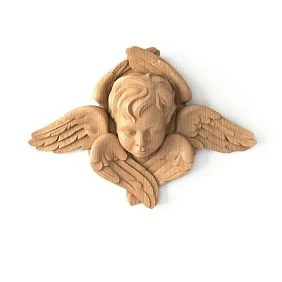
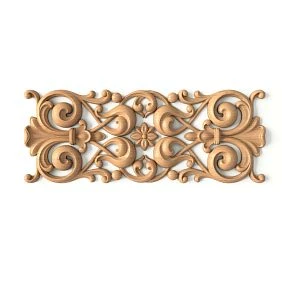
Carved overlays for church utensils: how to design an iconostasis, analogion, doors, and a home prayer corner
There are spaces where every detail speaks. It doesn't shout, doesn't insist — it speaks. A wooden carved overlay on the analogion, a dove symbol at the top of the iconostasis niche, a floral ornament on the narthex doors — all this is not decoration for decoration's sake. It is the language in which the church interior is arranged.
When the rector of the parish, a master woodcarver, or a believer arranging a home prayer corner is looking for buy church utensils — he often does not mean the entire iconostasis as a whole or ordering a new analogion from scratch. He is looking for a specific element: an overlay that will lie on an existing object, enhance its solemnity, add a symbolic accent, or complete an unfinished composition with carving.
This is exactly what this article is about. About carved wooden overlays as an independent product for church decor: where they are used, how to choose them, how they differ from ordinary furniture elements, and what specific items STAVROS offers.




What is a carved overlay for church utensils and where is it used
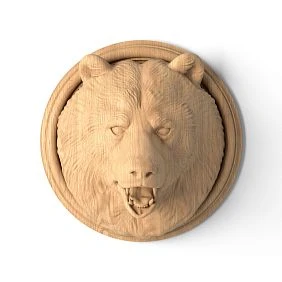
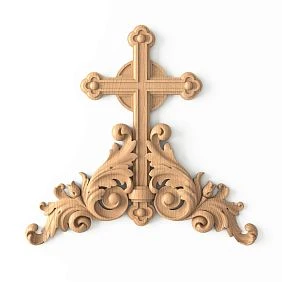
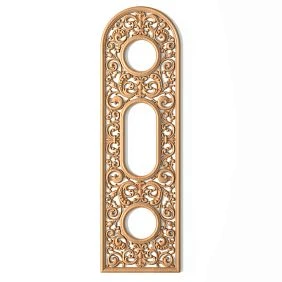
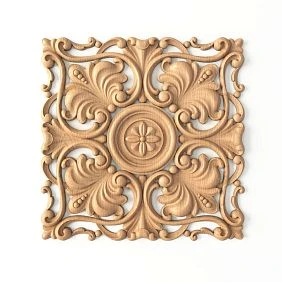
Our factory also produces:
Overlay as an independent decorative element
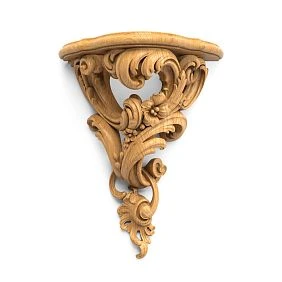
A carved overlay is a ready-made relief element made of wood that is attached to the surface of an object: furniture, utensils, doors, iconostasis structures. It is not a load-bearing part. It is a decorative, semantic, and stylistic layer that is applied to an already finished object.
It is important to understand from the very beginning: buy wooden carved overlays for a church or prayer space, it can be done separately — without ordering an entire iconostasis or analogion. This allows:
-
to complete an existing item
-
to restore a lost decorative element
-
to add an accent to an interior that is already functional but requires finishing
-
to independently make or refine utensils by adding professional carving
Get Consultation
How a church overlay differs from a regular furniture overlay
If you look at the section decorative overlays STAVROS as a whole — there are various elements: for furniture, for doors, for facades. But church overlays are set apart as a separate group for a reason.
The difference lies in three components:
Symbolism. A furniture overlay can bear any ornament: a flower, a curl, leaves, geometry. A church overlay operates in a space where every symbol is interpreted in a specific way. A dove — the Holy Spirit. Rays — the Light of the Lord. A vine — the Eucharist. Ornamentation in a church interior carries theological meaning, even if the viewer perceives it unconsciously.
Scale. Church space is typically voluminous, with high vaults and long distances between the observer and the object. A decorative element must be readable from a distance, have sufficient relief, and maintain the correct proportion relative to the object.
Material and durability. Church utensils are not a store interior that changes every three years. This is a space for decades. Wood is a traditional material for Orthodox church decor, and its quality here is fundamental.
Why symbolism, scale, and material matter
Three words — three axes of choice. It is by these that each specific element should be evaluated before purchase: does the ornament match the semantic content of the place, is it of the correct scale, and what kind of wood is it made from.
Iconostasis, analogion, doors, ambo: main application scenarios
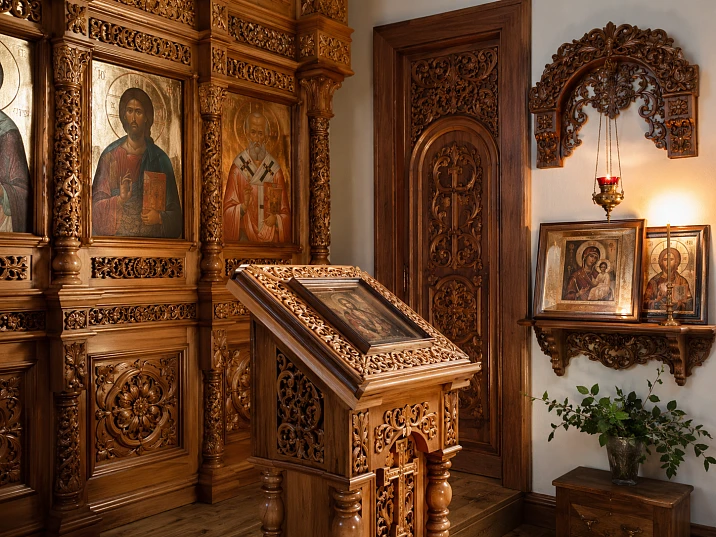
Carved overlays for the iconostasis
The iconostasis is the boundary between the nave and the altar, and at the same time, the load-bearing semantic structure of the entire church space. Carved decor for the iconostasis is not just about "decorating wooden frames." It is about creating a visual and theological system in which each element is in its place.
Overlays for the iconostasis are used:
-
In the tops of niches and frames — above icons, in the upper part of the tyablas
-
In pilasters and columns — for vertical rhythm
-
In horizontal belts — in dividing cornices between tiers
-
In the center above the Royal Doors — as the main symbolic accent
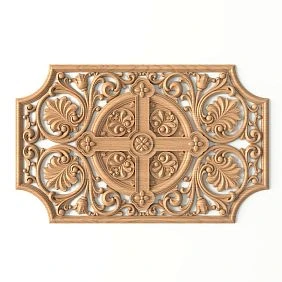
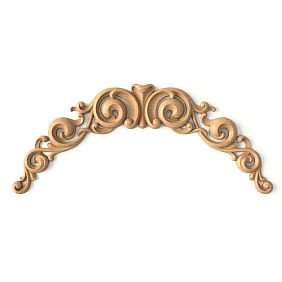
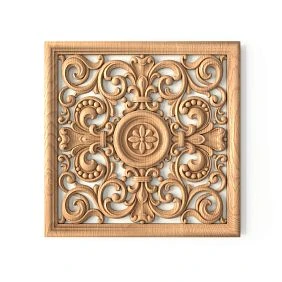
Carved Inlay IKN-013 is intended precisely for these tasks: iconostases, altars, pulpits, lecterns, thrones, and doors. This is a universal element with ornamentation that is appropriate in various nodes of the church space. The floral nature of the decor creates rhythm without excessive load.
Carved appliqué IKN-014 — another position for church furniture and utensils. Both articles work together: one can be used as a background supporting ornament, the other as an accent detail on a specific node.
Overlays for the lectern
A lectern is a stand for a liturgical book or icon. This is an object that is in constant tactile and visual contact with people: they approach it, look at it up close, and pray before it. The decor for the lectern is decor that is perceived even from arm's length.
This changes the logic of choosing an overlay. For the lectern, it is important:
-
Not to overload the top surface — it must remain functional
-
Use the side and front surfaces of the base and leg
-
Choose overlays with a neat relief, without sharp protruding elements that could catch on clothing or be damaged during use
Requests buy church utensils analog — this is often a request specifically for analog design elements, rather than purchasing a new item entirely. IKN-013 and IKN-014 are suitable for the front part of the analog and its legs.
Overlays for church doors
Carved appliqués on doors — this is one of the most visual ways to decorate the entrance to a temple or a separate room. The door is a boundary. In the church understanding, it is the boundary between the worldly and the sacred. The door decor conveys this meaning visually.
Door overlays are used:
-
In the center of the upper part of the door leaf — the main symbol
-
Along the perimeter of the panels — an ornamental rhythm
-
In the corners there are carved corner elements that create a framing.
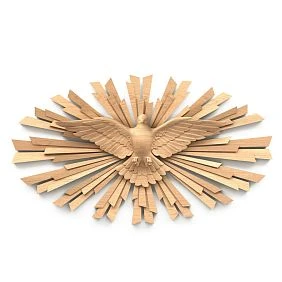
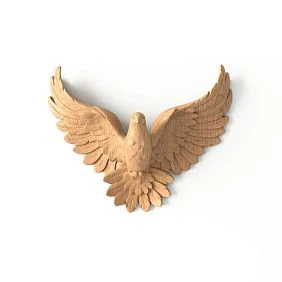
For door overlays, the correct scale of the relief is important: it should be readable even when moving, in mixed lighting conditions. Overlay "Dove N-457" — one of the appropriate symbolic elements for the central part of the door. A dove above the entrance is a traditional image that works well in both Orthodox and general Christian contexts.
Decor for a home prayer corner
Buy church utensils for home — a query that unites very different people. Someone is setting up a small home iconostasis in a corner of the bedroom. Someone is decorating a separate prayer room in the house. Someone wants to add a wooden symbolic accent above the shelf with icons.
For a home prayer corner, one thing is fundamental: do not transfer the monumentality of the temple into the living space. A home corner is an intimate sacred space, not a reduced copy of a church. Therefore, here:
-
The scale of the overlay is smaller than for a temple
-
The relief is neat, without overload
-
The symbol is one, precise, without duplication
Works well for a home prayer corner Overlay "Dove N-457" above the icon shelf or a small floral ornament IKN-014 along the perimeter of the shelf frame.
Decor for the altar, ambo, throne, tabernacle
These spaces and objects are in the clergy area and, as a rule, require more strict canonical approval. But from the perspective of applying overlays — the principles are the same: symbolism, scale, material.
For the altar space, the following are relevant:
-
Overlays on the throne — side edges, if tradition allows wooden decor
-
Overlays on the tabernacle — as an element of its carved framing
-
Overlays on the ambo — for the front and side surfaces of the projection
Carved wood decor STAVROS covers these scenarios through several product groups: overlays, Wooden Caps и Wooden capitals — for decorating columns, pilasters, and arched elements of iconostasis structures.
Plant ornament, dove, rays, and floral motifs: how to choose a semantic accent
Plant overlays: rhythm and background layer
Plant ornament is the foundation of Orthodox church decor. Grapevine, acanthus, scrolls, leaves, floral rosettes — all of these have been present in iconostasis carving for centuries. The plant motif creates a "background noise" of decor: it fills the surface without drawing all the attention to itself.
IKN-013 и IKN-014 — these are overlays with an ornament suitable for a supporting, background role in church decor. They can be placed in series — rhythmically repeating along the horizontal belt of the iconostasis, vertically on a column, on the side edges of a lectern.
Plant ornament is chosen when:
-
The surface needs to be filled without introducing a specific symbol
-
The decor should be neutral and universal
-
There is a task to create a cohesive visual rhythm through repetition of one motif
Dove as an accent symbol
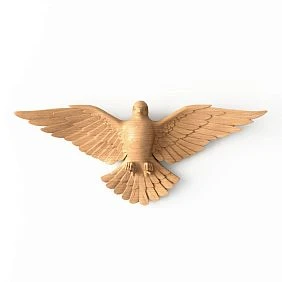
Overlay "Dove N-457" и mascaron "Dove NC-457-1" — this is no longer a background ornament. This is a semantic center.
In Orthodox iconography, the dove is an image of the Holy Spirit. Its appearance in the space of church decoration carries direct theological content. It is appropriate:
-
Above the Royal Doors or in the top of the central section of the iconostasis
-
On the dome or under-dome ring
-
On the tabernacle as an indication of the Presence
-
On the analogion in the center of the upper part
-
Above the doorway to the narthex or altar
-
In the home prayer corner as the only symbolic accent
Difference between N-457 and NC-457-1:
-
N-457 — an overlay, i.e., a flat relief element attached to a surface
-
NC-457-1 — a mascaron, i.e., a three-dimensional element with a pronounced volumetric character, designed to be placed at a point where a "protruding" accent is needed
The choice between them depends on the surface architecture: on a flat plane — an overlay, in the keystone of an arch or in the center of a dome frame — a mascaron.
Rays and center of the composition
Sun rays, radiance — another traditional motif of Orthodox church decor. Carved rays emanate from a central point and create a radial composition. They are used:
-
In the upper part of the iconostasis — above the image of Christ or the Mother of God
-
In the dome — imitating the radiance emanating from the image of Pantocrator
-
On the tabernacle — symbolizing the Light of the Lord
For such tasks, the following are suitable wooden finials STAVROS and the corresponding carved elements from the section church decor.
When a calm ornament is needed, and when a symbolic center is needed
Practical rule: in any church composition, there should be one main visual accent and several supporting elements. If everything is an accent, there is nothing.
For the iconostasis: a dove or rays — once, at the top. IKN-013 or IKN-014 — on all pilasters, horizontal cornices, frames. The ratio of 'one symbol — many ornaments' creates the correct hierarchy of perception.
For the analogion: one accent element on the front side and a repetition of a calm ornament along the perimeter of the base.
For the home corner: one small symbol — a dove or a plant motif — is enough.
Oak or beech: which material to choose for church overlay
Oak for solemn and durable design
Oak is a species with a pronounced texture, high density, and visual 'weight'. In a church interior, oak is perceived as a solid, venerable, durable material. Carving on oak reads as something stable, permanent.
Carved oak overlays for the church choose when:
-
The item is large — iconostasis, doors, ambo
-
The interior is designed in warm, rich tones
-
Toning to walnut or dark oak is planned
-
Durability in conditions of constant use of the temple is important
Oak accepts finishes: oil, varnish, toning. Its texture under a transparent coating creates a feeling of "living" wood, which is especially valuable in church decor — the naturalness of the material is intuitively perceived.
Beech for neat carving and a calm visual solution
Beech is a dense species with a fine, almost imperceptible texture. It is this fineness that allows for finer, more delicate carving with clear edges of details. Under a light finish, beech looks softer, more neutral.
Choose beech when:
-
The overlays are small — for a lectern, a home corner, a small chapel
-
The interior is light, with whitewashed walls — and wooden decor without visual heaviness is needed
-
An enamel coating in white or pastel tones is planned
-
Clarity of small details in the carving of the ornament is needed
Carved beech overlays for a lectern — a practical solution for small items with delicate decor.
How material affects price, finish, and perception
| Parameter | Oak | Beech |
|---|---|---|
| Texture | Pronounced | Thin |
| Best finish | Oil, tinting, dark varnish | Clear varnish, enamel, stain |
| Visual effect | Heavy, solemn | Light, neat |
| Fine detailing | Worse | Better |
| Durability | High | High |
| Application | Large temple, ceremonial elements | Chapel, home corner, analogion |
Check the material in product cards: IKN-013, IKN-014, N-457 and NC-457-1 may have specific available options.
How to choose a carved overlay by size, location and style
Surface measurement
Measure before purchasing. Always. This rule, if broken, will inevitably lead to one of two problems: an overlay that is too small will get lost on a large surface, one that is too large will not fit or will create an imbalance.
For the iconostasis: measure the width of the pilaster, the width of the horizontal cornice, and the height of the top piece above the icon. Write down all three numbers.
For the analogion: measure the front face of the base's front panel and the side faces.
For the door: measure the width of the central panel, the distance from the edge of the panel to the edge of the door leaf.
Central or paired placement
Overlays can be placed:
-
Centrally — one element on the axis of symmetry of the object. This is the logic of the "main symbol."
-
Paired — two mirror elements on either side of the center. This is the logic of ornamental rhythm.
-
In a series — the same motif is repeated several times at equal intervals. This is the logic of "background decor."
For the mascaron "Dove NC-457-1" — always central placement. For plant overlays IKN-013 and IKN-014 — paired or serial.
Proportions for the analogion
The width of the overlay for the analogion should not exceed 70–75% of the width of the surface to which it is attached. This leaves "air" at the edges and does not create a feeling that the decor is "bursting" the object.
The relief height of the analog overlay is moderate. Excessive relief in the foreground creates a risk of damage during daily use.
Proportions for doors
On doors, overlays work in several zones:
-
Upper third — main symbol
-
Middle section — ornamental elements in panels
-
Panel corners — corner rosettes or carved corner overlays
For the central symbol above the door (dove, cross, sunbeam) — size is determined by the width of the upper transom or infill. The symbol should be visible from a distance of 3–5 meters without strain.
Proportions for a home prayer corner
At home — the scale is much more modest. A person looks at the icon shelf from a distance of 1–2 meters, in an intimate, domestic manner. There is no need to 'capture space' here. You need to give it silence with an accent.
Small Overlay "Dove N-457" above the shelf or a small plant motif from the IKN series — this is exactly what is needed for a home prayer corner without overload.
Error: buying a beautiful overlay without considering the scale
This happens regularly. A person sees an overlay in a photo, it seems suitable — and they order it. Then it turns out that the "big dove" took up a third of the analogion or a small rosette got lost on a three-meter door of the narthex.
Rule: always check the size in the product card, compare it with the actual measurements of your item, make a paper mockup before purchasing.
How to assemble a complete set of church decor from several overlays
One main accent and supporting elements
A good church decorative system is a hierarchy. There is one object, one symbol that is the semantic center of the space. All other elements are the "choir" that supports it but does not overpower it.
Applied to overlays: choose one main symbolic element — dove N-457 or mascaron NC-457-1 — and place it at the point of maximum semantic concentration (center of the iconostasis, top of the analogion, center of the door transom). Everything else — rhythmically repeating IKN-013 or IKN-014 — creates a supporting ornamental background.
Repetition of the ornament on the analogion, door, and iconostasis
If there are several items with carved decor in the space, their ornaments should echo each other. This does not mean "the same motif everywhere." It means: one stylistic language. Floral ornament on the iconostasis — floral ornament on the analogion, maybe a different article number, but the same "family" of motifs.
Mixing different carving styles (baroque scroll on the iconostasis + geometric diamond on the analogion + realistic relief on the door) creates stylistic chaos, which is perceived as carelessness rather than richness.
How to combine IKN-013, IKN-014 and "Dove" in one project
Practical scheme for an iconostasis with three items (iconostasis, analogion, doors):
| Item | Main element | Supporting ornament |
|---|---|---|
| Iconostasis (center) | mascaron "Dove NC-457-1" | IKN-013 along the pilasters |
| Analogion | Overlay "Dove N-457" | IKN-014 along the perimeter |
| Doors | IKN-013 in the center | IKN-014 on panels |
This is just one of the schemes. Specific solutions depend on the architecture of the space, existing decor, and the scale of objects.
Mistakes when choosing carved overlays for church utensils
Straight talk. Mistakes when buying church decor happen to everyone — from rectors of small parishes to experienced craftsmen. Let's list the most typical ones.
Mistake 1: Choosing a regular furniture overlay instead of a church one.
Not every beautiful carving is appropriate in a church. A Baroque lion, a mascaron with Medusa's face, a decorative rosette with a neutral floral motif suitable for a cabinet — all of this can look 'out of place' in a sacred space. Search specifically through the section church decor STAVROS.
Mistake 2: Buying without measuring.
We've already mentioned this, but we'll repeat: without actual measurement of the surface, any purchase is a lottery. Check the dimensions in the product card. Compare with a tape measure. Make a paper template.
Mistake 3: Mixing different carving styles.
Baroque opulence plus ascetic Romanesque ornament plus flat geometry — this is not 'richness,' it's visual noise. Stick to one stylistic solution.
Error 4: Placing too large a decoration on a small analogion.
An analogion is an object that holds a book. Its purpose is to serve, not to impress. Excessive overlay overloads the object and creates a feeling of awkwardness in the space.
Error 5: Transferring temple monumentality to a home corner.
A home prayer corner is not a small temple. It is a personal place for prayer. Intimacy and silence are needed here. One small symbol is enough.
Error 6: Not considering the material of the main object.
If the analogion is made of beech under white enamel, a wooden overlay of dark oak will "fall out" in color and weight. The overlay should match the object in wood species or finish.
Error 7: Choosing only by picture.
A photo in the catalog is one angle, one lighting, one scale of perception. Always read the description, look at the technical parameters, and consult with a specialist if necessary.
Error 8: Forgetting about further finishing and installation.
The overlay is purchased. How will it be attached? What will it be coated with? Will the finish of the overlay match the finish of the main object? All these questions need to be resolved before purchase, not after.
Where to buy carved wooden overlays for church utensils
If the task is — buy carved wooden overlays for a church or home sacred space — STAVROS offers specific items with exact article numbers.
In the section church decor STAVROS elements are collected specifically for church tasks:
-
Carved Inlay IKN-013 — for iconostases, altars, ambo, analogions, thrones, doors
-
Carved appliqué IKN-014 — for church furniture and utensils
-
Overlay "Dove N-457" — a symbolic accent for the iconostasis, analogion, doors, home corner
-
mascaron "Dove NC-457-1" — a volumetric accent element for a dome, arch, keystone
For a broader introduction to the assortment — the entire Carved wood decor STAVROS also includes Wooden Caps и Wooden capitals for decorating columns, pylons, and architectural elements of iconostasis structures.
Buy church utensils in the form of individual decorative overlays — via the website stavros.ru. Delivery across all of Russia. Showroom in Saint Petersburg for those who want to personally assess the quality of carving, material, and relief before ordering.
Buy church utensils in the online store STAVROS — with current prices, technical specifications, and the possibility of consultation on selecting a set.
Checklist: what to check before ordering
Before proceeding to place an order — go through this list. It will take five minutes but save time and money.
-
Where will the overlay be installed: church, chapel, prayer room, home corner
-
What we are decorating: iconostasis, analogion, church door, ambo, home shelf with icons
-
Need a main symbol or background ornament: if main — look at N-457 / NC-457-1; if background — IKN-013 / IKN-014
-
Preferred material: oak (solemn, dense, warm texture) or beech (neat, lighter, fine detailing)
-
Surface measurement: width and height of the installation area
-
Single overlay or set: if multiple items — a system is needed
-
Compatibility with existing decor: material, ornament, style
-
Which article fits: go to the product page, check dimensions and availability
-
Overlay finish: will it be painted to match the main item or left with natural oil
-
Installation: glue, screws, inlay — the fixing method is determined by the material and construction of the item
FAQ: answers to questions about church decor
Which carved overlays are suitable for an iconostasis?
For an iconostasis, overlays with floral and symbolic ornaments are suitable. Background elements — IKN-013 and IKN-014 — create rhythm. The semantic center — the mascaron "Dove NC-457-1" or the overlay "Dove N-457" — is placed at the top of the central section.
Can ordinary furniture overlays be used in a church interior?
Not every one. Furniture overlays with a neutral ornament (floral motif, rosette) may be appropriate. Decorative overlays with secular symbols — no. For a safe choice, use the STAVROS church decor section.
How is the "Dove N-457" overlay different from the "Dove NC-457-1" mascaron?
N-457 is a flat overlay for surfaces. NC-457-1 is a three-dimensional mascaron with a pronounced three-dimensional relief, designed for central points of arches, domes, or finials where a "protruding" accent is needed.
What should I choose for a home prayer corner?
One small symbolic element. The "Dove N-457" overlay or a small floral motif IKN-014 is enough. Do not transfer temple monumentality into a home space.
Oak or beech for a church overlay?
Oak — for large, solemn decor in a big church. Beech — for neat, delicate overlays on a lectern, home corner, or small chapel.
Can I buy overlays separately, without ordering an iconostasis?
Yes. All STAVROS items — IKN-013, IKN-014, N-457, NC-457-1 — are sold as individual products. This allows you to decorate, finish, or restore a specific item without ordering the entire structure.
Where to buy carved church overlays with delivery?
On the website stavros.ru in the church decor section. Contact us to confirm shipping to your destination. Showroom in Saint Petersburg for personal inspection of samples.