




























Article Contents:
- What are carved wooden overlays
- Where are carved wooden overlays used
- Furniture facades and cabinets
- Kitchens: details that make all the difference
- Interior doors
- Wall Panels and Molding
- Restoration and repair of furniture
- Ceiling decoration
- Which materials to choose: oak and beech compared
- Oak: a wood for those who choose for the long haul
- Beech: precision of form and versatility
- Practical Comparison
- When to Choose Enamel Finish vs. Natural Texture
- Enamel Finish: White, Cream, Colored
- Natural Texture Finish: Oil, Wax, Varnish
- Combined approach
- How to Choose the Size and Shape of the Overlay
- Central overlays
- Corner Overlays
- Modular (Composite) Overlays
- Practical Life Hack
- Which Styles Suit Wooden Overlays
- Classic and neoclassic
- Baroque and Rococo
- Provence and Country Style
- Rustic and eco
- Modern Classic and Art Deco
- Scandinavian Style
- What to pair carved wooden decor with
- With moldings and profiles
- With hardware
- With facade coating
- With lighting
- With textiles and other materials
- Mistakes when choosing carved decorative overlays
- Mistake 1: scale mismatch
- Mistake 2: mixing ornament styles
- Mistake 3: ignoring wood species for the planned coating
- Error 4: installation without surface preparation
- Error 5: purchasing without reserve
- Error 6: buying decor without considering the molding system
- Error 7: underestimating finishing treatment
- Product example: Wooden decor N.VRS-015
- How to properly prepare the surface before installing the overlay
- Preparation stages
- Finishing treatment: how to achieve a professional result
- Puttying Joints
- Priming Before Painting
- Applying enamel or oil
- Final result
- Wooden decor for different rooms: selection subtleties
- Living Room
- Bedroom
- Kitchen
- Children's room
- Office and Library
- Buying wooden decor: what to look for
- Manufacturer vs. reseller
- Availability of modular connections
- Delivery and Packaging
- FAQ: answers to popular questions about carved wooden overlays
- Go to the STAVROS catalog: everything for wooden decor
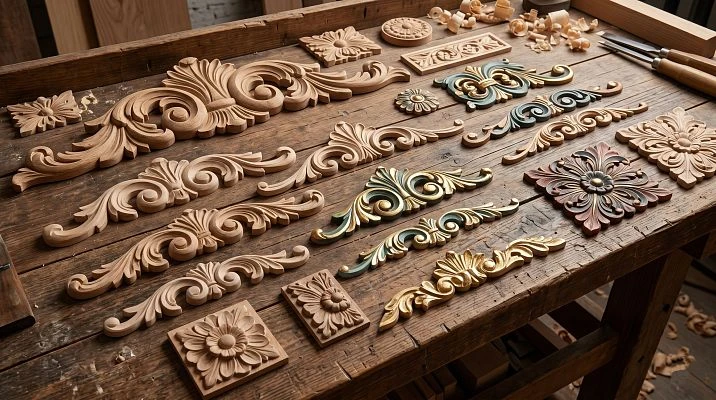
Carved decorative wooden overlays are not just decoration, they are the language of space. Anyone who has seen how an ordinary kitchen cabinet facade transforms after installing a carved oak element understands: this is about transformation, not finishing. When joinery craftsmanship meets precisely selected decor, an interior is born that you want to live in. That is whyto buy, which will allow you to transform your furniture using carved wooden elements. You can use the C-003-3 decor set to decorate furniture, walls, doors, or any other surface. The C-003-3 decor set is made of oak or beech, known for their strength, durability, and beauty. You can buy the C-003-3 decor set at the Stavros decor store, which specializes in producing and selling decorative elements and hardware for furniture and interiors. At the Stavros decor store, you will find a wide selection of decor sets of various shapes, sizes, and styles. You can choosetoday it is in demand more than ever — both among private clients, professional designers, and furniture manufacturers.
This article is about carved wooden overlays in all their diversity: what they are, where they are used, what they are made of, how to choose, what to combine them with, and what mistakes to avoid.
What are carved wooden overlays
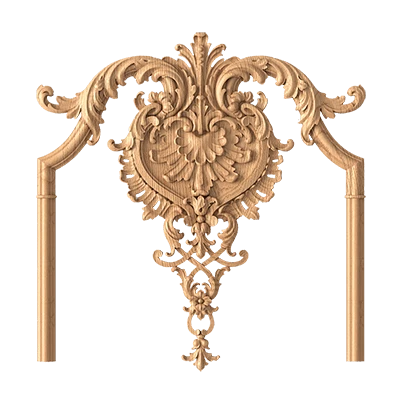
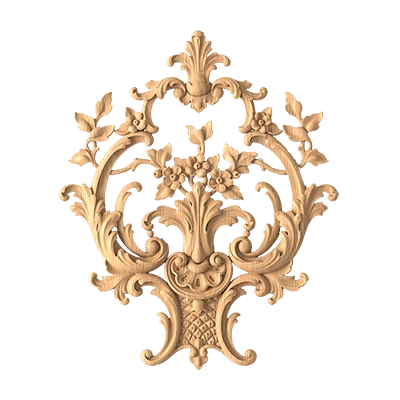
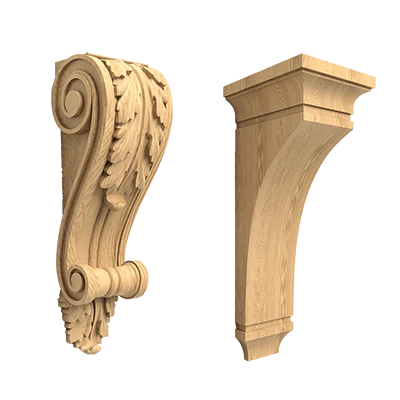
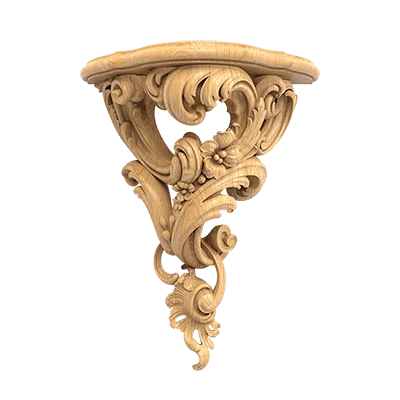
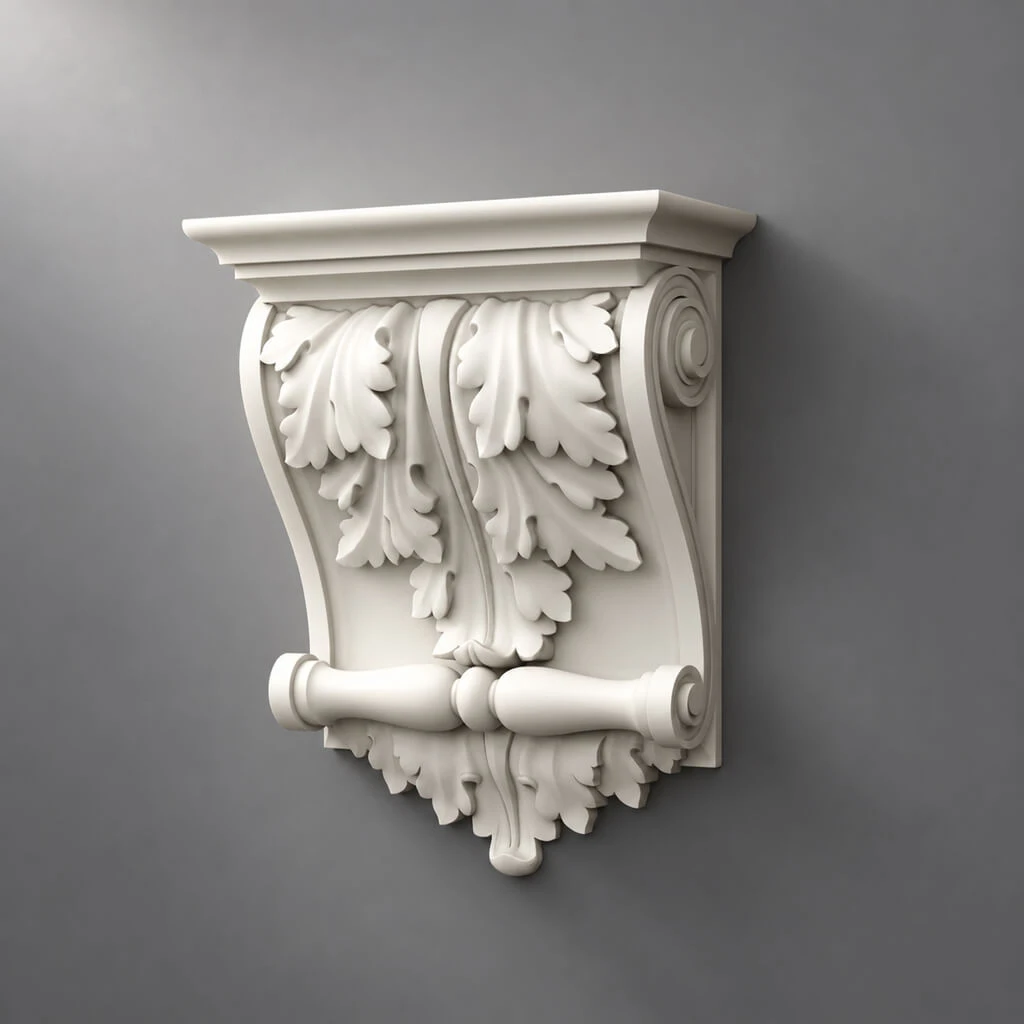
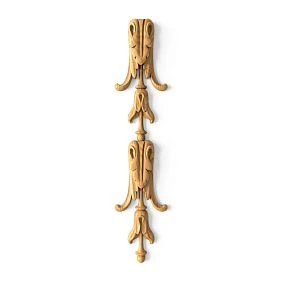
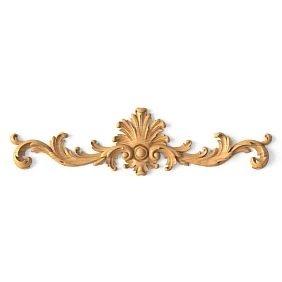
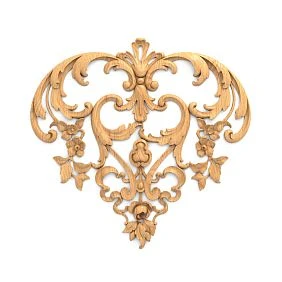
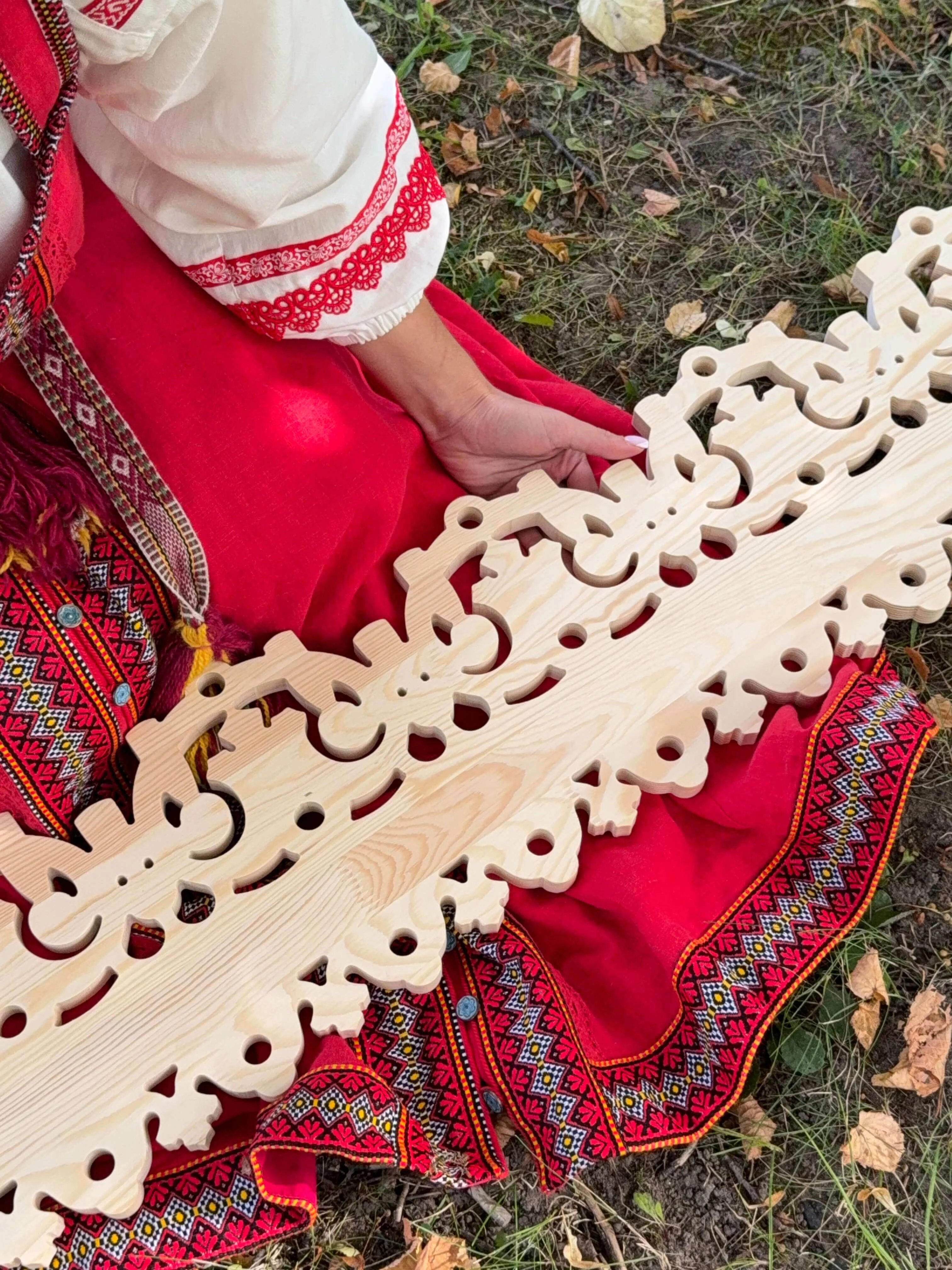
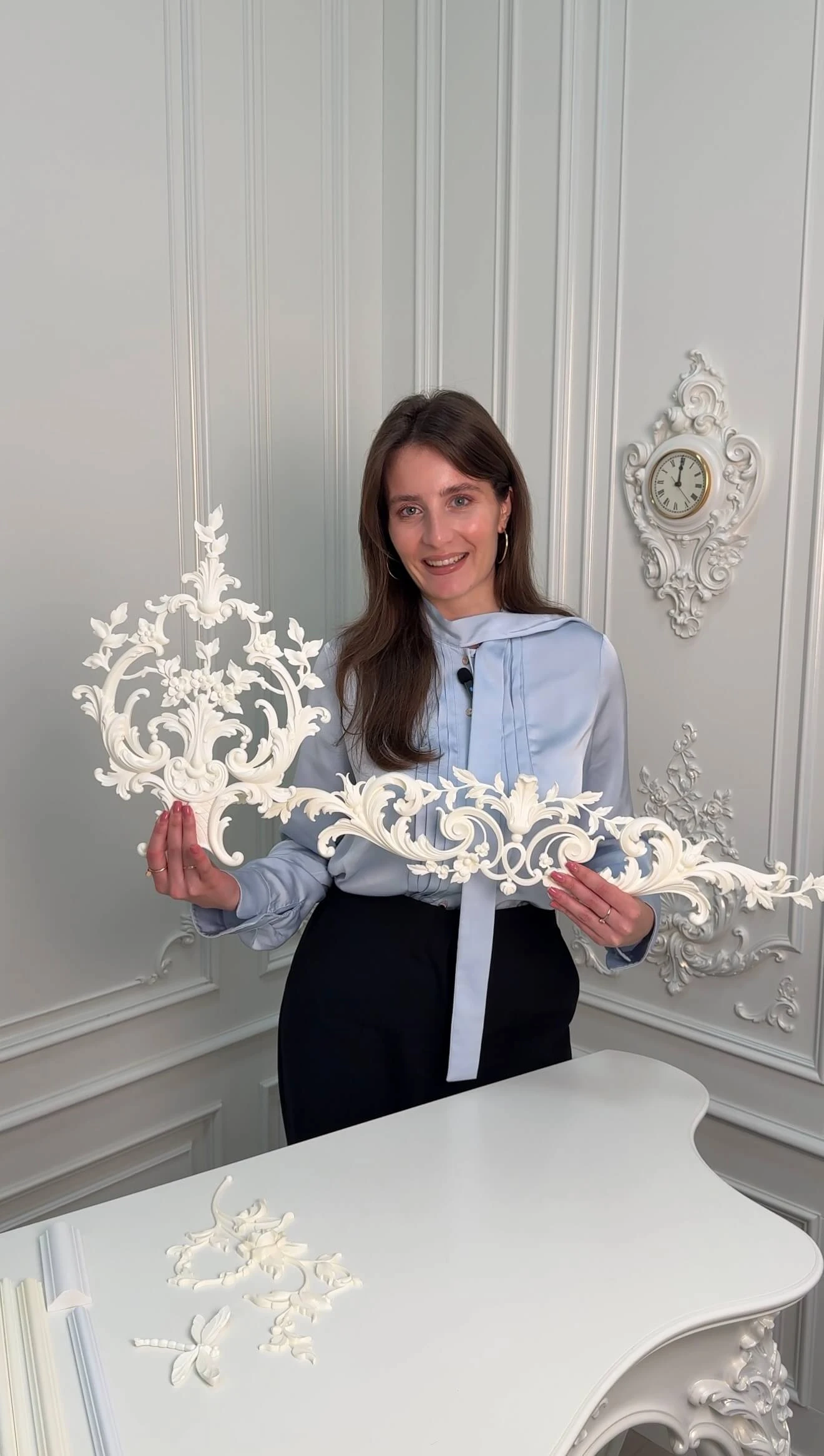
A carved wooden overlay is a three-dimensional decorative element made from solid wood that is attached to the surface of furniture, doors, panels, or walls. Unlike painted facades or plastic inserts, such overlays have a lively relief, plastic form, and natural texture. They create depth, play of shadows, and that tangible character of the product that cannot be achieved with laminate film or milled MDF.
By their nature, these are solid wood products — carved by hand or on high-precision CNC machines that replicate the movement of a cutter to tenths of a millimeter. The difference between handwork and machine work lies not in quality, but in the character of the line: hand carving is more lively, machine carving is perfectly precise. Modern production combines both approaches, yielding products with fine detailing of the pattern and industrial consistency of quality.
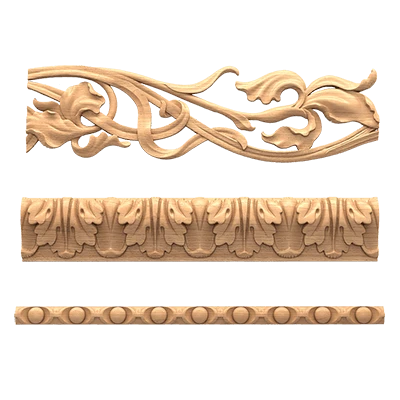
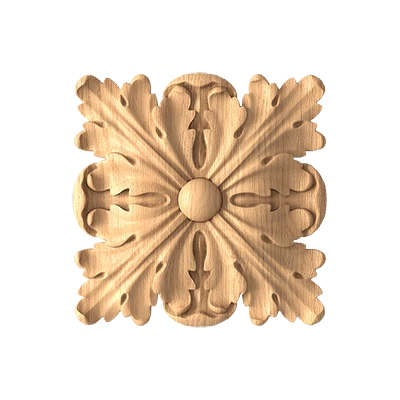
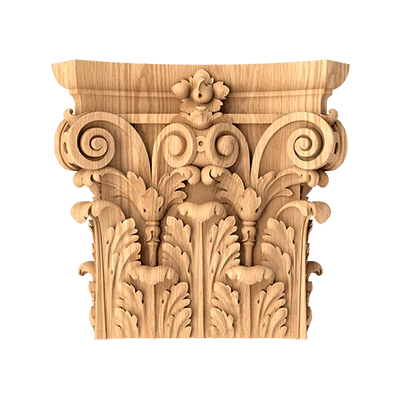
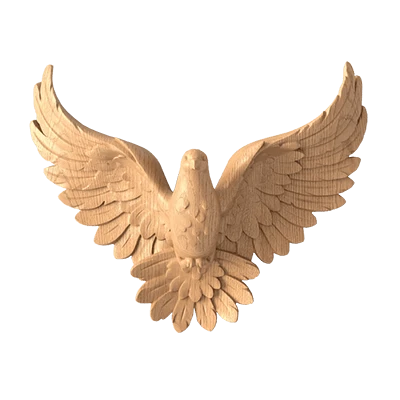
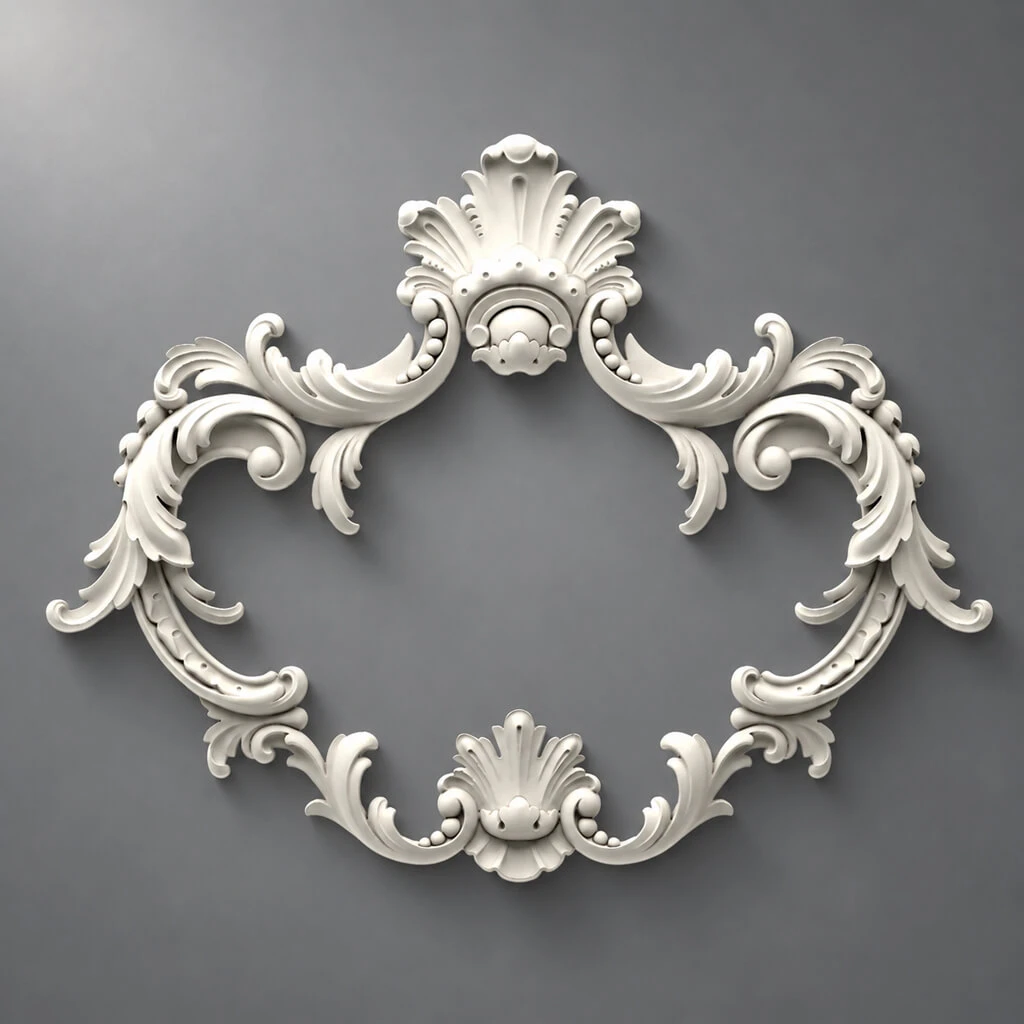
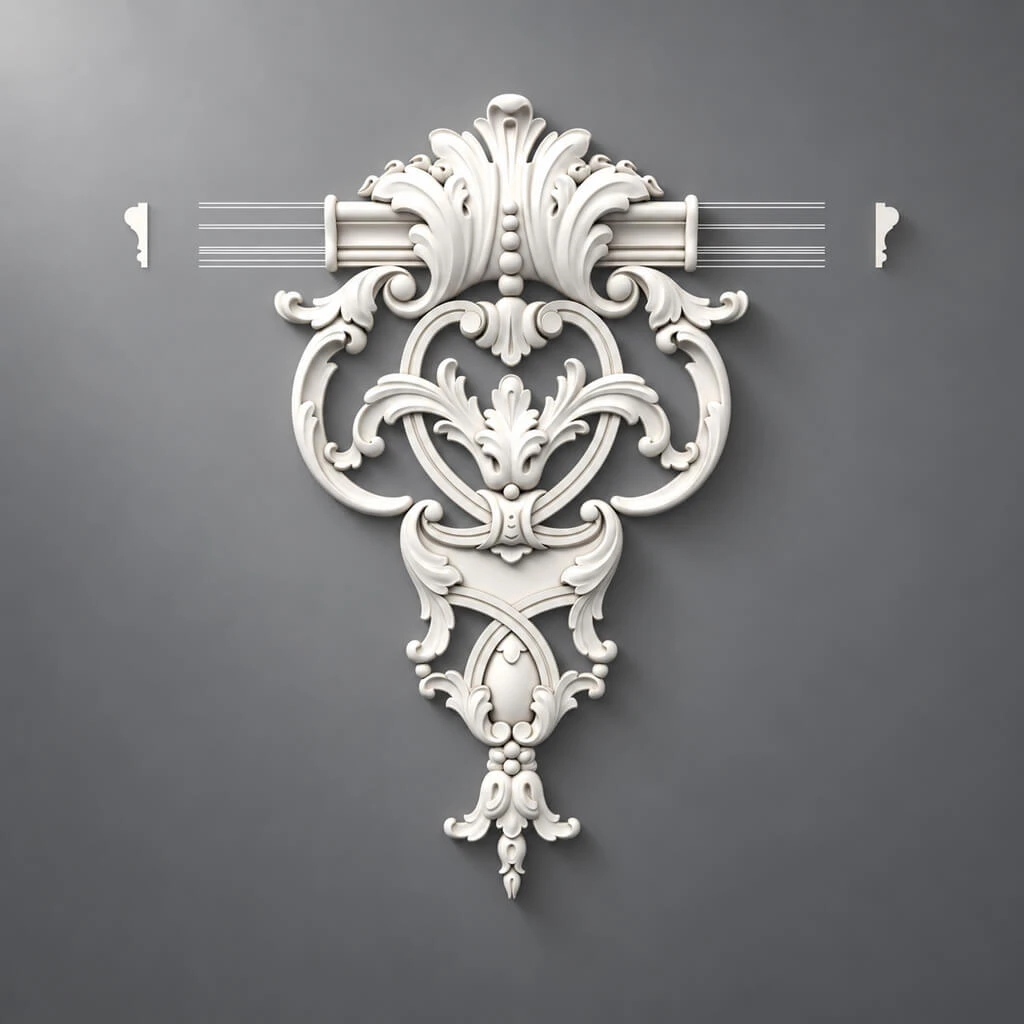
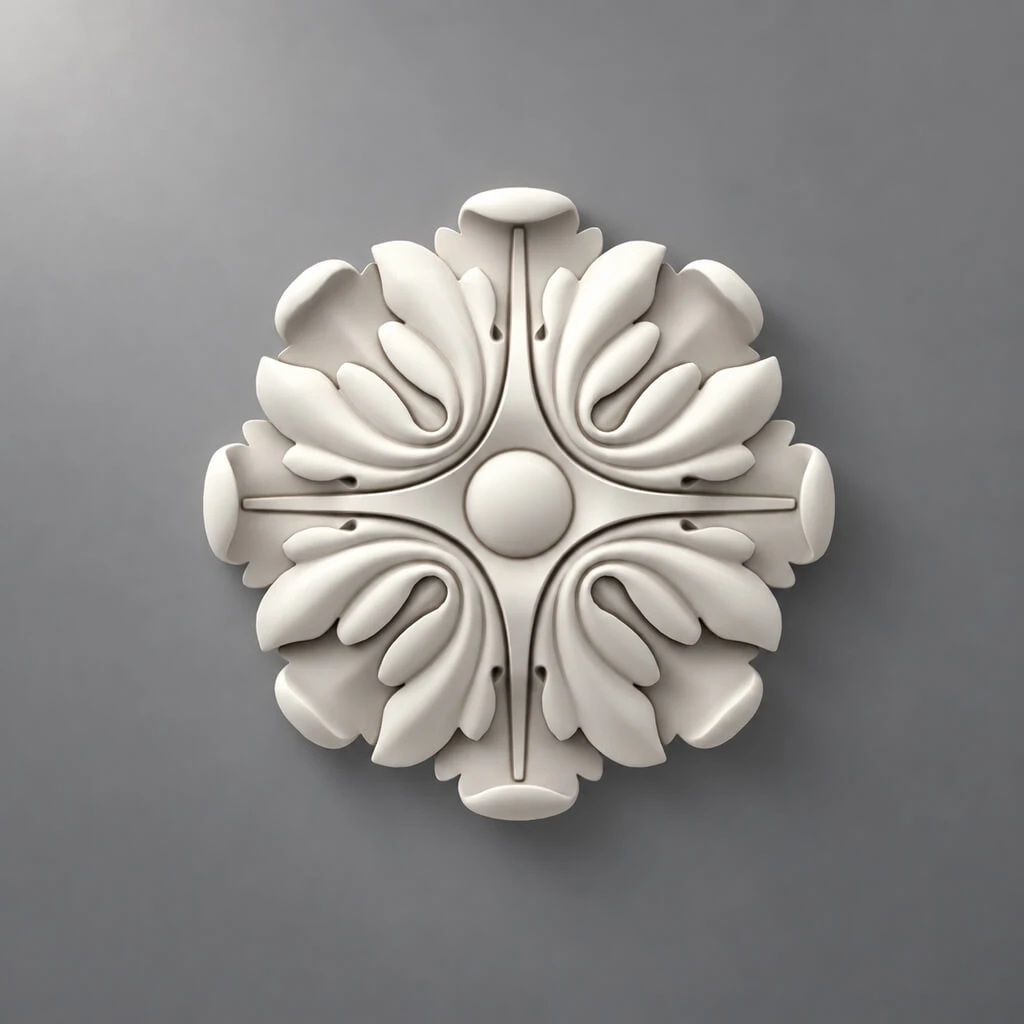
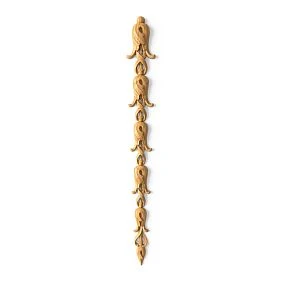
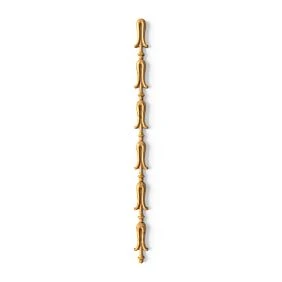
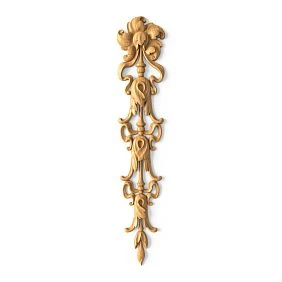
Decorative overlays can be central and corner, symmetrical and asymmetrical, single and composite (modular). They can depict acanthus leaves, floral garlands, cartouches, rocaille, plant scrolls, birds, and other motifs. Each form carries a stylistic code — Baroque, Classical, Rustic, Art Nouveau — and it is the correctly interpreted stylistic code that makes the interior cohesive.
Where are carved wooden overlays used?
The scope of application for carved wooden overlays is much broader than many assume. It's not just kitchen facades — though those too. Let's consider all the key directions.
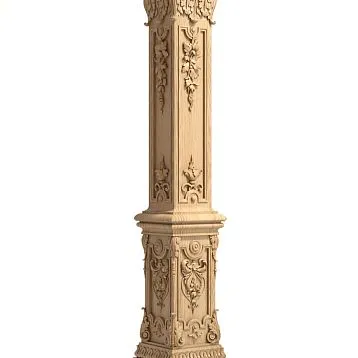
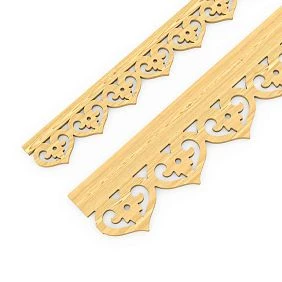
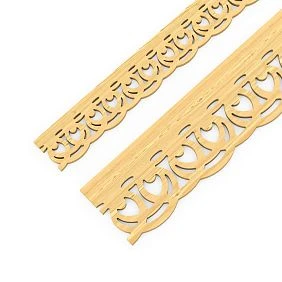
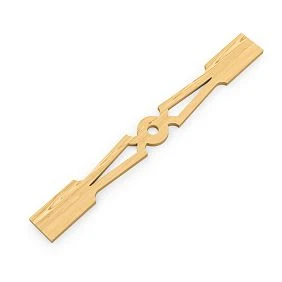
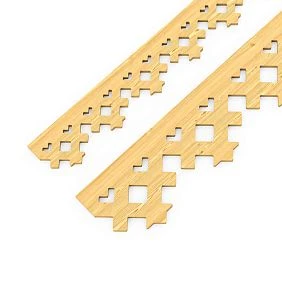
Our factory also produces:
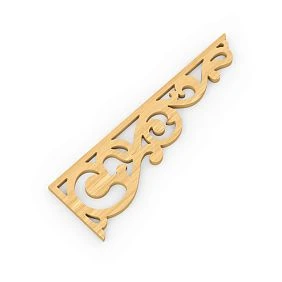
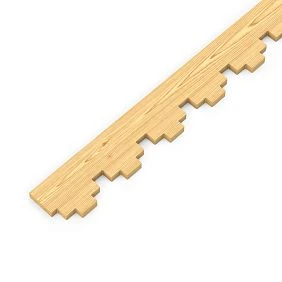
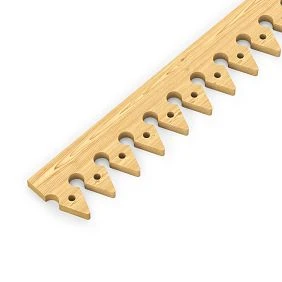
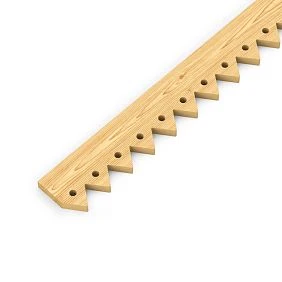
Furniture Facades and Cabinets
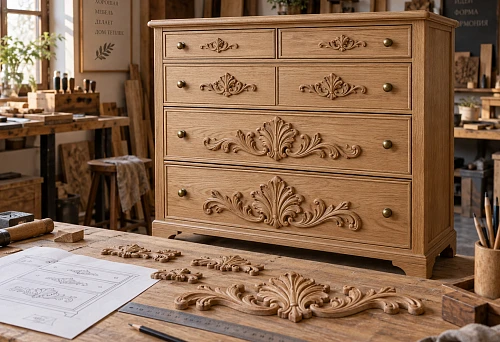
It is here that wooden overlays reveal themselves most fully. A cabinet facade adorned with a central symmetrical overlay featuring a floral ornament ceases to be just a flat surface and becomes an element of an architectural ensemble. Corner elements fix the perimeter of the door, giving it a sense of a frame. This approach is characteristic of classic living rooms, bedrooms, studies — any spaces where atmosphere is important.
Inlays for furnitureare attached to the facade with glue or small fasteners — depending on weight and surface. For painted MDF facades, woodworking PVA or two-component glue is used; for solid wood, resin-based glue. The surface before installation must be clean, degreased, and dry.
Get Consultation
Kitchens: details that make all the difference
In the kitchen, carvedoak decor for furniture operates in two modes: as an accent and as a system element. One small ornament on the central facade — and the kitchen looks an order of magnitude more expensive. A full system of decor on all upper and lower facades — and the kitchen turns into a piece of joinery art.
Temperature and humidity resistance is important. Oak handles the kitchen environment better than most species: it is dense, practically does not swell from steam, and holds the coating well. That is why oak overlays are the first choice for kitchen decor.
Interior Doors
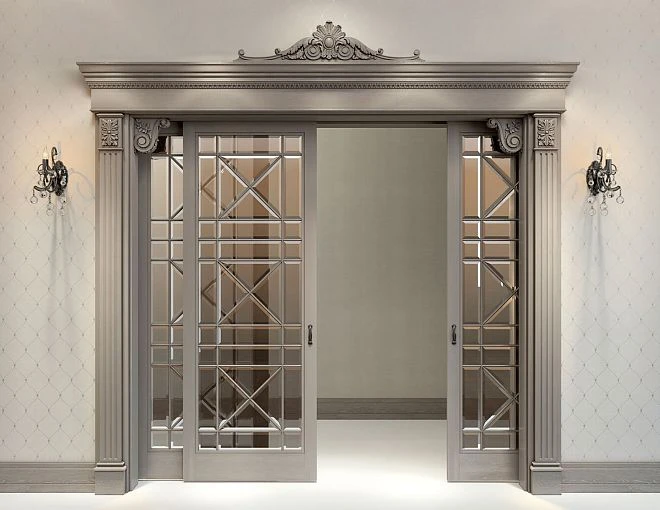
A decorative overlay on a door leaf is a classic technique known since the times of Versailles apartments. Even on a simple smooth door, several overlay elements create the illusion of a paneled structure, giving it depth and style. This is especially relevant when restoring old doors that retain structural integrity but are visually outdated.
Wall panels and moldings
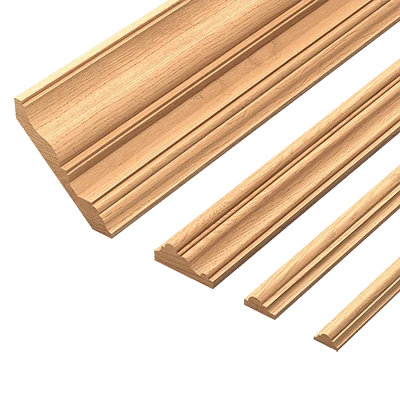
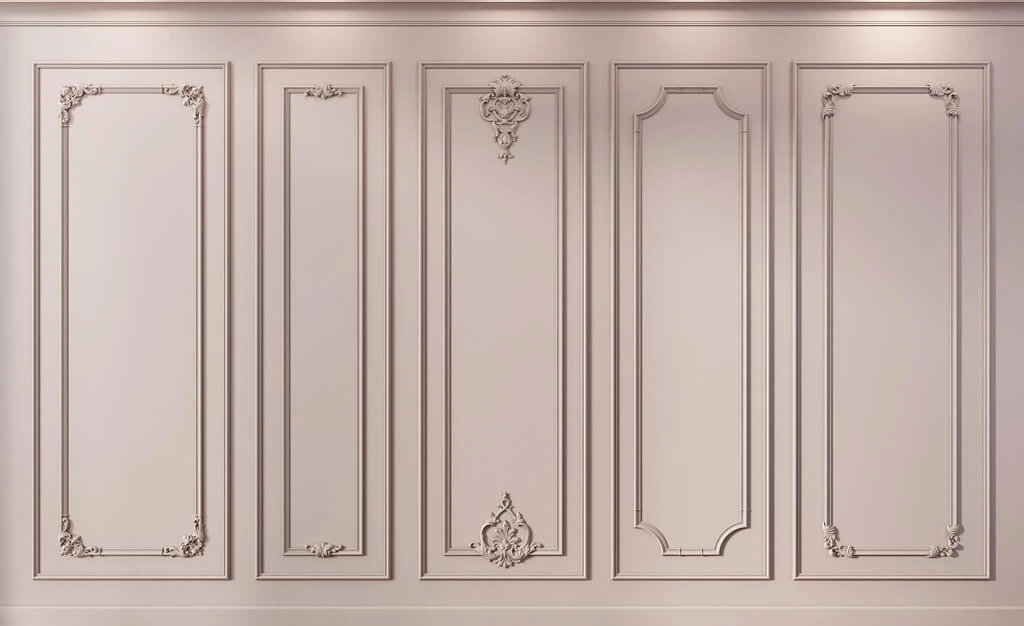
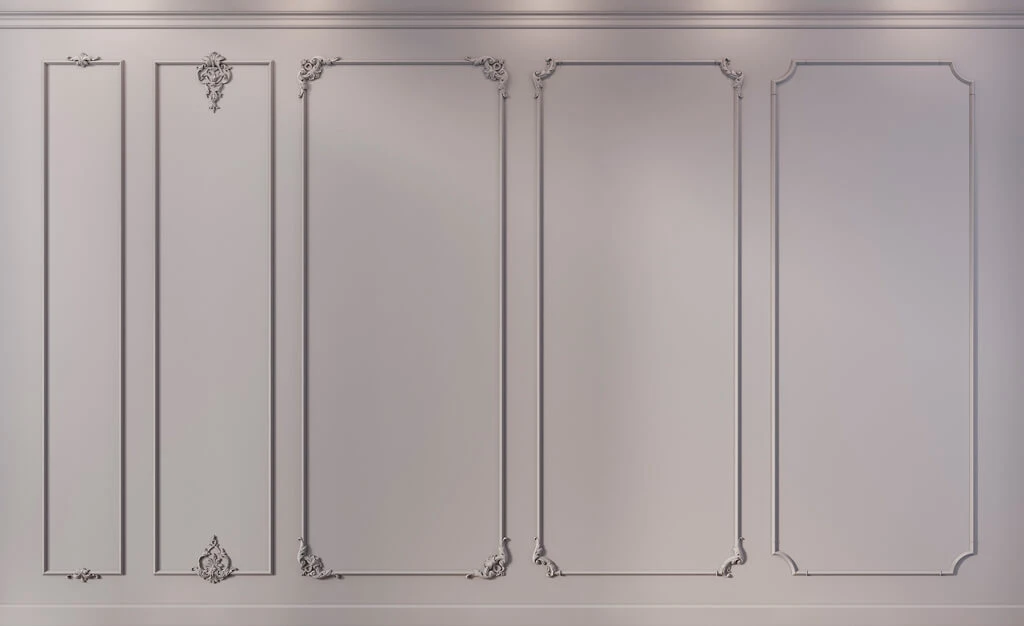
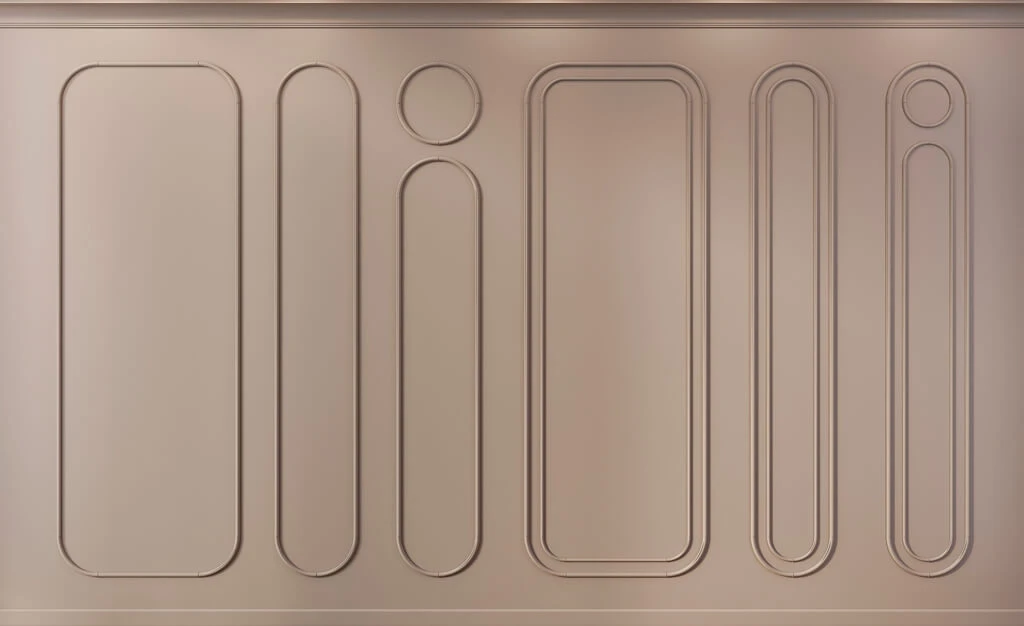
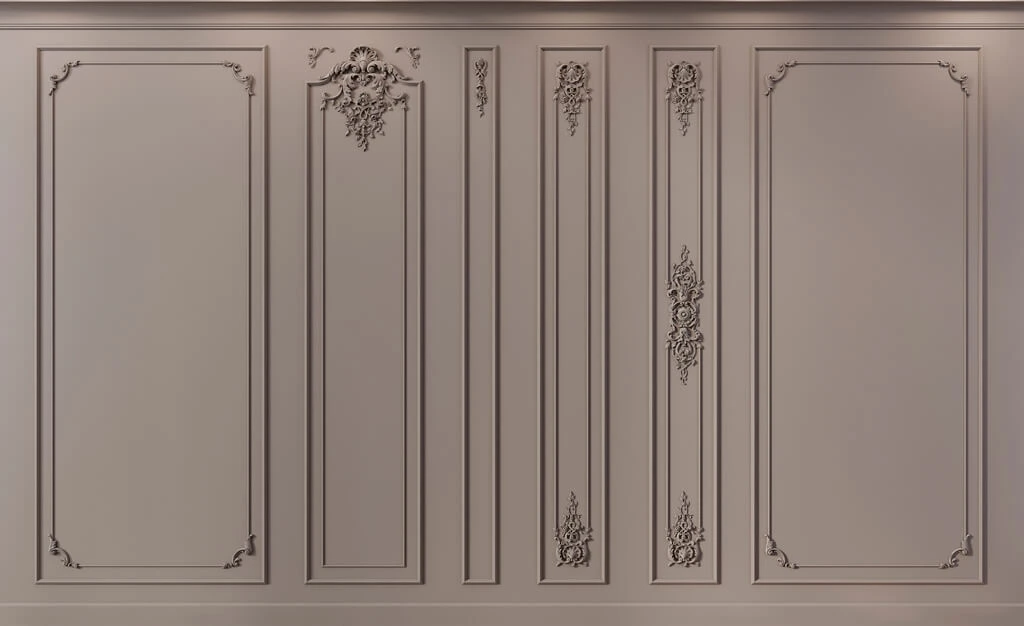
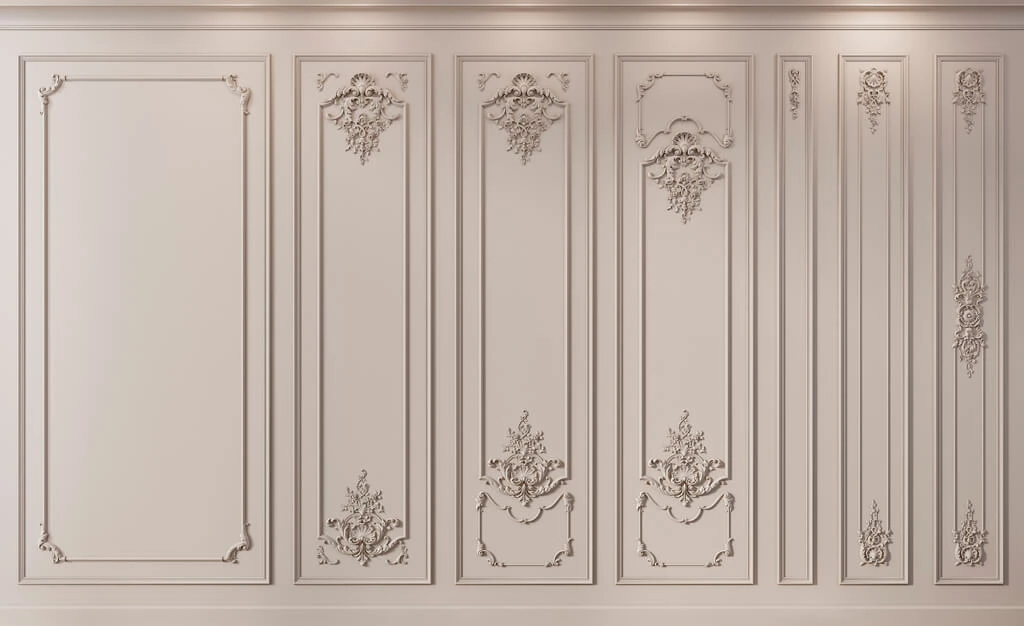
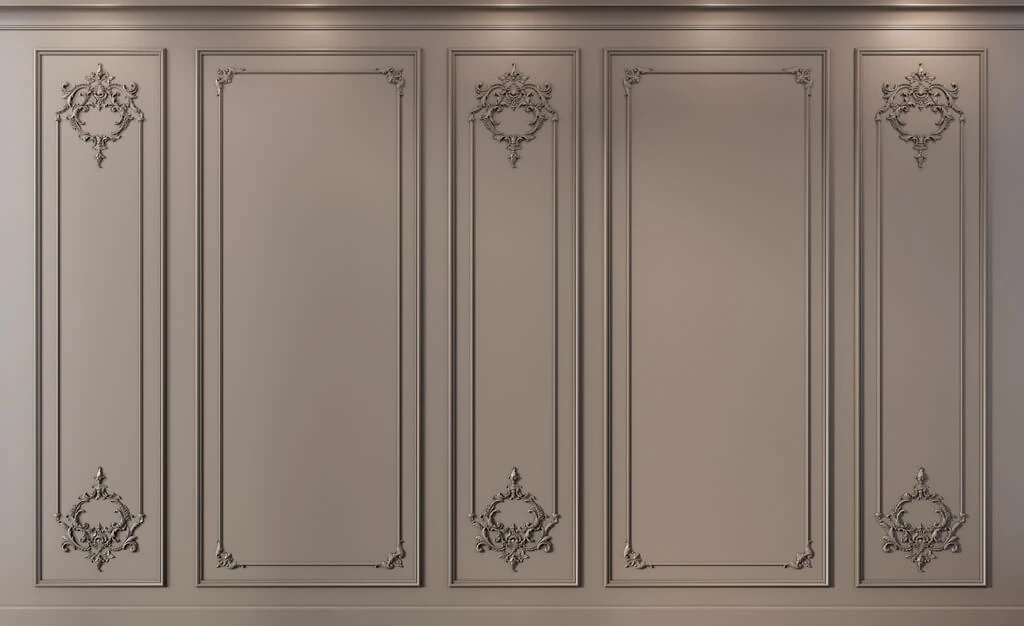
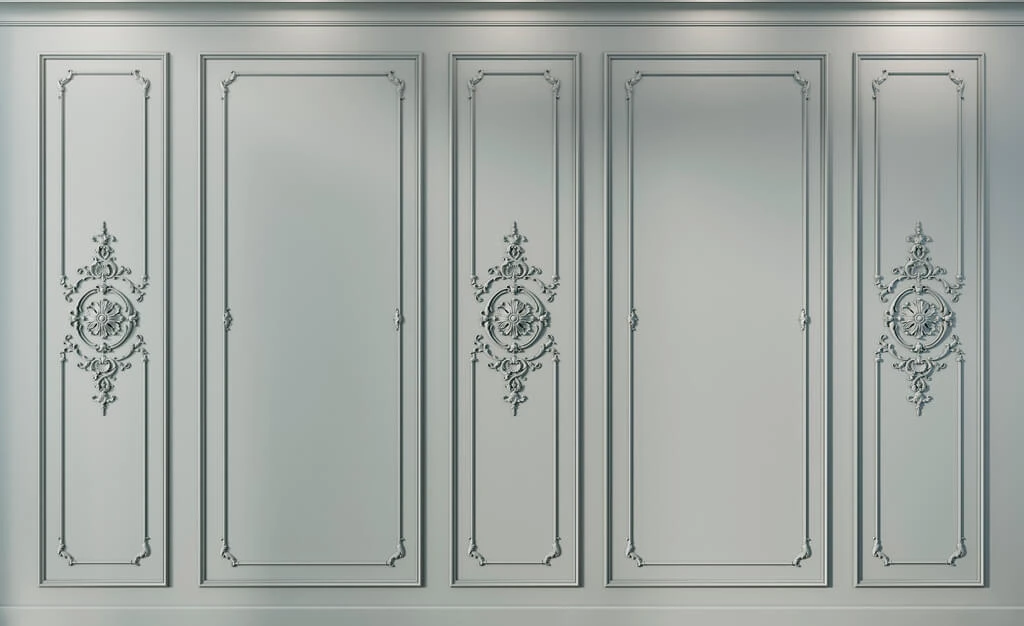
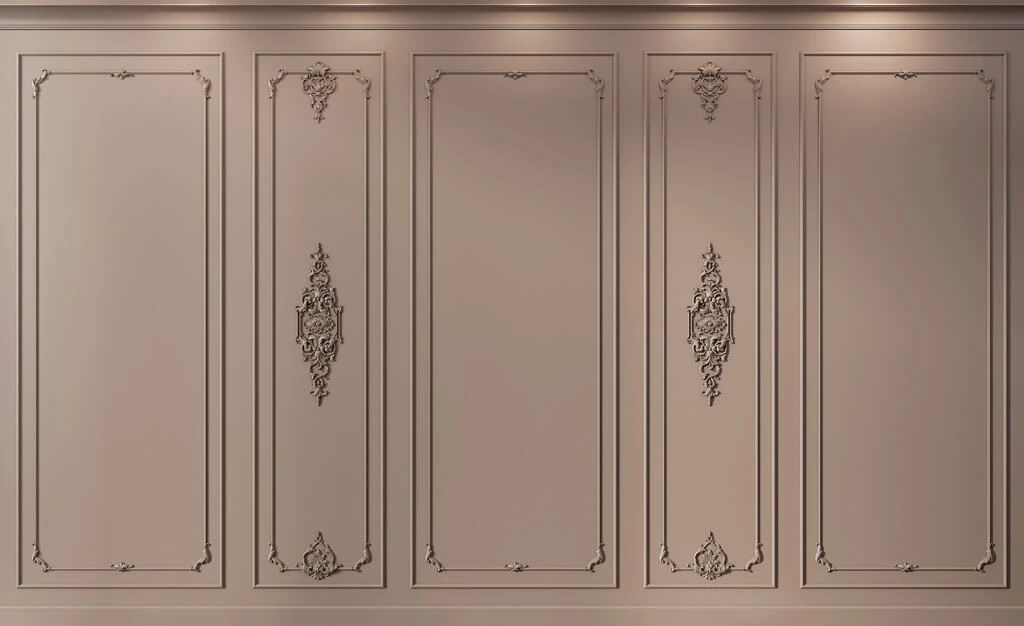
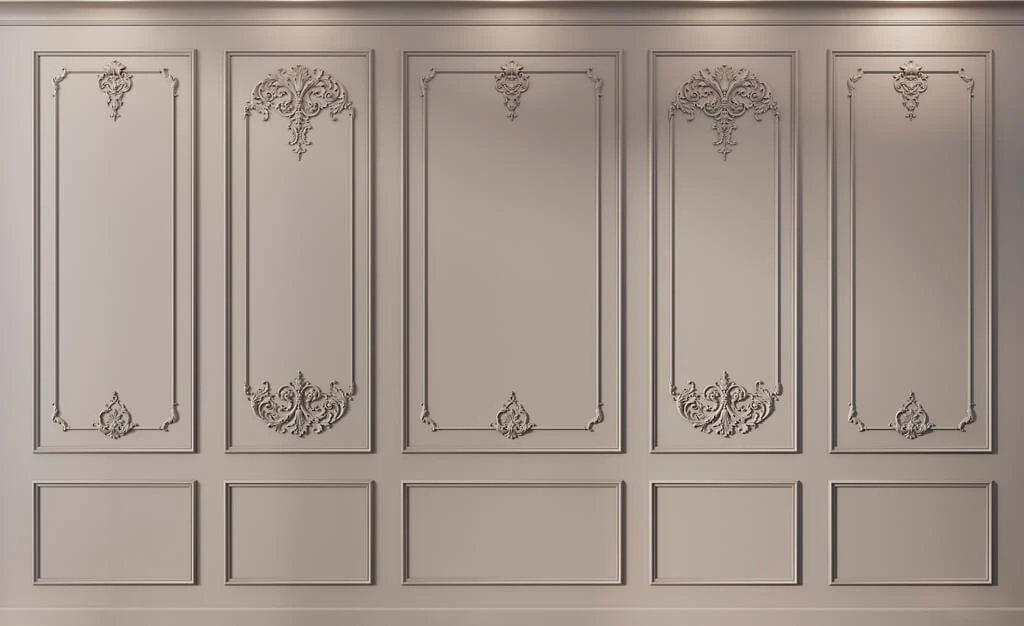
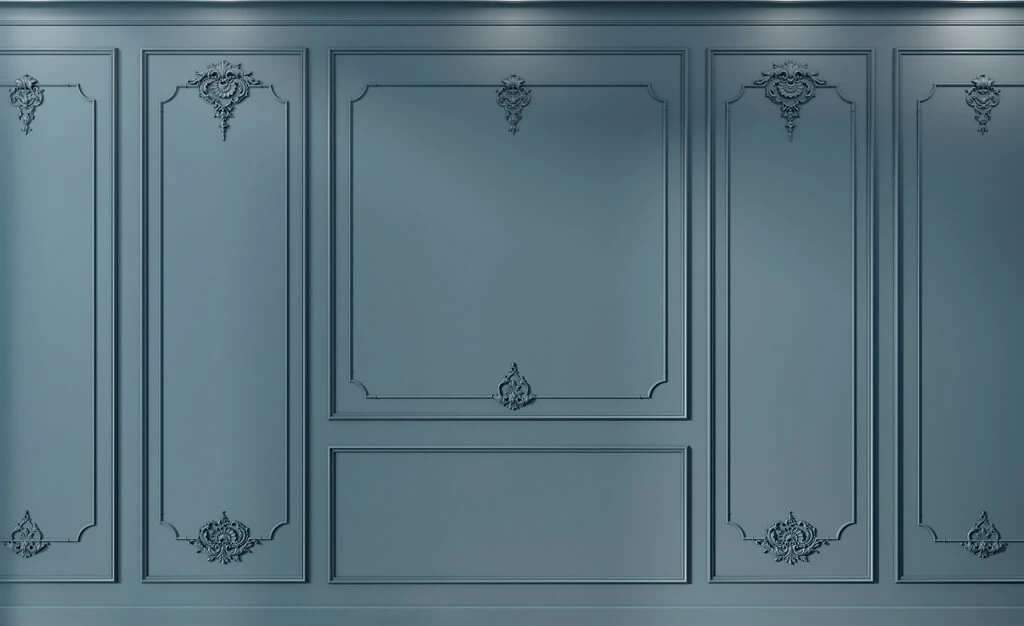
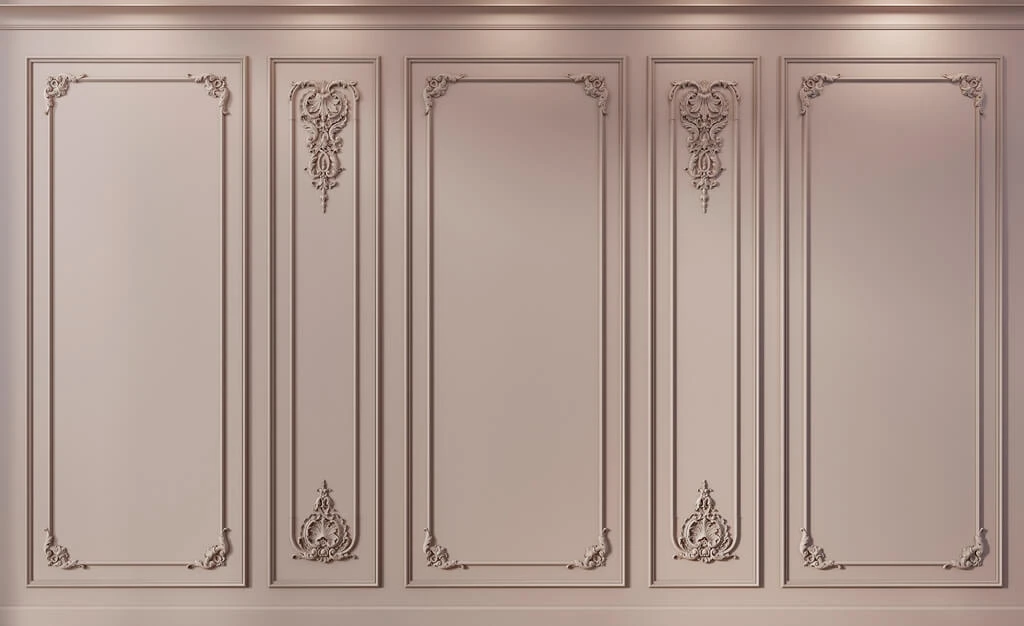
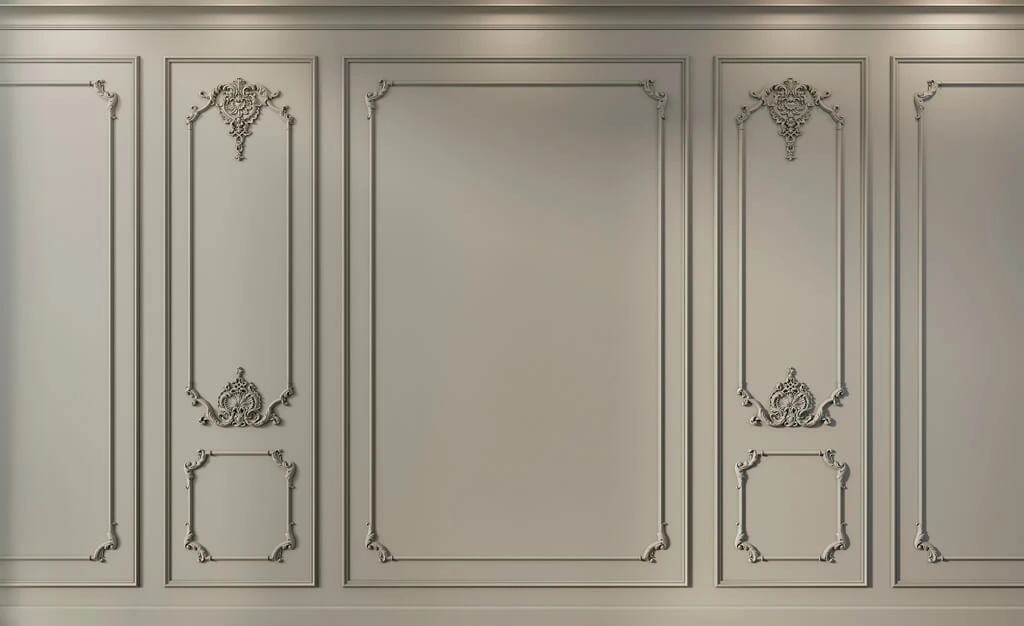
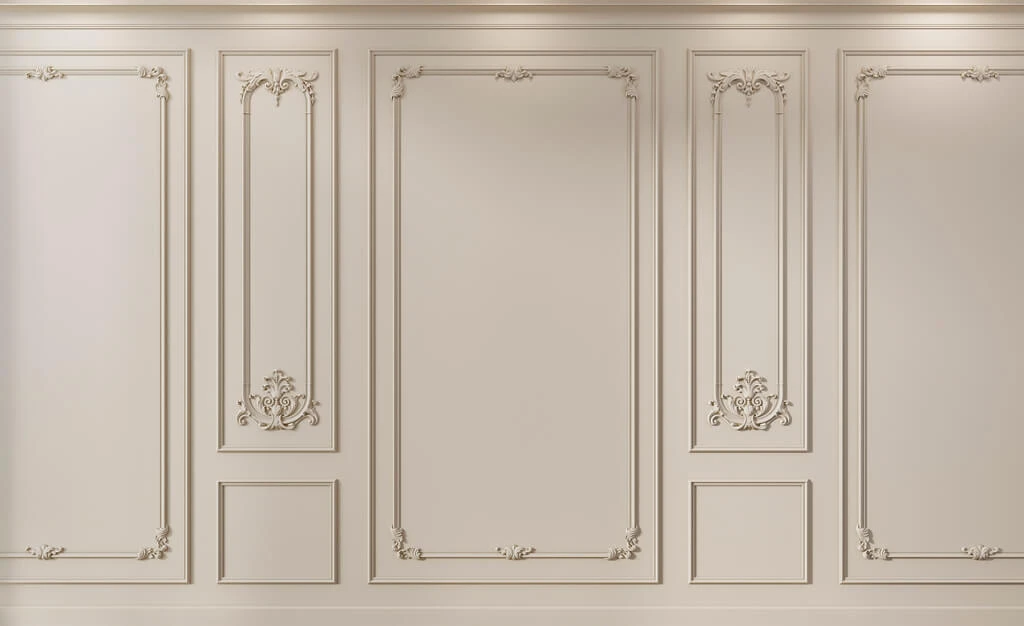
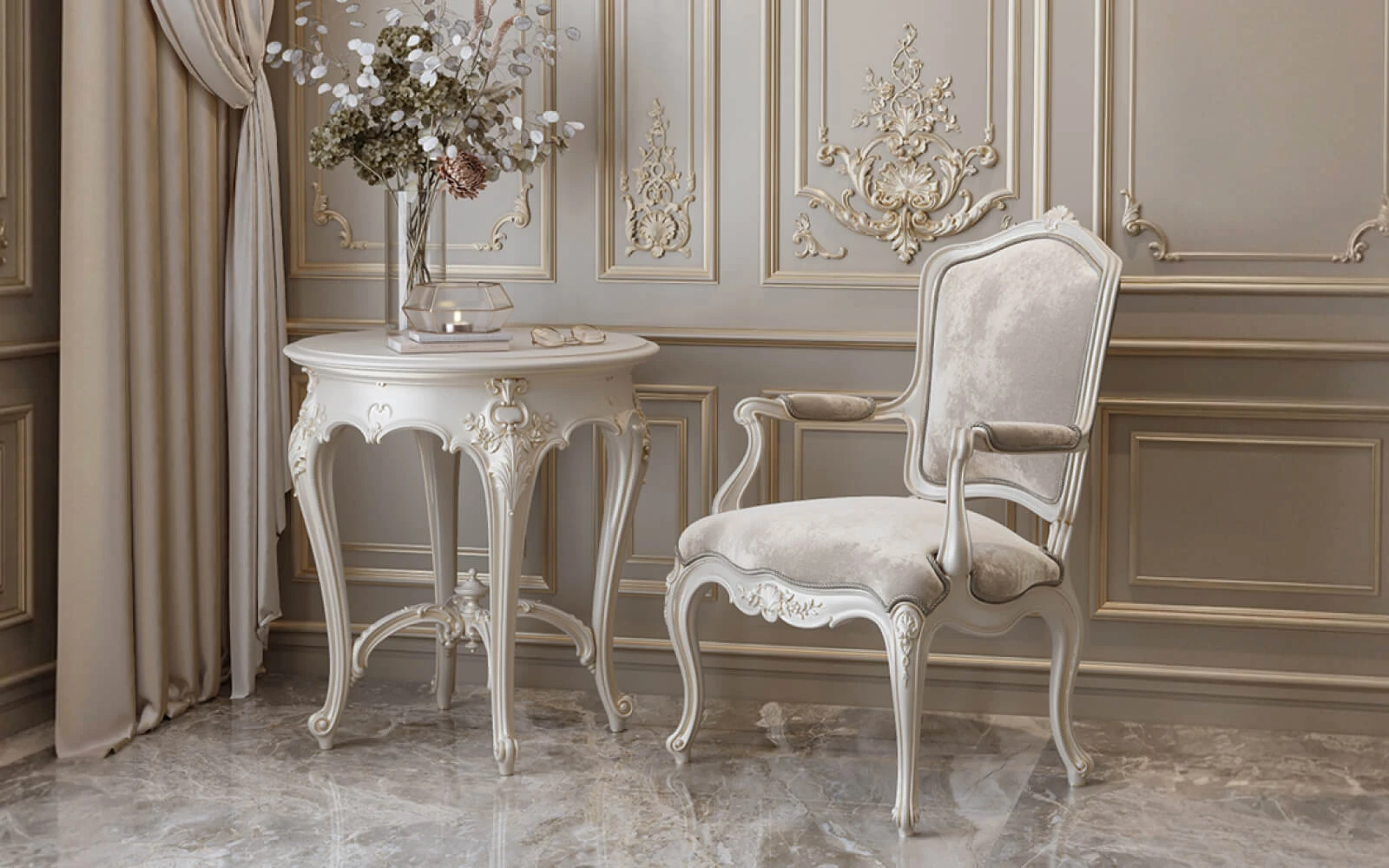
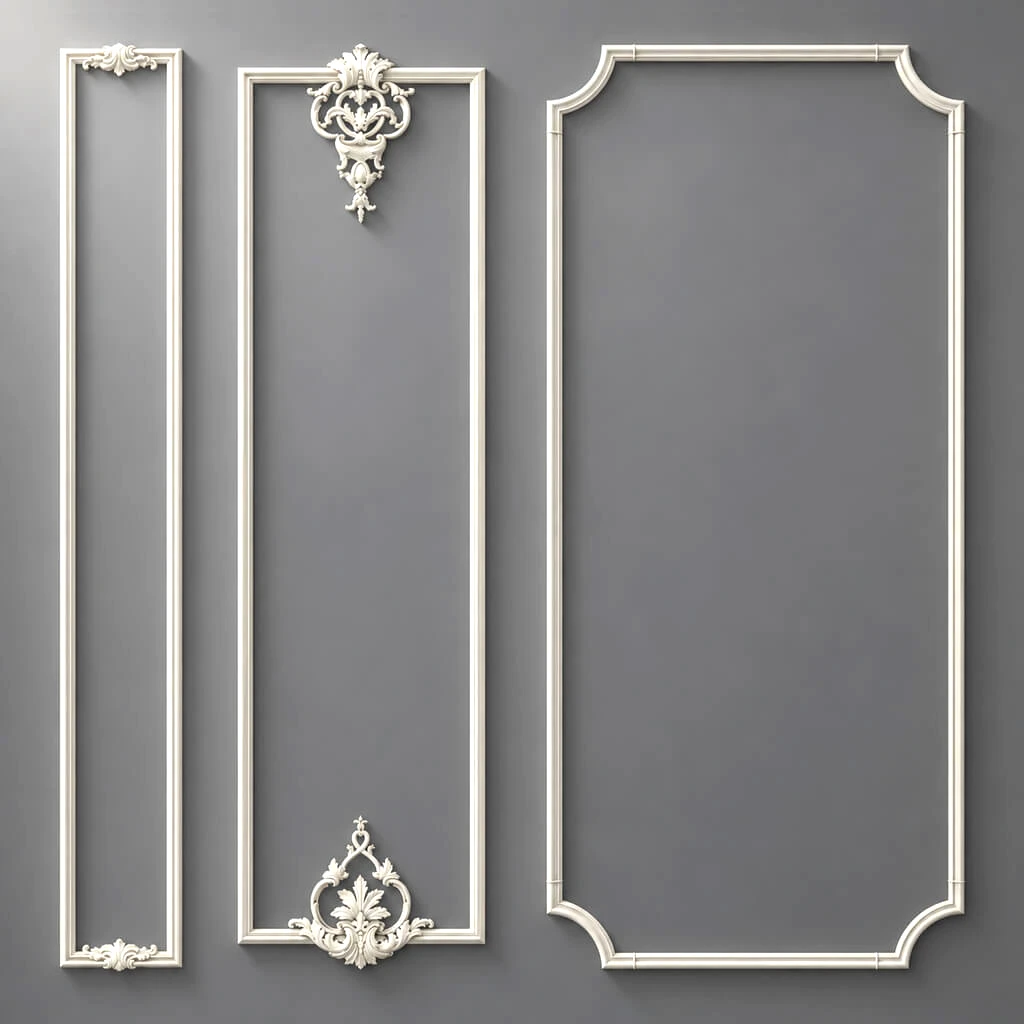
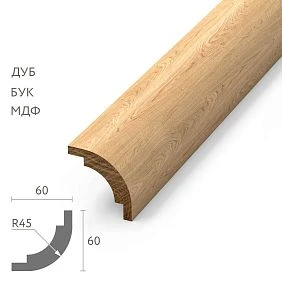
Wooden overlays integrate organically into the system molding — profiled slats that divide the wall into zones or frame the perimeter of the room. An overlay installed at the intersection of moldings or in the center of the frame they form turns the wall panel into a real decorative panel. This technique is widely used in classic, neoclassical, and baroque interiors.
Restoration and repair of furniture
Carved wood decor is an indispensable tool for a restorer. A lost element of historical furniture can be reproduced or replaced with one as close as possible in shape and style. Collections of overlays from major manufacturers include a wide range of classic forms: acanthus, rocaille, laurel leaf, grapevine. Finding an exact or close match is quite realistic.
Ceiling Decor
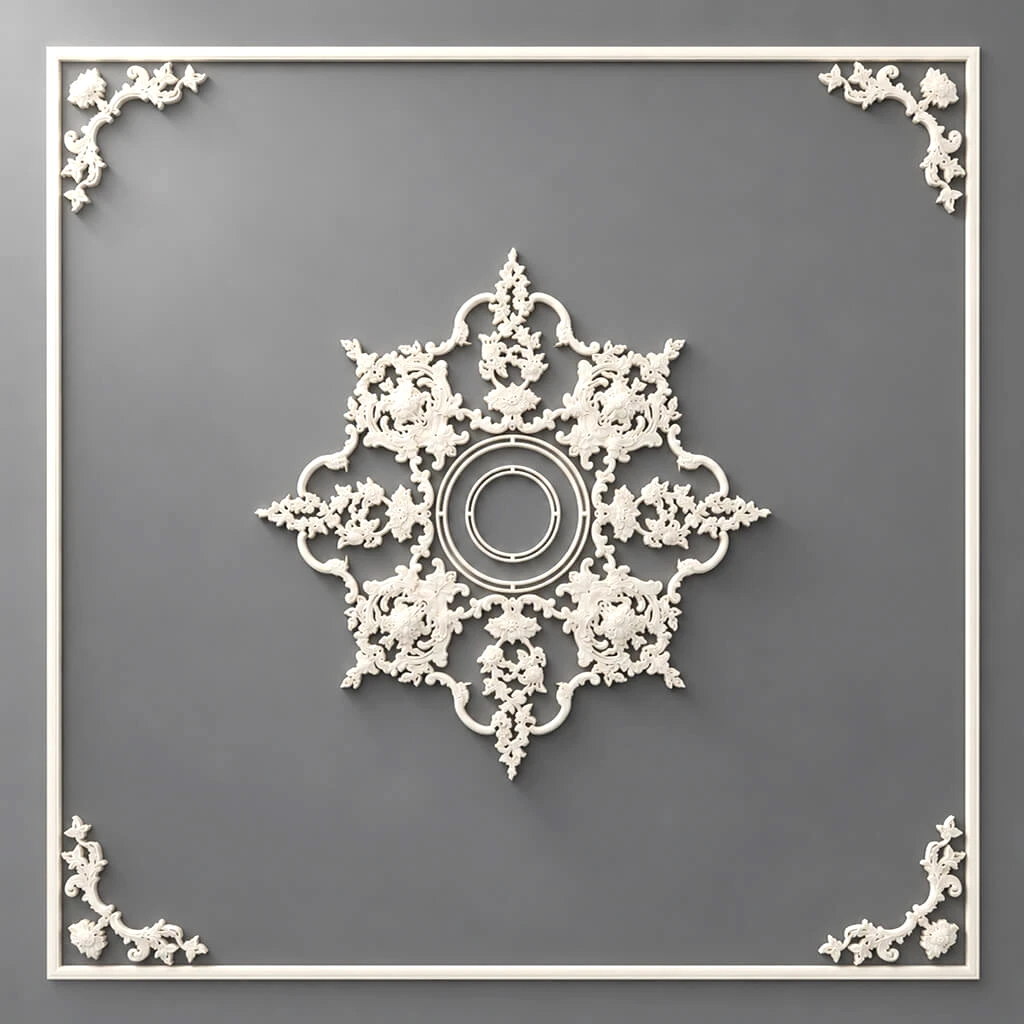
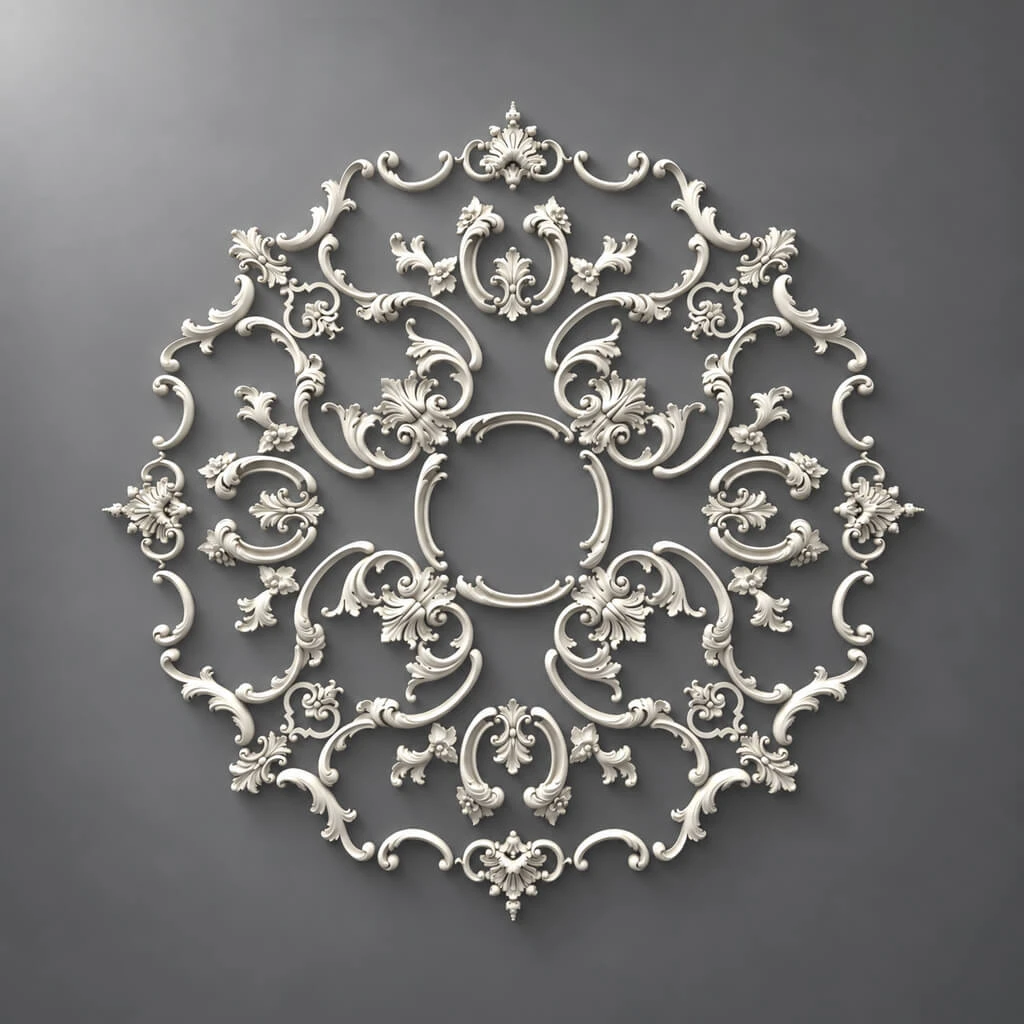
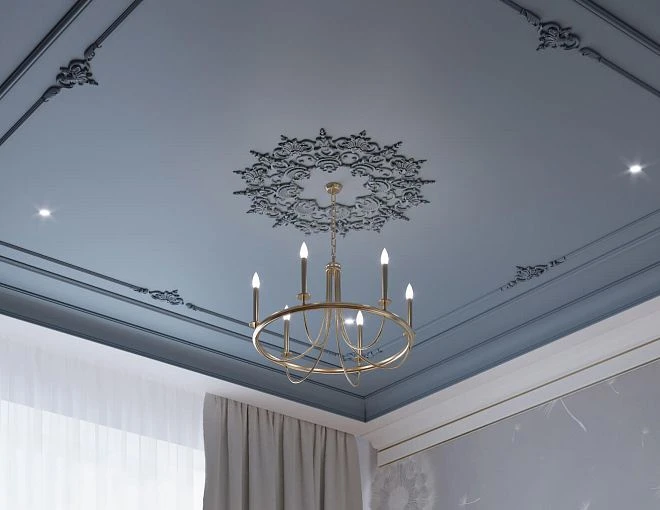
Ceiling rosettes, corner overlays, decorative borders — all of this is wood decor moved to the ceiling. Here, wood competes with polyurethane and plaster, and often wins: living material attracts the eye differently than imitation. Wooden rosettes under a chandelier are especially impressive in classic studies or living rooms with high ceilings.
Which materials to choose: oak and beech compared
Among the wood species used for the production of carved overlays, oak and beech occupy leading positions — and for good reason.
Oak: a wood for those who choose for the long term
Oak is one of the hardest and most durable European woods. Its density (about 700 kg/m³) provides resistance to mechanical damage, moisture, and deformation. Carving on oak is crisp, with well-defined relief and clean edges. The texture of oak is expressive: large fibers and characteristic medullary rays make each product visually unique.
oak decor for furniture — a choice for those who plan to work with natural texture, coat the product with oil, wax, or varnish while preserving the grain. Oak takes stain well and yields rich, warm tones — from light honey to dark tobacco.
Beech: precision of form and versatility
Beech has a uniform fine-grained structure that is ideal for fine carving. It is from beech that the most complex ornaments with thin bridges and delicate curves are cut — where oak might chip, beech holds its shape. The density of beech is slightly lower than oak, but this is insignificant for overlays.
Beech is the first choice when the product is planned to be painted white or another opaque color. The uniform texture without large pores ensures a perfectly smooth finish. This is why beech overlays are traditionally used under enamel.
Practical comparison
| Characteristic | Oak | Beech |
|---|---|---|
| Hardness | High | Medium-high |
| Texture | Large, expressive | Fine, uniform |
| For enamel | Possible, but requires primer | Ideally |
| For oil/varnish | Excellent | Good |
| Moisture resistance | High | Medium |
| Price | Higher | Below |
When to choose decor for enamel, and when for natural texture
This is one of the key questions when choosing carved overlays — and one of the most often ignored. Yet it affects not only the appearance of the product, but also the choice of wood species, primer, finish coating, and even the installation method.
Decor for enamel: white, cream, colored
Wooden decor under enamel — these are overlays that are intended to be painted with opaque paint. Most often these are white or cream shades of classics, less often — pastel tones of Provence or bold accents in modern interiors.
For such a solution, beech is preferable: its pores are small, the surface after sanding practically does not require puttying. Oak before enamel needs to be carefully primed, otherwise large pores will show through the paint.
Enameled overlays are pure classics. White carving on a white facade is an ultra-subtle technique where the decor is read only by light and shadow. White carving on a contrasting facade — for example, dark green or anthracite — creates a bright graphic effect.
Decor for natural texture: oil, wax, varnish
When the task is to emphasize the natural beauty of wood, oak comes to the forefront. An overlay treated with oil acquires a lively matte sheen and emphasized texture. Wax gives a softer, velvety feel. Varnish — transparent or tinted — provides protection while preserving the natural pattern.
The natural texture of oak is luxury without ostentatious expense. Such decor fits perfectly into interiors in rustic, country, modern classic, Scandinavian, and eco styles.
Combined approach
Nothing prohibits using both techniques in one space: for example, kitchen fronts with enamel and white overlays, and a freestanding sideboard with oak oil-finished overlays. The main thing is that the color tones and style code are coordinated.
How to choose the size and shape of the overlay
The size of a decorative overlay is not a matter of taste. It's a matter of proportions. The rule is simple: the size of the overlay should relate to the size of the facade so that the decor occupies 20–40% of its area. More — overload; less — invisibility.
Central overlays
They are placed in the geometric center of the facade. For a cabinet door 720 mm high and 400 mm wide, an overlay with a vertical size of 180–250 mm is appropriate. For a wider facade, correspondingly larger. The central overlay should "hold" the plane, not get lost on it.
Corner overlays
They are placed in the corners of the facade, forming a frame. The size of the corner overlay is selected based on the width of the decorative frame or molding that frames it. Classic — corner elements 50×50 mm with a molding width of 25–35 mm.
Modular (composite) overlays
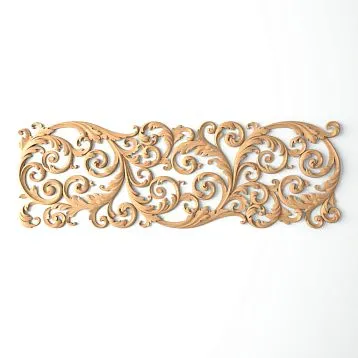
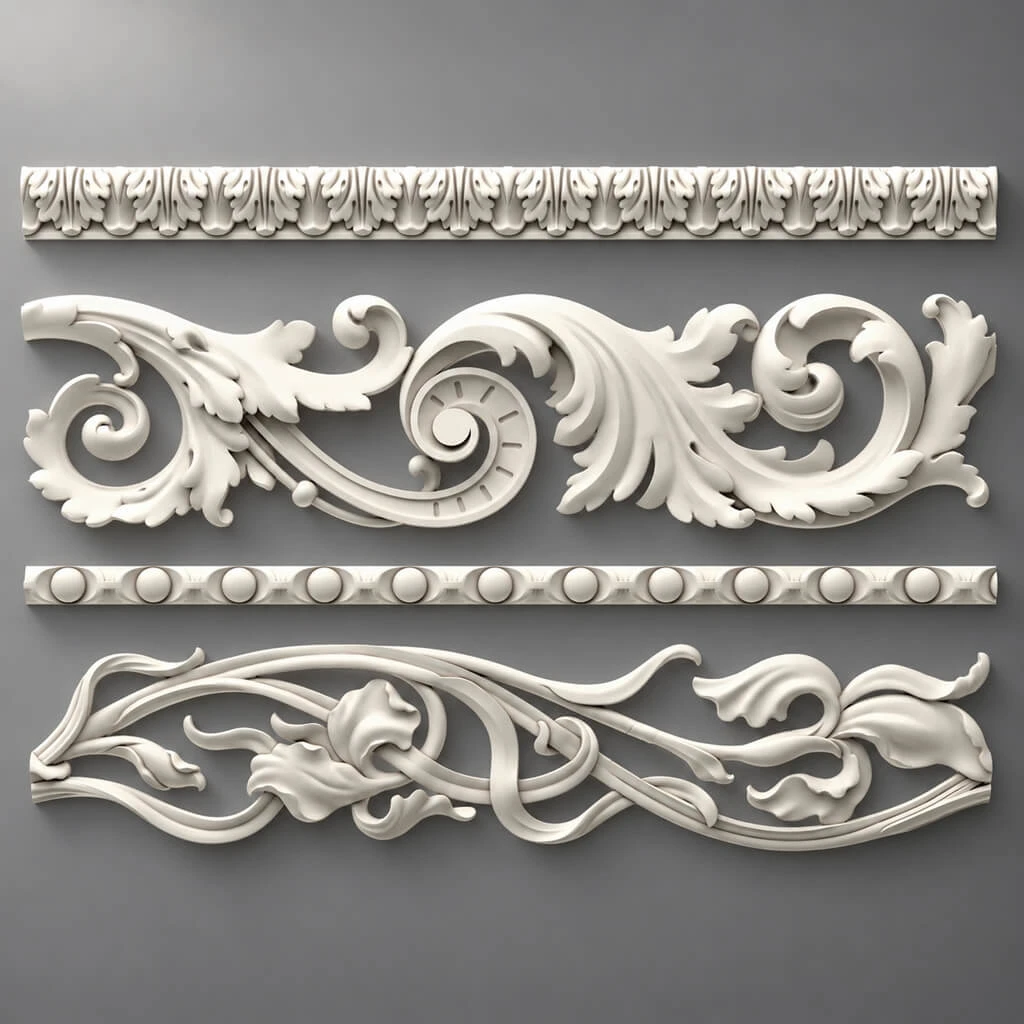
These are construction-set overlays that consist of several elements and can be assembled into long friezes or complex panels. They allow you to precisely fit the decor to the size of any facade. Such elements are especially convenient when working with non-standard dimensions.
Practical life hack
Before ordering overlays, print their image at actual scale and attach it to the facade. This simple technique saves you from disappointments: what looks convincing on the screen may turn out to be too small in reality — or, on the contrary, excessively large.
Which styles are suitable for wooden overlays
Carved wooden overlays are a style-forming tool. It is the shape and pattern of the ornament that determine in which interior they will be appropriate.
Classicism and neoclassicism
This is the main area of carved wood decor. Acanthus leaves, cartouches, garlands, rosettes, meanders, laurel branches — all these are classic ornaments born in Antiquity and reinterpreted in the Renaissance, Baroque, and Empire styles. In a classic interior, carved overlays are an essential element without which the style does not come together.
Baroque and Rococo
Lush curved forms, rocaille curls, asymmetrical compositions — these styles require overlays with rich ornamentation, high relief, and a dynamic silhouette. Here, it is important not to be afraid of excess — this style is created for those who know how to be generous.
Provence and country
Simpler, "rustic" forms of carving: flowers, leaves, vines, birds. Often used under white or cream enamel. The facades look both elegant and cozy.
Rustic and eco
Hereoak decor for furnitureworks under a natural finish — oil, wax. The pattern can be simple, geometric, or floral. Texture is important: expressive wood with a living texture is itself a decoration.
Modern classicism and art deco
Geometric ornaments, strict symmetrical forms, minimalist relief. Decor is used sparingly, not richly — as a detail, not as a background.
Scandinavian style
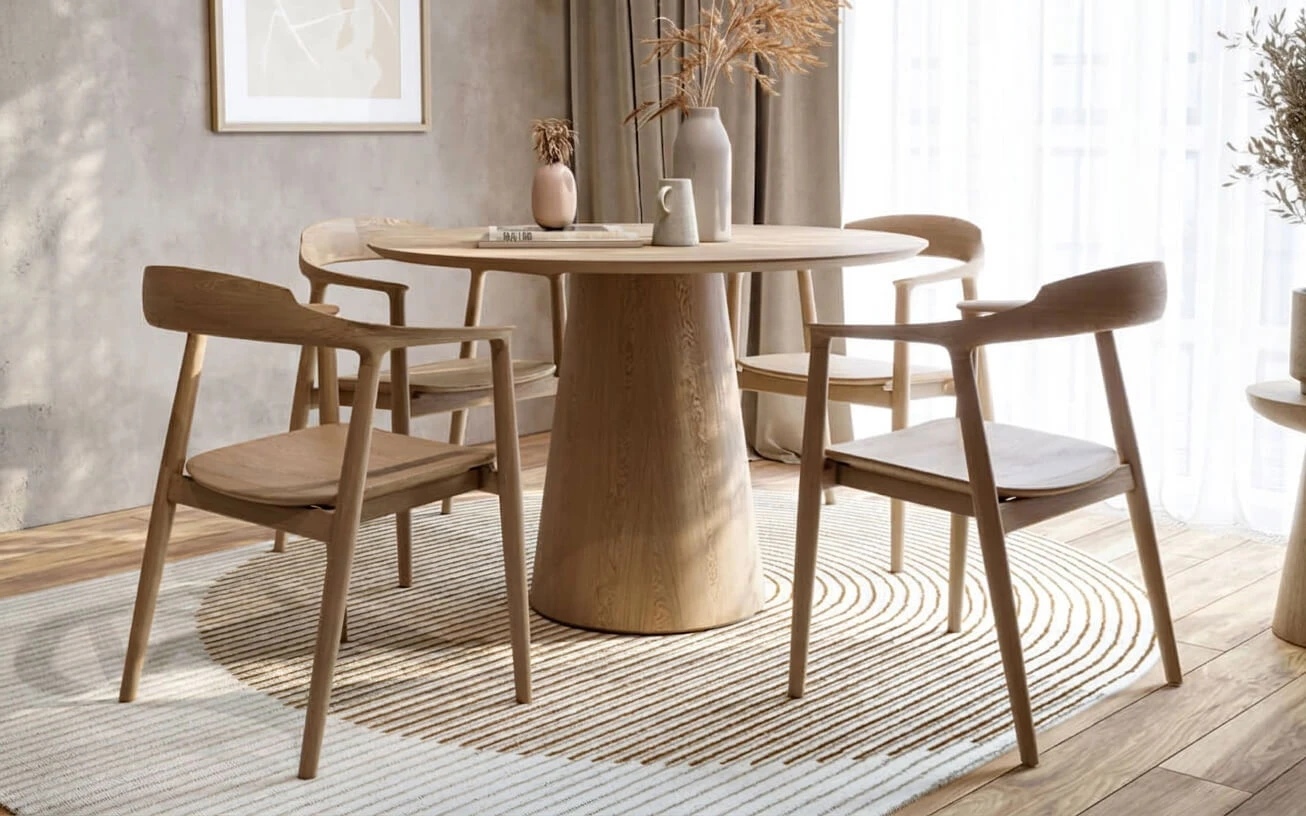
Here, carved decor appears rarely, but when it does, it works as an accent. Simple natural motifs under natural oil or white paint harmonize with the principle of "nothing extra."
What to combine carved wood decor with
A carved wooden overlay is not a standalone element. It lives in a system, and the final result depends on how skillfully this system is built.
With moldings and profiles
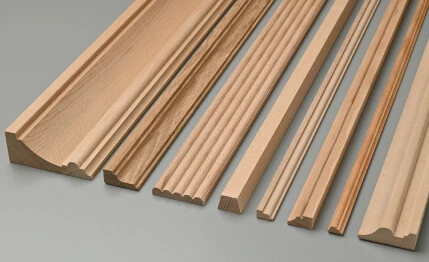
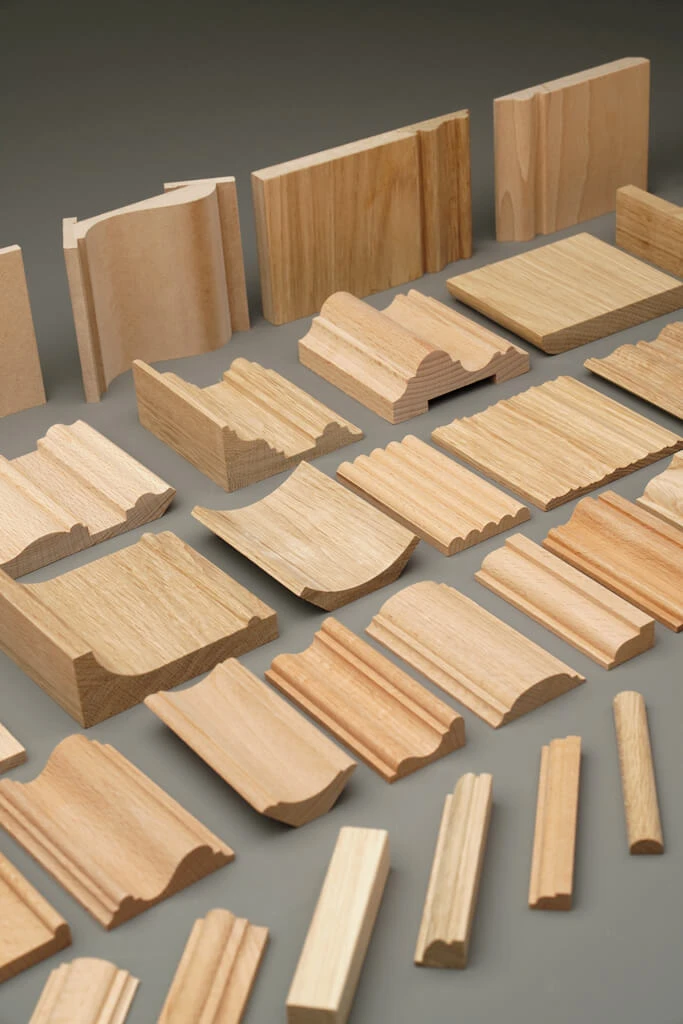
Overlays and profiled moldings — are natural partners. Molding creates a linear structure; the overlay places accents at nodal points. Corner overlays combine two moldings at the intersection; central ones fill the inner field of the frame.
With hardware
Carved decor requires appropriate hardware: forged or cast handles in a classic style, porcelain in a Provencal style, bronze in a Baroque style. Modern hardware made of stainless steel and chrome-plated alloys with carved decor is combined only in author's projects with a clearly calibrated eclectic code.
With facade coating
If the overlay is mounted on a painted MDF facade, it is important to coordinate the type of coating. Under enamel — both materials are painted in the same tone, creating a monolithic effect. Under natural texture — the contrast between the wood of the overlay and the main facade can be an artistic technique.
With light
Relief decor lives by light. Directional lighting — sconces, built-in LEDs, spotlights — turns the ornament into a play of shadows. That is why carved panels in niches or on a kitchen backsplash with proper lighting look much more impressive than in uniform diffused light.
With textiles and other materials
Wooden overlays on furniture pair well with natural fabrics — linen, cotton, velvet, wool. Synthetics and shiny fabrics clash with the organic form of wood. With stone, marble, and leather, carved decor creates rich and convincing combinations.
Mistakes when choosing carved decorative overlays
These mistakes are made by both beginners and experienced craftsmen. Knowing about them in advance can help avoid disappointments.
Mistake 1: scale mismatch
An overlay that is too small gets lost on a large facade. One that is too large feels heavy and overloads. Always match the size of the decor to the area of the facade and the scale of the entire room.
Mistake 2: mixing ornament styles
An acanthus leaf with a rocaille scroll and geometric modernism on the same facade is not eclecticism, it is chaos. Ornaments should be stylistically uniform. If you are working in a classic interior, stick to classic motifs.
Mistake 3: ignoring the wood species for the planned coating
As already mentioned, beech and oak behave fundamentally differently under enamel and under natural coating. The choice of wood species should be determined by the planned finish treatment.
Mistake 4: installation without surface preparation
A dirty, greasy, or damp surface does not provide reliable adhesion for the glue. The overlay will come off sooner or later — and this is no longer a product quality issue, but a problem with the installation technique.
Mistake 5: purchasing without a reserve
Production is done in batches. If you need one extra overlay in six months, it may not be available in the desired color or size. Always buy with a 10–15% reserve.
Mistake 6: buying decor without considering the molding system
An overlay is a system element. If you plan to combine it with moldings, rosettes, or other decorative elements, choose everything in one place from one manufacturer. This ensures compatibility of styles, proportions, and joining profiles.
Mistake 7: underestimating the final finish
Even perfectly selected decor looks cheap if it is covered with low-quality paint or roughly primed. The final finish accounts for 30% of the result. Do not skimp on enamel, oil, and primer.
Product example: Wooden decor N.VRS-015
Among the many items in the STAVROS catalog, a special place is occupied by Wooden decor N.VRS-015— a product that concentrates the full potential of carved decor from solid wood.
N.VRS-015 is a decorative overlay with an expressive floral ornament, made from high-quality solid beech or oak (customer's choice). The shape of the product is designed for central or accent placement: the overlay confidently holds the facade plane while simultaneously creating lightness through an openwork pattern.
The product is versatile in application: it looks equally organic on a kitchen facade, a door leaf, in a wall panel system, and on a standalone piece of furniture — a chest of drawers, a sideboard, a secretary. The proportions of the N.VRS-015 overlay are calibrated so that it works both as an independent element and as part of a more complex decorative composition.
Wooden decor under enamelin the N.VRS-015 version — this is an ideal option for classic and Provencal kitchens: the beech base accepts white enamel without pore filling, the coating lays evenly, the relief reads clearly. Under natural oil, the oak version of the same model reveals the warm texture of the wood and acquires a noble matte sheen, consonant with modern classic and rustic styles.
The overlay is compatible with joining profiles and STAVROS moldings, which allows it to be easily integrated into the decor system. Mirror-image versions are available for symmetrical compositions. Installation — with glue or small fasteners; the surface must be prepared before installation: cleaned, degreased, and primed if necessary.
How to properly prepare the surface before installing the overlay
Many underestimate this stage — and in vain. Surface preparation largely determines the durability of the fastening and the aesthetics of the final result.
Preparation stages
The first step is cleaning. The facade surface must be degreased with a solvent or a special cleaner. Grease marks from hands, silicone, furniture polish — all of these are enemies of adhesion.
The second step is sanding. If the facade is coated with paint or varnish, light sanding with P120–P180 sandpaper improves the glue's adhesion to the surface. For bare MDF or solid wood, sanding is mandatory.
The third step is priming. This is especially important for oak elements that are planned to be painted. The primer closes the pores and creates an even base for the enamel.
The fourth step is marking. Before applying the glue, fix the exact position of the overlay using a level, a square, and a pencil. A hastily applied decoration will shift from the center — and this will be noticeable.
The fifth step is installation. The glue is applied in a thin, even layer to the back side of the overlay. The product is pressed against the surface and secured — with clamps, masking tape, or temporary nails — until fully set according to the glue's instructions.
Finishing treatment: how to achieve a professional result
After installing the overlay, the finishing stage begins — the one that turns a set of parts into a cohesive look.
Filling the joints
The joint line between the overlay and the facade is treated with water-based putty. This eliminates small gaps and creates a monolithic appearance. After drying — light sanding.
Priming before painting
For wood under enamel — 1–2 coats of primer. Each coat dries completely before applying the next. The primer must match the type of finishing coating.
Applying enamel or oil
The enamel is applied in 2–3 layers with intermediate sanding P320–P400. Each layer is needed for coverage and durability of the coating. The oil is applied in 1–2 layers with rubbing along the grain and holding according to the oil manufacturer's instructions.
Final result
A professionally painted or oil-treated overlay is almost indistinguishable from a factory finish. The relief is clearly visible, the color is even, and the texture is either hidden (under enamel) or natural (under oil/wax).
Wooden decor for different rooms: nuances of selection
Each room dictates its own requirements for the material, size, and shape of the decor.
Living Room
A representative space means the decor must be convincing. In the living room, large central overlays, ornamental panels, and symmetrical compositions are appropriate. The material is oak for a natural finish or beech for enamel, depending on the overall concept.
Bedroom
The bedroom requires a more delicate approach. Carveddecor for furniture here should be elegant, not overloaded. Fine plant ornaments, light openwork forms, pastel shades, or white enamel — all this creates an atmosphere of peace.
Kitchen
The kitchen is the most active space in the house. The decor here operates under conditions of high humidity and temperature fluctuations. Oak is the preferred material; the coating must be moisture-resistant. Placement — on the facades of upper cabinets, on the range hood, on a decorative niche.
Children's room
In the children's room, carved overlays with natural motifs — leaves, birds, flowers — create a cozy, lively atmosphere. The coating must be non-toxic: certified oil based on plant components or water-based enamel without solvents.
Office and library
Strictness and status are the language of an office. Here, overlays with geometric and classic ornaments, dark tones, oil or varnish coating with tinting in wenge, tobacco, or dark walnut are appropriate.
Buying wooden decor: what to pay attention to
When the choice is made conceptually, the practical question remains: where and how to buy carved overlays so as not to regret it?
Manufacturer vs. reseller
Buying from the manufacturer is always preferable: you get consistent quality, the ability to order the required quantity, current stock, and direct support for technical issues. Resellers often work with leftover batches, which creates a risk of shade mismatch when reordering.
Availability of modular joints
Modern catalogs include constructor overlays with pre-designed joint connections. This means the decor can be arranged to fit any facade size — without adjustment or trimming. Check when ordering whether such elements are provided in the selected model.
Delivery and packaging
Carved overlays are fragile products. Transportation without proper packaging leads to chips and breakage of thin ornament elements. Ensure that the packaging is individual, with fixation in foam or similar material.
FAQ: answers to popular questions about carved wooden overlays
Can wooden overlays be mounted on laminated MDF?
Yes, but the surface must be sanded at the installation site to remove the gloss and improve adhesion. Use glue recommended for mixed surfaces (wood/MDF).
Should the overlay be painted separately before installation or after?
Both options are acceptable. Professionals often paint the overlay after installation: this way, joint putty and final painting create a monolithic look. However, if the overlay coating differs from the main facade (e.g., a contrasting color), it is more convenient to paint it before installation.
How often should the coating of wooden overlays be renewed?
Under enamel — every 5–7 years under normal operating conditions. In the kitchen or rooms with high humidity — more often, every 3–4 years. Oil is renewed as the surface becomes matte — usually every 2–3 years.
Which glue is best for installing carved overlays?
For wood on wood — high water-resistant woodworking PVA (D3/D4) or two-component polyurethane glue. For wood on MDF or chipboard — contact glue or acrylic-based construction adhesive. Epoxy glue is used for installing heavy elements.
Can wooden overlays be purchased individually?
Yes — in the STAVROS catalog, purchase is possible from 1 piece. This is convenient for designers at the prototyping stage and for home craftsmen who want to try the decor before ordering a full set.
Does an oak overlay differ visually from a beech one?
Yes, and significantly. Oak has a large, expressive texture with characteristic rays. Beech has a uniform, fine-grained texture. With the same coating, an oak overlay looks richer under a natural tone; a beech overlay looks perfectly smooth under white enamel.
How to choose an overlay if I'm not a designer?
Measure the facade and find its geometric center. Choose an overlay whose width is 40–60% of the facade width. Determine the style: if the interior is classic, choose motifs with floral ornamentation; if modern, choose geometry. If in doubt, request a consultation with STAVROS specialists.
Can carved overlays be used in wet areas — bathroom, sauna?
In bathrooms — yes, provided proper coating (yacht varnish, wax with water-repellent properties) and adequate ventilation. In saunas and steam rooms, the use of wooden decor is possible but requires special wood species and coatings — consultation with the manufacturer is recommended.
Go to the STAVROS catalog: everything for wooden decor
If you've read this far, it means the topic of carved wooden decor is truly important for your project. It's time to move from theory to practice.
inSTAVROS decorative overlays catalogover 400 models of carved overlays from beech and oak are collected — central, corner, modular, ornamental panels. There is decor for any style, any facade, any budget. The entire range is from the manufacturer, with the possibility of ordering from 1 piece and delivery throughout Russia and CIS countries.
It is worth noting separately profiled moldings — they are ideally compatible with overlays in style, scale, and joining profiles, allowing you to assemble complete decorative systems without complex adjustments.
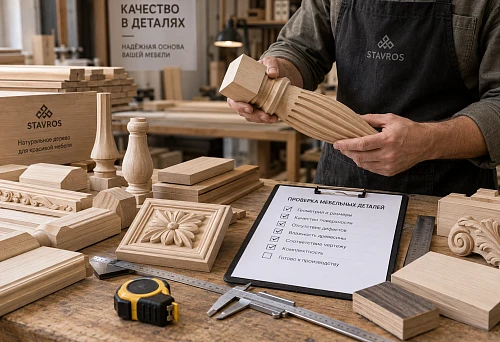
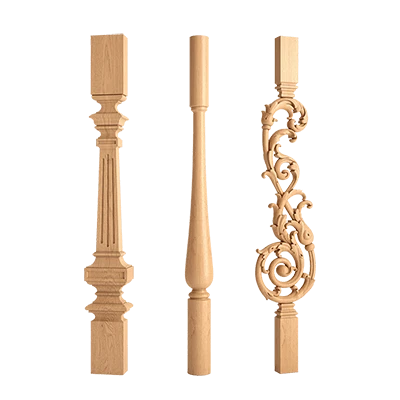
STAVROS company has over twenty years of experience working with wood, hundreds of thousands of products delivered to sites across Russia, and a reputation that cannot be bought with advertising. STAVROS specializes in the production and sale of wooden decor for furniture and interiors: carved overlays, moldings, rosettes, cornices, balusters, and joinery profiles. All products are made from selected solid oak and beech on modern equipment, adhering to technical standards and artistic traditions of wood carving. In-house production, direct sales, competent technical support, and a wide range of models are what distinguish STAVROS from intermediaries and ensure consistent quality for every project: from small home renovations to large-scale designer interiors.