

























Customers also buy

Ekaterina Y.
October 5, 2026
An excellent team! A huge selection of products! I recommend that craftsmen, designers, decorators, and home stagers take a tour of the production facility to immerse themselves and be inspired.
Alexander U.
October 2, 2026
I have been working with Stavros since 2024, and the quality of the products is top-notch. Customers are happy!!!
Elena G.
September 29, 2026
Daria is a very competent specialist; she provided consultation and helped us select items. They were sent promptly.
More than 20 years on the market
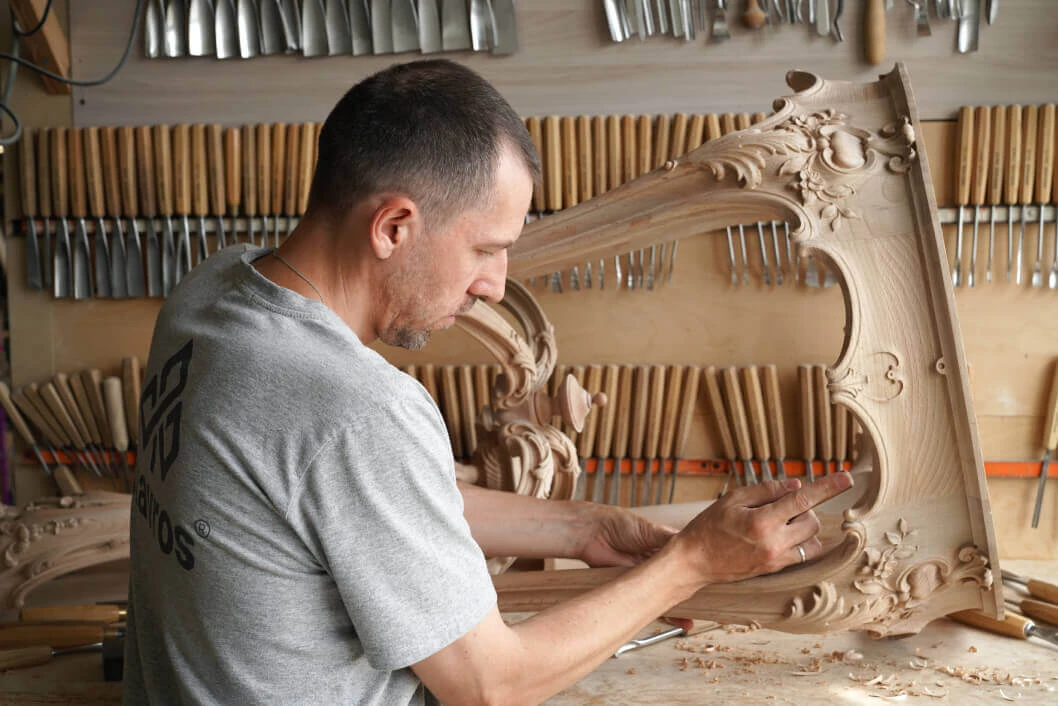
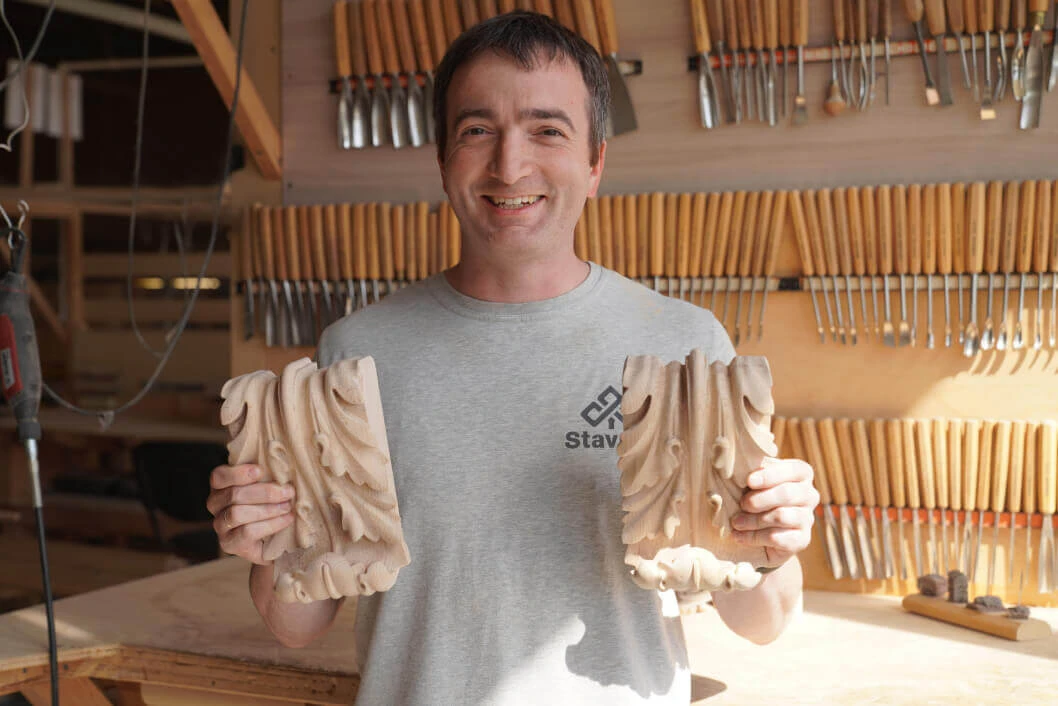
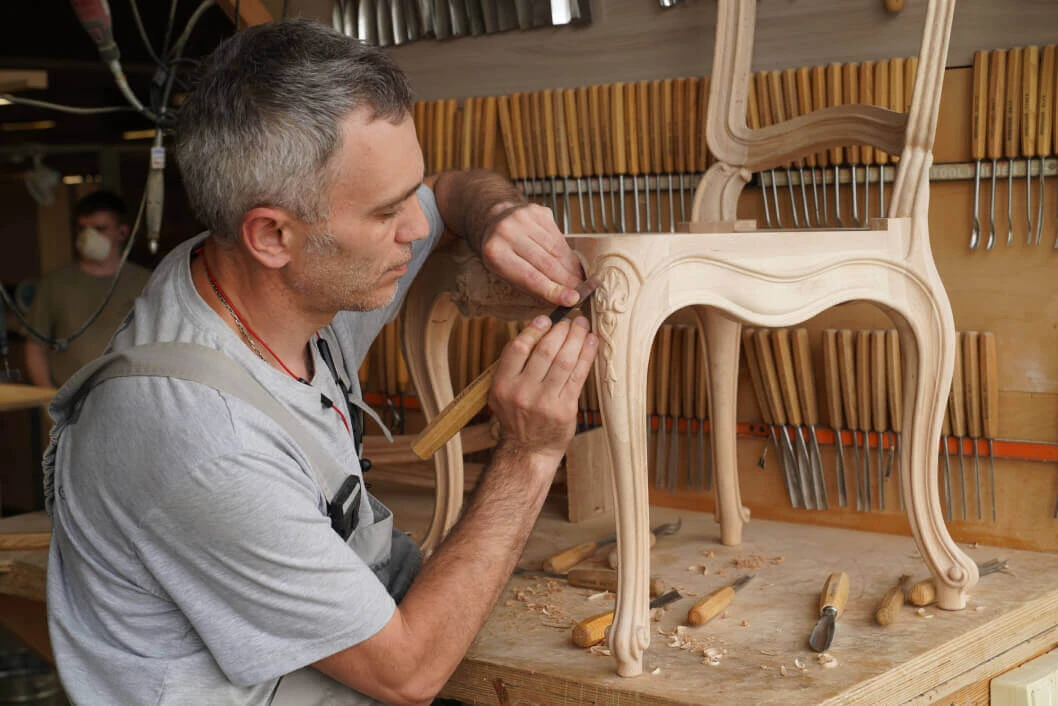
The company's success began in 2002, when two artists — Andrey Ragozin and Evgeny Tsapko — created a small creative workshop for producing wooden carved items. The masters' work was quickly noticed, and within a year they were invited to participate in the reconstruction of the Konstantinovskiy Palace in Strelna.
After the success of this project, the company focused on recreating palace interiors, furniture, church furnishings, and carved decorations in various artistic styles. They worked with cultural heritage sites: The Hermitage, the Alexandrovsky Palace, the Troitsko-Izmaylovsky Cathedral, the Sheremetyevsky Mansion, and many others.
The masters' task — and still is — to create wooden items with the highest level of detail and understanding of every element, based on impeccable knowledge of artistic laws and interior styles.

STAVROS Guarantees
Quality of products without complaints
We save your time, peace of mind, and budget
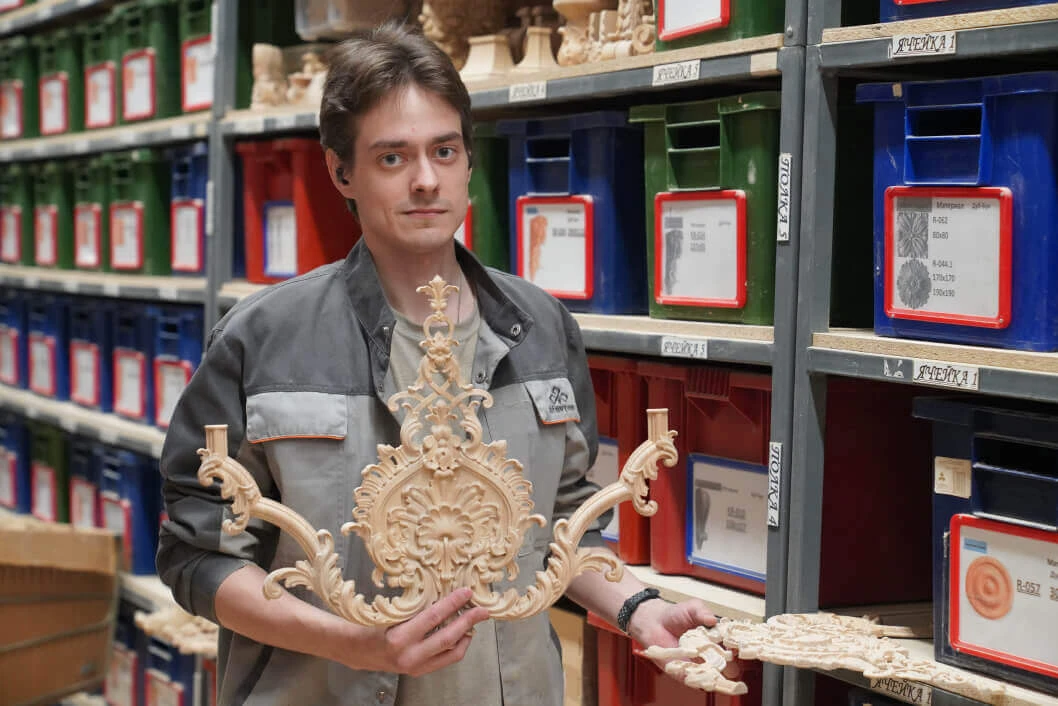
Large warehouse program
We solve your tasks with maximum speed
Adherence to production deadlines
Streamlined process reduces all risks
Delivery from 1 piece throughout Russia
Quality service regardless of order volume
Your positive business reputation
Reliable partner — the foundation of your business
More decorative appliqués in this category
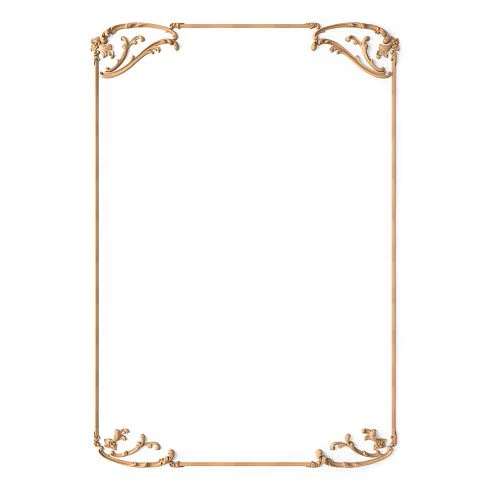
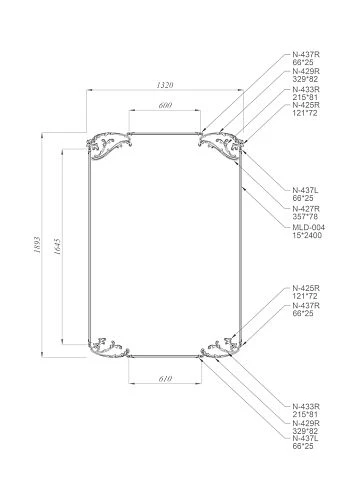
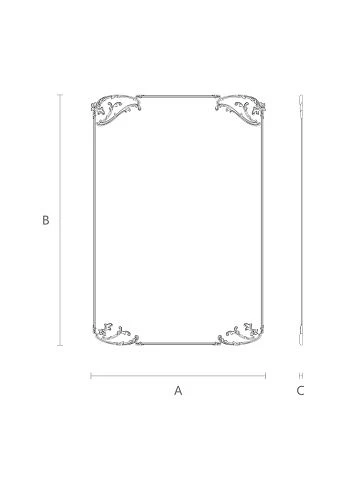
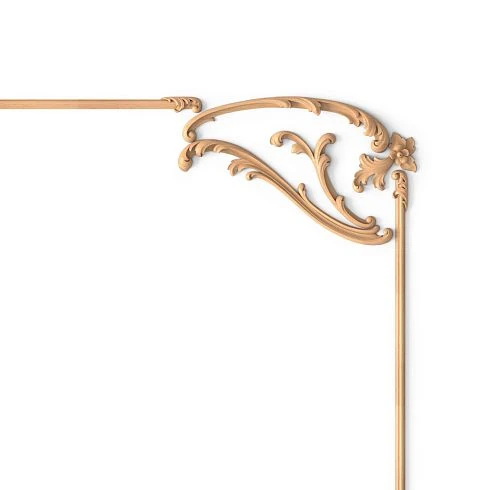
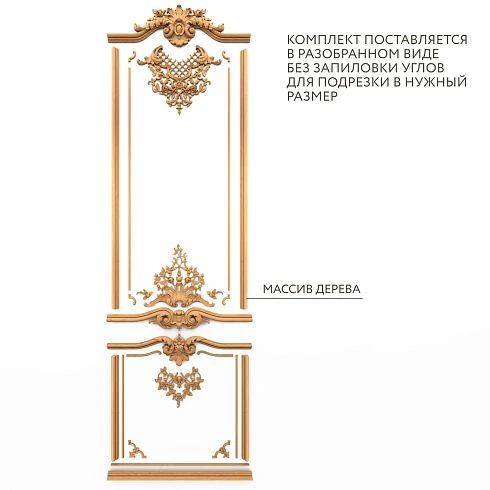
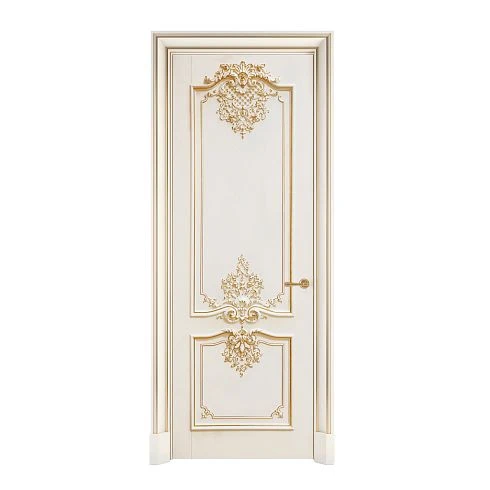
.jpg "Decor set C-010-1-2")
Frequently asked questions
Our showrooms are located in Saint Petersburg and Moscow. Production is located in Saint Petersburg.
Moscow contacts: https://www.stavros.ru/contacts_all/?tab=msk
Contacts of Saint Petersburg: https://www.stavros.ru/contacts_all/?tab=spb
- Send request by email [email protected]
- Write to us at Telegram
- Write to us at WhatsApp
- Order by phone +7 (800) 555-46-75
- Visit our showroom in Saint Petersburg and Moscow
Yes, we ship orders throughout Russia and to CIS countries.
We cooperate with transportation companies such as СДЭК and DPD.
You can also arrange pickup of your order through any convenient transportation company for you.
Delivery cost depends on the size, weight of the item, and delivery address.
When placing an order, the delivery cost is calculated automatically and displayed as a separate line on our website.
Prices and availability of items on the website are always current. Data is updated daily.
Note: items in stock are stored on the warehouse in unpolished form and shipped within 3 working days.
If the item is not in stock, average production time: 5–10 working days.
This is the quality of polishing of the items.
Standard — machine polishing, at a more attractive price.
Prestige — detailed hand polishing, items do not require further work.
More details: https://www.stavros.ru/information/kachestvo/
This is the type of veneer of the items.
Under enamel: produced by gluing wooden laminates without color and texture matching. Contrast tonal and textural differences are noticeable. This blank should be chosen if the item is intended for opaque coating.
Under tinting: produced by gluing wooden laminates with color and texture matching. Tonal and textural differences may occur. This blank should be chosen if the item is intended for semi-transparent finish.
More details: https://www.stavros.ru/information/kachestvo/
Beech — dense, non-porous wood, most often used for items covered with enamel.
Oak — dense, porous wood with clearly visible natural grain. Due to its strength and decorative properties, it is often used in items with semi-transparent coating, highlighting the wood pattern.
Custom-made, if non-standard items are required, we can produce products from other types of wood, including blanks provided by the customer, manufactured according to our technical specifications.
All our furniture legs can withstand a vertical load of at least 100 kg.
Average production time for custom-made items: 5–10 working days.
Most items are stored on the warehouse in unpolished form. We need time to polish and pack orders.
Yes, we manufacture non-standard items according to individual projects, but we only accept orders with a minimum quantity.
We can manufacture items of the desired size, but we only work with bulk orders. For details, please consult the sales department manager.
Yes, some of our products can be used outdoors. For example, polyurethane items, as well as carved door casings made of pine.
Other items are produced to order using PUR glue, if minimum quantity is available. No warranty is provided for such products, as outdoor conditions are considered aggressive.
Yes, we paint items when ordering products for a total amount of 150,000 rubles or more.
- Dust removal. After sanding, the surface must be dusted.
- Priming. Apply primer in an even layer.
- Matting. After the primer has fully dried, the surface should be matted (lightly sanded for better adhesion).
- Finish coating. Apply finish coating: lacquer or enamel, in 2 layers, with interlayer drying.
More details: https://www.stavros.ru/information/sovety/
Apply adhesive to the decor. Place it on the surface and press briefly. Then, lift the decor from the surface and leave it open for 3–5 minutes. Press the decor firmly onto the surface and hold for 5–10 seconds.
More details: https://www.stavros.ru/information/sovety/
Ideally, you should prepare a design project before placing an order.
You can do this yourself by downloading drawings of our products from our website, or you can order a project from us.
If the number of decorative elements and fittings is small, our company's manager can assist you with selection.
Unfortunately, this service is not provided.
The packaging method depends on the type of items, but in each case, we ensure sufficient protection for safe transportation.
We most often use corrugated cardboard and stretch film. Fragile items are additionally secured on a rigid base to prevent damage during transport.
We ship all items starting from 1 piece.
Room measurements and item installation can be performed by our partners — carpentry companies represented in most regions of Russia.
Often searched in category Carved decor
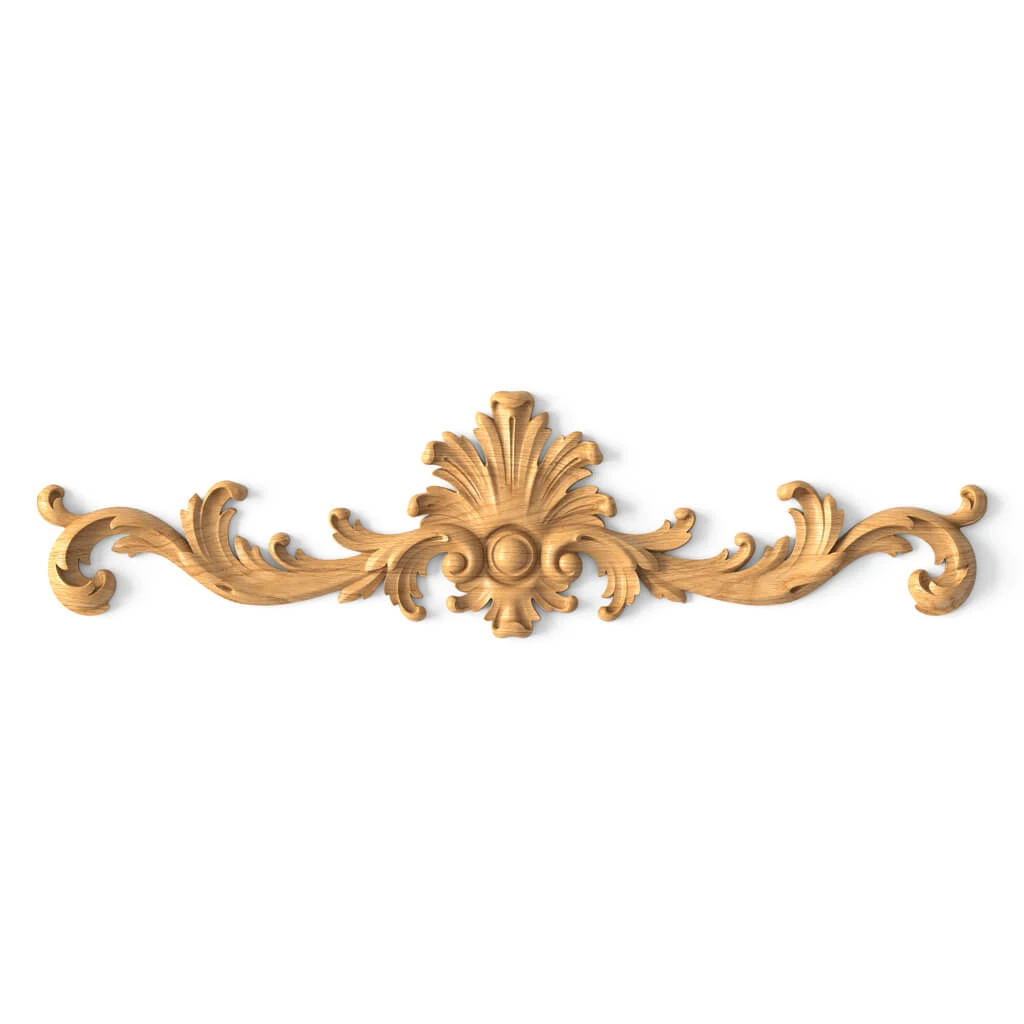
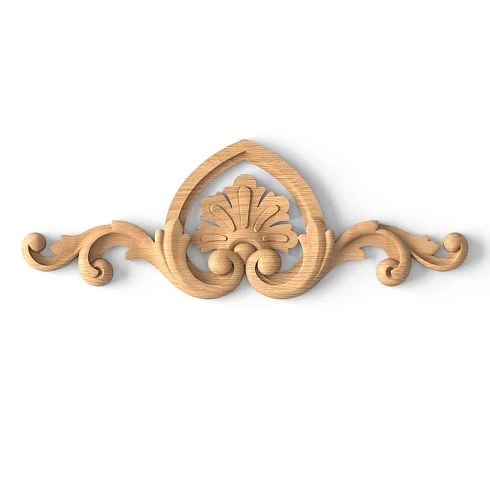
Carved wooden overlay N-125.1 for furniture and interior decor
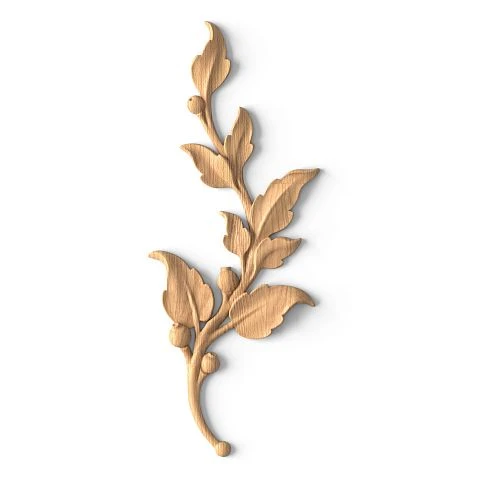
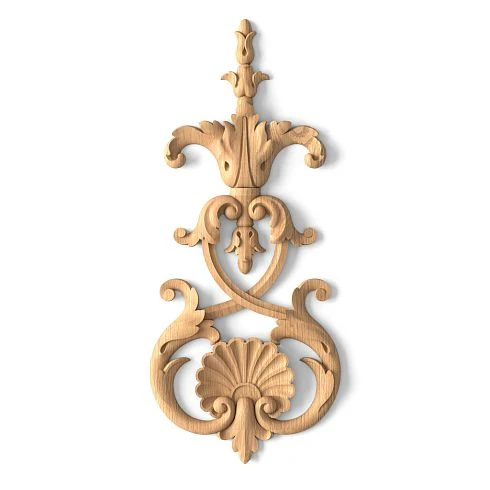
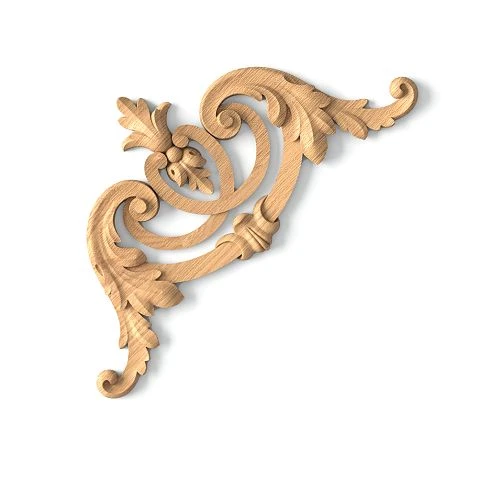
Wooden decor N-125.1 is a carved decorative overlay made of beech that allows you to turn an ordinary furniture facade into a complete design statement. The compact relief element works simultaneously as an accent and as a structural motif: it does not dominate, does not steal attention, but it is what makes furniture recognizable, alive, handcrafted. If you are engaged in furniture production, restoration of classic items, or simply looking for a way to add depth and warmth of natural wood to your interior, this overlay is worth your attention.
What distinguishes wooden decor N-125.1 from dozens of similar products? First of all, the thoughtfulness of the format. There is no excessive overloading of the pattern, no pretentiousness for the sake of pretentiousness. The relief is restrained, the lines are clear, the proportions are calculated so that the overlay fits organically into various stylistic solutions — from strict neoclassicism to warm Provence. Such beech decor for enamel looks equally confident on a white glossy cabinet and on an aged linen-colored chest of drawers.
What is the carved overlay N-125.1 and why is it needed
Before talking about application and dimensions, it is important to understand: what exactly is the wooden overlay N-125.1 as a product. This is a flat-relief decorative element made by milling from solid beech. The front surface bears an ornamental pattern — smooth symmetrical lines characteristic of classic furniture decor. The back side is flat, which ensures a smooth, gap-free fit on the surface of the facade or panel.
The overlay is not a structural element — it does not bear load, does not hold hinges, and does not tighten parts. Its task is purely aesthetic: to create a visual accent, add relief to a flat surface, mark the center of the composition, or form symmetry on paired facades. That is why it belongs to the category wooden furniture decor, where the function of beauty is primary.
Why beech? It is a hard, moderately dense wood with a uniform texture and a minimum of knots. It lends itself well to milling, giving a clear, lint-free pattern along the edges. After sanding, the beech surface is ready for applying primer, paint, or enamel. It does not warp with changes in humidity as soft woods do, and holds its shape for many years under normal operating conditions.
Beech wood decor is not just beautiful. It is practical: such material allows for a neat, drip-free and streak-free finish that does not require pore filling or multiple priming. That is why beech decor is in demand among furniture makers working with paint coatings, including two-component water-based enamels.
Where is wood decor N-125.1 used
Furniture facades and cabinet doors
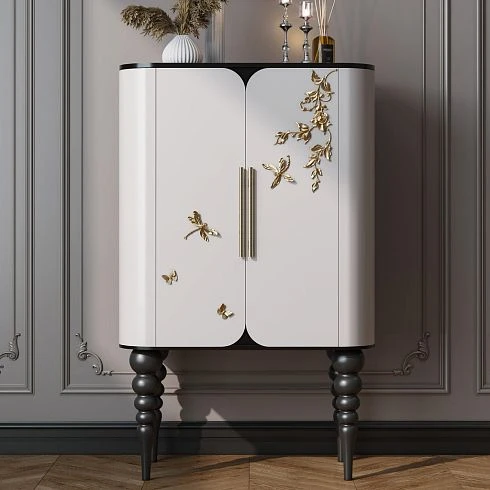
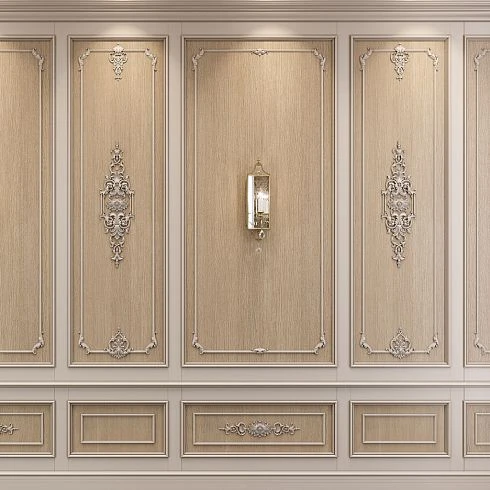
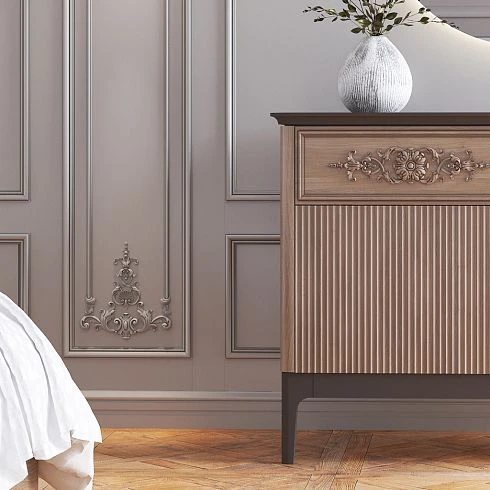
The most common application is installation on furniture facades. Carved decorative inserts for furniture are mounted on cabinet doors, wardrobe and cupboard doors, on facades of kitchen modules and wardrobe systems. They create structure on the flat surface of MDF or solid wood, giving the product visual complexity and a sense of handcraft.
When the overlay is installed in the center of the door, it acts as a focal point. When used in pairs with moldings around the perimeter, it becomes part of a complex frame composition. There are dozens of layout options, and they all rely on one principle: the decorative wooden overlay sets the rhythm for the entire facade.
Chests of drawers, cabinets and tables
A chest of drawers is an item that is always in sight. Especially in the bedroom or living room, where it often serves as a serving or storage object. A decorative beech overlay on the central plane of the drawer or on the side immediately elevates the product to a different aesthetic league. It is no longer just a box on legs — it is furniture with character.
TV stands, bedside tables, consoles, dressing tables — all of these are grateful material for wooden decorative overlays. This is especially relevant for furniture in the Provence and neoclassical styles, where detailing is valued more than conciseness.
Interior doors and decorative panels
An interior door is not just a partition between rooms; it is an interior element. The carved decor N-125.1 can be installed on the door leaf, creating a relief insert in one of the panels. This gives the door architectural expressiveness without replacing the leaf itself — it is enough to add an overlay and paint everything in a single tone.
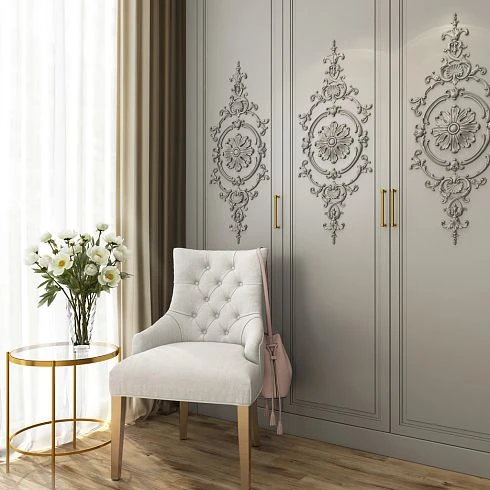
Decorative wall panels, fireplace portals, frame surrounds for mirrors and paintings — another area of application. wooden elements for interiors are increasingly used specifically in architectural decor, extending far beyond furniture production.
Furniture Restoration
Restoration is a special story. Here wooden furniture appliqués not just beautiful ones are needed, but historically appropriate ones. N-125.1 with its classic pattern organically integrates into furniture from the mid-20th century and earlier periods. If the original decor is lost, the overlay becomes a replacement that restores the integrity of the appearance.
It is important to consider the scale: the overlay must match the proportions of the existing piece. That is why having several size options is not just a convenience, but a condition for correct restoration.
Beech, sanded and prepared for finishing
Why beech is the optimal choice for decorative overlays
Not every wood species is suitable for fine relief decoration. Soft woods—pine, spruce, linden—often produce fuzz on milled edges and require additional processing before painting. Dense exotic species—teak, wenge, iroko—are too expensive and difficult to process for serial decor. Beech occupies an optimal niche: it is hard enough for clear relief, affordable, and behaves well during finishing.
The structure of beech is uniform, without pronounced annual rings that show through enamel. This is important: when beech decor under enamel painted white or in a pastel tone, no streaks from the texture should appear. Beech delivers exactly this result—a smooth surface that, after the final coat of enamel, looks like a cast part.
Sanding and its role in the quality of final finishing
Sanding is something that is not visible to the eye but is felt by hand and shows up after painting. A poorly sanded overlay under enamel will reveal all scratches, unevenness, and cutter marks. A well-sanded one, after two coats of enamel, looks like a high-class factory part.
Before applying any coating—paint, enamel, stain—the surface of a beech overlay must be primed. Primer opens the pores, evens out absorption, and creates an adhesive base for the final layer. After priming, light sanding with fine grit (320–400) is recommended, and only then the final coating.
This approach guarantees that carved beech overlay after finishing, it will look not like a glued-on part, but like an organic part of the furniture facade — a single whole.
Enamel decor: what you need to know
Using wooden decor under enamel is a separate topic that furniture makers often avoid, learning from practical mistakes. The main rule: enamel does not mask defects, it highlights them. Therefore, surface preparation before painting is more important than the paint itself.
For working under enamel, it is recommended:
-
prime the overlay with 2–3 coats of acrylic or polyurethane primer;
-
sand between coats with 320 grit sandpaper;
-
apply the final enamel with a spray gun, not a brush — this eliminates bristle marks;
-
after complete drying, perform polishing or final matting as desired.
Beech decor under enamel is a popular request precisely because beech overlays give the best result among available wood species. If you want white furniture with a classic relief — N-125.1 from beech is your material.
How to choose the size of N-125.1
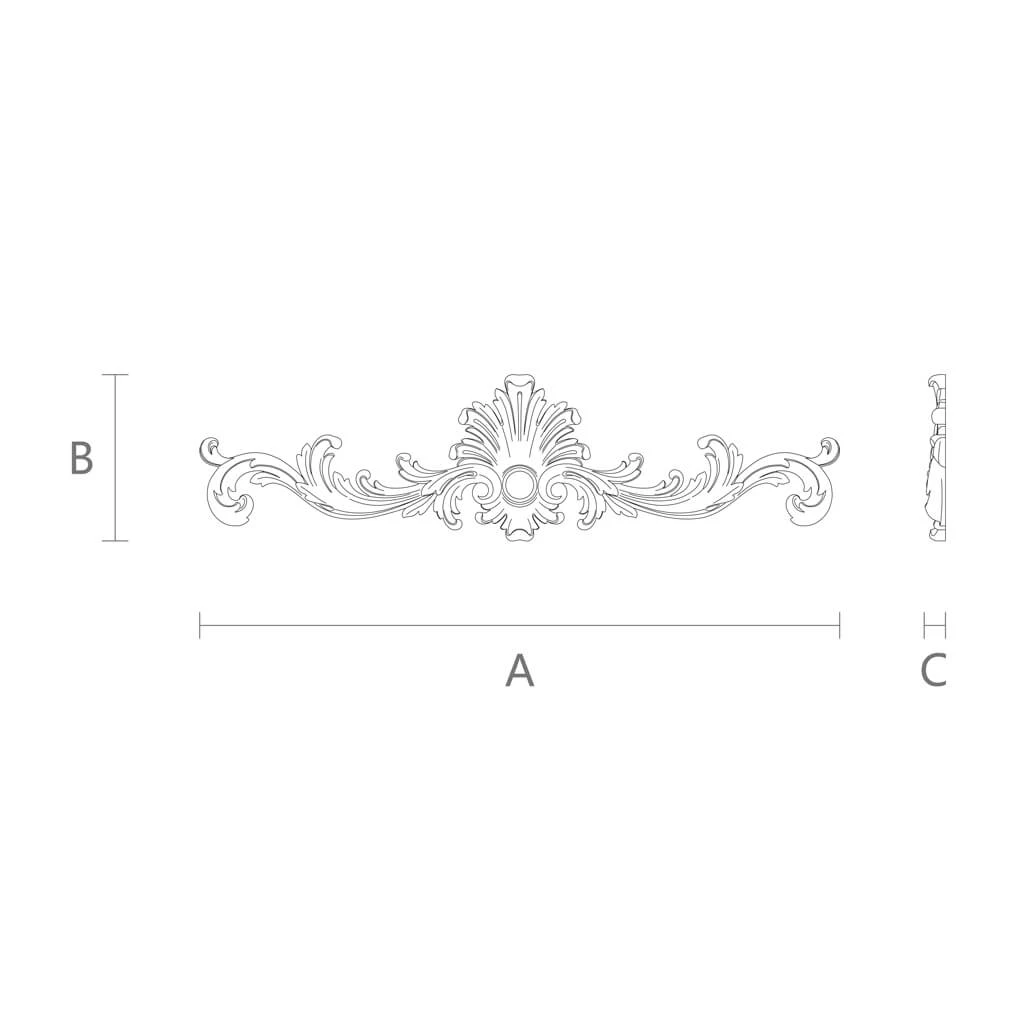
The product size range covers four options, each designed for a specific scale of use. This is not just "small and large" — it is a well-thought-out lineup that allows working with different types of furniture and facades.
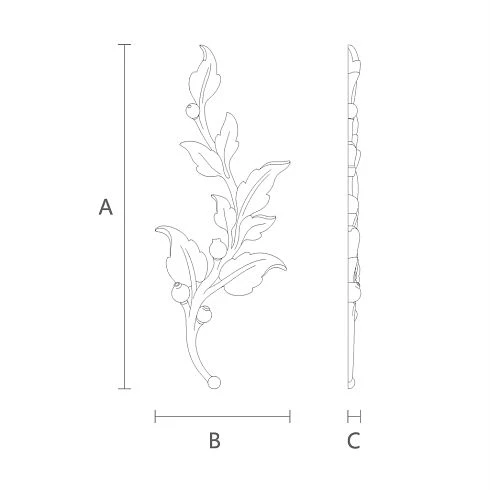
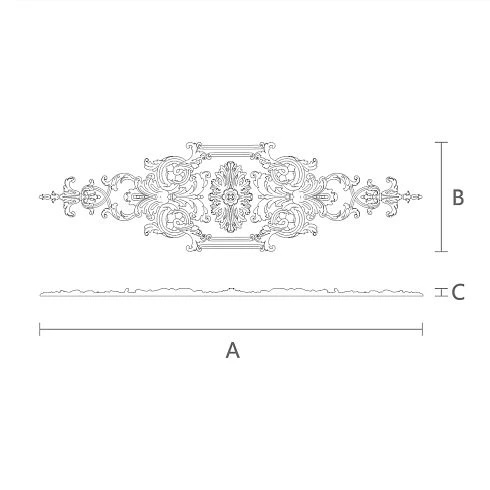
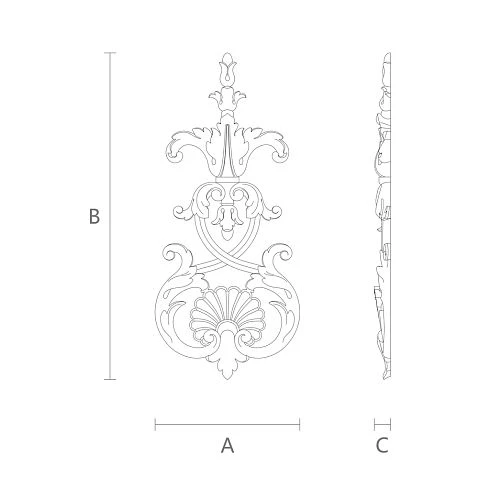
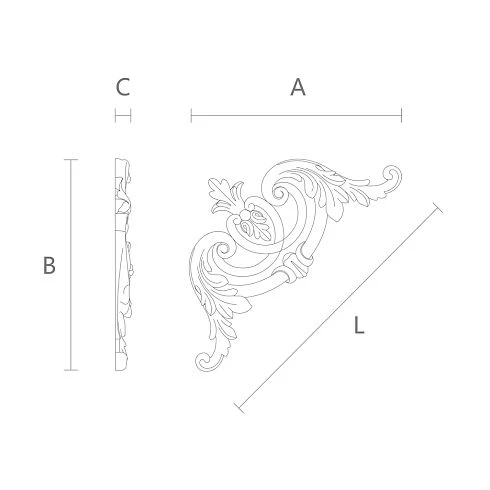
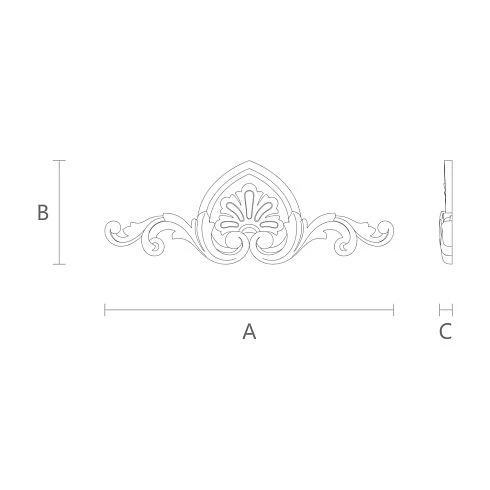
250 × 65 × 9 mm — the smallest option in the lineup. Suitable for narrow sections of the facade, decorative inserts on small cabinet drawers, accent elements on interior doors. The relief depth of 9 mm allows neat integration of the overlay even where space is limited. Works well in a horizontal position as a divider between facade zones.
300 × 78 × 10 mm — medium small size. Optimal for facades with a height of 400–600 mm: doors of kitchen wall cabinets, dresser drawers, bedside table facades. The proportions of the overlay in this size are the most versatile: the pattern is clearly readable but does not dominate.
400 × 104 × 14 mm — medium large option. Used on facades of standard height cabinets 700–900 mm, on wardrobe doors, on decorative panels. The depth of 14 mm creates a pronounced play of light and shadow, making the overlay more noticeable and relief-like in the interior.
450 × 117 × 15 mm — the largest size in the lineup. Designed for large furniture elements: tall sliding wardrobe doors (in a framed version), central decorative panels, buffet and sideboard facades, fireplace portals. The 15 mm relief with a width of 117 mm provides a full visual effect — the overlay is visible from a distance and forms the accent of the entire composition.
How to choose the size: practical guidelines
Choosing the size is a matter of proportions. The decorative wooden overlay should not occupy more than 30–40% of the facade width, otherwise it will look massive. If the facade is narrow (up to 200 mm), it is better to avoid a horizontal overlay altogether or use a thin molding.
For vertical placement — special rules. An overlay installed vertically in the center of a tall facade stretches it upward and creates a sense of height. A horizontal overlay, on the contrary, "calms" the facade and makes it wider. Designers use this technique when working with non-standard furniture proportions.
If you are working with paired facades — choose the size so that the overlays on both doors are symmetrical not only in position but also in visual weight. Different sizes on the same section are unacceptable — this disrupts the rhythm.
Which interiors the carved overlay is suitable for
Classicism and neoclassicism
A classic interior is the natural environment for relief wooden decor. Here wooden decor for classic furniture is perceived as a given: cornices, pilasters, rosettes, overlays on facades — all of this constitutes the language of classics. N-125.1 with its restrained ornament seamlessly integrates into this language, not claiming the main role, but confidently taking its place.
Neoclassicism is a more strict direction. Here, precision of lines, minimalism of ornament, and scale consistency are valued. The carved overlay N-125.1 meets these requirements: the pattern is laconic enough not to look archaic, and detailed enough to create a sense of handcraft.
Provence and country
In the Provence style, aged furniture with soft colors is used — ivory, dusty rose, faded blue. Decorative overlays here are often covered with several layers of paint of different shades, followed by sanding — for a patina effect. Carved furniture overlay of small size is ideal for this technique: the relief holds paint in the recesses, creating a characteristic picturesqueness.
Country, rustic, farmhouse style — coarser textures, but even here wooden overlays find their application. Especially in combination with brushed surfaces and stained wood — when an accent on the contrast of processed and unprocessed is needed.
Empire and Eclecticism
Empire is a solemn and monumental style. Here, overlays are used on a large scale, in combination with gilding, dark varnishes, velvet. N-125.1 in size 450 × 117 mm on a dark lacquered facade with gilded relief — this is already high furniture craftsmanship.
Eclecticism allows mixing styles, and here a decorative element can become a connecting link between objects of different origins. A single motif of an overlay, repeated on several objects of different styles, creates a visual rhyme.
Custom furniture and design projects
More and more designers and furniture makers are working with wooden decor in unconventional contexts: in modern minimalist interiors, where the only classic element is a decorative overlay on a white matte facade. This technique works: the contrast of cold minimalism and warm wooden relief creates tension and interest.
Carved Decor in custom projects it is used not according to rules, but according to the logic of the image. And this is perhaps the most interesting application of all.
Advantages of wooden decor N-125.1
You can talk about the advantages of a product in two ways: list the characteristics or tell what they provide in practice. Let's choose the second path — it is more honest and useful.
Natural material. Beech is not an imitation of wood, not MDF with film. It is solid wood that is cut, sanded, painted, and behaves predictably. If you work with furniture made of natural wood or MDF under enamel, the beech overlay integrates into the technological process without surprises.
Several sizes. Four options are a real choice, not a marketing caveat. You can select an overlay for a specific facade without adapting the project to the existing decor. This is especially important in serial furniture production, where the scale of facades is standardized.
Ready for painting and enamel. The overlay does not require complex preparation — only priming and, if necessary, light sanding. This reduces the production cycle time and lowers labor costs.
Versatility of application. Furniture, doors, panels, restoration — all these areas are covered by one product. Wooden decorative inlays Formats like this are rarely truly universal, but the N-125.1 is exactly such a case.
Neat relief. The overlay does not overload the facade. The pattern is readable but not loud. This is important when working in modern interiors where decor should be delicate.
Suitability for restoration. The historically correct pattern allows the overlay to be used when restoring old furniture — as a replacement for lost decorative elements.
How to use the overlay in a furniture composition
Symmetry and Rhythm
The main rule for using decorative overlays is symmetry. If an overlay is installed on one cabinet door, a mirrored one should be on the second. The exception is asymmetrical custom projects where the offset of the decor is a deliberate artistic technique. But in most cases, symmetry is the key to visual harmony.
Rhythm is the second principle. If a set has five facades and each has an overlay, they should be at the same level, the same size, and in the same position. Even a deviation of 5 mm is clearly noticeable and disrupts integrity.
Combining with other decorative elements
wooden elements for interiors They fully unfold in combination with other decorative details. Moldings, cornices, pilasters, rosettes, corner elements — all these are components of a unified furniture language. The N-125.1 works well in the center of a molding frame: the overlay fixes the center, the molding sets the boundaries.
Another technique is using the overlay as an element of horizontal division of the facade. Installed on the conditional line of the 'golden ratio,' it divides the plane into two zones, creating the feeling of a two-tier composition.
Choosing the size according to the facade scale
Practical rule: the height of the overlay should not exceed 1/5 of the facade height. If the facade is 500 mm high, an overlay 300 mm long installed horizontally is suitable. If the facade is 900 mm, a 450 mm option is appropriate.
The overlay width should not exceed 60% of the facade width — otherwise, the airiness at the edges is lost. For narrow facades (less than 200 mm), it is better to choose a different type of decor — for example, a thin molding or a milled groove.
Surface preparation before mounting
Before installing the overlay, the facade surface must be clean, degreased, and smooth. For gluing, use woodworking PVA or a two-component epoxy-based adhesive — depending on the facade material. Additionally, the overlay can be secured with finish nails with countersunk heads — especially on large sizes where the gluing area is large and the risk of delamination is higher.
After installation, all gaps and joints are puttied, sanded, and only then is the finish coating applied. It is this step that turns a "glued part" into a monolithic facade.
Carved overlay N-125.1 and current trends in furniture design
Furniture design in recent years has experienced an interesting paradox. On one hand, minimalism hasn't gone anywhere — clean lines, monochrome, absence of unnecessary details still dominate mass collections. On the other hand, there is a growing demand for personalization, for "furniture with a story," for a sense of handcraft and natural materials. And it is at this point of contradiction Carved furniture decor that it gains new relevance.
Designers have stopped perceiving wooden overlays as exclusively a "classic" tool. A carved wooden overlay on a matte white facade in a minimalist kitchen is no longer an anachronism, but a deliberate choice. A single detail that breaks the monotony of planes and reminds that behind the furniture lies human labor.
The trend towards "slow design" also works in favor of wooden decor. This is a philosophy where the value of an item is determined not by its cost or the manufacturer's brand, but by the quality of execution, choice of material, and attention to detail. to buy, which will allow you to transform your furniture using carved wooden elements. You can use the C-003-3 decor set to decorate furniture, walls, doors, or any other surface. The C-003-3 decor set is made of oak or beech, known for their strength, durability, and beauty. You can buy the C-003-3 decor set at the Stavros decor store, which specializes in producing and selling decorative elements and hardware for furniture and interiors. At the Stavros decor store, you will find a wide selection of decor sets of various shapes, sizes, and styles. You can choose fits perfectly into this philosophy.
Furthermore, the repair and restoration market is growing: people prefer to restore good old furniture rather than buy cheap new ones. And here, wooden overlays are one of the key tools. Buy a carved wooden overlay, add it to a worn-out chest of drawers, repaint it — and now grandma's piece of furniture becomes a designer object.
Wooden decor and furniture production: an inside look
If you are a furniture or joinery manufacturer, the conversation about decorative overlays is at a different level. You are interested not only in the beauty of the product, but also in the manufacturability of application, dimensional stability, batch quality, and purchasing logic.
Overlay N-125.1 is a serial product with fixed dimensions and standard material. This means predictability: you know what you will get, you can standardize installation and finishing, and plan purchases. This is critically important for production.
Wooden furniture decor is used in production in several scenarios:
-
as an element of a serial collection, when the same overlay is repeated on all facades of one line;
-
as an additional option for customization — the buyer chooses a facade with or without decor;
-
as a tool for updating an old collection — adding overlays to existing facades without changing the design.
All three scenarios work. And in all three, wooden furniture appliqués they must be manufacturable, dimensionally stable, and ready for finishing without lengthy preparation.
Restoration of furniture using carved overlays
Restoration is a separate profession and a separate world. What is valued here is not novelty, but authenticity; not speed, but precision. And wooden decorative overlays in this world play the role of a "healing remedy" for lost details.
What is most often restored using overlays?
First of all, lost decor on facades. Old cabinets, sideboards, and chests of drawers often lose overlay elements due to mechanical damage, unsuccessful repairs, or simply time. If the original decor has not been preserved, it is selected based on a similar pattern and scale. N-125.1 with its classic ornament is suitable for furniture in the style of late Empire, Biedermeier, and Soviet classicism of the 1950s–60s.
The second scenario is decorative enhancement. Furniture that was originally made without decorations acquires a new look during restoration. This is no longer "restoration" but "reinterpretation" — an approach popular in author's restoration and interior design projects.
It is important to remember: during restoration Carved Insert for Furniture must match the depth of the existing groove or frame in thickness. If the facade has a 10 mm recess, a 14 mm deep overlay will protrude. Therefore, choosing the size during restoration is not only about length and width, but also about the depth of the relief.
Installation of wooden decor: mistakes and solutions
Installing a decorative overlay is a simple process, but requires care. The main mistakes even experienced furniture makers make:
Glue without fixation during drying. While the glue dries, the overlay needs to be fixed — with clamps, masking tape, or finishing nails. Without fixation, the overlay may shift, and then it will have to be corrected with putty.
Painting without primer. Paint without primer on beech is absorbed unevenly — the fiber structure creates areas of varying saturation. Primer evens out absorbency and provides an even coating.
Incorrect positioning. The overlay should be marked on the facade before applying glue — using a ruler and pencil. The center of the overlay must align with the center of the facade, unless a different placement is intended.
Using water-based glue on thin MDF facades. The water base can cause warping of thin MDF. In such cases, it is better to use solvent-based or two-component adhesive.
If the installation is done correctly and the overlay is prepared for finishing — the result will exceed expectations. Wooden Furniture Decor when executed with high quality, it turns mass-produced furniture into a custom piece that you want to touch and examine up close.
Wooden decor N-125.1 as an investment in project quality
There is a category of details that do not catch the eye at a glance, but they define the overall impression of the space. A wooden overlay is one such detail. A visitor entering the room will not say: "Oh, what an interesting overlay on the cabinet!" But they will feel: everything here is thought out. Here the furniture is not from a catalog, but with character.
That is the main value wooden decor for furnitureit does not shout, it creates an atmosphere. Quietly, delicately, but convincingly.
An investment in quality wooden decor pays off not in money, but in feeling. The feeling that the space around you is real. Not an imitation, not a surrogate, but a living natural material, processed by hands and tools.
That is why Carved Decor never goes out of style. Styles, proportions, and colors change, but the need for handmade, warm, and textured elements never disappears. And N-125.1 is one of those tools that allow this need to be realized.
Combining the overlay with other elements of the line
One of the most effective approaches to furniture decor is systematicity. When different elements—overlays, moldings, cornices, pilasters—are united by a single style and scale, furniture acquires a completeness that cannot be achieved with a single piece.
N-125.1 pairs well with:
-
straight moldings for creating framed facades;
-
corner rosettes for decorating molding intersections;
-
horizontal cornices at the top of cabinets and tall units;
-
pilasters on the ends of case furniture;
-
decorative legs for cabinets and chests of drawers.
Carved overlay for facade as part of such a system, it is not a separate element, but a part of the language. The language that furniture uses to speak about its origin, style, and value.
If you are working on a project that requires systematic decorative finishing, it is recommended to plan the entire set of elements in advance and ensure their stylistic unity. Mixing different patterns and proportions of decor on the same piece of furniture is one of the most common mistakes that devalues even the highest quality material.
Answers to popular questions about wooden decor N-125.1
Is decor N-125.1 suitable for painting?
Yes, the product is specifically designed for use with paints and enamels. Beech as a material accepts acrylic, alkyd, and polyurethane compounds well. Before painting, the surface must be primed — this is a mandatory step for even application of the topcoat. If the preparation technology is followed, the result will be smooth, without drips or unevenness.
Which adhesive to use for installation?
For gluing a beech overlay to MDF or a wooden facade, carpenter's PVA (D3 or D4 water resistance class) or a universal solvent-free construction adhesive is optimal. On smooth MDF surfaces with melamine coating, a two-component epoxy adhesive is recommended for better adhesion.
Can N-125.1 be used in kitchen furniture?
Yes, provided that the overlay is reliably covered with a final protective layer — varnish or enamel with water-repellent properties. Beech itself is not a moisture-resistant species, but with proper finishing, it withstands kitchen conditions well away from the sink and stove.
Where can the carved overlay N-125.1 be installed?
On furniture facades, cabinet doors, dresser and nightstand drawers, decorative wall panels, interior doors, and interior objects. Wooden decorative inlays this format is universal and is used both in furniture production and interior projects.
How to correctly position the overlay on the facade?
In the center of the facade — geometric or visual. Before installation, mark the position with a pencil, check symmetry with a ruler. On paired facades, the overlays should be placed mirror-symmetrically, at the same height from the edge.
Is N-125.1 suitable for restoring old furniture?
Yes, provided the style, scale, and depth of the relief match. For restoration projects, it is important to choose an overlay that is close in pattern and proportions to the original decor of the item. N-125.1 with its classic ornament is compatible with furniture in the Empire, Neoclassical, and Soviet Classic styles.
How many overlays are needed for a cabinet?
Depends on the number of facades and the decor concept. For a two-door cabinet with symmetrical decor — at least 2 overlays. If side panels are also decorated, the number increases. When using an overlay as a horizontal divider on a tall facade, 2 overlays per facade may be required (upper and lower zones).
Can different sizes of N-125.1 be combined in one project?
Technically — yes, if it is an artistic technique. For example, on the central facade — a large overlay of 450 mm, on the side ones — 300 mm. But this requires a clear design logic. Random mixing of sizes destroys the rhythm and integrity of the composition.
Do I need to sand the overlay before installation?
As a rule, the overlay is supplied already sanded. But if there are traces of storage or transportation on the surface, light sanding with fine sandpaper (grit 240) before installation will not hurt. After installation and before painting, sanding is mandatory in the joint area.
How to care for furniture with wooden overlays?
If the furniture is coated with enamel or varnish, care is standard: a damp cloth, mild detergents, avoiding abrasives. The decor under the coating is protected and does not require special care. If the overlay is left in its natural form (for example, with oil-wax), periodically renew the oil coating.
Wooden decor N-125.1 is a product whose simplicity hides deep functionality. Compact size, classic pattern, beech as a material, several size options — all this makes the overlay a truly universal tool in the hands of a furniture maker, designer, or restorer. It needs no explanation — it just works. And it works well where a delicate, warm, lively accent on the furniture surface is needed.
Your request has been sent!
Our manager will contact you within 5 minutes