Article Contents:
- Why choose the icon of the Mother of God IKN-001
- What is IKN-001 and what problem does it solve
- Why carved relief requires a conscious choice
- Why one photo does not show the real scale
- Why finished carving is more convenient than a random blank
- For a home prayer corner
- For home iconostasis
- For a church
- For a chapel
- For the analogion
- As a gift for a family or a church
- On the wall
- On a shelf
- In the niche
- In a case or frame
- In an iconostasis
- On an analogion
- When to choose beech
- When to choose oak
- Why you shouldn't choose wood only by price
- What does "for enamel" mean
- What 'under tinting' means
- Why you shouldn't confuse preparation with finished finishing
- How to choose preparation for an existing iconostasis
- How to avoid loss of relief
- When "Standard" is enough
- When to choose "Prestige"
- How to assess the difference in total cost
- Opaque enamel
- Milky or white finish
- Decorative golden finish
- Clear varnish
- Tinted varnish or stain
- Oil
- Patina
- Separate wall
- Shelf
- Niche
- Small iconostasis
- Bedroom: Sanctuary in Modern Russian Style
- Church wall
- Iconostasis
- Chapel
- Lectern
- Gift to a church
- Custom project
- When mounting adhesive is possible
- When adhesive is not suitable
- Mechanical Fastening
- Installation on a shelf or analogion
- Mounting in a niche or frame
- What to check before installation
- Carved icon and printed image
- Carved icon and separate frame
- Carved icon and decorative overlay
- Modern item and antique icon
- Blank for finishing and ready painted icon
- "Standard" and raw carving
- Oak for tinting and ready dark oak
- Need an icon for a light home iconostasis
- Need a natural oak icon
- The icon must match the existing iconostasis
- Need to place the image on a lectern
- Need to design a small chapel
- The icon is purchased as a gift
- Need one item for a home prayer corner
- Need to assemble a large church composition
- Project deadline is limited
- Selection only by image
- Buying beech under clear varnish without evaluating lamellas
- Buying oak under dense enamel unnecessarily
- Expecting finished finish
- Underestimation of "Standard" grinding
- Thick layer of enamel
- Too dark tinting without a sample
- Mounting without checking the base
- Permanent gluing of a removable icon
- Order without coordination with the church
- Buying one part for a complex iconostasis without a project
- Ignoring the finishing and delivery deadline
- Placement in an area of steam or constant moisture
- What size is IKN-001?
- Is IKN-001 suitable for a home iconostasis?
- Can the icon be placed on an analogion?
- What to choose — beech or oak?
- What does 'beech under enamel' mean?
- What does 'oak under tinting' mean?
- How does "Standard" differ from "Prestige"?
- Is additional sanding required for the "Standard" option?
- Can a beech icon be painted with white enamel?
- What should I use to coat an oak icon?
- Can patina be used?
- Is the icon sold already painted?
- How many IKN-001 units are produced?
- Can I order just one icon?
- Is there Contact us to confirm shipping to your destination.?
- How do I mount the icon on the wall?
- Can I glue the icon to a painted wall?
- Do I need to buy transparent mounting glue?
- Will IKN-001 fit for a chapel?
- Can an icon be included in a large iconostasis?
- What to buy together with IKN-001?
- How to know if the icon won't be too small?
- Can I change the size of IKN-001?
- What to check upon receipt?
- Where to buy IKN-001?
Why choose the icon of the Mother of God IKN-001
Short answer: IKN-001 can be ordered in size 313 × 250 × 24 mm from beech or oak. Beech for enamel is suitable for opaque painting, oak for tinting is for finishing while preserving the natural grain. If you want to reduce the preparation of complex carved relief before final processing, it is advisable to consider the "Prestige" sanding quality.
It is worth buying the carved icon of the Mother of God IKN-001 not as a random decorative panel, but as a specific product that must match the installation location, future finishing, and neighboring elements. The same relief will look completely different in white enamel, dark oak tinting, clear varnish, or complex combined finishing. Therefore, the buyer's main question concerns not only the image and size, but also how the wood will be prepared for the finish.
The format 313 × 250 × 24 mm makes IKN-001 compact enough for a home prayer corner and at the same time expressive enough for a lectern, niche, small chapel, or a separate area in a temple. However, the size cannot be judged only from a photo. On a narrow shelf, the product may appear large, and in a large iconostasis, it may require additional framing or adjacent carved decor. Before ordering, it is useful to make a full-size paper template and look at it from a real distance.
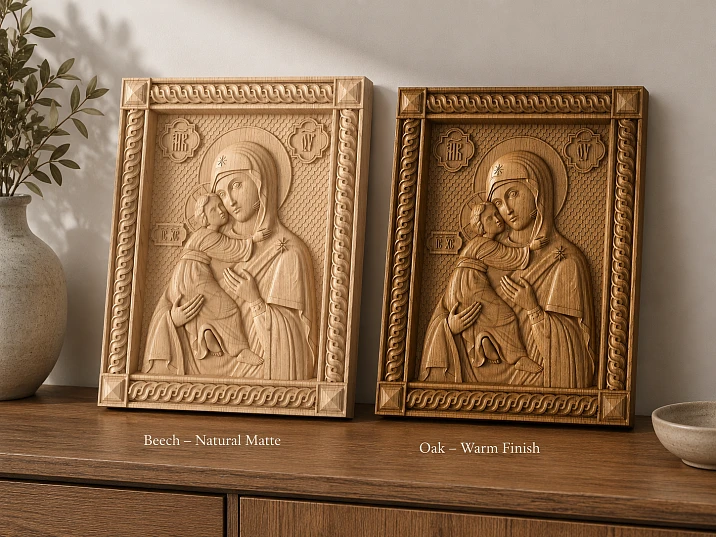
The material is chosen according to the finishing logic. Beech prepared for enamel is suitable when the surface will be completely covered with an opaque compound. Oak for tinting is needed when the buyer wants to preserve the pores, grain, and natural variation of wood lamellas. These tasks should not be mixed: buying beech for a transparent coating or oak for a dense opaque enamel may be technically possible, but not always rational in terms of result and budget.
The quality of sanding affects the amount of preparatory work. "Standard" is machine sanding at a more affordable price. "Prestige" is detailed manual sanding, after which the complex carved relief requires less refinement before final finishing. For a product with faces, folds, ornaments, and deep transitions, this choice is noticeably more important than for a simple flat panel.
A buyer who needs broader information about forms and techniques can separately study, how to choose a carved wooden icon. But the final decision on IKN-001 is made based on the specific card: it indicates the dimensions, material, sanding quality, order status, and current conditions.




What is IKN-001 and what problem does it solve
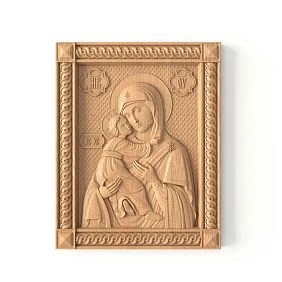
IKN-001 is a three-dimensional carved product made from solid wood featuring the image of the Mother of God and the Child. It is not a printed icon, canvas, metal cover, or antique item. The buyer receives a wooden blank with a pre-formed relief, which they choose based on wood species, degree of sanding, and future finishing.
The practical value of this form is that the relief is already created. The customer does not need to find a carver, transfer the image, calculate depth, or manually shape each detail. The main work after receiving involves surface inspection, final finishing, and the chosen placement method. This is especially important for a project that requires a repeatable size and clear material preparation.
The icon can be a standalone central piece in a home prayer corner or part of a larger wooden system. In a church or chapel, it can be included in a niche, icon case, analogion composition, or a separate section of the iconostasis, if the size and installation method are coordinated with the project. For church spaces, the location, framing, and permissible mounting method should be discussed in advance with the person responsible for the church decoration, architect, or master.
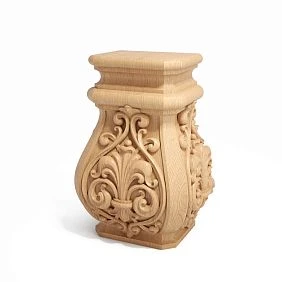
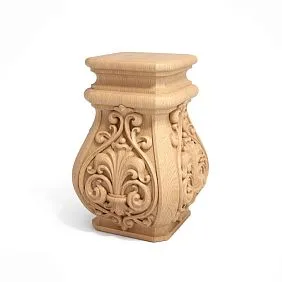
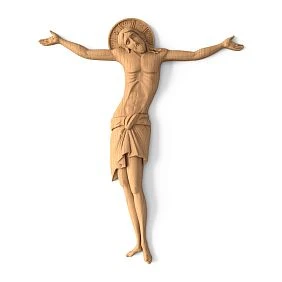
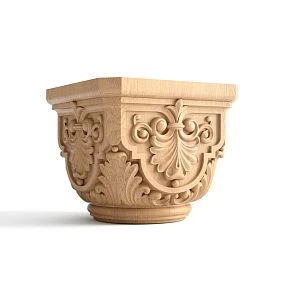
Our factory also produces:
Why carved relief requires a conscious choice
Deep transitions and small areas react to finishing more strongly than a flat board. Dense enamel can soften fine lines if applied too thickly. Dark tinting enhances shadows and makes the volume more contrasting. A transparent coating highlights the texture of oak but also shows natural differences in the wood. Therefore, the material, sanding, and finish should be considered as one system.
Get Consultation
Why one photograph does not show the real scale
On screen, the product often appears larger or smaller depending on the framing. The actual 313 × 250 mm is a format that can be compared to a sheet of paper, a shelf, an analogion surface, or a free wall. The depth of 24 mm also affects perception: the relief protrudes, creates its own shadow, and requires consideration of side view.
Why a finished carving is more convenient than a random blank
A random wooden panel may not have the exact size, clear preparation, or consistent wood. For IKN-001, the parameters are already set, and the execution options are listed in the card. This allows you to calculate the space in advance, determine the coating, and link the purchase with other elements of church decor.
Characteristics of IKN-001 to check before ordering
| Parameter | Confirmed value | What this means for the buyer |
|---|---|---|
| Model | Icon of the Mother of God IKN-001 | You can go directly to the specific card, drawing, and execution selection without searching for a similar product. |
| Size | 313 × 250 × 24 mm | You need to check the available space on the wall, shelf, analogion, in a niche, or inside the iconostasis. |
| Material | Beech or oak | The wood species is chosen not only by price but primarily by the future finishing system. |
| Preparation of beech | For enamel | Suitable for opaque painting where the texture of the lamellas will be covered. |
| Oak preparation | For tinting | Lamellas are matched by texture and shade for translucent finishing. |
| Sanding quality | "Standard" or "Prestige" | You can choose machine sanding or detailed manual preparation of complex relief. |
| Status | Custom Order | Production must be considered in the schedule of finishing, installation, and handover of the facility. |
| Average production time | 5–10 days | It is better to double-check the current deadline in the product card or with a manager before payment. |
| Order | Cart and quick order | You can order a single piece or include the item in a larger request. |
After the table, it is useful to open the product card and view the dimensions and sanding options IKN-001. The article helps to understand the selection, but should not replace the current product card, where the price, deadline, status, and available configurations are checked.
Who is the icon of the Mother of God IKN-001 suitable for
IKN-001 is suitable for a buyer who needs not a printed reproduction or an antique item, but a modern carved solid wood product with a clear size and choice of preparation for finishing. The model can be ordered for a home, church, chapel, lectern, separate niche, or a wooden iconostasis project. In each case, it is not the product itself that changes, but the requirements for scale, installation method, and final coating.
For a home prayer corner
The size 313 × 250 mm allows placing IKN-001 on a separate wall, shelf, or within a small composition. The product will be noticeable but does not require the space comparable to a large church icon. When choosing, you need to check whether there are too many objects nearby that cover the relief, and whether there is enough side light to read the volume.
Home placement is best thought of as a calm, respectful space. The carved surface does not need excessive decorative surroundings. A small shelf, coordinated framing, and neat finishing often work more convincingly than a complex set of random frames, backlights, and ornaments.
For a home iconostasis
If IKN-001 is part of a series of several images, first compare the sizes of all elements. The height of 313 mm and width of 250 mm must be coordinated with neighboring icons, a cross, columns, or carved overlays. The difference in thickness and depth of relief is also noticeable: one volumetric detail may protrude more than others.
When designing, it is important to determine in advance whether the icon will be an independent insert, a central image, or part of a symmetrical group. In a finished iconostasis, the product cannot be chosen only by its beautiful image: the place and scale must be laid out in the drawing.
For a church
In a church space, IKN-001 can be used as a separate carved image or part of a larger decoration. The decision about the place, framing, height, and method of attachment is best coordinated with the rector, architect, artist, or master responsible for the project. This helps avoid a situation where the size is technically suitable but does not fit the overall system of the iconostasis or lectern.
For a chapel
In a small chapel, the format 313 × 250 mm can be convenient: the product does not overload the limited wall and at the same time retains a readable relief. If the room has dark wood, oak with tinting helps tie the icon to the interior. For a light painted composition, beech under enamel is more rational.
For the analogion
When placing on the analogion, you need to check not only the dimensions, but also the tilt angle, the presence of a stop, stability, and the method of protection against shifting. The thickness of 24 mm creates volume, so the edge of the product must be safely positioned on the supporting surface. If a temporary change of images is intended, gluing may be inappropriate — the fastening is chosen according to the actual scenario.
As a gift for a family or a church
A carved icon can be considered a memorable gift, but the finish and location should be agreed upon in advance. An unpainted product will require professional preparation, so the recipient must understand who will perform the finishing. For a gift in finished form, the finishing must be arranged in advance, since the IKN-001 card describes wood and sanding options, not a finished painted icon.
Size 313 × 250 × 24 mm: where the icon can be placed
The dimensions of IKN-001 need to be assessed in three directions. The height of 313 mm determines the vertical space, the width of 250 mm determines the side margins, and the thickness of 24 mm determines the relief protrusion and fit into the frame. The buyer often looks only at the first two numbers, although the third is important for a niche, shelf, and side lighting.
On the wall
For separate placement, it is useful to leave a free margin on the sides. If the wall has a width of 450–600 mm, the icon will be perceived as an independent center. In a narrow pier, almost equal to 250 mm, the product will appear cramped and the relief will lose expressiveness.
Before drilling or gluing, make a paper rectangle 313 × 250 mm. Attach it at the intended height and look from the main point. Then add the thickness using a strip of cardboard or a small pad to understand how much the product will protrude.
On a shelf
The shelf should be wider than 250 mm and have sufficient depth for safe installation. If the icon is placed at an angle, a stable stop is required. You should not assume that the thickness of 24 mm will automatically ensure stability. The installation method depends on the shelf and the project.
In a niche
The niche must have allowances in height, width, and depth. Leaving an exact opening of 313 × 250 × 24 mm is risky: natural wood, finishing, and installation features require technological space. If a frame is planned along the perimeter, its dimensions are calculated separately.
In a shrine or framing
The buyer must understand the difference between the external size of the carved piece and the size of the entire composition. IKN-001 occupies 313 × 250 mm, but the shrine, frame, or decorative portal will significantly increase the overall dimension. First, choose the framing method, then determine the available space.
In an iconostasis
The size is compared with neighboring images and modules. If all elements have the same height, IKN-001 can be included in a row. If it becomes the central piece, more space is left around it or architectural framing is used. The model cannot be increased or decreased by feel without a confirmed project.
On a lectern
The width of the working surface must allow placement of 250 mm without extending beyond the edge. When tilted, the top and bottom stops are checked. If the lectern is used for different images, IKN-001 should be easily removable and not damage the surface.
Beech or oak: which material to choose
The material is chosen not by the abstract principle "more expensive means better," but by the future appearance. Beech and oak are dense species, but their structure and preparation logic differ. Beech in the IKN-001 card is offered for enamel, oak for tinting.
| Criterion | Beech for enamel | Oak for tinting |
|---|---|---|
| External result | Uniform opaque color | Visible wood texture and pores |
| Suitable finish | Enamel, primer, and opaque decorative coatings | Stain, oil, clear or tinted varnish |
| Texture | After dense painting, it does not play a major role | Becomes part of the artistic result |
| Combination with the interior | Light, painted or gilded iconostasis | Natural or tinted wood, dark oak decor |
| Main risk | Too thick enamel can soften the relief | Unsuccessful tinting will emphasize surface differences and dirt |
| Who it suits | For those who need a precise opaque color | For those who want to preserve the natural grain |
When to choose beech
Beech is suitable for white, milky, colored, or combined enamel. If IKN-001 must match a painted iconostasis, frame, or church furniture, an opaque color is easier to coordinate. Preparation "for enamel" allows differences in lamellas in color and texture because the finish layer will cover them.
Beech is also convenient for decorative gold finish if the master uses a suitable system of primers, underlays, and topcoat. However, the card itself does not promise ready gilding: it refers to a blank that needs professional finishing.
When to choose oak
Oak should be ordered if the natural texture must remain visible. The porous structure is well read under a translucent coating and adds depth to the carving background. Dark tinting makes recesses more expressive, while transparent preserves a more natural color.
For an existing oak iconostasis, it is important not to expect an absolute shade match from a photo. The result is affected by the wood batch, tinting composition, lighting, and aging of adjacent elements. It is better to prepare a sample or coordinate the finishing recipe with the master.
Why you should not choose wood species only by price
The cost difference matters, but the wrong material may require rework. If oak is completely covered with dense enamel, the buyer does not use its expressive texture. If beech is coated with clear varnish, the differences in lamellas, acceptable for the enamel-ready option, may become more noticeable than expected. A rational choice starts with the finish.
Before ordering, you can order the IKN-001 icon in beech or oak, having previously chosen not only the wood species, but also the quality of sanding.
Under enamel or under tinting: what wood preparation means
The phrases "under enamel" and "under tinting" describe not the finished coating, but the selection of wood lamellas inside the product. This is a fundamental point. The buyer receives a carved wooden blank, not a painted icon. The chosen option must match the future finish.
What does 'under enamel' mean
The lamellas are glued together without strict matching by shade and pattern. Contrasting differences may be noticeable on the untreated surface. For opaque enamel, this is acceptable: the primer and finish will cover the wood color. The buyer pays for the material and carving, without overpaying for texture selection that won't be visible anyway.
This option is suitable not only for white enamel. You can choose milky, gray, blue, burgundy, green, or another color, if it is coordinated with the iconostasis and the overall project. Complex combined finishing with highlighting individual areas is also possible, but it must be done by a craftsman who knows how to work with deep relief.
What "under tinting" means
The lamellas are selected by color and texture so that after a translucent coating, the surface appears more unified. Absolute uniformity of natural wood is still impossible, but the contrast should be softer. Oak in this execution reveals its pores and grain.
For tinting, you can use stain, oil, clear or tinted varnish — provided the materials are compatible and the technology is followed. The darker the composition, the more it emphasizes depressions, fiber ends, and possible traces of insufficient preparation.
Why you shouldn't confuse preparation with finished finishing
The phrase "beech under enamel" does not mean the product is already painted. "Oak under tinting" does not mean it has oil or varnish on it. Before purchasing, you need to understand who will perform priming, sanding between layers, and applying the finish. If the craftsman is not determined, it's better to resolve this issue before placing the order.
How to choose preparation for an existing iconostasis
If adjacent elements are already painted opaquely, it's easier to order beech under enamel and match the exact color to a sample. If the iconostasis retains a visible oak grain, choose oak under tinting and make a test swatch. Selecting a shade only from a screen is risky: light, camera, and monitor distort color.
How to avoid loss of relief
Complex carving should not be flooded with a thick layer of primer or enamel. Materials are applied thinly and evenly, preserving the lines of faces, folds, and ornament. If the project involves a dense multi-layer coating, it's better to check the technology in advance on a small sample of carved wood.
Sanding "Standard" or "Prestige": what the buyer pays for
The difference between the options is not related to the subject, size, or wood species, but to the degree of surface preparation. "Standard" is machine sanding. "Prestige" is detailed hand sanding, after which the product does not require additional finishing to the same extent. For a relief icon, this parameter affects the labor intensity of the finish.
| Criterion | "Standard" | "Prestige" |
|---|---|---|
| Preparation type | Machine sanding | Detailed hand sanding |
| Price | More affordable configuration | Higher due to manual relief processing |
| Pre-finish preparation | The surface needs to be carefully inspected and refined if necessary | Less manual finishing before finishing |
| Who it's for | Workshop with its own sanding and finishing area | For a private client or project where the preparatory stage needs to be shortened |
| Main risk | Underestimate the amount of manual work in recesses | Overpay for preparation if the workshop still completely reworks the surface |
When "Standard" is sufficient
"Standard" is rational for a professional workshop with experience in sanding carved wood. A specialist will inspect the surface, remove fuzz, carefully process transitions, and prepare the product for their own coating system. The buyer saves on factory manual finishing but must account for the cost of their master's work.
For simple dense enamel, "Standard" may also be sufficient if the final finisher knows how to work with relief. Do not assume that primer will hide all unevenness: on the contrary, defects sometimes become more noticeable after painting.
When to choose "Prestige"
"Prestige" is especially useful if the finishing will be done by a private master without a separate sanding area, if a transparent coating is used, or if project deadlines are tight. Manual preparation of complex areas reduces the risk of rough marks in hollows and around small elements.
For oak under clear varnish or oil, surface quality plays a special role. Semi-transparent finish does not hide processing marks. For beech under enamel, "Prestige" is also useful when maximum careful preservation of fine relief is required.
How to assess the difference in total cost
You need to compare not only the price of the product, but also the subsequent work. The more affordable "Standard" may require several hours of manual finishing. "Prestige" costs more, but reduces this stage. For a single product, the difference is assessed together with the master; for a series, it affects the entire production schedule.
Detailed definitions can be checked on the page where it is offered compare the quality of sanding and wood preparation. It helps to understand the terminology before choosing the IKN-001 configuration.
How to choose a finish coating and preserve the expressiveness of the carving
Opaque enamel
Enamel is suitable for beech and allows you to precisely match the icon with the painted frame. A light color makes the surface calmer, a dark one enhances the silhouette and shadows. It is important to apply the composition thinly so as not to lose fine transitions.
Milky or white finish
Such a surface is well readable in a light home iconostasis or chapel. The white relief becomes noticeable due to natural shadow. With too frontal lighting, the volume may appear flat, so soft side light is useful.
Decorative golden finish
The golden effect can be used fully or locally, highlighting the background, ornament, or individual areas. This is not a ready-made card option, but a separate finishing work. The technology must be coordinated with the master so that the coating preserves the carving lines and matches the overall decoration.
Clear varnish
Clear varnish on oak preserves the natural color and makes the texture more contrasting. Before application, the surface is thoroughly dusted. Any traces of glue, scratches, and uneven sanding become more noticeable under a clear finish.
Tinted varnish or stain
A dark shade enhances the depth of the relief. However, depressions absorb the compound differently, so the color may become uneven. A test application on oak with a similar texture and sequential application of thin layers is required.
Oil
Oil finish highlights the wood and provides a more natural tactile perception. The chosen compound must be suitable for an interior carved piece. Excess material must not be left in deep areas.
Patina
Patination can emphasize volume but easily overloads fine details. If all recesses are darkened equally strongly, faces and folds become coarser. It is better to work gradually and evaluate the result from the distance at which the icon will be perceived.
Before starting the finish, it is useful to study recommendations for finishing carved items. General advice should be adapted to the chosen enamel, varnish, oil, or decorative system.
Placement in a home iconostasis or prayer corner
Home placement requires not only a free wall but also a calm logic. IKN-001 has its own volume and expressive relief, so it does not necessarily need to be surrounded by a large number of decorative details. It is much more important that the piece is clearly visible, securely fastened, and not located in an area of accidental impact, steam, or constant direct sunlight.
Separate wall
If the icon is placed without furniture or framing, its center is chosen based on the actual viewing height. Too high a position makes the relief difficult to read, too low increases the risk of accidental contact. A paper template allows you to check the height before installation.
Side lighting helps to see the volume. Frontal bright lighting can make the surface appear flat, while overly harsh light can create heavy shadows on faces and folds. There is no need to design complex lighting without necessity: soft natural or diffused lighting often looks calmer.
Shelf
For a shelf, depth, stability, and the presence of a backstop are important. The icon should not simply be leaned against the wall if the surface is slippery or the shelf is in a walkway. If free-standing placement is intended, the craftsman must provide a stand, holder, or other safe method of fixation.
The front edge of the shelf should not cover the lower part of the carving. If other objects are nearby, they should not obscure the image or create a feeling of crowding. The 250 mm width format requires more space than it appears in photos.
Niche
A niche helps highlight the piece but requires precise calculation. Leave a technological gap along the contour, especially if priming and painting will be done after receipt. The depth of the niche must account for the 24 mm thickness of the piece, the mounting, and any possible framing.
Small iconostasis
In a home iconostasis, IKN-001 can be combined with a cross, small columns, carved overlays, or a frame. However, all elements must match each other in material and finish. An oak icon with clear lacquer next to white enamel details may look appropriate only as a deliberate contrast.
Furniture composition
If the prayer corner is placed on a chest of drawers or in a cabinet, consider the height of the furniture, the depth of the shelf, and the opening of the doors. The item should not fall into the trajectory of the door. Do not lean the icon against random objects or place it in an unstable position.
Use in a church, chapel, or on a lectern
Church wall
In a large space, the size 313 × 250 mm may appear compact. The icon will be better perceived in a separate niche, a small icon case, on a lectern, or as part of an architectural composition. For a high wall without framing, it may be too small.
Before ordering, it is useful to create a layout indicating the distance to the floor, neighboring elements, and the intended viewpoint. What looks good from one meter may be lost from a distance of several meters.
Iconostasis
In an iconostasis, modularity and repeatability are important. The size IKN-001 is compared with the cell, frame, and neighboring images. If the project has already been made, measure the actual mounting space, not the external decorative opening. The thickness of 24 mm may affect the fastening and depth of the framing.
Chapel
A small space usually allows for closer examination of the relief. Oak tinting works well next to natural wood, while beech under enamel works in light-colored painted architecture. The decision should be made based on the sample of the adjacent finish.
Lectern
The icon can be placed on a lectern if the size and method of holding are suitable. For temporary installation, a removable support is chosen. For permanent installation, a different fixation is possible. Do not automatically use mounting adhesive if the image is planned to be moved.
Gift to the temple
Before ordering, it is worth coordinating the material, finish, and location. The temple may have an approved system of color, wood, and sizes. A gift chosen without coordination can sometimes be difficult to integrate into the existing decor.
Custom project
If IKN-001 is part of a series or set, you can simultaneously select other items from the category. To do this, it is convenient to open the section where you can buy carved church decor from wood. It features icons, crosses, crucifixes, gates, columns, bases, capitals, and overlays.
How to check the mounting method
The IKN-001 card offers transparent mounting adhesive as a related product, but this does not mean that gluing is suitable for every location. The fixation method depends on the base, wall finish, possibility of dismantling, weight of the item, and its position. Solutions may differ for a home wall, lectern, and temple iconostasis.
When mounting adhesive is possible
The adhesive is considered for permanent installation on a strong, level, and compatible base. Surfaces must be clean, dry, and prepared. The manufacturer's recommendations for the compound, application temperature, and full curing time should be taken into account.
For such a task, you can buy transparent mounting adhesive for wooden decor. But the final choice of fastening method is best coordinated with a specialist, especially if the wall is finished with fabric, stone, expensive panels, or has a complex structure.
When adhesive is not suitable
If the icon needs to be removed, moved, placed on a lectern, or changed in the iconostasis, permanent gluing may be inconvenient. Also, adhesive cannot be used on a weak layer of finish that could peel off the wall along with the item.
Mechanical fastening
The mechanical method may be more reliable and removable, but specific elements cannot be designed without a drawing and inspection of the reverse side. Do not drill the icon yourself before coordination. A specialist must determine safe points, type of fastener, and base.
Installation on a shelf or lectern
For free placement, a stable support is needed. The bottom edge should not slide, and the top edge should not tip over. If a stand is used, its dimensions and tilt angle are calculated for 313 × 250 × 24 mm.
Mounting in a niche or frame
Built-in installation may use clamping strips, a back panel, or another system, but it is designed together with the frame. The relief must not be clamped on the front side. Contact should be on safe areas of the base.
What to check before installation
- material and strength of the base;
- possibility of future dismantling;
- condition of the wall finish;
- actual thickness of the product after coating;
- presence of a shelf, frame, niche, or back panel;
- compatibility of the adhesive with wood and the base;
- location of wiring and hidden utilities;
- safety of the chosen height;
- access for inspection and maintenance.
What to buy together with IKN-001
Additional purchase depends on where the icon will be installed. For a separate wall, only a suitable mounting compound may be needed. For an iconostasis, adjacent carved elements. For self-finishing, materials chosen by the master according to a specific technology. There is no need to buy a random set of items: each element must solve a clear task.
| What to add or view | Why this is needed | For which scenario | What to Check |
|---|---|---|---|
| carved church decor from wood | Helps to select crosses, columns, bases, capitals, gates or overlays into one composition | Iconostasis, chapel, temple, icon case | Scale, material, quality of sanding and overall finish |
| Transparent mounting adhesive | Can be used for permanent attachment to a compatible base | Stationary installation on a wall or panel | Base, possibility of dismantling, temperature and curing time |
| Information about wood quality and preparation | Helps understand the difference between "Standard", "Prestige", enamel, and tinting | Configuration selection before ordering | Who will perform the finishing and final touches |
| Recommendations for finishing and installation | Provide a basic sequence of preparation, priming, and applying the finish | Self-finishing or workshop work | Compatibility of specific materials with beech or oak |
| General article about carved icons | Helps compare types and understand the place of carved icons in wooden decor | The buyer is not yet sure about a specific model | Does not replace checking the IKN-001 card |
If IKN-001 is purchased as a standalone piece, do not artificially add a large set of decor to the order. If the item is part of an iconostasis or temple project, it is better to select neighboring elements simultaneously to coordinate the wood species, sanding, scale, and finish.
How not to confuse IKN-001 with similar products
Carved icon and printed image
IKN-001 has a three-dimensional relief formed in solid wood. A printed icon creates an image on a flat surface and requires a different selection logic. Comparing them only by subject is incorrect: for a carved item, the depth of 24 mm, wood species, sanding, and finish are important.
Carved icon and separate frame
IKN-001 is not a frame for inserting a printed image. The buyer receives the carved image itself. If the project requires a shrine or framing, they are calculated separately. You cannot order the item expecting it to automatically replace a ready-made frame structure.
Carved icon and decorative overlay
Some wooden panels and overlays have similar depth and execution technique but a different purpose. In the card, you need to look at the name, article number, and image. IKN-001 is chosen as a specific image of the Mother of God, not as a neutral ornament.
Modern product and antique icon
IKN-001 is made to order. It is not an antique, vintage item, or restoration object. A buyer looking for a historical piece with verified provenance needs a different market and different expertise.
Blank for finishing and finished painted icon
The card offers beech for enamel and oak for tinting, as well as two qualities of sanding. This means that the final finishing needs to be arranged separately. You cannot expect a ready color, varnish, or gilding if they are not selected and confirmed in the order.
"Standard" and unfinished carving
"Standard" does not mean no sanding. It is machine preparation. But complex relief needs to be inspected before finishing and, if necessary, refined. "Prestige" is designed for more detailed hand sanding.
Oak for tinting and ready dark oak
The "for tinting" option does not have a predetermined dark color. The shade will appear after the selected composition. Therefore, the buyer should not evaluate the future result only from a photo of untreated wood.
Practical selection of IKN-001 for specific situations
Need an icon for a light home iconostasis
Choose beech under enamel. The light color can be matched with the shelf, frame, and adjacent elements. If the finishing will be done by a professional craftsman and you want to prepare the relief faster, consider "Prestige". For independent work without experience, complex carving may prove labor-intensive.
A natural oak icon is needed
Order oak for tinting. Determine whether the coating will be transparent, slightly tinted, or dark. Make a test swatch on similar oak. For the cleanest result under a transparent finish, manual sanding with "Prestige" is useful.
The icon must match the existing iconostasis
Photograph adjacent elements in daylight, prepare a color sample or finishing details, and pass them to the craftsman. For an opaque iconostasis, it is easier to replicate enamel on beech. For an oak one, tinting selection will be required, but absolute matching of natural wood cannot be guaranteed.
The image needs to be placed on a lectern
Check the work surface, angle, support, and removability. Do not use permanent glue if the icon will be changed. The format 313 × 250 mm must fit completely without extending beyond the edge.
Need to decorate a small chapel
First, determine the wall and viewpoint. If the room is light and painted, beech under enamel is easier to integrate into the architecture. If natural wood predominates, oak under tinting creates a more cohesive result. Adjacent decor is best chosen in the same wood species.
The icon is purchased as a gift
Clarify whether a finished finish is needed and where the product will be placed. An unpainted blank may present the recipient with an unexpected task. If the gift should be ready to use, arrange the finish and safe packaging after finishing in advance.
Need one item for a home prayer corner
It is not necessary to assemble a large set. Order one IKN-001, choose high-quality preparation and think of a quiet place. Extra decor does not improve the product if it is not related to the overall task.
Need to assemble a large temple composition
Open the church decor category and create a specification: icon, crosses, columns, bases, capitals, gates, and overlays. All items are compared by size, wood species, sanding, and finish. For a series, it is important to order items consistently, not in parts without an overall project.
Project deadline is limited
Consider production of 5–10 days, delivery, acclimatization, inspection, finishing, and installation. The manufacturing time itself does not equal the completion date of the installed icon. "Prestige" can reduce manual preparation, but finishing materials still need time to dry.
Mistakes when ordering a carved icon
Selection only by image
The buyer does not check 313 × 250 mm and receives an unsuitable scale. A paper template shows the actual size on the wall, analogion, or shelf.
Buying beech for clear lacquer without lamella evaluation
The option for enamel allows contrasting wood differences. After a clear coating, they will remain visible. To preserve the texture, oak for tinting is better.
Buying oak for dense enamel without necessity
A dense color will cover the expressive grain of oak. If texture is not needed, beech for enamel is often more rational.
Expectation of finished finish
The buyer receives a carved item with the selected preparation, not an automatically painted or varnished icon. The finish must be included in the plan.
Underestimation of "Standard" sanding
Machine preparation may require manual touch-up in recesses. If the craftsman and time are not planned, it is better to compare "Prestige".
Thick layer of enamel
Excessive coating softens fine relief. Primer and finish are applied thinly, observing interlayer drying and matting.
Too dark tinting without a sample
Deep areas can become almost black and lose detail. A test swatch helps choose the saturation.
Mounting without checking the base
Glue is applied to weak paint, fabric, or fragile coating, and the entire system becomes unreliable. The base should be evaluated by a master.
Permanent gluing of a removable icon
For a lectern or interchangeable composition, a different method is needed. Before buying glue, determine whether the icon should be removable.
Order without consulting the church
The size, color, or shape may not match the existing decor. A gift or new element should be coordinated with the responsible person.
Buying one part for a complex iconostasis without a project
Later it turns out that adjacent columns, crosses, or frames are made of different material and scale. First, a general specification should be drawn up.
Ignoring finishing and delivery deadlines
The average 5–10 days refers to made-to-order production. After that, transportation, inspection, finishing, and installation are needed. The schedule is calculated in full.
Placement in an area of steam or constant moisture
Natural wood and finish must match the conditions. A home icon should not be placed near a steam source, damp wall, or area of constant humidity fluctuation without a special design solution.
Storage and care before and after installation
Before finishing, the product is stored in a dry room with stable temperature, protected from direct water, heating appliances, and impacts. Do not leave the carved surface face down on a hard base. Open the packaging carefully and inspect the product before starting work.
After receipt, it is beneficial to let the wood adapt to the room where finishing will be done. Sharp changes in temperature and humidity are undesirable. Exact conditions depend on the materials used and the master's recommendations.
A painted or tinted icon is cleaned with a soft dry or slightly damp cloth, if the finish allows. Do not use abrasives, hard brushes, or aggressive solvents. In deep areas, remove dust gently without damaging the coating.
The mounting is inspected periodically. If the product is installed on a shelf or analogion, check the support and stability. In a church space, it is better to include care in the overall maintenance system of the wooden decor.
Production, ordering, and delivery
IKN-001 is listed as a made-to-order item with an average production time of 5–10 days. This period may be part of a longer timeline if other items are ordered simultaneously or if special finishing is required. The actual date must be confirmed before payment.
STAVROS ships items from a single piece, so the model is available to both private buyers and large projects. Delivery is carried out across Russia. Cost and time depend on the address, order size, and selected shipping method.
Upon receipt, inspect the packaging and threads before finishing. Check the size, material, sanding quality, and absence of transport damage. Do not start painting until you are sure the configuration matches the order.
Who IKN-001 is truly suitable for
- for a home prayer corner where a medium-format carved wooden image is needed;
- for a small home iconostasis with a pre-calculated space of 313 × 250 mm;
- for a church or chapel, if the size, finish, and placement method are coordinated with the project;
- for a lectern with a stable removable support;
- for a painted iconostasis when beech is chosen under enamel;
- for an oak composition with visible texture when oak is ordered for tinting;
- for a workshop that can perform finishing of complex carved relief;
- for a buyer who is ready to choose between "Standard" and "Prestige" not only by price, but also by the amount of subsequent work;
- for a single order from one piece or for a set of church decor;
- for a commemorative gift, if finishing and a suitable placement location are arranged in advance.
When it's better to choose another solution
- a fully finished painted icon is needed without organizing finishing work;
- a printed image, canvas, metal oklad, or antique item is required;
- the seat size is less than 313 × 250 × 24 mm and cannot be changed;
- a significantly larger image is needed in a large temple space;
- the buyer is looking for an icon in a full set with a ready-made kiot, and separate framing is not provided;
- the product is planned to be installed in a humid or outdoor area without special coordination of materials.
- for the project, an exact match with the existing wood is critical, but it is not possible to provide a finish sample;
- the icon must be frequently removed, but only permanent adhesive mounting is provided;
- there is no craftsman who can prepare and finish the "Standard" option;
- the subject, size, or technique must be different from that of the specific model IKN-001.
What to check before placing an order
- exact location: wall, shelf, niche, analogion, chapel, church, or iconostasis;
- free size not less than 313 × 250 mm with necessary margins;
- depth of 24 mm and possible thickness of the finish coating;
- beech for enamel or oak for tinting;
- sanding quality "Standard" or "Prestige";
- who will perform priming, painting, tinting, or varnishing;
- color sample of the existing iconostasis or adjacent decor;
- the need for a frame, shelf, stand, or icon case;
- removable or permanent mounting method;
- compatibility of the mounting adhesive with the base if the adhesive method is chosen;
- list of adjacent elements for a unified composition;
- average production time and the date by which the product must be ready;
- delivery time and time for finishing;
- current price and status in the product card;
- contact of the craftsman or manager to whom the drawing and photos of the location can be sent.
How to buy the icon of the Mother of God IKN-001 at STAVROS
Start with the installation location. Make a template 313 × 250 mm, check it on the wall, shelf, or analogion, and evaluate the side view. If the icon is included in an iconostasis, prepare a layout with the dimensions of adjacent elements. For a church project, coordinate the decision with the person responsible for the decoration.
Then determine the external result. For an opaque color, choose beech under enamel. For a natural or tinted surface, choose oak under tinting. After that, decide who will perform the preparation. A workshop with its own site can choose "Standard". A buyer who wants to reduce the amount of manual finishing may find it useful to consider "Prestige".
At the next stage, open the product card and buy a carved icon of the Mother of God IKN-001, choosing the material and sanding quality. There, the current price, delivery time, and order status are also checked.
If you need not just one icon but a whole system, first open the church decor category and make a list. It is more convenient to agree on sizes, wood species, and finish at the same time. This reduces the risk that a cross, columns, or overlays will be of a different scale or require an incompatible finish.
For a complex order, send the manager photos of the location, a drawing, the desired color, and a list of elements. This approach is more reliable than a random purchase: the buyer knows in advance what material they are getting, how well the surface is prepared, and what work remains after delivery.
How to prepare a request for an accurate order
For IKN-001, a short but specific request is sufficient. Specify the article number, quantity, material, sanding quality, and intended finish. Add a photo of the location, dimensions of the free space, and information on whether the product will stand on a lectern, be mounted on a wall, or be built into an iconostasis. This set of data helps to quickly check whether the standard format of 313 × 250 × 24 mm is suitable.
If oak under tinting is purchased, attach a sample of the desired shade or a photo of a neighboring wooden element taken in daylight. For beech under enamel, it is useful to specify the color code and gloss level, but the final result still depends on the primer, application method, and topcoat composition.
For a church composition, create a general specification: IKN-001, adjacent crosses, columns, bases, capitals, gates, and overlays. Next to each item, indicate the wood species, sanding, and finish. This helps avoid a situation where one part is ordered in beech under enamel and a neighboring one in oak under tinting without an artistic concept.
If the deadline is critical, consider not only production. The schedule includes order confirmation, manufacturing, delivery, inspection, wood acclimatization, manual preparation, application of several coating layers, and final installation. The earlier the material and finishing craftsman are chosen, the lower the risk of delay at the final stage.
After receiving, do not discard the packaging until a full inspection. First, compare the product with the card and the request, then try it in place without glue. Only after verifying the size, relief condition, and correctness of the chosen finish can you proceed to the final work.
FAQ: Questions about the Icon of the Mother of God IKN-001
What is the size of IKN-001?
The product size is 313 × 250 × 24 mm. The first two values determine the height and width, the third determines the depth of the carved product.
Is IKN-001 suitable for a home iconostasis?
Yes, if a space of the required size is provided and the product is coordinated with neighboring icons, shelf, or framing. A paper template is useful before ordering.
Can the icon be placed on a lectern?
Yes, if the surface is large enough and a stable support is provided. For interchangeable placement, do not automatically choose permanent adhesive mounting.
What to choose — beech or oak?
Beech is chosen for opaque enamel. Oak is chosen for translucent tinting, oil, or varnish while preserving the texture.
What does "beech under enamel" mean?
Lamellas may differ in color and pattern, as the opaque coating will cover the wood. This is preparation, not a finished paint job.
What does "oak for tinting" mean?
Lamellas are matched by shade and texture for semi-transparent finishing. Natural variations are still possible.
How does "Standard" differ from "Prestige"?
"Standard" is machine sanding. "Prestige" is detailed hand sanding, which reduces the amount of preparatory finishing before coating.
Is additional sanding required for the "Standard" option?
The surface needs to be inspected. In complex recesses and transitions, manual finishing may be required, especially before a transparent coating.
Can a beech icon be painted with white enamel?
Yes, beech under enamel is designed for opaque painting. The composition is applied thinly to preserve the relief.
What to cover an oak icon with?
You can consider stain, oil, clear or tinted varnish compatible with oak. Before all work, a test coating is done.
Can patina be used?
It can be used as a separate decorative technique if the master knows how to work with carved relief. Too much darkening can make small details coarser.
Is the icon sold already painted?
The card confirms wood options, preparation, and sanding. A finished color coating should not be considered included without separate confirmation.
How many IKN-001 are produced?
The average production time for custom orders is stated as 5–10 days. The actual date needs to be clarified before payment.
Can I order one icon?
Yes, STAVROS ships items from one piece. The model is suitable for both a single private order and a set of church decor.
Is there Contact us to confirm shipping to your destination.?
Yes, the website indicates Contact us to confirm shipping to your destination. The cost and time depend on the address and order parameters.
How to attach the icon to the wall?
The method depends on the base and the need for dismantling. For permanent installation, a compatible transparent adhesive may be used, but the decision must be confirmed by a specialist.
Can the icon be glued to a painted wall?
Only if the paint layer is firmly attached and compatible with the adhesive. Otherwise, the product may come off along with the wall finish.
Do I need to buy transparent mounting adhesive?
It is listed as an accessory and may be suitable for stationary installation. For an analogion, shelf, or removable setup, it is not always necessary.
Will IKN-001 be suitable for a chapel?
Yes, if the size and style match the room. For a small chapel, the format may be convenient, but the location and finish should be coordinated according to the project.
Can an icon be included in a large iconostasis?
Yes, if the cell and scale are calculated for 313 × 250 × 24 mm. For a large space, framing and adjacent decor may be required.
What to buy together with IKN-001?
Depending on the project — compatible church decor, finishing materials, and transparent mounting adhesive. Additional elements should be purchased according to the drawing, not as a random set.
How to know if the icon will not be too small?
Place a paper template of 313 × 250 mm at the actual location and view it from the main point. In a large church, the product without framing may appear compact.
Can the size of IKN-001 be changed?
The standard card fixes the size 313 × 250 × 24 mm. The possibility of custom manufacturing and batch conditions must be clarified separately with the manager.
What to check upon receipt?
Size, wood species, sanding quality, carving condition, and compliance with the ordered configuration. Inspection is carried out before coating application.
Where to buy IKN-001?
On the STAVROS product page, you can choose beech or oak, sanding quality, add the item to the cart, or place a quick order.
Result: IKN-001 is chosen simultaneously by location, wood type, and future finish
The Icon of the Mother of God IKN-001 is a specific carved product measuring 313 × 250 × 24 mm, which can be ordered in beech or oak. Beech for enamel is suitable for opaque colors, oak for tinting preserves the natural grain. "Standard" is designed for a buyer who is ready to organize additional manual preparation, while "Prestige" helps reduce this work on complex relief.
Before ordering, it is important to determine not only the beautiful shade but also the actual location. Wall, shelf, analogion, niche, and iconostasis require different installation methods. Adhesive mounting is only suitable for a stationary composition on a compatible base. For a removable image, a stable support or other professionally calculated fixation is needed.
A buyer who makes a template in advance, chooses the finish, agrees on the mounting, and checks the deadlines gets a predictable result. On the STAVROS website, you can order the IKN-001 icon in beech or oak and, if necessary, select adjacent church decor within the same material and finishing system.