
























Article Contents:
- What is a wooden underframe: a frame, not just a support
- Why the underframe is more important than it seems
- STAVROS catalog: where to choose a wooden underframe
- Types of wooden underframes: from a monolithic base to a carved frame
- Central (monolithic) underframe
- Double underframe
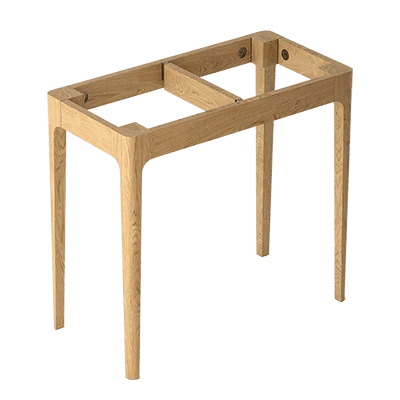
- Frame underframe
- Carved table base
- How to choose a table base for the tabletop shape
- Wooden underframe for a round table
- Dining table base: stability first
- Load and stability
- Height of the dining table base
- Tabletop overhang
- Dining table base style
- Kitchen table base: daily use without compromise
- Wooden coffee table base
- Single vs. double: when to choose which
- When a single (central) base is enough
- When a double wooden base is needed
- How to calculate the size of a wooden base
- Step 1: Determine the final table height
- Step 2: Subtract the tabletop thickness
- Step 3: Estimate the tabletop weight
- Step 4: Calculate overhangs
- Step 5: Check the seating space
- Step 6: Check the support area
- Table base style: from classic to restrained neoclassicism
- Classic style
- Neoclassicism and Modern Classicism
- Provence
- Country and rustic
- Empire and Art Deco
- Material and finish of the wooden table base
- Wood species
- Finishing
- Wooden table base and furniture composition: how to coordinate
- Table + chairs
- Table + console or cabinet
- Table + chest of drawers or cabinet
- Mistakes when choosing a wooden table base
- Wooden table base for a classic table: what you need to know about carving
- Where to buy a wooden STAVROS table base: catalog navigation
- Frequently asked questions about wooden table bases
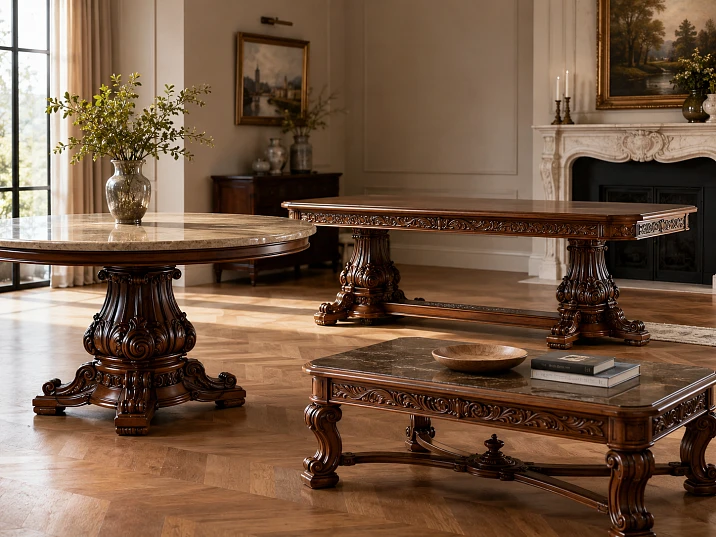
A table is an item that stands at the center of any home's life. Literally. A dining table gathers the family. A coffee table creates the living room atmosphere. A kitchen table is the place for the daily breakfast ritual. And for all the importance of the tabletop — its shape, material, size — it is the base that determines whether the table will be beautiful and stable or not.
A wooden table base is not just "legs" that hold the surface. It is a load-bearing structure, the architectural frame of the table, which sets its style, proportions, and character. A good solid wood base is already half the table. Sometimes even more.
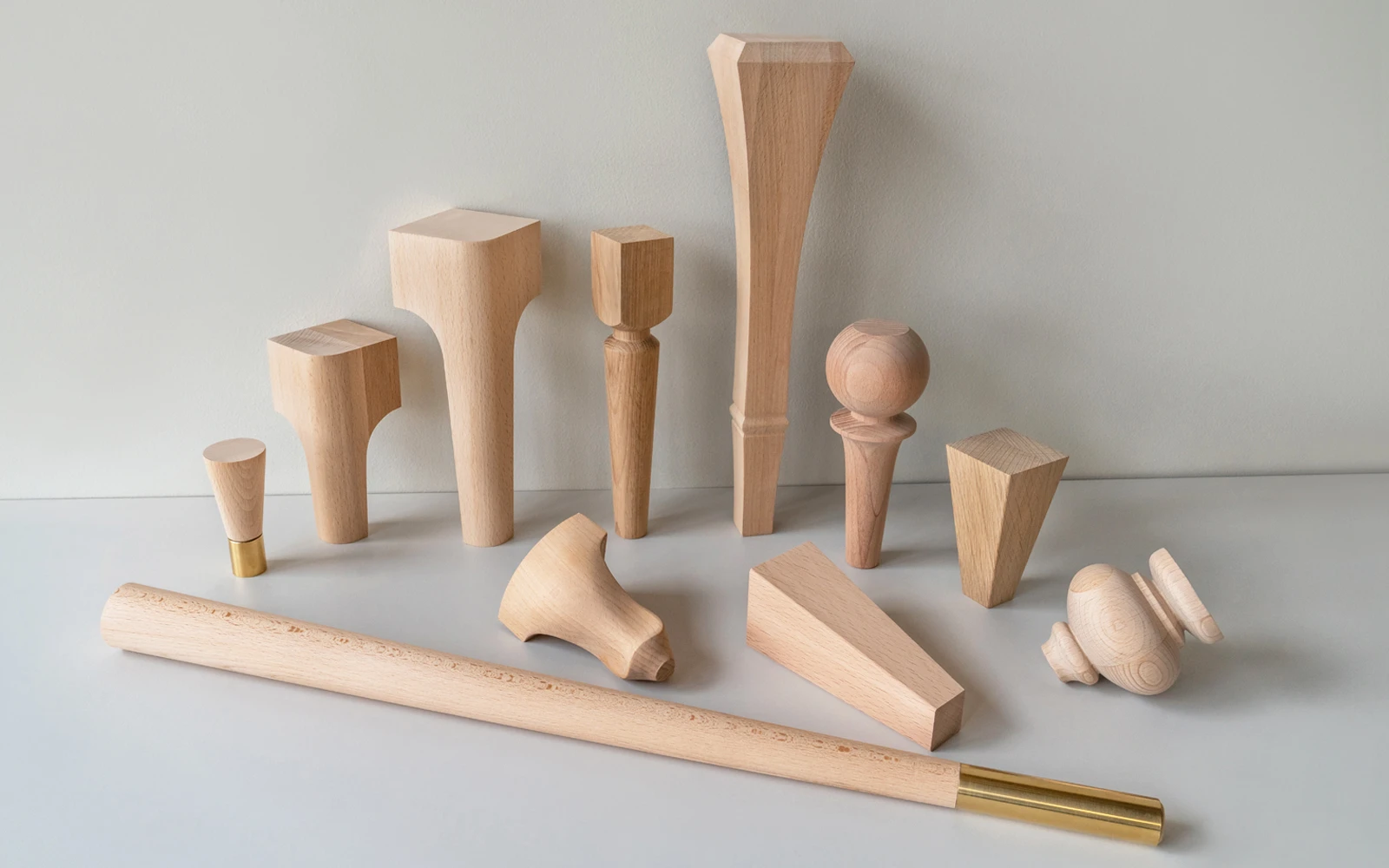
If you have decided to buy a wooden table base and are looking for a carved frame for the tabletop — wooden table bases and furniture frames STAVROS this is the section where the right choice begins. Here are underframes for round, rectangular, coffee, and dining tables, single and double bases, carved and classic solid wood frames.
This article provides a detailed breakdown of everything you need to know before purchasing: types, shapes, sizes, loads, styles, mistakes, and practical tips.
What is a wooden underframe: a frame, not just a support
The first thing to understand is that an underframe is not the same as furniture legs. This is a fundamental difference that is often confused.
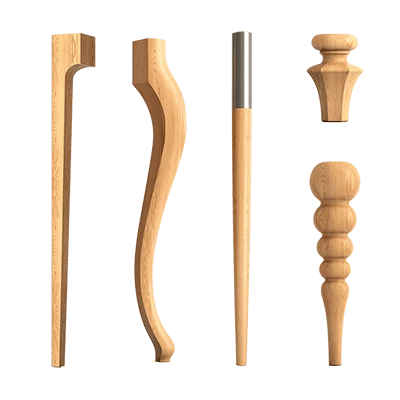
Furniture Legs and Supports — are separate elements. Four legs under the tabletop. Each is attached independently. This scheme works for small tables, lightweight tabletops, and simple designs.
A wooden underframe is a solid or composite structure that forms a single load-bearing frame. It can be:
-
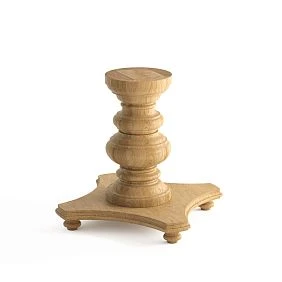
Monolithic central base — one massive decorative "pillar" with a support base and a mounting platform on top
-
Frame structure — two longitudinal beams with crossbars, forming a rectangular or square frame
-
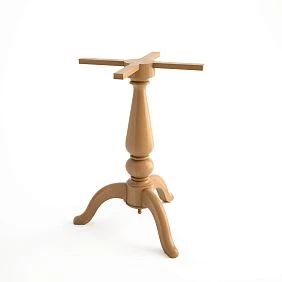
Double support — two decorative pillars connected by a crossbar
-
Decorative base — a carved frame that serves as the architectural accent of the table
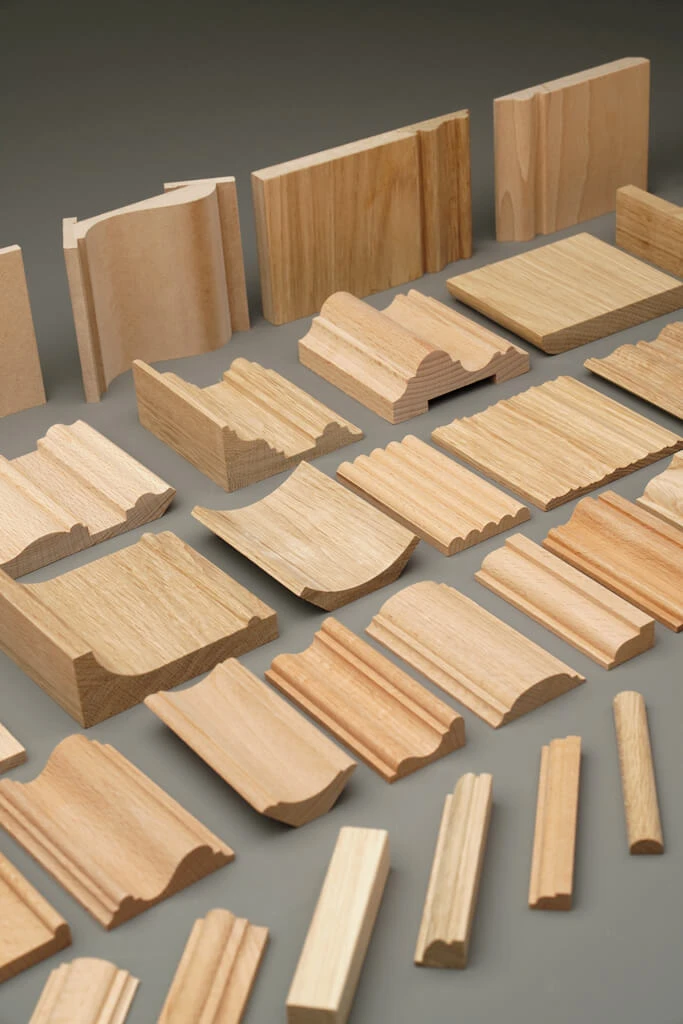
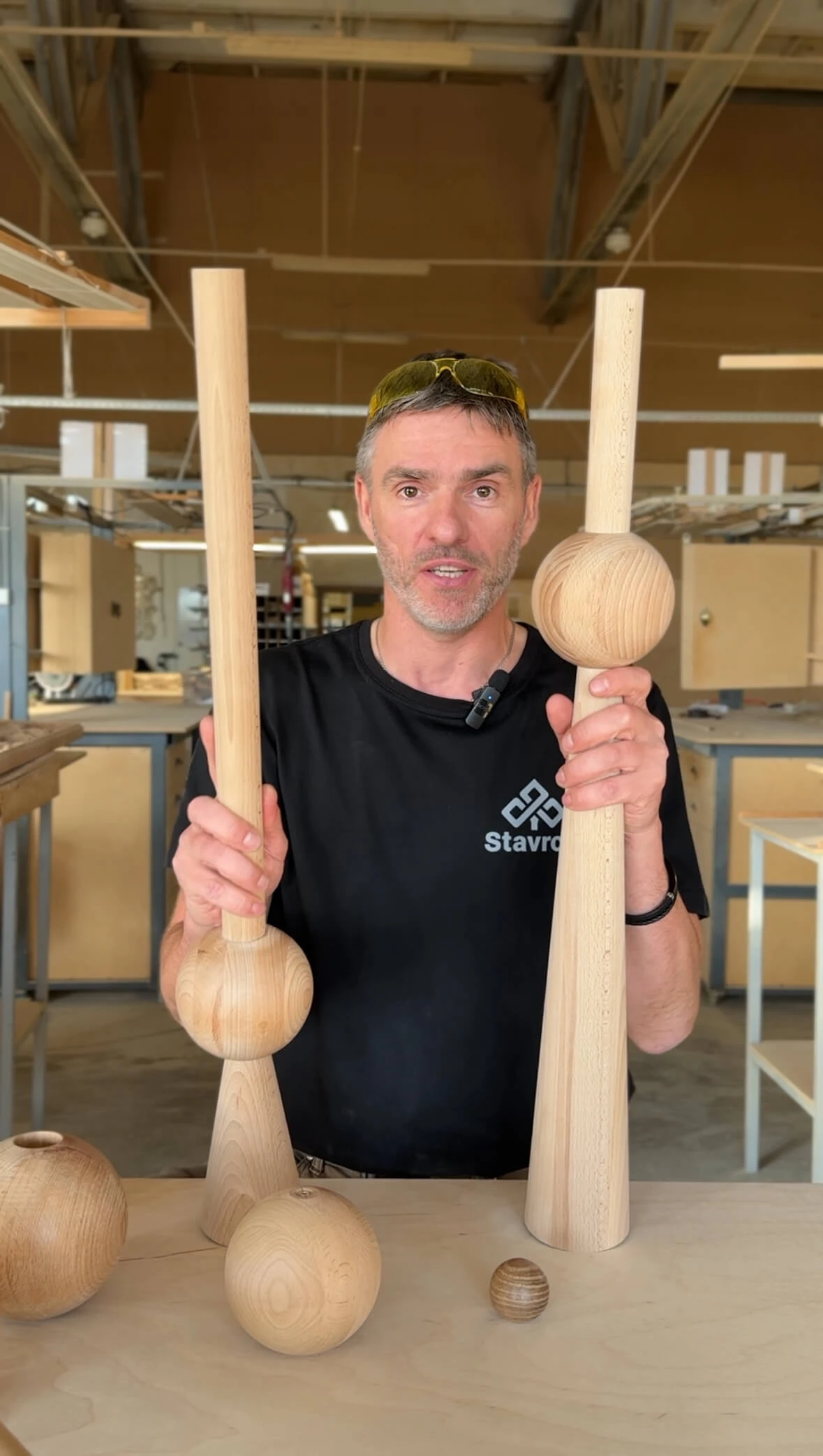
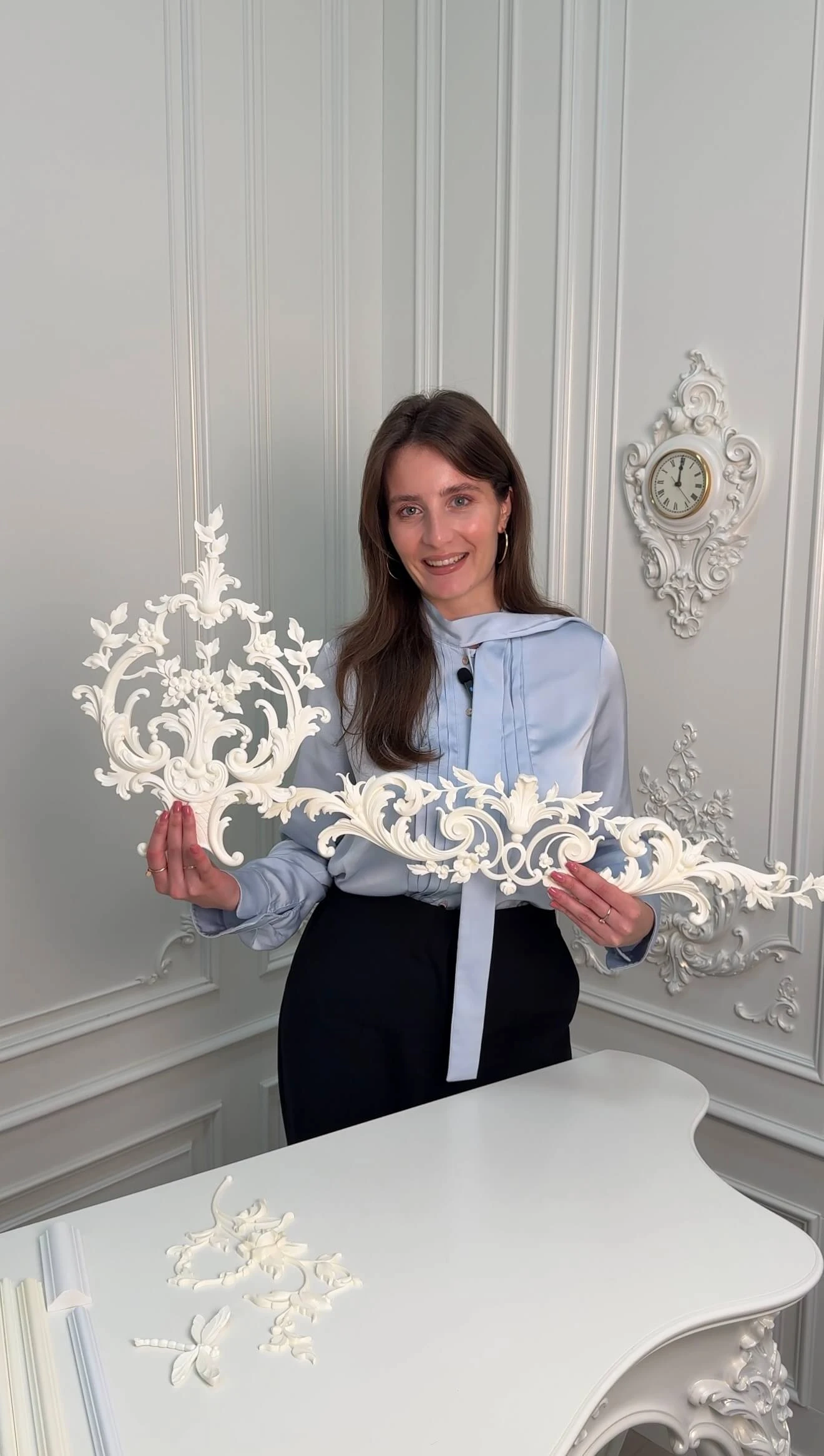
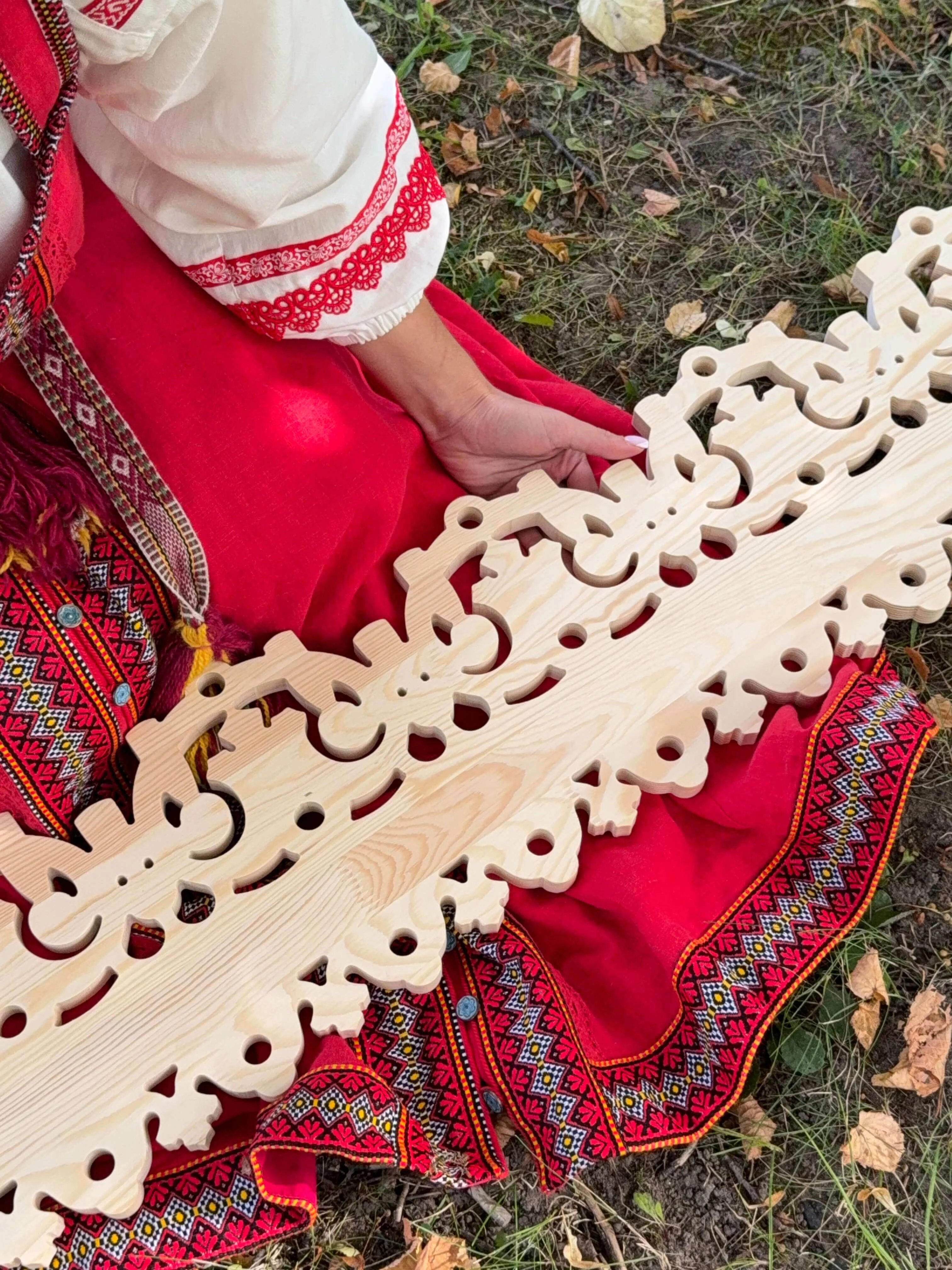
Why the underframe is more important than it seems
The tabletop is a passive element. It just lies there. But the underframe is active: it bears weight, withstands load, ensures balance, and determines seating comfort.
Three main functions of a wooden underframe:
-
Structural: carries the weight of the tabletop and dynamic load (hand pressure, leaning, vibration)
-
Ergonomic: sets the table height and legroom for those seated
-
Aesthetic: shapes the visual image of the table, its style and 'mood'
All three functions are equally important. An underframe that is stable but ugly is a design failure. Beautiful but wobbly is dangerous. A proper wooden underframe made of solid wood solves all three tasks.
Our factory also produces:
STAVROS catalog: where to choose a wooden underframe
Before diving into selection parameters, it's important to know where to look for products.
For wooden underframes and tabletop frames in STAVROS, there are several relevant sections:
-
Furniture Frames, Pedestals — main section. Underframes for different types of tables
-
Furniture Legs and Supports — when separate supports are needed instead of a solid frame
-
Solid Wood Items — complete catalog of wooden furniture elements
-
STAVROS carved decor — for stylistic enhancement of decorative solutions
-
wooden decorative elements — additional carved details to enrich the furniture look
-
furniture solutions — a systematic view of furniture compositions
-
STAVROS consoles and frames — related topic for console and wall-mounted tables
Get Consultation
Types of wooden underframes: from monolithic base to carved frame
Underframe is a broad concept. It encompasses several fundamentally different structures. Let's break down each one.
Central (monolithic) underframe
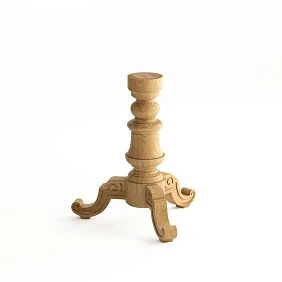
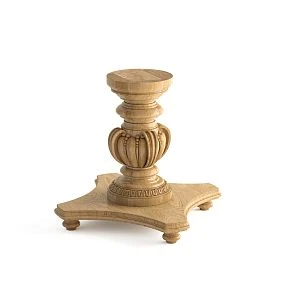
This is a single support located in the center of the tabletop. The shape is typically a decorative column, tapering towards the top and bottom. At the bottom is a wide support base with "feet" that ensure stability.
Suitable for tables: round and small square tabletops. A table with a central support is an elegant solution for a dining area, meeting space, coffee table, or side table in the living room.
Advantages:
-
Maximum legroom for those seated — nothing gets in the way
-
Visual lightness — the table looks "floating"
-
Decorative potential — the central support can be carved, turned, or twisted
Limitations:
-
For long rectangular tabletops — insufficient lateral stability
-
Requires precise balance: too light a base + heavy tabletop = risk of tipping
Double pedestal base
Two column bases, positioned along the long axis of the table, connected by a crosspiece. The structure resembles the letter "П" or "Н" in a horizontal position.
Suitable for tables: long rectangular and oval tabletops. Classic dining table for 6–10 people.
Advantages:
-
Uniform load distribution across the entire length of the tabletop
-
High stability under lateral loads
-
Aesthetically rich solution — two decorative pillars allow for more complex carving
Limitations:
-
Side supports slightly restrict legroom in the outer zones
-
Requires precise calculation of the distance between the bases
Frame underframe
Rectangular frame made of four elements: two longitudinal beams and two cross beams. The tabletop is attached on top of this frame.
Suitable for tables: rectangular and square tabletops, dining and writing desks.
Advantages:
-
Maximum structural rigidity
-
Uniform support around the entire perimeter of the tabletop
-
Works well with heavy stone or massive wooden tabletops
Limitations:
-
Corner legs limit legroom at the ends of the table
-
Less decorative appearance compared to central or dual supports
Carved table base
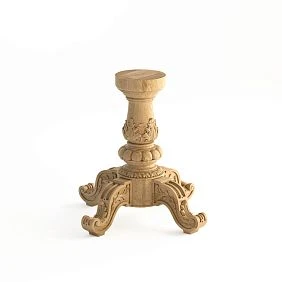
This is not a separate structural type, but a decorative category. Carving can be applied to a central base, dual base, or frame base. Carving adds volume, character, and historical allusions.
For classic interiors, studies, dining rooms in neoclassical style — a carved wooden underframe with relief elements turns the table into a work of art. STAVROS carved decor и wooden decorative elements allow you to complement the underframe with accent carved details in a unified style.
How to choose a base for the tabletop shape
The shape of the tabletop dictates the logic of choosing the base. This is not a subjective matter of taste — it is an engineering task with decorative inputs.
| Tabletop shape | Suitable underframe type | Key parameters |
|---|---|---|
| Round | Central or dual | Diameter, stability, height |
| Oval | Double or frame | Axle length, support uniformity |
| Rectangular | Double or frame | Length, overhangs, weight |
| Square | Central or frame | Load uniformity |
| Journal (low) | Central compact | Height, visual lightness |
| Cantilever | Narrow frame or wall-mounted | Depth, wall support |
Wooden table base for a round table
A round table is a special case. Its beauty lies in symmetry. And this symmetry requires a corresponding base: a central support positioned strictly on the axis is the classic solution.
A central table base for a round table should have:
-
Sufficient base — the area of the support "legs" must ensure stability given the tabletop diameter
-
Correct height — standard dining table 72–75 cm, coffee table 40–50 cm
-
Decorative volume — the central support is visible from all sides, so its aesthetics are as important as the structure
For a round dining table with a diameter of 90–120 cm, a central wooden table base on four "legs" is the ideal option. For a table with a diameter of 140–180 cm, consider a double table base or a more massive central support with a wide base.
Buy a wooden table base for a round table at STAVROS in the section of furniture frames and table bases — there are options for different diameters and loads.
Table base for a dining table: stability above all
A dining table is the most heavily loaded table in the house. It bears the weight of dishes, plates, and utensils. People lean on it with their hands. Several people sit at it simultaneously, and each creates their own load.
Buying a wooden table base for a dining table means solving several tasks at once.
Load and Stability
For a dining table for 6 people, the standard tabletop is 160×90 cm, weighing from 25 to 60 kg depending on the material. A wooden frame for such a table must withstand not only static load but also dynamic load: sudden leaning, moving dishes, accidental bump.
A double wooden table base is the most reliable solution for long dining tables. Two support posts connected by a crossbar distribute the load evenly and eliminate wobbling.
Height of the table base for a dining table
The standard height of a dining table is 72–76 cm. When choosing a table base, the thickness of the tabletop is taken into account: if the tabletop is 4 cm, the height of the table base should be 68–72 cm.
The height of the seating space under the table — the distance from the floor to the lower crossbar of the table base — should be at least 65 cm. Otherwise, seating will be uncomfortable.
Tabletop overhang
Overhang is the distance from the edge of the base to the edge of the tabletop. For a dining table, the standard overhang is 20–30 cm. This allows those sitting not to bump their knees against the supports.
With a double base, it is important that the distance between the bases is at least 80 cm — for the comfort of the legs of those sitting at the ends.
Dining base style
A dining table in a classic dining room is a reason to choose carved wooden base with decorative pillars. Relief carving, turned elements, acanthus leaves or geometric belts — all this turns the dining table from furniture into an architectural object.
For a modern classic interior — a double base with a laconic figured profile under dark tint or enamel.
Base for a kitchen table: daily use without compromise
A kitchen table works differently than a dining table in a dining room. It is used every day, several times. People cut, roll out dough, and place hot dishes on it. Children do homework. Adults drink coffee.
A wooden table base for a kitchen table should be:
Stable: the kitchen is a high-use area. A wobbly table in the kitchen is irritating and unsafe.
Easy to maintain: unlike a dining room, a kitchen table base may be exposed to splashes, crumbs, and wiping. The finish must be durable: varnish or paint, not open oil.
Proportional to the kitchen: for a small kitchen of 8–12 m², a large, massive table base will visually "eat up" space. Here, compact design solutions are needed: a central support for a round kitchen table or a lightweight frame base.
Buying a wooden table base for a kitchen table means finding a balance between aesthetics and pragmatism. A decorative base with a simple relief under enamel or tinting is the optimal choice for most kitchens in classic or neoclassical style.
STAVROS furniture solutions provide an understanding of how the table base fits into the overall furniture concept of the kitchen or kitchen area.
A wooden table base for a coffee table
A coffee table is a fundamentally different story. It's not for dining or working. It's about atmosphere. A cup of morning coffee, a book, a TV remote — all of this rests on the coffee table in the living room or fireplace area.
A coffee table base differs from a dining table base in three parameters:
Height: a coffee table is 40–55 cm. The base is correspondingly lower, which changes the visual proportions: the base should be more compact so as not to "eat up" the visual weight of the low item.
Load: minimal compared to a dining table. No one sits on or leans heavily on the coffee table. Therefore, the decorative aspect of the base takes center stage.
Visual lightness: in the seating area, the coffee table should 'float,' not weigh down. A central openwork or twisted base creates exactly this effect.
Buying a wooden base for the STAVROS coffee table means choosing a decorative foundation that itself becomes an interior accent. Surrounded by a sofa and armchairs, a coffee table on a carved wooden base is an object you want to approach and examine.
Single vs. Double: When to Choose Which
This is one of the most common questions when choosing a wooden base. Let's break it down clearly.
When a Single (Central) Base is Sufficient
-
Round tabletop up to 130 cm in diameter
-
Square tabletop up to 100×100 cm
-
Coffee table of any shape
-
Coffee table in the interior
-
Small kitchen table for 2–4 people
The central base leaves maximum legroom. Visually, it's the most elegant solution. Functionally, it's sufficient if the weight and size of the tabletop are within reasonable limits.
When a double wooden table base is needed
-
Rectangular tabletop longer than 130 cm
-
Oval tabletop for 6 or more people
-
Heavy tabletop (stone, thick solid wood) weighing more than 40–50 kg
-
Dining table in a large dining room
-
Conference table or large work table
Buying a double wooden table base means choosing reliability. With a long rectangular tabletop, two bases connected by a crossbar create a rigid frame that does not sag or wobble under load.
| Table base type | Table shape | Tabletop size | Load |
|---|---|---|---|
| Single center | Round, square | Up to 130 cm | Light and medium |
| Single frame | Square, small rectangular | Up to 120×80 cm | Medium |
| Double | Rectangular, oval | From 130 cm | Medium and heavy |
| Massive single | Large round | 130–180 cm | Heavy |
| Compact | Coffee | 60–100 cm | Easy |
How to calculate the size of a wooden table base
There is no room for intuition here. A mistake in size calculation means either a wobbly table, uncomfortable seating, or unattractive proportions.
Step 1: Determine the final table height
Dining table: 72–76 cm.
Coffee table: 45–55 cm.
Side table: 40–50 cm.
Desk: 74–78 cm.
Step 2: Subtract the tabletop thickness
Tabletop thickness — from 2 to 6 cm depending on the material. Underframe height = table height minus tabletop thickness.
Example: table 75 cm, tabletop 4 cm → underframe 71 cm.
Step 3: Estimate the tabletop weight
| Tabletop material | Approximate weight (160×90 cm) |
|---|---|
| Solid wood, 4 cm | 30–45 kg |
| MDF, 3.6 cm | 20–30 kg |
| Stone, marble, 3 cm | 100–140 kg |
| Glass, 12 mm | 30–40 kg |
For heavy stone countertops, only double or frame underframes with reinforced mounting plates.
Step 4: Calculate overhangs
Overhang is the distance from the edge of the underframe to the edge of the countertop. The minimum comfortable overhang for a dining table is 20 cm on each end and 10–15 cm on each side.
For a round table: the distance from the center of the base to the edge of the countertop should be uniform on all sides.
Step 5: Check the seating space
The distance from the floor to the lower horizontal crossbar of the underframe must be at least 65 cm. Otherwise, the knees of a person of average height will hit the structure.
Step 6: Check the support area
For a central support: the diameter or "span" of the base legs should be at least 50–60% of the diameter (for a round) or length (for a rectangular) tabletop. Otherwise, the table will be unstable.
Underframe style: from classic to restrained neoclassicism
A wooden underframe made of solid wood is both a furniture element and a decorative object. Its style determines the character of the entire table.
Classic style
Twisted or turned columns, acanthus leaves, relief belts, "paws" with claws or balls — a rich decorative program. Such a carved wooden underframe is appropriate in dining rooms with dark interiors, studies, and living rooms in the spirit of English classicism.
Dark tinting to walnut, wenge, or mahogany is a traditional finish for classic underframes.
Neoclassicism and modern classicism
More restrained relief. Columns with geometric belts, an elegant base without lush "paws", a horizontal crossbar with a simple profile. For light classic and neoclassical interiors — white enamel or light tinting.
Provence
Soft rounded shapes, cabriole legs with a curve, possible light patina. A wooden base with cream enamel and an aged effect is a characteristic solution for Provence and shabby chic.
Countryside and rustic
Massive angular bases with minimal decor. Wood with clear matte varnish or oil. Texture is the main "decor".
Empire and Art Deco
Strict geometric foundations, monumental bases, minimalist yet massive proportions. For dining rooms in the Art Deco style — golden tinting or contrasting two-tone finish.
Material and finish of the wooden underframe
Tree species
Oak is a traditional choice for solid furniture pieces. Hard, dense, with expressive texture. Holds shape well, does not deform with humidity changes. Under tinting or varnish — one of the most advantageous options.
Beech is dense, stable. It lends itself well to turning — ideal for turned decorative columns. Neutral texture accepts any tinting well.
Pine is a softer material, traditional for country style and budget solutions. Under varnish or enamel — reliable.
Walnut is dark, luxurious. Suitable for premium solutions. Under clear varnish — exceptional beauty.
Elm, ash — expressive texture with a large pattern. For underframes in Scandinavian or modern classic style.
Finishing
Tinting + varnish: changes color while preserving texture. Dark walnut, wenge, cherry, American walnut — a wide palette for classics.
White enamel: for neoclassical and Provencal solutions. Hides texture, emphasizes profile shape.
Patina: adding a second (darker) color to the recesses of the relief. Creates an "aged" product effect. Appropriate in classic and Provence styles.
Matte varnish without tinting: for eco and Scandinavian styles. Preserves the natural color of wood.
Exterior paint: if the table is planned for an open terrace or summer area, a special weather-resistant finish is needed.
Wooden underframe and furniture composition: how to coordinate
A table does not exist in isolation. It is part of the interior — and the underframe should be coordinated with the surroundings.
Table + chairs
The legs or supports of the chairs should be stylistically close to the underframe. Chairs with straight square legs + carved twisted underframe = conflict. Chairs with turned legs + turned underframe = unified style.
STAVROS furniture solutions allow selecting furniture elements in a unified stylistic key.
Table + console or cabinet
If there is a console table or cabinet in the dining room or living room, their legs and bases should be coordinated in style with the underframe of the dining or coffee table. STAVROS consoles and frames — an adjacent section where you can see furniture solutions for wall-mounted consoles.
Table + chest of drawers or cabinet
In the living room, a coffee table often sits next to a TV cabinet or chest of drawers. STAVROS chests of drawers and cabinets — a section where you can find storage furniture bases coordinated in style with wooden underframes.
Mistakes when choosing a wooden base
A practical section that will help avoid common mistakes.
1. Choosing too small a base for a large tabletop. A tabletop with a diameter of 140 cm on a compact central support is a tipping risk. Check the size ratio.
2. Not accounting for the weight of the tabletop. A stone or solid wood tabletop weighing 80–100 kg requires a reinforced base. A decorative lightweight underframe is not suitable for such a load.
3. Confusing an underframe with individual legs. Four legs not connected to each other are not the same as a frame-underframe. For heavy and long tabletops, only a solid structure.
4. Not checking the seating space. The horizontal crossbar of a double underframe is positioned too low — people will hit their knees. Minimum 65 cm from the floor.
5. Choosing a too decorative base without calculating stability. An openwork carved underframe is beautiful. But if its base does not provide balance, beauty does not compensate for instability.
6. Not matching the finish with the tabletop. A dark underframe under a light tabletop is an acceptable design technique. But a mismatch in finish because "it just happened" is not design.
7. Not considering the style of the chairs. The underframe was chosen, the tabletop was bought, but the chairs don't match the style. The furniture group needs to be designed as a whole.
8. Choosing a round underframe for a long rectangular tabletop. A central round base on a long rectangular table is unstable. The ends will wobble.
9. Not considering the table height when choosing the underframe. An underframe height of 75 cm + a tabletop of 4 cm = a table of 79 cm. This is already above the standard dining table height.
10. Not selecting in the actual STAVROS section. Wooden underframes and furniture frames — here you have real products with parameters, not abstract reasoning.
Wooden underframe for a classic table: what you need to know about carving
A carved wooden underframe is a separate story. It's worth going into more detail here.
Carving on an underframe can be of several types:
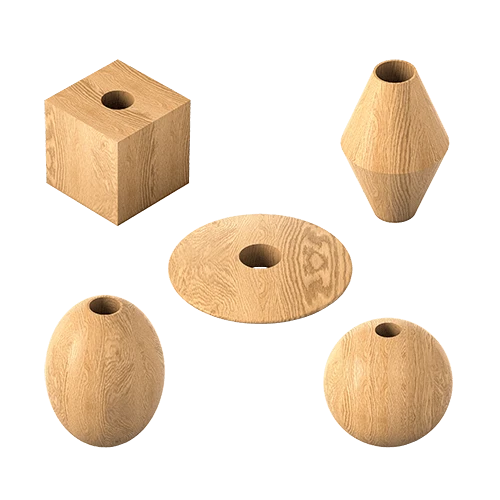
Turned decor: executed on a lathe. Spheres, cylinders, vase-shaped elements, discs, belts. This is "furniture classic" — characteristic of 18th–19th century furniture.
Relief carving: three-dimensional floral or geometric motifs carved from the surface. Acanthus leaves, rosettes, garlands, meander. For formal, representative interiors.
Pierced carving: through patterns in support crosspieces or bases. Adds an openwork effect — the table appears lighter.
Applied carved decor: individual carved elements made of wooden decorative elements are attached to the underframe posts.
For a classic study or library — a dark carved underframe with acanthus decor. For a dining room in a light classic style — a white enamel underframe with a relief belt. For a summer house in Provence — a cream base with turned legs and light patina.
Consistency of the carved underframe with STAVROS carved decor in the interior is a sign of a professional design solution.
Where to buy a wooden underframe STAVROS: catalog navigation
To purchase a wooden underframe or carved frame for a tabletop — everything is systematized in the STAVROS catalog:
-
wooden table bases and furniture frames STAVROS — main selection section
-
Furniture Legs and Supports — if separate supports are needed
-
Solid wood products STAVROS — the full range of wooden furniture elements
-
Carved Decor — to complement classic solutions
-
wooden decorative elements — overlay parts, corner rosettes, cartouches
-
furniture solutions — for comprehensive furniture projects
-
Consoles and Frames — for console and wall-mounted tables
Frequently asked questions about wooden table bases
What is a wooden table base and why is it needed?
This is the supporting frame of the table — the structure to which the tabletop is attached. The table base determines the stability, height, and style of the table. At STAVROS — wooden table bases made of solid wood for different types of tables.
How is a wooden table base different from furniture legs?
Legs — four separate supports. Underframe — a solid frame. For heavy and long tabletops, an underframe is more reliable; for small tables, legs will suffice.
Which table base should I choose for a round table?
Central — for a round table up to 130 cm in diameter. For larger diameters — double or reinforced central with a wide base.
When is a double underframe needed?
For long rectangular and oval tabletops (from 130 cm), heavy tables, dining tables for 6–10 people.
Can I choose a carved wooden underframe?
Yes. In the STAVROS furniture frames section, carved bases for classic and neoclassical interiors are presented.
How to calculate the height of the underframe?
Desired table height minus tabletop thickness = underframe height. For a dining table: 72–76 cm minus 4–6 cm.
Which material is best for a wooden underframe?
Oak — for durability and expressiveness. Beech — for turned elements. Pine — for budget-friendly solutions. Walnut — for premium interiors.
What to consider when selecting a table base for a heavy tabletop?
Weight of the tabletop, type of base (double or frame), support base area, and reliability of mounting plates.