

























Article Contents:
- A solid wood tabletop is not just a "table lid"
- Tabletop and underframe: what is the fundamental difference
- Product card: what STAVROS offers on tabletops
- Wood species: oak, beech, pine, ash, birch — an honest breakdown
- Solid oak tabletop: the benchmark choice
- Solid beech tabletop: density and even grain
- Solid pine tabletop: for lightweight budget solutions
- Ash tabletop: accent expressive texture
- Birch countertop: calm, light character
- Elm countertop: exotic touch in the interior
- Countertop shape: square, rectangle, circle, and shaped edge
- Square solid wood countertop
- Rectangular tabletop
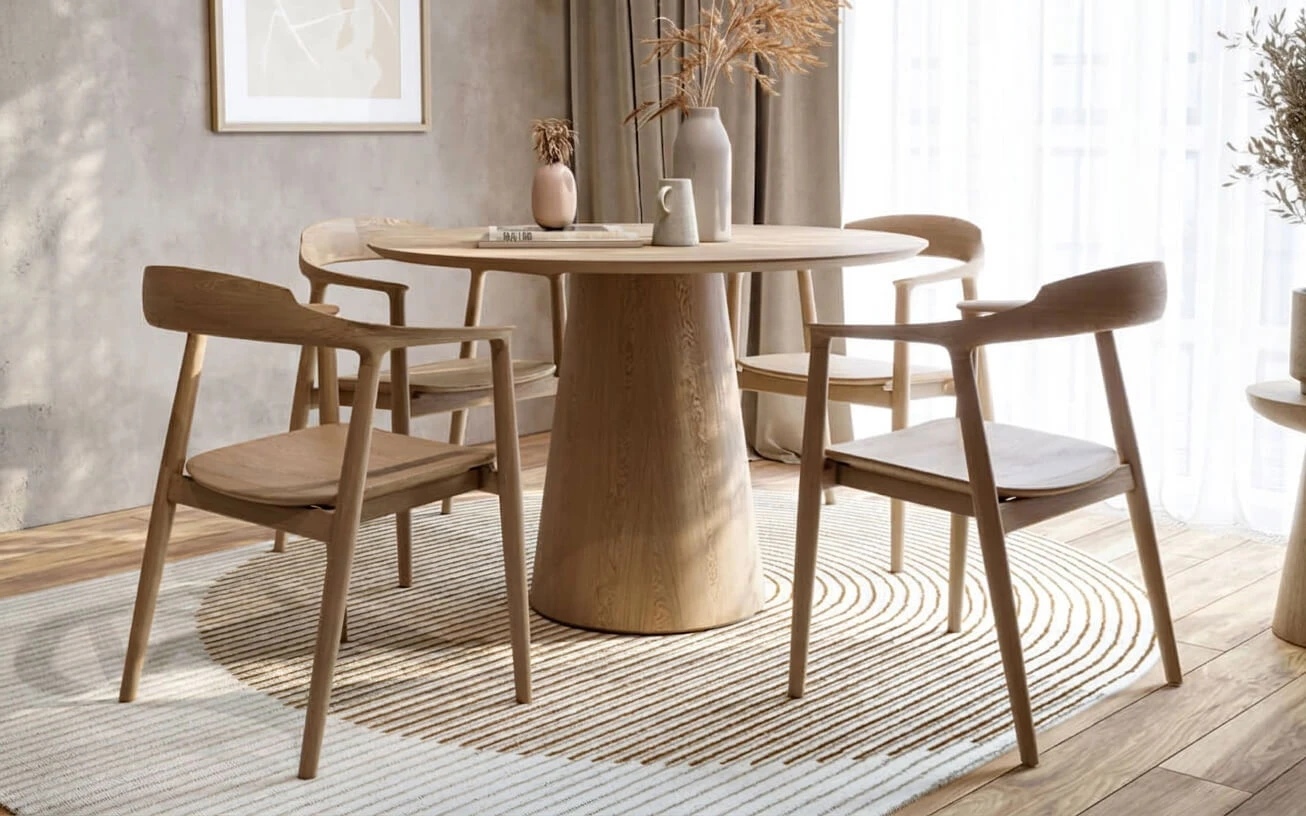
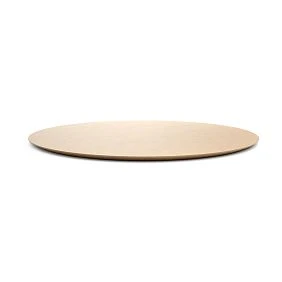
- Round solid wood countertop
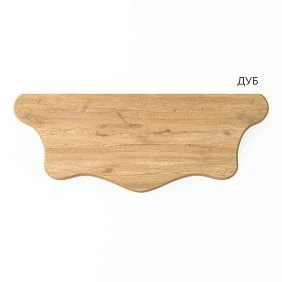
- Shaped countertop and edge profile
- Thickness, size, and weight: technical parameters of a wooden countertop
- Solid wood countertop thickness
- Length and width
- Countertop weight and compatibility with the base
- Countertop overhangs
- Wooden countertop on a wooden base: how to combine
- Shape to shape
- Style to style
- Finish to finish
- Weight and load-bearing capacity
- Solid wood countertop for kitchen: selection specifics
- Which wood species is suitable for a kitchen table
- What finish is needed for a solid wood kitchen countertop
- Care for a wooden kitchen countertop
- Solid wood countertop for furniture project
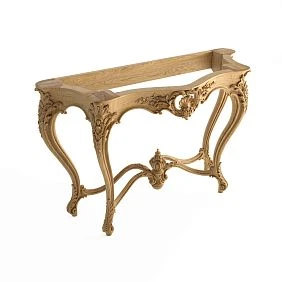
- Console table
- Restaurant, cafe, commercial interior
- Solid wood desk
- Side and coffee table
- Wood countertop finishing: five options and when to choose which
- Clear glossy varnish
- Matte lacquer
- Oil (oil wax)
- Toning + varnish
- Enamel (white or colored)
- How to choose a countertop for a classic interior
- Mistakes when choosing a solid wood countertop
- Where to buy a STAVROS solid wood tabletop: catalog navigation
- Frequently asked questions about solid wood tabletops
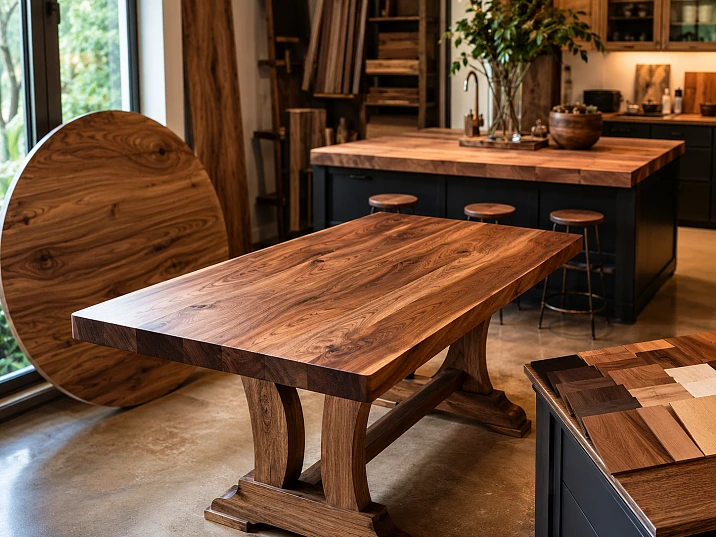
There are interior items that "make" a space. Not a decorative trinket, not textiles, not a painting on the wall — but a large object with a clear function and a distinct character. A table is one of them. And if the base is the table's architecture, its "bones," then the tabletop is its surface, its "face," the first thing a hand touches.
A solid wood tabletop is not a consumable. It is an investment in quality that you feel every day: in the tactile warmth of natural wood, in the surface's resistance to loads, in how it ages — nobly, without losing dignity. Plastic coating delaminates, laminate chips, artificial stone cracks. Solid oak or beech lives for decades, gains patina, and only becomes more convincing.
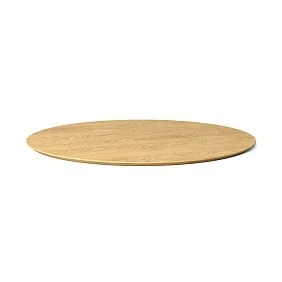
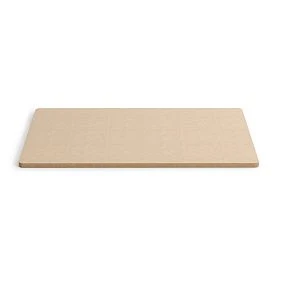
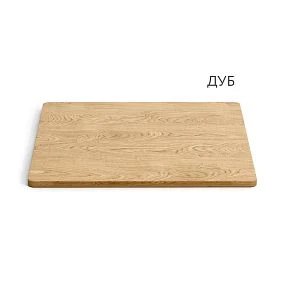
If you are looking for where to buy a solid wood tabletop for a table, kitchen, console, or furniture project — start with the STAVROS tabletop catalog. This is a specialized selection by product type "Tabletop" with real items: square, rectangular, various in size and material — made of solid oak, beech, and MDF for painting.
This article provides a complete breakdown: what a solid wood tabletop is, how to choose it for the table shape and interior style, which material to use, how to calculate thickness and overhangs, how to combine it with the base, and what mistakes are most often made.
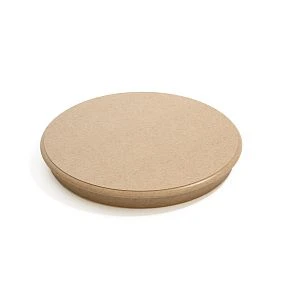
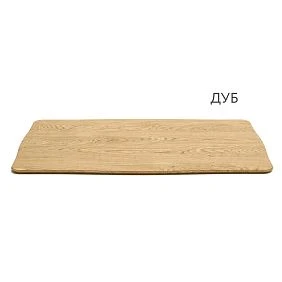
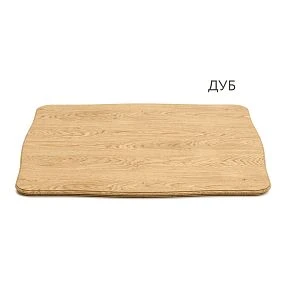
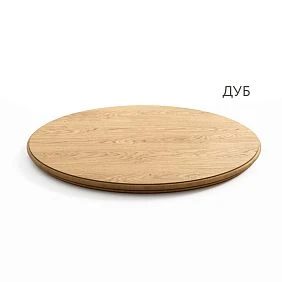
A solid wood tabletop is not just a "table lid"
This is where you should start. Because treating the tabletop as just a "plane" is the root of most mistakes when choosing.
The tabletop performs three fundamentally different functions simultaneously.
Functional role. It is a work surface. Dishes are placed on it, books are laid out, dough is rolled, writing is done, eating, working. It must bear loads, resist scratches, withstand temperature and humidity changes — especially in kitchen scenarios.
Structural role. The tabletop is the upper load-bearing element that "covers" the underframe or base. Its weight and dimensions affect the stability of the entire structure. A too-heavy tabletop on a light base is a risk. A too-small one on a massive underframe is a visual imbalance.
Decorative role. In a classic furniture project, a solid wood tabletop is a plane with texture, shaped edge, color, and character. It sets the "mood" of the table and integrates it into the interior.
All three roles are equally important. A choice focused only on one of them will inevitably create problems in the other two.
Tabletop and underframe: what is the fundamental difference
Confusion between tabletop and underframe is a typical story. Especially when first getting acquainted with the topic of solid wood furniture elements.
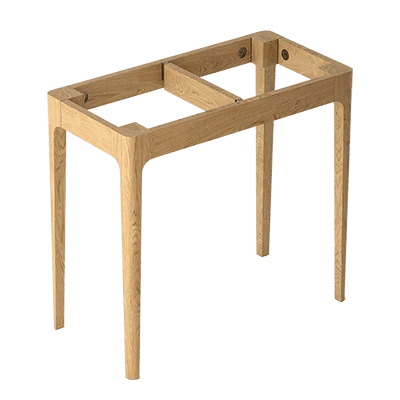
The underframe is the load-bearing base: the frame that stands on the floor and holds the tabletop. Two, three, four elements connected together. Visually — the "lower" part of the table.
The tabletop is the horizontal surface that is placed on the underframe. Visually — the "upper" part of the table, the one that is touched.
Two different elements. Two different choices. And two different sections in the STAVROS catalog.
For selecting underframes and furniture frames — underframes and furniture frames STAVROS.
For selecting tabletops — tabletops STAVROS.
Parent section combining both product types — STAVROS furniture frames.
Our factory also produces:

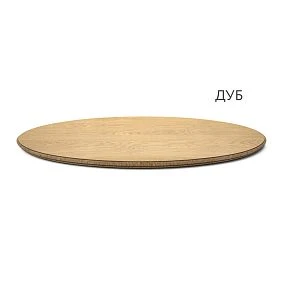
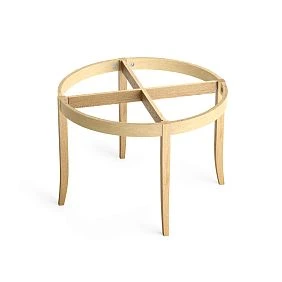
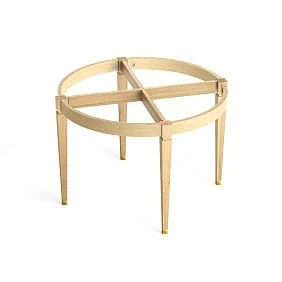
Product card: what STAVROS offers on tabletops
Before discussing selection criteria — it's important to understand the actual assortment.
The STAVROS catalog for tabletops includes items with specific parameters. For example:
-
ST-026-1 — square tabletop 800 × 800 × 25 mm
-
ST-027-1 — solid wood tabletop, square shape
-
ST-030 — countertop 1148 × 1148 × 24 mm
These are not "conditional" products — they are real items with specified dimensions, material (solid oak, beech, or MDF) and applicability for a specific table type.
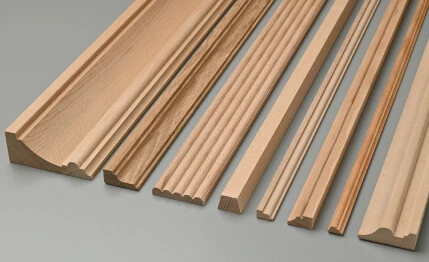
For pairing with decor and edge profiles — decorative wooden elements STAVROS и Solid wood moldings, cornices, and baseboards.
For kitchen scenarios — STAVROS kitchen solutions.
For a broad understanding of furniture application — furniture solutions и Solid Wood Items.
Get Consultation
Wood species: oak, beech, pine, ash, birch — an honest breakdown
Choosing the countertop material is one of the most important steps. And there is no "one-size-fits-all" answer: each species has its own story, its own advantages, and its own limitations.
Solid oak countertop: the benchmark choice
Oak is the benchmark for solid wood countertops. There are several reasons.
Hardness. On the Brinell scale, oak is among the hardest hardwoods. This means high resistance to scratches, dents, and abrasion. An oak wooden tabletop in a heavily used kitchen or dining scenario lasts for decades.
Texture. Oak has an expressive, large pattern with characteristic dark medullary rays. Under a clear varnish or oil, it is a true "painting" on the table surface.
Stability. Oak tolerates humidity changes well. For natural wood kitchen countertops, this is an important property.
Finish compatibility. Oak accepts any finish: clear varnish preserves the natural color, tinting allows any shade from light honey to deep espresso.
Buying a solid oak tabletop at STAVROS means choosing a material with the best ratio of aesthetics, strength, and durability. Oak is the main material for the brand's classic furniture projects.
Solid beech tabletop: density and even pattern
Beech is the second most common material for solid wood furniture tabletops. It is denser than spruce and pine, though slightly softer than oak. The pattern is uniform, without sharp transitions, with a fine texture. Under light tinting or enamel, it is a neutral but noble material.
Beech is well-suited for turning and milling, which is important when forming shaped tabletop edges.
A feature of beech: it is more sensitive to humidity than oak. For solid beech kitchen countertops, good protective finishing is important.
Solid pine tabletop: for light budget solutions
Pine is a softwood. This is both its limitation and its advantage: soft wood is easy to work with and quickly accepts finishing. However, a pine countertop in active use will accumulate marks—scratches, dents—faster than an oak or beech one.
Buying a solid pine countertop is justified for guest houses, country homes, and rustic projects, where the "lived-in" character of the surface with marks is part of the style, not a defect.
Ash countertop: expressive, striking texture
Ash has a large, almost bold pattern: wide wavy lines, dark veins, contrasting transitions. This is an expressive wood for accent solutions—when the countertop should draw the eye.
Buying a solid ash countertop is a non-standard choice, justified in Scandinavian, industrial, or eclectic interiors where the wood texture is intentionally "loud."
Birch countertop: calm, light character
Birch is dense, with a fine texture. The pattern is calm, almost monotonous. Under light enamel or white oil—a neat Scandinavian aesthetic.
Buying a solid birch countertop is suitable for light neoclassical and minimalist interiors, where the table should be a background, not an accent.
Elm countertop: exotic touch in the interior
Elm (siberian elm) is a wood with an exceptional "wild" pattern: twisted lines, wavy grain, unexpected transitions. A solid elm countertop is a one-of-a-kind piece. Each is unique.
| Species | Hardness | Texture | Best scenario |
|---|---|---|---|
| Oak | High | Expressive, large | Lunch, classic, commercial |
| Beech | Medium-high | Smooth, fine | Furniture project, console |
| Spruce | Soft | Live, with knots | Country, cottage, light style |
| Ash | High | Contrasting, wavy | Accent projects |
| Birch | Medium | Calm, monotonous | Scandinavian, minimalism |
| Elm | High | Wild, unique | Exclusive Projects |
Tabletop shape: square, rectangle, circle, and shaped edge
Tabletop shape is not just a matter of taste. It's a decision that affects seating, space usage, and compatibility with the base.
Square solid wood tabletop
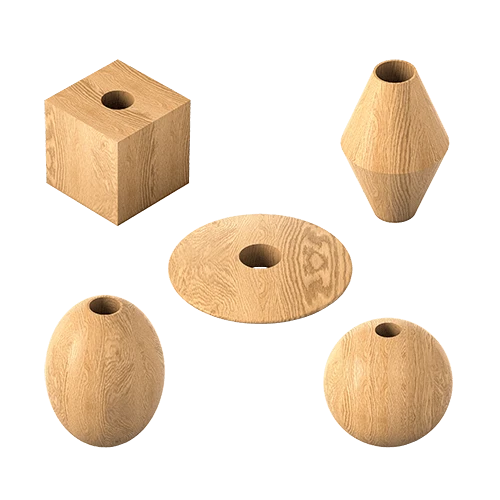
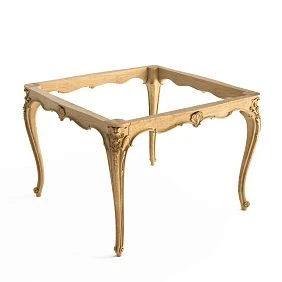
Square is the most democratic shape: four equal sides provide identical seating from all sides. Ideal for small tables for 2–4 people: kitchen, side, console tables.
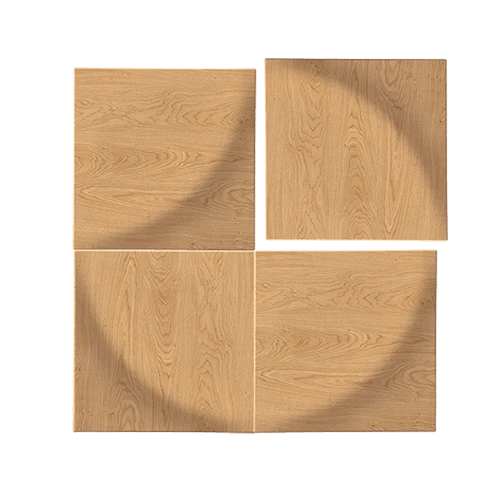
In the STAVROS catalog, square tabletops ST-026-1 (800 × 800 × 25 mm) and ST-030 (1148 × 1148 × 24 mm) are ready-made solutions for specific scenarios.
Square tabletop 800 × 800 — a kitchen or coffee table for two to three people. 1148 × 1148 — a small dining table for four.
Rectangular tabletop
Rectangle is a universal shape for dining and work tables. Length ranges from 100–120 cm for tables for 4 people to 200–240 cm for formal dining tables.
Rectangular oak tabletop on a double base — a classic solution for a formal dining room.
Round solid wood tabletop
Round tabletop is an elegant solution for small tables. Creates democratic seating: no 'head end' of the table. All seated are equidistant from the center.
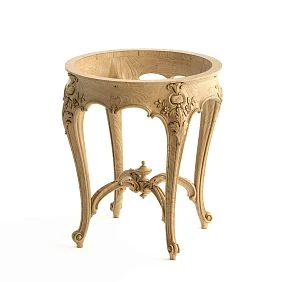
It is appropriate to buy a round solid wood tabletop for a central decorative pedestal base: one support column + a round surface — a concise and visually light structure.
Difficulty: attaching a round tabletop to a rectangular pedestal base requires precise marking.
Shaped tabletop and edge profile
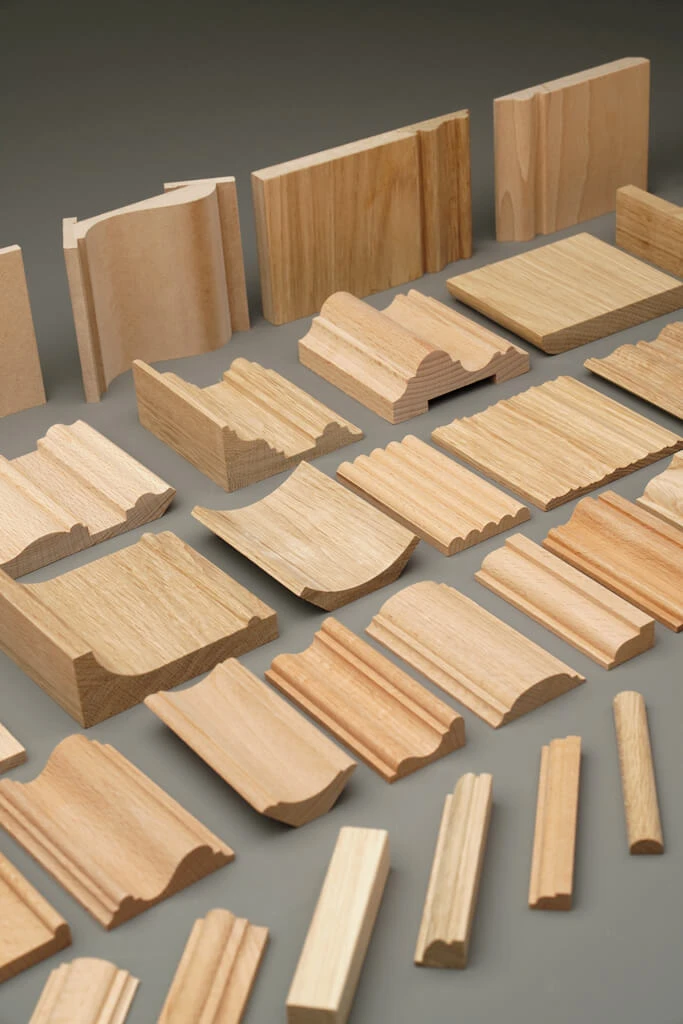
The shape of the tabletop also includes its edge profile. A straight (square) edge — minimalism. A rounded edge — softness, Provence. A shaped edge profile — classic: faceted profile, stepped edge, ogee.
For a classic wooden table — a tabletop with a shaped edge profile. This is a small detail that makes a difference: a flat surface looks "workshop-like", while a profiled edge looks like furniture.
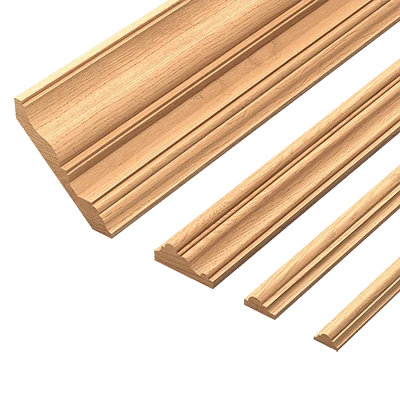
Moldings and profile elements from STAVROS solid wood are also used for decorative framing of tabletops.
Thickness, size and weight: technical parameters of a wooden tabletop
Technical parameters are no less important than aesthetics.
Thickness of a solid wood tabletop
| Thickness | Application | Weight (approximately for oak 100×100 cm) |
|---|---|---|
| 18–20 mm | Light coffee and side tables | 15–18 kg |
| 25–30 mm | Universal for dining and kitchen tables | 20–27 kg |
| 40–50 mm | Heavy dining, bar, and restaurant tables | 34–45 kg |
| 60+ mm | Massive luxury-class tables | 50+ kg |
The STAVROS standard for countertops is 24–25 mm (ST-026-1 — 25 mm, ST-030 — 24 mm). This is the optimal thickness for most interior scenarios: sufficient rigidity, moderate weight, and good visual proportions.
A 24–25 mm countertop is neither thin nor excessively heavy. It holds its shape, does not sag under load, and creates a "correct" horizontal line in the table profile.
Length and width
Key guidelines for dining tables:
| Number of seats | Minimum size |
|---|---|
| 2 people | 80 × 80 cm or 100 × 60 cm |
| 4 people | 100 × 80 cm or 120 × 70 cm |
| 6 people | 160 × 90 cm |
| 8 people | 200 × 90 cm |
| 10 people | 240 × 90–100 cm |
For a kitchen table in a small kitchen — a square 800 × 800 mm (like ST-026-1) — a convenient compact format.
Tabletop weight and compatibility with the base
This is a critically important parameter that is often ignored. A heavy tabletop requires a stable base with a wide footprint. A light tabletop on a massive base — visual imbalance.
Formula: for oak 25 mm thick — weight approximately 16–18 kg per 1 sq. m of area. Tabletop 160 × 90 × 2.5 cm = approximately 23 kg.
For such weight — STAVROS bases with a frame or double construction. For lighter tabletops — a central underframe.
Tabletop overhangs
Overhang — the distance from the edge of the underframe to the edge of the tabletop. A crucial parameter for seating comfort.
-
End overhang (on short sides): 15–25 cm. Less than that — your knees will hit the support.
-
Side overhang (on long sides): 10–15 cm. That's sufficient.
For a square table 800 × 800 on a central underframe — uniform overhang on all sides of about 12–15 cm.
Tabletop with a wooden underframe: how to match
The tabletop and underframe are partners. They must match in shape, proportions, style, and finish. Otherwise, the table will look 'assembled from parts' rather than a cohesive piece.
Shape to shape
Round tabletop — central or symmetrical underframe.
Rectangular tabletop — double or frame base.
Square tabletop — central or four-leg base.
Violation of this rule only works in conceptual design projects where the shape mismatch is a deliberate artistic technique.
Style to style
Classic carved tabletop with shaped edge — carved base.
Minimalist rectangular tabletop with straight edge — frame base with geometric profile.
Rounded edge for Provence style — cabriole legs, rounded base details.
Finish to finish
The tinting of the tabletop and base must match from the same batch. This is fundamental: different batches of the same tinting yield different results. One paint pass — one table.
Weight and load-bearing capacity
A heavy 50 mm thick solid oak tabletop should not be placed on a lightweight central underframe with a narrow base. A double support or frame construction is required. Check the underframe specifications before purchasing the tabletop.
Solid wood tabletop for the kitchen: specifics of selection
The kitchen is the most demanding interior scenario for a wooden tabletop. Everything operates in extreme mode: humidity, temperature, mechanical impacts, fats, acids.
But we are not talking about a load-bearing kitchen countertop over a sink — there, solid wood yields to stone and acrylic. We are talking about a kitchen table: a freestanding table in the kitchen area where people eat, cook, and work.
Which wood species is suitable for a kitchen table
For a solid wood kitchen table — oak. Its hardness, abrasion resistance, and moisture resistance with proper finishing are the optimal choice. Beech is also acceptable with a good coating. Pine — only with the understanding that the surface will "live" with marks.
What finish is needed for a solid wood kitchen tabletop
Oil + wax: eco-friendly, repairable. Regular maintenance is mandatory. The surface is matte, alive. DIY repair — by simply applying a new layer of oil.
Varnish: forms a protective film. More practical in use. Glossy varnish shows scratches; matte varnish is more resistant to visible marks.
For a kitchen table — matte varnish or oil-wax. An open tabletop without coating — only in a restaurant or country scenario, where the look of an "aged" surface is a stylistic choice.
Care for a wooden kitchen countertop
Three rules:
-
Do not leave standing water — wipe dry immediately
-
Do not cut directly on the countertop without a board
-
Renew the coating once a year (more often for oil)
for STAVROS kitchen projects A solid wood countertop is an organic part of a furniture concept with wooden facades and decorative elements.
Solid wood countertop for a furniture project
Beyond the usual 'table + chairs', there is a big world of furniture projects where a solid wood countertop plays the role of a key horizontal element.
Console table
Console — a narrow wall-mounted table. Depth 25–40 cm, width 80–160 cm. The countertop for a console should be:
-
Narrow and elongated
-
Lightweight (small thickness — 18–25 mm)
-
With a beautiful edge profile — it's visible
A wooden console tabletop made of oak or beech for tinting — an elegant classic choice. STAVROS furniture solutions include console scenarios in the overall furniture concept.
Restaurant, cafe, commercial interior
A solid wood tabletop for a restaurant or cafe combines aesthetics and practicality. Visitors should see the natural wood — and at the same time, the surface must withstand intensive cleaning, temperature changes, and mechanical impacts.
For a commercial interior — oak or ash under matte lacquer with a reinforced top coat. Thickness — from 30 mm: a more massive surface sounds more substantial.
Solid wood desk
A desk is a hybrid of a dining and writing table. Load: weight of monitor, keyboard, documents. Size: width from 60 to 80 cm, length from 120 to 200 cm.
For a solid wood desk — a tabletop made of oak or beech under matte lacquer. Resistance to scratches from pens and keys is relevant.
Side and coffee table
For a coffee table — a compact, lightweight tabletop. Square 800 × 800 or circle with a diameter of 60–80 cm. Thickness 18–25 mm. The shape can be figured — for a decorative accent.
Wood tabletop finishing: five options and when to choose which
Finishing determines not only the surface appearance but also its durability. You cannot choose finishing 'later' — it defines the final look of the entire furniture structure.
Transparent glossy varnish
A classic for representative tabletops. Emphasizes the wood grain, creates a sense of depth. Visually a 'formal' option.
Downside: gloss accentuates any scratches. For active use — regular restoration is needed.
Matte lacquer
A modern, restrained solution. Conceals minor scratches, does not collect fingerprints. For most interior scenarios — an optimal choice.
Oil (oil wax)
Eco-friendly finish, 'breathable' surface. The wood remains 'alive' to the touch — pleasant matteness, tactile warmth. Requires regular renewal: every six months to a year.
For oak countertops under oil — natural light or amber wood tone.
Tinting + varnish
Changes color while preserving texture. Wide range: from light ash to dark wenge. For classic interiors — dark tinting under walnut or American walnut.
Critically important: tinting of the countertop and underframe must be done in one session — for color consistency.
Enamel (white or colored)
Hides texture, emphasizes edge and profile shape. For neoclassicism and Provence — white enamel. The surface is perceived as "furniture-like", not "joinery-like".
How to choose a countertop for a classic interior
A classic interior places special demands on the countertop. It is not just a horizontal plane — it is an element of an architectural furniture composition.
For a classic dining room or living room, the countertop must have:
-
Shaped edge profile: a straight edge looks "technical". Stepped profile, ogee, "piano" rounded edge — the furniture language of classics
-
Decorative surface: oak or ash texture under tinting creates a "living" plane that does not look monotonous
-
Stylistic coordination with the base: the richer the base, the calmer the tabletop can be, and vice versa
decorative wooden elements STAVROS и Moldings from solid wood allow creating a decorative edge or framing for the tabletop in a unified style with the base
For decorative enhancement of a classic furniture table — STAVROS carved decor: overlay elements, rosettes, medallions.
Mistakes when choosing a solid wood tabletop
Let's go over typical mistakes — to avoid stepping on these rakes.
1. Choosing a tabletop without considering weight. The most common mistake: buying a heavy 50 mm oak tabletop and trying to place it on a lightweight decorative base. Result — risk of tipping or deformation of the base.
2. Not checking the size for the base. The tabletop must exactly cover the base with correct overhangs. A small tabletop on a wide base — a visual failure.
3. Confusing the tabletop and the base. These are different products in different sections. Don't buy a "frame" and then be surprised there's no flat surface.
4. Ignoring the finish at the selection stage. "We'll figure it out later" — an expensive mistake. Tinting of the base and tabletop from different batches — guaranteed color mismatch.
5. Choosing the "thickest" option. A thickness of 60–80 mm for a small coffee table is visually overwhelming. Proportions must be balanced.
6. Using pine for a heavily loaded kitchen table. Pine is a soft wood. It will quickly show wear. For the kitchen, use oak.
7. Not accounting for overhangs. Sitting at a table with zero overhang is physically uncomfortable. At least 15 cm from the ends.
8. Not matching the edge profile with the table base style. A straight edge on a classic table base is a stylistic mismatch.
Where to buy STAVROS solid wood countertops: catalog navigation
To select and order:
-
tabletops STAVROS — specialized output by product type "Countertop"
-
STAVROS furniture frames — parent section, countertops + frames
-
table bases and furniture frames — for the "countertop + base" combination
-
Solid Wood Items — the entire catalog of wooden elements
-
wooden decorative elements — for edge, overlays and decor
-
moldings, cornices, and baseboards — edge profiles
-
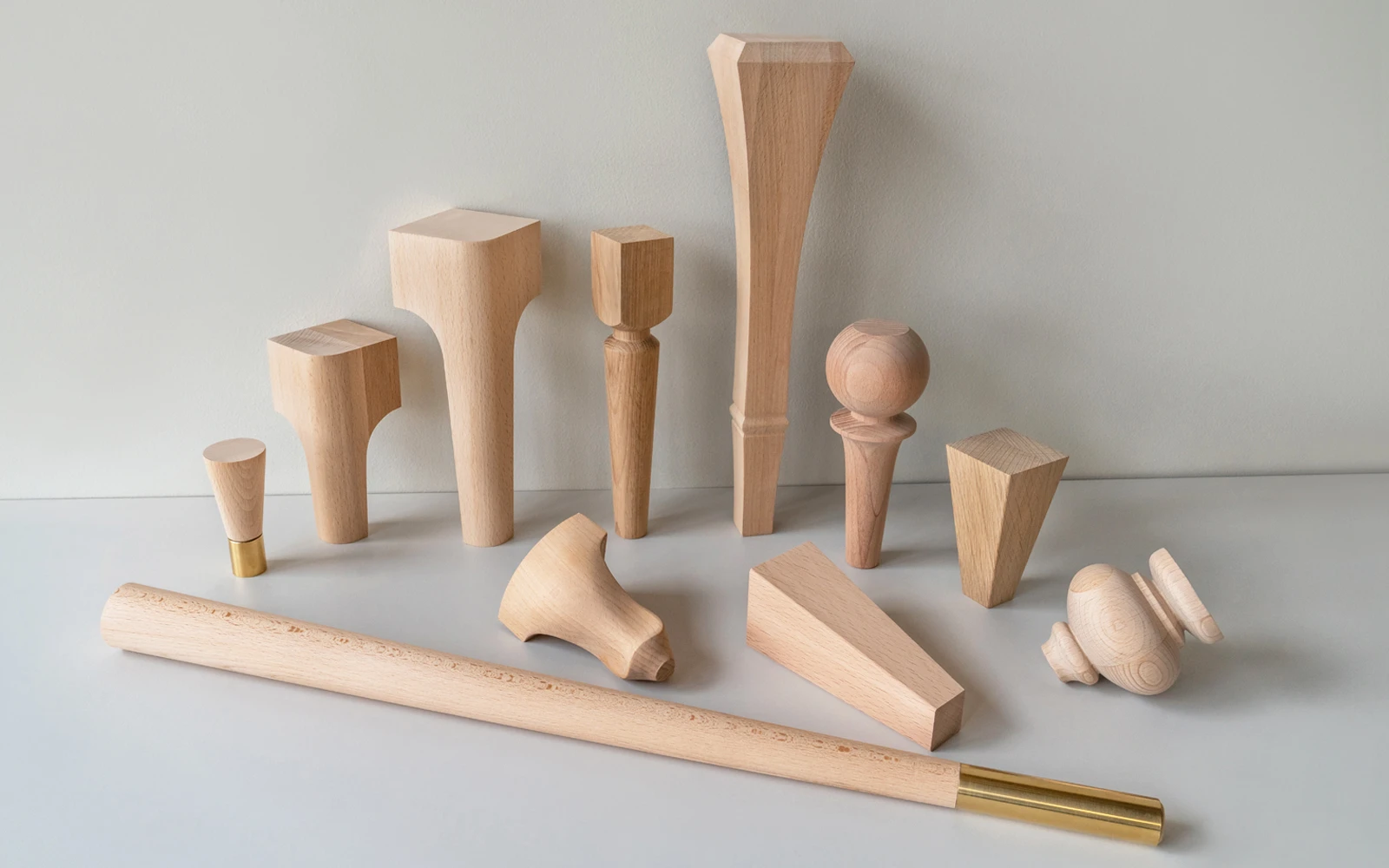
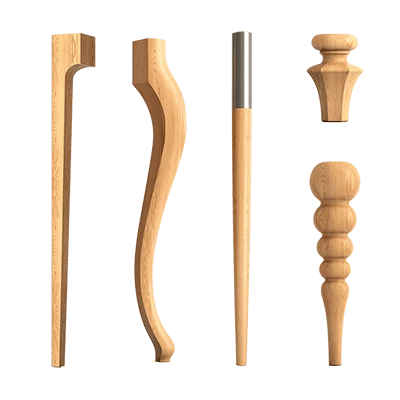
Wooden furniture legs — for lightweight tables on separate supports
-
furniture solutions — furniture concepts using tabletops
-
Kitchen solutions — for kitchen scenario
Frequently asked questions about solid wood countertops
What is a solid wood countertop and how is it different from a chipboard or MDF countertop?
A solid wood countertop is a solid or glued panel made of natural wooden boards without artificial binders. Unlike chipboard or MDF, solid wood has a natural texture, high strength and repairability: a scratched solid wood surface can be sanded and recoated.
What thickness of solid wood countertop is optimal?
For most interior tables — 24–30 mm. This is a universal thickness: sufficient rigidity, moderate weight, good proportions. STAVROS produces countertops with a thickness of 24–25 mm as standard.
Can I buy a tabletop separately from the base?
Yes. The tabletop is a standalone product. The STAVROS catalog has a separate section for tabletops with specific items.
Which wood is best for a dining table?
Oak is the optimal choice in terms of hardness, texture, and stability. For a dining table in a classic interior — a solid oak tabletop with tinting or clear lacquer.
How to care for a wooden tabletop?
Regularly remove water, avoid prolonged soaking. With oil finish, renew the coating every 6–12 months. Do not cut directly on the surface without a cutting board.
How to choose a tabletop for the base?
The shape should match the base design (round for a central support, rectangular for double or frame support). Overhangs — at least 15 cm from the ends. Tinting should be done from the same batch.
What size tabletop should I choose for a square kitchen table?
For a small kitchen — 800 × 800 mm (corresponds to position ST-026-1 STAVROS). This is a compact and functional size for a table for 2–4 people.