Article Contents:
- Buy frame profile: choosing wooden baguette for paintings, mirrors and panels
- Why "frame profile" is not just a batten
- When you need exactly a wooden frame profile
- Framing a painting — oil, watercolor, engraving
- Mirror design
- Interior panel and poster
- Canvas on stretcher
- Decorative interior frame
- Baguette profile for frames: what shapes are available
- Smooth profile
- Shaped Profile
- Carved wooden baguette
- Wide and narrow profile
- Gilding profile
- Natural wood profile
- How to choose the width and relief of the profile
- Checklist for choosing width and relief
- Proportions and the golden rule
- Material: oak, beech, MDF, solid wood for painting
- Oak baguette
- Beech baguette
- MDF
- Array without coverage
- How a wooden profile differs from an aluminum one
- Aluminum profile: where it is appropriate
- Wooden profile: where it is indispensable
- Practical conclusion
- How to calculate the amount of profile for a frame
- Basic formula
- Example calculation
- Why you cannot buy strictly by perimeter
- Why it is better to buy profile from one batch
- Wide profile: a separate story
- About cutting at 45°: briefly about the important
- Frame profile and interior style: how to avoid mistakes
- Classic and neoclassic
- Provence and Country Style
- Scandinavian style and Japandi
- Art Deco
- Modern classic ("new classic")
- Mistakes when buying a frame profile
- Choosing a profile only by photo
- Not considering the size of the painting
- Taking a frame that is too wide
- Buying a profile without a reserve
- Not Checking the Material
- Confusing a frame profile with a regular slat
- Forgetting about the 45° miter cut
- Mixing different wood shades
- Choosing an aluminum profile where a wooden one is needed
- What to buy together with a frame profile
- Decorative wooden profiles and moldings
- Decorative accents for frames
- Installation and finishing materials
- What matters for a professional result
- Why STAVROS
- FAQ
- How is a frame profile different from a baguette?
- Can I use a wooden baguette from the STAVROS catalog as a frame profile?
- Which profile to choose for a large painting?
- What is better for a classic interior: wood or aluminum?
- How much profile is needed for one frame?
- Where to buy a frame profile in Saint Petersburg and Moscow?
- How to join the corners of a frame made from a wooden profile?
- How to secure a picture frame on the wall?

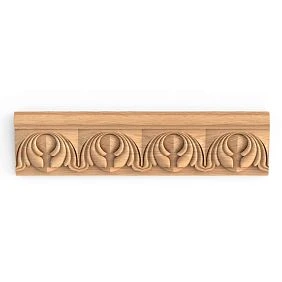
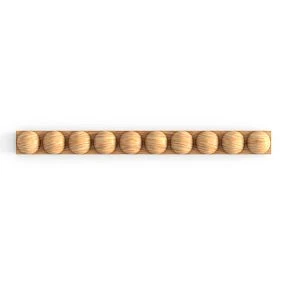
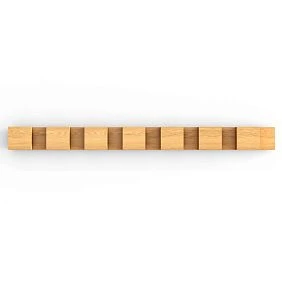
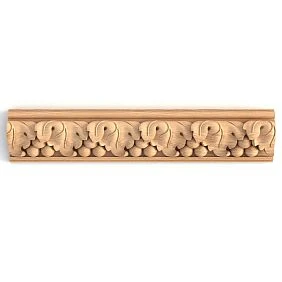
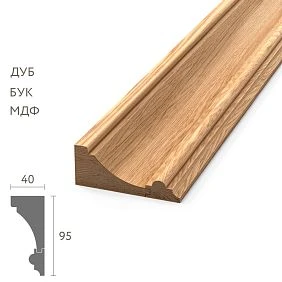
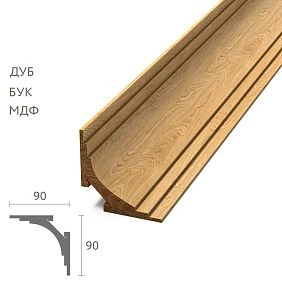
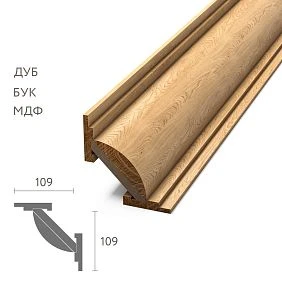
Buy a profile for frames: choosing a wooden baguette for paintings, mirrors, and panels
There are things that are invisible by themselves, but immediately catch the eye by their absence. A frame is one of them. A painting without a frame is an image. A painting in the right profile is a work that lives in the interior. A mirror in a wooden baguette is an accent in the room, not just a reflective surface on the wall. Buying the right profile for frames means understanding that you are not buying linear molding, but completion.
This article is written for those who make frames themselves: professional carpenters and framers, furniture makers, interior designers, workshop owners, and simply people who want to frame a painting, mirror, or panel so that it looks truly expensive. Buying the right profile for frames means knowing exactly what you are looking for before placing an order.




Why a "profile for frames" is not just a batten
At first glance, a profile for frames is just a long wooden strip. Cut at 45°, glue four corners — the frame is ready. But it is this simplification that leads to frames turning out faceless, disproportionate, or simply ugly. Understanding the difference between profiles means taking the first step towards the result.
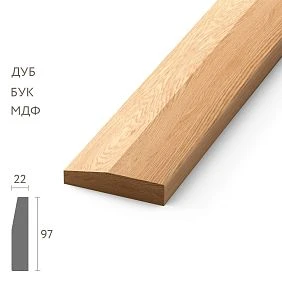
A batten is a simple straight profile with a rectangular or similar cross-section. A batten is a construction or technical element. Wooden planks In the STAVROS catalog, they are used for slatted panels, frame structures, accent decorative solutions in the interior. A batten cannot be directly used as a profile for a frame: it has no groove for the picture, no relief, no proportions designed for a framing function.
A baguette is precisely a decorative profile with relief, designed for assembling frames. It has a rabbet — a narrow step into which the painting, canvas, glass, or mat is inserted. Without a rabbet, a baguette simply turns into a beautiful molding.
Frame profile is an applied collective name for blanks used to make frames: baguette, decorative strip with a groove, molding for frames. Buying a frame profile means looking specifically for this: a blank for assembly, not a finished product.
Molding is a general term for long decorative products made of solid wood or MDF. Pogonazh iz massiva in the STAVROS catalog, this is a broad category that includes strips, decorative profiles, and baguette blanks. This is your starting point when searching for a profile for frame structures.
Layout is a completely different product: an element for dividing and covering joints on facades, walls, and doors. More details about it are in the article about wooden molding on the STAVROS website. Confusing layout with frame profile is a common mistake.
So: when you are looking for where to buy a frame profile, you are looking for a decorative profile with a rabbet or groove for fixing a painting, mirror, or other content. This is what is called a wooden baguette in a broad sense.
Our factory also produces:
When you need exactly a wooden frame profile
Buying a wooden frame profile makes sense in several very specific scenarios. Let's go through them to understand how broad this application is.
Get Consultation
Framing a painting — oil, watercolor, engraving
An oil painting on canvas requires a profile with a deep rabbet — at least 10–15 mm to accommodate the stretcher. A watercolor or engraving on paper with a mat requires a flatter and more elegant profile that won't 'overwhelm' the delicate work. In both cases, a wooden profile for paintings wins over aluminum in tactile and visual quality — especially in classic and warm interiors.
Mirror framing
A mirror in a wooden frame is a timeless classic of interior design. The wooden profile for a mirror frame is selected differently than for a painting: a mirror has no mat and no stretcher, but it does have weight. Therefore, for mirrors, it is important that the profile has sufficient rabbet depth and sufficient mechanical strength at the corner joints. A wide baguette profile with a pronounced relief makes the mirror an interior accent — especially in hallways, bedrooms, and dressing rooms.
Interior panel and poster
Posters, reproductions, decorative panels with texture are objects that require a frame "for the interior," not "for storage." Here, the wooden profile for frames gives freedom of choice: natural solid wood, tinting to match the furniture color, enamel to match the wall tone. The profile for an interior panel can be thin and strict or wide and voluminous — depending on the scale of the work and the character of the room.
Canvas on stretcher
A painted canvas on a stretcher is one of the most technically demanding objects for framing. The profile must have a deep rabbet (15–20 mm or more), sufficient width to hide the side of the canvas, and strength capable of supporting the weight of the painting during wall mounting. Buying a wooden profile for picture frames for canvas means first of all ensuring sufficient rabbet depth.
Decorative interior frame
A frame that hangs on the wall without content — as an architectural accent, as part of a panel layout, as an element of a decorative composition. This is a gaining popularity technique in modern interiors: several frames of different sizes form a "picture wall" without the pictures themselves. Here, the profile works as pure decor, and the choice depends solely on the interior style.
Buying a wooden profile for frames in any of these scenarios is not just a household task. It is a choice with aesthetic consequences.
Baguette profile for frames: what shapes are there
The shape of the profile is its main parameter after the material. It is the shape that determines the character of the frame, its "voice" in the interior. Let's consider the main types.
Smooth profile
Simple baguette without relief: a flat, smooth front surface with straight or slightly beveled sides. This is a minimalist choice for modern interiors, Scandinavian style, Japandi, and loft. The smooth profile "doesn't shout" — it organizes the artwork, defines its boundaries, but does not compete with the content.
A smooth wooden profile for frames works well with graphics, black-and-white photographs, and abstract works. It can be painted any color with enamel — it takes the coating perfectly, especially if the base is beech.
Shaped profile
A baguette profile with pronounced relief: flutes, edges, a multi-step transition from the rabbet to the front surface. This type of profile creates a "museum" impression — a heavy, authoritative frame that says the work inside is worthy of framing.
You need to buy a shaped wooden profile for frames for classic paintings, family portraits, works in warm tones, and interiors with moldings and wooden moldings on the walls. A shaped profile requires more precise cutting: the complex relief at the corner joint demands accuracy.
Carved wooden baguette
A separate category is a profile with hand or machine carving. This is a "piece" product: acanthus leaves, foliage, meanders, grapevines on the profile plane. A carved wooden baguette is a choice for antique frames, works of old masters, and interiors in Baroque or Renaissance style. Decorative wooden inlays from the STAVROS catalog can be used in combination with the profile — for corner and central accents of the frame.
Wide and narrow profile
Width is a separate story. A narrow profile (10–20 mm) is for small works, graphics, photographs, and delicate watercolors. A wide profile (40–80 mm and more) is for large canvases, mirrors, and panels with a monumental character.
It is important to understand: the profile width is perceived not absolutely, but in relation to the size of the framed object. The same 40 mm profile will look correct on an 80×100 cm painting and excessive on a 20×30 cm work.
Gilding profile
Classic gilded baguette is a wooden base coated with gesso (chalk primer) and gold leaf or gilding. Gilding requires a profile made of soft or medium-density wood: it must accept the primer well and not crack. The gilding profile is a separate topic in professional framing, and it starts with the correct choice of wooden blank.
Natural wood profile
Lacquer or oil on natural solid wood is perhaps the most honest and warm option. Oak with its coarse texture, beech with a smooth surface, ash with a pronounced grain — each species gives its own character to the frame. A wooden profile for lacquer requires good sanding and quality priming, but the result cannot be confused with aluminum or plastic: the warmth and weight of natural wood are felt immediately.
Buying a baguette profile for frames means first determining which of these types you are dealing with, and only then looking at the catalog.
How to choose the width and relief of the profile
The most common question is "what width to choose?" The answer is not universal, but the logic of choice is quite specific.
Checklist for choosing width and relief
-
Measure the painting, mirror, or panel. The actual size of the framed object is the starting point. Without it, any recommendations on profile width are an abstraction.
-
Determine the visual weight of the object. Dark, saturated painting is visually "heavy." Watercolor with an airy background is "light." For a heavy object, use a wide profile; for a light one, use a narrow profile.
-
Choose the profile width. A rough rule: frame width should be between 1/15 and 1/10 of the shorter side of the artwork. For a 50×70 cm piece, the shorter side is 50 cm. Frame width: from 33 to 50 mm. This is a range, not a strict rule.
-
Check the relief height. High relief creates a deep shadow — the frame "stands out" from the wall, gaining volume. A flat profile sits flush against the wall — more modern, less monumental.
-
Consider the room style. Scandinavian style — narrow smooth profile. Classic — wide ornate profile. Neoclassical — moderate width with delicate relief. Art Deco — geometric profile without organic elements.
-
Do not choose too narrow a profile for a large mirror. A 100×150 cm mirror with a 15 mm profile looks unstable — the frame seems accidental.
-
Do not choose too heavy a frame for a small artwork. A 60 mm profile "overwhelms" a small watercolor — the content gets lost.
-
Allow extra for miter cuts — at least 15% of the calculated perimeter.
Proportions and the Golden Rule
Professional framers refer to the "rule of thirds" for frames: the frame should not occupy more than one-third of the area it surrounds. This is not a mathematical law, but a working heuristic. If the frame takes up more than a third, it overwhelms the content. If less than a tenth, it gets lost.
Buying wooden profile for frame making with extra is not wasteful — it's professional practice. From leftover pieces, you can make a smaller frame or use fragments for the next order.
Material: oak, beech, MDF, solid wood for painting
Profile material is not only about aesthetics, but also about performance, durability, and compatibility with the finish.
| Material | When to choose | Advantage |
|---|---|---|
| Oak | Natural finish, oil, varnish, premium interior | Pronounced texture, high hardness, status |
| Beech | Painting, enamel, white and pastel frames | Dense even structure, ideal surface for painting |
| MDF | Decorative wall frames, budget projects | Stable geometry, does not warp with humidity changes |
| Solid wood without coating | Individual hand finishing | Complete freedom of finishing: tinting, varnish, oil, enamel |
Oak moulding
Oak is hard, with a characteristic large grain pattern, with "mirrors" on the radial cut. An oak frame immediately "shows the wood." It is warm, weighty, with history. Dark or light varnish on oak gives the frame a stable presence in the interior. Rubio Monocoat oil on oak gives it a truly natural museum look.
Buying a wooden profile for frames made of oak is a choice for those who want naturalness as the main message of the frame.
Beech moulding
Beech is dense, homogeneous, with a fine texture. Pores are not visible on it, the surface is smooth and predictable. That is why beech is the best base for painting. A wooden profile made of beech under white enamel gives a frame with a perfectly smooth surface — like from a professional framing workshop.
MDF
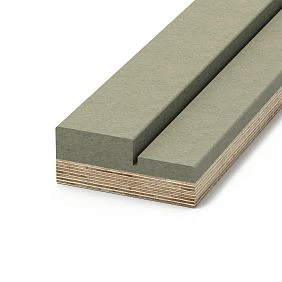
MDF profile is geometrically stable: it does not warp, crack, or react to humidity like solid wood. For decorative frames in apartments with unstable climates, this is a pragmatic choice. The surface under enamel is smooth, the profile accepts the coating neatly. The weak point of MDF is the ends: they are porous and require additional priming.
Solid wood without coating
Wooden moulding for painting or tinting without a finish coating is a "blank." You decide what the result will be: walnut stain, amber varnish, gray-green enamel, old gold patina. It is this freedom that makes unpainted wooden profile for frames popular among craftsmen who make frames for a specific interior project.
How does a wooden profile differ from an aluminum one
This question inevitably arises — especially when a buyer sees that aluminum profiles for frames are cheaper. Let's honestly break down: where each material is in its place, and where it is not.
Aluminum profile: where it is appropriate
Aluminum profile for frames is a technical and office choice. Nielsen system frames, strict rectangles without relief, matte metal. This is ideal for:
— posters in office spaces with neutral design;
— information boards;
— temporary exhibitions;
— interiors in high-tech or tech loft style.
Aluminum profile does not age, does not warp, and is easy to clean. But it is cold — literally and metaphorically. In a residential interior with wooden furniture, wall moldings, wooden moldings and classic details, an aluminum frame looks like an accident.
Wooden profile: where it is indispensable
Wooden profile for frames is an interior and decorative choice. Warmth, texture, the ability to paint in any color, combination with other wooden interior elements. Frame made of wooden molding:
— matches wooden furniture and flooring;
— accepts any finish: gilding, varnish, enamel, patina;
— creates a tactile and visual weight that aluminum lacks;
— suitable for classic, neoclassical, Provence, Art Deco, Scandinavian style, "warm minimalism".
If you are designing an interior with character — wooden molding for paintings and mirrors — it is not a question of price. It is a question of respect for the interior.
Practical conclusion
For residential interiors, classical works, mirrors, panels, and original paintings — wooden profile. For technical needs, offices, temporary exhibitions — aluminum. STAVROS specializes in wooden decor — and the frame profile should be sought in this context.
How to calculate the amount of profile for a frame
Calculation is not math for the sake of math. It's a way to avoid ending up in a situation where there isn't enough profile for the last corner.
Basic formula
For a rectangular frame:
Profile length = 2 × (width + height of the painting) + profile width × 8 + a margin of 10–15%
Why is the profile width multiplied by 8? Because at each of the 4 corner cuts, a piece equal to the profile width is lost. Total 4 corners × 2 sides of each corner = 8 profile widths.
Example calculation
Painting 60×80 cm. Profile width 30 mm.
— Painting perimeter: 2 × (60 + 80) = 280 cm.
— Losses on cuts: 30 mm × 8 = 240 mm = 24 cm.
— Net consumption: 280 + 24 = 304 cm.
— 15% reserve: 304 × 1.15 ≈ 350 cm.
Total: one frame requires approximately 3.5 linear meters of profile.
Why you shouldn't buy strictly by perimeter
Because a 45° cut always produces waste. If the profile has a threaded pattern, you also need to match the pattern at the corners, which increases waste to 20–25%.
Why it's better to buy profile from one batch
Wooden profile from different batches may differ slightly in shade, color saturation, and even cross-section geometry. If the frame is assembled from profile of two different batches, the corner joints may not fit perfectly. Buying profile for making frames from one batch with a reserve is professional practice.
Wide profile: a separate story
Wide profile (50 mm and more) requires a larger reserve: waste on corner cuts is proportionally greater. For a 60 mm profile on a 60×80 cm frame, about 4 meters will be needed.
About the 45° cut: briefly on the important
All four corners of the frame are cut at a 45° angle — this gives a clean corner without visible ends. This is standard for any frame profile, wooden or aluminum.
For precise cutting, you need a miter saw or a special miter box with rigid workpiece fixation. A hand saw with a regular miter box will produce a result that will be visible on the finished frame as gaps in the corners. This is not a matter of skill — it's a matter of tools.
Glue for corner joints of wooden profiles — carpenter's PVA or construction adhesive from the section Mounting and finishing materials STAVROS. After gluing the corners, you can additionally secure the joints with baguette nails or special V-shaped staples.
Profile for frames and interior style: how not to make a mistake
A frame is part of the interior, not a separate object. It should harmonize with what surrounds it. Here is a practical match of styles and profile types.
Classicism and neoclassicism
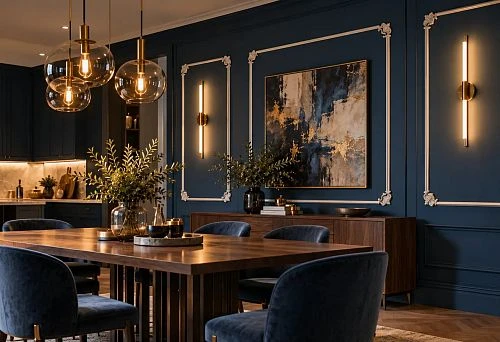
Wide figured profile, relief with flutes and ribs, gilding or dark varnish. Wooden profile made of oak or beech with hand or professional gilding. Complemented by wooden moldings on the walls and wooden rosettes on the ceiling — when all this is combined, the interior achieves classical solidity.
Provence and country
Wide profile with slightly aged white or cream enamel, soft rounded transitions, delicate relief. Or — natural solid wood with light stain. Here the frames are "alive," warm, slightly deliberately handmade.
Scandinavian Style and Japandi
Narrow smooth profile 10–15 mm, natural wood without coating or with matte varnish. Or — black enamel on beech. Minimum relief, maximum line purity. The frame should not be visible — it should only mark the boundary.
Art Deco
Strict geometry of the profile without organic curves. Steps, right angles, mirror varnish in black or gold. Width — moderate, relief — geometric, character — monumental.
Modern classic ("new classic")
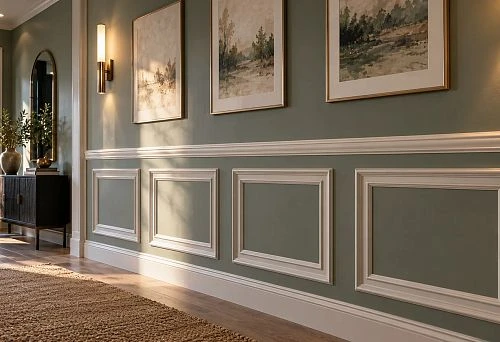
Medium width profile (25–40 mm) with moderate relief. Color — neutral: anthracite, warm white, gray-beige. Pairs with wooden corner pieces and other elements from the molding section in the STAVROS catalog.
Mistakes when buying profile for frames
Everyone makes mistakes here — from beginners to experienced craftsmen who are too hasty. Let's break down each one honestly.
Choosing a profile only by photo
A photo in the catalog does not convey the actual relief, rabbet depth, and feel of the material. This is especially critical for carved profiles: in photos, the carving may look less pronounced than in reality — or vice versa. Order samples or look for buyers with real application experience.
Not considering the size of the artwork
Buying a profile based on the principle "liked it — took it" without reference to the size of the framed object is a classic beginner's mistake. A profile that looks good in hand may turn out to be completely disproportionate for a specific piece.
Taking too wide a frame
A wide frame overlaps the content — especially if it's a small piece. "A small still life in a huge gold frame" is not irony, it's a real story. The proportion of the frame to the painting is critically important.
Buying a profile without extra length
Cutting at 45° inevitably produces waste. Buying strictly to the perimeter without extra length is almost a guarantee of a "not enough for the last corner" situation. Always take at least 15% more than the calculated length.
Not checking the material
"Wood" is too general a term. Oak and beech behave differently under paint. Pine can resin and reject the paint coating. Before buying, clarify the wood species and its behavior under your final finish.
Confusing a baguette profile with a regular batten
A batten has no rabbet — it doesn't hold a picture or glass. Buying a batten instead of a profile for frames is a waste of time and money. These are different products with different functions. Rail RK-001 In the STAVROS catalog, this is a batten for interior panels, not a profile for frame structures.
Forgetting about the 45° cut
Cutting a frame profile at a right angle is a gross mistake. The end of the profile will be visible in the corner of the frame. Always — 45°, always — with precise marking. And always — with the right tool.
Mixing different shades of wood
A frame made from two pieces of profile with noticeably different shades looks unfinished. If you buy the profile in several batches, keep the batch information. Even better — take all the required length at once.
Choosing an aluminum profile where a wooden one is needed
Aluminum in a classic or Provencal interior with wood, carpets, and fabrics is always a dissonance. If the interior context is wooden, the frame profile should be wooden. The warmth and texture of wood cannot be replicated by any metal.
What to buy together with a frame profile
If you have already decided to buy a frame profile, check what else you will need for a professional result.
Decorative wooden profiles and moldings
-
Wooden Picture Frame — a wide selection of decorative profiles for frames, panels, and mirror framing
-
Pogonazh iz massiva — long decorative products for various interior design tasks
-
Wooden planks — for slatted panels and frame structures for paintings
-
Wooden moldings — for wall decoration around paintings and mirrors
Decorative accents for frames
-
Decorative wooden inlays — corner and center accents for frames in classic style
-
Wooden sockets — for decorative frame compositions on walls
Mounting and finishing materials
-
Assembly adhesive — for fixing corner joints and additional fastening; in the section Mounting and finishing materials there is TYTAN Prof.classic Fix and KUDO HIGH TACK
-
Rubio Monocoat oil — for final protection of uncoated wooden profile; also in the mounting materials section
-
Varnish or enamel — for painted frames to match interior color
What is important for a professional result
A professional frame is not just the right profile. It includes a mat for the artwork, glass to protect the work, a backing made of cardboard or MDF, fasteners, and hinges for wall mounting. STAVROS provides the wooden component — profile, decorative accents, mounting materials. The rest is available at specialized framing supply stores.
Why STAVROS
When you are looking for where to buy wooden profile for frames in Moscow or St. Petersburg, as well as with Contact us to confirm shipping to your destination. — it is important to understand who you are working with.
Specialized assortment of wooden moldings. In the section Pogonazh iz massiva STAVROS — decorative profiles for interior tasks: frames, panels, mirror trims, furniture. This is not a construction assortment — it is decorative.
Real product cards with parameters. Dimensions, material, application — everything in the card. No need to guess if a specific profile is suitable for a framing task.
Compatibility with other assortment. The profile for frames from STAVROS harmoniously aligns with wooden moldings, decorative inlays, with corner pieces and other decorative elements — all from one source, in a unified system.
Delivery across all of Russia. CDEK and DPD. Buy a wooden profile for frames in Saint Petersburg or buy a profile for frames in Moscow with pickup from the showroom, and in any other city in the country — with courier delivery.
Expertise and context. STAVROS works with cultural heritage sites, restoration projects, and professional interior designers. This is not a "everything for home" store — it is a specialized supplier of wooden decor with real product understanding.
If you are professionally making frames or updating an interior — the profile from the STAVROS catalog will be that detail which makes the final result complete. Buying a profile for baguette frames here means not searching later why something went wrong.
FAQ
How is a profile for frames different from a baguette?
Essentially, they are synonyms in most contexts. Baguette is the classic name for a decorative profile used in frame making. Profile for frames is a more applied, general name for the blank from which a frame is made. What matters is not the term, but the presence of a rabbet — a groove for fixing the content — and the correct relief.
Can a wooden baguette from the STAVROS catalog be used as a profile for frames?
Yes, if the profile has a rabbet of the required depth and the width matches the size of the object being framed. Pogonazh iz massiva In the STAVROS catalog — a starting point for selection.
Which profile to choose for a large painting?
For a large painting — a profile with a width of 30–40 mm with moderate or pronounced relief. A narrow profile will not hold the proportion and will look accidental. Also important is sufficient rabbet depth — for canvas on a stretcher at least 15–20 mm.
What is better for a classic interior: wood or aluminum?
Definitely wood. The warmth of the texture, the possibility of gilding, painting to match any interior color, visual and tactile harmony with furniture, moldings, and other wooden elements — all of this is fundamentally absent in aluminum. A wooden profile for frames in a classic interior is not a matter of taste, but a matter of stylistic logic.
How much profile is needed for one frame?
Calculate using the formula: perimeter of the object + 8 profile widths (for miter cuts) + 15% reserve. For a painting 60×80 cm with a profile width of 30 mm: 280 + 24 = 304 cm × 1.15 ≈ 350 cm. Take with a reserve — saving on a meter of profile is not worth redoing the entire order.
Where to buy profile for frames in Saint Petersburg and Moscow?
At STAVROS — showrooms in both cities. You can buy profile for frames in Saint Petersburg and Moscow with pickup. Delivery via CDEK and DPD throughout Russia is also available. Order — from one item, no minimum order amount.
How to join the corners of a frame made from a wooden profile?
Cut at 45° + woodworking PVA glue or construction adhesive. After drying — additional fixation with V-staples or baguette nails. For a clean corner, precise marking and a miter saw with a clearly fixed 45° angle are essential. A manual miter box introduces error — corner joints will have gaps.
How to secure a frame with a picture on the wall?
For small frames — one or two nails or dowels with a hook at the top of the frame. For large and heavy ones — a French cleat (a strip with a counter cut), which distributes the load across the entire width of the frame. Glass in the frame significantly increases weight — consider this when choosing fasteners.
A frame is not wrapping. It is architecture around meaning. The right wooden profile for frames turns a good painting into a finished work, a mirror into an interior accent, a decorative panel into an object with status. Buying the right profile for frames means understanding types, materials, and sizes once, and getting a result that will work for years.
STAVROS company has been operating since 2002. Among the implemented projects are the restoration of the Konstantinovsky Palace, work at the Hermitage, Alexander Palace, Trinity-Izmailovsky Cathedral, and Sheremetev Mansion. STAVROS offers wooden moldings, carved decor, furniture components, and installation materials with Contact us to confirm shipping to your destination. Showrooms in St. Petersburg and Moscow. Rating 5.0 — over 260 real reviews.