Article Contents:
- Short answer: when you need a wooden baguette
- What is a wooden baguette and how it differs from a regular batten
- Where wooden baguette is used
- Baguette for paintings
- Baguette for mirrors
- Baguette for decorative panels
- Baguette for furniture decor
- Baguette for wall frames
- How to choose baguette profile
- How to choose a baguette by size
- How to choose a wooden baguette according to interior style
- Material and coating: what is important before purchasing
- Baguette, layout, slat and molding: what to choose
- How to combine a wooden baguette with interior decor
- Mistakes when choosing a wooden baguette
- What to buy together with a wooden baguette
- FAQ: Answers to Popular Questions
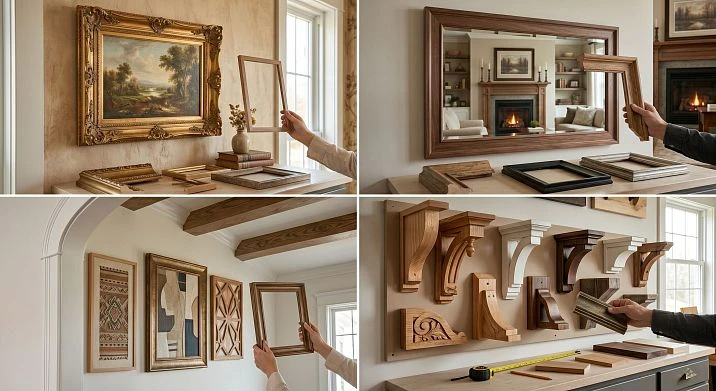
Look at any painting in a good interior — and you will understand: the frame is no less important than what is inside it. A correctly chosen wooden baguette does not just border the image — it integrates it into the space, connects it with furniture, walls, baseboards, and the overall tone of the interior. An unsuccessful baguette, on the contrary, ruins even a strong work: too wide overwhelms, too thin gets lost, mismatched in style — argues with furniture and wallpaper. This article is a detailed guide to the world of wooden baguettes: from understanding profiles and wood species to specific tips for choosing for paintings, mirrors, panels, and interior compositions.
Short answer: when you need a wooden baguette
A wooden baguette is needed whenever you need to create a decorative frame with a distinct character. It is not just a technical element holding the glass and mat in the frame. It is an architectural accent that sets the mood of the entire wall.
For framing paintings — it goes without saying. But not only paintings require a baguette. Graphics, photography, collage, reproduction, textile panel, decorative embroidery, dried plants under glass — all of this becomes a full-fledged interior object precisely thanks to the frame. picture molding gives the image the status of a work of art — and this is not a metaphor, it is the visual mechanics of perception.
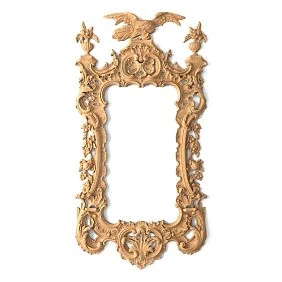
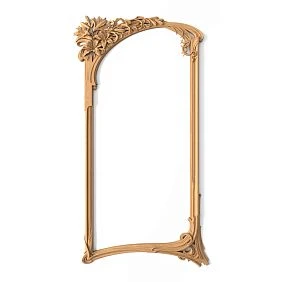
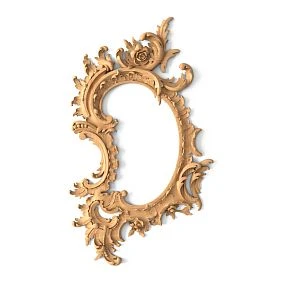
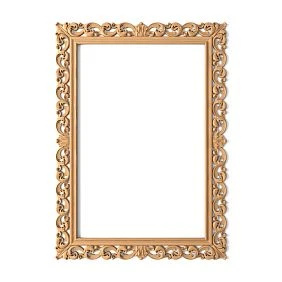
For mirrors, a wooden baguette solves a task that neither a metal profile nor a plastic slat can handle. A mirror in a wooden frame is a warm, lively object. It fits into a classic, country, Scandinavian, Provencal, or neoclassical interior effortlessly — simply because wood universally combines with any natural material.
For decorative panels and interior inserts — when the wall should become not just a background, but an independent decorative statement. A zone framed with a wooden profile with wallpaper, fabric, mirror glass, or plaster of a different color is a classic technique for creating an accent wall without major renovation.
For furniture facades and display case inserts. wooden picture molding and similar profiles are used in classic furniture to create frame inserts on cabinet doors, sideboards, and display cases. The same solution — just in a different context.
For classic and neoclassical interiors, where wooden profile is a mandatory component of architectural wall decor: frame panels, horizontal belts, niches and openings framing. Without the right molding, classic looks like a suit without buttons.
And finally — for cases when a regular batten or flat layout does not provide the desired decorative effect. When you need not just a perimeter, but an expressive ornamental contour — this is a task for solid wood molding with a shaped profile.




What is a wooden molding and how is it different from a regular batten
This question arises for most buyers — and rightly so. The terminology in the world of wooden moldings is often confused, used in different meanings by different sellers, and as a result, a person orders one thing and gets something completely different.
Classic definition: a molding is a decorative profile intended for creating frames and borders. The key word is "decorative." A molding has a pronounced cross-sectional shape: a figured silhouette that carries a certain stylistic character. It creates a three-dimensional contour that is perceived as an independent decorative element.
wooden plank — a simpler element. Rectangular or square cross-section, minimal profile or none at all. A batten creates rhythm, structures the surface, forms horizontal or vertical lines. It does not frame — it divides. Like wooden planks on the wall — a popular modern technique where a pattern of parallel slats creates texture rather than a frame.
wooden floor — an element whose main function is constructive: to close a joint, gap, or transition between surfaces. A trim can have a simple or profiled cut, but its primary task is joining, not decorative. Although in a good interior, the line between trim and decorative element blurs.
Moldings from solid wood — linear profiles with an expressive cross-sectional shape used for decorating walls, furniture, and transitions. Molding is closer to a picture frame in decorative purpose, but is usually used as a linear element rather than to create a closed frame.
Summary: Wooden Picture Frame — is a decorative profile for framing. It is visible, it shapes the style, it creates completeness. Choose it when you need a contour — not a line, not a joint, and not a rhythm.
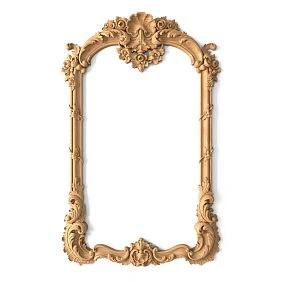
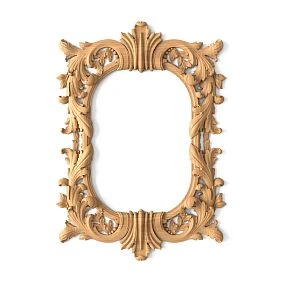
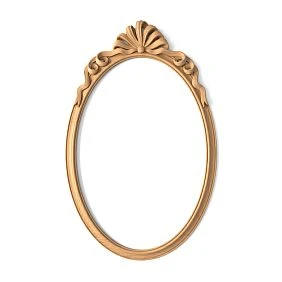
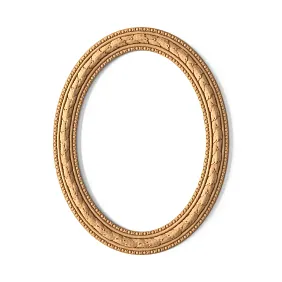
Our factory also produces:
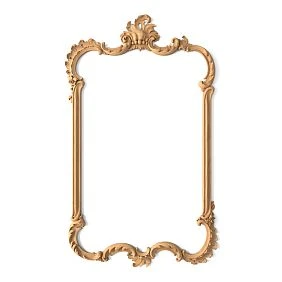
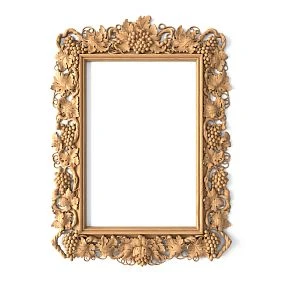
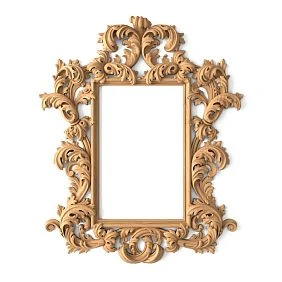
Where wooden baguette is used
Get Consultation
Picture frame for paintings
Framing paintings, graphics, and photographs is the historical home of the picture frame. A frame for a painting is not just a holder. It establishes a distance between the artwork and the surrounding reality, sets the scale, and determines the status of the work in the space.
wooden picture molding is chosen based on several criteria. The first is the style of the work itself. Classical painting with dark, layered brushwork — a dark lacquered or gilded frame. Watercolor, pastel, delicate graphics — a light, laconic profile, possibly with white or cream enamel. Modern abstraction — a minimalist profile without decoration, natural wood, or solid color paint.
The second criterion is the interior where the work will hang. A painting does not live in a vacuum; it lives in a room — next to furniture, wallpaper, baseboards, and lights. The frame should fit into this context, not exist on its own.
The third criterion is the size of the work and its position on the wall. A small painting 30×40 cm and a canvas 100×150 cm require completely different frame scales. For a small work, a moderate profile 25–40 mm wide. For a large canvas, the profile can be 60–100 mm or even wider.
Frame for mirrors
A mirror in a wooden frame is an interior item that carries a dual load: functional and decorative. The function is obvious. The decorative role of a mirror in a wooden frame is enormous: it reflects space, visually enlarges the room, and creates light effects with side lighting.
Frame for a mirror is chosen slightly differently than for a painting. A mirror is neutral; it has no inherent color or style. Therefore, the frame speaks for it. For a hallway in a classic style — a figured profile with enamel or gold finish. For a bedroom in neutral light tones — a light wooden frame with a subtle relief. For a loft or Scandinavian interior — a simple wooden profile without decoration, with a natural or slightly stained coating.
An important nuance: a mirror is heavier than a painting. For a large mirror 80×120 cm and larger, a wide frame with sufficient profile thickness is needed — so that the fasteners can support the weight and the frame visually matches the scale.
Frame for decorative panels
A decorative panel is an interior insert in a frame. It can be a piece of designer wallpaper, decorative plaster of a different color, a fabric insert, a mirror or decorative glass sheet, a fresco, or an artistic painting. Framing with a wooden profile turns the insert into a finished object.
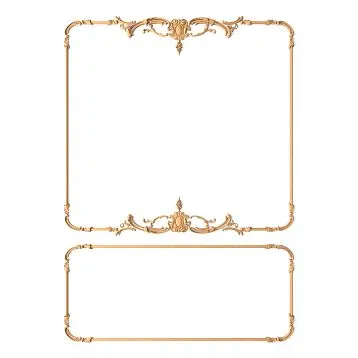
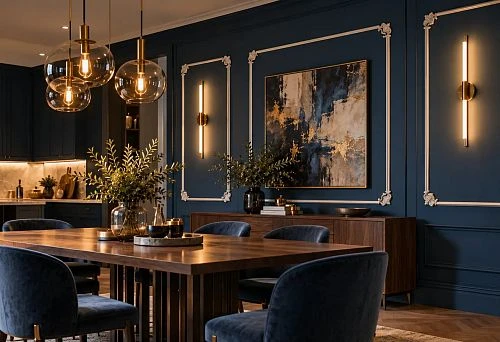
Frame for panels in a classic interior performs an architectural role: it creates framed panels on the walls — "cartouches" — which divide large surfaces into scalable fragments. This is a typical technique of classicism, Empire, Baroque — and it works not only in historical interiors but also in modern neoclassicism.
For this technique, it is most convenient to use molded trim — a long linear profile from which the frame is assembled on-site, precisely matching the dimensions of a specific wall.
Molding for furniture decor
In furniture applications, a wooden profile works differently than on a wall. On a cabinet or display case facade, it creates a frame insert — a rectangular outline framing a panel or glass insert. This is a classic joinery technique that adds volume and stylistic character to a flat facade.
decorative wooden profile on a furniture facade, it is glued or attached with nails and glue, then painted together with the facade. Result: the MDF facade visually looks no different from a handcrafted solid wood frame facade. This is the most affordable way to give mass-produced furniture a designer look.
Molding for wall frames
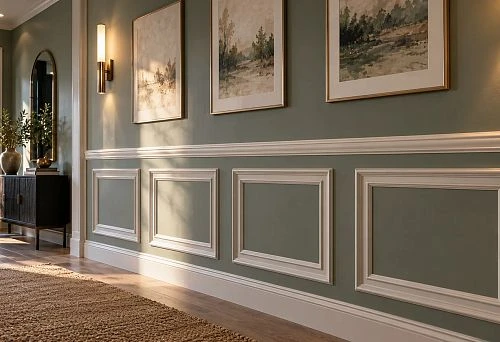
Wall frame panels are one of the main trends in interior decor in recent years. The idea is simple: a grid of rectangular or square frames, assembled from wooden profiles, is created on the wall. This technique works well in living rooms, bedrooms, hallways, and studies — anywhere you need to structure a large wall surface and add character.
For creating wall frames Wooden Picture Frame is used in the form of long strips that are cut and assembled on the wall. The profile width is 20–50 mm, and the relief height is from 8 to 25 mm, depending on the desired expressiveness. All frames are painted the same color as the wall — creating the effect of a relief ornament without changing the color.
How to choose a baguette profile
The profile is the shape of the cross-section. It determines how expressive the frame is, what style it belongs to, and how it behaves under different lighting conditions.
Narrow profile (width 15–30 mm, height 8–15 mm) — for small works, lightweight frames, minimalist interiors. It does not claim an independent decorative status — it simply marks the boundary between the artwork and the wall. It works well in pairs and groups when several small frames are combined into a gallery wall.
Medium profile (width 30–60 mm, height 15–25 mm) — a universal range. Suitable for medium-sized paintings and mirrors, wall frame panels, and furniture facades. It is in this range that the greatest variety of shapes occurs: there are flat, shaped, and relief profiles.
Wide profile (width from 60 mm) — for large mirrors, significant paintings, monumental decorative panels. In classic and Empire interiors, a wide Wooden Picture Frame — is a mandatory element. It itself carries decorative value, often has a multi-level relief, and is perceived as a full-fledged architectural element.
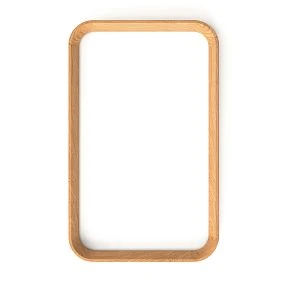
Flat profile — straight, without pronounced relief. Modern aesthetics: Scandinavian style, Japanese minimalism, loft, brutalism. A flat profile is easy to cut and join, forgiving small connection inaccuracies. It looks beautiful when painted in a contrasting color relative to the wall.
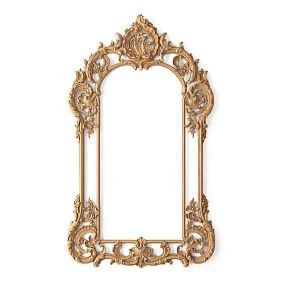
Shaped profile — curves, transitions, fillets, shelves. Classic, neoclassical, baroque, rococo, provence, empire — each style has its own characteristic shaped profile, distinguished by the ratio of concave and convex elements, their width, and rhythm of alternation.
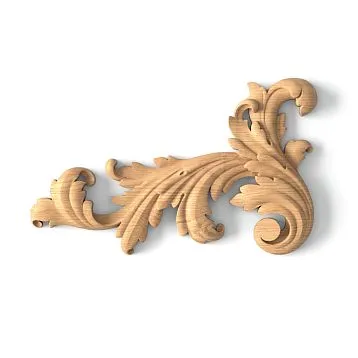
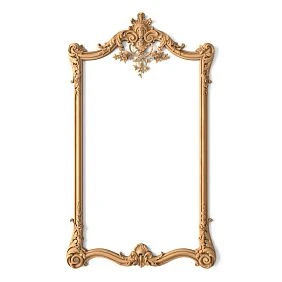
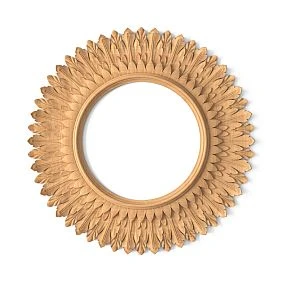
Relief profile with carved elements — the highest level of decorativeness. Ornamental inserts, acanthus leaves, pearls (beads), spoons, and other classic carving motifs. Such solid wood molding is used in the richest classic interiors — grand halls, living rooms with high ceilings, studies in a manor style.
Picture frame strip — is not a separate type of profile, but a form of supply. Molding in the form of a long rod (1.5–3 m) for self-cutting and assembling frames. Convenient for making frames of non-standard sizes and for wall panel decorations.
How to choose a molding by size
Frame size is a proportional decision that affects the perception of both the artwork itself and the entire wall. There are well-established proportional rules that work in almost any situation.
The proportion of profile width to artwork size. For a small painting 20×30 or 30×40 cm, the optimal profile width is 20–35 mm. This creates a delicate framing that does not distract from the artwork. For a painting 50×70 cm — 35–55 mm. For a large canvas 80×100 cm and larger — 55–90 mm, and even wider for monumental solutions.
For a mirror, the rule is slightly different. A mirror itself is a neutral object. Therefore, the frame can be proportionally narrow (for a minimalist effect) or emphatically wide (for a monumental accent). For a mirror 60×90 cm — a frame from 40 to 80 mm, depending on the style. For a large mirror 90×150 cm — from 60 to 120 mm.
Relief height. This parameter affects the perception of the frame under side lighting. High relief (from 20 mm) creates an expressive shadow that visually 'separates' the painting from the wall. A flat profile with minimal relief (5–8 mm) creates a calmer, more integrated solution.
Scale of furniture and wall height. A small frame with a narrow profile gets lost on a tall empty wall. This is a common mistake: a person chooses a frame 'to fit the painting' without considering the scale of the wall. In a tall room with ceilings of 3 m and higher, even a medium-sized artwork may require a wider profile to visually 'hold' on the wall.
Distance to baseboard and cornice. A painting or mirror always exists in relation to the lower and upper horizontals: the baseboard and cornice. The frame must have a visual 'weight' comparable to these elements. If with a classic profile creates a sense of solidity, reliability. 100 mm high with an expressive profile — a frame with a 20 mm profile looks unremarkable next to it.
Inner and outer frame dimensions. When manufacturing a frame, it is important to accurately calculate both parameters. The inner dimension is based on the artwork size plus the mat (if any). The outer dimension is the inner dimension plus the profile width on both sides. For wall frame panels, the outer dimension is determined based on the wall architecture and desired pattern.
How to choose a wooden molding by interior style
This is perhaps the most systematic question on the topic. Profile and size are technical parameters. Style is the language in which the frame speaks to the interior. And if this language is wrong, the frame will feel foreign in any space, even with a technically flawless choice.
Classic and Empire styles require monumentality. A wide profile with multi-level relief, possible imitation of gilding or patina. Dark walnut, gold, cream enamel with patina are characteristic coatings. The profile includes several transitions: shelf, gzymz, oval, ribka, kalevka — terms used by professional carpenters to denote classical profiling motifs. Classic Furniture in such interiors it is created according to the same principles — unity of decorative language.
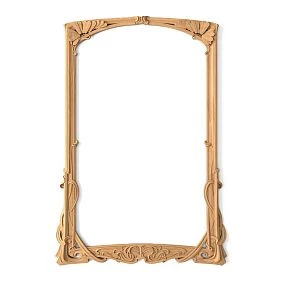
Neoclassicism is classicism that has gone through an editor. The excess is removed, the main is strengthened. The profile is symmetrical, without grotesque, with clear relief, but without Baroque overload. White matte enamel, light cream, soft gray-white palette. For neoclassicism, it works well Wooden Picture Frame with one or two decorative transitions in the profile — no more.
Provence — softness, warmth, a sense of handcraftedness. The profile is not sharp — with rounded edges, a slightly "tired" look. White or ivory enamel with light aging on the edges. Provence-style frames are often combined with textile mats in linen or cotton — this creates a characteristic feeling of a handmade home.
Scandinavian style — minimalism with warmth. Simple wooden profile with slight chamfering, natural coating: light oil or matte varnish. Oak, ash or birch — species that provide a light neutral texture. Dark heavy frames look alien here.
Study and library — strictness, solidity, dark tones. Oak under dark walnut, wenge or ebony. The profile is simple and massive without playful curls. Wooden Picture Frame with a rectangular cross-section and chamfer — an ideal choice for a study with leather armchairs and library shelves.
Living room with wooden furniture — the main principle: the wood species of the frame must match the wood species of the furniture or organically combine with it. Oak furniture — oak baguette. Beech furniture under white enamel — frames under the same enamel. wooden furniture handles from the same species complete the system: frame, furniture, handles, baseboard — a single wooden code.
A modern interior in a neutral palette — here the wooden profile works as a warm accent against a background of white, gray, or beige. The profile can be anything from minimalist to shaped — the main thing is that it looks like a deliberate choice, not a random one.
Material and coating: what matters before purchase
Understanding the material means understanding how the product will behave after one, five, and ten years of use in specific conditions.
Beech is the best choice for painting with enamel. Its fine-pored structure without a pronounced grain ensures an even, smooth surface for primer and paint. White Wooden Picture Frame beech under enamel is a professional standard: the frame will not show texture through the coating, the white will remain clean and uniform.
Oak is for transparent coatings when the texture should be visible. The open pores and medullary rays of oak create a unique visual effect under varnish or oil. Oak wooden profile for frames is the choice of those who value naturalness and do not want to hide the beauty of wood under paint. For white enamel, oak requires a pore filler — otherwise, the open pores will create a noticeable unevenness.
Ash — strength plus a beautiful grain. The straight-line texture of ash is elegant in a transparent coating. For frames that bear real load (large mirrors) — ash is preferable to beech in terms of mechanical characteristics.
Linden and aspen are traditional species for carved decorative elements. They are soft, cut well, and allow for complex ornamental carving. Not the best choice for a load-bearing frame due to softness, but ideal for applied decorative elements.
Pine is a budget option with characteristic difficulties: resin content complicates painting, the texture is coarser. For a country or rustic interior, pine is appropriate and creates the right atmosphere. For classic or neoclassical styles, it is better to choose beech or oak.
Grinding quality is a parameter that is often ignored when choosing, and later becomes the main problem during painting. Check the surface in oblique light: there should be no marks from the grinding tool, the profile ends should be neat and clean, all shape transitions should be smooth. Painting does not hide grinding defects — it reveals them.
Profile geometry. Picture frame strip must be straight without axial bending. Check: place a long strip on a flat surface — it should not have any visible sag. A curved strip when cut at a 45° angle will produce a non-square frame corner that cannot be fixed by any adjustment.
Compatibility with coating. Before purchasing, clearly decide: enamel, varnish, oil, or tinting. This affects the choice of wood species and the need for pre-treatment. For enamel — beech, acrylic primer, 2–3 coats. For varnish — oak or ash, sanding, one coat of primer varnish, finish varnish. For oil — oak, ash, or pine, no primer, oil in 2–3 coats with intermediate sanding.
Bagette, layout, batten, and molding: what to choose
Confusion in these terms is common — and leads to buying the wrong element. Let's put it all into a clear system.
Task | What to choose
---|---
Frame a painting | Wooden Picture Frame
Make a frame for a mirror | Bagette / Picture frame strip
Cover a joint, transition | wooden floor
Create decorative lines on the wall | wooden plank or molding
Design a wall frame panel | Baguette strip / Moldings from solid wood
Design a decorative panel | Baguette / Wooden molding
Add a classic accent | Shaped Wooden Picture Frame
Finish the bottom of the wall | with a classic profile creates a sense of solidity, reliability.
Cover the external corner | Wooden corner veneer
The key distinguishing criterion is simple: if you want to create a closed contour — a frame of any size and purpose — you need exactly Wooden Picture Frame or a baguette strip. Everything else is for linear decor and joint tasks.
How to combine wooden baguette with interior decor
A baguette is not a separate story. It is part of the decorative system of the interior, and the better it is coordinated with other elements, the more cohesive the space.
Baguette and baseboard. This is the most obvious combination. with a classic profile creates a sense of solidity, reliability. and picture frames in the same wood species and with the same finish create a unified horizontal and vertical decorative system. The baseboard completes the wall at the bottom, the frames organize its middle space — they should speak the same language.
Baguette and moldings. Moldings from solid wood on the walls — horizontal bands, panel frames, door and window casings. The molding profile should be coordinated with the baguette profile: they should belong to the same decorative vocabulary. A good rule: use elements from the same decorative line — then the proportions of the shapes will be inherently coordinated.
Baguette and slats. wooden planks on the wall create a rhythmic pattern. If the slats are made of the same wood species as the picture frames, the space acquires a unified wooden theme. This works especially well in Scandinavian and modern interiors: slats on one part of the wall, frames with pictures on another — all made of light ash or oak.
Baguette and Pogonazh iz massiva in a broad sense: cornices, trims, corner pieces, architraves — all these elements in the same wood species with the same finish create an interior where wood sounds like a single material chord.
Baguette and furniture handles. wooden furniture handles from the same wood species as the frames — a detail not everyone notices, but one that creates a sense of intentionality and high design taste. This works especially well in a study or a classic living room.
Bagette and decorative overlays. decor for furniture — applied rosettes, ornaments, relief inserts on facades — should be from the same wood species as the frames. A rosette on the top rail of a large mirror frame, applied ornaments on the facades of a chest of drawers, a wooden cornice profile above the mirror — this is no longer just decor, it is full-fledged interior architecture.
Baguette and Decorative Bracket. A shelf on decorative brackets above a mirror framed with a baguette from the same wood species — a classic interior pair. The brackets support the horizontal, the baguette frames the vertical — together they create a complete wall composition.
Baguette and Classic Furniture. In a classic interior, frames of paintings and mirrors are an extension of the decorative language of the furniture. If the furniture is beech under white enamel, the frames are also white enamel. If the furniture is oak under dark varnish, the frames are oak with a dark finish. This is not a strict rule, but it works flawlessly as a starting point.
Mistakes when choosing a wooden baguette
Knowledge of typical mistakes is the fastest path to the right choice. Let's break them down without embellishment.
Choosing a baguette only by color, without considering the profile. This is the most common mistake. The buyer looks: "Oh, dark — matches the furniture." And picks the first dark profile they see. But the profile is rectangular and flat, while the furniture has expressive classic carving. The style conflict is obvious — and the reason is that color and form were not considered together.
A profile that is too wide for a small piece. A small watercolor 20×30 cm in a very wide frame of 80 mm — this is not monumental, it's ridiculous. The frame overwhelms the piece, destroys its scale. Rule: the profile width should not exceed 10–15% of the smaller dimension of the piece.
A profile that is too thin for a large mirror. A mirror 90×150 cm in a frame with a 20 mm profile — this is visually a mirror without a frame. The profile gets lost, creates no framing effect. For a large mirror, a profile of at least 50–70 mm is needed.
Not considering the style of the furniture. Scandinavian-style furniture — and a heavy stucco frame with gilding. Or the opposite: a classic sideboard with carved details — and a simple pine slat as a frame. Both options are a conflict.
Not planning the coating before installation. Painting the frame after mounting it on the wall means risking painting the wall, getting an uneven layer of paint in hard-to-reach corners, and missing the ends. Always paint and varnish before installation, and apply the final coat after, if corner touch-ups are needed.
Mixing different wood species and shades without a clear concept. Three paintings on the wall: frames made of light ash, dark oak, and painted beech — without a concept, it looks like a random set. Either all frames are from the same species, or there is a deliberate contrast built according to a design plan.
Not coordinating the molding with the baseboard and doors. Wooden doors in a room are the largest wooden element. If with a classic profile creates a sense of solidity, reliability. it matches the doors in species, the picture frames should also belong to this system — otherwise, the wall looks eclectic without intent.
Buy molded trim in insufficient quantity. When cutting at a 45° angle, inevitable losses occur at joints and during fitting. A reserve of 15–20% of the calculated length is a mandatory minimum. This is especially important when making several identical frames: a shortage of one bar from another batch can result in a noticeable mismatch in shade.
What to buy together with a wooden baguette
Wooden molding is the starting point. To create a full-fledged interior decorative system, other elements are also needed.
Wooden slats and moldings for walls. If creating panel frames on walls, wooden plank и Moldings from solid wood from the same species will create a unified decorative rhythm in the space.
Trims for joints and transitions. wooden floor и Wooden corner veneer they process joints and external corners — a mandatory element when installing frame decor on walls.
Wooden baseboards. Wood skirting board — the lower boundary that defines the entire scale of wall decor. Made from the same wood species as the baguette — creating a unified architectural system.
Decorative overlays. decorative elements for furniture — rosettes, ornaments — used as accents on frame panels: in the corners of the frame, in the center of horizontal slats, as decorative inserts between frames.
Wooden brackets. Decorative Bracket under the shelf above the mirror — an organic addition to the decorative system with the baguette. Made from the same wood species, of course.
Wooden furniture handles. wooden furniture handles — the final touch that connects furniture with decorative elements on the walls. The wood species, shape, and finish are coordinated.
Full range solid wood trim — baguettes, slats, trims, moldings, cornices, baseboards — presented in the STAVROS catalog as a unified system, allowing the formation of decorative sets without the risk of mismatched wood species and profiles.
FAQ: Answers to popular questions
How is a wooden baguette different from a wooden slat?
Wooden Picture Frame — a decorative profile for creating frames and borders, has an expressive figured silhouette. wooden plank more often has a simple rectangular cross-section and is used to create rhythmic patterns on walls, structure surfaces, and finish. The baguette closes into a frame, the slat goes as a line.
Which baguette to choose for a painting?
Profile width — 10–15% of the smaller dimension of the work. For a small painting 30×40 — profile 20–35 mm. For a large canvas — 55–90 mm. The profile style should match the style of the work and the interior. Wood species — beech for enamel or oak for varnish. Before purchasing baguettes for paintings decide on the coating: this affects the choice of wood species.
Is a wooden baguette suitable for a mirror?
It is perfectly suitable. A wooden frame gives the mirror warmth and character. For a mirror, the correct profile size (at least 40–50 mm for a medium mirror) and reliable fastening are important — a mirror is heavier than a painting. From durable species: beech, oak, ash. Buy Wooden Picture Frame for a mirror, it is better to have a margin in length — cutting results in losses at the joints.
Can a wooden baguette be painted with enamel?
Yes. The best wood species for enamel is beech: fine-pored, uniform, without a pronounced pattern. For enamel, sanding with 150–180 grit sandpaper, acrylic primer, 2–3 coats of enamel with intermediate sanding are needed. Oak for enamel requires additional pore filler — otherwise open pores are visible through the coating.
What is better for a panel: baguette or molding?
If an expressive three-dimensional framing with a decorative character is needed — Wooden Picture FrameIf you need a delicate thin line that marks the border without emphasis — wooden floorFor wall frame panels, both options are appropriate — the choice depends on the desired level of expressiveness.
How to calculate the amount of baguette molding for a frame?
The perimeter of the frame by the outer size plus 20% allowance for cutting at a 45° angle and fitting. For a frame 60×80 cm: perimeter (60+80)×2 = 280 cm, plus 20% = 336 cm. Take at least 3.5 m. For several identical frames, always take the entire required volume from one batch.
How to choose a baguette for an interior with wooden furniture?
The wood species of the frame should match the furniture's wood species or contrast organically. The finish should be coordinated: white enamel on the frame with white enamel on the furniture, dark varnish with dark varnish. The profile should be from the same stylistic group as the furniture decor. And all wooden elements — Pogonazh iz massiva, baseboards, moldings, handles — from the same wood species create an interior where wood works as a single material motif.