Article Contents:
- Why you shouldn't buy wooden trim on a "a little bit of everything" basis
- First identify the buyer, then choose the assortment
- Private buyer
- Designer
- Furniture manufacturing
- Construction or finishing company
- Specifier
- CORE
- PROJECT
- ACCENT
- A — core
- B — project items
- C — rare profiles
- Sales in units for the period
- Sell-through
- Modern selection
- Neoclassical
- Classic
- Should a store keep all wooden mouldings in stock?
- Which profiles should be kept in stock permanently?
- Why do we need samples if there are photographs?
- How should the assortment be divided?
- What is sell-through?
- Should there be a separate stand for each material?
- Which is better: 100 SKUs with two pieces each or 25 SKUs with eight each?
- Where can I find STAVROS wooden mouldings?
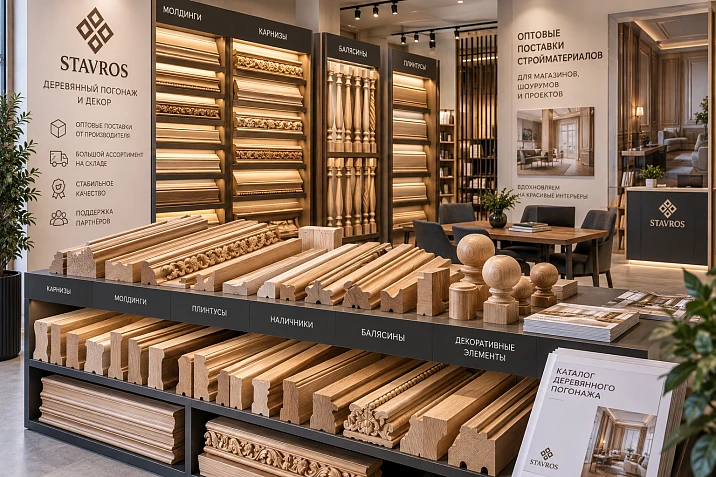
A finishing materials store wants to add wooden mouldings but quickly runs into unpleasant arithmetic: there are many mouldings, skirting boards, cornices, and architraves, while the sales floor and warehouse are limited. If you order dozens of random profiles in small quantities, the assortment will look broad on paper, but the money will be spread across items that are hard for the customer to compare and hard for the salesperson to explain.
For a B2B task, it is better to build the assortment not on the principle of “two pieces of each SKU,” but as a matrix with three levels:
stock items → samples → made-to-order items.
The warehouse stocks profiles that cover frequent and clear demand. Through samples, they demonstrate the breadth of the assortment without freezing capital in every model. Rare, large, and expensive solutions are kept for custom project orders.
It is precisely this approach that makes wholesale sales of building materials manageable: the buyer sees the choice, and the store understands which SKUs must turn over constantly, which are sufficient to show physically, and which make no sense to keep in deep stock.
When forming the matrix, it is convenient to start with the section Wooden trim, rather than with individual random cards.





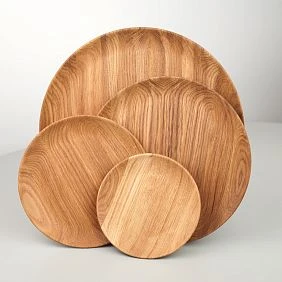
Why wooden moulding should not be purchased on the principle of "a little bit of everything"
A broad catalog does not yet mean a good assortment for a store.
Let's imagine two showrooms.
Showroom A keeps 80 different profiles, 1–2 pieces each. Among them are many close sizes and similar patterns. The salesperson has to explain dozens of nearly identical options every time.
Showroom B displays 25–30 logically curated profiles, divided by purpose and scale. The most common items are in stock, while the rest are represented by samples and available to order.
The second assortment may appear clearer to the client, even though there are physically fewer SKUs.
For each product group, it is useful to have a selection ladder:
basic → mid-range → expressive → accent.
This way, the buyer does not browse twenty equally important skirting boards. They first choose the scale and the task, and then the specific profile.




First identify the buyer, then choose the assortment
One matrix does not suit all retail formats.
Our factory also produces:
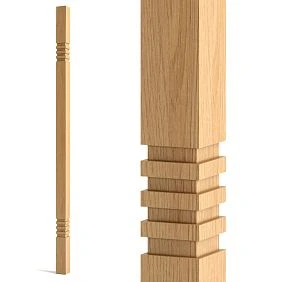
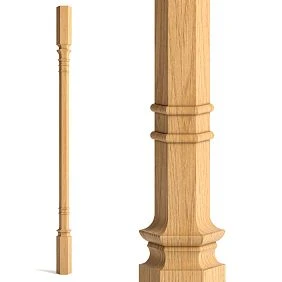
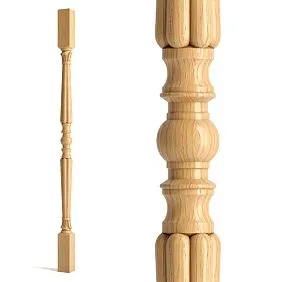
Private buyer
Usually chooses trim for a single apartment or house. They need clear combinations and the ability to see the profile in person.
Get Consultation
Designer
More often works with a set: skirting board, moulding, cornice, sometimes casing and furniture decor. Samples and system compatibility are critical for them.
Furniture production
May regularly buy the same profile. Here, SKU repeatability and the ability to reorder are more important.
Construction or finishing company
Looks at square footage, deadlines, and availability for the project.
Kit assembler
Needs several product groups at once and values a clear catalog structure.
Therefore, before the first purchase, the store must answer:
Who generates the main revenue specifically for our format?
If 70% of clients are designers, the display assortment can be broader than the warehouse stock. If most sales are quick retail purchases, depth of stock for basic SKUs becomes more important.
Wooden skirting board: four roles instead of twenty similar profiles
For a starting skirting board matrix, it is more useful to cover several different scenarios than to stock many adjacent sizes.
For example:
| Role | What the buyer should see | | --- | --- | | Basic | a calm profile for modern interiors | | Universal | medium scale without a strong stylistic tie-in | | Tall | a noticeable lower wall line | | Expressive | a shaped profile for a more decorative project |
This is not a universal list of four mandatory SKUs. Specific item codes are selected for the store's audience.
What matters is something else: every stock position must have a reason to exist.
If two baseboards of the same scale and almost the same character compete with each other, one of them may work better as a sample for custom order rather than as a separate permanent stock item.
As a product example, you can use wooden plinth PLT-006, but the matrix should not be built around a single item code.
Wooden molding: it is better to sell an application system, not a "stick by the meter"
A customer rarely comes with the desire to buy an abstract molding.
They need a specific task:
- a frame on the wall;
- vertical division;
- skirting;
- door casing;
- furniture facade;
- transition between decorative elements.
Therefore, it is useful to group moldings in the showroom not only by width, but also by scenario.
For example, a salesperson can show:
a narrow profile — for thin frames;
a medium one — for the main wall composition;
a more expressive one — for a large frame or accent.
When you need Buy wooden molding, it is easier for the client to choose between clear roles than between dozens of SKUs with the same status.
Why moldings are especially suitable for the sample + order model
Molding is a product that is important to see physically.
It is difficult to judge from a photograph:
- the actual width;
- depth of the relief;
- the scale of the pattern;
- how the light behaves;
- how it combines with the baseboard;
- the visual density of the frame.
At the same time, a store is not obliged to keep a large stock of every profile.
STAVROS has a separate section for product samples, including wooden baguette samples and molding sets. For a showroom, this makes it possible to expand the display assortment without turning every sample into a full-fledged warehouse SKU.
Therefore, for some moldings, a reasonable assortment card looks like this:
sample in the showroom → made-to-order item → stock 0 or minimal.
And for the most popular ones:
sample → warehouse → regular replenishment.
Wooden curtain rod: the assortment should be built by scale
A curtain rod on a display stand is hard to evaluate without context.
A compact profile and a large classic curtain rod can be equally high-quality, but they serve different spaces.
For a showroom, it is useful to have several levels:
compact → medium → large → statement.
During a consultation, the curtain rod is compared with:
- room height;
- the baseboard;
- molding width;
- door portal size;
- total amount of decor.
If you need a specific profile, you can go to the category buy a wooden cornice.
For an example of a specific SKU in the matrix, you can use Wooden Cornice KZ-001.
Construction goods wholesale: three assortment levels CORE, PROJECT, and ACCENT
For a store, it is convenient to divide the trim into three commercial groups.
CORE
Items that the store expects to sell regularly.
For them, it is reasonable to:
- keep a physical sample;
- have stock available;
- restock quickly;
- train sales staff;
- include in ready-made interior selections.
PROJECT
Profiles for design tasks.
They may sell less often, but they complete specific projects.
For them, it is enough to have:
- a sample;
- a card with dimensions;
- availability on order;
- a clear delivery timeframe.
ACCENT
Large, expensive, or rare profiles.
Their job is to expand the showroom's architectural possibilities, but they don't necessarily need to take up warehouse space.
It is precisely this approach that makes construction materials wholesale with an assortment, not a collection of random leftovers.
Why a store doesn't need to keep every wooden molding in stock
Stock inventory should serve a purpose.
If an SKU sells rarely, takes up space, and has close alternatives, keeping many units just for the sake of "catalog breadth" is irrational.
An example of a starting model, not a universal standard:
- 5–7 of the most straightforward moldings — in stock;
- 15–20 additional ones — as samples;
- rare profiles — catalog and custom order.
The store determines the actual numbers based on its floor space, audience, and sales.
The point of the model is different: the physical assortment in the showroom can be broader than what is in stock.
Wholesale of building materials: a sample is sometimes more useful than an extra box in the warehouse
For decorative profiles, a sample does part of the salesperson's job.
The client can:
- touch the wood;
- place the molding against the baseboard;
- compare two sizes;
- see the relief from the side;
- check the color;
- photograph the combination for the designer.
Therefore wholesale sale of building materials for the showroom should account for not only the warehouse stock but also the display inventory.
STAVROS separately offers samples and display stands for showrooms, dealers, and specifiers. This makes it possible to show the product physically, even if the full length of a specific profile is not kept in the sales area.
How to make a stand that helps sell a trim system
A weak stand is dozens of short samples with no connection between them.
A complete vertical composition works better:
baseboard at the bottom → molding in the wall zone → cornice at the top.
The customer immediately sees not three separate products, but the future architecture of the room.
On the stand, it is useful to label:
- article number;
- size;
- the material;
- available options;
- QR code or link to the product page;
- status: in stock / made to order.
For a complex profile, you can add a photo of the finished interior, but the physical sample remains the primary carrier of scale.
The same profile in different materials: show all or just one option
If the same geometry is available in several materials, the showroom does not have to stock the full length of each version.
A possible scheme is:
one full-size profile + separate small samples of material and finish.
But it can only be used when the salesperson clearly explains that a material sample does not confirm all the characteristics of another product version.
The price tag must show actual configurations, not a single average price.
Wholesale sales of building materials: how to determine the initial order
For the first order, it is better to think not in terms of “how many SKUs to take” but “which roles to cover.”
Example matrix:
| Category | Samples | Stock SKUs | Stock depth | | --- | --- | --- | --- | | Baseboards | a few core options | basic and universal | higher | | Moldings | a wide range | selective | medium | | Cornices | a few scales | selective | lower | | Rare decor | physical sample | made to order | minimal |
This is an example of the logic, not a ready-made purchasing standard.
For one store, a tall baseboard may be an A-class product. For another, it barely sells.
Therefore wholesale sale of construction materials should move from the starting hypothesis to your own store's data.
ABC principle for wooden trim
After the first months of sales, it is better to classify the assortment by actual demand.
A — core
Items that are regularly requested and purchased.
For them, it makes sense to:
- maintain stock;
- monitor the reorder point;
- have a sample;
- train sales staff;
- add to ready-made selections.
B — project items
They sell less often, but regularly feature in design projects.
A small stock or fast supply to order works for them.
C — rare profiles
It is important to have them in the catalog and sometimes as samples, but deep stock may not be justified.
ABC group is determined by the sales of a specific business, not by the beauty of the profile.
How to calculate turnover without complex analytics
To start, two simple metrics are enough.
Sales in units for the period
If 18 units of a specific SKU were sold in 90 days, and 2 of another, it's already clear that they require different stock depth.
Sell-through
Simplified formula:
sold / received × 100%.
For example:
received 20 units;
sold 15.
15 / 20 × 100% = 75%.
If another SKU sold 2 out of 20 during the same period:
2 / 20 × 100% = 10%.
This is not a universal 'keep/remove' threshold. But the metric helps to understand which profile actually works as a stock item and which is more logical to switch to sample and order mode.
Building material wholesalers: a broad catalog does not yet mean a strong assortment matrix
Conventional store A carries 80 random SKUs.
Store B has 25, but they form clear groups:
- 5 skirting boards;
- 10 moldings;
- 5 cornices;
- 5 related profiles and solutions.
In the second case, it is easier for the customer to move from the task to the choice.
Therefore building materials wholesalers win not by the number of lines in the price list as such, but by the ability to organize the assortment into a clear architecture.
How to combine skirting boards, moldings, and cornices into ready-made selections
It is convenient for the buyer to be shown not only individual SKUs but also systems.
Modern selection
A laconic skirting board, a calm moulding, a compact cornice.
Neoclassical
A more pronounced lower line, an expressive wall frame, a medium cornice.
Classical
Large profiles with a richer decorative character.
The names are conventional. The main thing is to physically show the combination of scales.
If a store sells three elements separately, the customer has to decide for themselves whether they go together. A ready-made selection lowers that barrier.
Which items to keep in stock and which to sell to order
Stock is justified for SKUs that:
- are frequently asked about;
- are easy to explain;
- repeat regularly;
- are part of several ready-made selections;
- have predictable demand.
It makes more sense to keep on order:
- large;
- expensive;
- rare;
- narrow stylistic;
- unusual in size;
- project positions.
At the same time, "made to order" does not mean "do not show." On the contrary, this is exactly where quality samples are especially needed.
Wholesale trade in building materials: turnover speed matters more than the number of SKUs
Let's imagine two warehouse models.
100 SKUs × 2 units each = 200 units of goods.
25 SKUs × 8 units each = the same 200 units.
In the first case, the assortment is broad, but each position is represented superficially.
In the second, the choice is narrower, but the core can actually be sold from stock.
Which model is better depends on demand, but the calculation shows: the number of SKUs and inventory depth compete for the same warehouse budget.
Therefore wholesale trade in building materials requires managing not only the breadth but also the depth of the assortment.
What must be stored with each sample
A beautiful piece of wood without labeling quickly loses its commercial value.
Next to the sample there should be:
- article number;
- exact name;
- size;
- the material;
- configuration options;
- length;
- availability status;
- QR or link;
- a note “in stock” or “made to order.”
If the sample changes, the old card must change along with it.
Otherwise, the seller shows one profile but checks out with another.
How to expand the assortment after the first sales
You shouldn't immediately add another 50 SKUs.
First, it's useful to collect five types of data:
- what they ask about;
- what they actually buy;
- what they ask about but don't buy;
- which sizes are missing;
- which combinations they choose together.
For example, if one baseboard regularly sells with two moldings, they can be combined into a permanent collection.
If a profile is viewed frequently but almost never purchased, you need to find out why: price, scale, lack of a suitable cornice, unclear application, or simply weak demand.
Building materials wholesale: a ready-made initial order matrix
For the first purchase, it is convenient to use a table:
| Category | SKU | Role | Sample | Stock | Minimum stock | Made to order | | --- | --- | --- | --- | --- | --- | --- | | Skirting board | ___ | CORE | yes | yes | ___ | yes | | Molding | ___ | CORE | yes | yes | ___ | yes | | Molding | ___ | PROJECT | yes | small | ___ | yes | | Cornice | ___ | PROJECT | yes | selective | ___ | yes | | Decor | ___ | ACCENT | yes | no | 0 | yes |
The numbers will be different for each store.
The purpose of this matrix is to force a decision on each item: why it is kept in stock and what role it plays in sales.
That is why construction supplies wholesale for a retail or project channel, it is better to build it as a managed system.
How to set the minimum stock for stocked profiles
Even a CORE item does not need to be ordered "eight pieces forever." The minimum stock should change as statistics accumulate.
For a simple internal calculation, you can use the model:
average sales during the replenishment period + safety stock = reorder point.
Example. A store sells an average of 6 strips of one moulding per week. If, for its own planning, it allows two weeks until the next replenishment and wants to have 4 additional strips as reserve, the control point will be:
6 × 2 + 4 = 16 pieces.
When the available stock approaches 16, the item needs to be reviewed for reordering.
This is only an example of a store's internal model. The actual lead time, availability, and terms of a specific order must be checked before every purchase. The formula is useful because it links stock depth to sales, rather than to the feeling that “there should be a lot of this profile.”
A project showroom and a fast-demand store require different assortments
The same STAVROS collection can be sold through two completely different formats.
A project showroom works with designers and specifiers. Here you can keep many quality samples, ready-made combinations, and project SKUs, but a comparatively small stock of long-length goods.
A fast-demand store more often serves a customer who wants to take a basic profile without a long wait. For it, stock depth in a limited number of clear items is more important.
Therefore, the question:
“How many mouldings should be in the assortment?”
does not have a single answer.
First, you need to determine the sales format, then distribute SKUs between the warehouse, samples, and orders.
To expand the demonstration section, you can use the official section of STAVROS product samples, where wooden baguette samples, molding sets, and display stands are presented.
What to do with a profile that is frequently viewed but rarely purchased
Such an SKU cannot be deleted automatically.
First, you need to understand what function it serves.
There may be various reasons:
- the profile is needed as the visual "top" of the line and helps sell a more affordable option;
- customers choose it, but then switch to an adjacent size;
- the price does not match the audience's expectations;
- there is no suitable skirting board or cornice nearby;
- sellers poorly explain the use;
- the profile really does not match the store's demand.
If a product plays a demonstration role, it can be kept as a sample and the deep stock can be removed.
If it is not involved in sales, selections, or projects, it is better to give the place to an item with a clear function.
How to review the assortment once a quarter
A five-column table is enough for control:
| SKU | Sold | Requests | Average stock | Decision | | --- | ---: | ---: | ---: | --- | | A | ___ | ___ | ___ | increase stock | | B | ___ | ___ | ___ | keep | | C | ___ | ___ | ___ | sample + made to order | | D | ___ | ___ | ___ | remove from the matrix |
A decision should not be made based on one week. For a seasonal or project item, a short period can give a random result.
But regular review protects the store from accumulating "historical" SKUs that were once purchased and now no one understands why they are taking up warehouse space.
When the assortment does not yet need to be expanded
A new SKU should not be added just because it appeared in the catalog.
It is better to postpone the expansion if:
- old items are poorly labeled;
- salespeople do not know the differences;
- there is no sales data;
- samples are not linked to product pages;
- inventory is already turning over slowly;
- new profiles duplicate existing ones in role;
- the store does not understand who its main customer is.
It is more useful to first tidy up the current assortment.
Mistakes in forming a wholesale assortment of mouldings
Mistake: two pieces of each profile.
The reason is the desire to show the maximum selection. The consequence is that capital is spread across weak SKUs. The solution is to separate the warehouse, samples, and orders.
Mistake: treating all profiles as equally important.
It is difficult for the buyer to choose. The solution is the roles CORE, PROJECT, and ACCENT.
Mistake: keeping a rare, expensive cornice only for the sake of width.
It takes up warehouse space and turns over slowly. The solution is a sample and a project order.
Mistake: a sample without a SKU and QR code.
The salesperson cannot quickly process the required item. The solution is mandatory labeling.
Mistake: expanding the assortment without data.
New SKUs are added according to the buyer's taste. The solution is to analyze demand and sales.
Mistake: judging success only by the number of SKUs.
A broad catalog may sell worse than a compact, logical assortment. The solution is to look at turnover and sell-through.
Questions before forming the assortment
Should a store keep all wooden moldings in stock?
No. Some are better shown as samples and sold to order.
Which profiles are best to keep permanently?
Those that are regularly requested, easy to explain, and that are part of several standard solutions.
Why are samples needed if there are photos?
A sample shows the real scale, texture, material, and combination of profiles.
How to segment the assortment?
A practical starting scheme is CORE, PROJECT, and ACCENT, and after accumulating data, ABC analysis based on actual sales.
What is sell-through?
The share of goods sold out of goods received for the selected period: sold / received × 100%.
Is it necessary to make a separate stand for each material?
Not necessarily. A full-profile scheme plus separate material samples is possible if product configurations are labeled accurately.
Which is better: 100 SKUs with two units each or 25 SKUs with eight?
There is no universal answer. For the stock core, turnover matters more, while assortment width can be expanded with samples and made-to-order items.
Where can I find STAVROS wooden mouldings?
In the mouldings section, and specific skirting boards, mouldings, and cornices are in the corresponding product categories.