Article Contents:
- Why plastic ceiling plinth cheapens the interior
- Wall and ceiling joint: function and image simultaneously
- Wooden ceiling plinth and fillet: what is the difference and what to choose
- When to choose wood: scenarios and interiors
- Wooden ceiling plinth for an apartment: where it looks especially convincing
- Living room: perimeter as architecture
- Bedroom: warmth and softness
- Hallway: first impression is shaped by detail
- Study: Woodwork Finishing as a Medium for Thought
- Kitchen-Living Room: One Material — Unified Space
- Wooden Ceiling Baseboard in a Country House: The Organic Natural
- Timber House: Why Wooden Baseboard Matters Especially
- Dacha: Simplicity and Authenticity
- Wide or Narrow: How to Choose the Right Baseboard Size
- Narrow Profile: 30–50 mm
- Medium Profile: 55–80 mm
- Wide Profile and Cornice: From 90 mm and Above
- Proportion of Baseboard Width to Ceiling Height
- Wooden ceiling plinth or wooden cornice: subtle differences
- How to combine wooden ceiling plinth with other elements
- Vertical connection: ceiling — walls — floor
- Wooden slats and panels as an extension of the plinth
- Architraves and ceiling plinth in the same tone
- Carved decor as an additional accent
- Solid wood products as a unified system
- Coating of wooden ceiling plinth: how to find the right look
- Natural texture and oil
- Tinting to match the floor or furniture
- Painting to match the color of the walls or ceiling
- Contrast line: when the baseboard becomes an accent
- Varnish: gloss or matte finish
- Mistakes when choosing wooden ceiling molding
- Installing a wooden ceiling baseboard: what you need to know
- Solid wood moldings: a finishing system for a natural interior
- Where to buy a wooden ceiling baseboard and how to make the right choice
- FAQ: answers to popular questions about wooden ceiling baseboards
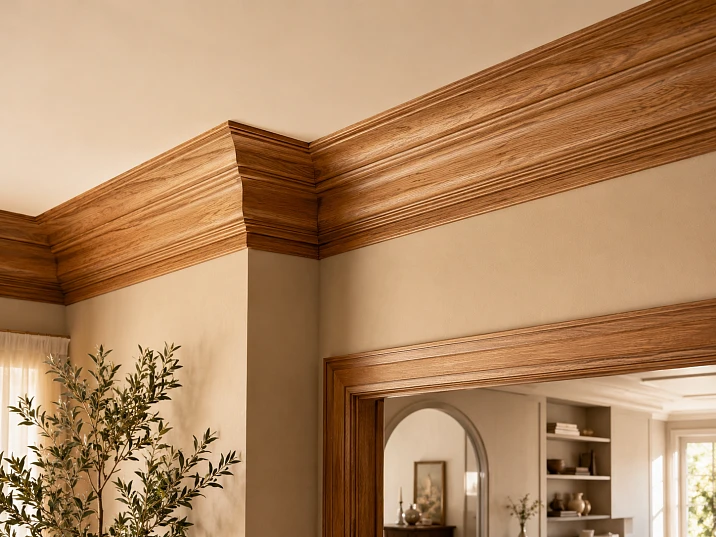
There's a moment in renovation when everything is already done well: the walls are painted in the right shade, the floor is laid with natural wood, the furniture is chosen with care, the lighting is arranged properly. And then you enter the room — and something is off. Your eye catches the ceiling. There, at the junction of the wall and ceiling, a glossy strip of expanded polystyrene with imitation stucco stands out. And the entire expensive renovation instantly loses a few points in your own assessment.
Sounds familiar? This is not a made-up problem. A plastic ceiling baseboard is one of the most common ways to unintentionally cheapen an interior. Not because it's a bad material in itself, but because it doesn't work where everything else is made of natural materials.
Wooden ceiling skirting board — is a different story. It's a line that completes the interior just as a period completes a good sentence: quietly, precisely, without unnecessary words. In this article, we'll break down everything you need to know about choosing a wooden ceiling baseboard: when it's appropriate, what width it should be, what it pairs with, how it's finished, and where to buy it.
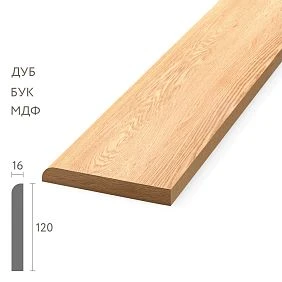
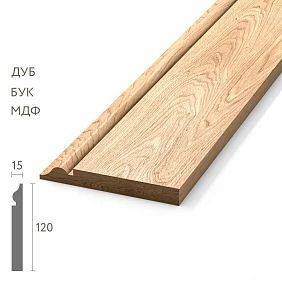
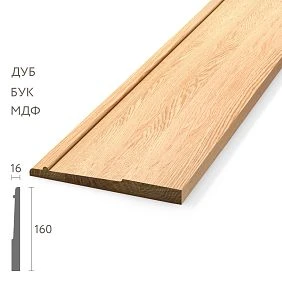
Why plastic ceiling baseboard cheapens the interior
In short — because of material mismatch. The interior is perceived as cohesive when all its elements speak the same language. Wooden floors, wooden doors, quality furniture, natural textiles — that's one language. Polystyrene baseboard with faux stucco — a completely different one.
The brain registers the mismatch instantly, even if a person cannot explain what exactly is wrong. They simply feel: something temporary, something done "for now," something that doesn't fit. And this feeling spreads to the entire interior — like an expensive suit with cheap buttons.
A wooden ceiling baseboard fundamentally solves this problem. It doesn't pretend to be natural — it is natural. The same texture as the floor. The same material as the doors and furniture. The same character as the entire interior. As a result, the wall-ceiling joint ceases to be a problem and becomes an architectural detail.




Wall-ceiling joint: function and image simultaneously
Technically, the ceiling baseboard covers the gap or unevenness at the junction of two planes. This is its main function — to hide what inevitably appears during finishing: small gaps, paint irregularities, the line of abutment. But the wooden profile has a second, equally important function — an image one.
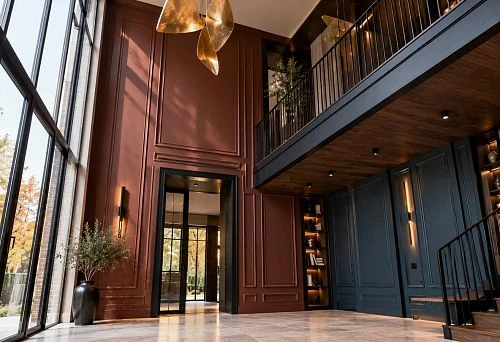
A wooden line around the perimeter of the ceiling creates a visual frame for the room. It defines the boundaries of the space, adds completeness, sets a horizontal rhythm. In a classic interior, this is done with a wide profile with stucco or milled pattern. In a modern one — with a calm narrow baseboard with a clean line. In both cases, the result is the same: the room looks finished.
Our factory also produces:
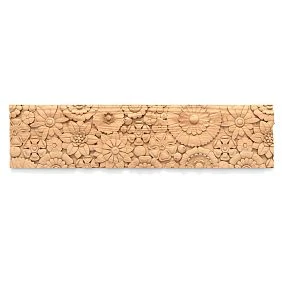
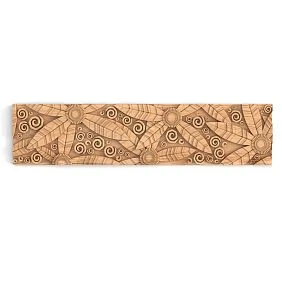
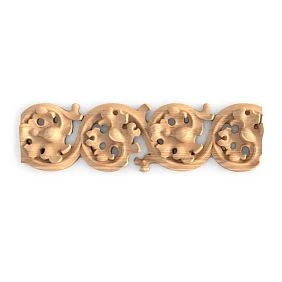
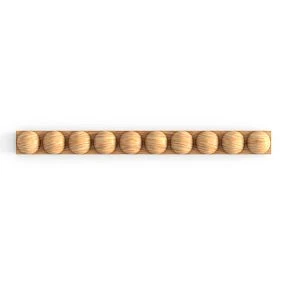
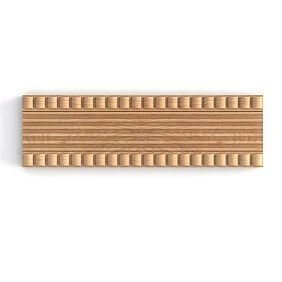
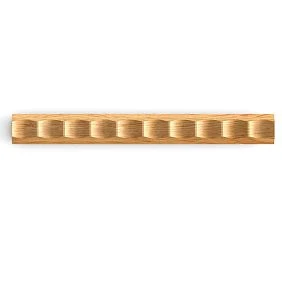

Wooden ceiling baseboard and cove molding: what's the difference and what to choose
Before moving forward, it's important to clarify the terminology — it often causes confusion.
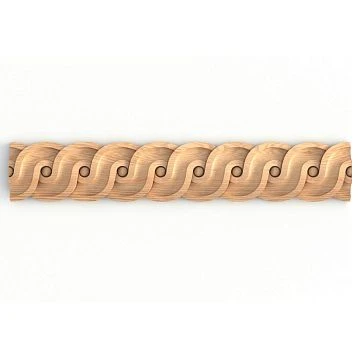
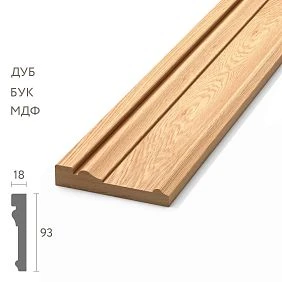
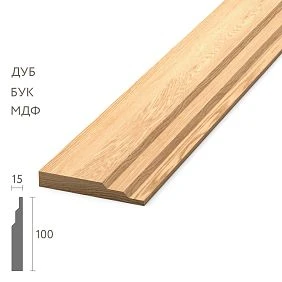
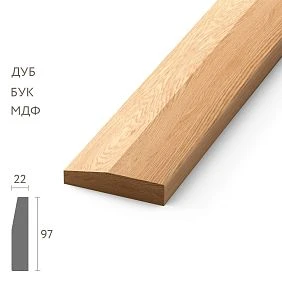
A ceiling baseboard is a profiled wooden strip that is mounted in the corner between the wall and the ceiling. Its task is to cover the joint and create a clear line around the perimeter of the ceiling. The profile can be simple or complex, flat or embossed.
wooden cornice — is a type of ceiling molding with a concave, quarter-round profile. The fillet creates a smooth, soft transition between the wall and ceiling — not a sharp line, but a rounded curve. It is a calm, unobtrusive option that works particularly well in modern minimalist interiors where a neat detail without architectural emphasis is needed.
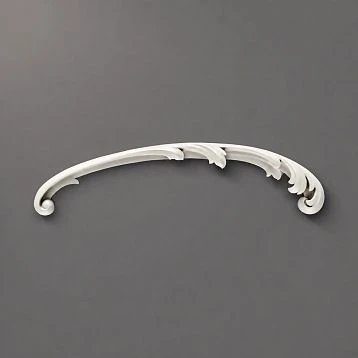
wooden ceiling cornice — is a more expressive profile with multiple planes and relief. The cornice creates not just a line, but an architectural accent: it protrudes from the wall, casts a shadow, and creates a sense of depth and strictness. It is the cornice that is used in classical and neoclassical finishes where a solemn, "library-like" image is important.
A molding is a flat or relief decorative strip that can be used not only on the ceiling, but also on walls and furniture. Wooden moldings and cornices made from solid wood — elements of a unified wooden trim system that can be combined to create complex, multi-layered finishes.
Understanding the difference between these elements makes it much easier to make the right choice for a specific task.
Get Consultation
When to choose wood: scenarios and interiors
Wooden ceiling baseboard — is not a universal solution for any renovation. It reveals itself where the right context is created for it. Let's consider specific situations.
Interior with wooden flooring. This is the most obvious and most advantageous scenario. When the floor is made of parquet, solid wood planks, or engineered wood, a wooden ceiling molding creates a vertical connection between the floor and ceiling — both horizontal contours of the room are finished in the same material. This creates a feeling of integrity, thoughtfulness, and unity.
Classic study or library. Here, wooden trim is a cultural signal. Bookshelves, dark wood, leather, heavy textiles — and a wooden cornice around the ceiling perimeter. All together, this creates an image of a serious, adult space.
Country house, cottage, dacha. In a wooden house or a timber house, a plastic ceiling molding looks alien — it conflicts with the texture of the walls and the overall spirit of the building. A wooden profile fits organically into this context, supports it, and completes it.
Living room with natural furniture. A sofa on wooden legs, a wooden coffee table, wooden picture frames — and a wooden ceiling molding that holds all of this in one material field.
Bedroom in warm tones. Warmth is important in the bedroom. A wooden line along the ceiling adds it quietly and unobtrusively — especially if the molding is tinted to match warm oak or ash.
Kitchen-living room with wooden facades. The wooden ceiling molding unites the kitchen and living areas into a single space, continuing the line of facades and wooden kitchen details upward, to the ceiling.
Styles: neoclassicism, country, japandi, Scandinavian, Provence, Russian interior, English classic, calm eclecticism — all these are styles in which Wooden ceiling cornice or a wooden molding will look appropriate and organic.
Wooden ceiling molding for an apartment: where it looks especially convincing
A city apartment is not a country house made of logs. Here, wooden ceiling finishing requires more subtle work with the image. But with the right approach, a wooden ceiling molding in an apartment works no worse, and sometimes even better, than in a country house.
Living room: perimeter as architecture
The living room is the most representative space in the apartment. This is where it makes sense to bet on architectural finishing. Wooden ceiling skirting board around the perimeter of the living room creates a clear horizontal line that structures the space. It separates the walls from the ceiling, sets the scale of the room, and adds completeness to it.
In a living room with ceiling heights from 2.8 m, a wooden baseboard 60–80 mm wide works well — noticeable enough to create an image, but not overwhelming the space. With a height from 3 m, a wider profile or a full-fledged one can be used. wooden cornice with a more complex cross-section.
Bedroom: warmth and softness
In the bedroom, the wooden line along the ceiling serves the same function as the right textiles: it creates a feeling of coziness, warmth, and lived-in comfort. A light baseboard made of oak or ash, coated with oil, in a bedroom with warm lighting is almost an invisible detail that you notice only when it is missing.
For the bedroom, neatness is important: do not overload the ceiling with decor. A narrow cove or medium-sized baseboard is the right choice. If the bedroom has a bed with wooden legs and wooden bedside tables, a ceiling baseboard made of the same material will complete the look.
Hallway: the first impression is shaped by detail
The hallway is a small space, but it is what greets guests and forms the first impression of the interior. A wooden profile under the ceiling of the hallway adds completeness to the entrance area — especially if there are already wooden doors, architraves, or a wooden floor.
In the hallway, there is no point in making a wide baseboard: the space is small, and the ceilings are often standard. A neat narrow wooden profile — 40–50 mm — will work best here.
Study: joinery finishing as an environment for thought
A home study is a place where you want to think. And wooden finishing contributes to this. A wooden ceiling baseboard in the study, combined with wooden panels on the walls, wooden shelves, and dark parquet, creates that very 'library' environment in which productivity naturally increases.
For an office, a more active profile is suitable — with a chamfer, a milled pattern, and a more pronounced cross-section. Carved wooden decoration in combination with a wooden baseboard creates a complete architectural finish.
Kitchen-living room: one material — one space
Open layouts are a typical solution for modern apartments. The kitchen and living room are combined, and the task of the finish is to create the feeling of a single space, not two adjacent zones. A wooden ceiling baseboard along the entire perimeter of the combined zone is a simple and effective way to solve this problem. Especially if the kitchen has wooden facades or wooden details — then the baseboard line pulls the entire space into a single whole.
Wooden ceiling baseboard in a country house: the organic nature of natural
A country house is a separate topic. Here, a wooden ceiling baseboard is not a designer whim, but a completely natural choice. Because in a wooden house, cottage, or dacha, everything is already wooden: walls, beams, stairs, furniture. Plastic in this context is literally an outsider.
Wooden molding for the ceiling in a country house solves several tasks at once. First, it closes the joint between the wall finish (clapboard, sheathing, plaster) and the ceiling. Second, it creates a neat horizontal contour that structures the space. Third, it unites different wooden interior elements — beams, slats, furniture, doors — into a single system.
Timber house: why wooden baseboard is especially important
In a house made of profiled or laminated timber, the walls are the structure itself, and they create the main image of the interior. Here, the wooden ceiling baseboard must be coordinated with the texture of the timber walls: in tone, wood species, and degree of processing.
If the walls are made of light timber, choose a baseboard in natural wood or with a light tint. If the walls are treated with dark oil or stain, choose a baseboard in a similar tone. If the ceiling is paneled with clapboard, a wooden baseboard continues its rhythm.
Dacha: simplicity and authenticity
At the dacha, a wooden ceiling baseboard is a choice in favor of authenticity. Even the simplest profile made of solid pine, coated with varnish, will look more honest and cozy than a foam strip. It's about the truth of the material: a wooden dacha should live in wood.
Wide or narrow: how to choose the right baseboard size
The size of the baseboard is not a matter of taste. It's a matter of proportions, and the answer always depends on the ceiling height and the scale of the room.
Narrow profile: 30–50 mm
A narrow wooden ceiling baseboard is a neat, almost invisible detail. It covers the joint, provides a clean line around the perimeter, but does not pretend to be an architectural accent. It is well suited for:
-
standard ceilings with a height of 2.5–2.7 m;
-
small rooms where you cannot 'eat up' the height;
-
a modern minimalist interior;
-
hallways, bathrooms, and utility rooms.
Medium profile: 55–80 mm
This is a universal range for most living spaces. A medium-width baseboard is noticeable enough to create a look, yet delicate enough not to overwhelm. It works in living rooms, bedrooms, and kitchens with ceilings of 2.7–3.0 m. Wide wooden ceiling baseboard in the 65–80 mm range is most often what designers choose for quality housing with standard parameters.
Wide profile and cornice: from 90 mm and above
A wide wooden baseboard or a full wooden cornice is already an architectural finish. Such a profile is appropriate for ceiling heights of 3.0 m and above, in spacious living rooms, studies, and formal halls. This is where its scale is justified: in a small room, a wide cornice will visually lower the ceiling and overwhelm the space.
Let's look at a practical size selection table:
| Ceiling Height | Recommended profile width | Element type |
|---|---|---|
| up to 2.6 m | 30–45 mm | Fillet, narrow baseboard |
| 2.7–2.9 m | 50–70 mm | Medium skirting board |
| 3.0–3.4 m | 70–100 mm | Wide baseboard, cornice |
| from 3.5 m | 100 mm and more | Cornice, composite profile |
Proportion of baseboard width to ceiling height
There is a simple rule that helps avoid mistakes: the width of the ceiling baseboard in millimeters should be approximately 1/40–1/50 of the ceiling height in millimeters. For a ceiling of 2700 mm, this gives a range of 54–67 mm — which exactly corresponds to the "medium" segment. This rule works as a guideline, not a strict standard.
Wooden ceiling baseboard or wooden cornice: subtle differences
This question arises for many who choose wooden moldings for the ceiling. Baseboard and cornice are related elements, but they have different architectural status.
A ceiling baseboard is a profile that lies in the corner. It presses against the wall and the ceiling simultaneously, creating a neat transition line. Its appearance is calm, functional, delicate.
Wooden ceiling cornice — is a more complex profile that actively protrudes into the space. It has several planes: vertical, horizontal, and inclined. This creates a deep shadow and a pronounced architectural accent. A cornice is a statement, a baseboard is a signature.
Fillet is the softest option. A quarter-round profile that does not protrude or create an angle, but smoothly transitions the wall into the ceiling. Suitable for interiors where maximum neutrality is needed.
Wooden ceiling cornice With a more complex cross-section, this is already a true classical architectural trim. Such a cornice is justified in interiors with high ceilings, expensive finishes, and a pronounced style: Classicism, Neoclassicism, Empire, English style.
Conclusion: if you want a neat, finished line, choose a skirting board or a fillet. If you want an architectural accent, choose a wooden cornice.
How to combine a wooden ceiling skirting board with other elements
A wooden ceiling skirting board works best not as a standalone element, but as part of a system of wooden moldings. That is when the very feeling of "expensive joinery finish" arises, which both designers and demanding clients strive for.
Vertical connection: ceiling — walls — floor
A properly built system of wooden moldings creates a vertical thread throughout the entire interior: Wooden ceiling skirting board — at the top, wooden floor baseboard — at the bottom. Between them are wooden doors with architraves, wooden panels on the walls, wooden slats or moldings.
When all these elements are made from the same wood species or in a similar finish tone, the room is perceived as a single joinery piece. It is not cheap and not fast, but this is precisely what a "luxurious interior" means in the truest sense of the word.
Wooden slats and panels as an extension of the skirting board
Wooden slats and panels on walls are a popular solution in modern design. Slats create a vertical rhythm on the wall, adding depth and texture. If a room has a slatted panel, a wooden ceiling plinth organically completes it from above, and a wooden floor plinth from below. The entire wall ends up "framed" in wooden trim.
Architraves and ceiling plinth in the same tone
Door architraves and ceiling plinth should be coordinated in tone and wood species. This is the principle behind good joinery finishing: all profiled elements are in the same material and color. Inconsistency here is immediately noticeable — a dark ceiling plinth with light architraves creates a visual conflict.
Carved decor as an additional accent
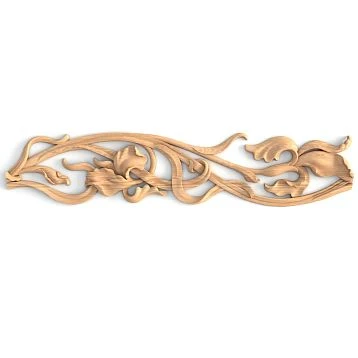
In classical and neoclassical interiors, elements are often added to the wooden cornice on the ceiling wooden carved decoration — rosettes in corners, decorative overlays on the ceiling surface, relief panels. This creates a full architectural finish in the tradition of historical interiors.
Solid wood products as a unified system
Solid Wood Items STAVROS is a system where all elements are designed to be compatible: plinths, cornices, moldings, architraves, legs, handles, slats, carved decor — all from the same material, all in a single stylistic key. This means that when selecting a wooden ceiling plinth in the STAVROS catalog, you can simultaneously choose everything else for finishing — and get a guaranteed compatible result.
Coating of wooden ceiling plinth: how to find the desired look
One of the main questions when choosing a wooden profile is how to finish it. The answer depends on the task you set for the baseboard.
Natural texture and oil
Oil is the most natural finish for wood. It penetrates the wood structure, does not form a film on the surface, and allows the wood to 'breathe'. The result is a warm, matte, slightly velvety appearance where the texture is clearly visible. For a bedroom, a living room in warm tones, or an interior in Japandi or Scandinavian country style, this is the ideal finish.
Tinting to match the floor or furniture
If the floor is made of parquet in 'natural oak' color and you want the ceiling baseboard to match this tone, tint the baseboard to the desired shade. This creates the feeling of a 'frame made of one wood' throughout the room.
Tinting is done with stain or pigmented oil before installation — then all surfaces are treated evenly, including the ends and the back side.
Painting to match the walls or ceiling
Do you want the baseboard to 'disappear' and not distract attention? Paint it the same color as the walls or ceiling. This technique is often used by designers in modern minimalist interiors: the baseboard is technically present but visually blends into the plane.
Or conversely, paint the baseboard in an accent color different from the walls. A dark line around the perimeter of a light ceiling is a strong design technique that immediately makes the room more structured.
Contrast line: when the baseboard becomes an accent
If you want the baseboard to work as an architectural accent, make it contrasting. A light profile on a dark wall. A dark profile on a light ceiling. In classic interiors, this is a traditional technique: a white stucco cornice against dark walls is an image that is unmistakable.
A wooden baseboard in dark tinting on light walls works similarly: it creates a line that structures the space and adds strictness to it.
Varnish: gloss or matte
Varnish coating protects wood from moisture and mechanical impacts. For a ceiling baseboard, matte is important: glossy varnish on ceiling elements will glare from light and attract attention in a bad way. Matte or semi-matte varnish is the right choice, which protects without changing the surface character.
Mistakes when choosing a wooden ceiling baseboard
Practice shows: most mistakes are made not because of bad taste, but because the decision was made without considering the actual space. Let's break down the most common ones.
Choosing based on a photo without considering ceiling height. A baseboard in a studio photo with 4m ceilings looks elegant and appropriate. The same baseboard in a room with a 2.5m ceiling will feel oppressive. Before buying, measure your ceiling and calculate proportions.
Too narrow a baseboard in a large room. A narrow line in a spacious living room gets lost — it's simply not visible from three to four meters away. A large space requires a more substantial profile.
Unconsidered coating. You bought a solid wood baseboard, installed it "for now" — and left it unfinished. Untreated wood turns gray, collects dust, and looks incomplete. The coating should be chosen before installation.
Mixing different wood species without logic. Ceiling baseboard from pine, floor baseboard from beech, doors from ash — if the color tones are not coordinated, chaos arises. Either use one species everywhere, or select the coating tone so that all elements look cohesive.
Not coordinated with door casings. Ceiling baseboard and door casings are visually connected elements. If they are made of different wood or different tones without logic, the interior falls apart into unrelated pieces.
Wood in one place, plastic in another. A wooden ceiling molding against plastic window slopes, PVC baseboards on the floor, and plastic doors creates a contrast that works against you. If you've opted for natural materials, it's important to be consistent, at least within the visible area.
Installation without accounting for unevenness. Unlike soft polyurethane, a wooden profile does not bend. If the walls and ceiling have deviations, you need to check the profile's fit in advance and, if necessary, use putty on the ends.
Lack of acclimatization. Wood is a living material. Before installation, a wooden molding must be kept in the room for 24–48 hours to adapt to humidity and temperature. This prevents deformation after installation.
Installing a wooden ceiling molding: what's important to know
Installing a wooden ceiling molding is generally not difficult, but requires precision—especially in the corners.
Surface preparation. The joint between the wall and ceiling must be even and clean. Remove dust, stains, and peeling paint. If the wall and ceiling have significant differences, you need to either level them or adjust the profile on site.
Cutting corners. Internal and external corners require precise cutting at 45°. For a wooden profile, use a miter box or a miter saw. An inaccurate cut creates a gap in the corner—and on the ceiling, a gap is visible to everyone.
Fastening. A wooden ceiling molding is attached with liquid nails or wood glue combined with finishing nails. On smooth surfaces, the glue holds reliably. On uneven surfaces, additional mechanical fastening points are needed.
Joining along the length. If the wall length is greater than the plank length, joining is needed. The lengthwise cut is made at 45° in a staggered pattern—this hides the seam and makes the molding line continuous.
Final finishing. After installation, the ends and small gaps are puttied, sanded with fine sandpaper, and coated with the same paint or varnish used on the molding. This makes the installation seams invisible.
Solid wood millwork: a finishing system for a natural interior
Ceiling molding is just one item in the solid wood millwork system. If you want to create an interior where natural materials work cohesively, it's important to see the whole picture.
Pogonazh iz massiva includes:
-
ceiling moldings and coves;
-
solid wood baseboards;
-
door and window casings;
-
corners and trim pieces;
-
Wooden moldings.
All these elements together create that 'joinery' atmosphere that distinguishes high-end finishes from budget ones. That's why, when planning a renovation, it's important to choose millwork as a system, not as a set of random elements.
Where to buy a wooden ceiling molding and how to make the right choice
If you are looking for where Buy wooden ceiling baseboard made from natural solid wood with guaranteed material quality and geometric stability — STAVROS offers a wide range of wooden millwork for interiors and finishing.
The catalog features:
-
Wooden ceiling skirting board — main solid wood ceiling profile;
-
wooden cornice — soft transition profile for modern interiors;
-
wooden ceiling cornice — expressive architectural profile;
-
Wooden ceiling cornice in the extended version;
-
Wooden moldings and cornices — full range of profile products;
-
Pogonazh iz massiva — architraves, skirting boards, additional elements;
-
wooden floor baseboard — for creating a unified wooden trim system;
-
Wooden slats and panels — for wall finishing combined with ceiling skirting;
-
Carved wooden decoration — decorative overlays and rosettes for classic finishes.
All products are made from properly dried solid oak and beech in compliance with strict production conditions. The geometry of the profiles is stable — this is fundamentally important for ceiling moldings, where any deviation in shape is immediately noticeable. Shipment — from one linear meter.
Buy wooden ceiling skirting in the STAVROS catalog can be for both a small room and a large-scale project. Delivery is carried out in St. Petersburg and throughout Russia.
STAVROS is a Russian manufacturer of wooden interior and furniture products. Baseboards, cornices, moldings, fillets, legs, handles, slats, decor — everything is produced at our own facility from select wood with quality control at every stage. Over 4,000 items in the catalog, a real warehouse, confirmed material quality. STAVROS is a manufacturer that understands that a beautiful interior is made up of details, and every detail must be crafted to work together with the rest.
FAQ: answers to popular questions about wooden ceiling baseboards
What makes a wooden ceiling baseboard better than a plastic one?
A wooden baseboard looks natural, warm, and organic — especially where wood is already present in the interior: floors, doors, furniture, slats. A plastic profile is neutral, but in a natural interior, it becomes a mismatch. ceiling wooden skirting is perceived as part of the architecture, not as a temporary solution.
Can you paint a wooden ceiling skirting board?
Yes. The wooden profile can be painted, tinted, varnished, and oiled. This allows you to choose any finish for a specific interior: from natural wood to white or accent colors.
What size of ceiling baseboard should I choose?
Focus on ceiling height. For ceilings 2.5–2.7 m — 40–55 mm, for 2.7–3.0 m — 55–75 mm, for ceilings above 3.0 m — 80–100 mm and more. Wide wooden ceiling baseboard is only appropriate with sufficient ceiling height.
Will a wooden ceiling baseboard work for an apartment?
Yes, especially if the apartment has wooden floors, wooden doors, or furniture. The wooden profile creates a connection between these elements and adds integrity to the interior.
What to choose: baseboard or cornice?
If a neat line is needed — Ceiling baseboard wooden. If an architectural accent with a pronounced profile and shadow is needed — wooden ceiling cornice. A fillet — if a soft transition without a clear line is needed.
How to install a wooden ceiling skirting board?
Use liquid nails or wood glue in combination with finishing nails. Corners are cut at 45° using a miter box or miter saw. After installation, the joints are puttied and covered with a finishing layer.
Does a wooden baseboard need to acclimate?
Yes. Before installation, the wooden profile should be kept in the room for 24–48 hours under normal temperature and humidity conditions. This prevents deformation after installation.
Which type of wood should be chosen for a ceiling baseboard?
Oak and beech are the densest and most stable species. Pine is more affordable, easy to work with, and suitable for cottages and country houses. The choice of wood species should be coordinated with other wooden elements in the interior.
Where to buy wooden ceiling plinth in St. Petersburg?
In the Stavros catalog — wooden ceiling plinth buy in St. Petersburg available with delivery within the city and shipment from one meter. Wide selection of profiles, cornices, and moldings from solid wood.