Article Contents:
- Why the supplier should be evaluated after the project, not only before the contract
- What data should be saved during the work
- Comparing the promise and the reality
- Wooden skirting board: what counts as a successful delivery
- Wooden moulding: why a wrong item can be worse than a slight delay
- Scenario A
- Scenario B
- SKU level
- Zone level
- Right SKU
- Right Specification
- Damage Free
- Repeatability
- Account management
- Process maturity
- APPROVED
- APPROVED WITH CONDITIONS
- NOT PREFERRED
- When is the best time to fill out the Supplier Scorecard?
- Is OTIF enough?
- Should price be taken into account?
- How should complaints be evaluated?
- Which is more important: a one-day delay or a wrong item?
- Why is reordering important?
- Should you drop a supplier after one mistake?
- What to keep for the next project?

The project is complete. Skirting boards are installed, mouldings are assembled into frames, cornices are mounted, and the last additional orders are closed. This is exactly when information appears that did not exist before the contract: not the manager's promises and not a beautiful commercial proposal, but the actual delivery result.
Before work began, it was possible to check the range, lead times, samples, and documents. After handover, it is already possible to answer a more important question:
Is it worth working with this supplier again on the next project?
Therefore materials supplier after the project, it should be assessed not by overall impression, but by measurable facts:
lead time → completeness → correct SKUs → compliance with the specification → damage → claims → additional orders → profile repeatability → documents → additional costs due to problems.
For wooden trim, such a post-project review is especially useful. One wrong moulding, missing 12 metres of cornice, or the inability to repeat an approved profile a few months later can affect the project more than a small difference in the initial price.
The current range of skirting boards, mouldings, and cornices can be checked in the section STAVROS wooden molding, but supplier evaluation begins only after the order has gone through the full cycle from specification to installation.
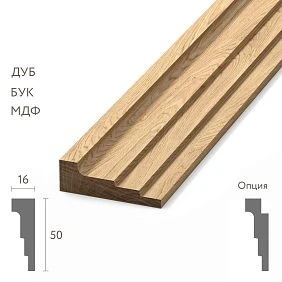
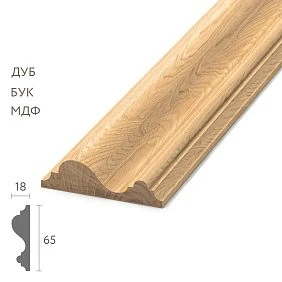
Why a supplier should be evaluated after the project, not only before the contract
Before the deal, pre-qualification is conducted: can the company fulfill the order.
After the deal — performance review: how it actually fulfilled it.
These are two different evaluations.
Before the contract, the supplier can demonstrate:
- product range;
- samples;
- lead times;
- terms;
- commercial proposal;
- the process for handling reorders.
After the project, you can verify:
- which deadlines were actually met;
- whether all batches arrived in full;
- whether the item codes matched;
- whether the material was as specified;
- whether there was any damage;
- how many times a reorder had to be placed;
- how quickly claims were closed;
- whether the same SKU could be repeated later.
It is actual execution that should influence the decision about the next project.




What data should also be saved during the work
Post-project evaluation does not work if, at the end, the team tries to recall everything from memory.
For each delivery, it is useful to save:
- the promised date;
- actual date;
- the ordered quantity;
- the received quantity;
- shortage;
- mis-sorting;
- damage;
- claim number;
- date the issue was resolved;
- additional orders;
- cost of additional logistics;
- original order number.
Once the project is completed, these records turn into a Supplier Scorecard.
If there is no data, the assessment inevitably descends into phrases like:
"seemed fine"
Or:
"the manager was good."
For the next major order, this is not enough.
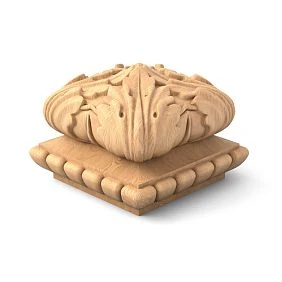
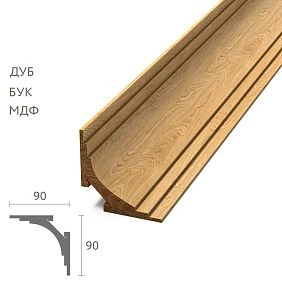
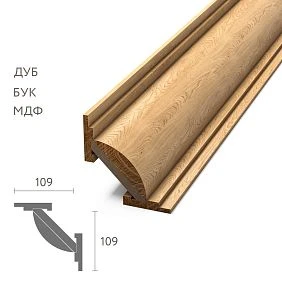
Our factory also produces:
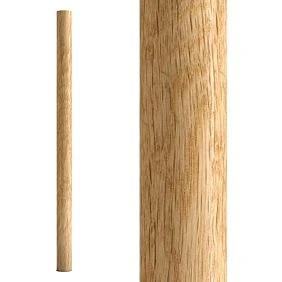
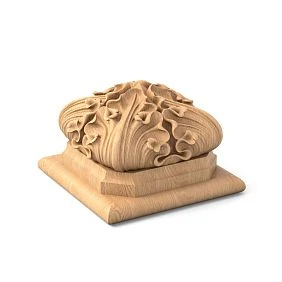



Comparing promise and fact
It is useful to compile one summary table for key positions.
| Criterion | Promised | Actual | | --- | --- | --- | | Main batch deadline | 10.10 | 14.10 | | PLT-A | 420 m | 420 m | | MLD-A | 560 m | 548 m + reorder | | Mixed grades | no | no | | Damage | not planned | 8 m | | Reorder | 5–7 days | 6 days |
Such a table quickly removes subjectivity.
The supplier could have been four days late but closed the reorder within the promised range.
Or vice versa: the main batch arrived on time, but a month later a repeat order of the same profile turned out to be impossible.
Both facts should remain in the history separately.
Get Consultation
Wooden skirting board: what counts as a successful delivery
Phrase:
good skirting board arrived
is too general.
A successful delivery of PLT-___ means that the project received:
- the correct article number;
- agreed material;
- the correct cross-section;
- the agreed commercial length;
- the required quantity;
- the required batch within the working timeframe;
- the ability to reorder if necessary.
The last point is especially important for commercial interiors.
If, four months later, the maintenance service needs the same skirting board, the supplier's ability to restore the product line by article number and previous order is a real indicator of process maturity.
Wooden moulding: why a wrong-grade delivery can be worse than a slight delay
Let's compare two situations.
Scenario A
The delivery arrived one day late, but the entire MLD-A fully matches the approved specification.
Scenario B
The vehicle arrived on time, but the 80 m is a different profile.
For architectural moulding, Scenario B can be significantly worse.
The reason is simple: an incorrect SKU cannot be assessed as an "almost completed delivery" if it does not fit the approved wall system.
Therefore, the Supplier Scorecard should account separately for:
On Time — timing;
In Full — completeness;
Right SKU — correct item code;
Right Specification — correct finish.
A single lead-time metric does not describe delivery quality.
Wooden cornice: the completeness of the installation system must be assessed
The cornice may arrive on time.
But if the associated moulding or another required profile is delayed, the specific area is still not ready for installation.
Therefore, after the project it is useful to look at two levels:
SKU level
Whether KZ-A arrived on time and in full.
Zone level
Whether the site received the complete set required to start the corresponding front.
This is especially useful on sites where several types of decorative trim work together.
A supplier can formally close most lines, but the project will still be delayed because of one critical item.
OTIF: the baseline delivery metric
OTIF stands for On Time In Full — delivered on time and in full.
Let's imagine five deliveries.
Four arrived within the agreed timeframe.
Three were fully complete, and it was precisely these three that were on time.
Then:
On Time = 4 / 5 × 100% = 80%.
In Full = 3 / 5 × 100% = 60%.
OTIF = 3 / 5 × 100% = 60%.
In other words, a high on-time delivery rate by itself does not yet mean a high OTIF.
For a buyer, this is a convenient baseline metric, but for wooden mouldings it is not enough.
How to count a partial delivery in OTIF
Let's say an order requires 560 m of MLD-A.
By the promised date, 548 m arrived.
The remaining 12 m arrived six days later.
If the company evaluates the order as a whole, the first delivery is not counted In Full: by the promised date, not 100% of the agreed volume was completed.
Physical readiness:
548 / 560 × 100% = 97,86%.
But 97.86% is not “fully.”
This is an important example of why a high completeness percentage should not automatically turn into a positive OTIF.
At the same time, within the project, the shortfall share can additionally be recorded:
12 / 560 × 100% = 2,14%.
This is how both a binary management assessment of OTIF and the actual scale of deviation emerge.
Why OTIF is not enough for decorative mouldings
Delivery can formally be:
- on time;
- in full quantity;
and still be unsuitable for the project.
For example, if MLD-B arrived instead of MLD-A.
Therefore, it is useful to add four checks to OTIF.
Right SKU
Exact item code.
Right Specification
Material, cross-section, length, and other approved specification.
Damage Free
Absence of damage affecting use.
Repeatability
Ability to reproduce the same item in a reorder or the next batch.
For specialized architectural finishing, this brings the assessment much closer to the actual result for the object.
How to Build a Supplier Scorecard
A company can choose its own weights.
Example:
| Criterion | Weight | | --- | ---: | | Compliance with item codes | 20% | | Completeness | 15% | | Lead time | 15% | | Product quality | 15% | | Packaging and integrity | 10% | | Claims handling | 10% | | Reorders | 10% | | Documents | 5% |
Sum:
20 + 15 + 15 + 15 + 10 + 10 + 10 + 5 = 100%.
This is an example, not an industry standard.
For one customer, lead time matters more.
For another, repeatability of a complex profile.
For a third, minimizing damage on long-length batches.
The weight should correspond to real business risks.
Example of calculating the final score
We use a scale from 1 to 5.
For example:
| Criterion | Weight | Score | | --- | ---: | ---: | | SKUs | 20% | 5 | | Completeness | 15% | 4 | | Lead time | 15% | 3 | | Quality | 15% | 4 | | Packaging | 10% | 4 | | Claims | 10% | 5 | | Reorders | 10% | 4 | | Documents | 5% | 5 |
Weighted score:
20×5/5 + 15×4/5 + 15×3/5 + 15×4/5 + 10×4/5 + 10×5/5 + 10×4/5 + 5×5/5 = 84 points out of 100.
The number 84 alone does not yet determine the status.
The company must decide in advance which values are considered acceptable and which critical violations can lower the status regardless of the total score.
For example, systematic unauthorized SKU substitution may be more important than a good average score.
Why price should not make up most of the evaluation
A low initial price may be accompanied by:
- underdeliveries;
- misgrading;
- repeat logistics;
- downtime;
- damage;
- repeat acceptance;
- lengthy claims.
Therefore, after completing a project, it is useful to compare not only:
how much the order cost
But also:
how much execution problems cost.
This is exactly what allows you to spot a supplier who looks cheap on the invoice but expensive after installation.
How to calculate the cost of the problem
Conditional example.
We were 20 m of molding short.
Additional project expenses:
- re-delivery — 6,000 ₽;
- re-acceptance and unloading — 2,500 ₽;
- organizational costs for rescheduling the work — 8,000 ₽;
- additional visit by the installers — 12,000 ₽.
SUPPLIER ISSUE COST:
6 000 + 2 500 + 8 000 + 12 000 = 28 500 ₽.
These are conditional figures for the model, not current rates.
The point of the calculation: the cost of the error is not equal to the price of the missing 20 meters.
Even an inexpensive shortage of goods can create an expensive organizational chain.
Normalizing the cost of issues across projects
Comparing absolute 28,500 ₽ on a small versus a huge project is not always correct.
You can additionally calculate:
Supplier Issue Cost / procurement cost × 100%.
Conditional example:
procurement of trim — 950,000 ₽;
additional expenses due to issues — 28,500 ₽.
Share:
28 500 / 950 000 × 100% = 3%.
Another way is to calculate the additional cost per 1,000 m of trim supplied.
The main thing is to use one methodology within the company.
Then two projects of different scale can be compared more fairly.
Which expenses to record separately
It is useful to keep a separate field:
SUPPLIER ISSUE COST.
It can include only actually verifiable additional expenses caused by a supply issue:
- repeated logistics;
- additional unloading;
- repeated acceptance;
- confirmed downtime;
- repeated visit;
- replacement of damaged material;
- additional packaging, if it arose due to correcting an error.
There is no need to invent a virtual cost for the manager's irritation.
The Scorecard must remain measurable.
Separate the supplier issue from the project change
Not every additional delivery is the supplier's fault.
Example:
initially ordered 500 m of MLD-A.
After the order, the designer changes the layout and the project requires another 60 m.
The additional order arose due to a project change, not due to an underdelivery.
In the Supplier Scorecard, it cannot be recorded as supplier failure.
It is useful to separate the reasons:
- SUPPLIER ISSUE — supplier error or deviation;
- PROJECT CHANGE — project modification;
- MEASUREMENT CHANGE — scope clarification;
- SITE DAMAGE — damage already on site;
- NORMAL REORDER — planned repeat order.
Without such classification, the scorecard starts blaming the supplier for everything that happened after payment.
Evaluate not only the number of claims, but also how they were resolved
A mistake can happen with any supplier.
It is far more useful to look at the process after the mistake.
For example, five planks are damaged.
Scenario A:
- the supplier quickly confirms the problem;
- identifies the SKU;
- reserves a replacement;
- communicates a clear date;
- closes the complaint.
Scenario B:
- two weeks of correspondence;
- requests for the same photos;
- unclear who is responsible;
- replacement not confirmed.
The number of damaged slats is the same.
The quality of the supply system is completely different.
How to measure claims handling
You can record:
| Metric | Value | | --- | --- | | Date of request | ___ | | Request confirmation | ___ | | Solution proposed | ___ | | Replacement agreed | ___ | | Replacement received | ___ | | Total closure time | ___ days |
It is not necessary to introduce a universal standard.
The main thing is to compare suppliers and repeat projects using the same methodology.
Good claims handling does not undo the mistake
If the item was damaged, that remains a fact.
A quick resolution should not turn the record into:
there was no damage.
More correctly:
there was damage; the impact was limited thanks to a fast claims procedure.
This way, the scorecard preserves both the fact of the problem and the quality of the response.
This is more important than the emotional assessment of “in the end, everything was resolved.”
Material suppliers: the real test begins with a repeat order
Material suppliers they demonstrate process maturity especially well not on the first large batch, but on a repeat order.
A few months later, it is necessary to restore:
- article number;
- the material;
- cross-section;
- length;
- finish;
- the number of the old order;
- the required quantity.
If the supplier’s new employee quickly finds the history and understands which profile is needed, the system works.
If everything depended on one manager’s memory, a repeat order turns into a new selection process.
Why the second order is sometimes more telling than the first
The first large order often receives increased attention.
The manager manually oversees each stage.
Six months later, the situation changes:
- the contact person may change;
- the reorder volume is smaller;
- the new batch is produced separately;
- the project team has also changed.
This is exactly where repeatability is tested.
A good supplier should be able to restore the product line from documents, not from a phrase like:
we need that beautiful molding we ordered last time.
Planned and actual date
For each batch, it is useful to store:
PROMISED DATE
и
ACTUAL DATE.
After the project, you can calculate:
- how many deliveries arrived on time;
- how many earlier;
- how many later;
- how an early or late date affected the project.
This gives a more meaningful picture than a single average lead time.
Why an early delivery is not always a plus
Let's imagine that the goods were promised for October 20, but arrived on October 5.
Formally, the supplier acted quickly.
But if the site is not ready and the material had to be stored in a temporary warehouse for 15 days, this is not necessarily the best outcome for the project.
What should be assessed is compliance with the agreed schedule.
The goal of delivery is not maximum speed in itself, but the right goods at the right time.
How to measure damage objectively
Not:
a lot of bad material arrived.
But:
600 m were ordered; upon acceptance, damage to 12 m was recorded.
Share:
12 / 600 × 100% = 2%.
Now the metric can be compared:
- between batches;
- between suppliers;
- between projects.
At the same time, it is important to additionally record the severity of the problem.
Severity: one serious error and ten minor ones are not the same thing
You can use the levels:
LOW / MEDIUM / HIGH / CRITICAL.
Examples:
- a minor defect in one spare strip — LOW;
- several damaged working strips — MEDIUM;
- a significant portion of a critical SKU is unusable — HIGH;
- an incorrect cornice blocks an entire zone — CRITICAL.
This is an internal management scale.
There is no need to pretend that it is an official industry standard.
How easy is it to restore an order a year later
A very useful supplier quality criterion:
Will we be able to restore the exact product configuration a year later?
We check whether the documents can be used to find:
- article number;
- the material;
- size;
- length;
- the batch;
- finish;
- the previous invoice;
- order number;
- related claims;
- control sample.
If not, the future maintainability of the property deteriorates.
This is especially important for hotels, restaurants, and other interiors where local repairs years later are quite realistic.
A good manager does not yet mean a good system
If the entire project was successful only because one manager:
- remembered all positions;
- kept the history to himself;
- corrected errors manually;
- found old SKUs from memory,
this is a risk.
When he leaves, the system may disappear.
Checking resilience is simple: a repeat request is handled by another employee.
If he quickly restores the history by order number and SKU, that is a good systemic sign.
How to separate the manager's work from the company's work
It is useful to have two comments in the scorecard.
Account management
Communication with a specific manager.
Process maturity
How well the order is restored through official documents and the system.
Then we can record:
manager — excellent; consistency — average.
This is more precise than the general conclusion:
the supplier is excellent.
How to compare suppliers with projects of different complexity
You cannot directly consider a supplier weaker just because their project had more complaints.
Perhaps one supplied three simple standard SKUs, while another supplied twenty complex profiles in several batches.
Therefore, along with the scorecard, it is useful to store context:
- number of SKUs;
- total length;
- number of deliveries;
- number of stages;
- share of custom items;
- number of reorders;
- project duration.
Then the comparison becomes fairer.
For example:
Supplier A — 2 complaints per 3 simple batches.
Supplier B — 3 complaints per 18 batches and 25 SKUs.
The absolute number of problems is higher for B, but the relative process may be more stable.
Three supplier statuses after the project
After filling out the scorecard, a working status can be assigned.
APPROVED
Suitable for reuse on comparable tasks.
APPROVED WITH CONDITIONS
It can be used, but additional measures are needed.
For example:
- confirm the deadline earlier;
- strengthen incoming inspection;
- confirm the specific SKU separately;
- add an additional checkpoint for the reorder.
NOT PREFERRED
For the next project, it makes sense to compare the market again and not use the company as a priority source.
These are the customer's internal statuses, not a public rating of companies.
Do not create a blacklist after one minor mistake
One complaint does not yet mean systemic unreliability.
Need to evaluate:
- scale;
- impact;
- repeatability;
- response;
- speed of correction;
- causes.
Five damaged backup strips replaced in two days and systematic sending of incorrect SKUs are completely different levels of risk.
The purpose of the Supplier Scorecard is to improve decisions, not to emotionally punish the supplier.
When supplier status must be reviewed
Particularly serious signals:
- recurring unapproved substitutions;
- significant underdeliveries;
- systematic delays;
- inability to reproduce the approved SKU;
- unresolved claims;
- no previous order history;
- errors that recur after an official review.
If a problem recurs, it stops being an accident and becomes a characteristic of the process.
How to carry scorecard findings into the next contract
A post-project review is useful only when it changes future actions.
For example, the previous project showed:
- timelines require earlier confirmation;
- reorder works well;
- there were no overages;
- packaging needs enhanced control at receiving.
The following terms can be carried over to the next project:
- readiness checkpoint N days before shipment;
- mandatory SKU verification before dispatch;
- separate labeling for critical profiles;
- pre-agreed claims procedure;
- retention of the previous order number for repeatability.
Then the Supplier Scorecard becomes a process improvement tool, not an archival assessment for assessment's sake.
Final Supplier Scorecard table
Practical format:
| Metric | Target | Actual | Score | | --- | --- | --- | --- | | On-time deliveries | 100% | ___ | ___ | | Completeness | 100% | ___ | ___ | | Correct SKUs | 100% | ___ | ___ | | Specification compliance | 100% | ___ | ___ | | Damages | 0 | ___ | ___ | | Claims closed | 100% | ___ | ___ | | Reorders | without SKU loss | ___ | ___ | | Documents | full history | ___ | ___ | | Repeatability | yes | ___ | ___ | | Supplier Issue Cost | 0 | ___ | ___ |
This table should be filled in after the work is completed with facts, not with the supplier's promotional claims.
Example of the final decision
Let's imagine:
- lead times — average;
- SKUs — no errors;
- completeness — one short delivery;
- damages — low;
- claim closed quickly;
- the reorder repeated the same profile;
- the documentation was restored without the involvement of the old manager.
Such a supplier may receive:
APPROVED WITH CONDITIONS
with the condition:
on the next project, confirm the completeness of critical items earlier.
Another supplier can deliver everything quickly, but will independently replace SKUs twice.
Even with a good average score, this may become grounds for the status NOT PREFERRED, if the project considers unapproved substitutions a critical risk.
Final supplier evaluation algorithm
- Pull up the original specification.
- Collect the promised deadlines.
- Verify the actual dates.
- Check OTIF.
- Check the SKU accuracy.
- Check compliance with material and finish.
- Calculate shortages.
- Record damages and Severity.
- Classify the causes of issues.
- Review each complaint.
- Check the first reorder.
- Calculate
SUPPLIER ISSUE COST. - Normalize metrics by project scale.
- Verify document completeness.
- Assess repeatability.
- Fill out the Supplier Scorecard.
- Assign status.
- Carry over the terms to the next project.
This way, the rework decision is based on the facts of the completed project, not on the memory of pre-contract negotiations.
Questions after project completion
When is the best time to fill out the Supplier Scorecard?
After the main deliveries, claims, and additional orders are closed, while the data is still available and the team remembers the context.
Is OTIF enough?
No. For wooden mouldings, the correct SKU, specification, damage, and the ability to reproduce the profile are additionally important.
Should price be taken into account?
Yes, but together with the additional costs caused by supply issues.
How should claims be assessed?
Not only by quantity, but also by the speed of acknowledgement, the proposed solution, and the actual closure time.
What is more important: a one-day delay or a wrong item?
It depends on the impact. For architectural mouldings, an incorrect SKU can be more serious than a slight delay.
Why is reordering important?
It shows whether the supplier's system is able to reproduce the same item code and finish after some time.
Should you drop a supplier after one mistake?
Not necessarily. Look at the scale, recurrence, and quality of the response.
What should be kept for the next project?
Supplier Scorecard, list of issues, actual lead times, Supplier Issue Cost, final status, and terms for repeat work.