Article Contents:
- A punch list is not a shopping list
- Wholesale building material suppliers get involved after the comments are classified
- Five working statuses: REPAIR, REMOUNT, USE STOCK, USE RESERVE, BUY
- REPAIR
- REMOUNT
- USE STOCK
- USE RESERVE
- BUY
- Why coating damage does not always require a new molding
- The operational reserve must not be quietly spent just to hand over the project
- Why five meters of remaining stock does not guarantee coverage of a 4.5 m section
- Why the FINAL CLOSEOUT ORDER is reviewed more carefully than the initial purchase
- The same SKU is not always one line in the FINAL MATERIAL LIST
- Natural wood: why the final additional order is especially sensitive in feature areas
- High visual risk
- Lower risk
- Claim
- CLOSEOUT PURCHASE
- RESPONSIBILITY / COST OWNER: who is responsible for the final position
- MATERIAL REQUIRED: how to separate 50 remarks from five procurement lines
- How to calculate the remaining balance for closeout: not meters, but pieces
- Why you don't need to wait for absolutely all cosmetic remarks
- Final check before sending the FINAL ORDER
- How to allocate the final order by punch-list ID
- How to work with solid wood after receiving the final batch
- Final baseboard order: when a short remainder is actually useful
- Final molding order: frames need to be recalculated by sides
- Final cornice order: continuous lines require special care
- How to account for late changes after material cut-off
- When using SERVICE RESERVE for a punch list is justified
- When it is better not to touch the reserve
- How to merge identical punch-list items without losing zones
- How to determine that the FINAL ORDER is truly complete
- Punch list coverage matrix
- Why material suppliers should not receive the entire punch list
- Wholesale building material suppliers: how to combine the needs of different floors into a single closing order
- Wholesale building material supplier: how to prepare a FINAL CLOSEOUT ORDER without ambiguous line items
- Wholesale building material suppliers: what to check during a repeat delivery before closing out the project
- Decision tree: whether to buy a new part or not
- What to do if one part still remains extra after the final order
- How to prepare a handover so that operations understands the history of final replacements
- 1. Treat every remark as a purchase
- 2. Do not separate REPAIR and REPLACE
- 3. Do not check stock
- 4. Quietly use the operational reserve
- 5. Count the remaining stock only in meters
- 6. Order by floors independently
- 7. Do not merge identical SKUs
- How to remove duplicate remarks before material calculation
- How to handle the "no area" remark if the project has already been changed
- How to handle an area that was damaged by another crew
- How to assess remarks after late furniture installation
- How to assess door remarks before the final order
- How to calculate the final requirement for door casings
- How to use a sample for the final reorder
- How to check the warehouse before final cut-off
- How to account for disputed HOLD packages
- How to build a map of required segments before FINAL ORDER
- How to avoid using the same remnant twice
- How to account for waste from final cutting
- How to generate the FINAL MATERIAL LIST after optimization
- How to verify that the FINAL MATERIAL LIST has no outdated notes
- How to handle an order when some items are in stock and some are being manufactured
- How to work with suppliers when the FINAL ORDER consists of very small quantities
- When it is better to intentionally increase the final order
- When the final order is not needed at all
- When closeout cannot be closed with a single general purchase
- How to conduct the final acceptance after corrections
- What to do with material left over after all comments are closed
- How closeout relates to AS-BUILT
- How closeout relates to the operational reserve
- Do you need to buy new material for every scratch on the trim?
- Can the operational reserve be used to close the punch list?
- Why can't the remaining quantity be counted only in linear meters?
- When is the best time to create the FINAL CLOSEOUT ORDER?
- Should remarks from different floors be combined?
- What should be done if the same SKU is used in oak and beech?
- Should the previous order number be specified?
- How does a closeout purchase differ from a claim?
- When is a punch-list item considered closed?
- Can the final punch list require no new order at all?

Installation of wooden trim is complete on fourteen floors of the hotel. The main volumes were purchased long ago, and most of the baseboards, moldings, cornices, and door casings are already in place. The site looks almost fully finished. But during the final walkthrough, the commission records dozens of minor remarks: in the lobby, one baseboard strip is damaged; in two rooms, short sections of molding are missing; in the corridor, a cornice is scratched; near one door, a door casing needs to be replaced; and in the restaurant, two decorative sections remain unfinished.
If every remark is immediately turned into a purchase, the project gets a chain of small follow-up orders: today four meters of molding, tomorrow two baseboard strips, the day after tomorrow another cornice. Along with this come repeat deliveries, the risk of making a mistake in length, material, or finish, and the constant question: “Has this item already been ordered or only noted?”
At the final stage, a different approach is needed. First, all remarks are collected into a single punch list, then each one gets a decision: REPAIR, REMOUNT, USE STOCK, USE RESERVE, or BUY. Only lines with the BUY status form the final product requirement. After that, stock and reserve are checked once more, identical items are combined, the cutting plan is recalculated, and one closing FINAL CLOSEOUT ORDER goes into purchasing.
Therefore wholesale building material suppliers should be connected not at the stage when the first remark appears, but after the internal classification of the object. The main principle:
ISSUE ≠ PURCHASE.
A remark is a problem that needs to be closed. Purchase is only one of the possible ways.
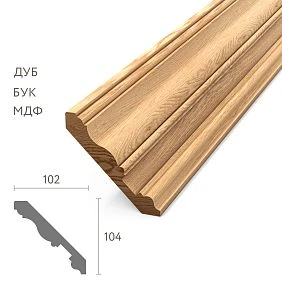
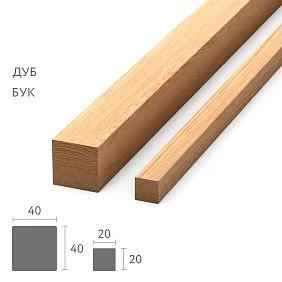
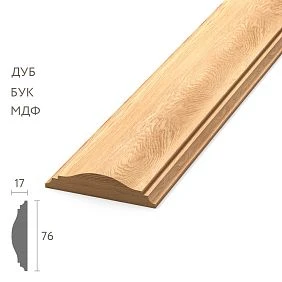
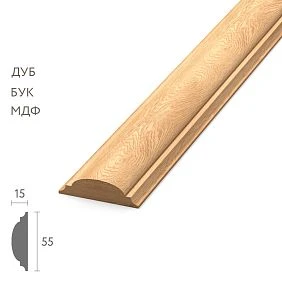
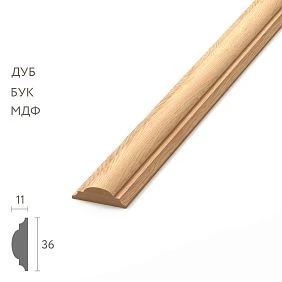
Punch list is not a shopping list
The final punch list records everything that prevents handover of the object: surface damage, missing part, untidy joint, incorrect position, missing section, traces of later furniture or door work, uncoordinated end of skirting board, local damage to cornice. But far from every remark requires new products.
One defect can be fixed by cleaning. Another — by local finishing. The third is related to incorrect installation, although the material is intact. The fourth is closed with a remaining intact plank from stock. The fifth requires the use of an installation reserve. And only the sixth turns into a real procurement need.
| ID | Zone | SKU | Remark | Solution | Need to buy |
|---|---|---|---|---|---|
| P-01 | Lobby | PLT-A | Chipping | REPLACE | 1 pc. |
| P-02 | Room 214 | MLD-A | No section | USE STOCK | 0 |
| P-03 | Corridor | KZ-A | Finish damaged | REPAIR | 0 |
| P-04 | Room 308 | PLT-A | 920 mm missing | Cutting from leftover | 0 |
| P-05 | Restaurant | MLD-B | Two parts are missing | BUY | 2 pcs. |
In the example, five remarks create only two procurement lines. This is exactly what distinguishes the closeout process from a regular defect list.




Wholesale building material suppliers get involved after the remarks are classified
You cannot send wholesale building material suppliers a raw wording like "42 remarks need to be closed urgently." The supplier should not have to decide whether an existing molding can be adjusted, whether the customer has a leftover of the required length, and whether the damage relates to installation or to the product.
Before requesting new material, the site must determine:
- which items are actually missing;
- what can be restored without replacement;
- what can be reinstalled;
- what can be covered by existing stock;
- what parts are available in the installation reserve;
- what operational reserve needs to be preserved;
- how much material actually remains to be purchased.
Then the supplier receives an already cleaned and verified requirement, not a set of construction problems.
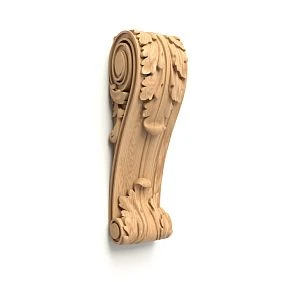
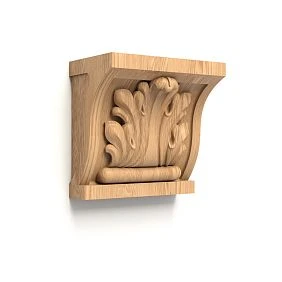
Our factory also produces:


Five working statuses: REPAIR, REMOUNT, USE STOCK, USE RESERVE, BUY
REPAIR
The item stays in place. The surface, local finish, or another defect that does not require a new plank is corrected.
REMOUNT
The material is in good condition but installed incorrectly: shifted, poorly joined, not secured, or requires reinstallation.
USE STOCK
A whole item or a suitable leftover that is already on site and not reserved for another task is suitable for closing the remark.
USE RESERVE
A specially provided installation reserve is used. At the same time, it is necessary to check whether it is already an operational stock that should remain after handover.
BUY
Only this status generates a new procurement requirement.
In a large punch list, HOLD can additionally be used if the cause of the issue or the responsibility has not yet been determined. HOLD should not automatically turn into BUY.
Get Consultation
Why coating damage does not always require a new molding
If a wooden molding retains its geometry, has not cracked, is not deformed, and has not lost its suitability for installation, local coating damage may be a repair task rather than a procurement one.
Before replacement, several questions need to be answered:
- is the profile geometry preserved;
- can the finish be restored locally;
- will the repair be visually acceptable in this area;
- is a unified refinishing of adjacent elements not required;
- is there a risk that removal will damage the wall or adjacent decor.
If local restoration yields an acceptable result, the REPAIR status saves material and does not trigger a new logistics cycle.
If the profile itself is damaged, the geometry is compromised, or the local finish is visually unacceptable, the decision changes to REPLACE, after which the stock and reserve are checked.
Wooden skirting board: what to check during the final walkthrough
У wooden baseboard the final punch list often focuses on areas that were modified after the main finishing work.
Special attention:
- areas near doorways;
- areas after built-in furniture installation;
- ends at architraves;
- external corners;
- joints of long lines;
- areas after partition relocation;
- mechanical damage after furniture was moved in;
- local chips in the coating;
- areas where the skirting board is completely missing.
During the final walkthrough, it is necessary to separately note whether a remark is a product issue or an installation issue. If the skirting board is intact but a section was installed with an incorrect joint, new material may not be required.
First inventory, then the final additional order
Before contacting a wholesale building materials supplier, the site must physically recount what remains after the main installation.
Checked:
- whole items in stock;
- usable long offcuts;
- short offcuts;
- installation reserve;
- material returned from the floors;
- disputed packs;
- separately retained operational reserve.
The problem with the final stage is that the “remainder” often exists only as a total figure. For closeout, that is not enough. You need physical lengths and the condition of each usable item.
The operational reserve must not be quietly spent just to achieve handover
Suppose that after the main installation, eight intact PLT-A are to be kept for future maintenance. The punch list requires three more such planks. There are exactly eight in stock.
Technically, the project can be closed out quickly: take three from the reserve and install them. But after handover, only five will remain. If this happens without a separate decision, operations receives a smaller stock than was planned.
Therefore, the service reserve must have a protected status:
SERVICE RESERVE — DO NOT ISSUE WITHOUT APPROVAL.
If it is nevertheless used for closeout, a decision is made at the same time: whether the remaining quantity is sufficient or the reserve needs to be replenished in the final order.
CLOSEOUT STOCK: dividing the remaining quantity by purpose
Before calculating the FINAL ORDER, it is useful to divide the physical remaining quantity into four groups.
| Status | Meaning |
|---|---|
| INSTALLATION STOCK | The material is still intended for completing current work |
| FREE | Free usable remaining quantity with no assigned task |
| SERVICE RESERVE | Stock that must remain after handover |
| HOLD | Disputed, damaged, or unidentified material |
The punch list is first closed with suitable INSTALLATION STOCK and FREE. SERVICE RESERVE is used only deliberately. HOLD is not considered available until its condition is determined.
Why five meters of remaining material do not guarantee covering a 4.5 m section
Remaining in stock:
- 1100 mm;
- 950 mm;
- 760 mm;
- 650 mm;
- 1540 mm.
In total, exactly 5000 mm. The punch list requires closing a feature area 2300 mm long.
Mathematically, there is more material than needed. In practice, there is no suitable single piece. The project may not allow an additional joint in the feature area.
Therefore, closeout reconciliation always follows this scheme:
whole planks → usable offcuts → required components → cutting plan → new order.
Linear meters are used as a control value, but not as the sole basis.
The final request must be in pieces and configurations
Not:
PLT-A — 9 m.
But:
PLT-A / oak / 2400 / F01 / 4 pcs.
On the last order, it is especially important to avoid another repeat reorder. Therefore, each line must include:
- SKU;
- the material;
- cross-section / size;
- product length;
- FINISH or other finish;
- quantity in pieces;
- linked punch-list ID;
- if necessary — the previous order number.
Why FINAL CLOSEOUT ORDER is considered more carefully than the initial purchase
The first purchase allows for subsequent batches. If a shortage is identified in it, the site is still in the installation process and can form a follow-up order.
The final order must truly be the last one. An error in even a single plank restarts the chain:
request → availability check / production → delivery → acceptance → issue → installation → re-check.
On a site that is already being prepared for handover, each new chain interferes with final cleaning, closing of zones, and transfer to operations.
Therefore, the closeout order is formed only after the general collection of comments and the material cut-off.
Wooden molding: first we collect comments across the entire site
for wooden molding the scenario of floor-by-floor follow-up orders is especially dangerous. Three planks are missing on the second floor — the foreman creates a request. On the fifth floor, two more are found a day later. In the lobby, after the furniture is installed, it turns out that an additional section is needed. As a result, the same SKU is ordered three times in small batches.
At the final stage, it is better to open a short PUNCH LIST COLLECTION window and collect the entire site as a whole. For example:
| Zone | SKU | Requirement after classification |
|---|---|---|
| Floor 2 | MLD-A | 1 pc. |
| Floor 5 | MLD-A | 2 pcs. |
| Lobby | MLD-A | 1 pc. |
After merging:
MLD-A = 4 pcs.
Then the material, length, finish, stock, and reserve are checked. This is how the object assembles one real line instead of three rushed orders.
The same SKU is not always one line in the FINAL MATERIAL LIST
Only truly identical configurations can be merged.
For example:
MLD-A / OAK / F01
и
MLD-A / BEECH / F02
— these are two different purchasing lines, even if the product code matches.
They must be separated if the following differ:
- the material;
- product length;
- cross-section;
- FINISH;
- project version;
- purpose;
- degree of readiness for installation.
It is precisely on the final order that it is dangerous to “simplify” the specification for the sake of a short table. One incorrect line can trigger a new additional order after the goods have already arrived.
Large building materials supplier: the final order must reference the original specification
If large supplier of building materials gets the wording “send the same skirting board as before,” the risk of error remains high.
For a repeat purchase, it is useful to provide:
- exact article number;
- the material;
- size;
- commercial length;
- finish;
- the previous order number;
- the current specification;
- if necessary, the physical sample number.
This way, the latest order is tied to the interior already built, rather than to the team’s verbal memory.
Natural wood: why the final additional order is especially sensitive in feature areas
For natural wood, you cannot promise absolute identity of texture and shade in a repeat purchase. Even with the correct SKU and material, a new plank may be perceived visually differently next to the old one.
Therefore, before BUY, you need to understand exactly where the new part will be installed.
High visual risk
- middle of the long wall;
- main lobby;
- central corridor;
- feature door portal;
- continuous cornice;
- symmetrical decorative frame.
Lower risk
- short separate section;
- area behind the furniture;
- technical room;
- a place without a direct joint between the new and old part.
The difference does not mean that quality can be reduced in the second group. It shows how strongly the new part will be compared with the old one visually.
Wholesale building material suppliers: we do not combine claims and closeout purchase
When working through wholesale building material suppliers two different reasons for the appearance of new material need to be separated.
Complaint
There is an issue with the delivered goods: non-compliance, damage, or another problem that must be checked against the delivery documents.
CLOSEOUT PURCHASE
Material is needed because of the construction site condition:
- the trim was damaged by another crew;
- the installer made a mistake in the cutting;
- a new niche appeared;
- after furniture installation, the area changed;
- the original specification did not include a late item.
Do not automatically label any need for a new trim as a claim. The punch list should record the reason, and the commercial decision is made based on the facts of the specific line item.
RESPONSIBILITY / COST OWNER: who is responsible for the final item
The article should not universally resolve contractual disputes, but the final statement should show that the question of responsibility has been raised at all.
| Issue | Reason | Cost owner |
|---|---|---|
| Damage to the baseboard after bringing in furniture | Late works | Determine based on facts / contract |
| Profile was not in the original specification | Project change | determine |
| Non-conformity of delivered goods | Document verification | HOLD |
| Cutting error | Installation | Determine by contract |
Until the cause is confirmed, the item may have a HOLD. This is better than automatically treating any material as a new customer purchase.
MATERIAL REQUIRED: how to separate 50 remarks from five procurement lines
For each punch-list ID, it is useful to have a MATERIAL REQUIRED field.
It accepts:
- 0 — no new material needed;
- specific length;
- specific number of planks;
- specific number of parts.
For example:
Punch list: 46 issues.
Material-required: 9 issues.
Final order: 5 SKU.
This funnel shows how much the punch list differs from the procurement list.
FINAL MATERIAL LIST — the central procurement table
| SKU | Material | Length | Needed per punch list | Available | Order |
|---|---|---|---|---|---|
| PLT-A | Oak | 2400 | 6 | 2 | 4 |
| MLD-A | Beech | 2400 | 8 | 5 | 3 |
| KZ-A | Oak | 2000 | 2 | 0 | 2 |
But the "Available in stock" column should be filled not by total square footage, but by actually usable items. Therefore, cutting is performed before subtraction.
How to calculate the remaining balance for closeout: not meters, but pieces
The project has 7.2 m of MLD-A. The punch list requires 6.4 m. At first glance, nothing needs to be purchased.
Actual remaining balance:
- 2100 mm;
- 1700 mm;
- 1450 mm;
- 1100 mm;
- 850 mm.
Punch list requires:
- 2400 mm;
- 1800 mm;
- 1200 mm;
- 1000 mm.
The total remaining balance is greater than the requirement, but there is no 2400 mm piece. It will require a new full plank if the project does not allow an additional joint.
Therefore, the closeout calculation must have a map of the required cut lengths.
MATERIAL CUT-OFF DATE: when we stop adding items to the general order
The final punch list can remain open for several weeks. If the procurement specialist waits for absolutely all cosmetic remarks, the project can delay the order indefinitely. If the order is sent too early, new items appear only after it.
Therefore, a MATERIAL CUT-OFF DATE is set — a project milestone by which remarks that could change the quantity of linear meters in the FINAL CLOSEOUT ORDER are accepted.
This is not a universal calendar date. It is chosen based on the actual readiness of the project.
By the cut-off, it is desirable to complete:
- main installation of linear moldings;
- Doors;
- built-in furniture in key areas;
- late partitions;
- final ceiling work;
- verification of warehouse stock.
After the cut-off, a new item is considered a late change and goes through a separate procedure, rather than being quietly added to an already formed order.
Why you should not wait for absolutely all cosmetic comments
The punch list may continue to be supplemented with tasks unrelated to new procurement: touch-up painting, cleaning, adjustment, reinstallation. They should not delay the material cut-off.
The main question for the purchaser:
could new product needs still arise?
If the main construction and interior work is completed, the material part can be frozen earlier than the full closure of all cosmetic items.
Final check before sending the FINAL ORDER
Before ordering, the team goes through one common checklist:
- All floors and zones have been surveyed.
- The material cut-off has occurred.
- Late furniture and door work has been taken into account.
- Each issue has been classified.
- REPAIR and REMOUNT are excluded from the purchase.
- INSTALLATION STOCK recalculated.
- FREE balance recalculated.
- SERVICE RESERVE protected.
- HOLD is not considered available.
- Required cuts matched against remaining stock.
- Configurations are separated by material, length, and FINISH.
- SKUs confirmed.
- Link to previous orders preserved.
- Claims are not mixed with closeout purchase.
Only after this does the final BUY column appear.
What to do after the FINAL CLOSEOUT ORDER arrives
The last order does not need to be distributed across floors right away. First, it goes through a separate receiving process linked to a punch-list ID.
Checked:
- SKU;
- the material;
- length;
- FINISH;
- quantity;
- condition;
- assignment to specific defects.
For example:
PLT-A / P-01, P-07, P-18.
This means that the three strips already have a specific assignment. They must not dissolve into the general warehouse stock.
ISSUE → MATERIAL → CLOSE: how to link procurement and handover
For each defect, one end-to-end status chain is useful:
OPEN → MATERIAL REQUIRED → ORDERED → RECEIVED → FIXED → VERIFIED → CLOSED.
If material is not needed:
OPEN → REPAIR / REMOUNT → FIXED → VERIFIED → CLOSED.
The most important boundary is between RECEIVED and CLOSED. The arrival of goods at the site does not yet mean that the defect has been resolved.
For example, P-018 — damaged PLT-A. A new skirting board has arrived, so the status is RECEIVED. Only after replacement and re-inspection does it become VERIFIED / CLOSED.
How to distribute the final order by punch-list ID
If one SKU covers several remarks, it can be obtained as a single procurement line, but within the object it is better to preserve the assignment.
| SKU | Qty | Punch-list ID | Zone |
|---|---|---|---|
| PLT-A | 1 | P-01 | Lobby |
| PLT-A | 1 | P-07 | Room 412 |
| PLT-A | 2 | P-18 | Corridor 5 |
This way, when issuing to the crew, it is clear what each part of the batch is intended for. If one strip remains unused, you can immediately understand which remark has not yet been closed.
How to work with natural wood after receiving the final batch
In visible areas, it is better to compare the new piece before cutting. This is especially relevant for oak and other materials where the grain remains visible.
Check:
- profile match;
- the material;
- visual difference in texture;
- shade;
- FINISH;
- adjacency to the existing element.
If the new plank stands out sharply, there is no need to cut it to size right away. First, determine whether it can be used in a less sensitive area, and for the visible spot select another element from the batch or choose a different finishing solution.
Final baseboard order: when a short leftover is actually useful
Short offcuts should not automatically be considered useless. They can perfectly cover:
- the area between the rosette and the corner;
- a short niche;
- the space behind built-in furniture;
- a local replacement of a damaged section;
- a small technical area.
The key is to check the actual length and joint requirements. If the punch list requires a 920 mm section, a 1100 mm leftover can quite possibly cover it. If a 2300 mm visible element is needed, five short offcuts do not replace one long strip.
Final molding order: frames need to be recalculated by sides
For a wall frame, it is useful to calculate by specific parts rather than by the total perimeter.
For example, one frame requires:
- 2 verticals of 1800 mm each;
- 2 horizontals of 900 mm each.
Remaining in stock:
- 1 × 2400 mm;
- 2 × 1000 mm;
- 3 × 650 mm.
The total remainder is 6350 mm, while the net frame requirement is 5400 mm. But two 1800 mm verticals cannot be obtained from this set without additional joints. This means at least one additional long strip will be required.
That is exactly why the final molding order must be calculated by the sides of the frames.
Final cornice order: continuous lines require special care
У wooden cornice the error is especially noticeable on a long continuous line. If the remark is located in the middle of the wall, a short remainder may be technically suitable, but visually create an extra joint.
Before BUY, determine:
- the boundaries of the section to be replaced;
- whether there is a natural corner;
- whether the section can be replaced from corner to corner;
- which product length minimizes joints;
- which FINISH is needed;
- whether a suitable full plank is in stock.
Sometimes ordering one longer piece is better than trying to resolve a remark with several short leftovers.
How to account for late changes after material cut-off
After cut-off, a new niche may appear, late furniture may reveal a missing section, or the customer may change one portal. Such changes cannot be endlessly mixed into an already confirmed FINAL ORDER.
Convenient to use the status:
LATE CHANGE AFTER CUT-OFF.
The following are recorded separately for it:
- reason;
- area;
- SKU;
- material requirement;
- responsible person;
- decision: include in the order if still possible, or process as a separate late change.
This way the team can see why the last order stopped being the last.
How not to mix up the final order with the operational reserve
FINAL CLOSEOUT ORDER closes out construction remarks. SERVICE RESERVE is intended for future operation. Sometimes both needs can be processed as a single delivery, but in the specification they must be separate.
For example:
| SKU | Closeout | Service Reserve | Order total |
|---|---|---|---|
| PLT-A | 4 pcs. | 3 pcs. | 7 pcs. |
| MLD-A | 3 pcs. | 2 pcs. | 5 pcs. |
After acceptance, 4 PLT-A go to the punch list, while 3 are immediately marked as reserve and are not issued to installers without a separate decision.
When using SERVICE RESERVE for a punch list is justified
There are situations when using the reserve is more reasonable than a new order. For example:
- one plank is needed;
- the profile is rare;
- delivery of a single part disproportionately complicates closing;
- after use, the reserve still remains sufficient;
- there is an opportunity to simultaneously replenish the stock with another delivery.
But the decision must be documented. The reserve must not be used covertly.
When it's better not to touch the reserve
It's better to keep the reserve if:
- it is minimal;
- the profile is unique;
- the FINISH is difficult to replicate;
- the project is large and the likelihood of future local repairs is high;
- a standard new plank can be ordered for the punch list;
- using the reserve will leave operations without a critical item.
This is a balance between speed of handover and the project's readiness for further maintenance.
How to merge identical punch-list items without losing zones
Four identical PLT-A can be combined into one purchase. But within the punch list, each zone remains separate.
That is:
ORDER: PLT-A / 4 PCS.
But the distribution:
- P-01 — Lobby — 1;
- P-07 — Room 412 — 1;
- P-18 — Corridor 5 — 2.
This way the purchase is compact, and the handover remains targeted.
How to control the closing order with multiple contractors
If the baseboard is closed out by the finisher, the molding by the decorative crew, and the door casings by the door company, you cannot let each party form a separate final order without a joint reconciliation.
A single closeout coordinator is needed who:
- collects material-required issues;
- checks remaining stock;
- combines identical SKUs;
- separates different configurations;
- assigns a cost owner;
- generates the FINAL MATERIAL LIST;
- transfers one approved order.
Contractors remain the owners of their fixes, but the material requirement is consolidated.
How to determine that the FINAL ORDER is truly complete
Completeness is verified not by the number of lines, but by coverage of all material-required issues.
Each ID must be in one of the following states:
- closed by stock;
- closed by reserve;
- closed by repair;
- closed by remount;
- included in FINAL ORDER;
- HOLD with a clear reason;
- late change after cut-off.
If there is an issue without a resolution, the order is not final yet.
Punch list coverage matrix
| Status | Issues | Purchase |
|---|---|---|
| REPAIR | 11 | 0 |
| REMOUNT | 8 | 0 |
| USE STOCK | 9 | 0 |
| USE RESERVE | 4 | 0 / reserve reinstatement decision |
| BUY | 9 | 5 SKU |
| HOLD | 5 | Do not include until a decision is made |
Out of 46 remarks, only 9 create a material requirement. This clearly shows the value of classification.
Why material suppliers should not receive the entire punch list
Material suppliers must receive a commercial specification, not an internal construction report with all defects, disputes, and installation tasks.
The internal punch list remains a site tool. The external FINAL ORDER contains only confirmed purchasing lines.
This reduces ambiguity and protects against a situation where the supplier's manager begins interpreting construction remarks as separate product items.
Building materials suppliers wholesale: how to combine the needs of different floors into one closing order
By the time of the final walkthrough, almost every floor has its own list of minor unfinished items. If these lists are passed to purchasing directly, identical items split into several orders. Therefore, after BUY classification, a separate aggregation by full configuration is performed.
For example, after verification the result was:
| Zone | SKU | Configuration | Required |
|---|---|---|---|
| Floor 2 | MLD-A | Beech / 2400 / F01 | 1 pc. |
| Floor 5 | MLD-A | Beech / 2400 / F01 | 2 pcs. |
| Lobby | MLD-A | Beech / 2400 / F01 | 1 pc. |
| Restaurant | MLD-A | Oak / 2400 / F02 | 2 pcs. |
In the FINAL MATERIAL LIST, the first three lines are combined into one: MLD-A / Beech / 2400 / F01 — 4 pcs. The restaurant remains a separate line because the material and finish differ. This way the site gets a compact order without losing accuracy.
Consolidation is performed only after stock is checked. If the warehouse has two full Beech / F01 planks, the resulting BUY for this configuration is reduced from four to two. At the same time, Restaurant / Oak / F02 is not involved in this subtraction in any way.
building materials supplier wholesale: how to prepare a FINAL CLOSEOUT ORDER without ambiguous lines
The closing order must be understandable to a person who was not involved in the construction from day one. Phrases like "the same as before," "white molding," or "baseboard from the fifth floor" are not suitable for this.
Working line:
SKU / MATERIAL / SECTION / LENGTH / FINISH / QTY / REFERENCE PO.
For example:
PLT-A / OAK / ___ / 2400 / F01 / 4 PCS / REF PO-018.
If the original order contained several variants of the same SKU, a reference to the previous PO is especially useful. But even that does not replace the current configuration: the final order must itself contain sufficient data.
Punch IDs can be added separately:
P-01, P-07, P-18.
This is already site-specific information that helps distribute the received goods after delivery.
Wholesale building material suppliers: what to check on a repeat delivery before closing out the project
The final delivery is usually small, so there is a temptation to handle it with a shortened procedure. But right now, a mistake is especially costly in terms of time: the project is almost handed over.
During acceptance, check:
- exact SKU;
- the material;
- cross-section;
- commercial length;
- FINISH;
- quantity;
- condition;
- compliance with reference order or sample;
- assignment by punch-list ID.
If one of the characteristics diverges, the batch cannot be automatically sent to installation just because "this is the last order and the deadlines are tight." Final haste should not override identification.
Decision tree: whether to buy a new part or not
A short decision tree can be used for each issue.
- Is the existing part functional? If yes — check REMOUNT.
- Is the geometry intact and only the finish damaged? Check REPAIR.
- Is a replacement needed? Check INSTALLATION STOCK.
- Is there a suitable FREE balance? Perform cutting.
- Is there a Service Reserve? Decide whether it is permissible to use it.
- Does nothing fit? BUY.
So BUY becomes the last action, not the first. This order is especially useful during closeout, when a lot of leftover material has accumulated on site and it is easy to buy what is already physically there.
Practical example: 46 remarks turn into five SKUs for the final order
Let's imagine the result of the final walkthrough of the hotel:
- 46 punch-list issues;
- 12 relate to local finishing and receive REPAIR;
- 8 — to reinstallation;
- 9 are closed with stock remnants;
- 4 require the use of the installation reserve;
- 3, after checking the project, are recognized as NOT APPLICABLE;
- 10 remain MATERIAL REQUIRED.
These ten material-required issues, after consolidation, yield:
| SKU | Gross Need | Stock | Final Buy |
|---|---|---|---|
| PLT-A | 6 pcs. | 2 pcs. | 4 pcs. |
| MLD-A | 8 pcs. | 5 pcs. | 3 pcs. |
| KZ-A | 2 pcs. | 0 | 2 pcs. |
| TRIM-B | 2 pcs. | 1 pc. | 1 pc. |
| MLD-C | 1 pc. | 0 | 1 pc. |
That is, 46 construction remarks turn into five procurement lines. This is precisely the normal outcome of the closeout process: not the maximum number of purchases, but the minimum sufficient procurement to close all material issues.
How to perform CLOSEOUT STOCK RECONCILIATION after corrections
After installing the final batch, it is necessary to reconcile the remaining stock once more. Otherwise, some of the new planks dissolve between closed issues and the service reserve.
| SKU | Before closeout | Received | Used | Returned | Service Reserve |
|---|---|---|---|---|---|
| PLT-A | 2 | 4 | 5 | 1 | ___ |
| MLD-A | 5 | 3 | 7 | 1 | ___ |
This reconciliation shows what actually remains after closing the punch list. Only after it is the data handed over to operations.
If the Service Reserve was temporarily used earlier, the reconciliation must show whether it has been restored or not.
What to do if, after the final order, one part still remains extra
The closeout calculation may also yield a remainder: the commercial length is greater than the required part, one plank was not needed after a change in the repair method, or two issues were closed with a single item.
Such material is classified again:
- Service Reserve;
- Free whole piece;
- Useful offcut;
- Hold;
- Waste.
There is no need to leave it without a status just because the construction phase is already complete.
How to arrange handover so that operations understands the history of final replacements
When handing over the facility to the operations service, it is useful to preserve not the entire working punch list, but the final data:
- which SKUs were actually installed;
- which zones received late replacement;
- what Service Reserve remains;
- where it is stored;
- which reference orders relate to final deliveries;
- which samples were retained.
If the final replacement changed the configuration, it must be included in AS-BUILT. If a part was replaced with an identical one, the closeout history and updated balance are sufficient.
18 final reorder mistakes
1. Treating every remark as a purchase
Cause: any defect is perceived as missing goods. Consequence: the site buys material for tasks that can be repaired or reassembled. Prevention: ISSUE ≠ PURCHASE.
2. Not separating REPAIR and REPLACE
Cause: both statuses look like "fix". Consequence: purchasing occurs where restoration would suffice. Prevention: separate classification.
3. Not checking stock
Cause: the warehouse is considered empty after the main installation. Consequence: items already in stock are purchased. Prevention: CLOSEOUT STOCK.
4. Silently using the operational reserve
Cause: the reserve is physically stored nearby. Consequence: the site is handed over without the planned service. Prevention: protected labeling.
5. Count the remaining stock only in meters
Reason: metrage is convenient. Consequence: short offcuts mistakenly replace long parts. Prevention: length map.
6. Order by floors independently
Reason: each foreman closes their own zone. Consequence: several small reorders of the same SKU. Prevention: a single PUNCH LIST COLLECTION.
7. Do not combine identical SKUs
Reason: comments arrive at different times. Consequence: repeat deliveries
Such a register allows filtering comments by SKU, zone, contractor, decision, and status. The purchaser does not read all comments in a row but selects only BUY. The manager sees HOLD. The foreman sees OPEN for their zone. The acceptance committee sees FIXED, awaiting re-inspection.
This reduces the likelihood that the same issue will end up in several parallel lists.
How to remove duplicate comments before material calculation
During the final walkthrough, the same damage may be recorded by several participants. For example, the designer writes “replace the molding by the door,” technical supervision writes “chip in the decorative profile,” and the foreman writes “one MLD-A strip needed.”
If these entries are not merged, one issue can create a double purchase.
Before MATERIAL REQUIRED, it is useful to perform a duplicate check:
- same zone;
- same SKU;
- same physical location;
- similar problem description;
- same photo or coordinate.
After merging, one punch-list ID is retained, and the remaining references are linked to it as confirming comments.
How to handle the "no location" issue if the project has already changed
The phrase "missing molding" does not always mean a configuration error. Sometimes a later revision added a new location, but the installation list was not updated. Sometimes it is the opposite — according to the old project the element was needed, but in the current version it is no longer there.
Before the BUY status, you need to check:
- current revision;
- installation drawing;
- the AS-DESIGNED position of the element;
- late changes to furniture and doors;
- the actual condition of the area.
If the element is genuinely missing per the current design, this is a material-required issue. If it has been cancelled by a new revision, the remark is closed as NOT APPLICABLE rather than by purchasing.
How to handle an area that was damaged by another crew
At the final stage, damage to already accepted finishes often comes up after the installation of furniture, light fixtures, doors, or MEP systems.
The punch list must distinguish:
- what is physically damaged;
- can it be restored;
- is new material needed;
- who is responsible for the fix;
- who is the cost owner;
- who purchases the replacement.
This allows the technical solution and financial responsibility not to be mixed. Even if the client temporarily buys the strip to meet deadlines, the COST OWNER field remains separate and can be settled under the contract later.
How to assess remarks after late furniture installation
Built-in furniture is often installed after the main wall finishing. It is after that new short skirting sections, changes in junctions, or hidden areas may appear.
Before the final cut-off, it is useful to go through:
- cabinets;
- reception desk;
- bar counters;
- built-in kitchens;
- panels around furniture;
- areas where the furniture base meets the main skirting board.
This way, the final order does not appear a day after the furniture makers have finished the last junctions.
How to assess door issues before the final order
Doorways are another area of late changes. After installing the door leaves, frames, extensions, and casings, the following may become visible:
- incorrect skirting board ends;
- short missing inserts;
- damage to the casing;
- molding length change;
- conflict between the decorative profile and the door trim.
Therefore, it is reasonable to schedule material cut-off after the main door sets are physically installed and the junctions can be seen in the actual interior.
How to calculate the final requirement for door casings
Door casings are rarely convenient to calculate by total linear meters. At closeout, it is better to work by door openings and sides.
For example:
| Door ID | Issue | Required | In stock | BUY |
|---|---|---|---|---|
| D-214-01 | Right vertical damaged | 1 piece | 0 | 1 |
| D-308-02 | No top part | 1 piece | 1 suitable | 0 |
If the profile is supplied in long strips and cut on site, the standard cutting plan is then used. But the initial requirement must be tied to specific doors.
How to use the sample for the final reorder
If the project has gone through several revisions and one profile exists in different materials or finishes, a single SKU is sometimes not enough. It is useful to keep a reference sample from a previous batch.
For FINAL ORDER, you can specify:
SKU / MATERIAL / LENGTH / FINISH / MASTER SAMPLE ID / REFERENCE PO.
This is especially useful if the new strip must directly adjoin the existing finish.
How to check stock before final cut-off
Closeout inventory differs from regular warehouse inventory. Its purpose is to determine which specific issues can be closed without purchasing.
For each SKU, the following are recorded:
| SKU | Whole | Useful offcuts | Installation stock | Free | Service reserve | Hold |
|---|---|---|---|---|---|---|
| PLT-A | 8 | 4 | 2 | 1 | 5 | 0 |
| MLD-A | 6 | 9 | 0 | 4 | 2 | 0 |
| KZ-A | 1 | 2 | 0 | 0 | 1 | 2 |
Only FREE and suitable INSTALLATION STOCK are automatically available for the punch list. SERVICE RESERVE and HOLD require a separate decision.
How to account for disputed HOLD packages
HOLD may mean:
- damaged packaging;
- doubt about FINISH;
- unreadable marking;
- possible claim;
- unconfirmed material;
- strips whose ownership is unclear.
Until the check is completed, HOLD cannot be deducted from the FINAL MATERIAL LIST. Otherwise, the purchaser will think that free material is available, and on the installation day it will turn out that it cannot be used.
How to build a map of required cuts before FINAL ORDER
For each BUY note, not only the linear meters but also the specific parts are recorded.
| Punch ID | SKU | Required segments |
|---|---|---|
| P-01 | PLT-A | 2300 мм |
| P-07 | PLT-A | 920 мм |
| P-18 | PLT-A | 2 × 1150 mm |
| P-21 | MLD-A | 1800 + 1800 + 900 + 900 mm |
After that, the remnants can be allocated rationally. One 2400 mm element covers P-01, the remaining 1100 mm covers P-07, and P-18 may require a separate strip depending on the available length and permissible joints.
How to avoid double use of a single remnant
During manual calculation, the same whole strip sometimes "covers" two different remarks on paper at once. To prevent this, after assignment the remnant receives the status RESERVED FOR P-XX.
For example:
PLT-A / 2400 / RESERVED FOR P-01.
After that, it does not participate in the calculation for P-18.
This is simple but important logic: closeout stock also requires Allocation.
How to account for waste from the final cutting
Even the last order creates remnants. If 2300 mm is cut from a 2400 mm strip, 100 mm remains, which may be waste. If 920 mm is cut, 1480 mm remains — possibly a useful piece for another punch-list ID.
Therefore, the FINAL ORDER should be optimized not only before purchase, but also when assigning new strips between multiple remarks.
Sometimes one new line item closes two issues, even though each of them looked like a BUY separately.
How to generate the FINAL MATERIAL LIST after optimization
After warehouse allocation and cutting, the result is produced.
| SKU | Config | Gross issue need | Stock allocation | Reserve allocation | Final buy |
|---|---|---|---|---|---|
| PLT-A | Oak / 2400 / F01 | 6 pcs. | 2 | 0 | 4 |
| MLD-A | Beech / 2400 / F02 | 8 pcs. | 4 | 1 | 3 |
| KZ-A | Oak / 2000 / F01 | 2 pcs. | 0 | 0 | 2 |
Gross issue need shows the requirement before subtracting stock. Final buy is the actual order line.
How to verify that the FINAL MATERIAL LIST has no outdated remarks
While the punch list is being compiled, some issues may already be resolved. If the table is not synchronized, a corrected remark will continue to be listed as BUY.
Before ordering, exclude:
- FIXED;
- VERIFIED;
- CLOSED;
- NOT APPLICABLE;
- duplicate IDs;
- remarks already closed by the warehouse.
The FINAL MATERIAL LIST is built only from current OPEN / MATERIAL REQUIRED.
How to handle an order when some items are in stock and some are being manufactured
The final order may have different lead times. In that case, it is important not to assume that the entire punch list must wait for the longest-lead item.
It can be divided:
- READY / STOCK — close immediately;
- TO ORDER / SHORT LEAD — a separate nearest delivery;
- TO PRODUCE — a longer lead time;
- HOLD — not yet decided.
At the same time, the procurement document remains a single closeout package, while logistics may involve several actual deliveries.
How to work with suppliers when the FINAL ORDER consists of very small quantities
The final order often looks atypical: one piece of one SKU, two of another, three of a third. That is why it is especially important to check in advance:
- the minimum available stock unit;
- the actual profile length;
- the ability to order the required configuration;
- the deadline;
- delivery method for long-length goods;
- wouldn't it be more rational to combine it with SERVICE RESERVE restoration.
The article should not promise a specific commercial policy of the supplier. But the reader should understand that "920 mm is needed" and "920 mm can be purchased" are different things. The product may only be sold in whole planks.
When the final order is better increased deliberately
Sometimes after closeout calculation four planks are needed, while the project simultaneously understands that the operational reserve for this rare profile is zero. Then it is rational to add several whole items as a separate SERVICE RESERVE.
This is not a "just in case" stock. The table must contain two reasons:
- 4 — CLOSEOUT;
- 2 — SERVICE RESERVE.
After delivery, they are immediately separated physically.
When the final order is not needed at all
This is an important final scenario. After the punch list, a site may have 37 issues, but after classification it turns out:
- 12 — REPAIR;
- 7 — REMOUNT;
- 10 — USE STOCK;
- 5 — USE RESERVE with subsequent retention of a sufficient balance;
- 3 — NOT APPLICABLE after revision review.
BUY = 0.
In such a case, the best final order is the absence of a new order. An expert article should allow for this outcome as well.
When closeout cannot be closed with a single general purchase
A single FINAL ORDER is a good goal, but not a dogma. Sometimes a separate late order is unavoidable if:
- a real project change occurred after cut-off;
- hidden damage appeared that could not have been seen earlier;
- one item was on HOLD and was resolved only later;
- a claim required a separate process;
- the late zone was physically unavailable for inspection.
It is important not to hide this under the guise of a main closeout error. Such a position receives a separate LATE CHANGE ID and its own history.
How to conduct final acceptance after corrections
After the work is completed, the commission must check exactly those items that were declared.
For each ID:
- the change is physically completed;
- the correct SKU was used;
- the joint is accepted;
- the finish is accepted;
- the adjacent finish has not been damaged;
- the area has been cleaned;
- the remainder has been returned and accounted for;
- status changed to VERIFIED / CLOSED.
The phrase “the crew said they did it” does not constitute closing the punch list.
What to do with material left after all issues are closed
After the last FIXED, a final remainder is left. It needs to be divided:
- service reserve;
- free whole items;
- useful offcuts;
- waste;
- disputed / HOLD;
- items with a separate commercial decision.
Only after this reconciliation can the object close the material part of the trim and form the operation package.
How closeout relates to AS-BUILT
If the punch list changed the actual composition of the interior — for example, a SKU was replaced, a new section was added, or a different configuration was used — the final as-built schedule must account for this change.
Combination:
PUNCH LIST → FIXED → VERIFIED → AS-INSTALLED UPDATE → CLOSED.
If a damaged plank was replaced with an identical one, AS-BUILT may not require a separate new line, but the closeout log preserves the fact of the repair. If a different profile was installed, the as-built schedule must change.
How closeout relates to the operational reserve
After the punch list is closed, the following are transferred to the service department:
- list of current SKUs;
- remaining reserve;
- the material;
- lengths;
- FINISH;
- storage location;
- if necessary — control samples.
If part of the reserve was used for handover, the final figures are updated. Operations must receive the actual remaining balance, not the original plan.
Final closeout workflow
FINAL WALKTHROUGH → PUNCH LIST → CLASSIFICATION → RESERVE CHECK → MATERIAL CUT-OFF → FINAL MATERIAL LIST → FINAL CLOSEOUT ORDER → ACCEPTANCE → ISSUE ALLOCATION → CORRECTION → VERIFY → CLOSED → SERVICE RESERVE → AS-BUILT / HANDOVER.
- Conduct the final walkthrough.
- Assign an ID to each issue.
- Remove duplicates.
- Check the current revision.
- Assign REPAIR / REMOUNT / USE STOCK / USE RESERVE / BUY / HOLD.
- For BUY, determine Material Required.
- Conduct an inventory of CLOSEOUT STOCK.
- Protect Service Reserve.
- Create a map of required segments.
- Distribute whole remnants by punch-list ID.
- Check the cutting plan.
- Merge identical configurations.
- Separate different materials, lengths, and FINISH.
- Determine Cost Owner.
- Set Material Cut-Off Date.
- Generate FINAL MATERIAL LIST.
- Verify coverage of all Material Required Issues.
- Submit FINAL CLOSEOUT ORDER.
- Accept delivery by configurations.
- Distribute the new batch by punch-list ID.
- Perform corrections.
- Conduct re-inspection.
- Close VERIFIED items.
- Recalculate balances and Service Reserve.
- Update AS-BUILT if necessary.
- Hand over operational data.
Bottom line: the final order starts not with the supplier, but with the correct classification of remarks
On a project that is 97% complete, the main risk is confusing many small issues with many material needs. A punch list may contain dozens of lines, but material should only be purchased where repair, reinstallation, stock, and reserve do not resolve the issue.
Therefore, the central logic is:
ISSUE → DECISION → MATERIAL REQUIRED → STOCK CHECK → BUY → FIX → VERIFY → CLOSED.
If this chain is followed, the final reorder becomes truly closing rather than just another interim order.
A proper closeout protects the project from two mistakes at once: an unnecessary purchase and a missing final part that causes handover to be delayed again.
Frequently asked questions
Should new material be purchased for every scratch on the trim?
No. First, the geometry of the item and the possibility of local restoration are assessed. If the profile is intact and the finish can be restored to a high standard, the remark is assigned REPAIR, not BUY.
Can the operational reserve be used to close out the punch list?
Only as a deliberate decision. You need to check what reserve will remain after use and whether it needs to be replenished in the final order.
Why can't the remaining quantity be counted only in linear meters?
Because the required piece may be longer than any available offcut. The total linear meters do not guarantee a suitable cut.
When is the best time to create a FINAL CLOSEOUT ORDER?
After the material cut-off: when the main work that could create a new need for trim is complete, and the physical remaining stock has been recalculated.
Should remarks from different floors be combined?
In the punch list they remain separate IDs, but identical purchasing configurations are combined into one line in the FINAL MATERIAL LIST.
What should be done if one SKU is used in oak and beech?
Keep two separate purchasing lines. A matching item code does not negate the difference in material.
Should the previous order number be specified?
It is useful, especially for a repeat purchase. It helps link the final item to the original specification and execution.
How does a closeout purchase differ from a claim?
A claim relates to an issue with the delivered goods. A closeout purchase arises from the actual state of the construction site: damage by another crew, a change in the area, a cutting error, or a new section.
When is a punch-list item considered closed?
Not after material delivery, but after correction, re-inspection, and VERIFIED / CLOSED status.
Can the final punch list require no new order at all?
Yes. If all issues are closed through repair, re-installation, stock, and acceptable use of the reserve, the best FINAL ORDER is no purchase.