Article Contents:
- Wholesale building materials warehouse: why "in stock" doesn't yet mean "enough for the project"
- The current balance can be quickly converted from pieces to meters
- Why it's better to reserve skirting boards in lengths, not just in meters
- Why similar SKUs cannot be combined into a single stock balance
- Phased issuing should not turn into several random purchases
- How to maintain stock after each phase
- What happens if part of a batch remains in the warehouse
- Current stock balance is a snapshot as of a date, not a constant value
- When you don't need to reserve the entire project
- What does the "in stock" status mean?
- Does this mean the product will be enough for a large project?
- How quickly does STAVROS ship goods from the warehouse?
- What if the required quantity is not available?
- Can goods be reserved for a project?
- Can one large order be received in stages?
- Why is the reserve counted in pieces?
- Should stock also be tracked in meters?
- What is a safety stock?
- Why can't similar moldings be combined?
- How often should availability be rechecked?
- Where can I view warehouse stock items?
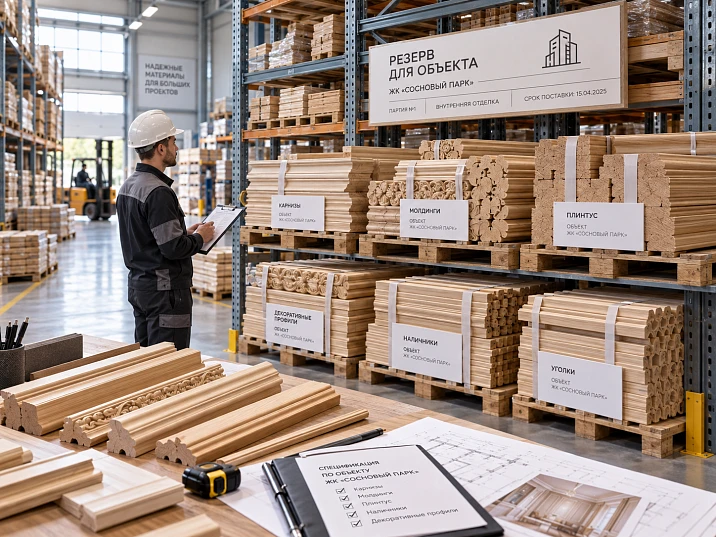
A project requires 400 m of skirting board, 600 m of molding, and 180 m of cornice. But construction proceeds floor by floor, the on-site warehouse is small, and the finishers are not ready to accept more than a kilometer of long-length profile at once. In such a situation wholesale building materials warehouse it is needed not only as a place where you can see the status "in stock." It is important for the purchaser to understand how much of a specific SKU and finish is available right now, how much will have to be produced, whether the project volume can be agreed upon, and whether it is realistic to receive it in several batches.
On the STAVROS website, availability is shown for a specific configuration and city, and the product cards indicate: an item that is in stock can be shipped within three business days; out-of-stock items are usually made to order. At the same time, the public product card does not promise an automatic service to "reserve the entire warehouse balance for the project and issue it in parts." Therefore, the project reserve and the schedule of phased issuances must be agreed upon separately before payment.
The main mistake is to see that the profile is "in stock" and decide that the warehouse covers the entire project. The status indicates that the item is available, but the project may require five or ten times more than the current free balance.
The correct scheme: SKU → finish → actual warehouse balance → full project volume → missing production portion → agreed reserve → batches → balance after each issuance → safety stock.
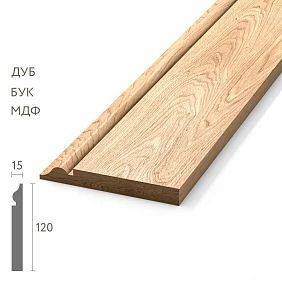
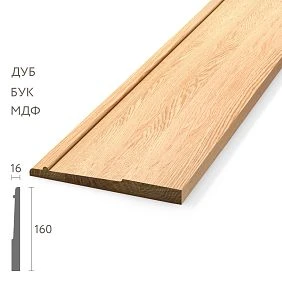
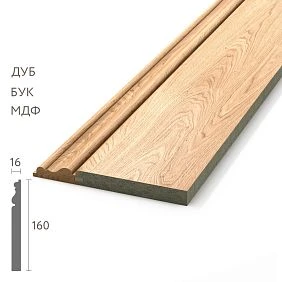
Wholesale building materials warehouse: why "in stock" does not yet mean "enough for the project"
A large order has at least three different numbers:
- current free warehouse stock;
- total project requirement;
- the volume that needs to be reserved or additionally produced.
Let's imagine the website shows 40 m of the required molding, while the project needs 380 m.
The phrase "item in stock" is true, but it doesn't answer the buyer's main question.
Need to clarify:
- how many pieces are available;
- what length a specific variant has;
- what material is in stock;
- how many meters that gives;
- is the required quantity of a single configuration available;
- when can the missing volume be obtained;
- can part of the volume be reserved for a specific project;
- is phased delivery allowed.
For a large interior project, availability is not a green badge, but a numerical check.




The current stock can be quickly converted from pieces to meters
STAVROS cards show the quantity of items in stock. For linear products this is convenient: the buyer can immediately estimate the available linear meters.
For example, at the time of checking on September 10, 2026, MLD-059 was displayed as follows:
| MLD-059 | Length | Stock in St. Petersburg | Available linear meters |
|---|---|---|---|
| MDF | 2.6 m | 21 pcs. | 54.6 m |
| Beech | 2.4 m | 100 pcs. | 240 м |
| Oak | 2.4 m | 22 pcs. | 52.8 m |
Calculation for oak:
22 × 2.4 = 52.8 m.
If the project requires 180 m of oak MLD-059, the current remaining stock covers only part of the demand. The remaining 127.2 m must be planned separately.
Product card MLD-059 17×10 mm is useful precisely because it shows not an abstract "in stock" but a specific configuration and number of items.
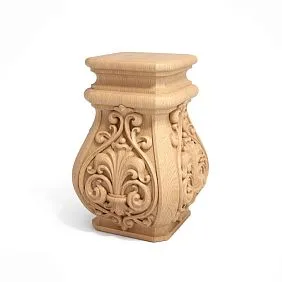
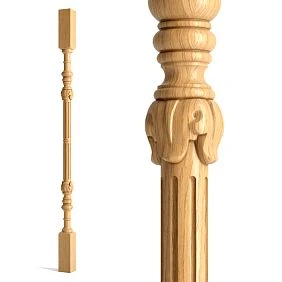
Our factory also produces:





Wooden trim: which items are especially important to plan in advance
It makes sense to discuss reserve and phased delivery primarily for profiles that are repeated many times:
- skirting boards for the room inventory;
- main wall moulding;
- cornice for standard rooms;
- door casings for repeated doors;
- slats for a serial wall composition;
- furniture profile that is constantly used in one collection.
If one SKU runs across an entire floor, its absence halts not just one room but an entire queue of work.
In general STAVROS mouldings catalogue there is a filter by availability in Moscow and Saint Petersburg, which is convenient for an initial check. But the final project volume still needs to be calculated separately.
Get Consultation
Wholesale building material depots: free stock and project reserve are different things
wholesale building materials depots are usually perceived as a place where a product is either available or not. For a project, this distinction is not enough.
Free stock — product that is currently shown as available.
Project reserve — the volume that, by agreement, must remain tied to a specific order until an agreed date or stage.
These are fundamentally different statuses.
An item cannot be considered reserved just because the product page shows 100 units today.
If a reservation is needed, the purchaser must obtain confirmation:
SKU / material / length / quantity / project / reservation period / issue schedule.
Without such a record, it is just the current stock.
How to create a reservation for wooden skirting board
Bad request:
approximately 350 m of skirting board is needed.
Working:
PLT-006 / oak / 100×15×2400 mm / main volume ___ pcs. / installation reserve ___ pcs. / operational reserve ___ pcs.
As of September 10, 2026, the PLT-006 product page showed 68 units of the oak version at 2400 mm, that is:
68 × 2.4 = 163.2 m.
If a project requires 350 m of oak PLT-006, the current remaining stock is not enough even for half of the project.
This is exactly the case where the "in stock" status cannot be used instead of a project calculation.
The technical configuration can be checked in the product card PLT-006.
Why it is better to reserve skirting boards in lengths rather than only in meters
The warehouse physically stores products, not abstract linear meters.
For example, a project requires 350 m of profile with a length of 2.4 m.
350 ÷ 2,4 = 145,83.
Minimum — 146 lengths before checking cutting and reserve.
If the installation reserve is another 6 lengths, and the operational reserve is 4, the project card should show:
main order — 146 pcs.
installation reserve — 6 pcs.
operational reserve — 4 pcs.
total project volume — 156 pcs.
This way, warehouse logic matches the physical product.
How to plan wooden molding for floors and phases
Molding is especially convenient to break down by project phases.
For example:
- floor 1 — 160 m;
- floor 2 — 160 m;
- floor 3 — 160 m;
- operational stock — 25 m.
Total requirement:
505 m.
But this should be a single specification, not four independent orders.
Project volume card:
| Field | Value |
|---|---|
| Project | Hotel A |
| Article number | MLD-___ |
| Material | Oak |
| Total requirement | 505 м |
| Queue 1 | 160 м |
| Queue 2 | 160 м |
| Queue 3 | 160 м |
| Operating stock | 25 м |
| Confirmed warehouse | ___ |
| Required to produce | ___ |
| Agreed reservation deadline | ___ |
The last three lines cannot be filled in with assumptions — they must be confirmed by the seller.
Wooden cornice: why its stock volume needs to be checked separately
The cornice is larger than many moldings and takes up more space during storage and transport.
For the project, it is important to know not only the linear meters, but also:
- cross-section;
- the length of the stick;
- number of items;
- packaging units;
- the installation sequence.
As of September 10, 2026, KZ-010 was shown in Saint Petersburg:
- MDF 2600 mm — 75 pcs.;
- beech 2400 mm — 42 pcs.;
- oak 2400 mm — 14 pcs.
For oak, this is:
14 × 2.4 = 33.6 m.
If the lobby and corridors require 180 m of oak KZ-010, the current warehouse volume covers less than one-fifth.
That is why the product card KZ-010 66×51 mm it is needed as a checkpoint for the actual remaining stock, not as a guarantee of full project availability.
Building material depots: what stock data does a procurement specialist actually need?
If compared building material depots, it is not enough for the procurement specialist to receive the answer “everything is available.”
A proper answer should distinguish:
| Parameter | What you need to know |
|---|---|
| Article number | exact designation |
| Finish | material, finish |
| Length | actual L |
| Free remaining stock | pieces |
| Equivalent | linear meters |
| Volume required by the project | pieces / meters |
| Deficit | how much is missing |
| Replenishment date | confirmed date/period |
| Reservation availability | yes / no, under what conditions |
| Availability of partial delivery | yes / no, schedule |
Such a table turns a conversation about the warehouse into a procurement task.
Why similar SKUs cannot be combined into a single stock balance
In a small photo, MLD-031 and MLD-033 may appear similar.
But on a wall, the differences in profile are read through light and shadow.
Therefore, you cannot maintain a warehouse line:
classic molding — 300 m.
You need to:
MLD-031 / material ___ / length ___ / quantity ___
And separately:
MLD-033 / material ___ / length ___ / quantity ___
The project reserve is tied to the exact SKU and specification.
Otherwise, in a month the first phase receives one profile, and the second — “almost the same one.”
Wholesale building materials warehouse: why split the volume by project phases
wholesale building materials warehouse is useful to the project precisely when procurement can be synchronized with the actual readiness of the site.
For example, construction lasts six months.
It makes sense to split:
- Building A;
- Building B;
- lobby;
- guest room inventory;
- restaurant.
Delivering all the long-length items on the first day is often inconvenient: they take up space, get moved around, the packaging gets damaged, and different SKUs get mixed up.
But the phased scheme works only under one condition: the full project volume and the order of its reservation/production are agreed in advance.
Phased delivery must not turn into several random purchases
Bad:
today 100 m;
in a month another 100 m;
then we'll find another 100 m.
So no one knows how much was needed initially and how much is left.
Correct:
project requirement 300 m → confirmed method of covering the volume → queue 1 / 100 m → queue 2 / 100 m → queue 3 / 100 m.
After each delivery, the remaining balance decreases in the project card.
How to track the remaining balance after each queue
| Article | Was in the design volume | Shipped | Remaining |
|---|---|---|---|
| PLT-___ | 500 м | 180 м | 320 м |
| MLD-___ | 700 м | 250 м | 450 м |
| KZ-___ | 200 м | 80 м | 120 м |
But it is better to also keep the second column — in pieces.
For example, for a 2.4 m profile, a remaining balance of 120 m corresponds to:
120 ÷ 2.4 = 50 lengths.
This way, the accounting entry in meters does not diverge from the warehouse entry in pieces.
Wholesale construction base: the reserve is calculated in units
If wholesale construction base shows the exact number of units, which is more useful than a general estimate in meters.
Suppose 100 m of 2.4 m profile is needed.
100 ÷ 2.4 = 41.67, so at least 42 whole units are needed before cutting and stock.
42 strips yield:
100.8 m.
But these 0.8 m are only an arithmetic remainder. If the project consists of long visible sections, short offcuts may turn out to be useless.
Therefore, the reserve must also be tied to the cutting plan, not just to the percentage.
What happens if part of the batch remains in the warehouse
If, by agreement, part of the volume is not shipped immediately, it must remain unambiguously identified.
Minimum fields:
- project;
- article number;
- the material;
- length;
- execution;
- initial volume;
- already shipped;
- remaining stock;
- agreed retention period;
- responsible manager.
Without this data, the word "reserve" is too vague.
And once again: such a scheme must be confirmed for a specific order. The public STAVROS product page shows availability and lead times, but by itself it is not an agreement for long-term storage of project surplus.
Installation and operational reserves must not be mixed up
Let's say the project calculated:
- main volume — 500 m;
- installation reserve — 20 m;
- operational reserve — 25 m.
Total volume:
545 m.
If installers are given all 545 m at once without marking, the remaining 25 m can easily be used up on cuts and local rework.
Therefore, it is better to allocate the operational reserve as a separate line item and with separate labeling:
RESERVE AFTER HANDOVER / do not use in current installation.
Moscow warehouse: first check the sample and finish
If the user is looking for wholesale building materials warehouse in Moscow, geography does not override the technical procedure.
First:
- choose a profile;
- check the material and length;
- view the physical sample;
- obtain the actual linear meterage for the project;
- verify availability by city;
- separately agree on the reserve or future batch.
The STAVROS catalog has availability filters for Moscow and Saint Petersburg. This is convenient for an initial check, but it does not replace confirmation of a large project quantity.
What to check on the first delivery
The first batch is the control batch.
Need to check:
- article number;
- execution;
- the material;
- length;
- quantity;
- marking;
- packaging;
- compliance with the approved sample.
If the first batch does not match the specification, the remaining 80% cannot automatically be considered correct.
First, the cause is determined, then shipment continues.
What to do if the project volume runs out earlier
There is no need to look for:
“something similar.”
You need to return to the original project card:
- article number;
- the material;
- length;
- original execution;
- actual additional volume.
Then check the possibility of re-production or a new supply.
For natural wood, the variability of the pattern and tone of a new batch must be taken into account. A matching article number does not guarantee that every fiber will be identical.
Construction material databases: when availability matters more than the lowest price
If compared construction material databases, the cheapest option is not always the best for the project.
Example:
Option A is 5% cheaper, but can cover only 45% of the approved volume.
Option B is more expensive, but can confirm the entire required SKU on a clear schedule.
In the first case, risks are added to the price:
- waiting;
- reorder;
- new batch;
- possible downtime;
- additional deliveries.
Therefore, you should compare not the cost of a single piece, but the cost of fulfilling the entire specification.
Current stock balance is a snapshot as of a date, not a constant value
Any availability figure changes.
At the time of checking today, PLT-006, MLD-059, and KZ-010 had specific stock levels in Saint Petersburg, but tomorrow they may be different.
Therefore, the project document should specify:
availability checked: date / time / configuration.
And before payment, recheck.
This is especially important if the calculation and approval take several days.
How to submit a project reserve request without ambiguity
Instead of:
"set aside plenty of this molding for us."
send:
| Field | Example |
|---|---|
| Project | Hotel A |
| Article number | MLD-059 |
| Material | Oak |
| Length | 2400 мм |
| Total requirement | 220 pcs. |
| Needed now | 60 pcs. |
| next queue | 80 pcs. / date ___ |
| Final queue | 60 pcs. / date ___ |
| Operating stock | 20 pcs. |
| Retention period | please confirm |
| Missing volume | please confirm production |
This way the manager can respond specifically: what is available, what can be held, what needs to be produced, and what terms are possible.
When you don't need to reserve the entire project
There are situations where a project reserve is excessive.
For example:
- you need 10–15 m of standard profile;
- all material is taken at once;
- the profile is easily available;
- the project will be completed in a few days;
- no repeat order is planned.
Then a regular purchase based on actual availability is simpler.
A project reserve is justified where there is a large volume, several stages, and a risk that the free warehouse stock will disappear between queues.
How to link warehouse and production in a single statement
For a large order, it is useful to split the volume:
| Article | Total needed | Available now | Shortage | Source of fulfillment |
|---|---|---|---|---|
| PLT-___ | 156 pcs. | 68 pcs. | 88 pcs. | production / to be confirmed |
| MLD-___ | 220 pcs. | 100 pcs. | 120 pcs. | production / to be confirmed |
| KZ-___ | 80 pcs. | 42 pcs. | 38 pcs. | production / to be confirmed |
This is a conditional example of the structure.
The "available now" figures should only be taken from the current card of the specific variant.
After confirmation by the manager, the "closing source" column turns into a real plan.
Three statuses of one item: free warehouse stock, production shortage, and confirmed reserve
For a large order, it is useful to abandon a single "availability" field altogether and split it into three states.
Free warehouse stock — what is shown as available now and could potentially be sold to another buyer.
Production shortage — the difference between the full project requirement and what is already physically available.
Confirmed project reserve — only the volume that the salesperson has separately agreed to allocate to a specific project under specific terms.
Example:
| Indicator | Value |
|---|---|
| Required for the project | 220 pcs. |
| Available free now | 68 pcs. |
| Deficit | 152 pcs. |
| Confirmed for production | ___ |
| Confirmed for reservation | ___ |
| First issue | ___ |
| Balance after first issue | ___ |
Until the last four lines are confirmed, you cannot write to the working file:
"220 pcs reserved."
Correct wording:
"Requirement 220 pcs; free balance 68 pcs; closing of the missing volume and reservation terms are pending confirmation."
This is especially useful in correspondence between the designer, the purchaser, and the site foreman. One sees the project requirement, another sees the current warehouse stock, and the third sees the date when the material is actually needed on site. Without separating the statuses, they easily start talking about different figures as if they were one.
The issue schedule must be tied to the readiness of the site, not to the calendar for the calendar's sake
The plan to "deliver 100 meters each month" looks neat, but it may not match the construction schedule.
It is better to tie queues to events:
Queue 1 — after Floor A is ready.
Queue 2 — after acceptance of wall works on Floor B.
Queue 3 — after the lobby is ready.
And place an approximate date next to it.
This reduces the risk that a warehouse batch arrives on time according to the calendar, but the site is physically not ready to receive it.
In the project card, you can use a table:
| Queue | Readiness condition | Planned date | Volume | Status |
|---|---|---|---|---|
| 1 | floor A is ready for finishing | ___ | 160 м | Confirmed |
| 2 | floor B accepted for installation | ___ | 160 м | pending |
| 3 | floor C is ready | ___ | 160 м | pending |
| Reserve | after handover | ___ | 25 м | do not release for installation |
If the date shifts, it is not the specification itself that changes, but the release schedule.
But there is a limitation here: the ability to hold goods for an extended period and postpone the release date must be agreed separately. One cannot assume that the warehouse is obligated to store a reserved volume without a term or conditions.
What to check if part of the project is closed from stock and part from new production
This is one of the most sensitive scenarios.
For example, the warehouse has 68 oak staves PLT-006, while the project requires 156. The remaining 88 are planned to be produced later.
Before confirming the scheme, it is worth checking:
- whether the item code is the same;
- whether the material is the same;
- whether the cross-section is the same;
- whether the standard length matches;
- whether the finish quality is designated the same way;
- whether the product card has changed;
- how the marking of the two batches will be organized.
For natural wood, appearance must be taken into account separately. Even with the same item code, a new batch of oak may differ in grain pattern and shade. If the profile is to be painted with opaque enamel, this risk is lower. If a transparent or semi-transparent finish is used, it is wiser to assemble critical visible areas with batch consideration.
That is, the combination:
68 pcs. from stock + 88 pcs. from new production
technically can cover the quantity, but does not yet address the question of visual consistency.
For a large project, it is useful to determine in advance which rooms can receive the first batch and which must be fully assembled from the second, so as not to mix visually different batches in one critical room.
The reservation period should be counted as a separate project parameter
Even if the seller has agreed to hold part of the batch, the working document must include an end date or a condition for the reservation to end.
Bad:
"Keep until requested."
Working wording:
"Reservation until November 30, 2026, or until full delivery according to the schedule — whichever comes first."
If the project is delayed, the purchaser contacts the manager in advance and confirms a new deadline. One must not silently assume that the goods will remain reserved indefinitely.
Useful fields in the project card:
| Parameter | Value |
|---|---|
| Reservation confirmation date | ___ |
| Validity period | ___ |
| First issue | ___ |
| Next check | ___ |
| Responsible person | ___ |
| What happens after the deadline | Clarify |
This protects both parties from differing expectations. The site manager may assume the material "stays until the end of the renovation," while the warehouse may assume the reserve is valid only for the agreed period.
For a phased project, it is useful to set a checkpoint date a few business days before each phase: reconfirm the remaining stock, the quantity to be issued, and the site's readiness to accept long-length material. Such a check does not replace the reserve agreement, but it reduces the risk that a calendar change will be discovered on the day of shipment.
Complete workflow for handling project volume
- Approve the profiles.
- Record the SKUs and finishes.
- Calculate the total linear meters.
- Convert it into the number of lengths.
- Add installation allowance.
- Add operational allowance.
- Check current availability.
- Calculate the shortage.
- Clarify the production timeline for the missing items.
- Request the possibility of a project reserve.
- Request the possibility of phased delivery.
- Lock in the queues and dates.
- Check the goods at each delivery.
- Update the stock after delivery.
- After handover, set aside the operational reserve.
This way, building material depots are used as part of a managed project process, not just as a search for the nearest warehouse.
Final check before payment
| Check | Status |
|---|---|
| Item codes approved | Yes / no |
| Material and length locked | Yes / no |
| Full volume calculated | Yes / no |
| Meters converted to rods | Yes / no |
| Current availability checked | Yes / no |
| Shortage calculated | Yes / no |
| Production lead time confirmed | Yes / no |
| Reservation availability confirmed | Yes / no |
| Reservation terms locked | Yes / no |
| Phased delivery confirmed | Yes / no |
| Queue schedule approved | Yes / no |
| Operational stock allocated | Yes / no |
If the lines about reserve and dispatch are not confirmed, they cannot be considered a guaranteed service.
Main conclusion:
for a large project, the warehouse status "in stock" is only the first figure. The real project task begins further on: how much is needed in total, how much is available now, how much still needs to be produced, whether the required volume can be reserved for the project, and how to update the remaining balance after each phase.
That is why wholesale building materials depots in Moscow or in another city should be assessed not only by the current remaining stock, but also by the ability to fulfill the entire project specification on the required schedule.
Questions about project reserve of wooden mouldings
What does the "in stock" status mean?
It shows that a specific configuration is present in the warehouse in the indicated quantity at the time the data was updated.
Does this mean the product will be enough for a large project?
No. You need to convert the quantity in pieces into meters and compare it with the full requirement.
How quickly does STAVROS ship goods from the warehouse?
The product pages indicate shipment of goods, if available, within three business days.
What if the required quantity is not available?
The product cards indicate made-to-order production; the specific lead time and the ability to fulfill the required volume must be confirmed before payment.
Can goods be reserved for a project?
Public product cards do not provide a universal guarantee of this service. The availability, timing, and terms of a project reservation must be agreed upon separately.
Can a single large order be delivered in stages?
This also needs to be agreed upon for a specific project and the delivery schedule recorded.
Why is the reserve counted in pieces?
Because the warehouse stores physical lengths of a certain size, not fractional meters.
Should stock also be tracked in meters?
Yes. Pieces are needed for the warehouse, meters — for project requirements and control.
What is a project reserve?
Material that is not consumed during the current installation but remains after handover for future repairs.
Why can't similar moldings be combined?
Even items with similar-looking SKUs may have different geometry. The project reserve is tracked by exact SKU and finish.
How often should availability be rechecked?
At minimum before payment and before changing the order schedule. Current stock is a dynamic value.
Where can I view warehouse stock items?
В STAVROS mouldings catalogue and on specific product pages with availability by city.