Article Contents:
- Decorative furniture support buy: choice for cabinet, sofa, console and wardrobe
- What is a decorative furniture support
- How a decorative support differs from a regular furniture leg
- What furniture are decorative supports suitable for
- Cabinet
- Commode
- Console
- Sofa
- Ottoman and pouf
- Wardrobe and sideboard
- Hallway furniture
- How the shape of the support changes the style of furniture
- Round and spherical support
- Geometric support
- Turned support
- Figural and carved support
- Cabriole support
- Support height: low, medium, high
- Low support (up to 60–80 mm)
- Medium support (80–150 mm)
- High support (from 150–200 mm and above)
- Proportions are the main guide
- Material: why a wooden support is better for classic and modern furniture
- Wood goes with everything
- Solid wood for painting
- Oak and beech: fundamental difference
- Wooden vs metal: arguments
- Color: white, black, gold, or natural support
- White decorative support
- Black decorative support
- Gold support: for decorative coating
- Natural finish: varnish or oil
- How to choose a support for your furniture style
- Classic
- Neoclassicism
- Provence
- Art Deco
- Modern interior ("warm minimalism")
- How to calculate the quantity and load
- Determine the weight of the furniture
- Divide the load by the number of supports
- For long furniture — a central support
- Dynamic load on sofa supports
- Mounting plate area
- How to choose the fastening for a decorative furniture support
- Mounting plate (flange)
- Screw mount (stud)
- Furniture mounting plate
- Mounting tenon
- MDF body reinforcement
- Mistakes when buying decorative furniture legs
- Choosing Based Only on Appearance
- Not considering furniture weight
- Placing a thin leg on a heavy cabinet
- Choosing a leg that is too tall for a low cabinet
- Mixing different leg and facade styles
- Not considering future painting
- Forgetting about fasteners
- Buying a metal support when the furniture is wooden
- Not checking the number of supports for long furniture
- Not accounting for the baseboard height
- What to buy together with decorative furniture supports
- Wooden decor for furniture
- Moldings for furniture
- Installation and finishing materials
- Why STAVROS
- FAQ
- What is a decorative furniture support?
- How is a decorative support different from a regular leg?
- Which support to choose for a cabinet?
- Which decorative supports to choose for a sofa?
- Can wooden decorative furniture supports be painted?
- How many decorative supports are needed under furniture?
- How to calculate the load on a furniture support?
- Where to buy a decorative wooden furniture support?
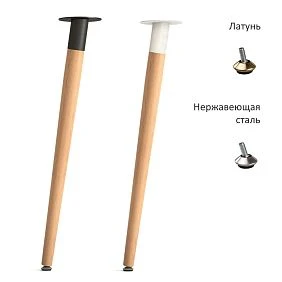
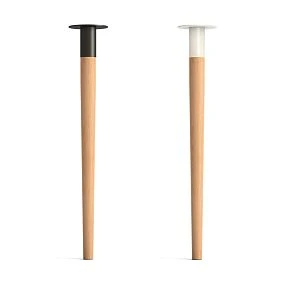
Decorative furniture support for purchase: choice for cabinet, sofa, console, and wardrobe
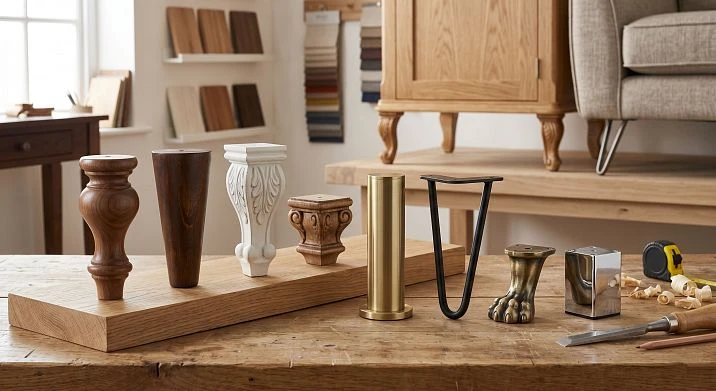
Look at any piece of furniture from below. What do you see? In nine out of ten cases, it's either a boring plastic glider, a nondescript metal tube, or nothing: the body just sits on the floor. Now imagine a different picture: the same cabinet, the same dresser — but below, a turned wooden support with a soft silhouette, matching the facade color, with a slight shadow at the base. Nothing else has changed. But the furniture looks more expensive. That's the magic of the right decorative support.
A decorative furniture support is not a technical detail "to keep it standing." It is a visible architectural element of furniture that shapes its bottom line, defines its character, and works together with the facade, handles, moldings, and all other decor. Buying a decorative furniture support correctly means first understanding what exactly you are buying and why.
This article is a commercial guide. No fluff, no lyricism where specifics are needed. With examples, tables, and checklists. For those who make furniture, update it, or design an interior from scratch.




What is a decorative furniture support
A decorative furniture support is a supporting element of case or upholstered furniture that performs both a structural and aesthetic function. Structural: holds the body at the required height, evenly distributes the load, ensures stability. Aesthetic: shapes the bottom line of the furniture, creates visual lightness or massiveness, sets a stylistic accent.
The difference between a "simple leg" and a decorative support is the difference between function and character. A simple leg solves the problem of stability. A decorative furniture support solves the same problem — but also works as a design element that is visible, felt, and shapes the first impression of the furniture.
That is why decorative supports are used where the lower part of the furniture is visible: cabinets, consoles, sofas, benches, sideboards, dressers, nightstands, poufs. Where the support is hidden — under a kitchen unit behind a plinth facade — the decorative function is not needed. Where it is open — it works for the entire interior.
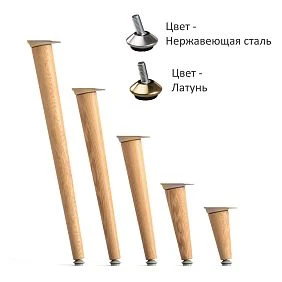
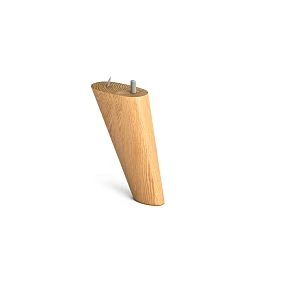
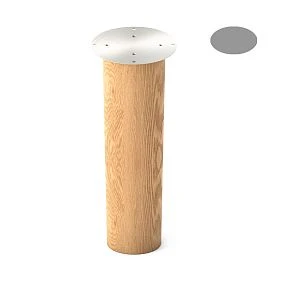
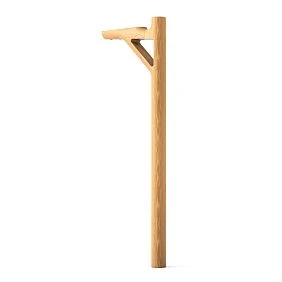
In the STAVROS catalog, the section of furniture legs and supports includes decorative wooden models made from solid beech and oak — turned, geometric, spherical, and shaped. These are not technical supports — they are full-fledged elements of furniture design.
Our factory also produces:


How is a decorative support different from a regular furniture leg
This is not an idle question. Everything is mixed up in the market: "legs" refer to both metal tubes for kitchen cabinets and turned wooden supports for classic sofas. Let's be honest.
| Element | Main task | When to choose |
|---|---|---|
| Simple leg | Lift furniture off the floor | Budget furniture, invisible area, kitchen base |
| Decorative support | Support + visual accent | Cabinets, consoles, dressers, sofas, ottomans |
| Adjustable support | Uneven floor compensation | Kitchens, built-in wardrobes, technical furniture |
| Turned/carved support | Style and expressiveness of the bottom line | Classic, neoclassical, Provence, Art Deco |
The key difference is what it works for. A simple leg is invisible by design: it is under the plinth, behind the facade, in the technical zone. A decorative furniture support is what you see first when your gaze slides down the piece of furniture. It must be worthy of that gaze.
An adjustable support is a separate story. It is needed where the floor is uneven and precise height adjustment is required. But it has no decorative character: even the most expensive adjustable metal support looks technical, not designer. Using it on visible elements of classic furniture means destroying the stylistic logic of the product.
More details on the principles of choosing the height and type of support in the article "High wooden legs for furniture" on the STAVROS website.
Get Consultation
Which furniture are decorative supports suitable for
The answer is simple: for any furniture where the lower part is open and visible. But let's be more specific — for each type of item.
Nightstand
A cabinet is one of the most popular objects for installing decorative supports. A bedside table, a TV cabinet, a hallway cabinet — all of them are in plain sight, and their bottom line is always at eye level. Supports for a cabinet are chosen based on the body height and facade style: for a low cabinet — low or medium supports, for a tall one — you can take medium-height supports with an accent silhouette.
Chest of drawers
A chest of drawers is an item with a massive body. A decorative furniture support under a chest of drawers should be proportional to its weight: not too thin in stance, with sufficient cross-section. Visually: high light supports under a chest of drawers create a 'floating' effect, low ones give a feeling of stability and solidity.
Console
A console is about elegance. Supports for a console should be slender, with a pronounced silhouette: turned or shaped. A console on geometric block supports looks modern and strict, on classic turned ones — expensive and aristocratic.
Sofa
Decorative supports for a sofa are a separate professional story. A sofa is a heavy item with dynamic load (people sit down, stand up, move around). The supports here must have a serious safety margin. At the same time, they are fully visible: the distance from the floor to the lower edge of the sofa is usually 10–20 cm, and the supports 'work' on perception all this time.
Ottoman and pouf
Light weight, supports visible from all sides. An ottoman on spherical wooden supports is a classic solution for a hallway or bedroom. A pouf on low turned legs is a cozy accent in the living room. Here, the shape of the support can be bolder: the small load allows you to choose elegant silhouettes.
Wardrobe and sideboard
Supports for a wardrobe are chosen less often — most wardrobes have a plinth. But sideboards and open shelving units are often installed on decorative supports as on an architectural pedestal. Here, the load margin is important: a sideboard with dishes is a heavy item.
Hallway furniture
The hallway is the first thing a guest sees. Decorative supports on a chest, bench, or console in the hallway set the tone for the entire interior. This is where you should invest attention in details: the right support in the hallway works better than any wall decor.
More about the bottom line of furniture and its design — in the article "Furniture supports and polyurethane decor" on the STAVROS website.
How the shape of the support changes the style of furniture
Shape is the most expressive parameter of a decorative support. The same dresser will look completely different on spherical soft legs and on strict geometric blocks. Let's break down the main types.
Round and spherical support
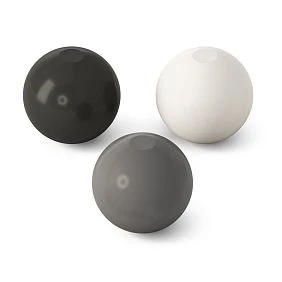
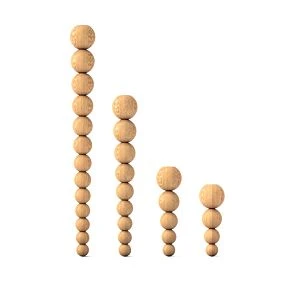
A sphere is a shape without sharp corners, without tension, without conflict. A spherical furniture leg makes the piece soft, cozy, and slightly playful. This is an ideal choice for benches, poufs, bedside tables, and upholstered furniture in classic or neoclassical style.
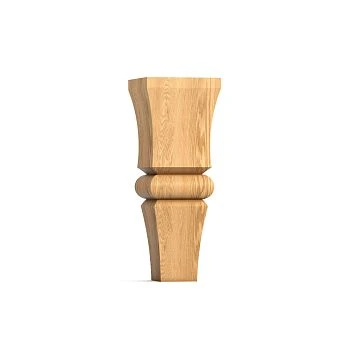
In the Stavros catalog — Spherical Furniture Leg MN-235 made of solid wood. This is a classic round support with a smooth transition to the mounting plate — concise, versatile, well-suited for painting or natural finishing.
Spherical supports work well in pairs with soft upholstery: fabric + wood is a combination that works in any style from Provence to modern classics.
Geometric support
Geometry is precision. Straight lines, clear edges, minimal curves. A geometric decorative furniture support is a choice for strict interiors: modern classic, art deco, loft with wooden accents, minimalism with warm materials.
Geometric Furniture Leg MN-227 in the STAVROS catalog is an example of a laconic wooden support with a clear silhouette. On a dark veneer chest of drawers or on a cabinet with geometric handles, it creates a unified stylistic line from top to bottom.
Geometric supports are often chosen for enamel in black or anthracite color — this is a strong design technique for a modern interior.
Turned support
A turned leg is a classic of joinery. A shape obtained on a lathe: narrowings, thickenings, recesses, smooth transitions. It is turned supports that are associated with expensive handmade furniture — with those items that are passed down by inheritance.
Turned furniture leg MN-233 from the STAVROS catalog is an example of such a professional product. A profile with traditional turning elements, made of beech or oak, works well on classic and neoclassical items: consoles, sideboards, chests of drawers, banquettes.
A turned wooden support is good in combination with wooden moldings on facades и decorative inlays — when all the furniture is built into a single decorative system.
Figural and carved support
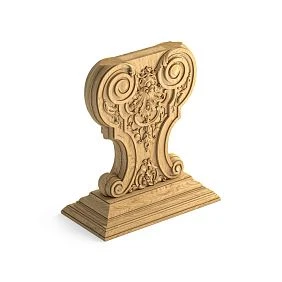
A figural support is already an accent detail. It attracts attention on its own. Such supports are used on formal furniture: antique consoles, baroque buffets, commodes with carved fronts, classic interior armchairs.
A figural carved support works well paired with wooden rosettes и decorative wooden overlays — when the entire piece of furniture is executed in the logic of handcrafted work with carved decor.
An important nuance: a carved support requires more careful care during painting — each relief element must be painted evenly, otherwise there will be stains and tonal variations in the recesses.
Cabriole support
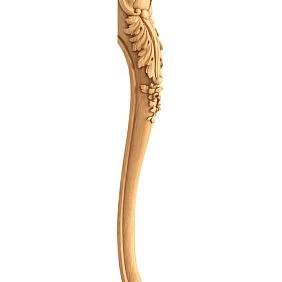
Separately, it is worth mentioning the "cabriole" form — an S-shaped curved leg characteristic of Rococo, Louis-style Baroque, and classic English joinery furniture. This is an elegant, complex-to-produce form that visually makes furniture appear weightless. It is less common, but when it is in place, it is always striking.
Support height: low, medium, high
Support height is a parameter that radically changes the proportions of furniture. The same body on supports of different heights is essentially different items in terms of perception.
Low support (up to 60–80 mm)
Low decorative supports make furniture visually massive and stable. A chest of drawers on low spherical legs looks solid, like an antique piece. A cabinet on low turned supports appears dense and substantial. This choice is good for interiors that require weight and solidity: classic, art deco, English style.
The downside of low supports is that cleaning under the furniture is difficult. If this is critical, choose at least a medium height.
Medium support (80–150 mm)
Medium height is a universal option. Furniture looks proportional, there is space for cleaning underneath, and the silhouette is balanced. A decorative furniture support of 150 mm is one of the most popular sizes for this very reason.
Medium supports work well on cabinets, chests of drawers, ottomans, and consoles. They make furniture neither too light nor too massive — they are the "workhorse" of decorative supports.
High support (from 150–200 mm and above)
High wooden furniture supports create a "floating" effect: the body seems lifted off the floor, making the furniture look light and airy. This is a strong design technique — especially for low, wide furniture that needs to be visually lightened.
High decorative supports work well on Scandinavian-style sofas from the 1960s, mid-century modern furniture, and consoles with thin legs. In a classic interior, a high support works if it has a pronounced turned or figured silhouette — otherwise, the furniture will look unstable.
Proportions are the main guide
There is a simple rule: the height of the supports should match the "weight" of the body. A heavy, deep body requires substantial supports of moderate height. A light, flat body can take high, slender legs. If the proportion is off, the furniture will look either crushed or wobbly.
Material: why a wooden support is better for classic and modern furniture
The support material is not just about strength and durability. It's about compatibility with other wooden elements of the furniture and interior.
Wood matches everything
A wooden decorative furniture support blends organically with wooden facades, wooden moldings, wooden furniture handles, carved overlays. When all the furniture decor is wooden — a support made of the same material completes the system. A metal or plastic leg breaks this connection.
Solid wood for painting
Unpainted solid wood furniture legs are the best option for custom projects. You buy from STAVROS open boundless possibilities for designers, furniture makers, and anyone striving to create unique high-quality furniture. and determine the finish yourself: white enamel to match the facade, dark walnut stain, pastel color for a Provence style. This is impossible with a chrome-plated metal support — you can't repaint it.
Oak and beech: a fundamental difference
| Material | When to choose | Pros |
|---|---|---|
| Oak | Natural finish, oil, varnish, premium interior | Expressive texture, high hardness, status |
| Beech | Painting, enamel, white and pastel furniture | Dense, even surface, paints perfectly |
| Solid wood for painting | Project with a specific facade color | Can match any RAL color |
| Solid wood for varnish | Natural furniture, visible wood | Preserves the wood grain and texture |
Oak under oil or varnish is a support with character, with visible texture, with a "luxurious" feel. Beech under enamel is a smooth, flawless surface indistinguishable from factory painting. The choice depends on what you want to showcase: the wood or the color.
Wooden vs metal: arguments
Metal decorative supports (chrome, gold, black metal) are popular in modern interiors — especially in minimalism and industrial style. But:
— metal feels colder visually and to the touch;
— metal does not match wooden overlays, handles, moldings;
— a metal support cannot be repainted to match a specific project;
— a wooden decorative furniture support with a patina or "gold" finish gives the same visual effect — but with the warm texture of wood under the coating.
A metal and chrome decorative furniture support is an alternative for specific styles. But in interiors with natural wood, classic or neoclassical styles — wood always wins.
Color: white, black, gold, or natural support
The color of the furniture support is the final touch that ties it to the rest of the interior. The good news: a wooden support made of solid wood accepts any coating.
White decorative support
A white decorative furniture support is the most popular choice for Provence, Scandinavian style, and light classic interiors. White enamel on beech gives a perfectly smooth, matte or semi-matte surface. White supports on a white cabinet or console create an invisible transition where the support "disappears" and only the silhouette works.
Black decorative support
Black decorative furniture leg — an accent choice. Black turned legs on light furniture create a strong contrast that reads as a design decision, not an accident. In interiors with black handles, black hardware, and black mirror frames, black furniture legs complete a unified system.
Gold leg: for decorative coating
Gold decorative furniture leg — this is a wooden blank coated with decorative paint or patina "like gold", or sheet gilding. Such legs are used in classic and baroque interiors, on formal furniture, in living rooms with mirrors in gilded frames. The wooden base is fundamental here: under the layer of gilding lies the warmth and weight of solid wood.
Natural finish: varnish or oil
Natural wood under varnish or oil is an "honest" choice. The species, the grain, the material are all visible. Such legs are good in interiors where wood is a conscious design decision: Scandinavian style with natural materials, Japanese minimalism, modern classics pairing natural wood with concrete or plaster.
How to choose a leg to match furniture style
Style is not just "beautiful or ugly". It is a logic where all details are coordinated. The wrong leg destroys this logic, even if it is beautiful on its own.
Classic
Turned and shaped legs with pronounced relief. Oak or beech with warm-toned staining: walnut, mahogany, dark cherry. Gilding is possible on formal furniture. The leg should be proportional to the body: for a massive sideboard — a wide base, for a light console — a slender silhouette.
Pairs well with wooden rosettes и decorative inlays in a classic pattern.
Neoclassicism
Moderate geometry with soft transitions. White or cream enamel. Medium-height base with a turned silhouette — without excessive carving, but with character. Neoclassicism is classicism that has passed through a modern filter: richness of forms, but without Baroque overload.
Provence
Light bases with smooth shapes, aged white or cream enamel. Spherical legs or softly turned profiles. Provencal furniture "lives" thanks to the feeling of handcraftedness — a slight unevenness in the paint, a barely visible wood texture under the enamel add character.
Art Deco
Geometry without compromise. Strict forms, contrast of materials and colors. Black geometric bases on a light body — or gold accent legs on a dark one. Geometric Furniture Leg MN-227 from the STAVROS catalog — one example suitable for this direction.
Modern interior ("warm minimalism")
Laconic base without overloaded decor. Natural wood with oil or matte varnish. Medium height. Shape — simple turned or geometric, without complex reliefs. Here the base should be a detail, not an accent — it blends into the interior, rather than standing out from it.
How to calculate quantity and load
A practical block — and it is often ignored, which leads to deformations of the body and failure of the bases.
Determine the weight of the furniture
An empty MDF cabinet body — 15–25 kg. With contents (clothes, dishes, books) — can reach 60–100 kg or more. Sofa — 50–100 kg. Plus two people — another 150 kg of dynamic load. Calculate the weight with a margin.
Divide the load by the number of supports
A standard piece of furniture stands on 4 supports. The load on each is a quarter of the total weight plus a margin. If a cabinet with items weighs 60 kg, each support carries 15 kg of static load. A normal wooden decorative support made of beech or oak can withstand 50–100 kg of static load without deformation — this is a multiple safety margin.
For long furniture — a central support
A sideboard 180 cm wide on four outer supports will sag in the center under load. For long furniture items (from 120 cm), provide an additional central support or reinforce the body. This is especially important for furniture with heavy contents: bookcases, sideboards with dishes, cabinets for heavy appliances.
Dynamic load on sofa supports
A sofa is dynamic: people sit down with impact load, get up abruptly, move around. Static calculation is insufficient here: choose supports with a safety margin of at least 2–3× the estimated weight. For a sofa weighing 80 kg + 150 kg of occupants = 230 kg. On 6 supports — ~38 kg each. Choose supports with a rated load of 80–100 kg.
Mounting plate area
The wider the mounting plate, the more stable the connection to the body. For MDF with a thickness of 16–18 mm, it is important that the mounting plate is not too small: under load, the MDF may be pressed through or the fasteners may be torn out. Use metal reinforcing plates or glue a tenon into a prepared hole.
How to choose the fastening for a decorative furniture support
Fastening is what is thought about last and what breaks first if chosen incorrectly.
Mounting plate (flange)
A flat metal or wooden plate with holes for screws. A simple, reliable fastening for chipboard and MDF cabinets. The plate distributes the load over the area, reducing the risk of pressing through the board.
Screw fastening (stud)
The stud is screwed into the leg body, and the corresponding threaded insert is installed in the cabinet. The connection is rigid, the leg does not wobble. This is a professional fastening method used for high-end furniture. Requires precise marking and correct installation of the insert.
Furniture mounting plate
A metal plate with a threaded hole in the center and mounting ears on the edges. It is installed on the cabinet with screws, and the leg is screwed into the thread. A universal option compatible with most wooden legs.
Mounting tenon
Some legs have a wooden or metal tenon that is inserted into a prepared socket in the cabinet and fixed with glue. Works well on solid wood cabinets, less reliable on MDF without reinforcement.
Reinforcement of MDF cabinet
MDF is a board with relatively low resistance to fastener pull-out. When installing heavy legs or on furniture with dynamic loads, reinforce the attachment point: glue in a wooden insert or use a metal embedded element.
All mounting materials — glue, fasteners, screws, plates — are available in the section Mounting and finishing materials STAVROS.
Mistakes when buying decorative furniture legs
These mistakes are repeated over and over — in workshops, on DIY forums, in turnkey projects. Study them to avoid repeating them.
Choosing based only on appearance
A beautiful leg in the catalog is not a guarantee that it will fit. Before buying, you need to know: the weight of the furniture, the thickness of the body, the mounting method, the height you want to achieve. Appearance is the last criterion, not the first.
Not accounting for furniture weight
The most common mistake. "A small cabinet means a small load." But a cabinet with a collection of books or a heavy marble top can weigh 80 kg. The leg must withstand the load with a margin — then it will last for decades.
Putting a thin leg on a heavy cabinet
A thin, elegant carved leg is beautiful. On a bench. On a heavy wardrobe with clothes — it's an accident in slow motion. Heavy items require legs with an appropriate cross-section.
Choosing too high a leg for a low cabinet
A bedside table 400 mm high on 200 mm legs is an item where the "legs" make up half the height. It looks unstable and strange. The height of the legs should be proportional to the body.
Mixing different styles of legs and facade
A carved baroque leg on a minimalist facade without moldings is a conflict. A geometric support on a classic facade with overlays is also a dissonance. The support must belong to the same style system as the entire piece.
Do not consider future painting
If you plan to paint the supports together with the facades, buy unfinished solid wood. If you are buying already painted supports, make sure the shade exactly matches your project. The color on the screen and the color in reality are different things.
Forgetting about fasteners
'I'll buy the legs, and find the fasteners on site' is a classic. As a result, the supports are attached with random screws that don't hold, or the plate doesn't match the holes in the body. Order fasteners together with the supports.
Buying a metal support when the furniture is wooden
If all the furniture, handles, overlays, and moldings are made of wood, chrome metal legs will break the unity of the system. This is not a prohibition, but it is a conscious design choice, not an accident.
Not checking the number of supports for long furniture
Four supports at the corners on a 200 cm buffet is a sagging center under load. Add a central support or a bar with a support.
Not considering the height of the baseboard
If the furniture is against the wall, make sure that when installing the supports, the back of the body does not rest against the baseboard. A standard baseboard height of 60–80 mm may require either moving the furniture away from the wall or choosing supports that account for this gap.
What to buy together with decorative furniture supports
The right support is part of the system. Here's what makes sense to get along with it for a complete result.
Wooden decor for furniture
-
wooden furniture handles — support and handles in the same wood species create a unified system
-
Decorative wooden inlays — for corner and central facade accents
-
Wooden sockets — for decorative elements on facades and walls
Moldings for furniture
-
Wooden moldings — for facade division that aligns with the shape of the supports
-
Furniture legs and supports — full section — for comparing models before purchase
Mounting and finishing materials
-
Mounting glue, screws, plates — in the section Mounting and finishing materials
-
Rubio Monocoat oil for natural finishing of wooden supports
-
Enamel or tinting — for painting according to the project
Why STAVROS
Decorative furniture support can be bought in many places. But at STAVROS it makes sense for specific reasons.
A real assortment of solid wood. Not "wood as a material", but specific models — turned MN-233, geometric MN-227, spherical MN-235 — made of beech and oak, in an unpainted version, ready for individual finishing.
Everything in one catalog. Supports, handles, moldings, overlays, rosettes, fasteners and mounting materials — from one source, in a unified system. No need to look for compatible parts from five different suppliers.
Specialization in wooden decor. STAVROS is not a store of "everything for renovation". It is a specialized supplier of wooden interior decor, working with professional designers, furniture workshops and cultural heritage sites.
Contact us to confirm shipping to your destination. Buy a decorative furniture support with delivery to any city in Russia — CDEK and DPD. Showrooms in St. Petersburg and Moscow for pickup and live acquaintance with the assortment.
Experience and status. Among STAVROS projects are the Konstantinovsky Palace, the Hermitage, the Alexander Palace, the Trinity-Izmailovsky Cathedral. The company was founded in 2002. Rating 5.0 — more than 260 verified reviews.
FAQ
What is a decorative furniture support?
This is a furniture leg or lower support element that not only holds the body but also influences the style of the furniture: makes a cabinet, chest of drawers, sofa or console visually lighter, taller or more expressive. It is a structural part with a design function.
How is a decorative support different from a regular leg?
A regular leg only solves the stability problem. A decorative furniture support also works as a design element: it defines the silhouette of the furniture, supports the facade style, and coordinates with handles, overlays, and other decorative details.
Which support should you choose for a cabinet?
For a bedside table — spherical or turned supports of medium height. For a TV cabinet — geometric or turned supports, considering the room's style. The height of the supports should not disrupt the proportions of the body.
Which decorative supports should you choose for a sofa?
Durable, with a load margin: the sofa bears dynamic load. Made of wood — beech or oak. Shape — turned or figured for classic, geometric for modern interiors. Height — from 100 to 180 mm depending on the desired sofa seating.
Can wooden furniture decorative supports be painted?
Yes. Supports made of solid beech or oak without coating can be painted with enamel, tinted, varnished, or oiled. Beech is better for even painting, oak for natural finishing. Unpainted STAVROS supports are the optimal choice for custom projects.
How many decorative supports are needed under furniture?
Standard — 4 supports at the corners. For long furniture (from 120 cm) — an additional central support or reinforcement. For upholstered furniture (sofas, ottomans) — according to the manufacturer's frame scheme, usually 4–6 supports.
How to calculate the load on a furniture support?
Sum the weight of the body and maximum filling, divide by the number of supports and add a margin of 50–100%. For static furniture, the margin is 50%, for dynamic furniture (sofas, ottomans) — 100% or more.
Where to buy a decorative wooden furniture support?
In STAVROS — section of furniture legs and supports with specific solid wood models. Showrooms in Saint Petersburg and Moscow. Delivery via CDEK and DPD throughout Russia.