




























































Article Contents:
- Short answer: when you need high wooden legs
- How high furniture legs differ from low supports
- For which furniture wooden legs are suitable
- Dresser legs
- Cabinet legs
- Legs for a sofa
- Legs for coffee table
- Legs for a table and chair
- How to choose the height of furniture legs
- How to choose the shape of legs
- Material: why wooden legs are well-suited for furniture
- Load and fastening: what to check before buying
- How to match furniture legs with other decor
- Mistakes when choosing high furniture legs
- What to buy together with furniture legs
- FAQ: Answers to Popular Questions
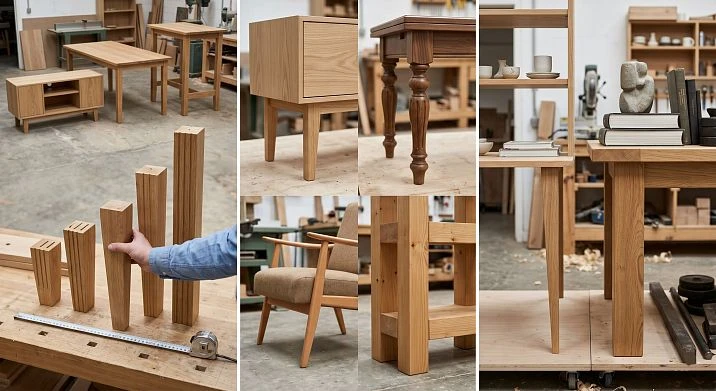
There are things in an interior that change everything — and yet are almost unnoticeable at first glance. High wooden furniture legs are exactly that category. Put four turned beech legs 150 mm high on an old chest of drawers — and before you is no longer a worn-out Soviet box, but an elegant piece of furniture in the spirit of French chic minimalism. This is not an exaggeration: wooden legs change the visual weight of furniture, its proportions, its place in the interior, and even the perception of the entire room.
But choosing correctly is not as simple as it seems. You need to consider height, shape, wood species, load, attachment method, and stylistic compatibility with the body and other decor. This is exactly what we will cover — in detail, specifically, and with practical examples.
Short answer: when high wooden legs are needed
High Furniture legs are needed in several cases, and each of them deserves separate attention.
First, when you need to visually lighten the furniture. A massive chest of drawers or cabinet 'on the floor' looks heavy and presses on the space. The same dimensions on high legs — already airy: the floor is visible under the body, the furniture seems to float. This works even in small rooms where every square centimeter counts.
Second, when you need to raise the body to a comfortable working height. For a chest of drawers with pull-out drawers, it is optimal when the bottom drawer opens without bending to the floor. For a bedside table — so that the tabletop level matches the mattress level. For a TV stand — so that the screen is at the correct height.
Third, to simplify cleaning. Under furniture on high legs, it is easy to vacuum or mop — no need to move the body. This is especially valuable for a sofa, low cabinet, and coffee table.
Fourth, to update furniture without replacing it. Replacing old plastic or worn wooden supports with new wooden furniture legs — one of the most budget-friendly yet effective ways to give a furniture item a new life. Especially if you choose supports that match the handles and body decor.
And finally — to give furniture a classic, neoclassical, or designer character. Turned, shaped, massive wooden supports turn a laconic body into furniture with style.
How high furniture legs differ from low supports
The difference between a high and low furniture leg is not just in numbers. These are fundamentally different roles in the interior.
A low support is a technical element. Its task: to lift the body a few centimeters off the floor, protect the base from moisture, and ensure ventilation. It is almost invisible, does not shape the style, and no one pays attention to it. This is honest and important work, but not decorative.
A high leg is completely different. It is clearly visible, shapes the furniture silhouette, and participates in creating the interior image on par with the facade, handles, and overlays. That is why high wooden furniture legs require more careful selection: an unsuccessful shape or style mismatch will be noticeable.
Additionally, a high leg bears a greater load at the attachment point. The longer the lever (i.e., the higher the leg), the stronger the moment of force under lateral loads — especially when opening heavy doors or pulling out drawers. This must be considered when selecting the cross-section and attachment area of the support.
For which products are high legs preferred:
-
chests of drawers and desks in classic and neoclassical style
-
bedside tables and TV cabinets
-
sofas and armchairs in interiors where silhouette lightness matters
-
coffee tables and consoles
-
benches and ottomans
-
decorative cabinets and display cases
Low supports are more logical for heavy wardrobes, bookcases, massive sideboards, and any furniture where the body weight of hundreds of kilograms requires maximum support area.
Our factory also produces:
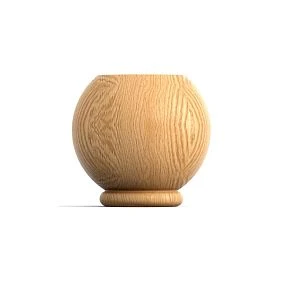
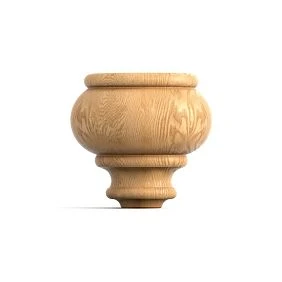
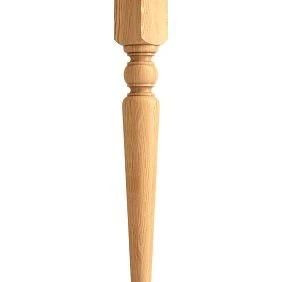
What furniture wooden legs are suitable for
Get Consultation
Legs for a chest of drawers
A chest of drawers is an ideal object for high wooden legs. A classic chest of drawers on turned legs 100–150 mm high is an image that works in any interior from Provence to modern neoclassicism. Several parameters are important for a chest of drawers.
The height of the legs determines ease of use. The optimal height of the chest of drawers countertop is 850–900 mm. If the body itself has a height of 700 mm, the legs should be around 150–200 mm. If the body is 800 mm, 80–100 mm is enough.
The load on the legs of a chest of drawers when fully loaded can be significant: a wooden body plus the contents of drawers often weighs 60–80 kg. For reliability, you need Furniture support with a base cross-section of at least 35×35 mm or a diameter of at least 35 mm, made of hardwood — beech or oak.
The style of legs for a chest of drawers is selected according to the facade. A classic facade with overlay elements, frame inserts — turned or shaped supports. A laconic modern body — straight conical legs without decoration. Author's design — any options are possible.
Legs for a cabinet
A bedside table on high legs is one of the most popular requests in the furniture segment. Here the key parameter is the height level: the tabletop of the bedside table should be approximately at the level of the bed mattress or slightly higher. If the mattress is at a height of 550 mm from the floor, and the body of the bedside table has a height of 350 mm — the legs should be about 200 mm.
For a TV cabinet, the logic is different: the center of the screen when viewing while sitting should be approximately at eye level — that is, about 1000–1100 mm from the floor. If the TV panel is 800 mm high and the screen itself occupies half the height, you need to calculate individually. High legs for a TV cabinet are a solution for spaces where the TV is planned to be watched from low sofas or armchairs.
wooden furniture legs for a bedside table should be elegant but reliable. A cross-section of 30×30 or 35×35 mm is quite sufficient for a bedside table weighing 15–25 kg with contents.
Sofa legs
Replacing legs on a sofa is a quick and inexpensive way to change the appearance of upholstered furniture. Wooden legs for sofas lift the frame above the floor, improve ventilation of the upholstery, make cleaning under the sofa accessible, and give the upholstered furniture a more expensive, "designer" look.
For a sofa, the method of attachment is critically important. Most sofas are equipped with threaded holes for an M8 or M10 bolt. Before purchasing legs, make sure the thread is compatible: standard wooden sofa legs come with a screw-in metal pin specifically for these sizes.
The height of sofa legs is chosen based on the seating. For a low, relaxed seating — legs 60–80 mm. For a standard seat height of 450 mm — taking into account the frame and upholstery, legs of 100–120 mm are usually sufficient. High legs of 150–200 mm create a lighter silhouette but require a stable, well-secured base.
The load on sofa legs is one of the highest among furniture items. The sofa frame plus upholstery plus people — the total weight can easily reach 250–300 kg. Legs made of soft wood are inappropriate here: only beech, oak, or ash, with a cross-section of the lower part of at least 40×40 mm or a diameter of at least 40 mm.
Legs for a coffee table
A coffee table is a piece of furniture where form and decorativeness are as important as function. Legs for coffee table define the entire look of the product: light tapered ones — Scandinavian style, turned figured ones — classic or neoclassical, massive straight ones — industrial or loft aesthetics.
The height of a coffee table is a fundamental parameter. The table should be slightly lower than the seat of the sofa or armchairs next to which it stands: standard height is 350–450 mm. If the tabletop rises higher, using the table is inconvenient — objects have to be lifted up.
The load on the legs of a coffee table is small: the tabletop plus decor, books, dishes — rarely exceeds 15–20 kg. Therefore, thinner and more elegant supports are acceptable here, which would be inappropriate on a sofa or cabinet.
Legs for table and chair
For a dining and work table, wooden legs bear a fundamental functional load. buy legs for a table must be selected based on several criteria: standard height of a dining table is 740–760 mm, of a work table — 720–740 mm. If the legs are made separately from the tabletop, the height is calculated as the difference between the target table height and the tabletop thickness.
For a chair, the legs must provide a seat height of 440–480 mm from the floor — this is an ergonomic standard at which legs do not dangle or bend. Chair supports experience complex loads: vertical (person's weight) and horizontal (rocking, lateral movements). Only hardwoods, quality connection with the apron, no play from day one.
How to choose the height of furniture legs
The height of a furniture leg is not purely a matter of taste. It is a calculated parameter that determines the ease of use of the furniture and its proportional fit to the space.
For a chest of drawers, the optimal countertop height is 850–950 mm. This is the level at which drawers open without bending or raising your arms high. If the chest body is 700 mm high, the legs should be 150–250 mm.
For a bedside table, the height is selected based on the mattress. Measure the distance from the floor to the top of the mattress — this is the target height of the tabletop, or 20–30 mm higher. Subtract the height of the table body to get the required leg height.
For a sofa, the leg height determines the seat height. The standard sofa seat height including cushions is 420–480 mm. Knowing the frame height, it is easy to calculate the required support.
For a coffee table, the reference is 50–100 mm below the seat of the adjacent sofa.
There is an important rule: the higher the leg, the visually lighter the furniture — but the more noticeable the potential instability if the load is miscalculated. Too high supports with a small cross-section on a heavy body are not just unattractive, but also dangerous: under lateral load, the leg may break or the fastening may tear out.
Practical rule: the leg height should not exceed 3–4 times its diameter (or smallest cross-section) without additional stiffeners or braces. A 30×30 mm leg is reliable up to a height of 90–120 mm. A 45×45 mm leg — up to 150–180 mm. A 60×60 mm leg — up to 200–240 mm.
How to choose the shape of legs
The shape of a furniture leg is the language of style. Each profile speaks of belonging to a certain aesthetic tradition, and this language works flawlessly even when the buyer does not realize why one option seems beautiful to them and another does not.
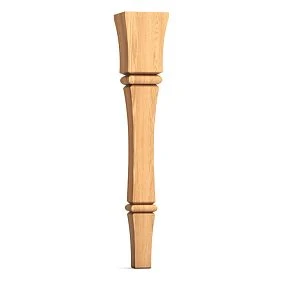
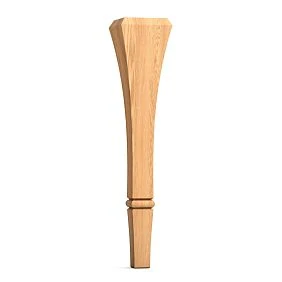
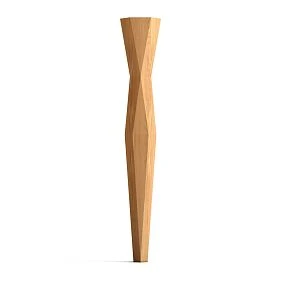
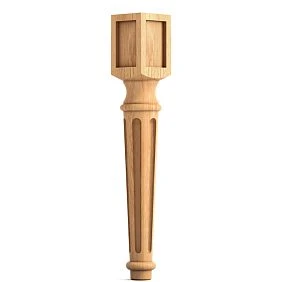
Straight tapered legs are a universal, most widely replicated profile. Square or round cross-section, evenly tapering from bottom to top or top to bottom. This is a profile for calm modern furniture, Scandinavian style, Japanese minimalism. A slight outward tilt of the legs adds visual stability and elegance simultaneously.
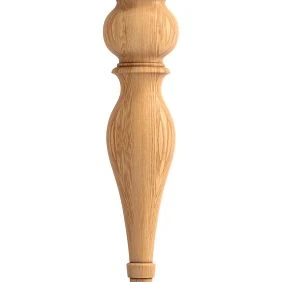
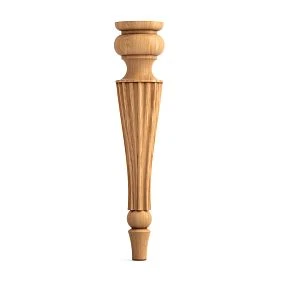
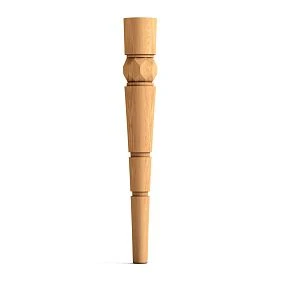
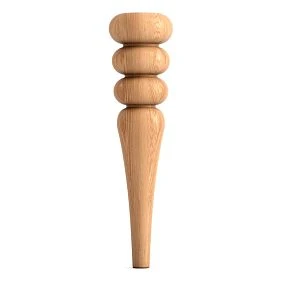
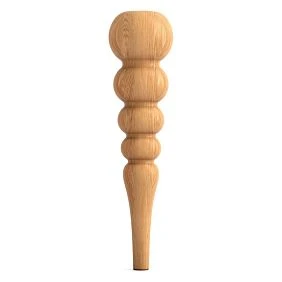
Turned legs are classics in the truest sense. A figured profile with thickenings, grips, balls, fillets. Turned furniture leg — an essential attribute of furniture in classical, neoclassical, French, and Italian styles. It creates a rich silhouette, accepts white enamel well, and looks equally expressive from any angle.
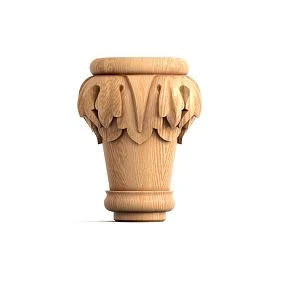
Curved cabriole legs — legs with a characteristic double curve in the shape of an S, a swollen thigh, and a tapered ankle. This is a historical profile from the Rococo and Baroque eras, which is now experiencing a renaissance in classic-luxury interiors. decorative furniture support with a shaped profile — this is no longer a functional detail, but a decorative object around which the image of the furniture is built.
Massive straight legs with minimal decor — for heavy furniture: dining tables, massive chests of drawers, sideboards. Square cross-section 60×60 mm or larger, straight edges, possible chamfer to soften sharp corners. This is an honest, durable, inconspicuous profile that does not claim to be decorative but ensures reliability.
Elegant thin legs — for light furniture: consoles, dressing tables, coffee tables, ottomans. Cross-section 20×20 or 25×25 mm, sometimes with a small decorative element at the base. This is a profile for furniture where it is important to maintain lightness and not weigh down the silhouette with unnecessary details.
Material: why wooden legs are well suited for furniture
Metal, plastic, wood — three main materials for furniture legs. Each has its own advantages, but wood combines qualities that none of the competitors can offer simultaneously.
Naturalness and warmth. A wooden leg brings a feeling of living natural material into the space, which neither metal nor polymer can imitate. Even under a layer of white enamel, wood 'breathes' — it lacks the coldness of metal and the emptiness of plastic.
Possibility of any coating. wooden furniture legs can be painted in any color with enamel, coated with oil while preserving the texture, stained to imitate oak, walnut, wenge, or ebony, and finished with glossy or matte varnish. This makes wooden legs universal: the same leg on a different body with a different coating will look completely different.
Compatibility with other wooden elements. Wooden legs work organically together with wooden furniture handles, decorative inlays, trims, moldings, and slats. All these elements from the same species with the same coating create furniture with a unified decorative code.
Repairability. A scratch or chip on a wooden leg can be sanded and touched up. Metal with damaged coating starts to rust or peel — and restoring it is significantly more difficult.
Stability under load. Hard species — beech, oak, ash — withstand years of static and dynamic load without deformation or loss of joint geometry. Wood "works" together with the body during humidity changes — this is important for the overall durability of the furniture.
Suitable for classic and designer furniture. The STAVROS catalog features Classic Furniture solid wood furniture, for which wooden legs are an organic, natural component, not a compromise.
Load and fastening: what to check before buying
The load-bearing characteristics of a furniture leg are a topic often ignored when purchasing. And this is a mistake, sometimes an expensive one.
First of all, you need to assess the weight of the body. An empty wooden dresser body is 30–50 kg. With contents — 60–80 kg. A sofa with frame and upholstery — 60–90 kg, plus the load from people — another 100–200 kg. A dining table with a solid top — 40–70 kg. Each of the four corners bears a quarter of the total weight — plus dynamic loads during use.
The number of supports determines the load distribution. Four legs are the standard for most furniture items. For long sofas, six legs are often used — four corner and two intermediate. For consoles — two or three. When the number of supports is reduced, the load on each one increases proportionally.
Mounting area is a parameter that directly determines the durability of the joint. The larger the contact area of the leg with the body base, the more evenly the load is distributed and the lower the risk of joint failure. For heavy furniture (sofas, cabinets, massive dressers), legs should have a mounting plate or a wide top end.
The type of attachment depends on the body design. Main options:
Threaded pin (bolt) — the leg comes with a built-in metal pin with M8 or M10 thread, which screws into a corresponding nut in the body. Convenient, durable, allows replacement without disassembling the furniture.
Screw or self-tapping screw through a mounting plate — the leg has a flat top plate with holes, through which it is attached to the body base with self-tapping screws. Suitable for furniture with a thick wooden bottom.
Glue with an additional dowel — for stationary installation that does not require replacement. Maximum rigid connection, but no possibility of disassembly.
The body material is also important. MDF and chipboard do not hold threads well in the end — under high load, the attachment can be torn out. For such bodies, special furniture hammer-in nuts or plates are used. Solid wood holds any attachment reliably.
Uniformity of load during use. If the drawers of a chest are pulled out in one direction, opening creates a tipping moment — the legs on the side where the drawer is pulled out experience increased pull-out load. This must be considered when choosing the attachment.
How to combine furniture legs with other decor
A wooden leg is not an isolated element. It is part of the furniture decor system and works correctly only when coordinated with all other details.
Legs and handles are the most obvious pair. If the legs are turned from beech and coated with white enamel, wooden hook handle it should also be made of beech with a white coating. Or — if you want contrast — from the same beech, but with an antique gold coating. The main thing is that it should be a conscious choice, not a random mismatch.
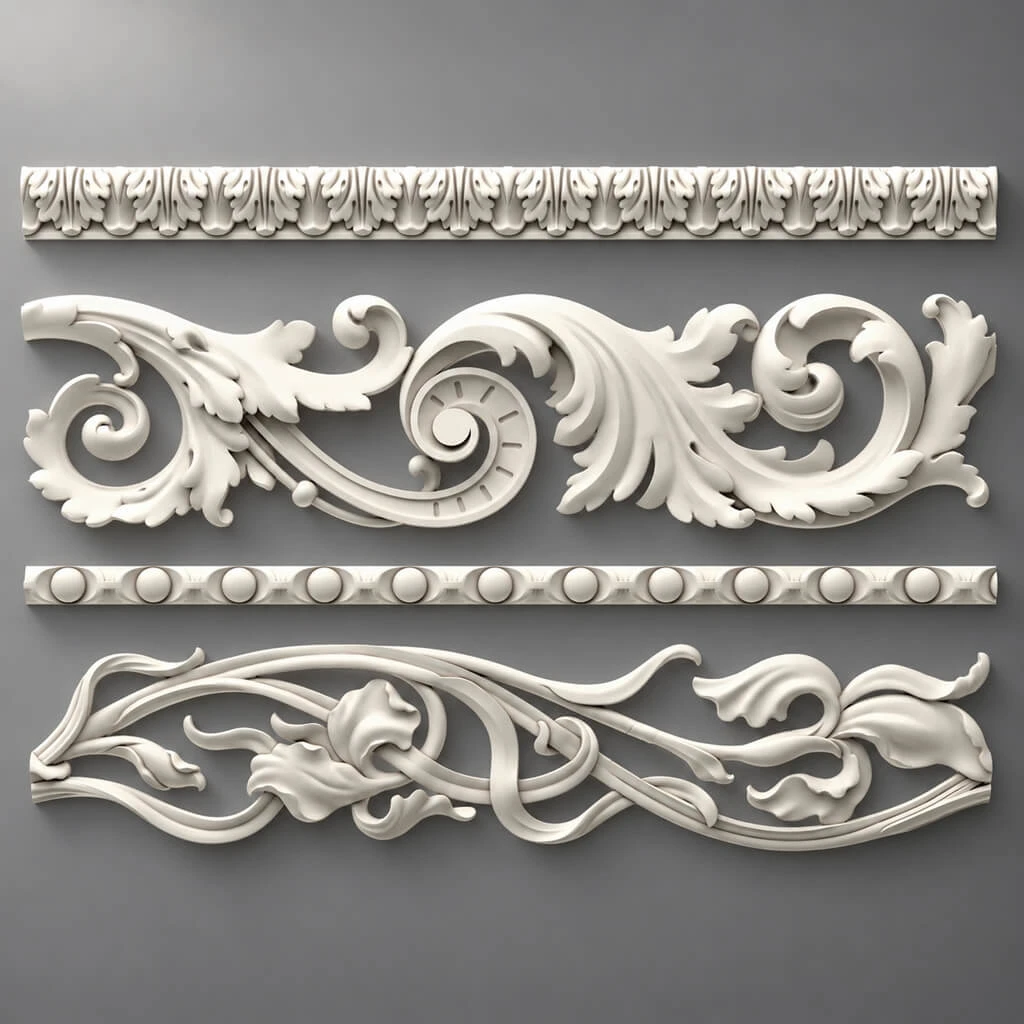
Legs and overlays. decorative elements for furniture — Overlay rosettes, ornaments, and relief inserts on the facade should be made of the same wood species and in the same style as the legs. Classic turned legs with carved overlays are an organic pair. Smooth conical legs with geometric flat overlays are modern classics. Turned legs with flat rectangular overlays are a contradiction that will irritate the eye.
Legs and brackets. If the interior includes hanging shelves with furniture brackets, their shape and wood species should echo the legs of the case furniture. This creates a unified decorative rhythm in the space.
Legs and slats. Vertical wooden slats on walls or furniture facades are another element that interacts with the legs. wooden plank made of the same wood species as the legs creates a sense of a unified design — the furniture and walls "talk" to each other.
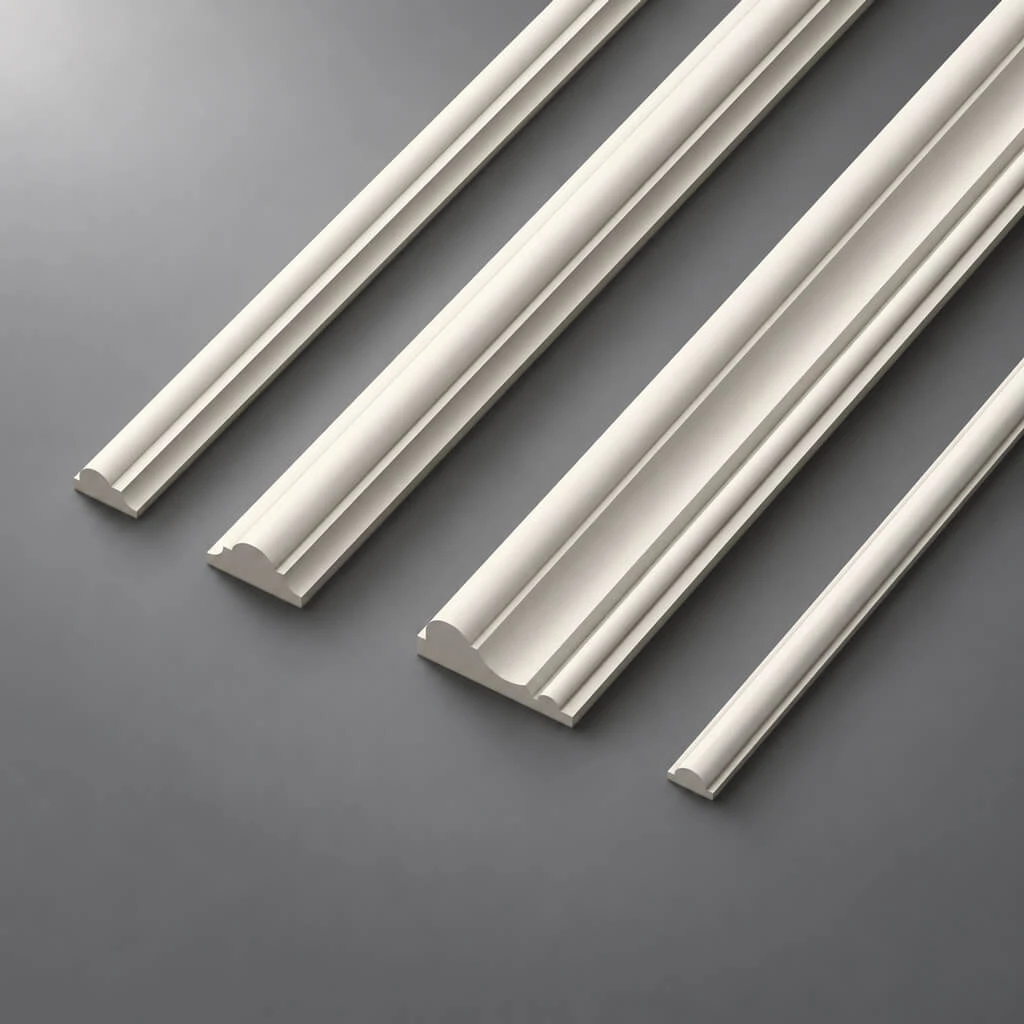
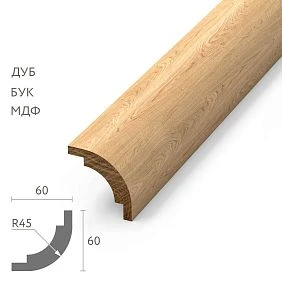
Legs and baseboards. The bottom line of the space is both the baseboard and the furniture legs simultaneously. with a classic profile creates a sense of solidity, reliability. and furniture legs made of the same wood species with the same finish is a detail that not everyone notices, but which creates a feeling of "expensive craftsmanship" in everyone without exception.
Legs and knob handle. wooden button handle on the dresser drawers paired with turned beech legs — this is a laconic, elegant combination that works in modern classic, neoclassical, and even Scandinavian styles.
Mistakes when choosing high legs for furniture
Each of these mistakes has been made a million times. Knowing about them is a simple insurance against repetition.
Choosing legs only by appearance, without considering the load. An elegant turned leg with a cross-section of 25×25 mm can be absolutely correct for a coffee table — and a disaster for a sofa. Always calculate the load.
Not considering the final height of the furniture. You put 200 mm legs on a 900 mm high dresser — you get furniture 1100 mm high, which almost touches the ceiling. Before buying, calculate the final dimensions including the supports.
Putting too thin supports under heavy furniture. For a sofa weighing 100 kg plus two sitting people — total load 300 kg, that is 75 kg on each of the four legs. Thin decorative legs 20×20 mm will not handle such a load — they will break or tear the fastening from the body.
Not checking the compatibility of the fastening. The standard thread on sofa legs is M8. If the sofa body has an M10 nut — the leg simply won't fit. Always check the thread diameter before purchasing.
Not matching legs with handles and body decor. Classic turned legs on a body with metal chrome handles look like two different products placed next to each other.
Choosing legs that conflict with the facade style. An avant-garde geometric facade with straight edges — and cabriole legs in the Baroque style. Such a combination requires a very high design level to work. In a normal situation, it's just a style conflict.
Not checking the geometry of the legs before installation. A crooked leg — one that has an axial bend — will cause a noticeable tilt of the body after installation. Before mounting, check each support on a flat surface.
Take different batches for one product. If you need four legs, take four legs from the same batch. Different batches of the same item may vary slightly in shade and texture — this will be noticeable after painting.
Use a complex shaped support in a small room. A rich turned leg with several thickenings and carved inserts is appropriate in a spacious room with high ceilings. In a small children's room or a cramped hallway, it will create visual overload.
What to buy together with furniture legs
Wooden legs are the beginning, not the end of furniture renovation. To achieve a complete result, you need a set of elements that create a unified decorative look.
Wooden furniture handles are the first thing to choose together with legs. The STAVROS catalog features Furniture handles wooden several types: brackets, knobs, rails. All made of solid wood, all ready for painting or with a finished coating. Legs and handles from the same wood species with the same coating are the hallmark of a well-thought-out furniture solution.
Decorative overlays are a way to add volume and style to a flat facade without completely replacing it. Carved rosettes, ornaments, relief strips made of furniture decor are glued to the facade and painted together with it. Result: a flat MDF facade takes on the appearance of an expensive relief product.
Decorative brackets for wall-mounted shelves. Furniture Bracket made of solid wood support shelves, consoles, and decorative elements, maintaining material unity in the interior. It looks especially organic when paired with wooden legs of cabinet furniture.
Moldings and layouts for facade decoration. Wooden Moldings from solid wood create frame inserts on flat facades, frame mirrors, form decorative belts. Paired with turned legs, they turn simple cabinet furniture into a piece with a classic design.
Baseboards for completing the interior. If furniture is updated with legs and decor, it is logical to simultaneously update the lower line of the space. with a classic profile creates a sense of solidity, reliability. made from the same wood species as the legs, creates a single horizontal line that visually unites the furniture and the room's architecture.
FAQ: Answers to popular questions
Which wooden legs to choose for a chest of drawers?
For a classic chest of drawers — turned or shaped Wooden legs 100–150 mm high with a base cross-section of at least 35×35 mm. For a modern chest of drawers with a laconic facade — straight conical supports without decoration. Wood species — beech for enamel or oak for varnish. Must be combined with handles and overlays in the same style.
Are high legs suitable for a sofa?
Yes, provided the load and fastening are correctly selected. Wooden legs for sofas 100–150 mm high visually lighten upholstered furniture, improve upholstery ventilation, and simplify cleaning. Before installation, be sure to check the thread diameter in the sofa body — standard M8 or M10.
Can old furniture legs be replaced with wooden ones?
Yes, if the mounting method matches or is compatible and the new supports can bear the weight of the furniture. Before replacing, measure the height of the old legs, assess the load, and check the base of the body — how securely it holds the fasteners. Most often, replacement requires Buy legs for furniture with suitable fasteners.
Which legs are best for a coffee table?
For a coffee table, legs Legs for coffee table with a height of 350–420 mm are suitable. The load is small, so elegant thin supports are acceptable. The shape should match the interior style: tapered for Scandinavian, turned for classic, straight for minimalism. The main thing: the table should be slightly lower than the seat of the nearby sofa.
How does a furniture support differ from a decorative leg?
Furniture support can be purely technical — small, inconspicuous, solving only the task of supporting the body. A decorative leg simultaneously supports the body and shapes the style of the furniture. A tall turned or shaped leg is always a decorative element, and it should be chosen considering the entire look of the furniture and interior.
How to update furniture with wooden legs without replacing the body?
The easiest way: remove the old legs, select new ones wooden furniture legs of suitable style and height, install. An additional effect is achieved by simultaneously replacing handles with wooden ones of the same species and adding overlay decorative elements to the facade. The cost of such an update is several times lower than buying new furniture, and the result is sometimes better.
How to choose furniture legs for classic furniture?
for classic furniture the rule is one: all wooden elements — legs, handles, overlays, moldings — are of the same species, in the same style, with the same finish. Turned legs with a figured profile, carved overlays, wooden hook handle with a curved profile and white enamel as a finish — a classic ensemble that works flawlessly.