



























Article Contents:
- Ceiling plinth and cornice: what's the difference and why it's important to understand
- Ceiling plinth: function first
- Cornice: an architectural statement
- Practical conclusion
- When to choose an MDF cornice: real-world application scenarios
- Interior for painting
- Paired with MDF floor plinth
- Modern interior with clean geometry
- Kitchen-living room
- When quick availability and installation matter
- When a wooden ceiling cornice is the right choice
- Interiors with solid wood and natural textures
- Classic and neoclassic
- Country house and eco-style
- Wooden ceiling plinth for modern interiors
- MDF cornice for painting: color accuracy as a design tool
- Cornice in wall color: the merging technique
- Cornice in ceiling color: a classic neutral option
- Cornice in an intermediate shade
- MDF cornice painting technology
- How to choose an MDF ceiling cornice profile: comparative analysis
- Straight cornice: strictness and precision
- Narrow ceiling plinth: delicacy as an advantage
- Wide cornice: scale and expensiveness
- Decorative profile: classic remains classic
- How to coordinate a ceiling cornice with a floor plinth
- Principle of visual balance
- Principle of stylistic unity
- Principle of color coordination
- What else connects the top and bottom lines
- Which color to choose for an MDF ceiling cornice
- White cornice: universal standard
- For painting: exact shade, any solution
- Wood-like: warmth and naturalness
- Contrasting dark cornice: a designer accent
- Where MDF ceiling plinths are used: a room overview
- Living room: the central space
- Bedroom: a delicate profile
- Kitchen-living room: functionality and style
- Hallway: the first impression of the interior
- Home office: rigor and system
- Children's room: safety and lightness
- Commercial spaces: systematic finishing
- Country house
- MDF cornices in Saint Petersburg: why local production matters over imports
- Comparison: MDF, wood or polyurethane for ceiling cornice
- MDF
- Natural Wood
- Polyurethane
- Mistakes when choosing and buying an MDF ceiling cornice
- Did not account for ceiling height
- Bought a cornice without connection to the baseboard
- Chose too narrow a profile for a spacious room
- Chose a decorative profile for a minimalist interior
- Did not compare the shade with the ceiling and doors
- Did not account for allowance for corners and trimming
- Did not clarify if the profile can be painted
- What to buy together with an MDF ceiling cornice
- How to calculate the amount of ceiling cornice
- Final selection algorithm: step by step
- FAQ: popular questions about ceiling plinth and MDF cornice
- What is better: MDF ceiling plinth or wooden cornice?
- Can MDF ceiling plinth be painted?
- Which cornice to choose for a modern interior?
- Do I need to match the cornice with the floor plinth?
- How much cornice to take with a margin?
- Which cornice is suitable for a kitchen-living room?
- How to distinguish MDF cornice from polyurethane?
- About the Company STAVROS
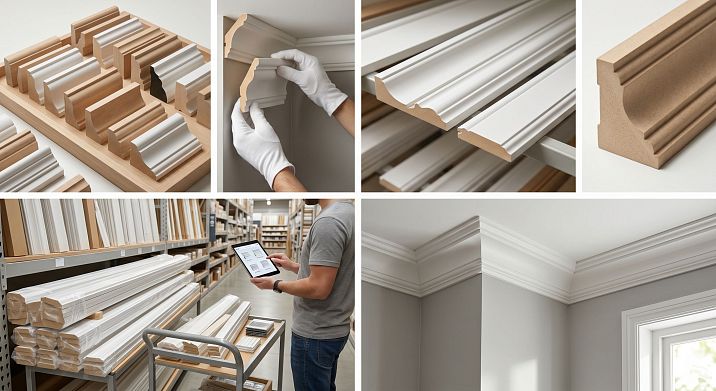
The junction of the wall and ceiling is a place noticed twice: at the beginning of the renovation, when planning the finish, and at the end, when it turns out that this transition is either uncovered or covered incorrectly. Between these two moments lies a multitude of decisions that make the interior either complete or unfinished.
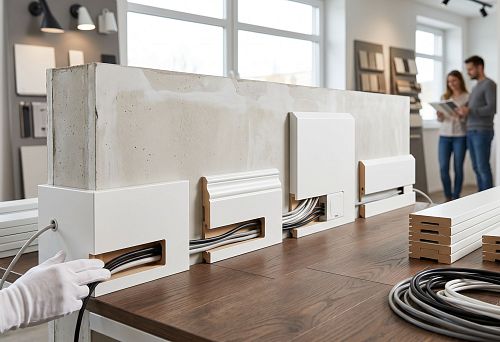
MDF ceiling plinth is one of the most functional yet underrated finishing elements. It simultaneously solves a technical task (hides the joint where the wall meets the ceiling, where there is always a seam) and a design one—it forms the upper horizontal line of the room, which is as important for spatial perception as the lower line at the floor.
MDF Crown — it's not just a strip near the ceiling. It's the upper frame of the interior. And it should be selected as a system: with the floor plinth, doors, architraves, and wall moldings. Only then does the result look not like a set of separate elements, but like a well-thought-out design.




Ceiling plinth and cornice: what's the difference and why it's important to understand
These two terms are often used interchangeably, and in everyday conversation, it works. But when choosing a profile, the difference is fundamental.




Ceiling plinth: function first
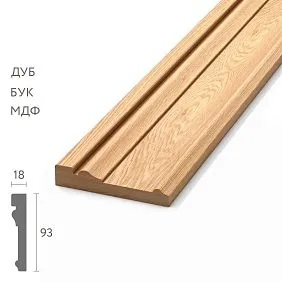
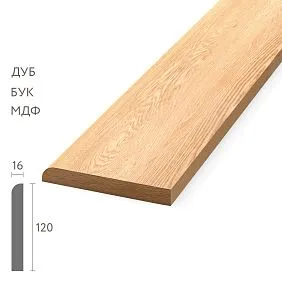
MDF ceiling plinth is a decorative strip that covers the joint between the wall and ceiling. Its main task is to neatly hide the seam. The profile typically has a small projection, modest relief, and unobtrusive appearance. It is neutral, does not attract attention, does not try to be part of the design—it simply makes the transition clean.
Such a profile is suitable for modern interiors where the main focus is on clean lines and the absence of unnecessary decor. For a minimalist apartment, Scandinavian style, or neutral office finishing—here the ceiling plinth works exactly as needed.
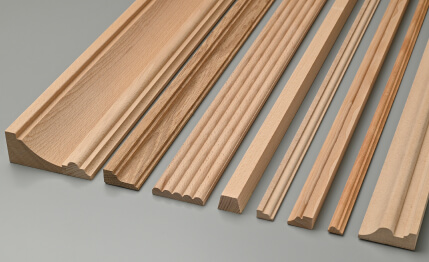
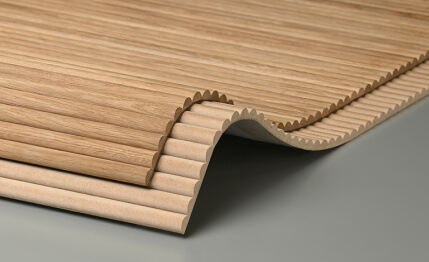
Our factory also produces:


Cornice: an architectural statement
MDF ceiling cornice is something more. A cornice is an element that forms the upper architectural line of the room. It can be expressive, wide, with a relief profile—and then it becomes a noticeable detail of the interior that sets the tone for the entire room.
In classic interiors, a cornice is the "crown" of the room: it marks the transition to the ceiling, emphasizes height, and creates a sense of completeness and even luxury. In modern spaces, it can be a calm, wide shelf-cornice without decorations, which simply adds weight to the upper zone of the room.
Buy MDF cornice for painting means getting a tool that can be integrated into any color scheme of the interior.
Get Consultation
Practical conclusion
If you want the upper line of the room to be delicate and unobtrusive, choose a ceiling molding. If you want it to become part of the design and work together with the lower profile as a horizontal frame of the space, choose a cornice.
When to choose an MDF cornice: real application scenarios
MDF as a material for a ceiling cornice is a reasoned choice, not a compromise. Let's break down in which situations it works best.
Interior for painting
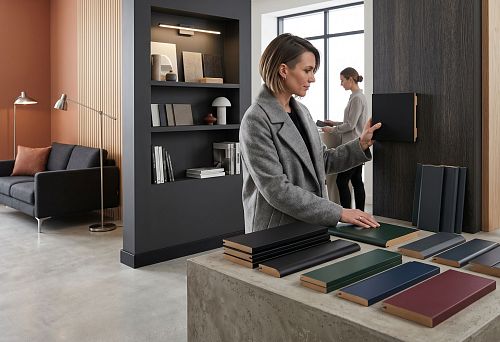
The most obvious scenario: walls are painted, the ceiling is painted, and all trim — baseboards, casings, cornice — should also be paintable. MDF cornice for painting allows you to get a profile in any shade — exactly matching the wall color, exactly matching the ceiling color, or in a coordinated intermediate tone.
This is especially valuable when the design project specifies specific color codes: the cornice is painted in a RAL shade along with other elements, and the upper line of the room becomes an organic part of the color scheme, rather than a white strip that breaks the unity.
Paired with an MDF baseboard on the floor
If there is one at the bottom MDF Skirting Board, the logical continuation of the system would be an MDF cornice at the top. Two profiles made of the same material, in the same shade or in coordinated shades, create a horizontal frame for the space, giving the room a finished look. This effect is especially striking in rooms with painted walls: the lower and upper lines "hold" the colored field between them.
Modern interior with clean geometry
Loft, minimalism, Scandinavian style, contemporary — everywhere where straight lines, neutral surfaces, and the absence of excessive decor are valued, an MDF cornice with a restrained profile works perfectly. It does not overload the space, does not create visual noise, simply defines the upper architectural line.
Kitchen-living room
The kitchen MDF cornice is a separate topic. In an open kitchen-living room space, a ceiling cornice solves several tasks at once: it hides the joints between different ceiling zones, creates a visual boundary between the functional kitchen and the living area, and contributes to the color coordination of the space. For a kitchen-living room with dark facades, a cornice in a coordinated dark shade is an elegant practical move.
When quick availability and installation are important
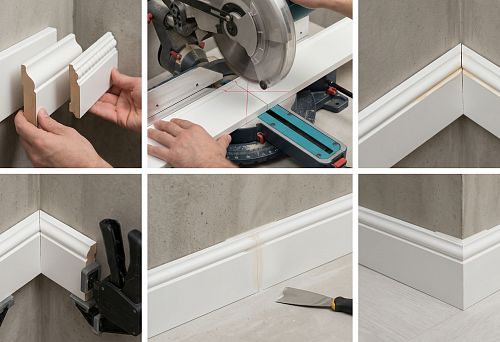
MDF is easier to work with than plaster: it is easier to cut, more accurately mitered at corners, does not crumble, and does not require special tools. If installation is done by yourself or under tight deadlines, an MDF ceiling plinth is technologically more convenient than molded plaster or fragile polyurethane.
When a wooden ceiling cornice is the right choice
MDF is not the only and not always the best material for a ceiling cornice. There are situations where natural wood provides what no other material can replicate.
Interiors with solid wood and natural textures
If the room has solid wood baseboard, wooden doors, parquet made of natural wood, wooden beams, or natural furniture — a wooden ceiling cornice naturally complements this system. The warmth and texture of solid wood at the baseboard level — and the same warmth at the top, near the ceiling. This is a cohesive material image that synthetics cannot replicate.
Wooden ceiling cornice in this context — is not a decorative element, but a structural part of a unified natural interior.
Classicism and neoclassicism
Classic interiors — with profiled doors, decorative architraves, wall moldings — require a corresponding cornice. A wooden cornice with expressive relief, a shelf, and a profiled lower edge is an element organic to classical architecture. MDF here is also suitable in a profile for painting, but wood adds extra value: living texture, tactility, a status material.
buy wooden cornice for a classic living room or study — means investing in an interior element that will last for decades and not lose its appearance with careful maintenance.
Country house and eco-style
In a country house with wooden structures, natural finishes, and a warm aesthetic, a wooden cornice becomes part of the overall natural image of the space. It echoes wooden beams, timber, floorboards, and solid wood furniture. This is a material connection that is difficult to create otherwise.
Wooden ceiling cornice for modern interiors
Don't think that wood is only for classics. A wooden ceiling cornice in a laconic straight profile, painted in a neutral shade or tinted to dark oak, works perfectly in a modern Scandinavian interior, in wabi-sabi style, in eco-minimalism. The main thing is the right profile and a coordinated shade.
MDF cornice for painting: color accuracy as a design tool
The topic of painting a ceiling cornice is richer than it seems. It's not just "you can paint it." It's a whole design strategy.
Cornice in the color of the wall: a merging technique
When the walls are painted in a rich shade — dark green, blue, terracotta, graphite, mustard — and the MDF cornice is painted the same color, the wall "flows" to the ceiling without a visible boundary. The space reads differently: the ceiling seems to float, the wall is monolithic from floor to ceiling.
This is a strong architectural technique that is now actively used in modern design. Key condition: MDF cornice for painting — this particular option provides the necessary prepared surface for even application of any tinting.
Cornice in the color of the ceiling: a classic neutral option
Another scenario: the cornice is painted in the color of the ceiling. It "attaches" to the ceiling and becomes invisible — only the shadow from the profile marks the transition. This is a soft, delicate solution for those who want a clean joint without a pronounced accent.
Cornice in an intermediate shade
An interesting design move: the wall is in a dark shade, the ceiling is white, and the cornice is in a middle tone between them. This transition softens the contrast and makes the upper zone of the room less harsh. It requires precise shade selection, but the result is smooth and very modern.
Technology of painting MDF cornice
MDF has porous ends that can actively absorb paint. Recommended sequence:
-
Prime the surface with a primer-isolator.
-
Apply the first thin layer of acrylic enamel.
-
Allow to dry completely.
-
Carefully sand with 240-grit abrasive.
-
Apply the final coat.
The result is a smooth, dense surface indistinguishable from a factory coating.
How to choose the profile of an MDF ceiling cornice: a comparative analysis
The profile shape determines the character of the room's top line. And there is no "best" option — there is one suitable for a specific space.
| Profile type | Character | When to choose |
|---|---|---|
| Straight MDF cornice | Strict, architectural | Minimalism, loft, Scandinavian style |
| Narrow ceiling plinth | Delicate, neutral | Small rooms, calm finish |
| Wide cornice | Weighty, prestigious | High ceilings, spacious rooms |
| Decorative wooden cornice | Expressive, classic | Classic, neoclassical, country house |
| For painting (any profile) | Flexible in color | When you need an exact shade to match the wall or ceiling |
Straight cornice: strictness and precision
A straight profile without decorative elements is the best choice for modern interiors. It defines the top line of the room with a horizontal line — clear, confident, without embellishments. In white enamel, it is almost invisible. In the color of the wall, it creates an architectural effect. In a dark shade on a light background, it works as an expressive accent.
MDF Crown In a straight profile, this is a choice that will never go out of style and requires no explanation: it simply looks right.
Narrow ceiling molding: delicacy as a virtue
A narrow profile — 30–50 mm — is about delicacy. It covers the joint, barely interfering with the perception of the room's height. For low-ceiling apartments with a 2.5-meter ceiling, this is an important property: a wide cornice will "eat up" visual height, while a narrow one will only neatly mark the transition.
In small rooms — bedrooms, children's rooms, studies — a narrow white or neutral cornice works best.
Wide cornice: scale and luxury
A wide cornice — 80–120 mm or more — is a serious architectural element that requires height. With a ceiling of 2.8–3 meters, a wide Wooden ceiling cornice or a wide MDF profile creates a visual effect that instantly enhances the perceived cost of the interior. This is what is commonly called an "expensive renovation" — and a wide cornice makes a significant contribution to this feeling.
A wide cornice at the top + a wide baseboard at the bottom is a system that creates the effect of a "frame" for the space. Between the two horizontal elements, the wall reads as an independent surface — a picture in a frame.
Decorative profile: classic remains classic
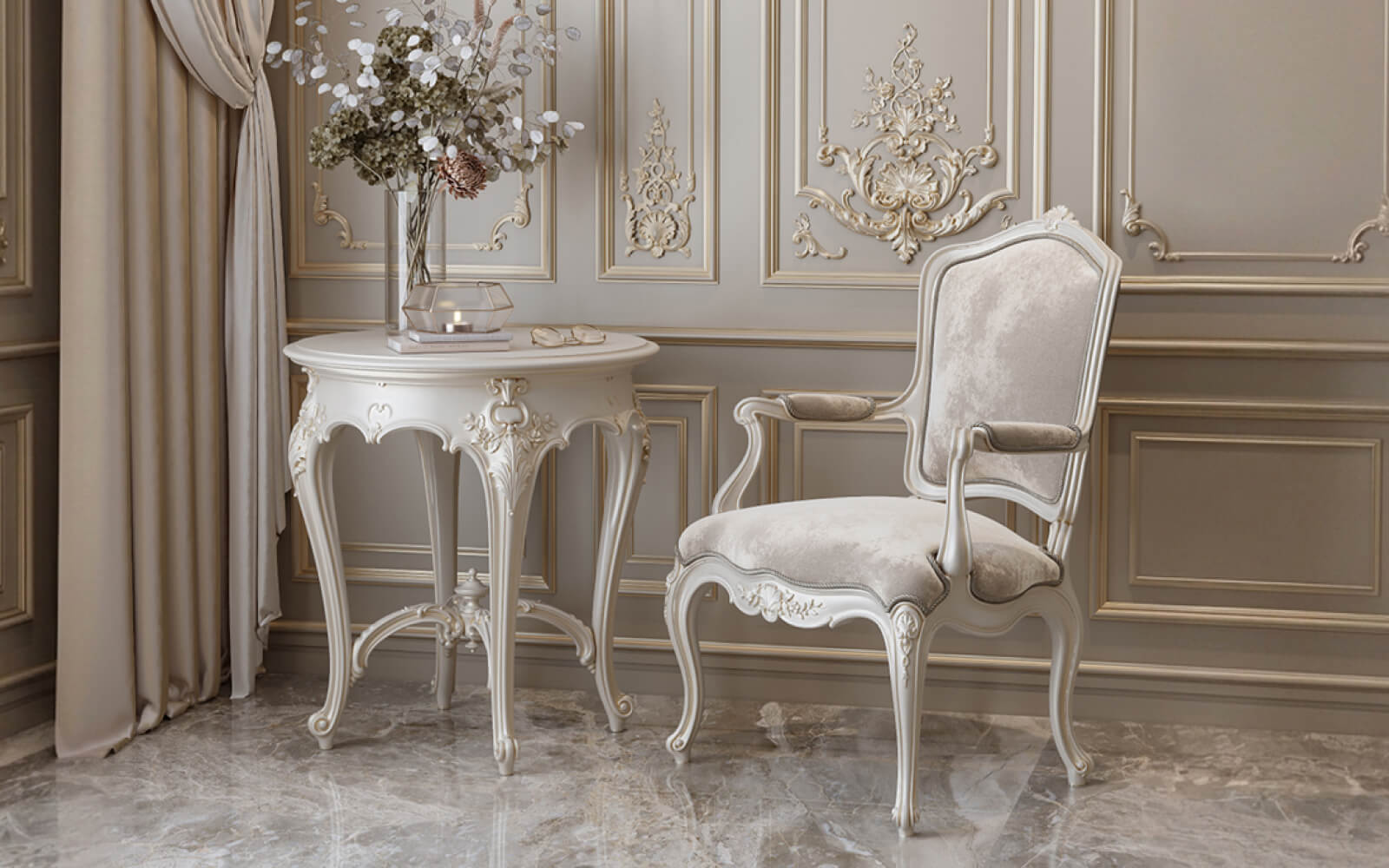
A profiled cornice with a shelf, with a pronounced relief, with smooth transitions is an element of a classic interior. It looks expressive, attracts the eye, and emphasizes the height of the room.
paired with wooden moldings on the walls, with profiled wooden casings and decorative wall panels, the decorative cornice forms a system of horizontal and vertical elements that turn a simple room into an architectural statement.
How to coordinate a ceiling cornice with a floor plinth
This is one of the most important aspects of selection, which at the same time remains unnoticed by most buyers.
The principle of visual balance
The upper and lower horizontal lines of the room should be visually proportionate. If there is a wide and expressive one at the bottom MDF Skirting Board 100–120 mm high — a thin ceiling plinth of 30 mm at the top will look weak. The gaze will be "pulled" downward, the lower line will dominate, and the upper one will be lost.
The opposite situation: a powerful wide cornice at the top with a modest low plinth at the bottom creates a feeling that the ceiling is pressing down. The balance is disturbed.
Rule: the upper and lower profiles should be proportionate. This does not necessarily mean the same height — it means they are perceived as parts of one system.
Principle of Stylistic Unity
A straight MDF cornice and a straight MDF baseboard are a single modern system. A decorative wooden cornice and profiled Wooden baseboard — a classic pair.
Conflict: a decorative stucco cornice at the top and a straight minimalist baseboard at the bottom is eclecticism that requires very precise and deliberate handling, otherwise it looks like an accident.
Principle of color coordination
If the cornice and baseboard are different colors, it should be a deliberate design decision. For example: walls are dark, cornice and baseboard are white — two light elements hold the dark field between them. Or: cornice matches the ceiling color, baseboard matches the wall color — each element belongs to its own surface.
An accidental mismatch of shades — when the cornice is "approximately white" and the baseboard is "approximately white", but from different batches — looks like a flaw.
What else connects the top and bottom lines
Between the cornice and baseboard are Wooden casings, wall moldings, Decorative wooden lamination. If the cornice, baseboard, trim, and moldings are coordinated in a single system, the interior gives the impression of a professionally designed space.
That's why it's better to plan the entire linear molding as a single order: wood trim items in a unified system from one manufacturer ensure consistency of profiles, shades, and proportions.
What color to choose for an MDF ceiling cornice
Color selection for a cornice is a strategic decision that affects the perception of the entire room.
White cornice: the universal standard
White MDF ceiling molding is the most common solution, and it works perfectly for most interiors. A white cornice against a white ceiling disappears — the joint is closed, the border is clean, and the focus is on the walls and interior, not on the transition.
An important nuance: 'white' is not a single shade. Make sure the shade of the cornice matches the shade of the ceiling. Different white tones (cool and warm, bluish and creamy) create a conflict when used together, which is clearly visible under side lighting.
For painting: exact shade, any solution
A cornice for painting is the most flexible solution. It can be painted in any shade: an exact RAL, the wall color, the ceiling color, or an intermediate tone. For design projects where colors are matched down to the code, this is the only way to achieve an accurate result.
MDF cornice for painting — is the most sought-after option in professional projects precisely because it offers complete freedom of color choice.
Under the tree: warmth and naturalness
A cornice with wood texture or solid wood works in interiors with wooden accents. For a living room with wooden planks on the wall, with wooden doors and parquet — a wooden cornice becomes another point of natural warmth in the space.
Contrasting dark cornice: a designer accent
A dark cornice on a light ceiling is a strong solution that requires support in other elements. If the interior has dark doors, dark baseboards, dark slats — the dark cornice closes the upper horizontal line and forms a system of contrasting accents around the perimeter of the room.
This technique works well in lofts, in modern minimalism with dark details, and in interiors with a contrasting black-and-white scheme.
Where MDF ceiling plinth is used: an overview of rooms
Living room: the central space
The living room is a space where the ceiling cornice is most noticeable. Here it can be either a modest neutral element or an expressive architectural detail — depending on the ceiling height, style, and scale of the room. In the living room, the cornice works in conjunction with wooden moldings on the walls and with with wooden cornices for curtains, these are two different products that are important not to confuse when planning.
Bedroom: delicate profile
In the bedroom, the ceiling cornice should be calm. The bedroom is a space for relaxation, and any excessive decor here is unnecessary. A narrow white or neutral MDF cornice, coordinated with the baseboard below, is the best solution. If the bedroom has a soft headboard and decorative elements, the cornice should not compete with them.
Kitchen-living room: functionality and style
In the open space of the kitchen-living room, the MDF kitchen cornice solves several tasks simultaneously. In the kitchen area, it hides the joints between the kitchen backsplash, upper cabinets, and ceiling, creating a visual completion of the kitchen zone. In the living room area, it continues the line, creating unity in the open space.
If the kitchen has dark facades, it is logical to make the cornice at the transition of the kitchen area to the ceiling in a coordinated dark shade, and in the living room — white or in the color of the wall. This is a reasonable solution for zoning.
Hallway: first impression of the interior
The hallway is the first thing a guest sees. The ceiling cornice here works as part of the "reception" space: it sets the tone. The hallway is most often small, so a narrow or medium-sized profile is more correct than a wide one. It should be coordinated with the doors and architraves — these three elements (cornice, architraves, doors) together create the first visual impression.
Study: rigor and systematicity
In the study, the cornice works as part of a strict, business-like atmosphere. A straight neutral profile in white or the color of the walls. If the study has dark finishes, the cornice in a dark shade marks the upper architectural line.
Children's room: safety and lightness
In a children's room, an MDF ceiling plinth covers the joint, creates a neat appearance of the room, and, if possible, is painted together with the walls in a single cycle. Lightness is important for a children's room: a thin profile, coordinated with furniture and walls, rather than heavy stucco decor.
Commercial spaces: systematic finishing
In offices, showrooms, restaurants, and boutiques, the MDF ceiling plinth is part of the finishing system that ensures neatness and uniformity of the space. For commercial interiors, the ability to paint in a corporate color or a specific RAL is important. A paintable cornice is the first choice for branded spaces.
Country house
In a country house with high ceilings, wooden structures, and natural materials Wooden ceiling cornice made of solid wood — a natural, prestigious, and durable choice. It does not contradict wooden beams, wooden floors, and wooden furniture — it organically integrates into the natural finishing system.
MDF cornices in St. Petersburg: why production matters, not import
MDF cornices in St. Petersburg are not just a geographical clarification. It's a matter of logistics, speed, the ability to see samples in the showroom, and order the required volume without a long wait from abroad.
St. Petersburg production provides the opportunity:
-
to see real samples under different lighting in the showroom;
-
order an exact volume without a minimum lot;
-
get delivery in a short time;
-
if necessary, order an additional purchase from the same batch with a guaranteed identical shade.
For designers and architects managing projects in St. Petersburg and Moscow, it is important to quickly obtain a sample, get it approved by the client, and order the required volume with an exact delivery date.
Comparison: MDF, wood, or polyurethane for a ceiling cornice
Buyers often face a choice between three materials: MDF, natural wood, and polyurethane. Let's briefly break it down to understand when to choose what.
MDF
Pros: easy installation, cuts well, surface ready for painting without pores, stable material, moderate price, wide range of profiles.
Cons: heavier than polyurethane, inferior to wood in tactile and environmental characteristics, may deform when wet (not suitable for rooms with constant high humidity).
When to choose: modern interior for painting, a system solution with an MDF baseboard on the floor, a design project with specific colors.
Natural wood
Pros: natural texture, eco-friendliness, high mechanical strength, tactile value, ability to sand and repaint an unlimited number of times, status.
Cons: more expensive than MDF and polyurethane, requires more precise storage and installation conditions, sensitive to sharp humidity changes.
When to choose: interior with natural materials, classic, neoclassical, country house, status project.
Polyurethane
Pros: very lightweight, wide selection of decorative profiles, convenient for DIY installation, resistant to humidity.
Cons: fragile (easily breaks during transportation and installation), holds paint poorly (requires special preparation), leaves dents under strong mechanical impact.
When to choose: decorative interiors with pronounced relief, when lightweight is important, for complex decorative profiles.
If you want to compare options, also check out Polyurethane moldings and cornices — this will help you make a decision based on the actual assortment.
Mistakes when choosing and buying an MDF ceiling cornice
Let's break down the mistakes honestly — so you don't repeat them.
Didn't account for ceiling height
A wide cornice of 100 mm with a ceiling of 2.5 meters visually "lowers" the height. The higher the ceiling, the wider the profile can be. For standard apartments — up to 60–70 mm, for rooms with a 3-meter ceiling — 80–120 mm and higher.
We bought a cornice without connection to the baseboard.
The upper and lower profiles were selected separately, by different people, at different times. Result: a cornice from one style, a baseboard from another, no overall impression. Plan the horizontal system of the room at once — cornice and baseboard as a single order.
We took a profile that was too narrow for a spacious room.
In a spacious living room with high ceilings, a narrow ceiling baseboard of 30 mm gets lost and looks insignificant. The scale of the profile should match the scale of the room.
We chose a decorative profile for a minimalist interior.
Molded look, curls, profiled relief — and at the same time straight doors, smooth walls, minimalist furniture. The conflict is obvious. The cornice should belong to the same style as the entire interior.
We did not compare the shade with the ceiling and doors.
We bought a "white" cornice without comparing it with the white ceiling. In daylight — the same. In evening lighting — one turns yellow, the other remains neutral. Always compare samples under the actual lighting of the object.
We did not account for the allowance for corners and trimming.
Corners are cut at 45 degrees (or use ready-made corner pieces). Inaccurate cutting leads to waste. A 10% margin is mandatory. For rooms with many corners (bay windows, niches, projections) — 12–15%.
Not specified whether the profile is painted
Not all MDF profiles are equally ready for painting. Some have a decorative coating that is not intended for painting over. Check when ordering: if you need a profile for painting — choose that type.
What to buy together with an MDF ceiling cornice
A system order is not only convenient. It guarantees consistency of all elements.
MDF Skirting Board — a floor profile that forms the lower horizontal line of the room paired with the upper cornice.
solid wood baseboard — if the interior is based on natural materials.
Wooden casings — vertical elements of the door unit that connect the horizontal cornice and baseboard into a single system.
Wooden moldings — decorative horizontal and vertical elements on walls that extend the cornice and baseboard system.
Wooden planks — for accent slatted walls that interact with the cornice at the ceiling and the baseboard at the floor.
Decorative wooden lamination — for vertical wall decoration in a matched shade.
wood trim items — all linear moldings in a unified system.
Wooden angle — for neat finishing of external corners.
Glue, dowels, anchors — technical mounting elements that must match the wall type (concrete, drywall, brick).
How to calculate the amount of ceiling cornice
The formula is standard, but taking into account the specifics of ceiling installation.
Cornice length = Room perimeter − Door openings (if the cornice is not run above the door) + 10–12% allowance
Why exactly 10–12%: the ceiling cornice is cut at 45-degree angles in corners. An error during cutting — and the strip is wasted. On long walls, the cornice may be mounted with a connector joint — this also requires an allowance.
Calculation example: Living room 6 × 4.5 meters, one door opening 0.9 meters, the cornice is installed around the entire perimeter including above the door.
-
Perimeter: (6 + 4.5) × 2 = 21 meters
-
Stock 10%: 21 × 1.1 = 23.1 meters → order 24 linear meters
If there are internal niches, ledges, or bay windows, add their perimeter to the calculation and increase the stock to 15%.
Final selection algorithm: step by step
To summarize everything into a practical plan:
1. Determine the interior style. Modern, classic, loft, country — the profile shape depends on this.
2. Consider the ceiling height. Up to 2.6 m — narrow profile. 2.7–2.9 m — medium. 3 m and above — wide.
3. Decide on color. White — neutral. For painting — for an exact shade. Wood-like — for natural interiors.
4. Coordinate with the floor molding. Style, scale, color — the cornice and molding should be part of one system.
5. Coordinate with architraves and moldings. Vertical elements of doorways should support the horizontal system of cornice and molding.
6. Calculate the quantity with a stock of 10–12%.
7. Include related trims in the order: architraves, skirting boards, moldings, fasteners.
Buy MDF ceiling skirting board or wooden cornice with consultation on profile selection and quantity calculation — in the STAVROS catalog.
FAQ: popular questions about MDF ceiling skirting and cornice
What is better: MDF ceiling skirting or wooden cornice?
MDF is convenient for modern interiors for painting, for systems paired with MDF floor skirting, and for projects where color accuracy is important. Wooden cornice is better suited for interiors with solid wood, wooden doors, and natural textures, for classic, neoclassical, and country houses.
Can MDF ceiling skirting be painted?
Yes, if the profile is designed for painting. The surface is primed and painted with acrylic interior enamel. The result is a uniform coating in any desired shade, including RAL. Specify when ordering: the profile must have a base suitable for painting.
Which cornice to choose for a modern interior?
Straight or flat MDF Crown without decorative elements — the best choice for minimalist, Scandinavian, loft interiors, or contemporary. It defines the top line of the room cleanly and architecturally.
Do I need to coordinate the cornice with the floor plinth?
Absolutely. The upper and lower profiles should be proportionate in height, consistent in style and shade. The cornice and plinth together form the horizontal frame of the room, and their coordination affects the overall impression of the interior.
How much extra cornice should I buy?
10–12% of the room's perimeter is the standard allowance for a ceiling cornice. For complex layouts with niches, bay windows, and many corners — 15%.
Which cornice is suitable for a kitchen-living room?
MDF kitchen cornice paintable — a universal solution. It is painted in the shade of the kitchen facade or wall, connecting the kitchen and living areas into a single space. The surface must be washable: the coating should allow wet cleaning.
How to distinguish an MDF cornice from a polyurethane one?
By weight: MDF is noticeably heavier than polyurethane. By the feel of the end: MDF cuts with slight effort and gives a smooth cut, polyurethane is soft and cuts almost effortlessly. By sound: tap the profile — MDF sounds dull, polyurethane sounds hollow.
About the company STAVROS
A ceiling cornice is the final touch in the horizontal design system of a room. And it is here that the quality of manufacturing is especially visible: an uneven end, poorly processed surface, mismatched shades — all this is noticeable at a height of 2.5–3 meters no less than at floor level. That is why the cornice should be chosen from the manufacturer, not from a reseller.
STAVROS has been producing wooden and MDF moldings since 2002. The company's history began with restoration work on heritage sites: the Konstantinovsky Palace in Strelna, the Hermitage, the Alexander Palace, and the Trinity-Izmailovsky Cathedral. Restoration is work where any error in profile or shade is unacceptable. This experience became the foundation of STAVROS production standards, which are applied to every linear meter. MDF cornice for a modern apartment.
Today STAVROS is a full production cycle, showrooms in St. Petersburg and Moscow, a finished goods warehouse, and delivery throughout Russia. The catalog includes MDF and solid wood ceiling cornices, Wooden cornices, MDF Skirting Board, Wooden baseboard, Wooden casings, Moldings, rails и wood trim items — all moldings in a unified quality system.
Over 264 reviews with a rating of 5.0. Shipment from one piece. Free consultation on profile selection, color, and quantity calculation.
STAVROS is a manufacturer where the ceiling cornice looks exactly as the top line of a good interior should: precise, neat, and confident.