



























Article Contents:
- When to buy a black or colored MDF baseboard: a direct answer
- How a black MDF baseboard fundamentally differs from a white one
- White baseboard: a neutral participant
- Dark baseboard: an architectural line
- Frame effect
- Where a black MDF baseboard looks appropriate: application scenarios
- Kitchen-living room with dark facades
- Hallway with dark doors
- Home office and workspace
- Loft and Industrial Style
- Minimalism with contrasting details
- Accent wall with dark slats
- Commercial spaces
- Black, graphite, gray or colored: how to choose a shade
- Black MDF baseboard
- Graphite MDF baseboard
- Dark gray baseboard
- MDF baseboard RAL: custom shade to order
- Baseboard matching wall color: the "dissolving" technique
- Which profile to choose for a dark baseboard
- Straight profile: strictness and precision
- Flat profile: delicate accent
- Wide profile: scale and expensive look
- Shaped profile: be careful
- How to choose a black MDF baseboard for doors and trims
- Dark baseboard + dark doors
- Dark baseboard + white doors
- Concealed mounting doors
- Thickness and joint with trim
- How to choose a dark baseboard for the floor
- Baseboard matching the floor
- Contrasting baseboard for light flooring
- To match dark wood floor grain
- Important rule: not necessarily matching the floor
- MDF baseboard for painting and RAL: freedom to choose the shade
- How the 'for painting' scheme works
- MDF RAL baseboard: what it offers
- On-site self-painting
- What height to choose for a black baseboard
- 60–70 mm: delicate contour
- 80 mm: universal standard
- 100 mm: expressive dark accent
- 120 mm and above: large-scale solution
- Mistakes when buying a black MDF baseboard
- Buying a black baseboard without connection to the interior
- Choosing a profile that is too high for a small room
- Not considering dust and marks on a dark surface
- Choosing a glossy black baseboard for a modern interior
- Not comparing the shade with doors and walls
- Don't account for cutting allowance
- They don't think through the joint with the architraves
- What to buy together with a black or colored MDF baseboard
- Calculation of quantity and reserve for a dark baseboard
- Final verdict: how to decide on a dark baseboard
- FAQ: popular questions about black and colored MDF baseboards
- When should you buy a black MDF baseboard?
- Is a black baseboard suitable for a small room?
- Which is better: black MDF baseboard or graphite?
- Can an MDF baseboard be made to match the wall color?
- What to pair with a colored MDF baseboard?
- How much extra should you order when buying a dark baseboard?
- Can a black MDF baseboard be installed with glue?
- About the Company STAVROS
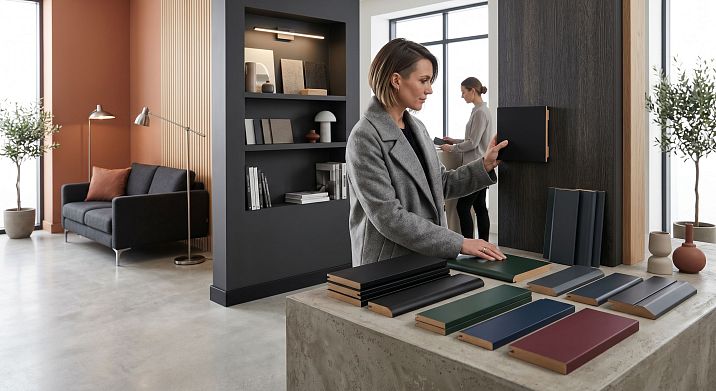
A black baseboard is not just a dark strip along the floor. It is a deliberate design choice that changes the perception of the entire space. It outlines the lower contour of the room with a bold, confident line — and how well this accent fits into the interior determines whether the room looks strict and expensive or heavy and uncomfortable.
The topic of black and colored MDF baseboards is actively discussed in the design community, but the buyer often comes to it with a single question: "I like it, but I don't know how to do it right." This article is a detailed answer to that question: when to choose a dark profile, which shade suits your interior, how to match it with doors, floors, and walls, and how to avoid mistakes that cannot be fixed without redoing.
Let's start with the main thing: MDF Skirting Board in a dark finish, it is not a niche product "for specific interiors." It is a full-fledged alternative to white, which, in the right context, works much more expressively.


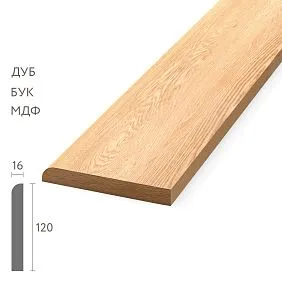


When should you buy a black or colored MDF baseboard: a direct answer
If you ended up on this page with the question "do I even need a black baseboard?" — here are the criteria under which a dark choice is justified and beautiful.
A dark baseboard works when:
-
the interior has dark doors or hidden-mount doors with a dark edge;
-
the walls are painted in gray, graphite, deep green, blue, dark beige;
-
the floor is dark: wenge, dark oak, anthracite porcelain stoneware, concrete;
-
the interior has black hardware, lamps, metal;
-
the room style is loft, modern minimalism, high-tech, art deco, contemporary with black accents;
-
a strong contrast to the light walls is needed — as an architectural line;
-
the project has accent Decorative wooden lamination in a dark shade.
A dark baseboard requires caution when:
-
the room is small and low — the dark lower contour visually reduces the height;
-
the entire interior is light and neutral — a black baseboard will become a contrasting accent that needs to be supported by other details;
-
the profile is too high for the scale of the room — it will feel oppressive.
buy MDF skirting board in a dark finish — it is the right decision if the color scheme is thought out. If it is thought out — the result will be impressive.




How a black MDF baseboard fundamentally differs from a white one
At first glance — just color. In reality — a different role in space.
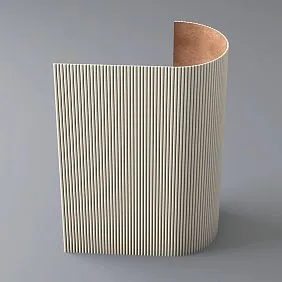
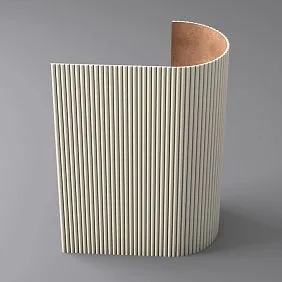
Our factory also produces:


White baseboard: a neutral participant
A white baseboard works as a background element: it exists, it performs its function — covering the joint between floor and wall — but does not attract attention. In a light interior with white walls and white doors, a white baseboard dissolves, making the lower part of the wall unnoticeable. This is the rule of the "invisible border."
Get Consultation
Dark baseboard: an architectural line
A black MDF baseboard works fundamentally differently. It actively, intentionally, and with character marks the lower boundary of the wall. In a space with a dark baseboard, the eye automatically reads a horizontal line at the floor — it becomes as much a part of the architectural drawing as a wall molding or a cornice under the ceiling.
This means a dark baseboard requires consistency: it must be supported by other dark or neutral elements. An isolated black baseboard in an entirely white interior without other dark details is a mistake that the eye perceives as an accident, not a decision.
Frame effect
There is one design technique that professional interior designers use consciously: a dark baseboard + a dark cornice. Two horizontal lines — lower and upper — create a frame effect for the space. Inside this frame, walls, furniture, and decor are perceived as a well-thought-out composition. This technique works excellently with with wooden cornices in a consistent dark shade.
Where a black MDF baseboard looks appropriate: application scenarios
Let's look at specific interior situations — without abstractions, with real contexts.
Kitchen-living room with dark facades
An open space "kitchen + living room" with anthracite or matte black facades is one of the most organic places for a dark MDF baseboard. Here, the baseboard picks up the color of the lower kitchen facades and carries it along the perimeter of the entire open space. The horizontal line unites the zones and creates a sense of intentional design, not just furniture placement.
Hallway with dark doors
A hallway is a room where doors take up a disproportionately large part of the wall. If the doors are dark — anthracite, wenge, black graphite — a baseboard in the same color spectrum becomes a logical extension of the door unit. Wooden casings in a dark shade, a dark baseboard — and the door is perceived as a solid architectural insert into the wall.
Cabinet and Workspace
A study is a room where strictness and concentration are more important than decorativeness. A dark, graphite, or black baseboard sets the appropriate tone: businesslike, restrained, without excess. Paired with dark furniture, matte surfaces, and subdued lighting — it's an interior where it's comfortable to think.
Loft and industrial style
Loft — perhaps the most natural space for a black baseboard. Brick, concrete, metal, exposed utilities, rough textures — and a dark straight or flat plank at the floor that supports the overall character. Here, the MDF baseboard for a loft should be strict: a straight or flat profile, matte surface, clean line.
Minimalism with contrasting details
In a minimalist interior, a dark baseboard is a deliberate accent, one of the few where it is allowed. If everything else is white, gray, neutral — a black baseboard creates that "expensive" detail that says the interior is thought out to the smallest detail.
Accent wall with dark slats
If the project includes a slatted wall — vertical Wooden planks in a dark finish — the baseboard should support this system. A dark baseboard at the base of the slatted wall covers the lower end of the structure and creates a horizontal foundation on which the slats "stand." Without this, the slatted wall looks like it's hanging in the air.
Commercial Spaces
Offices, restaurants, boutiques, salons — places where a dark baseboard works in a system with other finishing materials: dark panels, metal details, surfaces painted in a dark color. Here to buy MDF skirting board in the desired shade is easiest through the RAL selection system: the designer specifies the color code — the painter applies it.
Black, graphite, gray, or colored: how to choose the shade
This is where most buyers hesitate. "Dark baseboard" is a broad concept. Let's break down shades by character and context of use.
| Shade | Character | When to choose |
|---|---|---|
| Black (RAL 9005, 9017) | Maximum contrast, strictness | Loft, high-tech, contrasting accent to white walls |
| Graphite (anthracite, RAL 7016) | Softer than black, more versatile | Gray walls, dark doors, modern minimalism |
| Dark gray (RAL 7022, 7024) | Neutral and calm | Concrete-look porcelain stoneware, gray laminate, restrained interior |
| Colored according to RAL | Exact color match | For a specific shade of wall, door, furniture |
| Wall color | Architectural effect | When integrity is needed, not contrast |
Black MDF baseboard
True deep black is the strongest and most demanding choice. It sets the tone for the entire interior: it's hard to make a minor mistake with it—here it either all works or it doesn't.
A black baseboard looks perfect in the following situations: white walls + black doors + black baseboard. This is a contrast scheme of the "frame"—black draws the outline, white fills it. Minimalistic, precise, expensive.
Also, a black baseboard works in a completely dark interior: dark walls + dark floor + black baseboard. Here the baseboard "dissolves" into the lower part of the wall, making the transition invisible—this is a merging technique that visually increases the height of the room.
Graphite MDF baseboard
Graphite MDF baseboard is a dark anthracite shade, close to RAL 7016 or 7024. It lacks the harshness of black, and this makes it significantly more versatile: it suits gray walls of any saturation, works well with wood in dark shades, with metal details, and with porcelain stoneware imitating concrete.
The graphite baseboard is the first choice for modern apartments with design ambitions, where a dark accent is needed, but without the aggressiveness of black.
Dark gray baseboard
Calm, neutral, well-readable at the border between dark and light. The dark gray baseboard pairs excellently with light oak parquet, beige and warm neutral walls, and furniture in gray shades. This is the choice for those who want to move away from a white baseboard but are not ready for strong contrast.
MDF skirting board RAL: custom shade to order
MDF skirting board RAL is an opportunity to get a profile in exactly the shade that the designer or customer needs. The RAL system contains several hundred standardized colors, and any of them can be applied to MDF skirting board for painting.
When is this needed:
-
the project designer specified a specific color code for walls or furniture;
-
a skirting board is needed exactly matching the color of non-standard doors;
-
a branded color scheme is used in the interior (business spaces, boutiques, branded premises);
-
you want to make the skirting board 'invisible' by matching the wall color.
Baseboard in wall color: the "dissolving" technique
One of the most elegant modern techniques is to paint — is a horizontal element that frames the room at the bottom of the walls where the wall meets the floor. Skirting boards perform several functions: they hide the technological gap between the wall and floor covering (necessary for thermal expansion), protect the lower part of the wall from mechanical damage, create visual completion, and may conceal wiring. into the exact shade of the wall. The boundary between the wall and floor disappears: the wall «descends» all the way to the floor, creating a sense of monolithic volume.
This technique is actively used in neutral and warm interiors, but is especially interesting in dark rooms: a dark green or dark blue wall with a baseboard in the same shade is a solution that makes a strong impression and looks absolutely appropriate.
Which profile to choose for a dark baseboard
Profile shape and color work together. And there is an important rule here: dark shades enhance the visual «weight» of the baseboard — so the profile should be chosen with this in mind.
Straight profile: strictness and precision
Straight MDF baseboard is the best choice for a dark finish. A straight line at the floor without decorative elements, without radii or heels — this is an architectural line in its pure form. In a dark color, it looks especially striking.
A straight dark profile works in loft, high-tech, minimalism, contemporary, and all interiors where purity of form is valued. It is easy to install, cuts well, and gives a predictable result.
Flat profile: delicate accent
Flat MDF baseboard is a thin elongated strip with minimal protrusion from the wall. In a dark shade, it works as a delicate line that marks the lower boundary of the wall without weighing it down. It is good in rooms where a dark accent is needed, but it is important to maintain the lightness of the space.
A flat dark profile is especially appropriate in small rooms, where a tall black baseboard would create excessive heaviness.
Wide profile: scale and costliness of the image
A wide dark baseboard — 100–120 mm and above — is the ultimate statement. A black or graphite strip of this height literally changes the scale of the room. It draws a significant portion of the lower wall zone to itself — and this requires appropriate space.
Such profiles require ceilings of 2.8–3 meters and an overall interior with high design ambitions. In the right context, a wide dark baseboard is undeniably an expensive and expressive result.
paired with with wooden cornices of the same dark shade and wooden moldings on the walls, a wide dark baseboard forms a complete horizontal system of space design.
Shaped profile: caution
A shaped dark baseboard is a rare scenario, but not impossible. In neoclassicism with dark doors and dark moldings, a shaped profile of a dark shade can be appropriate. But here the entire system must be built very clearly: shaped dark baseboard + shaped dark architraves + dark moldings. If even one element stands out — the result looks eclectic.
How to choose a black MDF baseboard for doors and architraves
The doorway is where the baseboard meets vertical elements: architraves, door frame, wall. And it is here that mismatched color or size is especially noticeable.
Dark baseboard + dark doors
A classic and foolproof scenario. Doors in anthracite, black graphite, or dark wenge — and baseboards in the same spectrum. The match doesn't have to be perfect down to the shade nuance: it's important that both elements belong to the same temperature register (both warm or both cold) and the same degree of darkness.
Wooden casings in a dark finish — a mandatory element of this system. Dark baseboard + white trim + dark doors — these are three different elements in one door unit, which visually breaks it into parts. A unified color scheme: baseboard, trim, door in similar shades — gives a different result.
Dark baseboard + white doors
This is a contrast scenario that only works with the support of other dark details in the interior. If there are white doors, white walls, and a black baseboard — the baseboard will contrast alone, which looks like a random decision.
If there is dark furniture, dark slats, dark light fixtures, or a dark floor nearby — the black baseboard as a horizontal accent will fit organically into this system.
Concealed frame doors
Concealed frame doors are a modern architectural solution where the doorway is not highlighted by trim and blends with the wall. In this case, the baseboard should be as unobtrusive as possible: preferably in the color of the wall or flat, with minimal protrusion. A black baseboard with a concealed frame door on a white wall will create a conflict: the baseboard will mark a boundary where the door intentionally removed it.
Thickness and joint with trim
In any scenario — dark or colored — the baseboard thickness should be coordinated with the trim. The baseboard should not protrude beyond the plane of the trim. Ideally: the baseboard is equal to the trim in thickness or slightly thinner.
How to choose a dark baseboard for the floor
The second important element of coordination is the flooring. And there is a nuance here that is often overlooked.
Baseboard in the color of the floor
The traditional approach is to match the baseboard to the floor color. Dark floor → dark baseboard. This works and looks neat: the baseboard is perceived as an extension of the flooring, the boundary between the floor and the wall reads softly.
For parquet or laminate of dark oak or wenge — a baseboard in a close wood shade. For gray or anthracite porcelain stoneware — a graphite or dark gray baseboard. For flooring with a concrete texture — a dark flat profile.
Contrasting baseboard for light floor
The reverse scenario — and it also works. Light floor (light oak, white laminate, light porcelain stoneware) + black or graphite baseboard — this is a strong contrasting solution. The boundary between the floor and the wall is clearly marked, like an architectural feature.
Here it is important that the contrast is not lonely: dark doors, dark furniture, or other dark elements should 'support' the dark baseboard in the interior.
To match the dark veins of the wooden floor
If the parquet has dark veins or annual rings that create a contrasting pattern — a baseboard in a dark shade will pick up this accent and make the flooring more readable. This is a delicate solution that is hard to describe in words but immediately catches the eye in a real interior.
Important rule: not necessarily matching the floor
The main rule for choosing a skirting board color is to focus not on the floor first, but on the element that the skirting board is visually adjacent to. This could be doors, furniture, or walls. If the doors are anthracite and the floor is light, it is more correct to match the skirting board to the doors, not the floor.
MDF skirting board for painting and RAL: freedom to choose the shade
If no ready-made option matches the exact color, that is not a problem, but a standard situation in design projects.
How the "for painting" scheme works
MDF skirting board for painting is supplied with a primed or prepared surface that is ready to accept a paint coating. Then comes freedom: any shade of acrylic interior enamel, any RAL or NCS code.
Technology: light sanding with 240-grit abrasive, one coat of primer-isolator, two thin coats of enamel with intermediate drying. The result is a surface with factory-quality coating in any desired shade.
MDF skirting board RAL: what it provides
MDF skirting board RAL is the ability to order a skirting board painted according to a specific code from the international color system. This is important for:
-
business spaces where corporate color identity is used;
-
design projects where all surfaces are coordinated by exact codes;
-
situations where you need to precisely align the baseboard with other finishing elements — doors, moldings, wall panels.
Colored MDF baseboard in the RAL system is not an exotic choice but a working tool for professional design. The designer specifies the color code — the manufacturer implements it.
On-site painting
An option for those who want to control the result: MDF Skirting Board it is installed and then painted together with the walls and other elements. This achieves a perfect match of shades: the same tint, the same can of paint, the same application. The baseboard, wall, and trim — all in a unified tone.
The only condition: the surface of the baseboard must be prepared for painting, and the installation itself must be completed before the painting work begins.
What height to choose for a black baseboard
The height of a dark baseboard is a separate issue because a dark profile visually feels 'heavier' than a light one. The same height in white and black creates a different perception.
60–70 mm: a delicate outline
A dark baseboard with a low profile is a hint, not a statement. It marks the bottom line of the wall without visual pressure. It works well in small rooms where a black accent is needed but should not dominate. Paired with a high ceiling — it doesn't work: it gets lost.
80 mm: универсальный стандарт
80 mm in a dark shade is a universal solution for standard rooms with ceilings of 2.5–2.7 meters. Noticeable enough to read as an accent, but not so wide as to overload the space. For most apartments with modern renovations, this is the optimal height.
100 mm: expressive dark accent
100 mm of black or graphite baseboard is a serious design statement. It is noticeable, it creates a horizontal line, it changes the perception of space. For rooms with ceilings from 2.7 meters, this is a correct and beautiful choice.
Important: in combination with a high slatted ceiling or cornice, a dark baseboard of 100 mm and above forms a system that architecturally brings the space together into a single whole.
120 mm and above: large-scale solution
For spacious rooms with ceilings of 3 meters and above, a wide dark baseboard creates the effect of an architectural frieze in the lower zone of the wall. This is a solution for penthouses, lofts with high ceilings, commercial spaces with a claim to an expensive interior.
The higher the profile, the stronger the contrast, the more important the consistency with other elements.
Mistakes when buying a black MDF baseboard
This list is not for intimidation, but for prevention. Each of these situations happens regularly.
They buy a black baseboard without any connection to the interior.
"Saw it in a magazine, liked it" — and a black baseboard appears in a white interior with white doors without any other dark details. Result: the baseboard looks like a random mistake. A dark baseboard requires context.
They choose a profile that is too tall for a small room.
A 100 mm black baseboard in a 12 sq. m room with a 2.5 meter ceiling visually "eats up" the lower part of the wall and makes the space feel cramped. For small spaces — a flat or straight profile 60–80 mm in a dark shade.
They don't account for dust and marks on a dark surface.
A dark surface highlights dust, lime splashes from cleaning, and mop marks. For high-traffic areas, this must be considered when choosing the finish: matte enamel is less forgiving than semi-matte or satin.
They choose a glossy black baseboard for a modern interior.
A glossy black baseboard is a solution that requires a very specific context (glossy floors, lacquered furniture, expensive high-tech). In most modern interiors, a glossy black baseboard looks outdated. Matte or semi-matte is the right choice.
They don't compare the shade with doors and walls.
"Anthracite" from different manufacturers means different shades. Before purchasing, you must compare the baseboard sample with the trim and door leaf sample. Shades may match in name but differ in temperature (warm/cold) and saturation.
Don't account for cutting waste
Dark baseboard in corners requires precise cutting — and if you make a mistake, it goes to waste. For a dark profile, it's better to take a 10–12% margin: the difference in shade when buying from a new batch will be much more noticeable on a dark surface than on a white one.
Don't plan the joint with architraves
Dark baseboard + white trim is a common mistake. If the trim is white and the baseboard is black, the joint at the doorway will look inconsistent. Either the baseboard or the trim should be adapted to a unified color logic.
What to buy together with black or colored MDF baseboard
Dark baseboard works best in a system — when there are coordinated elements nearby. Here's what to consider in one order.
Wooden casings — in a coordinated dark shade for a unified door unit system.
Wooden planks — if the project has an accent slatted wall, the baseboard at its base should support the color of the slats.
Decorative wooden lamination — in a dark color for a vertical accent on the wall.
Wooden moldings — dark moldings on the walls form a horizontal system together with the baseboard.
wooden cornice — dark ceiling cornice + dark baseboard = horizontal frame of the space.
Wooden angle — for neat finishing of external corners, especially on a dark profile, where chips are particularly noticeable.
Skirting made of solid wood — if some rooms require massive wood in a dark shade.
wood trim items — for a systematic order of all linear moldings in a unified color logic.
Calculation of quantity and reserve for dark baseboard
The formula is the same as always — but adjusted for the specifics of dark material.
Linear meters = Perimeter − Door openings + Reserve 10–12%
For dark profile, it's better to take a reserve slightly larger than standard (7–10%), because:
-
defects during cutting are more visible on a dark surface and less fixable;
-
chips on the ends of dark baseboard are not as easily masked by sealant as on white;
-
the difference in shade when buying from another batch is significantly more noticeable on dark profiles.
Simple example: living room 5×4.5 meters, one doorway 0.9 meters, four internal corners.
-
Perimeter: (5 + 4.5) × 2 = 19 meters
-
Minus door: 19 − 0.9 = 18.1 meters
-
12% margin: 18.1 × 1.12 = 20.3 meters
Better to order 21 linear meters. With a 3-meter plank — 7 pieces.
Final conclusion: how to decide on a dark baseboard
If you've made it this far — it means the question is serious, and the decision is being made thoughtfully. The final algorithm is simple.
1. Determine what the dark baseboard should support. Doors? Walls? Slats? Furniture? Without an answer to this question, a dark baseboard is a random accent.
2. Choose the shade. Black — for strong contrast. Graphite — universal. Dark gray — delicate. By RAL — for an exact match to the designer shade.
3. Select the height. Proportional to the ceiling and the scale of the room.
4. Coordinate with the architraves. A unified color system for the door unit is mandatory.
5. Calculate the quantity with a 10–12% margin.
6. Include related items in the order — platbands, slats, moldings, fasteners.
buy MDF skirting board in dark or colored finish, get advice on shade, profile, and configuration — in the STAVROS catalog.
FAQ: popular questions about black and colored MDF baseboard
When should you buy a black MDF baseboard?
When the interior already has dark accents: doors, furniture, slats, hardware, walls of a dark shade. A black baseboard enhances these accents and creates a horizontal architectural line. In a completely light interior without dark details, it will look out of place.
Is a black baseboard suitable for a small room?
It is suitable, but with limitations on profile height. In a small space, it is better to choose a flat or straight profile 60–80 mm: it will define the bottom line of the wall without visual heaviness. A tall dark profile (100 mm and above) will feel oppressive in a small room.
Which is better: black MDF baseboard or graphite?
Black provides maximum contrast — it is a solution for strong design statements, loft, high-tech, and contrasting interiors. Graphite is softer and more versatile: it works with gray, concrete, and neutral interiors without the aggressiveness of black. For most modern apartments, graphite is a more organic choice.
Can an MDF baseboard be made in the color of the wall?
Yes. — is a horizontal element that frames the room at the bottom of the walls where the wall meets the floor. Skirting boards perform several functions: they hide the technological gap between the wall and floor covering (necessary for thermal expansion), protect the lower part of the wall from mechanical damage, create visual completion, and may conceal wiring. It is painted in the exact shade of the wall — either factory-painted according to RAL, or independently with acrylic enamel in the color of the wall tinting. This makes the boundary between the wall and floor disappear, creating a monolithic volume effect.
What to pair with a colored MDF baseboard?
Best with repeating details of the same shade or similar color temperature: doors, wooden casingsfurniture, accent walls, wooden planks. A colored baseboard without support is an accident. A colored baseboard in a system is design.
What margin should be taken when buying a dark baseboard?
10–12% of the net perimeter. On a dark profile, defects during cutting are more noticeable, and a difference in shade when buying from a new batch is almost guaranteed. It is better to have leftovers than to search for an exact match later.
Can a black MDF baseboard be installed with glue?
Yes, adhesive installation is used on smooth and clean surfaces. For a dark baseboard, it is important that the glue does not protrude beyond the profile: on a dark surface, glue stains are much more visible than on a white one.
About the company STAVROS
A dark baseboard is a material where the quality of the surface finish is more visible than in any other. Matte black or graphite enamel reveals any unevenness, any graininess, any carelessness in preparation. That is why a manufacturer who understands what lies behind these details is so important here.
STAVROS is a manufacturer with a history dating back to 2002, which began with the restoration of the Constantine Palace in Strelna. Over two decades — participation in the restoration of the Hermitage, the Alexander Palace, the Trinity-Izmailovsky Cathedral, dozens of premium-class projects across Russia. It is this experience with high-quality materials and complex tasks that has shaped the standards applied to every plank. MDF Skirting Boards.
Today, STAVROS is a full-cycle production facility, showrooms in St. Petersburg and Moscow, a finished goods warehouse, and streamlined logistics across the country. The catalog includes MDF baseboards, solid wood baseboard, Wooden casings, Moldings, rails, Crown Molding, wood trim items — all within a unified production and color system.
Over 264 reviews with a rating of 5.0. Shipment from one piece. Consultation on shade, profile, and configuration selection — free. Delivery across all of Russia.
STAVROS is a manufacturer whose dark baseboard looks exactly as it should: precise, confident, and expensive.