Article Contents:
- What is a surface-mounted furniture handle: an A to Z breakdown
- Mounting principle and construction
- How a surface-mounted handle differs from a recessed handle
- Surface-mounted vs. profile: what's the difference
- Quick guide: which type of surface-mounted handle to choose
- Where surface-mounted handles are used: real-world scenarios
- Surface-mounted handle for a kitchen facade
- Surface-mounted handle for a cabinet
- Overlay handle for dresser and nightstand
- Overlay handles for drawer
- Overlay handles for enamel facade
- Overlay handles for modern furniture
- Overlay handle on kitchen facade: detailed breakdown
- Upper and lower facades: different logic
- Overlay handle and kitchen backsplash
- Overlay handle and sink
- Profile overlay handle: modern silhouette
- Construction of profile overlay handle
- Where it looks best
- Profile handle and facade material
- Flat surface-mounted handle: minimalism in details
- When a flat handle is the best choice
- Flat handle in interiors of different styles
- Surface-mounted, mortise, or profile: an honest comparison
- Materials of surface-mounted handles: wood, metal, and their combinations
- Solid wood: warmth in every touch
- Handles with coating: a ready-made solution
- Uncoated handles: freedom of choice
- Colors and coatings of surface-mounted handles: from black to brass
- Black surface-mounted handles
- Chrome surface-mounted handles
- Gold surface-mounted handles
- Bronze and brass surface-mounted handles
- White surface-mounted handles
- How to install a surface-mounted furniture handle: step-by-step logic
- Mistakes when choosing surface-mounted handles: know in advance
- Confusing surface-mounted with recessed
- Not considering the thickness of the facade
- Choosing a small flat handle for a heavy facade
- Not checking the handle protrusion in a narrow passage
- Not matching the handle color with the rest of the hardware
- Choosing only by photo, without evaluating the grip
- Not checking compatibility with the furniture type
- How to buy solid wood surface-mounted handles on stavros.ru
- FAQ: answers to popular questions about surface-mounted handles
- What is a surface-mounted furniture handle?
- How is a surface-mounted handle different from a recessed one?
- Where is it best to use surface-mounted handles?
- Is a surface-mounted handle suitable for a kitchen?
- What is better: an overlay handle or a profile handle?
- What length of overlay handle should I choose?
- Handles with coating or without: what to choose?
- Can overlay handles be installed on heavy facades?
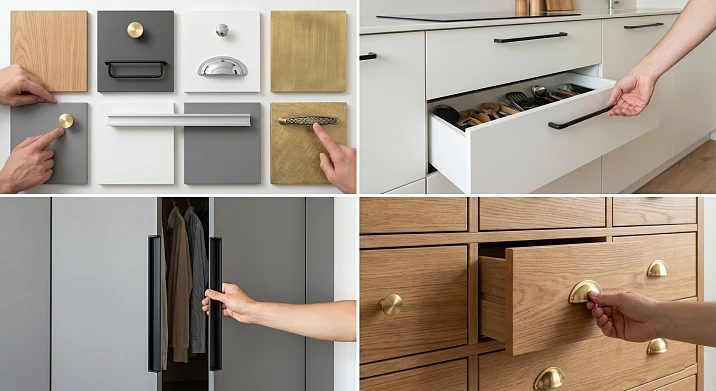
Imagine: the kitchen set is already assembled, the facades are painted, the hinges are adjusted — and at the very end, the question of handles arises. You want something neat, modern, without the hassle of drilling and routing. This is where the overlay handle confidently takes its niche — without compromise.
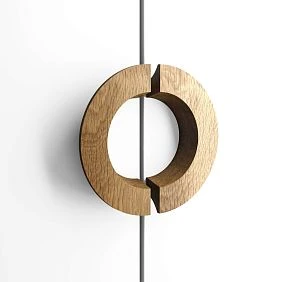
Furniture overlay handle — is a type of hardware that is attached to the surface of the facade or its edge without deep embedding into the material. Simple installation, a wide range of shapes, and the ability to use on already finished facades — all this makes overlay handles a working solution for kitchens, cabinets, dressers, nightstands, drawers, and swing doors.

What is a furniture overlay handle: a breakdown from A to Z




Mounting principle and design
Furniture overlay handle — this is a product that is fixed on the outer side of the facade. Unlike a recessed handle, which requires selecting facade material to a certain depth, a surface-mounted handle is easier to install: a hole or several holes are drilled for mounting bolts, the handle is applied from the front side, the bolt is tightened from the inside — and it's done.
This is a fundamental difference from recessed hardware, which requires milling a mounting groove or pocket. A surface-mounted handle requires neither a router, nor special templates, nor precise groove milling along the entire length. For most household tasks — this is exactly the level of complexity that can be handled with a regular drill and screwdriver.
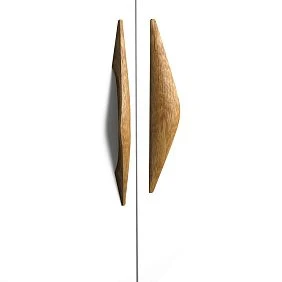
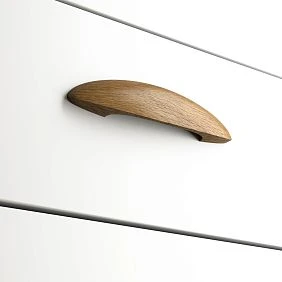
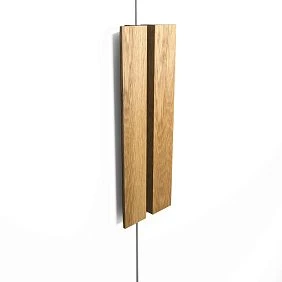
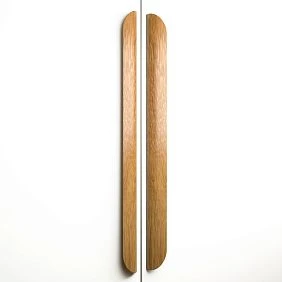
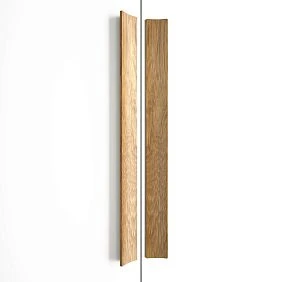
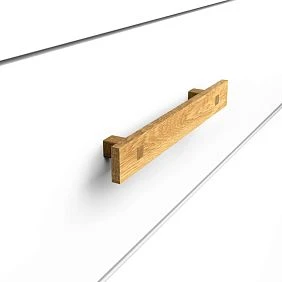
Shape surface-mounted handle for furniture can be very diverse: a flat strip with a small protrusion, a wave-shaped profile, a rectangular rail with rounded ends, a thin curved plate, a decorative bar. Each option solves its own task — both in terms of functionality and aesthetics.
Our factory also produces:
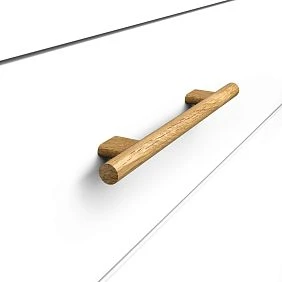
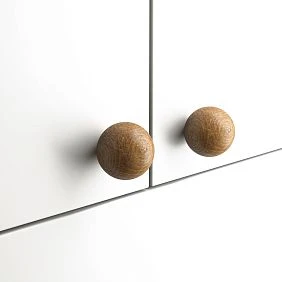
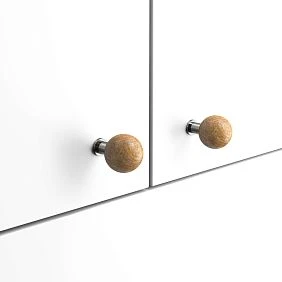
How a surface-mounted handle differs from a recessed one
Here it's worth understanding honestly, because buyers often confuse these two types.
Surface-mounted — attaches on top of the facade. Bolts pass through the facade. The handle protrudes above the surface by 20–40 mm (depends on the profile). Installation: drill, bolts, 5–10 minutes.
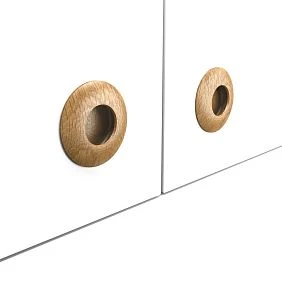
Recessed — sinks into the facade. Requires preliminary material removal. The facade surface remains flat or with a barely noticeable groove. Installation: router, template, precision, experience.
Both designs have a right to exist. But if you are installing handles on ready-made facades, if you want to quickly update a kitchen without disassembling the cabinet, if the project is created without production equipment — Surface Mount Handle becomes the obvious choice.
Get Consultation
Overlay and profile: what's the difference
Another nuance that's important to understand. A profile handle can also be an overlay — meaning it attaches to the surface of the facade, rather than being recessed. Surface-mounted profile handle — this is a long horizontal or vertical rail that is installed across the entire width or height of the facade and provides grip along its entire length. This is a modern, minimalist solution with a distinctive silhouette.
Overlay profile handle made of wood — it's a line on the facade that reads as an architectural element, not just a functional detail. It doesn't hide; it makes a statement. And that's precisely what makes it valuable in modern interiors.
Quick guide: which type of overlay handle to choose
| Overlay handle type | Where to use | Style |
|---|---|---|
| Flat overlay | Kitchen, cabinet, nightstand, minimalism | Modern, Scandinavian |
| Profile overlay | Wide facades, kitchen, wardrobe | Modern, loft, eco |
| End overlay | Facades without through hole | Minimalism, high-tech |
| Decorative overlay | Chest of drawers, sideboard, classic | Classic, Provence, neoclassical |
| Long vertical | Tall cabinets, wardrobe | Modern, Scandinavian |
Where overlay handles are used: real scenarios
Overlay handle for kitchen cabinet front
The kitchen is the most popular space for all types of furniture fittings. And it is here overlay handle for kitchen cabinet front shows its best qualities.
First, ease of installation on standard MDF and chipboard fronts. Most overlay handles are attached with two bolts in standard positions — no non-standard drilling, no complex marking. This is valuable both during initial installation and when replacing old handles.
Second, visual delicacy. The flat overlay handle for cabinet front does not protrude sharply in front of the front — it lies close to its plane, creating a neat silhouette. In small kitchens, where every centimeter of space in front of the cabinets matters, this is a real advantage.
Third, a wide selection of shapes for kitchens of different styles. For a Scandinavian-style kitchen — a flat wooden handle made of light ash or oak without a finish. For a modern-style kitchen — a thin profile rail with a matte finish. For a classic kitchen — a decorative overlay handle with rounded ends in bronze or brass.
handles for kitchen An overlay handle made of wood is a rare combination: natural material, simple installation, and the living texture of wood on every facade. A wooden overlay handle on a kitchen facade made of MDF with enamel creates a tactile and visual contrast — a smooth enameled facade and a warm wooden rail.
Overlay handle for a cabinet
A cabinet is a different scale and a different load. Here, the overlay handle faces two main challenges: the weight of the facade and the height of the handle placement.
For a swing cabinet with facades 2000–2200 mm high, it is important that the overlay handle is placed at a comfortable height — usually 900–1100 mm from the floor. Cabinet handles In the overlay format, they work well on facades 400–600 mm wide: the handle is installed horizontally or vertically in the center.
For tall sliding wardrobes, overlay handles are not suitable — there is a different opening mechanism. But for built-in swing cabinets in the dressing room, hallway, and bedroom, this is an excellent option. Especially if the cabinet is made to order and you want non-standard fittings made of natural wood.
If the cabinet facade is heavy (MDF 22 mm, height from 1800 mm) — make sure the selected overlay handle has enough attachment points. Two-point fixation with M5–M6 bolts is reliable even on a heavy facade. Handles with four attachment points or long profile handles are even more reliable.
Overlay handle for a chest of drawers and a nightstand
A chest of drawers is where the overlay handle works subtly and precisely. Rows of drawers, compact facades — proportionality is important here.
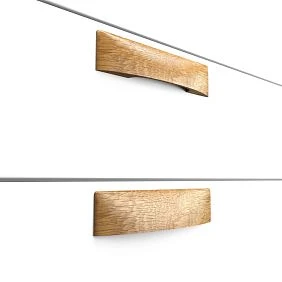
For a chest of drawers with narrow drawers (height 100–150 mm), a short one will do flat furniture handle 80–120 mm long. For wide lower drawers, a longer surface-mounted handle, 150–200 mm. This creates visual consistency: each handle is proportional to the width of its front.
A wooden surface-mounted handle on a solid oak chest is a monolithic unity of material. The handle becomes an extension of the front, not a foreign element. Especially if you choose a model without a finish and apply the same oil or wax as on the main body.
For a cabinet — bedside, shoe, TV — the logic is the same. The fronts are small, the surface-mounted handle is compact and delicate. The flat shape minimally protrudes from the surface, which is important for cabinets located in narrow passages.
Surface-mounted handles for a drawer
A drawer involves frequent and repetitive effort. A flat surface-mounted handle on the front works well here under one condition: it must provide a comfortable grip. A handle that is too thin and flat does not allow a proper grip — fingers slip. The height of the surface-mounted handle's protrusion above the front should be at least 15 mm for comfortable use.
A good solution for a drawer is a surface-mounted handle with a profile cross-section: flat at the front and rounded or slightly protruding at the working surface. The hand grips the rounded part, while the flat part fits snugly against the front — and it all looks clean and modern.
Overlay handles for enameled cabinet fronts
Enameled fronts are a special type of surface that requires careful selection of hardware. Glossy or matte enamel creates a perfectly flat plane, and any handle on it will read clearly and expressively.
handles without coating made of solid wood can be painted to match the exact color of the enameled front — then the handle visually "dissolves," creating the effect of a handleless front while still providing a comfortable grip. This is a design technique used in high-end projects.
An alternative option is a contrasting overlay handle: black matte on a white enameled front or gold on a cream one. This is an accent that works flawlessly.
Overlay handles for modern furniture
Modern furniture tends toward two poles: maximum minimalism (no handles at all, with push-to-open mechanisms) or expressive hardware as an interior accent. Overlay wooden handles occupy an interesting place between these poles.
Thin profile Furniture overlay handle on a modern kitchen front — this is not a compromise, it's a solution. It does not overload the front, does not disrupt its geometry, but clearly defines the function and creates tactile contact with the surface.
Overlay handle on a kitchen front: detailed analysis
The kitchen requires special attention — too many variables, too high stakes.
Upper and lower facades: different logic
On upper wall cabinets surface-mounted handle for furniture is more often installed horizontally along the lower edge of the facade — where the hand naturally reaches when opening. For lower cabinets, the surface-mounted handle is installed horizontally in the upper third of the facade.
A common mistake is to place surface-mounted handles in the center of the facade on both upper and lower elements. On upper cabinets, the hand reaches downward, so the handle closer to the lower edge is more convenient. On lower cabinets, the hand comes from above, so the handle closer to the upper edge is more functional.
Surface-mounted handle and kitchen backsplash
If the kitchen backsplash is made of a material with a pronounced texture (tile, brick, stone), the hardware on the facades should either contrast with it or be in the same material family. A wooden surface-mounted handle next to a stone backsplash is a play of natural materials, warm and organic.
Surface-mounted handle and sink
Facades under the sink are a special scenario. They are opened rarely, but always under load (often with hands full). Here it is better to choose a surface-mounted handle with a good grip — not too flat, with sufficient protrusion.
Profile surface-mounted handle: modern silhouette
Surface-mounted profile handle — that's a separate story. Here we are not talking about a compact element, but about a long rail or wave-shaped profile that is installed across the entire width of the facade.
Design of a profile surface-mounted handle
A solid wood profile rail is fastened with two, three, or four bolts depending on the length. The cross-section can be rectangular, trapezoidal, wave-shaped, or angular. The hand grips the protruding part of the profile along its entire length — this ensures even opening of the facade without warping.
Overlay profile handle Wave HL-006 is a specific example of such a solution. Its wave-shaped profile creates a relief horizontal line on the facade, which reads as an architectural element. The handle length is selected to match the width of the facade.
Where it looks best
A profile surface-mounted handle is most expressive on wide facades — from 400 mm. On narrow ones (300 mm or less), it may look excessive. For a kitchen with wide lower drawers, this is an impeccable option: a long wooden rail across the entire width of the facade creates a horizontal rhythm that unifies the entire set.
Profile surface-mounted handle for facades works well in combination with built-in appliances: ovens, dishwashers, refrigerators — where the decorative facade matches the size of the appliance body. The surface-mounted profile rail visually integrates the appliance into the overall kitchen ensemble.
Profile handle and facade material
On MDF facades with enamel, a wooden profile handle creates a material contrast — a smooth uniform surface and the living texture of wood. This is a contrast that is valued in modern design.
On veneer facades, wood-on-wood creates unity — only different textures and planes. This is a quieter but deeper solution.
Flat flush handle: minimalism in details
flat furniture handle — is a special subclass of flush handles where the main principle is minimal protrusion above the facade surface. The handle fits tightly to the plane, protrudes by 10–20 mm, and creates a barely noticeable relief on the facade.
When a flat handle is the best choice
In small kitchens where every centimeter in front of cabinets matters. In children's rooms where protruding handles are a potential risk. In bathrooms and hallways where space is limited. Everywhere you need a handle that 'is present but doesn't get in the way.'
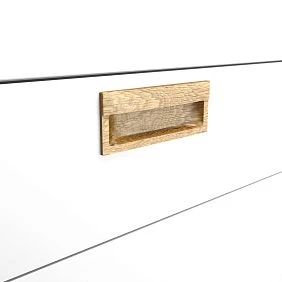
overlay handle for cabinet front Plane HL-011 is a rectangular wooden plate that fits tightly to the facade. Horizontal ribs or a rounded end provide grip. The hand slides along the surface and finds the handle intuitively — without searching or unnecessary movements.
Flat handle in interiors of different styles
In a Scandinavian interior — a flat wooden handle made of ash or birch in a light tone. Naturalness and restraint.
In Japanese minimalism — a narrow flat strip of dark oak or walnut. Strictness without excess.
In a modern minimalist interior — a flat handle with a thin matte black or dark gray coating. A period without an exclamation mark.
Overlay, inset or profile: an honest comparison
| Handle type | Installation | When to choose |
|---|---|---|
| Overlay | Simple (drilling, bolts) | Need simple installation, handle on top of the facade |
| Inset | Complex (routing a groove) | Need concealed installation, minimal protrusion |
| Profile overlay | Simple/medium | Modern silhouette, wide facade |
| Bracket Handle | Simple (two holes) | Reliable two-point grip, frequent opening |
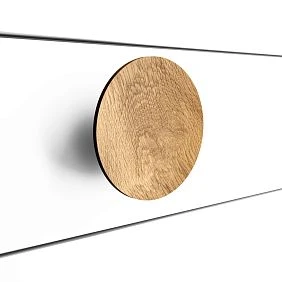
| Button Handle | Simple (one hole) | Small facade, decorative accent |
Key takeaway from this table: if you already have assembled furniture and no access to professional equipment — Surface Mount Handle and the bracket handle solves the problem quickly and without special skills. If the furniture is being created from scratch in production and you want clean lines — a recessed handle or profile handle with a milled groove.
Materials of surface-mounted handles: wood, metal, and their combinations
Solid wood: warmth in every touch
Surface-mounted handles made of natural solid wood are a conscious choice in favor of naturalness. Oak, ash, birch, walnut, beech — each species carries its own character.
Oak is dense, heavy, with a pronounced texture. An oak handle feels weighty and noble. It is perfect for veneered oak facades — or as a contrasting material on enameled facades.
Ash is light, with a neutral texture. It is good for Scandinavian and light interiors. handles without coating Ash can be easily painted in any desired color.
Walnut is dark, warm, and prestigious. A walnut pull handle on a light kitchen facade is a contrast that works as a focal point.
Handles with coating: a ready-made solution
furniture handles with coating These are solid wood handles with a final application of color or protective coating. Ready-made coatings: matte black, bronze, gold, chrome, brass, champagne, white, dark walnut.
This is convenient: you buy them and install them. No need to additionally paint, sand, or varnish. The color is already precisely defined and reproducible — you can order 20 identical handles and they will be identical.
Uncoated handles: freedom of choice
handles without coating This is solid wood in its pure form, ready for independent finishing. Paint it in any RAL color, apply oil, wax, varnish, stain — complete freedom. These are the handles used in designer projects with a custom color scheme.
Another scenario: the handle is painted together with the facade — in one pass, with the same material. Then it literally blends with the surface, creating a monolithic facade. This is a visual technique popular in minimalist kitchens.
Colors and coatings of pull handles: from black to brass
Black pull handles
Black matte is the most popular color of recent years. Black Furniture overlay handle works in contrast with white, light gray, beige, and milky facades. On dark facades, it creates a monochrome unity where the handle becomes part of the surface.
Black matte is practical: it does not glare under artificial lighting, does not show small scratches, and is resistant to household dirt. Handles with Finish under black matte made of wood — especially lively and warm: the coating does not completely hide the material's structure.
Chrome surface-mounted handles
Chrome is neutrality and versatility. A chrome surface-mounted handle is compatible with any style and most facade colors. Matte chrome is for modern restrained interiors. Glossy chrome is for more traditional and vibrant spaces.
Chrome is especially good on white and light gray kitchens: it does not compete with the facade, does not draw attention, simply performs its role cleanly and neatly.
Gold surface-mounted handles
Gold surface-mounted handles are a luxury that doesn't need to be hidden. Matte gold on white or cream kitchen facades is one of the most beautiful design scenarios of recent years. Gold adds warmth, gives the interior richness and a sense of expensive material.
On dark facades — anthracite, graphite, dark blue, emerald — a gold handle creates a contrast that literally glows. This is not loud luxury, but precise accentuation.
Bronze and brass surface-mounted handles
Bronze and brass — for those seeking warmth and depth. These are shades that never go out of style because they appeal to natural materials and historical precedents.
Bronze surface-mounted handle for furniture on an oak or cherry cabinet — it's a material selection that creates the feel of real furniture. Not budget, not quick — but made to last for decades.
Brass is colder than bronze, more noble than chrome. It works well on light wood facades and in projects with an eco-friendly mood.
White surface-mounted handles
A white surface-mounted handle — for those who want silence. On white facades, it's almost visually unnoticeable, but tactilely well felt. It's the 'handle that isn't there' trick — the interior stays clean, and the function is fulfilled.
handles without coating made of solid wood, hand-painted in white or cream — this is a precise match to the facade tone, which is hard to achieve when buying ready-made painted handles.
How to install a surface-mounted furniture handle: step-by-step logic
Installing a surface-mounted handle doesn't require special skills — just precision and basic tools.
Step 1. Marking. Determine the handle's position on the facade. Use a tape measure and pencil. For horizontal handles — measure the distance from the top or bottom edge of the facade. Standard position on a kitchen facade: 50–70 mm from the bottom edge for wall cabinets, 50–70 mm from the top edge for base cabinets.
Step 2. Drilling. Drill holes according to the dimensions of the handle's mounting bolts (usually Ø5 mm). If the handle is long, drill two to four holes according to the markings. Use a depth stop on the drill — do not drill through if the facade is thin.
Step 3. Installation. Insert the bolts from inside the facade, put the handle on from the outside. Tighten the bolts fully, but do not overtighten — wood can deform from excessive force.
Step 4. Check. Open and close the facade several times. The handle should sit without play, not squeak, and not move. If a slight play is felt, tighten the bolts.
Important note: for MDF facades, it is recommended to use bolts with a wide head or washers on the inside — this distributes the load and prevents the material from being pressed through.
Mistakes when choosing surface-mounted handles: know in advance
Confusing surface-mounted with recessed
The first and most common mistake. The buyer sees a beautiful handle, orders it — and at home discovers that a router is needed for installation. Furniture overlay handle and recessed are fundamentally different products. Always clarify the mounting type when ordering.
Not considering the facade thickness
The bolt length must match the facade thickness. Standard is a M5×30 mm bolt for a 16–18 mm facade. For facades 20–22 mm, a longer bolt is needed. If the bolt is too short, the handle will not hold. If too long, it will protrude from the back side.
Choosing a small flat handle for a heavy facade
flat furniture handle with minimal protrusion is an excellent choice for lightweight facades. For a heavy swing wardrobe door, a handle with a large protrusion and a secure grip is needed — otherwise, opening will be uncomfortable and tiring.
Not checking the handle protrusion in a narrow passage
In small kitchens and hallways, the distance between the furniture set and the opposite wall or furniture can be minimal — 900–1000 mm. A protruding handle takes up part of this space. When designing, always consider the handle protrusion and leave a margin.
Not coordinating the handle color with the rest of the hardware
Hinges, legs, rails, sink, faucet — all of this is metal in the kitchen. All metal elements should be in the same color field: warm tones separately, cool tones separately. Gold handles next to chrome hinges is a mismatch that a professional designer would not allow.
Choosing only by photo, without evaluating the grip
The photo on the website may be perfect, but the handle in hand is a completely different feeling. Always pay attention to the protrusion height (minimum 15–20 mm for comfort), the width of the working surface, and the shape of the end. Sharp edges are uncomfortable. Rounded ones are pleasant.
Not checking compatibility with the furniture type
A thin profile surface-mounted handle on a classic carved chest of drawers is an aesthetic conflict. A massive decorative handle on a minimalist kitchen facade is an overload. Furniture Handles must be in the same style register as the furniture.
How to buy wooden surface-mounted handles on stavros.ru
stavros.ru offers a full range furniture handles of solid natural wood. The category of surface-mounted handles includes several fundamentally different models.
Flat furniture handle Plane HL-011 is a neat rectangular plate with a minimal protrusion. It is mounted horizontally on the fronts of kitchens, cabinets, and nightstands. Available without a finish for self-painting.
Furniture handle Wave HL-006 — is Overlay profile handle with a wavy cross-section. It is installed across the entire width of the front, providing grip along the entire length. Ideal for wide drawers and modern kitchens.
The entire range is available in two options: with a finish (matte black, bronze, gold, chrome, brass, champagne) and without a finish (array of wood for self-finishing).
Buy surface-mounted handle — select a model from the catalog, specify the quantity, and place an order. Delivery across all of Russia.
FAQ: answers to popular questions about surface-mounted handles
What is a surface-mounted handle for furniture?
This is a handle that is attached to the outer surface of the facade or its edge using bolts — without milling a groove or seat. Furniture overlay handle is easier to install than a recessed handle and is suitable for most household tasks.
How is a surface-mounted handle different from a recessed one?
Overlay handle is mounted on top of the facade — only holes for bolts are needed. A recessed handle is embedded into a prepared groove and requires milling. A surface-mounted handle can be installed with a drill in 5–10 minutes, while a recessed one requires professional equipment.
Where is it best to use surface-mounted handles?
On kitchen fronts, swing cabinets, chests of drawers, cabinets, pull-out drawers, and enameled furniture. Especially good where simple installation on ready-made fronts is needed.
Is an overlay handle suitable for a kitchen?
Yes. handles for kitchen In overlay format, they are convenient, aesthetic, and easy to install. A flat handle does not protrude sharply in front of the front — this is important in small kitchens. A profile overlay handle creates a modern silhouette on wide fronts.
What is better: an overlay handle or a profile handle?
If you need a short compact handle on the front — Surface Mount Handle. If you need a long rail across the entire width of the front with a modern silhouette — Surface-mounted profile handle. Both options are mounted without milling.
What length of overlay handle should I choose?
For cabinets and small drawers — 80–120 mm. For standard kitchen fronts — 120–160 mm. For wide drawers and large fronts — 200–250 mm and more. Principle: the handle should occupy from a quarter to half the width of the front.
Handles with coating or without: what to choose?
Handles with Finish — for a ready-made color solution without additional processing. handles without coating — for precise matching to the facade color or for an individual design project with a unique color scheme.
Can surface-mounted handles be installed on heavy facades?
Yes, if a model with reliable multi-point fastening and sufficient protrusion for a comfortable grip is chosen. For very heavy facades (MDF 22 mm, height from 2000 mm), it is preferable Bracket Handle with two fastening points — it distributes the load more evenly.