Article Contents:
- Who should buy the OR-032 set
- What is OR-032
- Sample as a selection tool
- Sample as a means of approval
- Sample as quality control for future series
- Sample as a basis for test painting
- The composition of the set should not be guessed
- There's no point of comparison on the screen
- A photo flattens depth
- Screen color distorts the material
- An isolated ornament appears more expressive
- Repetition cannot be judged from a single photo
- First, measure the free space
- Check the size in the center and in the corner
- Look not only at the outer diameter
- Compare one large and several small ones
- Check the distance to the handle
- Check the paired doors
- Evaluate the view from a distance
- Look from the side
- Use side lighting
- Check the shadow at the installation site
- Evaluate the protrusion near the passage
- Compare flat and three-dimensional motifs
- Do not confuse relief height with quality
- Examine the peaks and depressions
- Compare symmetrical parts
- Run your finger without pressure
- Look under bright side lighting
- Cross-check with quality information
- Round shape
- Square shape
- Rectangular shape
- Shape and attachment point
- Shape and repeat
- Geometric pattern
- Floral pattern
- Quatrefoil and Gothic
- Modern collection
- Modern
- Classic
- Look at all the furniture, not just one door
- Repeat one line language
- Do not combine collections only by the same color
- One main motif, the rest are supporting
- Use physical samples nearby
- Center of the panel
- Facade with molding frame
- Kitchen fronts
- Library and cabinet
- Chest of drawers and cabinet
- Serial furniture
- Central panel
- Next to the door handle
- Upper part of the door leaf
- Door portal
- Repair of existing door
- Corner of molding frame
- Intersection of moldings
- Tall wall panel
- One large panel
- Commercial space
- Compare profile width and decor size
- Align the depth
- Repeat the line character
- Check the corner cut
- Do a trial assembly on the shield
- Check the hand trajectory
- Compare the scale
- Align the shape
- Check the color
- Do not accidentally cover the fastener with decor
- Beech for covering finish
- Oak for tinting
- Do not transfer the result from one sample to another breed
- Paired elements should be viewed together
- Check material availability in the product card
- Clarify if the sample can be painted
- Apply the system, not just one random layer
- Monitor the coating thickness
- Examine the sample after complete drying
- Check both daylight and artificial light
- Save the reference
- Scale Coordination
- Style approval
- Color approval
- Fixation of the decision
- Comprehensive layout
- Presentation to the client
- Reducing the risk of serial order
- Creating an internal library
- Trial facade
- Repeat order
- Comparison on a real canvas
- Demonstration stand
- Working with lighting
- Information update
- Order of demonstration sets
- First, limit the choice
- Show at the installation site
- Compare under working light
- Discuss the repeat
- Record the choice in writing
- Record the selected motif
- Check the size compliance
- Select material
- Coordinate the finish
- Approve the control socket
- Calculate the quantity
- Add a reasonable margin
- For furniture
- For double doors
- For molding frames
- For hallway or boiserie
- For hotel or restaurant
- Checking the formula on the plan
- Single material
- Unified surface preparation
- Unified project geometry
- Fewer organizational errors
- Control reserve
- Article and name
- Size and material
- Finishing
- Storage location
- Protection from light and moisture
- Update
- With electrical sockets
- With ceiling rosettes for a chandelier
- With a set of ready-made decor
- With a catalog of all sockets
- With a full-size control socket
- With a finish sample
- Need to choose decor for twenty kitchen fronts
- Need to design double doors
- Need sockets for the wall corridor
- Need to coordinate decor with the client remotely
- Need decor for an existing dresser
- Need to choose between R-055 and R-065
- Need a set for a design studio
- Need decor for the hotel
- Consider the composition of OR-032 unchanged
- Assume that the set includes all collections
- Do not check the size of the full-size product
- Choose only based on beauty in hands
- Ignore the side view
- Mixing too many ornaments
- Conduct a test paint without material confirmation
- Use the sample as a finished socket without checking
- Do not record the article number
- Consider one socket sufficient for evaluating the series
- Not considering the finish
- Order a batch without a control element
- Photo at the installation site
- Exact article number of the product item
- Orientation and axes
- Finishing system
- Quantity and reserve
- Responsible for approval
- What is included in the OR-032 set?
- How many samples are included in the kit?
- Which article numbers are included in OR-032?
- What type of wood are the samples made from?
- Can I choose between beech and oak?
- Are the samples full-size format?
- Can samples be used as ready-made decor?
- How to assess the depth of carving?
- How to choose the size of a rosette for a furniture door?
- How to check compatibility with molding?
- Can samples be applied to an interior door?
- Will OR-032 suit a design studio?
- Is a furniture workshop set needed?
- Can finishing be approved using samples?
- How to order a test paint-out?
- Is the cost of samples included in the subsequent order?
- Can I update the set composition?
- How to store samples in the showroom?
- Where to buy OR-032?
- How to order full-size sockets after selection?
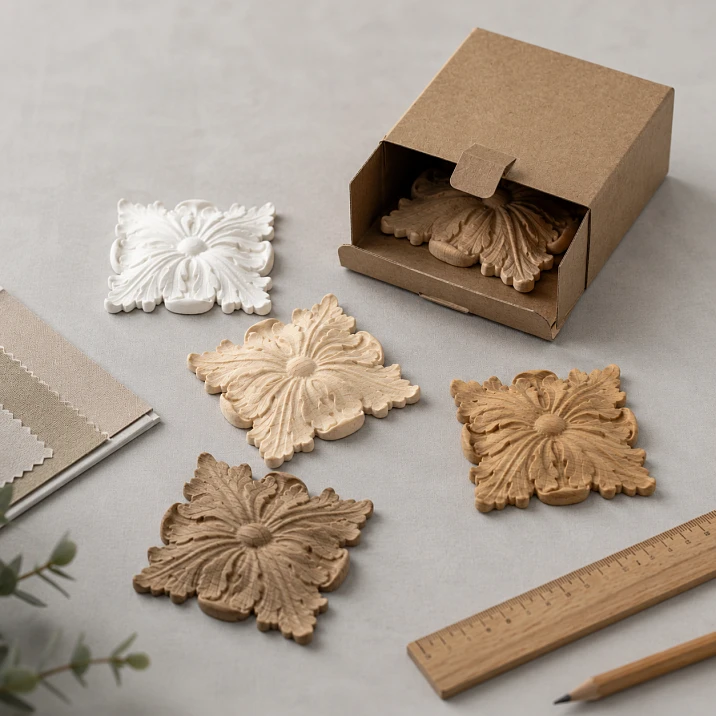
Physical samples for selecting carved sockets for furniture, doors, wall panels, and molding frames
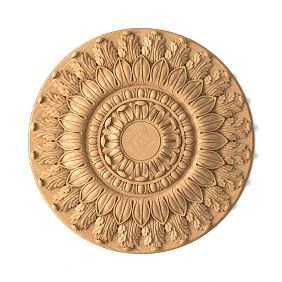
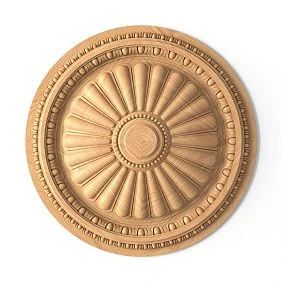
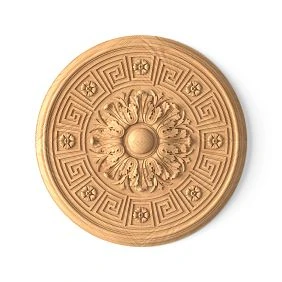
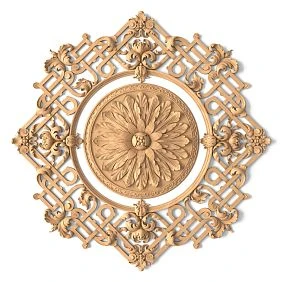
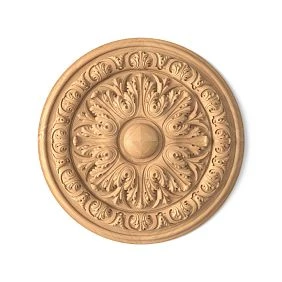
Who should buy the OR-032 set
OR-032 is worth buying if you need to choose a wooden decorative socket not from a photo, but from a physical sample before ordering a batch. The set helps to apply the decor to a furniture facade, interior door, molding frame, or wall panel, see the actual scale of the ornament, evaluate the depth of the relief under side lighting, and check whether the protruding part will conflict with a handle, panel, or adjacent profile. This approach is especially useful before purchasing ten, twenty, or more identical elements: a small error, almost imperceptible on one socket, becomes systemic across the entire series of facades.
Buy the OR-032 socket sample set View all wooden sockets Select classic sockets Select gothic sockets Order decorative socket layout
OR-032 — product from the sample section. Its purpose is to preview decorative sockets before choosing the main series.
The actual composition of the set must be checked before ordering. The available SEO scheme does not confirm the exact number of samples, list of SKUs, dimensions of each element, and materials presented.
It cannot be assumed that OR-032 contains all STAVROS sockets. The set introduces decorative solutions, but specific collections and shapes are specified in the product card.
The sample does not replace the full-size card of the selected product. After visual selection, you need to separately check the size, material, surface preparation, and ordering conditions of the specific socket.
Using samples as ready-made decor is only allowed with direct confirmation. The main purpose of OR-032 is selection, approval, and demonstration, not automatic furniture assembly.
Buying a set of wooden socket samples is especially reasonable when the project extends beyond one small chest of drawers. In a photo, a decorative socket may look expressive and proportional, but after installation on the facade, it may turn out to be too small, excessively bulky, or stylistically mismatched. When repeated on ten doors, the error becomes more noticeable, and rework affects the entire batch.
A physical sample moves the selection from the realm of assumptions to practical fitting. It can be placed against an existing door, centered on a panel, aligned with molding, checked near a handle, and viewed in both daylight and evening light. The buyer evaluates not an abstract ornament, but a specific installation location.
This scenario is useful not only for private customers. A furniture workshop can show options to the client before starting facade production. A designer can approve scale and style in person. A door showroom can check the decor on the door leaf. A showroom can create a clear library of shapes. A specifier can reduce the risk of ordering dozens of unsuitable elements.
First, you can order samples of wooden decor, then proceed to catalog of carved rosettes and choose full-size products. This route helps separate preliminary decisions from bulk purchases and avoid making an important choice based solely on the screen.




What is OR-032
OR-032 is a set for preliminary evaluation of decorative rosettes. It is not electrical fittings, not a ceiling rosette for a chandelier, and not a random set of wooden blanks. The product belongs to the product samples category and helps familiarize with the shape, relief, and quality of decorative elements before the main order.
Our factory also produces:

Sample as a selection tool
The main value of the set is not in the number of individual parts, but in the ability to compare them in real scale. Even if the buyer already knows the intended diameter or width, the physical form shows how much free space will remain around the ornament and how it will be perceived on a specific surface.
Get Consultation
Sample as a coordination tool
In a meeting with a client, it is easier to place two or three shapes on a facade than to explain the differences with words. Photos and visualizations remain useful, but the sample helps make the final decision and lock in the chosen direction.
Sample as a control for future series
Before purchasing a large batch, it is important to determine not only the attractiveness of the pattern but also its repeatability. One volumetric element may look expressive, while twenty of the same may overload a cabinet or hallway. Samples allow you to lay out the scheme and see the density of repetition.
Sample as a basis for trial coating
If a specific item is allowed for a finishing trial, the possibility of such use must be confirmed. You cannot automatically paint the entire set or consider its material identical to the future batch. For a trial coating, it is important to know the wood species, surface preparation, and purpose of the sample.
The composition of the set should not be guessed
The available data does not confirm the number of models, list of SKUs, sizes, materials, or the presence of different collections. Therefore, before purchasing, you need to open the OR-032 card or clarify the current specification with a STAVROS manager.
What is confirmed and what needs to be clarified before purchase
| Parameter | What is known | What to Check | Why this is important |
|---|---|---|---|
| Article number | OR-032 | Matching the SKU in the order and the card | To avoid confusing the set with another product sample. |
| Product type | Set of socket samples | Purpose of a specific configuration | Samples are intended for selection, not automatically for installation. |
| Section | Product samples | Other available demo sets | You can build a larger library of decor for the showroom or workshop. |
| Number of samples | Not confirmed in SEO scheme | Actual quantity in the card | You cannot plan a demo stand based on an unconfirmed number. |
| SKUs in the set | Not listed | Full list of models | After selection, you must navigate to the full-size socket card without errors. |
| Dimensions | Not confirmed | Size of each item and correspondence to the full-size product | Do not transfer the impression of a reduced sample to the actual outlet. |
| Materials | Not confirmed for the entire set | Breed of each sample and availability of beech or oak | Texture and finishing result depend on the material. |
| Surface preparation | Not confirmed | Sanding and acceptability of test painting | Thick or unsuitable finish can hide fine relief. |
| Collections and styles | Full list not confirmed | Which series are presented | The set may not include all classic, gothic, or modern models. |
| Use as ready-made decor | Not confirmed | Is it allowed to mount individual samples | The demonstration piece may differ from the product item. |
| Composition update | Not confirmed | Relevance of configuration as of order date | The composition of the demonstration set may require re-verification. |
Such a volume of clarifications does not make OR-032 less useful. On the contrary, it shows the correct way to purchase: the set is chosen as a tool, not as a mysterious box with guaranteed known contents. Before ordering, it is enough to get the current specification and understand whether it meets the project's tasks.
Why a photo does not replace a physical sample
A catalog photo helps to see the ornament but does not provide a full understanding of the scale. The image can be enlarged on the screen, zoomed in, and viewed separately from the furniture. As a result, a small rosette looks large, and a deep relief appears almost flat. A physical sample returns the product to the real interior.
There is no point of comparison on the screen
Even if millimeters are indicated nearby, the buyer does not always imagine how 40, 60, or 80 mm look on a door 450 mm wide. The sample can be applied to the facade and immediately see the remaining field, the distance to the frame, and the position relative to the handle.
The photo smooths out depth
Front light reduces shadows and makes volumetric carving calmer. Side light, on the contrary, shows all the differences. In a real room, lighting changes throughout the day, so the sample needs to be viewed from several directions.
Screen color distorts the material
Wood texture, oak shade, light beech, and future enamel depend on lighting and display settings. A physical sample allows you to see the surface next to the furniture, but only if the material of the specific part is confirmed.
An isolated ornament appears more expressive
On a white card background, any outlet looks like an independent object. On the facade, it is surrounded by molding, a handle, a panel, and adjacent details. Sometimes it is the surroundings that make a beautiful shape too complex or, conversely, too inconspicuous.
Repetition cannot be judged from a single photograph
One element may look light, but a row of twelve identical outlets may look heavy. Even if the set includes one sample of each shape, it can be moved across facades and repetition can be simulated using paper copies of the exact contour.
What a physical sample provides compared to other selection methods
| Selection method | What it shows | What it does not show | When to use |
|---|---|---|---|
| Catalog photograph | Overall pattern, front view, visual character | Exact scale on the facade, real shadow, and contact with adjacent details | For initial selection of several directions |
| Drawing and dimensions | Dimensions, thickness, and mounting area | Live perception of shape and texture | For technical verification after style selection |
| Interior visualization | Overall composition, repetition, and arrangement | Quality of fine carving and real material | For approval of the entire project |
| Paper template | Size, shape of the contour, and distance to edges | Depth of relief, shadow, and surface | For modeling multiple repeats |
| Physical sample OR-032 | Scale, relief, edge, surface, shadow, and combination with the real object | Full range if the specific model is not in the current composition | Before final selection and serial order |
| Full-size commercial socket | Specific SKU in exact size and material | Broad comparison of different shapes without purchasing multiple items | For the final control sample before a large batch |
How to estimate the size of a wooden rosette from a sample
Size determines whether the decor will support the facade or conflict with it. The rosette should have enough free space around its outline and not approach the edge so closely that it looks like a random overlay. Exact minimum margins are not universal: they depend on the shape, panel, molding, and handle.
First, measure the free space
For a furniture door, you measure not the entire facade, but the central area where the decor can be placed. The frame, panel, routing, and door edge reduce the usable area. If the rosette overlaps the facade profile, it may not fit tightly.
Check the size in the center and in the corner
The same shape looks different in the center of a panel and at the intersection of moldings. Central placement requires symmetry, corner placement requires alignment with two frame lines.
Look not only at the outer diameter
For a round rosette, the entire circumference matters; for a square one, the corners; for a rectangular one, the direction. The ornament inside can be visually denser or lighter than the outer contour. Two products of the same size can be perceived completely differently.
Compare one large and several small ones
On a wide facade, one large rosette creates a center. Several small ones form a rhythm. The sample helps decide whether a single dominant or repetition is needed. For repetition, make paper copies of the exact size and place them on all doors.
Check the distance to the handle
There should be room for fingers between the relief and the furniture handle. If the handle is long or has a large base rosette, the decorative element may interfere with the grip. Check actual opening, not just beautiful symmetry on the closed facade.
Check paired doors
On two doors, the rosettes should be at the same height and the same distance from the central gap. If the shape is directional, decide in advance whether the placement should be mirrored or identical.
Evaluate the view from a distance
A small ornament may look good in hand but disappear on a tall cabinet. Apply the sample and step back two to three meters. For a wall panel, the viewing distance may be even greater.
How to evaluate the depth and height of the relief
The depth of the carving affects not only the decorative quality. It determines the shadow, the protrusion above the facade, interaction with the handle, risk of contact, and complexity of painting. The available data does not confirm specific dimensions for samples OR-032, so evaluation is performed based on the actual set.
Look from the side
The frontal view hides the actual height. Place the sample on a flat surface and look at it from a slight angle. This shows how much it protrudes and which areas create the maximum volume.
Use side lighting
A desk lamp or light from a window reveals shadows between leaves, geometric facets, and recesses. Fine carving may only be visible with side lighting, while deep carving can become too contrasty.
Check the shadow at the installation location
On a light facade, the shadow appears stronger. On dark oak, some depth may be lost. On glossy enamel, protruding edges create highlights. The sample should be viewed next to the actual color and texture.
Evaluate the protrusion near the passageway
On an interior door or narrow hallway, volumetric decor can catch on clothing if located close to the edge. On furniture, check the opening of the adjacent door and the extension of the drawer.
Compare flat and volumetric motifs
A flat rosette is calmer and easier to repeat across a series of facades. A volumetric one creates a strong shadow and suits a large panel. The choice depends on scale, not on which shape looks more impressive in hand.
Do not confuse relief height with quality
Deep carving is not automatically better than shallow. Quality is assessed by the cleanliness of lines, preservation of small elements, symmetry, and surface preparation. For a modern facade, a shallow geometric pattern may be more appropriate than a heavy floral ornament.
How to check the quality of fine carving on a sample
Inspect the peaks and recesses
Edges should match the character of the model. Look for random chips, burrs, uncleaned recesses, and damaged thin elements. However, do not expect natural wood to feel like molded plastic.
Compare symmetrical parts
In a geometric rosette, a deviation of axes is noticeable; in a floral motif, a difference in petals. A physical sample helps to see how integral the form appears.
Run your finger without pressure
A light touch reveals roughness and sharp random edges. Do not scratch, bend, or test the strength of thin areas with force: the sample remains a demonstration piece.
Look under bright side lighting
It reveals tool marks, surface irregularities, and small defects. This test is useful before applying opaque enamel: paint does not fix poor geometry, and sometimes even emphasizes it.
Check against quality information
Before placing a serial order, you can learn about the quality of the thread and surface finish, and then match the project requirements with the specific card of the selected socket.
How to choose the shape: round, square, or rectangular socket
The shape should support the geometry of the installation location. A round socket creates a soft center and works well inside a square or rectangular frame. A square one emphasizes the axes of the facade. A rectangular one can continue the vertical line of a door, pilaster, or wall panel.
Round shape
A circle is perceived as an independent medallion. It suits the center of a furniture panel, the intersection of moldings, and an accent on a wall panel. Before choosing, it is useful to look at round wooden sockets and compare the outer diameter with the width of the frame.
Square shape
The square creates a strict connection with the furniture front and the corners of the frame. It works especially well in geometric and art deco compositions. The corner of the rosette should not fall on the bevel of the panel or molding.
Rectangular shape
Such a rosette can be vertical or horizontal. On a door, it supports the elongated proportion of the panel; on furniture, it supports the wide central area. In the catalog, you can select rectangular carved rosettes and check the direction of the ornament.
Shape and attachment point
The sample helps to see where the visual center is. But the installation method, the presence of a flat back surface, and recommended materials should be checked in the full-size product card. Not all shapes should be considered identical in installation.
Shape and repetition
Round elements are easier to alternate on a long wall. Square ones emphasize axis misalignment more strongly. Rectangular ones require a single direction. For a series of facades, create a diagram with numbered positions.
Geometric or floral ornament
Ornament defines the character of furniture more strongly than color. A geometric rosette can support a modern interior, art deco, or strict classicism. A floral one can connect the facade with carved moldings, leaves, flowers, and traditional furniture architecture.
Geometric pattern
Pyramidal facets, rays, diamonds, and symmetrical planes are well readable under side lighting. They require precise positioning: even a slight rotation disrupts the axes. For this direction, you can choose geometric art deco rosettes.
Floral pattern
Leaves, flowers, and rosettes with soft lines are easier to combine with classic moldings and furniture facades. However, a fine floral relief can be lost under too thick a layer of enamel.
Quatrefoil and Gothic
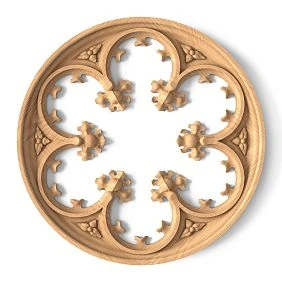
The Gothic motif has a recognizable shape and is not a universal decoration for any furniture. It should be used where arches, elongated panels, and vertical lines support the theme. For selection, you can buy Gothic wooden rosettes after checking the dimensions of the specific model.
Modern collection
A modern rosette can be more concise and less reminiscent of traditional carving. Such decor works well on a smooth facade and in monochrome finishes. Useful to view rosettes from the modern collection.
Modern
Smooth lines, stylized plants, and asymmetrical character require support from door trims, handles, or molding patterns. Can select wooden rosettes in Art Nouveau style.
Classic
Classic ornament is easier to match with furniture frames, pilasters, and cornices. But 'classic' does not mean equally suitable for all facades. You need to assess the scale and density of the pattern. For initial selection, you can choose wooden rosettes in classic style.
How to avoid mixing incompatible styles
Look at the entire piece of furniture, not just one door
A rosette may match an individual facade but conflict with legs, cornices, or handles. The sample should be applied to the assembled item or to a collage of all details.
Repeat one line language
Geometric handle and plant rosette can coexist, but require a clear balance. If each element has its own complex ornament, the facade becomes overloaded.
Do not combine collections only by the same color
White enamel does not make Gothic, Art Nouveau, and Art Deco one system. The form remains noticeable due to shadow. First, the pattern is coordinated, then the finish.
One main motif, the rest are supporting
If the rosette is the center, the molding and handle should be calmer. If the main accent is a carved cornice or a large overlay, a small rosette can only support it.
Use physical samples nearby
Two forms that look good separately sometimes argue when laid out together. The set allows you to place them side by side and immediately exclude an incompatible pair.
OR-032 for furniture facade
A furniture door is one of the most demanding scenarios. The rosette must fit within the free field, not interfere with opening, and maintain symmetry across the entire series. Kitchens, libraries, cabinets, and chests of drawers with repeating facades are checked especially carefully.
Panel center
Place the sample exactly along the axes. Measure the distances to all sides of the central field. If the ornament is directional, mark the top and bottom. On paired doors, the direction should be the same or mirrored according to the design.
Facade with molding frame
The rosette can be in the center, in the corner, or at the intersection of profiles. It is important to check that its back surface fits the plane and the relief does not overlap the molding with a random edge.
Kitchen facades
In the kitchen, the decor repeats many times and is located near the handles. The sample helps to check grip, opening, and visual density. Operating conditions, finish, and care are specified for the specific rosette and furniture.
Library and cabinet
On tall doors, a small element can get lost. Look at the sample not only up close but also from the opposite side of the room. For a large library, sometimes one large rosette per section is better than many small ones.
Chest of drawers and bedside table
On a small facade, a voluminous element can take up too much space. Check the distance to the handle and the edge of the drawer. When pulling out, the decor should not touch the adjacent part.
Serial furniture
For a batch of cabinets or kitchens, a physical sample becomes part of the technical approval. After approval, the article number, size, material, finish, orientation, and quantity per facade are fixed.
Choice for an interior door
The door leaf is higher than the furniture door, so the scale is assessed from a greater distance. The rosette can be located in the center of the panel, in the upper part of the leaf, at the intersection of frames, or as part of a portal.
Central panel
A small shape can get lost. The sample is applied at the required height and viewed from the entrance to the room. For a double-leaf door, check the symmetry of both leaves.
Next to the door handle
The decor should not interfere with hand movement. High relief near a lever handle or pull handle can be uncomfortable. Check the opening trajectory and grip.
Upper part of the leaf
The rosette can complete the vertical composition and connect with the casing. Its size should match the width of the door and the height of the upper panel.
Door portal
Rosettes are used in corners, on the frieze, or near pilasters. It is important to coordinate the ornament with the casing and cornice. A random furniture shape may be too small for the portal.
Repair of an existing door
The sample helps determine whether the new part will cover the old hole, glue residue, or damage. However, a decorative rosette should not be used to mask a structural issue without repairing the base.
Rosettes for wall frames and boiserie
Molding frame corner
The rosette must connect two profiles and match their width. A too-small one will leave a gap, a too-large one will overlap the molding pattern. Before ordering, you can select carved elements for the molding frame.
Molding intersection
In the center of a cross layout, the rosette covers the joint and forms a decorative node. Its shape should have clear axes. A round model is more universal, a square one requires precise alignment.
Tall wall panel
On boiserie, rosettes may repeat along a corridor or hall. A physical sample allows you to assess the rhythm and distance between elements. Make paper copies and place them across the entire wall elevation.
One large panel
A large central rosette creates a medallion and can support a mirror, painting, or furniture. The relief should be checked under side lighting, which will be present in the interior.
Commercial space
In a restaurant, hotel, or salon, the repeat of the decor is viewed from a distance and under artificial lighting. Samples help coordinate the shape before producing the entire series of wall panels.
How to combine a rosette with molding
Compare the profile width and decor size
The rosette should either overlap the joint or be inside the frame. Accidental partial overlap looks imprecise. Measure the visible width of the molding and the flat field around the ornament.
Coordinate the depth
If the molding is tall, a too-flat rosette may get lost. If the profile is thin, a deep shape will protrude as a separate block. It is convenient to examine samples in side view.
Repeat the character of the lines
A plant-based molding is better supported by a leaf or floral rosette. A geometric frame — a faceted or Art Deco shape. This is not an absolute rule, but a safe starting point.
Check the corner cut
The rosette sometimes allows avoiding a complex molding joint in the visible center. But it should not hide an imprecise or weak installation. First, create a stable node, then decorate.
Make a trial assembly on the shield
A small sample of a facade or wall panel shows how molding, rosette, primer, and enamel work. For a serial project, such a sample is cheaper than fixing the entire wall.
How to account for furniture handles and other hardware
A decorative rosette and a handle are often on the same facade. If chosen independently, they may compete in size, overlap the grip, or create two unrelated focal points. A physical sample helps see the actual distance between the details.
Check the hand trajectory
Open the door as it will be used daily. Fingers should not press against the relief. This is especially important for long brackets and handles located close to the central axis.
Compare the scale
A small button next to a large rosette may get lost, and a massive bracket can make the decorative element redundant. The facade should have one main accent and several supporting ones.
Coordinate the shape
A round button often pairs well with a round rosette. A geometric handle can support art deco. But literal repetition is not necessary: the overall character of lines and finish is more important.
Check the color
A contrasting metal handle and a socket painted in the facade color can work together. An oak socket next to brass creates a different character. A trial layout helps evaluate the combination before ordering a batch.
Do not accidentally cover the fastener with decor
The socket should not be mounted over screws or handle holes unless the design allows it. The attachment points of all elements are marked on the facade drawing.
Beech or oak: what can be understood from a sample
The SEO scheme does not confirm which specific materials are included in the current OR-032. Therefore, it cannot be stated that the set necessarily contains beech and oak. If different wood species are present in the composition, they are compared as separate materials, not just as shades.
Beech for opaque finish
Beech is often chosen when the socket is planned to be painted with enamel. After an opaque finish, the wood texture becomes less noticeable, and the relief remains the main feature. For an accurate decision, you need to check the material of the selected full-size model.
Oak for tinting
Oak is valued for its visible texture. On a carved surface, the fibers pass through protrusions and depressions, creating a complex pattern. Tinting enhances the contrast, but a too dark color can hide small details.
Do not transfer a conclusion from one sample to another wood species
If a specific shape in the set is only available in one material, it cannot be guaranteed that the same socket from another wood species will look identical. The texture, color, and reaction to finishing will change.
Paired elements should be viewed together
Natural wood varies in grain. When ordering multiple oak rosettes, it's important to understand in advance what level of variation is acceptable. On paired doors, it's better to distribute elements by shade before installation.
Check material availability in the product card
The set shows the direction but does not confirm all options of the full-size product. After selecting a shape, go to the specific rosette's product card and check the beech, oak, preparation, and dimensions.
Test paint-out: how not to hide fine relief
Finish changes perception more than it seems. White enamel unifies the rosette with the facade, dark tinting emphasizes depth, and a contrasting color turns the element into a separate sign. A test is needed before painting the entire batch.
Check if the sample can be painted
The display element may be intended for demonstration only. Before applying the coating, confirm the material, preparation, and whether the sample can be used for testing.
Apply the system, not just a random single layer
The test paint-out should replicate the future technology: preparation, primer, intermediate steps, and finish. Otherwise, the result will not show the actual color and filling of recesses.
Monitor the coating thickness
Fine lines and shallow grooves may be lost under an excessive layer. Be especially careful when working with multi-layer covering finishes. Good color does not compensate for lost pattern.
Check the sample after complete drying
Wet enamel and a fully dried surface differ in shade and gloss. Make a decision after the technological cycle is complete.
Check in daylight and artificial light
Warm lamps change white, gray, and wood tones. Side lighting emphasizes shadows. The sample should be viewed in the room where the decor will be installed.
Keep the reference
After approval, keep one sample or swatch with a note: article, material, compositions, shade, and date. It becomes a control point for production and acceptance.
To select suitable compositions, you can buy materials for painting and installing wooden rosettesafter checking compatibility with the specific product.
OR-032 for the designer and architect
For the designer, samples help transition from visualization to material approval. The client sees not only a beautiful render but also the actual form that can be applied to the chosen door, facade, or wall molding.
Scale approval
On the plan, the socket is marked with a small symbol. In the interior, it may be too large or too small. The sample allows checking the proportion on site before issuing the final specification.
Style approval
Classic, Gothic, modern, and Art Deco patterns are easier to compare side by side. The client chooses not by the collection name but by the real impression.
Color approval
The physical decor can be placed next to the wall paint, facade, veneer, and metal handle. This reduces the risk of finish mismatches after production.
Decision fixation
After approval, you need to record the article number of the full-size socket, dimensions, material, and finish. One photo of the approved sample is not enough.
Comprehensive layout
For a complex wall or furniture, you can Order decorative socket layout, to link samples with moldings, doors, and repetition across the entire composition.
OR-032 for the furniture workshop
Presentation to the client
The set turns discussion into a tangible selection. The client applies the forms to the facade and quickly understands the difference between a calm and a voluminous relief.
Reducing the risk of serial order
Before launching twenty doors, the workshop checks one approved option. This is cheaper than reworking a finished batch or replacing the decor after painting.
Creating an internal library
Samples can be stored with article cards, materials, and links. The OR-032 composition must be signed according to the current specification, not from memory.
Trial facade
For a large project, one control door is made with molding, rosette, handle, and finish. It shows not only the shape but also the installation technology.
Repeat order
If the client returns after a year, the saved reference helps restore the solution. It is still necessary to check the relevance of the card and the availability of the selected item.
OR-032 for door showroom and showroom
Comparison on a real door leaf
Samples are applied to doors of different sizes and styles. This shows which shape suits a narrow panel and which requires a wide panel.
Display stand
Rosettes can be placed on a labeled panel if their purpose allows. For each item, the article number of the full-size product, style, and link to the card are indicated.
Working with lighting
It is advisable to illuminate the stand from the side and front. The buyer will see how the relief changes, not just a flat image.
Updating information
If the composition of the set or assortment changes, the captions need to be reviewed. You cannot sell according to the old sample without checking the current product card.
Ordering demonstration sets
The showroom can select demonstration sets and form a library not only of sockets, but also of other product samples, if they are presented in the section.
How to agree on decor with the customer
First, limit the choice
Don't display all forms at once. Select a few options by style and size. A large number of samples complicates decision-making and shifts focus away from the actual facade.
Show at the installation site
The outlet should lie on the door, panel, or facade sample, not separately on the table. Place the molding and handle nearby.
Compare under working light
If the interior is already under construction, samples are viewed on site. For the project, use approved fixtures or a similar lighting scenario.
Discuss repetition
The client should see not just one outlet, but a diagram of all facades. Paper copies help visualize the series and avoid excessive decor.
Record the choice in writing
In the specification, indicate not 'floral outlet', but a specific article number, size, material, finish, quantity, and orientation. This protects both parties from different interpretations.
How to move from a sample to a series order
The main task of OR-032 is not just to show beautiful shapes, but to help make a decision before purchasing a batch. After selecting a sample, the technical part begins: searching for a full-size card, checking the material and dimensions, calculating the quantity, approving the finish and the control element.
Record the selected motif
Write down not only the style name, but also the exact article number of the full-size rosette. If the sample does not have clear markings, it must be matched with the current set specification and product card.
Check the dimensions for compliance
You cannot assume that the demonstration part is always equal to the rosette being sold. Compare the width, height, and thickness against the card. If the sample is reduced, a full-size product or an accurate template will be needed for the final fitting.
Choose the material
Shape and material are two separate decisions. A rosette that you liked in beech may be available in oak or only in one version. Check the specific card, do not transfer the composition of OR-032 to the entire catalog.
Coordinate the finish
Specify enamel, tinting, clear finish, or another confirmed system. For a large batch, a control color sample is needed. A verbal description of "light oak" or "milky white" is not enough.
Approve the control rosette
Before starting the series, it is useful to obtain one full-size element from the selected material and perform the final finishing. It becomes the standard for the batch and shows the actual relief.
Calculate the quantity
Count all facades, doors, frames, and wall panels. Indicate how many sockets are required for each item. For double doors, the number must be even unless the project specifies a different pattern.
Add a reasonable reserve
The reserve depends on the project scale, installation, and the possibility of reordering. For twenty or a hundred items, one additional socket may be insufficient, while a large percentage may be excessive. The decision is made based on the project and delivery conditions.
How to calculate the number of sockets
For furniture
Make a list of all doors and drawers. Mark one, two, or several sockets for each item. Do not forget side facades, mezzanines, and decorative panels that may repeat the main motif.
For double doors
Usually, elements are arranged symmetrically. If there is one socket on each leaf, the quantity equals twice the number of door units. For complex layouts, a separate drawing is needed.
For molding frames
A corner pattern may require four elements per frame, a central intersection one. First, determine the construction of all frames, then count the sockets.
For a hallway or boiserie
Sockets repeat by sections. If the width of the panels differs, the same motif may not be used everywhere. The schedule is built for each wall.
For a hotel or restaurant
Count rooms, doors, panels, and public areas separately. It is important to maintain a reserve for maintenance, especially if the decor is painted in a special shade.
Checking the formula on the plan
The total number should match the number of designations on the drawings. Simple multiplication of 'four per room' is dangerous if some rooms have different furniture.
Why it is advisable to order sockets in one batch
Single material
Natural wood varies in texture. In one batch, it is easier to distribute elements by shade and create coordinated pairs.
Uniform surface preparation
If the products undergo sanding and finishing simultaneously, it is easier to achieve uniform relief and gloss. Reordering after project completion will require a new sample.
Uniform project geometry
All facades receive the same shape. If some sockets are replaced with a similar model due to a late reorder, the difference becomes noticeable.
Fewer organizational errors
One order with an article number, quantity, and finish is easier to control than several small ones. However, absolute identity of natural wood cannot be guaranteed — acceptable differences are clarified separately.
Control reserve
A few spare elements from the same batch are useful for repairs. They are stored with labeling and finish information.
How to label and store samples
Article number and name
Each sample must be linked to a specific full-size card. A label like "classic No. 2" is insufficient if staff or the client does not understand which product to order.
Size and material
Indicate the actual parameters of the sample and separately the dimensions of the product socket if they differ. The material is recorded only after confirmation.
Finishing
If a test sample has been made, record the compositions, shade, gloss level, and date. Do not mix a painted sample with an untreated one without explanation.
Storage location
Place relief details so that thin areas do not bear load. Do not throw samples into a common box with metal fittings.
Protection from light and moisture
Wood and finish may change shade under environmental conditions. For a demonstration standard, stable storage and periodic inspection are important.
Update
Before a new project, verify the availability of the full-size article. A beautiful sample should not lead to a position that has changed or requires clarification.
What to buy after choosing a sample
OR-032 opens the route but does not complete it. After comparing the shape, the buyer needs full-size rosettes, a matching collection, molding decor, finishing materials, and, for complex compositions, a design project.
| What to add to the purchase | Why this is needed | For which scenario | What to Check |
|---|---|---|---|
| Buy the OR-032 socket sample set | Compare physical shapes before selecting a series | Design studio, workshop, showroom, large private order | Current composition, materials, and purpose of samples |
| Buy wooden decorative rosettes | Go from sample to full-size products | Furniture, doors, walls, portals | Size, material, relief, and preparation |
| Buy carved rosettes made of oak or beech | Narrow the catalog to carved products | Project with pronounced wooden relief | Availability of specific wood species for the selected model |
| Buy geometric rosette R-055 | Consider pyramidal geometric shape | Art Deco, modern facade, strict furniture | Dimensions and material of specific execution |
| Buy Gothic rosette R-065 | Compare quatrefoil with geometric motifs | Gothic door, portal, vertical panel | Actual dimensions and style compliance |
| select carved elements for the molding frame | Assemble corners, intersections and central nodes | Boiserie, doors, furniture frames | Molding width, relief, and mounting plane |
| Materials for painting and installing wooden rosettes | Prepare a test paint and installation | Furniture, door, wall panel | Compatibility with wood species, substrate, and finish |
| Order decorative socket layout | Check repeat, axes, and combination with moldings | Large furniture or wall composition | Provide exact dimensions and selected samples |
How not to confuse OR-032 with similar products
With electrical outlets
This refers to decorative carving for furniture, doors, and walls. The set is not related to electrical fittings, junction boxes, or switch frames.
With ceiling rosettes for chandelier
OR-032 is designed for getting acquainted with wooden decorative elements. A ceiling rosette around a chandelier usually belongs to a different product group and has a different scale.
With a set of ready-made decor
The presence of several samples does not mean they are intended for installation as a set. The main purpose is demonstration and selection. The possibility of use is clarified separately.
With a catalog of all rosettes
OR-032 should not be considered a physical copy of the full assortment. If the desired shape is not in the set, it does not mean it is not in the catalog.
With a control full-size rosette
After selection from the set, one product item of exact size and material may be needed. It is better suited for final verification of a serial order.
With a finish sample
Wooden shape and color swatch solve different tasks. One sample may show relief, another — finish. Do not transfer color from an unknown material to a future batch.
Practical selection for specific situations
Need to choose decor for twenty kitchen facades
First, OR-032 is used for shape selection, then one chosen option is tested on a control door. Important are the free field, distance to the handle, relief depth, and behavior of the future enamel. After approval, sockets are counted for all facades and the agreed reserve is added.
Need to design double doors
Samples are applied to both doors simultaneously. Height, mirroring, distance to the central gap, and connection with the casing are checked. For a series of identical doors, one layout template is fixed.
Need sockets for the wall corridor
One shape can be repeated dozens of times. Make paper copies of the contour and lay them out on the layout. Use the physical sample to evaluate relief and light, and the copies for rhythm.
Need to approve decor with the client remotely
A photo of the sample next to a ruler is more useful than a catalog image, but still does not replace a personal fitting. If the project is large, it is better to send a set or a control commercial item and document the choice in writing.
Need decor for an existing chest of drawers
Check if there is a flat surface for installation, if the socket interferes with drawers, and if it covers old marks without hitting damaged base. First repair the facade, then mount the decor.
Need to choose between R-055 and R-065
The geometric pyramidal shape and the Gothic quatrefoil solve different stylistic tasks. You can choose a pyramidal rosette or view a wooden quatrefoil, but sizes and materials are checked in the cards.
Need a set for a design studio
OR-032 is useful as a permanent working tool. It needs to be labeled, stored separately from mounting parts, and periodically checked against the current assortment.
Need decor for a hotel
They will approve not only the shape but also the repetition in rooms, corridors, and public areas. The control sample is kept together with the finishing map and a stock of full-size products.
Mistakes when choosing rosettes based on samples
Consider the composition of OR-032 unchanged
The actual configuration must be checked before purchase. You cannot promise the customer specific models based on an old photo of the set.
Assume that the set includes all collections
OR-032 introduces decorative rosettes but does not replace the catalog. After the initial selection, be sure to review the category and filters.
Do not check the size of a full-size product
The sample may be for demonstration purposes. The dimensions of the selected rosette are recorded from the card and drawing.
Choose only based on beauty in hand
The rosette must work on a specific facade. Trying it on without furniture or a door does not solve the main task.
Ignore the side view
Frontally, the relief seems calm. From the side, it becomes clear how much it protrudes and whether it will interfere with the handle.
Mixing too many ornaments
Classic, Gothic, Modern, and Art Deco do not become a unified set just because they are made of wood. Choose one main language.
Conducting a test coating without confirming the material
The result on one sample cannot be transferred to another species. First, clarify the composition, then test the finish.
Using a sample as a finished rosette without verification
A demonstration piece may differ in purpose. For installation, order a full-size product unless otherwise explicitly confirmed.
Not recording the article number
The phrase 'that round rosette' creates a risk of error. The specification needs an exact code, size, material, and reference.
Considering one rosette sufficient for evaluating a series
Relief is evaluated by one piece, repetition by layout. Make paper copies and look at the entire cabinet or wall.
Not considering the finish
Enamel can soften fine carving, tinting can enhance contrast. The final choice is made after testing.
Ordering a batch without a control element
For a large project, one full-size reference reduces the risk of discrepancies and helps accept the finished product.
Who is OR-032 suitable for
- for a designer who coordinates the decor with the client in person;
- for a furniture workshop before launching a series of facades;
- for a manufacturer of kitchens, cabinets, and libraries;
- for a door showroom and portal manufacturer;
- for an architect and specifier of a complex interior;
- for a restorer who needs to compare scale and pattern;
- showroom with a library of wooden decor;
- a customer ordering ten or more identical rosettes;
- a project with molding frames and boiserie;
- a task where it is important to check the relief near the handle and lighting.
When a set may be unnecessary
- one specific rosette is needed, and its dimensions have already been verified on the actual facade;
- the customer has a full-size control element of the required article;
- the current composition of OR-032 does not include the series of interest;
- the project does not require comparison of several shapes;
- the samples are planned to be used as ready-made decor without confirmation;
- the solution is already recorded in the technical specification and agreed upon at the site.
What to check before ordering OR-032
- OR-032 set article number;
- current number of samples;
- list of included models;
- dimensions of each element;
- compliance of samples with full-size sockets;
- material of each part;
- whether beech and oak are represented;
- availability of finished or unfinished options;
- collections and forms included;
- possibility of test painting;
- permissibility of using samples as finished decor;
- packaging and storage;
- relevance of composition at the date of purchase;
- payment and delivery terms;
- route from the selected sample to the full-size product card.
Control card of the selected socket
After fitting, it is useful to create a short solution card. It connects the physical sample with the future purchase and prevents losing important details when transferring the project from the designer to the cabinetmaker, painter, and installer.
Photo at the installation site
The photo should show the entire facade or wall section, not just the socket itself. It is useful to place a ruler nearby and mark the position: center of the panel, corner of the frame, intersection of moldings, or top of the door leaf.
Exact product item number
The sample number within the set does not replace the article number of the full-size socket. The card should include a link to the product page, confirmed dimensions, and selected material. If the match is not yet established, the batch order is postponed.
Orientation and axes
For square, rectangular, and directional plant motifs, mark the top, bottom, and center lines. On paired facades, record mirror or identical placement. This prevents accidental rotation during installation.
Finishing system
Attach an approved color swatch to the card or record the material, primer, finish, shade, and gloss level. The phrase "as per sample" is insufficient if the sample itself may be lost or change color.
Quantity and reserve
Specify the number of sockets per item, total batch volume, and reserve. Separately note where spare elements and the control standard are stored. Such a card is especially useful for hotels, restaurants, multi-room houses, and serial furniture.
Person responsible for approval
The final decision must be confirmed by the customer or an appointed specialist. A photo in correspondence without an article number and dimensions does not replace an approved specification. The larger the batch, the more important a single document is.
How to buy OR-032 on STAVROS
Before ordering, open the product card and buy a sample set of OR-032 sockets only after checking the current configuration. If you need a wider set of demonstration solutions, you can to purchase STAVROS product samples from the available section.
After receiving the set, attach the forms to real facades, doors, and panels. Take photos, measure the free margins, check the side lighting and distance to handles. Then go to the catalog and buy wooden decorative sockets of the selected shape after verifying the size and material.
If the project includes multiple walls, cabinets, or door portals, it is useful to prepare a layout and a control sample. The conditions for receiving the sample set and the main batch can be checked on the page Payment and delivery OR-032.
FAQ: questions about the OR-032 set
What is included in the OR-032 set?
The current list should be checked in the product card or with a STAVROS manager. The exact composition is not confirmed in the available SEO scheme.
How many samples are included in the kit?
There is no confirmed number. It is necessary to verify the current specification before ordering.
Which article numbers are included in OR-032?
The list of article numbers should be obtained from the current product card. It cannot be assumed that the set includes the entire catalog.
What type of wood are the samples made from?
The material of all parts is not specified in the available data. The wood species of each sample should be clarified.
Can I choose between beech and oak?
It depends on the current set configuration and availability of the full-size model. The choice of wood species is checked separately.
Are the samples full-size?
This correspondence is not confirmed for all elements. The sample size must be matched with the product socket card.
Can the samples be used as ready-made decor?
Only with direct confirmation. The main purpose of OR-032 is demonstration and preliminary selection.
How to assess the depth of carving?
View the sample from the side and under side lighting, apply it to the facade and check the protrusion near the handle.
How to choose the socket size for a furniture door?
Measure the free field inside the frame, check the margins to the edges, and lay out on all facades.
How to check the combination with the molding?
Apply the sample to the actual profile, compare the width, height, and line character, then assemble a test node.
Can samples be applied to an interior door?
Yes, this is one of the main ways to assess scale. In this case, you need to protect the surface and not perform installation until the product is selected.
Will OR-032 be suitable for a design studio?
Yes, as a working library of forms for client approval and specification preparation.
Is a furniture workshop set needed?
It is useful before serial production, especially when the customer is choosing between several ornaments.
Can the finish be approved based on samples?
You can assess the direction, but a test paint-out is performed only after confirming the material and the permissibility of painting.
How to order a sample swatch?
You need to select a full-size model, specify the material and finishing system, and then approve the control element.
Is the cost of samples included in the subsequent order?
This condition is not confirmed. It needs to be clarified before purchase.
Can the composition of the set be updated?
The possibility of updating is not confirmed. Current conditions should be checked with the manager.
How to store samples in the showroom?
With labeling, without load on the relief, away from moisture and damaging hardware. Swatches are signed separately.
Where to buy OR-032?
In the card, you can Buy the OR-032 socket sample set.
How to order full-size rosettes after selection?
Find the selected SKU in the category, check the size, material and finish, approve the reference sample and calculate the batch.
Result: first a physical sample, then an informed batch order
OR-032 helps solve a problem that photography cannot: seeing a wooden decorative rosette next to real furniture, door, molding and lighting. The set allows you to compare shape, scale and relief, but does not replace checking the current composition and the full-size product card.
Before purchasing, you need to clarify the number of samples, SKUs, sizes, materials and purpose of the parts. After receiving, do a fitting, lay out repeats, agree on the finish and record the selected model. For a large order, a control full-size element is useful.
STAVROS allows you to start with OR-032, move to the catalog of classic, gothic, modern and geometric rosettes, select molding decor and finishing materials. This route reduces the risk of random selection and helps order a series that truly matches the facades, doors and wall panels of the project.