








































Article Contents:
- Wallpaper Molding in Moscow: Why You Need It and How It Transforms Interiors
- What Types of Wallpaper Molding Can You Buy in Moscow
- Wooden Wallpaper Molding
- MDF Molding for Wallpaper
- Polyurethane Wallpaper Molding
- How to Choose Wallpaper Molding Based on Interior Style
- For classic interiors
- For neoclassical style
- For Modern Interiors
- For an accent wall
- How to Choose Wallpaper Molding Based on Material
- When wood is better
- When is MDF for painting more convenient
- When is polyurethane best
- How to Match Molding to Wallpaper by Size and Shape
- Narrow moldings
- Medium universal profiles
- Wide moldings for frame compositions
- Smooth and relief profiles
- Where to use wallpaper moldings
- In the living room
- In the bedroom
- In the hallway and corridor
- In the TV zone or accent wall
- Which wallpaper and molding compositions are most in demand today
- Frames on a wall with wallpaper
- Combination of wallpaper and painted areas
- Classic wall division with moldings
- Panel compositions for an expensive effect
- What to buy together with wallpaper moldings
- Corner Elements
- Decor for moldings
- Compatible cornices and baseboards
- Matching decorative elements
- Where to buy wallpaper moldings in Moscow
- Availability and delivery
- Selecting a profile for wallpaper and interior
- Material selection based on conditions
- Common mistakes when choosing wallpaper moldings
- Too narrow profile on a large wall
- Too complex relief for a modern interior
- Unsuitable material for the task
- Choosing only by photo without considering the wallpaper
- Lack of corner blocks and decorative elements
- Frequently Asked Questions About Wallpaper Moldings
- Conclusion

Wallpaper and molding is a union that has existed for several centuries. Even during the era of European palace interiors, walls covered with expensive fabric or paper panels were always framed with wooden or plaster profiles. Not for decoration's sake—but for completeness. Because a wall without framing is like a page without margins: formally complete, but visually unfinished.
Today, this principle works exactly the same way. To buy wallpaper moldings in Moscow means to give a wall with wallpaper what it lacks: a clear outline, a decorative frame, architectural rhythm. It is the molding that turns a simple wallpaper canvas into a panel, an accent, an object. And it is precisely for this solution that Moscow buyers are increasingly turning to decorative profile manufacturers.
This article is not theory. It is a concrete choice: which wallpaper moldings to buy in Moscow, for which style and which room, made of what material and in which system. With transitions to the catalog—without lyrical digressions to places where there is no answer to a practical question.




Wallpaper Moldings in Moscow: Why They Are Needed and How They Change the Interior
The question 'why' is the first and most honest one. Why buy molding at all if the wall is already covered with beautiful wallpaper?
The answer lies in the difference between 'beautiful' and 'complete.' Wallpaper is texture, color, pattern. Molding is structure. It does not replace wallpaper or compete with it: it sets boundaries, creates frames, and turns the wall plane into a system. A horizontal molding belt divides the wall into zones. A frame composition made of moldings turns an arbitrary wallpaper fragment into a decorative panel. Molding around the TV zone gives the television an architectural context.
To buy decorative moldings for wallpaper in Moscow means to solve three tasks at once:
-
Aesthetics—molding adds a third dimension to the wall: relief, shadow, depth
-
Structure—molding creates logic in chaos: the space acquires zones, axes, rhythm
-
The finishing class — molding — is a detail that signals the thoughtfulness of the interior
And there is also a purely practical function that is often forgotten: moldings hide wallpaper seams. At horizontal joints between different wallpapers, at the transition from wallpaper to a painted part of the wall — molding covers the seam, making it part of the decor.
Buying wallpaper molding in Moscow with delivery is not a luxury item. It is a furnishing detail that is worth its money precisely because it works for the entire wall and the entire interior at once.




What wallpaper moldings can be bought in Moscow
Three materials — three fundamentally different tools. Each with its own logic of application.
Our factory also produces:


Wooden moldings for wallpaper
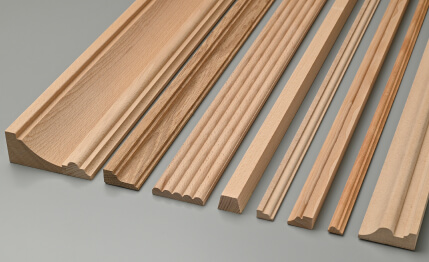
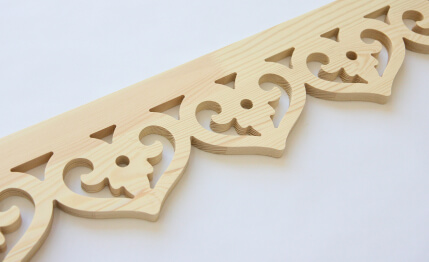
Wood and wallpaper — a classic combination, tested for centuries.Wooden moldings for wallpapermade of oak, beech, pine, or birch create a natural contrast with any wallpaper pattern — be it neutral linen, floral ornament, or geometric print.
Wooden molding has a living texture — and this is its main difference from any other material. Next to wallpaper, wood looks organic: two natural materials — paper and wood — work in the same aesthetic system.
A practically important point: wooden molding is mounted with adhesive and fasteners to the wall—not to the wallpaper. This means the wallpaper should be applied before the molding, and the profile overlaps its edge. The border between the wallpaper and molding is covered by the profile precisely and neatly.
Wooden moldings are a choice for:
-
classical interiors with embossed or textured fabric-like wallpapers
-
neoclassical styles with botanical prints or striped wallpapers
-
"warm" interiors with natural materials
-
country houses with wooden doors and parquet flooring
Get Consultation
MDF moldings for wallpaper
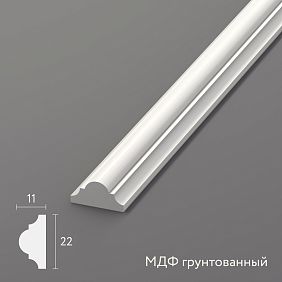
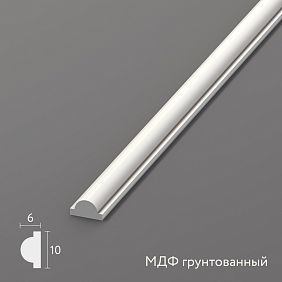
MDF molding is the right tool for those who want molding "in color" or with clear geometry without wood texture.MDF moldingsThey are mounted on the wall, primed, and painted with acrylic paint in any desired color—white, cream, gray, graphite, even dark green.
MDF molding works with wallpaper in several ways:
-
Monochrome — molding in the same paint as the ceiling or slopes: creates a 'built-in' element feel
-
Contrast — white molding on colored wallpaper: a classic technique that never goes out of style
-
Nuance — molding half a tone lighter than the wall background: a delicate, 'luxurious' effect
Buy MDF moldings for paintable wallpaper — this is the choice for apartments with finished interiors, for Scandinavian and modern styles, for projects requiring geometric precision without visible texture
There is one important limitation: MDF does not tolerate regular contact with moisture. In an entryway with outdoor dampness or in a bathroom — not the best solution
Polyurethane moldings for wallpaper
Polyurethane wall moldings— the most flexible material in terms of application. Polyurethane combines moisture resistance, lightness, a rich selection of profiles, and ease of installation — qualities that make it especially popular in Moscow apartments with diverse needs
Why polyurethane moldings work well with wallpaper:
-
Variety of profiles — from thin and smooth to wide classic with multi-step relief
-
Perfect joints — polyurethane cuts precisely at any angle, corner joints — without gaps
-
Coloring — accepts any acrylic color as well as MDF
-
Moisture resistance — calmly withstands hallway humidity and seasonal temperature fluctuations in a country house
-
Easy installation — lightweight, adhesive, minimal tools
Polyurethane wallpaper molding — the right choice for classic interiors with rich decor, for neoclassical living rooms, for country houses.
More about choosing and purchasing polyurethane profile — in the article wallpaper molding: how to choose and buy decorative profile.
How to choose wallpaper moldings by interior type
Interior style — the first and main selection filter. Molding that 'speaks' a different language than the wallpaper and furniture ruins the impression of the entire space.
For a classic interior
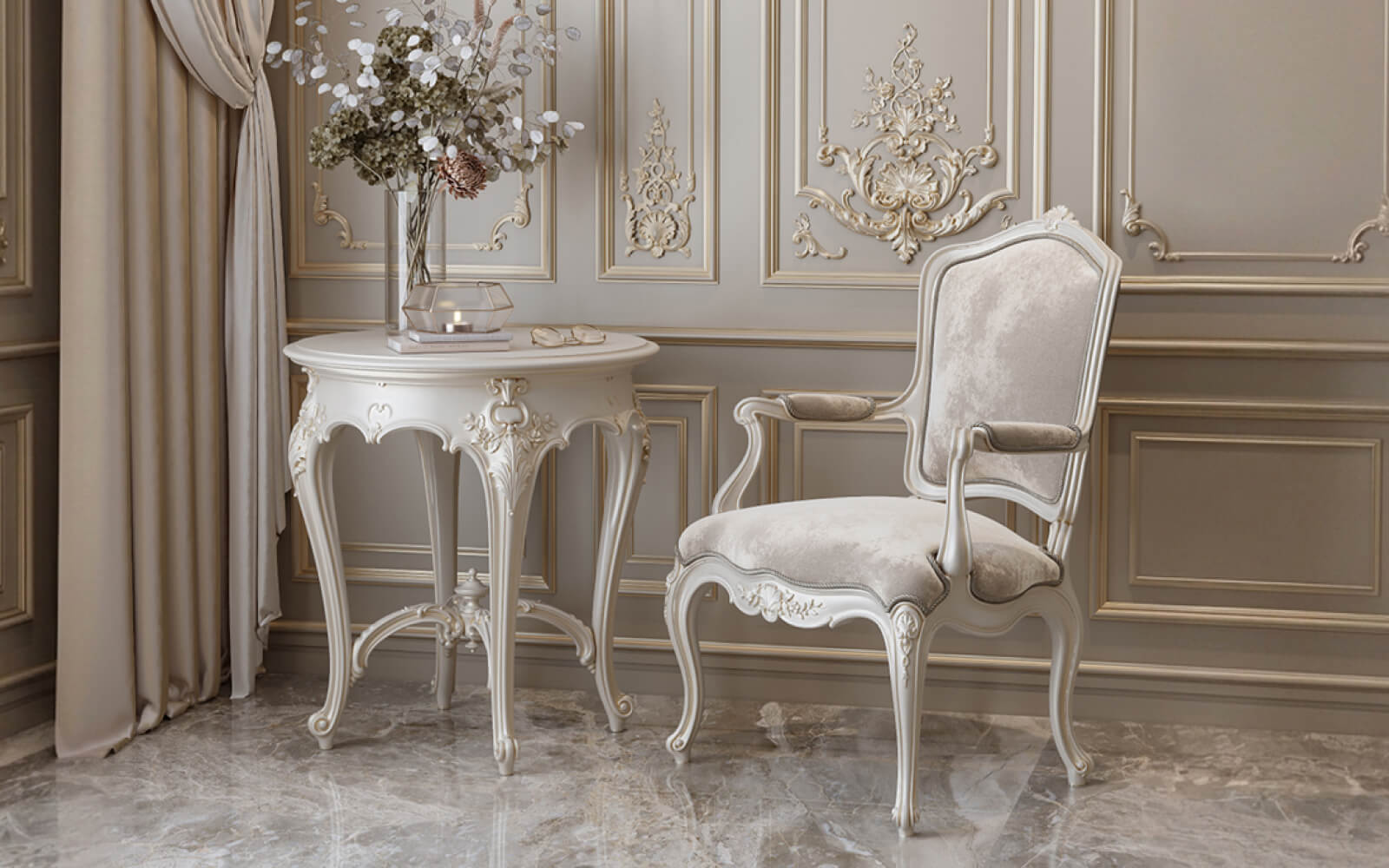
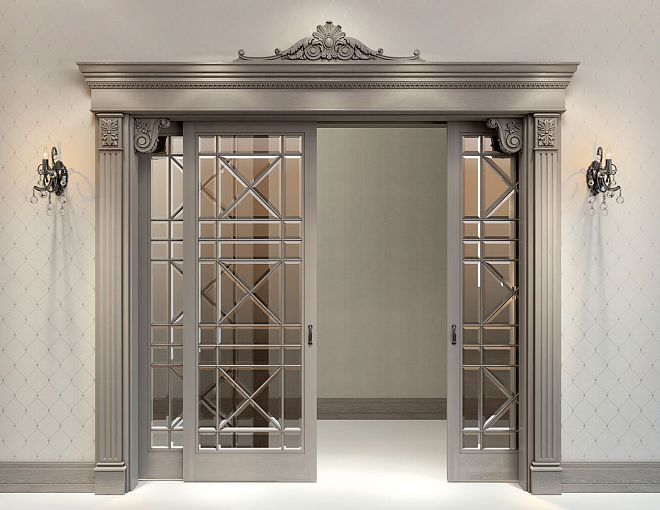
Classic loves complexity and symmetry. Wallpaper moldings in a classic interior — wide, with pronounced relief, with horizontal belts at a height of 1.1–1.2 m. Frame panels made of molding with corner decorative blocks — this is the classic 'boiserie' scheme, which originates from European palace apartments.
Wallpaper for classic: embossed silk-like, with small geometric or floral ornament, plain with texture. Molding for them: wooden with dark tint or polyurethane in white — for maximum contrast.
Moldings and cornices in Moscow— here you'll find profiles for classic frame systems with wooden and MDF profiles.
For neoclassical style
Neoclassicism is about balance. It takes the strictness and architectural quality from classicism, rejecting baroque overload. Moldings for neoclassicism: a clean profile with moderate relief, width 3–6 cm, without curls or ornaments.
Neoclassicism works especially effectively with wallpaper: neutral solid-color wallpaper on the upper part of the wall, a darker or textured lower panel, a horizontal molding belt as a border. This is an eternal technique that requires no explanation: it works at first glance.
For neoclassicism, all three materials are suitable — wood, MDF, polyurethane. The choice depends on the budget and whether to paint the molding or leave it with a natural texture.
For a modern interior
In a modern interior, molding works not as 'decoration,' but as an architectural tool. A thin smooth profile, monochrome, mathematically precise spacing of frames — and no detailing for the sake of detailing.
With wallpaper in a modern interior, molding creates zones: one wall — with patterned wallpaper, the others — solid-color, and they are all united by a thin molding profile that 'holds' the perimeter. MDF moldings for painting are the optimal choice for a modern interior.
About the nuances of applying wall decor in different styles — in the article wall molding for wallpaper: how to choose and buy.
For an accent wall
An accent wall is one of the most popular designer techniques in Moscow apartments. Molding frames on an accent wall with bright or textured wallpaper create a 'gallery' effect: the wallpaper inside the frame is perceived as a work of art in a frame.
To buy wallpaper molding for an accent wall means to create one concentrated accent, rather than distributing decor throughout the entire apartment. One wall in frames — the entire interior gets a semantic center.
How to choose wallpaper molding by material
When wood is better
Wooden wallpaper molding — the right choice when:
-
the interior already has wooden elements (floor, doors, furniture), and a unified natural system is needed
-
the wallpaper is textured — resembling fabric, natural materials, jute — wood and such wallpaper create an organic natural ensemble
-
the molding must preserve texture: tinting while preserving the wood grain pattern — this is only possible with wood
-
the interior is designed for the long term — solid wood lasts 20–30 years without loss of quality
Wooden moldings made of wood are an investment in the atmosphere of the space. They age nobly: they darken slightly, gaining depth.
When MDF for painting is more convenient
MDF wallpaper molding is preferable when:
-
the molding is painted the same color as the ceiling or window casing — perfect uniformity is needed
-
Clear geometry without visible texture is needed
-
Large volume of linear meters — cost matters
-
Modern or Scandinavian interior — wood texture is not needed here
When polyurethane is better
Polyurethane moldings for wallpaper are preferable when:
-
Room with variable humidity — hallway, country house
-
Complex profile needed: roundings, classic cornice forms — in polyurethane they are more affordable than in wood
-
Installation alone — lightness is crucial
-
Unified system needed: moldings, cornices, corner decorative blocks from one series
Decorative elements for framesMade of polyurethane — corner blocks, central overlays, connecting elements — all are compatible with profiles from the same line.
How to choose moldings for wallpaper by size and shape
Molding size is not just 'wide or narrow.' It's a decision that determines whether the profile will work in a specific space or 'fall flat' visually.
Narrow moldings
Profile width up to 3 cm. This is a delicate contour—it creates a frame without drawing attention. Narrow moldings for wallpaper are a tool for modern interiors and neoclassicism, emphasizing clean lines.
They work well in apartments with low ceilings (up to 2.7 m): they don't overload the space, adding structure without heaviness. A narrow MDF molding painted to match the wall color is almost invisible as an object but creates a sense of a 'luxury' interior.
Medium universal profiles
Width 3–6 cm. The most in-demand range. It reads in the space—the profile is visible as a decorative element, doesn't feel oppressive, and suits most styles. For framed panels on a wall with wallpaper, a medium profile provides the necessary expressiveness without overload.
Such molding is good behind the headboard in a bedroom, on an accent wall behind a sofa in a living room, or on a dividing horizontal band in an entryway. It's versatile—in a good sense.
Wide moldings for framed compositions
Width from 6 to 12 cm. A large-scale, status-driven solution. A wide molding for wallpaper is a statement of intent to create an architecturally rich space. Such a profile is appropriate in:
-
spacious living rooms with ceilings from 3 m
-
classic studies
-
country houses with large wall planes
-
neoclassical interiors with rich decor
A wide profile around the wallpaper panel creates the effect of a real frame: the wallpaper inside is perceived as an artistic canvas.
Smooth and relief profiles
This pair of opposites is important precisely in the context of wallpaper — because molding always exists alongside its pattern.
Smooth profile — clean edges without ornament. Next to drawn or patterned wallpaper, smooth molding does not compete with the pattern — it only frames. For wallpaper with a rich print, this is fundamentally important.
Relief profile — with ornament or ribbing. Next to plain or neutral textured wallpaper, relief molding adds visual richness. However, next to a saturated wallpaper pattern, a relief profile can create competition for attention — 'who is more important.'
Practical rule: rich wallpaper — smooth molding, neutral wallpaper — relief molding.
| Wallpaper type | Recommended profile | Example of combination |
|---|---|---|
| Plain textured | Relief or moderately complex | Linen-look wallpaper + beaded profile |
| With botanical print | Smooth thin | Botanical print + clean frame |
| Geometric pattern | Smooth medium | Stripe or chevron + linear molding |
| Fabric-look, brocade | Relief wide | Embossed wallpaper + classic ribbed profile |
Where to use wallpaper moldings
In the living room
Living room — the main space for working with wallpaper moldings. Here are the largest wall surfaces, here you entertain guests, here the interior should make an impression.
Buying molding for wallpaper in the living room most often means a system of framed panels. The classic scheme: the entire wall or part of it is divided into rectangular frames made of molding, with wallpaper inside and a painted surface outside. Or vice versa: wallpaper is the general background, and molding frames are an additional structure on top.
An additional scenario is a horizontal molding belt at windowsill level: it divides the wall into lower and upper zones, which can be decorated with two different wallpapers. This is a very relevant technique for Moscow apartments with small windows.
In the bedroom
In the bedroom with wallpaper, molding works more softly—not as a system, but as an accent. One wall behind the bed: a molding frame around a fragment of wallpaper with a pronounced pattern—and it becomes a panel, not just a wall.
Buying molding for wallpaper in the bedroom means giving the bedroom a visual center without overloading the space. For the bedroom, narrow or medium smooth profiles are optimal: they hold the frame delicately, without competing with the wallpaper pattern.
Wooden molding in the bedroom is especially appropriate next to textured wallpaper that mimics fabric: wood and textiles create a warm, intimate environment.
In the hallway and corridor
The hallway and molding for wallpaper is a story about function and form simultaneously. A horizontal molding belt at a height of 1.1–1.2 m solves several tasks:
-
divides the wall into upper and lower zones with different wallpapers (or wallpaper below + paint above)
-
covers the horizontal joint between two types of finishes
-
protects the lower part of the wall from mechanical damage
-
creates a visual 'horizon' that visually expands the space in a narrow corridor
For the hallway — polyurethane moldings for wallpaper: moisture resistance, lightness, and good impact resistance.
About creating wall panels and frame compositions with moldings — in the articlewall moldings: how to choose and buy wall decor.
In the TV zone or accent wall
TV zone with wallpaper and molding — one of the most popular requests. The scheme is simple: the wall behind the TV is covered with wallpaper with a pronounced pattern or texture, and a molding frame borders this zone along the perimeter. The TV inside the frame is perceived as the central object of a well-thought-out decorative system, not just a 'screen on the wall'.
Buying moldings for wallpaper for an accent wall — it's a matter of one decision that changes the entire room.
Which compositions with wallpaper and moldings are the most in demand today
Frames on the wall with wallpaper
Classics in a new interpretation. The entire wall in wallpaper, with a system of molding frames on top. The frames can be the same size (for a strict rhythm) or of different heights (for a more lively, organic effect). Inside the frames, the wallpaper looks like panels — the frame literally 'exhibits' them in a gallery style.
This is the most popular technique for the wall behind the sofa in the living room and the wall behind the bed in the bedroom.
Combination of wallpaper and painted areas
A horizontal molding belt divides the wall into two zones: wallpaper below + paint above, or paint below + wallpaper above. The molding serves as a clear boundary between the two textures. This solution saves wallpaper (not covering the full wall height) and creates a more complex, 'designer' effect.
Wooden moldings are ideal for this technique: a profile tinted to resemble natural wood looks more luxurious than white painted ones and introduces a third tonal element to the 'wallpaper + paint' pair.
Classic wall division with moldings
Three horizontal belts: a plinth (lower third of the wall, often a dark color or tile), a middle panel (main wallpaper area), and a frieze (upper strip near the ceiling, often lighter). Moldings are placed at the boundaries of these zones.
This scheme originated from medieval European architecture and remains relevant for a simple reason: it works with human proportions, not abstract wall measurements.
Panel compositions for an expensive effect
The lower half of the wall features a panel system of molding frames (boiserie): several rectangular sections placed side by side. The upper half is covered with wallpaper. A molding belt marks the boundary. This is the most 'architectural' option of all: it literally elevates the interior to a different weight class.
For such panels in the catalog of decorative wooden wall profiles, it's important to consider not only the molding itself but alsoDecor for Molding: corner blocks, central overlays that transform the frame into a full-fledged decorative panel.
What to buy together with wallpaper moldings
Molding by itself is a semi-finished product. A complete system is molding plus a set of accessories.
Corner elements
Corner blocks are the most important part of a frame system. They decorate the corners of the frame with an accent—without the need to cut the molding at 45° and align a perfect joint. With corner blocks, installing the frame is much easier, and the result looks like professional work.
For wooden moldings—decor for solid wood moldings: corner and center overlays made of natural wood. For polyurethane—Decor for polyurethane moldings: similar elements compatible with polyurethane profiles.
Decor for moldings
Center overlays on the horizontal run of the molding—a small but very significant decorative element. They visually 'hold' the long horizontal profile: without them, a long straight plank looks monotonous. A rosette or geometric block in the middle—and the molding gains rhythm and detail.
These are the little things that are not noticeable at a glance but create a feeling of a 'luxurious' interior upon closer inspection. It is precisely such details that distinguish professionally designed space from a DIY solution.
Compatible cornices and baseboards
Wallpaper moldingsand cornices from the same collection form a unified system with coordinated proportions. The cornice at the ceiling, the molding on the wall, the baseboard at the floor — all from the same series, made of the same material, with compatible profiles.
Purchasing different elements from different manufacturers results in a 'mismatched' look, which designers call an 'invisible conflict': nothing specifically irritates, but the overall feeling is off. A unified collection eliminates this risk.
Matching decorative elements
Rosettes, brackets, corner blocks with intricate ornamentation, decorative inserts for framed panels — all of these expand the possibilities of the molding system. Decorative elements for frames in a classic interior are the difference between a 'molding frame' and an 'architectural panel'.
Where to buy wallpaper moldings in Moscow
The main practical question. Here, not only the assortment and price are fundamentally important, but also the systematic nature of the offering.
Availability and delivery
When purchasing wallpaper moldings in Moscow, two parameters are critical: the required profile being in stock and delivery without damage — linear products are fragile and prone to breakage during improper transportation.
Buy moldings in Moscowwith city delivery — if in stock, the timeframe is 1–3 business days. Please check the availability of the specific profile before placing your order.
Selecting a profile to match wallpaper and interior
Selecting molding for specific wallpaper is a task that requires an understanding of proportions, color relationships, and stylistic compatibility. Professional consultation for selection is not an unnecessary option, but a real saving of time and money.
What to prepare for the consultation:
-
Photo of the room or a photo of the wallpaper
-
Wall dimensions (width, height)
-
Interior style
-
Presence and shade of wooden elements (doors, floor, furniture)
-
Intended color of the molding
With this data, selecting moldings for wallpaper on the wall is a task for one consultation.
Material selection based on conditions
Before purchasing, be sure to answer the question: in which room is the molding being installed? A dry living room or bedroom — wood and MDF without restrictions. An entryway with outdoor humidity — polyurethane. A country house with seasonal heating — polyurethane.
Moldings for wallpaper with delivery in Moscow from the manufacturer — go to catalog:
Common mistakes when choosing moldings for wallpaper
Experience is the best teacher. But others' mistakes teach cheaper than your own. Here are the five most common ones.
Too narrow a profile on a large wall
A narrow molding 1.5–2 cm wide on a wall 3 m high and 5 m wide — visually disappears. It's there, but it's as if it's not: the frame is too fragile for the scale of the wall. Rule: the larger the wall, the wider the profile. For walls from 4 m in width — at least 4 cm.
Too complex a relief for a modern interior
A polyurethane molding with a Baroque ornament on a wall with geometric wallpaper in mid-century modern style — this is a stylistic disaster. Rich relief is appropriate next to neutral wallpaper and in a historical style. A modern interior requires a smooth or minimally-relief profile.
Unsuitable material for the task
MDF in a hallway with constant humidity fluctuations is a failure that will be discovered after a season: swelling along the bottom edge, loss of geometry. Untreated wooden molding without oil or wax in a room with unstable temperature is a risk of deformation. Polyurethane in an interior where 'living' naturalness is essential is a disappointment upon close inspection.
Choosing only by photo without considering the wallpaper
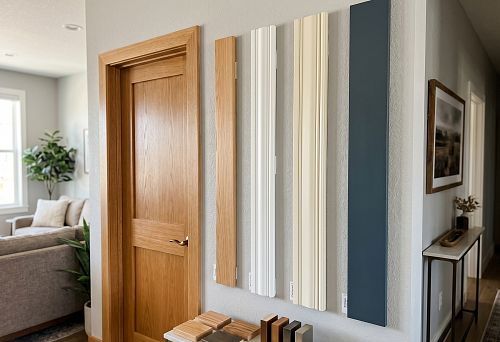
The photo in the catalog is a specific room with specific wallpaper and certain lighting. Your interior is different. The same molding next to your wallpaper may look completely different. Request samples and attach them to wallpaper samples before finalizing the order.
Absence of corner blocks and decorative elements
A molding frame without corner blocks is four planks with 45° joints. Making such a joint precisely is difficult. Making it so that it is unnoticeable is even harder. Buying wall molding for wallpaper and forgetting about corner elements means saving on the detail that determines the quality of the entire result.
Frequently asked questions about wallpaper moldings
Can molding be glued directly onto wallpaper?
Yes — provided that the wallpaper is well adhered to the wall, not peeling, and the surface is sufficiently dense. Polyurethane moldings can be glued onto wallpaper without issues. Wooden and MDF profiles are better installed with additional fasteners through the wallpaper into the wall.
Which molding is best for wallpaper in a living room?
Depends on the style. For classic — wide, embossed, wooden or polyurethane. For neoclassical — medium, smooth, MDF or polyurethane. For modern — narrow, smooth MDF painted to match the frame color.
How to choose molding for patterned wallpaper?
Rule: rich wallpaper pattern — smooth molding to avoid competition. Neutral solid-color wallpaper — molding with relief can become an accent. Always attach samples before ordering.
How to hide the joint between two types of wallpaper?
A horizontal molding belt exactly on the joint line is the best solution. It covers the seam and simultaneously turns it into a design element.
What molding to choose for frames on a wall with wallpaper?
For frame panels — medium profile 3–5 cm, smooth or with moderate relief. Corner decorative blocks at the corners of the frame are essential for a professional result.
How much molding is needed for one frame?
Frame perimeter = sum of all four sides. Add 10–15% for trimming and joints. If using corner blocks — the profile length decreases: it runs only between blocks, not along the entire perimeter.
Wooden moldings for wallpaper — which wood species to choose?
For light interiors — ash, birch, pine. For dark and classic — oak, beech. For 'warm' — pine with tinting. The species affects not only color but also density: oak and beech are heavier, pine is lighter.
MDF Wallpaper Molding – How to Paint Correctly?
Sanding → priming (acrylic primer, 1–2 coats) → finishing acrylic paint (2 coats). Each coat – drying. Final coat – apply with a thin roller or brush with minimal marks.
Where to Buy Wallpaper Molding in Moscow with Delivery?
In the STAVROS catalog – wooden and MDF profiles in stock, polyurethane moldings. Delivery in Moscow if in stock – within 1–3 business days.
Is Wallpaper Molding Only for Classic Styles?
No. Molding is a versatile tool. In modern interiors with neutral wallpaper, a thin, smooth molding works as an architectural drawing. In neoclassical – as a decorative frame. In classic – as part of a rich finishing system.
Conclusion
Wallpaper molding in Moscow is not 'additional decor' on top of finished renovation. It is a system element that gives the wall structure, wallpaper – context, and space – character.
Three materials solve three tasks:
-
Wood – for natural, warm, long-term interiors
-
MDF — for modern geometry under paint
-
Polyurethane – for complex profiles, wet rooms, and quick installation
And one principle that always works: buy molding as part of a system. With corner blocks, with cornices, with skirting boards from a single line. Only then does a wall with wallpaper and molding look like a professional project, not like a set of separate beautiful details.
Order wallpaper moldings in Moscow:
STAVROS is a Russian manufacturer of decorative products made from natural wood, MDF, and polyurethane. The STAVROS catalog includes wallpaper and wall moldings, cornices, skirting boards, decorative elements, and slatted panels — a complete interior decor system for any style and any room.
STAVROS works with private customers, interior designers, construction companies, and developers. Delivery across Moscow, St. Petersburg, and all of Russia. Consultation on selecting moldings for specific wallpapers and specific interiors — free of charge. Material samples — upon request.
Select wallpaper moldings in Moscow with a quality guarantee, a system of compatible profiles, and professional consultation — STAVROS.