










































































Article Contents:
- What is Wall Molding and What Problems Does It Solve
- Decorative Function: A Wall with Character
- Masking Joints and Transitions
- Creating wall panels
- Accent Walls and Zoning
- Ceiling-to-Wall Transitions
- Which Wall Molding to Buy for Your Task
- For Frame Panels: The Main Scenario
- For Accent Walls: Focus of Attention
- For classic interiors: height, scale, detailing
- For modern interiors: geometry without excess
- For small spaces: verticality and optics
- For high walls: scale and three-zone division
- Wooden moldings, MDF, or paintable: what to choose
- Wood: naturalness, durability, character
- MDF: precision, affordability, perfect painting
- Primed profiles: ready for immediate painting
- For enamel: white, gray, interior color
- For natural finishing: oil, wax, tinting
- How to choose a wall molding profile
- Narrow profile: 10–25 mm
- Medium profile: 25–55 mm
- Wide profile: 55–100 mm and more
- Smooth profile: purity of geometry
- Carved profile: history and details
- Geometric profile: art deco and modern classic
- Moldings for wall panels and decorative frames
- Rectangular panels: classic standard
- Large frames: gallery scale
- Accent inserts: contrast and focus
- Wallpapered walls: molding as a frame for the pattern
- Molding decor: when corner and decorative elements are needed
- Corner elements for moldings
- Central Overlays and Rosettes
- Carved decorative elements
- Complete solution for classic walls
- How to combine moldings with walls, furniture, and other interior elements
- Profile repetition in furniture
- Connection with slatted panels
- Connection with baseboard
- Visual rhymes in interior design
- What determines the price of wall moldings
- Material: the basic factor
- Width and volume of material
- Complexity of relief
- Decorative elements
- Order volume
- Standard or custom order
- How to calculate the number of moldings for a wall
- Calculation for one framed panel
- Calculation for one wall
- Calculation for the entire room
- Accounting for decorative elements
- When professional calculation is needed
- Where to buy wall moldings without mistakes
- Which wall and style to choose a profile for
- When to choose wood
- When to choose MDF for painting
- Is decor needed for moldings
- Which catalog pages to view
- About the Company STAVROS
- FAQ: Answers to popular questions about wall moldings
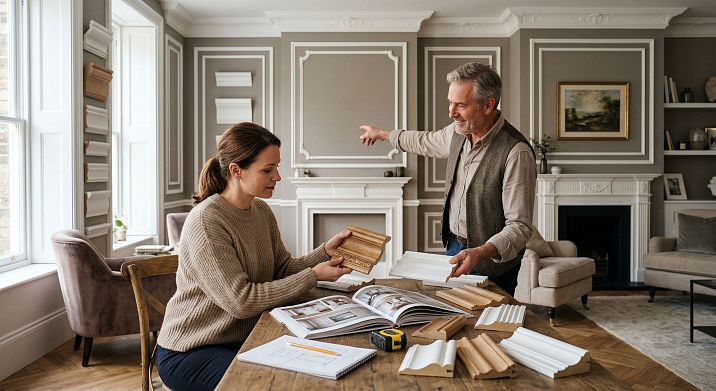
A wall is not a background. It is a surface that either works for the interior or simply exists. And the boundary between these two states often comes down to one simple question: is there at least one line on it that sets the rhythm, structure, scale? This is exactly what wall moldings do — they turn a plane into architecture.
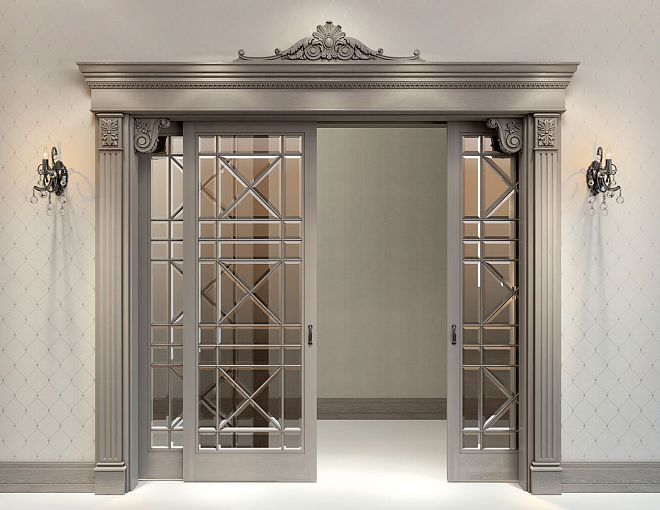
Decorative wall molding is not stucco in the palatial sense, nor is it Soviet-era plaster 'decoration'. It is a profile strip made of wood or MDF that is mounted on the wall and creates what it was missing: depth, a frame, a horizontal line, a vertical line, a transition, a panel. One molding — and a bare wall gains character. A system of moldings — and a room becomes an interior.
If you're looking for where to buy wall moldings, which profile to choose for your style, what's better — wood or MDF, and how to calculate the required quantity — this article will give you clear answers. No fluff, no obvious statements. With specific solutions for specific tasks.


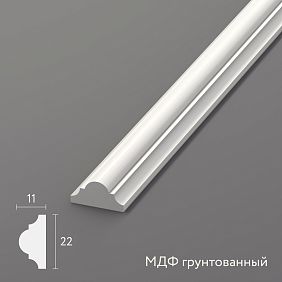


What are wall moldings and what tasks do they solve
In short: wall moldings are linear decorative elements mounted on vertical surfaces. But this definition misses the main point—the reason why people buy them.




Decorative function: a wall with a face
A wall without molding is just a painted surface. A wall with molding frames is already an architectural statement. This is why decorative wall moldings are widely used even in projects with the most modest budgets: the 'material cost / visual effect' ratio here is one of the best in finishing.
Our factory also produces:


Masking joints and transitions
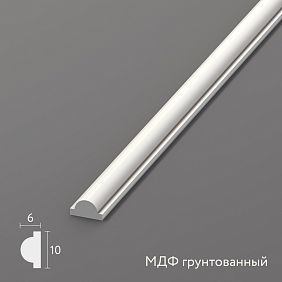
A practical function rarely discussed in design magazines. Joints between different finishing materials, cracks on slopes, transitions between wallpapers with different patterns, lines separating 'bottom—top' on a wall—all of this is neatly and permanently covered by molding.
Get Consultation
Creating wall panels
This is the most popular application scenario for wall moldings. Frames made of molding on a wall, dividing its surface into rectangular 'fields'—this is wall paneling in the classic sense. An interior with such panels is perceived as significantly more expensive and refined.
Moldings for wallsfrom the STAVROS catalog are precisely those profiles used to create such panel compositions in residential and commercial interiors.
Accent walls and zoning
Molding turns one of the walls into an accent wall—without changing the color, without expensive cladding. A framed panel composition on one wall of the living room, painted in a contrasting tone, is a strong design move accessible on a reasonable budget.
Zoning with molding works like this: a horizontal profile at a height of 90–110 cm divides the wall into a 'base' and 'top,' creating visual levels. The lower zone is dense and 'anchoring,' the upper zone is light. This is a classic technique of 'English interior.'
Ceiling-to-wall transitions
A molding in the transition zone between the wall and ceiling is a cornice belt that 'enlarges' the interior. With a ceiling height of 2.7 m, a wide ceiling molding adds a sense of height. With a height of 3 m and above, a multi-level cornice profile creates a true architectural entablature.
Which wall moldings to buy for your task
The question 'which moldings to buy' is not one question, but several sequential ones. Let's break it down by scenarios.
For frame panels: the main scenario
Frame panels made of molding are the most common application. Rectangular panel markings are applied to the wall (standard size: 40–60 cm in width, 60–100 cm in height). Molding is glued along the perimeter of each panel. After the adhesive dries – joint puttying, painting.
Result: a classic wall with panel decor, which you would value at 2,000–5,000 rubles/m² in a good restaurant or hotel. The actual cost is the cost of the molding (100–400 rubles/m) plus labor or self-installation.
For frame panels, the optimal profile is medium, 25–45 mm. The cross-section – with one or two transitions, not excessively ornate: wall frame decor works through rhythm and repetition, not through the complexity of an individual profile.
For an accent wall: focus of attention
An accent wall is one of the four that carries the main decorative message. A richer profile is acceptable for it: wide (40–70 mm), with figured relief or moderate carving. Contrast painting inside the panels accentuates the decorative technique.
For a classic interior: height, scale, detailing
In a classic interior, wall moldings are an essential element of spatial architecture. A horizontal belt at a height of 90–100 cm from the floor divides the wall into a plinth and panels. Vertical moldings—pilasters—further structure the surface. A wide cornice belt at the top completes the composition.
For classic style, choose a profile with historical cross-sections: ogee, scotia, fillet, torus. Material: solid oak or beech with tinting.
For a modern interior: geometry without excess
A modern interior features clear lines, geometry, and a neutral palette. The molding here is smooth or with a single bevel, profile 20–35 mm, painted to match the wall color. It creates structure without drawing attention to itself.
decorative wall moldingsIn a modern interpretation, these are precisely such profiles: neutral, precise, working through the rhythm of frames, not through the complexity of the profile.
For small spaces: verticality and optics
In small rooms, molding is a tool for optical correction. Vertical profiles visually raise the ceiling. Narrow moldings (15–25 mm) with a small step create a vertical rhythm without overloading the wall. Frames of elongated proportions (tall and narrow) enhance the vertical vector.
Use horizontal molding in a small space with caution: it expands the space but can 'lower' the ceiling.
For high walls: scale and three-zone division
A high wall (from 3 m) requires three-zone division: plinth (0–90 cm from the floor), main panel zone (90 cm — 210–230 cm), upper frieze (230 cm — ceiling). Moldings separate and structure these zones. The profile for high walls is medium and wide, proportional to the scale.
Wooden moldings, MDF, or paintable: what to choose
This choice determines budget, aesthetics, and service life. Let's break it down honestly.
Wood: naturalness, durability, character
Wooden wall moldings made of solid oak or beech are a material with history. Oak density is 700–750 kg/m³, structural durability is 50+ years. Wood holds fasteners well, does not deform at proper room humidity, accepts any finish — from transparent oil to opaque enamel.
Oak: pronounced texture, large pores, warm pattern. Ideal for tinting, oil-wax, varnish with texture preservation. Visually 'weighty' — even a narrow oak profile feels substantial.
Beech: fine-pored, uniform, whitish-pink. Ideal for enamel painting — surface is even, without spotting, accepts white, gray, cream, and any other color.
Wooden wall moldings— in the STAVROS catalog, this is the full range of oak and beech profiles: from smooth to carved, from 15 mm to 100+ mm wide.
MDF: precision, affordability, perfect painting
High-density MDF is pressed wood fibers. An isotropic material: identical in all directions, without pronounced texture, without risk of chipping along the grain. Precise milling of the finest relief details — it is thanks to MDF that complex profiles are available at an affordable price.
The main advantage of paintable MDF: a perfectly smooth surface without visible pores or grain. White matte wall + white MDF molding in the same tone = perfectly smooth monochrome decor that currently dominates residential design.
Wall moldings made of MDF— this is a category worth looking at first and foremost for those planning to paint to match a specific interior color.
Primed profiles: ready for immediate painting
A primed profile is MDF or wood with applied primer: the surface is already prepared for final painting. No need to sand and prime yourself. Paint immediately in the desired color — and it's done. Significant time savings during installation.
For wall panels for painting, primed MDF molding is the optimal choice in terms of the 'installation speed / result quality' ratio.
For enamel: white, gray, interior color
Enamel on molding — when the profile is painted to match the wall color (or in contrast). Beech or MDF are best suited for enamel: a uniform surface without pores accepts opaque paint without spotting. Oak for enamel — requires mandatory priming and pore filling.
Wall moldings for painting— a separate category in the STAVROS catalog with profiles ready for self-painting.
For natural finish: oil, wax, tinting
Natural finishes — oil-wax, linseed oil, tinting water-based stain — reveal the wood grain. For such finishes, only solid wood is needed: oak or beech. The result is a warm, living surface that cannot be imitated by any paints.
How to choose a molding profile for a wall
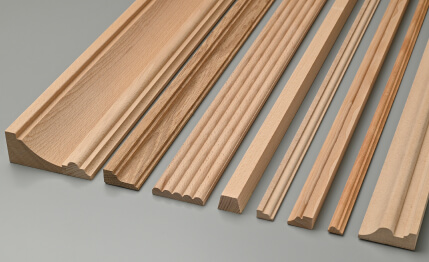
Profile — the cross-section of a molding. It is what determines how the molding looks on the wall: strict or soft, historical or contemporary, noticeable or neutral.
Narrow profile: 10–25 mm
Minimalistic. Works as a delicate line, not drawing attention to itself. Ideal for modern, Scandinavian interiors, for small spaces. A monochrome wall with narrow frame moldings in the same tone is one of the most popular solutions in modern residential design.
Medium profile: 25–55 mm
The most universal range. Works for 80% of tasks. For frame panels on walls of standard heights — optimal. Noticeable enough to create a decorative effect, not so wide as to overload the surface.
A medium profile made of beech, 30 mm, under white enamel on a light gray wall — the basic recipe for modern panel decor, repeated in thousands of interiors worldwide.
Wide profile: 55–100 mm and more
For high walls and classic interiors. The wide molding creates a pronounced architectural scale—a wall with such panels is perceived as wood-clad, not merely decorated.
Smooth profile: purity of geometry
Smooth molding—a rectangular cross-section without relief, with one or two bevels or none. This is the language of modern interiors. Absolutely neutral, it works through repetition and the geometry of frames, not through profile complexity.
Carved profile: history and details
Carved molding with ornamentation is classic academic architecture in miniature. Floral motifs, meanders, pearl borders, acanthus borders. Suitable for classic and neoclassical interiors, with ceiling heights from 2.9 m. With low ceilings, carved molding is excessive—it 'lowers' the space.
Geometric profile: Art Deco and modern classic
Geometric molding—straight edges, angular steps, clear ledges. Without historical ornaments, but with sufficient relief for expressive shadow. The language of Art Deco, modern classic, 'warm minimalism'. Works especially expressively on dark oak surfaces: sharp edges give clear shadows.
Moldings for wall panels and decorative frames
This is the core of the topic. It is for this scenario that wall moldings are most often purchased.
Rectangular panels: the classic standard
The classic scheme for wall panels consists of rectangular frames with proper proportions, evenly spaced across the wall. The frame proportion follows the 'golden ratio' (1:1.618) or something close to it. A 4-meter-long wall with three or four such frames already creates a classic 'English' interior.
Frame size for a standard room with a height of 2.7 m: frame width 50–70 cm, height from 90 to 160 cm. Distance from the floor: 10–15 cm (or more if there is a wooden baseboard below). Distance from the ceiling: 15–25 cm.
Large frames: gallery scale
One or two large frames on an accent wall is a different technique. A frame ranging from 80 cm to the full width of the wall creates a 'gallery' effect: the wall becomes a frame for something significant. Inside the frame: wallpaper, a decorative centerpiece, a mirror, an art object.
Accent inserts: contrast and focus
A molding frame painted in a color different from the wall is one of the strongest design techniques. A dark blue wall with white molding frames is a classic. A white wall with frames in sage green is modern neoclassicism. A gray wall with frames in the same tone is minimalism that speaks through geometry.
Walls with wallpaper: molding as a frame for the pattern
Molding frames on wallpaper is another enduring technique. Molding is applied over the wallpaper, enclosing panels with a pattern. Between the frames: a smooth painted surface. This technique is especially effective with expensive hand-painted wallpaper: the molding frame literally 'frames' a fragment of the pattern like a painting.
For installation over wallpaper, molding adhesive or liquid nails are used—mechanical fasteners are not needed.
Molding decor: when corner and decorative elements are needed
Molding is a linear element. But corners require a special solution. And this is whereDecor for Molding— a separate category of decorative elements.
Corner elements for moldings
A corner element is a decorative overlay that covers the corner of a frame instead of a 45° miter cut. This makes installation much easier (no precise angle needed) and adds an extra decorative accent at the intersection point.
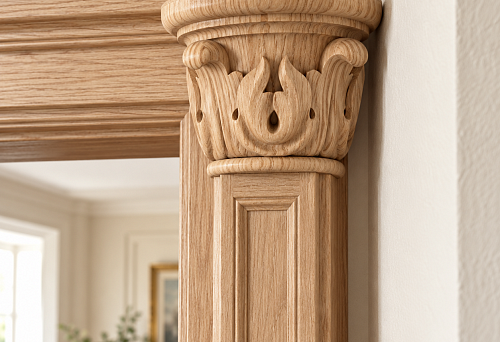
In classic interiorMolding corner pieces— are square or diamond-shaped overlays with ornamentation: rosettes, cartouches, medallions. They not only solve a structural task but also create accents at intersection points — exactly where the eye stops when examining panel decor.
Central Appliqués and Rosettes
A central overlay is a decorative element in the middle of a frame: a medallion, ornamental insert, geometric rosette. It enhances the accent and adds depth to the decor. Used in formal spaces and interiors with high ceilings, where the frame size allows adding a central element without overloading.
Carved decorative elements
Carved decor for moldings — corner and central overlays with 3D milling, hand finishing. A level of detail that was previously only available in historical interiors. Today — in the STAVROS catalog as a standard item.
Complete solution for classic walls
The most correct approach for a classic interior: molding + corner elements + central overlays — from one material, one series. STAVROS offers exactly this principle: all elements of the system are comparable in profile, material, and tinting. This guarantees unity of result.
How to combine moldings with walls, furniture, and other interior elements
Disjointed decor is not an interior; it's a set of random solutions. Molding works best when it's part of a unified system.
Repeating the profile in furniture
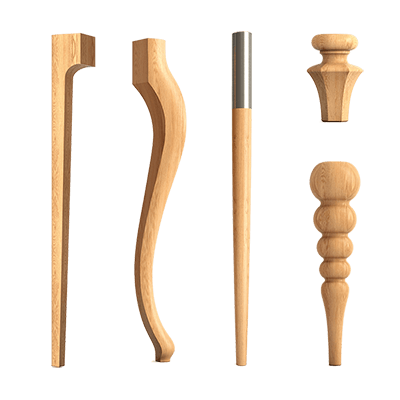
If the molding profile on the wall matches the molding profile on furniture fronts, the interior gains a rare quality: visual continuity. The wall and furniture speak the same language. This is a professional technique that architects use in prestigious interiors—and which is accessible to everyone through a single source of moldings.
Wood moldings and furniture overlays— in this material, STAVROS elaborates in detail on the principle of 'visual rhymes' in interior design.
Connection with slatted panels
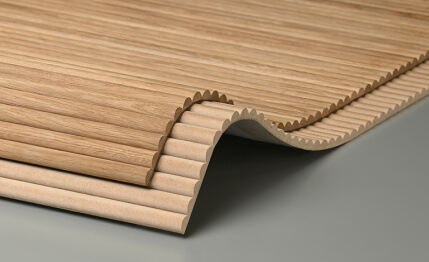
Molding and slatted panels are two different languages, but they can coexist. The lower zone of the wall is finished with slatted panels, the upper zone with molding frames. A horizontal molding at the dividing line 'closes' the transition.
Slatted panels for walls and wood moldings— a topic that STAVROS examines separately: how to combine slatted and molding decor into a unified system without visual conflict.
Connection with the baseboard
A baseboard is the lower horizontal line of a wall. If the molding profile matches the baseboard profile, the lower part of the wall reads as a unified framed zone.Wooden baseboardfrom the same series as the wall moldings — these are the details that transform a wall from 'finished' to 'designed'.
Visual rhymes in the interior
The main principle of a systematic interior: repeat the line at different levels. Baseboard profile → horizontal belt profile → molding frame profile → cornice molding profile — this is a unified architectural narrative from floor to ceiling. Not a chaos of details, but a musical rhythm in space.
What determines the price of wall moldings
Let's break it down honestly — without marketing fog.
Material: the basic factor
Solid oak > solid beech > high-density MDF — in descending order of price. Oak is 15–25% more expensive than beech due to density and processing complexity. MDF is the most affordable, especially for standard smooth profiles.
Width and volume of material
The wider the profile, the more material per linear meter, the higher the price. This is a linear relationship: an 80 mm profile contains 4 times more material than a 20 mm profile.
Complexity of relief
Smooth rectangular profile - minimal processing, minimal price. Figured profile with two levels - several milling operations. Carved ornament - 3D milling plus manual finishing. The price gap between smooth and carved profiles of the same width is from 3 to 8 times.
Decorative elements
Corner overlays, rosettes, central medallions - a separate cost item. Carved decorative elements made of oak are piecework with a corresponding price. But it is they that bring a classic interior to a 'flawless' state.
Order volume
Retail from 1 m - maximum price. Batch of 30–50 m - wholesale terms. For design bureaus and construction companies, STAVROS offers permanent cooperation terms.
Standard or custom
Standard profile from the catalog - always faster and cheaper. Non-standard profile for an author's project - individual calculation with a corresponding print run.
| Profile type | Material | Approximate price |
|---|---|---|
| Smooth 15–25 mm | MDF/beech | from 120–350 rub./m |
| Medium figured 25–45 mm | Oak/beech | from 350–800 rub./m |
| Geometric 40–60 mm | Oak | from 700–1,800 rub./m |
| Carved 50–80 mm | Oak | from 1,800–5,000 rub./m |
| Wide classic 80+ mm | Oak | from 3,500+ RUB/m |
How to calculate the number of moldings for a wall
Calculation for one frame panel
Panel perimeter = (width + height) × 2. Add 20% for waste during miter cutting.
Example: 60×90 cm panel → (60+90)×2 = 300 cm = 3 m + 20% = 3.6 m. Take 4 m for one panel.
Calculation for one wall
Count the number of panels on the wall and multiply by the footage of one panel. Add a total margin of 15%.
Example: wall 4 m, 4 panels 60×90 cm → 4 × 3.6 m = 14.4 m + 15% = 16.56 m → 17 m.
Calculation for the entire room
Distribute panels across all walls, sum up. With serial cutting (all panels identical) the margin decreases to 10%.
Accounting for decorative elements
If using corner overlays — their quantity: 4 pieces per frame. Center overlays — 1 per frame. Account for this separately in the estimate.
When professional calculation is needed
Non-standard room geometry, arched walls, niches, slanted corners — for such conditions, it's better to coordinate the calculation with a STAVROS specialist based on a measurement plan.
Where to buy wall moldings without mistakes
For which wall and style the profile is selected
Before ordering, answer three questions honestly:
-
Ceiling height — determines the scale of the profile and the number of horizontal levels
-
Interior style — determines the character of the profile (smooth, geometric, carved)
-
Planned finish — for painting or natural coating
When to choose wood
Solid wood — for interiors with a claim to durability and naturalness: classic, neoclassical, representative spaces, open wood furniture. Choose oak for tinting and oil-wax, beech — for enamel.
When to choose MDF for painting
MDF — for modern interiors for painting, for budget projects, for monochrome 'wall-to-tone' decor.Trim products made of oak, beech, and MDF— here are all material options for comparison.
Is decor needed for moldings
If the interior is modern — no: clean 45° angles are better. If the interior is classic or neoclassical — corner overlays are mandatory: they complete the system and add the detailing required by classic style.
Which catalog pages to view
-
Wall moldings by product type— full assortment
-
MDF moldings for painting— for painting projects
-
Decor for Molding— corner and central elements
-
Wooden planks— for combining moldings with slatted decor
-
Skirting made of solid wood— for a unified wall decor system from baseboard to cornice
-
Classic Furniture— to understand the STAVROS systematic interior as a whole
About the company STAVROS
STAVROS is a Russian manufacturer of wooden moldings, millwork, wall decor, and solid oak and beech products. Founded in 2002 in St. Petersburg. Over more than twenty years of operation — restoration of the Hermitage, Konstantinovsky Palace, Alexander Palace, and hundreds of residential and commercial interiors across Russia.
STAVROS production standard: chamber drying of wood to 8–12%, four-sided planing on German equipment, 3D milling with a tolerance of ±0.1 mm, manual finishing of complex profiles. Assortment — over 50 series of moldings and millwork: from smooth minimalist profiles to complex carved classic series.
Working with private clients — retail from 1 linear meter. Working with designers, architects, and furniture manufacturers — wholesale and custom projects. Showrooms in Moscow and St. Petersburg. Delivery across Russia and CIS. Phone: 8 (800) 555-46-75 (toll-free call within Russia).
FAQ: Answers to popular questions about wall moldings
Which moldings are better for walls — wood or MDF?
It depends on the task. Wood — for natural finishes, prestigious interiors, durability. MDF — for painting, modern interiors, budget projects. Both materials, when applied correctly, deliver excellent results.
What is better: wood or MDF for painting?
MDF for painting has an advantage: a uniform surface without pores ensures smoother enamel application. Solid beech wood — slightly more complex to prepare (requires primer) but more durable.
Which moldings are suitable for painting?
Any MDF profiles and solid beech profiles. Oak ones are also possible, but require prior pore filling and high-quality priming. The optimal choice for painting is MDF or beech with priming.
How to choose moldings for wall frames?
Medium profile 25–45 mm is the most versatile. For classic interiors — a profile with relief + corner overlays. For modern — a smooth profile matching the wall color. Frame height should be 1.5–2 times the width.
When is decoration needed for moldings?
Corner elements are needed in classic and neoclassical interiors — they simplify installation (no 45° cutting) and add a decorative accent. In modern minimalist interiors — not needed: clean cut corners are preferable.
How many moldings are needed for one wall?
Depends on the size of the frames and their quantity. For a 4×2.7 m wall with four 60×90 cm frames, about 16–18 linear meters of molding with a margin will be required.
Can moldings be installed by oneself?
Yes. Molding is glued to the wall with liquid nails or PVA mounting adhesive, after drying — puttied and painted. For 45° cutting, a miter box or miter saw is needed. For beginners — it is recommended to start with a small section to practice the angle.
How to properly mark a wall for panels with moldings?
Apply horizontal and vertical marking lines for the panels with a pencil using a level. Check the diagonals of each panel — they should be equal. Glue the molding along the markings, press with tape until the adhesive dries.
Technically possible, but not recommended. The molding will adhere to the wallpaper, not the wall. If the wallpaper peels off, the molding will come off with it. Moreover, on textured wallpaper, the molding will not fit tightly, creating gaps. It’s better to install the molding on a prepared painted wall, and then apply wallpaper, or use wallpaper only within decorative panels.
Yes — for dense non-woven wallpapers. For paper ones — not recommended: the adhesive may lift the wallpaper. For wallpapers, use a fixing adhesive or liquid nails with minimal substrate deformation.
How to choose molding based on ceiling height?
Ceiling 2.4–2.7 m: profile 15–35 mm, one horizontal division zone. Ceiling 2.8–3 m: profile 30–55 mm, two zones possible. Ceiling 3 m and above: profile 50–100 mm, three-zone division with a plinth, main panel, and frieze.