Article Contents:
- What is cabinet molding and where is it used
- On cabinet facades
- On doors
- On sliding wardrobe doors
- On side panels
- On the upper decorative zone
- What moldings are suitable for cabinets
- Wooden molding
- Furniture molding: specialized profile
- Smooth profile: universal classic
- Relief profile: architecture in miniature
- Molding for painting
- Molding for a classic wardrobe
- What is better for a wardrobe: molding, overlay decor, or carved elements
- When you specifically need molding
- When overlay decor is better
- When carved decor is needed
- When to opt for a set of molding + overlays + handles
- How to choose molding for a wardrobe by construction type
- For a hinged cabinet
- For a sliding wardrobe
- For a clothes wardrobe
- For a bedroom wardrobe
- For a classic style wardrobe
- How to choose molding for a wardrobe by style
- Classic
- Neoclassicism
- Calm modern decor
- Cabinet with pronounced relief
- Combination of molding with handles
- What elements to buy together with cabinet molding
- Furniture decor
- Overlay furniture decor
- Wooden decor for furniture
- Carved decor for furniture
- Cabinet handles
- Furniture Legs and Supports
- How to decorate a cabinet facade with molding
- Frame on one door
- Symmetry on two doors
- Vertical division of the facade
- Classical panel logic
- Proportion Mistakes
- Where to Buy Cabinet Molding
- How to choose a profile
- How to Choose the Width
- How to Match with Decor
- What to buy as a set
- How to Avoid Compatibility Mistakes
- Mistakes When Choosing Cabinet Molding
- Profile too wide
- Overloaded facade
- Conflict with Handles
- Mixing Different Patterns
- Drifting into Wall Decor Instead of Furniture Decor
- FAQ: Popular Questions About Cabinet Molding
- What is the best molding for a wardrobe?
- Can furniture molding be used on a wardrobe facade?
- What is better for a wardrobe: molding or applied decor?
- How to choose molding for a classic-style cabinet?
- What handles go well with a wardrobe with moldings?
- Can you make a frame on a wardrobe facade from molding yourself?
- How to calculate the amount of molding for a wardrobe?
- Should molding be painted together with the facade?
- What glue to use for mounting molding on a wardrobe?
- Can molding be mounted without cutting at 45°?
- Are molding and overlays from different catalogs compatible?
- How much does it cost to finish a cabinet with molding?
- Is molding suitable for restoring an old cabinet?
- About the Company STAVROS
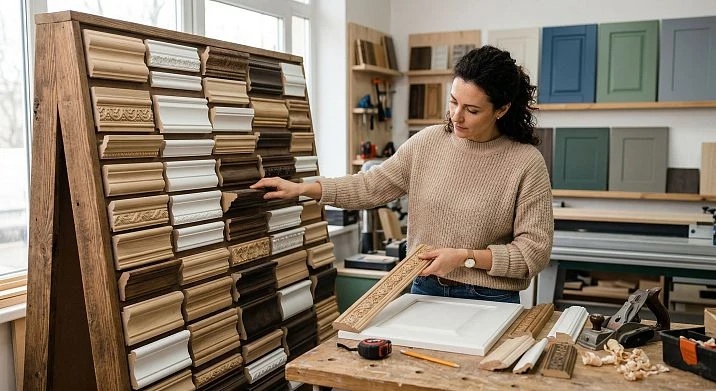
What stands between an ordinary cabinet and one you want to admire? One answer, one element — cabinet molding. This is not a metaphor or designer jargon. It is a specific wooden profile that is glued around the perimeter of the facade, forms a frame structure, and turns a flat MDF panel into something that reads as a classic piece with character and history.
This is exactly the transformation thousands of buyers are looking for when they type 'cabinet facade molding', 'furniture moldings', or 'furniture decor' into a search engine. They are not buying a profile — they are buying the feeling of an expensive, well-thought-out, finished piece of furniture. And they are right to do so: because the decorative result from a well-chosen molding costs many times less than ordering a new cabinet, but makes no less of an impression.
This article is a complete breakdown: how to choosemolding for a cabinet, which profiles are suitable for what, what to buy as a set, and what mistakes to avoid. No fluff, with specifics and respect for your choice.
What is cabinet molding and where is it used
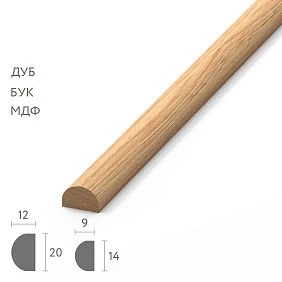
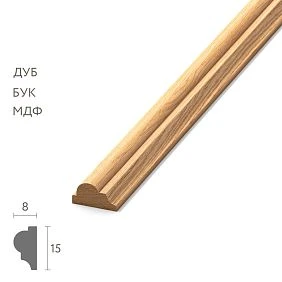
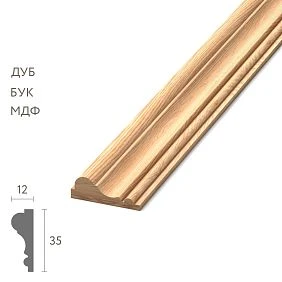
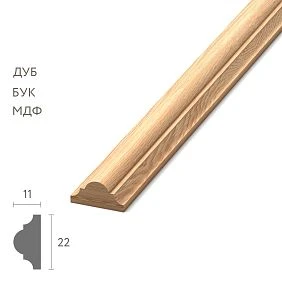
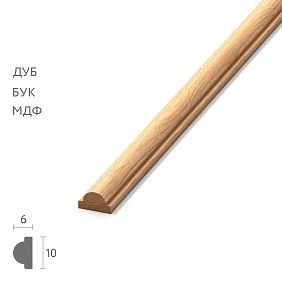
Before choosing, it's worth understanding exactly what we are working with.Cabinet door molding— is a profiled wooden strip with a specific cross-section that is mounted directly onto the surface of the facade. Essentially, it is a tool for creating a frame: four pieces of molding around the perimeter of the facade, combined with corner elements, form a closed rectangular frame—and the facade instantly gains an architectural structure.
This is not a new technique. A framed facade is historically the 'correct' way to make furniture doors. These are the doors we see on old buffets, wardrobes, and libraries made in the classic joinery tradition. Only there, the frame was made by milling solid wood or using mortise and tenon joinery. Today—it's simply molding glued onto a flat facade, and the result is visually indistinguishable.




On cabinet facades
Main application—flat MDF facade. The molding is glued around the perimeter with a 30–50 mm offset from the edge. Corners are cut at 45° or joined with corner overlays. After painting in a single color, the framed structure looks monolithic and expensive.
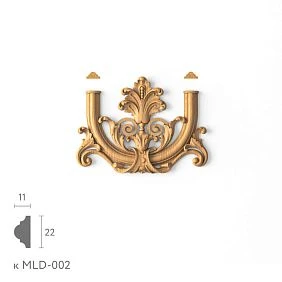
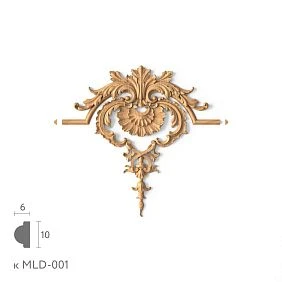
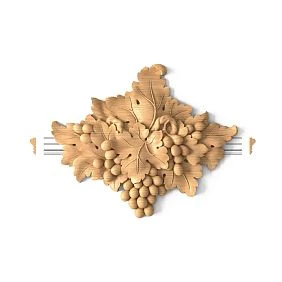
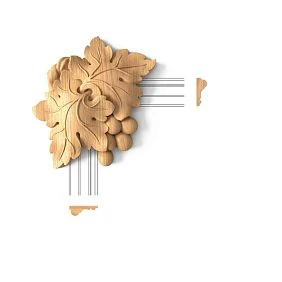
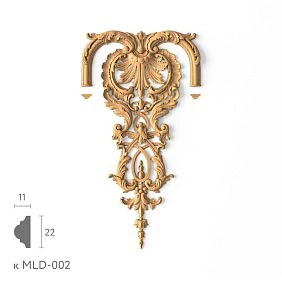
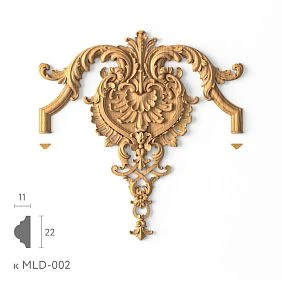
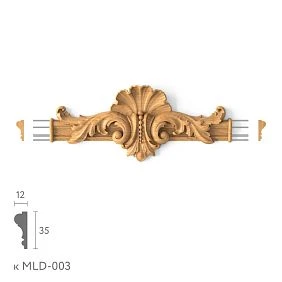
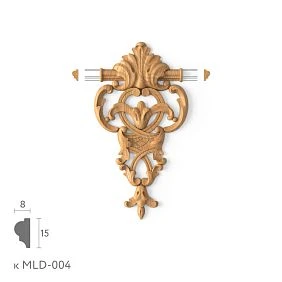
Our factory also produces:
On doors
Swinging cabinet doors are an ideal object for decorating with molding. One frame around the perimeter of the door gives a strict, classic result. A double frame—an outer one around the perimeter and an inner one with an offset—creates the effect of a 'double coffer,' characteristic of formal historical cabinets.
Get Consultation
On sliding wardrobe panels
For sliding wardrobe doors, molding also works—but here the profile is important: it should not protrude beyond the plane of the facade so much as to interfere with the movement of the panel. Therefore, for sliding wardrobes, flatter, lower profiles with minimal overhang are chosen.
On side panels
Visible side panels of the cabinet are another area for molding. Especially relevant for corner cabinets and wall units, where the side surface faces the passage and is clearly visible. Molding on the side panel completes the decorative program and creates a sense of 'circular' design.
On the upper decorative zone
The top horizontal plane of the cabinet, cornice elements, decorative inserts above the cornice — this is the zone where molding works in tandem with the cornice as the finishing touch to the entire decorative system of the cabinet.
Which moldings are suitable for a cabinet
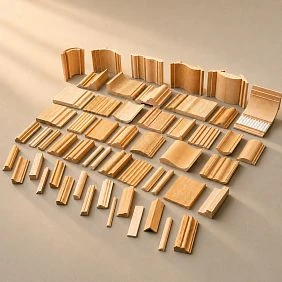
The market offers a wide selection of profiles — from simple rectangular strips to complex multi-step sections with ornamental relief. Let's examine each category in relation to the cabinet.
Wooden molding
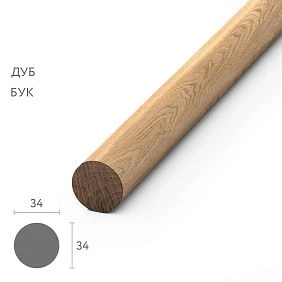
Wooden molding— is the optimal material for a cabinet to be painted. Natural wood (beech, birch, pine, oak) takes paint perfectly: the surface after primer and enamel becomes smooth, matte, 'dry' — exactly the same as a painted MDF facade. As a result, there is no visible material boundary between the facade and the molding — only a relief frame structure.
Additionally, wood has an important tactile advantage: when touching the frame, the density and hardness of the material are felt, which is associated with quality. MDF feels softer — wooden molding 'elevates' the tactile sensation of the facade to another level.
For professional furniture makersfurniture moldings— made of beech is the standard. Beech is dense, with fine pores, almost without texture, paints and sands excellently. That is why most high-quality wooden moldings for painting are made from beech.
Furniture Molding: Specialized Profile
Furniture molding— it's not just 'molding for furniture' in a general sense. It is a profile whose cross-sectional geometry is specifically adapted for furniture use: a flat base (for reliable adhesion to the facade), a working relief on the front side, and an optimal height (usually 8–18 mm — not too tall to avoid protruding excessively beyond the plane of the facade).
The correct profile height is critical for furniture: if the molding is too tall, it 'sticks out' from the surface, appearing glued-on and artificial. If the height is chosen correctly, the profile is perceived as an organic part of the facade, as if it had always been there.
Smooth Profile: Universal Classic
Smooth molding — a rectangular or slightly beveled cross-section without ornamental relief. After painting, it creates a strict, laconic frame. This is the most versatile choice: it is organic in classic, neoclassical, Scandinavian style, French Provence, and modern neutral interiors.
The main advantage of a smooth profile is that it 'doesn't interfere.' It adds structure but does not dictate style. This is precisely why most furniture designers choose it as their basic solution.
Relief Profile: Architecture in Miniature
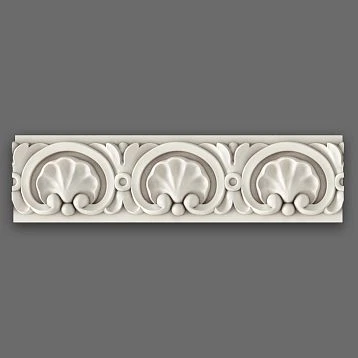
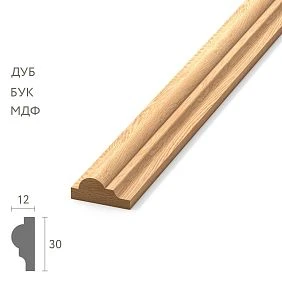
Relief molding has several height variations in its cross-section. This can be a combination of flat platforms, inclined bevels, coves, and toruses — classical architectural moldings that reproduce in miniature the logic of architectural cornices and column bases.
It is the relief that creates chiaroscuro: with side lighting, each variation casts a shadow, and the molding literally 'comes to life' — changing throughout the day along with the changing angle of light. For a classic wardrobe, a relief profile is indispensable: without it, the facade looks 'lifeless,' lacking depth.
Molding for painting
The vast majority of wardrobes in modern interiors are painted: white, gray, cream, dusty blue, sage green, anthracite. For monochromatic painting, the molding must have a smooth, fine-pored surface that accepts primer and enamel without emphasizing the wood grain.
The technology is simple: the wooden molding is sanded, primed, puttied at joints if necessary, sanded again, and painted together with the facade. After drying, the facade and frame form a single plane of two colors—or rather, a single color, because the frame is painted the same way.
Molding for a classic cabinet
Buy molding for a wardrobeFor classic style—means looking for a profile with a pronounced historical cross-section. This is not just a 'beveled strip.' It is a profile that reproduces the logic of ancient architectural moldings: cyma reversa and cyma recta, scotia, ovolo, torus. It is the combinations of these elements in cross-section that create a 'living,' rich profile that changes in light and carries historical depth.
For a classic cabinet, the molding is complemented bydecor for the cabinetin the form of corner rosette overlays, central cartouches, decorative belts. All in one system, one stylistic register.
What is better for a cabinet: molding, applied decor, or carved elements
This is a question that arises for anyone seriously involved in furniture decoration. The honest answer: not 'better,' but 'for different tasks.'
When molding is specifically needed
Molding is a tool for a frame structure. If the task is to create a framed facade, divide the facade plane into a 'field' and a 'frame,' set a rhythm of repetition across all doors—this is a task for molding. No applied decor and no carved elements will solve it.
The key rule: molding comes first. It creates the architecture of the facade. Everything else—is within this architecture.
When overlay decor is better
applied decoration for furniture— these are ornamental elements that are mounted inside the frame structure: corner overlays at the corners of the frame, a central cartouche in the center of the field, decorative inserts along the molding. Overlay decor works as 'decoration of decoration': it complements the molding frame but does not replace it.
Independently, without molding, overlays can also create accents on a flat facade. But without a frame structure, they look like 'glued-on beauty' — without architectural logic, without a system.
When carved decor is needed
Carved furniture decor— these are elements with three-dimensional relief ornamentation: acanthus leaves, rocaille, cartouches with ornamentation, floral motifs. This is the highest level of decor, requiring a clear stylistic context: Baroque, Rococo, Classicism, Empire. In a modern neutral interior, carved decor will look alien.
The correct scheme: molding creates a frame → corner carved overlays are mounted at the corners of the frame → a carved cartouche is placed in the center. This is the complete classical program for facade design.
When to make a set of molding + overlays + handles
For a classic and neoclassical cabinet, the best result is always given by a set:
-
molding — the frame structure of the facade;
-
corner overlays — decorating the corners of the frame;
-
central element — an accent in the center of the field;
-
Furniture Handles— the final touch, the first element that catches the eye.
Buying everything from one catalog ensures stylistic unity. This is how professional furniture makers assemble a decorative wardrobe system: not 'one by one,' but as a set in a single stylistic solution.
How to choose molding for a wardrobe by construction type
Different wardrobe constructions dictate different requirements for molding.
For a hinged wardrobe
Swing doors are the simplest and most advantageous object for molding. A standard 600 × 2000 mm door allows the use of molding 35–55 mm wide with a 35–45 mm offset from the edge. On such a door, the frame looks proportional—it occupies about 15–20% of the facade area, which is the optimal 'frame to field' ratio.
For double-door wardrobes, symmetry is important: the left and right doors must have mirror-identical frames. A difference in offsets of even 2–3 mm is immediately visible when the doors are open and ruins the sense of quality.
For a sliding-door wardrobe
Sliding doors require molding with minimal overhang above the facade surface—no more than 8–10 mm. This is due to the guide rail construction and the risk of catching when the panels move. The profile is chosen smooth or with a very delicate relief.
Also for a sliding-door wardrobe, the length of the molding is important: tall doors 2.2–2.4 m require long straight sections without lengthwise joints—this ensures visual cleanliness of the long vertical frame strips.
For a wardrobe
A wardrobe is classic furniture with tall doors and, as a rule, a more elaborate decorative program. Here, a double frame (outer + inner) and additional division of the facade with a horizontal molding strip at 1/3 from the bottom are appropriate—this is the classic 'paneled' logic: the upper field is more elongated, the lower one is squatter.
For a bedroom wardrobe
The bedroom is a space with a special emotional register: delicacy is needed here, not formality. For the bedroom, choose medium-width molding (25–40 mm) with a smooth or minimally relief profile. Color — matching the facade or with minimal tonal contrast. Overlays — delicate, without lush ornamentation.
For a wardrobe in a classic style
Classic Furniturerequires molding with a historical cross-section, corner overlays with classic ornamentation, a cornice with a corresponding profile. Molding width — from 40 mm. The decor system should be built according to a single logic: molding, overlays, handles, legs — all from the same stylistic register.
How to choose molding for a wardrobe by style
Classic
Classic Furnitureis a system of proportions, symmetry, and historical ornamentation. For a classic wardrobe:
-
molding with a relief profile: ogee, scotia, torus;
-
width 40–60 mm;
-
corner overlays with floral or geometric ornamentation;
-
wooden handles of classic shape;
-
color: white, cream, ivory, soft gray-green.
Learn more about the principles of classical style and the rules for its reproduction — incomplete guide to classic furniturewith all the details and historical examples.
Neoclassicism
Modern neoclassicism is a more restrained version of classicism without historical solemnity. For a neoclassical wardrobe:
-
smooth medium-width molding (30–45 mm);
-
minimalist corner overlays with a geometric motif;
-
clean neutral colors: white, gray, mint;
-
Furniture Handlesmodern classic shape — a bracket or button.
Calm modern decor
For a minimalist interior with historical notes: narrow smooth molding (15–25 mm), no overlays, monochrome painting in the color of the facade. The frame is discernible only due to shadow — a maximally delicate, airy result.
Wardrobe with pronounced relief
For interiors with a rich decorative program: wide relief molding (50–70 mm), ornamental corner overlays, a central cartouche. This is a bold solution for those confident in their stylistic concept. Requires symmetry and proportional thinking.
Combining molding with handles
The handle is the first element of the facade that the hand touches. And the first one the eye stops on. The handle should 'speak' the same language as the molding.
| Molding type | Recommended handle |
|---|---|
| Smooth minimalist | Square-section bracket, plain button |
| Smooth classic shape | Bracket handle with rounded shape, classic button |
| Relief with a cove | Handle with a bevel or ornamental element |
| Wide with ornament | Wooden handle with carved decor |
Wooden wardrobe handlesin the catalog — this is exactly the category that provides the finishing touch to the decorative system of the cabinet.
What elements to buy together with cabinet molding
Molding doesn't work in isolation — it's part of a system. What needs to be purchased as a set.
Furniture decor
decor for furniturein the form of corner overlays — the first thing that goes together with molding. Corner elements are mounted in the corners of the frame and create decorative accentuation in the most 'critical' points of the facade. Without corner overlays, the frame looks complete only when cut at 45°. With overlays — the frame looks complete always, regardless of the corner joining technique.
Overlay decor for furniture
applied decoration for furniture— this is not only corner elements, but also central accents. A central overlay in the middle of the top rail of the frame or in the center of the field creates an additional ornamental level. It is what turns a 'simple frame' into a 'classic facade' with full decorative logic.
Wooden decor for furniture
to buy, which will allow you to transform your furniture using carved wooden elements. You can use the C-003-3 decor set to decorate furniture, walls, doors, or any other surface. The C-003-3 decor set is made of oak or beech, known for their strength, durability, and beauty. You can buy the C-003-3 decor set at the Stavros decor store, which specializes in producing and selling decorative elements and hardware for furniture and interiors. At the Stavros decor store, you will find a wide selection of decor sets of various shapes, sizes, and styles. You can choosemade of solid wood — cartouches, rosettes, floral overlays — these are top-level decorative elements. Made of natural wood, with clear relief, for painting or tinting. After uniform painting, the wooden decor is indistinguishable in material from the molding — creating a monolithic decorative system.
Carved decor for furniture
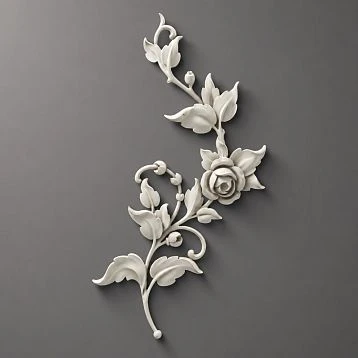
Carved furniture decor— overlays with hand-cut or machine-cut carving. Leaves, scrolls, rocaille, geometric patterns. For a classic or baroque cabinet, this is an essential element. The overlay size should correspond to the scale of the molding and the size of the door panel.
Cabinet handles
Furniture Handles— complete the decorative program. There is one rule: the handle must belong to the same stylistic register as the molding. A carved handle for a relief classic molding. A simple bracket for a smooth minimalist profile.
buy wooden handles— from the same catalog as the molding is the correct strategy: you get stylistic compatibility without additional searching.
Furniture legs and supports
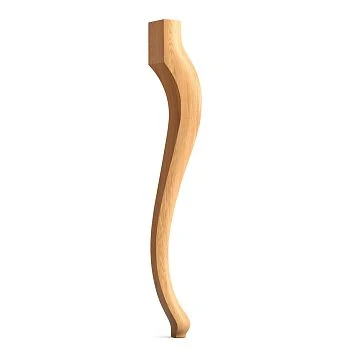
If we are talking about a cabinet on legs —furniture legs— become part of the decorative system. For a classic cabinet — turned legs with profile decoration. For a modern one — laconic conical or square ones.Furniture Supports— from the catalog allow you to 'lift' the cabinet and add lightness to its silhouette — without this, a classic cabinet seems heavy and 'nailed to the floor'.
How to decorate a cabinet door with molding
Practical step-by-step instructions.
Frame on one door leaf
Basic scenario: one frame around the perimeter of one door.
-
Measure the facade, determine the offset from the edge (recommended: 35–45 mm).
-
Mark the frame line around the perimeter.
-
Cut four pieces of molding. Corners at 45° or with corner overlays.
-
Apply woodworking PVA or mounting adhesive to the base of the molding.
-
Glue each piece, press for 10–15 minutes.
-
Fill the joints with putty, sand.
-
Prime and paint together with the facade.
Working time: 2–3 hours, including glue drying.
Symmetry on two doors
With two doors, the frame offsets must be identical on both doors. The horizontal line of the bottom and top rails is especially critical: they must align when the doors are closed. Use a single template marking for both doors.
Vertical facade division
For tall doors (from 1800 mm), the classic scheme is an additional horizontal molding strip at approximately 1/3 from the bottom. This divides the facade into 'upper' and 'lower' fields with different proportions — a more elongated upper and a squat lower, which precisely corresponds to the historical 'paneled' logic.
Classical paneled logic
In classical furniture, the facade is divided into several fields (panels): lower, middle, upper. Each field is framed with molding. On a tall wardrobe, this creates a monumental decorative program — the door becomes an independent architectural element. Read more about these techniques in the article onfurniture decoration techniques.
Proportion mistakes
The most common mistake is too large an indentation from the edge: the frame ends up too small relative to the facade field. Rule: indentation = approximately molding width × 1.5–2. With 40 mm molding, indentation is 55–70 mm. This creates the correct 'frame — field' proportion.
Where to buy molding for a wardrobe
How to choose a profile
Before placing an order, determine:
-
Wardrobe style: classic, neoclassical, neutral modern;
-
Facade size: this determines the width of the molding;
-
Finish: for painting — beech or birch; for tinting — oak;
-
Are there corner overlays: if yes — ensure compatibility in width.
How to choose the width
| Front height | Recommended molding width |
|---|---|
| Up to 400 mm (drawer) | 15–20 mm |
| 400–800 mm | 25–35 mm |
| 800–1500 mm | 35–50 mm |
| 1500–2400 mm | 45–60 mm |
How to combine with decor
to buy, which will allow you to transform your furniture using carved wooden elements. You can use the C-003-3 decor set to decorate furniture, walls, doors, or any other surface. The C-003-3 decor set is made of oak or beech, known for their strength, durability, and beauty. You can buy the C-003-3 decor set at the Stavros decor store, which specializes in producing and selling decorative elements and hardware for furniture and interiors. At the Stavros decor store, you will find a wide selection of decor sets of various shapes, sizes, and styles. You can chooseshould be from the same series or, at minimum, the same stylistic register as the molding. Smooth molding — geometric overlays. Relief molding — floral overlays. No mixing of decorative languages.
What to buy as a set
Buy molding for cabinetAdd 15–20% extra to the calculated quantity. Corner overlays — 4 pieces per frame. Central decorative element — 1 per frame (if needed). Handles — one per door, strictly the same type throughout the entire cabinet.
How to avoid compatibility mistakes
The width of corner overlays must exactly match the width of the molding. If they don't match, the overlay either 'sags' relative to the profile or overlaps it. Both options create a sense of carelessness. Buy from the same catalog — it's the only guarantee of compatibility.
Mistakes when choosing molding for a cabinet
Experience in furniture decoration includes a collection of others' mistakes. Let's break down the main ones.
Too wide profile
A 70 mm molding on a small door 400 mm wide is a visual disaster. The frame takes up half the facade, the field disappears, and the proportion is ruined. Rule: the width of the molding should not exceed 1/8–1/10 of the facade width.
Overloaded front
Molding + corner overlays + central cartouche + side inserts + ornamental band on one small facade — that's not decor, it's chaos. Decor works through accent, not quantity. One molding + one pair of corner overlays is already enough. A central element is added only where the scale of the facade allows.
Conflict with handles
A large, voluminous handle over a wide, relief molding — competition between two accents. Both lose. Rule: on a saturated, relief facade, the handle should be delicate. On a minimalist facade, the handle can be more expressive.
Mixing different ornaments
Acanthus leaf molding + meander corner appliqués + central cartouche with Baroque rocaille — three different decorative languages on one facade. The result is visual chaos. Choose one ornamental motif and stick to it throughout the system.
Shifting to wall decor instead of furniture decor
For a cabinet, you cannot use wall moldings, ceiling cornices, or floor skirting boards — their cross-section geometry, height, and profile angle are designed for different applications. On a furniture facade, they look alien.Buy molding for cabinet facademust be specifically from the furniture section — a profile developed specially for furniture application.
FAQ: Popular questions about cabinet molding
What molding is best for a cabinet?
The best molding for a cabinet is one that matches the interior style, facade size, and planned finish. For most cabinets to be painted, the optimal choice iswooden moldingbeech: dense, with fine pores, takes paint excellently, creates a neat, durable frame.
Can furniture molding be used on a cabinet facade?
Yes, that's exactly how it's used.furniture moldingIt is specifically designed for mounting on furniture fronts: it has the correct height, a flat base for reliable adhesion, and a cross-sectional geometry adapted to furniture proportions.
What's better for a wardrobe: molding or applied decor?
They are not competitors, but a system. Molding creates the frame structure of the front.applied decoration for furnitureIt decorates this structure. The correct answer: molding + overlays. Molding without overlays is architecturally strict. Overlays without molding are ornamental, but without a system.
How to choose molding for a wardrobe in a classic style?
Forclassic furnitureChoose a profile with a historical cross-section — ogee, scotia, torus. Width — from 40 mm. Complement with corner overlays with floral ornament and wooden handles of a classic shape. All from one catalog, one stylistic register.
What handles go with a wardrobe with moldings?
For a wardrobe with smooth molding — a minimalist bracket or knob. For a wardrobe with relief classic molding —Wooden handleswith an ornamental element or a classic shape with a bevel. The main rule: the handle and the molding are one stylistic language.
Can you make a frame on a cabinet facade from molding yourself?
Yes. This is one of the most accessible operations for DIY furniture updating. You need: molding, corner overlays or a miter saw, woodworking PVA or mounting adhesive, wood filler, primer, and paint. The entire process takes one day.
How to calculate the amount of molding for a cabinet?
Sum up the perimeter of all frames you plan to assemble. Add 20% for trimming and joints. For example, for a cabinet with two doors 600 × 2000 mm, with one frame on each door: the perimeter of one frame (with a 40 mm offset) = 2 × (520 + 1920) = 4880 mm ≈ 5 m. For two doors: 10 m + 20% reserve = 12 linear meters.
Should the molding be painted together with the facade?
Yes, this is the correct technology for a monochrome result. The molding is primed and painted together with the facade in one color. After drying, the molding 'merges' with the facade in color, remaining visible only as a relief frame structure. This is the classic professional result.
What glue to use for mounting molding on a cabinet?
Woodworking PVA — for wooden molding on a wooden or MDF facade. Mounting acrylic adhesive — for faster installation with immediate fixation. Do not use solvent-based adhesives: they can damage the surface of the MDF facade.
Can molding be mounted without cutting at 45°?
Yes, if you use decorative corner overlays. They cover the joint of the straight-cut ends of the molding and simultaneously decorate the corners of the frame. This is a professional method that does not require a miter saw.
Are moldings and overlays from different catalogs compatible?
Only if the width matches exactly. The overlay must cover the end of the molding precisely along its width—neither wider nor narrower. When purchased from the same catalog, this is guaranteed. When purchased from different sources, careful size verification is required.
How much does it cost to decorate a cabinet with molding?
The cost depends on the number of doors, profile width, the need for overlays and handles. Compared to ordering a new cabinet or replacing facades, it is significantly cheaper with a comparable visual result. Decorating with molding is one of the most economically advantageous investments in furniture interiors.
Is molding suitable for restoring an old cabinet?
Yes, and it's one of the best applications. If you have a cabinet with worn but sturdy carcass—replacing handles + installing molding + repainting yields a result indistinguishable from a new piece of furniture. This is called upcycling: a rational, eco-friendly, economically smart approach.
About the company STAVROS
Buy molding for a wardrobe, decor for furniture, Furniture Handlesand everything necessary for creating a complete decorative facade system—all this is in the assortment of the company STAVROS.
STAVROS is a manufacturer and supplier of wooden moldings, overlays, handles, legs, and decorative elements made of solid wood for furniture and interiors. The catalog includes profiles of different widths and profiles, corner and center overlays, carved decor, wooden handles in classic and modern shapes, furniture legs and supports. The entire assortment is developed as a system: elements from the same series are guaranteed to be compatible in style and size.
STAVROS works with private buyers, designers, furniture manufacturers, and construction companies. Orders from one unit. Professional consultation on selection and material calculation. Contact us to confirm shipping to your destination.
When the task is not just to buy a profile, but to create a complete decorative result on a cabinet that will bring joy for many years—choose STAVROS: where behind every product lies an understanding of furniture architecture and respect for quality standards.