Article Contents:
- Why people look for custom stucco
- When custom stucco is really needed
- When it's better to buy ready-made stucco from a catalog
- Polyurethane moldings: the basis of a custom composition
- How to choose a molding for your interior
- Decorative stucco: how to add uniqueness without custom production
- Decorative overlays in the interior: where and how to use them
- Stucco decor: the accent that makes a ready-made composition unique
- Stucco decor and painting: how ready-made becomes authorial
- Ceiling stucco: when the ceiling must support the interior style
- Ceiling rosette: a small element with a big effect
- Table: custom stucco or catalog — how to make a decision
- Purchase formulas: how to assemble an interior from ready-made elements
- Formula 1. Individual wall without ordering from scratch
- Formula 2. Ceiling for a project
- Formula 3. Authorial accent
- Mistakes in selection: what prevents achieving the desired result
- Mistake 1. Looking for 'custom' when the task is solved by the catalog
- Mistake 2. Buying only one element
- Mistake 3. Not considering the scale of the room
- Mistake 4. Not connecting walls and ceiling
- Mistake 5. Not thinking through the color
- Additional elements: what else helps create a complete composition
- Practical installation questions: what you need to know before buying
- How to Calculate Material Quantity
- FAQ: answers to the most common questions
- What is better: custom molding or ready-made molding from a catalog?
- Can you create a custom interior from ready-made molding?
- What to buy if you want molding 'as per the project'?
- When is it more profitable to buy polyurethane molding from an online store?
- What to buy together with ready-made stucco molding?
- Why Is Polyurethane Moldings Better Than Gypsum?
- Can polyurethane stucco molding be painted?
- How to choose a molding for ceiling height?
- Is special glue needed for installing stucco molding?
- Why it works: the main idea of the article
- STAVROS: polyurethane stucco decor for interior and facade
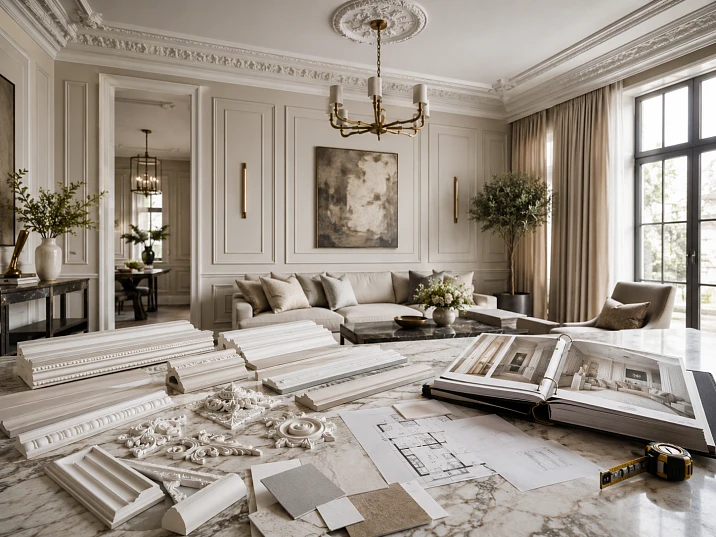
There is a question that everyone who wants a non-trivial interior asks themselves: is it worth ordering molding from scratch or is it enough to choose ready-made elements from the catalog? The answer most often surprises: for most tasks, the catalog is enough — if you know how to use it. An individual, non-template, "as per project" interior can be assembled from ready-made polyurethane elements by correctly combining moldings, decorative overlays, ceiling decor, and stucco accents. This is what the entire article is about: about when you need custom stucco molding, and when it is more profitable, faster, and no less expressive Buy molding from the ready-made assortment.
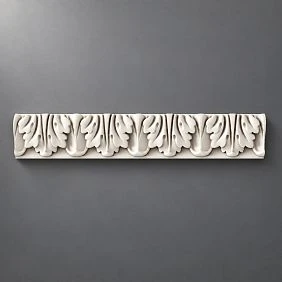
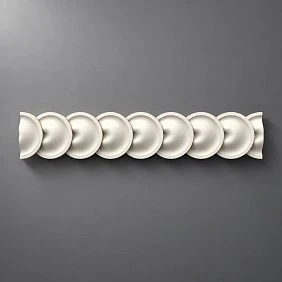
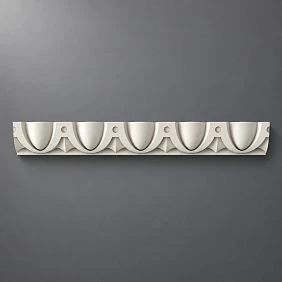
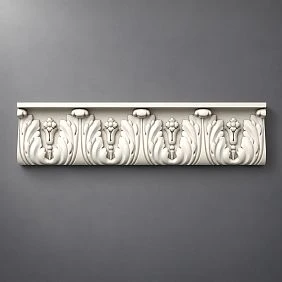
Why people search for custom stucco molding
When someone types "custom stucco molding" into a search engine, they rarely mean the literal creation of a unique mold. Behind this query, there is almost always a different need — I don't want what everyone else has. I don't want a standard baseboard, a typical rosette, a repeating pattern from the neighbor's renovation. I want an interior that has architecture, character, meaning.
This desire is completely understandable and justified. The problem is that people often confuse two concepts: custom manufacturing and a custom result. The first is a production process. The second is how the final space looks. And these two concepts do not always align.
You can Buy molding from a catalog and create an interior where no one will guess it's "standard" — because the combination of elements, their placement, scale, paint, and overall logic will be unique. Conversely, you can order stucco from scratch, get an expensive cast, but place it in such a way that the result is more boring than a ready-made solution.
Individuality is not born in production. It is born in the mind — in how a person thinks about their space, how they work with proportions, rhythm, and detail. Buy moldings can be done correctly or incorrectly — and that's exactly what this conversation is about.
But before moving on to the catalog — let's honestly figure out when ordering from scratch is truly justified.




When custom stucco molding is really needed
There are situations where the catalog doesn't help. Not because it's bad — but because the task objectively goes beyond the standard. Let's call them out directly.
Restoration of historical decor. If you are restoring a room with preserved fragments of old stucco — cornice, medallion, frieze — precise replication is required. Profile, ornament, radius, depth of relief. Here custom polyurethane stucco is not a whim, but a necessity. No ready-made element will provide an exact match with the historical fragment.
Non-standard radius or geometry. If the wall or ceiling has a non-standard curve, if the architecture of the object requires curved profiles with specific parameters — custom production is unavoidable. Ready-made Moldings made of polyurethane are designed for straight sections or standard angles.
Custom ornament based on a sketch. If the designer has a specific pattern that is not mass-produced anywhere — a stucco motif developed specifically for the project — then a custom mold is needed. This is rare, but it happens in work with high-budget projects.
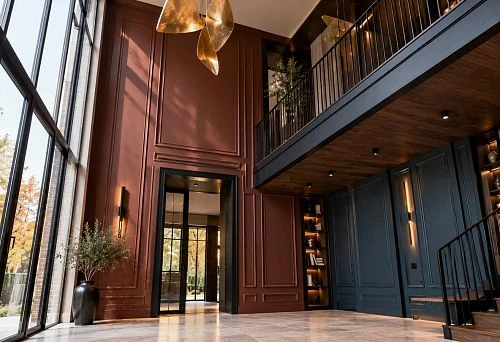
Large formal compositions. When it comes to a lobby, grand staircase, banquet hall with specified architectural parameters — the scale and complexity may require a custom solution. Although even here, a combination of ready-made elements with a minimal number of custom ones is often used.
Objects with special architectural requirements. Architectural monuments, historical buildings, objects under supervision — there, regulations dictate reproduction accuracy that is unattainable through a catalog.
In all other cases — and this is 80–90% of real requests — the task is solved through the catalog. Custom decorative stucco is needed much less often than people think. And that's good news: it means saving time, money, and nerves.
Our factory also produces:
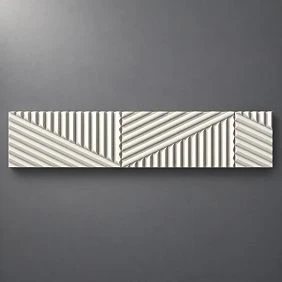
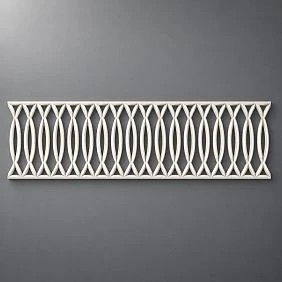
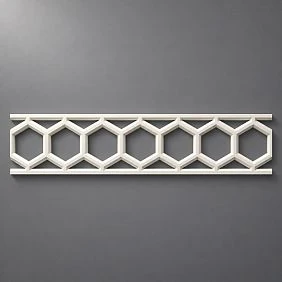
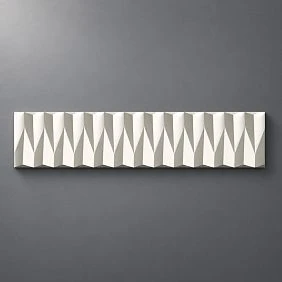
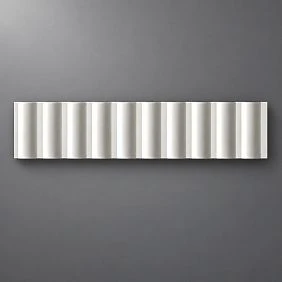
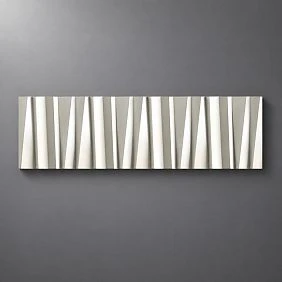
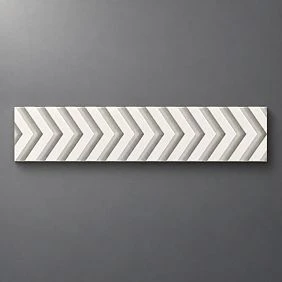
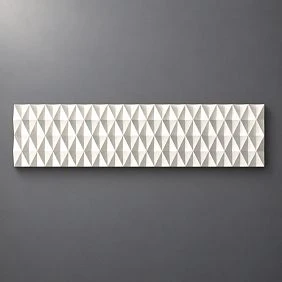
When it's better to buy ready-made stucco molding from a catalog
Here is a list of situations where the catalog wins in all parameters — speed, cost, quality, and flexibility:
-
Need to decorate a wall with molding frames
-
Need to make a ceiling center with a rosette and contour
-
Need a decorative accent near a mirror, headboard, console
-
Need to decorate a furniture facade with overlays
-
Need to assemble a portal — for a fireplace, niche, door
-
Need a frame for a painting, panel, or just an architectural rectangle on the wall
-
Need to connect walls and ceiling with a common stylistic solution
-
You need to select elements for subsequent painting to match the wall color
In each of these cases Buy molding from the ready-made assortment means getting the desired result faster, with a clear price and without waiting for the production cycle. buy molding in an online store it can be delivered to any city, with exact dimensions in the catalog and the ability to immediately calculate the number of elements for a specific wall or ceiling.
Important point: ready-made Polyurethane moldings is not an 'economy' option or a compromise. It is a material with high relief detail, resistance to moisture and deformation, easy installation, and good adhesion for any paint. Polyurethane holds its shape for decades, does not crack with temperature changes, and is not afraid of humidity — unlike gypsum.
You can buy ready-made stucco matching the Baroque style. Calculate the quantity: linear meters of cornices and moldings, number of rosettes, pilasters, consoles, corner elements. Add a ten to fifteen percent allowance for trimming. means choosing a material whose quality meets the requirements of a serious design project, but is available without a custom order.
Get Consultation
Polyurethane moldings: the basis of an individual composition
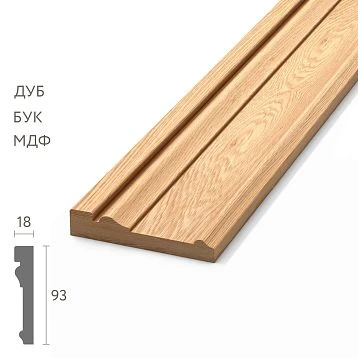
If you choose one element from which any 'project-style' interior begins, it will be Moldings made of polyurethane. They set the architectural framework of the space: lines, frames, zone boundaries, surface rhythm.
A molding is a strip with a profile. It sounds simple. But it is the molding that turns an ordinary wall into a wall with character. Vertical moldings divide the surface into panels — and the wall ceases to be flat, it gains depth. Horizontal moldings create belts — and the wall begins to read as an architectural element, not just a painted rectangle. Frames made of moldings on the wall are a classic technique that works in any style: from modern neoclassicism to art deco and even minimalism with a soft profile.
What can be assembled from moldings:
-
Wall frames — single or composite
-
Ceiling contour around the room perimeter
-
Framing a mirror or painting
-
Decorative panels on furniture or doors
-
Vertical accents between windows
-
Frame for a decorative accent or stucco medallion
-
Molding portal at a fireplace or niche
Catalog of polyurethane moldings covers a wide range of formats: from a thin profile 10–20 mm wide for modern interiors to a wide baguette profile 60–80 mm and above for classic spaces. This allows you to choose a molding exactly to the scale of the room and style — without overpaying for non-standard.
buy polyurethane moldings means getting a ready-made element that is cut to the required size, glued with liquid nails or special glue, painted in any color, and holds its shape without shrinkage or deformation.
Important detail: moldings themselves create a sense of "made to order." A guest who enters a room with a properly structured molding grid sees architecture — and thinks it was made to a custom design. Even though all elements were purchased from a catalog.
How to choose molding for your interior
Choosing molding starts with the scale of the room. In tall, spacious rooms — wide profiles with pronounced relief. In small spaces — thin, laconic lines. In modern interiors — flat or minimally profiled moldings. In classic interiors — with broken profiles, S-shaped or arched cross-sections.
The second criterion is placement. Wall moldings differ from ceiling cornices in profile shape and corner joining method. For corners, the catalog has special corner elements that allow you to avoid cutting at 45 degrees — this is convenient for DIY installation.
The third criterion is combination with other elements. Buy polyurethane moldings must be done considering that there will be decorative overlays, stucco decor, and ceiling rosettes nearby. All elements should work in one proportional system.
Decorative stucco: how to add uniqueness without custom production
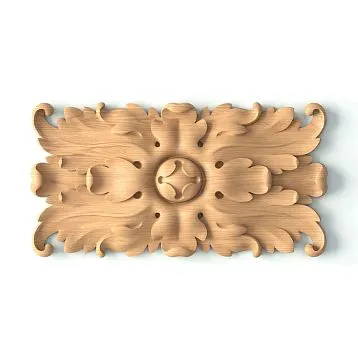
If moldings are architecture, then Decorative stucco is character. Overlays, medallions, ornamental inserts, corner elements, rosettes, mascaron — these are details that turn geometry into an image.
The same set of molding frames will look fundamentally different depending on what you place in their corners and centers. Place a strict square block in the corner of the frame — you get Art Deco. Place a floral rosette — you get classic. Place a laconic diamond — you get modern neoclassicism. It is in this detail that individuality is born, which cannot be copied, even knowing that all elements are from a catalog.
What is included in the decorative stucco section:
-
Corner elements for molding frames
-
Decorative wall overlays — paired and single
-
Central accents for wall or ceiling frames
-
Ornamental inserts into the molding contour
-
Mascarons and high reliefs
-
Furniture decor — overlays for facades, drawers, doors
-
Elements for portals — side columns, keystones, brackets
buy decorative moldings — means getting a ready-made element with high relief detail, which simply glues into place, is painted together with the wall, and complements the overall composition. No special equipment, no complex technology. Glue, level, precise size — and the part falls into place.
It is important to understand: buy decorative moldings from the catalog — does not mean getting "like everyone else." The catalog offers dozens of ornaments and motifs: floral, geometric, classic, neutral. The right choice of motif for a specific style and the right placement create a unique composition that no other interior repeats — even if the elements are mass-produced.
Decorative overlays in the interior: where and how to use
On the wall, decorative overlays serve several roles. The first is in combination with a molding frame: the element is placed in the corner or center of the frame and forms its "signature." The second is as an independent accent: a single overlay above the headboard of the bed, above the mirror, above the console, or near the side wall. The third is in a series: a row of identical overlays at equal distances creates a rhythmic frieze that works as an architectural belt.
On furniture, decorative overlays refresh old facades and give cabinets, dressers, kitchen doors, and panels a new look. It is enough to glue several overlays in a symmetrical arrangement, and the furniture reads as stylish furniture, not just a painted box.
Stucco decor: an accent that makes the finished composition authorial
Relief Decoration — this is the top level of configuration. If moldings set the architecture, and decorative overlays added detailing, then stucco decor puts the finishing touch. It is the element that turns a good interior into a memorable one.
Stucco decor can act as the semantic center of the entire wall or ceiling composition. A medallion in the center of a ceiling square. A high relief above the fireplace portal. An ornamental overlay at the key point of the molding grid. Symmetrical stucco accents on both sides of the mirror. A decorative element in a niche — single or paired with side moldings.
Buy Moldings from the catalog means getting a product that is manufactured by precision casting into a mold, retains all the subtleties of the relief, and has stable dimensions. This is important when creating symmetrical compositions: identical elements give identical results.
Buy Molded Decoration can be in the format of a separate element or as part of a set — depending on what is needed: a single accent or a full composition.
Stucco decor and painting: how the finished becomes authorial
One of the most powerful tools for individualizing finished stucco is painting. When a stucco element is painted not separately, but as part of the wall — in the same color or with a slight tonal accent — it turns into an architectural detail, not just a "glued-on ornament."
Compare two approaches: the first is white stucco on a painted wall, contrasting and prominent. The second is stucco painted in the same tone as the wall, with a barely noticeable accent in a darker shade along the relief. The second option looks more expensive, restrained, and exactly as if it was intended by the architect.
Buy decorative molding — and painting it correctly is already 80% of the result. The remaining 20% is placement and proportions.
Ceiling stucco: when the ceiling should support the interior style
Walls can be flawless: correct frames, precise moldings, well-placed accents. But if the ceiling is empty, the interior doesn't feel complete. The ceiling is the fifth wall, always visible.
Ceiling molding solves several tasks at once. It connects walls and ceiling into a single decorative system. It marks the center of the room or the area above the dining table, sofa group, or bed. It creates visual depth where a flat surface brings boredom.
What is included in ceiling decor:
-
Ceiling rosette — the central element for a chandelier or instead of it
-
Ceiling moldings — for the perimeter or inner frame
-
Decorative elements for a ceiling square or rectangle
-
Corner elements for molding joints
-
Frieze — a horizontal strip at the junction of the wall and ceiling
Buy ceiling molding — means getting an element specifically designed for a horizontal surface, taking into account loads, viewing angle, and installation features. Ceiling elements are produced with a flatter profile and reinforced base for reliable adhesive mounting.
Buy ceiling stucco molding it goes together with moldings for the perimeter and a central rosette — then the ceiling will be perceived as a unified system, not as a set of separate parts.
Ceiling rosette: a small element with a big effect
A rosette above the chandelier is a classic that works even in a modern interior. The round element with ornament creates a visual center of the ceiling and gives completeness to the area under the chandelier. Depending on the size and complexity of the ornament, the rosette can be a subtle accent or a full-fledged decorative statement.
In a modern minimalist interior, flat rosettes with geometric patterns work well. In neoclassical interiors, rosettes with floral ornament and pronounced relief. In Art Deco, symmetrical geometric rosettes with a radial structure.
A rosette does not have to be used with a chandelier. Installed without a light fixture, in a properly painted interior, it works as an independent decorative medallion — and reads as an architectural detail.
Table: custom stucco or from a catalog — how to make a decision
| Task | Better custom | Better from catalog |
|---|---|---|
| Repeat a historical fragment | Yes | No |
| Decorate a wall with molding frames | Rare | Yes |
| Make a ceiling center with a rosette | Rare | Yes |
| Assemble decor near a mirror or headboard | Rare | Yes |
| Create a unique custom ornament | Yes | sometimes |
| Decorate a furniture facade with overlays | Rare | Yes |
| Make a portal for a fireplace or niche | sometimes | Yes |
| Select decor for renovation with painting | Rare | Yes |
| Non-standard radius or geometry | Yes | No |
| Standard apartment, house, office | No | Yes |
The table provides a clear picture: the vast majority of household and commercial tasks are solved through the catalog. custom polyurethane stucco is justified only in specific situations — restoration, non-standard geometry, custom ornament.
Purchase formulas: how to assemble an interior from ready-made elements
Practice shows: most people don't need instructions on 'what is stucco,' but specific sets — what to buy to get a specific result. Here are three working formulas.
Formula 1. Individual wall without ordering from scratch
This is the most popular scenario. There is a wall — you need to make it interesting, architectural, 'as per the project.'
What to buy:
-
Moldings made of polyurethane — for frames. The profile width depends on the room height: the higher the room, the wider the molding
-
decorative molding — corner elements for frames and central accents
-
Relief Decoration — one or two central accents at key points
-
Mounting adhesive
-
Paint in the color of the wall or with a slight tonal accent
How it works: moldings form rectangles on the wall, corner elements go into the corners, and decorative accents go into the centers of large panels. The wall gains rhythm and depth. When painted, everything merges into a single surface.
buy polyurethane moldings for such a wall, it can be done with precise calculation to size: the length of each molding and the number of corner elements are calculated based on the perimeter of the frames.
Formula 2. Ceiling by design
Task: to create a ceiling that supports the style and looks well-thought-out.
What to buy:
-
ceiling molding — a rosette in the center of the ceiling
-
Ceiling moldings for the perimeter or inner square
-
Corner elements for joints
-
Paint in the color of the ceiling
How it works: moldings run along the perimeter at the wall-ceiling junction — this is a ceiling cornice that visually 'raises' the height. Inside the perimeter, you can add a second square of smaller-section moldings. In the center — a rosette. Painted in the color of the ceiling — and the ceiling reads as an architectural surface.
Buy ceiling stucco molding it comes with a 10–15% margin for trimming — this is standard practice when working with moldings.
Formula 3. Author's accent
Task: add one bright detail to the interior that makes the entire space interesting.
What to buy:
-
Relief Decoration — central element: medallion, mascaron, high relief
-
A frame of moldings — to border the accent
-
Decorative overlays — side or corner
-
Adhesive
How it works: one key point is chosen — above the bed, above the sofa, above the console, in the depth of a niche. A small composition is created there: a molding frame + a central stucco accent. It works like a "painting," like the semantic center of the zone.
Buy Molded Decoration for such an accent means choosing one expressive element and placing it in the right spot. This is exactly how the best interiors work: they are not overloaded with details, but they have a point you look at first.
Mistakes when choosing: what prevents getting the desired result
Mistakes when working with stucco molding repeat from project to project. Knowing them in advance can help avoid disappointments and unnecessary costs.
Error 1. Looking for "custom-made" when the task can be solved with a catalog
This is the most common mistake. A person wants a non-standard result and decides that non-standard production is needed for this. In reality, it's enough to correctly select and combine ready-made elements.
If you need a frame on the wall, it's a molding. If you need a ceiling centerpiece, it's a rosette. If you need an accent above the mirror, it's a decorative overlay. All of this is in the catalog. Buy moldings from the ready-made assortment means not overpaying for custom manufacturing where it is not necessary.
Error 2. Buying only one element
Individuality is not born from a single detail. One ceiling rosette without a molding contour looks detached. One molding without decorative corners looks unfinished. One stucco accent without framing gets lost on the wall.
The correct set always consists of a combination: Moldings + Decorative stucco + Relief Decoration + painting. Only together do they give the result for which it was all started.
Error 3. Not considering the scale of the room
Ready-made elements need to be selected based on proportions, not just beauty. A wide molding in a small room with low ceilings will feel oppressive. A narrow molding in a tall, spacious hall will get lost. A large rosette in a small bedroom will take up the entire ceiling. A small stucco accent in a large space simply won't be visible from a normal distance.
Rule: the larger the room, the larger the elements should be. The same rule applies to the distance between frames: in small rooms, frames are placed less frequently, in large rooms — more frequently.
Mistake 4: Not connecting walls and ceiling
An interior looks "designed" only when all elements follow a single logic. If the walls are decorated with molding frames and the ceiling is bare, the disconnect will be obvious. Ceiling molding should support the wall decor with at least a minimal ceiling cornice and a rosette.
Conversely, if the ceiling is decorated and the walls are empty, the ceiling will look out of place. The connection between walls and ceiling is a sign of thoughtful design, not just the presence of stucco in general.
Mistake 5: Not planning the color
Ready-made polyurethane stucco comes white or primed — ready for painting. And it is the painting that determines the final perception. White stucco on a white wall — neutral and clean. White stucco on a colored wall — clear contrast, a classic technique. Stucco in the same tone as the wall — an architectural detail that works through volume, not color.
The most "expensive" option is to paint everything in one tone with a slight accent on the relief in a darker or golden shade. This is how interiors that give the impression of being seriously designed look.
Additional elements: what else helps create a complete composition
In addition to moldings, decorative overlays, and ceiling decor, the package often includes elements without which the composition is incomplete.
Cornices and baseboards. The baseboard is the lower boundary of the wall, the cornice is the upper one. When the baseboard, cornice, and moldings are made in the same style and proportions, the room reads as a single architectural whole. Moldings made of polyurethane include both cornices and baseboards in the assortment — this allows you to select everything from one line.
Brackets and capitals. If the interior has half-columns, pilasters, or decorative posts — they need capitals on top and bases on the bottom. Brackets are used as decorative consoles under shelves or as supporting elements for molding horizontals.
Decor for moldings. Special overlays that are placed on top of the molding at key points — in corners, in the middles of long runs, at intersections. They break up the monotony of a long molding and add rhythm.
All of this is available in the catalog STAVROS — without the need to search in different places and combine incompatible styles.
Practical installation questions: what you need to know before purchasing
Polyurethane stucco is attached with special glue or liquid nails. The surface before installation must be smooth, dry, and degreased. If the surface is porous, a primer is applied.
Moldings are cut with a regular fine-tooth hacksaw or jigsaw. Corner joints are cut at 45 degrees using a miter box. The catalog also includes ready-made corner elements — they eliminate the need for precise cutting and simplify installation in difficult places.
After installation, the joints are puttied, sanded, and painted. A properly executed joint is almost invisible under paint.
Polyurethane accepts acrylic paint, water-based paint, and alkyd enamels well. A special primer for polyurethane improves paint adhesion and prevents it from rolling off smooth surfaces.
The curing time of the adhesive until full hardening is from 12 to 24 hours, depending on the type of adhesive and room temperature. Until full strength is achieved, it is better to support the installation with painter's tape or temporary supports.
How to calculate the amount of material
Before purchasing, you need to do a simple calculation. For moldings: measure the perimeter of all frames or contours you plan to decorate. Add 15% for trimming and reserve. Convert to linear meters.
For decorative overlays: count the number of corners in the frames (each frame has 4 corners), plus central accents (1 for each large frame). This is the basic set.
For ceiling stucco: measure the perimeter of the ceiling for the cornice, add 15%. Choose a rosette by diameter — it should be proportional to the ceiling area: approximately 1:8–1:10 of the smaller side of the room.
If painting is planned, calculate paint consumption based on two coats on the wall surface plus stucco. Stucco with relief requires slightly more consumption — relief surfaces absorb paint more heavily.
FAQ: answers to the most common questions
What is better: custom stucco or ready-made stucco from a catalog?
It depends on the task. If you need to accurately reproduce a historical fragment, make a non-standard radius or a custom ornament, a custom order may be needed. For the vast majority of tasks — decorating walls, ceilings, furniture, mirrors, portals, niches — ready-made stucco from the catalog is completely sufficient. stucco from the catalog. It is faster, cheaper, and no less expressive with proper selection and installation.
Is it possible to create a custom interior using ready-made stucco molding?
Yes, and this is a common practice in good design projects. Individuality is created not by the uniqueness of the production of elements, but by the uniqueness of their combination: the proportions of frames, the rhythm of moldings, the choice of ornament, the color scheme, the connection between walls and ceiling. It is this work that distinguishes a professional interior from a standard one — and it is precisely this that can be realized through a catalog.
What should I buy if I want stucco molding 'as per the project'?
Start with of polyurethane moldings — they create the architectural framework. Add decorative molding for corner and central accents. Complement with with molded decoration at key points. Connect the walls and ceiling ceiling moldings. Unite everything with paint. The result will look like a designer interior.
When is it more advantageous to buy polyurethane stucco molding from an online store?
Always when the task is standard: wall, ceiling, mirror, furniture, portal, niche, decorative accent. An online store provides access to a full catalog with dimensions, photographs, and the ability to make accurate calculations. Delivery is available to any city.
What to buy together with ready-made stucco molding?
Standard set: moldings, decorative overlays, Relief Decoration, Ceiling molding if necessary, glue for polyurethane elements, primer, paint, and a small reserve of each element for trimming and possible errors.
Why is polyurethane molding better than gypsum?
Polyurethane is several times lighter than plaster — this reduces the load on walls and ceilings and simplifies installation. Polyurethane is moisture-resistant — it can be used in bathrooms and on facades. Polyurethane does not crack with temperature changes. Polyurethane accepts any paint without pre-treatment. And the detail of the relief of polyurethane products is not inferior to plaster — thanks to precise casting.
Can polyurethane stucco molding be painted?
Yes. Polyurethane elements are easily painted with acrylic and water-based paints. It is recommended to apply a primer to improve adhesion — especially on smooth surfaces. Paint is applied in two layers with intermediate drying. The final result is a smooth, matte or semi-matte coating without drips or bald spots.
How to choose a molding for ceiling height?
Approximate rule: with a ceiling height of up to 2.7 m — moldings up to 30 mm wide. With a height of 2.7–3.2 m — from 30 to 60 mm. With a height of 3.2 m and above — from 60 mm and wider. For a ceiling cornice — the width is slightly larger than for wall moldings, because it is visible from afar and should form a distinct line.
Is special glue needed for installing stucco molding?
For polyurethane elements, special glue based on acrylate or liquid nails compatible with polyurethane is used. Regular PVA is not suitable for this purpose — it gives weak adhesion on smooth surfaces. The glue packaging must have a note "for polyurethane foam" or "for polyurethane elements".
Why it works: the main idea of the article
An individual interior does not require individual production. This is a key insight that changes the approach to the task — and to the budget.
A person who is looking for "custom stucco molding" does not want a unique shape. They want a unique space. And this space can be created through a catalog — if you know how to work with proportions, rhythm, scale, and color.
You can buy ready-made stucco matching the Baroque style. Calculate the quantity: linear meters of cornices and moldings, number of rosettes, pilasters, consoles, corner elements. Add a ten to fifteen percent allowance for trimming. — and combine correctly Moldings, decorative molding, Relief Decoration и ceiling molding — means getting a result that looks like a serious design project. Without waiting for production. Without overpaying for custom work. Without the extra.
This is exactly the right way to buy: not "custom" or "from the catalog" as a choice between quality and compromise — but molding from the catalog as a tool for creating an individual interior.
STAVROS: polyurethane stucco decor for interior and facade
STAVROS company specializes in the production and sale polyurethane molding decoration for interior and facade solutions. The catalog features a full range of elements to complete any task: Moldings made of polyurethane, Decorative stucco, Relief Decoration, Ceiling molding, ceiling rosettes, cornices, baseboards, brackets, capitals, and facade elements.
STAVROS works with designers, builders, and private buyers, providing a catalog with precise dimensions, product photos, and consultations on selecting the configuration for a specific project. Products are made from high-density European polyurethane — with pronounced relief, stable dimensions, and durability that requires no regular maintenance.
STAVROS is a choice for a result that looks professional and remains so for many years. to buy molding from the STAVROS catalog means getting everything you need for a complete interior in one place, with quality assurance and convenient delivery.