Article Contents:
- Buy MDF slatted wall panels
- Which MDF slatted wall panels to buy for walls: let's start with the main thing
- What are MDF slatted panels: understanding the material inside
- Base: MDF board
- Slatted profile
- Finish
- How MDF differs from solid wood, veneer and PVC
- Where to use wall MDF slatted panels: space by space
- In the living room
- In the entryway
- In the bedroom
- In the study
- In commercial interiors
- MDF slatted panels for interior wall decoration: full breakdown
- Where MDF is appropriate in the interior
- How to choose the color of MDF panels
- Considering sockets, switches, and lighting
- Joining with baseboards and moldings
- MDF, wood, veneer, or panels for painting: an honest comparison table
- Technical parameters of slatted MDF panels: what's important to know
- Sizes
- Slat width and rhythm
- Depth of Relief
- Finish: matte, semi-matte, gloss
- What affects the price of slatted MDF panels: breakdown by items
- Panel size
- Thickness and density of MDF
- Depth of Relief
- Finish
- Slat Width
- Order volume
- Trim elements
- Trimming
- Installation
- Delivery
- How to calculate the number of slatted MDF panels before purchasing
- MDF wall panels: DIY installation or with a professional?
- When DIY installation is feasible
- When it's better to hire a professional
- Base preparation is a mandatory step
- Lighting for slatted MDF panels: why it changes everything
- Lighting behind the molding
- Lighting in the gaps between slats
- Directional Lights
- Color Temperature
- Buy slatted MDF panels: Contact us to confirm shipping to your destination.
- Mistakes when buying slatted MDF panels: a list with explanations
- Where to buy MDF slatted panels: a systematic approach to choosing a supplier
- About the Company STAVROS
- FAQ: Answers to Key Questions
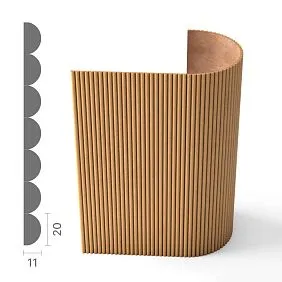
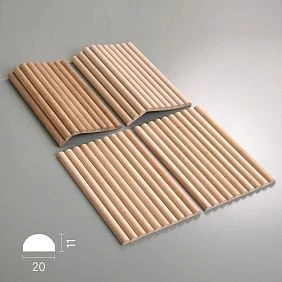
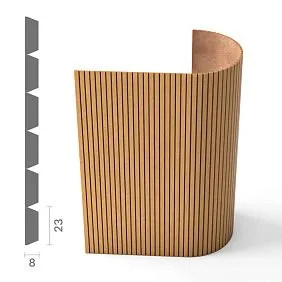
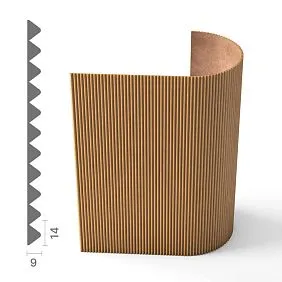
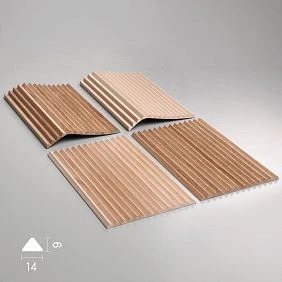
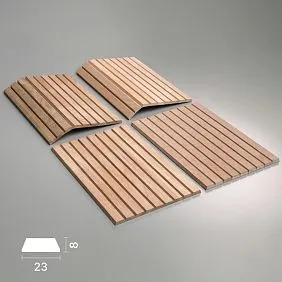
Buy MDF slatted panels for walls
There are solutions that seem simple until you start looking into them. MDF slatted panels are exactly that case. At first glance: slats, wall, screwed on — done. In practice: material selection, size calculation, choosing a system of elements, compatibility with floor and ceiling, lighting, installation. And if everything is done correctly — the result speaks for itself, without explanations or captions.
If you want to buy MDF slatted panels for the walls of your home, apartment, or office — this article is written specifically for you. Not as an advertisement, but as a working tool: what to choose, why, how to calculate, where not to make mistakes, and what to ask the manufacturer before placing an order.
Let's go.




Which MDF slatted panels to buy for walls: let's start with the main thing
Before diving into details — the answer to the question that most readers of this page ask. You are looking for a specific product for a specific task. So, let's start with it.
Task 1: TV area or accent wall in the living room.
Choose slatted panels for walls with a vertical relief, slat width 60–120 mm. Color — matching the furniture or flooring, or a contrasting neutral. The MDF base provides perfect geometry and an even rhythm without surprises.
Task 2: hallway.
Practicality + visual stretching of the space is needed. Vertical slats — a must. A matte surface finish is preferable: it shows fewer fingerprints.
Task 3: bedroom.
A calmer rhythm — wide slats with moderate relief. Warm neutral tone. Accent — the headboard.
Task 4: study or commercial interior.
Wall behind the desk, reception area. Strict geometry, neutral or restrained tone. MDF for painting to precisely match the corporate color or an author's series with a wood texture.
It is worth buying MDF slatted panels when the following are important: stability of geometry, predictability of results, a wide range of coatings, and accessibility for large areas. MDF meets these conditions better than any other material in its price category.
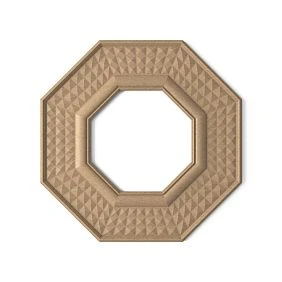
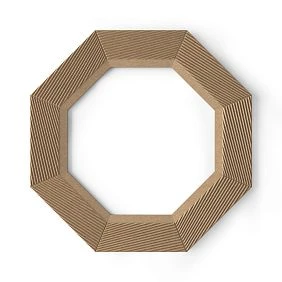
Our factory also produces:

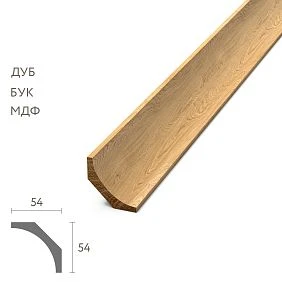
What are MDF slatted panels: understanding the material from the inside
To make an informed choice, you need to understand what you are working with. The term "MDF" has long become familiar, but what lies behind it?
Get Consultation
Base: MDF board
MDF (Medium Density Fiberboard) is made from wood fibers that are pressed at high temperature and pressure with the addition of a resin binder. The result is a homogeneous board without voids, knots, or layered structure. Density ranges from 650 to 900 kg/m³ depending on the class.
For wall slatted MDF panels, high-density MDF from 720 kg/m³ is used: it holds the milled profile better, provides clean sharp edges of the slat, and is less prone to deformation during temperature changes.
Rack profile
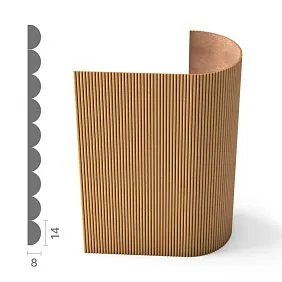
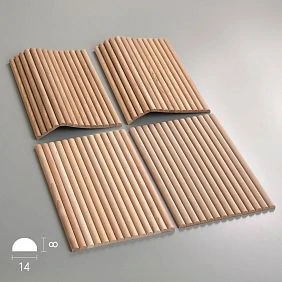
Milling is a key production stage. It creates the rack pattern: alternating protruding ribs and recessed grooves. Groove depth, rack width, edge angle — all these are milling parameters that determine how expressive the shadow is and how the rhythm is read on the wall.
An important nuance: the quality of milling is immediately visible on the finished panel. Sharp, clean edges without chips are a sign of high-density MDF and properly adjusted equipment. Crushed or "torn" edges are a sign of problems either with the material or the technology.
Finish
This is the layer that a person sees and touches. There are several options:
-
White primer (for painting). A double layer of primer with sanding is an ideal base for acrylic enamel of any color. For designer projects, this is an indispensable tool.
-
Decorative wood-look film. Thermal transfer or lamination — an embossed surface imitating wood texture. Practical, stable, wide range of tones.
-
Enamel or varnish. Factory painting in a specific color. More often — in white, gray, or other neutral tones.
-
Oil coating. For series with a natural character — a matte natural surface.
How MDF differs from solid wood, veneer, and PVC
From solid wood: MDF does not have its own natural pattern, but is absolutely homogeneous. Solid wood is a living material with a unique pattern, but requires acclimatization and careful maintenance. MDF is more stable under changing humidity conditions.
From veneer: Veneered panels have a real wood layer on the surface. MDF does not. However, MDF offers a more flexible choice of coatings and colors.
From PVC: PVC panels are lighter, moisture-resistant, but visually inferior to MDF in weight and solidity. MDF creates a feeling of density and "permanence" — a wall that stays for a long time.
Where to use wall slat MDF panels: space by space
In the living room
Living room — the main arena for slat MDF panels. Here they unfold in three roles.
TV area. A slatted wall behind the TV is not just a background, but an architectural solution. The vertical rhythm of MDF slats creates a structure that frames the screen and makes it an element of the interior, not a dominant feature. LED lighting in the gaps between the slats in evening lighting is an effect worth planning the electrical work for in advance.
Sofa wall. Behind the sofa, a slat MDF panel works as an accent. A molding frame around the perimeter turns the wall section into a designed architectural plane. Moldings made of polyurethane along the top and sides of the slats — the completion of the system, without which the finishing area looks unfinished.
Zoning. In an open space, a slat panel as a vertical divider between the kitchen and living room — a light boundary that reads architecturally but does not block the space.
In the hallway
Hallway — the space of first impressions. And the first test of the material: this is where there are the most touches, mechanical impacts, and unstable lighting.
MDF works well in the hallway if the right coating is chosen. Lacquered or enameled — more resistant to touch and light moisture exchange. Matte oil — beautiful but requires care.
Vertical slats in the hallway create visual elongation. A narrow corridor 1200 mm wide with a vertical slatted wall feels 15–20% more spacious than the same corridor with solid paint. This is not a metaphor — it's the effect of relief and shadows.
A high baseboard matching the panels or molding system — a mandatory lower junction.
In the bedroom
The bedroom is a space of rest, not display. Slatted MDF panels here work more subtly: they don't dominate but create a backdrop.
Bed headboard from slatted MDF panels with a wood finish — a natural warm tone without the fuss of solid wood. Slats 80–120 mm wide with a calm rhythm. Panel height — at the headboard level, or from floor to ceiling across the entire wall behind the bed.
Important: in the bedroom, avoid overly "active" texture patterns. Wood embossing with large pores across the entire wall creates visual strain that hinders relaxation. Choose a fine or moderate texture.
In the study
An office with a slatted MDF wall behind the workspace creates an environment that both organizes and inspires. The vertical rhythm structures the space. A neutral tone doesn't distract. A molding system around the slatted area gives the office architectural character.
Paintable lath panels in the corporate color behind the executive's desk is not a random decision. It's a statement that the space is thoughtfully designed.
Polyurethane wall decor — pilasters, frames, overlays — combined with the slatted backdrop create a multi-level system that turns an office into an office.
In commercial interiors
Reception, meeting room, waiting area, director's office. Here, slatted MDF panels are not just decor, but a carrier of company information.
The reception space with slatted wall panels in a neutral tone or corporate color speaks of the standard even before the conversation begins. This is an interior that works for the image.
decorative polyurethane elements at corner points, molding frames around the perimeter of slatted zones — a system with details that reads as a project, not budget finishing.
Slatted MDF panels for interior wall finishing: a complete breakdown
Slatted wall MDF panels for interior finishing are a specialized product. Not a construction board. Not a facing sheet. It is precisely an interior product with thoughtful geometry, decorative coating, and installation system.
Where MDF is appropriate in the interior
Inside residential spaces — everywhere: living room, bedroom, study, hallway, dressing room, children's room. In commercial spaces without high humidity — offices, stores, meeting rooms, waiting areas.
Where MDF is not used: in rooms with constant high humidity (bathroom, technical restrooms). For such spaces, moisture-resistant materials with appropriate labeling are needed.
How to choose the color of MDF panels
The color of a slatted MDF panel is not an isolated decision. It is always read in context: flooring, doors, ceiling, furniture, textiles. Any of these elements affects the perception of the panel's tone.
The rule of one climate zone. Warm tones (honey oak, beige, ivory) — with warm floors and warm doors. Cool neutrals (gray, white, bleached oak) — with neutral and cool materials. Mixing temperature tones requires precise lighting calculation.
Monochromatic solution. MDF for painting in the same tone as the walls — the slat disappears into the plane and creates relief without a color accent. A subtle designer technique.
Contrast solution. Dark slats on a light wall or vice versa — a clear accent. Requires confidence in the design concept, but delivers a strong result.
Consider sockets, switches, and backlighting
This is an engineering issue that needs to be resolved before installation, not after.
Sockets. In the slatted finish area, sockets must be set to the correct depth. Frames — in the panel tone or neutral. Cutouts for sockets are made before panel installation.
Switches. Similarly. Especially important for vertical slats: an incorrectly positioned switch disrupts the panel rhythm.
LED backlighting. If backlighting in the gaps is planned — tape, profile, dimmer — everything is laid out before installation. The wire is run under the panels or through chases. The power supply capacity is calculated based on the tape length.
Joining with baseboard and moldings
A slatted panel is part of a system. A bottom end without a baseboard is an unfinished structure. A top end without a molding is a technological gap that is visible under side lighting.
The correct system: panel + baseboard at the bottom + molding at the top + side moldings if necessary. decorative corner elements at the intersections of molding frames — the final touch.
MDF, wood, veneer, or panels for painting: an honest comparison table
One of the most common questions is what to choose? I answer without diplomacy: each material solves its own task. Choosing the "best" is impossible without understanding the specific goal.
| Material | When to choose | Strengths | Weaknesses |
|---|---|---|---|
| MDF for painting | Need an exact color, designer project | Any color, stable geometry | No natural pattern |
| Wood-look MDF | Need a natural tone without solid wood | Natural effect, practicality | Imitation, not natural texture |
| Solid wood | Need maximum naturalness | Lively pattern, uniqueness | Expensive, requires maintenance |
| Veneer | Natural layer on MDF base | Naturalness + stability | More difficult in choosing the tone |
| MDF for painting | Wall color = panel color | Monochrome design | No texture |
Practical tip: if you are unsure about your choice, order samples. Do not make a final decision based on the monitor. Two different screens will show the same color differently.
Technical parameters of slatted MDF panels: what is important to know
Before buying slatted MDF panels for walls, let's look at the technical parameters that influence the choice.
Dimensions
Standard length: 2700 mm. This is the calculated length for a room with a ceiling of 2400–2600 mm. The technological gap at the top and bottom is 50–80 mm, covered by molding and baseboard.
Non-standard length: custom order. If the ceiling is 3000 mm or higher, you need to check with the manufacturer about the possibility of producing panels of the required length.
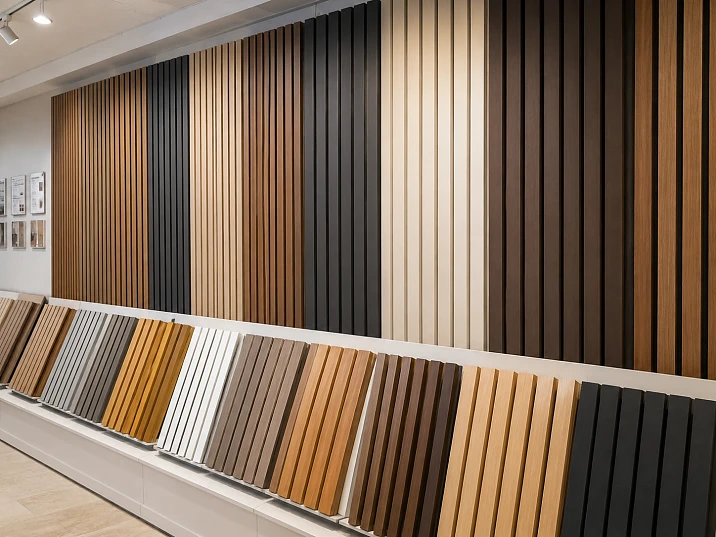
Panel width: 80–250 mm depending on the series. The width of the slat and the width of the groove are parameters that determine the 'frequency' of the rhythm.
Thickness: 12–18 mm. Affects the depth of the relief and the weight of the panel.
Slat width and rhythm
Narrow slats (40–70 mm) — frequent dense rhythm. Creates a feeling of a detailed surface. Good for small spaces where wall volume is needed.
Medium slats (80–120 mm) — balanced rhythm. A universal solution for most interiors. Scales well across different areas.
Wide slats (130–200 mm) — calm monumental rhythm. For large walls, high ceilings, spaces with a pronounced horizontal scale.
Relief Depth
Groove depth — from 5 to 20 mm. A deep groove with side lighting gives an expressive shadow. With frontal lighting — minimal. If your room has only frontal lighting (uniform recessed lights without direction) — deep relief loses its meaning. If there are directional spotlights or track lights — deep relief is fully revealed.
Finish: matte, semi-matte, gloss
Matte — the most popular for wall panels. Does not glare, hides small fingerprints, softens light. Suitable for residential and commercial spaces.
Semi-matte — a slight sheen that appears under directional lighting. Adds 'depth' to the surface.
Glossy — requires a perfectly prepared base. Any imperfections are visible. In interiors — rare, more often for accent areas.
What affects the price of MDF slatted panels: breakdown by items
Understanding pricing is the ability to create a realistic budget without surprises. Let's break down each factor.
Panel size
A long, wide panel requires more material and longer processing. Non-standard formats are custom orders with a markup.
Thickness and density of MDF
High-density MDF (880 kg/m³) is more expensive than standard. But it provides a clean milled profile without chips and durable adhesion to the coating.
Relief Depth
Deep milling is longer, more precise, and more expensive. However, it is the deep profile that creates an expressive result.
Finish
Basic white primer is the lowest price level. Double primer with manual sanding 'Prestige' is higher. Decorative wood-effect film depends on the collection. Factory painting in a specific color is a separate item.
Slat width
Wide slats of equal length produce fewer linear meters of relief — this affects tool consumption and production time. Paradox: wide slats are not always more expensive than narrow ones — calculate in m².
Order volume
A large order means production optimization and better terms. A small batch for one small wall is more expensive per unit.
Fitting elements
Moldings, baseboards, decorative corner elements, Polyurethane appliqués — this is a real budget item. In projects with a molding system around the perimeter of several zones, it can account for 20–40% of the cost of the panels.
Cutting
Required material reserve — 10–20% depending on geometry. This is money that needs to be included in the calculation.
Installation
The cost of installation work depends on the area, complexity of geometry, and the installer's skill. Professional installation with precise marking and cutting is a separate budget item.
Delivery
Long-length product with special packaging requirements. For remote regions — a significant item. Consider it when calculating the final amount.
How to calculate the number of slatted MDF panels before purchasing
Practical block. Steps are sequential — cannot be skipped.
Step 1. Measure each wall or area.
Width × height in millimeters. If multiple areas — each separately.
Step 2. Subtract openings.
Area of door, window, niche. When trimming slopes — leave a reserve.
Step 3. Determine the net area.
Sum of all finishing areas in square meters.
Step 4. Choose the direction.
Vertical: panel length = room height (or longer, with trimming). Horizontal: panel length ≤ wall width.
Step 5. Calculate the number of panels.
Finishing area ÷ area of one panel = quantity (round up).
Step 6. Add a margin.
10–12% for straight walls. 15–20% for non-standard geometry, diagonal installation, or many openings.
Step 7. Mark outlets and switches.
Mark their positions on the diagram. This affects the installation map.
Step 8. Calculate additional elements.
Top molding: perimeter of finishing area + 10%. Baseboard: bottom perimeter + 10%. Corner elements: number of corners.
Step 9. Check compatibility.
All elements are from the same manufacturer. The profile geometry must match.
Calculation example. Wall 3600 × 2700 mm. Minus door 900 × 2100 = 1.89 sq m. Net area: 3.6 × 2.7 − 1.89 = 9.72 − 1.89 = 7.83 sq m. Panel 2700 × 100 mm = 0.27 sq m. Quantity: 7.83 ÷ 0.27 = 29 pcs. With 15% margin: 29 × 1.15 = 33.35 → 34 panels.
MDF wall panels: DIY installation or with a professional?
A question that sooner or later arises for everyone studying the topic. I will answer honestly.
When DIY installation is realistic
Smooth walls with no deviations greater than 5 mm over 2 meters. Rectangular area without openings or with minimal ones. Adhesive installation on a prepared base. Vertical slats of standard length 2700 mm.
In this case, a careful person with basic construction skills can handle the task. Needed: level (preferably laser), tape measure, fine-tooth saw or miter saw, MS polymer adhesive, mounting foam for filling gaps.
When it is better to hire a professional
Walls with deviations greater than 10 mm. Frame installation with leveling. Non-standard geometry — arches, sloped ceilings, protrusions. Diagonal installation. Complex molding system with corner joints. Backlighting in gaps with cable routing.
In these cases, a mistake during DIY installation costs more than the work of a professional.
Base preparation is a mandatory step
Regardless of the installation method: the wall must be clean, dry, without crumbling plaster or grease stains. Priming is mandatory. For differences over 5 mm — leveling.
A base that doesn't hold — won't hold glue or fasteners. This is basic knowledge, but violating it is the cause of most problems after installation.
Lighting for slatted MDF panels: why it changes everything
A slatted panel is relief. Relief is potential for working with light. It is lighting that turns ordinary wall finishing into an architectural statement.
Lighting behind the molding
LED strip in the niche of the upper molding — soft diffused glow that washes over the slatted surface from top to bottom. The shadow in the grooves becomes deeper. The relief reads more voluminously. The effect is especially expressive in the evening with dimmed main light.
Lighting in the gaps between slats
With sufficient gap (from 15 mm), the LED strip is mounted directly in the groove. Glowing lines between the slats create a 'floating' rhythm effect. This requires planning at the profile selection stage — the gap must be structurally provided.
Directional lighting fixtures
Track lights or spotlights directed at the slatted wall at an angle of 30–45° — the simplest way to reveal the relief. Available without additional engineering work. The angle of light incidence determines how expressive the shadows are.
Color temperature
2700K — warm light that works with warm tones of panels. 3000K — neutral warm, universal. 4000K — cool working light, for offices and commercial interiors. Do not mix temperatures in one zone — this creates discomfort.
Buy MDF slat panels: Contact us to confirm shipping to your destination.
An important practical block for those who are not in Saint Petersburg.
Slatted wall panels — long-length product. Standard length 2700 mm requires special packaging: film, corner protectors, rigid edges. With proper packaging, panels arrive without damage to any region of Russia.
What is important to consider when ordering with delivery:
-
Check production times (5–10 working days) and delivery times to your region
-
Check the completeness upon receipt before signing documents
-
Store panels horizontally in a dry room before installation
-
Allow panels to acclimate in the room for 24 hours before installation
For Moscow and Novosibirsk — standard transport delivery. Timelines depend on the transport company. Check when placing your order.
Mistakes when buying slatted MDF panels: a list with explanations
This is not theory. This is what actually happens with the wrong approach to selection and ordering.
Mistake 1: comparing by the price of one panel, not per m².
A smaller panel is cheaper 'per piece', but when recalculated per square meter, it's more expensive. Calculate in m².
Mistake 2: no allowance for trimming.
'I'll buy exactly the area.' Result — shortage, waiting for the next batch, loss of time and nerves. Always +12–20%.
Mistake 3: incompatible additional elements.
Panels from one manufacturer, moldings from another, baseboard — general construction. Profiles don't match, colors conflict. A system order from one manufacturer is the only reliable solution.
Mistake 4: choosing color only by monitor.
The same 'gray oak' looks different on different screens. And completely different — in your room under your lighting. A sample is mandatory.
Error 5: sockets and switches not accounted for.
In the finishing area, they "appear" during installation and require rework. The layout diagram — before ordering.
Error 6: too active rhythm for a small wall.
Narrow frequent slats on a 1200 mm wide wall — visual overload. The rhythm scale should match the plane size.
Error 7: lighting not accounted for.
"We'll add it later" almost always means chiseling already installed panels. Electrical for lighting — before installation.
Error 8: purchase without coordination with baseboard and doors.
The panel tone may conflict with the color of door leaves or flooring. Coordination — before ordering.
Error 9: one batch, then — extra charge.
Veneer and decorative coatings from different production batches may differ in tone. Order with a reserve immediately — a reorder from a new batch may not match.
Where to buy MDF slatted panels: a systematic approach to choosing a supplier
You already understand that you are choosing not just panels, but a system. This means the supplier must provide not only the panels, but everything else as well.
Signs of a proper MDF panel supplier:
Own production. A manufacturer, not a reseller, controls quality at all stages and can produce non-standard sizes.
Complete system. Panels + Moldings + decorative elements + PU overlays from one catalog with guaranteed compatibility.
Samples. A supplier who does not work with samples forces you to make decisions blindly.
Free calculation. Based on your measurements — exact quantity without overuse or shortage.
Transparent terms. Production timelines, delivery conditions, policy on supplementary orders — everything clear and without surprises.
About the company STAVROS
STAVROS is a St. Petersburg manufacturer with a history dating back to 2002. It began with the restoration of historical interiors in St. Petersburg: the Hermitage, the Konstantinovsky Palace, the Alexander Palace. Working on such projects sets a standard where any product must meet the highest bar, regardless of the project's scale.
Today STAVROS offers a complete decorative finishing system: Slatted wall panels in several versions — For painting, wood-like and in author series, Moldings and cornices, decorative elements и polyurethane wall decor.
Production — Saint Petersburg, controlled microclimate, manual final sanding "Prestige". Contact us to confirm shipping to your destination. Consultations, system selection and calculation based on your measurements — free of charge.
If you want to buy MDF slatted wall panels with confidence in quality, a systematic approach and support at every stage — the STAVROS catalog and team of specialists are ready to work on your project.
FAQ: Answers to Key Questions
Which MDF slatted panels to buy for walls?
For walls in residential premises — MDF with a matte finish imitating wood or for painting. For commercial — similarly, with an emphasis on geometric precision. Always — with a 12–20% allowance for trimming and a system of additional elements from the same manufacturer.
How do MDF slatted panels differ from wooden ones?
MDF is a homogeneous engineered material without natural grain. Wooden panels are solid wood with a living texture. MDF is more geometrically stable, easier to choose a finish, and more affordable. Wood is more natural, more expensive, and requires careful selection.
What affects the price of MDF slatted panels?
Size, MDF density, relief depth, coating type, order volume, additional elements, installation and delivery.
Are MDF panels suitable for interior wall decoration?
Yes, that is their main application. Living room, bedroom, study, hallway, commercial interior — anywhere without constant high humidity.
How to calculate the number of panels for a wall?
Area of the finishing zone ÷ area of one panel = quantity (round up). Add a margin of 12–20%. Calculate additional elements separately.
What to choose for the TV zone: MDF with wood finish or for painting?
MDF with wood finish — if you need a natural warm tone. MDF for painting — if you need to match the interior color exactly or create a monochrome solution. Both options give good results with a proper lighting system.
Where to buy slatted MDF panels in Moscow and throughout Russia?
STAVROS produces and delivers Rafter panels throughout Russia. Order via the catalog on the website, calculation based on measurements is free, delivery by transport companies.