Article Contents:
- How a multi-phase procurement differs from one large order
- What needs to be locked in before the first batch
- What exactly needs to be "frozen" and what can be recalculated
- Architectural parameters
- Operational parameters
- Supplier A
- Supplier B
- Should you buy the entire volume of trim at once?
- What is most important to preserve after the first delivery?
- Can the stock be reduced in the second phase?
- What should be done if the contractor offers a similar molding for less?
- Can the profile be changed only in the last cabinet?
- What should be done if the original profile is temporarily unavailable?
- How should a repeat batch be accepted?
- What should be kept after the entire project is completed?

A multi-phase project cannot be outfitted with wooden trim as three independent construction sites. If the first building received one skirting board in spring, the second received an "almost identical" one in summer, and the third received an updated molding in autumn, by handover there will be three different interior systems. The problem arises not from the number of deliveries, but from the loss of the approved specification between them.
Therefore large building material suppliers on a long project, you should work not only with the current order, but also with the project's immutable foundation:
reference sample → master specification → phase schedule → volume of each batch → version control → repeat order → acceptance against the reference sample → operational reserve.
This is especially important for wooden trim. Baseboards, moldings, and cornices form repeating architectural lines; a slight change in profile or material between buildings can become noticeable even when each individual profile looks high-quality.
The current assortment can be checked in the section STAVROS wooden moldingBut for a multi-phase project, the catalog is only the starting point for selection. Once approved, a specific SKU must become a project standard.
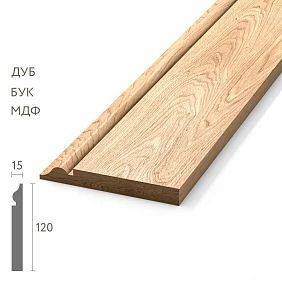
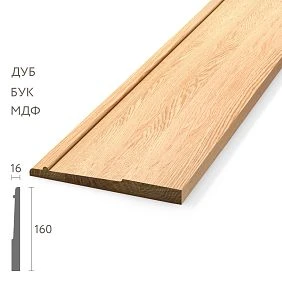
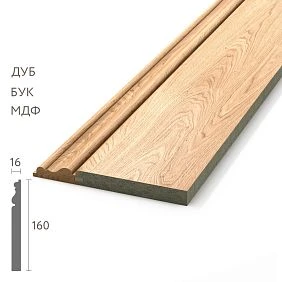
How multi-phase procurement differs from one large order
A single large order usually looks like this:
one volume → one delivery → installation → remainder.
A multi-phase project is structured differently:
one architectural concept → multiple orders → multiple deadlines → multiple contractors → one final interior.
This is exactly where additional risks arise:
- the second phase is handled by a different purchaser;
- the supplier changes the manager;
- the project is being adjusted;
- part of the product is temporarily out of stock;
- the contractor proposes an alternative;
- the previous version in the old table has been overwritten;
- the physical sample of the first batch is lost;
- the third phase relies only on a photograph of the already installed profile.
Therefore, the task of managing trim is not to "buy everything at once," but to preserve the identity of the approved solution across deliveries.




What needs to be recorded before the first batch
For each critical profile, a base project line is created.
| Parameter | What we record | | --- | --- | | Project code | P01 / M01 / K01 | | SKU | exact manufacturer designation | | Product | skirting board / moulding / cornice | | Material | specific finish | | Cross-section | approved drawing / dimensions | | Commercial length | specific configuration | | Finish | if included in the order | | Zone | where it is used | | Version | R1 / R2 / R3 | | Status | APPROVED | | Substitution | prohibited / only by agreement |
This line must live longer than a specific invoice.
An invoice covers one delivery. A master specification ties together the entire project.
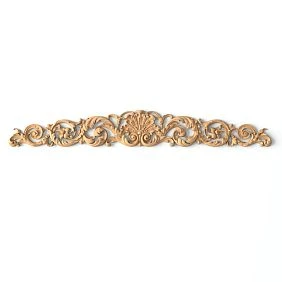
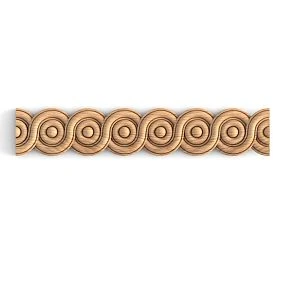
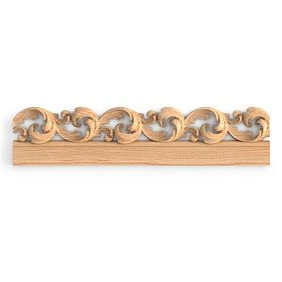
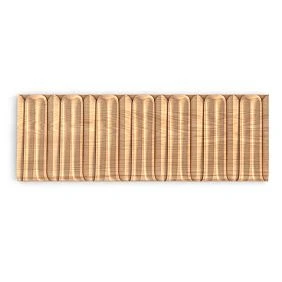
Our factory also produces:


What exactly needs to be "frozen" and what can be recalculated
A multi-stage procurement has two types of parameters.
Get Consultation
Architectural parameters
They cannot be changed without separate approval:
- article number;
- cross-section;
- the material;
- visible geometry;
- approved finishes;
- design code.
Operational parameters
They can be adjusted between batches:
- quantity;
- installation reserve;
- delivery date;
- breakdown by zones;
- number of transport units;
- delivery method.
For example, after case A, the reserve for case B can be reduced if the actual cutting showed lower consumption. But this pretext cannot be used to replace M01 with another molding.
This principle eliminates the typical confusion: the project remains visually unchanged, while the procurement model becomes more accurate.
Wooden skirting board: the first phase becomes the control
Let's assume that skirting board P01 is approved for case A.
After installing case A, the following cannot be considered acceptable for case B:
a similar profile;
a more affordable equivalent;
a new version without approval.
If the design project has not been changed, the approved P01 configuration remains the reference.
At the same time, it is useful to check not only the documents, but also the actual result of the first batch:
- how the profile looks on the doors;
- whether the chosen scale matches the room;
- whether it is convenient to perform the cutting;
- what the actual consumption is;
- how many usable leftovers there are;
- what installation reserve was actually needed.
The first batch provides data, but it must not arbitrarily change the profile itself.
What to keep physically after the first delivery
An Excel file is not enough.
For key SKUs, it is useful to keep:
- a full length or a reference fragment;
- label;
- article number;
- the material;
- photo of the end face;
- section size;
- order number;
- a photo of the assembled unit;
- the approval date.
The physical reference is signed by:
HOTEL-A / P01 / PLT-___ / OAK / R1 / APPROVED
For molding:
HOTEL-A / M01 / MLD-___ / OAK / R3 / APPROVED
So a new contractor, eight months later, receives not a request to "match the first building" but a specific sample.
Wooden moulding: the same width does not yet mean the same profile
For wall frames, it is especially risky to compare only the overall width.
Two mouldings may have the same 60 mm but differ in:
- maximum thickness;
- the depth of the groove;
- radius;
- position of the convex part;
- relief height;
- edge shape.
In a single photo, the difference may seem small.
On adjacent floors, it changes the light and shadow and the entire rhythm of the frames.
Therefore, code M01 should reference not the wording "60 mm molding," but the exact SKU and the approved profile.
How to create a molding passport
Example:
PROJECT: HOTEL-A
CODE: M01
ARTICLE: MLD-___
MATERIAL: OAK
SECTION: R3
LENGTH: ___
APPROVED: 10.09.2026
The passport is accompanied by:
- drawing;
- a photo of the end cross-section;
- photo of the physical reference sample;
- first delivery number;
- replacement rule;
- list of phases where the profile is applied.
If a material is used in both the lobby and the corridors, there is no need to create two different "almost identical" profiles. A single code can have multiple application zones.
Wooden cornice: why the cross-section must be kept until the end of the project
The cornice works with several geometries at once:
- wall;
- ceiling;
- room height;
- adjacent moldings;
- with built-in furniture;
- corner transitions.
Therefore, a minor revision of the profile in the third phase can become more noticeable than a change of the skirting board.
If K01 has already been approved, the future order must reference:
K01 + article number + material + cross-section + version + length.
Not an old photograph and not the name of the card.
A product card may be updated. The project passport must preserve what was actually approved.
A large building materials supplier: what is required of them on a long project
large supplier of building materials is useful to a multi-stage project, not by warehouse size alone.
For wooden moulding, what matters more is whether the procurement process can ensure:
- accurate SKU identification;
- working with a single specification;
- reordering by the same code;
- clear confirmation of lead times;
- batch separation;
- preservation of the project version;
- working with a sample;
- documentation of the agreed replacement.
A large universal warehouse may be convenient for dozens of construction categories, but this does not guarantee that a complex molding will be identified identically nine months later.
For linear trim, process reproducibility is valuable.
Why warehouse size does not equal design reliability
Let's imagine two companies.
Supplier A
Huge warehouse, thousands of construction SKUs, fast shipping.
But a repeat request is made like this:
last time you had a similar oak molding.
Supplier B
Fewer options in other categories, but for trim the following remain:
M01 / MLD-___ / oak / R3 / order no.___
For a one-time purchase, A may be more convenient.
For a project with three buildings, B may present a lower risk of discrepancy.
Therefore, in project fit-out, a “large” supplier is better assessed not only by turnover and warehouse area, but by the ability to support a single technical specification over time.
How to break down demand into phases
Example of a planned model:
| Phase | Skirting | Molding | Cornice | Planned date | | --- | ---: | ---: | ---: | --- | | Building A | 450 m | 700 m | 180 m | March | | Building B | 420 m | 680 m | 175 m | June | | Building C | 470 m | 710 m | 190 m | October |
Total:
skirting: 450 + 420 + 470 = 1340 m;
molding: 700 + 680 + 710 = 2090 m;
cornice: 180 + 175 + 190 = 545 m.
Total net planned volume:
1340 + 2090 + 545 = 3975 m.
But this does not mean that 3975 m should be purchased in one delivery.
The table is needed so that the supplier and the customer can see the scale and schedule of the project in advance.
Batch confirmation calendar: the order cannot be left until the installation day
For each phase, it is useful to track not just one date such as "installation in June", but four checkpoints:
| Stage | Date | | --- | --- | | Re-check of the specification | ___ | | Confirmation of availability / production | ___ | | Final quantity | ___ | | Planned shipment | ___ |
If the installation of body B begins on June 20, the question of the batch cannot be raised for the first time on June 18.
The earlier it is known that a profile is temporarily unavailable or that the manufacturing time has changed, the more options the project has: reschedule the work, use another ready area, or agree on a new date.
The delivery schedule must be linked to the master specification, rather than existing separately in correspondence.
Why it is not possible to automatically purchase the entire annual volume at once
One large batch reduces the number of repeat orders, but creates other risks:
- the site is not ready for storage;
- the material sits at the construction site for months;
- actual measurements change;
- some rooms are adjusted;
- money is frozen;
- the volume of movements within the site increases;
- the risk of mixing up items between cabinet bodies increases.
Therefore, a multi-phase project should choose the batch size according to the construction schedule, not according to the desire to "close the issue once and for all."
If there is safe storage, a stable project, and financial sense for all phases, a large purchase can be reasonable.
If these conditions are not met, several controlled batches are better.
Why each phase cannot be ordered as a new project
The opposite extreme is independent purchasing for each building.
Then the new contractor starts:
- choosing the molding again;
- proposing analogues;
- changing the material;
- choosing a different length;
- count a new reserve;
- create your own table.
A year later, three versions of the same interior appear.
Therefore, all queues must inherit a single master specification.
An individual order may have its own quantity and deadline, but must not arbitrarily change the base profile.
Master specification for wooden trim
Central project table:
| Code | SKU | Material | Section | Length | Replacement allowed | Current version | | --- | --- | --- | --- | ---: | --- | --- | | P01 | PLT-___ | oak | R1 | ___ | no | R1 | | M01 | MLD-___ | oak | R3 | ___ | no | R3 | | K01 | KZ-___ | oak | R2 | ___ | approval only | R2 |
The queue schedule is separate:
| Code | Building A | Building B | Building C | | --- | --- | --- | --- | | P01 | 450 m | 420 m | 470 m | | M01 | 700 m | 680 m | 710 m | | K01 | 180 m | 175 m | 190 m |
The first table answers what.
The second — when and how much.
These functions should not be mixed into one huge schedule.
How to distinguish a project change from a procurement error
If the designer deliberately changed the molding and issued new documentation, this is a project change.
If the purchaser independently bought the closest equivalent because the required SKU was unavailable, this is a procurement error.
The difference is fundamental.
A project change goes through:
initiator → reason → new drawing → new version → approval → effective date.
A procurement error occurs without this chain.
Therefore, the phrase “the new profile is also good” does not make it an acceptable substitute.
How to document a new profile version
Suppose M01-R1 was used in cabinets A and B.
Before cabinet C, the designer changes the geometry.
It appears:
M01-R2
The log records:
| Field | Value | | --- | --- | | Old code | M01-R1 | | New code | M01-R2 | | Reason | design change | | Date | ___ | | Approved by | ___ | | Applies from | cabinet C |
Now the first two cabinets remain on R1, and the third goes to R2.
This is a controlled change, not a loss of consistency by mistake.
Why you cannot rewrite history retroactively
After the change, you cannot open the old table and simply replace R1 with R2 in all rows.
If the first 1380 m of molding has already been installed according to R1, the documentation must preserve this.
Otherwise, in three years the repair crew will see R2 and order it for section A of the building, where R1 is actually installed.
The project history is part of future maintainability.
Any new version is added on top of the old one rather than overwriting it.
What to do if the supplier's manager has changed
A change of manager should not trigger a repeat profile selection.
The new contact person is provided with:
- the previous order number;
- project code;
- article number;
- the material;
- version;
- drawing;
- photo of the reference sample;
- planned volume of the new phase;
- required date.
A good request:
Repeat order HOTEL-A / M01 / MLD-___ / oak / R3 / previous order No.___ / building B / ___ m required.
If a new manager can only understand the task after reviewing old correspondence, the project depends too much on a specific person.
The largest building material suppliers: what scale means for the customer
Request the largest building material suppliers often implies a ranking of companies, but for multi-stage trim, a different scale criterion is more useful: the ability to support the entire procurement life cycle.
For the project, it looks like this:
selection → sample → batch A → repeat order → batch B → volume adjustment → batch C → additional order → operational reserve.
A company can be very large by turnover but perform poorly at preserving the version of a specific decorative profile.
And conversely, a specialized manufacturer may be more suitable for this particular task.
Therefore, the choice should be based on the ability to maintain the architectural specification, not on a place in an abstract ranking.
The first batch as a source of actual data
Case A provides real data that was not available at the design stage:
- actual consumption;
- cutting convenience;
- number of short offcuts;
- number of planks damaged during installation;
- actual installation reserve;
- areas where the layout changed.
This data is useful for B and C.
But it is the quantity that needs adjusting, not the profile automatically.
For example, a conditional reserve of 15% was planned, but after the first phase it turned out that with stable room geometry, about 8% is actually sufficient.
This is not a new standard for all projects. It is a recalculation model for this specific project based on its actual statistics.
How to recalculate future batches after the first phase
Suppose the net volume of body molding B is 680 m.
Using the old model with 15%:
680 × 1.15 = 782 m.
Using the refined model with 8%:
680 × 1.08 = 734.4 m.
The difference:
782 − 734.4 = 47.6 m.
For body C with a net volume of 710 m:
710 × 1.15 = 816.5 m;
710 × 1.08 = 766.8 m.
The difference:
49.7 m.
Total reduction in procurement stock for two queues in this model:
47.6 + 49.7 = 97.3 m.
But the solution is correct only if the cases are truly comparable in terms of cutting layout, and the data from the first queue is reliable.
How to determine that the first queue is not suitable for directly recalculating the second
Data from case A cannot be mechanically transferred to B if:
- different room geometry;
- more doorways;
- frame dimensions have changed;
- another contractor uses a different cutting map;
- the number of corners has changed;
- part of the walls is hidden by furniture;
- new zones have appeared.
In this case, 8% of the first phase is not a reliable coefficient for the second.
The conditions themselves need to be compared.
Actual data helps improve the calculation, but only with a comparable scenario.
Installation and operational reserves should be separated
An installation reserve is needed to complete the current work.
An operational one — to replace a damaged section after a few years.
They cannot be stored as a single figure.
For example:
M01 body C: main volume ___; installation reserve ___; operational reserve of the entire facility ___
The last batch is especially important: after it, there will be no "next phase" from which a few planks can be temporarily taken.
Therefore, the final reserve must be locked in before the project is closed.
What to do if the required profile is temporarily unavailable
The absence of a product does not cancel the architectural specification.
Options:
- wait for production;
- adjust the schedule;
- reschedule the installation of a specific area;
- use the available reserve;
- consider an alternative through official approval.
What you must not do:
M01 is temporarily unavailable; we'll take a similar MLD-YYY so as not to delay the crew.
So the schedule of one stage changes the interior of the entire site.
Sometimes postponing installation is cheaper than future rework of an already installed line.
What to do if the profile has been discontinued
First, don't look for a visually similar one.
Need to check:
- whether the technical documentation has been preserved;
- whether there is a physical reference sample;
- whether the profile can be remanufactured;
- whether the existing design reserve can be used;
- how much volume still remains to be done;
- Is a new version of the project acceptable for future cabinets?
STAVROS publishes a serial catalog of moldings and indicates the possibility of custom manufacturing according to drawings for production runs. Specific conditions for a discontinued SKU must be clarified separately.
If only one small cabinet remains, reproduction may be reasonable.
If a huge new phase lies ahead, the project may officially move to R2.
Why the drawing and reference sample matter more than the old link
A URL helps you quickly find a product, but by itself it is not a technical archive.
The product page may be updated.
The name may be refined.
Other versions will appear.
Therefore, a reliable set:
article number + material + cross-section drawing + physical reference sample + order number + marking photo.
The link remains an additional navigation tool.
How to accept the second and third batches
They cannot be considered automatically correct just because the first delivery went well.
For each new batch, check:
- project code;
- article number;
- the material;
- cross-section;
- commercial length;
- quantity;
- marking;
- packaging condition;
- compliance with the physical reference sample for critical parameters.
If there is any doubt, set the disputed pack aside before issuing it to the installers.
Acceptance against the reference sample must occur before the material is distributed across floors.
Final-stage control: why it requires a separate check
The final stage differs from the intermediate ones.
After that, you can no longer count on the missing planks being accounted for "in the next batch."
Before the final order, you need to separately verify:
- the actual remaining stock from all previous queues;
- usable whole planks;
- usable remnants;
- the required installation reserve;
- operational reserve;
- unresolved defects from previous zones;
- possible future repair needs.
If the warehouse lists 12 M01 planks, but only 9 are actually found, the final request cannot be based on the accounting balance of 12.
First the inventory count, then the final order.
If different buildings are constructed by different contractors
Building A — contractor No. 1.
Building B — contractor No. 2.
Building C — contractor No. 3.
Everyone must receive the same technical package.
A new contractor does not get the right to choose “their equivalent” simply because the previous procurement was made by another company.
The handover package includes:
- master specification;
- current drawings;
- article numbers;
- physical reference samples;
- change log;
- queue schedule;
- replacement rules;
- actual consumption data for the first phase.
This is how the contractor changes, but not the architectural standard.
What to do if the supplier itself changes
Sometimes a long project is forced to switch to another seller or manufacturer.
This does not mean that the new supplier can select a “maximally similar” profile from a photograph.
First, they are given the same package:
item code → drawing → material → physical reference sample → approved version.
Then two scenarios are possible.
If the new supplier can provide an identical approved item, it undergoes inspection against the reference sample.
If a different profile is proposed, this is already a potential project change and requires a new revision.
A change of counterparty should not automatically mean a change of architecture.
Final algorithm for multi-stage furnishing
- Approve the skirting board, moulding, and cornice.
- Assign project codes to them.
- Create a master specification.
- Keep physical reference samples.
- Break the project into phases.
- Forecast the volume of each batch.
- Record the confirmation and shipment schedule.
- Release the first delivery.
- Record actual consumption and cutting.
- Refine the quantity of future batches based on real data.
- Do not change the approved profile without a revision procedure.
- Process each repeat order by project code and version.
- Accept each new batch against the reference sample.
- When changing the manager, contractor, or supplier, hand over the full technical package.
- Conduct an inventory count before the last queue.
- After the last queue, form an operational reserve.
- Keep version history for future repairs.
Thus, multi-stage procurement remains flexible in terms of timing and quantity, but stable in terms of the architectural result.
Questions about multi-stage deliveries
Do I need to buy the entire volume of trim at once?
No. If the project proceeds in phases, batches can be tied to the schedule while maintaining a single master specification.
What is most important to preserve after the first delivery?
The SKU, material, approved cross-section, version, physical reference sample, and order number.
Can the reserve be reduced in the second phase?
Yes, if the actual data from the first phase really shows lower consumption and the conditions are comparable. This is a recalculation for a specific project, not a universal norm.
What should I do if the contractor offers a similar molding for less?
Do not change the SKU without an official project change and a new revision.
Can the profile be changed only in the last cabinet?
Yes, if this is a deliberately approved new version of the project and the documentation records where the old one applies and where the new one applies.
What should be done if the original profile is temporarily unavailable?
Consider changing the schedule, waiting for production, or using an agreed alternative — but do not replace the profile automatically.
How should a repeat batch be accepted?
Verify the item code, material, cross-section, length, marking, and critical parameters against the approved reference sample.
What should be kept after the entire project is completed?
The final master specification, version log, drawings, physical reference samples, and a separately designated operational reserve.