Article Contents:
- What is a construction screw for furniture
- Why a regular universal screw is not suitable for every furniture joint
- Why partial thread is needed
- What a countersunk head provides
- Why TORX T25 is convenient for furniture assembly
- When to look at FUR-037 5×70
- When to look at FUR-038 5×90
- When 70 mm length is sufficient
- When 90 mm is needed
- When neither 5×70 nor 5×90 fits
- Measure the first part
- Check the depth of the second part
- Do not choose length without allowance to the face side
- Test on scraps
- When a hole is especially desirable
- Why countersinking is needed
- Why the hole should not go to the side
- Do not drive a long screw at maximum speed
- Do not overtighten the connection
- Follow the grain direction
- Impact driver
- TORX T25 bit
- Drills and countersinks
- Clamps
- Frames of small tables
- Consoles and cabinets
- Benches and seats
- Installation of wooden panels
- Massive tabletops
- Bed frames
- Large benches and sofa bases
- Brackets and load-bearing wooden elements
- Why it's useful to buy fasteners with a reserve
- Structural screw and confirmat
- Construction self-tapping screw and screw with ferrule
- Construction self-tapping screw and dowel
- Need to assemble a small solid wood table
- Need to assemble a large dining table
- Need to secure an apron on a thin leg
- Need to assemble a bed frame
- Need to repair wobbly furniture
- Need to secure a wooden mounting plate
- Need to work with oak
- Need to assemble furniture for a commercial space
- Choosing the longest fastener as the most reliable
- Not measuring both parts
- Working in oak without a pilot hole
- Using the wrong bit
- Driving the head too deep
- Placing the fastener too close to the edge
- Not securing parts with a clamp
- Using a structural screw for repeated disassembly
- Not checking fastener intersection
- Buy exactly the calculated quantity
- Consider yellow zinc as protection for any conditions
- How is a structural screw different from a regular one?
- What to choose: screw 5×70 or 5×90?
- Which screws are suitable for oak furniture?
- Which screws are suitable for beech?
- Which bit to use for driving FUR-037 and FUR-038?
- Why does a structural screw have partial thread?
- Do I need to drill a hole before installation?
- Can I screw in a 5×90 self-tapping screw without drilling?
- Is 5×70 suitable for assembling a table?
- Can I use 5×90 for a small cabinet?
- Are structural self-tapping screws suitable for particleboard?
- Can I use these screws outdoors?
- Can I repeatedly unscrew and screw in a self-tapping screw?
- How to hide the countersunk head?
- Why does the screw crack or go into oak with difficulty?
- How to know if the screw is tightened enough?
- Do I need to use glue along with screws?
- Can I connect two stretchers inside one leg with a screw?
- How many screws are needed per connection?
- Where to buy screws 5×70 and 5×90?
Structural screws for furniture are usually purchased when ordinary universal fasteners are no longer sufficient: you need to assemble a solid wood table, tighten parts of a wooden frame, secure a stretcher, join bars, install a load-bearing element, or restore a loose joint. In such work, not only the diameter and length matter. Reliability is influenced by the depth of thread entry into the second part, the thickness of the joined elements, wood density, distance to the edge, grain direction, and hole preparation.
The buyer's main question is simple: screw 5×70 or 5×90 — which to choose? A longer fastener is not always the better choice. A 5×90 screw can go deeper into the second part, but for a thin stretcher or compact furniture joint, it may be excessive, protrude outward, or come close to the surface. The 5×70 size is more convenient for medium-thickness joints, but should not be used where, after passing through the first part, too short a working section remains in the second.
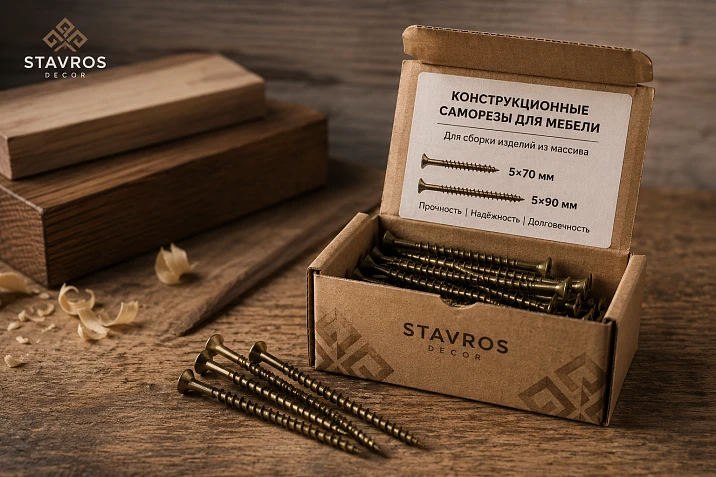
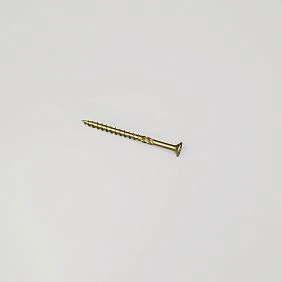
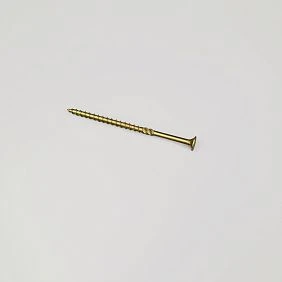
The STAVROS catalog offers two actual items for this choice: buy structural screw 5×70 FUR-037 can be used for medium-thickness furniture joints, and buy construction screw 5×90 FUR-038 — for more massive joints where additional fastening depth is required. Both models have a diameter of 5 mm, a countersunk head, a TORX T25 slot, and yellow zinc coating.
This article helps not just to choose screws for furniture, but to understand the logic of the connection. The buyer will be able to determine when a length of 70 mm is sufficient, when 90 mm is justified, why partial thread is needed, why solid oak and beech require more careful installation, how not to split the wood, and what tools to prepare along with the fasteners.

What is a construction screw for furniture
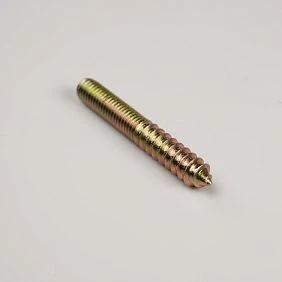
A construction screw is a fastener for connections where tightening parts, joint stability, and load-bearing performance are important. It is used not as a random screw for attaching a thin decorative overlay, but as part of the furniture structure. It is used to connect side rails with supports, cross and longitudinal frame elements, bars, wooden plates, massive bases, and other parts that must maintain their position during use.
Externally, such fasteners may resemble a regular wood screw, but the buyer needs to look at the combination of features. For the models in question, important characteristics are a diameter of 5 mm, a length of 70 or 90 mm, partial thread, milling elements, a countersunk head, and a TORX T25 slot. Each characteristic solves its own practical task.
The diameter is related to the rigidity of the rod and the size of the joint. The length determines how much of the fastener passes through the first part and how deeply the threaded portion enters the second. Partial thread helps to pull elements together, rather than holding each of them on separate sections of thread. The countersunk head allows the fastener to be recessed into the wood so that it does not protrude above the surface.
The TORX T25 slot transmits force through a six-lobe profile. The bit holds more securely in the head than when working with a worn cross-shaped slot, and the woodworker gains more control during tightening. This is especially noticeable when driving a long screw into dense solid wood, where the resistance of the wood is higher.




Why a regular universal screw is not suitable for every furniture joint
A universal screw is convenient for many small tasks: attaching a thin strip, installing lightweight hardware, fixing a back panel, or connecting elements without significant load. But when assembling a load-bearing wooden frame, the requirements change. The fastener must not just be inside the wood, but must tightly pull the parts together and keep the joint from loosening.
If the thread passes through both connected parts along their entire length, a gap sometimes remains between them. The first part is held by its own threads and does not always freely tighten to the base during further tightening. The craftsman is forced to press harder on the tool, pre-clamp the parts with a clamp, or ream the through part of the hole.
Partial thread simplifies tightening. The smooth section passes more freely through the first part, while the thread works in the second. When the head approaches the surface, it pulls the upper element toward the lower one. This is why such fasteners are convenient for furniture rails, frames, under-table supports, and joining bars.
This does not mean that a construction screw automatically makes any joint reliable. If the length is chosen incorrectly, the fastener is placed too close to the edge, or the wood already has a crack, the screw's shape will not fix the error. It provides a suitable tool for joining, but the result still depends on calculation and careful installation.
Our factory also produces:
Why partial thread is needed
Partial thread is especially useful when joining two wooden parts overlapping or at an angle. Imagine a rail that needs to be pulled to a table leg. The screw passes through the rail, and the thread enters the leg. If the smooth part of the shank is inside the first part, it does not prevent it from moving toward the support during tightening.
The working logic is as follows: the tip enters the second part, the thread grips the wood, the head approaches the rail and creates clamping force. There should be no gap between the elements. With a glued joint, tight contact also helps evenly distribute the adhesive layer.
But the length must be chosen so that the placement of the threaded and smooth parts matches the actual thickness of the parts. You cannot automatically assume that any screw with partial thread is suitable for any joint. If the thread starts working already in the first part, the clamping effect may decrease. If too little thread remains in the second part, the joint will not achieve the required depth.
Therefore, the choice between 5×70 and 5×90 is not only about overall length. You need to understand which part the fastener passes through, where the main engagement begins, and how much wood remains before the opposite surface.
Get Consultation
What a countersunk head provides
The countersunk head enters a prepared recess or sinks into the wood on its own during tightening. The top of the fastener ends up flush with the surface or slightly below it. This is important for furniture parts on which a seat, tabletop, panel, decorative overlay, or other element will be installed.
A protruding head can prevent a tight fit, create a pressure point, or damage an adjacent part. A countersunk fastener is easier to cover with a wooden plug, putty, or wax if the joint needs to be less visible. In a technical area, it can be left exposed to maintain access for future disassembly.
However, a countersunk head cannot be mindlessly tightened as deep as possible. In soft wood, it can press through the surface, weaken the top layer, and sink deeper than intended. In hard oak, attempting to forcefully sink the head without countersinking creates local stress and can cause a crack. A clean recess and controlled tightening torque yield a neater result.
Why TORX T25 is convenient for furniture assembly
The TORX drive has a six-lobed star shape. The bit engages deeply and transmits rotation through the side surfaces. With the correct size, there is less risk of the tool slipping out of the head, stripping the edges, or scratching the wood near the fastening point.
For FUR-037 and FUR-038, a TORX T25 bit is required. Do not try to replace it with a similar star of a different size or a cross-head bit. An unsuitable tool fits loosely, damages the drive, and complicates disassembly. When purchasing fasteners, it is better to check the condition of the existing bit or prepare a new one.
The advantage of TORX is especially noticeable when working with a 5×90 screw. The deeper the fastener goes into the solid wood, the greater the resistance. A secure grip helps keep the tool aligned and avoids increasing pressure on the screwdriver due to a constantly slipping bit.
Screws FUR-037 and FUR-038: what is confirmed in the product cards
Both models are structural fasteners for wooden furniture and joinery. The main difference is length. FUR-037 has a size of 5×70 mm, FUR-038 is 5×90 mm. Their diameter is the same, so the choice is primarily based on the thickness of the parts being joined and the required depth of entry into the second piece.
The product cards specify a countersunk head, TORX T25 drive, yellow zinc plating, and a design intended for use with wood. FUR-037 is positioned as a fastener for furniture made of natural wood, wood-based panels, and glued solid wood. FUR-038 is considered a longer option for massive wooden structures and deep joints.
Before ordering, the current price and availability should be checked directly in the product cards. The buyer should also calculate the number of fastening points in advance. Ordering exactly one screw for each planned hole is risky: a spare will be useful for trial assembly, tool adjustment, and replacing accidentally damaged fasteners.
| Parameter | FUR-037 | FUR-038 |
|---|---|---|
| Size | 5×70 mm | 5×90 mm |
| Article number | FUR-037 | FUR-038 |
| Head | Countersunk | Countersunk |
| Slot | TORX T25 | TORX T25 |
| Finish | Yellow zinc | Yellow zinc |
| Carving | Partial | Partial |
| Main Scenario | Medium thickness furniture joints | More massive and deeper joints |
A difference of 20 mm may seem small, but in a furniture joint it is significant. The extra length can increase the depth of entry into the load-bearing part, but at the same time raises the requirements for measurement. You need to make sure that the screw does not come out the other side, does not hit already installed hardware, and is not too close to the front surface.
When to look at FUR-037 5×70
FUR-037 is suitable for connections where 70 mm is enough to pass through the first part and securely enter the second. This size is convenient when assembling medium-thickness furniture frames, attaching crossbars, installing wooden elements, and working with parts for which 90 mm poses a risk of protruding outward.
The 5×70 size is often more rational for compact furniture: small tables, consoles, banquettes, cabinets, lightweight frames, and internal components. However, the final choice cannot be made solely based on the item's name. Two tables may have completely different crossbar and support cross-sections.
Before check the price for screw 5×70 FUR-037, measure the thickness of the first part and the available depth of the second. Then mark the intended drilling axis. This calculation shows whether enough wood will remain around the fastener.
When to consider FUR-038 5×90
FUR-038 is needed where the 70 mm length provides insufficient engagement. This could be a massive bed frame, a large table base, joining thick beams, installing a load-bearing wooden plate, or assembling furniture with increased cross-sections.
The 5×90 screw must have real working space. The buyer checks not only the total thickness of the assembly but also the driving direction. During diagonal installation, the actual path inside the wood is longer than with a straight pass. Therefore, a fastener that fits in a perpendicular connection can protrude outward if the angle is incorrectly chosen.
Go to the product page and buy screw 5×90 FUR-038 should be done after checking the drawing or a test assembly. A longer size is chosen for the depth of the connection, not for an abstract sense of greater reliability.
Self-tapping screw 5×70 or 5×90: main difference
Both models have the same diameter and are designed for a similar type of tool. Therefore, the buyer is comparing not two fundamentally different systems, but two length options. The decision depends on how many millimeters of fastener the first part takes up and how much remains in the second.
Simplified, the connection can be thought of as the sum of two sections. The first passes through the attached part, the second works inside the base. If the first part is too thick, a short self-tapping screw is almost entirely used up passing through it. If the base is thin, a long fastener may protrude outward.
| Situation | 5×70 | 5×90 |
|---|---|---|
| Medium thickness connection | Often sufficient | May be excessive |
| Massive frame | Need to check depth | Provides greater entry margin |
| Thin second part | Safer after calculation | There is a risk of coming out |
| Diagonal screwing | Easier to place in a compact node | Requires precise angle marking |
| Large support or beam | Not always suitable | More often appropriate |
When 70 mm length is sufficient
The 70 mm size is suitable when, after passing through the first part, a working depth remains in the second that can hold the node without the fastener coming out. For example, if the attached part has a moderate thickness and the base is sufficiently massive, FUR-037 can provide a tight and neat connection.
This size is convenient where the face surface, milling, fitting hole, or opposite edge are located near the fastening zone. The extra 20 mm of a longer screw in such a case does not improve the node but creates a risk of damage.
FUR-037 is also easier to control when assembling compact items. A shorter length means a shorter path inside the wood and usually a lower chance of the tip deviating from the intended axis. However, solid wood still requires careful marking and, if necessary, a pilot hole.
When 90 mm is needed
FUR-038 is chosen when joining parts of increased cross-section or when the first part takes up a significant portion of the length. The screw must pass through it and maintain a sufficient section in the second part. It is the depth of engagement, not the visible length of the head, that determines the rationale for the choice.
Longer fasteners are useful for bed frame elements, massive tables, large benches, workbenches, wooden bases, and other products where a short screw does not provide the necessary penetration. They may also be appropriate when joining through an additional wooden plate.
However, the 90 mm length increases requirements for the tool and preparation. Resistance in the deep section is stronger, especially in oak and beech. It is necessary to use a serviceable TORX T25 bit, hold the tool along the axis, and not try to compensate for resistance with maximum speed.
When neither 5×70 nor 5×90 is suitable
Sometimes both models turn out to be too long or, conversely, insufficient. A thin furniture panel, a small decorative strip, or a compact assembly requires different fasteners. If very large beams are being joined, 90 mm may not provide the required depth.
The screw also does not replace a bolted connection, furniture tie, or dowel where the structure must be repeatedly disassembled or work under a specific load. You cannot choose a fastener just because it is available. First, determine the type of connection, then the size.
If the calculation raises doubts, it is better to prepare a diagram with thicknesses and installation direction, and then clarify compatibility with a specialist. In the section select furniture fittings and construction screws Can be used together with other fasteners, but the purpose of each part must be checked separately.
How to calculate the length of a self-tapping screw for a wood joint
For practical selection, you need to know three values: the thickness of the first part, the available depth of the second, and the direction of screwing. The buyer measures not the overall size of the furniture item, but the specific joint. A tabletop thickness of 40 mm says nothing about the apron attachment if the screw enters the leg from the side.
The first part can be conditionally considered as a pass-through. The screw passes through it and should tighten with the base. The second part accepts the threaded portion. The more massive it is, the more space is available for fastening, but being too close to the edge is still dangerous.
The calculation also includes countersinking of the head. If the screw is installed in a deep countersink, the effective length changes slightly. During diagonal installation, the path inside the first part increases. Therefore, measuring 'by eye' along a straight line often gives an error.
Measure the first part
Suppose the fastener passes through the apron. You need to measure the thickness of the apron along the actual direction of the screw. If it is installed perpendicularly, the value matches the physical thickness. If at an angle, the path will be longer.
You cannot assume that the thread necessarily starts only after exiting the first part. The exact geometry of a specific screw is fixed. For the cleanest tightening, the pass-through part is sometimes prepared separately so that the first part is not held too tightly by the threads.
Parts with a bevel, shaped routing, or recess are measured especially carefully. The external thickness may be large, but at the installation point, significantly less wood remains.
Check the depth of the second part
In the second part, there must be a clearance to the opposite surface. The screw should not come close to it. The tip can protrude outward, lift fibers, create a bulge under the finish, or cause a crack.
When fastening into a table leg, measure the distance from the mating plane to the outer side of the leg along the screw axis. If the fastener goes diagonally, it is more convenient to transfer the line to a drawing or mark it on a test piece.
Also consider existing holes. Inside the leg, there may be a stud, a threaded insert, a threaded bushing, or fasteners from another apron. Two screws should not intersect or weaken the same area of wood.
Do not choose a length without clearance to the front side
Even if mathematically the screw fits exactly, installation has tolerances. The bit can deviate by a few degrees, wood fibers can deflect the tip, and the head can sink deeper than planned. Therefore, the fastener is not placed flush against the opposite side.
Clearance is especially important for finished painted or toned furniture. The tip protruding damages the front surface, and fixing the mark may require refinishing the entire part.
Make a test on scraps
When furniture is assembled from expensive oak or beech, a test joint saves more time than trying to immediately screw the fastener into the finished part. Use scraps of the same species, similar thickness and moisture content. On them, check the diameter of the pilot hole, the depth of countersinking, and the tightening torque.
The test shows how easily the screw goes in, whether the head lifts fibers, and whether cracks appear at the end. It also helps determine how deep the head can be sunk without pressing through the surface.
Which screws to choose for oak
Oak is dense and hard. It holds fasteners well but resists screwing in more than soft pine. Attempting to drive a long self-tapping screw without preparation can overload the tool, damage the slot, or split the part near the edge.
For oak furniture, a pilot hole is especially useful. It helps the fastener follow the intended axis and reduces stress between fibers. The diameter is selected based on the screw body and the specific task, not copied without verification from a random table. On a test piece, the hole should ease passage but leave enough wood for the threads to grip.
Countersinking for a flat head also makes the result neater. Oak does not forgive attempts to press a large recess with tightening alone. A prepared seat reduces the risk of chipping around the head.
The choice of length depends on the joint. For a rail of medium thickness, FUR-037 may be suitable, while for a massive frame or deep fastening, FUR-038 is appropriate. The word "oak" itself does not mean a longer screw is always needed. The wood species affects preparation, while length affects the geometry of the joint.
Which self-tapping screws to choose for beech
Beech is also a dense furniture wood. It has a calmer texture but can crack with improper installation, especially near the end and at a small distance from the edge. Therefore, when assembling beech furniture, one should not rely solely on the sharpness of the tip.
A pilot hole helps control the movement of the fastener. When joining narrow parts, it is useful to additionally secure them with a clamp to prevent them from spreading during tightening. If the joint is glued, the clamp will hold the precise position, and the screw will create additional clamping force.
For beech, it is also important not to overtighten the head. After firm contact, further rotation does not automatically make the joint stronger. It can damage the wood under the head or weaken the formed thread in the second part.
FUR-037 is convenient for medium sections and compact joints. FUR-038 is used in more massive assemblies. Before purchasing furniture screws for beech, the depth is calculated the same as for any other wood species: the first part, the working entry into the second, and a safe margin to the outer surface.
Self-tapping screws for glued laminated timber and furniture board
A glued panel consists of connected lamellas. Its behavior depends on the quality of the workpiece, the direction of the fibers, and the location of the drilling line relative to the glue joints. It is better to place fasteners so that they do not pass dangerously close to the edge or a weak area.
A glued array cannot be considered completely homogeneous. In one area, the screw goes along the fibers of the lamella, in another it approaches the joint. The marking of several points should take this structure into account.
When working with a panel, the front side is especially important. A countersunk head is convenient for concealed installation, but excessive sinking can damage the top layer and create a noticeable depression. If the fastener remains visible, countersinking is done carefully and uniformly at all points.
Size 5×70 is suitable for many medium-thickness furniture connections. 5×90 is used when the panel is connected to a massive block, frame, or deep base. The thickness of the panel itself does not determine the choice without understanding where exactly the screw goes.
Working with wood-based panels and plywood
FUR-037 is also positioned for wood-based panels, but the buyer needs to consider the specifics of the particular material. Chipboard, MDF, plywood, and solid wood hold threads differently. Fasteners suitable for a dense block may behave differently on a thin panel or when installed into an edge.
In layered and panel materials, chipping, delamination, and surface indentation are dangerous. The countersunk head cannot be tightened uncontrollably. When working near the edge, a pilot hole and precise marking are especially important.
A 90 mm long screw is rarely chosen solely for a thin panel. Usually, it passes through it and is secured in a massive base. If both parts are thin, such a fastener will almost certainly be excessive.
For knockdown case furniture, confirmat screws, eccentric couplings, screws with threaded inserts, or other systems may be more suitable. A structural screw is chosen when the connection matches its purpose and does not require constant repeated disassembly.
Do you need to drill holes for structural screws
The tip design and cutting elements make it easier to enter the wood, but there is no universal rule that "pre-drilling is never required." The decision depends on the wood species, distance to the edge, part thickness, grain direction, and fastener length.
In soft solid wood, away from the edge and with sufficient cross-section, the screw can be driven without a full pilot hole. In hard oak, beech, dry wood, a narrow rail, or near the end, preparation significantly reduces the risk of damage.
The longer the fastener, the more important it is to maintain the axis. For a 5×90 screw, even a slight initial deviation can bring the tip closer to the face surface at depth. A pilot hole sets the trajectory and reduces the force on the tool.
When a hole is especially advisable
Pre-drilling is justified when working with oak, beech, and other dense species, when installing near the edge, into the end grain, into a narrow part, next to an existing routing, and during diagonal fastening. It is also useful if the surface is already painted or must remain free of chip marks.
The hole should not be excessively wide in the second part. The threads need material to grip. In the first, clearance part, the diameter may serve a different purpose—to allow the elements to be drawn together. Therefore, different preparation of the two joined parts is sometimes used.
Why countersinking is needed
Countersinking creates a neat conical seat for a flathead screw. It helps the head sit flush without crushing the fibers and without a raised burr around the hole. This is especially useful on hard solid wood and visible surfaces.
The depth is checked with a test screw-in. A too-shallow countersink will leave the head above the surface; a too-deep one will create a noticeable funnel and reduce the wood thickness under the clamping area.
Why the hole should not drift to the side
A long thin drill bit can deviate along the grain. Marking with a center punch or awl helps start accurately. The tool is held along the axis and not pressed excessively. For diagonal installation, a template, guide, or test piece is useful.
An error of a few degrees at the entry seems small, but at a depth of 90 mm the deviation becomes noticeable. That is why a long screw requires not only a larger part but also more precise preparation.
How to avoid splitting wood when screwing
Splitting occurs when the fastener spreads the fibers more than the part can withstand. The risk increases near the edge and end, in dry hard wood, in narrow workpieces, and when screwing in too quickly.
The first protective measure is a normal distance from the edge. Do not place the hole almost at the very edge just to hide the head. If the furniture geometry leaves no room, change the fastening direction, choose a different joint, or a different type of hardware.
The second is a pilot hole. It frees up some volume for the shaft and reduces the spreading force. The third is a clamp. Tightly clamped parts are less likely to separate at the start of installation. The fourth is controlled speed and tightening torque.
Do not screw a long screw at maximum speed
High speed makes control difficult. The operator notices misalignment, overheating, a change in sound, or the head approaching the surface too late. The final section is better done more slowly, allowing the tool to stop immediately after tight contact.
Do not overtighten the joint
After the parts have come together tightly, additional tightening can strip the internal thread in the wood. The head will go too deep, and the holding force will decrease. Externally, the screw appears tighter, but the joint actually becomes weaker.
Watch the grain direction
Near the end, a crack spreads more easily along the grain. The hole is placed further from the edge, and preparation is done especially carefully. In a shaped part, you need to consider not only the outer contour but also the direction of the wood inside the narrow section.
What tool is needed for TORX T25
For installation, you need a screwdriver or a suitable manual wrench with a TORX T25 bit. The bit should fit into the head without play. A worn bit can ruin even high-quality fasteners, so its condition is checked before assembly begins.
In addition to the bit, useful items include drill bits for pilot holes, a countersink, a depth stop, a square, a tape measure, an awl, clamps, and a scrap piece of material for testing. The set depends on the complexity of the product, but screws cannot be considered separately from joint preparation.
Screwdriver
The tool should allow smooth speed and torque adjustment. For the initial entry, use confident but not abrupt rotation. As the head approaches, reduce the speed. Impact mode should not be used for ordinary furniture assembly without confirmed necessity.
TORX T25 bit
The bit must be straight, without rounded edges or signs of slipping. It should be inserted all the way into the slot. If the bit only holds on the top part, it will quickly damage the head.
For a series of connections, it is useful to have a spare bit. When the tool starts to hold less securely, continuing work can ruin several screws in a row.
Drills and countersinks
The size of the pilot drill is selected based on the specific wood and a test joint. A bit that is too thin will hardly reduce resistance, while one that is too thick will weaken thread retention. The countersink forms a seat for the screw head and helps achieve a uniform appearance across all fastening points.
Clamps
A clamp holds parts in the design position while the screw enters the second piece. Without fixation, the apron may shift, rotate, or pull away from the leg. The fastener would then secure an already incorrect geometry.
Clamps are especially important when working with glue. The screw should not be used as the sole method to forcibly pull together parts that initially have a large gap due to imprecise fitting.
Where to use a 5×70 screw in furniture
Frames of small tables
FUR-037 can be used to connect aprons to supports in tables where the cross-section of parts allows safe placement of the fastener. The screw is installed from a hidden inner area, ensuring the tip does not emerge on the front side of the leg.
For a table, a single fastening point may be insufficient. The number and placement of screws are determined by the design, load, and additional connections. The fastener often works together with glue, dowels, tenons, or mounting plates.
Consoles and cabinets
In compact furniture, parts are usually thinner, so 70 mm is easier to fit into a joint than 90 mm. It can be used for wooden frames, bases, inner bars, or attaching a solid part to the frame.
Before installation, check the placement of drawers, guides, and hidden fittings. The screw should not hit future fasteners or interfere with the movement of mechanisms.
Benches and stools
When assembling a wooden bench FUR-037 can connect stretchers and supports if the part dimensions match the length. The bench experiences dynamic load when sitting, so joint geometry is more important than the external invisibility of the fastener.
Screws are placed symmetrically and not too close to each other. Several holes gathered in one narrow area of a leg can weaken the wood.
Installation of wooden plates
Size 5×70 is suitable for installing some wooden bases and plates if sufficient depth remains in the second part after passing through the plate. The actual size of the plate and furniture body is checked before ordering.
Where to use screw 5×90
Massive underframes
In a large underframe, thick supports, stretchers, and crossbars are used. FUR-038 allows passing through the attached element and going deeper into the solid wood. But the fastener should not replace proper joinery where tenons, ties, or other load-bearing joints are required.
Bed frames
The bed perceives constant and variable loads. A long self-tapping screw can be used in wooden elements of increased cross-section, but it is better to design collapsible joints with suitable furniture fittings. Constantly unscrewing a self-tapping screw from the same wood gradually loosens the fit.
Large benches and sofa bases
In a massive frame, a length of 90 mm helps to connect thick bars. It is necessary to check the direction of the load and not place the fastener at a point where it only works for tearing out without support from the shape of the joint.
Brackets and load-bearing wooden elements
FUR-038 can be used when installing massive wooden parts if the base allows deep fastening. For wall-mounted structures, the wall material is additionally taken into account: a wood screw does not replace the corresponding fastener for concrete, brick, or other base.
Which self-tapping screws to use for assembling a table
A table consists of several types of joints. Drawers are attached to the legs, the underframe is connected to the tabletop, and crossbars, corner blocks, and mounting plates can be installed. One screw size does not have to fit all points.
For a medium-thickness drawer, FUR-037 may be suitable. For a massive corner block or deep joint, FUR-038. Fastening the tabletop requires taking into account the seasonal change in the width of the solid wood. Rigid fixation at all points can interfere with the natural movement of the wood, so a suitable furniture system is used here, not just the longest possible self-tapping screw.
The table must maintain its geometry under lateral load. Self-tapping screws work more effectively when the structure has corner ties, precise joints, and correctly positioned drawers. It is impossible to compensate for a weak scheme by increasing the number of fasteners in one place.
Self-tapping screws for wooden frame
Frame furniture requires a precise assembly sequence. First, parts are laid out, diagonals are checked, and joints are marked. Then pilot holes are drilled and a trial assembly is performed. Only after confirming the geometry, the fasteners are finally tightened.
For a medium-section frame, 5×70 is often considered. For larger beams — 5×90. But the final decision is determined by the drawing. Two items with the same external size
What to buy together with construction self-tapping screws
A self-tapping screw is only one element of the assembly process. For a neat connection, you will need a suitable bit, a drilling tool, a countersink, marking accessories, and part fixing tools. Buying fasteners without checking the tool often leads to damaged slots and inaccurate assembly.
If the project includes mounting plates, support feet, studs, or other components, they can be viewed in the section buy furniture fittings for assembling products. But 5×70 and 5×90 self-tapping screws cannot be automatically used with every catalog item: the thickness, holes, and purpose of a specific part are checked separately.
| What to add | Why it's needed | What to Check |
|---|---|---|
| Bit TORX T25 | For torque transmission without slot stripping | No play or wear |
| Drill guides | For axis control and array protection | Diameter by test joint |
| Countersink | For neat head seating | Depth of recess |
| Clamps | For fixing parts without displacement | Surface protection from dents |
| Furniture fittings | To assemble a full node | Compatibility and thickness of parts |
Why it's useful to buy fasteners with a surplus
The estimated quantity shows how many screws will remain in the finished furniture. During the process, additional testing, replacement of a damaged head, or changing a fastening point may be needed. A small surplus allows assembly to continue without stopping.
At the same time, there is no need to increase the number of screws in the structure itself just because some are left over. Each hole weakens the wood. The number of fastenings is determined by the scheme, and the surplus is stored for repairs and other work.
How not to confuse a construction screw with similar fasteners
In furniture production, universal screws, confirmats, wood screws, machine screws, bolts, studs, and ties are used. A similar appearance does not mean the same purpose. A mistake leads either to a weak joint or to unnecessary complication of assembly.
| Fasteners | Main task | Main difference |
|---|---|---|
| Construction screw | Tightening wooden parts | Partial thread and increased length |
| Universal self-tapping screw | General installation work | Not always designed for load-bearing furniture joint |
| Confirmat screw | Assembly of cabinet furniture | Different geometry and hole preparation |
| Screw with threaded insert | Detachable joint | Works with metal thread |
| Dowel | Positioning and hidden connection | Has no metal thread |
Construction screw and confirmat
Confirmat is often used in cabinet furniture made of panels. A stepped hole is prepared for it, and the large thread works in the panel material. The construction screw 5×70 or 5×90 has a different geometry and is more often used for connections made of wood, board, and frame parts.
One type cannot be replaced with another without checking. If the furniture is designed for confirmat, the hole sizes and fastener positions are already calculated for it.
Construction screw and screw with insert nut
A screw with an insert nut creates a detachable joint. The metal internal thread withstands repeated screwing better than a hole directly in the wood. Therefore, for removable legs and regularly disassembled furniture, such a system may be more practical.
A construction screw is convenient for permanent assembly and frame repair. It installs faster but should not be repeatedly unscrewed from the same place.
Construction screw and dowel
A dowel helps to precisely align parts and withstand shear load in a glued joint. A screw creates clamping. In some joints, they are used together: dowels position, and the fastener presses the elements.
The self-tapping screw does not fix an inaccurate alignment of dowel holes. If the parts are shifted, strong tightening will only create internal tension.
Practical selection for specific tasks
You need to assemble a small solid wood table
Measure the apron and leg. If 70 mm provides sufficient depth and a safe margin, choose FUR-037. For massive supports and thick aprons, FUR-038 may be required. Check that the screws from adjacent sides do not intersect inside the leg.
You need to assemble a large dining table
A large table has higher rigidity requirements for the underframe. FUR-038 may be suitable for deep joints, but the fasteners must work together with a well-designed frame. A solid wood tabletop cannot be thoughtlessly pulled down with long screws at all points, hindering the seasonal movement of the wood.
You need to secure the apron to a thin leg
The 5×90 size will almost certainly require particularly careful checking. Even 5×70 may be too long. Mark the axis on the side projection and ensure the tip does not approach the outer face.
You need to assemble a bed frame
If the bed needs to be disassembled, consider knockdown furniture fittings. For permanent internal elements, FUR-038 can provide a deep connection. The number of fasteners and load direction are determined by the design.
You need to repair wobbly furniture
Do not screw a new long self-tapping screw into a destroyed old hole without assessment. The wood around may no longer hold the thread. Sometimes restoration of the seat, shifting the attachment point, or installing a different system is required.
Need to secure a wooden mounting plate
Add the thickness of the plate and the depth of the base. Choose a length that passes through the plate and holds in the solid material, but does not come out on the front surface. Check the diameter of the plate's standard holes.
Need to work with oak
Prepare a pilot hole and countersink. Use a working TORX T25. Do not try to screw in a 90-millimeter self-tapping screw at maximum speed.
Need to assemble furniture for a commercial space
For a restaurant, salon, office, or hotel, repeatability of connections is important. Make a test joint, record hole sizes and tightening torque. During serial assembly, consistent technology reduces the number of defects.
Mistakes when choosing structural self-tapping screws
Choosing the longest fastener as the most reliable
Length is only useful when there is room for it. An excessive self-tapping screw comes out, approaches the edge, or intersects with another fastener. Reliability is determined by suitability for the joint, not by the maximum number on the package.
Do not measure both parts
The buyer accounts for the thickness of the side rail but does not measure the leg along the mounting axis. As a result, the screw is either too long or does not penetrate the second part deeply enough.
Working in oak without a pilot hole
Even a self-tapping tip does not negate the density of hardwood. Testing on a scrap piece helps select the drill bit and avoid cracks in the finished part.
Using the wrong bit
TORX T20 or T30 do not replace T25. An incorrect bit damages the head, making the screw difficult to drive and remove.
Driving the head too deep
Excessive countersinking damages the wood under the head. After a tight connection, further rotation may loosen the fit rather than tighten it.
Placing the fastener too close to the edge
The screw spreads the fibers and causes cracks. Ends, narrow parts, and hard dry solid wood are especially risky.
Do not fix parts with a clamp
During screwing, elements shift, and the fastener fixes incorrect geometry. The clamp holds the precise joint until tightening is complete.
Use a construction screw for permanent disassembly
Each cycle wears out the wood thread. For regularly removable legs or a collapsible frame, metal threaded inserts and screws are more rational.
Do not check fastener intersection
In a corner leg, screws from two crossbars may meet inside the solid wood. They are spaced by height, angle, or direction already at the marking stage.
Buy exactly the calculated quantity
Without a reserve, any damaged head stops the work. A small buffer is needed for tests and replacements, but not for arbitrarily increasing the number of points in the finished product.
Consider yellow zinc as protection for any conditions
Zinc coating helps protect steel, but does not turn the fastener into a stainless option for constant outdoor, water, or aggressive environments. For non-standard conditions, separate verification of material and coating is required.
Who FUR-037 and FUR-038 are suitable for
These screws are suitable for furniture makers, carpenters, designers of custom furniture, and home craftsmen who assemble products from solid wood, glued panels, and suitable wood materials. They are especially useful for frame connections where a countersunk head and tightening of parts are required.
FUR-037 is worth considering for medium-thickness connections, compact frames, crossbars, wooden panels, and furniture where a length of 90 mm is excessive. FUR-038 is suitable for more massive elements, deep joints, and large wooden structures.
It is better to choose another type of fastener for thin decor, regularly disassembled furniture, connections with metal threads, outdoor structures without confirmed compatibility, and joints designed for confirmat screws or special ties.
How to buy structural screws at STAVROS
You can start the selection from the section view furniture fittings and fasteners. It features screws and adjacent components for furniture projects. Then you need to go to the card of the selected length.
For a medium connection, open the card of the structural screw 5×70 FUR-037For a massive node — the card of a structural self-tapping screw 5×90 FUR-038. In the cards, check the current price and availability.
Before ordering, prepare the thicknesses of the parts, the number of points, and a small margin. Make sure you have a TORX T25 bit, suitable drills, and a countersink. If the screw is selected for a specific mounting plate or complex furniture unit, it is better to clarify compatibility before purchase.
This route is more reliable than a random choice based on a single name. The buyer first calculates the connection, then selects the length, and only after that places the order.
FAQ
How is a structural self-tapping screw different from a regular one?
It is designed for tightening and fastening elements of a wooden structure. FUR-037 and FUR-038 are characterized by partial thread, countersunk head, and TORX T25. A regular universal self-tapping screw is not always suitable for a load-bearing furniture unit.
What to choose: a 5×70 or 5×90 self-tapping screw?
The choice depends on the thickness of the first part and the depth of the second. The 5×70 size is suitable for many medium-thickness connections. The 5×90 is chosen for more massive nodes if the fastener fits with a safe margin.
Which self-tapping screws are suitable for oak furniture?
Both models can be considered based on connection geometry. For oak, it is advisable to prepare a pilot hole, perform a neat countersink, and not overtighten the head.
Which screws are suitable for beech?
Length is chosen based on the parts, not just the wood species. In dense beech, a pilot hole reduces the risk of cracking and makes installation easier.
Which bit should be used to drive FUR-037 and FUR-038?
Both models have a TORX T25 drive. Use a properly sized, undamaged bit without play.
Why does a structural screw have partial thread?
The smooth part helps the first part be pulled more freely toward the second, while the thread holds in the base. This reduces the likelihood of a gap between the elements.
Is it necessary to drill a hole before installation?
In softwood and away from the edge, it depends on the assembly. In oak, beech, narrow parts, near the end, and when working with 5×90, a pilot hole is especially useful.
Can the 5×90 screw be driven in without drilling?
The design facilitates entry into the wood, but the solution depends on the species and installation location. For dense solid wood and critical joints, it is safer to perform a test and prepare a pilot hole.
Is 5×70 suitable for assembling a table?
Yes, if the dimensions of the apron and leg provide sufficient penetration and a safe margin. For a solid wood table, 5×90 or another connection system may be required.
Can 5×90 be used for a small cabinet?
Only after calculation. In compact furniture, a long screw is often excessive and may protrude to the surface.
Are structural screws suitable for particleboard?
FUR-037 is positioned for wood-based panels as well, but the material, edge, and thickness require separate verification. For case furniture, confirmat screws and other fasteners are often used.
Can these screws be used outdoors?
Without confirmation of the required protection class, permanent outdoor use should not be expected. Yellow zinc coating is not equivalent to stainless steel.
Can the screw be repeatedly driven and removed?
Repeated assembly gradually weakens the thread in the wood. For regularly disassembled furniture, it is better to use threaded inserts, screws, or special ties.
How to hide a concealed head?
It can be left in the technical area, covered with a suitable cap, wooden plug, furniture wax, or putty. The method depends on the finish and the need for future access.
Why does the screw crack or go into oak with difficulty?
The cause may be the absence of a pilot hole, incorrect speed, a dull bit, proximity to the edge, or excessive resistance from the wood. Work should be stopped and preparation checked.
How to know if the screw is tightened enough?
The parts should be in tight contact, and the head should occupy its prepared place. Further rotation after this may strip the wood thread or press the head too deep.
Is it necessary to use glue together with screws?
This depends on the project. In permanent joinery connections, glue and fasteners can work together. In disassembled furniture, glue is not used. The design is determined by the craftsman or the product drawing.
Can two side rails be connected with a screw inside one leg?
Only after marking the directions. The fastening of the two sides must not intersect inside the array or weaken one small area.
How many screws are needed for the connection?
The quantity depends on the size of the node, the direction of the load, the type of wood, and additional connections. There is no universal number. The quantity cannot be increased without considering the distance between holes.
Where to buy 5×70 and 5×90 screws?
Both models are available on the STAVROS website. The FUR-037 card (5×70 mm) and FUR-038 card (5×90 mm) are available for selection.
Conclusion: which structural screw to buy
The choice between 5×70 and 5×90 starts not with an assumption of which fastener is stronger, but with measuring the specific furniture node. You need to know the thickness of the first part, the available depth of the second, the direction of screwing, and the distance to the front surface. After that, it becomes clear whether FUR-037 is sufficient or the additional length of FUR-038 is required.
The 5×70 size is suitable for many medium-thickness connections and compact frames. The 5×90 screw is needed for more massive parts and deep entry into the base. In oak and beech, both options require careful preparation, a working TORX T25 bit, and controlled tightening.
STAVROS allows you to choose fasteners not as a nameless consumable, but by a specific article and size. Before ordering, compare the two cards, check the connection geometry, prepare the tool, and calculate the quantity with a small working margin. This approach helps assemble furniture without random length selection, cracks in the array, or fasteners protruding to the front side.