



































Article Contents:
- Furniture sourcing starts with the project, not with the cart
- First, make a complete list of purchased components
- The leg and the mounting are two separate items
- The leg height affects the entire piece of furniture
- An unfinished leg is a separate purchasing item
- FUR-017: the mounting must have its own SKU
- Choose the handle before drilling the front
- Why you shouldn't buy handles "about this size"
- Proun HL-053-1 as a separate project line
- Uncoated handle and coated handle are different items
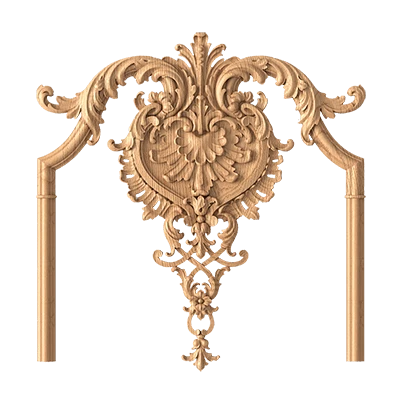
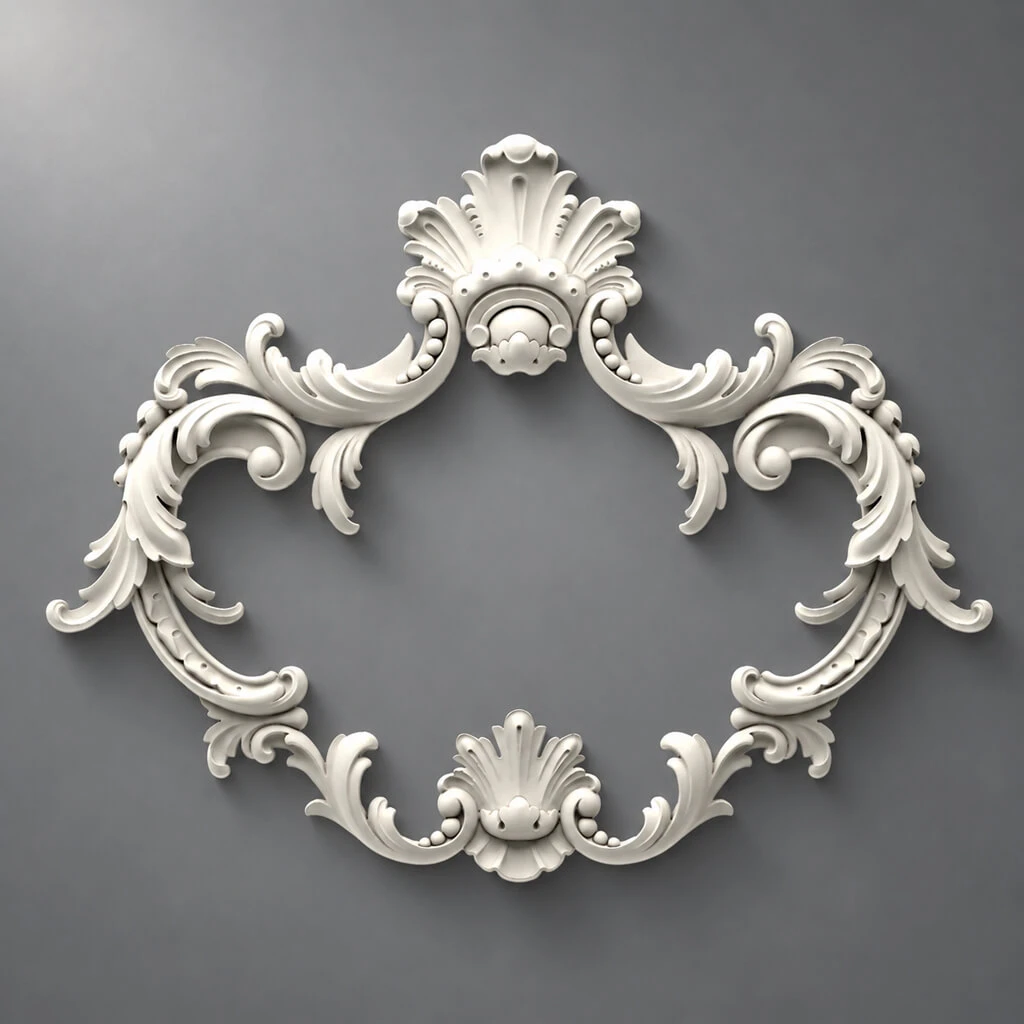
- The decorative overlay must also pass a compatibility check
- N-502: the decorative element must be documented just as strictly
- The central and corner overlays require different quantities
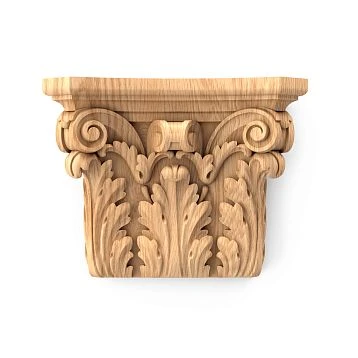
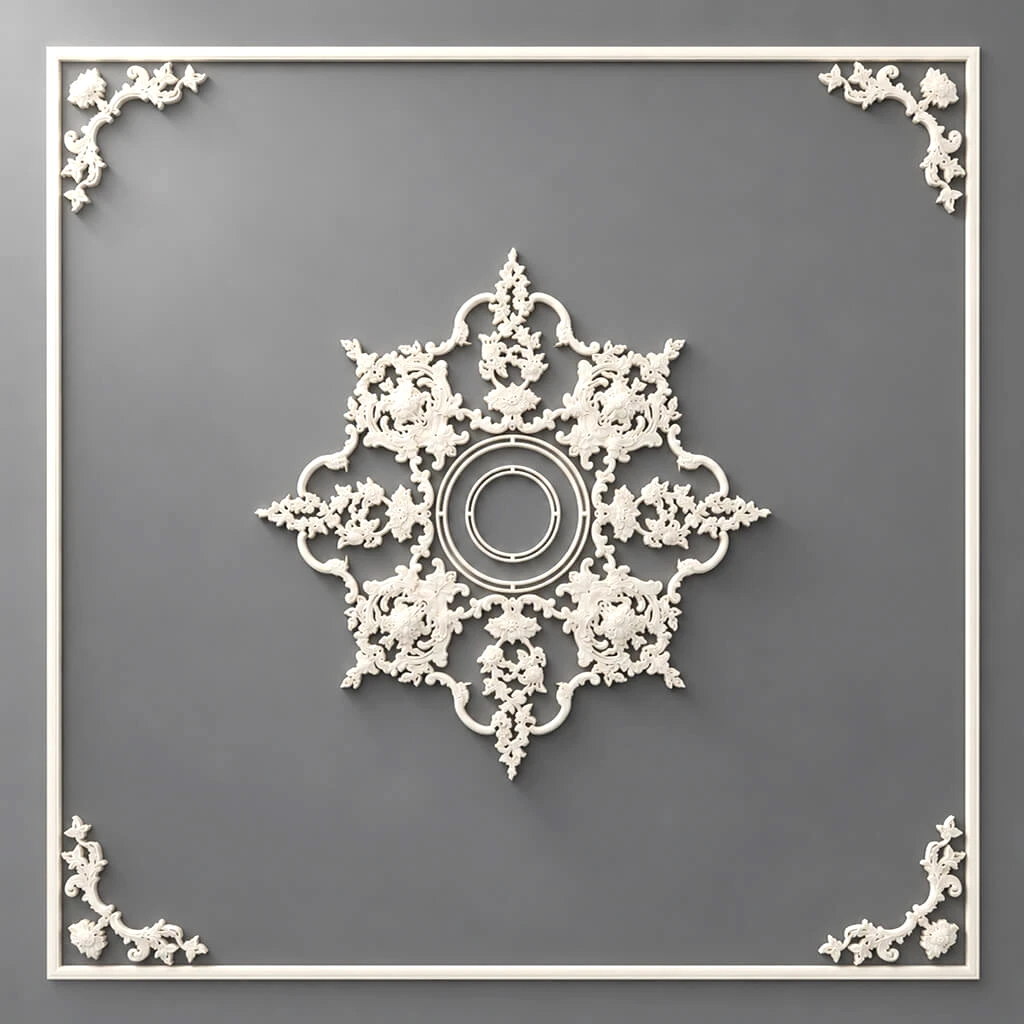
- The carved rosette is also a separate purchasing item
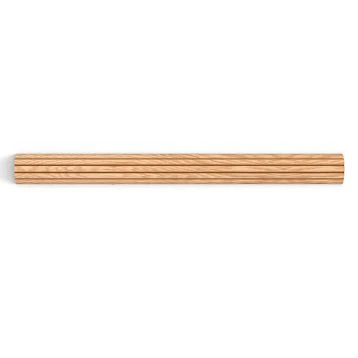
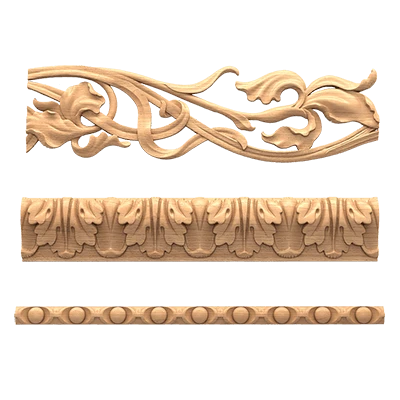
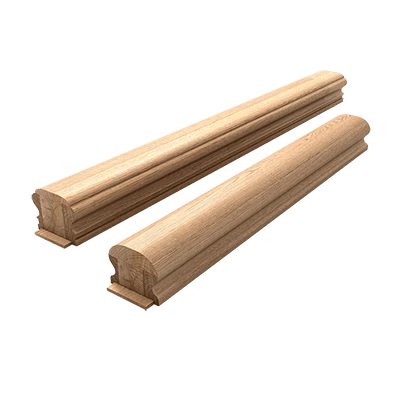
- Molding is not counted only by meters
- Why 10 meters of molding may not cover a 9-meter project
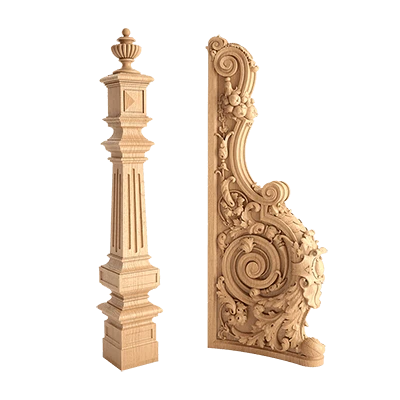
- Wooden construction set is a separate group
- Compatibility is not just about “matching in style”
- Geometric
- Installation
- Technological
- Compositional
- Handle is changed
- Leg is changed
- Molding is changed
- What components does a furniture maker need?
- What is included in furniture components?
- Which components should be selected before manufacturing the cabinet?
- How to check the compatibility of the leg and the mount?
- When to choose furniture handles?
- How to account for decorative overlays in the specification?
- Do I need to order sample swatches?
- How do I calculate the number of components for a furniture series?
- What should I record in the specification for a repeat order?
- Where to buy wooden furniture components?
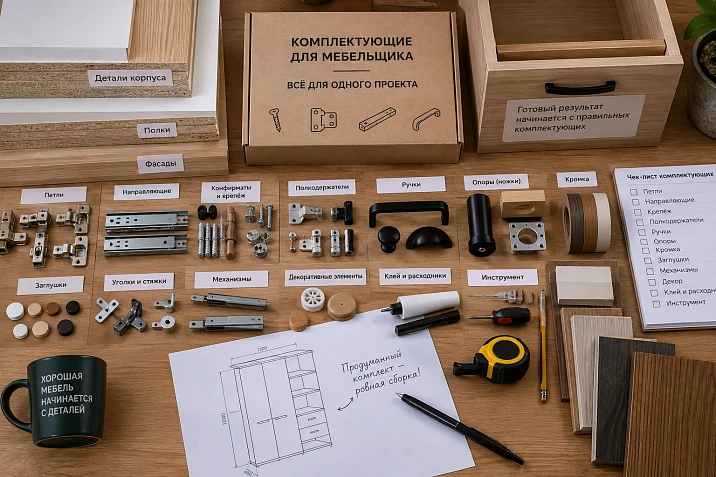
Page description: How a furniture maker can assemble components for a single project: legs, wooden handles, fasteners, overlays, and decor. Checking compatibility, quantities, and specifications before ordering from STAVROS.
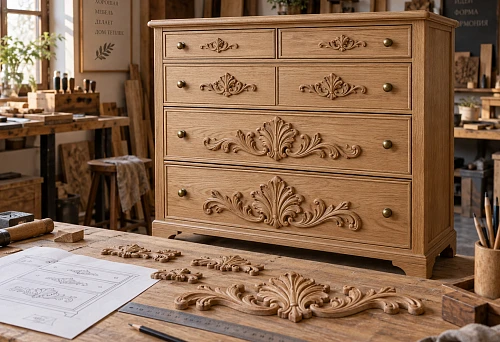
The dresser is already drawn, the cabinet dimensions are approved, and the fronts are ready for cutting. At this point, it seems like all that's left before purchasing is to open the catalog and add the necessary parts to the cart. But this is exactly where small items most often come up, without which the project suddenly stops coming together: the leg doesn't have a suitable mounting, the handle requires different marking, the overlay overlaps the molding, and for four fronts the molding seems to be enough by total linear meterage, but the required long sections cannot be obtained.
That's why furniture component selection doesn't start with purchasing.
First, you need to make a complete list of purchased parts for the specific project, check their dimensions and compatibility, calculate the quantity, determine the material and finish — and only after that place the order.
For a single wardrobe or dresser, this may include several groups:
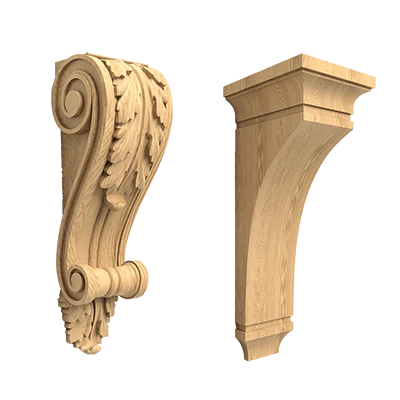
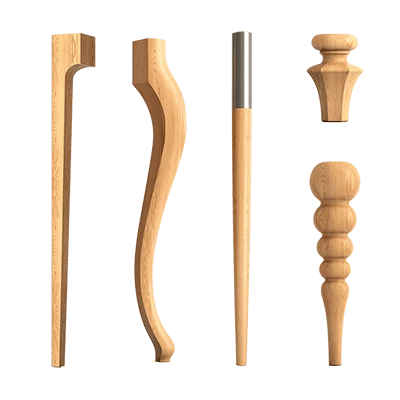
- legs or supports;
- leg fastening;
- handles;
- decorative overlays;
- Outlets;
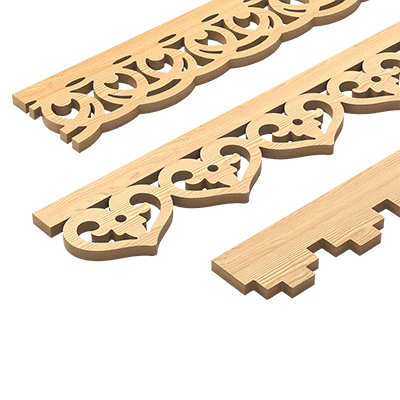
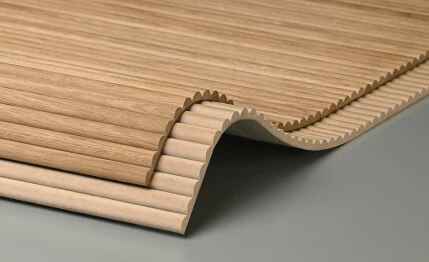
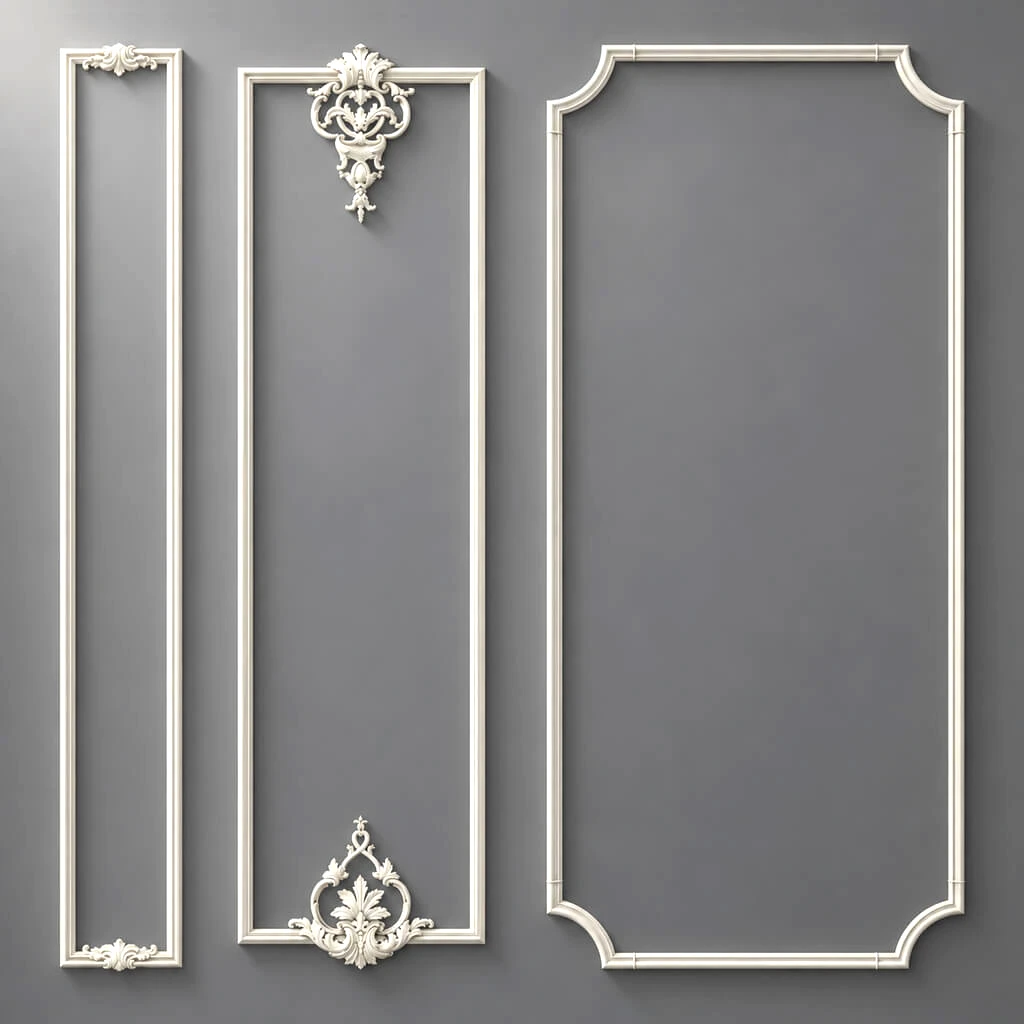
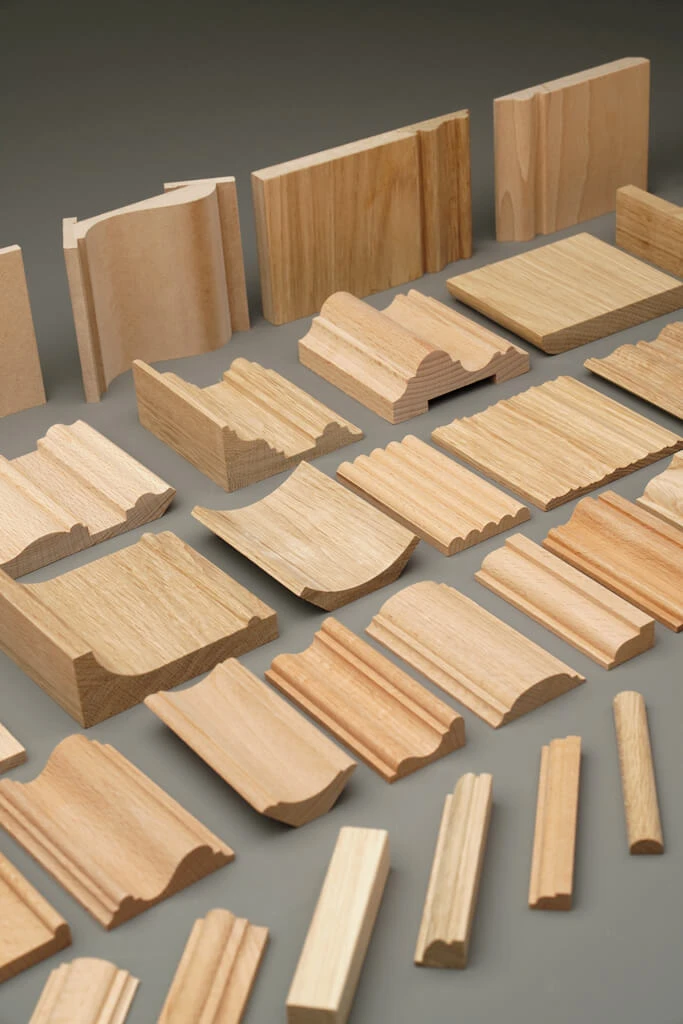
- moldings and trim;
- elements of the wooden kit;
- materials for installation and finishing.
If at least one of these groups affects the furniture geometry, holes, height, or decor placement, it cannot be left "for later."
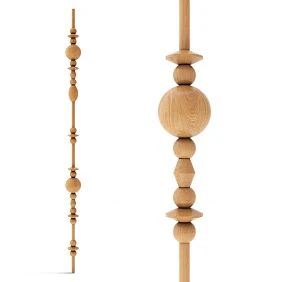
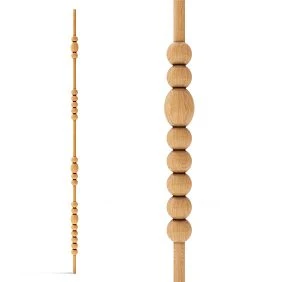
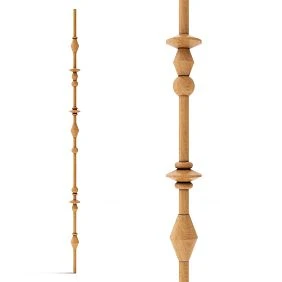
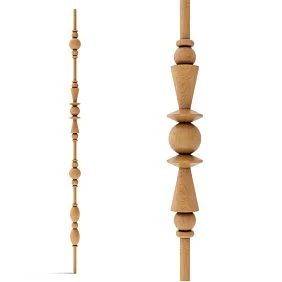
Furniture assembly starts with a project, not with a shopping cart
A bad sequence looks like this:
saw a beautiful leg → added handles → found a decorative overlay → now we're trying to fit all of this into an already finished drawing.
The working sequence is different:
project → component list → specific SKUs → dimensions → compatibility → quantity → trial check → specification → order.
The difference between these approaches is especially noticeable in small furniture production.
When a single piece is being made, a mistake can sometimes still be corrected manually.
When a series of ten identical dressers is being made, one forgotten item turns into ten identical problems.

First, make a complete list of purchased components
Even for a single piece of furniture, it is useful to divide the components into groups.
For example, for a chest of drawers:
| Group | What's included |
|---|---|
| Supports | Legs |
| Mounting | mounting plates, studs, base pads |
| Handles | knobs, brackets, or other selected models |
| Decor | overlays, rosettes, small carved elements |
| Molding | moldings, rails, baguette |
| Finishing | materials required specifically for purchased wooden parts |
If a group is not present in the project, it is simply excluded.
The main benefit of such a table is not formality. It forces you to check the project system by system.
For example, the "legs" row almost automatically raises the next question: what are they attached with?
The "molding" row — and what ready-made lengths are needed?
The "handles" row — and have the holes on the facade already been calculated for a specific model?
This way the list becomes a verification tool, not a shopping list.
Our factory also produces:
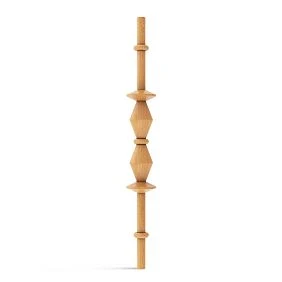
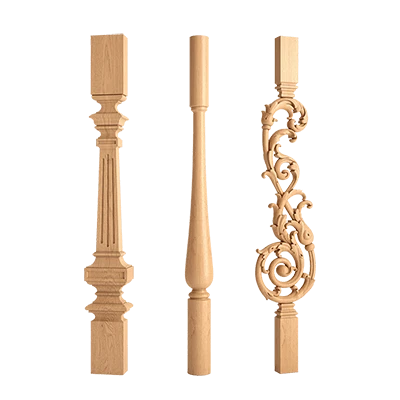
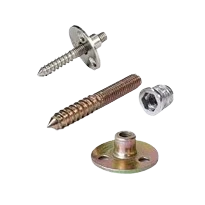
Leg and mounting are two separate items
One of the most common mistakes in a bill of materials:
furniture leg — 4 pcs.
this is not enough.
For each leg, the installation method must be checked.
You may need:
- mounting plate;
- stud;
- threaded insert;
- foot plate;
- separate fastener to the carcass.
Therefore Wooden furniture legs и Furniture for legs and handles must be checked together.
If a leg is selected but the mounting assembly is not determined, the project cannot yet be considered fully specified.
Get Consultation
Leg height affects the entire piece of furniture
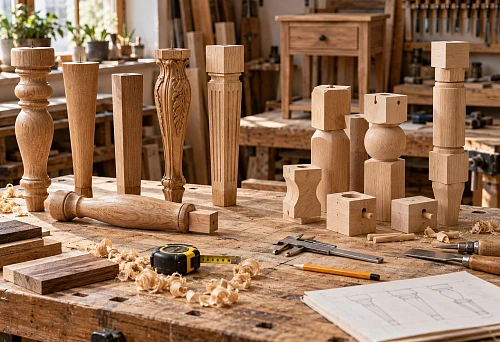
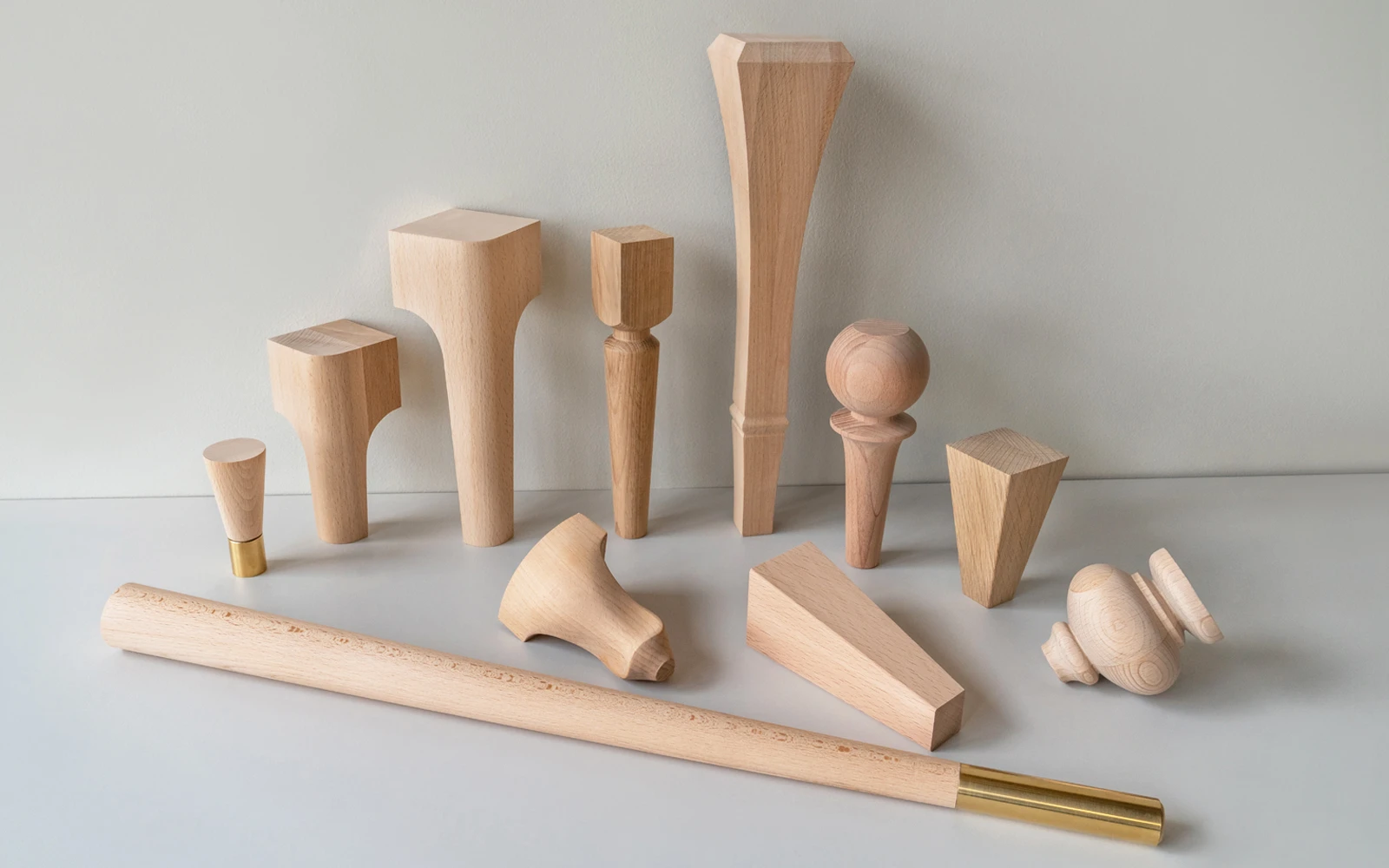
A leg is not just a decorative detail.
It is included in the overall height of the product.
For example:
- chest body — 700 mm;
- top panel — 30 mm;
- leg — 150 mm.
Total height:
700 + 30 + 150 = 880 mm.
If, after cutting the body, you replace the 150 mm leg with a 220 mm model, the final height will already be 950 mm.
Not only the appearance will change.
The ease of use of the furniture may change.
Therefore, it is better to choose the specific support before finalizing the height of the cabinet.
Unpainted leg — a separate purchasing item
If the legs will be painted together with the furniture, it is not enough to write:
wooden legs for painting — 4 pcs.
It is better to specify:
- the specific model;
- the material;
- size;
- quantity;
- Future finishing.
For this, you can use the section unpainted furniture legs.
For example:
leg, selected item code, beech, 4 pcs., for enamel in the cabinet color
This way, when reordering, you won't have to remember which exact model was used in the first product.
FUR-017: the fastener must have its own item code
mounting plate FUR-017 measures 112 × 70 × 26 mm.
It has an M8 metal threaded insert installed, and the tilt angle is 10°.
The plate is designed for mounting a furniture support with an M8 stud.
Please note that the fasteners for securing the plate itself to the furniture body are not included in the kit.
That is why the entry:
leg mounting hardware — 4 pcs.
too weak.
It is more useful:
FUR-017, 112 × 70 × 26 mm, 4 pcs.
And on a separate line — fasteners, if the project actually requires them.
This makes it clear that the plate is not an abstract “fastener.” It has specific dimensions, thread, and angle.
The handle is selected before drilling the front
The second critical group is furniture handles.
General section wooden furniture handles useful at the stage of choosing a specific model.
Before drilling the front, you need to know:
- handle type;
- outer dimension;
- number of attachment points;
- distance between holes, if there are two;
- position on the facade;
- protrusion;
- the material;
- Finish.
First, the specific handle.
Then the holes.
Not the other way around.
Why you shouldn't buy handles "about this size"
This is especially dangerous for brackets.
Suppose the drawing specifies a distance between holes of 128 mm.
After drilling, the craftsman finds a beautiful handle with a different distance.
Now the choice is already limited by the existing holes.
For a knob handle, the problem is smaller because usually only one point is used.
But even there, it's important to know the actual size of the handle and its position relative to the frame or decor.
Standard production procedure:
- select the article;
- verify dimensions;
- create a hole pattern;
- test one facade;
- then drill the series.
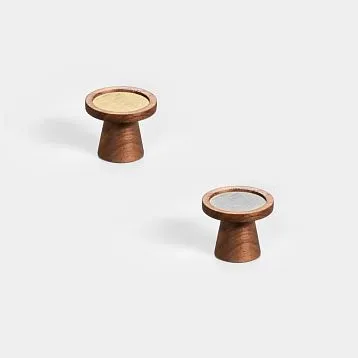
Proun HL-053-1 as a separate project line
Furniture handle Proun HL-053-1 has dimensions of 28 × 28 × 29 mm.
Available in beech and oak.
If the project requires six such handles, the entry might look like this:
Proun HL-053-1, beech, 28 × 28 × 29 mm, unfinished, 6 pcs., for enamel
A single line already shows:
- which model;
- which material;
- how much is needed;
- what to do about the finish.
For a repeat order, this format is far more reliable than a photo from an old message thread.
An unfinished handle and a finished handle are different items
If the workshop paints handles together with the fronts itself, this section is convenient handles without coating.
If you need a finished exterior look — Handles with Finish.
For purchasing, this is not the same item.
Even if the shape is similar, the finish must be recorded separately.
Otherwise, handles with a different surface condition may accidentally end up in the next batch.
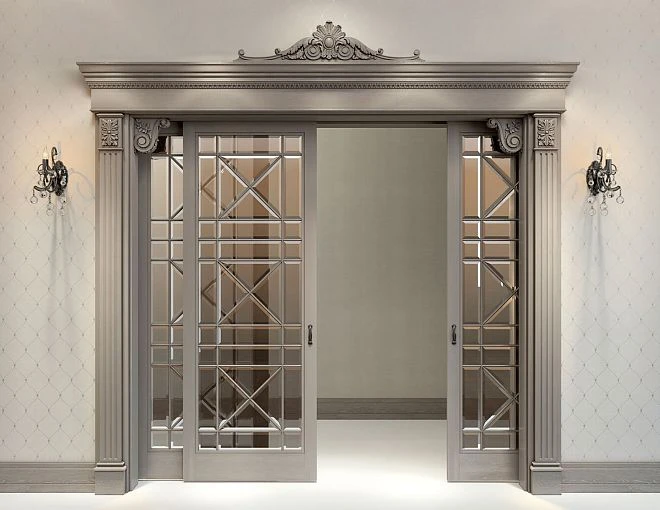
The decorative overlay must also pass a compatibility check
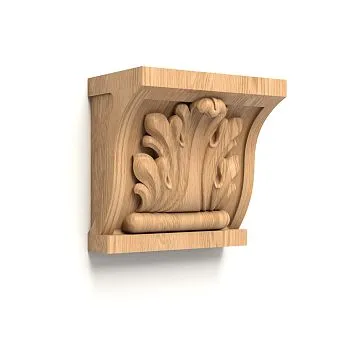
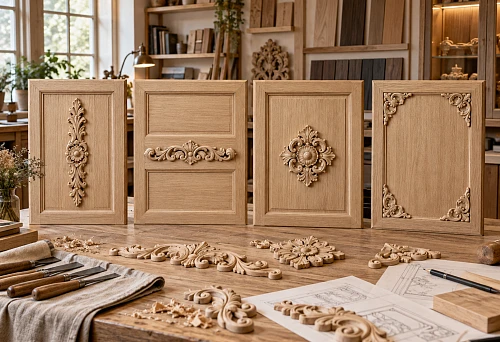
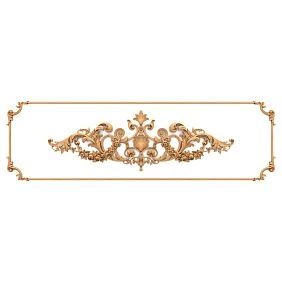
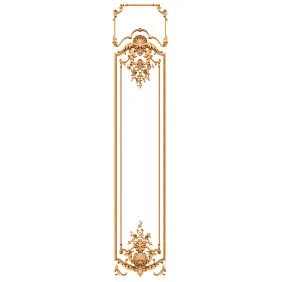
carved appliqués are often chosen by appearance.
But before purchasing, you need to check more than just the pattern.
The overlay has actual dimensions.
It occupies a specific place on the front.
Therefore, you need to note in advance:
- working field;
- molding;
- the handle;
- the central axis;
- adjacent decor.
Only after this is the quantity determined.
N-502: a decorative element must be documented just as strictly
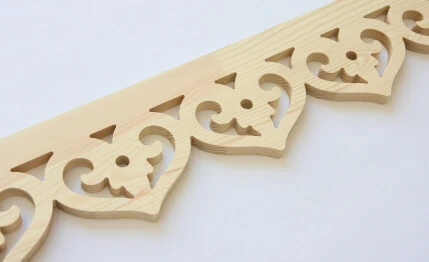
Wooden Decor N-502 measures 35 × 300 × 9 mm.
It is made from beech and oak.
If two such parts are required on a chest of drawers, the entry is:
decor — 2 pcs.
does not help.
Working note:
N-502, beech, 35 × 300 × 9 mm, 2 pcs., for enamel
The point is simple: a decorative element must be described in the project no less precisely than a leg or a handle.
The central and corner overlay require different quantities
The quantity of decor cannot be assigned with a single guessed number.
The central overlay is often used one per front.
A corner unit may require:
- two pieces;
- four;
- left and right;
- mirrored set.
If the project uses directional elements, the left and right parts must be separate lines.
Do not write:
overlay — 2 pcs.
if different SKUs are actually needed.
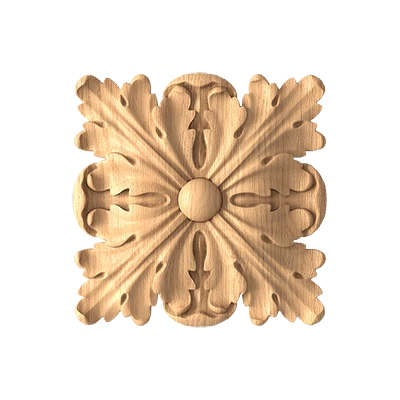
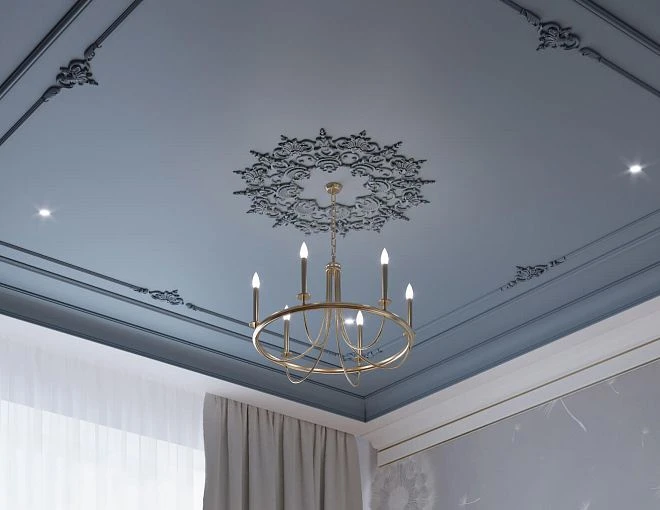
A carved rosette is also a separate purchasing item
But for procurement, it is an ordinary purchased component.
Need to check:
- size;
- shape;
- center position;
- the material;
- quantity;
- finishing.
If an outlet is used on eight fronts, the order must include eight specific parts, not a generic entry like "central decor."
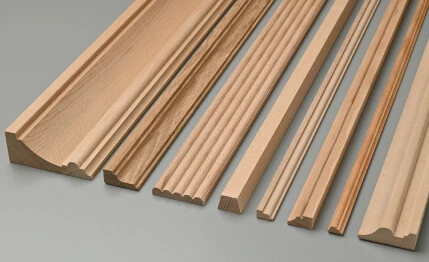
Molding is not calculated by meters alone
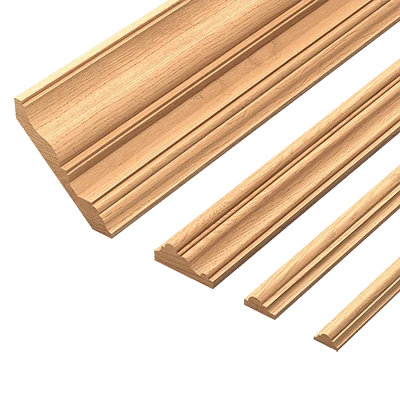
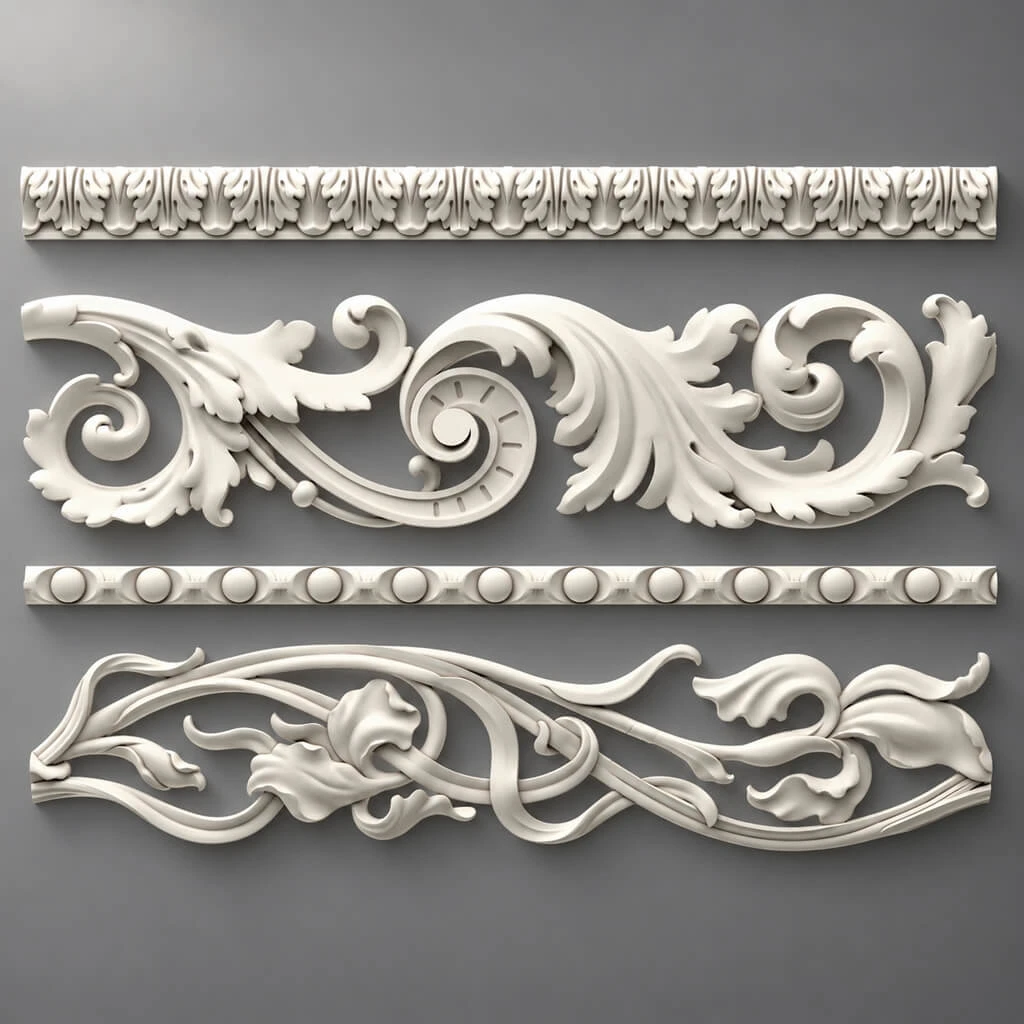
Wooden moldings they require a different calculation system.
A specific profile can be specified in the specification.
But a separate list of finished lengths is needed.
For example:
| Length | Quantity |
|---|---|
| 720 мм | 4 |
| 420 мм | 4 |
| 1180 мм | 2 |
After that, a cutting map is built based on the actual length of the commercial strip.
Only this way can the order quantity be determined.
Why 10 meters of molding may not cover a 9-meter project
Total footage does not show which segments are needed.
Let's imagine that a project requires 9 m of finished molding.
Planks purchased for 10 m.
There is a surplus in total amount.
But if four long sections of 1800 mm are needed, and most of the material has already been cut into short parts, it is impossible to obtain the required long elements.
Mathematically, there is enough material.
In terms of cutting, no.
Therefore, the molding purchase list must be based on actual lengths, not just the total meters.
Wooden construction set — a separate group
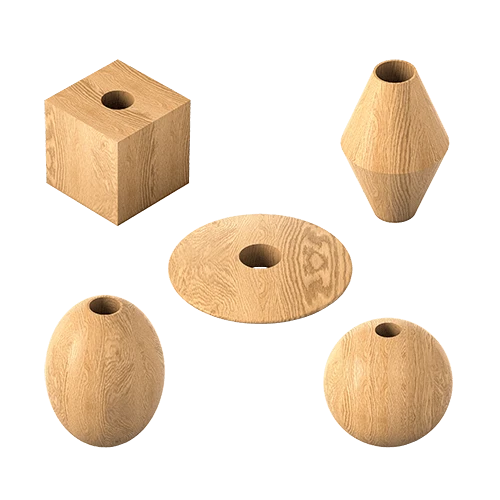
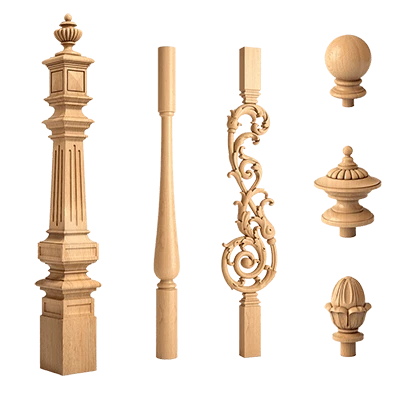
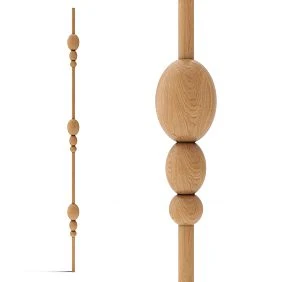
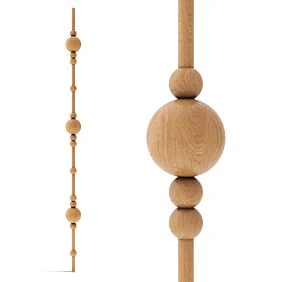
Some projects use not only ready-made legs and handles, but also Wooden construction elements.
This is a separate group of components.
Each module must have:
- own SKU;
- size;
- the material;
- quantity;
- a clear place in the construction.
You cannot write:
constructor elements — a set
if the actual composition is not recorded.
Especially if the furniture will be repeated later.
Compatibility is not just “matches the style”
Two beautiful wooden parts can look good together and still work poorly together in a project.
Compatibility must be checked at at least four levels.
Geometric
The part physically fits.
For example, the overlay fits within the inner field of the frame.
Installation
It can be secured correctly.
For example, the leg is compatible with the selected mounting plate.
Technological
The material and surface condition are suitable for the selected finishing system.
Compositional
The element does not conflict with neighboring parts.
For example, the handle and the overlay do not try to occupy the same point on the front.
Compatibility table for one project
Before ordering, it is useful to fill out a simple table.
| Component | What to check against |
|---|---|
| Leg | body, height, mounting |
| Mounting plate | specific leg, thread, angle |
| Handle | front, holes, frame |
| Overlay | front, handle, molding |
| Rosette | center, adjacent decor |
| Molding | frame size, corners, overlay |
| Finishing | material of all visible wooden parts |
Such a table often reveals a problem before the order reaches the cart.
Do not mix oak and beech accidentally
If all wooden components are painted with opaque enamel, the visual difference between species may become minimal.
If the wood remains visible, the situation is different.
For example:
- legs — oak;
- handles — beech;
- overlays — oak.
Under clear oil, these parts may differ more noticeably than on untreated wood.
Therefore, the material must be specified separately for each group.
Do not write simply:
wood
Better:
oak
Or:
beech.
Trial set before the series
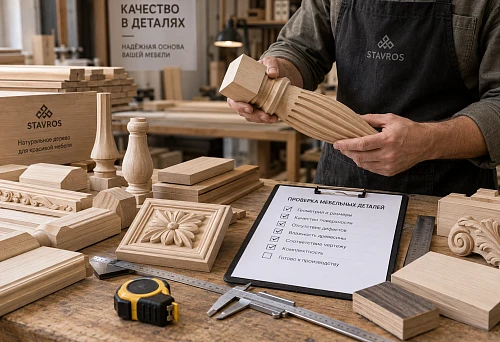
If the furniture will be repeated, it is useful to first assemble one trial set of components.
For example:
- 1 leg;
- 1 mounting plate;
- 1 handle;
- 1 overlay;
- molding sample.
On a single test assembly, you can check:
- the landing;
- geometry;
- color;
- mounting;
- indents;
- overall appearance.
After that, it makes sense to purchase the entire series.
It is cheaper to find a mistake on one part than on forty.
How to calculate the quantity per series
Let's imagine an order for 10 identical dressers.
One dresser requires:
- 4 legs;
- 4 mounting plates;
- 6 handles;
- 2 overlays.
For the entire series:
legs: 4 × 10 = 40 pcs.
plates: 4 × 10 = 40 pcs.
handles: 6 × 10 = 60 pcs.
overlays: 2 × 10 = 20 pcs.
But it's better not to mix the main quantity and the reserve.
For example:
40 legs required
reserve 2
order 42
Then, on recalculation, you can see how much actually goes into the product and how much was purchased additionally.
The reserve should not hide calculation errors
Bad approach:
not sure about the quantity — we'll add another 20%
This way you can mask an incorrect specification.
A reserve is needed after an accurate calculation.
For an expensive carved part, it may not be needed at all.
For inexpensive fasteners, it should be reasonable.
For molding, the reserve is determined by the cutting layout.
That is, the allowance for different groups of components is calculated differently.
What must be included in the specification
A simple table is enough for professional reordering.
| Field | What to record |
|---|---|
| Item code | internal project reference |
| Manufacturer | STAVROS |
| Article number | Exact model |
| Name | short, clear name |
| Size | if it matters for the project |
| Material | oak, beech, etc. |
| Finishing | enamel, oil, unfinished |
| Required quantity | how much is needed for the project |
| Reserve | additional quantity |
| Quantity to order | Purchase total |
| URL | direct link to the product |
This is already enough for another person to restore the order without verbal explanations.
Product photo is not enough
A photograph can help visually.
But for reordering, it is weaker than the SKU.
Two similar handles can look almost identical in a small photo.
Two similar moldings may have different profiles.
Two mounting plates may differ in angle or thread.
Therefore, the project needs:
- exact article number;
- link;
- the material;
- size;
- version/variant.
A photo can be attached additionally.
But do not use it instead of this data.
Replacing one item requires rechecking the adjacent ones
Sometimes the desired product is unavailable, and the idea arises to replace it with a similar one.
Such a replacement cannot be made in isolation.
The handle changes
Need to check again:
- holes;
- position on the facade;
- distance to the overlay;
- frame.
The leg changes
Need to check:
- the overall height of the furniture;
- mounting;
- installation area;
- the position relative to the edge of the cabinet.
The molding changes
Checked:
- inner frame field;
- corners;
- lengths;
- compatibility with the decor.
That is, each replacement triggers a check of related parts.
Example of components for one chest of drawers
Let's imagine a chest of drawers with four legs, six handles, two vertical overlays, and a molded frame on the fronts.
A working list might look like this:
| Group | Position | Quantity | Check |
|---|---|---|---|
| Supports | selected furniture leg | 4 | Height |
| Mounting | FUR-017 | 4 | M8 stud, 10° angle |
| Handles | Proun HL-053-1 | 6 | holes and position |
| Decor | N-502 | 2 | facade field |
| Molding | specific profile | By cutting | lengths and angles |
After such a table, the project can already be checked as a system.
For example, FUR-017 tilts the leg by 10°. This means the lower support point shifts outward.
N-502 has a length of 300 mm. This means a corresponding free space must remain on the front.
Proun HL-053-1 measures 28 × 28 × 29 mm. This means you can estimate its scale in advance.
This is what a proper bill of materials looks like — when every purchased part is accounted for in the drawing.
Final check before paying for the order
Before purchasing, go through the project one more time.
- Every purchased part has a specific item number.
- The legs have a clear mounting method.
- The leg height is included in the overall furniture height.
- The handles were selected before drilling.
- The number of holes and their positions have been checked.
- The overlays fit within the working area of the front.
- Left and right elements are separated, if they exist.
- Sockets and central decor have a clear axis.
- Molding is calculated by finished lengths, not just total meters.
- The material of all visible parts is confirmed.
- The finish is defined.
- The required quantity and reserve are recorded separately.
- All links lead to specific required products.
If a line still says "something suitable," the project is not ready to order.
Where the furniture maker should source STAVROS components
For a general search for wooden components — Solid Wood Items.
For supports — Furniture legs.
For facades — Wooden furniture handles.
For mounting legs — Furniture for legs and handles.
For finishing facades — carved appliqués и Wooden sockets.
For modular wooden solutions — Constructor.
It's better to select not “everything beautiful from one category,” but only those parts that already have a place in the project.
The bottom line
A complete kit for a furniture maker is not a cart with a few liked products.
This is a proven system of purchased components, where for each item it is clear:
- place in the furniture;
- specific article number;
- size;
- the material;
- finishing;
- quantity;
- compatibility with adjacent parts.
The leg is checked together with the fastener.
The handle — together with the facade and holes.
Overlay — together with the work surface, handle, and molding.
Molding — according to the cutting map.
Material — together with the future finish.
Only after this can the list be considered ready for ordering.
This way, components stop being the last step before purchase and become a normal part of a furniture project.
Frequently Asked Questions
What components does a furniture maker need?
It depends on the specific project. Usually legs, fasteners, handles, decorative overlays, sockets, moldings, and other purchased wooden elements are checked separately.
What is included in furniture components?
The concept is very broad. In the context of STAVROS, it is convenient to include wooden legs, handles, mounting hardware for supports, overlay decor, sockets, moldings, and constructor elements.
Which components need to be selected before manufacturing the carcass?
First of all, those that affect dimensions and holes: legs, their mounting, handles, large overlays and moldings.
How to check the compatibility of a leg and its mounting?
Check the thread, mounting plate, installation angle, connection method and dimensions of the fastening unit. No plate can be considered universal.
When should you choose furniture handles?
Before drilling the fronts. First, a specific model is selected, then marking is done according to its actual dimensions.
How should decorative overlays be accounted for in the specification?
Specify the item code, size, material, quantity and future finish. Use separate lines for left and right parts.
Should you order sample pieces?
For a new furniture model or a small series, this is useful. One sample set helps verify the compatibility of all purchased components before a large order.
How to calculate the number of components per furniture series?
First count the quantity per item, then multiply by the batch size. Record the reserve separately from the main quantity.
What should be recorded in the specification for a repeat order?
SKU, name, size, material, finish, quantity, and a clean link to the product. Photos can be attached additionally.
Where to buy wooden components for furniture?
The STAVROS catalog has separate sections for solid wood products, furniture legs, handles, mounting hardware, carved overlays, rosettes, and wooden construction kit elements.