



























Article Contents:
- First the facade shape, then the overlay shape
- Tall and narrow
- Wide and low
- Close to square
- Frame front
- Main decor
- Supporting decor
- One long element
- Two small overlays
- Central element and vertical support
- Oak
- Oak
- Mistake 1. Choosing decor based only on a photo
- Mistake 2. Using the full facade size instead of the working field
- Mistake 3. Placing a large overlay on a narrow door
- Mistake 4. Using a horizontal piece where it lacks width
- Mistake 5. Treating a corner overlay as a standalone center
- Mistake 6. Mixing central, vertical, corner decor and a massive molding without hierarchy
- Mistake 7. Not accounting for the handle
- Error 8. Check only one facade
- What shapes of decorative wooden overlays are there?
- What to choose for a tall furniture facade?
- When is a horizontal overlay needed?
- Which overlay is suitable for the center of a facade?
- What are corner overlays for?
- How to choose the overlay size for a cabinet door?
- Can an overlay and molding be combined?
- How to position the overlay relative to the furniture handle?
- What to choose for enamel — oak or beech?
- Where to buy decorative wooden overlays for furniture?
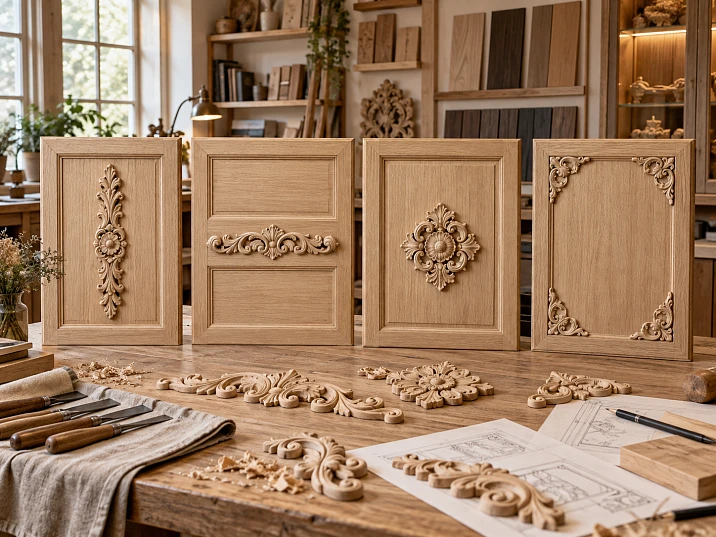
Page description: How to choose decorative wooden overlays for furniture: vertical, horizontal, central, and corner shapes. Facade size, composition, oak or beech, and STAVROS carved decor.
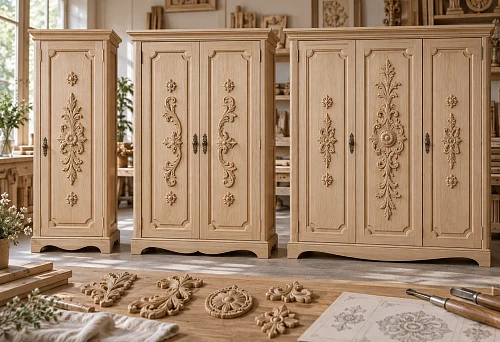
A beautiful carved overlay is easy to choose from a photo and just as easy to get wrong on a real facade. An elongated piece that looks good on a tall cabinet door may get lost on a wide dresser drawer. A large central element can overwhelm a narrow facade. Corner overlays work by a completely different logic: they do not occupy the center but support the frame.
Therefore, the shape of the wooden overlay should be chosen not in isolation from the furniture, but based on the geometry of the specific field where it will be installed.
First, determine:
- facade shape;
- its actual free field;
- the position of the handle;
- presence of molding;
- direction of the composition.
And only then do they choose a vertical, horizontal, central, or corner overlay.
The main principle is simple: the shape of the decor should support the shape of the furniture facade, not argue with it.
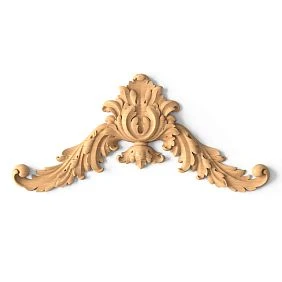
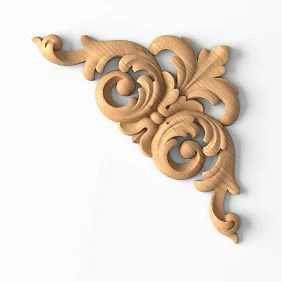
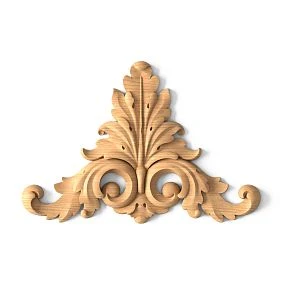
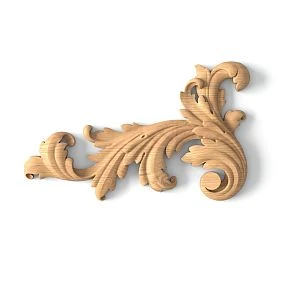
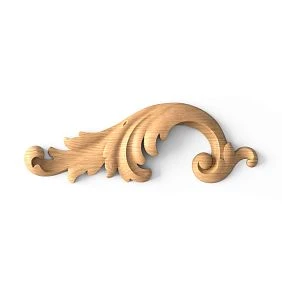
First the shape of the facade, then the shape of the overlay
Conventionally, furniture facades can be divided into several clear types.



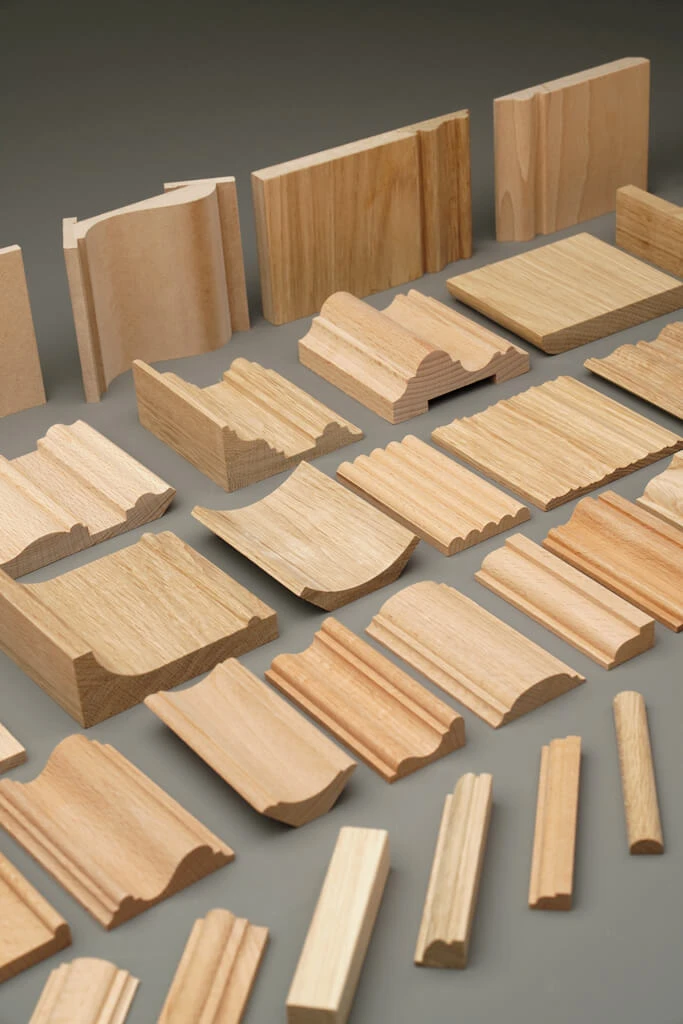
Tall and narrow
For example, a cabinet door or a tall buffet facade.
Here, a vertical direction naturally works.
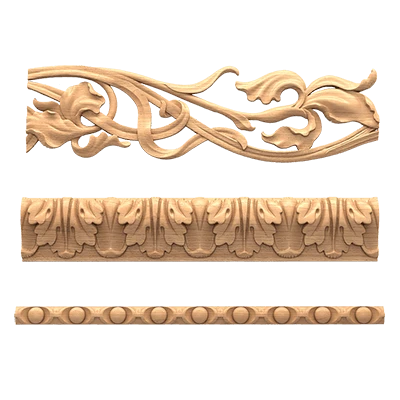
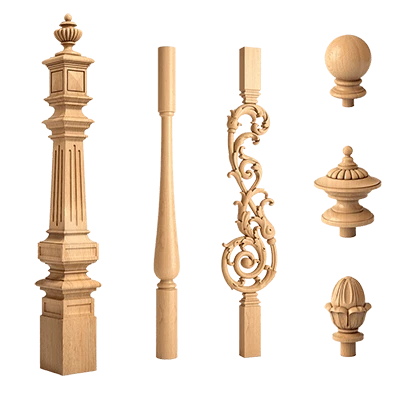
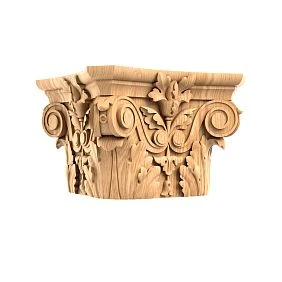
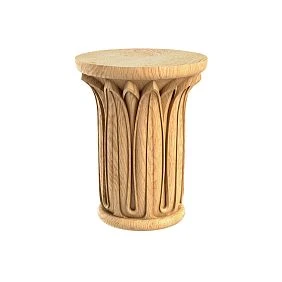
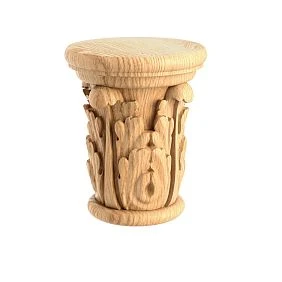
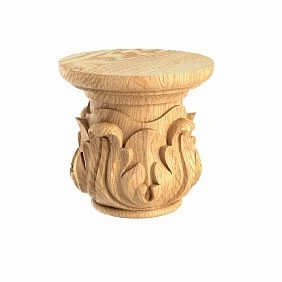
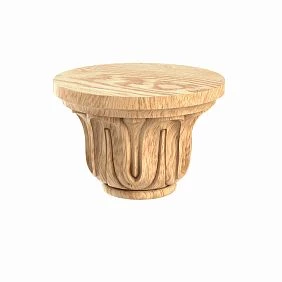
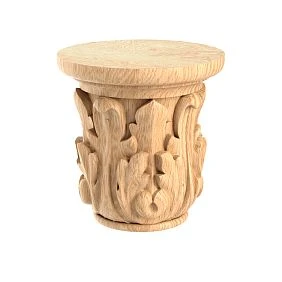
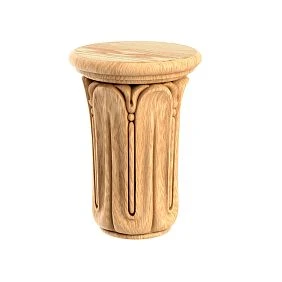
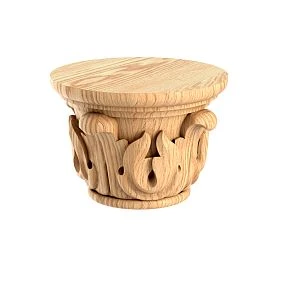
Our factory also produces:
Wide and low
For example, a long chest of drawers.
Here, a horizontal composition often reads better.
Get Consultation
Close to square
Such a facade does not require pronounced upward or sideways movement. A symmetrical overlay works well in the center.
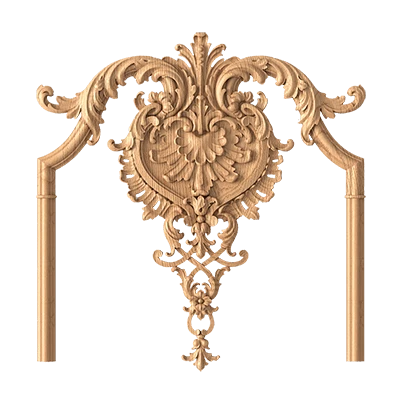
Frame facade
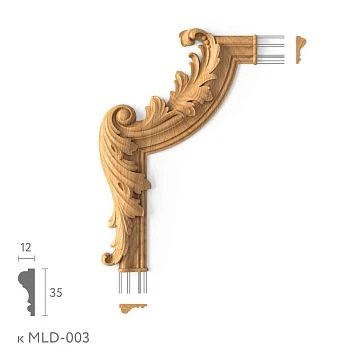
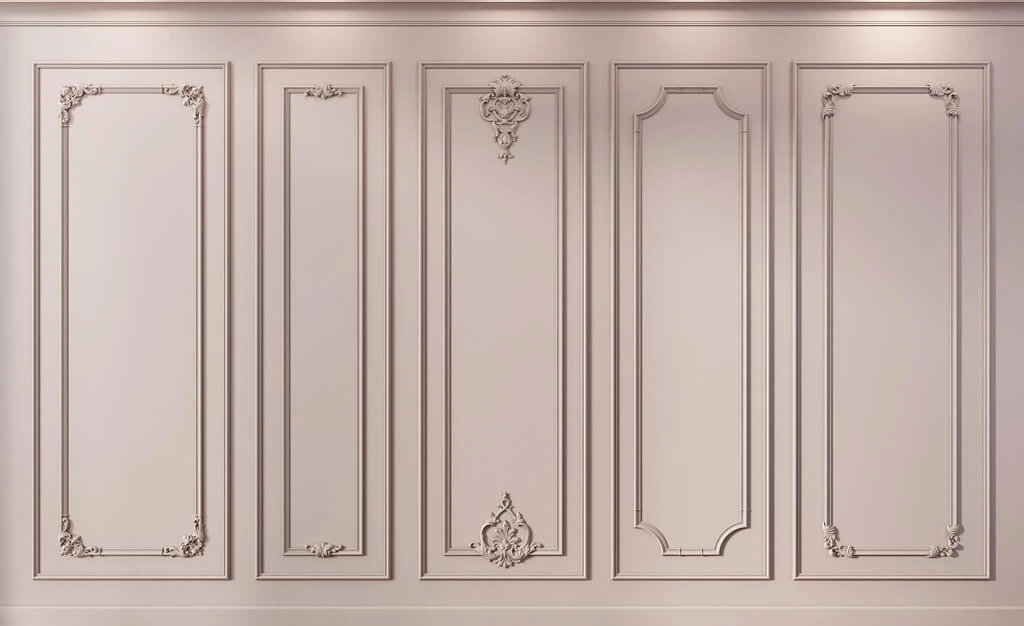
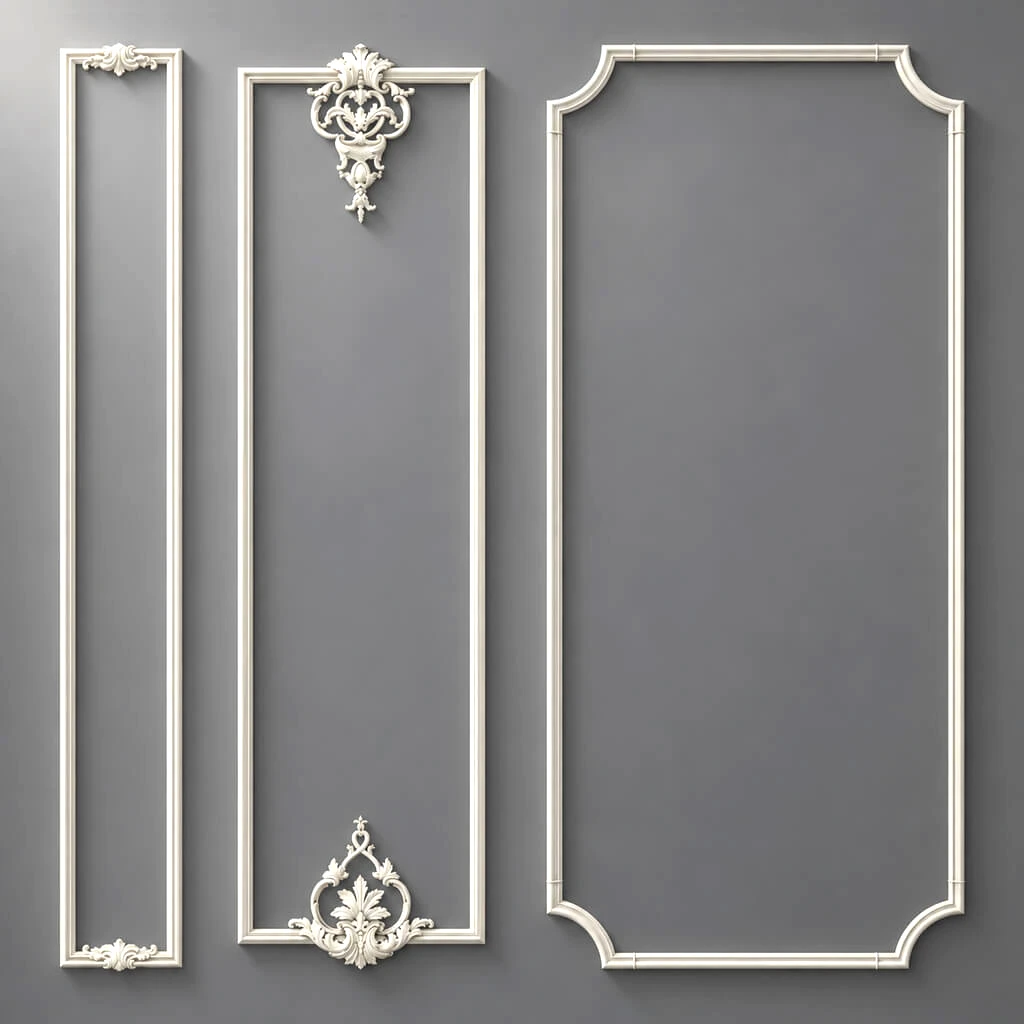
If the door already has a molded frame, you can use corner decor or a small central accent.
These are not rigid rules. A tall door can be decorated with a horizontal overlay if it is intended as a top band. On a wide facade, you can place a vertical accent if it supports the entire furniture composition.
But as a starting point, the geometry of the facade works very well.
The working area is smaller than the full size of the door
One of the most common mistakes is choosing an overlay based on the outer size of the facade.
Let's imagine a door 600 × 900 mm.
On paper, it seems that this entire area is available for decor.
But the facade may have:
- molding frame;
- furniture handle;
- panel;
- offsets from the edges;
- adjacent carved details.
As a result, the actual field for the overlay may turn out to be, for example, not 600 × 900 mm, but 420 × 650 mm.
It is this internal field that should be used when choosing.
You can simply call it: the working field of the decor.
It is measured after all the large elements on the facade have already been determined.
First the frame and handle.
Then the overlay.
Not the other way around.
How to determine the working field
Take the facade drawing and mark:
- outer contour;
- the molding frame, if there is one;
- the position of the handle;
- other decorative details;
- a mandatory visual margin from the edge.
After that, a free zone remains.
For example:
- front — 500 × 800 mm;
- the frame takes up 40 mm on each side;
- inside, approximately 420 × 720 mm remains;
- the handle takes up part of the bottom or side margin.
It is with this remaining size that you need to go to the catalog.
Vertical overlay — when the front itself "faces upward"
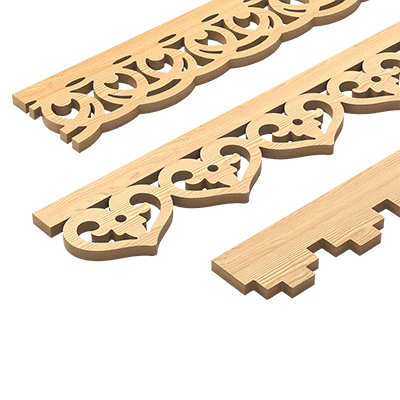
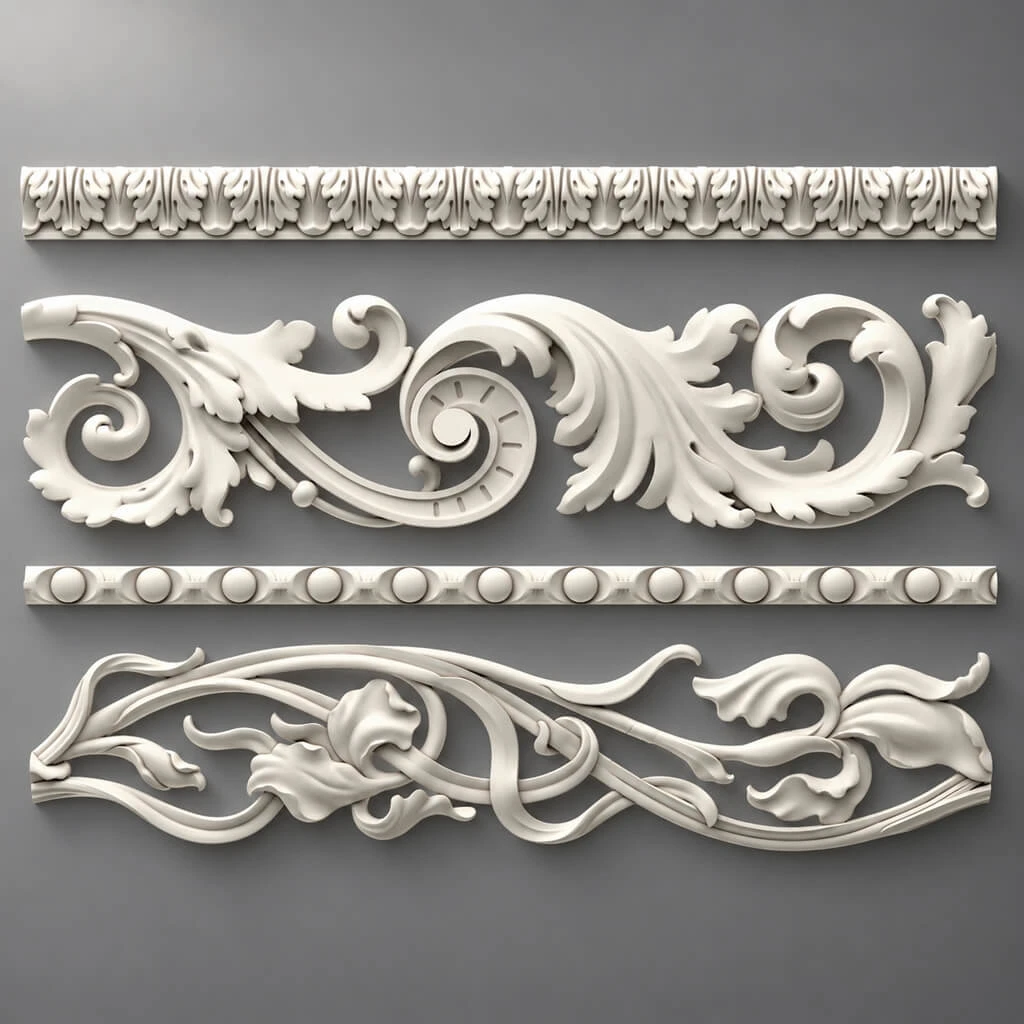
Vertical wooden overlays it makes the most sense to consider for elongated furniture surfaces.
Typical places:
- tall cabinet door;
- side decorative panel;
- sideboard door;
- tall display cabinet front;
- pilaster composition.
A vertical applique does not have to occupy the full height.
More often it works better when a free field remains around it.
If the carving starts almost at the top edge and ends at the bottom, the furniture may look overloaded.
The purpose of a vertical element is to emphasize height, not to fill the entire facade.
N-498: an example of an elongated vertical decorative element
Wooden Decor N-498 measures 41 × 307 × 11 mm.
A width of only 41 mm with a height of 307 mm immediately sets a vertical character.
This proportion is convenient to consider for a tall, narrow area.
For example, on a 450 × 900 mm facade, the overlay can run along the central axis above the handle.
Another option is to place it below the central horizontal line if the top of the facade is occupied by other decor.
Not only the size of the overlay itself matters.
You need to look at what remains around it.
If the working field is 600–700 mm in height, an element 307 mm high is perceived as an accent.
If the free field is only 330 mm, it almost completely fills it.
This is a different visual effect.
N-506: when the facade is very narrow
Wooden Decor N-506 even narrower — 12 × 205 × 5 mm.
This is a good example of the principle: for a narrow furniture plane, it is better to change the scale and type of decor rather than simply reducing the margins around a large overlay.
Let's imagine a side post or a narrow facade 100–120 mm wide.
An 80–90 mm wide overlay will take up almost the entire surface.
A 12 mm wide element works differently: plenty of air remains, and the carving is perceived as a thin vertical line.
This approach is especially useful where the furniture already has:
- the frame;
- a protruding profile;
- the handle;
- several adjacent facades.
The horizontal overlay runs along the width
Horizontal wooden overlays are suitable for a different geometry.
They are convenient to consider for:
- wide drawers;
- dresser fronts;
- the upper part of a wardrobe;
- a furniture gable;
- a wide sideboard door;
- the central band of a large composition.
Vertical decor visually elongates the surface.
Horizontal decor ties it together across the width.
This is especially noticeable on a dresser.
One long horizontal element can support the line of a drawer better than two small vertical overlays.
N-420: a large horizontal accent
Carved appliqué N-420 measures 502 × 250 × 16 mm in the base version.
A width of more than half a meter immediately limits the application scenarios.
If the working area of the facade is 450 mm, such an element simply does not fit there.
If the facade is 800–1000 mm wide, the overlay can already work as a large central or horizontal accent.
That is why the size needs to be checked before purchase.
A large element in a catalog photo may look compact because there is no sense of scale nearby.
On real furniture, 502 mm is already a substantial width.
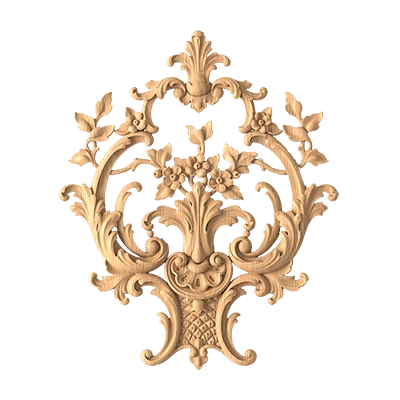
Central overlay — when the facade needs one clear focal point
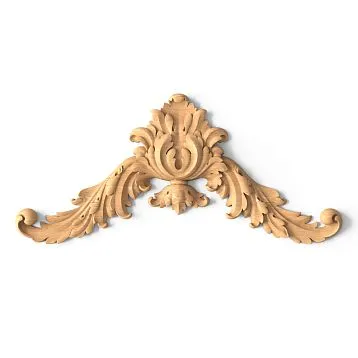
Central decor works best where the composition truly has a pronounced center.
For example:
- square door;
- large drawer;
- center of a wide panel;
- inner field of the molded frame.
Here, there is no need to necessarily stretch the design upward or to the side.
A symmetrical detail brings the composition together around a single point.
But the center of the facade and the free space are not the same thing.
If the handle is positioned exactly at the geometric center, the overlay can no longer simply be placed in the same spot.
The compositional center may shift higher or lower.
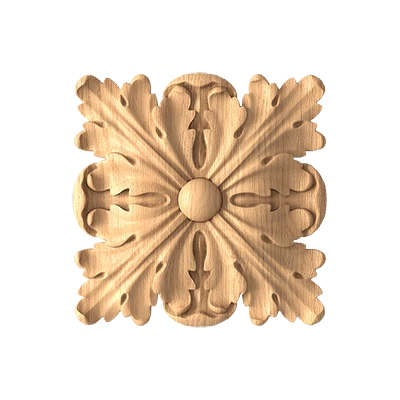
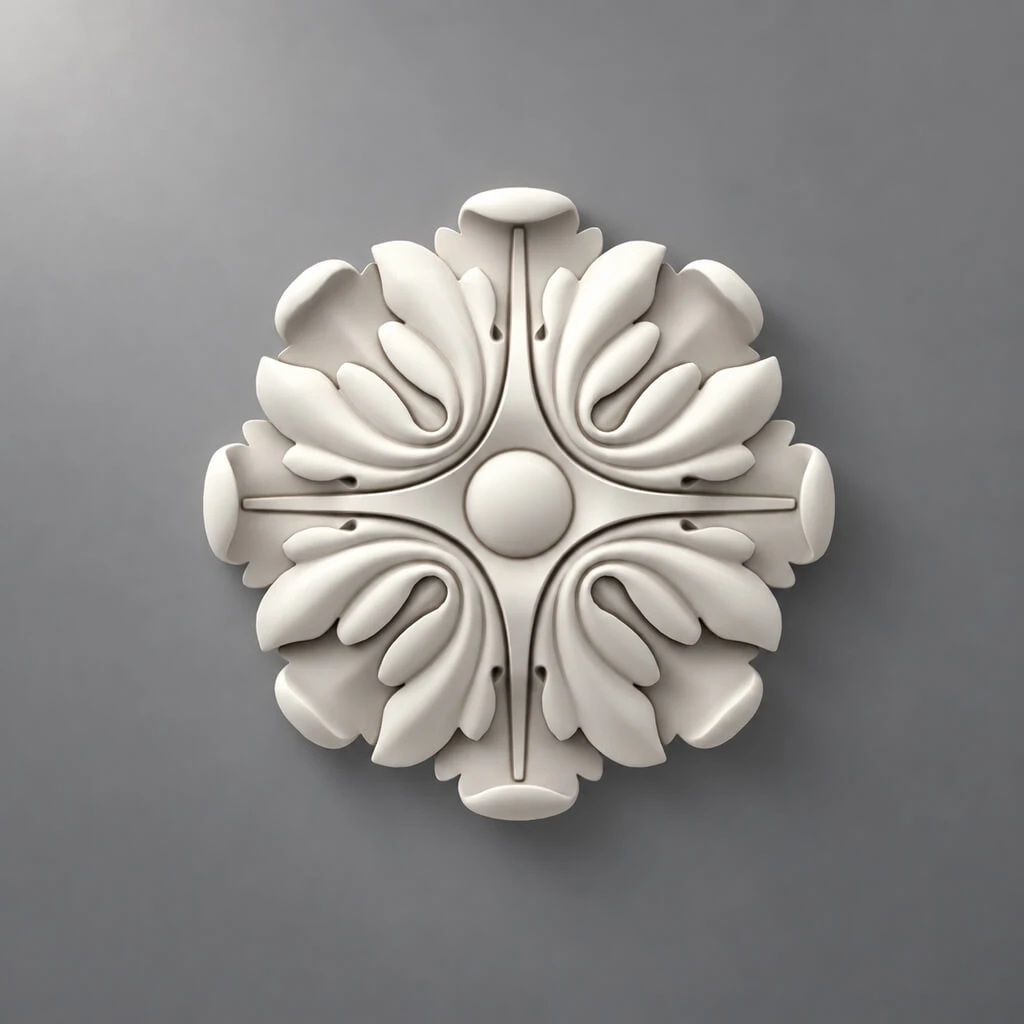
N-421: a compact central element
Carved appliqué N-421 measures 250 × 250 × 13 mm.
The square proportion makes it a clear example of a central composition.
On a 500 × 500 mm working area, such an overlay will leave approximately 125 mm of free space on each side if placed exactly in the center.
On a 300 × 300 mm area, the situation is completely different: the overlay will take up almost the entire surface.
Therefore, the word "central" does not mean "fits the center of any facade."
The scale still needs to be checked.
The central overlay does not have to be large
Sometimes a furniture maker looks for a central element and immediately chooses the most noticeable one.
This is not always necessary.
If the facade already has an expressive frame, a good molding, a handle, and a complex finish, a small central decor can work better than a large one.
It has a different task:
not to fill the entire surface,
but to put a finishing touch on the composition.
The more other elements there are on the facade, the more carefully the central overlay should be enlarged.
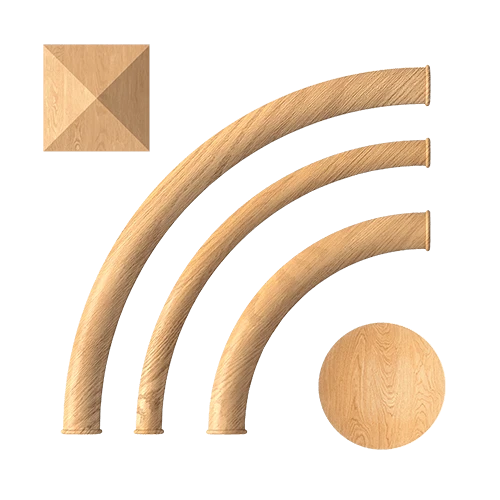
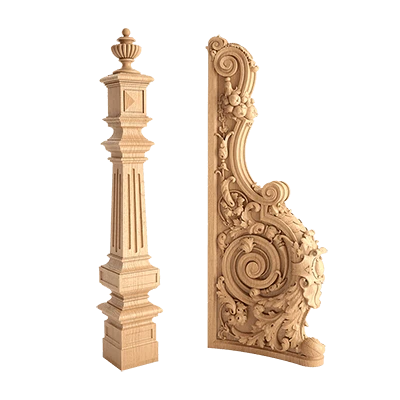
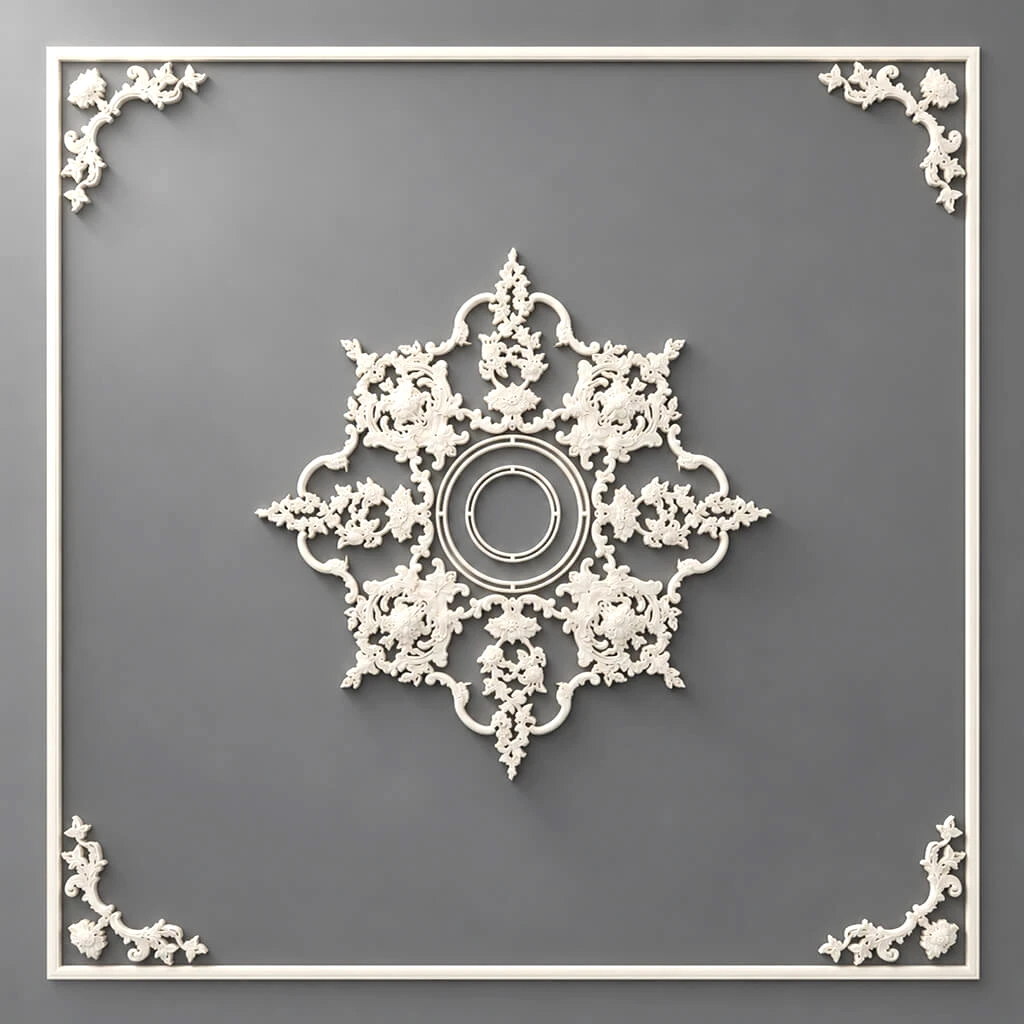
Corner overlays work as a frame
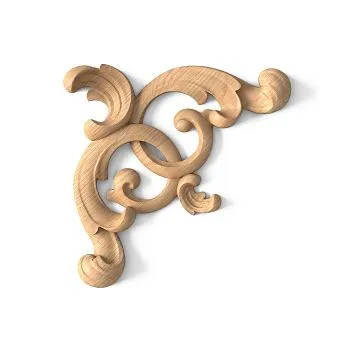
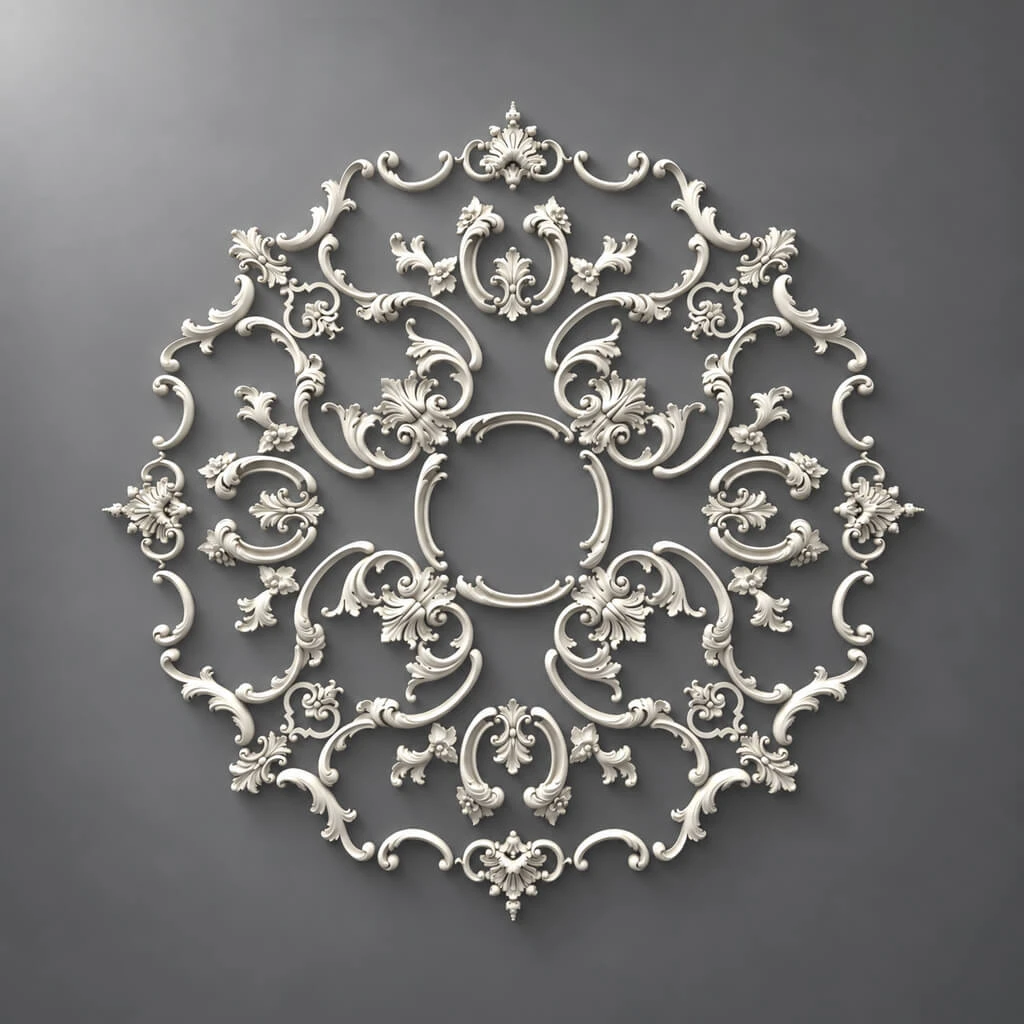
Corner wooden trim they solve a completely different task.
They do not have to have an independent center.
Their function is to support the boundary of the composition.
Corner decor can be used:
- in the four corners of a framed facade;
- with two elements at the top;
- with two elements at the bottom;
- as a mirrored pair;
- around the central panel.
In this case, the center remains free or receives a separate small overlay.
Why a single corner overlay rarely looks complete
The corner shape is usually constructed so that its direction is read relative to the edge.
If you place just one such piece on a symmetrical facade, the composition may look incomplete.
Therefore, the following are considered more often:
- two pieces;
- four pieces;
- a left and right pair.
The quantity must be determined before ordering.
You cannot first buy one overlay and then decide whether you need another identical or mirrored one.
If the element has a direction, the left and right versions may have different product codes.
How to quickly choose the type of overlay based on the facade
| Situation | What to consider first |
|---|---|
| Tall narrow front | vertical overlay |
| Narrow post or wall section | narrow vertical decor |
| Wide low drawer | horizontal overlay |
| Wide facade | horizontal or central element |
| Square work area | central symmetrical overlay |
| Front with pronounced frame | central or corner overlays |
| Four free corners | corner system |
| Large tall wardrobe | vertical or center with supporting decor |
This is not a ready-made formula.
But it helps quickly rule out obviously inconvenient options.
Don't mix all types at once
The simplest way to make a facade feel heavy is to add everything to it:
- moulding frame;
- four corner overlays;
- a large central element;
- a vertical carved detail;
- a large handle.
Each item on its own can be beautiful.
Together they begin to clash.
It is better to define two levels.
Main decor
What a person notices first.
For example, a large central overlay.
Supporting decor
What supports the main element.
For example, a frame or small corner details.
If the frame is already very expressive, the overlay can be small.
If the central decor is large, it is better to make the molding more subdued.
The molding and the overlay must be calculated together
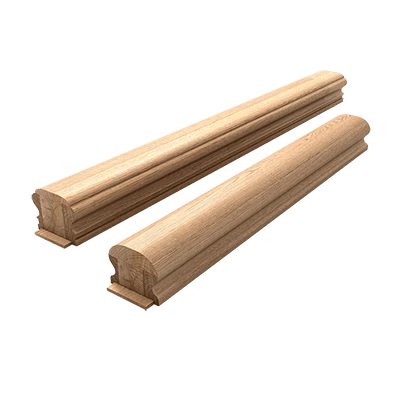
Wooden moldings often form the inner field of the facade.
Let's imagine a door 600 × 900 mm.
The molding forms a frame and takes 50 mm off each side.
The inner field becomes approximately 500 × 800 mm.
This is exactly where the overlay must fit.
If you first buy decor 502 mm wide and then decide to add a frame, it may turn out that it no longer fits.
The order is better like this:
façade → frame → inner field → overlay.
The handle is a full participant in the composition
Wooden furniture handles they also take up space and create a visual accent.
This is especially noticeable on:
- a dresser drawer;
- a kitchen façade;
- a small cabinet;
- a narrow cabinet door.
You cannot place both a handle and an overlay in the same compositional center.
You need to decide:
- the overlay is above the handle;
- lower;
- the handle is offset;
- the handle fits into the frame;
- the decor is positioned symmetrically relative to the handle.
On a small front, it is sometimes better to skip a large overlay altogether if the handle itself is already expressive enough.
Vertical overlay and handle on the same axis
On a tall door, you often want to place everything in the center.
But if both the handle and the overlay are on the same vertical axis, it is important to maintain the distance between them.
Too small a gap will merge the elements into one random clump.
Too large a gap can break the composition.
Therefore, it is useful to first lay out both parts on a full-scale paper facade template.
Especially if the overlay is elongated.
How to check the size without buying the whole batch
A catalog photo almost never shows the real scale the same way as a facade does.
A simple way to check:
- take the real dimensions of the selected overlay;
- draw its overall outline at a 1:1 scale;
- cut out the paper template;
- place it against the facade;
- add the paper handle;
- mark the molding;
- step back to the usual viewing distance for furniture;
- only then order the set.
For N-498, it is enough to cut a strip of approximately 41 × 307 mm.
For N-421 — a square of 250 × 250 mm.
These simple outlines alone will make it clear how different the visual scale will be.
Check not only one facade, but the entire furniture piece
A single overlay may look perfect on a separate drawer.
But if there are eight such drawers, the repetition becomes much more active.
The same applies to corner decor.
Four elements on one facade may look appropriate.
On six identical doors, that is already 24 carved details.
Therefore, after checking one facade, it is useful to draw the entire furniture piece.
Especially:
- dresser;
- a long kitchen;
- a multi-door wardrobe;
- a library;
- a large sideboard.
The repetition scale becomes visible only in the overall view.
Vertical does not always mean a single overlay
A tall facade can be constructed in different ways.
One long element
The calmest solution.
Two small overlays
For example, top and bottom.
Central element and vertical support
A more complex composition.
The main thing is not to fragment the facade without reason.
If one overlay already supports the door's proportion well, additional details may be unnecessary.
A horizontal overlay works well on a series of drawers
A chest of drawers is a good example of a repeated horizontal.
If each drawer has the same overlay, a rhythm appears.
But here it is especially important to look at the entire facade of the chest of drawers.
One large element may look good on the top drawer, but three identical ones in a row will be too heavy.
For a series of drawers, a compact repeatable part is often better.
Central overlay and moulding frame
On a classic front, the central overlay is often positioned inside the frame.
Here it is better to define the frame first.
For example:
- front — 500 × 700 mm;
- inner frame field — 350 × 500 mm;
- the handle is positioned below the center.
Then a 250 × 250 mm overlay can fit in the upper part of the field and will leave enough free space.
If the inner field is only 280 × 320 mm, the same element will become almost a solid fill.
Numbers are more important than a photograph.
Corner overlays and a central element
These two types can be combined.
For example:
- a small central rosette;
- four light corner elements.
But one level should be the main one.
If the central piece is large and textured, it is better to make the corners more restrained.
If the center is empty, the corner decor can be more expressive.
Otherwise, the facade turns into a set of separate beautiful details without an overall system.
Oak or beech
The material is chosen after the shape of the decor and the furniture finish are clear.
Beech
A common option for:
- enamel;
- opaque finish;
- decor in the color of the facade.
Oak
It is interesting when you need to preserve:
- natural texture;
- grain pattern;
- oil finish;
- stain;
- clear varnish;
- semi-transparent tinting.
But this is not a prohibition.
The beech overlay can be transparent.
The oak one — painted.
You need to look at the project as a whole.
Painting in the color of the facade
If the overlay is painted with the same enamel as the furniture, it visually becomes part of the facade's relief.
The color does not separate it from the base.
The eye sees:
- shadow;
- relief;
- shape;
- transitions of the ornament.
This approach works well when the decor should be noticeable but not look like a separate object.
Contrast finish
If the overlay differs in color or material, its role changes.
For example:
- natural oak on a painted facade;
- dark stain on light furniture;
- patina;
- gilding;
- contrasting enamel.
Now the decor reads as a standalone accent.
In this case, you need to choose the size especially carefully.
Contrast makes the overlay visually stronger.
Dry fitting before finishing
Before final painting, it is best to place the overlay against the actual facade.
Check:
- position;
- scale;
- distance to the handle;
- distance to the frame;
- overall level;
- number of elements.
Only after that proceed to final finishing and installation.
Dry fitting is especially useful with expensive clear coating or patination.
How to record different types of overlays in the specification
Avoid writing:
wooden decor — 8 pcs.
If different shapes are used in the project, the entry should show this.
For example:
N-498, vertical overlay, beech, 2 pcs., for enamel
N-420, horizontal overlay, beech, 1 pc., for enamel
N-421, central overlay, oak, 1 pc., for clear lacquer
For corner elements, the quantity per one front is specified separately.
If there is a left and right version, they are listed on separate lines.
This way, a repeat order does not depend on the craftsman's memory.
Common Mistakes
Mistake 1. Choosing decor based only on a photo
The size feels different on an actual front.
Mistake 2. Using the full front size instead of the working area
The frame and handle reduce the available area.
Mistake 3. Placing a large overlay on a narrow door
Decor ceases to be an accent and begins to fill the entire field.
Mistake 4. Using a horizontal element where it lacks width
The ornament begins to press against the edges.
Mistake 5. Treating the corner overlay as an independent center
It more often works as part of a framing system.
Mistake 6. Mixing central, vertical, corner decor and a massive molding without hierarchy
The facade becomes overloaded.
Mistake 7. Not accounting for the handle
After installation, the handle and the overlay begin to conflict.
Mistake 8. Checking only one facade
On a series, the repetition may turn out to be too active.
Where to buy decorative wooden overlays
Main section — carved wooden inlays.
If the direction of the composition is already clear, you can go straight to individual categories:
For a central composition, it is more convenient to look for symmetrical elements and immediately check their actual size relative to the working area of the facade.
After choosing the shape, do not order the entire batch based only on a photo.
Make a full-size template and check it on the furniture.
Quick selection guide
| Shape of the furniture panel | What to Check |
|---|---|
| Tall narrow | a vertical overlay and free space above/below it |
| Very narrow | compact elongated decor |
| Wide low | horizontal composition |
| Large wide | large horizontal or central element |
| Square | central symmetrical overlay |
| Framed | central accent or system of corner details |
| Small with large handle | possibly omit the additional large overlay |
| Series of identical facades | check the entire rhythm of the furniture, not just one door |
What to choose in the end
There is no single best overlay shape in general.
There is a shape that suits a specific furniture panel.
A tall narrow front more often supports vertical decor.
A wide drawer — horizontal.
A square panel — central.
A framed composition — corner elements or a small central accent.
But the final choice is always made after the following have been determined:
actual free panel → handle → molding → composition direction → overlay size.
Only after that does it make sense to choose a specific item number and material.
This way, the decorative overlay becomes part of the furniture rather than a random ornament that had to be placed somewhere after the facade was made.
Frequently Asked Questions
What shapes do wooden decorative overlays come in?
For furniture facades, it is convenient to distinguish vertical, horizontal, central symmetrical, and corner overlays. There are other shapes as well, but these four are enough for most basic compositional tasks.
What should you choose for a tall furniture facade?
Most often, it is worth starting with a vertical overlay. It supports the proportions of a tall door and does not require filling the entire surface with carving.
When is a horizontal overlay needed?
When the working field is noticeably wider than it is tall, or when you need to create a decorative band on a drawer, chest facade, or wide door.
Which overlay is suitable for the center of a facade?
For the center, a symmetrical element is more suitable, one whose size leaves enough free space around it and does not conflict with the handle.
What are corner overlays for?
They frame the edges of the composition, support the panel, and allow the central part of the facade to remain free.
How to choose the size of an overlay for a cabinet door?
First, determine the working area: subtract the frame zones, handle, and required margins. Then make a full-size template of the overlay and place it against the facade.
Can an overlay and molding be combined?
Yes. But first you need to build the molding frame and determine its inner area. The overlay is then chosen for the remaining space.
How should an overlay be positioned relative to a furniture handle?
The handle and overlay should not compete for the same point. The decor can be placed above, below, or offset while maintaining a clear axis of the composition.
What to choose for enamel — oak or beech?
For opaque painting, beech is often convenient to consider. Oak can also be painted, but its pronounced texture is especially valuable under transparent and semi-transparent finishes.
Where to buy decorative wooden overlays for furniture?
The STAVROS catalog features a general section of carved overlays, as well as separate collections of vertical, horizontal, and corner wooden elements. Before ordering, it is best to choose a shape based on the facade geometry and verify the size with a 1:1 template.