



























Article Contents:
- A furniture handle blank and an unfinished handle are different products
- Handle blank
- Ready-made unfinished handle
- You need a custom shape
- Non-standard size needed
- Large series
- Equipment already works with such parts
- Material and finish are fully controlled within production
- Option 1. Raw blank
- Option 2. Proun HL-053-1
- Option 3. Proun HL-053-1M
- Oak
- Oak
- Mistake 1. Calling any unfinished handle a blank
- Mistake 2. Considering only the cost of wood
- Mistake 3. Making a small batch from scratch without assessing repeatability
- Mistake 4. Buying finished handles and then completely repainting them
- Mistake 5. Considering an unpainted handle fully ready for any finishing system
- Mistake 6. Drilling the fronts before choosing the handle
- Mistake 7. Ordering a large batch of a new model without a sample
- What is a furniture handle blank?
- How does a blank differ from an unfinished handle?
- Do you need to sand a finished wooden handle?
- Which is more cost-effective — making a handle yourself or buying a ready-made one?
- When to choose handles without a finish?
- What is better for enamel — beech or oak?
- When to buy handles with a ready-made finish?
- Can handles be painted together with the facade?
- Do I need to buy a sample before drilling?
- Where to buy unfinished wooden furniture handles?
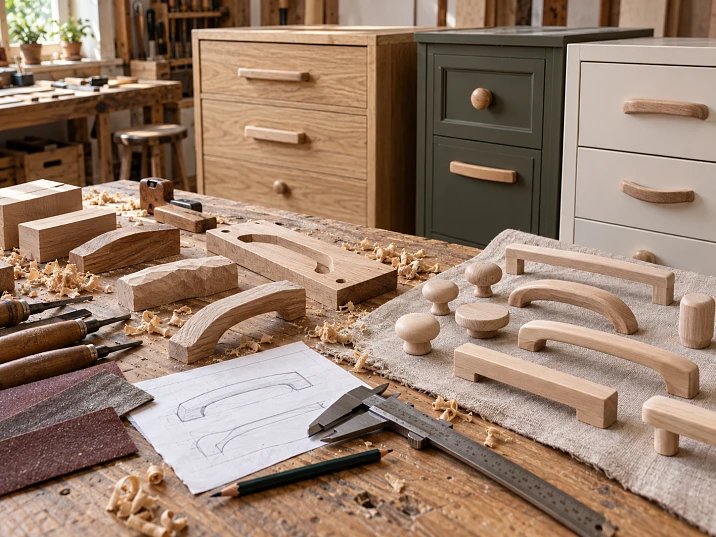
Page description: What a furniture maker should choose: a blank for a wooden handle, a ready-made unfinished handle, or a coated handle. Comparison of processing, finishing, labor costs, and STAVROS wooden handles.
The label "unfinished handle" is easy to misunderstand. It seems to refer to a raw wooden blank that still needs to be shaped. In fact, it may already be a fully formed furniture handle: the dimensions are set, the contour is ready, the surface is sanded, and all that remains is to choose the finish and install the piece on the cabinet front.
This is a completely different scope of work.
If a workshop buys a true blank, it still has to create the handle itself. If it buys a ready-made unfinished handle, the main geometry has already been made by the manufacturer. And if it takes a coated handle, the finishing stage is reduced as well.
Therefore, the question "make the handle yourself or buy it" is better broken down into a more precise one:
at what stage of manufacturing is it more profitable for the workshop to receive the part?
Time, equipment, batch repeatability, and the real cost depend precisely on this.
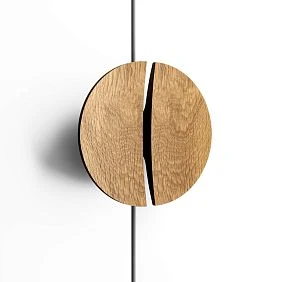
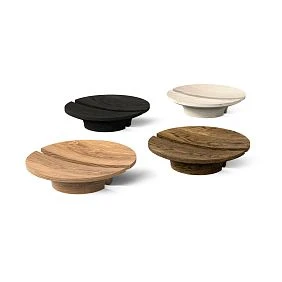
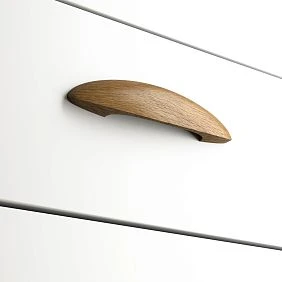
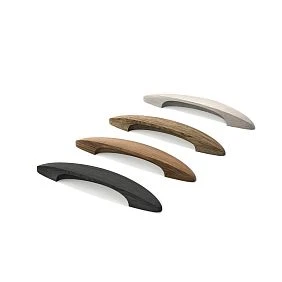
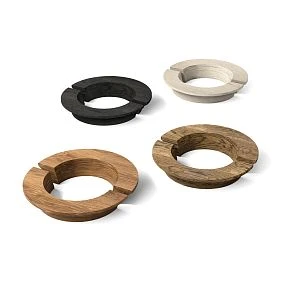
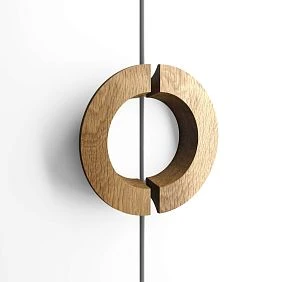
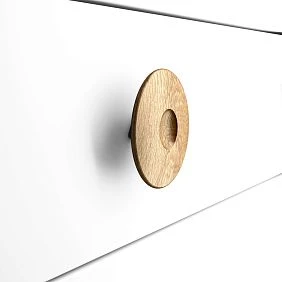
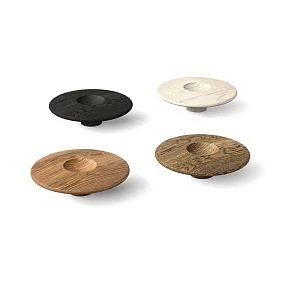
A furniture handle blank and an unfinished handle are different products
The most important boundary lies between the raw blank and the shaped handle.
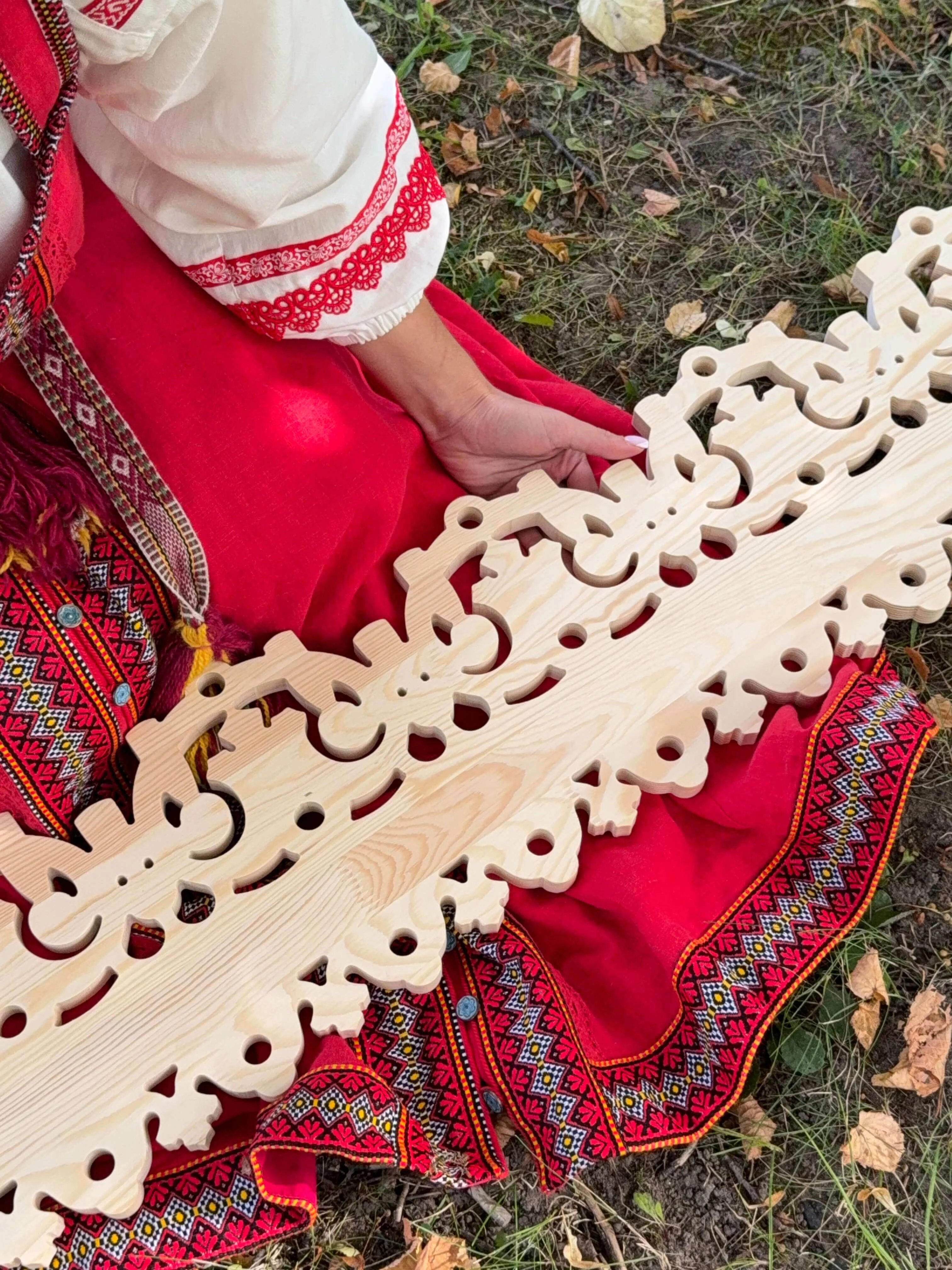
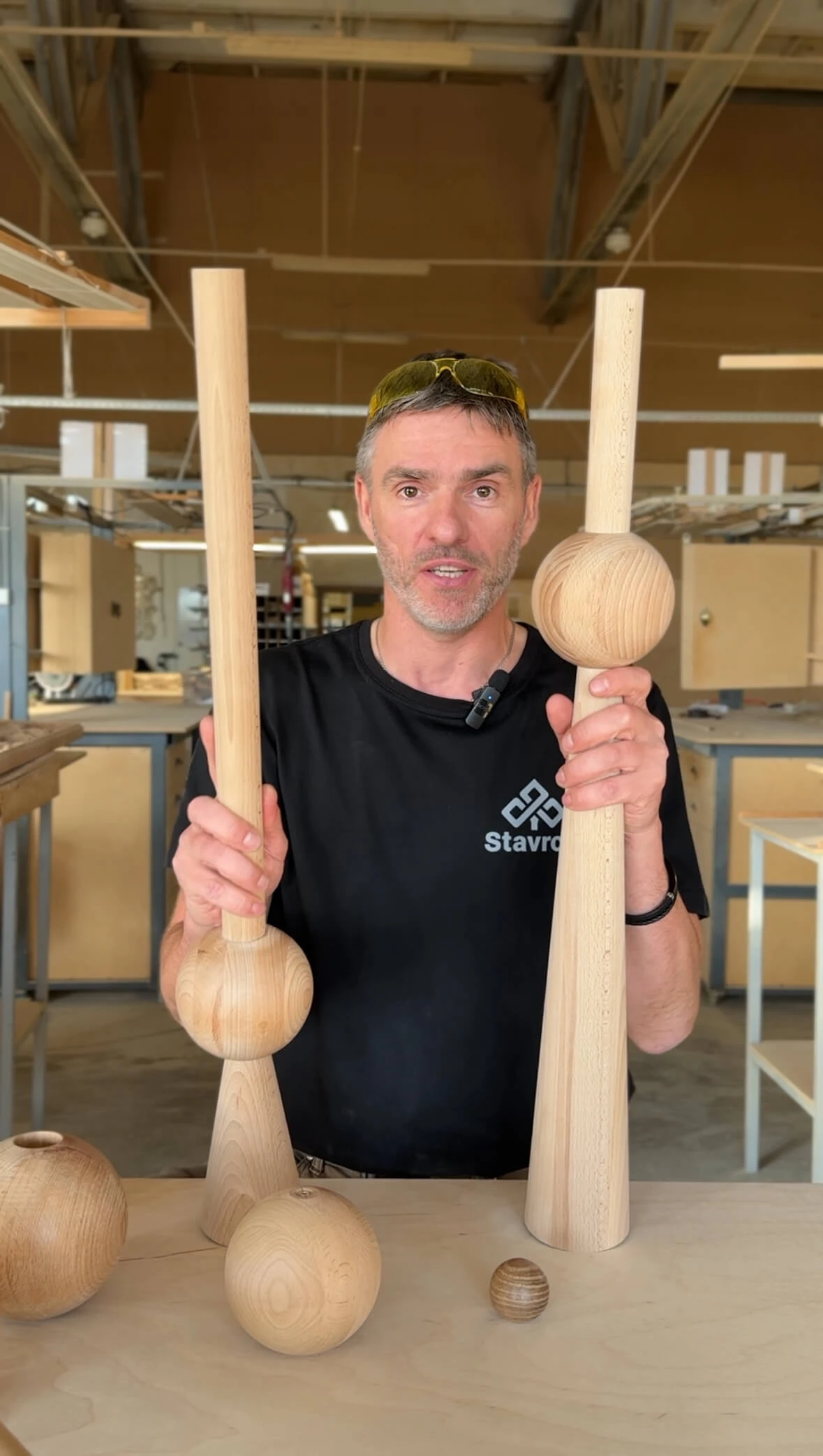
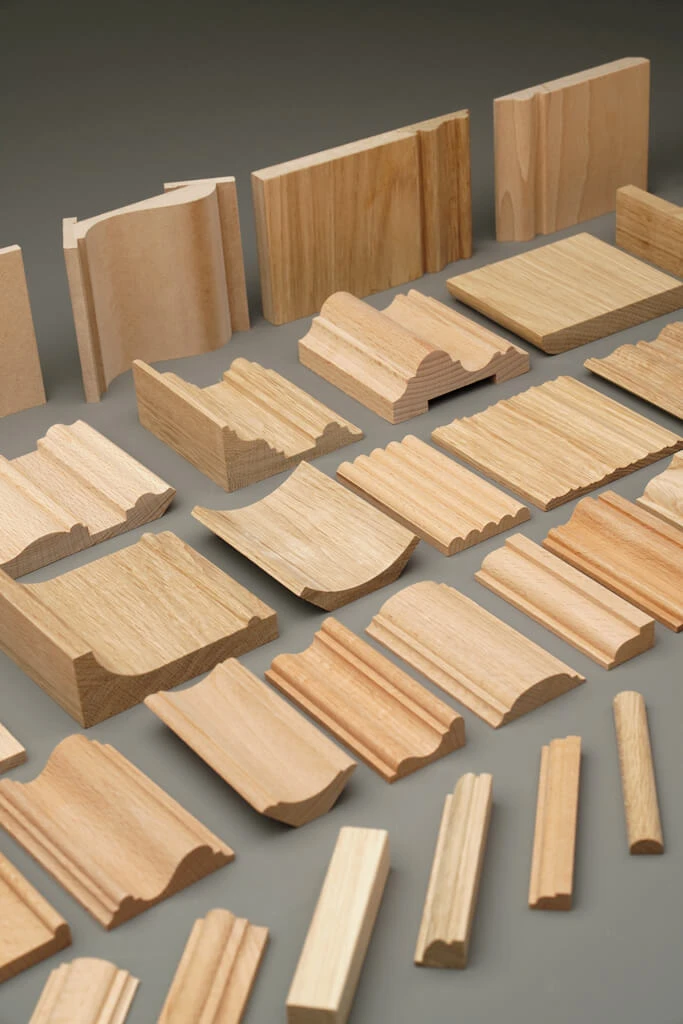
Handle blank
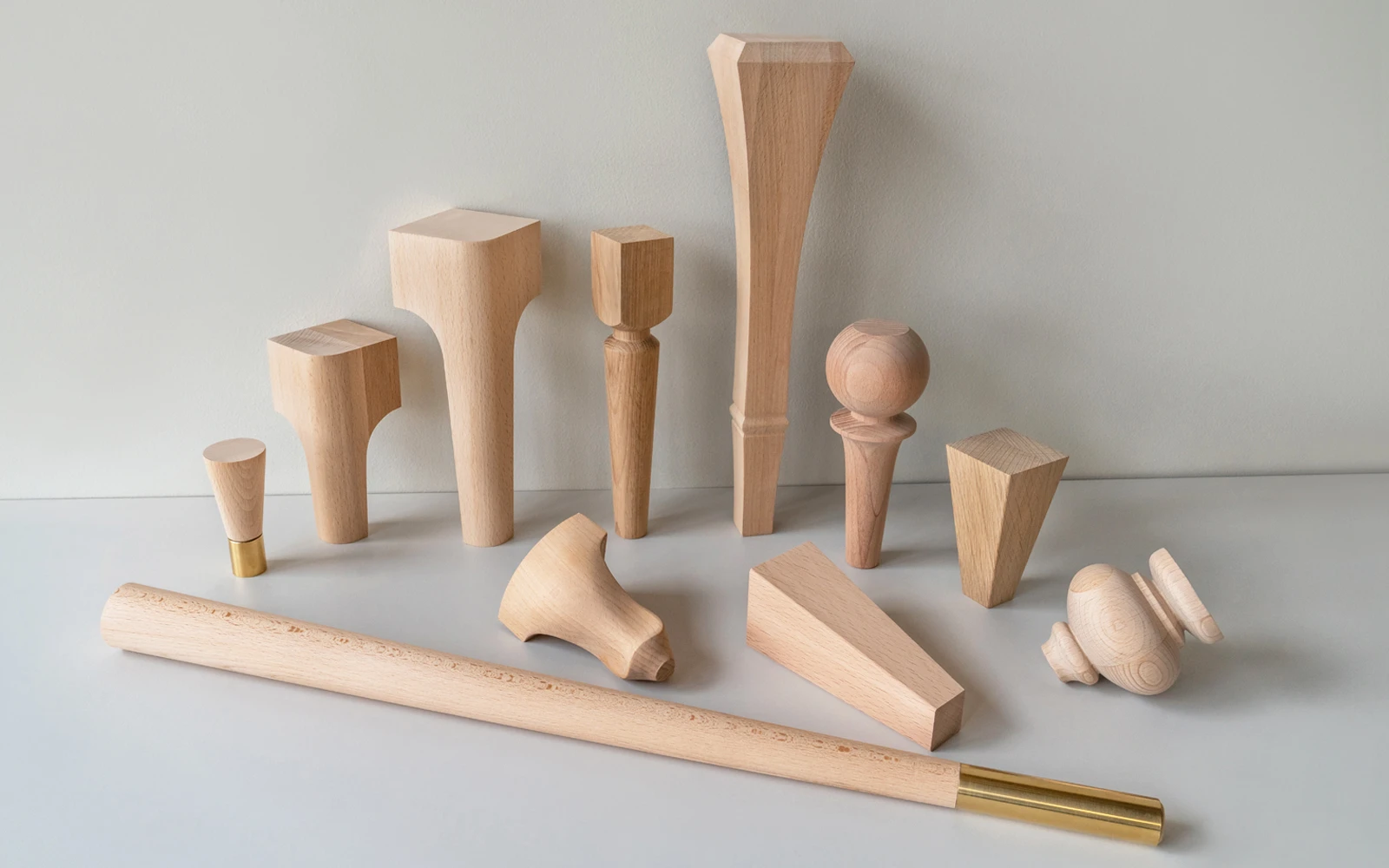
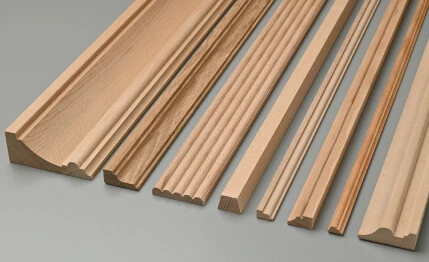
This is a material or semi-finished product that still needs to be given its final shape.
Depending on the project, the craftsman may perform:
- calibration;
- Cutting;
- turning;
- milling;
- drilling;
- profiling;
- sanding;
- preparation for finishing;
- painting or tinting.
Essentially, the blank still needs to be turned into a furniture handle.
Our factory also produces:
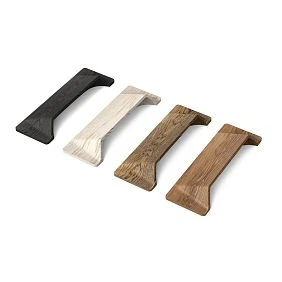
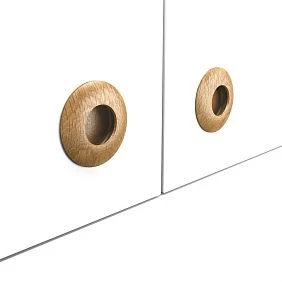
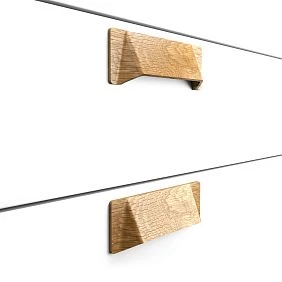
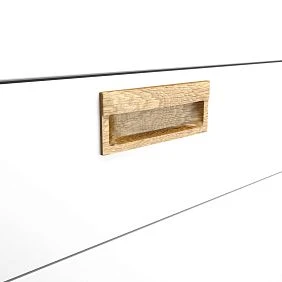
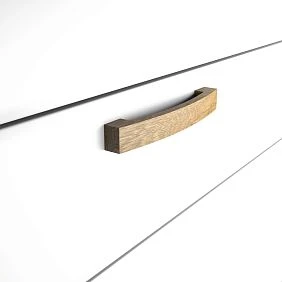
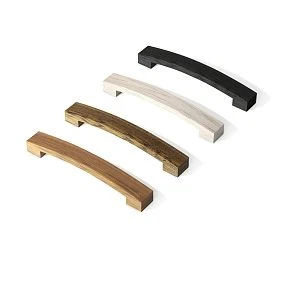
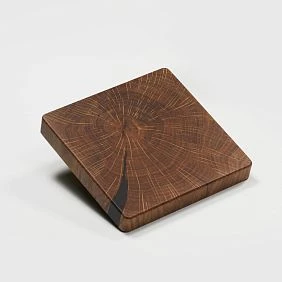
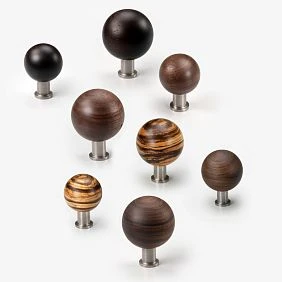
Finished handle without coating
Here the basic shape already exists.
The part has:
- a specific size;
- finished silhouette;
- working geometry;
- prepared surface;
- specific product number.
The craftsman no longer creates the handle as an object. He chooses the material, color, finishing method, and installation location.
This is a fundamentally different level of readiness.
Get Consultation
Five degrees of readiness of a wooden handle
For a workshop, it is convenient to divide wooden handles into five levels.
| Level | What the craftsman receives | What still needs to be done |
|---|---|---|
| 1 | a raw wooden block or a simple blank | almost the entire geometry of the handle |
| 2 | a calibrated blank | form the profile, holes, and surface |
| 3 | the formed part | finish the surface, prepare the mounting and finishing |
| 4 | a finished handle without a coating | choose and apply the finish, then install |
| 5 | a handle with a finished coating | mainly check and install |
This scale is more useful than a simple 'finished / unfinished' division.
Two unpainted parts can be at completely different stages.
One is just a wooden block of the required size.
The other is a finished handle that only lacks a decorative coating.
Why the word 'unpainted' does not mean 'rough'
An unpainted handle does not have to be raw.
You should look not at the presence of paint, but at what the manufacturer has already done.
Check four things:
- whether the shape is finished;
- has sanding been completed;
- whether there is finished mounting geometry;
- is further machining still required.
If the shape is complete, the surface is prepared, and the handle is already intended for installation on furniture, this is not a rough blank.
This is a finished furniture component without a final finish.
This approach is especially convenient for a workshop that wants to control the color itself but does not want to spend time producing each handle.
What operations remain with a true blank
Let's imagine that a craftsman receives a rectangular piece of beech.
To turn it into a small round or shaped handle, several operations may be required.
First, the size needs to be set.
Then form the contour.
If the handle is turned, perform turning.
If it is shaped — mill or process according to a template.
Next:
- make a hole or another mounting unit;
- check repeatability;
- sand the flat surfaces and radii;
- process the ends;
- prepare the surface for primer, oil, or lacquer.
And only after that does the actual finishing begin.
For one handle, this may look like a small job.
For twelve identical parts, a stable process is already required.
When making a handle from scratch really makes sense
Making it yourself should not be considered inherently unprofitable.
There are situations where it is justified.
Custom shape required
If the handle is part of a signature collection and its silhouette was designed specifically for this furniture, a ready-made equivalent may not exist.
Non-standard size required
Sometimes a project requires a very long, very small, or unusually protruding handle.
Large batch
The more identical parts there are, the smaller the share of equipment and tooling setup in each handle.
Equipment already handles such parts
If the workshop regularly turns or mills handles, setup is not a separate complex task.
Material and finish are fully controlled in-house
For some projects, this is an important part of the technology.
In these cases, the blank offers maximum freedom.
When a ready-made unfinished handle is more cost-effective
The opposite situation occurs very often in custom furniture.
You don't need a hundred or a thousand handles, but:
- 4;
- 6;
- 8;
- 12;
-
The shape already exists in the catalog and suits the project.
The workshop doesn't want to set up turning or milling separately.
At the same time, the manufacturer's ready-made color isn't needed: the handle is planned to be painted together with the facade or tinted independently.
This is where an unfinished handle is especially convenient.
The craftsman buys the already formed geometry and keeps only the part he really wants to control: the finish.
For a small batch, repeatability matters more than the price of the block
Let's imagine a chest of drawers that requires 12 identical handles.
Each one requires only a small amount of material.
But all 12 pieces must match:
- in width;
- in height;
- in radii;
- in protrusion;
- in shape;
- in mounting position;
- in surface quality.
If the first handle comes out 28 mm, the second 28.5 mm, the third differs slightly in radius, and the fourth protrudes more, these differences may become noticeable on a single piece of furniture.
That is why the cost of wood is only a small part of the equation.
Repeatability is essential for a series.
A ready-made serial component takes exactly this task off the workshop's hands.
How to calculate the real cost of your own handle
The most common mistake looks like this:
a wooden block is cheap → so your own handle is cheap too
But wood is only the beginning.
For your own handle, you need to account for:
material + waste + preparation + machine time + manual work + tooling + drilling + sanding + possible defects + finishing.
For a ready-made unfinished handle:
cost of the finished part + delivery + own finishing + installation.
For a handle with a coating:
cost of the finished finished part + delivery + installation.
Only after such a comparison does the decision become honest.
Example of time calculation for 12 handles
Let's say a workshop makes 12 identical small handles.
On average, each one takes:
- forming the geometry — 8 minutes;
- drilling and checking — 3 minutes;
- sanding — 6 minutes.
That works out to 17 minutes per part.
For 12 handles:
17 × 12 = 204 minutes, which is 3 hours 24 minutes.
And that's without:
- equipment setup;
- making the first test part;
- possible defects;
- cleanup and tool changes;
- finishing.
If the finished handle already has the required shape, a significant portion of these operations disappears.
Of course, the specific time for each workshop will be different. But the calculation principle itself is useful: you should compare not a piece of wood with a finished product, but the full cycle with a finished product.
Unpainted furniture handles STAVROS
Section unfinished wooden handles is useful precisely as a source of already formed parts.
Such handles should not automatically be called blanks.
They already have a specific shape and size.
The craftsman can choose a suitable model, then apply their own finish:
- enamel;
- oil;
- stain;
- varnish;
- tinting.
This is especially convenient when the handles need to match the color of the fronts.
Proun HL-053-1: ready-made shape without coating
Furniture handle Proun HL-053-1 has dimensions of 28 × 28 × 29 mm.
It is available in beech and oak.
The product card states the sanding quality as "Prestige".
This is a good example of why the term "handle without coating" should not be confused with "raw blank".
The shape is already there.
The size is already available.
The surface has already undergone sanding preparation.
The craftsman chooses what to do next:
- coat with enamel;
- leave the wood visible;
- tint;
- use oil;
- select handles to match a specific facade.
For a small batch, this is a completely different amount of work than making twelve identical handles from a block.
What the craftsman saves by buying a pre-shaped handle
The savings are not only in machine time.
The entire preparation block is reduced.
No need to separately:
- develop the shape;
- make a template;
- set up geometry repetition;
- control the uniformity of each part;
- form the main profile;
- revisit the question of radii and transitions.
The volume of sanding work is also reduced, although before applying your own finishing system, the surface still needs to be inspected and, if necessary, prepared according to the requirements of the chosen coating.
This is an important caveat.
A finished sanded handle does not mean that with any paint you can immediately apply the final coat without checking the surface.
The workshop's finishing system still sets its own requirements.
Proun HL-053-1M: the next level of readiness
The Proun HL-053-1M handle has the same size of 28 × 28 × 29 mm, but is already sold with ready-made coating options.
The product page presents finishing options, including white, brown, clear, and black.
The readiness scale is especially clearly visible on one pair of models.
Option 1. Raw blank
The craftsman creates the handle shape himself.
Option 2. Proun HL-053-1
The shape is already finished, but the craftsman selects and applies the final coating himself.
Option 3. Proun HL-053-1M
The shape and decorative coating are already done.
These are three completely different production scenarios.
Unpainted or coated — the production facility decides
An unpainted handle is more convenient if the workshop wants to achieve the final appearance itself.
For example:
- handles and fronts must be the same color;
- a specific enamel shade is needed;
- custom tinting is used;
- the oak must be coated with a specific oil;
- a particular gloss level is required.
A handle with a ready-made finish is more convenient if the ready-made option already suits the project.
Then one more operation disappears from the production cycle.
There is no universal answer that “uncoated is better.”
The right option is the one that fits the specific workshop process.
Atlas HL-071: a large handle can also be a ready-made part
Atlas HL-071 furniture handle clearly shows that the degree of readiness is not related to size.
The model comes in several sizes.
For example, the option:
240 × 28 × 45 mm with a distance between mounting points of 160 mm.
The product page also features longer versions: 400, 560, 801, and 1041 mm.
This is a completely different scale than the small Proun HL-053-1.
But the production question remains the same:
what has already been done by the manufacturer, and what will be left to the workshop?
If a large handle has already been formed and prepared, it should not be considered a "blank" just because it is sold without a final decorative finish.
Luna HL-005: finished wooden geometry without a finish
Furniture handle Luna HL-005 measures 130 × 32 × 16 mm and is available in oak and beech.
The product page explicitly states that the handle is supplied unfinished.
But the shape itself is already finished.
This once again demonstrates the main principle of the article:
no finish does not mean no geometry.
The craftsman receives an already shaped handle and decides on the color and installation.
Beech or oak for an unfinished handle
There is no need to turn the material into a separate major topic here.
A practical rule is enough.
Beech
It is often convenient if the handle is coated with a dense enamel and the natural texture is not part of the design.
Oak
It is especially interesting if the handle remains under:
- oil;
- clear lacquer;
- stain;
- a tint that preserves the wood grain.
But this is not a prohibition.
Oak can be painted.
Beech can be left under a transparent finish.
It is better to test the solution on a real handle rather than on a photograph of the wood.
When to paint the handle together with the front
If the handle should visually blend with the furniture, it is convenient to use a single finishing system.
For example:
beech handle + front → one primer → one enamel → one color.
In finished furniture, a person sees the shape of the handle but does not perceive it as a separate material accent.
This approach is especially logical for:
- solid-color dressers;
- cabinets;
- nightstands;
- painted children's furniture;
- fronts with decorative frames.
Before painting, you still need to check the handles for size, quantity, and fit.
Painting the entire batch before a trial installation is risky.
When handles are better finished separately
A separate finish is needed if the handle should differ from the front.
For example:
- oak handle under oil on a white front;
- dark tint on light furniture;
- natural wood on a painted dresser;
- a separate decorative color.
In such a project, the handle becomes a material in its own right.
This is exactly where the oak texture can be part of the design.
An unfinished ready-made handle is especially convenient: the shape is already there, but the craftsman is free in the finishing.
First one handle, then the whole batch
Even a ready-made handle should not automatically go into a large order without testing if the model is being used for the first time.
A single sample allows you to check:
- the actual size;
- protrusion;
- grip comfort;
- surface;
- the color after trial finishing;
- installation location;
- method of fastening.
For Proun HL-053-1, the size 28 × 28 × 29 mm is clear on paper.
But on a small drawer and on a large wardrobe, the same handle will be perceived differently.
Physical fitting resolves this question faster than any visualization.
First the handle, then the hole in the facade
This rule applies to any degree of readiness.
Even if the handle is purchased fully ready-made, you first need to obtain its actual installation data.
Correct order:
- choose a specific model;
- check the actual size;
- determine the position on the facade;
- make a drilling template;
- test one facade;
- only then drill the entire series.
You must not drill using an "approximate" size or from memory.
Especially for long handles with multiple mounting points.
How to compare three options for a workshop
| Option | What has already been done | What remains for the workshop |
|---|---|---|
| Workpiece | material or base semi-finished product | geometry, holes, sanding, finishing, installation |
| Finished handle without coating | basic shape and dimensions | own finishing, inspection and installation |
| Handle with coating | shape and final appearance | mainly inspection and installation |
This table matters more than the debate over "which is cheaper."
Sometimes it is more profitable for a workshop to buy raw materials.
Sometimes — a ready-made form.
Sometimes — a fully finished component.
The decision depends on which operations the production facility can actually perform quickly and with high quality.
How to record handles in the specification
Entry:
wooden handles — 8 pcs.
too weak.
Better:
Proun HL-053-1, beech, 28 × 28 × 29 mm, unfinished, 8 pcs., for enamel
Or:
Proun HL-053-1M, oak, 28 × 28 × 29 mm, finished coating, 8 pcs.
For Atlas, it is useful to additionally record the selected length and the distance between attachment points.
This way, a repeat order does not depend on the craftsman's memory.
Common Mistakes
Mistake 1. Calling any unfinished handle a blank
If the shape already fully exists, it is a finished handle without a decorative finish, not a raw semi-finished product.
Mistake 2. Considering only the cost of wood
Machine and manual time disappear from the calculation.
Mistake 3. Making a small batch from scratch without assessing repeatability
Twelve similar handles should not just be similar, but identical where it matters for furniture.
Mistake 4. Buying finished handles and then completely repainting them
If you need your own color, it makes more sense to first consider the unfinished version.
Mistake 5. Considering an unfinished handle fully ready for any finishing system
The surface must be inspected and prepared according to the requirements of the specific primer, oil, lacquer, or enamel.
Mistake 6. Drilling the fronts before choosing the handle
After that, the choice is limited to the holes that already exist.
Mistake 7. Ordering a large batch of a new model without a sample
A mistake in scale, color, or grip will be repeated on all the furniture.
Where to buy wooden furniture handles
Main section — STAVROS wooden furniture handles.
If the workshop wants to do the final finishing itself, it is more convenient to look handles without coating.
If you need a finished exterior look — Handles with Finish.
For your own finishing, it is also useful to check in advance Materials for furniture assembly and finishing.
You should not choose based on the principle of “the less the manufacturer has done, the more professional it is.”
It is better to choose the degree of readiness that removes unnecessary operations and leaves the workshop with exactly the work it really wants to control.
What is ultimately more profitable
If a workshop produces a signature series with its own handle shape, has the equipment and a sufficiently large production run, making the blank and manufacturing it in-house can be justified.
If you need several identical handles, the shape already works, and the workshop's main interest is its own color and finish, a ready-made unfinished handle is usually much more convenient.
If a ready-made color fully matches the project, you can buy a handle that is already finished and eliminate another step.
Main principle:
do not buy a "blank" or "ready-made handle" based on the name alone. You need to look at which operations have already been performed and which will remain in the workshop.
This is exactly what determines the real cost of the part.
Frequently Asked Questions
What is a furniture handle blank?
It is a material or semi-finished product from which the handle itself still needs to be formed: define the geometry, perform processing, prepare the surface, and finish it.
How does a blank differ from an unfinished handle?
A ready-made unfinished handle already has its basic shape and dimensions. The absence of a finish does not mean the absence of finished geometry.
Does a ready-made wooden handle need sanding?
If the manufacturer has already sanded the handle, full surface formation from scratch is not required. But before applying your own finish, the handle must be inspected and prepared in accordance with the requirements of the chosen finishing system.
Which is more cost-effective — making the handle yourself or buying a ready-made one?
For a large series and your own unique shape, in-house production may be justified. For a small batch, a ready-formed handle often saves more time than the difference in wood cost.
When to choose unfinished handles?
When you need to set the color yourself, finish the handles together with the fronts, use your own stain, oil, lacquer, or tint.
What is better for enamel — beech or oak?
In many painted projects, beech is convenient to consider. But oak can also be painted. The material is chosen for the specific part and finishing system.
When to buy pre-finished handles?
When the ready-made color and surface already suit the project and the workshop does not need to perform its own finishing.
Can handles be painted together with the facade?
Yes, if the selected materials and coating system are compatible. This approach is convenient when the handles must match the front exactly in color.
Should you buy a sample before drilling?
If the model is being used for the first time, it is advisable. A physical handle allows you to check the size, grip, position, and mounting before drilling the entire batch of fronts.
Where to buy unfinished wooden furniture handles?
Unfinished models are collected in the STAVROS unfinished wooden handles section. There you can choose a specific shape and wood species, and apply the final finish in your own workshop.