Article Contents:
- What procurement for a construction project means in practice
- Design and purchasing are different stages
- A product catalog is not yet a specification
- A supplier invoice should not become the main technical document
- Why a project code does not replace the manufacturer's SKU
- Why the material should not be hidden in the name
- Why commercial length is a required field
- Why you shouldn't purchase materials from multiple unrelated Excel files
- Different SKUs under one name
- Different rounding rules
- Double reserve
- Outdated quantities
- Inconsistent substitutions
- Loss of change history
- Why a financial estimate and a physical zone are not the same thing
- A single SKU can appear in dozens of rooms
- How to create a product distribution map
- Wooden and MDF trim
- Relief decoration
- Wall Panels
- Slatted panels
- Carved decoration
- Samples
- Why combining is beneficial
- Profile
- Material
- Scale
- Relief
- Finish
- Compatibility of adjacent products
- How to link an approved sample to the specification
- What to record for the reference sample
- Why a sample should have its own code
- A sample must not be accidentally consumed
- What to do when replacing an SKU
- Finished volume
- Purchase volume
- Operational reserve
- Why the finished volume almost never equals the order
- Example
- Why the installation reserve is calculated separately
- Skirting
- Molding
- Cornice
- Plank (or strip)
- Why existing calculation items are better used as child items
- One batch is justified when
- Several batches are needed when
- Why “order everything at once and forget about it” can be expensive
- Why overly fragmented delivery is also risky
- How to create a delivery schedule
- Convenient statuses
- Why the delivery date should not be the only date
- How to link with the installation front
- Do not label with the product name only
- Do not mix two SKUs in one unlabeled package
- Label the operational reserve separately
- What to add for standard rooms
- Why a QR code is useful but does not replace text
- What to Check
- Why the total number of places proves nothing
- How to handle damaged items
- Why acceptance must record the zone
- What to check for a substitute
- Geometry
- Commercial length
- Material
- Appearance
- Cost
- Availability
- Adjacent nodes
- When replacement requires a repeat mock-up
- How to record replacements
- Don't give each supplier their own version of the schedule
- Lock down categories
- Code items consistently
- Control intersection points
- Why a universal supplier isn't always better
- Manufacturer or universal supplier
- A manufacturer is convenient when it matters
- A universal supplier is convenient when
- How to compare
- Example
- Compare the same readiness
- Consider packaging
- Consider delivery
- Count the closed specification
- Why a discount does not equal project savings
- Why the discount percentage cannot be evaluated separately
- Where to look for greater savings
- Not ordered
- RESERVED
- Ordered
- In production
- Ready
- Shipped
- Why the status is needed in the master specification
- What to do with already purchased goods
- What to store
- Why the reserve must be physically separated
- Which items are especially useful to keep
- Why short stock does not replace the reserve
- Why keep the item code for several years
- Delivery of construction materials: what to give to the supplier
- Why the city is needed in advance
- Why the receiving party's contact is important
- Placing a STAVROS order
- Delivery of finishing materials: separate rules for the finishing stage
- Wrong item delivered
- Surface damage
- Different batches
- Shade variation
- Improper storage
- Installation outside its zone
- Step 1. Separate the net requirement
- Step 2. Count a typical apartment once
- Step 3. Do not combine everything into the line “1218 planks”
- Step 4. Check the first priority
- Step 5. Adjust only systemic deviations
- Step 6. Forming the reserve
- Step 7. Labeling
- Step 8. Accepting using the same system
- How to document a claim
- What to record
- Why this is useful
- 1. No single specification
- 2. Items are named arbitrarily
- 3. Material is not recorded
- 4. Commercial length is not recorded
- 5. Finished volume is mistaken for procurement volume
- 6. Reserve is counted twice
- 7. Sample is not linked to the SKU
- 8. Replacement is agreed verbally
- 9. Batches are not tied to zones
- 10. Packages are not labeled
- 11. The receiver works without a specification
- 12. The repair reserve is used during installation
- How to use catalogs, DWG and 3D in procurement work
- PDF catalog
- DWG
- 3D
- How to store files
- What to do when replacing
- How to divide responsibilities among project participants
- Architect or designer
- Specifier
- Procurement
- Warehouse
- Installer
- Technical client / project manager
- How to work with standard rooms
- Create a type passport
- Check the first room
- Scale
- When a type needs to be split
- Why this is better than a universal reserve
- How to track quantities after each stage
- Why this table is useful
- What counts as a deviation
- What to scale
- How to tell if the reserve is too high
- Inspection
- When a large reserve is justified
- How not to lose the project reserve between buildings
- Central reserve
- Local
- Return
- Why this is useful
- How to prepare the site for the last batch
- Do not count only the warehouse stock
- Do not over-order a "round" quantity
- Random item test
- Pre-payment spot check: ten lines instead of trusting the total
- What is included in procurement for a construction site?
- Who is responsible for supplying materials to the site?
- How to create a specification of finishing materials?
- How to calculate the quantity of materials for purchase?
- How much finishing material stock should be planned?
- How to split a purchase into multiple deliveries?
- How to label materials for different floors?
- How to approve a SKU substitution?
- Where to order samples before a large purchase?
- How to choose a finishing materials supplier?
- How to order construction materials wholesale?
- How to organize material delivery to the site?
- When it's better not to place the final purchase
- What can be done in parallel
- When a preliminary quote is acceptable
- How to create a request to a finishing materials supplier
- What not to write
- What is useful to attach
- Practical calculation: why different rounding rules create hundreds of extra strips
- Weak approach: counting each room independently
- What is not visible in such an approach
- Strong approach
- How to organize a single system for multiple buildings
- Common SKU reference
- Building requirements
- What does this give
- Why you should not create “MLD-01-A” and “MLD-01-B” without a reason
- How to manage clean URLs and product cards
- Why a URL does not replace a SKU
- Why a SKU does not fully replace a URL
- How to transfer an item from procurement to operations
- What to do with leftovers
- What to do with samples
- What to hand over for replacements
- How to keep a change log so purchasing stays aligned with the project
- Why the "reason" field is mandatory
- Why the "impact" field is needed
- How to manage risks for critical items
- Critical by deadline
- Critical by geometry
- Critical by visual batch
- Critical by dependency
- Critical by logistics
- Risk matrix
- Why this is more useful than a generic “important” status
- How to check a commercial proposal before releasing an order
- Check 1: number of rows
- Reconciliation 2: SKUs
- Reconciliation 3: material
- Reconciliation 4: length
- Reconciliation 5: quantity
- Reconciliation 6: reserve
- Reconciliation 7: batches
- Reconciliation 8: delivery
- Reconciliation 9: deadline
- Reconciliation 10: version
- How to close a stage and carry the remainder over to the next one
- Why you can't just "transfer the remaining balance"
- How to process a transfer
- What to do with excess reserve
- Final readiness matrix for project delivery
- Checking the document after export to order
- The last criterion for delivery readiness
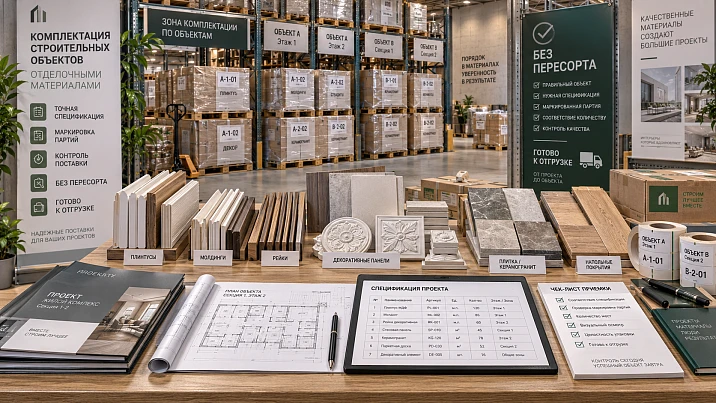
A project can be approved, the finishing schedule signed, the budget confirmed, and procurement can still fall apart on site. The reason is usually not that "there wasn't enough money" or "the supplier delayed the truck." More often the problem starts earlier: one department calculates based on working drawings R4, another based on the old estimate R2, some items are named "white molding," others by exact SKUs, the reserve is hidden inside the quantity, and for several zones substitutions were agreed in correspondence but never made it into a single specification. A month later, similar but different profiles arrive at the site, some products belong to the next phase, the packaging isn't labeled, and no one understands anymore which version the order was calculated from.
That's why procurement of finishing materials for building sites is not "buy everything according to the schedule." It is a managed chain:
approved project → single specification → samples → actual product units → cutting map → procurement reserve → batches → labeling → delivery → acceptance → installation → operational reserve.
This approach is needed by a procurement specialist, a supply manager, a general contractor, a construction company, a project manager, a designer, an architect, and a technical client. It is especially important at the finishing stage, where an error in the article number, material, or length quickly becomes visible: a molding of a different profile cannot be discreetly "finished off" on the next floor, and a panel from a different batch may not match the area already installed.
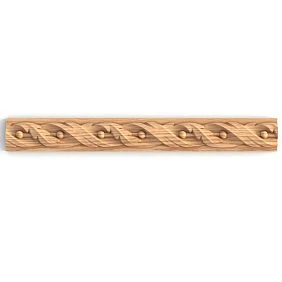
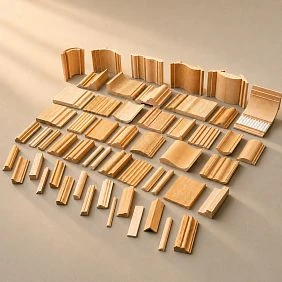
This article focuses on the STAVROS range: wooden and MDF trim, skirting boards, moldings, cornices, casings, battens, wall and slatted panels, polyurethane decor, carved elements, and samples. This is not a promise of full turnkey general procurement of a project with all categories of construction materials. The goal is to show how to organize project procurement specifically for the decorative and finishing part, so that the supply of construction materials does not turn into a set of unrelated orders.



What project procurement means in practice
In practice, procurement is not a single purchasing operation, but the management of the connection between the project and the physical product.
Every product must have two addresses:
-
the project one — where it is used;
-
the product one — what exactly needs to be ordered.
For example:
Building B / floor 7 / apartment type A / living room / wall frame → MLD-___ / MDF / size ___ / product length ___ / 18 strips.
As long as only the first half exists — "molding in the living room" — procurement is not ready. As long as only the second half exists — "MLD-___ 18 pcs." — the warehouse does not understand where the product belongs.
Design and procurement are different stages
The designer can operate with:
-
visualization;
-
conditional code;
-
profile family;
-
finished square footage.
The supplier ships:
-
specific SKU;
-
specific material;
-
specific format;
-
specific quantity of product units.
Between these stages, a procurement or supply specialist is needed who translates the design language into purchasing language.
A product catalog is not yet a specification
STAVROS Main Catalog helps to choose a category and a specific item. But a link to the catalog does not answer the questions:
-
how many;
-
where to;
-
what material;
-
which length;
-
which batch;
-
what reserve.
The catalog is the source of the product.
Specification — the source of the management decision.
A supplier invoice should not become the main technical document
The invoice reflects the commercial order.
It should not replace the master specification of the project, because an invoice usually does not contain the full design logic:
-
zones;
-
revisions;
-
purpose;
-
sample links;
-
replacement history.
The technical source of truth remains the project's own current specification.




Where object procurement begins: a single specification
On a large project, there must be one technical source of truth.
Not "the procurement team's main Excel" plus "the designer's table" plus "the contractor's estimate" plus "the manager's latest file." But one master specification, from which the following are generated:
-
supplier requests;
-
orders;
-
batch;
-
warehouse statements;
-
acceptance certificates;
-
additional orders.
Minimum set of fields:
| Field | What is recorded |
|---|---|
| Code | internal project position |
| Body/section | physical zone of the site |
| Floor | floor or phase |
| Room | specific purpose |
| Category | molding / baseboard / panel |
| Manufacturer | STAVROS |
| Article number | Exact SKU |
| Material | oak / beech / MDF / polyurethane, etc. |
| Size | Actual geometry |
| Commercial length/format | Purchasing unit |
| Finish | Approved option |
| Net requirement | what will be installed |
| Purchase quantity | physical units |
| installation reserve | Separately |
| operational reserve | Separately |
| Batch | delivery stage |
| Sample | approved reference code |
| revision | Specification version |
| Status | approved / ordered / received, etc. |
Why the project code does not replace the manufacturer's SKU
Internal code:
M-04
convenient for the project.
But the supplier needs:
actual SKU STAVROS.
Both fields must be stored in the master specification.
Why material should not be hidden in the name
Line:
oak molding
may become erroneous if the same SKU exists in multiple materials.
Separate fields are stronger:
SKU | material | length.
Why product length is a required field
The finished square footage does not show how many physical planks need to be purchased. If the material is sold in planks of a certain length, that length determines the cutting layout.
Our factory also produces:






Why you should not purchase materials from several unrelated Excel files
Multiple files almost inevitably create multiple versions of reality.
Different SKUs under one name
In one file:
"molding 60 mm."
In another:
MLD-___.
In a third:
"molding classic."
Procurement may count them as one line item or, conversely, as three different ones.
Different rounding rules
The estimator rounds by room.
Kit assembler — by floor.
Contractor — by meters.
Supplier — by whole planks.
Totals don't match.
Double reserve
One file includes +10%.
Another adds separate spare strips.
In the final order, the reserve is counted twice.
Outdated quantities
After changing the layout, the designer updated their table, but procurement is working from the old export.
Uncoordinated substitutions
The supplier proposed an equivalent.
The manager approved it in an email.
But the master specification has not been updated.
The next reorder goes out under the old item code.
Loss of change history
Without a single specification, it's impossible to quickly answer:
why was MLD-A replaced with MLD-B?
Practical rule:
any change first goes into the master specification, then into the supplier order.
Get Consultation
Divide the object into zones before forming the order
A financial estimate often divides expenses differently from how the object physically exists.
For the logistics of finishing materials, a physical map is more useful:
-
body;
-
section;
-
floor;
-
apartment;
-
room number;
-
room;
-
public zone;
-
typical unit.
Why a financial estimate and a physical zone are not the same thing
An estimate may have a line item:
moldings — 4,500 m.
But on site it's:
-
Building A — 1,700 m;
-
Building B — 1,600 m;
-
lobby — 300 m;
-
corridors — 900 m.
For supply, these are four different logistics scenarios.
A single SKU may be present in dozens of rooms
That's no reason to keep one shared warehouse stock.
You need to see the distribution:
MLD-01 — 120 pcs. Building A / floors 2–4.
MLD-01 — 90 pcs. Building B / floors 1–3.
How to create a product distribution map
For each major SKU, a table is useful:
| SKU | Body | Floor | Room | Quantity | Batch |
|---|---|---|---|---|---|
| MLD-01 | A | 2 | Type A | 24 | LOT-01 |
| MLD-01 | A | 3 | Type A | 24 | LOT-01 |
| MLD-01 | B | 1 | Type B | 18 | LOT-02 |
This is how a single product line becomes a clear route across the site.
Which STAVROS finishing materials can be combined into a project supply
Current the STAVROS catalog combines several product categories that can be managed within a single decorative finishing specification.
Wooden and MDF trim
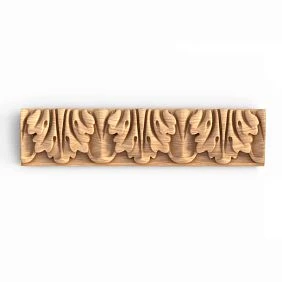
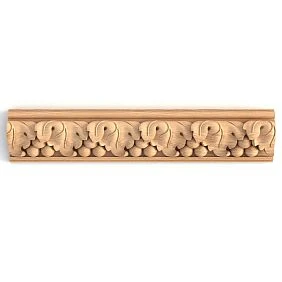
STAVROS Trim includes various types of long-length products:
-
moldings;
-
baseboards;
-
cornices;
-
trim;
-
slats;
-
other profiles.
This is where material, cross-section and commercial length are especially important.
Stucco decor
polyurethane decor includes moldings, cornices, rosettes, overlays and other architectural elements.
Wall Panels
Wall Panels are calculated based on specific walls and modules.
Slatted panels
Rafter panels are available as solutions for flat and complex surfaces; the specific type should be selected based on the geometry of the object.
Carved decor
Carved Decor includes overlays, baguette, brackets, rosettes, pilasters, columns and other elements.
Samples
Product samples are needed to check the profile, material and scale before the main purchase.
Why it is useful to combine
A single supply or a unified procurement system can reduce:
-
the number of suppliers;
-
fragmentation of documents;
-
the number of different labeling rules;
-
the risk of losing SKUs.
But this does not mean that all categories must necessarily be shipped in one vehicle. Logistics batches are determined by the site schedule.
Samples before a large purchase: what exactly to approve
A large batch of finishing materials should not begin with the phrase:
"everything matches according to the catalog."
A screen and a PDF show the shape, but they do not always give the right sense of scale, texture, and material. That is why a physical sample is especially useful before a large purchase.
On the STAVROS website there is a separate section product samplesand for wooden and MDF trim, profile samples are available. For the procurement specialist, this is not a souvenir but a purchasing checkpoint.
Profile
The molding or baseboard in the photo may look more massive or thinner than in reality.
The sample allows you to see:
-
actual width;
-
depth;
-
profile character;
-
surface quality;
-
interaction with light.
Material
If one SKU is available in different materials, the sample must be linked specifically to the selected configuration.
For example:
MLD-___ / oak.
Not just:
MLD-___.
Scale
The sample can be attached:
-
to the wall;
-
to the door;
-
to the panel;
-
to the furniture.
On a large project this is especially important: a scale error multiplied by hundreds of rooms becomes an expensive rework.
Relief
For carved or molded decor, the actual depth of the relief is especially sensitive to lighting.
Finish
If the product will be painted or tinted, it is advisable to store the reference together with the code of the approved finish.
Compatibility of adjacent products
It is useful to physically compare:
-
baseboard;
-
molding;
-
cornice;
-
the casing;
-
panel profile.
This helps catch a conflict before ordering.
How to link an approved sample to the specification
Phrase:
"approved this white molding"
is not a technical record.
Stronger:
MLD-___ / MDF / size ___ / SAMPLE-03 / APPROVED / REV-04 / date ___.
What to record for the reference sample
Minimum:
-
SKU;
-
material;
-
size;
-
finish;
-
sample code;
-
approval date;
-
project revision;
-
responsible person.
Why a sample must have its own code
There may be several similar profiles on site.
Code:
SAMPLE-03
links the physical piece to the digital string.
The sample must not be accidentally consumed
The approved reference sample must not go into installation as a regular material.
Its status:
APPROVED SAMPLE.
What to do when replacing a SKU
The old sample gets the status:
CANCELLED / REPLACED.
The new one — a new code.
This way, after a few months it is clear which reference sample the batch was accepted against.
How to calculate the quantity of finishing materials
Before ordering, it is useful to separate three quantities.
Finished volume
What will actually be installed.
For example:
3200 linear m of skirting board.
Purchase volume
Finished volume after conversion into actual product units, cutting, and installation reserve.
Operational reserve
Separate stock after project handover.
These three numbers must not be mixed up.
Why the finished volume almost never equals the order
Causes:
-
strips have a fixed length;
-
some parts cannot be combined;
-
offcuts appear;
-
whole long elements are needed;
-
part of the goods remains in reserve.
Example
Net moulding footage:
240 m.
If the strip is 2400 mm:
Naively:
240 / 2.4 = 100 strips.
But if the project consists of 80 parts of 2200 mm each and short horizontals, the actual 100 strips may not cover the long segments.
First, the parts need to be laid out.
Why the installation reserve is calculated separately
It is needed for:
-
cut errors;
-
local damage;
-
minor changes.
But it cannot be hidden in an inflated norm for each room.
A linear meter and the number of planks are different quantities
For long-length products, this is one of the main calculation principles.
Algorithm:
installation segments → product lengths → cutting map → leftovers → number of whole products.
Baseboard
Let's imagine a typical apartment:
-
12 parts of 1800 mm;
-
8 parts of 900 mm.
Net length:
12×1.8 + 8×0.9 = 21.6 + 7.2 = 28.8 m.
If the source strip is 2400 mm:
By meters:
28.8 / 2.4 = 12 planks.
But 12 long parts of 1800 mm already require 12 separate planks.
Horizontal/short parts should be cut from the remainder only if the length allows.
So 12 is not the final answer, but merely the lower mathematical bound.
Molding
For a wall frame, parts often repeat. Here, group cutting by room type is advantageous.
Cornice
Need to consider:
-
angles;
-
joints;
-
long walls;
-
profile orientation.
Slat
If the wall height is almost equal to the length of the original batten, one working vertical may require one whole blank, even if the remaining linear meters for the project look small.
Why existing calculation articles are better used as child pages
The new article is a hub. It shows the method.
Detailed scenarios for specific SKUs and cutting are better kept as separate materials so as not to turn the hub into a repeat of all existing articles.
What to order in one batch and what to split into stages
One large delivery is not always better than several.
A single batch is justified when
-
the object is small;
-
installation is happening simultaneously;
-
the warehouse is ready to accept the volume;
-
the project is stable;
-
a single inspection;
-
the material is visually sensitive to batch.
Multiple batches are needed when
-
several cabinets;
-
sections are launched one after another;
-
floors are handed over sequentially;
-
no storage space;
-
part of the project is still changing;
-
different contractors start on different dates.
Why “order everything at once and forget about it” can be expensive
Risks:
-
the project will change;
-
the item will sit for months;
-
part of the packaging will get damaged;
-
the reserve will get mixed with working batches;
-
the warehouse will lose track of the zones.
Why overly fragmented delivery is also risky
Many small batches create:
-
more receiving operations;
-
higher transport costs;
-
more sorting points;
-
risk of visual mismatch between batches;
-
complex document flow.
A balance is needed.
How to create a delivery schedule
Each stage needs its own status.
Example:
| Batch | Zone | SKU | Quantity | Readiness | Delivery | Status |
|---|---|---|---|---|---|---|
| LOT-01 | building A, floors 2–4 | MLD-01 | 240 | ___ | ___ | APPROVED |
| LOT-02 | Building A, floors 5–7 | MLD-01 | 220 | ___ | ___ | PLANNED |
| LOT-03 | Lobby | PAN-02 | 40 | ___ | ___ | ORDERED |
Convenient statuses
PLANNED → APPROVED → ORDERED → IN PRODUCTION → READY → SHIPPED → RECEIVED.
Statuses can be adapted to ERP.
Why the delivery date should not be the only date
Useful to store:
-
approval date;
-
order date;
-
expected readiness;
-
shipment;
-
arrival;
-
acceptance.
If the delivery fails, it is easier to understand where.
How to link with the installation front
The material must arrive:
-
not too early;
-
not on the installation start date;
-
with time reserved for acceptance and distribution.
The exact buffer depends on the site and logistics.
Package labeling: how to prevent mix-ups on site
One of the strongest measures against chaos is proper labeling.
At minimum, the packaging should include:
project / building / floor / room or type / SKU / material / quantity / batch.
Example:
OBJ-27 / B2 / FLOOR-07 / MLD-XXX / OAK / 18 PCS / LOT-03
Do not label with only the product name
“Oak molding” is not enough.
There may be several oak moldings on site.
Do not mix two SKUs in one unlabeled pack
If a package contains two SKUs, they must be physically and visually separated.
Mark the service reserve separately
For example:
SERVICE RESERVE — DO NOT ISSUE FOR INSTALLATION.
What to add for standard rooms
If one set belongs to:
APARTMENT TYPE A,
it is useful to put this on the label.
Why a QR code is useful but does not replace text
A QR code can link to a digital inventory list.
But if a smartphone is unavailable, the basic data must still remain on the packaging.
Acceptance of a batch at a construction site
The receiver must work from the same specification under which the order was produced. Not from the supplier's invoice, not from the foreman's verbal list, and not from a printout that is a month old.
What to check
-
article number;
-
material;
-
size;
-
product length;
-
quantity;
-
packaging units;
-
visible damage;
-
batch number;
-
purpose by stage;
-
zone marking.
Why the total number of places proves nothing
Document:
18 packages.
does not answer:
-
how many MLD-01;
-
how many PLT-02;
-
how much belongs to body A;
-
where the reserve is.
Need a breakdown by SKU.
How to handle damaged items
A disputed item gets the status:
QUARANTINE.
after checking:
-
fully usable;
-
suitable for a short part;
-
return;
-
write-off.
If a long plank is damaged at the end, it should no longer be considered a whole sellable unit, even if part of its length is usable.
Why receiving must record the zone
If the item ships immediately:
Building B / floor 7,
it is better to record this in the acceptance document.
This reduces the risk that the next crew will take someone else's batch.
Item code substitution: why a "similar" material cannot be changed verbally
One of the most dangerous phrases on a construction site:
"we don't have this, we'll install something similar."
Correct procedure:
substitution proposal → technical review → sample → approval → new specification revision → procurement change.
What to check on an equivalent
Geometry
Compare:
-
width;
-
depth;
-
cross-section;
-
profile.
Commercial length
A different length changes the cutting layout and quantity.
Material
MDF, oak, beech, and polyurethane — different product scenarios.
Appearance
Even the same size does not mean the same shaping.
Cost
A replacement can change the budget.
Availability
An alternative may be available sooner, but that is only one factor.
Adjacent nodes
Need to check:
-
baseboard;
-
the casing;
-
cornice;
-
panel;
-
Furniture.
When a replacement requires a new mock-up
If a position is visually prominent and repeated across the project, a physical check may be cheaper than an error across the entire series.
How to record a replacement
Do not delete the old line without a trace.
Status:
REPLACED BY MLD-02 / REV-06 / reason ___.
This way the history remains clear.
How to work with multiple material suppliers
A large project almost always has multiple suppliers. The problem is not their number, but the absence of a single rule.
Do not give each supplier their own version of the schedule
All suppliers must receive data from a single master specification.
Otherwise, supplier A counts R5, supplier B — R4.
Lock down categories
For example:
-
STAVROS — architectural decor and moldings;
-
another supplier — paints;
-
the third — tiles.
This reduces overlap of responsibility.
Encode items consistently
The internal project code must be preserved across all orders.
For example:
M-01 / MLD-XXX.
Control intersection points
Especially:
-
baseboard and door;
-
panel and electrical;
-
cornice and lighting;
-
furniture and overlays.
Different suppliers should not independently change adjacent elements.
Why a universal supplier is not always better
It is convenient for a wide range of items.
But if the following are critical:
-
exact profile;
-
repeatability;
-
technical documentation;
-
samples,
working directly with the manufacturer may be more logical.
Manufacturer or universal supplier
It cannot be said that one option is always more advantageous.
A manufacturer is convenient when it matters
-
exact article number;
-
repeat batch;
-
technical data;
-
samples;
-
specific material;
-
profile stability.
A universal supplier is convenient when
-
you need a broad basket of heterogeneous materials;
-
a single logistics is important;
-
the project wants to reduce the number of contracts.
How to compare
You need to count not the convenience of one communication, but:
-
product accuracy;
-
final cost;
-
timelines;
-
substitution risk;
-
reorder.
For the STAVROS decorative assortment, it makes sense to use the manufacturer's direct catalogs, because that is where real SKUs, materials, product pages, and samples are verified.
How to compare commercial proposals
The price per meter almost never gives the full picture.
You need to compare:
SKU → material → cross-section → commercial length → number of whole items → finish → packaging → delivery → total cost of the closed specification.
Example
Supplier A:
-
1000 ₽ per meter;
-
length 2000 mm.
Supplier B:
-
1100 ₽ per meter;
-
length 2400 mm.
If the project contains many 2200 mm parts, proposal A may be unsuitable without a joint.
Then a lower price per meter is not a real saving.
Compare the same level of readiness
One supplier offers:
MDF for painting.
another:
a finished painted product.
You cannot compare only the price of the product.
Consider packaging
For long items and panels, packaging affects the risk of damage.
Consider delivery
The final budget must include the cost of getting the product to the site.
Calculate a closed specification
The most honest metric:
how much does it cost to fully cover a specific project line item with the required quantity of usable products?
Why a discount does not equal project savings
A discount looks convincing in a commercial proposal.
But what matters to the project is not the discount, but the final cost.
Supplier A is cheaper, but:
-
shorter length;
-
more joints;
-
more planks;
-
more waste;
-
separate delivery.
Supplier B is more expensive per meter, but:
-
better matches the cutting layout;
-
fewer product units;
-
simpler logistics.
As a result, B may cost less.
Why the discount percentage cannot be evaluated separately
A 15% discount on the wrong specification is still the wrong purchase.
Where to look for greater savings
-
SKU unification;
-
good cutting layout;
-
correct batches;
-
reduction of overstock;
-
fewer urgent reorders.
How to account for project changes after placing an order
After ordering, the project can still change.
Therefore, items need to be separated by statuses.
Not ordered
Can be changed relatively freely.
Reserved
Commercial terms of the change need to be clarified.
Ordered
The change may require adjusting the invoice.
In production
The possibility of change depends on the stage and the specific order.
Done
The item already physically exists.
Shipped
The change becomes a logistics and warehouse task.
Why the status is needed in the master specification
The designer may want to replace the profile.
Procurement should immediately see:
is this possible without losses?
What to do with already purchased goods
Options:
-
use in another area;
-
keep as reserve;
-
return if conditions allow;
-
sell separately;
-
write off.
Material cannot be automatically transferred to another area without verification.
Operational reserve after project handover
The operational stock must not turn into a final installation warehouse.
What to store
For each item:
-
article number;
-
material;
-
length;
-
finish;
-
the batch;
-
quantity;
-
room;
-
clean link to the product page.
Why the reserve must be physically separated
If it lies among the working batch, the installers will use it.
Which items are especially useful to keep
-
bulk skirting board;
-
main moulding;
-
cornice;
-
panel module;
-
rare carved element;
-
natural material.
Why short offcuts do not replace the reserve
Five pieces of 400 mm each will not replace a single 2400 mm strip.
Why keep the product code for several years
A photo is not enough.
The product code allows you to:
-
find the product page;
-
check availability;
-
find an exact equivalent when the item is discontinued.
Supplying building materials: what to give the supplier
A strong request should contain not “finishing materials needed for the site,” but a specific set of data.
-
object;
-
city;
-
specification;
-
article numbers;
-
materials;
-
sizes;
-
purchase quantity;
-
installation reserve;
-
operational reserve;
-
stages;
-
required dates;
-
marking requirements;
-
contact of the receiving party.
Why the city is needed in advance
It affects:
-
logistics;
-
delivery method;
-
deadline;
-
cost.
Why the contact of the receiving party is important
The driver and supplier must understand:
-
where to arrive;
-
who accepts;
-
what documents are needed.
Placing a STAVROS order
In the section payment and delivery STAVROS indicates the option to place an order via the website, phone, showroom, or e-mail and asks to specify the item code, material, size, quality, and quantity.
For a project supply, it is worth adding to this:
-
project code;
-
the batch;
-
the zone;
-
labeling requirements.
Supply of finishing materials: specific rules for the finishing stage
Finishing is especially sensitive to errors because defects are visible in the completed interior.
Wrong grade
A similar profile is not the same as the approved one.
Surface damage
A chip, dent, or veneer damage can make the item unsuitable for a visible area.
Different batches
For natural material or finish, visual compatibility may be important.
Shade variation
If color is critical, a reference sample is kept.
Improper storage
Conditions depend on the specific product. A universal scheme cannot be devised.
Installation outside its designated area
Labeling and reserving help avoid using material from the neighboring unit.
Practical scenario: two units, three stages, and one shared SKU
Let's examine a hypothetical project to show how a single item moves through the design system.
There is a residential complex:
-
building A;
-
building B;
-
public lobby;
-
standard apartments A1 and A2;
-
corridors;
-
two finishing phases.
The project uses the same molding MLD-01 in several areas.
Step 1. Break down the net requirement
Building A:
-
type A1 — 30 apartments;
-
type A2 — 20 apartments.
Building B:
-
type A1 — 24;
-
type A2 — 18.
Lobby:
-
separate card.
Hallways:
-
separate module.
Step 2. Calculate a typical apartment once
For A1 after cutting, the following is required:
12 whole MLD-01 planks.
For A2:
This is a conditional example.
Then the base requirement:
Building A:
30×12 + 20×15 = 360 + 300 = 660 planks.
Building B:
24×12 + 18×15 = 288 + 270 = 558 planks.
For the lobby, corridors, and reserve.
Step 3. Do not combine everything into the line “1218 planks”
Because the logistics are different.
Stronger:
-
LOT-A1 — Building A / apartments;
-
LOT-A2 — Building A / corridors;
-
LOT-B1 — Building B / apartments;
-
LOT-B2 — Building B / corridors;
-
LOT-L — lobby;
-
SERVICE — operational reserve.
Step 4. Check the first floor
Before ordering the entire carcass, you can complete the first floor and check:
-
actual consumption;
-
return of whole planks;
-
remnants;
-
damage;
-
matching of standard apartments.
Step 5. Adjust only systemic deviations
If one apartment required +2 planks due to a cutting error, you don't need to multiply +2 by all 92 apartments.
If ten apartments consistently consume one extra plank due to actual geometry, the model needs to be recalculated.
Step 6. Create a reserve
Not:
+10% to everything.
Stronger:
-
installation reserve for carcass A;
-
installation reserve for body B;
-
operational total or by body.
Step 7. Marking
For example:
OBJ-27 / A / FLOOR-04 / A1 / MLD-01 / 48 PCS / LOT-A1.
Step 8. Accept using the same system
The receiver sees not just:
MLD-01 — 660 pcs.
How to document a claim
A claim for a large project must be technical.
Not:
"bad molding arrived".
But:
OBJ-27 / MLD-01 / LOT-03 / 12 PCS / end damage / photo / zone B2.
What to record
SKU;
batch;
quantity;
defect;
photo;
packaging;
acceptance date;
required solution.
Why this is useful
If a defect recurs within the same batch, the scope can be quickly determined.
Twelve mistakes in construction site material procurement
1. No single specification
Cause: each department keeps its own file.
Consequence: different versions of the order.
How to prevent: one master specification.
2. Positions are named arbitrarily
Cause: descriptions are used instead of SKUs.
Consequence: mixed-up sorting.
How to prevent: SKU is mandatory.
3. Material is not recorded
Cause: the profile is the same.
Consequence: oak, beech, and MDF are mixed up.
How to prevent: material as a separate field.
4. Product length is not recorded
Cause: only meters are counted.
Consequence: incorrect cutting.
How to prevent: length in the specification.
5. The finished volume is taken as the procurement volume
Cause: the BOQ seems like a ready order.
Consequence: there is not enough physical goods.
How to prevent: cutting map.
6. The reserve is counted twice
Cause: percentage in the estimate + separate stock.
Consequence: excess purchasing.
How to prevent: reserve as a separate line after calculation.
7. The sample is not linked to the SKU
Cause: “everyone remembers what was approved.”
Consequence: a different batch is accepted.
How to prevent: sample code.
8. Replacement is agreed verbally
Cause: urgency.
Consequence: documentation diverges from reality.
How to prevent: new revision.
9. Batches are not linked to zones
Cause: one shared order.
Consequence: the adjacent cabinet takes the material.
How to prevent: LOT + zone.
10. Packages are not labeled
Cause: they rely on warehouse memory.
Consequence: mixed-up sorting.
How to prevent: a single label.
11. The receiver works without a specification
Cause: they check only the packing list.
Consequence: the wrong SKU passes into the warehouse.
How to prevent: receiving by master spec.
12. The repair reserve is used during installation
Cause: there is no physical separation.
Consequence: after handover, there is no stock left.
How to prevent: separate status and storage area.
How to use catalogs, DWG and 3D in procurement work
On the page STAVROS catalogs and drawings PDF catalogs, DWG and 3D models of various product groups are available. For a large project, these files are useful only if the link to the item code is not lost.
PDF catalog
Convenient for:
initial selection;
approvals;
presentations.
But the final purchase must be based on the current product card and specification.
DWG
Useful for:
working units;
sections;
junctions;
verification of actual geometry.
3D
Useful for visualization.
But you cannot arbitrarily change the scale of the model and then expect the real product to look the same.
How to store files
Better:
SKU / file type / revision.
For example:
MLD-01_DWG_R2.
What to do when replacing
If the SKU has changed, you need to update:
3D;
DWG;
unfoldings;
specification.
Not just the purchase line.
How to divide responsibility among project participants
Many mistakes appear when no one understands who is responsible for a specific decision.
Architect or designer
Responsible for:
design choice;
composition;
details;
visual approval.
Kit assembler
Converts the project into product items:
SKU;
material;
sample;
quantity;
reserve.
Procurement
Organizes:
commercial proposals;
order;
payment;
schedule;
logistics.
Warehouse
Responsible for:
acceptance;
marking;
storage;
issuance;
returns.
Installer
Works according to current documentation.
Must not independently:
change SKU;
decide on material replacement;
redistribute reserve between zones.
Technical customer / project manager
Monitors:
revisions;
changes;
tolerances;
commercial implications.
How to work with standard rooms
On sites with many identical rooms, you cannot treat each one independently.
Create a type passport
For example:
TYPE-A.
Inside:
baseboard;
molding;
cornice;
panels;
decorative elements;
Quantity.
Check the first room
Compare:
project;
actual geometry;
consumption;
remainders.
Scale
If the passport is confirmed:
TYPE-A × 60.
When a type needs to be split
If some rooms differ:
a door;
furniture;
height;
width;
panel,
a subtype is created:
TYPE-A1.
Why this is better than a universal reserve
A systemic difference cannot be covered by a percentage.
The type needs to be adjusted.
How to keep track of quantities after each stage
After each batch, it is useful to compare:
plan → ordered → received → issued → installed → returned → remaining.
Example:
Position Plan Received Installed Return of whole items Reserve MLD-01 240 240 218 12 10 Why this table is useful
If the plan and actual differ, you can find the cause before the next batch.
What counts as a deviation
Not the number itself.
But the reason:
calculation error;
damage;
project change;
incorrect cutting;
mis-sorting.
What to scale
Only systemic reasons.
How to tell if the reserve is overstated
Too large a surplus often appears unnoticed.
Signals:
each apartment has a spare plank;
the total percentage is already included in the estimate;
after that, an operational reserve was added;
leftovers are not taken into account;
typical rooms are rounded independently.
Check
Break down the final order into:
working requirement;
installation reserve;
an operational reserve.
If part of the quantity cannot be explained, it needs to be checked.
When a large reserve is justified
if:
SKU is rare;
reorder lead time is long;
the batch is visually sensitive;
the site is remote;
operation requires a stock buffer.
But the decision must be documented.
How to avoid losing project reserve between buildings
One shared stock for three buildings often runs out quickly.
Stronger:
central reserve;
minimum local stock;
issuance rule.
Central reserve
Stored separately.
Local
Issued to the active corps.
Return
Unused local reserve is returned after the stage is closed.
Why this is useful
The last corps will not be left without material just because the first two took everything "just in case."
How to prepare the site for the last batch
The last delivery is the most dangerous: it seems that "almost everything is ready," and control weakens.
Before the final order, you need to verify:
unclosed zones;
free remaining stock;
issued material;
quarantine;
useful leftovers;
installation reserve;
operational reserve;
incoming orders.
Do not count only the warehouse
Material may be:
on floors;
for the crews;
in transit.
Don't over-order a "round" quantity
If the shortage is 18 planks, don't order 30 just because it's easier to count.
First explain the reserve.
Final check before paying for the order
Before paying for the main batch, it's useful to go through a checklist.
Check Yes / no Item codes approved Materials specified dimensions verified Product lengths are fixed Samples approved Final volume is known Cutting plan checked Product quantity determined Installation reserve allocated Operational reserve allocated batches formed Zones defined Marking approved timelines confirmed delivery agreed acceptance responsible person assigned specification revision is up to date Random position test
Select three rows from different categories:
molding;
panel;
the overlay.
And try to restore:
where it is used → why it was chosen → which sample → how many are needed → what reserve → which batch it ships in.
If the chain breaks, the specification is not ready yet.
Control sample before payment: ten rows instead of trusting the total amount
Before paying a large invoice, it is useful not only to compare the total amount, but also to manually check several rows. Select ten items of different types: molding, skirting board, cornice, panel, carved element, sample. For each one, compare the master specification and the commercial proposal.
The check follows a single chain:
SKU → material → size → commercial length/format → quantity → reserve → batch → price.
If a discrepancy is found in at least one of the ten lines, the sample needs to be expanded. A single typo in the SKU may be a coincidence, but it may also indicate that the supplier calculated using a different version of the file.
After the line-by-line check, the quantitative balance is reconciled. The sum of working units, installation reserve, and operational stock must equal exactly the quantity specified in the order. If in the master-spec:
working requirement — 240;
installation reserve — 12;
operational — 6,
the final purchasing line must justifiably yield:
258 units.
If the quotation states 270, the extra 12 must be explained before payment, not after unloading.
The batch is checked separately. If 258 units are split into LOT-01 and LOT-02, the sum of the batches must also reconcile with the total. This is simple arithmetic, but it is precisely at the junction of work volumes, reserves, and stages that hidden duplicates most often appear.
For panels, it is useful to do a reverse test: select one wall and make sure that the number of modules in the specification actually covers its layout. For trim, select one typical room and reconstruct the norm from the parts map. Such spot-checking gives more confidence than reconciling the two total sums at the bottom of the table.
FAQ: procurement of materials for construction projects
What is included in the procurement of materials for a construction project?
In the broad sense, it is a multitude of categories of materials and equipment. In this article, it refers to STAVROS decorative and finishing materials: trim, panels, molded and carved decor, samples, and related procurement operations.
Who is responsible for procuring materials for a project?
It depends on the project structure. Usually, the functions are divided among the architect, the procurement specialist, supply, the project manager, and the general contractor.
How do you create a specification of finishing materials?
For each item, specify:
the zone;
SKU;
material;
size;
product length;
quantity;
reserve;
sample;
revision.
How do you calculate the quantity of materials for procurement?
First the finished parts, then the cutting map and physical trade units, and after that — the installation reserve.
What stock of finishing materials should be allocated?
There is no universal percentage. It depends on the cutting, repeatability, reorder lead time, batch, risk of damage, and operational requirements.
How should the purchase be split into several deliveries?
By buildings, floors, sections, or installation stages. Each batch must have its own SKU list and quantity.
How should materials be labeled for different floors?
Minimum:
project / building / floor / SKU / material / quantity / batch.
How should an item code replacement be approved?
Through technical review, a sample, a new specification revision, and order adjustment.
Where to order samples before a large purchase?
How to choose a supplier of finishing materials?
Compare not only the price, but also:
SKU accuracy;
material;
length;
documentation;
samples;
reordering;
delivery.
How to order construction materials wholesale?
For the STAVROS assortment, prepare a list of item codes, materials, sizes, and quantities, then request a commercial proposal.
How to organize the delivery of materials to the site?
Create a batch schedule, labeling, responsible acceptance, and a warehouse status system.
When it is better not to place the final purchase
Sometimes the right procurement decision is not to speed up the order, but to stop it until a critical issue is resolved.
It is better not to lock the final batch if:
the item code has not yet been approved;
the material is being chosen between several options;
sample not approved;
the commercial length is unknown;
part of the premises has not been measured yet;
the working documentation is changing;
the supplier proposed an alternative, but it did not pass inspection;
the reserve is hidden within the total quantity;
the panels are not laid out by walls;
different files give different figures.
What can be done in parallel
While the item is not ready for order, you can:
request prices;
check lead times;
order samples;
collect documents;
prepare logistics;
evaluate alternatives.
This way the project does not lose time, but also does not turn a preliminary decision into an irreversible purchase.
When a preliminary quotation is acceptable
For budgeting — almost always.
But the document must be marked:
PRELIMINARY / NOT FOR ORDER.
Otherwise, in a month, the old budget table may accidentally go to the supplier as the final specification.
How to create a request to a supplier of finishing materials
A strong request starts not with a long letter, but with an attached schedule.
Example structure:
Project: OBJ-27
City: ___
Delivery: 3 phases
Attachment: master-spec REV-06
Category: decorative trim / panels / carved decor
Must be confirmed: price, lead time, packaging, delivery, possibility of reorder.Inside the file:
SKU Material Size Product length Quantity Reserve Batch MLD-01 MDF ___ 2600 240 12 LOT-01 PLT-02 Oak ___ 2400 180 10 LOT-02 PAN-03 ___ ___ Format 36 2 LOT-03 What not to write
"We need moldings and panels for a residential complex, give us a rough estimate."
Such a request forces the supplier to guess.
What is useful to attach
If the item is complex:
a fragment of the layout drawing;
assembly unit;
sample;
a link to the product page.
But the specification remains the final source of the quantity.
Practical calculation: why different rounding rules create hundreds of extra planks
Let's imagine 80 identical rooms.
In each one, the net requirement for a specific molding:
11.1 m.
Product length:
2.4 m.
Weak approach: calculate each room independently
11,1 / 2,4:
4.625 → 5 planks.
80 rooms:
400 planks.
Now supply adds another 5% general reserve:
20 planks.
Summary:
420 planks.
What is not visible in such a scheme
In each room, after cutting, usable short offcuts may remain, which with floor or carcass cutting would have covered adjacent parts.
Also, the 5 planks per room already include rounding up.
If a percentage is then added on top, the same uncertainty is counted twice.
Strong scheme
assemble the actual parts of a typical room;
build the cutting plan;
determine the physical norm per type;
check several rooms;
scale;
only then add the general reserve.
Even if the final result turns out to be the same 420 planks, it will be clear why they are needed.
And if the actual map shows 385, the site will not buy the extra 35 just because of two levels of rounding.
How to organize one system for multiple buildings
If a site consists of several buildings, it is useful to separate two entities:
General SKU catalog
It is unified.
For example:
MLD-01 is the same item.
Building requirements
They are separate.
MLD-01 / body A — 660.
MLD-01 / body B — 558.
What this gives
less duplication;
one replacement history;
one sample;
separate quantity tracking.
Why you shouldn't create “MLD-01-A” and “MLD-01-B” without a reason
If the product is identical, artificial SKUs complicate the system.
A separate field is better:
the body.
How to manage clean URLs and product pages
For the internal database, it is convenient to store a direct link to the STAVROS product page or category.
Rule:
without UTM;
without advertising parameters;
without timestamps;
without anchors.
Why a URL does not replace an SKU
The website may update its structure.
The SKU remains the primary product identifier.
Why SKU does not fully replace URL
The link speeds up:
product card verification;
visual inspection;
reorder;
handover of the item to a new employee.
Therefore, both fields are useful in master-spec.
How to transfer an object from procurement to operations
The final handover of decorative materials is not just about closing invoices.
Operations needs to be handed over:
final master specification;
active SKUs;
repair stock;
stock list;
samples;
finish codes;
supplier;
clean links;
replacement history.
What to do with stock
Split:
whole;
useful short ones;
departure.
What to do with samples
Keep key reference samples if they are needed for future repairs.
What to pass along for replacements
If MLD-A was replaced with MLD-B, operations should see the SKU that was actually installed.
How to keep a change log so that purchasing does not diverge from the project
On a long project, the master specification changes dozens of times. The mere existence of a revision does not solve the problem if no one can see exactly what changed.
A change log is useful.
Example:
Date Revision Position Was Became Reason Influence ___ R5 MLD-01 Oak MDF finish change price recalculation ___ R6 PAN-02 42 pcs. 38 pcs. Wall change reduce LOT-03 ___ R7 PLT-04 2400 мм different SKU length conflict new cutting layout Why the "reason" field is required
After three months, no one remembers why the SKU was replaced.
The reason helps to:
avoid accidentally restoring the old item;
explain the estimate change;
verify the reorder.
Why the "impact" field is needed
A single replacement can affect:
price;
quantity;
sample;
3D;
cutting;
the adjacent trim.
If only the SKU is changed, the chain will remain inconsistent.
How to manage risks for critical items
Not all SKUs are equally dangerous to the schedule.
It is useful to highlight the critical ones.
Critical by deadline
Item for production.
Critical by geometry
A long one-piece part that cannot be replaced with a short one.
Critical by visual batch
Natural material or finish where compatibility matters.
Critical by dependency
Panel that others depend on:
furniture;
electrics;
other finishing units.
Critical by logistics
Large format that is difficult to lift or store.
Risk matrix
SKU Risk What to do before ordering MLD-01 Length Check the cutting layout PAN-02 Geometry approve wall D-03 Sample approve reference sample PLT-04 Repeat order confirm SKU Why this is more useful than a generic “important” status
Every risk has a specific action.
How to check a commercial proposal before releasing an order
Even if the supplier sent a neat PDF, it must be verified against the master spec.
Check 1: number of lines
Are all SKUs present?
Check 2: item codes
Check for:
abbreviated names;
similar substitutions;
typos.
Check 3: material
Especially if the SKU is available in multiple variants.
Check 4: length
Does it match the calculation?
Check 5: quantity
In pieces/planks, not just in meters.
Check 6: reserve
Has it not been included again?
Check 7: batches
If the order is phased, the quotation should allow splitting shipments.
Reconciliation 8: delivery
Is it calculated separately, and where?
Reconciliation 9: deadline
Has it been confirmed for a specific item?
Reconciliation 10: version
Within the project, it is useful to label:
The quote corresponds to master-spec R7.
This way, a month later it is clear which file was the basis for payment.
How to close a stage and carry the remainder over to the next one
After completing a floor or building, a mini-inventory needs to be carried out.
Verify:
what has been assembled;
what remains intact;
what remains in pieces;
what is damaged;
what is listed as reserve;
what the next stage needs.
Why you can't just «carry over the remainder»
The next cabinet can use:
different material;
a different length;
a different finish.
The remainder matches only if the full product identity matches.
How to arrange a transfer
MLD-01 / MDF / 2600 / 18 whole → LOT-B1.
Short remnants — in a separate statement.
What to do with excess reserve
If a stage is closed with a surplus, decide:
transfer to the next cabinet;
keep for operational use;
return;
store centrally.
The decision is recorded, not made spontaneously.
Final project delivery readiness matrix
Check Status Single master spec exists Yes/No Revision is up to date Yes/No SKUs approved Yes/No Materials specified Yes/No Dimensions and lengths verified Yes/No Samples linked to items Yes/No Finished quantities known Yes/No Cutting maps ready Yes/No Purchase quantities determined Yes/No Installation reserve allocated Yes/No Operational reserve allocated Yes/No batches formed Yes/No Zones and cabinets specified Yes/No Marking approved Yes/No Suppliers work from a single version Yes/No Analogues are agreed in writing Yes/No Delivery confirmed Yes/No Acceptance works to specification Yes/No Quarantine is provided for Yes/No Repair passport is provided Yes/No If several critical lines remain "no", the commercial budget can still be calculated, but releasing the final order is risky.
Checking the document after export to the order
Before sending to the supplier, it is useful to save the final version as a separate immutable file, for example
MASTER-SPEC_REV-07_ORDER. The working spreadsheet may continue to change, but the basis of a specific order must remain fixed.This allows you, several weeks later, to answer three questions: which version the order was made from, which quantities were paid for, and which subsequent changes already relate to a new batch. Without such a snapshot of the project, it is difficult to distinguish a supplier's error from a change that occurred after the invoice was issued.
A separate specification snapshot is created for each new order. This way, the procurement history remains verifiable from the first batch to the last reorder.
Final chain of construction site outfitting
approved project
→ unified master specification
→ site zones
→ actual SKUs
→ material and size
→ product length
→ DWG/3D
→ samples
→ final volume
→ CUTTING MAP
→ PURCHASE QUANTITY
→ INSTALLATION RESERVE
→ operational reserve
→ suppliers
→ commercial proposals
→ batches
→ delivery schedule
→ MARKING
→ acceptance
→ issue
→ returns and stock
→ reorder
→ repair passport.
High-quality outfitting of construction projects is not an attempt to buy everything once at the lowest price. It is a system in which every item has a technical identifier, a project location, a procurement quantity, a batch, and a status.
When such a system works, the supply of construction materials becomes predictable: the project knows what has already been ordered, what belongs to the next stage, how much is actually available, where the reserve is, and according to which version a reorder should be made. But if the specification is fragmented across several files, item codes are replaced verbally, and packages are labeled "molding 7th floor," even a good price and a reliable supplier will not save the project from mix-ups.
For the STAVROS range, the practical conclusion is simple: after design decisions are approved, you need to compile exact item codes, materials, dimensions, and quantities, verify samples, and issue a single manageable specification. After that, you can request a batch calculation, split it by stages, and organize delivery so that the warehouse, procurement, installation, and operations work with the same data system.
The final criterion for delivery readiness
A project can be considered ready for order release if a new employee who was not involved in the calculation opens the master specification and, without verbal explanations, understands: which item is needed, for which zone, in what quantity, which reserve must not be used, which sample is approved, and which batch the item belongs to.
If answering requires searching old emails, photos in a messenger, or asking "which molding exactly did you mean," the system still depends on individual people's memory. For a large project, this is a risk. Good outfitting should remain understandable even after a change of manager, procurement specialist, or installation crew.