Article Contents:
- Short answer: how to choose stucco from a catalog
- What is included in the catalog of polyurethane stucco
- Stucco for walls: what to choose
- Stucco for ceiling: cornices, rosettes, and profiles
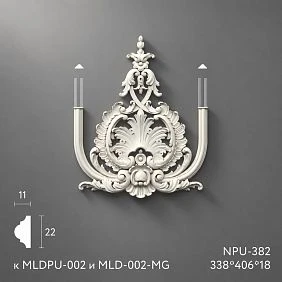
- Decorative elements and overlays made of polyurethane
- Moldings and cornices: basic stucco elements
- How to choose molding according to interior style
- Classic
- Neoclassicism
- Modern classicism
- Art Deco
- Minimalism
- How to choose the size of stucco
- Stucco for painting: what is important to know
- Stucco price: what determines the cost
- How to avoid mistakes when buying stucco
- What to buy together with stucco
- FAQ: answers to important questions
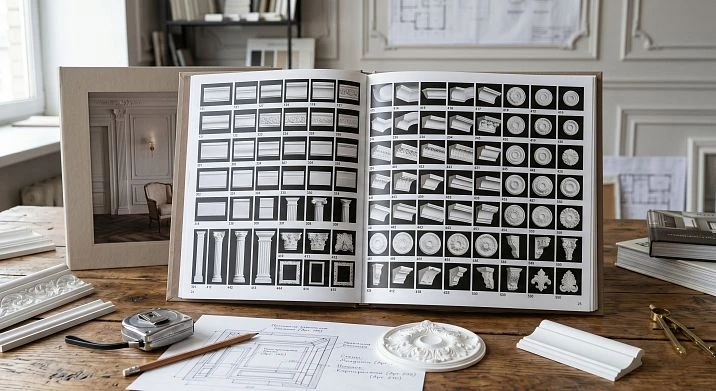
The answer to this question depends on one thing: where and how you want to apply it polyurethane molding. For a wall — some elements. For a ceiling — others. For a facade — third ones. For a classic interior — rich decor. For neoclassicism — strict profiles with moderate detailing. All this is one moldings catalog, but different tasks and different solutions.
This article is a detailed guide to choosing polyurethane molding for interior and facade. Without unnecessary words and with maximum specificity.
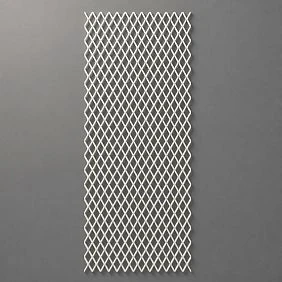
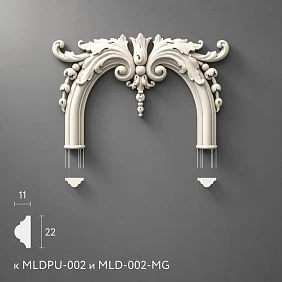
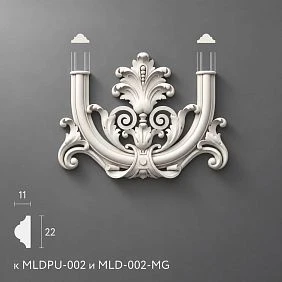


Short answer: how to choose stucco from a catalog
Before diving into details — here is a quick selection map for those who already know the task:
For walls — Moldings made of polyurethaneOverlays, decorative elements for frames, panels, and accent zones. The wall is a plane that stucco transforms into an architectural surface.
For the ceiling — cornices for the transition between wall and ceiling, rosettes for chandeliers, ceiling frames made of profiles. The ceiling is a horizontal line that sets the scale for the entire room.
For doors and openings — trims, moldings, corner elements. A door opening with decor is an architectural transition, not just a hole in the wall.
For the facade — facade moldings, cornices, window decor, brackets. Exterior decor works from a distance of 10–20 meters, so it requires different proportions than interior decor.
For classic style — expressive Decorative stucco with a rich profile: multi-tiered cornices, applied rosettes, ornamental accents.
For neoclassical style — calm profiles, symmetrical frames, moderate decor without excessive ornamentation.
For modern interiors — minimalist moldings with a thin profile, painted in the wall color. Decor that creates structure without drawing attention to itself.




What is included in the catalog of polyurethane stucco
moldings catalog — it is a system. Not a random set of elements, but a well-thought-out architectural library where each item has its place and purpose.
Main groups of elements:
Moldings. Linear profiles for walls, frames, decorative panels, openings. This is the most versatile stucco element — it works on walls, ceilings, and as part of facade decor. Moldings made of polyurethane — the basis of any stucco system.
Cornices. Profiles for the transition between wall and ceiling. Larger and more expressive than moldings. The cornice sets the vertical scale of the room — literally determines how the height of the room is perceived.
Baseboards. The lower architectural element — the transition between wall and floor. In a system with cornices and moldings, it creates a complete vertical structure of the room.
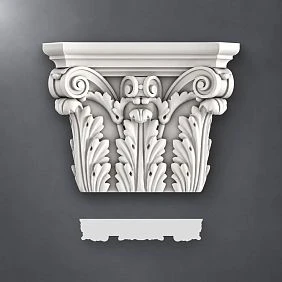
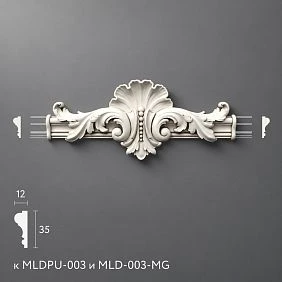
Decorative overlays. — everything must correspond to the chosen era. in the form of ornamental details: leaves, rosettes, volutes, masks, ornamental corner pieces. These are point decorative accents.
Rosettes. Round or multi-petal elements for the ceiling center — under a chandelier, in frame corners, as standalone decorative points.
Corner elements. Decorative details for internal and external corners — where the molding changes direction. Without corner elements, the profile at corners is joined at 45 degrees; with corner blocks, it receives a decorative "solution" for the corner.
Frames. Profile frames for door and window openings, niches, mirrors.
Facade decor. Moldings, cornices, architraves, sandriks, and brackets for exterior finishing — read more about this topic in the article relief on the facade.
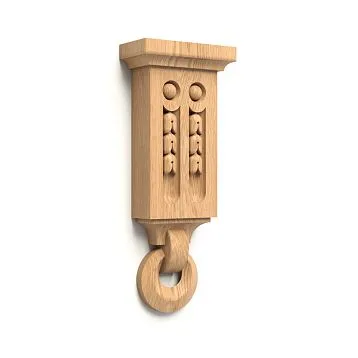
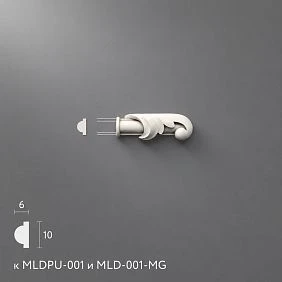
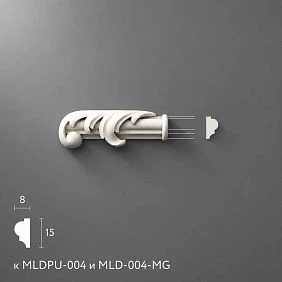
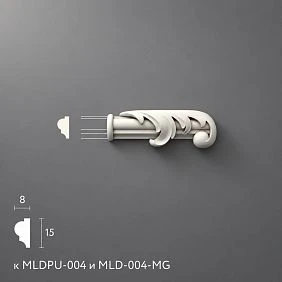
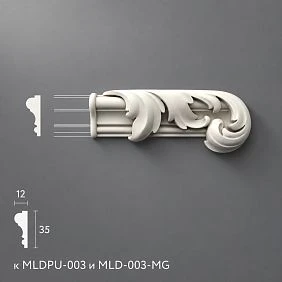
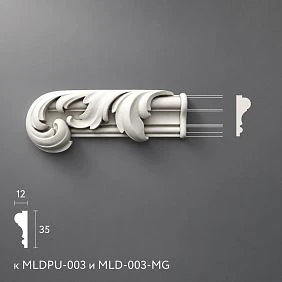
Decor for moldings. A separate group — Decor for Molding: ornamental inserts and overlay elements that are installed directly on the molding, enriching its profile and creating a more complex decorative pattern.
Wall decor. Polyurethane wall decor — an independent category: panels, frame structures, decorative inserts for creating structured wall surfaces.
Our factory also produces:
Wall stucco: what to choose
The wall is the first thing a person sees when entering a room. And if the wall is just a painted or wallpapered surface, it is silent. A wall with stucco on the wall — speaks.
What exactly does stucco on walls "say"? It creates structure, visual levels, rhythm. It makes the wall an architectural object, not just a background.
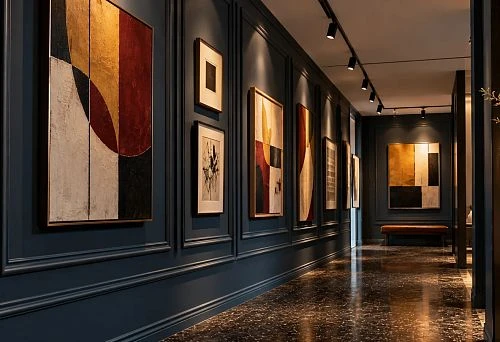
Molding frames. The most popular technique for walls is creating rectangular frames from of polyurethane moldingsMoldings are laid along the perimeter of a wall section, forming a "field" and a "frame" — a classic architectural division of the wall plane. This technique originated from 18th-century palace interiors and remains one of the most convincing ways to make a wall expressive today.
The height of the frame in the lower zone of the wall: 600–900 mm from the floor — a classic "wainscoting" row. In the upper zone: from the molding belt to the cornice. The ratio of the lower and upper zones: usually 1:2 or 1:1.5.
Overlays for accent zones. Wall molding in the form of applied ornamental elements — to create accent points on the wall. One large overlay in the center of a pier, an ornamental element at a key point of the frame, corner details in the corners of the molding frame — all this creates a sense of thoughtful decor.
TV zone. The TV area is one of the most rewarding for wall decor. A molding frame around the TV panel or around a wall niche for the TV creates an architectural "screen" — and the TV is perceived not as a gadget on the wall, but as part of the interior composition.
Wall behind the sofa. An accent wall in the living room — behind the sofa or opposite the entrance — is a traditional place for wall stucco decor. Here, a richer decorative system is appropriate: molding frames with applied ornaments in the corners, a decorative horizontal belt at the level of the sofa back.
Bed headboard. In the bedroom, the wall behind the headboard is the main accent zone. A molding frame that repeats the size of the bed, with applied elements in the corners — this is an architectural "framing" of the bed that makes the headboard visually expressive without using soft panels or complex finishes.
Combination with wallpaper and plaster. decorative wall molding works well over any finish: paint, decorative plaster, wallpaper. On wallpaper, moldings are glued with liquid nails or special polyurethane glue. On plaster — similarly. Important: the wall must be level — unevenness under the molding will create gaps that will be visible.
One important thought. Stucco decor for walls is a system. One molding on one wall looks random. Three or four frames with a consistent step and proportions on one wall — that's already architecture. Think about the wall as a whole, not about each element individually.
Get Consultation
Ceiling stucco: cornices, rosettes, and profiles
The ceiling is the most challenging surface for decoration. It is not touched, and it is only seen when one deliberately looks up. But it is the ceiling that determines the perception of height, scale, and the "status" of the space.
ceiling molding — these are three main groups of elements: a cornice at the transition between the wall and ceiling, a rosette in the center of the ceiling, and decorative ceiling frames.
Ceiling cornice. A cornice in an interior is a horizontal line that separates the wall from the ceiling. Without a cornice, this transition is sharp and "chopped off" — especially with wallpaper or paint that differs in tone from the ceiling. With a cornice, the transition is soft, architecturally finished, and cohesive.
The size of the cornice based on room height: for a ceiling of 2.5–2.7 m — a cornice with a profile height of 50–80 mm. For a ceiling of 2.8–3.2 m — 80–120 mm. For a ceiling of 3.5 m and above — 120–200 mm. A cornice that is disproportionately small for a tall room gets lost. A cornice that is too large for a low ceiling feels oppressive.
Rosette for a chandelier. cornice under the chandelier — this is a decorative medallion that is mounted on the ceiling in the center of the room, around the chandelier connection point. Functionally, it covers the mounting hole and wires. Decoratively, it creates a ceiling center, a "crown" for the chandelier.
The size of the rosette depends on two parameters: the diameter of the chandelier shade and the room area. For a room of 15–20 m² and a chandelier with a shade of 40–60 cm — a rosette with a diameter of 40–60 cm. For a large hall of 30–50 m² with a large chandelier — a rosette of 80–120 cm.
The rosette should not be smaller than the chandelier shade — otherwise it "hides" behind the chandelier and is not visible. It should not be significantly larger — otherwise it creates a feeling of disproportion.
Decorative ceiling frames. From thin moldings, you can create ceiling frames — rectangular or square coffers that imitate a coffered ceiling. This is a powerful decorative technique, characteristic of European palace interiors. In a modern interpretation — neat ceiling frames with a small molding profile that create a visual structure on the ceiling.
How not to overload a low ceiling. For rooms with a ceiling height of 2.4–2.5 m — a minimal cornice with a profile height of up to 50 mm. No large rosettes. If a rosette is needed — thin, with a diameter of no more than 30–40 cm. Ceiling frames — only on part of the ceiling, as an accent, not a continuous carpet of coffers.
For low ceilings, the best option: a cornice in the color of the walls (not contrasting) — it creates a smooth transition without visually "cutting off" the ceiling.
Decorative elements and overlays made of polyurethane
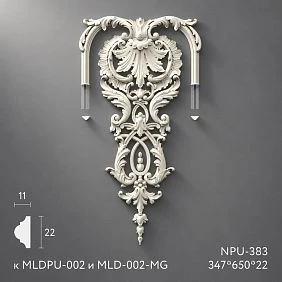
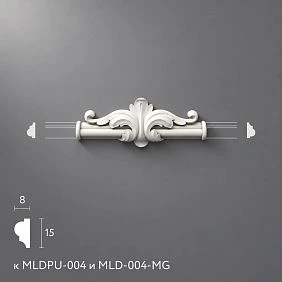
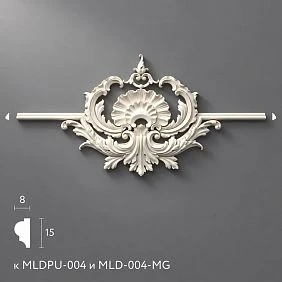
decorative polyurethane elements — this is a separate world within the catalog. If moldings and cornices are linear decor, then overlays are point decor. They create accents, ornamental details, and volumetric "decorations" at key points of the interior.
What is included in this group:
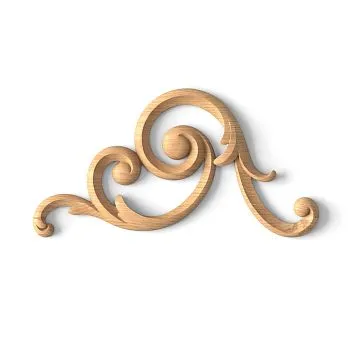
Ornamental overlays. Acanthus leaves, rocaille curls, classic rosettes, leaf wreaths — elements that trace back to the European architectural tradition and work perfectly in classical and neoclassical interiors.
Corner details. Decorative blocks for the corners of molding frames — they eliminate the problem of joining profiles at 45 degrees and create a finished decorative corner. In the corner of a molding frame, instead of a mitered joint, there is a beautiful rosette or ornamental block.
Symmetrical pairs. Overlays for paired use — to the left and right of an opening, symmetrically on the wall, on both sides of a mirror. Symmetry is the foundation of classical decor, and overlays support this principle.
Elements for moldings. Decor for Molding — these are applied ornamental details that are inserted or glued directly onto the molding profile. They turn a simple smooth molding into a rich ornamental profile — without the need to purchase a complex and expensive profile initially.
For example: a smooth molding 40 mm wide with periodically placed applied leaves is a stylistically richer result than an initially stucco profile with a continuous ornament. Because you can set the rhythm yourself.
Elements for wall decoration. Larger applied elements for large wall surfaces — decorative medallions, ornamental shields, architectural reliefs. They work as independent accents on the wall without a molding system.
Moldings and cornices: basic stucco elements
Moldings and cornices are the foundation of any stucco system. Everything else is an addition to them.
| Element | Where to use | Typical size |
|---|---|---|
| Molding | Walls, frames, panels, openings | 15–60 mm in width |
| Cornice | Transition of wall and ceiling, top line | 60–200 mm in height |
| Applique | Accent decor on the wall, corners of frames | Various, from 50 to 300 mm |
| Rosette | Ceiling center, chandelier area | 30–120 cm in diameter |
| Baseboard | Bottom joint of wall and floor | 60–150 mm in height |
| Decor for molding | Enrichment of the molding profile | Along the width of the molding |
| wall decoration | Wall panels, frame decor | To the size of the zone |
Molding is a detail that is only visible up close. But it is precisely this that creates the impression of finishing quality. A thin molding with the right profile, laid evenly and painted to match the walls, creates a sense of architectural precision.
Molding profiles: classic "quarter round" (oval), "cove" (concave profile), stepped rectangular, ornamental with a continuous leaf pattern. The more complex the profile, the more "classic" the interior looks.
A cornice is a detail that is seen immediately as soon as you raise your gaze. It is the cornice that determines the first impression of a room: whether it is high or low, strict or lush, classic or modern.
An important installation detail: cornices are joined at corners at 45 degrees or using corner pieces. For a correct angle, precise cutting is required — with a miter saw or a miter box with a fixed angle. Even a slight gap in a cornice corner is clearly noticeable — this is one of the most "noticeable" errors in stucco installation.
How to choose molding according to interior style
Style is not fashion. It is a system of values expressed through space. And stucco should belong to the same system as furniture, doors, and textiles.
Classic
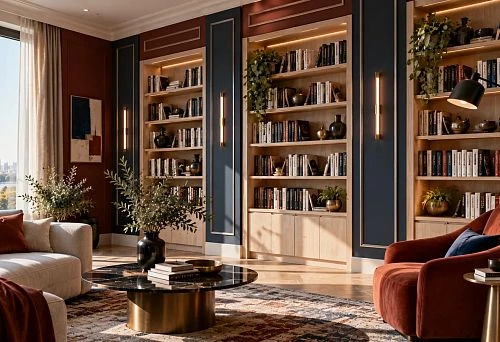
Types of moldings In a classic interior — the most expressive and rich. Multi-tiered cornices with transverse steps and ornamental bands. Large ceiling rosettes with detailed leaf decor. Molding frames on walls with applied ornaments at the corners. Decorative pilasters on the piers.
Principles of classicism: symmetry, repetition, hierarchy (cornice larger than molding, molding larger than appliqué). Classicism does not tolerate randomness — each element has its place in the system.
For a classic interior, choose: molding catalog choose: cornice with a profile of 120–200 mm, moldings 25–50 mm, rosettes with a diameter of 60–100 cm, appliqués with leaf or rocaille ornament.
Neoclassicism
Neoclassicism is classicism filtered through modernity. The same principles of symmetry and system, but calmer profiles. Less ornament, more pure geometry.
For neoclassicism: cornice 80–120 mm with two to three steps without an ornamental belt. Moldings with a smooth or semi-circular profile without leaf pattern. Rosettes with a simple radial pattern. Molding frames without applied details.
Color in neoclassicism: often the entire polyurethane moldings is painted in the same color as the ceiling or walls. The monochrome approach removes the visual "weight" of the decor and leaves only the form.
Modern classic
Modern classic is a balance between structure and simplicity. Molding frames are present, but the profile is thin. There is a cornice, but it is small. There is no rosette — the chandelier is simply on the ceiling.
Relief Decoration in modern classic works as a "hint" of tradition: it creates structure and order without overloading the space with historical detailing.
For this style: moldings 15–25 mm with a simple rectangular or semi-circular profile. Cornice 50–70 mm. No ornamental overlays. Color — matching the walls or ceiling.
Art Deco
Art Deco — geometry, rhythm, luxury without historical references. Here stucco works differently: not ornamental curls, but clear geometric profiles. Stepped cornices. Rectangular belts. Horizontal rods with sharp edges.
For Art Deco from the catalog of polyurethane stucco choose straight stepped cornices, moldings with a rectangular stepped profile. Geometric rosettes with a radial symmetrical pattern. Color: contrast — white stucco on dark walls or gold paint on a white cornice.
Minimalism
Minimalism is a style where less is more. Here Decorative stucco it is present but hidden behind a single color.
A thin cornice 30–50 mm, painted in the color of the ceiling, is a transition that does not catch the eye but creates the right feeling of completeness. Moldings of the same color as the walls are architectural order without decorative noise.
For minimalism: only linear elements, no overlays or ornaments. One tone for stucco, walls, and ceiling. The shape is the simplest: straight rectangular or basic quarter round.
How to choose the size of stucco molding
Size is proportion. And in stucco decoration, proportion is more important than the beauty of an individual profile.
Ceiling height. This is the main parameter for choosing a cornice. Rule: the height of the cornice profile in centimeters is approximately equal to the ceiling height in meters × 3–4. Ceiling 2.7 m → cornice 80–100 mm. Ceiling 3.5 m → cornice 100–140 mm. Ceiling 4.5 m (high hall) → cornice 150–200 mm or more.
Wall area. For molding frames: the width of the molding should be proportional to the width of the frame. Frame width 600 mm — molding 20–30 mm. Frame width 1,500 mm — molding 30–50 mm. A too thin molding on a large frame looks like a "pencil line."
Room size. A small room of 10–12 m² with a very large cornice and large frames is an overloaded, heavy interior. A large hall of 40–50 m² with thin moldings of 15 mm is a lifeless space with decor that is simply not visible.
Distance to furniture. The lower rows of molding frames should be above the height of the furniture backrest. A frame "cut off" by the back of a sofa is a planning mistake.
Width of piers. On a narrow pier of 400–600 mm — one thin vertical rod or no wall decor at all. An overlay on a narrow pier will take up almost the entire width — this is a disproportion.
Scale of doors and windows. The molding for framing a doorway should be proportionate to the width of the door casing. For a standard door casing of 60–80 mm — a molding trim of 40–60 mm.
Stucco for painting: what is important to know
Painting is the final and critically important stage of working with polyurethane decor. It is the color that determines how the stucco will be perceived in the space.
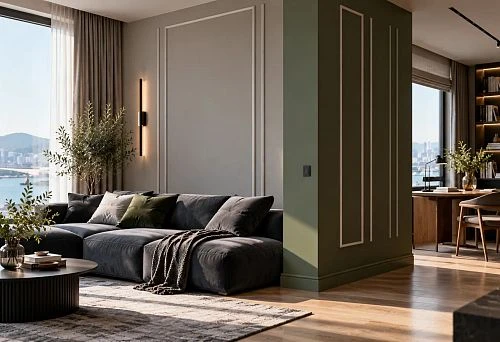
In the color of the wall or ceiling. This is the most common solution for modern and neoclassical interiors. Sculptural wall decoration, painted in the same tone as the wall, "dissolves" on the surface and is perceived as a relief, not as an applied detail. This is an elegant and modern solution.
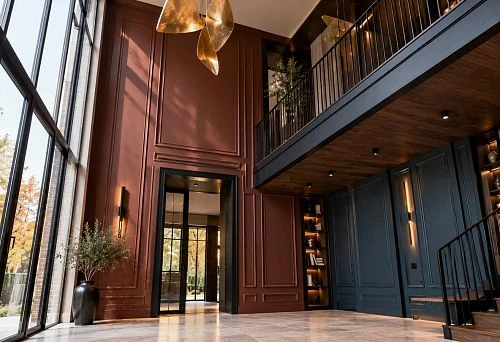
Contrast accent. White stucco on colored walls is a classic technique. A white cornice and white frames on gray-blue, green, terracotta walls — this is an architectural contrast in which the stucco acts as an independent decorative element.
Gold and metallics. For classic interiors — gilding on the cornice, gold details on the overlays. This is a historically accurate technique — this is exactly how European palace interiors were decorated.
Preparation before painting. The surface of polyurethane before painting needs to be degreased and, if necessary, primed with acrylic primer. The joints between elements and between the stucco and the wall — putty and sand to a uniform surface. Only after that — the first coat of paint.
Number of layers. For a uniform coating, a minimum of two layers is required. On polyurethane, the paint lays thinner than on a wall, so one layer often results in uneven coverage.
Color and furniture. The color of the molding should be coordinated with the color of doors, baseboards, and furniture. White molding in an interior with white doors and white window frames forms a unified white system. White molding with gray doors and wooden frames is a mix that requires a deliberate design decision.
Molding price: what determines the cost
We do not give specific figures — they change. But we will break down the pricing logic that will help you correctly calculate the budget for purchasing molding.
Type of element. A simple molding is cheaper than a complex cornice. A smooth baseboard is cheaper than a cornice with a three-step profile. The more complex the shape, the more expensive the production.
Size. Linear elements (cornices, moldings, baseboards) are sold by linear meter. The price per linear meter increases proportionally to the profile width. Overlays and rosettes are sold per piece, with the price depending on size and ornament complexity.
Profile complexity. A simple rectangular profile requires a simple mold. A cornice with three steps, a fillet, and an ornamental band requires a complex multi-component mold. The production cost differs.
Room area. For a room of 20 m², you need 18–22 linear meters of cornice (perimeter + allowance). For a hall of 50 m², you need 28–35 linear meters. This is a direct relationship.
Number of corners. Each internal and external corner involves either cutting at 45 degrees (waste) or a corner piece (additional item). A room with a non-standard layout means more joints.
Installation. Mounting moldings from polyurethane — a separate expense item. Glue, dowels, joint putty, primer, painting — all of this adds up.
Interior or exterior. For the facade, elements with increased resistance to outdoor conditions are required — this affects the material composition and, accordingly, the cost.
Practical advice: Moldings shop with a full range allows you to select a system of elements from one group and one price range — this is simpler and more economical than assembling decor from different sources.
How to avoid mistakes when buying stucco molding
The list of mistakes is not to scare, but to warn. Each of them cost someone time and money.
Buying individual elements without an overall plan. You bought a cornice for one wall, then added moldings of a different profile, then overlays from a third manufacturer — in the end, it's not a system, but a collection. Moldings for interior works as a single ensemble. First — the room layout, then — the list of elements.
Choosing decor only by photo. The photo does not show the scale. A cornice that looks modest in the photo may turn out to be 200 mm in profile. Always check the dimensions in millimeters.
Do not ignore ceiling height. A cornice that disrupts the proportion with the room's height is the most noticeable molding mistake. It is difficult to fix: you need to remove and replace it.
Do not overload a small room with large moldings. A children's room of 9 m² with a 150 mm cornice and an 80 cm diameter rosette creates a oppressive, heavy space. Small rooms require light, restrained decor.
Do not choose a profile that is too small for a large wall. A wall 4 × 3 m with moldings 10 mm wide — they are simply not visible. The minimum readable molding for a frame on a large wall is 20–25 mm.
Do not forget to plan the painting. polyurethane moldings always requires painting. Unpainted decor is an unfinished result. The color needs to be decided at the stage of selecting elements.
Do not forget to count the corners. Forgotten external corners, additional elements for complex areas — these are issues that become apparent during installation. Count the corners in advance.
Do not mismatch moldings with baseboards and doors. A cornice made of molding catalog should match the baseboard in style. A classic cornice with ornament and a straight PVC baseboard is a system mismatch that will stand out.
What to buy together with stucco
Complete list for a comprehensive interior decor project.
Moldings made of polyurethane — for wall frames, cornice profiles, trims, and decorative lines.
PU overlays — ornamental overlay elements for walls, frame corners, and accent areas.
Decor for Molding — ornamental overlay details to enrich molding profiles.
Wall Decor — wall panels, frame structures, decorative inserts for structured wall surfaces.
Polyurethane molding — cornices, baseboards, rods, and linear profiles for the entire decor system.
Stucco molding under chandelier — rosettes — ceiling medallions and rosettes for the center of the room.
Buy stucco molding — full catalog — all polyurethane moldings in one place: interior and facade decor.
Moldings shop — convenient selection by categories, sizes, and application: for walls, ceiling, facade, and classic interior.
facade molding — overview of trends and selection of polyurethane facade decor.
Types of moldings — overview article on types and application of stucco decor in different interior styles.
FAQ: answers to important questions
What is included in the stucco catalog?
moldings catalog includes moldings, cornices, baseboards, ceiling rosettes, decorative overlays, corner elements, door and window frames, wall decor, molding decor, and facade elements. This is a complete system of architectural decor for interior and exterior finishing.
Which stucco to choose for walls?
For walls, the most commonly used are Moldings made of polyurethane for creating frames and panels, PU overlays for accent zones and ornamental details, as well as Wall Decor for structured wall compositions. The choice depends on the interior style and application area.
Which stucco to choose for the ceiling?
For the ceiling — a cornice for the transition between wall and ceiling (size according to room height), cornice under the chandelier in the form of a ceiling rosette (diameter proportional to room area), optionally — ceiling frames made of thin moldings to create coffers.
Can polyurethane stucco be painted?
Yes, and it is essential for a complete result. Polyurethane moldings painted with acrylic paints — in the color of the walls, in a contrasting color, or in metallic. Before painting: degrease, prime, putty the joints. At least two coats of finish paint.
What does the price of stucco depend on?
The cost consists of the type and size of the element, profile complexity, number of required items, room area, number of corners and joints, as well as installation and finishing work. A full calculation is most conveniently done using a room diagram — then the list of elements will be accurate from the start.