Article Contents:
- When to change furniture legs — signs that cannot be ignored
- Which furniture is suitable for wooden supports — a complete list of applications
- What types of wooden furniture legs exist — typology, styles, shapes
- Straight wooden supports — for cleanliness and minimalism
- Turned supports — a balance of form and character
- Carved legs — architecture under furniture
- Low supports — for sofas, beds, bedside tables
- High supports — for consoles, chests of drawers, lightweight furniture
- How to choose the height of furniture supports — a table of proper scale
- How to match the style of furniture legs to the interior
- Modern interior and minimalism
- Neoclassicism
- Classicism and Baroque
- Country house and the "country" style
- Art Deco
- What to check before replacement — an engineering checklist
- How to enhance the effect of replacing legs — a systematic furniture update
- New wooden handles — extending the language of legs
- Moldings on facades — the architecture of the plane
- Lower furniture plinth — connection with the floor
- Decorative overlays — a point accent
- Carved decor — for those who want truly luxurious
- Body painting — if everything else is done
- Step-by-step replacement of legs — from dismantling to finish
- Mistakes when replacing furniture legs — what people do wrong
- What to buy for furniture renovation — order checklist
- FAQ - answers to popular questions
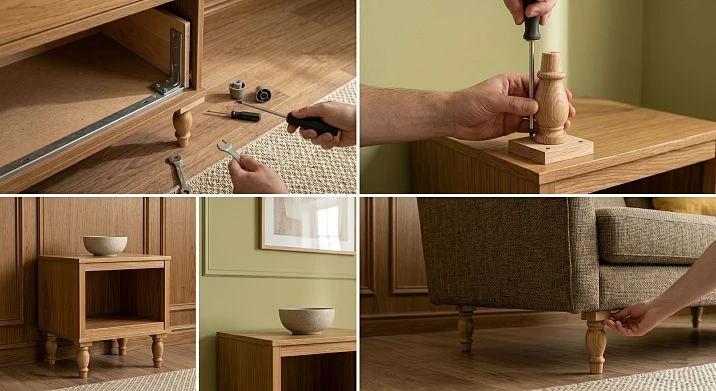
Replacing furniture legs is one of the fastest, most affordable, and most spectacular ways to update a dresser, nightstand, cabinet, sofa, or bed without buying a new piece. Wooden supports change the height, silhouette, and style of furniture: a low dresser becomes visually lighter, a simple nightstand looks more expensive, and ordinary mass-produced furniture suddenly gets a finished, designer look.
Have you ever looked at a normal dresser — solid, high-quality, made of good MDF or solid wood — and thought, "Why is it so... blah"? Not because it's bad. But because it's low. Because plastic plug legs make it look like a box. Because the silhouette is heavy, pressed to the floor. Yet in this box, nothing needs to be changed — you just need to lift it. Give it legs. And then it transforms from an "IKEA dresser" into a "mid-century style dresser." Literally in one evening.
This is not an exaggeration. This is the mechanics of design.Furniture legs — one of the most underestimated tools for interior transformation.
When to replace furniture legs — signs that don't lie
Sometimes furniture doesn't need to be thrown away. Sometimes it needs a new support. Here are seven situations when replacing legs solves everything:
-
The furniture looks too low. A 70 cm high chest of drawers on plugs is just a box. The same chest of drawers on 15 cm legs is already a piece of furniture with a silhouette.
-
A chest of drawers or a cabinet seems heavy. There is no gap between the body and the floor — no 'air'. The furniture presses down rather than stands. Legs provide lightness.
-
Plastic supports ruin the appearance. Black plastic under a light body, gray plugs under oak — it's like an expensive suit with flip-flops.
-
Furniture needs to be raised for cleaning. A robot vacuum cannot pass, it's hard to wash the floor, dust accumulates under the chest of drawers. 8–10 cm legs solve the problem.
-
You want to update an item without restoration. Changing the coating is long, expensive, and dusty. Installing new legs takes half an hour and gives results.
-
You need to tie the furniture to a classic or neoclassical interior. Straight plastic legs are the enemy of classics. Figurinefurniture legswooden ones are its ally.
-
Old legs have damage or misalignment. They have become loose, cracked, chipped, or stained. If the body is intact — change only the supports.
Recognize yourself? Then let's move on. We'll break down everything: from choosing the shape to installation and mistakes.




Which furniture are wooden supports suitable for — a complete list of applications
Short answer: for almost any. Long one — below.
Case furniture:
-
Chest of drawers — a classic for replacement. Replacing legs here gives the maximum visual effect.
-
Bedside table — raise by 10–15 cm so the height matches the mattress. Plus visual lightness.
-
TV cabinet — a low area, but even here legs of 5–8 cm change the perception.
-
Wardrobe — requires caution: height, load, stability.
-
Sideboard — historically always stood on tall carved legs. Returning the form to its original is correct.
-
Display cabinet — legs give lightness and a feeling of a "museum" exhibition.
Soft furniture:
-
Sofa — legs for a sofa determine its "weight category". Low ones — lounge area. High ones — classic living room seating.
-
Bed — bed supports affect the seating height and storage space under the bed.
-
A bench — without legs, there is no bench. They are its structural core.
Built-in and kitchen furniture:
-
A console — high legs (150–250 mm and above) make the console elegant and functional.
-
Kitchen module — if the fronts are without a plinth, 15 cm legs + a furniture plinth solve the base issue.
-
Hallway furniture — a shoe cabinet on legs: convenient cleaning of the space underneath and a lighter silhouette.
It is important to remember: for each type of furniture, there is its own logic for choosing the height, shape, and number of supports. More on this below.
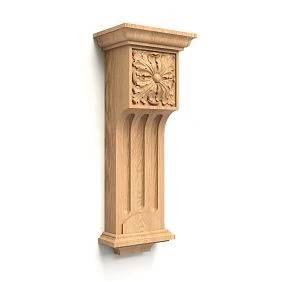
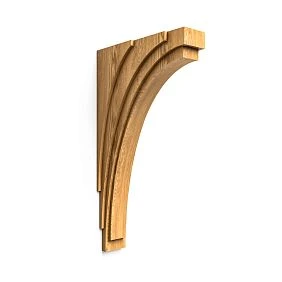
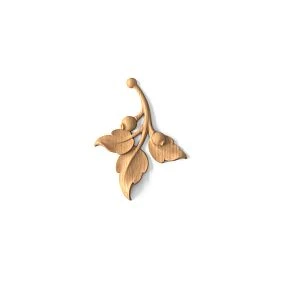
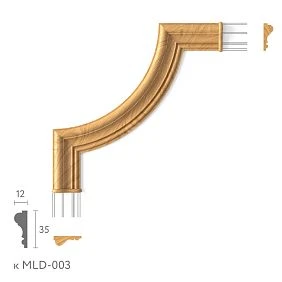
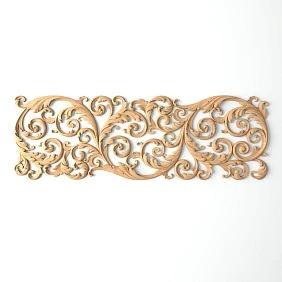
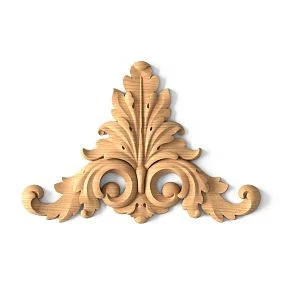
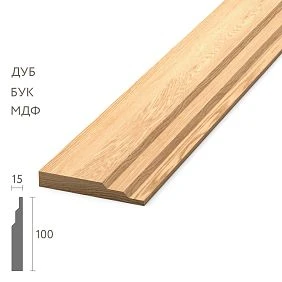
Our factory also produces:
What types of wooden furniture legs exist — typology, styles, shapes
Catalogsolid wood furniture legshas dozens of shapes and hundreds of variations. Let's break down the key types.
Get Consultation
Straight wooden supports — for purity and minimalism
Square or round in cross-section, without curves or carving. Cross-section — 30×30, 40×40, 45×45, 50×50 mm. Oak, beech, pine. Smooth, for painting, for varnish, for stain.
Application: modern minimalism, Scandinavian style, Japanese interior, loft. Work with furniture of any height. Especially good on cabinets, TV furniture, consoles.from STAVROS open boundless possibilities for designers, furniture makers, and anyone striving to create unique high-quality furniture.Made of beech — a universal base: paint it any color you need, tint it to match any wood species.
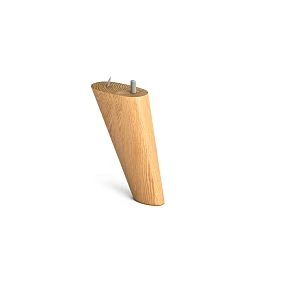
There is a variety — straight tapered legs. Slightly more expressive: square or round at the top, tapering downward. Mid-century modern, 1960s, retro. This is the leg of a typical Scandinavian teak wood dresser — now accessible, made of beech, for any finish.
Turned legs — a balance of form and character
Turned on a lathe — with narrowings, grips, barrel shapes, vase shapes. This is a classic of furniture production since the 18th century. Such legs were on desks, secretaries, and dressers of the Louis XVI, Directory, and Empire eras.
Today they are back in fashion. Turned legs are good in neoclassicism, soft classicism, Provencal style, French country. Height — from 80 to 250 mm. Oak, beech. For painting white/gray — for a neoclassical dresser. For staining wenge or walnut — for a classic sideboard.
turnedFurniture SupportsCarry the history of joinery craftsmanship — even a child can see it. No plastic leg can give this feeling.
Carved legs — architecture under furniture
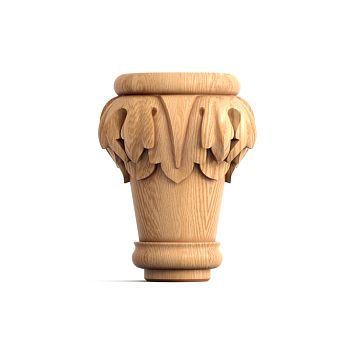
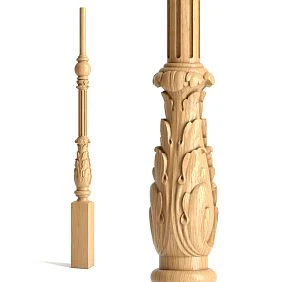
carved furniture legs This is no longer a detail, but a style element. For classic furnitureSideboards, display cabinets, libraries, study sets. Carving — hand or machine, with acanthus leaves, volutes, geometric facets, grids, pearls.
Key point: carved legs require an appropriate context. Placing them on a simple MDF cabinet without facade decor creates dissonance. Their strength lies in the ensemble: carved legs +Decorative Inserts on the facades + Moldings for furniture around the perimeter of the doors. Then the furniture gains weight — not physical, but visual and meaningful.
Low supports — for sofas, beds, nightstands
Height 50–80 mm. Often with a wide base, with a mounting plate 60×60 mm or an M8 bolt. Shape — barrels, balls, cones, hemispheres, paws. For sofas, low legs provide a modern "low" silhouette. For beds, they keep the mattress height in the correct range (50–60 cm from floor to top of mattress is considered ergonomically optimal).
High supports — for consoles, dressers, lightweight furniture
Height 150–250 mm and above. For consoles, hallway cabinets, accent dressers. Thin straight high legs transform a heavy dresser into a floating form. Important: at heights over 200 mm, stability must be carefully checked. The center of gravity rises — requirements for fastening rigidity and leg width increase.
How to choose the height of furniture supports — a table of proper scale
Height is a key parameter. Get it wrong, and the effect will be the opposite of what you expect.
| Leg height | Application | Effect |
|---|---|---|
| 30–50 mm | Sofas, beds, ottomans | Barely lifts, allows air under furniture |
| 50–80 mm | Cabinets, low dressers | Careful lifting, vacuum passes through |
| 100–150 mm | Dressers, TV cabinets, sideboards | Universal, light silhouette |
| 150–200 mm | Dressers, consoles, hallway furniture | Noticeable change in proportions |
| 200–250 mm | Consoles, decorative cabinets | Expressive tall silhouette |
| Above 250 mm | Accent furniture, custom-made | Designer solution, requires calculation |
Practical rule: the final height of the top surface of a dresser in the bedroom is 85–100 cm from the floor. This is an ergonomic standard: no bending, opening drawers effortlessly. Measure the body height, add the legs — you get the final size. This is how height is selected, not "by eye."
For a bedside table: top height — at the level of the mattress top ±5 cm. If the mattress is at a height of 55 cm, the table with legs — 50–60 cm final height.
For a TV stand: the axis height of the screen should be at the eye level of a seated person. Stand lower — you tilt your head down. Stand higher — you crane your neck.
How to choose the style of furniture legs to match the interior
The style of legs is not a random choice. It is part of a system. Legs should "converse" with handles, with facade moldings, with flooring, with wall decor, with the shape of door trims.
Modern interior and minimalism
Straight smooth supports without carving — square 40×40 mm or conical round ⌀40 mm. Wood with matte oil: natural oak, thermo-oak, tinted beech. Or painted in white, gray, black. No carving, no turned grips — only geometry and material.Unpainted legsmade of beech — an ideal base: paint it in the desired shade together with the handles, you get a unified look.
Neoclassicism
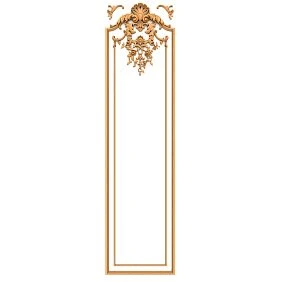
Calm turned form, symmetry, moderate expressiveness. Oak or beech painted in white, ivory, gray. Bolt-on mounting with a platform. Medium-height legs (100–150 mm), not too thin, not too massive.to buy, which will allow you to transform your furniture using carved wooden elements. You can use the C-003-3 decor set to decorate furniture, walls, doors, or any other surface. The C-003-3 decor set is made of oak or beech, known for their strength, durability, and beauty. You can buy the C-003-3 decor set at the Stavros decor store, which specializes in producing and selling decorative elements and hardware for furniture and interiors. At the Stavros decor store, you will find a wide selection of decor sets of various shapes, sizes, and styles. You can chooseon the fronts — in the same logic: a restrained symmetrical overlay in the center, a frame Wooden molding around the perimeter of the doors. Then the legs don't just hold the chest — they complete the look.
Classical and Baroque
Carved legs are the realm of classics. Solid oak with acanthus carving, volutes, pearl grips, engraved edges. Toning in mahogany, rosewood, wenge. Carved wooden decoration on the fronts — mandatory as a continuation of the leg language. Without it, carved supports look foreign.
Height — 80–150 mm for a chest, 150–200 mm for a sideboard, 80–100 mm for a classic sofa. For a study library — turned tall legs with carved tops, up to 250–300 mm.
Country house and "country" style
Natural wood texture, no paint. Stain, oil-wax, water-based varnish with open texture. Shape — simple, without excess. Oak, larch, pine. Square legs with a slight chamfer or with turned grips. Thermowood — for dachas and country houses with humidity fluctuations: more stable, harder, does not turn blue, does not rot. Solid Wood Items STAVROS — dried to 8–10%, without deformations, with geometry guarantee.
Art Deco
Geometry is law. Square legs with chamfers, with pyramidal taper, with parallel grooves. Contrast: black legs on a light body, gold on black. Clear proportions, no "softness" of form. Beech for ebonization or matte black painting — a classic solution.
What to check before replacement — an engineering checklist
Replacing legs is not just "buy and screw on." There are nuances that affect safety and the result.
Furniture weight. Each furniture leg bears a certain load. STAVROS legs withstand a vertical load of 100 kg per support (depending on the cross-section). For a chest of drawers weighing 80 kg on 4 legs — 20 kg/leg. Perfectly fine. For a sideboard weighing 120 kg with dishes on 4 thin legs ⌀30 mm — check the specification.
Body material. The leg is attached to chipboard, MDF, or solid wood. MDF and solid wood hold a bolt or threaded insert well. Chipboard — risk of delamination under load. For chipboard bodies, it's better to use a bolt with a wide washer, resin anchor, or a special plate with multiple attachment points.
Is there a solid base. If underneath there is a thin back panel of 3 mm plywood or an open plinth without horizontal shelves — there is nowhere to attach the legs. You need to mount a horizontal crossbeam inside or outside at the bottom of the body.
How many legs are needed: 4, 5, 6, or more. For a chest of drawers and wardrobe — usually 4, for narrow cabinets 40–60 cm — often 4 in 2 rows. For a long TV cabinet 200+ cm — 5 or 6 legs (central group). For a sofa — from 6 to 8 depending on the length and frame design.
Is a central support needed. For long items (sofa 230+ cm, TV cabinet 200+ cm, sideboard 180+ cm) — a central leg or intermediate support is mandatory. Without it — sagging of the bottom shelf, body deformation, cracking.
How the old legs are attached. M8 bolt with cap nut — simply replace the leg with the same bolt. Glue + screw — need to remove and prepare a new attachment. Factory plate — remove the plate, measure, select a new leg for the same holes.
Will stability be compromised. High legs raise the center of gravity. This is critical for cabinets — especially if they are against a wall without wall attachment. Rule: a cabinet on high legs (more than 150 mm) must be attached to the wall with a mounting bracket.
Will doors, drawers, and plinth get in the way. Sometimes there is a plinth 50–80 mm at the bottom of the body. Legs are mounted inside the plinth or instead of it. Check: whether high legs will block the bottom drawer. Whether the distance from the floor to the bottom shelf will become inconvenient for storage.
How to enhance the effect of replacing legs — a systemic furniture update
Legs are the start. But when everything is done as a whole, the furniture is completely transformed. Let's break down what works in ensemble with new supports.
New wooden handles — an extension of the legs' language
wooden furniture handles— a mandatory second step after legs. Handles and legs are the 'arms' and 'legs' of furniture. When they are in the same wood species, the same tint, the same style — the furniture becomes cohesive. STAVROS handles: overlay, bracket-shaped, knotted, classic, furniture patterns. Made of oak, beech. For painting — in the color of the legs or contrasting.Surface-mounted handles— for flat facades without drilling. Brackets — for classic and neoclassical styles.
Moldings on facades — the architecture of the plane
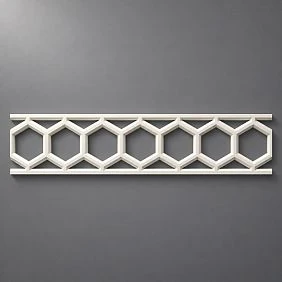
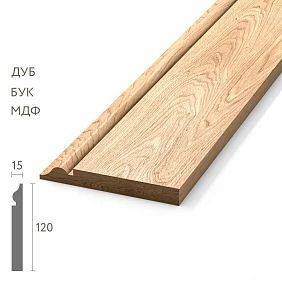
A smooth MDF facade transforms in an hour: glue Wooden molding around the perimeter of each door, putty, paint — and you have a paneled facade. The cost is 10 times less than replacing facades, the effect is comparable. For a chest of drawers, moldings work on drawer fronts as well: even a narrow 20 mm molding around the perimeter of a drawer adds relief and an 'expensive' look. Slatted panels and moldings for furniture — a separate big topic worthy of attention.
Lower furniture plinth — connection to the floor
If the furniture has 100 mm legs, the gap between the body and the floor is open. This is correct and beautiful. But if you want a "base", install a furniture plinth. Not a construction floor plinth — specifically a furniture one, narrower and shorter. Made from the same oak or beech as the legs. This is a finishing element that connects the furniture to the floor.Wooden baseboardIn the STAVROS catalog — heights 60–160 mm, oak, beech, MDF for painting.
Decorative overlays — point accent
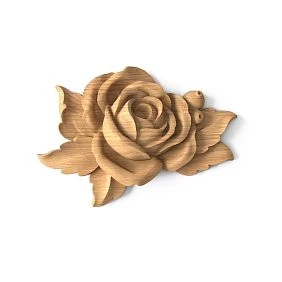
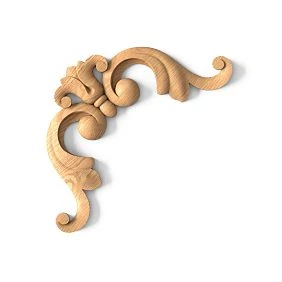
decor for furniture— overlays, rosettes, cartouches, corners — installed with glue. A small 10×10 cm rosette in the center of a dresser door, corner overlays on drawers, a horizontal frieze overlay under the top lid — all this adds relief, character, style.to buy, which will allow you to transform your furniture using carved wooden elements. You can use the C-003-3 decor set to decorate furniture, walls, doors, or any other surface. The C-003-3 decor set is made of oak or beech, known for their strength, durability, and beauty. You can buy the C-003-3 decor set at the Stavros decor store, which specializes in producing and selling decorative elements and hardware for furniture and interiors. At the Stavros decor store, you will find a wide selection of decor sets of various shapes, sizes, and styles. You can chooseSTAVROS — from solid oak and beech, hundreds of shapes, for painting or varnishing.
Carved decor — for those who want truly luxurious
Central symmetrical overlay above drawers, paired corners, mascaron on doors, frieze strips under the top edge. Carved wooden decoration — this is the level where people ask: "Is this antique?" No. This is STAVROS.
Body painting — if everything else is done
If the legs have been replaced, the handles are new, moldings on the facades, overlays installed — sometimes you want to update the color as well. Painting a dresser is the longest step, but also the most transformative. Primer, two coats of enamel, a final coat of varnish. You can paint it the color of the walls (invisibility), a contrasting color (accent), or a neutral color (versatility).
Step-by-step leg replacement — from disassembly to finish
Let's break down the process so you don't encounter any surprises.
Step 1. Empty the furniture. Any cabinet, dresser, or nightstand should not be loaded during work. Risk of tipping over, cut fingers from sharp edges.
Step 2. Remove the old legs. Bolt-on — unscrew the bolt from below or from inside the body. Glued-on — carefully use a lever, spatula, hair dryer to soften the glue. Standard mounting plates — unscrew the screws, remove the plate.
Step 3. Assess the condition of the mounting spot. If there is a broken nut left in the chipboard — remove it, glue in a new one, or use an anchor stud with epoxy.
Step 4. Mark new attachment points. Standard placement — 50–80 mm from the corner on each side. For long items — intermediate supports evenly. Mark with a pencil, check for squareness.
Step 5. Drill for fasteners. M8 bolt — drill bit 8 mm, depth 30–40 mm. Plate with screws — drill bit 3 mm for screws. In solid wood — directly. In MDF and chipboard — with a press-in nut (hammer it in).
Step 6. Install the legs. Bolt-on — tighten by hand + 1 turn with a wrench. Do not overtighten 'until it squeaks' — chipboard crumbles. Plate-type — tighten the screws, check the level.
Step 7. Place the furniture, check stability. Is it level? No wobbling? Do all legs touch the floor? If one is hanging — an adjustable washer at the base of the leg or a shim under the support end.
Step 8. Load the furniture, check again. Under load, the legs may reveal weak attachment points. Better now than in a month.
Mistakes when replacing furniture legs — what people do wrong
-
Installing too tall legs on a heavy cabinet without wall anchoring. A 180 kg cabinet on 200 mm legs — center of gravity at 1.5 m height, large leverage. When opening doors — risk of tipping. Always anchor to the wall.
-
Not considering furniture weight when choosing legs. A leg ⌀30 mm is rated for 80 kg. If you put four of these on a buffet weighing 160 kg + 40 kg of dishes = 200 kg — 50 kg per leg. Risk of attachment failure. Calculate the load.
-
Choosing thin supports for a massive dresser. Visual imbalance: heavy body on thin legs. Works in design — as a deliberate technique. But only deliberate. In most cases — a mistake.
-
Installing 4 legs where central support is needed. A long sofa 260 cm on 4 corner legs — frame sag after a year. A central pair of supports is mandatory for sofas longer than 220 cm.
-
Not checking the fasteners. "Tightened and done" — wrong. Rock the furniture, load it, check after a week. Fasteners in MDF "settle."
-
Mixing different styles of legs and handles. Carved classic legs + minimalist plastic handles. Incompatible. Any update — as a system. Legs + handles + overlays — one order, one manufacturer.
-
Choosing a wood color that conflicts with the facades. Cold gray beech on a warm walnut facade. Incompatible. Rule: cold to cold, warm to warm, contrast — only deliberately.
-
Forgetting about stability when moving furniture. Installed legs. Looks nice. Moving furniture into place — it hits the bottom shelf of the adjacent cabinet. Legs protrude beyond the body width. Check — before ordering and especially for built-in niches.
What to buy for furniture renovation — order checklist
Everything listed below — in one place, from one manufacturer, in one quality system. STAVROS.
-
Solid wood furniture legs— straight, turned, carved, tapered. Oak, beech. Height from 50 to 650 mm. Unpainted, white, tinted.
-
Unpainted legs— for any paint, for any wood imitation.
-
wooden furniture handles— brackets, overlays, nodal. Oak, beech. For painting or with coating.
-
Furniture decor — overlays— rosettes, corners, brackets, horizontal friezes. Hundreds of shapes.
-
Wooden molding — for frame facades, for friezes, for door perimeter.
-
Wooden moldings — cornices, baseboards, capitals, bases.
-
Carved wooden decoration — for classic furniture, for accent overlays, for capitals.
-
Wooden baseboard— for connecting furniture to the floor, for furniture plinth.
-
Pogonazh iz massiva — for frame elements, for decorative inserts.
-
Classic Furniture — if you want a ready-made solution, not components.
-
Solid Wood Items — the entire catalog with one click.
Order samples before a large batch. See the color in your own light, apply it to the facade, to the floor, to the door.
FAQ — answers to popular questions
Can I replace the legs on an old dresser?
Yes, if the body is strong enough and there is space for attaching new supports. In MDF and solid wood — a bolt or threaded insert holds perfectly. In particleboard — a reinforced washer or a platform with multiple points is needed. Sometimes an additional horizontal beam is mounted under the body for a reliable base.
Which legs to choose for heavy furniture — a sideboard, wardrobe, library?
For heavy furniture — supports made of solid oak with a cross-section of at least 50×50 mm or ⌀50 mm. Fourfurniture legs with a load capacity of 100+ kg each. If necessary — central support. For furniture against a wall — wall mounting.
Can I put high legs on a cabinet?
Yes, if the cabinet remains stable. Highwooden furniture legs make the cabinet visually lighter. For wide cabinets (40+ cm) — stability is good. For narrow ones (20–25 cm) — a height of more than 200 mm requires calculating the center of gravity, especially when loaded from above.
What can replace plastic furniture legs?
With wooden supports of the same or greater height. Remove the old ones — check the type of fastening (bolt, screw, plate). SelectWooden legs with similar or compatible hardware. For versatility — choose legs with an M8 bolt and mounting plate.
How to make a dresser look more expensive?
Systematically: replace the legs → install newWooden handles → add Moldings on the drawer fronts → optionally —Decorative Inserts → choose a uniform finish (painting or tinting). The result — a recognizable dresser in the style of custom furniture.
Is height adjustment necessary for furniture legs?
For sofas and beds, an adjustable heel at the bottom (±5 mm) is desirable: floors are uneven, that's normal. For cabinet furniture, shims or adjustable supports themselves are sufficient. The STAVROS catalog includes legs with an adjustment bolt at the base.
How to choose furniture legs to match the style of handles?
Principle: one wood species or one coating tone + one mood of shape. If handles are turned, legs are turned. If handles are smooth brackets, legs are straight. If handles have carving, legs have a similar ornament. Different styles are only acceptable as a deliberate contrast, but then there must be a third element that 'explains' the contradiction (color, material, overall decor).
How many legs are needed for a sofa?
Sofa 160–180 cm — 4 legs (corner). Sofa 200–220 cm — 6 legs (4 corner + 2 center). Sofa 240+ cm — 8 legs or more. Corner sofa — 6–10 legs depending on configuration. Important: sofa legs are attached to the wooden frame, not the foam. Check for the frame before ordering.
Updating furniture means updating the life around you. This doesn't always require a new sofa, a new wardrobe, or a new dresser. Sometimes a new point of support is needed. Four wooden legs placed correctly — and an item that seemed outdated suddenly becomes part of an interior you want to tell guests about.
STAVROS is a manufacturersolid wood furniture legs, wooden handles, appliqués, molding, carved decor elements и of solid wood with twenty years of experience. Own drying workshop, own milling, own carving. Over 150 designer leg models for all styles and tasks. Contact us to confirm shipping to your destination. and the CIS. Warehouses in St. Petersburg and Moscow. STAVROS — where furniture gains character.