Article Contents:
- Checklist: what to check before clicking the "Buy" button
- Why you shouldn't choose decor only by photo
- Scale effect
- Color effect
- Relief depth effect
- How to read polyurethane molding dimensions: parameter breakdown
- Molding width
- Profile height
- Length of the strip
- Profile flexibility
- Purpose of the element
- Summary table: what to check in a polyurethane decor card
- How to read dimensions of wooden decor: what to look at first
- Wood species: why it matters when choosing by photo
- Thickness
- Width of the wooden element
- Presence and type of coating
- Wood or polyurethane: how to choose the right material for the task
- Areas of application for wood
- Areas of application for polyurethane
- When to use both materials
- How to compare elements in the catalog
- Profile style
- Scale of profiles in the system
- Compatibility of baseboard and cornice height
- How to check compatibility through the catalog
- Choosing decor for specific scenarios: from wall to cabinet
- Scenario 1: Decorative frames on the living room wall
- Scenario 2: Decorating the dresser facade
- Scenario 3: Cornice and baseboard for the bedroom
- Scenario 4: Built-in wardrobe with moldings and handles
- Scenario 5: Classic interior — full set
- How to read an interior photo professionally
- Determine scale by familiar objects
- Look at proportions, not elements
- Find the source of the relief
- Examine the surface beneath the relief
- Mounting materials: what to buy with decor
- Adhesive for Polyurethane
- Acrylic sealant
- Primer
- Paint
- Calculation of mounting materials for a typical project
- Mistakes when choosing decor from photos and catalogs
- Not looking at actual sizes
- Not considering ceiling height and room scale
- Buying too large a relief for a small facade
- Do not check the purpose of the element
- Mix different ornament styles
- Buy without a layout diagram
- Do not consider the color of furniture and walls
- FAQ: questions about choosing decor by photo and size
- About the Company STAVROS
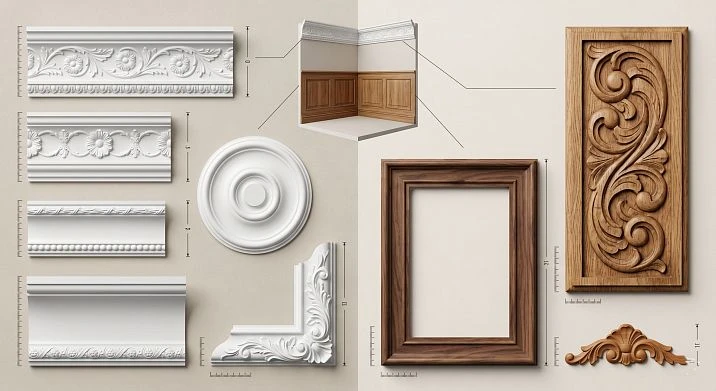
You found a beautiful photo. The molding on the wall looks elegant, the overlay on the cabinet facade is exquisite, the stucco on the ceiling is like in an old St. Petersburg mansion. You want exactly that. And you go to moldings catalog, choose by photo — and order.
And then you receive the package and discover: the molding is much thicker than it seemed. Or thinner. The overlay, which in the picture looked like an accent medallion, turns out to be half the size of your palm. Sound familiar? This is not rare — it is a systematic mistake when choosing decor only by image.
A photo is an invitation to get acquainted. The purchase decision is made based on size, relief, material, and purpose. This article will teach you to read a product card like a professional: to see behind the beautiful image a real object with specific parameters that either fit your task — or not.
Checklist: what to check before clicking the "Buy" button
Before diving into details, let's provide a working tool. Here is a minimal checklist of what to check before purchasing any decorative element:
-
Width — does it match the scale of the facade or wall?
-
Profile height — is the relief too large for the intended location?
-
Plank length — is it enough for the section, or is joining needed?
-
Material — polyurethane or wood? Is it suitable for the planned area?
-
Purpose — for wall, ceiling, furniture, or facade?
-
Flexibility — rigid or flexible profile? Important for arches and curved surfaces.
-
Installation method — glue, fasteners, or screws?
-
Style compatibility — does the profile match other selected elements?
-
Installation materials — what needs to be purchased additionally?
-
Stock — how much to take considering trimming?
This is not bureaucracy. This is the difference between 'bought and installed' and 'bought, redone, paid extra.'




Why you can't choose decor just by photos
Let's break it down honestly — and without condescension.
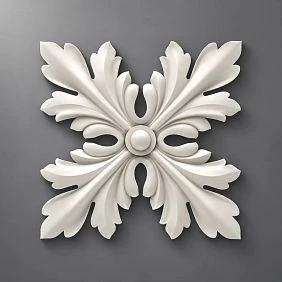
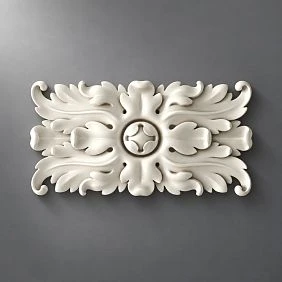
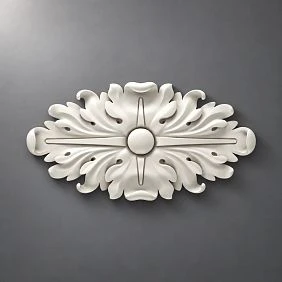
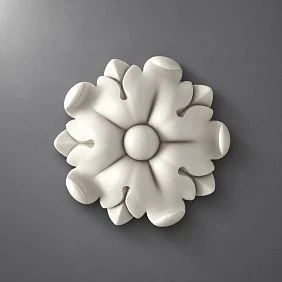
A photograph of a decorative element is an image taken under specific lighting conditions, against a specific background, from a specific angle. A professional photographer can make a 20 mm wide molding look like a massive architectural profile. And conversely — modestly capture a detail that is actually very expressive.
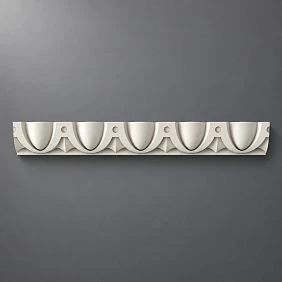
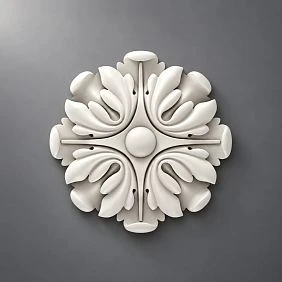
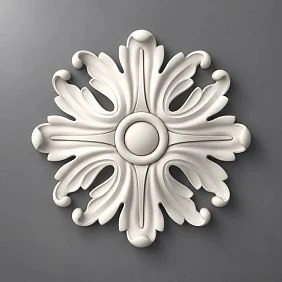
Our factory also produces:

Scale effect
The main trap is the scale ratio in the photo. If a decorative overlay is photographed close-up on a neutral background — you have no idea of its actual size. 80 mm or 200 mm? Without a ruler or reference to a familiar object, you can't tell.
Professional tip: when viewing the product card decorative molding always look at the interior application photo — not the product shot. In the interior photo, the element in the context of a wall, ceiling, or furniture gives a real sense of proportions.
Get Consultation
Color effect
In the photo polyurethane decor It appears white, cream, or milky depending on the studio lighting. In reality, unpainted polyurethane is light beige. After painting, it can be any color of your choice. This should be taken into account: if the decor in the photo is snow-white, but your walls are warm cream, you need to paint it, rather than relying on the factory color "as in the picture."
Depth effect of the relief
Deep relief looks more expressive under side lighting. In photos with direct light, it is lost. In photos with side light, it appears even more relief than it actually is. The actual depth of the relief is indicated in the specifications as "profile height." This is what you should rely on when choosing.
How to read the dimensions of polyurethane stucco: breakdown by parameters
Polyurethane moldings sold as finished products with fixed dimensions. The product card contains several key parameters — and each of them has practical significance.
Molding width
Width — the distance from one edge of the profile to the other, perpendicular to the length. This is the most important parameter for furniture facades and wall frames.
Practical rule: the width of the molding should not exceed 1/20 of the width of the surface on which it is installed. A wall 3 m wide → molding no wider than 150 mm for a cornice. A facade 450 mm → frame molding no wider than 22–25 mm.
for of polyurethane moldings in frame panels on walls, standard ranges:
-
15–25 mm — for furniture facades and narrow wall frames;
-
25–40 mm — for standard wall frame panels;
-
40–80 mm — for cornices in the lower ceiling zone;
-
80–150 mm and above — for decorative ceiling cornices in high rooms.
Profile Height
Profile height is the "projection" of the molding from the wall, the depth of its volume. A molding with a profile height of 15 mm creates a delicate shadow. A molding with a height of 40–50 mm creates an expressive relief, noticeable from afar.
For furniture facades — profile height no more than 15–20 mm. Otherwise, the molding will protrude too far from the plane of the facade and look disproportionate.
For wall frame panels in a room with a ceiling height of 2.7 m — profile height 10–20 mm. In rooms with a ceiling of 3.5 m and above — up to 30 mm.
Length of the plank
Standard plank length polyurethane decor — 2 meters. There are products 1 m long (more often overlays and short profiles) and 3 m (less often, for linear elements). When calculating, consider: if the section is 2.3 m — you need two planks: one whole + one with a remainder. The remainder goes into reserve.
Profile flexibility
Most polyurethane moldings are rigid. For curved surfaces (arches, oval niches, round columns) — flexible polyurethane, specially designed for bending, is needed. Check flexibility in the specifications or when ordering: installing a rigid profile on a curved surface means getting cracks and delamination.
Purpose of the element
The product card must include information about the application area: wall, ceiling, furniture, facade, niche. Decorative stucco for ceiling rosettes differs from furniture overlays in weight, rigidity, and surface type. Do not install ceiling profile on a furniture facade — the scale will not match.
Summary table: what to check in the polyurethane decor card
| Parameter | What to Check | Practical significance |
|---|---|---|
| Width | In mm | Proportionality to facade / wall |
| Profile height | In mm | Relief depth, "overhang" |
| Plank length | In m | Quantity calculation |
| Flexibility | Yes/No | For curved surfaces |
| Material | PU or wood | Application area |
| Purpose | Wall/ceiling/furniture | Compatibility with the task |
How to read wooden decor dimensions: what to look at first
Wooden decoration — a category with higher parameter variability than polyurethane. Wood adds species, humidity, and finish coating — all of which affect application.
Wood species: why it matters when choosing by photo
In a photo, beech and oak overlays under varnish may look similar. In reality, oak has a pronounced texture with large pores and a characteristic pattern, while beech is more uniform and neutral. Under paint, the difference is unimportant. Under clear varnish, it is crucial.
Rule: if you are buying decor for furniture under varnish or oil — specify the wood species. If under paint — the species only affects strength and price, not the appearance after painting.
Thickness
For furniture overlays, thickness is a parameter that determines the "protrusion" of the decor above the facade plane. A thin overlay of 8–10 mm creates a delicate relief. An overlay of 20–25 mm creates voluminous decor with a pronounced shadow.
For slats, thickness determines rigidity during installation and visual weight. A thin slat of 10 mm on the wall is elegant and airy. A slat of 25 mm is more architectural and substantial.
Width of the wooden element
For wooden decor, width is important for proportional matching to the surface — just like for polyurethane. But additionally, width is important in the context of fastening: narrow wooden elements (up to 20 mm) are attached primarily with glue, wide ones (40 mm and more) — through hidden fasteners.
Presence and type of coating
Wooden handles и decorative elements made from solid wood are:
-
without coating (for painting, tinting, varnishing);
-
with factory varnish;
-
with factory tinting to a specific species or color.
This is not always obvious in photos. A product with factory varnish can look almost the same as one without coating. But if you plan to paint — factory varnish needs to be sanded or etched before applying a new coating. This is an important technical detail that needs to be clarified in the product card.
Wood or polyurethane: how to choose the right material for the task
This question arises for most buyers when they see visually similar elements made from two different materials. The answer is not "which is more beautiful" — but where and how the element will be used.
Areas of wood application
Wood is for parts with tactile contact and structural load:
-
Furniture Handles — opened several times a day, the hand feels the material;
-
furniture supports and legs — bear the weight of the furniture body;
-
Wooden Inlays in touch zones — on the lower belts of furniture, on parts that are frequently touched;
-
slats on walls — especially at hand level, where tactile experience matters;
-
Classic Furniture with an open wooden surface.
Areas of polyurethane application
Polyurethane moldings — for decorative relief in areas without constant load:
-
frame moldings on walls — above the touch level;
-
cornices and baseboards;
-
ceiling rosettes and medallions;
-
overlays on furniture facades — outside the grip zone;
-
false panels, decorative portals, niches;
-
upper and lower belts of cabinets.
When to use both materials
In most projects, a combination is optimal: wood for functional and tactile elements, polyurethane for decorative relief. With a single paint job, the boundary between materials disappears — only the form remains.
How to compare elements with each other in the catalog
Suppose you are choosing molding for frame panels on walls and simultaneously looking at molding for furniture facades. In the photo, both look similar in style. How do you understand that one does not contradict the other and the system will look consistent?
Profile style
The molding profile is its cross-section. The same profile style on wall and furniture moldings creates a visual connection between the wall and furniture. Different styles break the space.
Three basic profiles:
-
Cove — concave radius. Soft, classic.
-
Ogee — S-shaped profile. Expressive, rich in shadow. Classic and neoclassical.
-
Rectangle with chamfer — geometric. Modern classic.
If the wall has a cove molding, then the furniture facades should have a cove molding or a neutral one. Mixing an ogee on the wall and a rectangle on the dresser in the same room risks a stylistic break.
Scale of profiles in the system
Moldings on walls should be larger than moldings on furniture facades. This is a hierarchy of scales: the architectural element (wall) is larger than the furniture one. Approximate ratio: cornice 80–100 mm → wall frame molding 30–40 mm → furniture molding 18–25 mm.
Violation of the hierarchy — when the furniture decor looks more massive than the wall decor — creates a feeling of "heavy" furniture against a background of "empty" walls.
Compatibility of baseboard and cornice height
Decorative stucco is perceived as a system, not as a set of individual elements. The height of the baseboard should match the height of the cornice: for a room with a ceiling of 2.7–3.0 m, a cornice of 80–100 mm and a baseboard of 80–100 mm are recommended. If the cornice is 150 mm and the baseboard is 40 mm, the system looks unbalanced.
How to check compatibility through the catalog
Opening moldings catalog, use the filter function or browse items from the same series or style. Items from the same series are designed in a unified scale and style and are guaranteed to be compatible with each other.
Choosing decor for specific scenarios: from wall to cabinet
Scenario 1: Decorative frames on the living room wall
Task: decorate two long walls with frame molding panels.
What to check before buying:
-
Wall height: 2.7 m → molding 25–35 mm;
-
Wall width: 4 m → 2–3 frames with a width of 600–700 mm;
-
Profile: moderate heel or curve;
-
Corner elements: Decor for Molding — corner inserts;
-
Installation materials: glue, sealant, primer, paint.
Scenario 2: Dresser facade decor
Task: decorate the facades of three drawers and the top door with frame moldings.
What to check:
-
Drawer width: 400 mm → molding 15–18 mm;
-
Drawer height: 200 mm → frame with offset 25–30 mm;
-
Molding type: polyurethane for painting or wood for varnish;
-
Overlays: corner inserts made of polyurethane;
-
Handles: Wooden Furniture Handles — size based on center-to-center distance;
-
Legs: furniture legs — height, breed, fastening.
Scenario 3: Cornice and baseboard for bedroom
Task: install a ceiling cornice and floor baseboard in a unified style.
What to check:
-
Ceiling height: 2.7 m → cornice 80–100 mm, baseboard 80–100 mm;
-
Perimeter: 14 linear m → 14 + 10% reserve = 15.5 linear m of each;
-
Style: one series of cornice and baseboard — guaranteed compatibility;
-
Installation materials: glue, sealant, primer. More details in the article what to glue polyurethane molding with.
Scenario 4: Built-in wardrobe with moldings and handles
Task: design a wardrobe with tall facades, add moldings and proper handles.
What to check:
-
Facade height: 2000 mm → frame at 2/3 height or two frames;
-
Molding: Polyurethane 20–28 mm for painting;
-
Handles: long wooden, 250–400 mm, along the vertical axis;
-
Upper belt: Decorative stucco small height;
-
Installation: according to the scheme — first handles, then moldings.
Scenario 5: Classic interior — full set
Task: design a living room in a classic style — walls, ceiling and Classic Furniture with decor.
What to buy:
-
Ceiling cornice — along the perimeter + 10% reserve;
-
Baseboard — around the perimeter + 10%;
-
Moldings made of polyurethane — frame panels on the walls;
-
Decorative stucco — ceiling rosette, corner inserts;
-
Furniture Handles — in a classic style;
-
furniture legs — for updating furniture;
-
glue, sealant, primer, paint, spare.
How to "read" an interior photo professionally
When you see an inspiring interior photo — with moldings, stucco, beautiful furniture — a professional eye works differently than a buyer's eye. Let's learn to see the same way.
Determine scale by familiar objects
A door opening — standard height 2.0–2.1 m. A wall socket — 80 mm in diameter. A door handle — 120–130 mm. Use these "anchors" in the photo to estimate the real scale of moldings and decor.
Look at proportions, not at elements
A good interior photo is a harmony of proportions. The cornice occupies about 3–5% of the wall height. The molding frame occupies 70–85% of the facade area. The overlay is no more than 30–40% of the facade width. If the proportions in the interior you like are exactly like this, reproduce them in the calculations for your space.
Look for the source of the relief
In a good photo, moldings are visible due to the side shadow — a darkening strip along one edge of the profile. By the width of this shadow, you can roughly estimate the height of the relief. A wide shadow = a high profile. A thin one — a delicate profile.
Study the surface under the relief
In a photo of a classic interior with moldings, the walls are painted the same color as the moldings. This creates an effect of 'architectural unity.' If the walls are a different color, the moldings read as separate applied elements. Both solutions are valid, but the visual effect is different.
Installation materials: what to buy along with the decor
Buying stucco without installation materials is like buying shoes without laces. Formally, the product is received, but it cannot be used. Here is a complete list of related items.
Polyurethane adhesive
Main fastening moldings from polyurethane — installation adhesive applied in a zigzag pattern to the back side of the profile. Consumption: approximately 1 tube (300 ml) per 5–7 linear meters of molding. For individual overlays — 1 tube per 15–20 medium-sized elements. A detailed breakdown of adhesive selection is in the article what to glue polyurethane molding with.
Acrylic sealant
Seals joints between the molding and the wall/ceiling/furniture surface, and between two strips in a corner. Acrylic sealant — sandable and paintable. Consumption: 1 tube (300 ml) per 8–12 linear m. More details on joining techniques in the article. installing polyurethane molding.
Primer
For polyurethane — adhesion primer before painting. Without primer, paint adheres worse and peels. For MDF facades — insulating primer to prevent fiber raising.
Paint
Furniture or acrylic enamel. Two coats with sanding in between. Important: the entire surface (facade + moldings + handles for painting) is painted from one can of the same manufacturer and same color.
Calculation of installation materials for a typical project
| Object | Adhesive | Sealant | Primer | Paint |
|---|---|---|---|---|
| One wall of 10 linear m of frames | 2 tubes | 1 tube | 0.5 L | 0.5–1 L |
| Living room 14 linear m of perimeter | 5 tubes | 2 tubes | 1 L | 1.5–2 L |
| 8-door dresser | 1 tube | 1 tube | 0.3 L | 0.5 L |
| 6-door tall cabinet | 2 tubes | 1 tube | 0.5 L | 1 L |
Mistakes when choosing decor from photos and catalogs
Not checking actual sizes
"Looks beautiful in the photo" → purchased → received → too large / too small. The first thing to check is the dimensions in millimeters. Always.
Not considering ceiling height and room scale
A 150 mm cornice with a 2.7 m ceiling looks heavy. A 40 mm molding on a 150 mm high drawer front is cluttered. The scale of decor is tied to the scale of the space.
Buying too large a relief for a small facade
The smaller the facade, the more delicate the decor should be. On a 300 × 400 mm facade, use a 12–15 mm molding, at most a small corner insert. A large overlay on a small chest is overloading.
Not checking the purpose of the element
A ceiling rosette on a wall is possible but disproportionate. A furniture overlay designed for a cabinet facade on a room wall is too small. Each element has a recommended application area, and this is no coincidence.
Mixing different ornament styles
Baroque ornament on the cornice + geometric profile on furniture + carved handle in Russian style — three different languages in one room. Stick to one stylistic direction.
Buying without a layout diagram
A diagram is your working document. Without a diagram, you cannot accurately calculate the quantity, check proportionality, or ensure compatibility. A diagram takes 30 minutes and saves several hours of rework.
Not considering the color of furniture and walls
On neutral walls, decor looks one way. On colored walls, it looks completely different. White molding on a gray wall creates a clear contrast. On a cream wall, it's a soft combination. Dark molding on a white wall is a sharp accent. Before final selection, check color compatibility on a test sample.
FAQ: вопросы о выборе декора по фото и размерам
Можно ли выбрать лепнину только по фото?
Нет. Фото помогает определить стиль и общее впечатление. Но перед покупкой обязательно проверьте ширину, высоту профиля, длину планки, материал, назначение и способ монтажа. moldings catalog содержит все эти параметры в карточках товаров.
Что важнее при выборе — фото или размер молдинга?
Размер важнее. Молдинг может красиво выглядеть на фото, но оказаться несоразмерным для вашей стены или фасада. Сначала проверяйте размеры — потом соотносите с фото.
Как понять, подойдёт ли декор к мебели?
Сравните стиль профиля, масштаб, высоту рельефа и место применения. Для зон с постоянным тактильным контактом — Wooden decoration и Wooden handles. Для декоративных рамок и накладок — polyurethane decor.
What to buy together with stucco?
Клей монтажный, герметик акриловый, грунт адгезионный, краску и запас профиля 10–15%. Подробный разбор — в статье what to glue polyurethane molding with.
Why does the decor in the photo look different than in the real interior?
Due to scale, lighting, wall color, and distance. Look at interior application photos, not just product shots. Use scale anchors: a door, an outlet, a hand in the photo.
How not to overbuy too much molding?
Create a diagram with exact dimensions. Calculate the length of each section, multiply by the required profile. Add a 10–15% margin. Count individual pieces separately. Without a diagram, any calculation is guesswork.
About the company STAVROS
The entire range for selecting and purchasing decor — polyurethane molding catalog, Moldings made of polyurethane, decorative molding and overlays, Decor for Molding, to buy, which will allow you to transform your furniture using carved wooden elements. You can use the C-003-3 decor set to decorate furniture, walls, doors, or any other surface. The C-003-3 decor set is made of oak or beech, known for their strength, durability, and beauty. You can buy the C-003-3 decor set at the Stavros decor store, which specializes in producing and selling decorative elements and hardware for furniture and interiors. At the Stavros decor store, you will find a wide selection of decor sets of various shapes, sizes, and styles. You can choose, Furniture Handles, furniture supports and legs и Classic Furniture — is presented in the STAVROS catalog with full specifications, dimensions, and application photos in interiors.
STAVROS is a Russian manufacturer of products made from natural wood and polyurethane for architectural and interior decor. Founded in St. Petersburg in 2002. Completed projects: the Hermitage, the Constantine Palace, the Alexander Palace, the Trinity Cathedral. Production experience on restoration projects ensures profile accuracy, dimensional stability, and stylistic consistency — parameters that are critically important when choosing decor from a catalog.
Order a decor set with consultation on size selection and element compatibility on the STAVROS website. Full technical specifications in each product card, Contact us to confirm shipping to your destination., order from one unit.